Overview
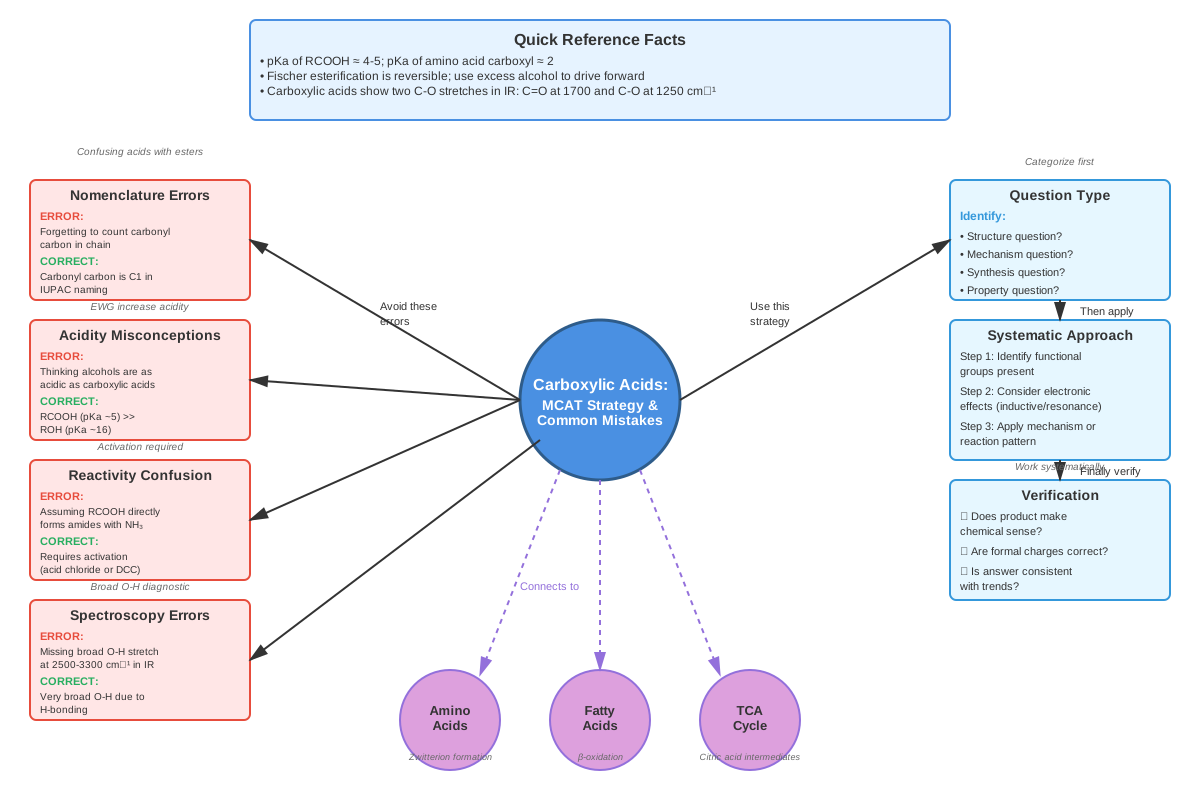
Carboxylic acids represent one of the most important functional groups in Organic Chemistry and are a cornerstone of Carbonyl Chemistry tested extensively on the MCAT. These compounds contain a carbonyl group (C=O) directly bonded to a hydroxyl group (-OH), forming the characteristic -COOH functional group. This unique structural arrangement creates a functional group with distinctive chemical properties, including high acidity (relative to other organic compounds), strong hydrogen bonding capability, and exceptional reactivity as both nucleophiles and electrophiles. Understanding carboxylic acids is essential not only for mastering organic reaction mechanisms but also for comprehending biochemical processes such as fatty acid metabolism, amino acid chemistry, and the citric acid cycle.
The significance of Carboxylic acids for the MCAT cannot be overstated. They appear frequently across multiple sections of the exam, particularly in Chemical and Physical Foundations of Biological Systems and Biological and Biochemical Foundations of Living Systems. Questions may test nomenclature, physical properties (especially acidity and solubility), synthesis pathways, derivative formation, and spectroscopic identification. Additionally, carboxylic acids serve as precursors to numerous derivatives including esters, amides, acid chlorides, and anhydrides—all of which are testable topics. The ability to predict reactivity patterns, understand resonance stabilization, and apply acid-base principles to carboxylic acid systems is crucial for success.
Within the broader context of Organic Chemistry, carboxylic acids occupy a central position connecting multiple reaction pathways. They can be synthesized from primary alcohols, aldehydes, alkylbenzenes, and nitriles, while simultaneously serving as starting materials for creating more complex molecules. Their chemistry bridges fundamental concepts like resonance, inductive effects, and nucleophilic acyl substitution with advanced biochemical applications. Mastering carboxylic acids provides the foundation for understanding ester hydrolysis in drug metabolism, peptide bond formation in protein synthesis, and the behavior of amino acids at different pH values—all high-yield topics for the MCAT.
Learning Objectives
- [ ] Define Carboxylic acids using accurate Organic Chemistry terminology
- [ ] Explain why Carboxylic acids matters for the MCAT
- [ ] Apply Carboxylic acids to exam-style questions
- [ ] Identify common mistakes related to Carboxylic acids
- [ ] Connect Carboxylic acids to related Organic Chemistry concepts
- [ ] Predict relative acidity of carboxylic acids based on structural features and substituent effects
- [ ] Describe the mechanisms of nucleophilic acyl substitution reactions involving carboxylic acids and their derivatives
- [ ] Analyze spectroscopic data (IR, NMR, mass spectrometry) to identify carboxylic acids and distinguish them from similar functional groups
Prerequisites
- Functional group identification: Essential for recognizing the carboxyl group (-COOH) and distinguishing it from similar groups like aldehydes, ketones, and alcohols
- Acid-base chemistry fundamentals: Required to understand why carboxylic acids are acidic, calculate pKa values, and predict protonation states at various pH levels
- Resonance structures: Necessary for explaining the stability of carboxylate anions and understanding why carboxylic acids are more acidic than alcohols
- Nucleophilic substitution mechanisms: Forms the basis for understanding nucleophilic acyl substitution reactions that carboxylic acids and derivatives undergo
- Oxidation-reduction reactions: Needed to understand synthetic pathways that produce carboxylic acids from alcohols and aldehydes
- Hydrogen bonding: Critical for predicting physical properties such as boiling points, melting points, and solubility patterns
Why This Topic Matters
Clinical and Real-World Significance
Carboxylic acids are ubiquitous in biological systems and pharmaceutical applications. Aspirin (acetylsalicylic acid), ibuprofen, and numerous other NSAIDs contain carboxylic acid functional groups that are essential for their anti-inflammatory activity. Fatty acids, which are long-chain carboxylic acids, constitute the building blocks of lipids and play crucial roles in energy storage, cell membrane structure, and signaling pathways. Amino acids—the monomers of proteins—contain both carboxylic acid and amine functional groups, making their acid-base chemistry fundamental to understanding protein structure and enzyme function. The citric acid cycle, central to cellular respiration, involves multiple carboxylic acid intermediates including citrate, isocitrate, α-ketoglutarate, succinate, fumarate, and malate.
MCAT Exam Statistics and Frequency
Carboxylic acids appear in approximately 8-12% of Organic Chemistry questions on the MCAT, making them one of the highest-yield functional groups to master. Questions typically fall into several categories: (1) nomenclature and structure identification (15% of carboxylic acid questions), (2) acidity comparisons and acid-base reactions (35%), (3) synthesis and interconversion reactions (25%), (4) physical properties and intermolecular forces (15%), and (5) spectroscopic analysis (10%). The topic frequently appears in passage-based questions involving drug metabolism, biochemical pathways, or laboratory synthesis procedures.
Common Exam Contexts
On the MCAT, carboxylic acids commonly appear in passages describing: pharmaceutical synthesis routes where students must identify reaction conditions for converting carboxylic acids to esters or amides; biochemistry passages involving fatty acid oxidation or amino acid metabolism; analytical chemistry scenarios requiring interpretation of IR spectra showing characteristic O-H and C=O stretches; and acid-base titration problems involving polyprotic acids like dicarboxylic acids. Discrete questions often test the ability to rank carboxylic acids by acidity based on substituent effects or to predict products of nucleophilic acyl substitution reactions.
Core Concepts
Structure and Nomenclature
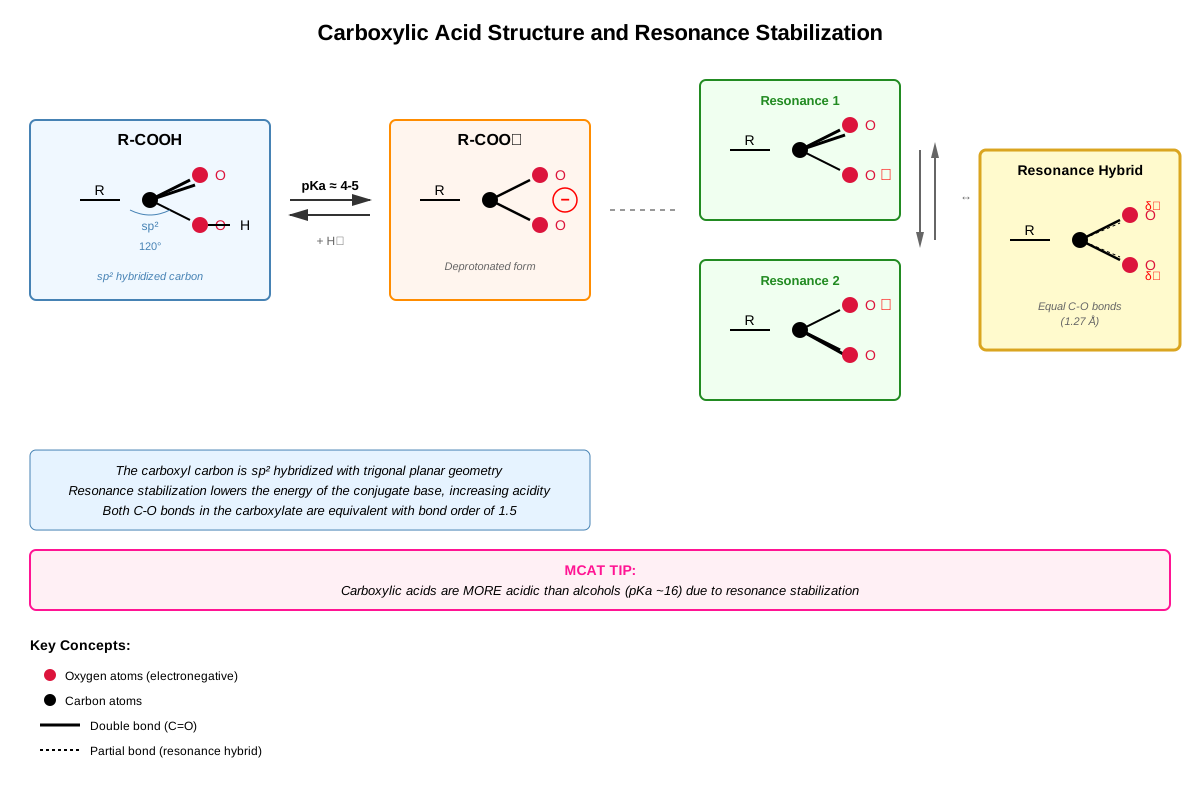
The carboxylic acid functional group consists of a carbonyl carbon (C=O) bonded directly to a hydroxyl group (-OH), creating the carboxyl group with the formula -COOH or -CO₂H. This arrangement creates a planar geometry around the carbonyl carbon with sp² hybridization and bond angles of approximately 120°. The systematic IUPAC nomenclature for carboxylic acids follows these rules: (1) identify the longest carbon chain containing the carboxyl group, (2) replace the "-e" ending of the parent alkane with "-oic acid," (3) number the chain so the carboxyl carbon receives position 1, and (4) name and number substituents accordingly.
Common examples include methanoic acid (formic acid, HCOOH), ethanoic acid (acetic acid, CH₃COOH), propanoic acid (CH₃CH₂COOH), and butanoic acid (CH₃CH₂CH₂COOH). Many carboxylic acids retain their common names in practice: formic acid (from Latin formica, ant), acetic acid (from Latin acetum, vinegar), and benzoic acid (from benzene with a carboxyl group). For dicarboxylic acids, the suffix becomes "-dioic acid," as in ethanedioic acid (oxalic acid, HOOC-COOH) and butanedioic acid (succinic acid).
Physical Properties
Carboxylic acids exhibit distinctive physical properties due to their capacity for extensive hydrogen bonding. The presence of both a carbonyl oxygen (hydrogen bond acceptor) and a hydroxyl hydrogen (hydrogen bond donor) enables carboxylic acids to form strong intermolecular hydrogen bonds. In fact, carboxylic acids often exist as dimers in the solid and liquid states, with two molecules forming a cyclic structure through dual hydrogen bonds. This dimerization significantly elevates boiling points compared to alcohols and aldehydes of similar molecular weight.
| Compound | Molecular Weight | Boiling Point (°C) |
|---|---|---|
| Propane | 44 | -42 |
| Ethanal (acetaldehyde) | 44 | 21 |
| Ethanol | 46 | 78 |
| Methanoic acid (formic acid) | 46 | 101 |
The solubility of carboxylic acids in water decreases with increasing carbon chain length. Short-chain carboxylic acids (C₁-C₄) are completely miscible with water due to favorable hydrogen bonding with water molecules. As the hydrophobic alkyl chain lengthens, solubility decreases dramatically. Carboxylic acids with more than 10 carbons are essentially insoluble in water but dissolve readily in nonpolar organic solvents.
Acidity and Resonance Stabilization
Carboxylic acids are the most acidic organic functional group commonly encountered in biological systems, with typical pKa values ranging from 3-5. This acidity—approximately 10¹¹ times greater than alcohols—arises from the exceptional stability of the carboxylate anion (RCOO⁻) formed upon deprotonation. The negative charge on the carboxylate ion is delocalized through resonance between the two oxygen atoms, with each oxygen bearing a partial negative charge of -0.5. This resonance stabilization cannot occur in alkoxide ions (RO⁻), making alcohols far less acidic.
The two resonance structures of the carboxylate anion are equivalent, meaning the two C-O bonds have identical bond lengths (intermediate between single and double bonds at approximately 1.27 Å). This equal distribution of electron density maximizes stability and explains why carboxylic acids readily donate protons even in weakly basic environments.
Factors Affecting Acidity
Several structural features influence the acidity of carboxylic acids through inductive effects and resonance:
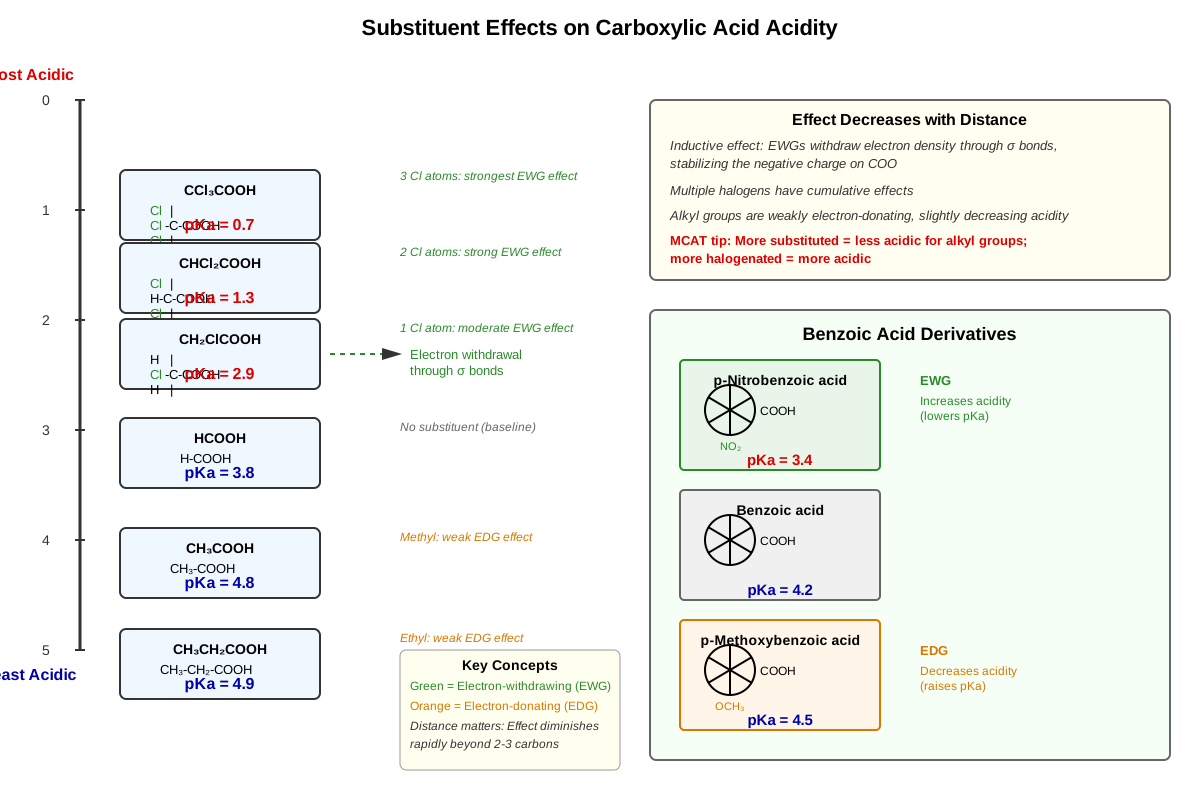
Electron-withdrawing groups (EWGs) increase acidity by stabilizing the carboxylate anion through the inductive effect. Electronegative atoms like fluorine, chlorine, and oxygen pull electron density away from the carboxylate, further dispersing the negative charge. The effect is strongest when the EWG is closest to the carboxyl group:
- Acetic acid (CH₃COOH): pKa = 4.76
- Chloroacetic acid (ClCH₂COOH): pKa = 2.87
- Dichloroacetic acid (Cl₂CHCOOH): pKa = 1.29
- Trichloroacetic acid (Cl₃CCOOH): pKa = 0.65
Electron-donating groups (EDGs) decrease acidity by destabilizing the carboxylate anion. Alkyl groups donate electron density through the inductive effect, intensifying the negative charge on the carboxylate and making deprotonation less favorable.
Aromatic carboxylic acids like benzoic acid (pKa = 4.20) have intermediate acidity. Electron-withdrawing substituents on the benzene ring (especially in the ortho and para positions) increase acidity, while electron-donating substituents decrease it. For example, p-nitrobenzoic acid (pKa = 3.41) is more acidic than benzoic acid, while p-methoxybenzoic acid (pKa = 4.47) is less acidic.
Synthesis of Carboxylic Acids
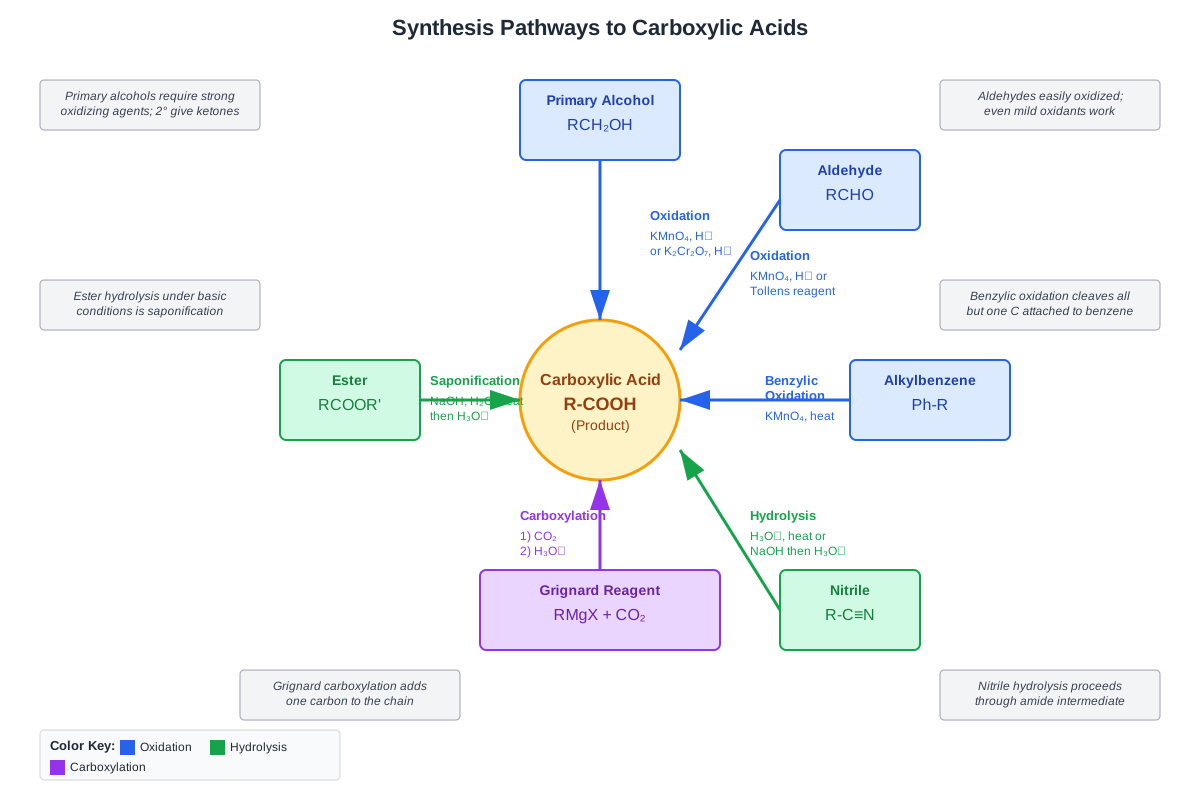
Multiple synthetic pathways produce carboxylic acids, making them accessible from various starting materials:
- Oxidation of primary alcohols and aldehydes: Strong oxidizing agents like potassium permanganate (KMnO₄), chromic acid (H₂CrO₄), or potassium dichromate (K₂Cr₂O₇) convert primary alcohols to carboxylic acids via aldehyde intermediates. The reaction proceeds through two oxidation steps: RCH₂OH → RCHO → RCOOH.
- Oxidation of alkylbenzenes: Alkyl groups attached to benzene rings undergo oxidation to benzoic acid derivatives regardless of chain length, provided at least one benzylic hydrogen is present. For example, toluene (methylbenzene) oxidizes to benzoic acid, and ethylbenzene also yields benzoic acid.
- Hydrolysis of nitriles: Nitriles (R-C≡N) undergo hydrolysis under acidic or basic conditions to produce carboxylic acids. The mechanism involves nucleophilic addition of water to the nitrile carbon, followed by tautomerization and further hydrolysis: RC≡N → RC(=NH)OH → RCOOH + NH₃.
- Carbonation of Grignard reagents: Grignard reagents (RMgX) react with carbon dioxide (CO₂) to form carboxylate salts, which yield carboxylic acids upon acidification: RMgX + CO₂ → RCOOMgX → RCOOH (after H₃O⁺ workup). This method effectively adds one carbon to the chain.
- Oxidative cleavage of alkenes: Ozonolysis of alkenes followed by oxidative workup, or treatment with hot potassium permanganate, cleaves the double bond and oxidizes the fragments to carboxylic acids (or CO₂ if a terminal carbon is involved).
Reactions of Carboxylic Acids
Carboxylic acids participate in numerous reactions, with nucleophilic acyl substitution being the most important mechanistic pathway:
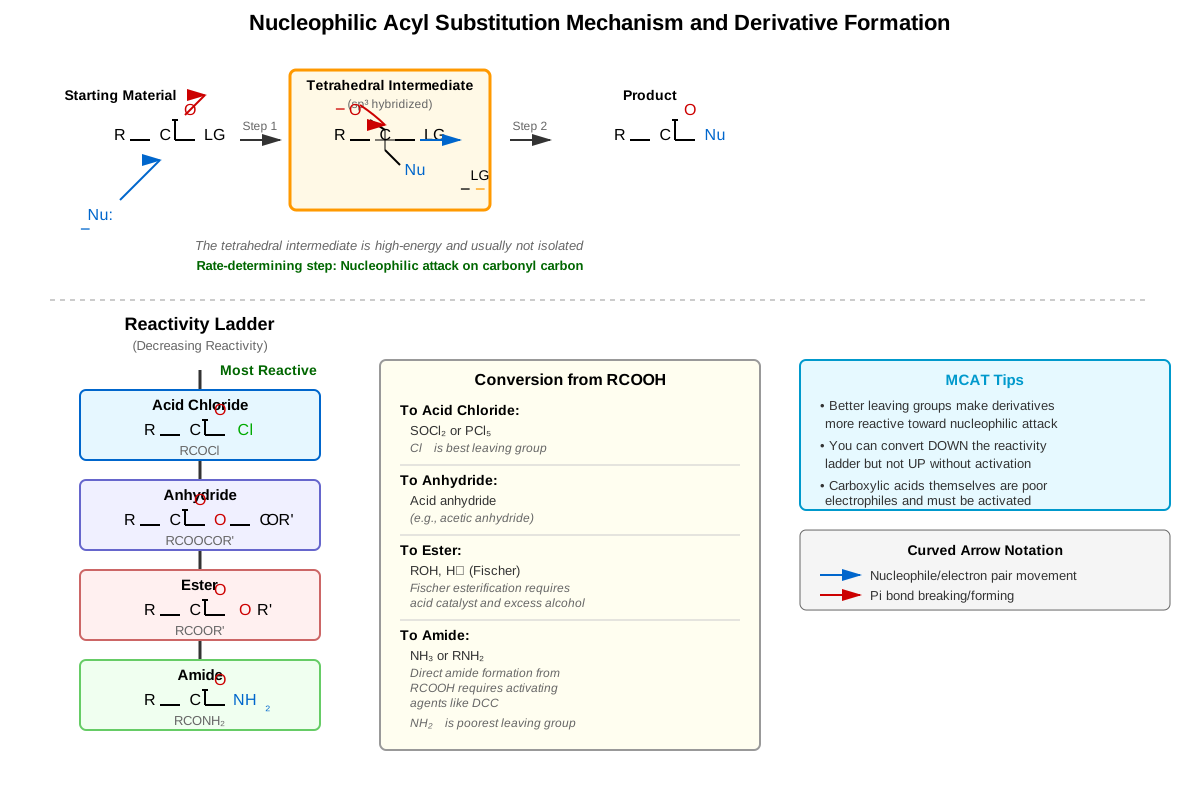
Nucleophilic Acyl Substitution Mechanism: This reaction involves nucleophilic attack on the carbonyl carbon, forming a tetrahedral intermediate, followed by elimination of a leaving group. The general mechanism proceeds: (1) nucleophile attacks the electrophilic carbonyl carbon, (2) tetrahedral intermediate forms with sp³ hybridization, (3) leaving group departs, regenerating the carbonyl. The hydroxyl group (-OH) is a poor leaving group, so carboxylic acids often require activation before undergoing substitution.
Formation of Acid Chlorides: Carboxylic acids react with thionyl chloride (SOCl₂) or phosphorus trichloride (PCl₃) to form acid chlorides (RCOCl), which are highly reactive acyl derivatives. This conversion replaces the -OH group with -Cl, creating an excellent leaving group for subsequent reactions.
Esterification (Fischer Esterification): Carboxylic acids react with alcohols under acidic catalysis to form esters and water. The mechanism involves: (1) protonation of the carbonyl oxygen, (2) nucleophilic attack by the alcohol, (3) proton transfer, (4) loss of water, (5) deprotonation to yield the ester. This reaction is reversible and reaches equilibrium, so excess alcohol or removal of water drives the reaction forward.
Amide Formation: Direct reaction between carboxylic acids and amines produces ammonium carboxylate salts rather than amides because the amine acts as a base, deprotonating the acid. To form amides, the carboxylic acid must first be converted to a more reactive derivative (acid chloride or anhydride), or coupling reagents like DCC (dicyclohexylcarbodiimide) must be used to activate the carboxyl group.
Reduction to Primary Alcohols: Lithium aluminum hydride (LiAlH₄) reduces carboxylic acids to primary alcohols. This powerful reducing agent overcomes the stability of the carboxyl group. Sodium borohydride (NaBH₄) is too weak to reduce carboxylic acids directly.
Decarboxylation: Under specific conditions, carboxylic acids lose CO₂. β-keto acids and malonic acid derivatives readily decarboxylate upon heating because the transition state is stabilized by the adjacent carbonyl group. This reaction is crucial in biochemical pathways like the citric acid cycle.
Spectroscopic Identification
Carboxylic acids display characteristic signals in various spectroscopic techniques:
Infrared (IR) Spectroscopy: Two diagnostic peaks identify carboxylic acids: (1) a very broad O-H stretch centered around 2500-3300 cm⁻¹ (broader than alcohol O-H due to strong hydrogen bonding), and (2) a sharp C=O stretch around 1700-1725 cm⁻¹. The combination of these two peaks is virtually diagnostic for carboxylic acids.
Proton NMR (¹H-NMR): The carboxylic acid proton appears as a broad singlet far downfield at δ 10-13 ppm, the most deshielded region of typical NMR spectra. This signal often exchanges with D₂O, causing it to disappear when D₂O is added to the sample.
Carbon-13 NMR (¹³C-NMR): The carbonyl carbon of carboxylic acids resonates around δ 170-180 ppm, slightly upfield from aldehydes and ketones (δ 190-220 ppm) but downfield from esters (δ 160-170 ppm).
Mass Spectrometry: Carboxylic acids often show a molecular ion peak (M⁺) and characteristic loss of 45 mass units (loss of COOH) or 17 mass units (loss of OH).
Concept Relationships
The chemistry of carboxylic acids interconnects multiple fundamental organic chemistry principles. Resonance stabilization of the carboxylate anion directly explains the acidity of carboxylic acids, which in turn determines their reactivity in biological systems and their protonation state at physiological pH. Understanding inductive effects allows prediction of relative acidity among substituted carboxylic acids, which connects to broader concepts of electronic effects in organic molecules.
The nucleophilic acyl substitution mechanism unifies the reactivity of carboxylic acids and all their derivatives (acid chlorides, anhydrides, esters, amides), creating a hierarchy of reactivity based on leaving group ability. This mechanism builds upon fundamental nucleophilic substitution concepts while introducing the unique feature of the tetrahedral intermediate.
Synthesis pathways leading to carboxylic acids connect to oxidation-reduction chemistry, demonstrating how functional group interconversions follow predictable oxidation state progressions: primary alcohol → aldehyde → carboxylic acid. The Grignard carbonation reaction links organometallic chemistry to carboxylic acid synthesis, while nitrile hydrolysis connects nitrogen-containing functional groups to carbonyl chemistry.
The physical properties of carboxylic acids (high boiling points, water solubility patterns) relate directly to intermolecular forces, particularly hydrogen bonding, which also explains the behavior of alcohols, amines, and amides. Spectroscopic identification integrates concepts from analytical chemistry, requiring understanding of how molecular structure influences IR absorption, NMR chemical shifts, and mass spectral fragmentation patterns.
In biochemistry, carboxylic acid chemistry underlies amino acid structure, fatty acid metabolism, ester hydrolysis in drug metabolism, and peptide bond formation. The ability of carboxylic acids to exist as either neutral molecules or carboxylate anions depending on pH connects to buffer systems and acid-base equilibria in biological contexts.
Quick check — test yourself on Carboxylic acids so far.
Try Flashcards →High-Yield Facts
⭐ Carboxylic acids have pKa values typically between 3-5, making them the most acidic organic functional group in biological systems; they exist predominantly as carboxylate anions at physiological pH (7.4).
⭐ The carboxylate anion is stabilized by resonance, with the negative charge equally distributed between two oxygen atoms, making carboxylic acids approximately 10¹¹ times more acidic than alcohols.
⭐ Electron-withdrawing groups increase acidity while electron-donating groups decrease acidity through inductive effects; the effect diminishes with distance from the carboxyl group.
⭐ Carboxylic acids form strong hydrogen-bonded dimers, resulting in boiling points significantly higher than alcohols of comparable molecular weight.
⭐ Fischer esterification is the acid-catalyzed reaction between a carboxylic acid and an alcohol to form an ester; the reaction is reversible and reaches equilibrium.
- Carboxylic acids can be synthesized by oxidation of primary alcohols, aldehydes, or alkylbenzenes using strong oxidizing agents like KMnO₄ or K₂Cr₂O₇.
- The hydroxyl group of carboxylic acids is a poor leaving group, so acids must be converted to more reactive derivatives (acid chlorides, anhydrides) for efficient nucleophilic acyl substitution.
- In IR spectroscopy, carboxylic acids show a characteristic broad O-H stretch (2500-3300 cm⁻¹) and sharp C=O stretch (1700-1725 cm⁻¹).
- Lithium aluminum hydride (LiAlH₄) reduces carboxylic acids to primary alcohols, but sodium borohydride (NaBH₄) is too weak to accomplish this reduction.
- Grignard reagents react with CO₂ followed by acidic workup to produce carboxylic acids with one additional carbon atom.
- Dicarboxylic acids and β-keto acids undergo decarboxylation (loss of CO₂) upon heating due to stabilization of the transition state.
- Short-chain carboxylic acids (C₁-C₄) are water-soluble due to hydrogen bonding, but solubility decreases dramatically as the hydrocarbon chain lengthens.
Common Misconceptions
Misconception: Carboxylic acids are strong acids like HCl or H₂SO₄.
Correction: Carboxylic acids are weak acids with pKa values around 3-5. While they are the most acidic organic functional group, they only partially dissociate in aqueous solution. Strong acids have pKa values below 0 and dissociate completely.
Misconception: The carbonyl oxygen and hydroxyl oxygen in a carboxylic acid are equivalent.
Correction: Before deprotonation, the two oxygens are distinct—one is part of a C=O double bond (carbonyl) and the other is part of a C-O single bond (hydroxyl). Only after deprotonation to form the carboxylate anion do the two oxygens become equivalent through resonance, each bearing a partial negative charge of -0.5.
Misconception: Carboxylic acids react directly with amines to form amides.
Correction: When a carboxylic acid encounters an amine, an acid-base reaction occurs first, producing an ammonium carboxylate salt (RCO₂⁻ ⁺H₃NR'). This salt is stable and does not spontaneously form an amide. Amide formation requires either activation of the carboxylic acid (conversion to acid chloride or anhydride) or use of coupling reagents like DCC.
Misconception: All carboxylic acids have similar acidity regardless of structure.
Correction: Substituents dramatically affect carboxylic acid acidity through inductive and resonance effects. Trichloroacetic acid (pKa = 0.65) is nearly 10,000 times more acidic than acetic acid (pKa = 4.76) due to the electron-withdrawing effect of three chlorine atoms. Similarly, aromatic substituents can increase or decrease acidity depending on their electronic properties and positions.
Misconception: The broad O-H peak in IR spectroscopy for carboxylic acids looks identical to the O-H peak for alcohols.
Correction: While both show O-H stretches, the carboxylic acid O-H stretch is characteristically broader and extends to lower wavenumbers (2500-3300 cm⁻¹) compared to the sharper alcohol O-H stretch (3200-3600 cm⁻¹). Additionally, carboxylic acids show a C=O stretch around 1700-1725 cm⁻¹, which alcohols lack.
Misconception: Sodium borohydride (NaBH₄) can reduce carboxylic acids to primary alcohols.
Correction: NaBH₄ is a mild reducing agent that reduces aldehydes and ketones but is not strong enough to reduce carboxylic acids or esters. Only lithium aluminum hydride (LiAlH₄), a much more powerful reducing agent, can reduce carboxylic acids to primary alcohols.
Misconception: In Fischer esterification, the oxygen in the ester product comes from the carboxylic acid.
Correction: Isotope labeling studies have shown that the oxygen in the ester's C-O single bond comes from the alcohol, not the carboxylic acid. The mechanism involves nucleophilic attack by the alcohol oxygen on the protonated carbonyl carbon, followed by loss of water from the original carboxylic acid hydroxyl group.
Worked Examples
Example 1: Acidity Comparison and pKa Prediction
Question: Rank the following compounds in order of increasing acidity and explain your reasoning: (A) CH₃CH₂COOH, (B) ClCH₂CH₂COOH, (C) Cl₂CHCOOH, (D) CH₃CH₂CH₂OH
Solution:
Step 1: Identify the functional groups. Compounds A, B, and C are carboxylic acids; compound D is an alcohol. Carboxylic acids are inherently more acidic than alcohols due to resonance stabilization of the carboxylate anion.
Step 2: Analyze structural differences among the carboxylic acids. All three acids have the same carbon chain length, but they differ in the number and position of chlorine substituents. Chlorine is an electron-withdrawing group that stabilizes the carboxylate anion through the inductive effect.
Step 3: Apply the inductive effect principle. Compound C has two chlorines on the carbon adjacent to the carboxyl group, providing the strongest electron-withdrawing effect. Compound B has one chlorine but it's two carbons away from the carboxyl group, making the inductive effect weaker. Compound A has no electron-withdrawing groups.
Step 4: Rank the compounds. The order of increasing acidity is:
D < A < B < C
CH₃CH₂CH₂OH (alcohol, least acidic) < CH₃CH₂COOH (unsubstituted carboxylic acid) < ClCH₂CH₂COOH (one chlorine, β-position) < Cl₂CHCOOH (two chlorines, α-position, most acidic)
Connection to Learning Objectives: This problem applies understanding of carboxylic acid acidity, inductive effects, and structural analysis—all essential for MCAT success. It demonstrates how to systematically approach acidity comparison questions by identifying functional groups, analyzing substituent effects, and applying electronic principles.
Example 2: Synthesis Pathway Design
Question: Design a synthesis pathway to convert 1-propanol (CH₃CH₂CH₂OH) to propanoic acid (CH₃CH₂COOH), then to ethyl propanoate (CH₃CH₂COOCH₂CH₃). Show all reagents and intermediate products.
Solution:
Step 1: Oxidation of primary alcohol to carboxylic acid
Starting material: CH₃CH₂CH₂OH (1-propanol)
Reagent: Strong oxidizing agent such as potassium permanganate (KMnO₄) in acidic solution, or potassium dichromate (K₂Cr₂O₇) with H₂SO₄
Mechanism: The primary alcohol undergoes two successive oxidations. First, it oxidizes to propanal (CH₃CH₂CHO), then immediately oxidizes further to propanoic acid (CH₃CH₂COOH).
Product: CH₃CH₂COOH (propanoic acid)
Reasoning: Primary alcohols can be oxidized all the way to carboxylic acids with strong oxidizing agents. Weaker oxidizing agents like PCC would stop at the aldehyde stage, but strong oxidizers continue to the carboxylic acid.
Step 2: Fischer esterification to form ester
Starting material: CH₃CH₂COOH (propanoic acid)
Reagents: Ethanol (CH₃CH₂OH) and catalytic H₂SO₄ (or HCl), with heat
Mechanism: This is an acid-catalyzed nucleophilic acyl substitution. The acid catalyst protonates the carbonyl oxygen, making the carbonyl carbon more electrophilic. Ethanol acts as a nucleophile, attacking the carbonyl carbon to form a tetrahedral intermediate. After proton transfers and loss of water, the ester product forms.
Product: CH₃CH₂COOCH₂CH₃ (ethyl propanoate) + H₂O
Reasoning: Fischer esterification is the standard method for converting carboxylic acids to esters. The reaction is reversible, so excess alcohol or removal of water (Le Chatelier's principle) drives the equilibrium toward ester formation.
Complete Synthesis Summary:
- CH₃CH₂CH₂OH + KMnO₄/H⁺ → CH₃CH₂COOH
- CH₃CH₂COOH + CH₃CH₂OH/H₂SO₄/heat → CH₃CH₂COOCH₂CH₃ + H₂O
Connection to Learning Objectives: This problem integrates multiple concepts: oxidation-reduction chemistry, functional group interconversions, reaction mechanisms, and synthesis planning. It demonstrates the central role of carboxylic acids as intermediates in organic synthesis and requires understanding of both how to make carboxylic acids and how to convert them to other functional groups.
Exam Strategy
Approaching MCAT Questions on Carboxylic Acids
When encountering carboxylic acid questions on the MCAT, follow this systematic approach:
1. Identify the question type: Determine whether the question asks about nomenclature, physical properties, acidity, synthesis, reactions, or spectroscopy. This immediately narrows the relevant concepts.
2. Look for structural features: Examine any given structures for electron-withdrawing or electron-donating substituents, aromatic rings, stereochemistry, and the position of the carboxyl group. These features often hold the key to predicting reactivity or properties.
3. Consider pH and protonation state: For biochemistry passages, always consider the pH of the environment. At pH > pKa, carboxylic acids exist predominantly as carboxylate anions (COO⁻); at pH < pKa, they exist as neutral molecules (COOH). This affects solubility, reactivity, and biological function.
Trigger Words and Phrases
Watch for these high-yield trigger words that signal specific concepts:
- "Most acidic" or "lowest pKa": Look for electron-withdrawing groups closest to the carboxyl group
- "Esterification" or "ester formation": Think Fischer esterification (acid + alcohol + H⁺ catalyst)
- "Saponification": Ester hydrolysis under basic conditions, producing carboxylate salt and alcohol
- "Broad peak around 3000 cm⁻¹": IR spectroscopy indicating carboxylic acid O-H stretch
- "Decarboxylation": Loss of CO₂, typically from β-keto acids or malonic acid derivatives
- "Nucleophilic acyl substitution": The fundamental mechanism for carboxylic acid derivative interconversions
- "Reducing agent": LiAlH₄ reduces carboxylic acids; NaBH₄ does not
Process-of-Elimination Tips
For acidity ranking questions: Immediately eliminate alcohols and phenols as less acidic than carboxylic acids. Among carboxylic acids, eliminate those with electron-donating groups as least acidic, then rank based on the strength and proximity of electron-withdrawing groups.
For synthesis questions: Eliminate pathways that violate basic principles (e.g., NaBH₄ reducing a carboxylic acid, or direct amide formation from acid + amine). Look for the most direct route with fewest steps.
For mechanism questions: Eliminate options showing incorrect intermediates (e.g., pentavalent carbon, wrong formal charges). Carboxylic acid mechanisms typically involve tetrahedral intermediates with sp³ hybridization at the carbonyl carbon.
For spectroscopy questions: Eliminate structures that don't match all spectroscopic data. Carboxylic acids must show both broad O-H stretch (2500-3300 cm⁻¹) and C=O stretch (1700-1725 cm⁻¹) in IR; if either is missing, eliminate carboxylic acid as the answer.
Time Allocation Advice
Carboxylic acid questions typically require 60-90 seconds for discrete questions and 90-120 seconds for passage-based questions. Acidity ranking questions can often be solved in 45-60 seconds if you quickly identify electron-withdrawing groups. Synthesis questions may require more time (90-120 seconds) to work through multiple steps. If a question requires drawing out a complete mechanism, consider whether the time investment is worthwhile—sometimes you can predict the product without drawing every arrow.
For passage-based questions, quickly scan for carboxylic acid structures in the passage and note any pKa values, reaction conditions, or spectroscopic data provided. These often contain the information needed to answer multiple questions, so investing 30-45 seconds to identify and mentally note these details saves time overall.
Memory Techniques
Mnemonics for Key Concepts
"COOH Cools Off Hydrogen": Reminds you that carboxylic acids (COOH) readily lose (cool off) their hydrogen, making them acidic.
"EWG = Easy to Give": Electron-Withdrawing Groups make it Easy to Give away the proton (increased acidity).
"EDG = Extra Difficult to Give": Electron-Donating Groups make it Extra Difficult to Give away the proton (decreased acidity).
"CLEAR" for carboxylic acid synthesis pathways:
- Carbonation (Grignard + CO₂)
- Lithium reagents (organolithium + CO₂)
- Elevated oxidation (primary alcohols → aldehydes → acids)
- Alkylbenzene oxidation (KMnO₄)
- Reaction of nitriles (hydrolysis)
Reactivity Hierarchy Mnemonic
"Acid Chlorides Are Always Eager, Esters Are Moderate, Amides Are Lazy": This ranks the reactivity of carboxylic acid derivatives in nucleophilic acyl substitution:
- Acid Chlorides (most reactive)
- Anhydrides
- Esters
- Amides (least reactive)
- Carboxylic acids fall between anhydrides and esters
Visualization Strategy for Resonance
Visualize the carboxylate anion as a "balanced seesaw" with the negative charge equally distributed between two oxygens. This mental image reinforces that resonance creates equal C-O bond lengths and equal partial charges, explaining the exceptional stability.
Acronym for Spectroscopic Identification
"BENCH" for identifying carboxylic acids spectroscopically:
- Broad O-H stretch (2500-3300 cm⁻¹)
- Elevated chemical shift in ¹H-NMR (δ 10-13 ppm)
- Near 1700 cm⁻¹ for C=O stretch
- Carbonyl carbon at δ 170-180 ppm in ¹³C-NMR
- Hydrogen exchanges with D₂O (disappears in NMR)
Summary
Carboxylic acids represent a cornerstone of organic chemistry and biochemistry, characterized by the -COOH functional group that combines a carbonyl and hydroxyl group. Their exceptional acidity (pKa 3-5) among organic compounds arises from resonance stabilization of the carboxylate anion, where negative charge is equally distributed between two oxygen atoms. Electron-withdrawing substituents increase acidity through inductive effects, while electron-donating groups decrease it. Carboxylic acids exhibit high boiling points due to strong hydrogen bonding and form dimers in pure form. They can be synthesized through oxidation of primary alcohols, aldehydes, or alkylbenzenes, hydrolysis of nitriles, or carbonation of Grignard reagents. Their reactivity centers on nucleophilic acyl substitution, though the hydroxyl group is a poor leaving group requiring activation. Fischer esterification converts acids to esters via acid-catalyzed reaction with alcohols, while reduction with LiAlH₄ produces primary alcohols. Spectroscopically, carboxylic acids display characteristic broad O-H stretches (2500-3300 cm⁻¹) and C=O stretches (1700-1725 cm⁻¹) in IR, with highly deshielded protons (δ 10-13 ppm) in ¹H-NMR. Understanding carboxylic acids is essential for MCAT success, as they appear frequently in questions spanning organic chemistry, biochemistry, and analytical chemistry contexts.
Key Takeaways
- Carboxylic acids are the most acidic organic functional group (pKa 3-5) due to resonance stabilization of the carboxylate anion with equal charge distribution between two oxygens
- Electron-withdrawing groups increase acidity while electron-donating groups decrease it; the effect is strongest when substituents are closest to the carboxyl group
- Strong oxidizing agents (KMnO₄, K₂Cr₂O₇) convert primary alcohols and aldehydes to carboxylic acids; Grignard reagents react with CO₂ to add one carbon and form carboxylic acids
- Fischer esterification (acid + alcohol + H⁺ catalyst) produces esters; direct amide formation requires activation because amines deprotonate carboxylic acids to form salts
- LiAlH₄ reduces carboxylic acids to primary alcohols, but NaBH₄ is too weak; nucleophilic acyl substitution proceeds through tetrahedral intermediates
- IR spectroscopy shows diagnostic broad O-H stretch (2500-3300 cm⁻¹) and sharp C=O stretch (1700-1725 cm⁻¹); ¹H-NMR shows highly deshielded proton at δ 10-13 ppm
- At physiological pH (7.4), carboxylic acids exist predominantly as carboxylate anions, affecting solubility and biological function
Related Topics
Carboxylic Acid Derivatives: Mastering carboxylic acids provides the foundation for understanding acid chlorides, anhydrides, esters, and amides. These derivatives share the nucleophilic acyl substitution mechanism but differ in reactivity based on leaving group ability. Understanding the parent carboxylic acid structure makes derivative chemistry more intuitive.
Amino Acids and Peptides: Amino acids contain both carboxylic acid and amine functional groups, making their acid-base chemistry essential for understanding protein structure, isoelectric points, and peptide bond formation. The carboxylic acid concepts learned here directly apply to predicting amino acid behavior at different pH values.
Fatty Acid Metabolism: Long-chain carboxylic acids (fatty acids) undergo β-oxidation to generate acetyl-CoA for energy production. Understanding carboxylic acid reactivity, especially ester formation and reduction, provides insight into how cells process lipids for energy.
Ester Hydrolysis and Saponification: The reverse of Fischer esterification, ester hydrolysis produces carboxylic acids and alcohols. Saponification (base-catalyzed ester hydrolysis) generates carboxylate salts (soaps) and is industrially important. These reactions build directly on carboxylic acid chemistry.
Biochemical Pathways: The citric acid cycle, amino acid metabolism, and fatty acid synthesis all involve carboxylic acid intermediates. Understanding carboxylic acid reactivity, especially decarboxylation and condensation reactions, is essential for comprehending these metabolic pathways tested on the MCAT.
Practice CTA
Now that you've mastered the core concepts of carboxylic acids, it's time to reinforce your understanding through active practice. Challenge yourself with the practice questions and flashcards designed specifically for this topic. Focus on applying the acidity principles, predicting reaction products, and analyzing spectroscopic data—these skills will serve you well not only on discrete questions but also in complex passage-based scenarios. Remember, carboxylic acids appear in approximately 8-12% of organic chemistry questions on the MCAT, making this one of the highest-yield topics to master. Each practice problem you work through strengthens your pattern recognition and builds the confidence needed for test day success. You've built a solid foundation—now put it to work!
Sign up free to keep reading
Create a free AnvayaPrep account to finish this MCAT guide on Carboxylic acids — plus flashcards and practice questions.