Overview
Carboxylic acid derivatives represent a critical family of organic compounds that feature a carbonyl group bonded to an electronegative atom or leaving group. These derivatives—including acyl chlorides, anhydrides, esters, and amides—form the backbone of countless biochemical processes and synthetic transformations tested extensively on the MCAT. Understanding their structure, reactivity patterns, and interconversions is essential for success in both the Organic Chemistry and Biological and Biochemical Foundations sections of the exam. These compounds share a common mechanistic thread: nucleophilic acyl substitution, where the carbonyl carbon serves as an electrophilic center susceptible to attack by nucleophiles.
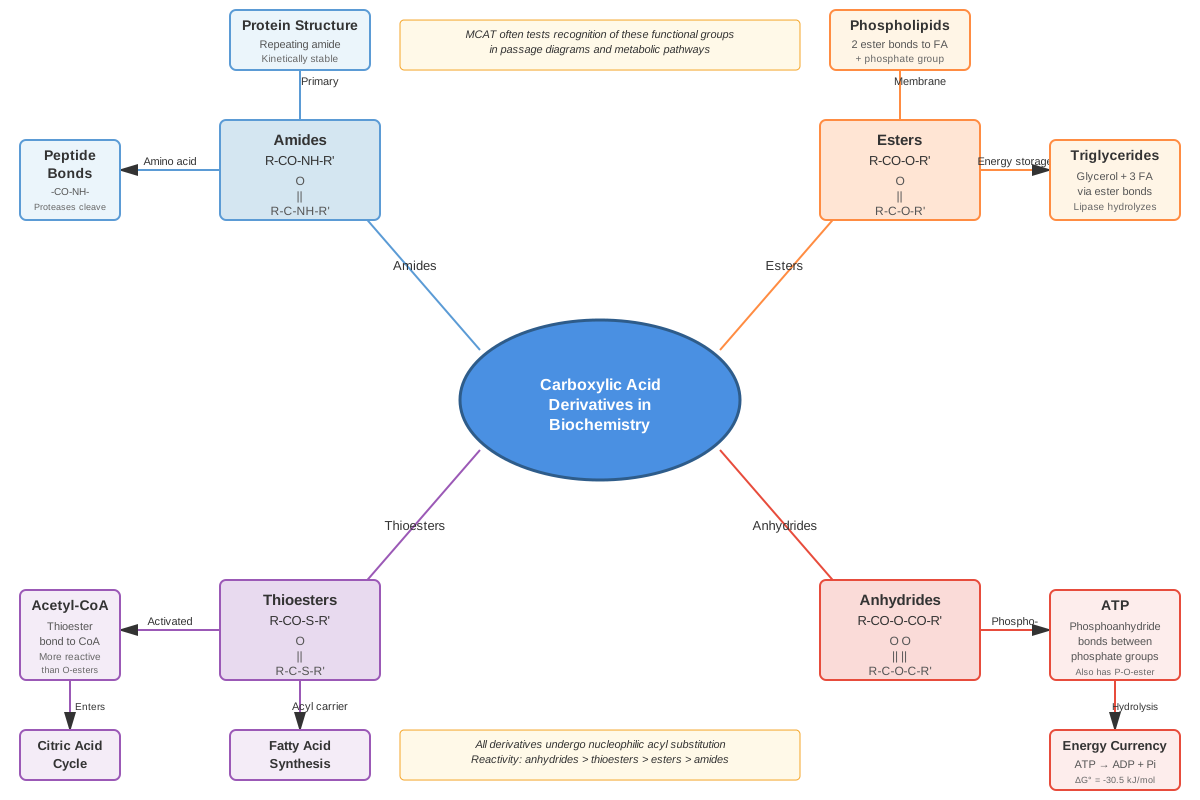
The importance of carboxylic acid derivatives extends far beyond pure organic chemistry. In biological systems, esters form the backbone of lipids and triglycerides, while amides constitute the peptide bonds linking amino acids in proteins. Thioesters like acetyl-CoA drive metabolic pathways including the citric acid cycle and fatty acid synthesis. The MCAT frequently tests the ability to predict reactivity patterns, rank derivatives by stability and reactivity, and recognize these functional groups in complex biological molecules. Questions may present synthesis pathways, ask students to identify products of hydrolysis reactions, or embed these concepts within biochemical passages about enzyme mechanisms or drug metabolism.
Mastery of carboxylic acid derivatives MCAT content requires understanding their position within the broader landscape of Carbonyl Chemistry. These derivatives represent "activated" forms of carboxylic acids, where the hydroxyl group has been replaced with better or worse leaving groups, fundamentally altering reactivity. This topic connects directly to acid-base chemistry, nucleophilicity and leaving group ability, resonance stabilization, and spectroscopic identification—all high-yield areas for the exam. Students must develop facility with predicting reaction outcomes, drawing mechanisms, and applying these principles to unfamiliar scenarios, as the MCAT emphasizes conceptual understanding over memorization.
Learning Objectives
- [ ] Define carboxylic acid derivatives using accurate Organic Chemistry terminology
- [ ] Explain why carboxylic acid derivatives matter for the MCAT
- [ ] Apply carboxylic acid derivatives to exam-style questions
- [ ] Identify common mistakes related to carboxylic acid derivatives
- [ ] Connect carboxylic acid derivatives to related Organic Chemistry concepts
- [ ] Rank carboxylic acid derivatives by relative reactivity and stability
- [ ] Predict products of nucleophilic acyl substitution reactions under various conditions
- [ ] Recognize carboxylic acid derivatives in biological molecules and metabolic pathways
Prerequisites
- Carboxylic acids structure and properties: Understanding the parent functional group is essential for recognizing how derivatives differ in reactivity
- Nucleophilic substitution mechanisms: The SN2 mechanism provides foundational understanding for nucleophilic acyl substitution
- Carbonyl group reactivity: Knowledge of electrophilic carbonyl carbons and nucleophilic addition patterns
- Resonance structures: Critical for understanding stability differences among derivatives
- Acid-base chemistry: Necessary for predicting reaction conditions and protonation states
- Leaving group ability: Determines which derivatives can be converted to others
- Basic spectroscopy (IR, NMR): Required for identifying functional groups in unknown compounds
Why This Topic Matters
Carboxylic acid derivatives appear with remarkable frequency on the MCAT, typically in 2-4 discrete questions per exam and embedded within numerous biochemistry passages. The Chemical and Physical Foundations section tests synthesis pathways, reaction mechanisms, and spectroscopic identification, while the Biological and Biochemical Foundations section emphasizes recognition of these groups in biomolecules. Ester hydrolysis appears in lipid metabolism questions, amide bonds are central to protein structure passages, and thioester chemistry underlies energy metabolism discussions.
Clinically, understanding these derivatives illuminates drug design and metabolism. Many pharmaceuticals contain ester or amide linkages that affect bioavailability, half-life, and metabolic breakdown. Aspirin (acetylsalicylic acid) functions as an ester prodrug that acetylates cyclooxygenase enzymes. Local anesthetics like lidocaine are classified as amides or esters based on their linkage, which determines their metabolic pathways and allergic potential. Penicillin antibiotics contain a β-lactam ring—a cyclic amide whose reactivity enables bacterial cell wall disruption.
The MCAT frequently presents passages describing enzymatic mechanisms where serine proteases use nucleophilic acyl substitution to cleave peptide bonds, or lipases that hydrolyze ester bonds in triglycerides. Questions may ask students to identify intermediates, predict pH effects on reaction rates, or explain why certain derivatives react faster than others. Discrete questions often test interconversion reactions, asking which reagents convert an ester to an amide, or which derivative is most reactive toward a given nucleophile. The ability to quickly rank reactivity and predict products under time pressure is a high-yield skill that distinguishes top scorers.
Core Concepts
Structure and Classification of Carboxylic Acid Derivatives
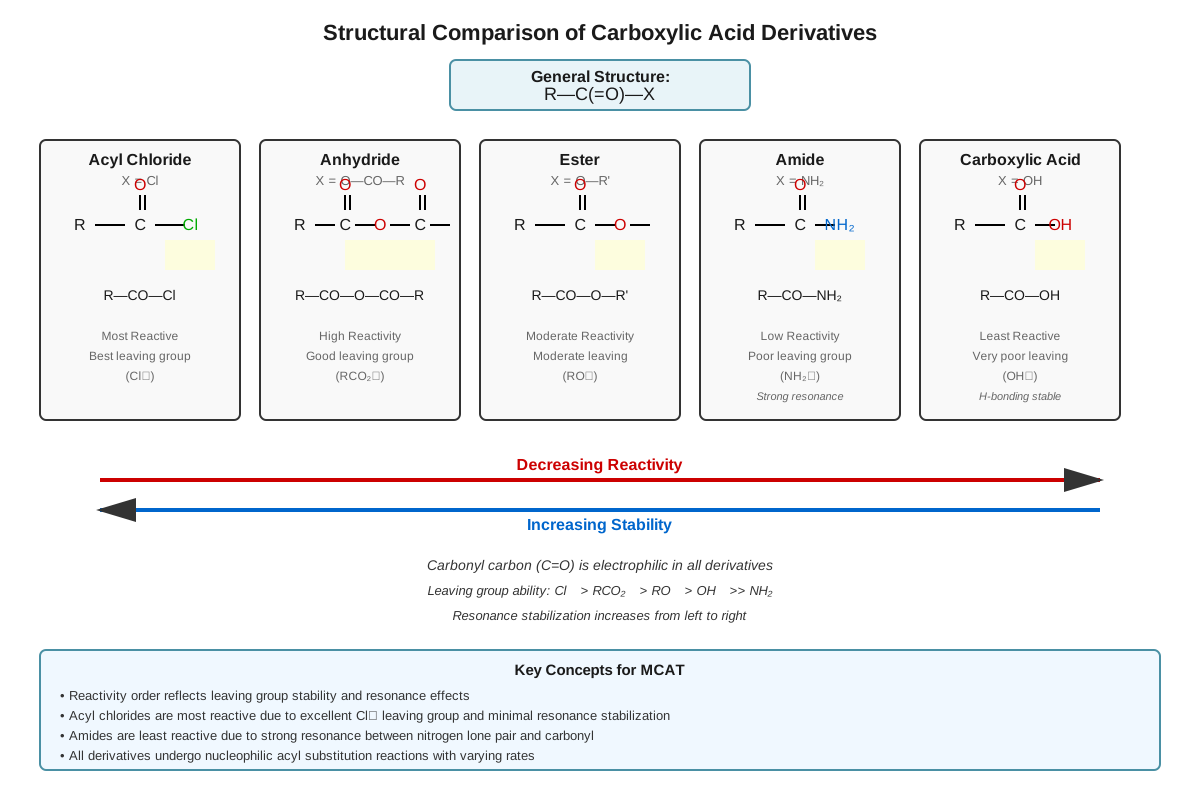
Carboxylic acid derivatives share a general structure where a carbonyl group (C=O) is bonded to a heteroatom or leaving group. The four major derivatives tested on the MCAT are:
- Acyl chlorides (acid chlorides): R-COCl, where chlorine serves as the leaving group
- Acid anhydrides: R-CO-O-CO-R', featuring two acyl groups bridged by oxygen
- Esters: R-CO-O-R', with an alkoxy group attached to the carbonyl
- Amides: R-CO-NR'R'', containing a nitrogen atom bonded to the carbonyl
Each derivative can be viewed as a carboxylic acid (R-COOH) where the hydroxyl group has been replaced. This substitution fundamentally alters reactivity because the leaving group ability varies dramatically. The carbonyl carbon remains electrophilic in all derivatives, but the degree of electrophilicity and the stability of the leaving group determine overall reactivity.
Reactivity Hierarchy and Stability
The reactivity of carboxylic acid derivatives toward nucleophilic acyl substitution follows a predictable order based on two factors: the electrophilicity of the carbonyl carbon and the leaving group ability of the attached heteroatom.
Reactivity order (most to least reactive):
Acyl chlorides > Acid anhydrides > Esters > Amides > Carboxylate ions
This hierarchy is crucial for the MCAT because it predicts which interconversions are favorable. A more reactive derivative can be converted to a less reactive one, but the reverse requires harsh conditions or activation. For example, an acyl chloride readily converts to an ester by reaction with an alcohol, but converting an ester to an acyl chloride requires strong reagents like thionyl chloride (SOCl₂).
| Derivative | Leaving Group | Resonance Stabilization | Relative Reactivity |
|---|---|---|---|
| Acyl chloride | Cl⁻ (excellent) | Weak (Cl less willing to donate) | Highest |
| Anhydride | RCOO⁻ (good) | Moderate | High |
| Ester | RO⁻ (moderate) | Moderate | Moderate |
| Amide | NR₂⁻ (poor) | Strong (N readily donates) | Lowest |
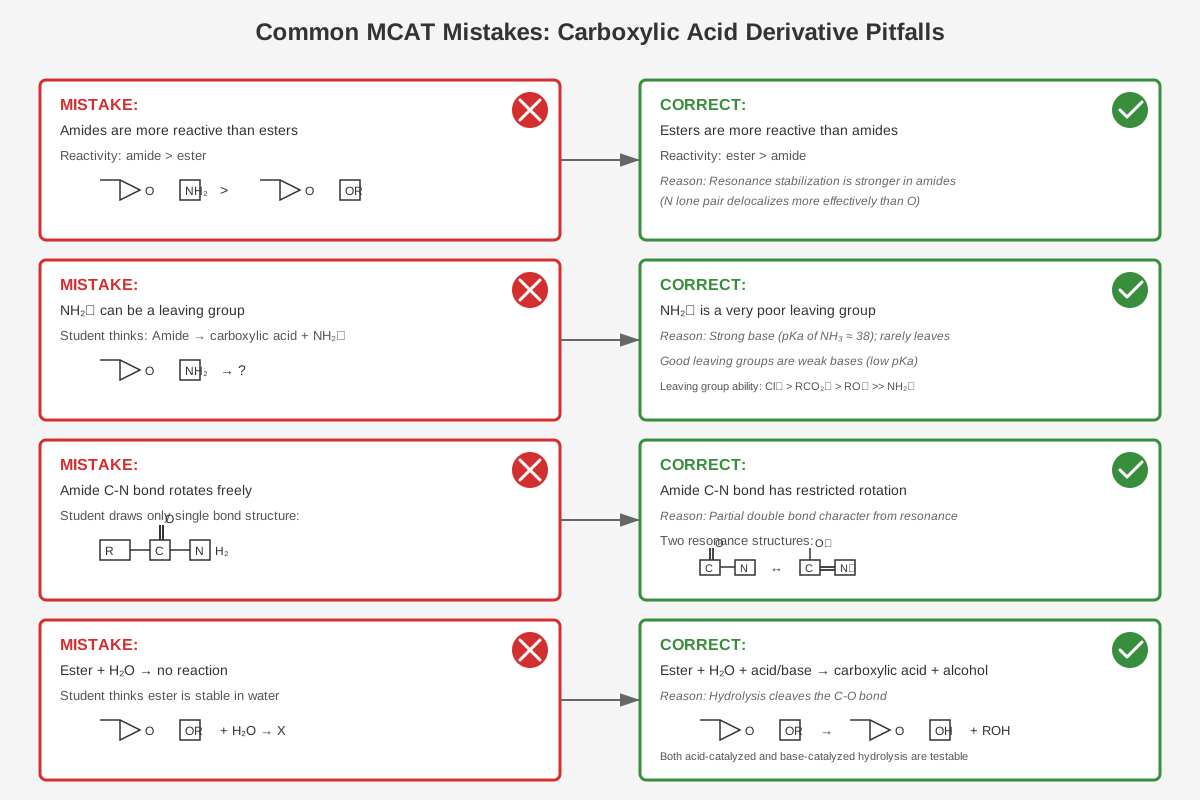
The stability order is the inverse of reactivity. Amides are the most stable derivatives because nitrogen's lone pair strongly resonates with the carbonyl, reducing the electrophilicity of the carbonyl carbon and making the nitrogen a terrible leaving group. This resonance creates partial double-bond character in the C-N bond, restricting rotation and giving amides planar geometry—a critical feature of peptide bonds in proteins.
Nucleophilic Acyl Substitution Mechanism
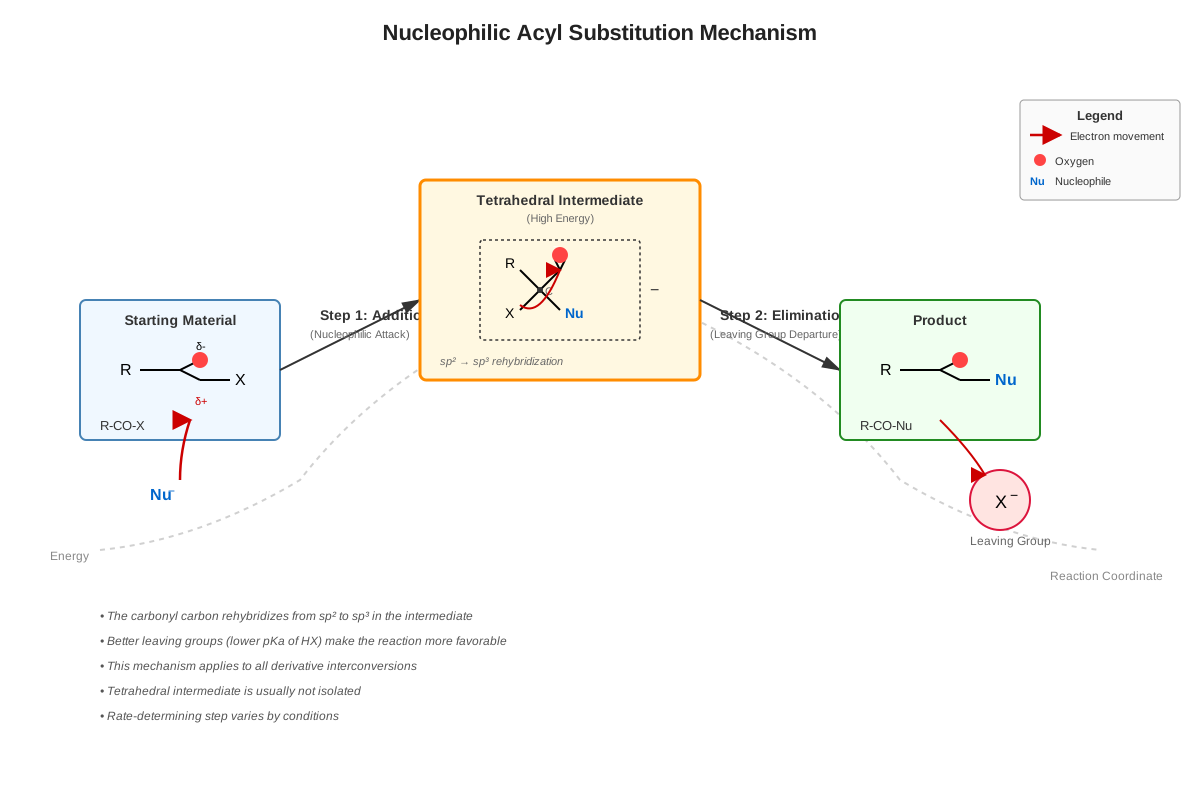
The characteristic reaction of carboxylic acid derivatives is nucleophilic acyl substitution, a two-step addition-elimination mechanism:
- Addition step: A nucleophile attacks the electrophilic carbonyl carbon, forming a tetrahedral intermediate
- Elimination step: The carbonyl reforms by expelling the leaving group
This mechanism differs from nucleophilic substitution at saturated carbons (SN1/SN2) because the carbonyl group can accommodate the incoming nucleophile by temporarily breaking the π bond, creating a tetrahedral intermediate. The carbonyl then reforms, driving off the leaving group.
Key mechanistic features:
- The tetrahedral intermediate is usually not isolated but is a critical transition state
- Acid or base catalysis often accelerates the reaction by activating the carbonyl or improving the nucleophile
- The reaction proceeds through the same mechanism regardless of the derivative, but rates vary based on the reactivity hierarchy
Hydrolysis Reactions
Hydrolysis—reaction with water—is the most commonly tested transformation of carboxylic acid derivatives on the MCAT. Hydrolysis converts any derivative back to the parent carboxylic acid (or carboxylate under basic conditions).
Acid-catalyzed hydrolysis:
- Protonation of the carbonyl oxygen increases electrophilicity
- Water acts as the nucleophile
- Produces carboxylic acid and the corresponding alcohol, amine, or HCl
- Reversible for esters (Fischer esterification equilibrium)
Base-catalyzed hydrolysis (saponification):
- Hydroxide ion is a stronger nucleophile than water
- Produces carboxylate salt (irreversible due to deprotonation)
- Particularly important for esters in lipid metabolism
- Amide hydrolysis requires harsh conditions (strong acid or base, heat)
MCAT Tip: Ester hydrolysis is reversible under acidic conditions but irreversible under basic conditions because the carboxylate ion formed cannot be attacked by nucleophiles. This explains why soap-making (saponification) drives to completion.
Reactions with Alcohols and Amines
Carboxylic acid derivatives react with alcohols to form esters and with amines to form amides, following the reactivity hierarchy:
Esterification:
- Acyl chlorides + alcohol → ester + HCl (fast, room temperature)
- Anhydrides + alcohol → ester + carboxylic acid (moderate rate)
- Carboxylic acid + alcohol → ester + water (requires acid catalyst, equilibrium)
Amide formation:
- Acyl chlorides + amine → amide + HCl (fast, exothermic)
- Anhydrides + amine → amide + carboxylic acid
- Esters + amine → amide + alcohol (slow, requires heat)
- Carboxylic acid + amine → ammonium salt (not amide; requires activation)
The inability of carboxylic acids to directly form amides with amines is a common MCAT trap. The acid-base reaction produces an ammonium carboxylate salt, which is stable and does not spontaneously dehydrate. Amide formation from carboxylic acids requires coupling reagents like DCC (dicyclohexylcarbodiimide) or conversion to a more reactive derivative first.
Reduction Reactions
Carboxylic acid derivatives can be reduced to alcohols or aldehydes depending on the reagent and derivative:
Lithium aluminum hydride (LiAlH₄):
- Reduces esters to primary alcohols (two equivalents of alcohol produced)
- Reduces amides to amines
- Reduces acyl chlorides and anhydrides to primary alcohols
- Strong, non-selective reducing agent
Diisobutylaluminum hydride (DIBAL-H):
- Reduces esters to aldehydes at low temperature with controlled stoichiometry
- Useful for partial reduction without going to alcohol
Sodium borohydride (NaBH₄):
- Does NOT reduce carboxylic acid derivatives (only aldehydes and ketones)
- Important negative result to remember for the MCAT
Spectroscopic Identification
Identifying carboxylic acid derivatives by spectroscopy is frequently tested:
Infrared (IR) Spectroscopy:
- All derivatives show strong C=O stretch (1650-1850 cm⁻¹)
- Acyl chlorides: ~1800 cm⁻¹ (highest frequency due to weak resonance)
- Anhydrides: two peaks at ~1750 and 1820 cm⁻¹ (symmetric and asymmetric stretches)
- Esters: ~1735 cm⁻¹ plus C-O stretch at 1000-1300 cm⁻¹
- Amides: ~1650 cm⁻¹ (lowest frequency due to strong resonance) plus N-H stretch at 3100-3500 cm⁻¹ if primary or secondary
¹H NMR Spectroscopy:
- Protons α to carbonyl are deshielded (δ 2-2.5 ppm)
- Ester OCH₂ or OCH₃ protons appear at δ 3.5-4.5 ppm
- Amide N-H protons are broad, appearing at δ 5-8 ppm
Biological Relevance
Esters form the backbone of triglycerides and phospholipids. Lipase enzymes catalyze ester hydrolysis during digestion. Aspirin acetylates serine residues in cyclooxygenase through transesterification.
Amides constitute peptide bonds in proteins. Proteases cleave these bonds through nucleophilic acyl substitution using serine, cysteine, or water as nucleophiles. The resonance stabilization of amides contributes to the rigidity of protein secondary structure.
Thioesters like acetyl-CoA are high-energy intermediates in metabolism. The sulfur atom provides less resonance stabilization than oxygen, making thioesters more reactive than oxygen esters—a key feature enabling their role in biosynthetic reactions.
Quick check — test yourself on Carboxylic acid derivatives so far.
Try Flashcards →Concept Relationships
The reactivity hierarchy of carboxylic acid derivatives directly stems from resonance stabilization and leaving group ability, connecting to fundamental concepts in acid-base chemistry and molecular orbital theory. More reactive derivatives (acyl chlorides) have poor resonance donation from the leaving group, maintaining high electrophilicity at the carbonyl carbon. Less reactive derivatives (amides) benefit from strong resonance, which delocalizes the carbonyl π electrons and reduces electrophilicity.
This reactivity hierarchy enables prediction of interconversion reactions: Acyl chlorides → Anhydrides → Esters → Amides represents the direction of favorable transformations. Reversing this order requires activation or harsh conditions. This concept connects to thermodynamics (favorable reactions proceed downhill in energy) and kinetics (activation energy barriers determine reaction rates).
The nucleophilic acyl substitution mechanism unifies all derivative transformations, connecting to carbonyl addition mechanisms seen in aldehydes and ketones. However, derivatives differ because they possess a leaving group, enabling substitution rather than just addition. This mechanism also relates to biochemical enzyme mechanisms, particularly serine proteases that use nucleophilic acyl substitution to cleave peptide bonds.
Spectroscopic identification of derivatives connects to molecular structure and bonding. IR carbonyl stretching frequencies correlate with bond strength: stronger C=O bonds (less resonance) absorb at higher frequencies. This relationship between structure and spectroscopy enables functional group identification in unknown compounds.
Relationship map:
Resonance stabilization → Determines carbonyl electrophilicity → Controls reactivity hierarchy → Predicts favorable interconversions → Enables synthesis planning → Connects to biological transformations (ester hydrolysis in lipid metabolism, peptide bond formation/cleavage)
High-Yield Facts
⭐ Reactivity order: Acyl chlorides > Anhydrides > Esters > Amides (most to least reactive toward nucleophilic acyl substitution)
⭐ Amides are the least reactive derivative due to strong resonance between nitrogen's lone pair and the carbonyl, creating partial C-N double bond character
⭐ Base-catalyzed ester hydrolysis (saponification) is irreversible because the carboxylate product cannot be attacked by nucleophiles
⭐ Carboxylic acids cannot directly form amides with amines; they form ammonium carboxylate salts instead and require activation
⭐ LiAlH₄ reduces esters to primary alcohols and amides to amines, while NaBH₄ does not reduce carboxylic acid derivatives
- Acyl chlorides show IR carbonyl stretch at ~1800 cm⁻¹, the highest frequency among derivatives
- Anhydrides display two carbonyl peaks in IR spectroscopy due to symmetric and asymmetric stretches
- Amide carbonyl stretch appears at ~1650 cm⁻¹, the lowest frequency due to resonance stabilization
- Thioesters are more reactive than oxygen esters because sulfur provides less resonance stabilization
- Peptide bonds are amide linkages, explaining their stability and resistance to hydrolysis under physiological conditions
Common Misconceptions
Misconception: All carboxylic acid derivatives react at the same rate with nucleophiles.
Correction: Derivatives follow a strict reactivity hierarchy based on leaving group ability and resonance stabilization. Acyl chlorides react rapidly at room temperature, while amides require harsh conditions (strong acid/base and heat) for hydrolysis.
Misconception: Carboxylic acids can directly form amides by reacting with amines and losing water.
Correction: Carboxylic acids and amines undergo acid-base reaction to form stable ammonium carboxylate salts, which do not spontaneously dehydrate. Amide formation requires activation of the carboxylic acid (converting to acyl chloride or using coupling reagents like DCC).
Misconception: NaBH₄ can reduce all carbonyl-containing compounds.
Correction: Sodium borohydride is selective for aldehydes and ketones; it does NOT reduce carboxylic acids or their derivatives (esters, amides, acyl chlorides). LiAlH₄ is required for reducing carboxylic acid derivatives.
Misconception: Ester hydrolysis always produces the same products regardless of conditions.
Correction: Acid-catalyzed hydrolysis produces carboxylic acid and alcohol (reversible), while base-catalyzed hydrolysis produces carboxylate salt and alcohol (irreversible). The mechanism and thermodynamics differ significantly.
Misconception: The carbonyl carbon in amides is highly electrophilic like in acyl chlorides.
Correction: Resonance donation from nitrogen's lone pair significantly reduces the electrophilicity of the carbonyl carbon in amides, making them the least reactive derivative. The C-N bond has partial double-bond character, restricting rotation.
Misconception: All derivatives can be interconverted equally easily in both directions.
Correction: Interconversion follows the reactivity hierarchy in one direction (more reactive → less reactive is favorable). Converting a less reactive derivative to a more reactive one requires harsh conditions or special reagents (e.g., SOCl₂ to convert carboxylic acid to acyl chloride).
Worked Examples
Example 1: Predicting Reaction Products
Question: A student treats ethyl acetate (an ester) with excess methylamine (CH₃NH₂). What is the major product?
Solution:
Step 1: Identify the functional groups and reaction type.
- Ethyl acetate is an ester: CH₃-CO-O-CH₂CH₃
- Methylamine is a primary amine (nucleophile)
- This is a nucleophilic acyl substitution reaction
Step 2: Apply the reactivity hierarchy.
- Esters can be converted to amides by reaction with amines
- The amine nitrogen attacks the carbonyl carbon
- The ethoxy group (-OCH₂CH₃) is displaced as the leaving group
Step 3: Draw the mechanism.
- Methylamine attacks the carbonyl carbon, forming a tetrahedral intermediate
- The intermediate collapses, reforming the carbonyl and expelling ethoxide
- Ethoxide (a strong base) deprotonates the positively charged nitrogen
Step 4: Identify the product.
- Major product: N-methylacetamide (CH₃-CO-NH-CH₃)
- Byproduct: ethanol (CH₃CH₂OH)
Key concept: This reaction demonstrates that esters can be converted to amides using amines, following the reactivity hierarchy (ester → amide is favorable). The reaction typically requires heating because esters are only moderately reactive.
Example 2: Ranking Reactivity in a Biological Context
Question: A biochemistry passage describes three compounds involved in metabolism: acetyl-CoA (a thioester), a triglyceride (containing ester bonds), and a peptide (containing amide bonds). Rank these in order of reactivity toward nucleophilic attack by water, and explain the biological significance.
Solution:
Step 1: Identify the functional groups.
- Acetyl-CoA: thioester (R-CO-S-CoA)
- Triglyceride: ester linkages (R-CO-O-R')
- Peptide: amide bonds (R-CO-NH-R')
Step 2: Apply reactivity principles.
- Thioesters are more reactive than oxygen esters because sulfur is larger and less electronegative than oxygen, providing weaker resonance stabilization
- Esters are more reactive than amides due to better leaving group ability and less resonance stabilization
- Reactivity order: Thioester > Ester > Amide
Step 3: Explain biological significance.
- Acetyl-CoA (thioester): High reactivity enables it to serve as an activated acetyl donor in biosynthetic reactions (fatty acid synthesis, citric acid cycle). The thioester bond is "high-energy," meaning its hydrolysis releases significant free energy.
- Triglycerides (esters): Moderate reactivity allows controlled hydrolysis by lipases during digestion and lipolysis. Ester bonds are stable enough for storage but reactive enough for enzymatic cleavage when energy is needed.
- Peptides (amides): Low reactivity provides stability to protein structure. Peptide bonds resist spontaneous hydrolysis under physiological conditions, requiring specific proteases for cleavage. This stability is essential for maintaining protein structure and function.
Key concept: The reactivity hierarchy of carboxylic acid derivatives has direct biological consequences. Metabolic intermediates requiring high reactivity use thioesters, storage molecules use esters, and structural molecules use amides.
Exam Strategy
When approaching MCAT questions on carboxylic acid derivatives, immediately identify the functional group and recall the reactivity hierarchy. Many questions test whether students can predict products of nucleophilic acyl substitution or rank derivatives by reactivity.
Trigger words to watch for:
- "Hydrolysis" → expect conversion to carboxylic acid or carboxylate
- "Saponification" → base-catalyzed ester hydrolysis (irreversible)
- "Peptide bond" → amide linkage (least reactive)
- "Activated intermediate" → likely refers to acyl chloride, anhydride, or thioester
- "Coupling reagent" → indicates amide formation from carboxylic acid
Process-of-elimination strategies:
- For reactivity ranking questions: Eliminate any answer that places amides as more reactive than esters, or esters as more reactive than acyl chlorides. The hierarchy is absolute.
- For product prediction: If the question asks what happens when a derivative reacts with a nucleophile, eliminate options that show conversion to a more reactive derivative without special reagents.
- For mechanism questions: Eliminate any mechanism that doesn't show a tetrahedral intermediate. Nucleophilic acyl substitution always proceeds through addition-elimination, not direct displacement.
- For spectroscopy questions: Use carbonyl stretching frequency to narrow options. If IR shows C=O at 1650 cm⁻¹, it's likely an amide; at 1800 cm⁻¹, likely an acyl chloride.
Time allocation: Discrete questions on derivatives typically require 60-90 seconds. Quickly identify the functional group (10 seconds), recall the relevant principle (reactivity hierarchy or mechanism, 20 seconds), apply to the specific question (30 seconds), and verify the answer (10 seconds). For passage-based questions, spend extra time understanding the biological context, as the passage often provides clues about which derivative is present and why its reactivity matters.
Common question formats:
- Synthesis sequences: "What reagents convert compound A to compound B?"
- Reactivity comparisons: "Which compound reacts fastest with water?"
- Biological applications: "Why is the peptide bond stable in proteins?"
- Spectroscopic identification: "Which IR spectrum corresponds to an ester?"
Memory Techniques
Reactivity Hierarchy Mnemonic: "All Ants Eat Apples" (Acyl chlorides, Anhydrides, Esters, Amides—most to least reactive)
Leaving Group Quality: Remember "CAEN" (Chloride, Anhydride, Ester, Nitrogen) in order of decreasing leaving group ability. Chloride is the best leaving group, nitrogen (in amides) is the worst.
IR Carbonyl Frequencies: Visualize a number line from 1650 to 1850 cm⁻¹. Amides are at the low end (1650, think "A" for amide and "A" for at the beginning of the alphabet = low number). Acyl chlorides are at the high end (1800, think "Cl" comes later in the alphabet = high number).
Hydrolysis Products: Use the phrase "Base Is Irreversible" (BII) to remember that base-catalyzed hydrolysis produces carboxylate salts that cannot be attacked by nucleophiles, making the reaction irreversible.
Amide Formation: Remember "Acids And Amines Avoid Amides" (5 A's) to recall that carboxylic acids and amines form salts, not amides, without activation.
Reduction Selectivity: "LAH Loves All" (LiAlH₄ reduces all carbonyl compounds) versus "NaBH is Not Broad" (NaBH₄ only reduces aldehydes and ketones, not derivatives).
Visualization Strategy: Picture the carbonyl carbon as a target with varying levels of shielding. In acyl chlorides, the target is exposed (highly electrophilic). In amides, nitrogen's lone pair creates a shield (resonance), protecting the carbonyl from attack. This mental image helps predict reactivity.
Summary
Carboxylic acid derivatives—acyl chlorides, anhydrides, esters, and amides—represent a family of compounds where the hydroxyl group of a carboxylic acid has been replaced with different leaving groups. These derivatives follow a strict reactivity hierarchy based on leaving group ability and resonance stabilization, with acyl chlorides being most reactive and amides least reactive toward nucleophilic acyl substitution. This two-step addition-elimination mechanism involves nucleophilic attack on the carbonyl carbon, formation of a tetrahedral intermediate, and expulsion of the leaving group. Hydrolysis converts all derivatives back to carboxylic acids, with base-catalyzed reactions being irreversible due to carboxylate formation. The MCAT extensively tests the ability to predict products, rank reactivity, and recognize these functional groups in biological contexts including peptide bonds, ester linkages in lipids, and thioester intermediates in metabolism. Spectroscopic identification relies on characteristic IR carbonyl stretching frequencies that correlate with resonance stabilization. Mastery requires understanding the mechanistic basis for reactivity differences and applying this knowledge to synthesis problems, biological passages, and discrete questions about interconversions and reactions with nucleophiles.
Key Takeaways
- Carboxylic acid derivatives follow an absolute reactivity hierarchy: acyl chlorides > anhydrides > esters > amides, determined by leaving group ability and resonance stabilization
- Nucleophilic acyl substitution proceeds through a tetrahedral intermediate via addition-elimination mechanism, unifying all derivative transformations
- Amides are the least reactive derivative due to strong resonance between nitrogen's lone pair and the carbonyl, creating partial double-bond character
- Base-catalyzed ester hydrolysis (saponification) is irreversible because the carboxylate product cannot be attacked by nucleophiles
- LiAlH₄ reduces carboxylic acid derivatives (esters to alcohols, amides to amines), while NaBH₄ does not reduce derivatives
- Biological significance: esters in lipids, amides in peptide bonds, thioesters as high-energy metabolic intermediates
- IR spectroscopy distinguishes derivatives by carbonyl stretching frequency: acyl chlorides ~1800 cm⁻¹, amides ~1650 cm⁻¹
Related Topics
Carboxylic Acids: Understanding the parent functional group enables prediction of how derivatives differ in reactivity and how to synthesize derivatives from acids using activating reagents.
Nucleophiles and Leaving Groups: Deeper study of nucleophilicity trends and leaving group ability provides mechanistic insight into why the reactivity hierarchy exists and how to predict reaction outcomes.
Protein Structure and Peptide Bonds: Exploring amide linkages in biological polymers connects derivative chemistry to biochemistry, particularly enzyme mechanisms of proteases.
Lipid Metabolism: Ester hydrolysis by lipases and the role of acyl-CoA thioesters in fatty acid metabolism demonstrate biological applications of derivative chemistry.
Spectroscopy: Advanced study of IR, NMR, and mass spectrometry enables identification of unknown compounds containing carboxylic acid derivatives.
Retrosynthetic Analysis: Mastering derivative interconversions is essential for planning multi-step organic syntheses, a skill tested in advanced organic chemistry questions.
Practice CTA
Now that you've mastered the core concepts of carboxylic acid derivatives, it's time to solidify your understanding through active practice. Attempt the practice questions to test your ability to predict products, rank reactivity, and apply these principles to MCAT-style scenarios. Use the flashcards to reinforce the reactivity hierarchy, spectroscopic characteristics, and key reactions. Remember, the MCAT rewards not just knowledge but the ability to apply concepts under time pressure—practice is what transforms understanding into exam-day performance. You've built a strong foundation; now prove it to yourself through deliberate practice!
Sign up free to keep reading
Create a free AnvayaPrep account to finish this MCAT guide on Carboxylic acid derivatives — plus flashcards and practice questions.