Overview
Leaving groups are fundamental components in organic reaction mechanisms, representing atoms or molecular fragments that depart from a molecule during a chemical transformation. Understanding leaving groups is essential for mastering nucleophilic substitution reactions, elimination reactions, and numerous other transformations that appear frequently on the MCAT. A leaving group's ability to stabilize negative charge after departure determines its effectiveness and influences reaction rates, product distributions, and mechanistic pathways. The concept bridges structure and bonding principles with reaction mechanisms, making it a cornerstone of Organic Chemistry reasoning.
For the MCAT, leaving groups appear in multiple contexts across the Chemical and Physical Foundations of Biological Systems section. Questions may directly test the ability to rank leaving group quality, or they may embed leaving group concepts within complex reaction mechanisms, biochemical transformations, or passage-based scenarios involving drug metabolism or enzymatic catalysis. The ability to quickly identify good versus poor leaving groups enables efficient problem-solving on substitution and elimination questions, which collectively represent a significant portion of organic chemistry content on the exam.
Mastery of leaving groups Organic Chemistry concepts connects directly to understanding nucleophilicity, basicity, acid-base chemistry, and reaction kinetics. This topic serves as a gateway to predicting reaction outcomes, explaining stereochemical results, and understanding biological processes such as phosphoryl transfer reactions in ATP hydrolysis or the action of restriction enzymes. The principles governing leaving group ability apply universally across organic transformations, making this knowledge highly transferable and high-yield for exam preparation.
Learning Objectives
- [ ] Define leaving groups using accurate Organic Chemistry terminology
- [ ] Explain why leaving groups matters for the MCAT
- [ ] Apply leaving groups to exam-style questions
- [ ] Identify common mistakes related to leaving groups
- [ ] Connect leaving groups to related Organic Chemistry concepts
- [ ] Rank leaving groups by relative ability based on structure and stability
- [ ] Predict reaction mechanisms and rates based on leaving group quality
- [ ] Analyze the relationship between pKa values and leaving group ability
Prerequisites
- Acid-base chemistry and pKa values: Understanding conjugate acid-base relationships is essential because leaving group ability correlates inversely with the basicity of the departing species
- Electronegativity and periodic trends: These principles explain why certain atoms stabilize negative charge better than others, directly affecting leaving group quality
- Resonance and inductive effects: These electron-delocalization mechanisms determine how effectively a leaving group can stabilize the negative charge it acquires upon departure
- Basic reaction mechanisms: Familiarity with curved arrow notation and electron movement helps visualize how leaving groups depart during chemical transformations
- Molecular orbital theory fundamentals: Understanding orbital overlap and bonding explains why certain bonds break more readily than others
Why This Topic Matters
Leaving groups MCAT questions appear with moderate to high frequency, particularly in passages involving organic synthesis, biochemical pathways, or pharmaceutical chemistry. The MCAT tests leaving group concepts both directly (ranking leaving group ability, identifying the best leaving group in a molecule) and indirectly (predicting SN1 versus SN2 mechanisms, explaining reaction rates, or analyzing elimination versus substitution competition). Approximately 2-4 questions per exam directly or indirectly assess leaving group knowledge, making this a medium-yield but essential topic.
In biological and clinical contexts, leaving groups are central to understanding enzymatic mechanisms, drug activation, and metabolic transformations. For example, ATP functions as a biological leaving group donor, with pyrophosphate or ADP serving as excellent leaving groups in phosphoryl transfer reactions. Many prodrugs are designed with specific leaving groups that are cleaved by enzymes to release the active pharmaceutical compound. Understanding leaving groups also illuminates DNA replication mechanisms, where pyrophosphate departure drives nucleotide incorporation.
MCAT passages commonly present leaving groups in the context of reaction mechanism elucidation, synthetic strategy design, or biochemical pathway analysis. A typical passage might describe a novel synthetic route to a pharmaceutical compound and ask students to identify which intermediate would react fastest based on leaving group quality. Alternatively, a biochemistry passage might present an enzymatic mechanism and require students to recognize the leaving group in a substrate or explain why a particular step is thermodynamically favorable due to excellent leaving group departure.
Core Concepts
Definition and Fundamental Principles
A leaving group is an atom or group of atoms that detaches from a molecule during a chemical reaction, taking with it the pair of electrons that formerly constituted the bond to the parent molecule. The departing species becomes negatively charged (or neutral if it was positively charged before departure) and must stabilize this electron density to be an effective leaving group. The quality of a leaving group is determined by its ability to accommodate negative charge after departure—the more stable the leaving group as an independent species, the better it functions in this role.
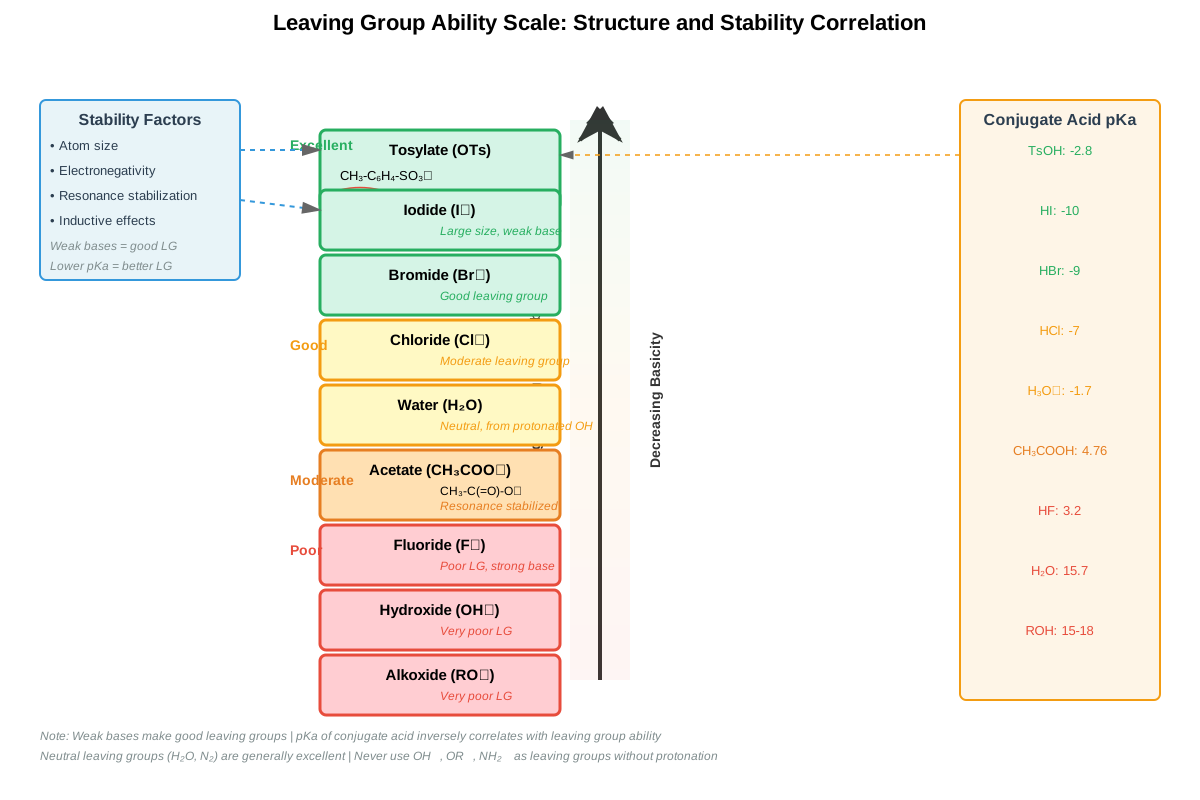
The relationship between leaving group ability and basicity is inverse and fundamental: weak bases make good leaving groups, while strong bases make poor leaving groups. This principle stems from the fact that species capable of stabilizing negative charge (weak bases) can comfortably exist as independent anions after departure, whereas species that poorly stabilize negative charge (strong bases) resist departure. This inverse relationship provides a practical tool for ranking leaving groups: examine the pKa of the conjugate acid of the leaving group—the lower the pKa, the weaker the conjugate base, and therefore the better the leaving group.
Ranking Leaving Group Ability
The ability to rank leaving groups is a high-yield skill for the MCAT. The following table presents common leaving groups in order from best to worst:
| Leaving Group | Conjugate Acid pKa | Relative Ability | Common Context |
|---|---|---|---|
| I⁻ | -10 | Excellent | Alkyl iodides in SN2 reactions |
| Br⁻ | -9 | Excellent | Alkyl bromides in substitution |
| Cl⁻ | -7 | Good | Alkyl chlorides, acid chlorides |
| H₂O | -1.7 | Good | Protonated alcohols, oxonium ions |
| TsO⁻ (tosylate) | -2.8 | Excellent | Activated alcohols in synthesis |
| MsO⁻ (mesylate) | -2.6 | Excellent | Activated alcohols in synthesis |
| F⁻ | 3.2 | Poor | Rarely acts as leaving group |
| CH₃COO⁻ (acetate) | 4.76 | Moderate | Ester hydrolysis |
| OH⁻ | 15.7 | Very poor | Does not leave without protonation |
| NH₂⁻ | 38 | Extremely poor | Never leaves without activation |
| H⁻ | 35 | Extremely poor | Never leaves as hydride anion |
| R⁻ (alkyl anion) | >40 | Extremely poor | Never leaves as carbanion |
Factors Affecting Leaving Group Ability
Charge stabilization is the primary determinant of leaving group quality. Several structural features enhance charge stabilization:
- Atom size and polarizability: Larger atoms distribute negative charge over a greater volume, reducing charge density and increasing stability. This explains why iodide (I⁻) is a better leaving group than fluoride (F⁻) despite fluorine's higher electronegativity. The trend down the halogen group is: I⁻ > Br⁻ > Cl⁻ >> F⁻.
- Resonance stabilization: Leaving groups that can delocalize negative charge through resonance are significantly better. Tosylate (TsO⁻) and mesylate (MsO⁻) are excellent leaving groups because the negative charge delocalizes across multiple oxygen atoms and the aromatic ring (in tosylate). Sulfonate esters are commonly used in synthesis specifically because they are excellent leaving groups.
- Inductive effects: Electron-withdrawing groups adjacent to the leaving group stabilize negative charge through inductive withdrawal. Trifluoroacetate (CF₃COO⁻) is a better leaving group than acetate (CH₃COO⁻) because the three fluorine atoms withdraw electron density, stabilizing the negative charge on oxygen.
- Electronegativity: More electronegative atoms better accommodate negative charge. However, this factor is often overridden by size and polarizability effects, as seen in the halogen series.
Leaving Groups in Biological Systems
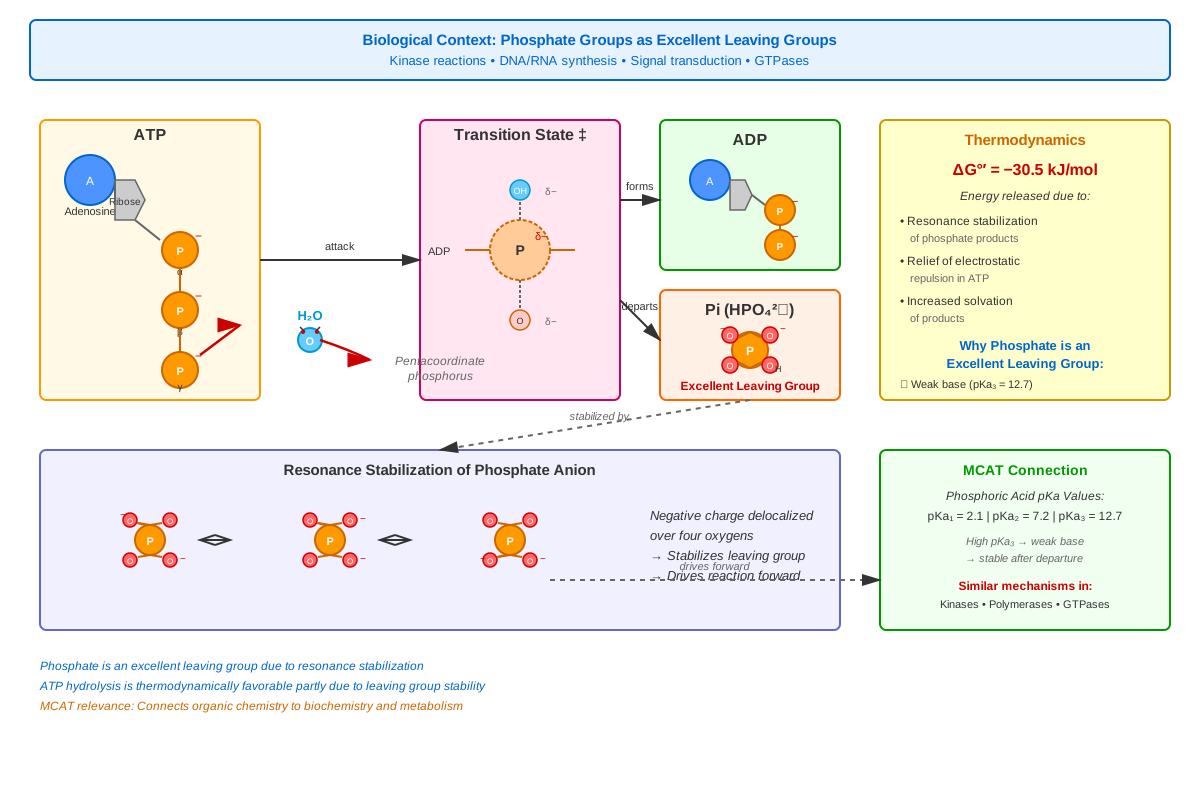
Biological chemistry extensively employs leaving groups in enzymatic mechanisms. Pyrophosphate (PPi) is nature's preferred leaving group in biosynthetic reactions. When ATP participates in phosphoryl transfer reactions, either ADP or pyrophosphate serves as the leaving group. The subsequent hydrolysis of pyrophosphate by pyrophosphatase (PPi → 2 Pi) makes these reactions thermodynamically irreversible, driving biosynthesis forward.
Phosphate esters are common in biochemistry, and the phosphate group can serve as a leaving group when activated. In glycolysis, glucose-6-phosphate and fructose-6-phosphate contain phosphate groups that can act as leaving groups in subsequent transformations. The negative charge on phosphate is stabilized by resonance across multiple oxygen atoms, making it a competent leaving group in biological contexts.
S-Adenosylmethionine (SAM) functions as a biological methylating agent, with S-adenosylhomocysteine serving as the leaving group. The positively charged sulfur in SAM makes the methyl group an excellent electrophile, and the neutral sulfur in the leaving group product is highly stable.
Activation of Poor Leaving Groups
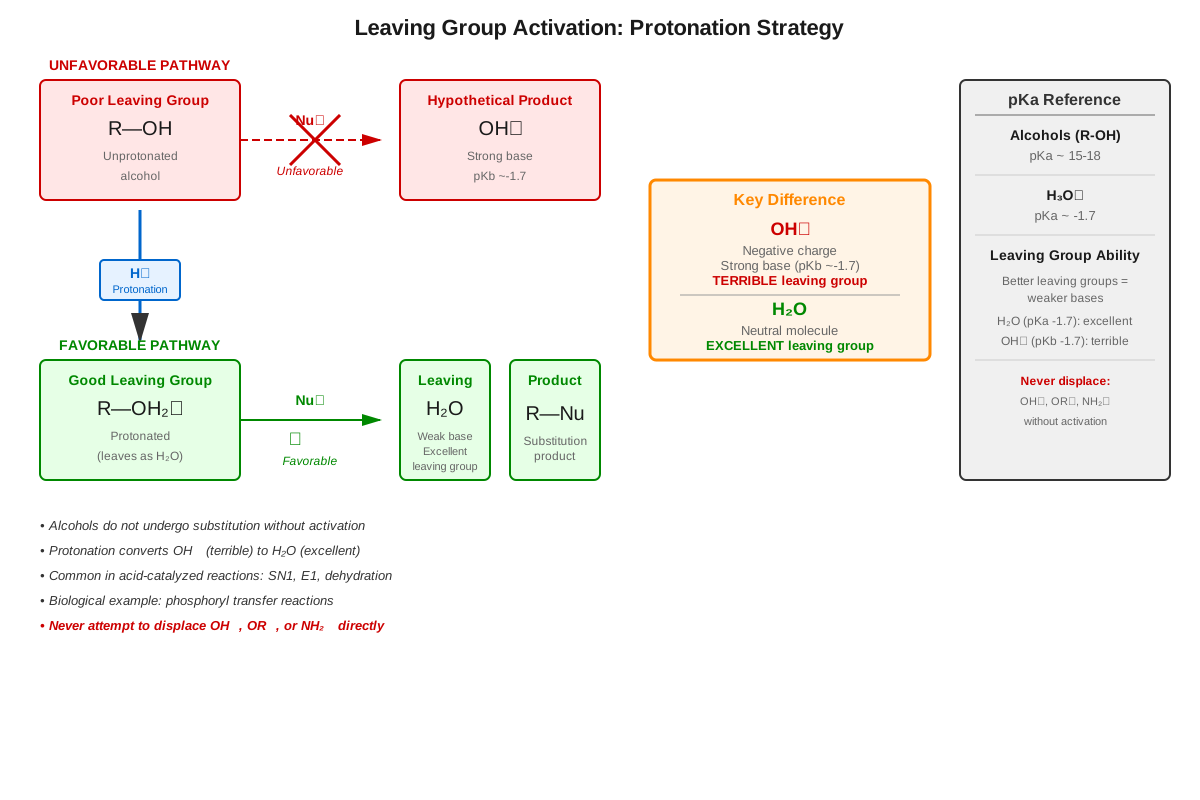
Hydroxyl groups (OH⁻) and amino groups (NH₂⁻) are poor leaving groups in their anionic forms and do not depart under normal conditions. However, these groups can be converted into good leaving groups through chemical modification:
Protonation converts hydroxide (OH⁻) into water (H₂O), transforming a very poor leaving group into a good one. This is why substitution reactions of alcohols require acidic conditions—protonation of the alcohol generates an oxonium ion (R-OH₂⁺), and water can then depart. The pKa of H₃O⁺ is -1.7, making water a much better leaving group than hydroxide (pKa of H₂O is 15.7).
Conversion to sulfonate esters (tosylates, mesylates, triflates) is a common synthetic strategy to activate alcohols. Treatment of an alcohol with tosyl chloride (TsCl) or mesyl chloride (MsCl) in the presence of base converts the poor OH leaving group into an excellent sulfonate leaving group without affecting other functional groups in the molecule.
Phosphorylation in biological systems activates hydroxyl groups. Kinases transfer phosphate groups from ATP to alcohols, creating phosphate esters that can subsequently undergo substitution or elimination with phosphate as the leaving group.
Leaving Groups in Reaction Mechanisms
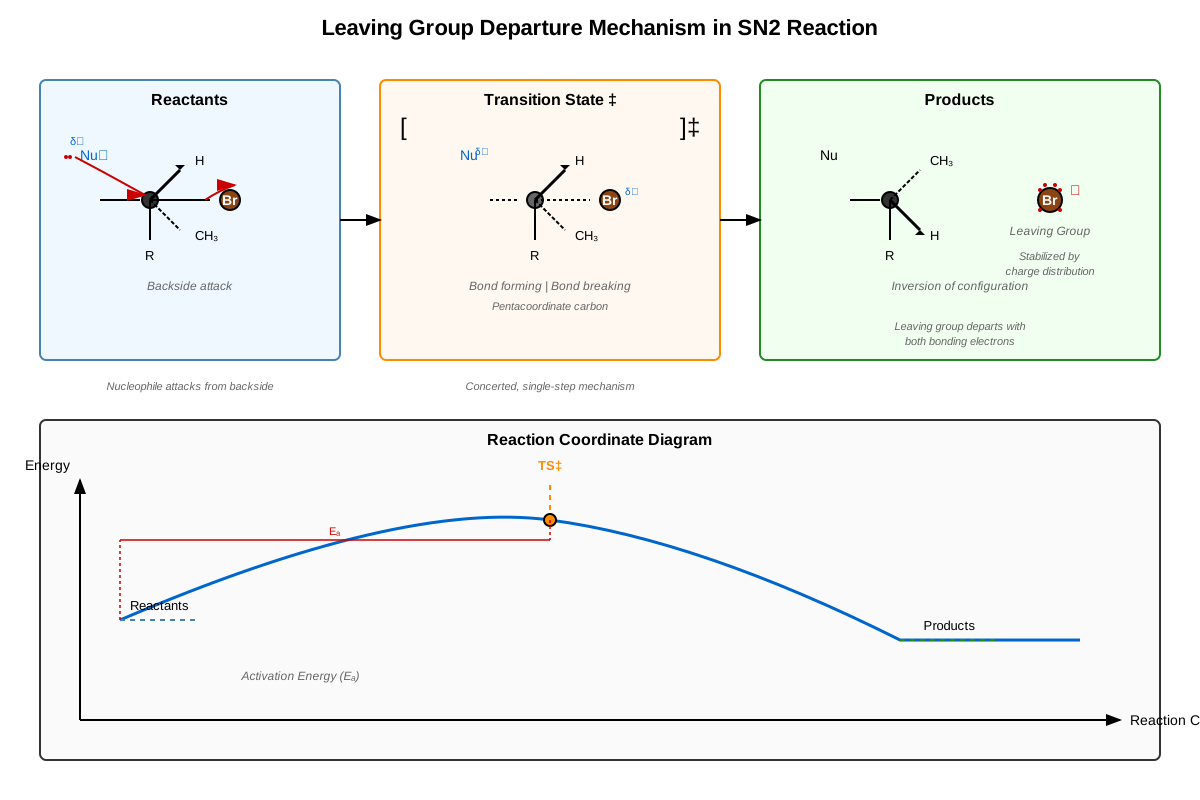
In SN2 reactions (bimolecular nucleophilic substitution), the leaving group departs simultaneously with nucleophile attack in a concerted mechanism. Better leaving groups accelerate SN2 reactions because they stabilize the transition state where the carbon-leaving group bond is partially broken. The rate of SN2 reactions follows the leaving group trend: RI > RBr > RCl >> RF.
In SN1 reactions (unimolecular nucleophilic substitution), the leaving group departs first to generate a carbocation intermediate. Better leaving groups dramatically accelerate SN1 reactions because the rate-determining step is carbocation formation, which requires leaving group departure. Tertiary substrates with excellent leaving groups (like tosylate or bromide) undergo SN1 reactions readily, while primary substrates with poor leaving groups do not.
In E1 and E2 elimination reactions, the leaving group departs as a base removes a β-proton. Better leaving groups facilitate both E1 (where leaving group departure forms a carbocation) and E2 (where leaving group departure is concerted with proton removal) mechanisms. The competition between substitution and elimination often depends on leaving group quality, with better leaving groups favoring faster reactions of both types.
Concept Relationships
The quality of a leaving group directly determines reaction rates and mechanisms in nucleophilic substitution and elimination reactions. Leaving group ability → influences → SN1/SN2/E1/E2 reaction rates → determines → product distribution and reaction feasibility. Poor leaving groups prevent reactions from occurring under mild conditions, while excellent leaving groups enable reactions to proceed rapidly even with weak nucleophiles.
The inverse relationship between basicity and leaving group ability connects this topic to acid-base chemistry: pKa of conjugate acid → determines → basicity of leaving group → inversely correlates with → leaving group ability. This relationship provides a quantitative tool for predicting and ranking leaving groups, making pKa tables valuable resources for solving leaving group problems.
Leaving group activation strategies connect to functional group transformations: poor leaving group (OH, NH₂) → requires activation via → protonation, sulfonylation, or phosphorylation → generates → good leaving group (H₂O, TsO⁻, phosphate) → enables → substitution or elimination reactions. This sequence is fundamental to both synthetic organic chemistry and biochemical pathways.
The concept of leaving groups bridges structure and bonding principles with reaction mechanisms: molecular structure → determines → charge stabilization ability → predicts → leaving group quality → influences → reaction mechanism and rate → determines → product formation. Understanding this chain of causation enables comprehensive analysis of organic reactions.
Quick check — test yourself on Leaving groups so far.
Try Flashcards →High-Yield Facts
⭐ Weak bases are good leaving groups; strong bases are poor leaving groups (inverse relationship between basicity and leaving group ability)
⭐ The halide leaving group trend is I⁻ > Br⁻ > Cl⁻ >> F⁻ (based on size and polarizability, not electronegativity)
⭐ Hydroxide (OH⁻) and alkoxide (RO⁻) are poor leaving groups and require protonation to depart as water or alcohol
⭐ Tosylate (TsO⁻) and mesylate (MsO⁻) are excellent leaving groups used to activate alcohols in synthesis
⭐ Lower pKa of the conjugate acid correlates with better leaving group ability (quantitative ranking tool)
- Pyrophosphate (PPi) is the primary leaving group in biological phosphoryl transfer reactions involving ATP
- Water (H₂O) is a good leaving group, which is why protonated alcohols undergo substitution reactions
- Nitrogen-containing leaving groups (like N₂ from diazonium salts) are excellent because N₂ gas is extremely stable
- Sulfonate esters (tosylates, mesylates, triflates) are preferred over halides in synthesis because they are better leaving groups and easier to introduce
- Fluoride (F⁻) is such a poor leaving group that alkyl fluorides are essentially unreactive in substitution reactions under normal conditions
- Phosphate groups in biological molecules can serve as leaving groups when activated by enzymes
- The stability of the leaving group in its departed form (as an anion or neutral molecule) determines its effectiveness
Common Misconceptions
Misconception: Fluoride is the best halide leaving group because fluorine is the most electronegative halogen.
Correction: Fluoride is actually the worst halide leaving group. While fluorine is most electronegative, fluoride's small size creates high charge density, making it a strong base and poor leaving group. Iodide is the best halide leaving group because its large size and polarizability stabilize the negative charge effectively.
Misconception: Hydroxide (OH⁻) can serve as a leaving group in neutral or basic conditions.
Correction: Hydroxide is an extremely poor leaving group (pKa of H₂O is 15.7, making OH⁻ a strong base) and does not depart under normal conditions. Alcohols must be protonated to convert OH into H₂O (a good leaving group) or converted to sulfonate esters before substitution or elimination can occur.
Misconception: Better leaving groups always lead to more substitution product versus elimination product.
Correction: Better leaving groups accelerate both substitution and elimination reactions proportionally. The substitution versus elimination ratio depends primarily on nucleophile/base strength, steric factors, and substrate structure, not leaving group quality. Better leaving groups simply make both pathways faster.
Misconception: The leaving group takes both electrons from the bond when it departs.
Correction: This is correct—the leaving group does take both bonding electrons, becoming negatively charged (or remaining neutral if it was positively charged before departure). This is not a misconception but rather a correct understanding that students sometimes doubt. The key is that good leaving groups stabilize this negative charge effectively.
Misconception: Ammonia (NH₃) and amines can serve as leaving groups in substitution reactions.
Correction: Neutral ammonia and amines are poor leaving groups. However, when protonated to form ammonium ions (NH₄⁺ or R₃NH⁺), the leaving group becomes neutral ammonia or amine upon departure, which is much more favorable. Quaternary ammonium salts (R₄N⁺) can undergo substitution with the neutral amine as the leaving group.
Misconception: All oxygen-containing leaving groups have similar ability.
Correction: Oxygen-containing leaving groups vary dramatically in quality. Water (H₂O) is good, hydroxide (OH⁻) is very poor, tosylate (TsO⁻) is excellent, and alkoxide (RO⁻) is very poor. The difference lies in charge stabilization—neutral water is stable, while charged species require resonance or other stabilization to be effective leaving groups.
Worked Examples
Example 1: Ranking Leaving Groups
Question: Rank the following leaving groups from best to worst: CH₃O⁻ (methoxide), Br⁻ (bromide), H₂O (water), and CH₃COO⁻ (acetate).
Solution:
Step 1: Identify the conjugate acids and their pKa values.
- Conjugate acid of CH₃O⁻ is CH₃OH (methanol), pKa ≈ 15.5
- Conjugate acid of Br⁻ is HBr, pKa ≈ -9
- Conjugate acid of H₂O is H₃O⁺, pKa ≈ -1.7
- Conjugate acid of CH₃COO⁻ is CH₃COOH (acetic acid), pKa ≈ 4.76
Step 2: Apply the inverse relationship between basicity and leaving group ability.
Lower pKa of conjugate acid → weaker base → better leaving group
Step 3: Rank by pKa values (lowest to highest):
HBr (pKa -9) < H₃O⁺ (pKa -1.7) < CH₃COOH (pKa 4.76) < CH₃OH (pKa 15.5)
Step 4: Therefore, leaving group ranking (best to worst):
Br⁻ > H₂O > CH₃COO⁻ > CH₃O⁻
Key reasoning: Bromide is an excellent leaving group because HBr is a strong acid (very low pKa), making Br⁻ a very weak base. Water is a good leaving group for similar reasons. Acetate is a moderate leaving group because acetic acid is a weak acid, making acetate a weak base. Methoxide is a poor leaving group because methanol is a very weak acid, making methoxide a strong base that resists departure.
Example 2: Predicting Reaction Outcomes
Question: Two reactions are performed under identical SN2 conditions. Reaction A uses 1-bromobutane, and Reaction B uses 1-fluorobutane. Both react with sodium cyanide (NaCN) in DMSO. Which reaction proceeds faster, and why?
Solution:
Step 1: Identify the leaving groups in each substrate.
- Reaction A: leaving group is Br⁻ (bromide)
- Reaction B: leaving group is F⁻ (fluoride)
Step 2: Compare leaving group abilities.
Bromide is a much better leaving group than fluoride because:
- Br⁻ is larger and more polarizable, distributing negative charge over greater volume
- The conjugate acid HBr (pKa ≈ -9) is much more acidic than HF (pKa ≈ 3.2)
- Br⁻ is a much weaker base than F⁻
Step 3: Apply to SN2 mechanism.
In SN2 reactions, the rate-determining step involves simultaneous nucleophile attack and leaving group departure. Better leaving groups stabilize the transition state where the C-LG bond is partially broken, lowering the activation energy and increasing the reaction rate.
Step 4: Predict relative rates.
Reaction A (1-bromobutane) proceeds much faster than Reaction B (1-fluorobutane).
In fact, 1-fluorobutane would react extremely slowly or not at all under typical SN2 conditions because fluoride is such a poor leaving group. This is why alkyl fluorides are relatively unreactive in substitution chemistry, while alkyl bromides and iodides are commonly used substrates.
Key reasoning: This example demonstrates how leaving group quality directly impacts reaction rates. Even though both substrates are primary alkyl halides (optimal for SN2) and the nucleophile is identical, the dramatic difference in leaving group ability makes one reaction feasible and the other impractical. This principle applies broadly: reactions with poor leaving groups require activation (protonation, conversion to sulfonate esters) or simply do not occur under mild conditions.
Exam Strategy
When approaching leaving groups MCAT questions, immediately identify whether the question asks for direct ranking of leaving groups or requires you to predict reaction outcomes based on leaving group quality. Direct ranking questions are straightforward: use the pKa of conjugate acids or memorized trends (halide series, common biological leaving groups). For mechanism-based questions, identify the leaving group in the substrate and assess whether it's good enough for the proposed reaction to occur.
Trigger words and phrases to watch for include: "best leaving group," "most reactive substrate," "fastest reaction," "requires acidic conditions," "activation of alcohol," "tosylate formation," and "phosphoryl transfer." When you see "alcohol undergoes substitution," immediately think about leaving group activation—the alcohol must be protonated or converted to a sulfonate ester. When passages mention "ATP-dependent reaction," recognize that pyrophosphate or ADP is likely the leaving group.
Process-of-elimination strategies are highly effective for leaving group questions. Immediately eliminate any answer choice suggesting that OH⁻, NH₂⁻, H⁻, or R⁻ can serve as leaving groups without activation—these are never leaving groups under normal conditions. When ranking halides, eliminate any option that places F⁻ as a good leaving group or suggests I⁻ is poor. For biological contexts, favor phosphate-containing leaving groups (pyrophosphate, ADP) over other options.
Time allocation: Straightforward leaving group ranking questions should take 30-45 seconds. Mechanism-based questions requiring leaving group analysis may take 60-90 seconds. If a passage presents a complex synthetic scheme, quickly scan for leaving groups in each step to understand the reaction sequence, spending about 20-30 seconds on this initial analysis before attempting questions.
Exam Tip: When comparing two similar substrates in a question, the difference is often the leaving group. If all other factors are equal (nucleophile, solvent, substrate structure), the substrate with the better leaving group will react faster.
Memory Techniques
Mnemonic for halide leaving group trend: "I Brought Cookies For Nobody" (I > Br > Cl > F, with F being so poor it's essentially "for nobody" as a leaving group). The larger halogens at the beginning of the sentence are better leaving groups.
Mnemonic for poor leaving groups that need activation: "Happy Hippies Never Run" represents H₂O (already good, doesn't need activation), HO⁻ (hydroxide), NH₂⁻ (amide), and R⁻ (alkyl anion)—the last three never leave without activation.
Visualization strategy: Picture leaving groups as "departing passengers" from a molecule. Good leaving groups are "happy to leave" because they're comfortable being independent (stable with negative charge). Poor leaving groups are "reluctant passengers" who refuse to leave unless forced (activated). The more stable and comfortable the leaving group is after departure, the more readily it leaves.
Acronym for biological leaving groups: "PAP" represents Pyrophosphate, ADP, and Phosphate—the three most common leaving groups in biochemical reactions. When analyzing enzymatic mechanisms, look for these PAP leaving groups first.
Conceptual anchor: Remember "weak base = good leaving group" as the fundamental principle. Whenever uncertain, ask: "Would this species be a strong or weak base?" Strong bases (high pKa conjugate acids) are poor leaving groups; weak bases (low pKa conjugate acids) are good leaving groups.
Summary
Leaving groups are atoms or molecular fragments that depart from molecules during chemical reactions, taking the bonding electron pair and requiring stabilization of negative charge. The fundamental principle governing leaving group ability is the inverse relationship with basicity: weak bases make excellent leaving groups because they effectively stabilize negative charge, while strong bases are poor leaving groups. This relationship correlates with the pKa of the conjugate acid—lower pKa values indicate better leaving groups. The halide trend (I⁻ > Br⁻ > Cl⁻ >> F⁻) reflects size and polarizability effects, not electronegativity. Common poor leaving groups (OH⁻, NH₂⁻, RO⁻) require activation through protonation or conversion to sulfonate esters before substitution or elimination can occur. In biological systems, pyrophosphate and phosphate groups serve as nature's preferred leaving groups in ATP-dependent reactions. Leaving group quality directly impacts reaction rates in SN1, SN2, E1, and E2 mechanisms, making this concept essential for predicting reaction outcomes and understanding both synthetic and biochemical transformations.
Key Takeaways
- Weak bases are good leaving groups; strong bases are poor leaving groups (inverse relationship with basicity)
- Lower pKa of the conjugate acid indicates a better leaving group (quantitative ranking tool)
- Halide leaving group ability follows the trend I⁻ > Br⁻ > Cl⁻ >> F⁻ based on size and polarizability
- Hydroxide (OH⁻) and alkoxide (RO⁻) are poor leaving groups requiring activation via protonation or sulfonylation
- Tosylate (TsO⁻) and mesylate (MsO⁻) are excellent leaving groups commonly used to activate alcohols in synthesis
- Pyrophosphate (PPi) is the primary leaving group in biological phosphoryl transfer reactions
- Better leaving groups accelerate both substitution and elimination reactions by stabilizing transition states
Related Topics
Nucleophilic Substitution Reactions (SN1 and SN2): Leaving groups are central to understanding substitution mechanisms, rates, and stereochemistry. Mastering leaving groups enables prediction of which substrates undergo substitution and under what conditions.
Elimination Reactions (E1 and E2): Similar to substitution, elimination reactions require leaving group departure. Understanding leaving groups helps predict competition between substitution and elimination pathways.
Acid-Base Chemistry and pKa: The inverse relationship between basicity and leaving group ability makes pKa values essential tools for ranking leaving groups. Deeper understanding of acid-base principles enhances leaving group analysis.
Carbonyl Chemistry: Leaving groups appear in acyl substitution reactions (acid chlorides, esters, amides) where the carbonyl group activates the leaving group. Understanding leaving groups in carbonyl contexts extends to biochemical reactions like peptide bond formation and hydrolysis.
Biochemical Reaction Mechanisms: Enzymatic mechanisms frequently involve phosphate-based leaving groups. Mastering leaving groups enables understanding of kinase reactions, ATP hydrolysis, and nucleotide incorporation in DNA synthesis.
Practice CTA
Now that you've mastered the core concepts of leaving groups, test your understanding with practice questions and flashcards. Focus on ranking leaving groups by stability, predicting reaction outcomes based on leaving group quality, and identifying activation strategies for poor leaving groups. Challenge yourself with passage-based questions that embed leaving group concepts within complex reaction schemes or biochemical pathways. Remember: consistent practice with varied question types builds the pattern recognition and rapid analysis skills essential for MCAT success. You've built a strong foundation—now reinforce it through active application!
Sign up free to keep reading
Create a free AnvayaPrep account to finish this MCAT guide on Leaving groups — plus flashcards and practice questions.