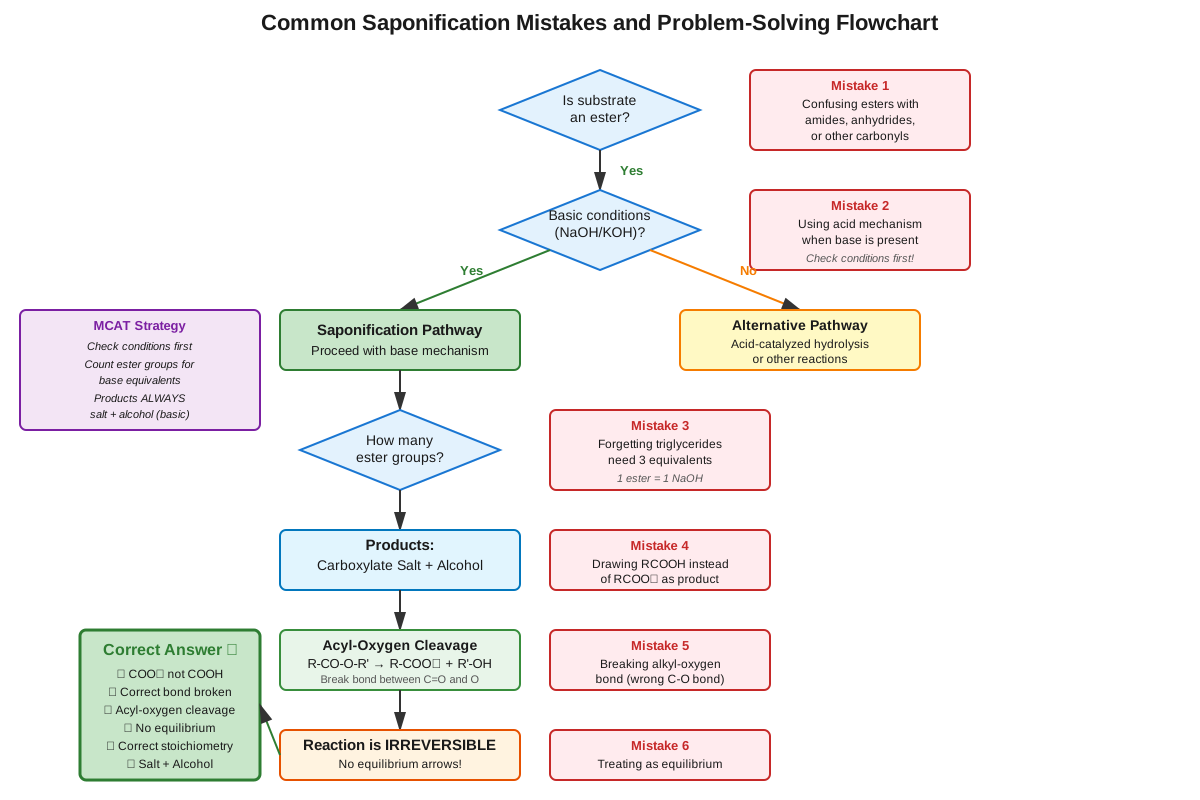
Overview
Saponification is a fundamental reaction in Organic Chemistry that involves the base-catalyzed hydrolysis of esters to produce carboxylate salts and alcohols. This reaction is historically significant as the chemical process underlying soap production—hence the name, derived from the Latin word "sapo" meaning soap. When triglycerides (fats and oils) undergo saponification with strong bases like sodium hydroxide or potassium hydroxide, they yield glycerol and fatty acid salts, which are the primary components of traditional soaps.
For the MCAT, saponification represents a critical intersection of Carbonyl Chemistry, biochemistry, and practical applications. The exam frequently tests students' understanding of ester reactivity, the differences between acid-catalyzed and base-catalyzed hydrolysis, and the ability to predict reaction products. Unlike simple ester hydrolysis, saponification is irreversible under standard conditions because the carboxylate anion formed is unreactive toward nucleophilic attack, making this reaction mechanistically distinct and strategically important for synthesis problems.
Understanding saponification provides essential context for broader topics in organic chemistry, including lipid metabolism, the reactivity patterns of carboxylic acid derivatives, and the principles of nucleophilic acyl substitution. This topic connects directly to biochemistry passages involving lipid digestion, membrane structure, and metabolic pathways. The MCAT commonly presents saponification in the context of experimental procedures, passage-based questions about soap chemistry, or discrete questions testing mechanism understanding and product prediction.
Learning Objectives
- [ ] Define Saponification using accurate Organic Chemistry terminology
- [ ] Explain why Saponification matters for the MCAT
- [ ] Apply Saponification to exam-style questions
- [ ] Identify common mistakes related to Saponification
- [ ] Connect Saponification to related Organic Chemistry concepts
- [ ] Draw and explain the complete mechanism of saponification including all intermediates
- [ ] Distinguish between saponification and acid-catalyzed ester hydrolysis in terms of mechanism, reversibility, and products
- [ ] Predict the products of saponification reactions given various ester substrates and basic conditions
Prerequisites
- Ester structure and nomenclature: Essential for identifying the substrate and predicting cleavage patterns during saponification
- Nucleophilic acyl substitution mechanism: The fundamental reaction type that governs saponification and all carboxylic acid derivative transformations
- Acid-base chemistry: Required to understand why strong bases are used and why the reaction is irreversible
- Carbonyl group reactivity: Necessary to comprehend why the carbonyl carbon is electrophilic and susceptible to nucleophilic attack
- Tetrahedral intermediate formation: The key mechanistic step in all acyl substitution reactions including saponification
- Leaving group ability: Critical for understanding why alkoxide can leave during the reaction and why carboxylate cannot react further
Why This Topic Matters
Saponification has profound real-world significance beyond its historical role in soap manufacturing. In biological systems, lipases catalyze the hydrolysis of triglycerides through a mechanism analogous to saponification, making this reaction central to lipid digestion, fat metabolism, and energy storage. Understanding saponification provides insight into how the body processes dietary fats and how certain medications (like lipase inhibitors for weight management) function at the molecular level.
On the MCAT, saponification appears with medium frequency across multiple question formats. Approximately 2-3% of Organic Chemistry questions directly test saponification, while another 5-7% incorporate it within broader passages about lipid chemistry, experimental procedures, or synthesis pathways. The exam commonly presents saponification in:
- Passage-based questions describing soap production, biodiesel synthesis, or lipid analysis where students must interpret experimental procedures
- Discrete questions testing mechanism understanding, product prediction, or comparison with other ester reactions
- Biochemistry passages involving triglyceride metabolism, where recognizing the parallel between enzymatic and chemical hydrolysis is crucial
- Laboratory technique questions where saponification values or soap properties are used to characterize unknown compounds
The MCAT particularly favors questions that require distinguishing saponification from acid-catalyzed hydrolysis, predicting products from complex esters, or applying saponification concepts to novel scenarios like polyester degradation or pharmaceutical synthesis.
Core Concepts
Definition and General Reaction
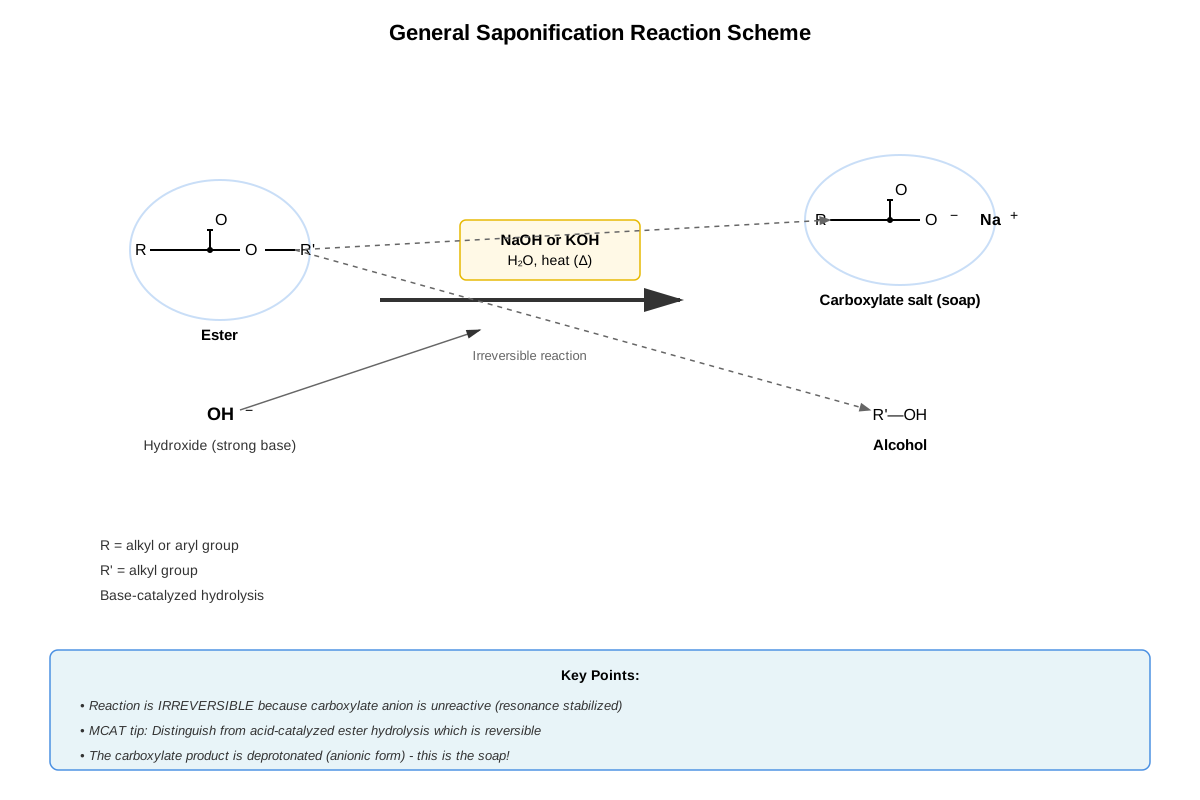
Saponification is the base-promoted hydrolysis of an ester that produces a carboxylate salt and an alcohol. The general reaction can be represented as:
R-COO-R' + NaOH → R-COO⁻Na⁺ + R'-OHWhere R-COO-R' represents the ester, NaOH is the strong base (though KOH is also commonly used), R-COO⁻Na⁺ is the carboxylate salt (soap), and R'-OH is the alcohol. The term specifically refers to base-catalyzed hydrolysis, distinguishing it from acid-catalyzed ester hydrolysis, which produces a carboxylic acid rather than a carboxylate salt.
The reaction requires stoichiometric amounts of base—not catalytic amounts—because the base is consumed in the reaction when it deprotonates the carboxylic acid intermediate. This is a crucial distinction: while acid-catalyzed hydrolysis uses catalytic acid, saponification requires at least one equivalent of base per ester group.
Mechanism of Saponification
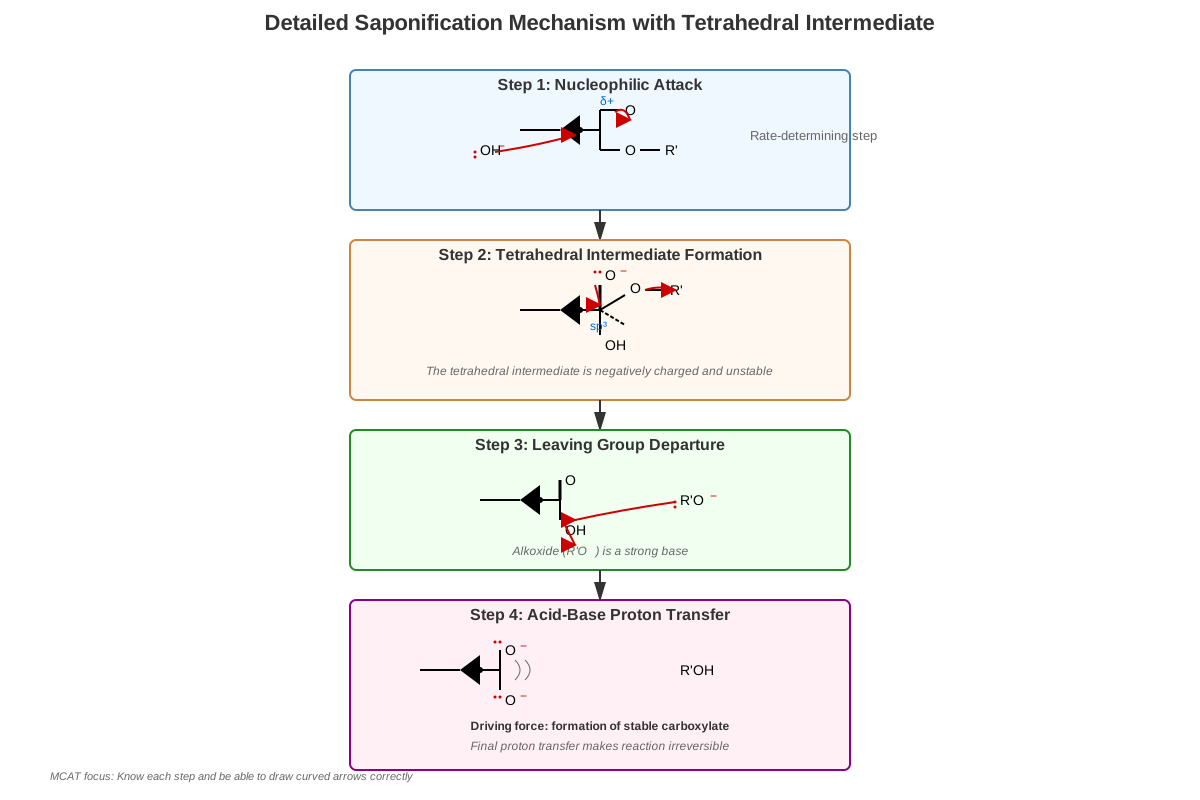
The saponification mechanism proceeds through nucleophilic acyl substitution with the following steps:
- Nucleophilic attack: The hydroxide ion (OH⁻) acts as a strong nucleophile and attacks the electrophilic carbonyl carbon of the ester, forming a tetrahedral intermediate. The carbonyl π bond breaks, and the electrons move to the oxygen, creating a negatively charged tetrahedral intermediate.
- Tetrahedral intermediate formation: The intermediate contains four groups attached to the former carbonyl carbon: the R group (from the acyl portion), the OR' group (the alkoxy leaving group), the newly added OH group, and a negative charge on the oxygen.
- Leaving group departure: The alkoxide ion (OR'⁻) leaves as the carbonyl reforms. The electrons from the C-O bond move back to reform the C=O double bond, expelling the OR'⁻ group. This step is favorable because it reforms the stable carbonyl group.
- Proton transfer (irreversible step): The carboxylic acid (R-COOH) formed is immediately deprotonated by either the alkoxide leaving group or excess hydroxide to form the carboxylate anion (R-COO⁻). This step is irreversible under basic conditions because the carboxylate anion is stabilized by resonance and is non-electrophilic—it cannot undergo nucleophilic attack by the alcohol.
The irreversibility distinguishes saponification from acid-catalyzed ester hydrolysis, which is an equilibrium process that can be driven in either direction.
Comparison: Saponification vs. Acid-Catalyzed Hydrolysis
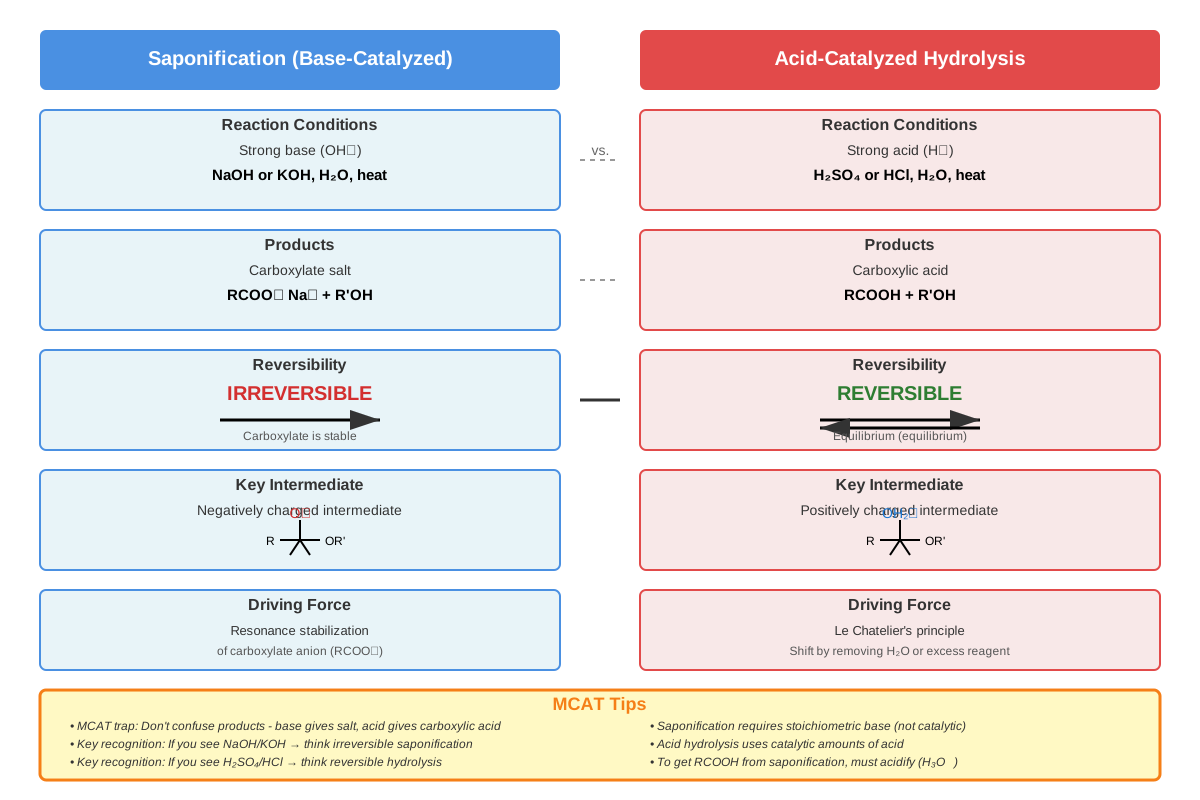
| Feature | Saponification | Acid-Catalyzed Hydrolysis |
|---|---|---|
| Catalyst/Reagent | Strong base (NaOH, KOH) - stoichiometric | Acid (H₂SO₄, HCl) - catalytic |
| Products | Carboxylate salt + alcohol | Carboxylic acid + alcohol |
| Reversibility | Irreversible | Reversible (equilibrium) |
| Mechanism | Nucleophilic attack by OH⁻ | Protonation, then water attack |
| Rate | Generally faster | Generally slower |
| Conditions | Basic (pH > 10) | Acidic (pH < 3) |
| Driving force | Formation of stable carboxylate | Can be driven by excess water or removing products |
Saponification of Triglycerides
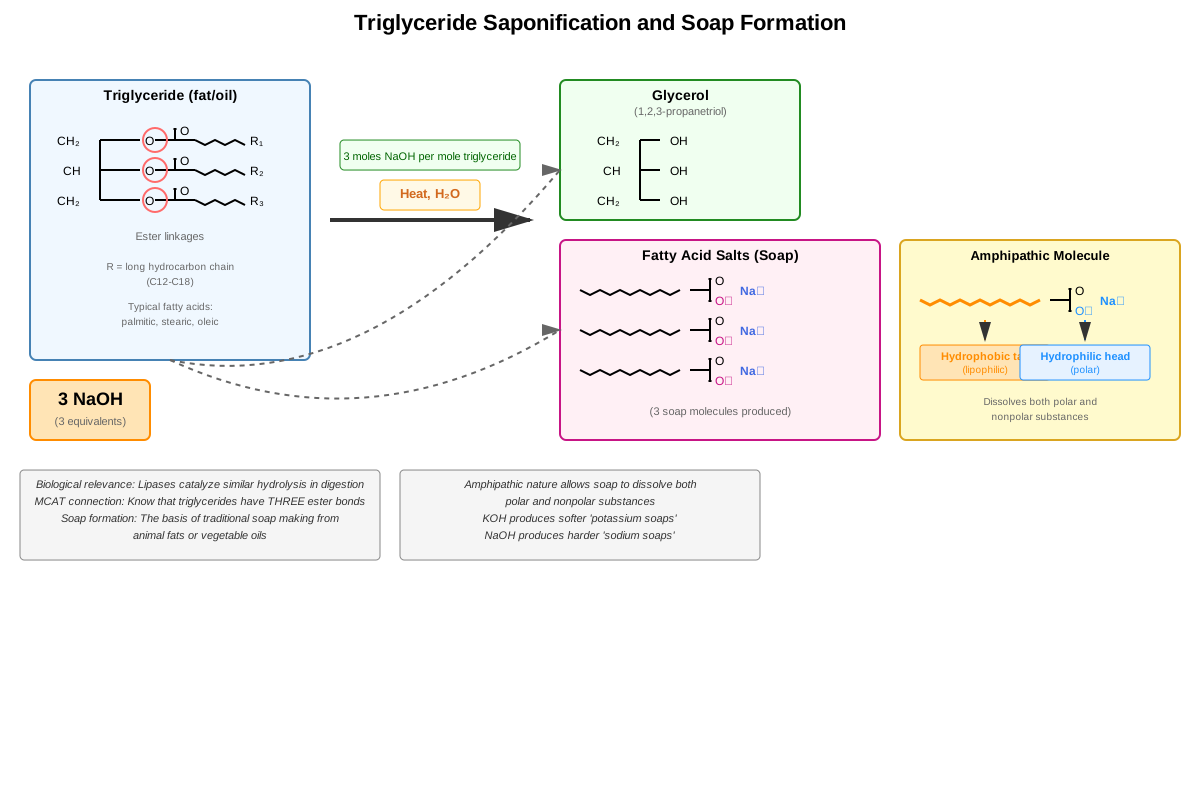
The most biologically and historically relevant application of saponification involves triglycerides (triacylglycerols), which are triesters of glycerol and three fatty acids. When triglycerides undergo saponification:
Triglyceride + 3 NaOH → Glycerol + 3 Fatty acid salts (soap)Each ester linkage requires one equivalent of base, so complete saponification of a triglyceride requires three equivalents of NaOH or KOH. The fatty acid salts produced are amphipathic molecules with a hydrophobic hydrocarbon tail and a hydrophilic carboxylate head, giving them detergent properties. Sodium salts produce harder soaps, while potassium salts yield softer, more soluble soaps.
Saponification Number
The saponification number (or saponification value) is an analytical parameter used to characterize fats and oils. It is defined as the mass of potassium hydroxide (in milligrams) required to saponify one gram of fat or oil. This value provides information about the average molecular weight of the fatty acids in the triglyceride:
- Higher saponification numbers indicate shorter-chain fatty acids (lower molecular weight), requiring more moles of base per gram
- Lower saponification numbers indicate longer-chain fatty acids (higher molecular weight), requiring fewer moles of base per gram
This concept occasionally appears in MCAT passages involving lipid characterization or experimental analysis.
Factors Affecting Saponification Rate
Several factors influence the rate of saponification:
- Base strength and concentration: Stronger bases and higher concentrations increase the reaction rate by increasing nucleophile availability
- Temperature: Higher temperatures accelerate the reaction, as with most chemical processes
- Solvent: Saponification often requires mixed solvent systems (water + alcohol) because esters are typically not water-soluble while bases like NaOH are not soluble in organic solvents
- Steric hindrance: Bulky groups near the ester carbonyl slow the reaction by impeding nucleophilic attack
- Electronic effects: Electron-withdrawing groups on the acyl portion increase electrophilicity and accelerate the reaction
Concept Relationships
Saponification sits at the intersection of multiple organic chemistry concepts, forming a conceptual network essential for MCAT mastery. The reaction fundamentally depends on nucleophilic acyl substitution, which is the general mechanism for all carboxylic acid derivative transformations. Understanding this parent mechanism → enables prediction of saponification outcomes → and connects to related reactions like aminolysis and transesterification.
The carbonyl chemistry framework provides the foundation: carbonyl electrophilicity → attracts nucleophiles → leads to tetrahedral intermediate formation → results in leaving group departure. This sequence applies across aldehydes, ketones, and carboxylic acid derivatives, with saponification representing a specific case where the nucleophile is hydroxide and the substrate is an ester.
Saponification connects backward to ester formation (Fischer esterification), representing the reverse transformation under different conditions. This relationship illustrates Le Chatelier's principle and the importance of reaction conditions in determining product distribution. The irreversibility of saponification contrasts with the reversibility of Fischer esterification, highlighting how acid-base chemistry → controls reaction directionality → determines synthetic strategy.
Forward connections include lipid biochemistry, where enzymatic hydrolysis by lipases → parallels chemical saponification → enables fat digestion and metabolism. Understanding saponification → facilitates comprehension of β-oxidation, lipid transport, and membrane dynamics. The amphipathic nature of soap molecules → relates to phospholipid structure → explains membrane formation and micelle behavior.
Laterally, saponification connects to other ester reactions: acid-catalyzed hydrolysis (different conditions, reversible), reduction with LiAlH₄ (produces two alcohols), and reaction with Grignard reagents (produces tertiary alcohols). Comparing these reactions → reveals how changing reagents → alters reaction pathways and products.
High-Yield Facts
⭐ Saponification is the irreversible base-promoted hydrolysis of esters producing carboxylate salts and alcohols
⭐ The reaction requires stoichiometric (not catalytic) amounts of base because base is consumed in the final deprotonation step
⭐ Saponification is irreversible because the carboxylate anion product is resonance-stabilized and non-electrophilic, preventing back-reaction
⭐ Complete saponification of a triglyceride requires three equivalents of base (one per ester linkage)
⭐ The mechanism proceeds through nucleophilic attack by OH⁻, tetrahedral intermediate formation, leaving group departure, and irreversible deprotonation
- Saponification produces carboxylate salts while acid-catalyzed hydrolysis produces carboxylic acids
- Sodium hydroxide produces harder soaps (sodium salts) while potassium hydroxide produces softer soaps (potassium salts)
- The saponification number is inversely related to the average molecular weight of fatty acids in a triglyceride
- Electron-withdrawing groups on the acyl portion of an ester increase the rate of saponification by enhancing carbonyl electrophilicity
- Steric hindrance near the ester carbonyl decreases saponification rate by impeding nucleophilic attack
- Saponification typically requires mixed solvent systems (water + alcohol) to dissolve both the ester substrate and the ionic base
- The alkoxide leaving group (OR⁻) is a strong base that can deprotonate the carboxylic acid intermediate
- Lactones (cyclic esters) undergo saponification to produce hydroxy-carboxylate salts
- Saponification is used industrially not only for soap production but also for biodiesel purification and polyester recycling
- The amphipathic nature of soap molecules (hydrophobic tail + hydrophilic head) results from the saponification of long-chain fatty acid esters
Quick check — test yourself on Saponification so far.
Try Flashcards →Common Misconceptions
Misconception: Saponification is catalyzed by base, so only a small amount of base is needed.
Correction: Saponification requires stoichiometric amounts of base (at least one equivalent per ester group) because the base is consumed in the reaction when it deprotonates the carboxylic acid intermediate. Unlike acid-catalyzed hydrolysis where acid is regenerated, the base becomes part of the product (the carboxylate salt).
Misconception: Saponification and acid-catalyzed ester hydrolysis produce the same products.
Correction: These reactions produce different products. Saponification yields a carboxylate salt (R-COO⁻Na⁺) and an alcohol, while acid-catalyzed hydrolysis produces a carboxylic acid (R-COOH) and an alcohol. The difference arises from the pH conditions: basic conditions deprotonate the carboxylic acid, while acidic conditions keep it protonated.
Misconception: Saponification is reversible like other ester reactions.
Correction: Saponification is irreversible under basic conditions because the carboxylate anion product is resonance-stabilized and lacks electrophilic character. The negatively charged oxygen prevents nucleophilic attack by the alcohol, making the reverse reaction impossible without changing to acidic conditions and using a different mechanism (Fischer esterification).
Misconception: The hydroxide ion attacks the oxygen of the carbonyl group during saponification.
Correction: The hydroxide ion attacks the carbonyl carbon, not the oxygen. The carbonyl carbon is electrophilic (partially positive) due to the electron-withdrawing effect of the oxygen, making it susceptible to nucleophilic attack. The carbonyl oxygen becomes negatively charged in the tetrahedral intermediate but is not the site of initial attack.
Misconception: Any base can be used for saponification with equal effectiveness.
Correction: While strong bases like NaOH and KOH are effective, weak bases (like bicarbonate or ammonia) are generally too weak to efficiently promote saponification. The base must be strong enough to act as a good nucleophile and to irreversibly deprotonate the carboxylic acid intermediate. Additionally, the choice between NaOH and KOH affects soap properties (hardness and solubility).
Misconception: The saponification of a triglyceride produces three different products.
Correction: Saponification of a triglyceride produces one molecule of glycerol and three fatty acid salt molecules (which may or may not be identical depending on the triglyceride structure). Students sometimes forget that all three ester linkages are cleaved, or they incorrectly count the number of products.
Misconception: Saponification only applies to triglycerides and soap-making.
Correction: Saponification applies to any ester undergoing base-promoted hydrolysis, including simple esters, lactones (cyclic esters), polyesters, and wax esters. The term originated from soap-making but describes a general reaction type in organic chemistry.
Worked Examples
Example 1: Product Prediction and Mechanism
Question: Draw the products of the following reaction and explain the mechanism:
Ethyl acetate + NaOH (excess) → ?
Solution:
Step 1 - Identify the substrate: Ethyl acetate is CH₃-COO-CH₂CH₃, an ester with an acetyl group (CH₃CO-) and an ethoxy leaving group (-OCH₂CH₃).
Step 2 - Predict products: Saponification cleaves the ester at the C-O single bond (between the carbonyl carbon and the oxygen of the alkoxy group). This produces:
- Sodium acetate: CH₃-COO⁻Na⁺ (carboxylate salt)
- Ethanol: CH₃CH₂-OH (alcohol)
Step 3 - Mechanism:
- Nucleophilic attack: OH⁻ attacks the carbonyl carbon of ethyl acetate, breaking the π bond and forming a tetrahedral intermediate: CH₃-C(O⁻)(OH)(OCH₂CH₃)
- Leaving group departure: The ethoxide ion (CH₃CH₂O⁻) leaves as the carbonyl reforms, producing acetic acid (CH₃COOH) and ethoxide
- Irreversible deprotonation: The acetic acid is immediately deprotonated by either ethoxide or excess hydroxide to form acetate ion (CH₃COO⁻), which combines with Na⁺ to give sodium acetate
Key concept connection: This example demonstrates the irreversibility of saponification (Learning Objective: Define and explain saponification). The acetate ion cannot react with ethanol to reform the ester under these basic conditions because the carboxylate is non-electrophilic.
Example 2: Triglyceride Saponification Calculation
Question: A student performs a saponification reaction on 10.0 g of tristearin (a triglyceride where all three fatty acids are stearic acid, C₁₈H₃₆O₂, MW = 284 g/mol). The molecular weight of tristearin is 890 g/mol. How many grams of NaOH are required for complete saponification? What products are formed?
Solution:
Step 1 - Determine moles of tristearin:
Moles = 10.0 g ÷ 890 g/mol = 0.0112 mol tristearin
Step 2 - Apply stoichiometry: Each triglyceride molecule has three ester linkages, requiring three equivalents of NaOH:
Moles NaOH needed = 0.0112 mol × 3 = 0.0337 mol
Step 3 - Calculate mass of NaOH:
Mass = 0.0337 mol × 40.0 g/mol = 1.35 g NaOH
Step 4 - Identify products:
- Glycerol (1,2,3-propanetriol): 0.0112 mol (one molecule per triglyceride)
- Sodium stearate (soap): 0.0337 mol (three molecules per triglyceride)
Chemical equation:
C₅₇H₁₁₀O₆ + 3 NaOH → C₃H₈O₃ + 3 C₁₇H₃₅COO⁻Na⁺
Key concept connection: This problem integrates stoichiometry with saponification chemistry (Learning Objective: Apply saponification to exam-style questions). It demonstrates that complete saponification of triglycerides requires three equivalents of base and produces glycerol plus three fatty acid salts. This type of calculation could appear in MCAT passages involving experimental procedures or lipid analysis.
MCAT tip: When approaching triglyceride saponification problems, always remember the 1:3:1:3 stoichiometry (1 triglyceride : 3 base : 1 glycerol : 3 soap molecules). This ratio is frequently tested.
Exam Strategy
When approaching Saponification MCAT questions, employ a systematic strategy that maximizes accuracy and efficiency:
Recognition triggers: Watch for these keywords and phrases that signal saponification:
- "Base-promoted hydrolysis," "treatment with NaOH/KOH," "soap formation"
- "Triglyceride hydrolysis," "fat hydrolysis under basic conditions"
- "Irreversible ester cleavage," "formation of carboxylate salt"
- Experimental procedures mentioning "saponification number" or "soap production"
Question approach sequence:
- Identify the reaction type: Confirm that an ester is being treated with a strong base (not acid). If acid is present, it's acid-catalyzed hydrolysis, not saponification.
- Locate the ester linkage(s): In complex molecules, identify all C-O-C(=O) groups. Each requires one equivalent of base.
- Predict cleavage site: The ester breaks at the single C-O bond (between carbonyl carbon and alkoxy oxygen), NOT at the C=O double bond.
- Determine products: The acyl portion becomes a carboxylate salt (R-COO⁻M⁺), and the alkoxy portion becomes an alcohol (R'-OH).
- Check stoichiometry: Ensure sufficient base is present (one equivalent per ester group).
Process of elimination tips:
- Eliminate answers showing carboxylic acids (R-COOH) as products—these indicate acid-catalyzed hydrolysis, not saponification
- Eliminate answers suggesting reversibility—saponification is irreversible under basic conditions
- Eliminate answers showing incorrect cleavage patterns—the break occurs at the single C-O bond, not elsewhere
- Eliminate answers with wrong stoichiometry—particularly in triglyceride questions, three equivalents of base are required
Time allocation: Saponification questions typically require 60-90 seconds:
- 15-20 seconds: Read and identify reaction type
- 20-30 seconds: Analyze structure and predict products
- 20-30 seconds: Evaluate answer choices
- 10 seconds: Verify and select answer
Common question formats:
- Product prediction: Given an ester and base, identify products
- Mechanism questions: Identify intermediates or explain irreversibility
- Comparison questions: Distinguish saponification from acid-catalyzed hydrolysis
- Passage-based applications: Interpret experimental procedures involving soap-making or lipid analysis
- Calculation questions: Determine amounts of reagents or products using stoichiometry
Exam Tip: If a question asks about "soap formation" or "detergent properties," immediately think saponification of long-chain fatty acid esters. The amphipathic nature of the products (hydrophobic tail + hydrophilic carboxylate head) is key to their function.
Memory Techniques
SOAP Mnemonic for saponification mechanism:
- Strong base attacks (nucleophilic attack by OH⁻)
- Oxygen goes negative (tetrahedral intermediate forms)
- Alkoxide leaves (leaving group departure)
- Proton pulled off (irreversible deprotonation)
"Three for Tri" Rule: For triglyceride saponification, remember "three for tri"—three ester bonds require three equivalents of base, producing three soap molecules and one glycerol.
Irreversibility Visualization: Picture the carboxylate anion as a "closed door" with the negative charge acting as a lock. The negative charge repels nucleophiles (like alcohols), preventing the reverse reaction. In contrast, the carboxylic acid (from acid-catalyzed hydrolysis) is an "open door" that can react with alcohols.
Product Prediction Acronym - SALT:
- Saponification produces
- A carboxylate (salt)
- Leaving the
- Triglyceride as glycerol + soap
Base Amount Memory Device: "Saponification is Stoichiometric, not catalytic" (both start with 'S'). This helps remember that base is consumed, not regenerated.
Comparison Table Memory: Create a mental "split screen" comparing saponification (left) and acid-catalyzed hydrolysis (right):
- Left (BASE): Irreversible, SALT product, Stoichiometric
- Right (ACID): Reversible, ACID product, Catalytic
Mechanism Hand Motion: Use a physical gesture to remember the mechanism:
- Fist (nucleophile) approaches open palm (carbonyl)
- Fist pushes into palm (tetrahedral intermediate)
- One finger extends away (leaving group departs)
- Grab the extended finger with other hand (deprotonation/irreversible step)
Summary
Saponification is the irreversible, base-promoted hydrolysis of esters that produces carboxylate salts and alcohols through a nucleophilic acyl substitution mechanism. The reaction requires stoichiometric amounts of strong base (typically NaOH or KOH) because the base is consumed when it deprotonates the carboxylic acid intermediate. The mechanism proceeds through hydroxide attack on the carbonyl carbon, tetrahedral intermediate formation, alkoxide departure, and irreversible deprotonation to form the resonance-stabilized carboxylate anion. This final step makes saponification irreversible under basic conditions, distinguishing it from acid-catalyzed ester hydrolysis, which is reversible and produces carboxylic acids rather than salts. Saponification of triglycerides requires three equivalents of base and yields glycerol plus three fatty acid salts (soap molecules), which possess amphipathic properties essential for detergent function. For the MCAT, students must be able to predict products, explain the mechanism, distinguish saponification from related reactions, and apply these concepts to passage-based questions involving lipid chemistry, experimental procedures, and biochemical processes.
Key Takeaways
- Saponification is base-promoted ester hydrolysis producing carboxylate salts (not carboxylic acids) and alcohols, requiring stoichiometric base amounts
- The reaction is irreversible because the carboxylate anion product is resonance-stabilized and non-electrophilic, preventing back-reaction with the alcohol
- The mechanism involves nucleophilic attack by OH⁻, tetrahedral intermediate formation, leaving group departure, and irreversible deprotonation
- Triglyceride saponification requires three equivalents of base (one per ester linkage) and produces glycerol plus three fatty acid salts (soap)
- Saponification differs from acid-catalyzed hydrolysis in reagent (stoichiometric base vs. catalytic acid), products (salt vs. acid), and reversibility (irreversible vs. reversible)
- The amphipathic nature of soap molecules (hydrophobic tail + hydrophilic carboxylate head) results from saponification of long-chain fatty acid esters
- MCAT questions commonly test product prediction, mechanism understanding, comparison with acid-catalyzed hydrolysis, and application to triglyceride chemistry
Related Topics
Ester Formation (Fischer Esterification): The reverse process under acidic conditions, where carboxylic acids react with alcohols to form esters. Understanding both directions of ester chemistry provides complete mastery of this functional group interconversion.
Other Carboxylic Acid Derivatives: Acid chlorides, anhydrides, and amides all undergo nucleophilic acyl substitution but with different reactivity patterns. Mastering saponification provides the mechanistic foundation for understanding these related transformations.
Lipid Biochemistry: Enzymatic hydrolysis of triglycerides by lipases parallels chemical saponification. This connection is essential for understanding fat digestion, lipid transport, and metabolic pathways like β-oxidation.
Nucleophilic Acyl Substitution: The general mechanism underlying all carboxylic acid derivative reactions. Saponification represents a specific case that illustrates the broader principles of this reaction class.
Acid-Base Chemistry in Organic Reactions: The role of pH in controlling reaction pathways and product distribution. Saponification exemplifies how basic conditions drive reactions toward different products than acidic conditions.
Amphipathic Molecules and Micelle Formation: The structure and properties of soap molecules connect to phospholipid behavior, membrane structure, and the chemistry of detergents and surfactants.
Practice CTA
Now that you've mastered the core concepts of saponification, it's time to solidify your understanding through active practice. Challenge yourself with MCAT-style questions that test product prediction, mechanism analysis, and comparison with related reactions. Work through practice problems involving triglyceride saponification calculations and passage-based questions about soap chemistry and lipid analysis. Create flashcards for the key differences between saponification and acid-catalyzed hydrolysis, the mechanism steps, and high-yield facts about stoichiometry and irreversibility. Remember: understanding the "why" behind saponification—its irreversibility, its stoichiometric base requirement, and its mechanistic pathway—will enable you to tackle any question the MCAT presents. Your investment in mastering this foundational reaction will pay dividends across organic chemistry and biochemistry questions. You've got this!
Sign up free to keep reading
Create a free AnvayaPrep account to finish this MCAT guide on Saponification — plus flashcards and practice questions.