Overview
Ketones are a fundamental class of organic compounds characterized by a carbonyl group (C=O) bonded to two carbon atoms. As one of the most important functional groups in Organic Chemistry, ketones appear frequently throughout the MCAT, particularly in passages involving biochemical pathways, metabolic processes, and synthetic organic reactions. Understanding ketones requires mastery of their structure, nomenclature, physical properties, and characteristic reactions—all of which are testable concepts in the Carbonyl Chemistry unit.
The significance of ketones extends far beyond simple structural recognition. These compounds serve as key intermediates in biological systems, including ketone bodies produced during fat metabolism, and they participate in numerous reactions that form the backbone of organic synthesis. For MCAT success, students must recognize ketones in complex molecules, predict their reactivity patterns, and understand how they differ from closely related functional groups like aldehydes. The Ketones MCAT content typically appears in both discrete questions and passage-based scenarios involving metabolic pathways, pharmaceutical synthesis, or laboratory techniques.
Ketones occupy a central position in Ketones Organic Chemistry because they connect multiple reaction types: nucleophilic additions, oxidation-reduction chemistry, enolate chemistry, and condensation reactions. Mastering ketones provides the foundation for understanding more complex carbonyl compounds, including carboxylic acid derivatives, and enables students to predict reaction outcomes in multi-step synthesis problems. This topic bridges fundamental organic chemistry principles with biochemically relevant applications, making it essential for both the Chemical and Physical Foundations of Biological Systems and the Biological and Biochemical Foundations of Living Systems sections of the MCAT.
Learning Objectives
- [ ] Define ketones using accurate Organic Chemistry terminology, including structural features and IUPAC nomenclature rules
- [ ] Explain why ketones matter for the MCAT, including their appearance in biochemical pathways and synthetic chemistry
- [ ] Apply ketones concepts to exam-style questions involving structure identification, reactivity prediction, and mechanism analysis
- [ ] Identify common mistakes related to ketones, including confusion with aldehydes and incorrect nucleophile addition predictions
- [ ] Connect ketones to related Organic Chemistry concepts, including aldehydes, carboxylic acids, alcohols, and enolate chemistry
- [ ] Predict the products of nucleophilic addition reactions to ketones, including hydration, acetal formation, and imine synthesis
- [ ] Analyze the physical properties of ketones and explain their behavior in various solvents and biological systems
- [ ] Distinguish between ketones and aldehydes based on reactivity patterns and oxidation susceptibility
Prerequisites
- Functional group recognition: Essential for identifying ketones within complex molecular structures and distinguishing them from aldehydes and other carbonyl-containing compounds
- Basic bonding theory and hybridization: Required to understand the sp² hybridization of the carbonyl carbon and the geometry around ketone functional groups
- Acid-base chemistry: Necessary for understanding enolate formation and the role of pH in ketone reactions
- Nucleophiles and electrophiles: Fundamental to predicting and understanding nucleophilic addition reactions at the carbonyl carbon
- Oxidation-reduction concepts: Critical for understanding why ketones resist further oxidation while aldehydes do not
- Resonance structures: Important for understanding carbonyl group reactivity and enolate stabilization
Why This Topic Matters
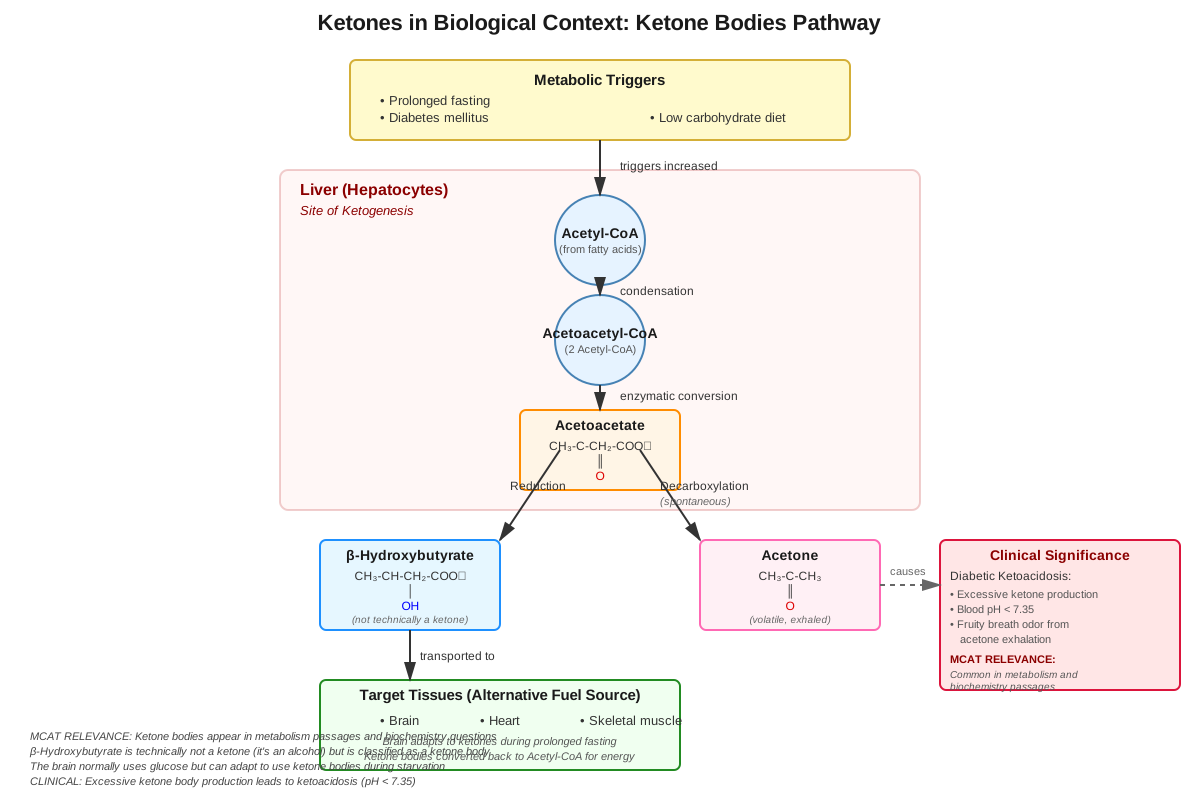
Ketones represent one of the most clinically and biochemically relevant functional groups tested on the MCAT. In human metabolism, ketone bodies (acetoacetate, β-hydroxybutyrate, and acetone) serve as critical energy sources during fasting states, starvation, or uncontrolled diabetes. Understanding ketone chemistry enables students to comprehend ketogenesis, ketoacidosis, and the metabolic adaptations that occur during carbohydrate deprivation—topics that frequently appear in MCAT passages about metabolism and disease states.
From an exam statistics perspective, ketones appear in approximately 8-12% of Organic Chemistry questions on the MCAT, either as discrete items or within passage-based scenarios. Questions typically test structure recognition (15% of ketone questions), nomenclature (10%), physical properties (20%), nucleophilic addition reactions (35%), and comparison with aldehydes (20%). The MCAT particularly favors questions that integrate ketone chemistry with biological contexts, such as identifying ketones in drug molecules, predicting their behavior in physiological pH ranges, or analyzing their role in metabolic pathways.
Common exam presentations include: (1) passage-based questions describing ketone body metabolism in diabetic patients; (2) discrete questions asking students to identify products of ketone reactions with various nucleophiles; (3) laboratory technique passages involving ketone detection or purification; (4) synthesis problems requiring ketone intermediates; and (5) spectroscopy passages where students must identify ketones based on IR, NMR, or mass spectrometry data. The interdisciplinary nature of ketone questions makes them high-yield for students aiming to demonstrate integrated scientific reasoning.
Core Concepts
Structure and Definition of Ketones
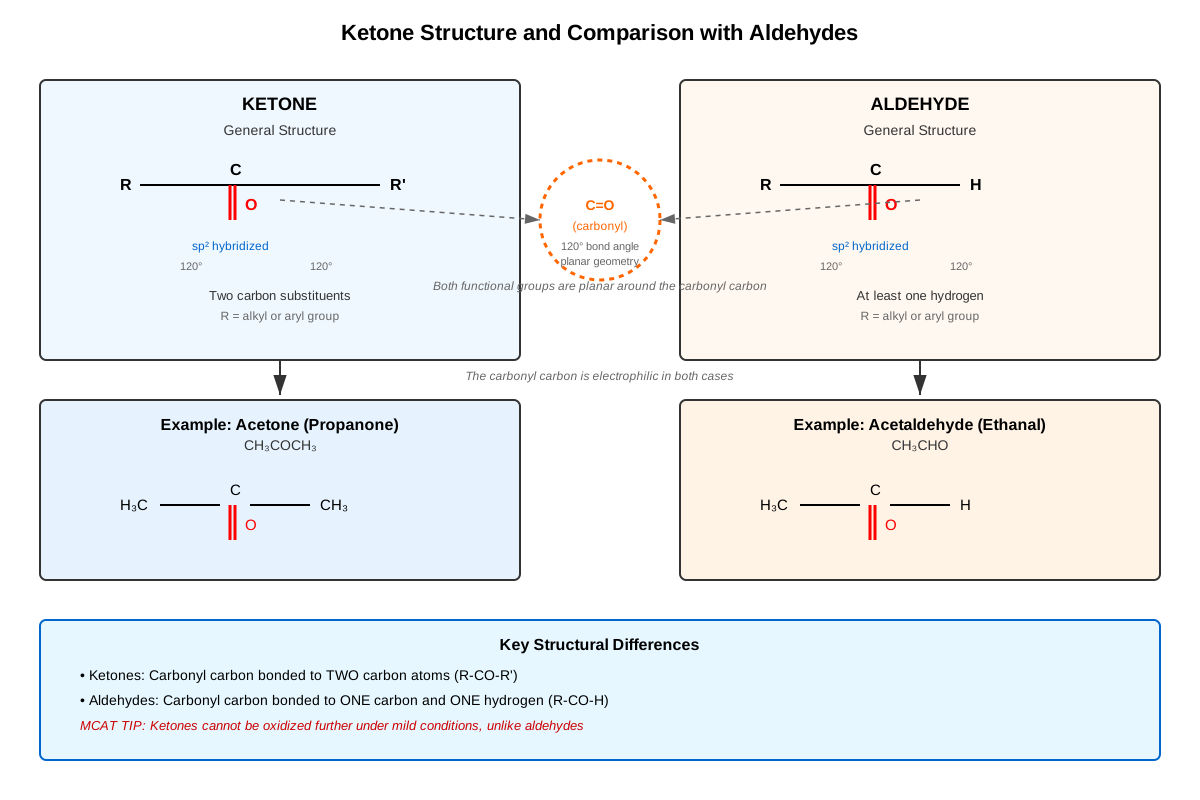
Ketones are organic compounds containing a carbonyl group (C=O) bonded to two carbon atoms, distinguishing them from aldehydes where the carbonyl is bonded to at least one hydrogen. The general structure is R-CO-R', where R and R' represent alkyl or aryl groups. The carbonyl carbon in ketones exhibits sp² hybridization, creating a trigonal planar geometry with bond angles of approximately 120°. The carbon-oxygen double bond consists of one σ bond (from sp² orbital overlap) and one π bond (from p orbital overlap), with the π bond being more reactive and susceptible to nucleophilic attack.
The carbonyl oxygen possesses two lone pairs of electrons, making it both a weak base and a site for hydrogen bonding. This structural feature significantly influences ketone physical properties and reactivity. The carbon-oxygen double bond is highly polarized due to oxygen's greater electronegativity, creating a partial positive charge (δ+) on the carbonyl carbon and a partial negative charge (δ-) on oxygen. This polarization makes the carbonyl carbon electrophilic and susceptible to attack by nucleophiles, which forms the basis for most ketone reactions.
Nomenclature and Common Names
IUPAC nomenclature for ketones follows systematic rules: identify the longest carbon chain containing the carbonyl group, number from the end giving the carbonyl carbon the lowest number, and replace the "-e" ending of the alkane with "-one." For example, CH₃-CO-CH₃ is propanone (commonly called acetone), and CH₃-CO-CH₂-CH₃ is butanone. When the carbonyl position requires specification, insert the number before "-one" (e.g., 2-pentanone for CH₃-CO-CH₂-CH₂-CH₃).
For complex molecules, ketones can be named as substituents using the prefix "oxo-" or by naming the two groups attached to the carbonyl followed by "ketone" (common nomenclature). For instance, acetone can be called dimethyl ketone, and acetophenone (C₆H₅-CO-CH₃) is methyl phenyl ketone. Cyclic ketones are named by adding "-one" to the cycloalkane name, such as cyclohexanone. Understanding both IUPAC and common names is essential for MCAT success, as passages may use either system.
Physical Properties
Ketones exhibit distinctive physical properties resulting from their polar carbonyl group. They have higher boiling points than alkanes of similar molecular weight due to dipole-dipole interactions, but lower boiling points than alcohols of comparable size because ketones cannot form hydrogen bonds with themselves (lacking an O-H or N-H bond). However, ketones can act as hydrogen bond acceptors through their carbonyl oxygen, making them soluble in water and protic solvents, particularly for smaller ketones like acetone.
| Property | Ketones | Aldehydes | Alcohols | Alkanes |
|---|---|---|---|---|
| Boiling Point | Moderate | Moderate | High | Low |
| Water Solubility (small) | Good | Good | Excellent | Poor |
| Hydrogen Bonding | Accept only | Accept only | Donate & Accept | None |
| Polarity | Polar | Polar | Polar | Nonpolar |
Ketones typically have characteristic odors; acetone has a sweet, fruity smell, while larger ketones may have pleasant fragrances used in perfumes. The solubility of ketones decreases with increasing carbon chain length, as the hydrophobic alkyl groups begin to dominate over the hydrophilic carbonyl group. This property is relevant for understanding drug distribution and metabolism in biological systems.
Reactivity Patterns and Nucleophilic Addition
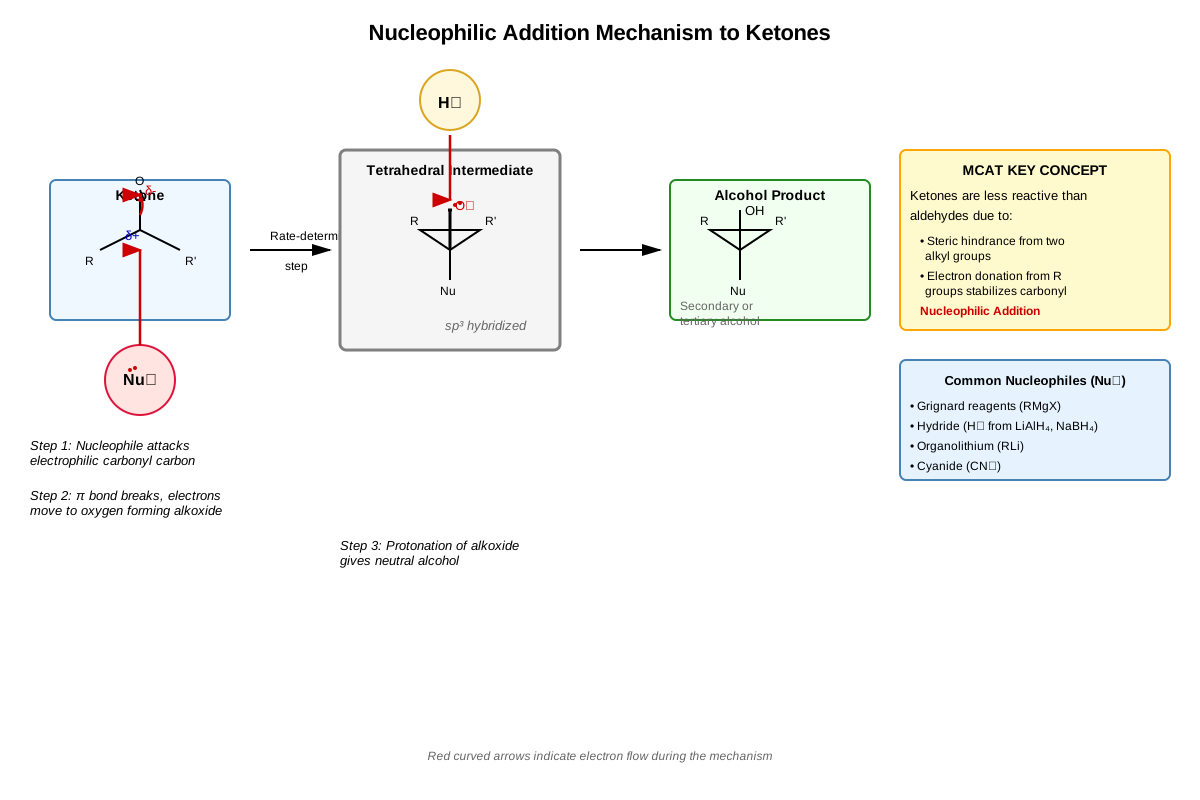
The defining chemical behavior of ketones involves nucleophilic addition reactions at the carbonyl carbon. The mechanism proceeds through nucleophilic attack on the electrophilic carbonyl carbon, forming a tetrahedral intermediate with the oxygen bearing a negative charge. This intermediate is then protonated to yield the final addition product. The general mechanism follows these steps:
- Nucleophile attacks the carbonyl carbon from above or below the plane
- π bond breaks, electrons move to oxygen, forming alkoxide intermediate
- Protonation of the alkoxide oxygen yields the addition product
Common nucleophilic addition reactions include:
- Hydration: Addition of water (H₂O) to form geminal diols (hydrates), typically requiring acid or base catalysis
- Alcohol addition: Reaction with alcohols under acidic conditions to form hemiacetals (one alcohol) or acetals (two alcohols)
- Amine addition: Reaction with primary amines to form imines (Schiff bases) or with secondary amines to form enamines
- Cyanide addition: Addition of HCN to form cyanohydrins, useful for carbon chain extension
- Grignard and organolithium addition: Reaction with organometallic reagents to form alcohols after aqueous workup
Comparison with Aldehydes
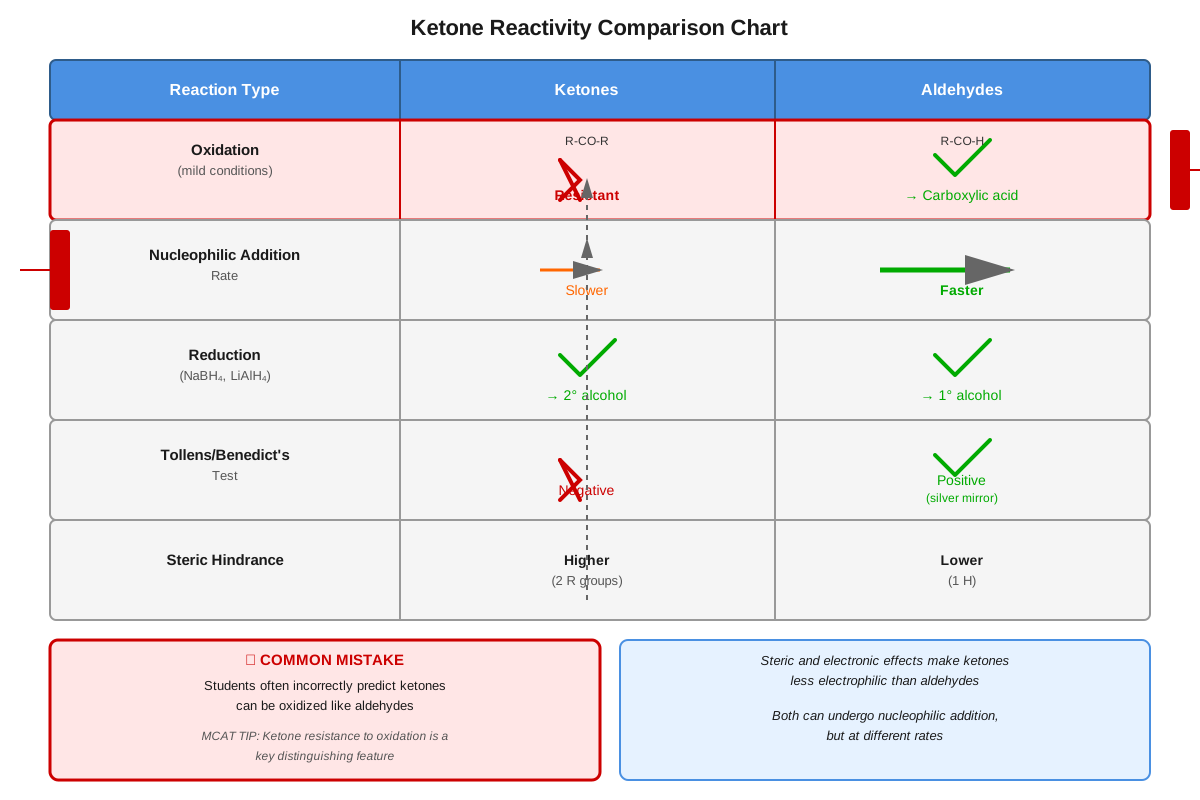
While ketones and aldehydes share the carbonyl functional group, critical differences in reactivity distinguish them on the MCAT. Aldehydes are more reactive toward nucleophiles than ketones due to both electronic and steric factors. Electronically, the hydrogen atom in aldehydes is less electron-donating than alkyl groups, making the carbonyl carbon more electrophilic. Sterically, the smaller hydrogen creates less hindrance for nucleophilic approach compared to the bulkier alkyl groups in ketones.
The most significant difference involves oxidation: aldehydes are readily oxidized to carboxylic acids by mild oxidizing agents (KMnO₄, CrO₃, Tollens' reagent, Benedict's reagent), while ketones resist oxidation under similar conditions. This distinction forms the basis for several aldehyde detection tests that give negative results with ketones. The Tollens' test (silver mirror test) and Benedict's test (blue to brick-red color change) both identify aldehydes but not ketones, making them valuable diagnostic tools in laboratory and exam scenarios.
Ketone Synthesis
Understanding ketone synthesis is essential for multi-step synthesis problems on the MCAT. Major synthetic routes include:
- Oxidation of secondary alcohols: Using oxidizing agents like PCC, PDC, or chromic acid (H₂CrO₄) converts secondary alcohols to ketones without over-oxidation
- Friedel-Crafts acylation: Reaction of aromatic compounds with acyl chlorides in the presence of AlCl₃ catalyst produces aromatic ketones
- Ozonolysis of alkenes: Cleavage of carbon-carbon double bonds with O₃ followed by reductive workup yields ketones (and/or aldehydes depending on substitution)
- Hydration of alkynes: Addition of water to internal alkynes under acidic conditions with mercuric sulfate catalyst produces ketones via enol intermediates
Enolate Chemistry and Tautomerization
Ketones with α-hydrogens (hydrogens on carbons adjacent to the carbonyl) can undergo keto-enol tautomerization, an equilibrium between the ketone form and the enol form (containing a C=C-OH structure). Under basic conditions, deprotonation of the α-carbon generates an enolate ion, a resonance-stabilized anion with negative charge delocalized between the α-carbon and carbonyl oxygen. Enolates are powerful nucleophiles that participate in important reactions like aldol condensations and alkylations.
The acidity of α-hydrogens (pKa ≈ 19-20) is significantly greater than typical C-H bonds (pKa ≈ 50) due to resonance stabilization of the resulting enolate. This property enables ketones to participate in carbon-carbon bond-forming reactions crucial for biosynthesis and organic synthesis. Understanding enolate formation is particularly important for comprehending metabolic pathways like fatty acid synthesis and the citric acid cycle.
Spectroscopic Identification
Ketones display characteristic signals in various spectroscopic techniques tested on the MCAT:
- Infrared (IR) Spectroscopy: Strong, sharp absorption at 1700-1750 cm⁻¹ corresponding to C=O stretch (slightly lower than aldehydes at 1720-1740 cm⁻¹)
- ¹H-NMR Spectroscopy: Protons on α-carbons appear at δ 2.0-2.5 ppm, deshielded by the electron-withdrawing carbonyl group
- ¹³C-NMR Spectroscopy: Carbonyl carbon appears far downfield at δ 200-220 ppm, one of the most deshielded signals in organic molecules
- Mass Spectrometry: Characteristic fragmentation patterns including α-cleavage (loss of alkyl groups adjacent to carbonyl) and McLafferty rearrangement for ketones with γ-hydrogens
Concept Relationships
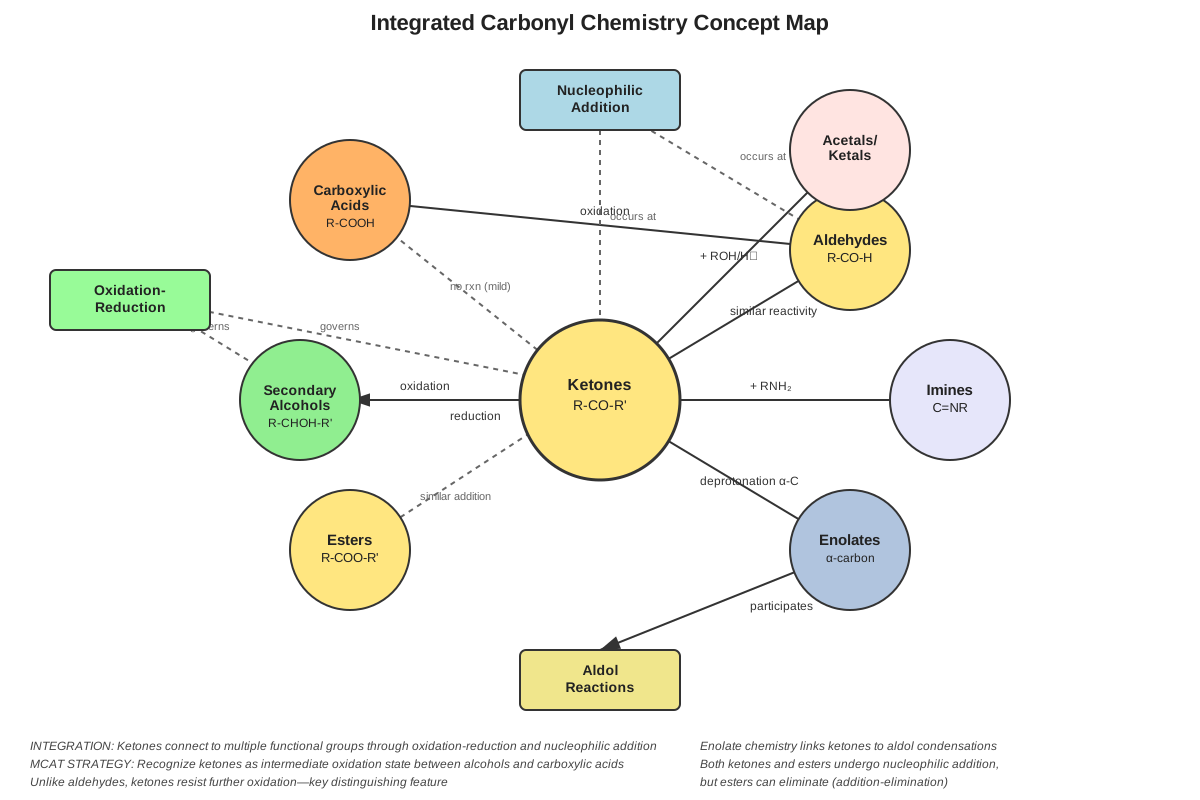
The chemistry of ketones serves as a central hub connecting multiple areas of organic chemistry. Ketones derive from secondary alcohols through oxidation reactions, establishing a direct relationship between alcohol chemistry and carbonyl chemistry. This oxidation-reduction relationship extends further: while ketones resist oxidation to carboxylic acids (unlike aldehydes), they can be reduced back to secondary alcohols using reducing agents like NaBH₄ or LiAlH₄.
The relationship map flows as follows: Alkenes → (ozonolysis) → Ketones ← (oxidation) ← Secondary Alcohols → (dehydration) → Alkenes. This cyclical relationship demonstrates how ketones integrate into broader synthetic strategies. Additionally, Ketones → (nucleophilic addition) → Alcohols, Imines, Acetals, showing how ketones serve as electrophilic starting materials for diverse functional group transformations.
Ketone enolate chemistry connects to aldol reactions and Michael additions, linking simple carbonyl compounds to complex carbon skeleton construction. The tautomerization equilibrium between keto and enol forms relates ketones to alkenes and alcohols simultaneously, demonstrating the interconnected nature of functional group chemistry. Understanding these relationships enables students to predict reaction sequences and solve multi-step synthesis problems efficiently.
In biochemical contexts, ketones connect to carboxylic acids through ketone body metabolism (acetoacetate ↔ β-hydroxybutyrate), to amino acids through transamination reactions involving α-keto acids, and to lipids through fatty acid oxidation. These biological connections make ketone chemistry essential for understanding integrated metabolism questions on the MCAT.
Quick check — test yourself on Ketones so far.
Try Flashcards →High-Yield Facts
⭐ Ketones contain a carbonyl group bonded to two carbon atoms, distinguishing them from aldehydes which have at least one hydrogen on the carbonyl carbon
⭐ Ketones are less reactive than aldehydes toward nucleophilic addition due to both electronic (more electron-donating alkyl groups) and steric (bulkier substituents) factors
⭐ Ketones resist oxidation under mild conditions, while aldehydes are readily oxidized to carboxylic acids—this forms the basis for Tollens' and Benedict's tests
⭐ The carbonyl carbon in ketones is sp² hybridized with trigonal planar geometry and bond angles of approximately 120°
⭐ Ketones undergo nucleophilic addition reactions including hydration, acetal formation, imine synthesis, and Grignard addition
- Ketones can act as hydrogen bond acceptors but not donors, giving them moderate water solubility that decreases with increasing carbon chain length
- The IR absorption for ketone C=O stretch appears at 1700-1750 cm⁻¹, a diagnostic peak for identifying ketones
- Secondary alcohols are oxidized to ketones using oxidizing agents like PCC, PDC, or chromic acid
- Ketones with α-hydrogens can form enolates under basic conditions, enabling aldol condensations and alkylation reactions
- In ¹³C-NMR spectroscopy, the ketone carbonyl carbon appears far downfield at δ 200-220 ppm, one of the most deshielded signals
- Ketone bodies (acetoacetate, β-hydroxybutyrate, acetone) are produced during fat metabolism and serve as alternative energy sources during fasting
- Friedel-Crafts acylation of aromatic compounds produces aromatic ketones, an important synthetic route for pharmaceutical compounds
Common Misconceptions
Misconception: Ketones and aldehydes have identical reactivity patterns since both contain carbonyl groups.
Correction: While both undergo nucleophilic addition, aldehydes are significantly more reactive due to less steric hindrance and greater electrophilicity of the carbonyl carbon. Aldehydes also undergo oxidation to carboxylic acids, while ketones resist oxidation under similar conditions.
Misconception: Ketones can be oxidized to carboxylic acids using the same reagents that oxidize aldehydes.
Correction: Ketones are resistant to oxidation under normal conditions. Oxidation of ketones requires harsh conditions (strong oxidizing agents and heat) and results in carbon-carbon bond cleavage, not simple functional group conversion. This resistance to oxidation is a key distinguishing feature from aldehydes.
Misconception: The carbonyl oxygen in ketones cannot participate in hydrogen bonding.
Correction: While ketones cannot donate hydrogen bonds (lacking O-H or N-H bonds), the carbonyl oxygen can accept hydrogen bonds through its lone pairs. This property explains why ketones are soluble in protic solvents and water, particularly for smaller ketones like acetone.
Misconception: All nucleophilic additions to ketones are irreversible.
Correction: Many nucleophilic additions to ketones are reversible, particularly hydration and hemiacetal formation. The position of equilibrium depends on the nucleophile, reaction conditions, and ketone structure. Acetal formation requires removal of water to drive the equilibrium forward, while imine formation requires removal of water and is reversible under aqueous conditions.
Misconception: Ketones always give the same product regardless of which side the nucleophile attacks from.
Correction: For unsymmetrical ketones, nucleophilic attack can occur from either face of the planar carbonyl group. When the ketone is part of a chiral molecule or when the two substituents create a prochiral center, attack from different faces produces different stereoisomers. This concept is important for understanding stereochemistry in synthesis.
Misconception: The IUPAC name for a ketone always ends in "-one" without any numbers.
Correction: When the carbonyl position is ambiguous (in chains longer than propanone), the position number must be specified before "-one" (e.g., 2-pentanone vs. 3-pentanone). The numbering should give the carbonyl carbon the lowest possible number.
Worked Examples
Example 1: Predicting Reaction Products
Question: A student treats 2-pentanone with the following reagents in separate reactions: (A) NaBH₄ followed by H₃O⁺, (B) CH₃MgBr followed by H₃O⁺, and (C) Tollens' reagent. Predict the products and explain the reasoning.
Solution:
Reaction A: NaBH₄ is a mild reducing agent that selectively reduces ketones to secondary alcohols. The hydride ion (H⁻) acts as a nucleophile, attacking the electrophilic carbonyl carbon. After aqueous workup with H₃O⁺, the product is 2-pentanol (CH₃-CHOH-CH₂-CH₂-CH₃). The ketone at position 2 is reduced to a secondary alcohol at position 2.
Reaction B: Grignard reagents (RMgX) are strong nucleophiles that add to carbonyl groups. CH₃MgBr adds a methyl group to the carbonyl carbon, and after aqueous workup, the product is a tertiary alcohol: 2-methyl-2-pentanol (CH₃-C(OH)(CH₃)-CH₂-CH₂-CH₃). The Grignard reagent adds one carbon to the molecule, and the carbonyl oxygen becomes a hydroxyl group.
Reaction C: Tollens' reagent (Ag⁺ in ammonia) is an oxidizing agent that reacts with aldehydes but not ketones. Since 2-pentanone is a ketone (carbonyl bonded to two carbons), no reaction occurs. The ketone remains unchanged, and no silver mirror forms. This negative test distinguishes ketones from aldehydes.
Key Concept Connection: This example demonstrates the nucleophilic addition reactivity of ketones (reactions A and B) and the resistance of ketones to oxidation (reaction C), directly addressing the learning objective of applying ketone chemistry to exam-style questions.
Example 2: Metabolic Pathway Analysis
Question: A passage describes a patient in diabetic ketoacidosis with elevated blood levels of acetoacetate and β-hydroxybutyrate. The passage states that acetoacetate can spontaneously decarboxylate to form acetone. Explain the structural relationship between these three compounds and why acetoacetate undergoes this spontaneous reaction while typical ketones do not.
Solution:
First, identify the structures: Acetoacetate is CH₃-CO-CH₂-COO⁻ (a β-keto acid), β-hydroxybutyrate is CH₃-CHOH-CH₂-COO⁻ (a β-hydroxy acid), and acetone is CH₃-CO-CH₃ (a simple ketone). These three compounds are collectively called ketone bodies.
β-Hydroxybutyrate and acetoacetate are interconverted through oxidation-reduction: the secondary alcohol in β-hydroxybutyrate is oxidized to the ketone in acetoacetate, or vice versa. This is a reversible reaction catalyzed by β-hydroxybutyrate dehydrogenase in mitochondria.
Acetoacetate spontaneously decarboxylates (loses CO₂) to form acetone because it is a β-keto acid. The mechanism involves the carbonyl group facilitating decarboxylation: the electrons from the breaking C-CO₂ bond can be stabilized by the adjacent carbonyl group through resonance. The intermediate enol form (CH₃-C(OH)=CH₂) tautomerizes to acetone. This reaction is spontaneous and non-enzymatic, occurring simply due to the instability of β-keto acids.
Typical ketones lack the carboxyl group adjacent to the carbonyl, so they cannot undergo this decarboxylation reaction. The presence of both a ketone and a carboxylic acid in the β-position creates unique reactivity. This explains why acetone appears in the breath of diabetic patients (giving a fruity odor) even though it is not directly produced by enzymatic pathways—it forms spontaneously from acetoacetate.
Key Concept Connection: This example integrates ketone structure, reactivity, and biological significance, demonstrating how ketone chemistry appears in clinical contexts on the MCAT. It addresses the learning objectives of connecting ketones to biochemical concepts and explaining their MCAT relevance.
Exam Strategy
When approaching MCAT questions involving ketones, begin by identifying the functional group and distinguishing it from aldehydes—look for the carbonyl carbon bonded to two other carbons rather than having a hydrogen. This distinction immediately narrows down possible reactions and properties.
Trigger words and phrases to watch for include: "carbonyl compound," "resistant to oxidation," "nucleophilic addition," "secondary alcohol oxidation," "ketone bodies," "acetone," "Grignard reagent," "reducing agent," and "α-hydrogen." When a passage mentions "Tollens' test" or "Benedict's test," immediately recognize that these detect aldehydes but not ketones—a negative result suggests a ketone may be present.
For reaction prediction questions, use this systematic approach:
- Identify the reagent type (nucleophile, oxidizing agent, reducing agent, acid/base)
- Determine the electrophilic site (carbonyl carbon in ketones)
- Consider steric and electronic factors affecting reactivity
- Predict the mechanism (usually nucleophilic addition for ketones)
- Draw the product, accounting for stereochemistry if relevant
Process-of-elimination strategies: If a question asks about oxidation products and one answer choice shows a carboxylic acid derived from a ketone under mild conditions, eliminate it immediately—ketones resist oxidation. If comparing reactivity between aldehydes and ketones, the aldehyde is always more reactive toward nucleophiles. When spectroscopy data is provided, a strong IR absorption around 1715 cm⁻¹ with no aldehyde C-H stretch (around 2720 and 2820 cm⁻¹) confirms a ketone.
Time allocation: Discrete ketone questions typically require 60-90 seconds—enough time to identify the functional group, apply one reaction principle, and select an answer. Passage-based questions may require 90-120 seconds as you integrate information from the passage with ketone chemistry principles. Don't spend excessive time drawing detailed mechanisms unless specifically asked; focus on predicting products and understanding reactivity patterns.
For synthesis problems involving ketones, work backward from the product: if the target is a ketone, consider secondary alcohol oxidation or Friedel-Crafts acylation. If the ketone is a starting material, consider what nucleophile would give the desired product through addition.
Memory Techniques
Mnemonic for ketone vs. aldehyde oxidation: "Ketones Keep their structure" (both start with K)—ketones resist oxidation while aldehydes are easily oxidized. Alternatively, "Aldehydes Are Always oxidized" (three A's).
Mnemonic for nucleophilic addition products: "HAGI" helps remember common nucleophiles:
- Hydride (NaBH₄, LiAlH₄) → alcohols
- Alcohol (ROH/H⁺) → acetals
- Grignard (RMgX) → alcohols (tertiary)
- Imine (RNH₂) → imines
Visualization strategy: Picture the carbonyl carbon as a "target" with a bullseye, representing its electrophilic nature. The partial positive charge attracts nucleophiles like arrows hitting the target. The two alkyl groups act as "shields" making the target harder to hit compared to aldehydes (which have only one shield).
Acronym for ketone body metabolism: "BAA" like a sheep sound:
- Beta-hydroxybutyrate (the reduced form)
- Acetoacetate (the keto form)
- Acetone (the decarboxylation product)
Remember the order of oxidation states: β-hydroxybutyrate (most reduced, alcohol) → acetoacetate (oxidized, ketone) → acetone (decarboxylated, volatile).
Rhyme for spectroscopy: "Seventeen hundred is the ketone zone" (referring to the 1700-1750 cm⁻¹ IR absorption).
Memory palace technique: Imagine walking through a chemistry lab where each station represents a ketone reaction. Station 1 has a bottle labeled "NaBH₄" with a downward arrow (reduction to alcohol). Station 2 has a Grignard reagent bottle with a plus sign (addition reaction). Station 3 has Tollens' reagent with a big X through it (no reaction with ketones). This spatial organization helps recall reaction patterns during exams.
Summary
Ketones are carbonyl-containing compounds with the functional group bonded to two carbon atoms, making them central to both organic chemistry and biochemistry on the MCAT. Their sp² hybridized carbonyl carbon serves as an electrophilic site for nucleophilic addition reactions, including reduction to alcohols, Grignard additions, and imine formation. Unlike aldehydes, ketones resist oxidation under mild conditions—a critical distinction tested frequently on the exam. Ketones exhibit moderate polarity and can accept hydrogen bonds, influencing their physical properties and biological behavior. Their synthesis from secondary alcohol oxidation and their role in metabolic pathways (particularly ketone body metabolism in diabetes and fasting states) make them clinically relevant. Understanding ketone reactivity patterns, spectroscopic identification (especially the characteristic IR absorption at 1700-1750 cm⁻¹), and comparison with aldehydes enables students to tackle diverse question types. Mastery of enolate chemistry and α-hydrogen acidity extends ketone knowledge to carbon-carbon bond-forming reactions essential for biosynthesis. Success with ketone questions requires recognizing structural features, predicting nucleophilic addition products, and applying oxidation-reduction principles.
Key Takeaways
- Ketones contain a carbonyl group (C=O) bonded to two carbon atoms, distinguishing them structurally and reactively from aldehydes
- Ketones resist oxidation under conditions that readily oxidize aldehydes, forming the basis for diagnostic tests like Tollens' and Benedict's reagents
- Nucleophilic addition is the characteristic reaction of ketones, with common nucleophiles including hydride, Grignard reagents, alcohols, and amines
- Ketones are less reactive than aldehydes toward nucleophiles due to electronic and steric factors from the two alkyl substituents
- Secondary alcohol oxidation produces ketones, while ketone reduction yields secondary alcohols—understanding this interconversion is essential for synthesis problems
- Ketone bodies (acetoacetate, β-hydroxybutyrate, acetone) are metabolically significant, appearing in MCAT passages about diabetes, fasting, and energy metabolism
- Spectroscopic identification relies on characteristic signals: IR absorption at 1700-1750 cm⁻¹ and ¹³C-NMR signal at δ 200-220 ppm
Related Topics
Aldehydes: Understanding aldehydes deepens ketone mastery by highlighting reactivity differences, particularly oxidation susceptibility and nucleophilic addition rates. Aldehydes serve as important comparison points for exam questions.
Carboxylic Acids and Derivatives: Ketones connect to carboxylic acid chemistry through oxidation pathways (for aldehydes) and through β-keto acids in metabolism. Mastering ketones enables understanding of more complex carbonyl derivatives.
Enolate Chemistry and Aldol Reactions: Ketones with α-hydrogens form enolates that participate in carbon-carbon bond-forming reactions. This advanced topic builds directly on fundamental ketone chemistry.
Alcohols: The oxidation-reduction relationship between secondary alcohols and ketones is bidirectional and frequently tested. Understanding both functional groups together provides synthetic flexibility.
Spectroscopy: Ketones provide characteristic signals in IR, NMR, and mass spectrometry. Mastering ketone identification enhances overall spectroscopic interpretation skills.
Biochemical Pathways: Ketone bodies, α-keto acids in amino acid metabolism, and ketones in fatty acid synthesis represent high-yield biochemical applications of ketone chemistry.
Practice CTA
Now that you've mastered the core concepts of ketone chemistry, it's time to solidify your understanding through active practice. Attempt the practice questions and flashcards associated with this topic to reinforce reaction patterns, test your ability to distinguish ketones from aldehydes, and apply nucleophilic addition mechanisms. Focus particularly on questions integrating ketones with biological contexts, as these represent the highest-yield material for MCAT success. Remember: understanding ketones opens doors to more advanced carbonyl chemistry and biochemical pathways—you're building a foundation that will serve you throughout your MCAT preparation and medical career. Challenge yourself with timed practice to simulate exam conditions, and review any mistakes to identify knowledge gaps. You've got this!
Sign up free to keep reading
Create a free AnvayaPrep account to finish this MCAT guide on Ketones — plus flashcards and practice questions.