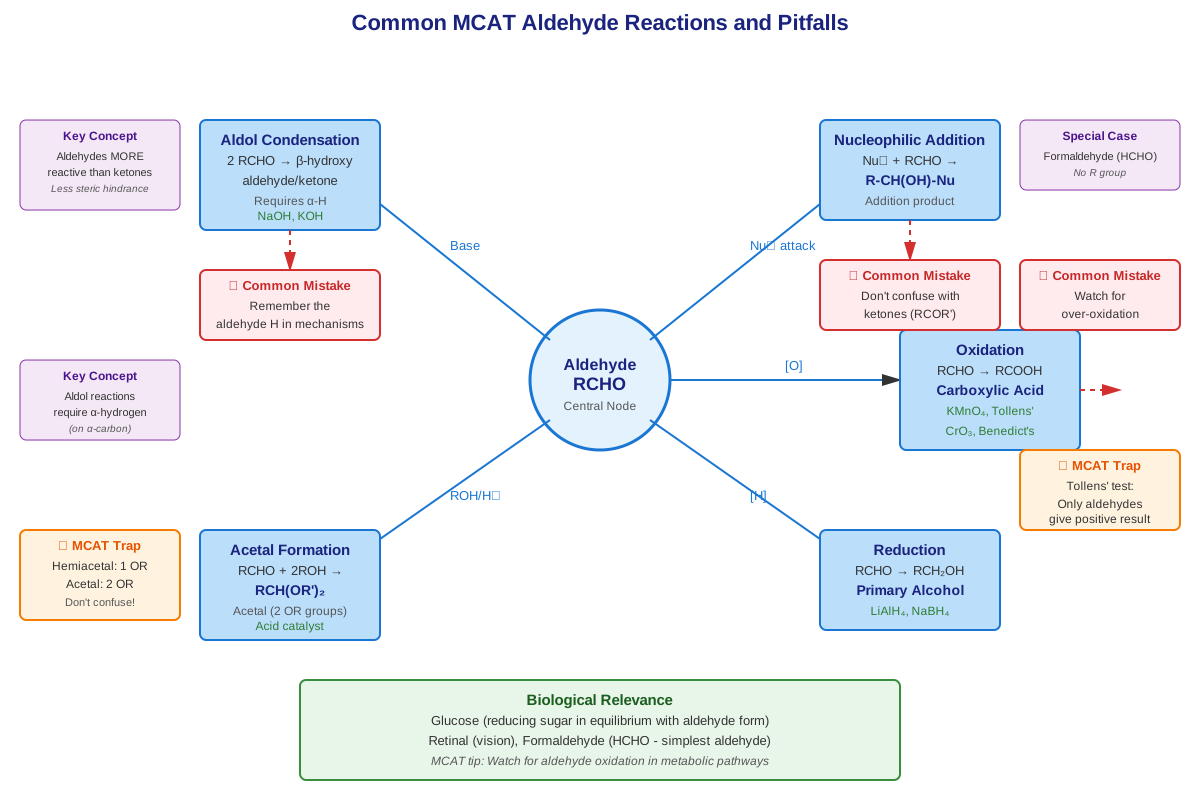
Overview
Aldehydes represent one of the most important functional groups in Organic Chemistry, characterized by a carbonyl group (C=O) bonded to at least one hydrogen atom. These compounds serve as crucial intermediates in biological systems and synthetic pathways, making them essential for MCAT success. Understanding aldehydes requires mastery of their structure, reactivity patterns, nomenclature, and the mechanisms by which they undergo transformation. The carbonyl carbon in aldehydes exhibits electrophilic character due to the polarization of the C=O bond, making these molecules highly reactive toward nucleophiles—a concept that appears repeatedly across MCAT Organic Chemistry questions.
The study of Aldehydes MCAT content bridges multiple areas of organic chemistry, including oxidation-reduction reactions, nucleophilic addition mechanisms, and spectroscopic identification. Aldehydes occupy a middle ground in the oxidation states of carbon compounds: they are more oxidized than alcohols but less oxidized than carboxylic acids. This intermediate position makes them versatile reactants that can undergo both oxidation and reduction, participate in condensation reactions, and serve as electrophiles in carbon-carbon bond-forming reactions. The MCAT frequently tests the ability to predict aldehyde reactivity, identify them in complex molecules, and understand their role in biological processes such as glucose metabolism.
Within the broader context of Carbonyl Chemistry, aldehydes share many properties with ketones but exhibit distinct reactivity differences due to the presence of the aldehyde hydrogen. This structural feature makes aldehydes generally more reactive than ketones toward nucleophilic attack and more susceptible to oxidation. Understanding these nuances is critical for success on MCAT questions that require students to compare and contrast different carbonyl-containing compounds, predict reaction outcomes, or identify unknown compounds based on their chemical behavior.
Learning Objectives
- [ ] Define Aldehydes using accurate Organic Chemistry terminology
- [ ] Explain why Aldehydes matters for the MCAT
- [ ] Apply Aldehydes to exam-style questions
- [ ] Identify common mistakes related to Aldehydes
- [ ] Connect Aldehydes to related Organic Chemistry concepts
- [ ] Predict the products of nucleophilic addition reactions with aldehydes
- [ ] Distinguish between aldehydes and ketones based on structure and reactivity
- [ ] Identify aldehydes using spectroscopic techniques (IR, NMR, mass spectrometry)
- [ ] Explain the mechanism of aldehyde oxidation and reduction reactions
Prerequisites
- Functional group identification: Essential for recognizing aldehydes within complex molecular structures and distinguishing them from ketones and other carbonyl compounds
- Electronegativity and bond polarity: Necessary to understand why the carbonyl carbon is electrophilic and susceptible to nucleophilic attack
- Acid-base chemistry: Required for understanding proton transfer steps in aldehyde reaction mechanisms
- Oxidation-reduction concepts: Fundamental for predicting whether aldehydes will be oxidized to carboxylic acids or reduced to alcohols
- Basic reaction mechanisms: Including arrow-pushing notation and understanding of nucleophiles and electrophiles
- Resonance structures: Important for understanding the stability of intermediates formed during aldehyde reactions
Why This Topic Matters
Aldehydes appear in numerous biological contexts that are directly relevant to MCAT passages. Glucose and other reducing sugars exist in equilibrium with their aldehyde forms, making aldehyde chemistry essential for understanding carbohydrate metabolism. The aldehyde group appears in retinal (the light-sensing molecule in vision), various neurotransmitter metabolites, and numerous pharmaceutical compounds. Formaldehyde, the simplest aldehyde, is used in biological specimen preservation and serves as a common reference point for understanding aldehyde reactivity.
From an exam perspective, aldehydes appear in approximately 3-5% of MCAT Organic Chemistry questions, either as the primary focus or as part of multi-step synthesis problems. Questions typically test: (1) identification of aldehydes through spectroscopy or chemical tests, (2) prediction of reaction products when aldehydes react with various nucleophiles, (3) comparison of aldehyde and ketone reactivity, and (4) understanding of aldehyde oxidation states and redox chemistry. Aldehydes frequently appear in passages discussing carbohydrate chemistry, metabolic pathways, or synthetic organic chemistry applications.
The MCAT particularly favors questions that require students to apply mechanistic understanding rather than memorize reactions. Expect to see aldehydes in passages about Benedict's or Tollens' tests (which distinguish aldehydes from ketones), hemiacetal and acetal formation (relevant to carbohydrate chemistry), and nucleophilic addition reactions. Understanding aldehydes also provides the foundation for more complex topics like aldol condensations and Claisen condensations, which occasionally appear on the exam.
Core Concepts
Structure and Nomenclature of Aldehydes
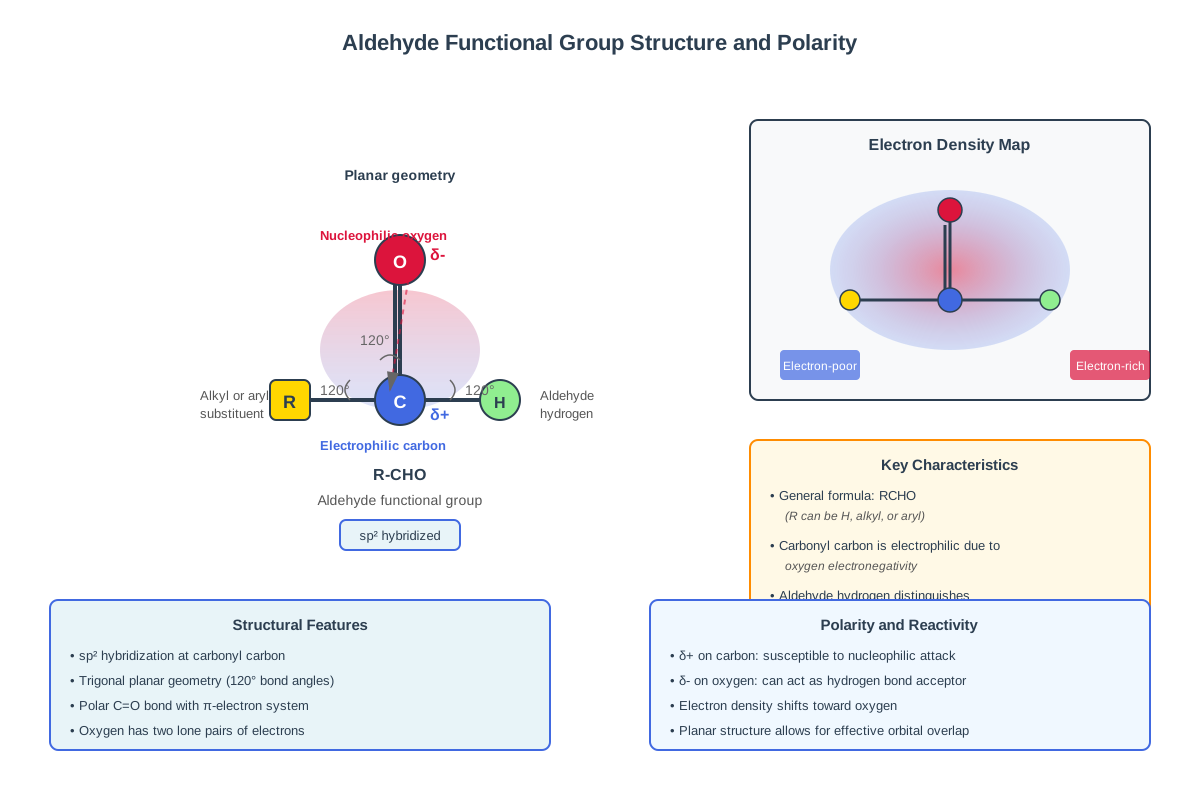
Aldehydes contain a carbonyl group (C=O) bonded to at least one hydrogen atom and one carbon or hydrogen substituent. The general formula is RCHO, where R can be hydrogen (in formaldehyde) or any alkyl or aryl group. The carbonyl carbon in aldehydes is sp² hybridized with trigonal planar geometry and bond angles of approximately 120°. The C=O bond consists of one σ bond and one π bond, with the π bond formed by overlap of p orbitals on carbon and oxygen.
In IUPAC nomenclature, aldehydes are named by replacing the "-e" ending of the parent alkane with "-al." The carbonyl carbon is always assigned position 1, so numbering begins at the aldehyde carbon. For example, a three-carbon chain with an aldehyde group is propanal, and a four-carbon chain is butanal. When the aldehyde is attached to a ring, the suffix "-carbaldehyde" is used (e.g., cyclohexanecarbaldehyde). Common names persist for simple aldehydes: formaldehyde (methanal), acetaldehyde (ethanal), and benzaldehyde (benzenecarbaldehyde).
Physical Properties and Polarity
The carbonyl group creates significant molecular polarity in aldehydes due to the electronegativity difference between carbon (2.5) and oxygen (3.5). This polarization creates a partial positive charge (δ+) on carbon and a partial negative charge (δ−) on oxygen, making the carbonyl carbon electrophilic and susceptible to nucleophilic attack. The dipole moment of aldehydes is substantial (approximately 2.3-2.8 D for simple aldehydes), resulting in higher boiling points than comparable hydrocarbons but lower than alcohols of similar molecular weight.
Aldehydes cannot form hydrogen bonds with themselves (lacking an O-H or N-H bond) but can accept hydrogen bonds from water or alcohols. This property makes small aldehydes (formaldehyde, acetaldehyde) miscible with water, while larger aldehydes show decreasing water solubility as the hydrophobic alkyl chain lengthens. The ability to accept hydrogen bonds is crucial for understanding aldehyde reactivity in aqueous biological systems.
Reactivity Patterns: Nucleophilic Addition
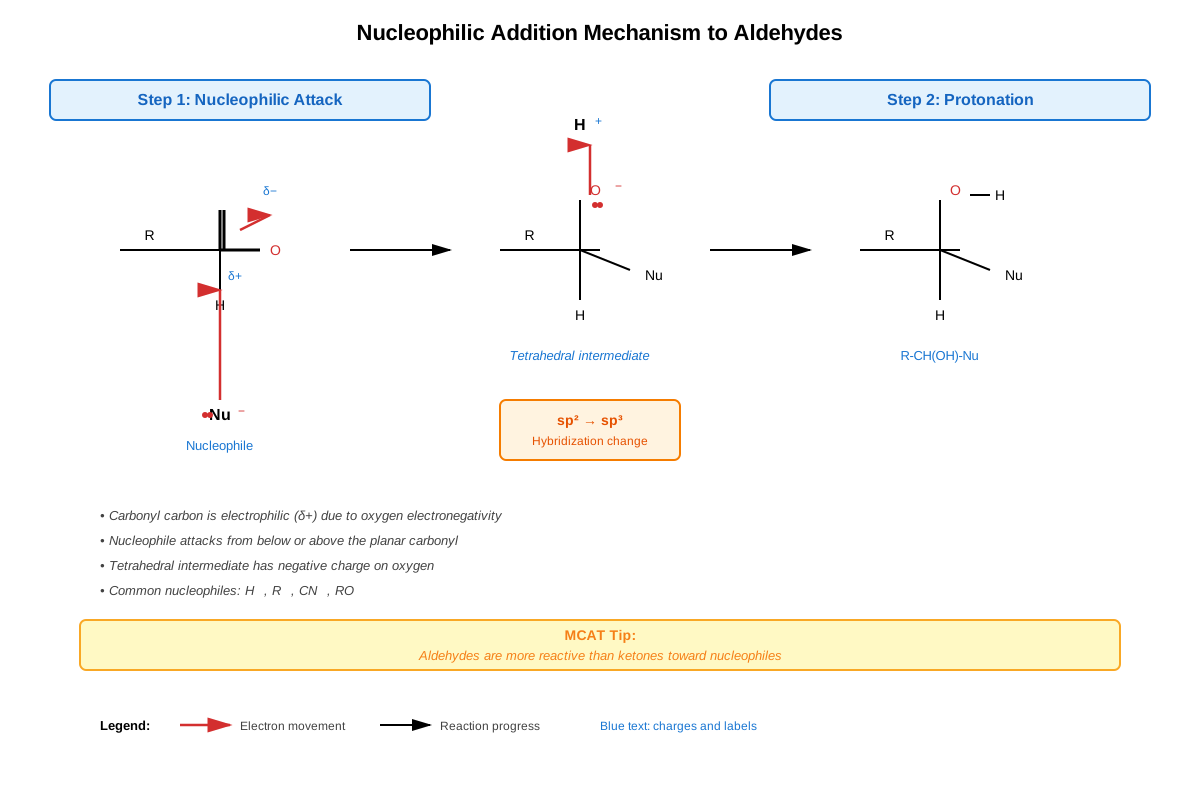
The defining reactivity of aldehydes is nucleophilic addition to the carbonyl carbon. This reaction proceeds through a two-step mechanism:
- Nucleophilic attack: The nucleophile donates electrons to the electrophilic carbonyl carbon, forming a new C-Nu bond while the π bond breaks and electrons move to oxygen, creating a tetrahedral alkoxide intermediate
- Protonation: The alkoxide intermediate is protonated (either by solvent or added acid) to form the final alcohol product
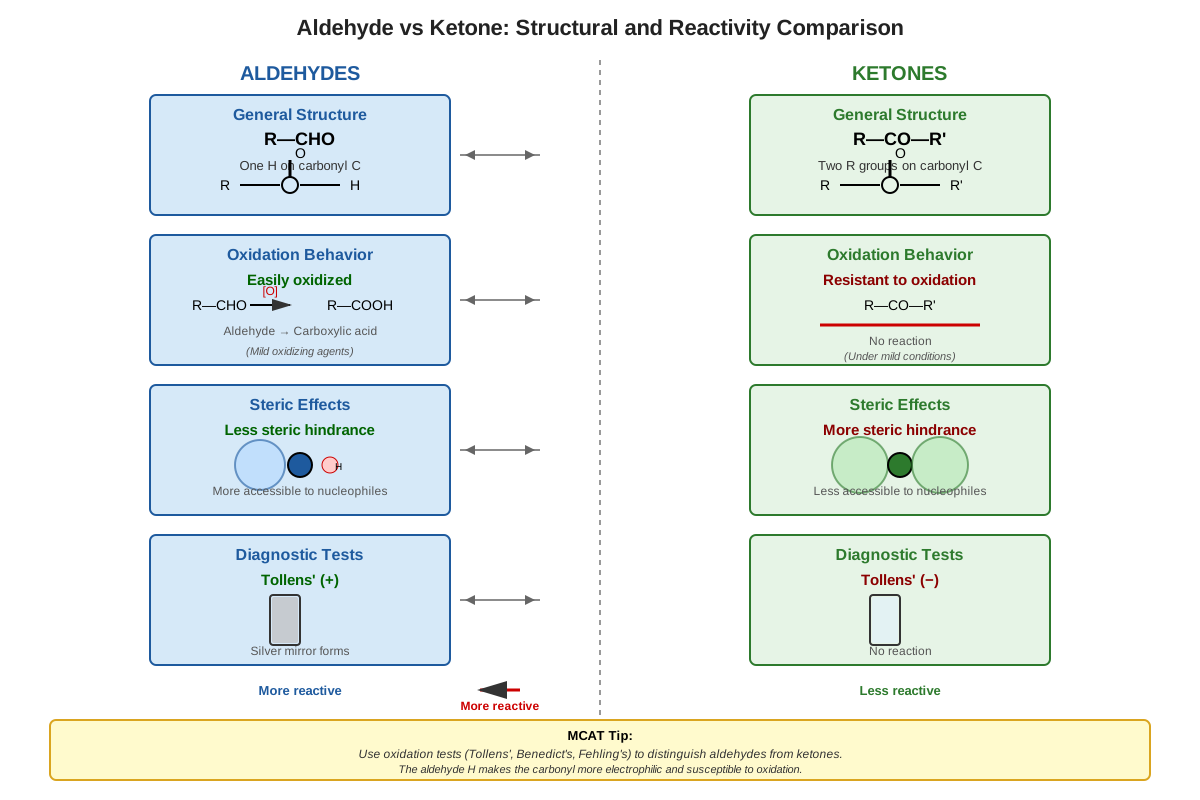
Aldehydes are more reactive than ketones toward nucleophilic addition for two reasons: (1) steric factors—the aldehyde hydrogen is smaller than an alkyl group, providing less steric hindrance around the carbonyl carbon, and (2) electronic factors—alkyl groups are electron-donating, making ketone carbonyl carbons slightly less electrophilic than aldehyde carbonyl carbons.
Oxidation and Reduction Reactions
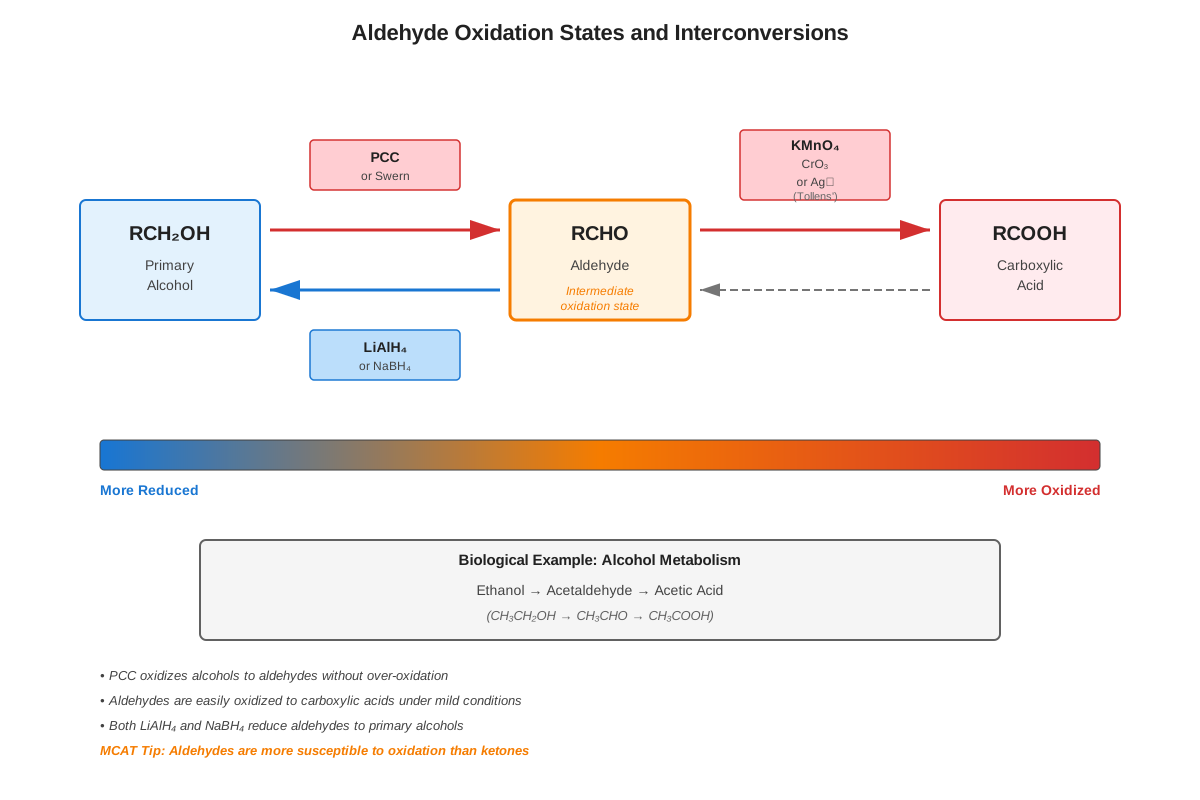
Oxidation of aldehydes produces carboxylic acids, a reaction that occurs readily under mild conditions. Common oxidizing agents include:
- Tollens' reagent (Ag⁺ in ammonia): produces a silver mirror, used as a diagnostic test
- Benedict's reagent (Cu²⁺ in citrate): produces a red precipitate of Cu₂O
- Chromic acid (H₂CrO₄): produces carboxylic acids
- Potassium permanganate (KMnO₄): strong oxidizing agent
The ease of aldehyde oxidation distinguishes them from ketones, which resist oxidation under similar conditions. This difference forms the basis of chemical tests used to identify aldehydes.
Reduction of aldehydes produces primary alcohols. Common reducing agents include:
- Lithium aluminum hydride (LiAlH₄): strong reducing agent, requires anhydrous conditions
- Sodium borohydride (NaBH₄): milder reducing agent, can be used in protic solvents
- Catalytic hydrogenation (H₂/Pt or Pd): adds hydrogen across the C=O bond
Reactions with Nitrogen Nucleophiles
Aldehydes react with various nitrogen-containing nucleophiles to form imines and related compounds. When primary amines (RNH₂) react with aldehydes under mildly acidic conditions, they form imines (also called Schiff bases) with the general structure R₂C=NR'. The mechanism involves:
- Nucleophilic addition of the amine to the carbonyl
- Proton transfer to form a carbinolamine intermediate
- Dehydration (loss of water) to form the C=N double bond
This reaction is reversible and pH-dependent, proceeding optimally around pH 4-5. Imines are important in biological systems, particularly in amino acid metabolism and vitamin B₆ chemistry. Reactions with other nitrogen nucleophiles produce:
- Hydrazones (with hydrazine, H₂NNH₂)
- Semicarbazones (with semicarbazide)
- Oximes (with hydroxylamine, NH₂OH)
Hemiacetal and Acetal Formation
When aldehydes react with alcohols, they form hemiacetals (containing both -OH and -OR groups on the same carbon) and acetals (containing two -OR groups on the same carbon). This chemistry is fundamental to carbohydrate structure:
Hemiacetal formation (reversible, catalyzed by acid or base):
- One equivalent of alcohol adds to the carbonyl
- Product contains one -OH and one -OR group
- Cyclic hemiacetals are stable (e.g., glucose in its ring form)
Acetal formation (requires acid catalyst and excess alcohol):
- Hemiacetal reacts with a second equivalent of alcohol
- Water is eliminated
- Product contains two -OR groups
- Acetals are stable to base but hydrolyzed by aqueous acid
| Structure Type | Functional Groups | Stability | Biological Example |
|---|---|---|---|
| Aldehyde | -CHO | Reactive | Open-chain glucose |
| Hemiacetal | -CH(OH)(OR) | Moderate (stable if cyclic) | Cyclic glucose |
| Acetal | -CH(OR)₂ | Stable to base | Glycosidic bonds |
Aldol Reactions
Under basic conditions, aldehydes with α-hydrogens (hydrogens on the carbon adjacent to the carbonyl) can undergo aldol condensation. This reaction creates new carbon-carbon bonds and is important in biological synthesis:
- Base abstracts an α-hydrogen, forming an enolate ion
- The enolate acts as a nucleophile, attacking another aldehyde molecule
- Protonation produces a β-hydroxy aldehyde (aldol)
- Dehydration can occur, forming an α,β-unsaturated aldehyde
This reaction is crucial in carbohydrate metabolism and biosynthesis of complex molecules.
Spectroscopic Identification
Infrared (IR) Spectroscopy: Aldehydes show characteristic absorptions:
- Strong C=O stretch at 1720-1740 cm⁻¹ (slightly higher than ketones)
- Two weak C-H stretches at 2720 and 2820 cm⁻¹ (diagnostic for aldehydes)
¹H NMR Spectroscopy: The aldehyde proton appears far downfield at 9-10 ppm, a distinctive region that helps identify aldehydes immediately.
¹³C NMR Spectroscopy: The carbonyl carbon appears at 190-205 ppm, in the characteristic carbonyl region.
Mass Spectrometry: Aldehydes often show M-1 peaks (loss of H) and may fragment by loss of the alkyl group adjacent to the carbonyl.
Concept Relationships
The chemistry of aldehydes is interconnected with multiple organic chemistry concepts. Carbonyl Chemistry serves as the overarching framework, with aldehydes representing one specific functional group within this family. The electrophilic nature of the carbonyl carbon → drives → nucleophilic addition reactions, which represent the primary reactivity pattern for aldehydes.
Oxidation-reduction chemistry connects aldehydes to both primary alcohols (reduction product) and carboxylic acids (oxidation product), positioning aldehydes at an intermediate oxidation state. This relationship is crucial: primary alcohols → oxidation → aldehydes → oxidation → carboxylic acids. Understanding this progression allows prediction of reaction outcomes and retrosynthetic analysis.
The acidity of α-hydrogens → enables → enolate formation → which leads to → aldol condensation reactions. This connection links aldehyde chemistry to acid-base concepts and carbon-carbon bond formation. The hemiacetal/acetal equilibrium → directly relates to → carbohydrate chemistry, as cyclic sugars exist as hemiacetals and glycosidic bonds are acetals.
Spectroscopic properties of aldehydes connect to their structure: the electron-withdrawing carbonyl group → causes → deshielding of the aldehyde proton → resulting in → characteristic downfield NMR signals. Similarly, the C=O bond vibration → produces → characteristic IR absorption → enabling → functional group identification.
The greater reactivity of aldehydes compared to ketones stems from both steric effects (smaller substituents) and electronic effects (less electron donation to carbonyl carbon), connecting molecular structure to chemical behavior. This relationship appears repeatedly in MCAT questions requiring comparison of carbonyl compound reactivity.
Quick check — test yourself on Aldehydes so far.
Try Flashcards →High-Yield Facts
⭐ Aldehydes contain a carbonyl group bonded to at least one hydrogen atom, with general formula RCHO
⭐ The carbonyl carbon in aldehydes is electrophilic due to polarization of the C=O bond, making it susceptible to nucleophilic attack
⭐ Aldehydes are more reactive than ketones toward nucleophilic addition due to reduced steric hindrance and less electron donation to the carbonyl carbon
⭐ Aldehydes are easily oxidized to carboxylic acids but ketones resist oxidation under similar conditions—this difference is the basis for Tollens' and Benedict's tests
⭐ Reduction of aldehydes with LiAlH₄ or NaBH₄ produces primary alcohols
- The aldehyde proton appears at 9-10 ppm in ¹H NMR, a diagnostic chemical shift range
- Aldehydes show characteristic IR absorptions: strong C=O stretch at 1720-1740 cm⁻¹ and two weak C-H stretches at 2720 and 2820 cm⁻¹
- Hemiacetals contain one -OH and one -OR group on the same carbon; acetals contain two -OR groups
- Cyclic hemiacetals (like glucose in ring form) are much more stable than acyclic hemiacetals
- Acetal formation requires acid catalyst and excess alcohol; acetals are stable to base but hydrolyzed by aqueous acid
- Aldehydes with α-hydrogens can undergo aldol condensation, forming new carbon-carbon bonds
- Formaldehyde (HCHO) is the simplest aldehyde and the only one with two hydrogens on the carbonyl carbon
- Tollens' reagent (Ag⁺) oxidizes aldehydes and produces a characteristic silver mirror
- Imine formation from aldehydes and primary amines is reversible and pH-dependent, optimal around pH 4-5
Common Misconceptions
Misconception: All carbonyl-containing compounds are aldehydes.
Correction: Aldehydes specifically have the carbonyl carbon bonded to at least one hydrogen. Ketones have the carbonyl carbon bonded to two carbon atoms, carboxylic acids have a carbonyl and hydroxyl group, and esters have a carbonyl and an alkoxy group. The specific substitution pattern determines the functional group identity and reactivity.
Misconception: Aldehydes and ketones have identical reactivity patterns.
Correction: While both undergo nucleophilic addition, aldehydes are significantly more reactive due to less steric hindrance (hydrogen vs. alkyl group) and reduced electron donation to the carbonyl carbon. Additionally, aldehydes are easily oxidized to carboxylic acids while ketones resist oxidation, a critical distinction tested on the MCAT.
Misconception: The aldehyde hydrogen is acidic like a carboxylic acid hydrogen.
Correction: The aldehyde hydrogen is not significantly acidic (pKa ~17, similar to alkanes). The acidic hydrogens in aldehyde chemistry are the α-hydrogens (on the carbon adjacent to the carbonyl), which have pKa ~20 and can be removed by strong bases to form enolates. The aldehyde hydrogen is part of the carbonyl group and does not readily dissociate.
Misconception: Hemiacetals and acetals are the same thing.
Correction: Hemiacetals have one -OH and one -OR group attached to the same carbon (formed from one equivalent of alcohol), while acetals have two -OR groups (formed from two equivalents of alcohol with loss of water). Hemiacetals are generally unstable and exist in equilibrium with the aldehyde, except when cyclic (like glucose). Acetals are stable to base but can be hydrolyzed by aqueous acid back to the aldehyde.
Misconception: All aldehydes give positive Tollens' and Benedict's tests.
Correction: While most aldehydes do give positive tests, aromatic aldehydes like benzaldehyde react slowly or not at all with Benedict's reagent due to reduced electrophilicity of the carbonyl carbon (resonance stabilization from the aromatic ring). Additionally, these tests specifically detect aldehydes because ketones do not undergo oxidation under these mild conditions.
Misconception: NaBH₄ and LiAlH₄ can be used interchangeably to reduce aldehydes.
Correction: While both reduce aldehydes to primary alcohols, they differ significantly in reactivity and conditions. LiAlH₄ is a much stronger reducing agent that reacts violently with water and requires anhydrous conditions. NaBH₄ is milder, selective, and can be used in protic solvents like water or alcohols. For MCAT purposes, both reduce aldehydes, but understanding their relative strengths is important for predicting selectivity in molecules with multiple functional groups.
Worked Examples
Example 1: Predicting Reaction Products
Question: An unknown compound with molecular formula C₄H₈O shows a strong IR absorption at 1730 cm⁻¹ and two weak absorptions at 2720 and 2820 cm⁻¹. The ¹H NMR shows a peak at 9.7 ppm. When treated with Tollens' reagent, a silver mirror forms. When treated with excess methanol and catalytic acid, what is the final product?
Solution:
Step 1: Identify the functional group
- IR at 1730 cm⁻¹ indicates a carbonyl group
- Two weak IR absorptions at 2720 and 2820 cm⁻¹ are diagnostic for an aldehyde C-H stretch
- ¹H NMR peak at 9.7 ppm confirms an aldehyde proton
- Positive Tollens' test confirms an aldehyde (ketones don't react)
- Therefore, the compound is an aldehyde
Step 2: Determine the structure
- Molecular formula C₄H₈O with one degree of unsaturation (the C=O)
- Must be butanal (CH₃CH₂CH₂CHO) or an isomer like 2-methylpropanal
Step 3: Predict the reaction with excess methanol and acid
- Aldehydes react with alcohols under acidic conditions to form acetals
- First, one methanol adds to form a hemiacetal: RCH(OH)(OCH₃)
- Second, another methanol adds with loss of water to form an acetal: RCH(OCH₃)₂
- The final product is a dimethyl acetal
Step 4: Write the product
- If the starting aldehyde is butanal: CH₃CH₂CH₂CH(OCH₃)₂
- This acetal has two methoxy groups on the same carbon
Key Concepts Applied: Spectroscopic identification of aldehydes, understanding of acetal formation mechanism, recognition that excess alcohol and acid catalyst drive the reaction to the acetal stage.
Example 2: Comparing Reactivity
Question: Two compounds, propanal and propanone (acetone), are each treated separately with: (A) NaBH₄ in ethanol, (B) Tollens' reagent, and (C) dilute aqueous acid. Predict the products for each reaction and explain any differences in reactivity.
Solution:
Propanal (CH₃CH₂CHO) - an aldehyde:
Reaction A (NaBH₄):
- NaBH₄ is a reducing agent that adds hydride (H⁻) to the carbonyl carbon
- Product: 1-propanol (CH₃CH₂CH₂OH), a primary alcohol
- Mechanism: Nucleophilic addition of hydride followed by protonation
Reaction B (Tollens' reagent):
- Tollens' reagent (Ag⁺ in ammonia) oxidizes aldehydes
- Product: Propanoic acid (CH₃CH₂COOH) and metallic silver (silver mirror forms)
- This is a positive test for aldehydes
Reaction C (dilute aqueous acid):
- In aqueous acid, aldehydes can form hydrates (geminal diols)
- Product: Equilibrium mixture of propanal and its hydrate CH₃CH₂CH(OH)₂
- The hydrate is generally not stable and favors the aldehyde form
Propanone/Acetone (CH₃COCH₃) - a ketone:
Reaction A (NaBH₄):
- NaBH₄ also reduces ketones, though more slowly than aldehydes
- Product: 2-propanol (CH₃CH(OH)CH₃), a secondary alcohol
- Same mechanism as with aldehydes
Reaction B (Tollens' reagent):
- Ketones do NOT react with Tollens' reagent under normal conditions
- Product: No reaction (no silver mirror)
- Ketones resist oxidation because it would require breaking a C-C bond
Reaction C (dilute aqueous acid):
- Ketones also form hydrates, but even less favorably than aldehydes
- Product: Primarily unreacted propanone (hydrate formation is unfavorable)
Key Differences:
- Both are reduced by NaBH₄, but the aldehyde reacts faster and produces a primary alcohol while the ketone produces a secondary alcohol
- Only the aldehyde is oxidized by Tollens' reagent—this is the key diagnostic difference
- Both can form hydrates in water, but aldehydes do so more readily due to less steric hindrance
Key Concepts Applied: Understanding nucleophilic addition to carbonyls, recognizing oxidation state differences, applying steric and electronic effects to predict relative reactivity, using chemical tests to distinguish functional groups.
Exam Strategy
When approaching MCAT questions involving aldehydes, begin by identifying whether the question asks about structure, reactivity, or identification. Trigger words to watch for include: "carbonyl," "oxidation," "reduction," "nucleophilic addition," "Tollens' test," "Benedict's test," "hemiacetal," "acetal," and "imine formation." These terms signal that aldehyde chemistry is being tested.
For structure-based questions, immediately look at what is bonded to the carbonyl carbon. If you see a hydrogen directly attached to the carbonyl carbon (C=O-H), you have an aldehyde. If both substituents are carbon atoms, it's a ketone. This distinction is crucial because many questions test the ability to differentiate these functional groups.
For reactivity questions, apply the following decision tree:
- Is a nucleophile present? → Expect nucleophilic addition to the carbonyl
- Is an oxidizing agent present? → Aldehydes oxidize to carboxylic acids; ketones don't react
- Is a reducing agent present? → Both aldehydes and ketones reduce, but aldehydes react faster
- Are alcohols and acid present? → Expect hemiacetal/acetal formation
- Is a primary amine present? → Expect imine formation
Process-of-elimination tips: When comparing aldehydes and ketones, remember that aldehydes are always MORE reactive. If an answer choice suggests a ketone reacts faster than an aldehyde, eliminate it. If a question asks which compound gives a positive Tollens' or Benedict's test, eliminate all ketones and carboxylic acids—only aldehydes (and some sugars) give positive results.
For spectroscopy questions, use the aldehyde proton as your primary diagnostic tool. An ¹H NMR peak at 9-10 ppm is almost certainly an aldehyde proton—no other common functional group appears this far downfield. In IR spectroscopy, look for the combination of a carbonyl stretch (1720-1740 cm⁻¹) AND the two weak C-H stretches (2720 and 2820 cm⁻¹)—this combination is diagnostic for aldehydes.
Time allocation: Most aldehyde questions can be answered in 60-90 seconds if you recognize the functional group and apply the appropriate reactivity pattern. Don't waste time drawing out full mechanisms unless specifically asked—focus on identifying the nucleophile, electrophile, and final product. For passage-based questions, scan for aldehyde-containing structures in figures and note any experimental conditions that might involve aldehyde chemistry (oxidation, reduction, condensation reactions).
Exam Tip: If a passage discusses carbohydrate chemistry or glucose metabolism, expect questions about hemiacetal formation and the equilibrium between open-chain (aldehyde) and cyclic (hemiacetal) forms of sugars.
Memory Techniques
ALDEHYDE mnemonic for key properties:
- Always has a hydrogen on carbonyl
- Less stable than ketones (more reactive)
- Deshielded proton in NMR (9-10 ppm)
- Easily oxidized to carboxylic acids
- Hemiacetals form with one alcohol
- Yields primary alcohols when reduced
- Diagnostic IR peaks at 2720 and 2820 cm⁻¹
- Electrophilic carbonyl carbon
"ROACH" for remembering what aldehydes are oxidized to:
- Reducing agents → Alcohols (primary)
- Oxidizing agents → Carboxylic acids (or Hydrogen lost)
Visualization strategy for nucleophilic addition: Picture the carbonyl carbon as a "target" with a positive charge (δ+) painted on it. Nucleophiles are "arrows" that always fly toward this target. When the arrow hits, the π bond "breaks" and electrons move to oxygen, creating a tetrahedral intermediate. This mental image helps remember that nucleophiles attack the carbon, not the oxygen.
"Two OR groups = Acetal, One OR group = Hemiacetal": Visualize the word "acetal" having two "a"s (acetal) corresponding to two OR groups, while "hemiacetal" has "hemi" (meaning half) corresponding to only one OR group.
Tollens' Test memory aid: "Silver mirror for aldehydes" - imagine looking in a silver mirror and seeing the letters "CHO" (the aldehyde functional group) reflected back at you. This helps remember that Tollens' reagent produces a silver mirror specifically with aldehydes.
Summary
Aldehydes are carbonyl-containing compounds with the general formula RCHO, characterized by a carbonyl group bonded to at least one hydrogen atom. The carbonyl carbon is electrophilic due to polarization of the C=O bond, making aldehydes highly reactive toward nucleophilic addition reactions. Aldehydes are more reactive than ketones due to reduced steric hindrance and less electron donation to the carbonyl carbon. They are readily oxidized to carboxylic acids (distinguishing them from ketones) and reduced to primary alcohols. Key reactions include nucleophilic addition, oxidation with Tollens' or Benedict's reagent, reduction with NaBH₄ or LiAlH₄, hemiacetal and acetal formation with alcohols, and imine formation with primary amines. Aldehydes can be identified spectroscopically by their characteristic ¹H NMR signal at 9-10 ppm and IR absorptions at 1720-1740 cm⁻¹ (C=O) and 2720/2820 cm⁻¹ (C-H). Understanding aldehyde chemistry is essential for MCAT success, particularly in questions involving carbohydrate chemistry, oxidation-reduction reactions, and functional group identification.
Key Takeaways
- Aldehydes contain a carbonyl group (C=O) bonded to at least one hydrogen, making them more reactive than ketones toward nucleophilic addition
- The electrophilic carbonyl carbon undergoes nucleophilic addition as the primary reactivity pattern
- Aldehydes are easily oxidized to carboxylic acids (positive Tollens' and Benedict's tests) but ketones resist oxidation
- Reduction of aldehydes with NaBH₄ or LiAlH₄ produces primary alcohols
- Hemiacetals (one OR group) and acetals (two OR groups) form when aldehydes react with alcohols; this chemistry is fundamental to carbohydrate structure
- The aldehyde proton appears at 9-10 ppm in ¹H NMR, providing a diagnostic signal for identification
- Aldehydes occupy an intermediate oxidation state between primary alcohols and carboxylic acids, making them versatile intermediates in synthesis and metabolism
Related Topics
Ketones: Share the carbonyl functional group with aldehydes but have two carbon substituents instead of a hydrogen, resulting in decreased reactivity and resistance to oxidation. Mastering aldehydes provides the foundation for understanding ketone chemistry and comparing reactivity patterns.
Carboxylic Acids: The oxidation products of aldehydes, representing a higher oxidation state. Understanding the aldehyde-to-carboxylic acid transformation is essential for redox chemistry and metabolic pathways.
Alcohols: Primary alcohols are oxidized to aldehydes and are also the reduction products of aldehydes, creating a bidirectional relationship central to organic synthesis and metabolism.
Carbohydrate Chemistry: Monosaccharides exist in equilibrium between open-chain aldehyde forms and cyclic hemiacetal forms. Mastering aldehyde chemistry enables understanding of sugar structure, mutarotation, and glycosidic bond formation.
Enolate Chemistry and Aldol Reactions: Aldehydes with α-hydrogens can form enolates that participate in carbon-carbon bond-forming reactions, a topic that builds directly on basic aldehyde reactivity.
Spectroscopy: Understanding how aldehydes appear in IR, NMR, and mass spectrometry provides practice in functional group identification that applies across all organic chemistry.
Practice CTA
Now that you've mastered the core concepts of aldehyde chemistry, it's time to reinforce your understanding through active practice. Work through the practice questions to test your ability to identify aldehydes, predict reaction outcomes, and apply mechanistic reasoning to exam-style problems. Use the flashcards to drill high-yield facts and ensure rapid recall of key concepts during timed exam conditions. Remember: understanding aldehydes not only helps you answer direct questions about this functional group but also provides essential foundation for carbohydrate chemistry, redox reactions, and nucleophilic addition mechanisms—all high-yield MCAT topics. Your investment in mastering this material will pay dividends across multiple areas of the exam. Keep pushing forward!
Sign up free to keep reading
Create a free AnvayaPrep account to finish this MCAT guide on Aldehydes — plus flashcards and practice questions.