Overview
Nitriles are organic compounds characterized by a carbon atom triple-bonded to a nitrogen atom (C≡N), representing one of the most important functional groups in Organic Chemistry. While technically not carbonyl compounds themselves, nitriles are strategically placed within Carbonyl Chemistry curricula because they share similar reactivity patterns and can be readily interconverted with carboxylic acids and their derivatives. The nitrile functional group exhibits unique electronic properties due to its linear geometry and highly polarized triple bond, making it a versatile intermediate in organic synthesis and a frequent target for nucleophilic addition reactions.
For the MCAT, understanding nitriles is essential because they bridge multiple high-yield topics including nucleophilic substitution reactions, reduction-oxidation chemistry, and the interconversion of carboxylic acid derivatives. The MCAT frequently tests nitriles in the context of synthesis problems, reaction mechanism prediction, and spectroscopic identification. Questions may present nitriles as starting materials, intermediates, or products in multi-step synthesis passages, requiring students to recognize their reactivity patterns and predict transformation outcomes under various conditions.
The strategic importance of Nitriles Organic Chemistry extends beyond isolated reactions. Nitriles serve as protecting groups, synthetic intermediates for amine and carboxylic acid synthesis, and appear in biologically relevant molecules including certain amino acids and pharmaceutical compounds. Mastering nitrile chemistry provides a foundation for understanding how functional group interconversions drive complex organic transformations, a concept that appears repeatedly throughout MCAT passages involving laboratory techniques, drug synthesis, and metabolic pathways.
Learning Objectives
- [ ] Define nitriles using accurate Organic Chemistry terminology, including nomenclature and structural features
- [ ] Explain why nitriles matter for the MCAT, including their role in synthesis and functional group interconversions
- [ ] Apply nitriles concepts to exam-style questions involving reaction prediction and mechanism analysis
- [ ] Identify common mistakes related to nitriles, particularly in nucleophilic addition reactions and hydrolysis
- [ ] Connect nitriles to related Organic Chemistry concepts including carboxylic acid derivatives and nucleophilic substitution
- [ ] Predict the products of nitrile hydrolysis under both acidic and basic conditions
- [ ] Recognize nitriles in spectroscopic data (IR, NMR, mass spectrometry)
- [ ] Evaluate the relative reactivity of nitriles compared to other carbonyl-containing functional groups
Prerequisites
- Nomenclature of organic compounds: Essential for naming nitriles using IUPAC rules and recognizing common names
- Nucleophilic substitution reactions (SN1 and SN2): Required to understand nitrile formation from alkyl halides
- Acid-base chemistry: Necessary for predicting reaction conditions and understanding protonation states during nitrile reactions
- Carbonyl functional groups: Provides context for comparing nitrile reactivity to aldehydes, ketones, and carboxylic acid derivatives
- Resonance and electron delocalization: Helps explain the electronic structure and reactivity of the C≡N bond
- Basic spectroscopy principles: Needed to identify nitriles using characteristic IR and NMR signals
Why This Topic Matters
Clinical and Real-World Significance
Nitriles appear in numerous pharmaceuticals and biologically active compounds. Cyanide (HCN), the simplest nitrile, is a notorious metabolic poison that inhibits cytochrome c oxidase in the electron transport chain. Conversely, many therapeutic agents contain nitrile groups that contribute to their pharmacological activity. For example, citalopram (an SSRI antidepressant) and vildagliptin (a diabetes medication) both contain nitrile functional groups. Understanding nitrile chemistry is crucial for comprehending drug metabolism, as nitriles can be hydrolyzed in vivo to carboxylic acids or reduced to amines, affecting drug activity and clearance.
MCAT Exam Statistics
Nitriles appear in approximately 3-5% of MCAT Organic Chemistry questions, typically integrated into broader passages about synthesis, reaction mechanisms, or spectroscopic analysis. Questions rarely focus exclusively on nitriles but instead test them within multi-step synthesis problems or as part of functional group identification challenges. The MCAT particularly favors questions that require students to:
- Predict products of nitrile hydrolysis or reduction
- Identify nitriles from spectroscopic data
- Propose synthetic routes using nitriles as intermediates
- Compare the reactivity of nitriles to carbonyl compounds
Common Exam Contexts
Nitriles MCAT questions typically appear in passages describing:
- Organic synthesis schemes where nitriles serve as intermediates for preparing carboxylic acids or amines
- Spectroscopy passages requiring identification of the characteristic C≡N stretch in IR spectroscopy
- Biochemistry contexts involving amino acid metabolism or cyanide toxicity
- Pharmaceutical chemistry passages discussing drug synthesis or metabolism
Core Concepts
Structure and Nomenclature
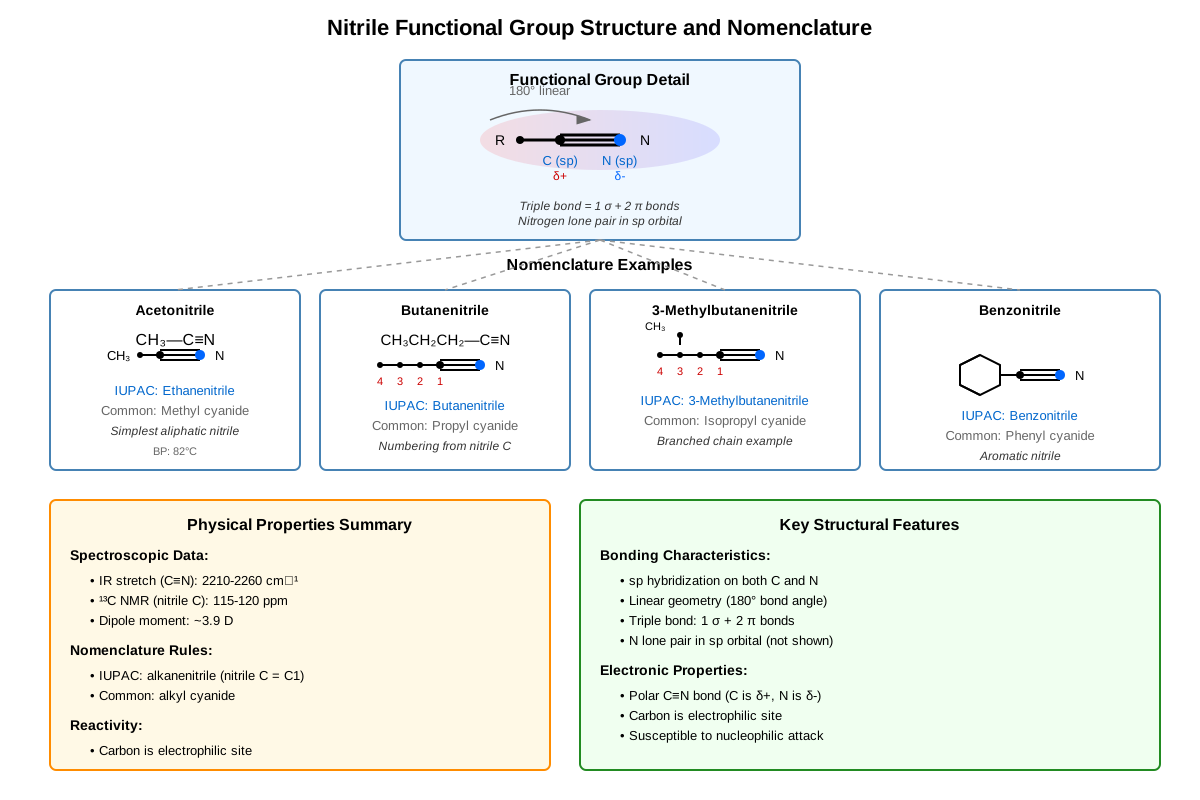
Nitriles (also called cyanides when ionic, or alkyl cyanides in older nomenclature) contain a carbon-nitrogen triple bond (C≡N) as their defining structural feature. The carbon atom is sp-hybridized, creating a linear geometry with a bond angle of 180°. The triple bond consists of one σ bond and two π bonds, making it shorter (approximately 1.16 Å) and stronger than typical carbon-nitrogen single or double bonds.
IUPAC nomenclature for nitriles follows these rules:
- For simple nitriles, add the suffix "-nitrile" to the parent alkane name (counting the nitrile carbon as part of the chain)
- Number the carbon chain so the nitrile carbon receives the lowest possible number (always position 1)
- For compounds where the nitrile is a substituent, use the prefix "cyano-"
Examples:
- CH₃CN: ethanenitrile (common name: acetonitrile)
- CH₃CH₂CH₂CN: butanenitrile
- C₆H₅CN: benzonitrile
- NC-CH₂-CH₂-CN: butanedinitrile
Electronic Properties and Reactivity
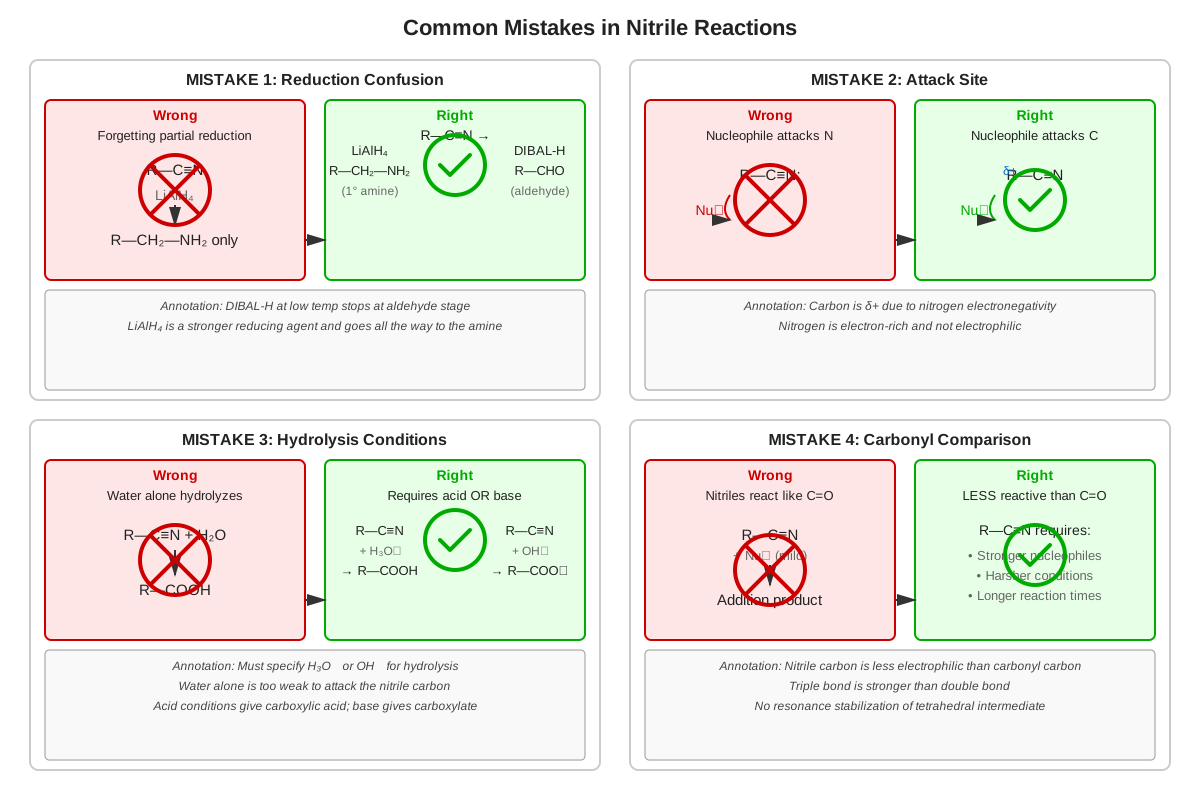
The nitrile functional group exhibits significant polarity due to the electronegativity difference between carbon (2.5) and nitrogen (3.0). The nitrogen atom carries a partial negative charge (δ-) while the carbon bears a partial positive charge (δ+), making the carbon electrophilic and susceptible to nucleophilic attack. However, nitriles are less reactive than aldehydes and ketones toward nucleophiles because:
- The triple bond is stronger and more stable than a carbonyl double bond
- The nitrogen lone pair is in an sp-hybridized orbital, making it less available for resonance stabilization of intermediates
- The linear geometry creates less steric accessibility to the electrophilic carbon
This reduced reactivity means nitriles typically require stronger nucleophiles or harsher conditions (heat, strong acid/base) to undergo addition reactions compared to carbonyl compounds.
Synthesis of Nitriles
From Alkyl Halides (SN2 Reaction)
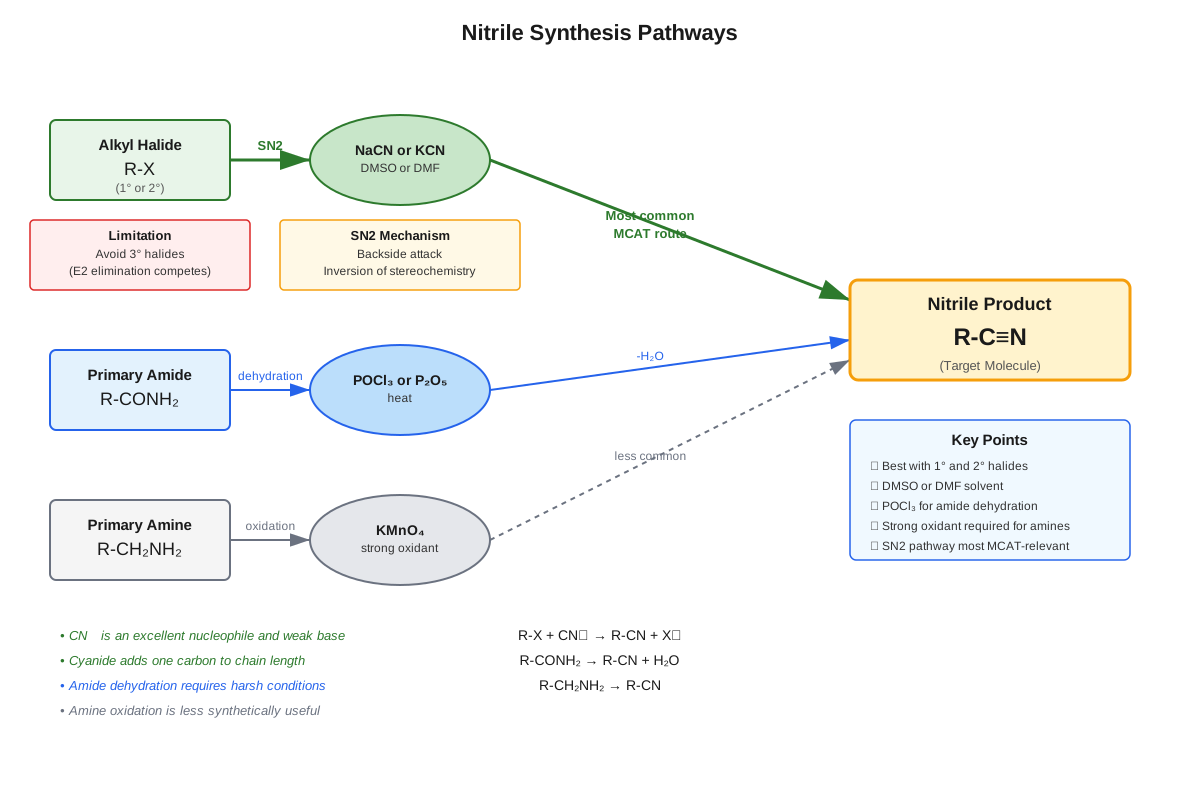
The most common laboratory synthesis of nitriles involves nucleophilic substitution of primary or secondary alkyl halides with cyanide ion (CN⁻):
R-X + CN⁻ → R-CN + X⁻This SN2 mechanism works best with:
- Primary alkyl halides (minimal steric hindrance)
- Good leaving groups (I > Br > Cl)
- Polar aprotic solvents (DMSO, acetone) that don't solvate CN⁻ strongly
Key considerations:
- The reaction extends the carbon chain by one carbon (useful in synthesis)
- Secondary halides may give elimination products (alkenes) as side reactions
- Tertiary halides undergo elimination (E2) rather than substitution
From Amides (Dehydration)
Primary amides can be converted to nitriles through dehydration using strong dehydrating agents:
R-CONH₂ + dehydrating agent → R-CN + H₂OCommon dehydrating agents include:
- Phosphorus pentoxide (P₂O₅)
- Thionyl chloride (SOCl₂)
- Phosphorus oxychloride (POCl₃)
This reaction effectively removes water from the amide, converting the C=O and N-H bonds into a C≡N triple bond.
From Aldehydes and Ketones
Aldehydes and ketones react with hydrogen cyanide (HCN) to form cyanohydrins:
R₂C=O + HCN → R₂C(OH)CNThis reaction is actually a nucleophilic addition where cyanide attacks the carbonyl carbon, followed by protonation. While cyanohydrins contain a nitrile group, they're distinct from simple nitriles due to the adjacent hydroxyl group.
Reactions of Nitriles
Hydrolysis to Carboxylic Acids
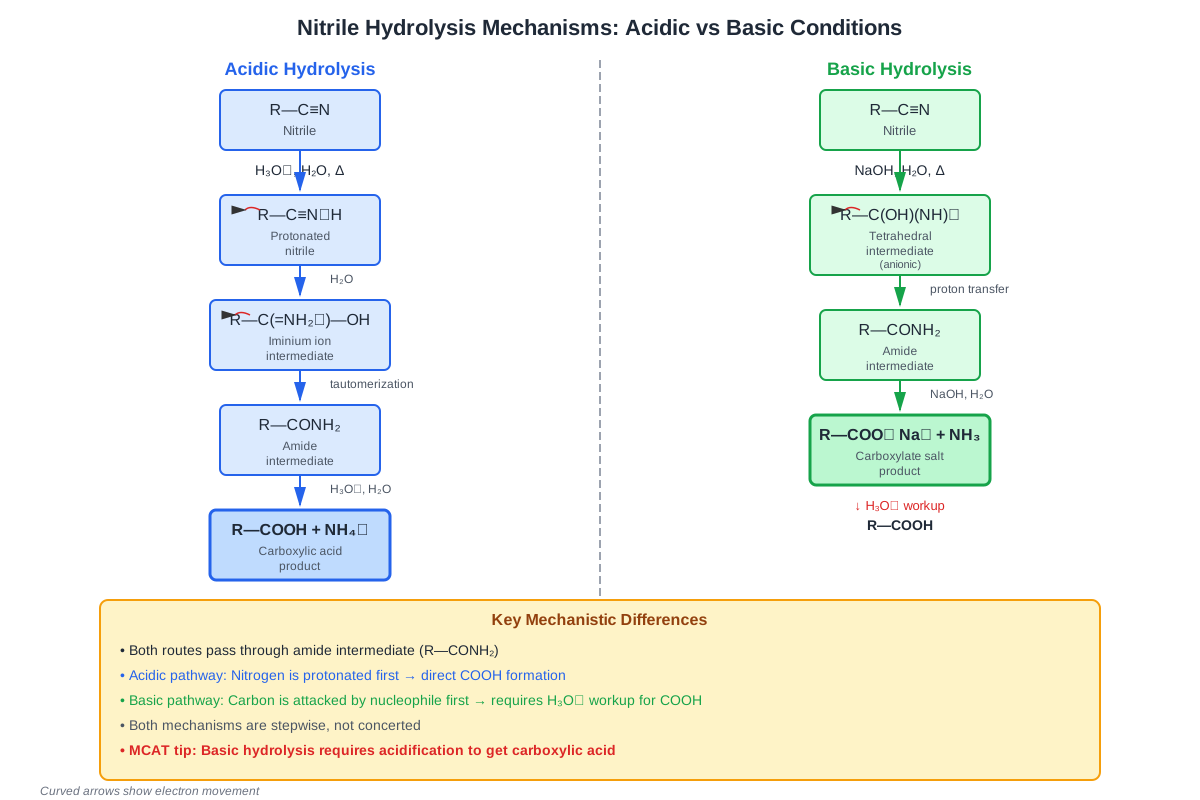
The most important reaction of nitriles for the MCAT is hydrolysis, which converts nitriles to carboxylic acids through a two-step process:
Under acidic conditions:
R-CN + H₂O + H⁺ → R-CONH₂ (amide intermediate) → R-COOH + NH₄⁺Under basic conditions:
R-CN + H₂O + OH⁻ → R-CONH₂ (amide intermediate) → R-COO⁻ + NH₃Mechanism highlights:
- Water acts as a nucleophile, attacking the electrophilic nitrile carbon
- The reaction proceeds through an amide intermediate (though this is often not isolated)
- Acidic hydrolysis produces the carboxylic acid directly
- Basic hydrolysis produces the carboxylate salt, requiring acidification for the free acid
MCAT Tip: Nitrile hydrolysis requires heating and either strong acid or strong base. Mild aqueous conditions are insufficient. This distinguishes nitriles from more reactive carbonyl compounds.
Reduction to Amines
Nitriles can be reduced to primary amines using strong reducing agents:
With LiAlH₄ (lithium aluminum hydride):
R-CN + LiAlH₄ → R-CH₂NH₂With catalytic hydrogenation:
R-CN + 2H₂ (Pd/C or Pt catalyst) → R-CH₂NH₂This reduction adds two equivalents of H₂ across the triple bond, converting C≡N to CH₂-NH₂. The product is always a primary amine with one more carbon than the starting nitrile.
Partial reduction to imines or aldehydes is possible with milder reducing agents:
- DIBAL-H (diisobutylaluminum hydride) at low temperature converts nitriles to aldehydes
- This reaction is useful in synthesis but less commonly tested on the MCAT
Grignard Reactions
Nitriles react with Grignard reagents (R'MgX) to form ketones after aqueous workup:
R-CN + R'MgX → R-C(=NMgX)-R' → R-CO-R' (after H₃O⁺ workup)The mechanism involves:
- Nucleophilic attack by the Grignard reagent on the nitrile carbon
- Formation of an imine salt intermediate
- Hydrolysis during workup to yield the ketone
This reaction is synthetically valuable because it forms a new C-C bond and creates a ketone with predictable structure.
Spectroscopic Identification
Infrared (IR) Spectroscopy
Nitriles display a characteristic sharp, medium-intensity absorption at 2210-2260 cm⁻¹ corresponding to the C≡N stretch. This peak appears in a relatively uncrowded region of the IR spectrum, making it diagnostic for nitrile identification.
Key features:
- The peak is sharper and weaker than O-H or N-H stretches
- It appears at higher frequency than C=O stretches (1650-1750 cm⁻¹)
- Conjugated nitriles absorb at slightly lower frequencies (2200-2220 cm⁻¹)
Nuclear Magnetic Resonance (NMR)
¹H NMR: Protons α to the nitrile group (on the adjacent carbon) appear deshielded at δ 2.0-3.0 ppm due to the electron-withdrawing effect of the C≡N group.
¹³C NMR: The nitrile carbon itself appears far downfield at δ 115-120 ppm, a characteristic region that helps distinguish nitriles from other functional groups.
Mass Spectrometry
Nitriles can lose HCN (mass 27) or CN (mass 26) during fragmentation, producing characteristic peaks at M-27 or M-26. The molecular ion peak may be weak due to the stability of these fragmentations.
Comparison with Carbonyl Compounds
| Property | Nitriles (R-CN) | Aldehydes/Ketones (R₂C=O) | Carboxylic Acids (R-COOH) |
|---|---|---|---|
| Hybridization | sp (linear) | sp² (trigonal planar) | sp² (trigonal planar) |
| Reactivity | Low (requires harsh conditions) | High (readily reacts) | Moderate |
| Nucleophilic addition | Requires strong nucleophiles | Occurs readily | Requires activation |
| IR absorption | 2210-2260 cm⁻¹ | 1650-1750 cm⁻¹ | 1700-1725 cm⁻¹ (C=O), 2500-3300 cm⁻¹ (O-H) |
| Hydrolysis product | Carboxylic acid | No hydrolysis | Already hydrolyzed form |
Concept Relationships
The chemistry of nitriles interconnects with multiple areas of organic chemistry, forming a conceptual network essential for MCAT success:
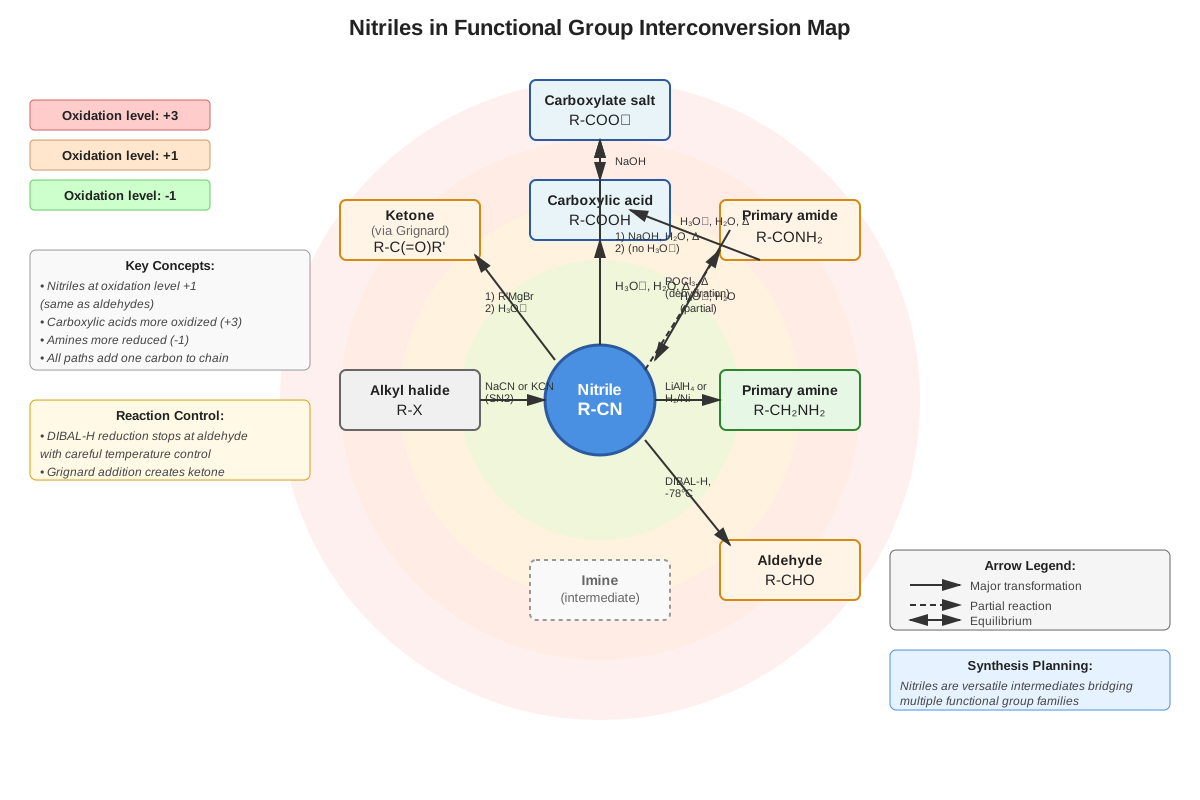
Nucleophilic Substitution → Nitrile Formation: SN2 reactions with cyanide ion represent the primary synthetic route to nitriles, demonstrating how substitution mechanisms extend carbon chains.
Nitriles → Carboxylic Acid Derivatives: Hydrolysis of nitriles produces carboxylic acids, which can be further converted to acid chlorides, esters, and amides. This positions nitriles as precursors in the functional group interconversion hierarchy.
Nitriles → Amines: Reduction reactions connect nitrile chemistry to amine synthesis, bridging carbonyl chemistry with nitrogen-containing functional groups.
Carbonyl Compounds → Nitriles: Aldehydes and ketones form cyanohydrins through nucleophilic addition, creating molecules containing both hydroxyl and nitrile groups.
Spectroscopy ← Nitriles: The characteristic IR absorption and NMR chemical shifts of nitriles make them identifiable in structure determination problems, connecting to analytical chemistry concepts.
Grignard Reagents + Nitriles → Ketones: This reaction demonstrates how nitriles participate in C-C bond formation, linking organometallic chemistry to carbonyl synthesis.
The central position of nitriles in synthesis schemes makes them valuable intermediates: they can be formed from alkyl halides, converted to carboxylic acids or amines, and used to create ketones. This versatility explains why MCAT passages often feature nitriles in multi-step synthesis problems.
High-Yield Facts
⭐ Nitriles contain a carbon-nitrogen triple bond (C≡N) with sp hybridization and linear geometry (180° bond angle).
⭐ The characteristic IR absorption for nitriles appears at 2210-2260 cm⁻¹, a sharp, medium-intensity peak in a diagnostic region.
⭐ Nitriles are synthesized from primary alkyl halides via SN2 reaction with cyanide ion (CN⁻), extending the carbon chain by one carbon.
⭐ Hydrolysis of nitriles under acidic or basic conditions produces carboxylic acids through an amide intermediate, requiring heat and strong acid/base.
⭐ Reduction of nitriles with LiAlH₄ or H₂/catalyst produces primary amines (R-CN → R-CH₂NH₂).
- Nitriles are less reactive than aldehydes and ketones toward nucleophiles due to the strong C≡N triple bond.
- The nitrile carbon appears at δ 115-120 ppm in ¹³C NMR, while α-protons appear at δ 2.0-3.0 ppm in ¹H NMR.
- Grignard reagents react with nitriles to form ketones after aqueous workup (R-CN + R'MgX → R-CO-R').
- IUPAC nomenclature uses the suffix "-nitrile" with the nitrile carbon counted as part of the main chain and numbered as position 1.
- Partial reduction of nitriles with DIBAL-H at low temperature produces aldehydes rather than amines.
- Cyanohydrins form when aldehydes or ketones react with HCN, creating molecules with both -OH and -CN groups.
- Nitriles can be dehydrated from primary amides using strong dehydrating agents like P₂O₅ or SOCl₂.
Quick check — test yourself on Nitriles so far.
Try Flashcards →Common Misconceptions
Misconception: Nitriles are carbonyl compounds because they're studied in carbonyl chemistry.
Correction: Nitriles do not contain a carbonyl group (C=O). They contain a C≡N triple bond. They're included in carbonyl chemistry because they share similar reactivity patterns and can be interconverted with carboxylic acid derivatives, but structurally they are distinct functional groups.
Misconception: Nitrile hydrolysis occurs readily under mild aqueous conditions, similar to ester hydrolysis.
Correction: Nitrile hydrolysis requires harsh conditions—either strong acid or strong base with heating. The C≡N triple bond is much more stable than the C=O double bond in esters, making nitriles significantly less reactive. Mild aqueous conditions will not hydrolyze nitriles at appreciable rates.
Misconception: Reduction of nitriles with LiAlH₄ produces secondary amines.
Correction: Nitrile reduction always produces primary amines (R-CN → R-CH₂NH₂). The nitrogen in the nitrile is bonded only to carbon, and reduction adds two hydrogens to the nitrogen, creating -NH₂. Secondary amines would require a different starting material or subsequent alkylation.
Misconception: The SN2 reaction with cyanide maintains the same carbon chain length.
Correction: The cyanide ion (CN⁻) adds a carbon atom to the chain. If you start with a 3-carbon alkyl halide (propyl bromide) and react it with CN⁻, you get a 4-carbon nitrile (butanenitrile). This chain extension is a key synthetic advantage of nitrile formation.
Misconception: Nitriles and isonitriles (isocyanides) are the same compound.
Correction: Nitriles have the structure R-C≡N, while isonitriles have the structure R-N≡C (the nitrogen is bonded to the R group). These are constitutional isomers with different properties. Isonitriles have a characteristic foul odor and different reactivity patterns. The MCAT focuses on nitriles, not isonitriles.
Misconception: The nitrile IR peak appears in the same region as carbonyl stretches.
Correction: The nitrile C≡N stretch appears at 2210-2260 cm⁻¹, significantly higher than carbonyl C=O stretches (1650-1750 cm⁻¹). This higher frequency reflects the stronger triple bond. Confusing these regions will lead to incorrect functional group identification in spectroscopy problems.
Misconception: Basic hydrolysis of nitriles directly produces carboxylic acids.
Correction: Basic hydrolysis produces the carboxylate salt (R-COO⁻), not the free carboxylic acid. An additional acidification step (adding H₃O⁺) is required to protonate the carboxylate and obtain the carboxylic acid (R-COOH). This two-step process is important in synthesis planning.
Worked Examples
Example 1: Multi-Step Synthesis Problem
Question: Propose a synthesis of butanoic acid starting from 1-bromopropane. Show all reagents and intermediates.
Solution:
Step 1: Analyze the problem
- Starting material: 1-bromopropane (3 carbons, CH₃CH₂CH₂Br)
- Target molecule: butanoic acid (4 carbons, CH₃CH₂CH₂COOH)
- Observation: We need to add one carbon and introduce a carboxylic acid group
Step 2: Recognize the strategy
The carbon chain must be extended by one carbon, and we need to introduce a carboxylic acid. Nitriles are perfect intermediates because:
- SN2 with CN⁻ extends the chain by one carbon
- Nitrile hydrolysis produces carboxylic acids
Step 3: Propose the synthesis
Reaction 1: Form the nitrile
CH₃CH₂CH₂Br + NaCN → CH₃CH₂CH₂CN + NaBr
(1-bromopropane) (butanenitrile)- Mechanism: SN2 (primary alkyl halide, good leaving group)
- Solvent: Polar aprotic (DMSO or acetone)
- Result: Chain extended to 4 carbons
Reaction 2: Hydrolyze the nitrile
CH₃CH₂CH₂CN + H₂O, H⁺, heat → CH₃CH₂CH₂COOH + NH₄⁺
(butanenitrile) (butanoic acid)- Conditions: Aqueous acid with heating
- Mechanism: Nucleophilic addition-elimination through amide intermediate
- Result: Nitrile converted to carboxylic acid
Complete synthesis:
1-bromopropane → (NaCN) → butanenitrile → (H₃O⁺, heat) → butanoic acid
Key learning points:
- Nitriles serve as intermediates for chain extension and carboxylic acid synthesis
- The combination of SN2 + hydrolysis is a classic two-step sequence
- This approach works for any primary alkyl halide
Example 2: Spectroscopy Identification
Question: An unknown compound with molecular formula C₄H₇N shows the following spectroscopic data:
- IR: Sharp absorption at 2240 cm⁻¹, no broad peaks
- ¹H NMR: Triplet at δ 1.1 (3H), multiplet at δ 1.6 (2H), triplet at δ 2.3 (2H)
- ¹³C NMR: Peaks at δ 13, 16, 20, and 119
Identify the structure and explain your reasoning.
Solution:
Step 1: Analyze the molecular formula
- C₄H₇N with degree of unsaturation = (2×4 + 2 - 7 + 1)/2 = 2
- Two degrees of unsaturation suggest either two double bonds, one triple bond, or one ring + one double bond
- The presence of nitrogen suggests a nitrile (which accounts for 2 degrees of unsaturation)
Step 2: Interpret the IR spectrum
- Sharp absorption at 2240 cm⁻¹ is diagnostic for C≡N stretch (nitrile)
- No broad O-H or N-H peaks rules out alcohols, amines, or amides
- Conclusion: The compound is definitely a nitrile
Step 3: Interpret the ¹H NMR
- Triplet at δ 1.1 (3H): CH₃ group coupled to CH₂
- Multiplet at δ 1.6 (2H): CH₂ group between two other CH₂ groups
- Triplet at δ 2.3 (2H): CH₂ group adjacent to nitrile (deshielded) and coupled to another CH₂
Pattern recognition: This is a propyl chain with the nitrile at one end:
CH₃-CH₂-CH₂-CN
Step 4: Interpret the ¹³C NMR
- δ 13: CH₃ carbon (most shielded)
- δ 16, 20: Two CH₂ carbons at different distances from the nitrile
- δ 119: Nitrile carbon (characteristic region for C≡N)
Step 5: Confirm the structure
The compound is butanenitrile (CH₃CH₂CH₂CN):
- Molecular formula matches: C₄H₇N ✓
- IR consistent with nitrile ✓
- NMR shows propyl chain attached to CN ✓
Key learning points:
- The IR peak at 2210-2260 cm⁻¹ is diagnostic for nitriles
- The ¹³C NMR peak around δ 115-120 confirms the nitrile carbon
- Protons α to the nitrile appear deshielded (δ 2-3 ppm)
- Integration and splitting patterns reveal the carbon skeleton
Exam Strategy
Approaching Nitrile Questions
Step 1: Identify the question type
- Synthesis problems: Look for carbon chain extension or carboxylic acid/amine formation
- Mechanism questions: Focus on nucleophilic addition to the electrophilic carbon
- Spectroscopy problems: Search for the diagnostic 2210-2260 cm⁻¹ IR peak
- Reactivity comparisons: Remember nitriles are less reactive than carbonyls
Step 2: Recognize trigger words and phrases
- "Extend the carbon chain" → Consider SN2 with cyanide
- "Convert to carboxylic acid" → Think nitrile hydrolysis
- "Form a primary amine" → Consider nitrile reduction
- "Sharp peak around 2200 cm⁻¹" → Identify as nitrile
- "Requires heating and strong acid/base" → Likely nitrile hydrolysis
Step 3: Apply systematic problem-solving
For synthesis questions:
- Count carbons in starting material and product
- If product has one more carbon + COOH, consider: alkyl halide → nitrile → carboxylic acid
- If product has one more carbon + NH₂, consider: alkyl halide → nitrile → amine
For mechanism questions:
- Identify the electrophilic carbon (the nitrile carbon)
- Determine the nucleophile (H₂O, OH⁻, H⁻, or Grignard)
- Draw the addition product, then consider subsequent steps
For spectroscopy questions:
- Check IR for 2210-2260 cm⁻¹ peak (confirms nitrile)
- Look for ¹³C NMR peak at δ 115-120 (nitrile carbon)
- Identify α-protons at δ 2-3 ppm in ¹H NMR
Process of Elimination Tips
When evaluating answer choices:
Eliminate options that:
- Show nitrile hydrolysis occurring under mild conditions (requires harsh conditions)
- Produce secondary or tertiary amines from nitrile reduction (only primary amines form)
- Place the IR peak for nitriles in the carbonyl region (1650-1750 cm⁻¹)
- Show SN2 with cyanide on tertiary alkyl halides (E2 occurs instead)
- Suggest nitriles are more reactive than aldehydes/ketones (opposite is true)
Favor options that:
- Show two-step processes for nitrile hydrolysis (through amide intermediate)
- Indicate harsh conditions (heat, strong acid/base) for nitrile reactions
- Demonstrate chain extension when CN⁻ reacts with alkyl halides
- Place spectroscopic signals in characteristic regions
Time Allocation
For a typical MCAT passage with nitrile content:
- Passage reading: 2-3 minutes (identify nitrile structures and reactions)
- Per question: 1-1.5 minutes
- Synthesis questions: May require 2 minutes (work backwards from product)
- Quick checks: Verify carbon counts, functional group changes, and reaction conditions
If stuck on a nitrile question, quickly check:
- Are the conditions harsh enough for the proposed reaction?
- Does the carbon count make sense?
- Is the functional group transformation chemically reasonable?
Memory Techniques
Mnemonics
"Can't Normally" (CN)
Nitriles Can't Normally react under mild conditions—they need harsh treatment (heat, strong acid/base). This reminds you that nitriles are less reactive than carbonyls.
"HARSH" for Nitrile Hydrolysis
- Heat required
- Acid or base (strong)
- Reaction through amide
- Slow process
- Hydrolysis to carboxylic acid
"2-2-2" for IR
Nitriles absorb at approximately 2200 cm⁻¹ (actually 2210-2260), which is 200 cm⁻¹ higher than 2000, and the peak is in a region with 2 bonds (triple bond region). This distinguishes it from carbonyl peaks around 1700 cm⁻¹.
"Primary Products" for Nitrile Reduction
Nitrile reduction produces primary amines. Remember: "Nitrile → Primary" (both start with consonants, creating a phonetic link).
Visualization Strategies
The Nitrile Transformation Triangle:
Visualize nitriles at the center of a triangle with three vertices:
- Top vertex: Alkyl halides (source via SN2)
- Bottom left: Carboxylic acids (via hydrolysis)
- Bottom right: Primary amines (via reduction)
This mental image helps recall the three major transformations involving nitriles.
The "Linear Launcher":
Picture the nitrile's linear geometry (180°) as a "launching pad" for nucleophiles. The straight line makes it harder for nucleophiles to approach (explaining lower reactivity), but once they do, they "launch" into addition reactions.
Acronym for Nitrile Synthesis Methods
"HAD" - Three ways to make nitriles:
- Halides (alkyl halides + CN⁻)
- Amides (dehydration)
- Dehydration of aldoximes (less common, lower yield for MCAT)
Summary
Nitriles are organic compounds containing a carbon-nitrogen triple bond (C≡N) that serve as versatile intermediates in organic synthesis and appear regularly on the MCAT in contexts involving functional group interconversions, spectroscopic identification, and multi-step synthesis problems. The sp-hybridized nitrile carbon creates a linear geometry and exhibits electrophilic character, though nitriles are significantly less reactive than carbonyl compounds due to the strong triple bond. The most important reactions for MCAT preparation include formation via SN2 with cyanide ion (extending carbon chains by one carbon), hydrolysis to carboxylic acids under harsh acidic or basic conditions, and reduction to primary amines using LiAlH₄ or catalytic hydrogenation. Spectroscopically, nitriles display a characteristic sharp IR absorption at 2210-2260 cm⁻¹ and a ¹³C NMR signal at δ 115-120 ppm, making them readily identifiable in structure determination problems. Understanding nitrile chemistry requires recognizing their position in the functional group interconversion hierarchy—they bridge alkyl halides, carboxylic acids, and amines—and appreciating that their reactions typically require more forcing conditions than analogous carbonyl transformations. Mastery of nitrile chemistry enables students to solve complex synthesis problems, predict reaction outcomes, and interpret spectroscopic data, skills that are essential for achieving high scores on MCAT Organic Chemistry questions.
Key Takeaways
- Nitriles contain a C≡N triple bond with sp hybridization, linear geometry, and characteristic IR absorption at 2210-2260 cm⁻¹
- Formation via SN2 reaction of primary alkyl halides with CN⁻ extends the carbon chain by one carbon, making nitriles valuable synthetic intermediates
- Hydrolysis of nitriles requires harsh conditions (heat + strong acid or base) and proceeds through an amide intermediate to produce carboxylic acids
- Reduction of nitriles with LiAlH₄ or H₂/catalyst produces primary amines exclusively, never secondary or tertiary amines
- Nitriles are significantly less reactive than aldehydes and ketones toward nucleophiles due to the strong C≡N triple bond
- Grignard reagents react with nitriles to form ketones after aqueous workup, providing a method for C-C bond formation
- In synthesis problems, recognize nitriles as intermediates connecting alkyl halides to carboxylic acids or amines through predictable transformations
Related Topics
Carboxylic Acid Derivatives (esters, amides, acid chlorides, anhydrides): Understanding nitrile hydrolysis to carboxylic acids provides the foundation for studying how carboxylic acids convert to their various derivatives. Mastering nitriles enables comparison of reactivity across the entire family of carbonyl-containing compounds.
Nucleophilic Substitution Mechanisms (SN1, SN2, E1, E2): The formation of nitriles via SN2 with cyanide exemplifies nucleophilic substitution principles. Deeper study of these mechanisms explains why primary halides work best and why tertiary halides fail to form nitriles.
Reduction Reactions in Organic Chemistry: Nitrile reduction to amines introduces the use of LiAlH₄ and catalytic hydrogenation, reducing agents that appear throughout organic chemistry for converting various functional groups.
Spectroscopic Analysis (IR, NMR, Mass Spectrometry): The characteristic spectroscopic signatures of nitriles provide practice in structure determination, a skill that extends to identifying all functional groups in unknown compounds.
Organometallic Chemistry (Grignard and organolithium reagents): The reaction of Grignard reagents with nitriles demonstrates how organometallic compounds form C-C bonds, a theme that continues with other electrophiles like aldehydes, ketones, and esters.
Amino Acid Chemistry: Several amino acids and their metabolites contain nitrile groups or are synthesized through nitrile intermediates, connecting organic chemistry to biochemistry and physiology tested on the MCAT.
Practice CTA
Now that you've mastered the core concepts of nitrile chemistry, it's time to reinforce your understanding through active practice. Work through the practice questions to test your ability to predict nitrile reactions, propose synthesis routes, and interpret spectroscopic data. Use the flashcards to drill the high-yield facts, particularly the characteristic IR absorption, reaction conditions, and product predictions. Remember that nitrile chemistry frequently appears integrated into larger synthesis problems on the MCAT, so practice connecting these concepts to other functional group transformations. The more you engage with practice problems, the more automatic your recognition of nitrile patterns will become, allowing you to move quickly and confidently through MCAT Organic Chemistry questions. You've built a strong foundation—now apply it!
Sign up free to keep reading
Create a free AnvayaPrep account to finish this MCAT guide on Nitriles — plus flashcards and practice questions.