Overview
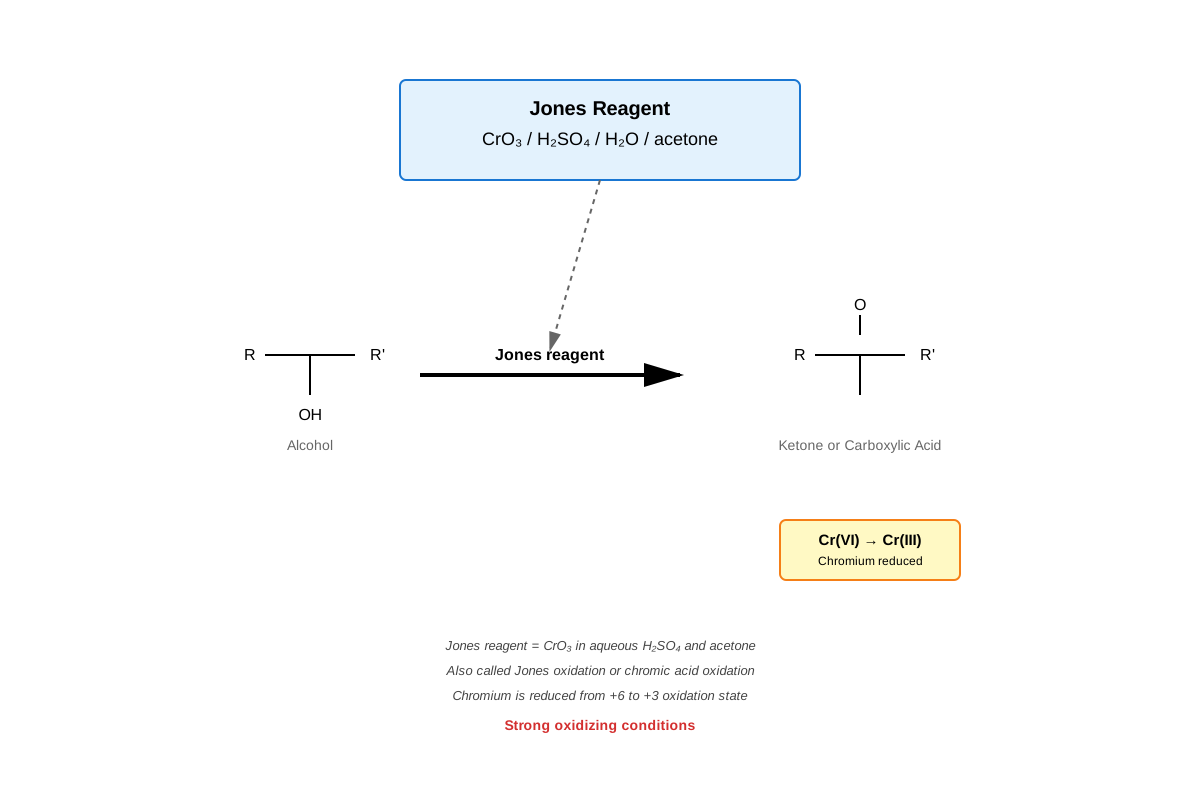
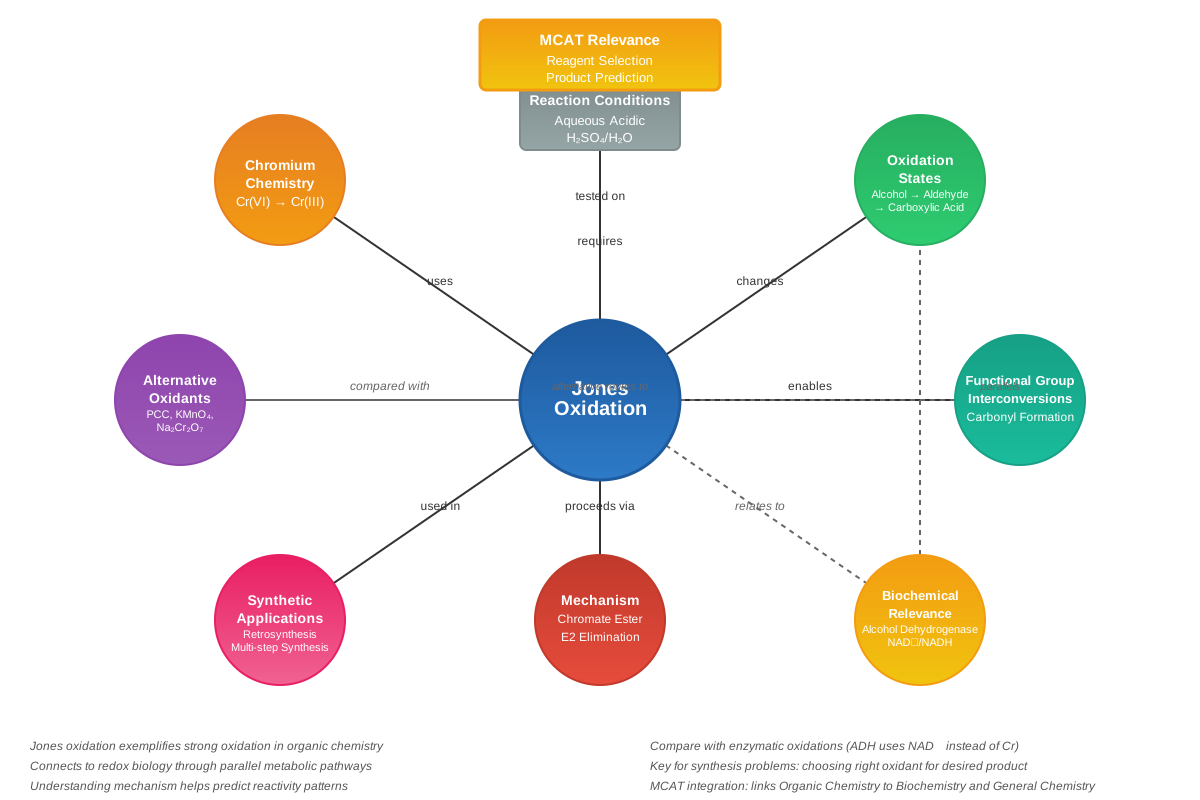
Jones oxidation is a powerful and selective oxidation reaction in Organic Chemistry that uses chromium trioxide (CrO₃) dissolved in aqueous sulfuric acid and acetone—collectively known as Jones reagent. This reaction is particularly important for converting primary alcohols to carboxylic acids and secondary alcohols to ketones in a single, efficient step. Unlike milder oxidizing agents, Jones reagent is strong enough to push primary alcohol oxidation all the way to the carboxylic acid stage without stopping at the aldehyde intermediate, making it a distinctive tool in the organic chemist's arsenal.
For the MCAT, understanding Jones oxidation is essential because it represents a key example of Oxidation and Reduction reactions that appear frequently in both discrete questions and passage-based scenarios. The exam tests not only the ability to predict products but also the capacity to distinguish between different oxidizing agents based on their strength and selectivity. Jones oxidation exemplifies the principle that reaction conditions determine product outcomes—a fundamental concept in Organic Chemistry MCAT preparation. Students must recognize when Jones reagent is appropriate versus when milder oxidants like PCC (pyridinium chlorochromate) would be preferred.
The broader significance of Jones oxidation extends to its relationship with other oxidation-reduction reactions, functional group interconversions, and reaction mechanism understanding. This topic connects directly to alcohol chemistry, carbonyl compound synthesis, and the general principles of oxidation states in organic molecules. Mastering Jones oxidation provides a foundation for understanding how structural changes in organic molecules can be achieved through controlled oxidation, a concept that appears throughout biochemistry and metabolism questions on the MCAT.
Learning Objectives
- [ ] Define Jones oxidation using accurate Organic Chemistry terminology
- [ ] Explain why Jones oxidation matters for the MCAT
- [ ] Apply Jones oxidation to exam-style questions
- [ ] Identify common mistakes related to Jones oxidation
- [ ] Connect Jones oxidation to related Organic Chemistry concepts
- [ ] Predict the products of Jones oxidation for various alcohol substrates
- [ ] Compare and contrast Jones oxidation with other oxidizing agents (PCC, KMnO₄, Na₂Cr₂O₇)
- [ ] Explain the mechanism of Jones oxidation at a level appropriate for MCAT preparation
Prerequisites
- Alcohol functional groups: Understanding primary, secondary, and tertiary alcohol structures is essential because Jones oxidation selectively reacts with different alcohol types to produce distinct products
- Oxidation states in organic chemistry: Recognizing oxidation level changes (alcohol → aldehyde → carboxylic acid) is necessary to predict reaction outcomes and understand the extent of oxidation
- Carbonyl compounds: Familiarity with aldehydes, ketones, and carboxylic acids is required since these are the products of Jones oxidation
- Acid-base chemistry: Jones reagent operates in strongly acidic conditions, which affects reaction mechanisms and substrate stability
- Basic reaction mechanisms: Understanding electron flow, nucleophilic attack, and leaving groups helps comprehend how Jones oxidation proceeds at the molecular level
Why This Topic Matters
Jones oxidation holds significant practical importance in synthetic organic chemistry and pharmaceutical development. In laboratory and industrial settings, the conversion of alcohols to carbonyl compounds is a fundamental transformation used in drug synthesis, natural product modification, and the production of fine chemicals. The ability to selectively oxidize alcohols to specific products allows chemists to build complex molecules with precise functional group placement. While Jones reagent itself has been partially replaced by more environmentally friendly alternatives in modern practice, understanding its chemistry remains crucial for comprehending oxidation principles.
On the MCAT, Jones oxidation appears with moderate frequency, typically in 2-4 questions per exam administration. These questions most commonly appear in the Chemical and Physical Foundations of Biological Systems section, either as discrete questions testing reaction prediction or within passages describing synthetic schemes or metabolic pathways. The exam frequently tests the ability to distinguish Jones oxidation from other oxidation methods, predict products based on substrate structure, and recognize when complete oxidation to carboxylic acid occurs versus stopping at the ketone or aldehyde stage.
Common exam presentations include: (1) reaction scheme questions asking students to identify the correct product when Jones reagent is applied to a specific alcohol; (2) comparison questions requiring students to select the appropriate reagent to achieve a desired transformation; (3) passage-based questions where Jones oxidation appears as one step in a multi-step synthesis; and (4) questions testing understanding of why tertiary alcohols do not react with Jones reagent. The MCAT particularly favors questions that assess conceptual understanding of oxidation selectivity rather than detailed mechanism memorization, making this a high-yield topic for strategic preparation.
Core Concepts
Definition and Composition of Jones Reagent
Jones reagent consists of chromium trioxide (CrO₃) dissolved in dilute sulfuric acid (H₂SO₄) and acetone. This combination creates a powerful oxidizing agent that exists primarily as chromic acid (H₂CrO₄) in solution. The reagent is named after Sir Ewart Jones, who popularized its use in organic synthesis during the 1940s. The distinctive orange-red color of Jones reagent comes from the chromium(VI) species present in solution. The acidic aqueous conditions are crucial to the reagent's reactivity and selectivity profile, distinguishing it from other chromium-based oxidants used in anhydrous conditions.
The chromium in Jones reagent exists in the +6 oxidation state and serves as the actual oxidizing agent. During the reaction, chromium is reduced from Cr(VI) to Cr(III), which appears as a green-blue solution, providing a convenient visual indicator that oxidation has occurred. The acetone serves as a co-solvent that helps dissolve organic substrates while maintaining the aqueous acidic environment necessary for the reaction mechanism.
Substrate Selectivity and Product Formation
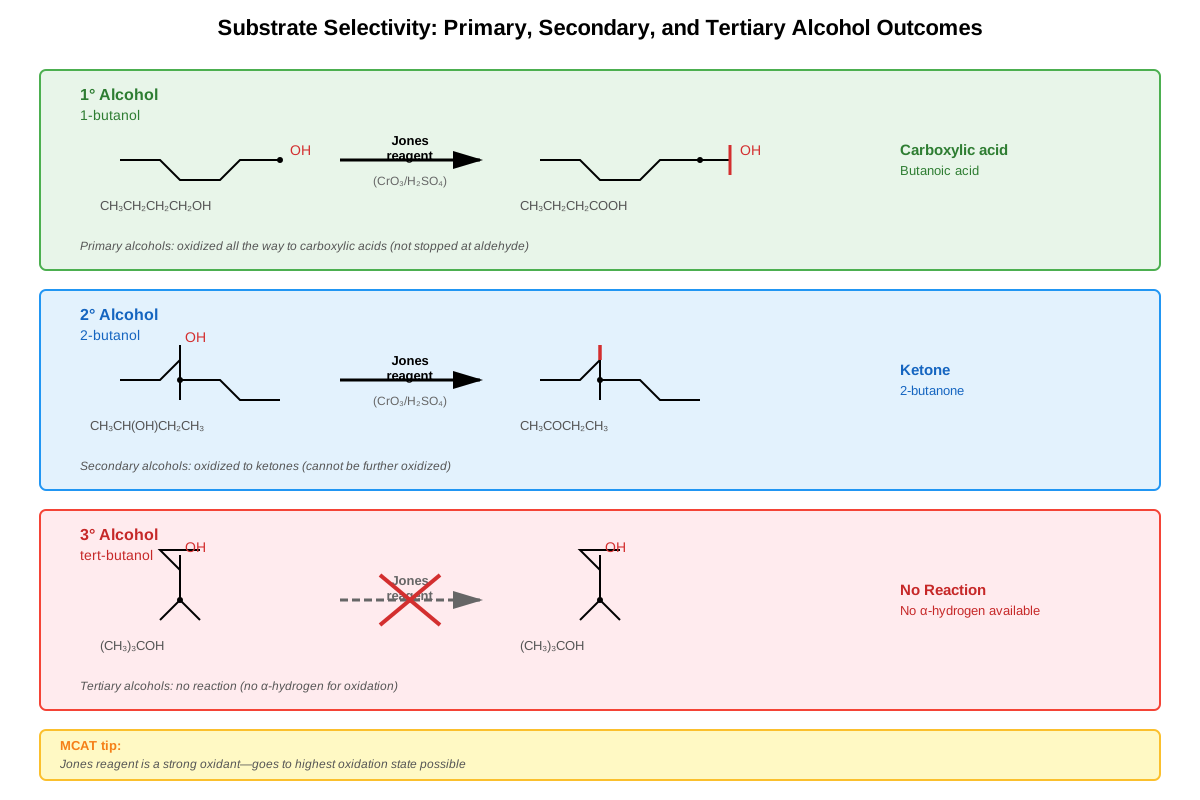
Jones oxidation exhibits highly predictable selectivity based on alcohol structure:
| Substrate Type | Product | Oxidation Extent |
|---|---|---|
| Primary alcohol (RCH₂OH) | Carboxylic acid (RCOOH) | Complete oxidation (two steps) |
| Secondary alcohol (R₂CHOH) | Ketone (R₂C=O) | Single oxidation step |
| Tertiary alcohol (R₃COH) | No reaction | Cannot oxidize (no α-hydrogen) |
Primary alcohols undergo complete oxidation to carboxylic acids because the initially formed aldehyde intermediate remains in the aqueous acidic solution where it is rapidly hydrated to a geminal diol (aldehyde hydrate). This hydrated form is essentially another alcohol that undergoes further oxidation to the carboxylic acid. The aqueous conditions of Jones oxidation are critical here—they ensure that the aldehyde intermediate cannot escape further oxidation.
Secondary alcohols are oxidized to ketones in a single step. Unlike aldehydes, ketones are much more resistant to further oxidation because they lack the reactive aldehyde hydrogen and would require carbon-carbon bond cleavage to oxidize further. This makes Jones oxidation an excellent method for cleanly converting secondary alcohols to ketones without over-oxidation concerns.
Tertiary alcohols do not react with Jones reagent because oxidation of an alcohol requires removal of a hydrogen atom from the carbon bearing the hydroxyl group (the α-carbon). Tertiary alcohols have no such hydrogen available, making oxidation impossible without breaking carbon-carbon bonds, which Jones reagent cannot accomplish under normal conditions.
Mechanism Overview
While the MCAT does not require detailed mechanism memorization, understanding the general mechanistic pathway enhances conceptual mastery. The Jones oxidation mechanism proceeds through several key steps:
- Formation of chromate ester: The alcohol oxygen acts as a nucleophile and attacks the electrophilic chromium center, forming a chromate ester intermediate with loss of water
- E2-type elimination: A base (often water or bisulfate ion) abstracts the α-hydrogen while the C-Cr bond breaks, forming the carbonyl group and reducing chromium from Cr(VI) to Cr(IV)
- Further reduction: Chromium continues to be reduced through additional electron transfer steps until reaching the stable Cr(III) state
For primary alcohols, the aldehyde product formed initially exists in equilibrium with its geminal diol (hydrate) form in the aqueous acidic medium. This diol is structurally similar to an alcohol and undergoes a second oxidation cycle through the same mechanism, ultimately producing the carboxylic acid.
Comparison with Other Oxidizing Agents
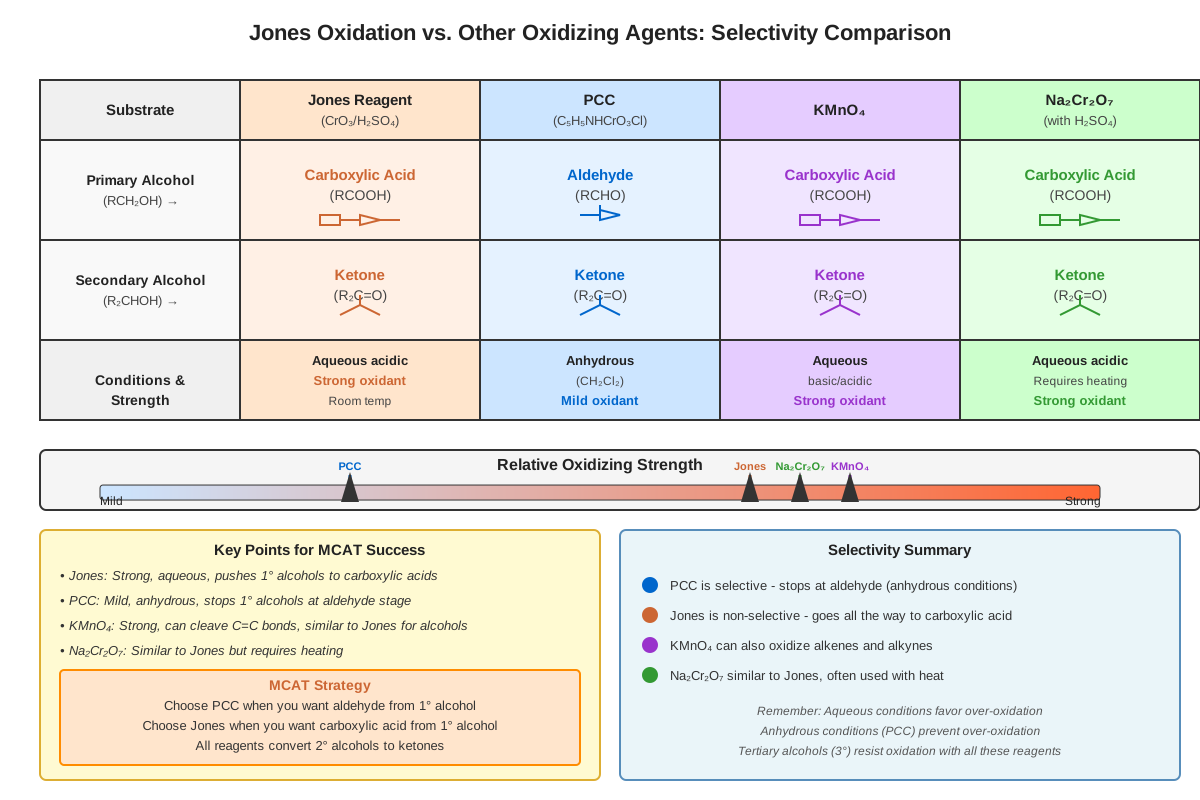
Understanding how Jones oxidation differs from other common oxidants is crucial for MCAT success:
PCC (Pyridinium Chlorochromate): This is a milder chromium-based oxidant used in anhydrous conditions (typically dichloromethane). PCC oxidizes primary alcohols to aldehydes and stops there because the absence of water prevents aldehyde hydration and subsequent over-oxidation. Secondary alcohols still form ketones with PCC. The key distinction is that PCC stops at the aldehyde stage for primary alcohols, while Jones reagent continues to carboxylic acid.
PDC (Pyridinium Dichromate): Similar to PCC but slightly milder and more selective. Also stops primary alcohol oxidation at the aldehyde stage under anhydrous conditions.
Potassium permanganate (KMnO₄): A powerful oxidant that can oxidize primary alcohols to carboxylic acids (similar to Jones) but is less selective and can oxidize other functional groups including alkenes and aromatic side chains. KMnO₄ is typically used in basic or neutral conditions.
Sodium dichromate (Na₂Cr₂O₇): Similar oxidizing power to Jones reagent and can achieve the same transformations, but typically requires heating and different solvent conditions.
The choice between these reagents depends on the desired product and the presence of other functional groups in the molecule that might be sensitive to oxidation.
Practical Considerations and Limitations
Jones oxidation has several important limitations that may appear in MCAT questions:
- Acid-sensitive functional groups: The strongly acidic conditions can cause problems with acid-labile protecting groups, acetals, or other acid-sensitive functionalities
- Oxidizable functional groups: Molecules containing alkenes, alkynes, or other easily oxidized groups may undergo unwanted side reactions
- Chromium toxicity: While not directly tested, understanding that chromium reagents are toxic and environmentally problematic explains why modern synthesis often uses alternative methods
- Selectivity with multiple alcohols: In molecules containing both primary and secondary alcohols, both will be oxidized—the primary to carboxylic acid and the secondary to ketone
Concept Relationships
Jones oxidation sits at the intersection of several fundamental organic chemistry concepts. The reaction directly builds upon alcohol chemistry, specifically the classification of alcohols as primary, secondary, or tertiary based on the number of carbon substituents attached to the carbinol carbon. This classification determines reactivity: primary and secondary alcohols possess the α-hydrogen necessary for oxidation, while tertiary alcohols do not.
The concept flows naturally from oxidation state analysis in organic molecules. Alcohols represent an intermediate oxidation state between alkanes (most reduced) and carbonyl compounds (more oxidized). Jones oxidation increases the oxidation state by removing hydrogen atoms and forming carbon-oxygen double bonds. The progression follows: primary alcohol → aldehyde → carboxylic acid (each step increases oxidation state by 2), while secondary alcohol → ketone represents a single oxidation step.
Carbonyl chemistry is the direct product domain of Jones oxidation. Understanding the properties and reactivity of aldehydes, ketones, and carboxylic acids is essential for predicting what happens after Jones oxidation occurs. This connects forward to topics like nucleophilic addition reactions, acyl substitution, and carbonyl spectroscopy.
The relationship to other oxidation methods creates a web of comparative understanding. Jones oxidation → complete oxidation of primary alcohols, while PCC → partial oxidation to aldehydes. This comparison teaches the broader principle that reaction conditions (aqueous vs. anhydrous, strong vs. mild oxidant) control product outcomes. Similarly, Jones oxidation connects to biochemical oxidation pathways where alcohol dehydrogenase enzymes perform similar transformations in metabolism, though through entirely different mechanisms.
The mechanistic aspects link to E2 elimination reactions and chromate ester formation, connecting Jones oxidation to broader patterns in organic reaction mechanisms. The chromate ester intermediate formation parallels ester formation in other contexts, while the elimination step shares features with base-promoted eliminations studied elsewhere in organic chemistry.
Quick check — test yourself on Jones oxidation so far.
Try Flashcards →High-Yield Facts
⭐ Jones reagent (CrO₃ in H₂SO₄/acetone) oxidizes primary alcohols completely to carboxylic acids, not stopping at the aldehyde stage
⭐ Secondary alcohols are oxidized by Jones reagent to ketones in a clean, single-step transformation
⭐ Tertiary alcohols do not react with Jones reagent because they lack an α-hydrogen necessary for oxidation
⭐ The aqueous acidic conditions of Jones oxidation are what allow complete oxidation of primary alcohols—the aldehyde intermediate is hydrated and oxidized again
⭐ PCC differs from Jones reagent by stopping primary alcohol oxidation at the aldehyde stage due to anhydrous conditions
- Jones reagent contains chromium in the +6 oxidation state, which is reduced to Cr(III) during the reaction
- The color change from orange (Cr(VI)) to green-blue (Cr(III)) indicates successful oxidation
- Jones oxidation requires an α-hydrogen on the alcohol-bearing carbon for the reaction to proceed
- Aldehydes are more easily oxidized than ketones because aldehydes have a reactive C-H bond that ketones lack
- Jones reagent is incompatible with acid-sensitive functional groups due to the strongly acidic reaction conditions
Common Misconceptions
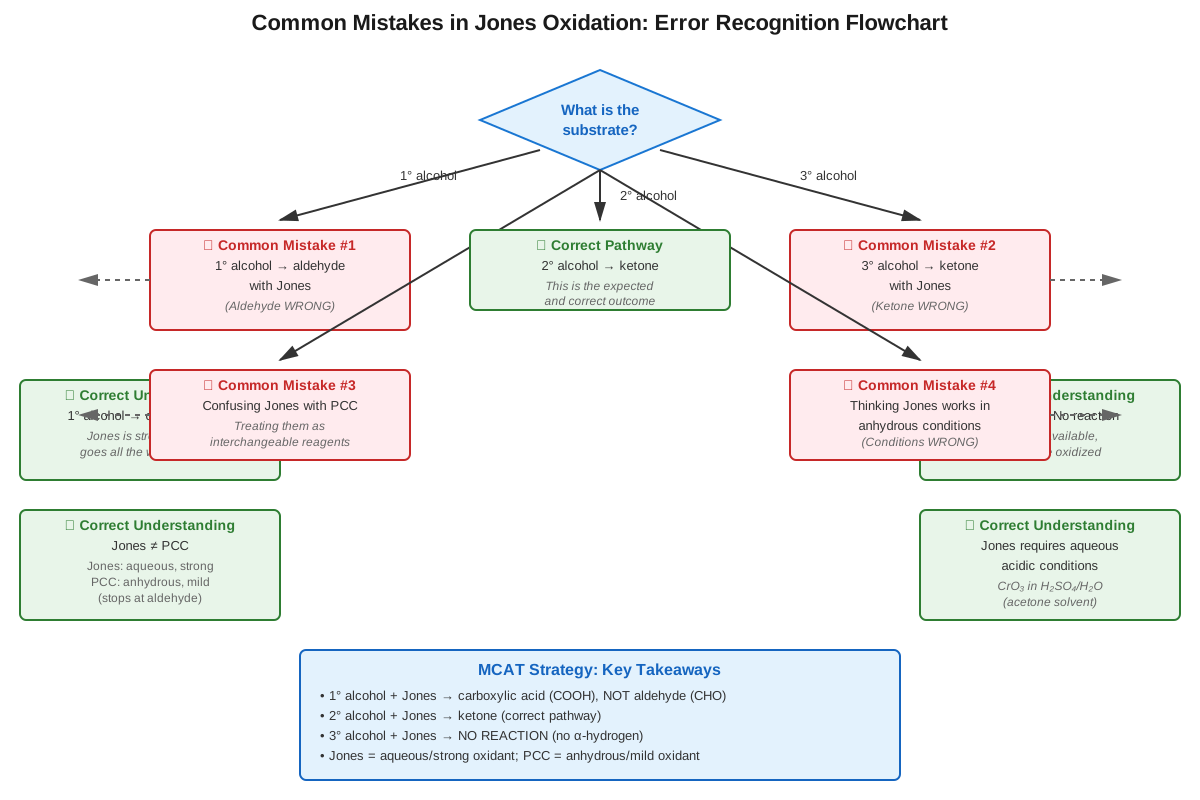
Misconception: Jones reagent oxidizes all alcohols equally to carbonyl compounds
Correction: Jones reagent shows distinct selectivity—primary alcohols go to carboxylic acids (not aldehydes), secondary alcohols go to ketones, and tertiary alcohols don't react at all. The product depends entirely on the alcohol classification.
Misconception: Jones oxidation and PCC oxidation give the same products
Correction: While both oxidize secondary alcohols to ketones identically, they differ dramatically with primary alcohols. Jones reagent produces carboxylic acids from primary alcohols, while PCC stops at aldehydes. This difference stems from the aqueous conditions of Jones reagent versus the anhydrous conditions of PCC.
Misconception: The aldehyde is isolated as an intermediate when primary alcohols undergo Jones oxidation
Correction: The aldehyde intermediate is never isolated because it rapidly hydrates to a geminal diol in the aqueous acidic medium, and this diol immediately undergoes further oxidation to the carboxylic acid. The reaction proceeds directly from primary alcohol to carboxylic acid without isolating intermediates.
Misconception: Tertiary alcohols are oxidized slowly by Jones reagent, just requiring more time or reagent
Correction: Tertiary alcohols cannot be oxidized by Jones reagent under any normal conditions because oxidation requires removal of an α-hydrogen, which tertiary alcohols lack. No amount of time or excess reagent will cause reaction—the structural requirement simply isn't met.
Misconception: Jones reagent can be used interchangeably with any chromium-based oxidant
Correction: Different chromium oxidants have distinct selectivities and require different conditions. Jones reagent (aqueous, acidic), PCC (anhydrous, neutral), and PDC (anhydrous, mildly acidic) each have specific applications. The solvent system and acidity dramatically affect product outcomes, especially for primary alcohols.
Misconception: The mechanism of Jones oxidation involves direct oxygen insertion into the C-H bond
Correction: Jones oxidation proceeds through chromate ester formation followed by elimination, not direct oxygen insertion. The alcohol first forms a covalent bond with chromium, then undergoes an elimination reaction that simultaneously forms the carbonyl and reduces the chromium.
Worked Examples
Example 1: Product Prediction with Multiple Alcohol Groups
Question: A compound contains both a primary alcohol and a secondary alcohol group. When treated with excess Jones reagent, what products form?
Solution:
Step 1: Identify the functional groups present. The molecule has two different alcohol types that will react differently with Jones reagent.
Step 2: Apply Jones oxidation selectivity rules:
- Primary alcohol → carboxylic acid (complete oxidation)
- Secondary alcohol → ketone (single oxidation)
Step 3: Predict the product structure. The primary alcohol position will become a carboxylic acid group (-COOH), while the secondary alcohol position will become a ketone group (C=O).
Step 4: Verify that excess reagent is present. Since the question specifies "excess Jones reagent," both oxidations will proceed to completion without reagent limitation.
Answer: The product will contain both a carboxylic acid group (from the primary alcohol) and a ketone group (from the secondary alcohol). Both oxidations occur simultaneously in the same reaction mixture.
Key Learning Point: Jones reagent will oxidize all oxidizable alcohols in a molecule simultaneously. When multiple alcohol groups are present, consider each independently and apply the appropriate transformation based on whether it's primary or secondary.
Example 2: Reagent Selection for Specific Transformation
Question: A chemist needs to convert 1-butanol (a primary alcohol) to butanal (an aldehyde) without further oxidation to butanoic acid. Which reagent should be used, and why would Jones reagent be inappropriate?
Solution:
Step 1: Identify the desired transformation. The goal is primary alcohol → aldehyde, stopping before carboxylic acid formation.
Step 2: Evaluate Jones reagent for this transformation. Jones reagent operates in aqueous acidic conditions. When a primary alcohol is oxidized to an aldehyde, the aldehyde immediately hydrates in water to form a geminal diol (aldehyde hydrate). This diol structure is essentially another alcohol and undergoes further oxidation to the carboxylic acid. Therefore, Jones reagent cannot stop at the aldehyde stage.
Step 3: Select the appropriate alternative. PCC (pyridinium chlorochromate) is the correct choice because it operates in anhydrous conditions (typically dichloromethane). Without water present, the aldehyde cannot hydrate and remains stable, preventing over-oxidation.
Step 4: Explain the mechanistic basis. The key difference is the presence or absence of water. Aqueous conditions (Jones) → aldehyde hydration → further oxidation. Anhydrous conditions (PCC) → aldehyde remains stable → no further oxidation.
Answer: Use PCC in dichloromethane. Jones reagent is inappropriate because its aqueous conditions cause aldehyde hydration and subsequent over-oxidation to carboxylic acid. The choice of reagent must match the desired oxidation extent.
Key Learning Point: The solvent system is as important as the oxidizing agent itself. Aqueous conditions enable complete oxidation of primary alcohols, while anhydrous conditions prevent over-oxidation. This principle appears frequently on the MCAT when distinguishing between oxidation methods.
Exam Strategy
When approaching Jones oxidation MCAT questions, begin by immediately identifying the alcohol classification in the substrate. Draw or visualize the structure and count the carbons attached to the alcohol-bearing carbon: one carbon = primary, two carbons = secondary, three carbons = tertiary. This single step determines the entire outcome and should take only seconds.
Watch for trigger phrases that signal Jones oxidation: "CrO₃ in H₂SO₄," "Jones reagent," "chromic acid in acetone," or "aqueous chromium trioxide." These phrases should immediately activate your mental framework: primary → carboxylic acid, secondary → ketone, tertiary → no reaction. If the question asks about "oxidation in aqueous acidic conditions," Jones oxidation should be your first consideration.
For process-of-elimination strategies, remember that answer choices showing aldehydes as final products from primary alcohols are almost always incorrect when Jones reagent is specified (the major exception being if the question asks about intermediates). Similarly, any answer showing reaction of a tertiary alcohol with Jones reagent can be eliminated immediately. If a question presents multiple oxidizing agents as answer choices, eliminate those that don't match the desired transformation: need an aldehyde? Eliminate Jones and choose PCC. Need a carboxylic acid? Eliminate PCC and choose Jones or KMnO₄.
Time allocation for Jones oxidation questions should be approximately 60-90 seconds for discrete questions and slightly longer for passage-based questions where you must first extract the relevant information. These questions typically don't require complex calculations, so spending more than 90 seconds usually indicates overthinking. Trust the simple classification system: identify alcohol type, apply the rule, select the answer.
Be particularly alert for questions that test conceptual understanding rather than rote memorization. The MCAT favors questions like "Why does Jones reagent oxidize primary alcohols to carboxylic acids while PCC stops at aldehydes?" over simple "What is the product?" questions. Prepare to explain the role of water in enabling complete oxidation—this mechanistic understanding separates high-scoring students from those who merely memorize outcomes.
Memory Techniques
Mnemonic for Jones Reagent Products: "Primary Calls Cops, Secondary Kicks, Tertiary Nothing"
- Primary → Carboxylic acid (both start with C, and "Calls Cops" suggests going all the way/complete oxidation)
- Secondary → Ketone
- Tertiary → No reaction
Visualization Strategy: Picture Jones reagent as an "aggressive" oxidizer that "pushes all the way" with primary alcohols. Visualize water molecules surrounding the aldehyde intermediate, forcing it to continue oxidizing. In contrast, visualize PCC in a "dry desert" (anhydrous) where the aldehyde has "nowhere to go" and stops there.
Acronym for Reagent Comparison: "Jones Pushes Past" (JPP)
- Jones reagent pushes past the aldehyde stage
- PCC stops at the aldehyde
- Primary alcohols are where the difference matters
Color Memory Aid: "Orange Oxidizes, Green is Gone"
- Orange Cr(VI) is the active Oxidizing agent
- Green Cr(III) means oxidation is complete/Gone
Structural Memory Device: Remember that oxidation requires "H-removal" from the α-carbon. Tertiary alcohols have "No H" at that position, so "No Reaction" occurs. This "NH-NR" connection helps recall why tertiary alcohols don't react.
Summary
Jones oxidation represents a fundamental transformation in organic chemistry where chromium trioxide in aqueous sulfuric acid and acetone selectively oxidizes alcohols based on their structural classification. Primary alcohols undergo complete oxidation to carboxylic acids because the aqueous conditions allow aldehyde intermediates to hydrate and undergo further oxidation. Secondary alcohols are cleanly converted to ketones in a single step, while tertiary alcohols remain unreacted due to the absence of an α-hydrogen necessary for the oxidation mechanism. The key distinguishing feature of Jones oxidation compared to other chromium-based oxidants like PCC is the aqueous acidic environment, which enables complete oxidation of primary alcohols rather than stopping at the aldehyde stage. For MCAT preparation, mastering Jones oxidation requires understanding the relationship between alcohol structure and product identity, recognizing when Jones reagent is appropriate versus alternative oxidants, and applying these principles to predict products in synthetic schemes and metabolic pathways.
Key Takeaways
- Jones reagent (CrO₃/H₂SO₄/acetone) completely oxidizes primary alcohols to carboxylic acids and secondary alcohols to ketones, while tertiary alcohols do not react
- The aqueous acidic conditions distinguish Jones oxidation from PCC, enabling complete oxidation of primary alcohols by hydrating the aldehyde intermediate
- Alcohol classification (primary, secondary, tertiary) is the single most important factor in predicting Jones oxidation outcomes
- The absence of an α-hydrogen on tertiary alcohols makes them unreactive toward Jones reagent under normal conditions
- Jones oxidation connects to broader MCAT themes including oxidation-reduction principles, functional group interconversions, and reagent selectivity
- Distinguishing Jones reagent from PCC based on desired oxidation extent (aldehyde vs. carboxylic acid) is a high-yield MCAT skill
- Understanding why aqueous conditions enable complete oxidation demonstrates mechanistic thinking valued on the MCAT
Related Topics
PCC and PDC Oxidations: These milder chromium-based oxidants operate under anhydrous conditions and stop primary alcohol oxidation at the aldehyde stage, making them complementary to Jones oxidation for selective transformations.
Swern Oxidation: A modern alternative to chromium-based oxidations that uses DMSO and oxalyl chloride to convert alcohols to carbonyl compounds under mild conditions without heavy metal waste.
Biological Oxidation-Reduction: Alcohol dehydrogenase and aldehyde dehydrogenase enzymes perform similar transformations in metabolism, connecting Jones oxidation principles to biochemistry and metabolic pathways tested on the MCAT.
Carbonyl Chemistry: Understanding the products of Jones oxidation (aldehydes, ketones, carboxylic acids) leads naturally to studying nucleophilic addition reactions, acyl substitution, and carbonyl spectroscopy.
Protecting Groups: Since Jones reagent operates under harsh acidic conditions, learning about protecting groups for acid-sensitive functionalities becomes important for multi-step synthesis planning.
Practice CTA
Now that you've mastered the core concepts of Jones oxidation, it's time to solidify your understanding through active practice. Work through the practice questions to test your ability to predict products, select appropriate reagents, and distinguish Jones oxidation from alternative methods. Use the flashcards to reinforce the key selectivity rules and reagent comparisons that appear frequently on the MCAT. Remember, the difference between knowing about Jones oxidation and being able to apply it under exam pressure comes from deliberate practice. Each question you work through builds the pattern recognition and conceptual fluency that translates directly to MCAT success. You've got this!
Sign up free to keep reading
Create a free AnvayaPrep account to finish this MCAT guide on Jones oxidation — plus flashcards and practice questions.