Overview
Chromatography basics represent a foundational pillar in the study of Separations and Spectroscopy within Organic Chemistry. Chromatography encompasses a family of laboratory techniques used to separate mixtures into their individual components based on differential interactions between a mobile phase and a stationary phase. For the MCAT, understanding chromatography is essential because it bridges theoretical organic chemistry principles—such as polarity, intermolecular forces, and molecular structure—with practical laboratory applications that appear frequently in both Chemical and Physical Foundations passages and Biological and Biochemical Foundations passages.
The MCAT tests chromatography concepts through experimental design passages, data interpretation questions, and standalone items that require students to predict separation outcomes based on molecular properties. Questions may present a research scenario where scientists purify a compound, analyze amino acid composition, or separate reaction products, then ask students to identify which chromatographic technique would be most appropriate or to interpret chromatographic data such as retention factors or elution order. Mastery of chromatography basics enables students to quickly analyze these scenarios and apply principles of molecular polarity, size, and charge to predict separation behavior.
Within the broader context of Organic Chemistry, chromatography connects directly to concepts of intermolecular forces (hydrogen bonding, dipole-dipole interactions, London dispersion forces), functional group properties, and molecular polarity. These separation techniques also relate to biochemistry topics including protein purification, amino acid analysis, and metabolite identification. Understanding how molecules interact with different phases based on their chemical properties provides a practical framework for predicting reactivity, solubility, and biological behavior—all high-yield concepts for MCAT success.
Learning Objectives
- [ ] Define Chromatography basics using accurate Organic Chemistry terminology
- [ ] Explain why Chromatography basics matters for the MCAT
- [ ] Apply Chromatography basics to exam-style questions
- [ ] Identify common mistakes related to Chromatography basics
- [ ] Connect Chromatography basics to related Organic Chemistry concepts
- [ ] Distinguish between different types of chromatography based on stationary and mobile phase properties
- [ ] Calculate and interpret retention factor (Rf) values from thin-layer chromatography data
- [ ] Predict elution order of compounds in various chromatographic systems based on molecular properties
Prerequisites
- Intermolecular forces (hydrogen bonding, dipole-dipole, London dispersion): Essential for understanding how molecules interact differently with stationary and mobile phases
- Polarity and molecular structure: Required to predict which compounds will have stronger or weaker interactions with polar versus nonpolar phases
- Functional group properties: Necessary for determining relative polarity and predicting separation behavior
- Solubility principles ("like dissolves like"): Fundamental to understanding how compounds partition between phases
- Basic laboratory techniques: Provides context for practical application of chromatographic methods
Why This Topic Matters
Chromatography represents one of the most widely used analytical and preparative techniques in chemistry, biochemistry, and medicine. In clinical settings, chromatography enables drug testing, metabolite analysis, hormone level determination, and identification of disease biomarkers. High-performance liquid chromatography (HPLC) and gas chromatography-mass spectrometry (GC-MS) are standard tools in toxicology labs, pharmaceutical development, and clinical diagnostics. Understanding these separation principles helps future physicians interpret laboratory results and understand how diagnostic tests work at a molecular level.
On the MCAT, chromatography appears with medium frequency across multiple sections. Approximately 2-4 questions per exam directly or indirectly test chromatography concepts. The Chemical and Physical Foundations section most commonly presents chromatography in experimental passages describing compound purification or analysis. The Biological and Biochemical Foundations section frequently includes chromatography in the context of protein purification, amino acid analysis, or metabolic studies. Questions typically fall into three categories: (1) technique selection based on molecular properties, (2) data interpretation from chromatograms, and (3) prediction of separation outcomes.
Common exam presentations include passages describing thin-layer chromatography (TLC) experiments with Rf value calculations, column chromatography purifications with elution order questions, and size-exclusion or ion-exchange chromatography for biomolecule separation. The MCAT favors questions that integrate chromatography with other concepts—for example, asking students to predict which compound will elute first based on functional groups, or to interpret a chromatogram showing reaction progress. Understanding chromatography basics provides the foundation for quickly analyzing these multifaceted questions.
Core Concepts
Fundamental Principles of Chromatography
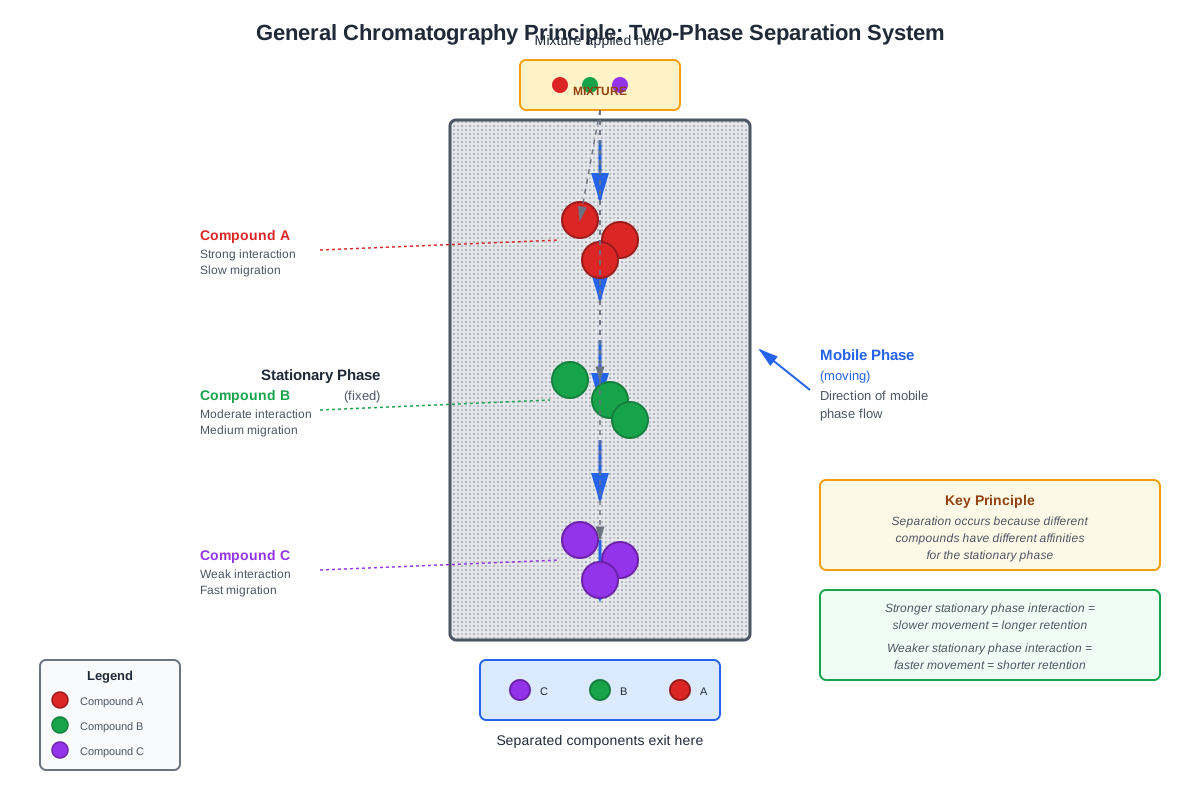
Chromatography is a separation technique that exploits differential distribution of compounds between two phases: a stationary phase (which remains fixed) and a mobile phase (which moves through or past the stationary phase). The core principle underlying all chromatographic methods is that different compounds in a mixture will have varying affinities for these two phases based on their chemical properties. Compounds with stronger interactions with the stationary phase move more slowly through the system, while those with greater affinity for the mobile phase move more rapidly.
The separation occurs because molecules continuously partition between the two phases as the mobile phase carries them through the system. This dynamic equilibrium means each compound spends different amounts of time associated with each phase. The retention time or retention factor quantifies how long a compound remains in the chromatographic system, providing a characteristic value that can identify substances and assess purity.
Types of Chromatography by Physical Setup
Chromatographic techniques can be classified by their physical arrangement into several major categories:
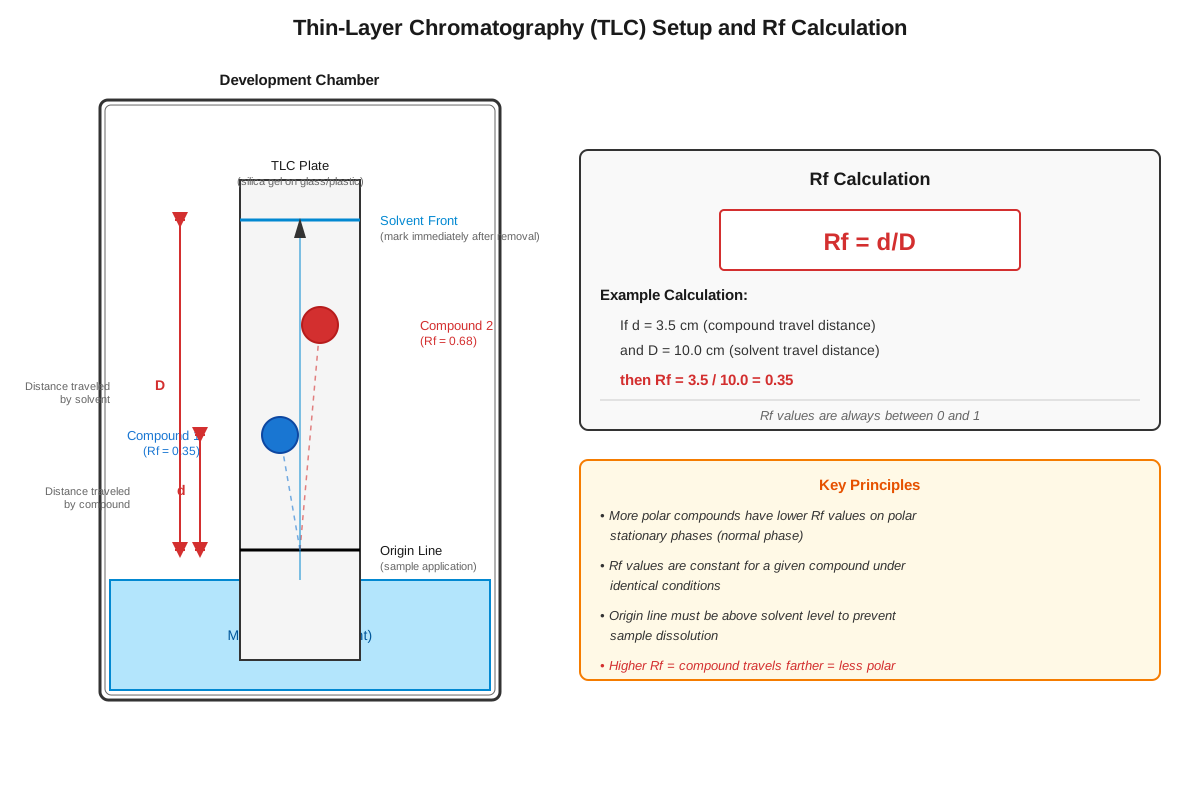
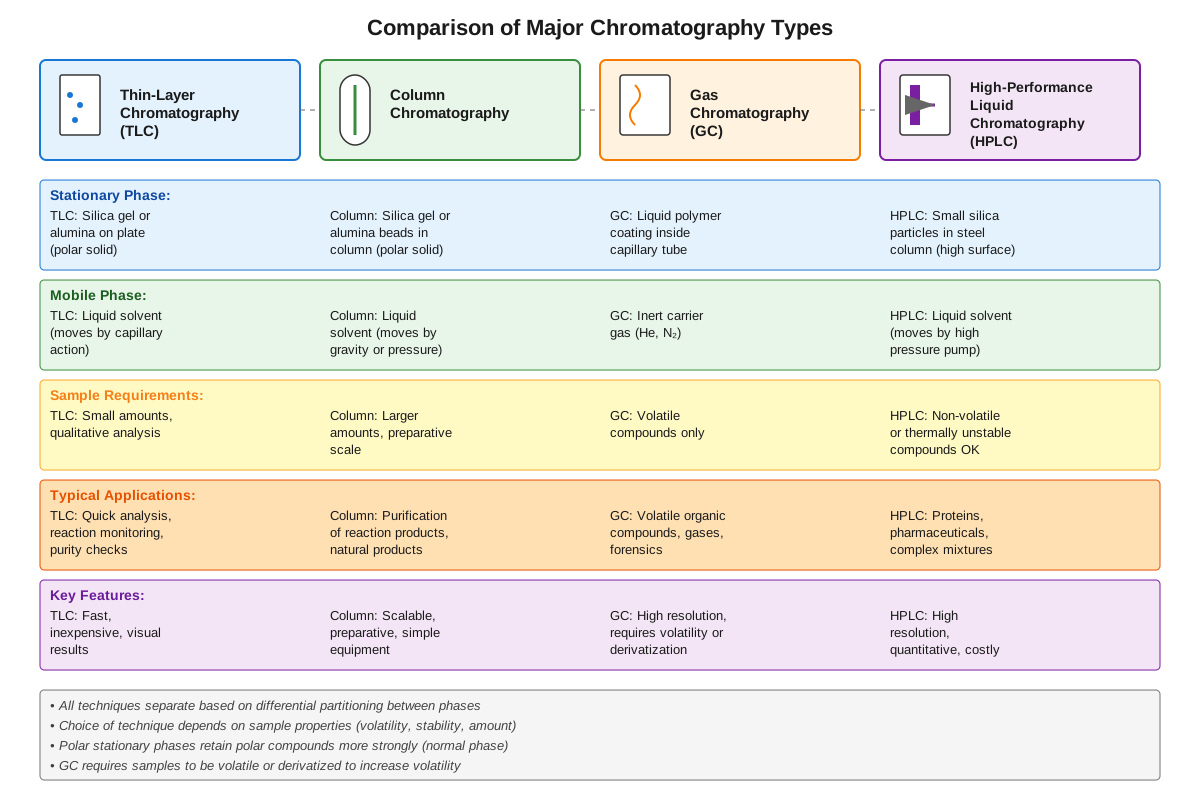
Thin-Layer Chromatography (TLC) uses a thin coating of stationary phase (typically silica gel or alumina) on a glass, plastic, or aluminum backing. The mobile phase (solvent) moves up the plate by capillary action. TLC is quick, inexpensive, and ideal for monitoring reaction progress or assessing compound purity. The retention factor (Rf) is calculated as:
Rf = (distance traveled by compound) / (distance traveled by solvent front)Rf values range from 0 to 1, with higher values indicating greater affinity for the mobile phase.
Column Chromatography involves packing stationary phase material into a vertical column, then passing mobile phase through under gravity or pressure. This technique separates larger quantities of material and is commonly used for purification. Compounds elute (exit the column) at different times based on their interactions with the stationary phase.
Gas Chromatography (GC) uses an inert gas (helium or nitrogen) as the mobile phase and a liquid or solid coating inside a long capillary column as the stationary phase. GC is ideal for volatile compounds and provides excellent resolution. Detection occurs as compounds exit the column, producing a chromatogram with peaks representing different substances.
High-Performance Liquid Chromatography (HPLC) employs high pressure to force liquid mobile phase through a column packed with fine stationary phase particles. HPLC offers superior resolution and speed compared to traditional column chromatography and can separate non-volatile compounds unsuitable for GC.
Types of Chromatography by Separation Mechanism
The mechanism by which compounds separate provides another classification system:
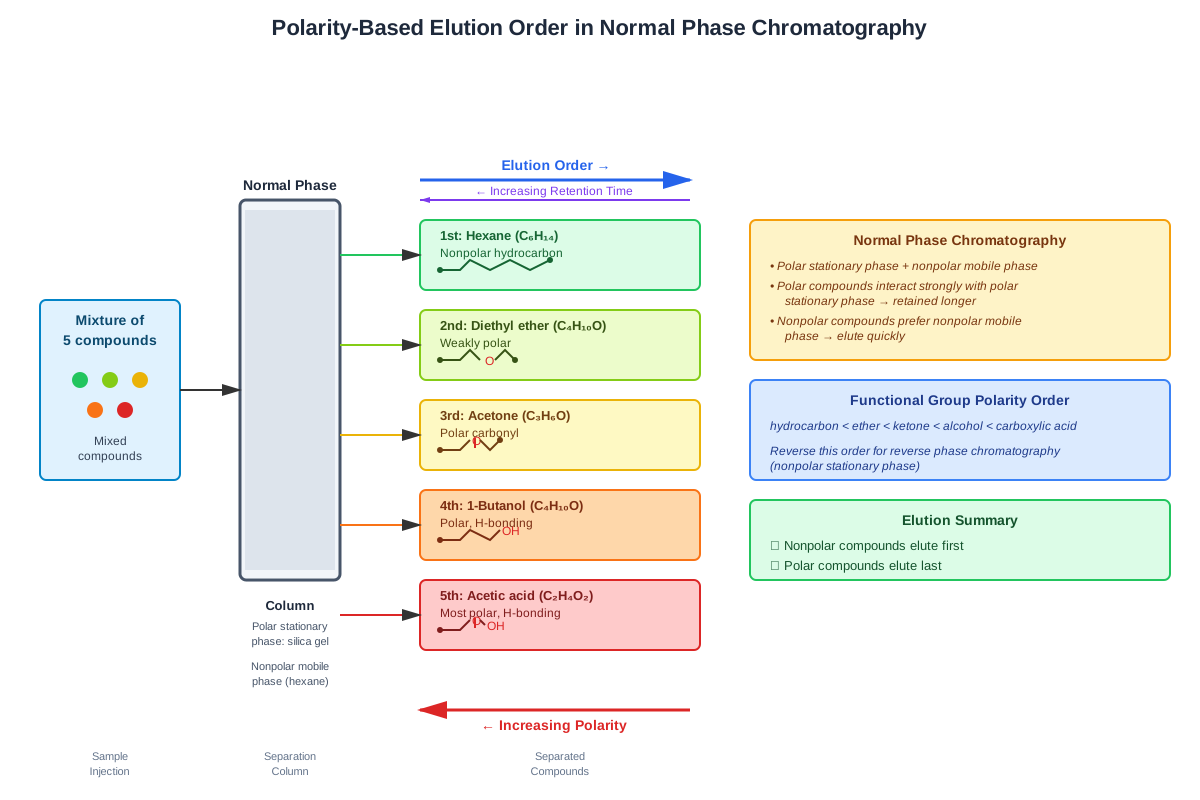
Adsorption Chromatography (also called normal-phase chromatography) uses a polar stationary phase (silica or alumina) and a nonpolar mobile phase (hexane, chloroform). Polar compounds interact more strongly with the stationary phase through dipole-dipole interactions and hydrogen bonding, causing them to move slowly. Nonpolar compounds have greater affinity for the mobile phase and move rapidly. This is the most common type for TLC and traditional column chromatography.
Partition Chromatography (reverse-phase chromatography) reverses the polarity: a nonpolar stationary phase (hydrocarbon chains bonded to silica) pairs with a polar mobile phase (water-methanol mixtures). Nonpolar compounds interact strongly with the stationary phase and elute slowly, while polar compounds prefer the mobile phase and elute quickly. Reverse-phase HPLC is the most widely used chromatographic technique in pharmaceutical and biochemical analysis.
Size-Exclusion Chromatography (gel filtration) separates molecules based on size rather than polarity. The stationary phase consists of porous beads. Small molecules enter the pores and take a longer path through the column, while large molecules cannot enter pores and travel around them, eluting first. This technique is particularly useful for separating proteins and polymers.
Ion-Exchange Chromatography separates charged molecules based on their interactions with oppositely charged groups on the stationary phase. Cation exchangers have negatively charged groups that bind positively charged molecules, while anion exchangers have positively charged groups that bind negatively charged molecules. Elution occurs by changing pH or ionic strength of the mobile phase. This method is essential for amino acid analysis and protein purification.
Affinity Chromatography exploits specific biological interactions, such as antibody-antigen or enzyme-substrate binding. The stationary phase contains molecules that specifically bind the target compound. After washing away unbound material, the target is released by changing conditions. This technique provides exceptional selectivity for purifying specific biomolecules.
Predicting Separation Outcomes
For adsorption chromatography (normal-phase), the elution order follows polarity: nonpolar compounds elute first, followed by increasingly polar compounds. Consider three compounds: hexane (nonpolar), ethyl acetate (moderately polar), and acetic acid (highly polar). On silica gel with hexane as mobile phase, hexane would have the highest Rf value and elute first, while acetic acid would have the lowest Rf and elute last.
For partition chromatography (reverse-phase), the order reverses: polar compounds elute first, followed by increasingly nonpolar compounds. Using the same three compounds with a water-methanol mobile phase on a C18 column, acetic acid would elute first and hexane last.
The strength of interactions depends on specific functional groups. Ranking from least to most polar (and therefore least to most retained on normal-phase silica):
| Functional Group | Relative Polarity | Interaction with Silica |
|---|---|---|
| Alkanes | Lowest | Weakest |
| Alkenes | Very low | Very weak |
| Ethers | Low | Weak |
| Esters | Moderate | Moderate |
| Ketones | Moderate | Moderate |
| Aldehydes | Moderate-high | Moderate-strong |
| Amines | High | Strong |
| Alcohols | High | Strong |
| Carboxylic acids | Highest | Strongest |
Interpreting Chromatographic Data
A chromatogram is a plot showing detector response versus time or distance. Each peak represents a different compound, with peak area proportional to the amount present. In TLC, visualization may require UV light or chemical staining since many organic compounds are colorless.
Key parameters for analysis include:
- Retention time (tR): Time from injection to peak maximum
- Retention factor (Rf): Ratio of distances in TLC
- Resolution: Degree of separation between adjacent peaks
- Peak shape: Indicates column efficiency and potential problems
Poor peak shape (tailing or fronting) suggests overloading, inappropriate conditions, or column degradation. Baseline separation (resolution > 1.5) indicates complete separation of compounds.
Concept Relationships
The fundamental principle connecting all chromatographic techniques is the differential partitioning of compounds between stationary and mobile phases based on molecular properties. This core concept directly derives from intermolecular forces—the prerequisite understanding of how molecules interact through hydrogen bonding, dipole-dipole interactions, and London dispersion forces determines how strongly each compound associates with each phase.
Molecular polarity → determines → phase affinity → determines → retention time/Rf value → determines → elution order
Within chromatography itself, the relationships form a hierarchy:
Physical setup (TLC, column, GC, HPLC) represents the mechanical framework, while separation mechanism (adsorption, partition, size-exclusion, ion-exchange, affinity) represents the chemical principle. Any physical setup can potentially employ different mechanisms. For example, HPLC can operate in normal-phase mode (polar stationary phase), reverse-phase mode (nonpolar stationary phase), size-exclusion mode, or ion-exchange mode.
The choice of stationary phase polarity and mobile phase polarity creates an inverse relationship in determining elution order. In normal-phase systems, increasing mobile phase polarity decreases retention times for polar compounds. In reverse-phase systems, increasing mobile phase polarity increases retention times for nonpolar compounds.
Chromatography connects forward to spectroscopy topics because chromatographic separation often precedes spectroscopic analysis. GC-MS and LC-MS (liquid chromatography-mass spectrometry) combine separation with identification. Understanding what chromatography can separate helps interpret which compounds spectroscopy subsequently identifies.
The technique also connects to reaction monitoring in organic chemistry—TLC quickly shows whether starting materials remain or products have formed. It relates to biochemistry through protein purification sequences that may employ multiple chromatographic steps (ion-exchange followed by size-exclusion followed by affinity chromatography).
Quick check — test yourself on Chromatography basics so far.
Try Flashcards →High-Yield Facts
⭐ In normal-phase chromatography (polar stationary phase), polar compounds have LOW Rf values and elute LAST; nonpolar compounds have HIGH Rf values and elute FIRST
⭐ In reverse-phase chromatography (nonpolar stationary phase), the order reverses: polar compounds elute FIRST, nonpolar compounds elute LAST
⭐ Rf values always fall between 0 and 1; Rf = (distance traveled by compound) / (distance traveled by solvent front)
⭐ Silica gel (SiO2) and alumina (Al2O3) are polar stationary phases used in normal-phase chromatography
⭐ Size-exclusion chromatography separates by molecular size: LARGE molecules elute FIRST, small molecules elute LAST
- Ion-exchange chromatography separates charged molecules; elution occurs by changing pH or salt concentration
- Increasing mobile phase polarity in normal-phase chromatography decreases retention times for all compounds
- TLC plates are typically visualized under UV light or by staining with iodine, phosphomolybdic acid, or ninhydrin (for amino acids)
- Gas chromatography requires volatile compounds; non-volatile compounds must be derivatized or analyzed by HPLC
- Affinity chromatography provides the highest selectivity but requires specific binding interactions
- Column chromatography resolution improves with longer columns, smaller particle size, and slower flow rates
- The mobile phase in chromatography is also called the eluent; the process of washing compounds off the column is elution
Common Misconceptions
Misconception: Higher Rf values always mean the compound is more polar.
Correction: Higher Rf values indicate greater affinity for the mobile phase, not necessarily greater polarity. In normal-phase chromatography with nonpolar mobile phase, nonpolar compounds have higher Rf values. The relationship between polarity and Rf depends on the system's phase polarities.
Misconception: All chromatography uses a polar stationary phase and nonpolar mobile phase.
Correction: Normal-phase chromatography uses polar stationary/nonpolar mobile phases, but reverse-phase chromatography (more common in modern HPLC) uses nonpolar stationary/polar mobile phases. The phase combination determines elution order.
Misconception: In size-exclusion chromatography, small molecules elute first because they move faster.
Correction: Large molecules elute first in size-exclusion chromatography because they cannot enter the pores of the stationary phase beads and therefore take a shorter path through the column. Small molecules enter pores, travel a longer path, and elute later.
Misconception: Rf values are universal constants for each compound.
Correction: Rf values are system-dependent and vary with stationary phase type, mobile phase composition, temperature, and humidity. The same compound will have different Rf values under different conditions. Rf values are useful for comparison within a single experiment but not across different experimental setups.
Misconception: Chromatography can only separate mixtures of two or three compounds.
Correction: Chromatography can separate complex mixtures containing dozens or even hundreds of components. GC-MS and LC-MS routinely separate and identify 50+ compounds in biological samples, environmental samples, or reaction mixtures.
Misconception: The compound that travels farthest on a TLC plate is always the most abundant.
Correction: Distance traveled (Rf value) reflects affinity for the mobile phase, not quantity. Spot intensity or peak area indicates relative abundance, not distance traveled. A compound present in trace amounts can have a high Rf value if it strongly prefers the mobile phase.
Worked Examples
Example 1: Predicting Elution Order in Normal-Phase Column Chromatography
Question: A mixture contains four compounds: hexane, diethyl ether, acetone, and ethanol. These compounds are separated using column chromatography with silica gel as the stationary phase and hexane as the mobile phase. Predict the elution order (first to last).
Solution:
Step 1: Identify the system type. Silica gel is polar (contains Si-OH groups), and hexane is nonpolar. This is normal-phase chromatography.
Step 2: Recall the principle: In normal-phase chromatography, nonpolar compounds have greater affinity for the nonpolar mobile phase and elute first. Polar compounds interact strongly with the polar stationary phase and elute last.
Step 3: Rank the compounds by polarity (least to most polar):
- Hexane (C6H14): Nonpolar hydrocarbon, no functional groups capable of hydrogen bonding
- Diethyl ether (C2H5-O-C2H5): Moderately polar, oxygen can accept hydrogen bonds but cannot donate
- Acetone (CH3-CO-CH3): More polar than ether, carbonyl group creates significant dipole
- Ethanol (C2H5OH): Most polar, hydroxyl group can both donate and accept hydrogen bonds
Step 4: Apply the elution principle. The least polar compound elutes first, most polar last.
Answer: Elution order is hexane (first) → diethyl ether → acetone → ethanol (last)
Connection to learning objectives: This example demonstrates application of chromatography basics to predict separation outcomes based on molecular structure and intermolecular forces, directly addressing the learning objective of applying concepts to exam-style questions.
Example 2: Calculating and Interpreting Rf Values
Question: A student performs TLC analysis of a reaction mixture on a silica gel plate using 3:1 hexane:ethyl acetate as mobile phase. After development, the solvent front has traveled 8.0 cm from the origin. Three spots are visible:
- Spot A: 6.4 cm from origin
- Spot B: 4.0 cm from origin
- Spot C: 1.6 cm from origin
Calculate the Rf value for each spot and identify which compound is most polar.
Solution:
Step 1: Apply the Rf formula for each spot.
Rf = (distance traveled by compound) / (distance traveled by solvent front)
Spot A: Rf = 6.4 cm / 8.0 cm = 0.80
Spot B: Rf = 4.0 cm / 8.0 cm = 0.50
Spot C: Rf = 1.6 cm / 8.0 cm = 0.20
Step 2: Interpret the Rf values in context. This is normal-phase chromatography (silica gel is polar). Higher Rf values indicate greater affinity for the mobile phase (which is relatively nonpolar: 3:1 hexane:ethyl acetate).
Step 3: Determine polarity. Compounds with higher Rf values are less polar (they prefer the nonpolar mobile phase). Compounds with lower Rf values are more polar (they interact strongly with the polar silica stationary phase).
Answer:
- Spot A: Rf = 0.80 (least polar compound)
- Spot B: Rf = 0.50 (intermediate polarity)
- Spot C: Rf = 0.20 (most polar compound)
Spot C represents the most polar compound because it has the lowest Rf value, indicating strongest interaction with the polar silica stationary phase.
Connection to learning objectives: This example addresses the learning objective of calculating retention factors and demonstrates how to interpret chromatographic data to determine relative polarity—a common MCAT question type.
Exam Strategy
When approaching chromatography basics questions on the MCAT, first identify the chromatographic system type by determining stationary and mobile phase polarities. Look for trigger words: "silica gel," "alumina," or "normal-phase" indicate polar stationary phase; "C18," "reverse-phase," or "octadecylsilane" indicate nonpolar stationary phase. This identification immediately tells you whether polar or nonpolar compounds elute first.
For elution order questions, create a quick mental ranking of compound polarities based on functional groups. Use the hierarchy: alkanes < alkenes < ethers < esters/ketones < aldehydes < amines/alcohols < carboxylic acids. Then apply the appropriate rule: normal-phase (nonpolar first), reverse-phase (polar first), or size-exclusion (large first).
For Rf calculation questions, watch for the common trap of dividing distances incorrectly. Always divide compound distance by solvent front distance, never the reverse. Verify that your calculated Rf falls between 0 and 1; if not, recheck your calculation. Remember that Rf values near 0 or 1 indicate poor separation conditions (compound too strongly retained or not retained at all).
When passages describe experimental procedures, identify what the researchers are trying to separate and why they chose that particular technique. The MCAT often asks "Why did the researchers use technique X instead of technique Y?" The answer relates to molecular properties: size-exclusion for size differences, ion-exchange for charge differences, normal/reverse-phase for polarity differences, affinity for specific binding.
Process of elimination tips: If a question asks which compound elutes first and you're unsure, eliminate options that contradict basic principles. In normal-phase, immediately eliminate the most polar compound as "elutes first." In size-exclusion, eliminate the smallest molecule as "elutes first." For Rf values, eliminate any answer showing Rf > 1.0 or Rf < 0.
Time allocation: Straightforward chromatography questions (Rf calculations, simple elution order) should take 45-60 seconds. Passage-based questions requiring data interpretation may take 90-120 seconds. Don't spend excessive time trying to remember specific Rf values or exact retention times—the MCAT provides necessary data and tests your ability to interpret it using principles.
Exam Tip: If a question presents a chromatogram with multiple peaks and asks you to identify a specific compound, look for the peak that matches the expected retention behavior based on the compound's polarity and the system type. The MCAT rarely requires memorization of specific retention times but frequently tests whether you can predict relative retention.
Memory Techniques
"SILICA STICKS to POLAR" - Remember that silica gel (the most common TLC stationary phase) is polar and therefore "sticks to" (retains) polar compounds, causing them to have low Rf values.
"Reverse the Phase, Reverse the Order" - In reverse-phase chromatography, the elution order reverses compared to normal-phase: polar compounds elute first instead of last.
"Big Guys Exit First" - For size-exclusion chromatography, remember that large molecules elute first because they cannot enter the pores and take the shortest path.
Rf Fraction Mnemonic: "Compound over Complete" - Rf = distance traveled by Compound / distance traveled by solvent (Complete journey). Both start with C to help remember numerator vs. denominator.
Polarity Ranking Acronym: "All Elephants Eat Kelp And Apples Carefully"
- Alkanes (least polar)
- Ethers
- Esters
- Ketones
- Aldehydes
- Alcohols
- Carboxylic acids (most polar)
Visualization Strategy: Picture the TLC plate as a race where the mobile phase is the track. Compounds that "like" the track (mobile phase) run fast and travel far (high Rf). Compounds that keep stopping to interact with the stationary phase (the ground) move slowly and don't travel far (low Rf).
Summary
Chromatography basics encompass the fundamental principles underlying all separation techniques that exploit differential partitioning between stationary and mobile phases. The MCAT requires understanding of how molecular properties—particularly polarity, size, and charge—determine separation behavior in different chromatographic systems. Normal-phase chromatography uses polar stationary phases (silica, alumina) with nonpolar mobile phases, causing polar compounds to elute last and have low Rf values. Reverse-phase chromatography inverts this relationship with nonpolar stationary phases and polar mobile phases, causing nonpolar compounds to elute last. Size-exclusion chromatography separates by molecular size with large molecules eluting first, while ion-exchange chromatography separates charged molecules based on electrostatic interactions. Success on MCAT chromatography questions requires identifying the system type, ranking compounds by relevant properties, and applying the appropriate elution principle. Understanding these basics enables interpretation of experimental passages, calculation of retention factors, and prediction of separation outcomes—all common question types on the exam.
Key Takeaways
- Chromatography separates mixtures based on differential partitioning between a stationary phase and a mobile phase driven by molecular properties
- In normal-phase chromatography (polar stationary phase), nonpolar compounds have high Rf values and elute first; polar compounds have low Rf values and elute last
- Reverse-phase chromatography inverts the elution order: polar compounds elute first, nonpolar compounds elute last
- Rf values are calculated as (distance traveled by compound) / (distance traveled by solvent front) and always fall between 0 and 1
- Size-exclusion chromatography separates by molecular size with large molecules eluting first because they cannot enter stationary phase pores
- The choice of chromatographic technique depends on the molecular properties being exploited: polarity (normal/reverse-phase), size (size-exclusion), charge (ion-exchange), or specific binding (affinity)
- Functional group polarity determines retention in adsorption/partition chromatography: alkanes < ethers < ketones < alcohols < carboxylic acids
Related Topics
Spectroscopy Techniques (IR, NMR, Mass Spectrometry): After separating compounds by chromatography, spectroscopy identifies their structures. Understanding chromatography provides context for why pure samples are necessary for accurate spectroscopic analysis.
Intermolecular Forces and Solubility: Deeper exploration of hydrogen bonding, dipole interactions, and London forces explains the molecular basis for chromatographic separations and enables more sophisticated predictions of retention behavior.
Protein Purification: Biochemistry applications of chromatography including multi-step purification schemes combining ion-exchange, size-exclusion, and affinity chromatography to isolate specific proteins from complex mixtures.
Reaction Monitoring and Product Isolation: Practical organic chemistry applications where TLC monitors reaction progress and column chromatography purifies products, connecting theoretical separation principles to synthetic chemistry.
Amino Acid Analysis: Specific application of ion-exchange chromatography to separate and quantify amino acids, relevant for both biochemistry and analytical chemistry sections of the MCAT.
Practice CTA
Now that you've mastered the fundamental principles of chromatography, it's time to reinforce your understanding through active practice. Attempt the practice questions and flashcards associated with this topic to test your ability to predict elution orders, calculate Rf values, and interpret chromatographic data under timed conditions. Focus especially on questions that integrate chromatography with molecular structure and intermolecular forces—these represent the highest-yield question types on the MCAT. Remember that chromatography questions often appear in experimental passages, so practice extracting relevant information quickly and applying core principles efficiently. Your ability to confidently analyze chromatographic scenarios will directly translate to points on test day. Keep pushing forward—you're building the analytical skills that distinguish top scorers!
Sign up free to keep reading
Create a free AnvayaPrep account to finish this MCAT guide on Chromatography basics — plus flashcards and practice questions.