Overview
E and Z alkenes represent a critical nomenclature system in Organic Chemistry used to describe the spatial arrangement of substituents around carbon-carbon double bonds. Unlike single bonds, which allow free rotation, double bonds create a rigid planar structure that locks substituents into fixed positions relative to one another. This geometric constraint gives rise to stereoisomerism—specifically, geometric isomers that differ only in the three-dimensional arrangement of atoms in space. The E and Z alkenes system, developed by the International Union of Pure and Applied Chemistry (IUPAC), provides an unambiguous method for naming these stereoisomers based on the Cahn-Ingold-Prelog priority rules.
For the MCAT, understanding E and Z alkenes is essential because these concepts appear frequently in both discrete questions and passage-based problems within the Chemical and Physical Foundations of Biological Systems section. The exam tests not only the ability to assign E or Z configuration but also the capacity to predict physical properties, reactivity patterns, and biological activity differences between geometric isomers. Questions may present alkene structures in various contexts—from synthetic reaction schemes to biological membrane components—requiring rapid and accurate stereochemical analysis.
This topic sits at the intersection of Stereochemistry and Conformation and broader Organic Chemistry principles. Mastery of E and Z nomenclature builds directly upon understanding of molecular geometry, priority rules, and isomerism. It connects forward to topics including alkene reactivity, addition reactions, and the behavior of unsaturated fatty acids in biological systems. The ability to visualize three-dimensional molecular structures and translate between different representational formats (Fischer projections, Newman projections, and line-angle formulas) becomes crucial when working with geometric isomers.
Learning Objectives
- [ ] Define E and Z alkenes using accurate Organic Chemistry terminology
- [ ] Explain why E and Z alkenes matters for the MCAT
- [ ] Apply E and Z alkenes to exam-style questions
- [ ] Identify common mistakes related to E and Z alkenes
- [ ] Connect E and Z alkenes to related Organic Chemistry concepts
- [ ] Assign Cahn-Ingold-Prelog priorities to substituents on alkene carbons
- [ ] Distinguish between situations requiring E/Z versus cis/trans nomenclature
- [ ] Predict relative physical properties (boiling point, melting point, polarity) based on E or Z configuration
- [ ] Recognize E and Z isomers in biological molecules such as retinal and unsaturated fatty acids
Prerequisites
- Basic alkene structure and bonding: Understanding that carbon-carbon double bonds consist of one sigma and one pi bond, with sp² hybridization creating trigonal planar geometry around each carbon
- Cahn-Ingold-Prelog priority rules: Ability to rank substituents by atomic number and apply sequence rules for determining stereochemical descriptors
- Constitutional isomers versus stereoisomers: Recognition that stereoisomers have identical connectivity but different spatial arrangements
- Molecular geometry and VSEPR theory: Foundation for understanding why double bonds restrict rotation and create geometric constraints
- Basic nomenclature of organic compounds: Familiarity with IUPAC naming conventions for hydrocarbons
Why This Topic Matters
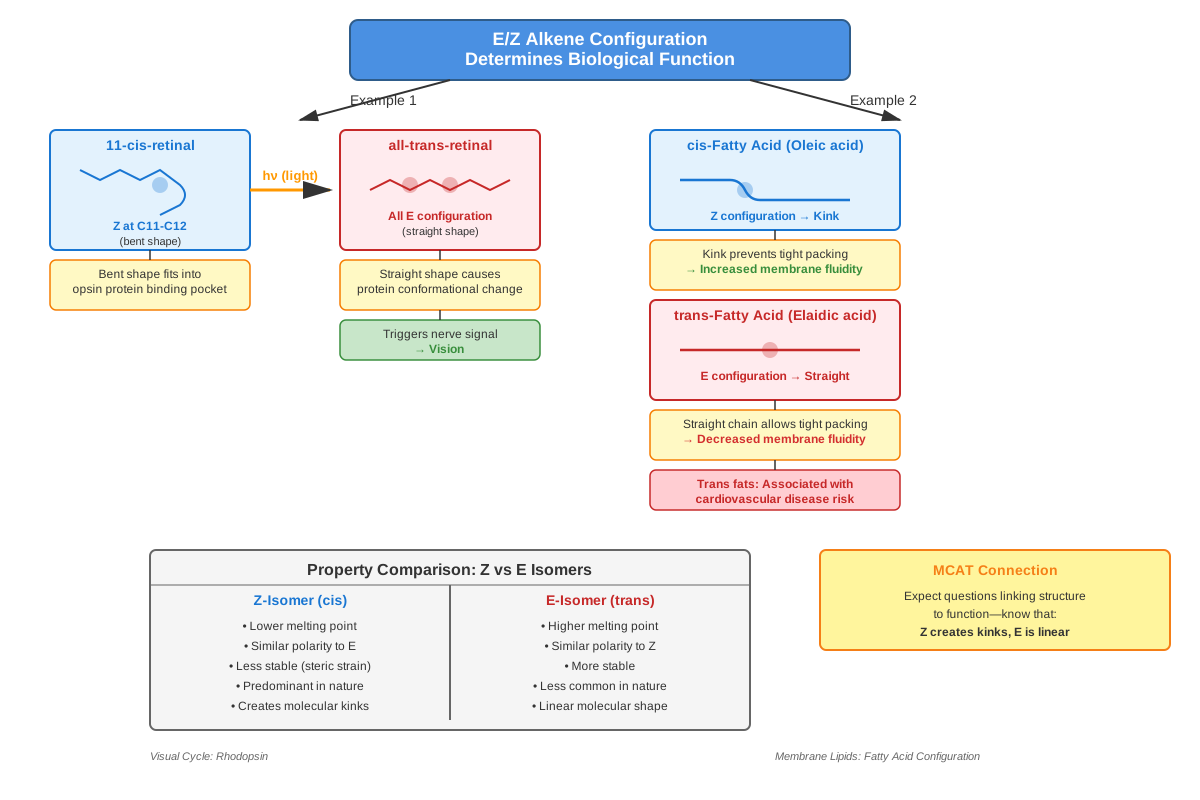
The biological significance of E and Z alkenes extends far beyond nomenclature exercises. In biochemistry and physiology, the geometric configuration of double bonds profoundly affects molecular function. The visual cycle depends on the photoisomerization of 11-cis-retinal to all-trans-retinal in rhodopsin, triggering the cascade that enables vision. Unsaturated fatty acids in cell membranes predominantly exist as cis (Z) isomers, creating kinks that prevent tight packing and maintain membrane fluidity—a concept frequently tested in MCAT biochemistry passages. Trans fatty acids (E configuration), whether naturally occurring or industrially produced, pack more efficiently and exhibit higher melting points, contributing to their association with cardiovascular disease.
On the MCAT, E and Z alkenes appear in approximately 2-4 questions per exam administration, either as discrete items or embedded within organic chemistry passages. Questions typically fall into three categories: (1) nomenclature and structure assignment, where students must correctly identify or draw E or Z isomers; (2) property prediction, requiring understanding of how geometric configuration affects physical characteristics; and (3) reaction mechanisms, where stereochemistry must be tracked through addition reactions or elimination processes. Passages may present synthetic schemes, spectroscopic data, or biological contexts requiring stereochemical analysis.
Common exam scenarios include: identifying the major product of stereoselective reactions; predicting which isomer has higher boiling point or greater dipole moment; recognizing geometric isomers in natural products or pharmaceuticals; and analyzing the biological consequences of isomerization. The Chemical and Physical Foundations section frequently integrates stereochemistry with thermodynamics, asking students to compare the relative stability of E versus Z isomers based on steric interactions.
Core Concepts
Fundamental Definition of E and Z Alkenes
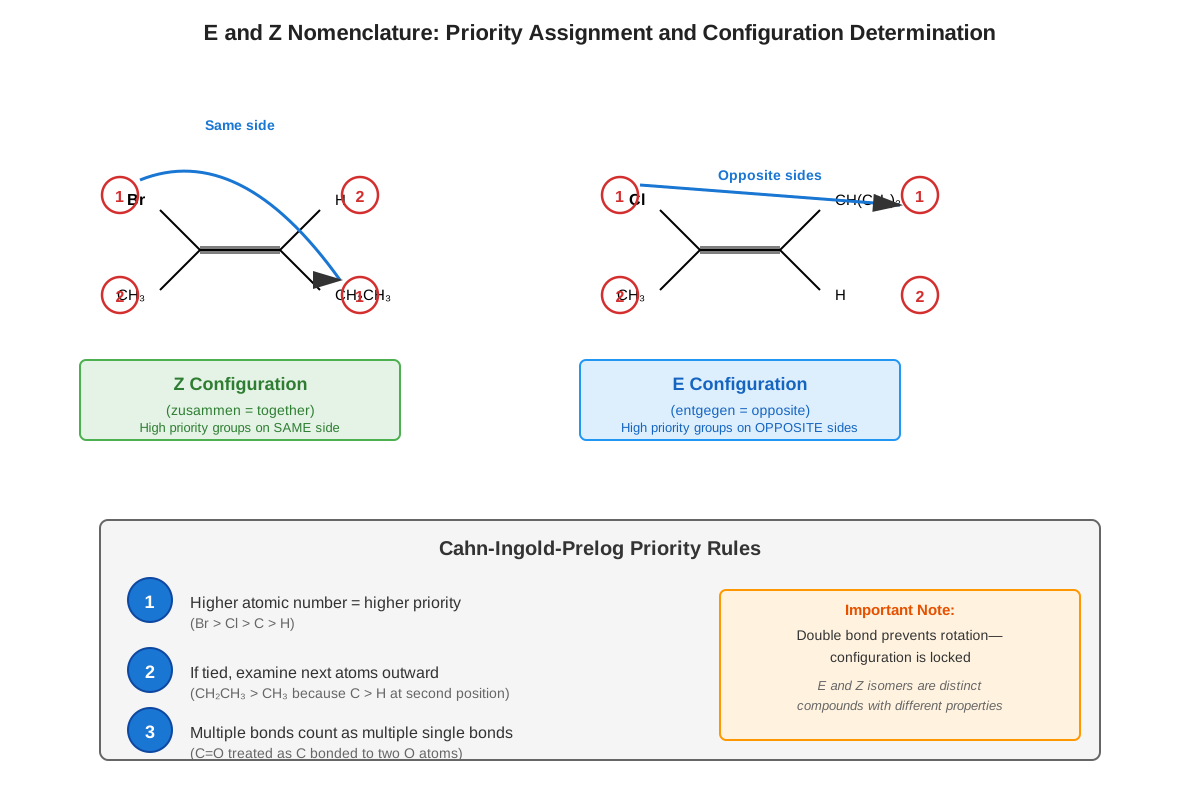
E and Z alkenes are geometric stereoisomers (also called geometric isomers or cis-trans isomers) that differ in the spatial arrangement of substituents around a carbon-carbon double bond. The designation arises from the German words "entgegen" (opposite) for E and "zusammen" (together) for Z. This nomenclature system applies the Cahn-Ingold-Prelog priority rules to unambiguously assign configuration regardless of the complexity or number of substituents.
For a molecule to exhibit E/Z isomerism, it must contain a carbon-carbon double bond where each carbon bears two different substituents. The restricted rotation around the double bond (due to the pi bond's electron density above and below the sigma bond plane) prevents interconversion between isomers at room temperature, making them isolable, distinct compounds with different physical and chemical properties.
Structural Requirements for E/Z Isomerism
Not all alkenes can exist as E and Z isomers. Three conditions must be met:
- Presence of a carbon-carbon double bond: The rigidity comes from the pi bond preventing rotation
- Each sp² carbon must have two different substituents: If either carbon has two identical groups, no geometric isomerism exists
- Sufficient energy barrier: At room temperature, the ~65 kcal/mol required to break the pi bond prevents spontaneous isomerization
For example, 2-butene (CH₃-CH=CH-CH₃) exists as E and Z isomers because each double-bonded carbon has one hydrogen and one methyl group. In contrast, 1-butene (CH₂=CH-CH₂-CH₃) cannot exhibit E/Z isomerism because one carbon bears two hydrogen atoms.
Applying Cahn-Ingold-Prelog Priority Rules
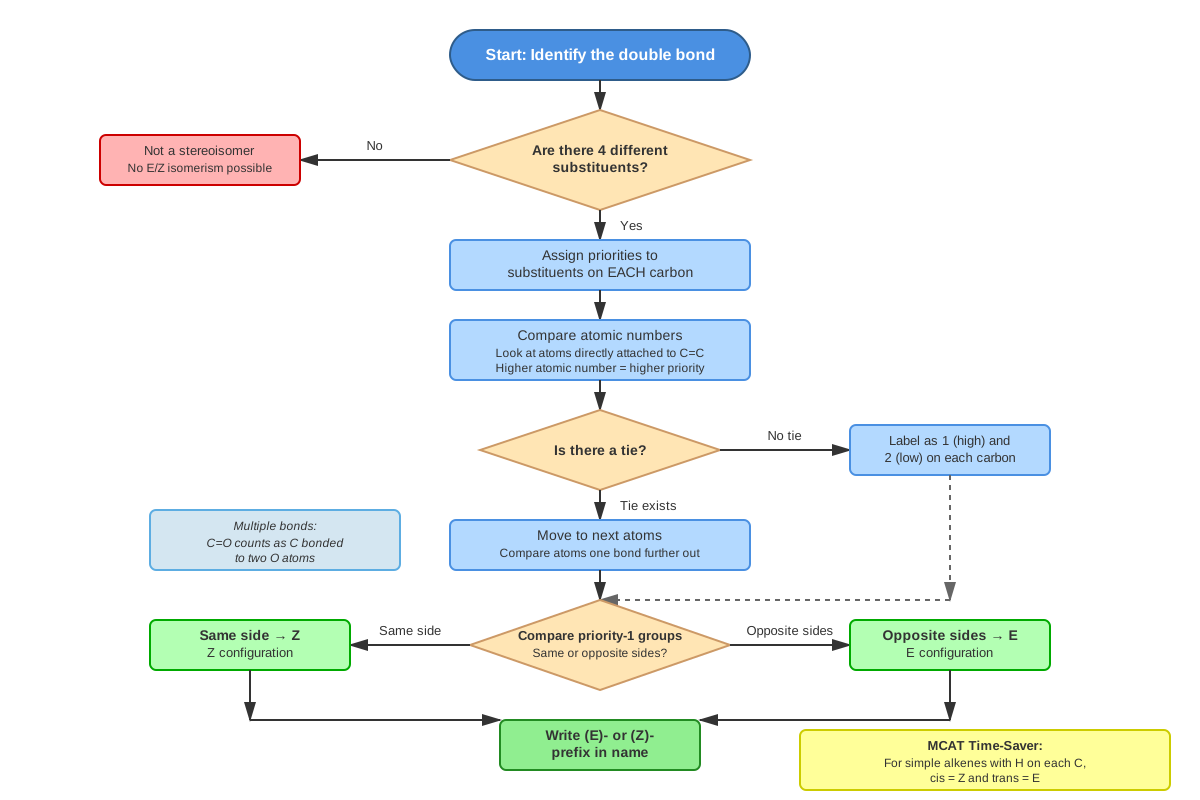
The assignment of E or Z configuration follows a systematic process:
- Identify the two substituents on each double-bonded carbon
- Assign priorities (1 = highest, 2 = lowest) to substituents on each carbon using Cahn-Ingold-Prelog rules:
- Higher atomic number = higher priority
- If first atoms are identical, proceed outward until a difference is found
- Multiple bonds count as multiple single bonds to that atom
- Compare the positions of the two highest-priority groups:
- If highest-priority groups are on the same side of the double bond → Z configuration
- If highest-priority groups are on opposite sides → E configuration
Priority Assignment Examples
| Substituent | First Atom | Priority Reasoning |
|---|---|---|
| -H | H (atomic # 1) | Lowest priority in most cases |
| -CH₃ | C (atomic # 6) | Higher than H |
| -CH₂CH₃ | C (atomic # 6) | Same as -CH₃ at first atom; compare second atoms |
| -OH | O (atomic # 8) | Higher than carbon-based groups |
| -Cl | Cl (atomic # 17) | Higher than O, C, or H |
| -CHO | C bonded to O (double) | Counts as C bonded to two O atoms |
| -COOH | C bonded to two O atoms | Higher priority than -CHO |
E versus Z Configuration Assignment
Consider 3-methyl-2-pentene with substituents: -CH₃ and -H on one carbon, -CH₃ and -CH₂CH₃ on the other.
Carbon 1 priorities: -CH₃ (priority 1) and -H (priority 2)
Carbon 2 priorities: -CH₂CH₃ (priority 1, because the ethyl chain extends further) and -CH₃ (priority 2)
If the two priority-1 groups (-CH₃ on carbon 1 and -CH₂CH₃ on carbon 2) are on opposite sides, the configuration is E. If they're on the same side, it's Z.
Relationship to Cis/Trans Nomenclature
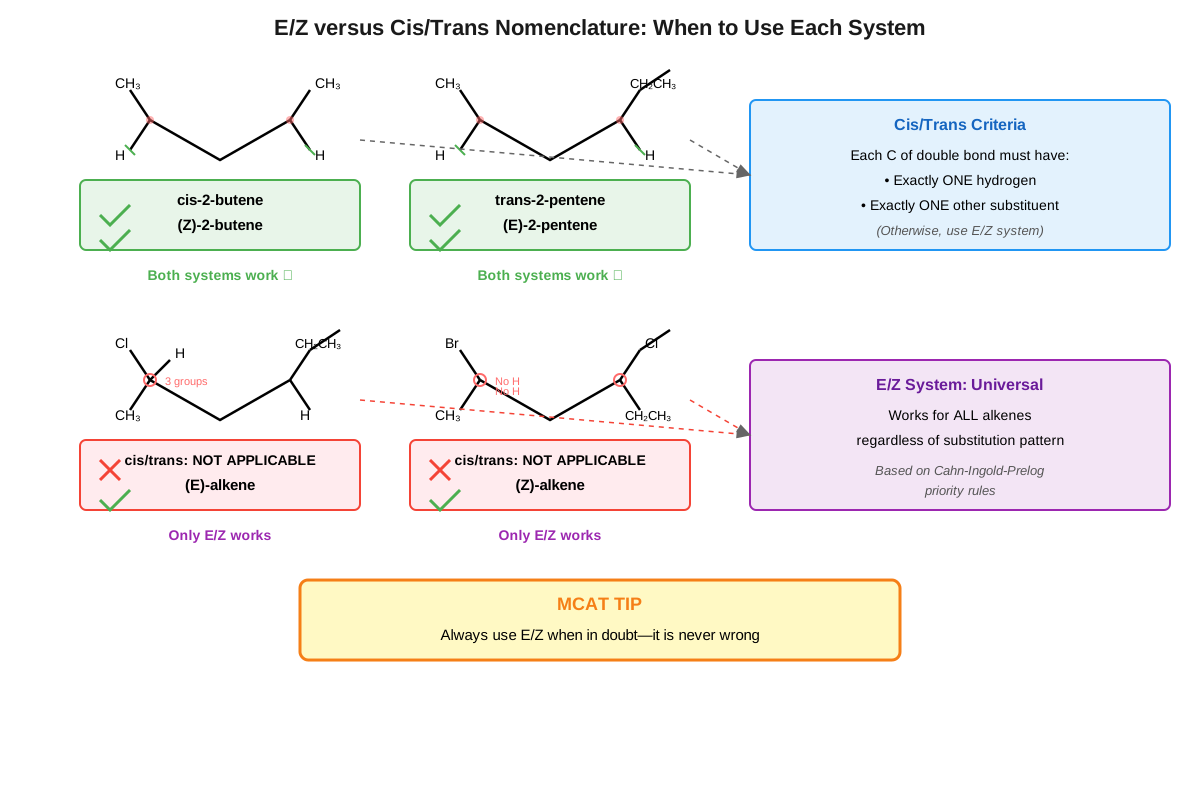
The older cis/trans system remains valid for simple alkenes where each carbon bears one hydrogen. In these cases:
- cis = substituents on the same side = Z
- trans = substituents on opposite sides = E
However, cis/trans becomes ambiguous with more complex substituents. For example, in an alkene with -CH₃, -Cl, -Br, and -H as substituents, "cis" doesn't specify which groups are being compared. The E/Z system eliminates this ambiguity by always comparing the highest-priority groups.
MCAT Exam Tip: When an MCAT question uses cis/trans terminology, it typically involves simple alkenes where the designation is unambiguous. However, demonstrating knowledge of E/Z nomenclature shows higher-level understanding and may be required for complex structures.
Physical Properties and Stability Differences
E and Z isomers are distinct compounds with measurably different properties:
Dipole Moments: Z isomers generally have larger dipole moments when substituents have different polarities, because the bond dipoles don't cancel as effectively when groups are on the same side.
Boiling Points: Z isomers often have slightly higher boiling points due to larger dipole moments creating stronger intermolecular forces.
Melting Points: E isomers typically have higher melting points because their more symmetrical shape allows better crystal packing.
Stability: E isomers are usually more thermodynamically stable than Z isomers due to reduced steric strain. When bulky groups are on opposite sides (E), they experience less repulsion than when forced into proximity (Z). This energy difference typically ranges from 1-3 kcal/mol.
Biological Relevance of Geometric Isomers
In biological systems, the distinction between E and Z configurations has profound functional consequences:
Unsaturated Fatty Acids: Natural unsaturated fatty acids predominantly contain Z (cis) double bonds, creating kinks that prevent tight packing and maintain membrane fluidity. Trans (E) fatty acids, whether from partial hydrogenation or ruminant bacteria, pack more efficiently and raise melting points.
Visual Pigments: The photoisomerization of 11-Z-retinal to 11-E-retinal in rhodopsin initiates the visual signal transduction cascade. This geometric change alters the protein conformation, triggering the biochemical response to light.
Pheromones and Signaling Molecules: Many insect pheromones exist as specific geometric isomers, with only one configuration being biologically active. The wrong isomer may be inactive or even antagonistic.
Concept Relationships
The understanding of E and Z alkenes builds hierarchically from foundational concepts and connects laterally to multiple areas of organic chemistry. At the base, molecular geometry and hybridization theory explain why sp² carbons create planar structures and why the pi bond restricts rotation. This geometric constraint → enables the existence of geometric isomers → which requires a systematic naming method → leading to the E/Z nomenclature system.
The Cahn-Ingold-Prelog priority rules serve as the algorithmic foundation for E/Z assignment and connect directly to R/S nomenclature for chiral centers. Both systems use identical priority-ranking methods, creating conceptual unity across stereochemistry topics. Mastery of priority assignment in the E/Z context → transfers directly to → determining absolute configuration at tetrahedral stereocenters.
Within Stereochemistry and Conformation, E and Z isomers represent one category of stereoisomerism. The relationship map shows: Isomers → divide into → Constitutional isomers (different connectivity) and Stereoisomers (same connectivity, different spatial arrangement) → Stereoisomers divide into → Enantiomers (non-superimposable mirror images) and Diastereomers (stereoisomers that aren't mirror images) → E and Z isomers are diastereomers of each other.
The concept connects forward to alkene reactions, particularly addition reactions where stereochemistry must be tracked. Understanding E/Z configuration → enables prediction of → syn versus anti addition products → which determines → the stereochemical outcome of reactions like hydroboration-oxidation or halogenation. Similarly, elimination reactions (E1 and E2) often produce mixtures of E and Z products, with the E isomer typically predominating due to thermodynamic stability (Zaitsev's rule considerations).
In biochemistry contexts, E/Z isomerism → relates to → lipid structure and function → which affects → membrane properties → which influences → cellular processes. The connection extends to metabolism, where enzymes exhibit stereoselectivity, often processing only one geometric isomer.
Quick check — test yourself on E and Z alkenes so far.
Try Flashcards →High-Yield Facts
⭐ E configuration means the two highest-priority substituents are on opposite sides of the double bond (entgegen = opposite)
⭐ Z configuration means the two highest-priority substituents are on the same side of the double bond (zusammen = together)
⭐ E isomers are generally more stable than Z isomers due to reduced steric strain between substituents
⭐ For E/Z isomerism to exist, each carbon of the double bond must have two different substituents
⭐ The Cahn-Ingold-Prelog priority rules rank substituents by atomic number of the directly attached atom, proceeding outward if necessary
- E isomers typically have higher melting points than Z isomers due to better crystal packing
- Z isomers often have higher boiling points than E isomers when polar substituents create larger dipole moments
- Natural unsaturated fatty acids predominantly contain Z (cis) double bonds, creating membrane fluidity
- The energy barrier to rotation around a C=C double bond is approximately 65 kcal/mol, preventing interconversion at room temperature
- Multiple bonds count as multiple single bonds when applying priority rules (C=O counts as C bonded to two O atoms)
- Trans fatty acids (E configuration) are associated with increased cardiovascular disease risk due to their straighter molecular shape
- The photoisomerization of retinal from Z to E configuration initiates the visual signal transduction cascade
- When comparing -CH₃ and -CH₂CH₃, the ethyl group has higher priority because the second carbon provides additional mass
Common Misconceptions
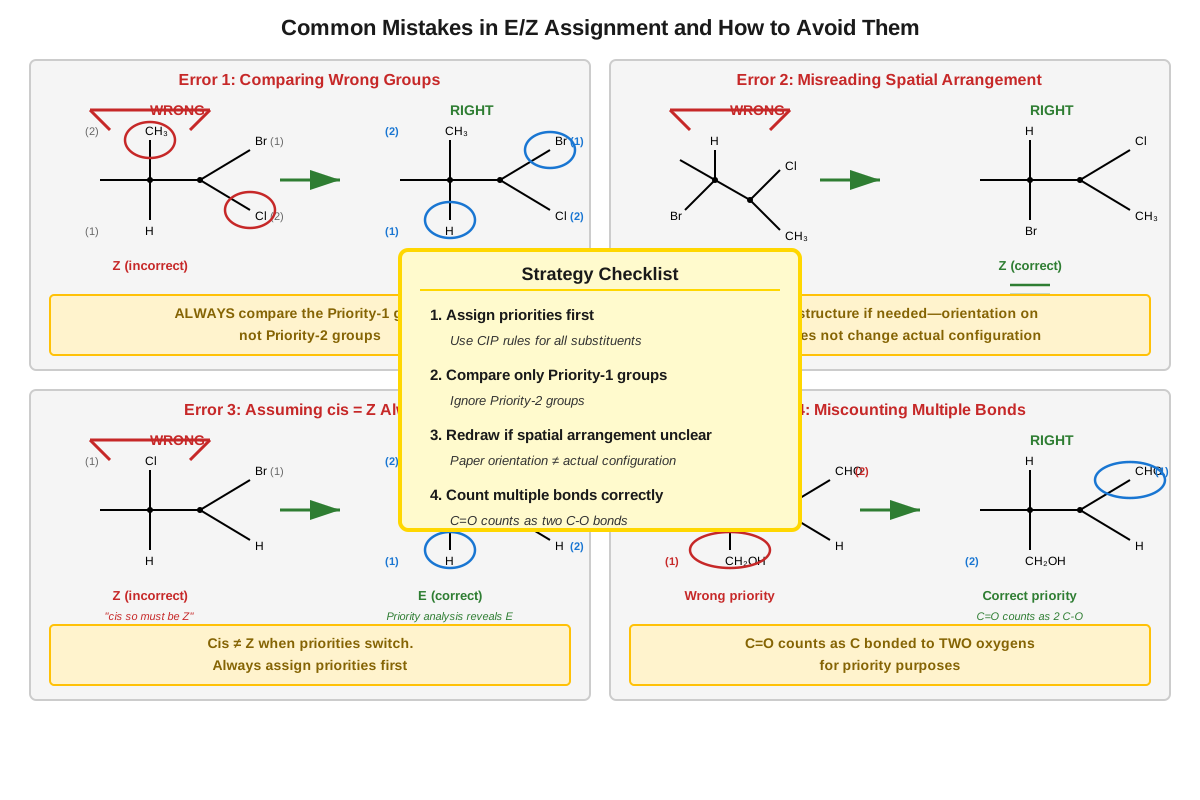
Misconception: E always means trans and Z always means cis.
Correction: While E corresponds to trans and Z to cis in simple cases, this equivalence breaks down with complex substituents. E and Z are defined by comparing the highest-priority groups using Cahn-Ingold-Prelog rules, not by any intuitive sense of "same side" or "opposite side" for all substituents. For example, in a molecule with -Cl, -Br, -CH₃, and -H, the E/Z designation depends on halogen positions, which may not align with what seems "trans" for the alkyl groups.
Misconception: All alkenes can exist as E and Z isomers.
Correction: Only alkenes where both carbons of the double bond have two different substituents can exhibit E/Z isomerism. Terminal alkenes (like 1-butene) or alkenes with geminal identical groups (like 2-methylpropene with two methyls on one carbon) cannot form geometric isomers because there's no ambiguity in spatial arrangement.
Misconception: E isomers are always more stable than Z isomers.
Correction: While E isomers are generally more stable due to reduced steric strain, exceptions exist. When one substituent can form intramolecular hydrogen bonds or other stabilizing interactions in the Z configuration, the Z isomer may be more stable. Additionally, in cyclic systems, geometric constraints may favor or require Z configuration.
Misconception: Priority is determined by the size or mass of the entire substituent.
Correction: Priority is determined by the atomic number of the directly attached atom first. Only if these atoms are identical does the analysis proceed to the next atoms. A -CH₂Cl group has lower priority than -OH because carbon (atomic number 6) is directly attached in the first case while oxygen (atomic number 8) is directly attached in the second, regardless of the chlorine further out in the chain.
Misconception: E/Z isomers can interconvert freely at room temperature.
Correction: The pi bond creates a substantial energy barrier (~65 kcal/mol) that prevents rotation at room temperature. E and Z isomers are isolable, stable compounds that don't spontaneously interconvert under normal conditions. Isomerization requires either high temperature, photochemical activation, or catalysis.
Misconception: The terms E/Z and R/S describe the same type of stereochemistry.
Correction: E/Z describes geometric isomerism around double bonds, while R/S describes absolute configuration at tetrahedral stereocenters. Though both use Cahn-Ingold-Prelog priority rules, they apply to different structural features. A molecule can have both E/Z and R/S designations at different positions.
Misconception: In cyclic alkenes, E and Z have the same meaning as in acyclic alkenes.
Correction: In small and medium rings, geometric constraints may make E configuration impossible or highly strained. For example, cyclohexene must have its double bond in a Z-like configuration because an E configuration would create impossible bond angles. The E/Z nomenclature still applies based on priority rules, but the stability relationships differ dramatically.
Worked Examples
Example 1: Assigning E or Z Configuration
Problem: Assign the configuration of the following alkene: CH₃CH₂-CH=CH-CH(CH₃)₂
Solution:
Step 1: Identify the substituents on each carbon of the double bond.
- Left carbon: -CH₂CH₃ (ethyl) and -H
- Right carbon: -CH(CH₃)₂ (isopropyl) and -H
Step 2: Assign priorities using Cahn-Ingold-Prelog rules.
- Left carbon: -CH₂CH₃ is priority 1 (carbon vs. hydrogen), -H is priority 2
- Right carbon: -CH(CH₃)₂ is priority 1 (carbon vs. hydrogen), -H is priority 2
Step 3: Compare the positions of the two priority-1 groups.
Looking at the structure, we need to determine if -CH₂CH₃ and -CH(CH₃)₂ are on the same side or opposite sides of the double bond.
If we draw this structure:
    CH₂CH₃         CH(CH₃)₂
         \         /
          C = C
         /         \
        H           H
The two highest-priority groups (-CH₂CH₃ and -CH(CH₃)₂) are on opposite sides of the double bond.
Answer: This is the E isomer (E-3-methyl-2-pentene).
Connection to Learning Objectives: This example demonstrates the systematic application of priority rules and the definition of E configuration, addressing the objective to apply E and Z concepts to exam-style questions.
Example 2: Predicting Physical Properties
Problem: Two isomers of 2-butene exist: (E)-2-butene and (Z)-2-butene. Both have the formula C₄H₈. Predict which isomer has: (a) higher melting point, (b) higher boiling point, (c) greater thermodynamic stability.
Solution:
Part (a) - Melting Point:
The E isomer has the two methyl groups on opposite sides of the double bond, creating a more symmetrical, linear molecule. This allows better packing in the crystal lattice.
Answer: (E)-2-butene has the higher melting point (mp = -105°C for E vs. -139°C for Z).
Part (b) - Boiling Point:
For 2-butene, both isomers are relatively nonpolar, but the Z isomer has a slightly larger dipole moment because the C-C bond dipoles don't cancel as completely when the methyls are on the same side. However, the difference is minimal for these small, nonpolar molecules.
Answer: (Z)-2-butene has a slightly higher boiling point (bp = 4°C for Z vs. 1°C for E), though the difference is small.
Part (c) - Thermodynamic Stability:
In the Z isomer, the two methyl groups are on the same side, creating steric repulsion. In the E isomer, they're on opposite sides, minimizing steric strain.
Answer: (E)-2-butene is more thermodynamically stable by approximately 1 kcal/mol.
MCAT Application: This type of comparative analysis frequently appears in passages presenting isomeric compounds. The exam expects students to connect molecular geometry to macroscopic properties and to recognize that E isomers generally have higher melting points and greater stability, while Z isomers may have higher boiling points when dipole effects are significant.
Connection to Learning Objectives: This example connects E/Z configuration to physical properties and demonstrates how stereochemistry affects molecular behavior, addressing objectives about applying concepts and connecting to broader organic chemistry principles.
Exam Strategy
When approaching E and Z alkenes questions on the MCAT, employ a systematic strategy that minimizes errors and maximizes efficiency:
Recognition Phase (5-10 seconds): Quickly identify that the question involves geometric isomerism by scanning for:
- Trigger words: "geometric isomers," "cis," "trans," "E," "Z," "stereoisomers"
- Structural features: double bonds with different substituents on each carbon
- Comparison questions: "which isomer is more stable/has higher mp/bp"
Analysis Phase (20-30 seconds):
- Draw or mentally visualize the structure if not provided
- Identify the substituents on each double-bonded carbon
- Apply Cahn-Ingold-Prelog rules systematically—don't rush this step
- Assign E or Z based on highest-priority group positions
Process of Elimination Tips:
- If a structure has two identical groups on one double-bonded carbon, eliminate any answer choice suggesting E/Z isomerism exists
- If asked about stability, eliminate choices suggesting Z is more stable unless special circumstances (hydrogen bonding, ring strain) are mentioned
- If asked about melting point, favor E isomers; for boiling point with polar substituents, favor Z isomers
- Watch for answer choices that confuse E/Z with R/S—these describe different stereochemical features
Time Allocation:
- Simple nomenclature questions: 30-45 seconds
- Property prediction questions: 45-60 seconds
- Passage-based questions requiring integration: 60-90 seconds
Common Trap Avoidance:
- Don't assume E = trans without checking priorities; verify using Cahn-Ingold-Prelog rules
- Don't forget to check both carbons of the double bond for different substituents
- Don't confuse "same side" with "same priority"—Z means highest-priority groups are on the same side, not that the groups are identical
Quick Decision Framework:
When stuck between two answers, ask: "Does this answer require the E isomer to be less stable or have a lower melting point?" If yes, it's likely wrong unless special circumstances are explicitly stated.
Memory Techniques
E and Z Mnemonic:
- "E = Enemy (opposite sides)" - enemies stand on opposite sides
- "Z = Zame Zide" - the Z sound emphasizes "same"
Priority Rules Mnemonic - "ABCD":
- Atomic number first
- Branch out if tied
- Count multiple bonds as multiple atoms
- Don't forget to compare at each level
Stability Mnemonic - "E = Easy, Z = Zqueezed":
- E isomers have groups spread out (easy, relaxed, stable)
- Z isomers have groups squeezed together (strained, less stable)
Physical Properties Mnemonic - "MELT E, BOIL Z":
- Melting point: E isomers higher (better packing)
- Boiling point: Z isomers often higher (larger dipole when polar)
Visualization Strategy:
Create a mental image of two people (representing highest-priority groups) standing on opposite sides of a fence (the double bond) for E configuration, or standing together on the same side for Z configuration. This concrete visualization helps during rapid question analysis.
Cahn-Ingold-Prelog Quick Reference - "ONCH":
For common atoms in order of decreasing priority: O > N > C > H
(Oxygen, Nitrogen, Carbon, Hydrogen by atomic number)
Biological Context Anchor:
Remember "Natural fats are Z" - natural unsaturated fatty acids have Z (cis) configuration, creating the kink that maintains membrane fluidity. This biological anchor helps recall that Z = same side.
Summary
E and Z alkenes represent a fundamental aspect of stereochemistry, describing geometric isomers that arise from restricted rotation around carbon-carbon double bonds. The E/Z nomenclature system uses Cahn-Ingold-Prelog priority rules to unambiguously assign configuration: E (entgegen) when the two highest-priority substituents are on opposite sides, Z (zusammen) when they're on the same side. This system supersedes the older cis/trans terminology for complex molecules. For E/Z isomerism to exist, each carbon of the double bond must bear two different substituents, and the pi bond creates a ~65 kcal/mol barrier preventing interconversion at room temperature. E isomers are generally more thermodynamically stable due to reduced steric strain and typically exhibit higher melting points due to better crystal packing, while Z isomers may have higher boiling points when polar substituents create larger dipole moments. On the MCAT, this topic appears in nomenclature questions, property predictions, and biological contexts including membrane lipids and visual pigments. Mastery requires systematic application of priority rules, understanding of structure-property relationships, and recognition of common pitfalls such as confusing E/Z with R/S or assuming all alkenes can exhibit geometric isomerism.
Key Takeaways
- E configuration has the two highest-priority groups on opposite sides; Z configuration has them on the same side, determined by Cahn-Ingold-Prelog priority rules based on atomic number
- E/Z isomerism requires each double-bonded carbon to have two different substituents; the pi bond prevents rotation, making E and Z isomers distinct, isolable compounds
- E isomers are generally more stable than Z isomers due to reduced steric strain, and typically have higher melting points due to better crystal packing
- The Cahn-Ingold-Prelog priority system ranks substituents by atomic number of the directly attached atom, proceeding outward only when necessary, with multiple bonds counting as multiple single bonds
- Biological systems predominantly use Z (cis) double bonds in unsaturated fatty acids to maintain membrane fluidity, while E (trans) configuration increases melting point and is associated with cardiovascular risks
- E/Z nomenclature is distinct from R/S (which describes tetrahedral stereocenters) but uses the same priority rules, and both systems may apply to different positions within the same molecule
- On the MCAT, systematically apply priority rules, recognize that not all alkenes exhibit E/Z isomerism, and connect geometric configuration to physical properties and biological function
Related Topics
Cahn-Ingold-Prelog Priority Rules and R/S Configuration: The same priority-ranking system used for E/Z assignment applies to determining absolute configuration at chiral centers. Mastering E/Z nomenclature provides the foundation for understanding R/S descriptors, which describe three-dimensional arrangement around tetrahedral stereocenters. This progression from double bond geometry to tetrahedral stereochemistry represents a natural extension of stereochemical principles.
Alkene Addition Reactions: Understanding E/Z configuration becomes essential when predicting stereochemical outcomes of addition reactions. Syn additions (like hydroboration-oxidation) and anti additions (like halogenation) produce different stereoisomeric products depending on the starting alkene's geometry. This topic builds directly on E/Z concepts to explain reaction mechanisms and product distributions.
Elimination Reactions (E1 and E2): These reactions often produce mixtures of E and Z alkene products. The Zaitsev rule predicts formation of the more substituted (and typically more stable E) alkene as the major product. Understanding why E isomers predominate requires mastery of the stability principles introduced in E/Z alkene study.
Lipid Structure and Membrane Biology: The biological significance of Z (cis) double bonds in unsaturated fatty acids connects stereochemistry to biochemistry. This topic explores how geometric configuration affects membrane fluidity, phase transitions, and cellular function—concepts frequently tested in MCAT biochemistry passages.
Conjugated Systems and Resonance: When multiple double bonds exist in conjugation, each may have E or Z configuration, creating numerous possible geometric isomers. Understanding how to assign configuration to each double bond independently prepares students for analyzing complex natural products and biological chromophores like retinal and carotenoids.
Practice CTA
Now that you've mastered the core concepts of E and Z alkenes, it's time to solidify your understanding through active practice. Challenge yourself with the accompanying practice questions that test your ability to assign configurations, predict properties, and apply these concepts in biological contexts. Work through the flashcards to reinforce the Cahn-Ingold-Prelog priority rules and key physical property trends. Remember, stereochemistry is a skill that improves dramatically with deliberate practice—each problem you solve strengthens your spatial reasoning and builds the pattern recognition essential for MCAT success. Your investment in mastering E and Z alkenes will pay dividends not only in stereochemistry questions but across organic chemistry and biochemistry passages. You've got this!
Sign up free to keep reading
Create a free AnvayaPrep account to finish this MCAT guide on E and Z alkenes — plus flashcards and practice questions.