Overview
Racemic mixtures represent a fundamental concept in Organic Chemistry that bridges the gap between molecular structure and physical properties, making it essential knowledge for the MCAT. A racemic mixture, also called a racemate, consists of equal amounts of two enantiomers—non-superimposable mirror image molecules that differ only in their three-dimensional spatial arrangement. Understanding racemic mixtures requires mastery of stereochemistry principles, particularly the behavior of chiral molecules and their interactions with polarized light.
The significance of racemic mixtures extends far beyond theoretical chemistry. In pharmaceutical contexts, racemic mixtures have profound implications because enantiomers can exhibit dramatically different biological activities despite having identical molecular formulas and connectivity. One enantiomer might be therapeutically beneficial while its mirror image could be inactive or even harmful—a concept that has shaped modern drug development and regulatory practices. The MCAT frequently tests students' ability to recognize racemic mixtures, predict their formation, and understand their optical properties, particularly in the context of reaction mechanisms and biological systems.
Within the broader framework of Stereochemistry and Conformation, racemic mixtures serve as a practical application of chirality concepts. They connect directly to topics such as optical activity, specific rotation, enantiomeric excess, and stereoselective synthesis. Understanding how and why racemic mixtures form during chemical reactions—and how they can be resolved into pure enantiomers—demonstrates mastery of spatial reasoning and mechanistic thinking that the MCAT rewards. This topic appears regularly in both discrete questions and passage-based problems, often integrated with biochemistry, laboratory techniques, and pharmaceutical chemistry contexts.
Learning Objectives
- [ ] Define racemic mixtures using accurate Organic Chemistry terminology
- [ ] Explain why racemic mixtures matter for the MCAT
- [ ] Apply racemic mixtures concepts to exam-style questions
- [ ] Identify common mistakes related to racemic mixtures
- [ ] Connect racemic mixtures to related Organic Chemistry concepts
- [ ] Predict when a chemical reaction will produce a racemic mixture versus an optically active product
- [ ] Calculate the optical rotation of mixtures containing different proportions of enantiomers
- [ ] Distinguish between racemic mixtures, meso compounds, and enantiomerically enriched samples
- [ ] Evaluate methods for resolving racemic mixtures into pure enantiomers
Prerequisites
- Chirality and chiral centers: Understanding what makes a molecule chiral is essential because racemic mixtures consist of chiral enantiomers
- Enantiomers and diastereomers: Recognizing the difference between these stereoisomer types is necessary to identify what constitutes a racemic mixture
- Optical activity and polarimetry: Knowledge of how chiral molecules interact with plane-polarized light provides the basis for understanding why racemic mixtures are optically inactive
- R/S nomenclature: The Cahn-Ingold-Prelog priority system allows precise identification and naming of the enantiomers present in a racemic mixture
- Fischer projections: This representational system frequently appears in MCAT questions involving racemic mixtures and stereochemistry
Why This Topic Matters
Clinical and Real-World Significance
Racemic mixtures have profound implications in pharmaceutical development and clinical medicine. The thalidomide tragedy of the 1960s dramatically illustrated the importance of stereochemistry: one enantiomer treated morning sickness effectively, while the other caused severe birth defects. This catastrophe revolutionized drug development, leading to strict FDA regulations requiring separate testing of individual enantiomers. Today, many medications are manufactured as single enantiomers rather than racemic mixtures to maximize efficacy and minimize side effects. Ibuprofen, for example, is sold as a racemic mixture, but only the S-enantiomer provides anti-inflammatory effects (though the body can convert some R-ibuprofen to the active form).
MCAT Exam Relevance
Racemic mixtures appear in approximately 3-5% of MCAT Organic Chemistry questions, with medium-to-high yield for the Chemical and Physical Foundations section. Questions typically test:
- Prediction of racemic product formation in reaction mechanisms (especially SN1 reactions at chiral centers)
- Interpretation of optical rotation data and specific rotation calculations
- Analysis of experimental procedures involving chiral resolution or synthesis
- Passage-based questions connecting stereochemistry to drug development, enzyme specificity, or analytical techniques
The MCAT frequently embeds racemic mixture concepts within larger passages about pharmaceutical research, chromatography techniques, or biochemical pathways. Students must recognize when a reaction mechanism will produce a racemic mixture (such as when a planar carbocation intermediate forms) versus when stereochemistry is preserved or inverted.
Common Exam Contexts
- Reaction mechanism passages asking students to predict stereochemical outcomes
- Pharmaceutical development passages discussing drug enantiomers and their different biological activities
- Laboratory technique passages involving chiral chromatography or polarimetry
- Biochemistry passages explaining enzyme stereospecificity and why biological systems rarely produce racemic mixtures
Core Concepts
Definition and Composition of Racemic Mixtures
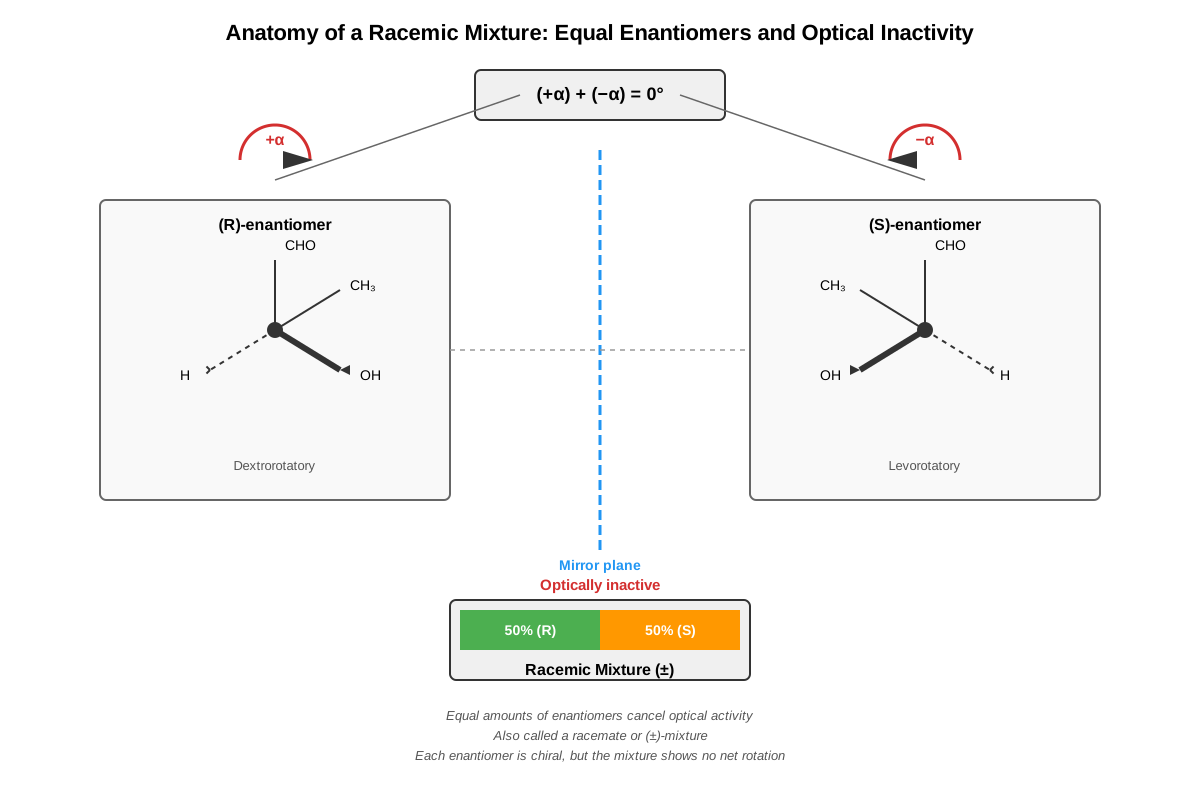
A racemic mixture (or racemate) is a 1:1 mixture of two enantiomers of a chiral molecule. The term derives from the Latin word "racemus" (bunch of grapes), coined when Louis Pasteur first separated racemic tartaric acid crystals. The defining characteristic of a racemic mixture is that it contains exactly equal amounts of the (+) and (−) enantiomers, also designated as (R) and (S), or (d) and (l) depending on the nomenclature system used.
The equal proportions of enantiomers in a racemic mixture result in optical inactivity—the mixture does not rotate plane-polarized light. This occurs because the two enantiomers rotate light in equal but opposite directions, and their effects cancel completely. If one enantiomer rotates light +50° clockwise, the other rotates it −50° counterclockwise, yielding a net rotation of 0°. This optical inactivity distinguishes racemic mixtures from enantiomerically pure compounds or enantiomerically enriched mixtures.
Racemic mixtures are often designated with the prefix (±), (dl), or (rac-) before the compound name. For example, (±)-lactic acid indicates a racemic mixture of R-lactic acid and S-lactic acid.
Formation of Racemic Mixtures
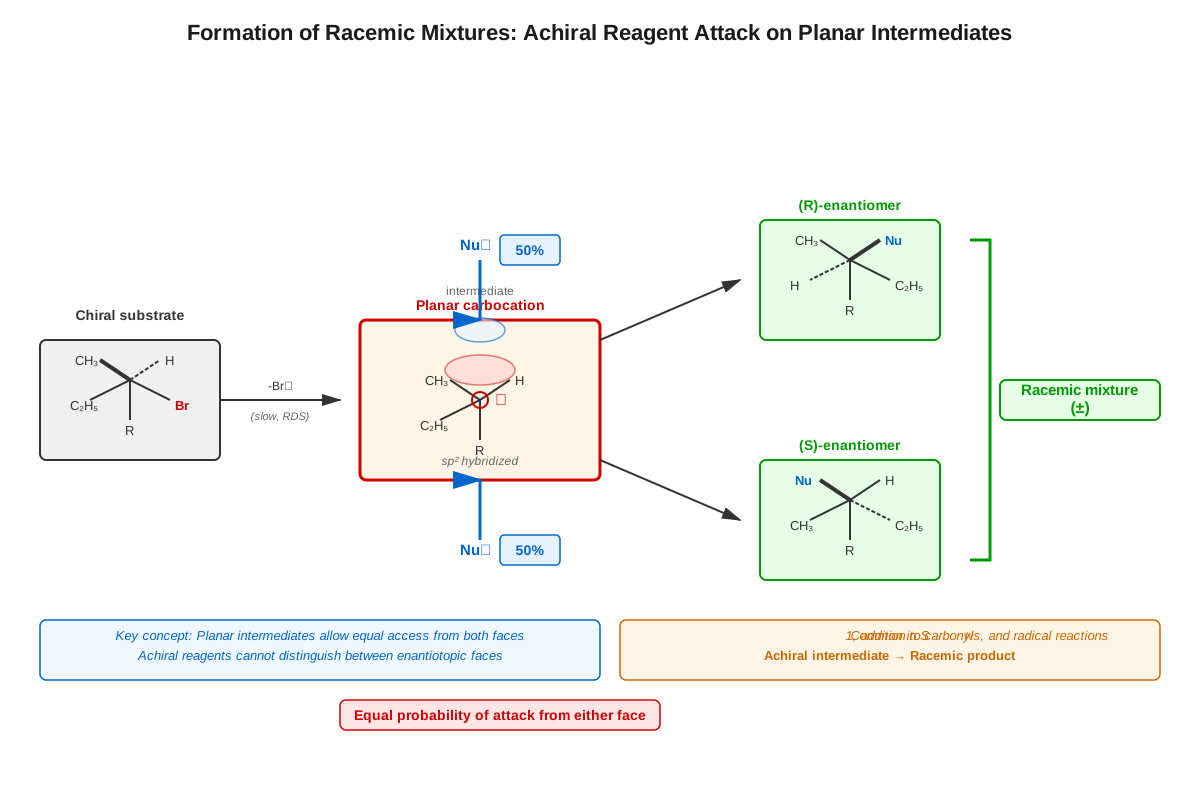
Racemic mixtures form when a chemical reaction creates a chiral center through a mechanism that does not favor one stereoisomer over the other. The most common scenario involves reactions proceeding through achiral intermediates or planar intermediates that can be attacked from either face with equal probability.
SN1 Reactions at Chiral Centers: When an SN1 reaction occurs at a chiral carbon, the leaving group departs first, creating a planar carbocation intermediate. This carbocation is achiral (sp² hybridized with trigonal planar geometry), and the nucleophile can attack from either the top or bottom face with equal probability, producing a racemic mixture. This represents racemization—the conversion of an optically active compound into a racemic mixture.
Addition Reactions to Prochiral Molecules: When a reagent adds to a prochiral molecule (one that becomes chiral upon addition), a racemic mixture typically results. For example, adding HBr to an alkene where the addition creates a new chiral center produces equal amounts of both enantiomers because the alkene is planar and can be approached from either face.
Non-stereoselective Synthesis: Any synthesis that creates a chiral center without using chiral reagents, chiral catalysts, or chiral starting materials will produce a racemic mixture. The reaction environment is achiral, so there is no preference for forming one enantiomer over the other.
Optical Properties and Specific Rotation
The optical rotation of a racemic mixture is always zero because the equal and opposite rotations of the two enantiomers cancel. However, this does not mean the individual molecules are achiral—each molecule is chiral and optically active, but the bulk mixture shows no net optical activity.
The specific rotation [α] of a pure enantiomer is an intrinsic property defined by:
[α] = α / (l × c)Where:
- α = observed rotation in degrees
- l = path length in decimeters
- c = concentration in g/mL
For a racemic mixture, the observed rotation α = 0°, regardless of concentration or path length.
Enantiomeric Excess and Non-Racemic Mixtures
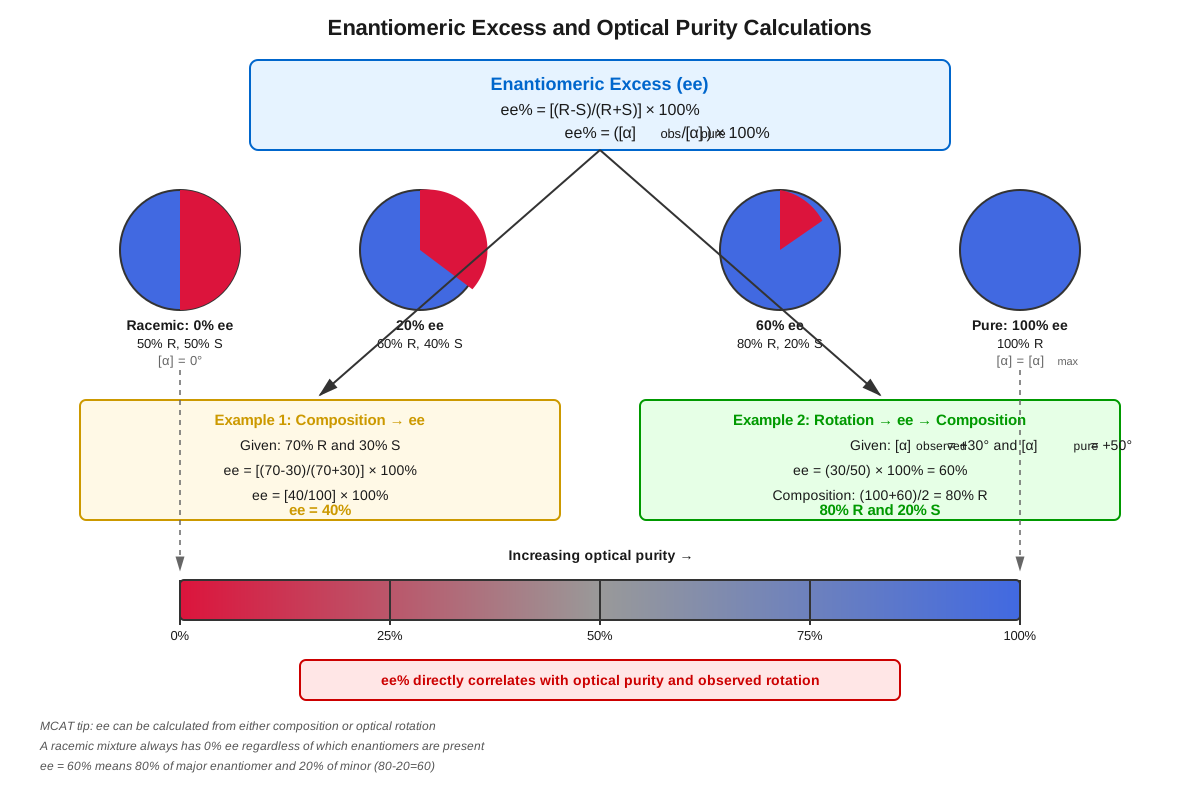
Not all mixtures of enantiomers are racemic. When one enantiomer is present in greater proportion, the mixture is enantiomerically enriched or scalemic. The degree of enrichment is quantified by enantiomeric excess (ee):
ee = [(R - S) / (R + S)] × 100%Or equivalently:
ee = (observed rotation / rotation of pure enantiomer) × 100%A racemic mixture has 0% ee, while a pure enantiomer has 100% ee. A mixture with 75% of one enantiomer and 25% of the other has 50% ee.
| Composition | Enantiomeric Excess | Optical Activity |
|---|---|---|
| 50% R, 50% S | 0% (racemic) | None (0°) |
| 75% R, 25% S | 50% ee | Half of pure enantiomer |
| 90% R, 10% S | 80% ee | 80% of pure enantiomer |
| 100% R, 0% S | 100% ee | Maximum rotation |
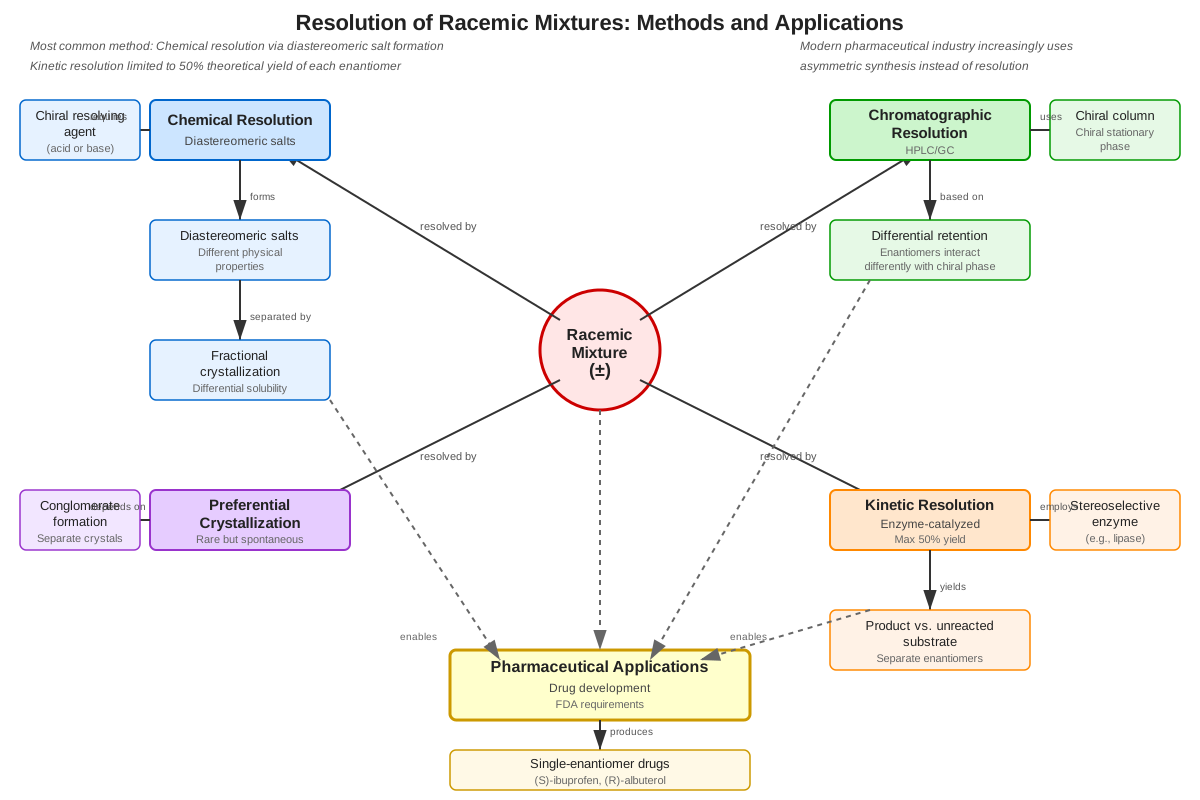
Resolution of Racemic Mixtures
Resolution refers to the separation of a racemic mixture into its component enantiomers. Since enantiomers have identical physical properties (melting point, boiling point, solubility) except for optical rotation, they cannot be separated by ordinary techniques like distillation or recrystallization.
Chemical Resolution: The classical method involves converting enantiomers into diastereomers by reacting them with an enantiomerically pure chiral reagent (called a resolving agent). For example, a racemic mixture of carboxylic acids can be reacted with a pure chiral amine to form two diastereomeric salts. Unlike enantiomers, diastereomers have different physical properties and can be separated by conventional methods. After separation, the resolving agent is removed to regenerate the pure enantiomers.
Chromatographic Resolution: Chiral chromatography uses a chiral stationary phase that interacts differently with each enantiomer, allowing separation. This technique is widely used in pharmaceutical analysis.
Kinetic Resolution: Enzymes or chiral catalysts can selectively react with one enantiomer much faster than the other, effectively separating them through differential reaction rates.
Biological Significance and Enzyme Stereospecificity
Biological systems rarely produce racemic mixtures because enzymes are chiral catalysts that exhibit stereospecificity. Enzymes create chiral products with high enantiomeric excess (often >99% ee) because the enzyme's active site is itself chiral and stabilizes only one transition state leading to one enantiomer.
This stereospecificity explains why naturally occurring amino acids are almost exclusively L-enantiomers and naturally occurring sugars are predominantly D-enantiomers. When the body metabolizes drugs, enzymes may process the two enantiomers of a racemic drug at different rates or through different pathways, leading to different pharmacological effects.
Concept Relationships
The concept of racemic mixtures sits at the intersection of several fundamental stereochemistry principles. Chirality serves as the foundation—without chiral molecules, racemic mixtures cannot exist. The presence of chiral centers (typically sp³ carbons with four different substituents) creates the possibility for enantiomers, which are the components of racemic mixtures.
Optical activity connects directly to racemic mixtures through the principle of cancellation: individual enantiomers rotate plane-polarized light → equal amounts of opposite enantiomers → rotations cancel → racemic mixture shows zero net rotation. This relationship is quantified through specific rotation and enantiomeric excess calculations.
Reaction mechanisms determine when racemic mixtures form: SN1 reactions → planar carbocation intermediate → achiral intermediate → equal attack from both faces → racemic product. In contrast, SN2 reactions → backside attack → inversion of configuration → stereochemistry preserved (not racemic if starting material is enantiomerically pure).
The concept extends to resolution techniques, which reverse the process: racemic mixture → conversion to diastereomers → separation → pure enantiomers. This connects to diastereomers, which unlike enantiomers have different physical properties enabling separation.
In biological contexts, racemic mixtures connect to enzyme stereospecificity and drug metabolism: chiral enzymes → preferential binding of one enantiomer → different biological effects → importance of enantiomeric purity in pharmaceuticals.
Relationship Map:
Chirality → Enantiomers → Racemic Mixtures (1:1 ratio) → Optical Inactivity
Achiral Intermediates → Racemic Product Formation
Racemic Mixtures → Resolution Methods → Pure Enantiomers
Enzyme Stereospecificity → Non-racemic Biological Products
Quick check — test yourself on Racemic mixtures so far.
Try Flashcards →High-Yield Facts
⭐ A racemic mixture contains exactly equal amounts (1:1 ratio) of two enantiomers and is optically inactive (rotation = 0°)
⭐ SN1 reactions at chiral centers produce racemic mixtures because the carbocation intermediate is planar and achiral
⭐ Enantiomeric excess (ee) = [(major − minor)/(major + minor)] × 100% = (observed rotation/pure enantiomer rotation) × 100%
⭐ Enantiomers cannot be separated by ordinary physical methods (distillation, recrystallization) because they have identical physical properties except optical rotation
⭐ Biological systems rarely produce racemic mixtures because enzymes are stereospecific chiral catalysts
- Racemic mixtures are designated with prefixes (±), (dl), or (rac-) before the compound name
- Resolution converts enantiomers to diastereomers using a chiral resolving agent, enabling separation
- A 50% ee mixture contains 75% of one enantiomer and 25% of the other (not 50% and 0%)
- SN2 reactions preserve stereochemical information through inversion and do not produce racemic mixtures from enantiomerically pure starting materials
- The specific rotation [α] is an intrinsic property of a pure enantiomer that depends on wavelength, temperature, and solvent
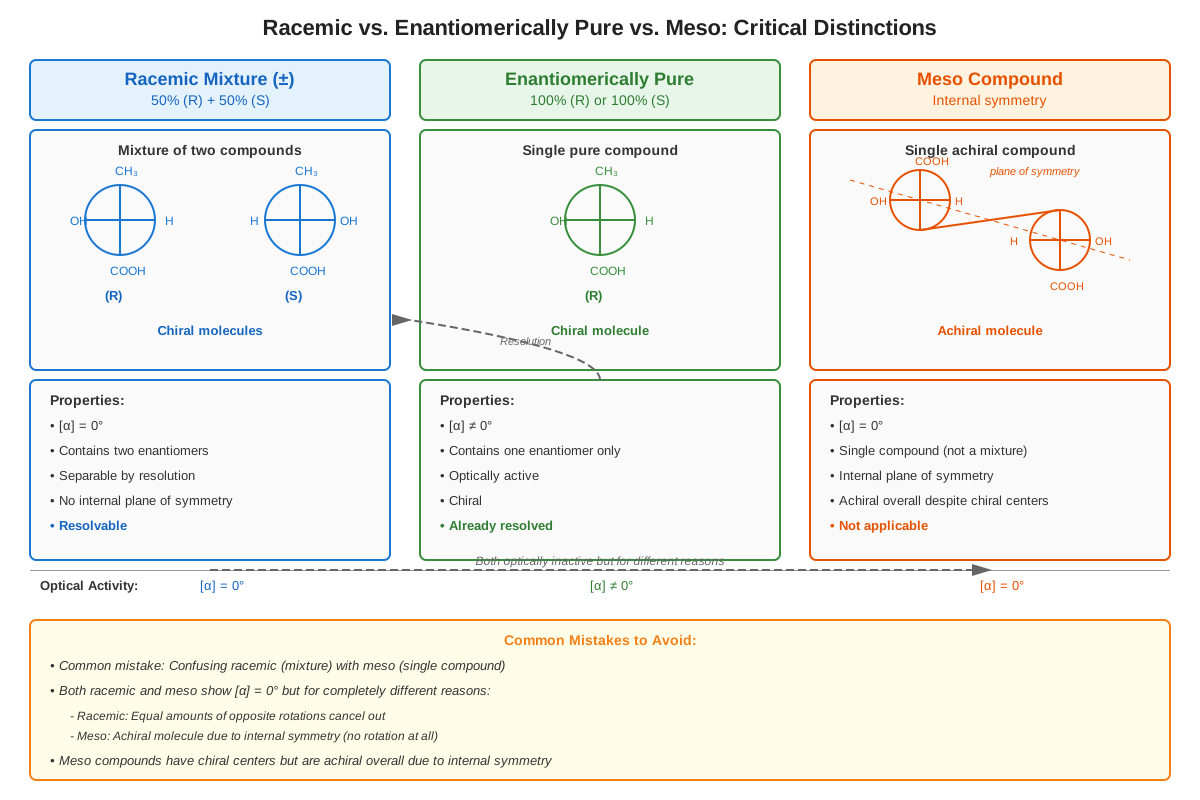
- Meso compounds are not racemic mixtures—they are single achiral molecules with internal planes of symmetry
- Racemization is the conversion of an enantiomerically pure compound into a racemic mixture
Common Misconceptions
Misconception: A racemic mixture is achiral.
Correction: A racemic mixture contains chiral molecules (enantiomers); the mixture itself shows no net optical activity because the rotations cancel, but each individual molecule is chiral. The mixture is optically inactive, not achiral.
Misconception: All 50:50 mixtures of stereoisomers are racemic mixtures.
Correction: Only 1:1 mixtures of enantiomers are racemic. A 1:1 mixture of diastereomers is not a racemic mixture because diastereomers are not mirror images. The term "racemic" specifically refers to enantiomeric pairs.
Misconception: SN2 reactions always produce racemic mixtures.
Correction: SN2 reactions proceed with inversion of configuration through a backside attack mechanism. If the starting material is enantiomerically pure, the product will also be enantiomerically pure (with inverted configuration), not racemic. SN1 reactions produce racemic mixtures because they proceed through achiral carbocation intermediates.
Misconception: A compound with zero optical rotation must be a racemic mixture.
Correction: Several types of compounds show zero rotation: racemic mixtures, achiral compounds (no chiral centers), and meso compounds (chiral centers but internal symmetry). Zero rotation alone does not confirm a racemic mixture—you must verify the presence of equal amounts of enantiomers.
Misconception: 50% enantiomeric excess means 50% of one enantiomer and 0% of the other.
Correction: 50% ee means 75% of one enantiomer and 25% of the other. The calculation is: if you have 75% R and 25% S, the excess is (75-25)/(75+25) = 50/100 = 50%. A 50:0 ratio would be 100% ee (enantiomerically pure).
Misconception: Racemic mixtures can be separated using standard chromatography or distillation.
Correction: Enantiomers have identical physical properties (boiling point, melting point, solubility, Rf values on achiral stationary phases), so they cannot be separated by ordinary techniques. Separation requires chiral methods: chiral chromatography, chemical resolution with chiral resolving agents, or kinetic resolution with enzymes.
Worked Examples
Example 1: Predicting Racemic Product Formation
Question: (R)-2-bromobutane undergoes a reaction with water in a polar protic solvent. The reaction proceeds primarily through an SN1 mechanism. What is the stereochemical outcome?
Solution:
Step 1: Identify the mechanism and its stereochemical implications.
- SN1 mechanism involves two steps: leaving group departure, then nucleophile attack
- The first step creates a carbocation intermediate
Step 2: Analyze the intermediate structure.
- When bromide leaves (R)-2-bromobutane, a secondary carbocation forms at C-2
- This carbocation is sp² hybridized with trigonal planar geometry
- The carbocation is achiral—it has a plane of symmetry
Step 3: Consider nucleophile attack.
- Water can attack the planar carbocation from either face with equal probability
- Attack from the top face regenerates the R configuration
- Attack from the bottom face produces the S configuration
- No chiral influence exists to favor one face over the other
Step 4: Determine the product distribution.
- 50% attack from top → (R)-2-butanol
- 50% attack from bottom → (S)-2-butanol
- Product is a racemic mixture of 2-butanol
Answer: The reaction produces (±)-2-butanol, a racemic mixture with 0% enantiomeric excess and zero optical rotation. This demonstrates racemization—conversion of an enantiomerically pure starting material into a racemic product through an achiral intermediate.
Connection to Learning Objectives: This example demonstrates how to predict racemic mixture formation based on reaction mechanism (SN1 through planar intermediate) and applies stereochemical reasoning to exam-style questions.
Example 2: Calculating Enantiomeric Composition
Question: A sample of 2-butanol shows an observed rotation of +6.72° under conditions where pure (R)-2-butanol shows +13.44°. Calculate: (a) the enantiomeric excess, (b) the percentage of each enantiomer present, and (c) whether this sample is a racemic mixture.
Solution:
Part (a): Calculate enantiomeric excess
Using the formula:
ee = (observed rotation / pure enantiomer rotation) × 100%
ee = (+6.72° / +13.44°) × 100%
ee = 0.50 × 100%
ee = 50%
Part (b): Calculate percentage of each enantiomer
Let R = percentage of (R)-2-butanol and S = percentage of (S)-2-butanol
We know:
- R + S = 100% (total must equal 100%)
- (R - S)/(R + S) = 0.50 (definition of 50% ee)
From the second equation:
- R - S = 0.50(R + S)
- R - S = 0.50(100)
- R - S = 50
Now we have two equations:
- R + S = 100
- R - S = 50
Adding these equations:
- 2R = 150
- R = 75%
Therefore:
- S = 100 - 75 = 25%
Part (c): Is this a racemic mixture?
No, this is not a racemic mixture. A racemic mixture requires exactly 50% of each enantiomer (0% ee). This sample contains 75% (R)-2-butanol and 25% (S)-2-butanol, making it an enantiomerically enriched or scalemic mixture with 50% enantiomeric excess.
Key Insight: The positive rotation indicates excess of the R enantiomer (which rotates light clockwise). If the mixture were racemic, the rotation would be exactly 0°.
Connection to Learning Objectives: This example demonstrates quantitative analysis of racemic versus non-racemic mixtures, applies mathematical relationships between optical rotation and enantiomeric composition, and identifies the defining characteristic of racemic mixtures (1:1 ratio, 0% ee).
Exam Strategy
Approaching MCAT Questions on Racemic Mixtures
Step 1: Identify the question type
- Is the question asking you to predict product stereochemistry from a reaction?
- Does it provide optical rotation data requiring calculation?
- Is it asking about separation/resolution methods?
- Does it involve biological/pharmaceutical context?
Step 2: Look for mechanism clues
- Trigger words for racemic products: "SN1," "carbocation," "planar intermediate," "achiral intermediate," "non-stereoselective"
- Trigger words for non-racemic products: "SN2," "inversion," "enzyme-catalyzed," "stereospecific," "chiral catalyst"
Step 3: Check for optical activity information
- Zero rotation → could be racemic, achiral, or meso (need more information)
- Non-zero rotation → definitely not racemic (enantiomerically enriched or pure)
- Calculate ee if given both observed and pure enantiomer rotations
Step 4: Apply process of elimination
- Eliminate answers suggesting enantiomers have different physical properties (except optical rotation)
- Eliminate answers suggesting ordinary separation methods work for enantiomers
- Eliminate answers confusing racemic mixtures with meso compounds
- Eliminate answers suggesting enzymes produce racemic mixtures
Time Allocation
For discrete questions on racemic mixtures: 60-90 seconds
- Quick mechanism analysis or calculation
- Straightforward application of concepts
For passage-based questions: 90-120 seconds per question
- May require integrating information from passage
- Often involves multi-step reasoning or calculations
Red Flag Phrases
Watch for these exam triggers:
- "Optically inactive" → could indicate racemic, but verify it's not achiral or meso
- "Equal amounts of enantiomers" → definitively racemic
- "Planar intermediate" → predicts racemic product formation
- "Resolved using" → question about separation methods
- "One enantiomer is active while the other..." → pharmaceutical context, testing understanding of why racemic vs. pure matters
Memory Techniques
Mnemonic for Racemic Formation: "PEAR"
Planar intermediate
Equal probability of attack
Achiral transition state
Racemic mixture results
Visualization Strategy: The Mirror Cancellation
Picture two dancers performing identical routines but as mirror images—one spinning clockwise, one counterclockwise. When you watch both simultaneously, the net rotation appears to be zero. This represents how enantiomers in a racemic mixture cancel each other's optical rotation.
Acronym for Resolution Methods: "CCK"
Chemical resolution (with resolving agent)
Chromatographic resolution (chiral stationary phase)
Kinetic resolution (enzyme or chiral catalyst)
The 75-25 Rule for 50% ee
Remember: 50% ee does NOT mean 50-0, it means 75-25
- Think: "50% excess means 50% more of one than the other"
- Start with 50-50 (racemic), then move 25% from one side to the other
- Result: 75-25 (which gives 50% excess)
SN1 vs SN2 Stereochemistry Rhyme
"SN1 goes through a plane, makes racemic all the same"
"SN2 inverts with care, keeps the chirality there"
Summary
Racemic mixtures represent equal (1:1) combinations of two enantiomers that are optically inactive due to the cancellation of their equal and opposite rotations of plane-polarized light. These mixtures form when chemical reactions proceed through achiral or planar intermediates, most commonly in SN1 reactions where carbocation formation destroys stereochemical information. Understanding racemic mixtures requires integrating knowledge of chirality, optical activity, reaction mechanisms, and stereochemical outcomes. The MCAT tests this concept through mechanism prediction questions, optical rotation calculations involving enantiomeric excess, and pharmaceutical passages exploring the biological significance of stereochemistry. Unlike enantiomers in isolation, racemic mixtures show zero net optical rotation despite containing chiral molecules. Separation of racemic mixtures requires special techniques—chemical resolution using chiral resolving agents, chiral chromatography, or kinetic resolution—because enantiomers have identical physical properties except for their interaction with plane-polarized light and chiral environments. The biological importance of racemic mixtures stems from enzyme stereospecificity, which causes different enantiomers to exhibit different pharmacological effects, making the distinction between racemic drugs and enantiomerically pure drugs clinically significant.
Key Takeaways
- A racemic mixture contains exactly 50% of each enantiomer (1:1 ratio), has 0% enantiomeric excess, and shows zero optical rotation due to complete cancellation of opposite rotations
- SN1 reactions at chiral centers produce racemic mixtures because the planar carbocation intermediate can be attacked from either face with equal probability, while SN2 reactions preserve stereochemical information through inversion
- Enantiomeric excess quantifies deviation from racemic composition: ee = [(major − minor)/(major + minor)] × 100% = (observed rotation/pure rotation) × 100%
- Enantiomers cannot be separated by ordinary physical methods because they have identical melting points, boiling points, and solubilities; resolution requires chiral methods (chemical resolution, chiral chromatography, or kinetic resolution)
- Biological systems rarely produce racemic mixtures because enzymes are stereospecific chiral catalysts that preferentially form one enantiomer
- Zero optical rotation does not automatically indicate a racemic mixture—achiral compounds and meso compounds also show zero rotation, requiring additional analysis to confirm racemic composition
- The pharmaceutical significance of racemic mixtures lies in the different biological activities of enantiomers, exemplified by cases where one enantiomer is therapeutic while the other is inactive or harmful
Related Topics
Optical Activity and Polarimetry: Understanding how chiral molecules interact with plane-polarized light provides the experimental basis for detecting and quantifying racemic mixtures. Mastering racemic mixtures enables deeper understanding of specific rotation measurements and their interpretation.
Reaction Mechanisms and Stereochemistry: The formation of racemic mixtures connects directly to SN1, SN2, addition reactions, and other mechanisms. Understanding when reactions preserve, invert, or destroy stereochemical information is essential for predicting products.
Chiral Chromatography and Separation Techniques: Resolution of racemic mixtures introduces advanced analytical methods that appear in MCAT laboratory passages, including HPLC with chiral stationary phases and gas chromatography applications.
Drug Development and Pharmacology: The biological significance of racemic versus enantiomerically pure drugs connects organic chemistry to biochemistry and physiology, a common interdisciplinary theme on the MCAT.
Enzyme Kinetics and Stereospecificity: Understanding why enzymes don't produce racemic mixtures requires knowledge of enzyme active sites, induced fit, and the chiral nature of biological catalysts—topics that bridge organic chemistry and biochemistry sections.
Practice CTA
Now that you've mastered the core concepts of racemic mixtures, it's time to solidify your understanding through active practice. Challenge yourself with the practice questions and flashcards designed specifically for this topic. Focus on mechanism-based prediction problems and enantiomeric excess calculations—these are the highest-yield question types for the MCAT. Remember, stereochemistry questions reward careful spatial reasoning and systematic analysis. Each practice problem you work through strengthens your ability to visualize three-dimensional molecular structures and predict stereochemical outcomes—skills that will serve you throughout the MCAT and in your future medical career. You've built a strong foundation; now apply it with confidence!
Sign up free to keep reading
Create a free AnvayaPrep account to finish this MCAT guide on Racemic mixtures — plus flashcards and practice questions.