Overview
Electrophiles are fundamental chemical species in Organic Chemistry that serve as electron-seeking reagents in countless reactions tested on the MCAT. Understanding electrophiles is essential for predicting reaction mechanisms, identifying reactive sites in molecules, and solving complex organic chemistry problems that appear throughout the Chemical and Physical Foundations of Biological Systems section. An electrophile (literally "electron-loving") is any species—molecule, ion, or atom—that accepts an electron pair to form a new covalent bond. This electron-deficient nature drives the reactivity patterns that govern substitution, addition, and elimination reactions central to MCAT organic chemistry.
The concept of electrophiles is deeply intertwined with Structure and Bonding, as the electronic distribution within molecules determines which atoms or regions will exhibit electrophilic character. Factors such as formal charge, electronegativity differences, resonance stabilization, and orbital hybridization all influence whether a species will act as an electrophile. Mastering electrophiles requires understanding not just what they are, but why certain structural features create electron deficiency and how this deficiency manifests in reaction mechanisms.
For Electrophiles MCAT preparation, students must recognize that electrophiles rarely appear in isolation on the exam. Instead, they emerge within reaction mechanisms, passage-based questions about biological processes, and discrete questions testing mechanistic understanding. The MCAT frequently presents scenarios where students must identify the electrophilic center in a complex molecule, predict which electrophile will react preferentially with a given nucleophile, or explain why certain biological molecules (like carbonyl-containing compounds) exhibit electrophilic behavior. This topic bridges pure organic chemistry with biochemistry, as many enzyme-catalyzed reactions involve electrophilic intermediates or substrates.
Learning Objectives
- [ ] Define Electrophiles using accurate Organic Chemistry terminology
- [ ] Explain why Electrophiles matters for the MCAT
- [ ] Apply Electrophiles to exam-style questions
- [ ] Identify common mistakes related to Electrophiles
- [ ] Connect Electrophiles to related Organic Chemistry concepts
- [ ] Predict electrophilic sites in complex organic molecules based on structural features
- [ ] Compare and contrast the reactivity of different classes of electrophiles
- [ ] Analyze reaction mechanisms to identify the electrophilic species and the step where electrophilic attack occurs
Prerequisites
- Lewis structures and formal charge: Essential for identifying electron-deficient atoms that act as electrophiles
- Electronegativity and polarity: Determines which bonds are polarized toward creating electrophilic centers
- Resonance structures: Explains how electron deficiency can be delocalized and affects electrophilic reactivity
- Acid-base chemistry: Many electrophiles are Lewis acids, and understanding this connection is crucial
- Molecular orbital theory basics: Helps explain why empty or partially filled orbitals make species electrophilic
- Functional group recognition: Different functional groups exhibit characteristic electrophilic behavior
Why This Topic Matters
Electrophiles appear in approximately 15-20% of MCAT organic chemistry questions, either directly or as part of reaction mechanisms. The MCAT tests electrophile concepts through discrete questions about reaction mechanisms, passage-based questions involving enzyme catalysis, and integrated problems connecting organic chemistry to biological systems. Understanding electrophiles is particularly crucial for amino acid chemistry, carbohydrate modifications, lipid biosynthesis, and nucleic acid chemistry—all high-yield biochemistry topics.
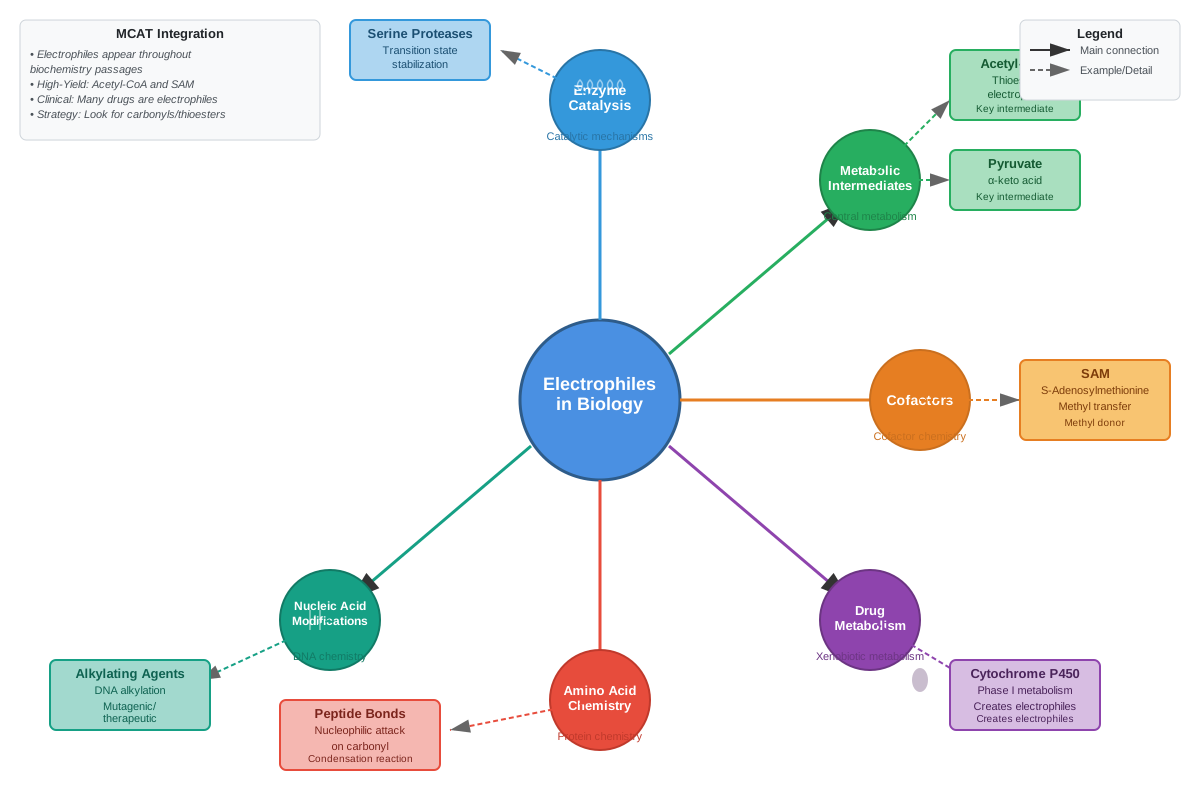
Clinically, electrophilic species are central to drug metabolism, toxicology, and therapeutic mechanisms. Many drugs function by acting as electrophiles that modify biological targets, while toxic compounds often damage cells through electrophilic attack on DNA or proteins. Cytochrome P450 enzymes frequently generate electrophilic metabolites, and understanding this process is essential for pharmacology questions on the exam.
The MCAT commonly presents electrophiles in several contexts: carbonyl chemistry (aldehydes, ketones, esters, amides), alkyl halides in substitution reactions, carbocations as intermediates, and biological electrophiles like S-adenosylmethionine (SAM) or acetyl-CoA. Passage-based questions might describe an enzymatic mechanism and ask students to identify the electrophilic species, or present a novel reaction and require prediction of the electrophile-nucleophile interaction. Discrete questions often test whether students can rank electrophiles by reactivity or identify the most electrophilic atom in a complex structure.
Core Concepts
Definition and Fundamental Properties
An electrophile is a chemical species that accepts an electron pair from a nucleophile to form a new covalent bond. The term derives from "electron-loving" (Greek: elektron + philos), reflecting the species' affinity for electrons. Electrophiles are characterized by electron deficiency, which can manifest as:
- A positive formal charge (e.g., carbocations, H⁺)
- A partial positive charge due to bond polarization (e.g., carbonyl carbon)
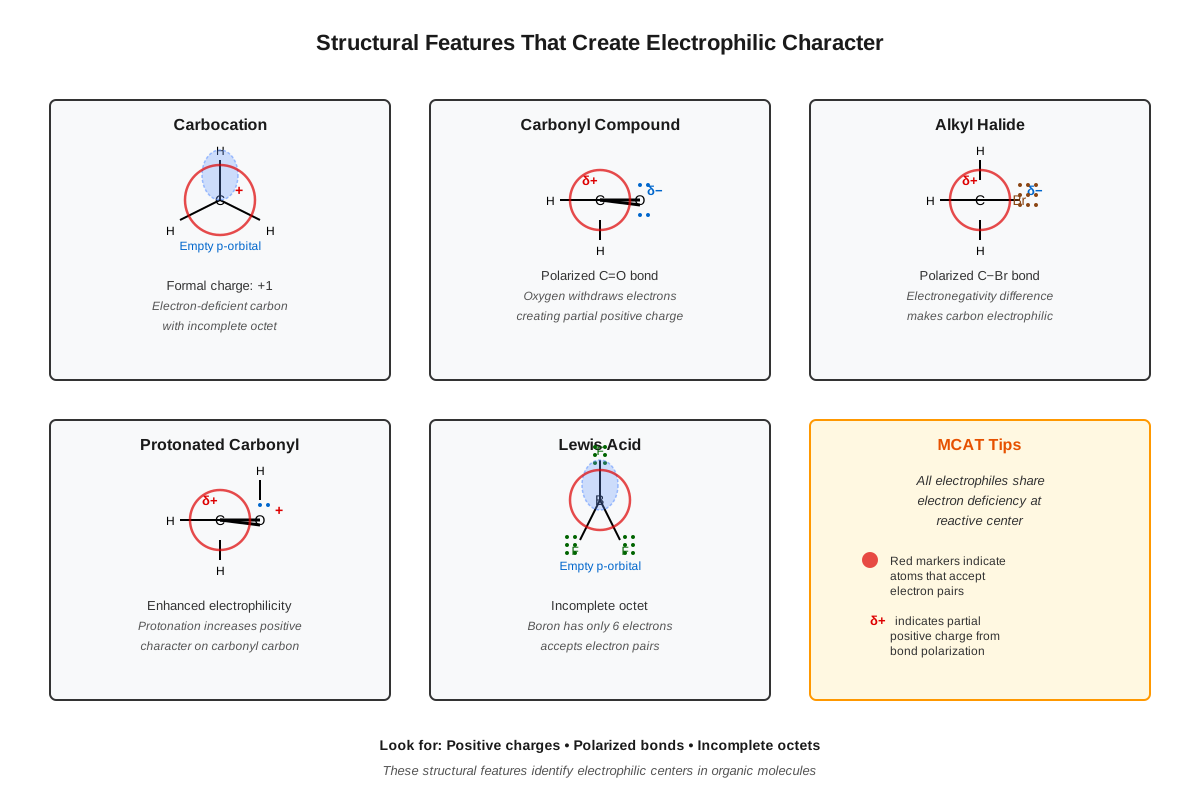
- An incomplete octet (e.g., BF₃, AlCl₃)
- An available empty orbital that can accept electrons (e.g., transition metals)
All electrophiles function as Lewis acids because they accept electron pairs. This connection between electrophiles and Lewis acids is fundamental to understanding reactivity patterns in Organic Chemistry. The strength of an electrophile depends on how readily it accepts electrons, which is influenced by structural factors including charge distribution, steric accessibility, and stabilization of the resulting product.
Structural Features Creating Electrophilicity
Several structural characteristics generate electrophilic character in organic molecules:
Polarized π bonds: Carbon-heteroatom double bonds create electrophilic centers due to electronegativity differences. The carbonyl group (C=O) is the quintessential example, where oxygen's higher electronegativity polarizes electron density away from carbon, creating a partial positive charge (δ+) on carbon. This makes carbonyl carbons electrophilic and susceptible to nucleophilic attack.
Carbocations: Species with a positively charged carbon atom are highly electrophilic due to the incomplete octet and formal positive charge. Tertiary carbocations are more stable than secondary, which are more stable than primary, but all are strongly electrophilic. Carbocations commonly appear as intermediates in SN1 and E1 reactions.
Polarized σ bonds: Carbon-halogen bonds (C-X) are polarized with partial positive character on carbon, making alkyl halides electrophilic. The degree of polarization follows halogen electronegativity: C-F > C-Cl > C-Br > C-I. However, reactivity doesn't follow this order due to competing factors like bond strength and leaving group ability.
Electron-withdrawing groups: Substituents that withdraw electron density through inductive or resonance effects enhance electrophilicity. For example, the carbonyl carbon in acyl chlorides (RCOCl) is more electrophilic than in simple ketones because chlorine withdraws electrons inductively while the carbonyl oxygen withdraws through resonance.
Classes of Common Electrophiles
| Electrophile Class | Example | Electrophilic Site | Typical Reactions |
|---|---|---|---|
| Carbocations | (CH₃)₃C⁺ | C⁺ | SN1, E1, rearrangements |
| Carbonyl compounds | CH₃CHO | C=O carbon | Nucleophilic addition |
| Alkyl halides | CH₃Br | C-X carbon | SN2, SN1, E2, E1 |
| Acyl derivatives | CH₃COCl | C=O carbon | Nucleophilic acyl substitution |
| Protons | H⁺ | H | Acid-base, protonation |
| Michael acceptors | CH₂=CHCHO | β-carbon | Conjugate addition |
| Epoxides | Ethylene oxide | C-O carbons | Ring-opening reactions |
Carbonyl Electrophiles
Carbonyl-containing compounds represent the most important class of electrophiles for the MCAT. The carbonyl carbon's electrophilicity arises from:
- Resonance: The C=O bond can be represented as C⁺-O⁻, showing explicit positive charge on carbon
- Electronegativity: Oxygen (3.5) is significantly more electronegative than carbon (2.5)
- Hybridization: The sp² hybridized carbon has more s-character, making it more electronegative and better able to accommodate partial positive charge
The reactivity of carbonyl electrophiles varies with substituents:
Aldehydes and ketones: Undergo nucleophilic addition reactions. Aldehydes are more reactive than ketones due to less steric hindrance and fewer electron-donating alkyl groups.
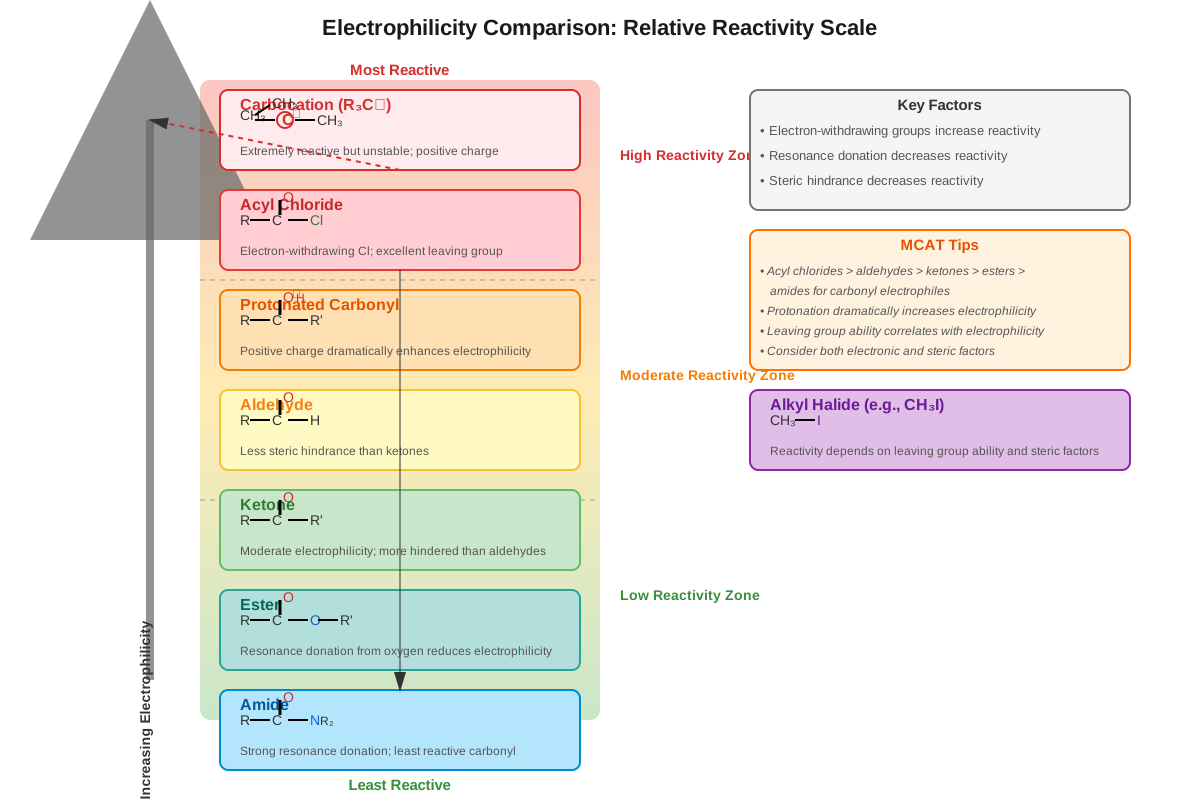
Carboxylic acid derivatives: Undergo nucleophilic acyl substitution. Reactivity order: acyl chlorides > anhydrides > esters > amides. This order reflects both the electrophilicity of the carbonyl carbon and the leaving group ability of the attached group.
Alkyl Halides as Electrophiles
Alkyl halides (R-X) function as electrophiles in substitution and elimination reactions. The carbon bonded to the halogen bears partial positive charge due to halogen electronegativity. Key factors affecting their electrophilic reactivity include:
Leaving group ability: Better leaving groups make better electrophiles in SN1 reactions. Order: I⁻ > Br⁻ > Cl⁻ > F⁻ (opposite of electronegativity). This reflects the stability of the leaving group anion.
Steric effects: In SN2 reactions, less substituted carbons are more reactive electrophiles because the nucleophile can access the electrophilic center more easily. Order: CH₃X > 1° > 2° >> 3° (essentially unreactive in SN2).
Carbocation stability: In SN1 reactions, more substituted carbons form more stable carbocations, making them more reactive. Order: 3° > 2° > 1° > CH₃ (essentially unreactive in SN1).
Biological Electrophiles
Several biologically relevant molecules function as electrophiles in metabolic pathways:
S-adenosylmethionine (SAM): Acts as a methyl group electrophile in biological methylation reactions. The positively charged sulfur creates a highly electrophilic methyl carbon.
Acetyl-CoA: The carbonyl carbon serves as an electrophile in biosynthetic reactions, including fatty acid synthesis and the citric acid cycle.
Carbonyl groups in sugars: The aldehyde group in glucose and other reducing sugars acts as an electrophile in glycosylation reactions and non-enzymatic glycation.
Electrophilic metabolites: Phase I metabolism by cytochrome P450 enzymes often generates electrophilic epoxides or quinones that can damage cellular macromolecules.
Factors Affecting Electrophilic Strength
Multiple factors determine how strongly electrophilic a species will be:
- Charge: Positively charged species are more electrophilic than neutral ones
- Electronegativity of attached atoms: More electronegative atoms increase electrophilicity
- Resonance stabilization: Delocalization of positive charge decreases electrophilicity
- Steric accessibility: Bulky groups around the electrophilic center decrease reactivity
- Solvent effects: Polar protic solvents can stabilize charged electrophiles, affecting reactivity
Concept Relationships
The concept of electrophiles is fundamentally connected to nucleophiles—the electron-rich species that donate electron pairs to electrophiles. Every organic reaction involving bond formation requires both an electrophile and a nucleophile, making these complementary concepts inseparable. Understanding one requires understanding the other.
Structure and Bonding principles directly determine electrophilicity. Electronegativity differences create bond polarization → polarization generates partial charges → partial positive charges indicate electrophilic sites. This logical chain connects fundamental bonding concepts to reactivity predictions.
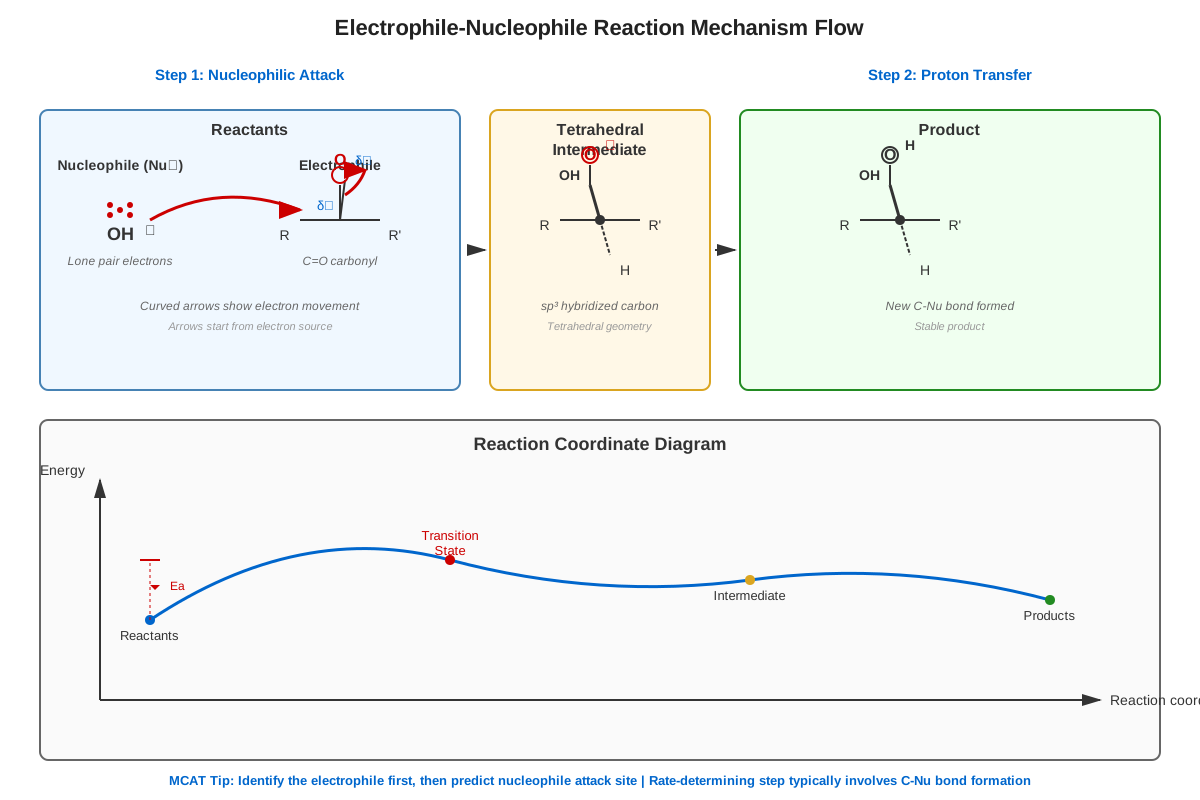
Electrophiles connect to reaction mechanisms through a clear progression: Identify the electrophile → Identify the nucleophile → Determine the mechanism type (SN1, SN2, addition, etc.) → Predict the product. The electrophile's structure often determines which mechanism operates.
The relationship to acid-base chemistry is direct: all electrophiles are Lewis acids. This connection means that factors stabilizing Lewis acids (like electron-withdrawing groups) also enhance electrophilicity. Conversely, Lewis bases are nucleophiles, creating a parallel relationship.
Resonance and electron delocalization affect electrophilicity inversely. Species with resonance stabilization of positive charge are weaker electrophiles because the electron deficiency is distributed. For example, carboxylate ions (RCOO⁻) are not electrophilic despite having a carbonyl carbon because resonance delocalizes any positive character.
The progression of learning follows: Bonding principles → Identification of electron-deficient sites → Classification as electrophiles → Prediction of reactivity → Application to mechanisms → Extension to biological systems.
Quick check — test yourself on Electrophiles so far.
Try Flashcards →High-Yield Facts
⭐ Carbonyl carbons are electrophilic due to oxygen's electronegativity creating a partial positive charge on carbon
⭐ All electrophiles are Lewis acids because they accept electron pairs
⭐ Carbocation stability order (3° > 2° > 1°) determines electrophilicity in SN1 reactions
⭐ Acyl chlorides are more electrophilic than esters, which are more electrophilic than amides
⭐ Alkyl halide reactivity in SN2 follows: CH₃X > 1° > 2° >> 3° due to steric factors
- Protons (H⁺) are the simplest and most common electrophiles in organic chemistry
- Michael acceptors have electrophilic β-carbons due to conjugation with electron-withdrawing groups
- Epoxides are electrophilic at both carbons due to ring strain and C-O bond polarization
- S-adenosylmethionine (SAM) is the primary biological methyl group electrophile
- Electron-withdrawing groups enhance electrophilicity while electron-donating groups diminish it
- Aldehydes are more electrophilic than ketones due to less steric hindrance and fewer electron-donating groups
- The electrophilic site in α,β-unsaturated carbonyls can be either the carbonyl carbon (1,2-addition) or the β-carbon (1,4-addition)
- Iminium ions (R₂C=NR₂⁺) are highly electrophilic and appear in biological amine chemistry
- Diazonium ions (Ar-N₂⁺) are extremely reactive electrophiles used in aromatic substitution
- Transition metal centers often act as electrophiles in organometallic chemistry and enzyme catalysis
Common Misconceptions
Misconception: All positively charged species are strong electrophiles.
Correction: While positive charge generally indicates electrophilicity, resonance stabilization can dramatically reduce reactivity. For example, the tropylium cation (C₇H₇⁺) is aromatic and much less electrophilic than its charge suggests. Similarly, ammonium ions (R₄N⁺) are positively charged but not electrophilic because nitrogen has no accessible empty orbitals.
Misconception: More electronegative halogens make better electrophiles in alkyl halides.
Correction: While fluorine is most electronegative and creates the most polarized C-X bond, alkyl fluorides are poor electrophiles in substitution reactions because the C-F bond is too strong to break and F⁻ is a poor leaving group. Alkyl iodides are typically the most reactive electrophiles despite iodine's lower electronegativity because I⁻ is an excellent leaving group.
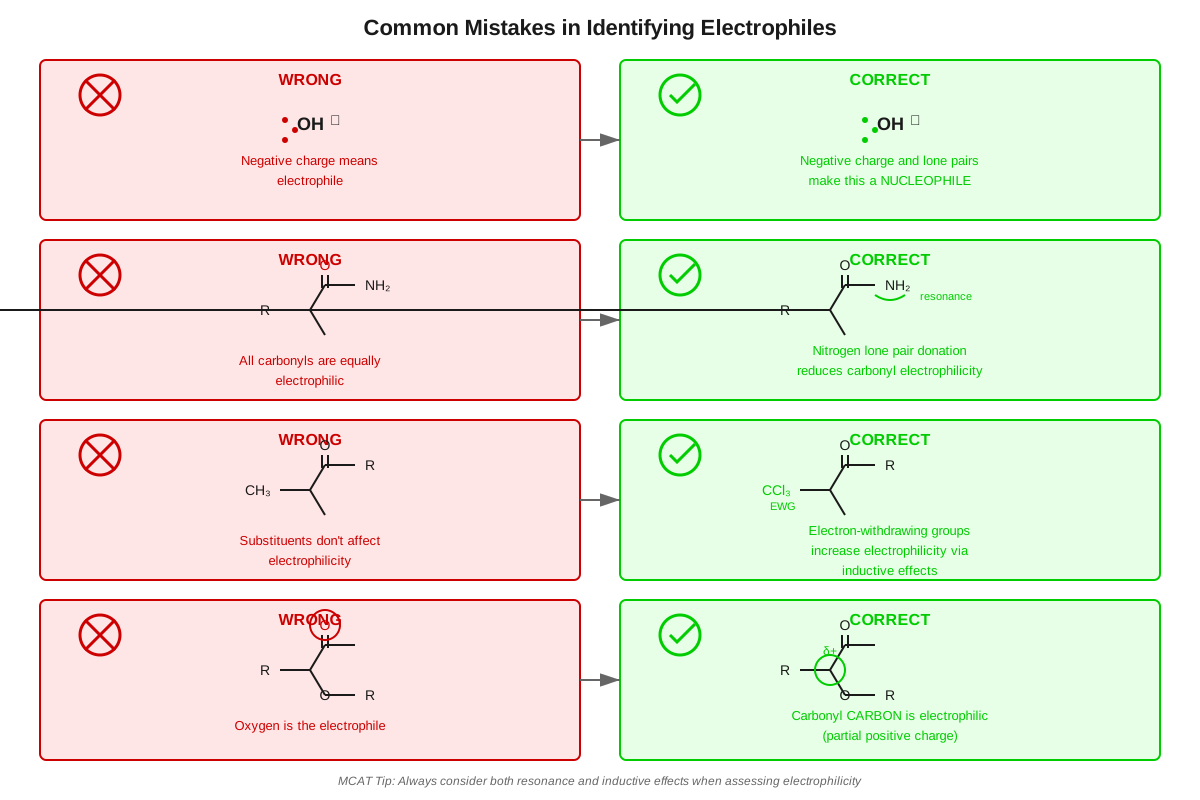
Misconception: The oxygen in a carbonyl group is electrophilic because it's partially negative.
Correction: The carbonyl oxygen is nucleophilic (electron-rich), not electrophilic. The carbonyl carbon is the electrophilic site. This confusion arises from misinterpreting the δ+ and δ- notation. Students must remember that electrophiles seek electrons, so they must be electron-deficient (δ+), not electron-rich (δ-).
Misconception: All carbons bonded to electronegative atoms are equally electrophilic.
Correction: The degree of electrophilicity depends on multiple factors beyond just the attached atom's electronegativity. For example, the carbon in C-N bonds is less electrophilic than in C-O bonds (oxygen is more electronegative), and the carbon in aromatic C-Cl bonds is less reactive than in aliphatic C-Cl bonds due to resonance donation from the aromatic ring.
Misconception: Electrophiles and nucleophiles are fixed properties of molecules.
Correction: Many molecules can act as either electrophiles or nucleophiles depending on reaction conditions and the other reactant present. For example, water can act as a nucleophile (attacking a carbocation) or as an electrophile (when protonated to H₃O⁺, the oxygen can accept electrons). The classification depends on the specific reaction context.
Misconception: Stronger electrophiles always react faster.
Correction: While electrophilicity is important, reaction rate also depends on steric factors, solvent effects, and the nature of the nucleophile. A highly electrophilic but sterically hindered species may react slower than a moderately electrophilic but accessible one. For example, in SN2 reactions, methyl halides react faster than tertiary halides even though tertiary carbocations are more stable electrophiles.
Misconception: All carbonyl compounds undergo the same type of reactions.
Correction: Aldehydes and ketones undergo nucleophilic addition, while carboxylic acid derivatives undergo nucleophilic acyl substitution. This difference arises because carboxylic acid derivatives have a leaving group attached to the carbonyl carbon, while aldehydes and ketones do not. Understanding this distinction is crucial for predicting reaction outcomes.
Worked Examples
Example 1: Identifying and Ranking Electrophiles
Question: Rank the following species in order of increasing electrophilicity: acetone (CH₃COCH₃), acetyl chloride (CH₃COCl), acetamide (CH₃CONH₂), and acetic acid (CH₃COOH).
Solution:
Step 1: Identify the electrophilic site in each molecule. All four are carbonyl compounds, so the carbonyl carbon is the electrophilic center.
Step 2: Analyze factors affecting electrophilicity. The key factor here is the electron-donating or electron-withdrawing nature of the group attached to the carbonyl.
Step 3: Consider resonance effects. In acetamide, the nitrogen lone pair can donate into the carbonyl π* orbital through resonance, reducing the partial positive charge on carbon. This makes acetamide the weakest electrophile. In acetyl chloride, chlorine withdraws electrons inductively (through σ bonds) but can donate through resonance. However, the inductive effect dominates, making acetyl chloride highly electrophilic.
Step 4: Compare acetone and acetic acid. Acetic acid has an OH group that can donate electrons through resonance, reducing electrophilicity compared to acetone, where only alkyl groups (weak electron donors) are attached.
Step 5: Rank the compounds. From least to most electrophilic:
Acetamide < Acetic acid < Acetone < Acetyl chloride
Key takeaway: This ranking reflects the general reactivity order of carboxylic acid derivatives and relates to why acyl chlorides are used to make other derivatives—they're the most reactive electrophiles in this series.
Example 2: Mechanism Analysis with Electrophile Identification
Question: In the acid-catalyzed hydration of 2-methylpropene, identify all electrophilic species and explain which step involves electrophilic attack.
Solution:
Step 1: Write out the mechanism.
- Step 1: Protonation of the alkene
- Step 2: Water attacks the carbocation
- Step 3: Deprotonation to form the alcohol
Step 2: Identify electrophiles in each step.
Step 1: The proton (H⁺) from the acid catalyst is the electrophile. It attacks the π electrons of the alkene. Although we typically think of the alkene as being attacked, in this step, the alkene acts as a nucleophile (electron donor) and the proton acts as the electrophile (electron acceptor).
Step 2: The carbocation intermediate (tertiary carbocation, (CH₃)₃C⁺) is the electrophile. It has a positive charge and an incomplete octet, making it highly electrophilic. Water acts as the nucleophile, donating a lone pair to form a new C-O bond.
Step 3: The protonated alcohol (R-OH₂⁺) has an electrophilic hydrogen, but this step involves deprotonation rather than electrophilic attack.
Step 3: Determine which step involves electrophilic attack. Step 2 is the classic electrophilic attack—a carbocation (electrophile) accepts electrons from water (nucleophile). Step 1 could also be considered electrophilic attack by H⁺ on the alkene.
Step 4: Explain the selectivity. The proton adds to form the more stable tertiary carbocation rather than a primary carbocation, following Markovnikov's rule. This demonstrates how carbocation stability (and thus electrophilicity) determines reaction pathways.
Key takeaway: Carbocations are key electrophilic intermediates in many reactions. Recognizing them and understanding their stability is essential for predicting reaction mechanisms and products on the MCAT.
Exam Strategy
When approaching MCAT questions involving electrophiles, follow this systematic approach:
Step 1: Identify potential electrophilic sites. Look for:
- Carbons bonded to electronegative atoms (O, N, halogens)
- Positively charged atoms
- Carbonyl carbons
- Carbons adjacent to leaving groups
- Carbons in strained rings (like epoxides)
Step 2: Assess relative electrophilicity if multiple sites exist. Consider:
- Formal charge (positive > neutral)
- Degree of bond polarization
- Steric accessibility
- Resonance stabilization (decreases electrophilicity)
Step 3: Match the electrophile with the appropriate nucleophile. Strong electrophiles react with weak nucleophiles; weak electrophiles require strong nucleophiles.
Trigger words and phrases that signal electrophile-related questions:
- "Electron-deficient species"
- "Lewis acid"
- "Accepts an electron pair"
- "Electrophilic center"
- "Site of nucleophilic attack"
- "Carbonyl carbon"
- "Carbocation intermediate"
Process of elimination strategies:
- Eliminate options showing nucleophilic (electron-rich) sites when asked for electrophiles
- Rule out species with complete octets and no polarization unless they have positive charge
- Eliminate resonance-stabilized cations as "most electrophilic" options—they're typically moderate electrophiles
- When ranking reactivity, eliminate options that contradict known trends (e.g., tertiary carbocations less stable than primary)
Time allocation: For discrete questions about electrophiles, spend 45-60 seconds. For passage-based mechanism questions, allocate 90-120 seconds to trace the mechanism and identify electrophilic steps. Don't get bogged down drawing complete mechanisms unless necessary—focus on identifying the electrophile and predicting the outcome.
Exam Tip: If a question asks you to identify "the electrophile" in a reaction with multiple steps, it's usually asking for the species that accepts electrons in the rate-determining step or the key bond-forming step, not every electrophilic species in the mechanism.
Memory Techniques
Mnemonic for carbonyl derivative reactivity (most to least electrophilic):
"Acid Chlorides Are Always Electrophilic"
- Acid chlorides (acyl chlorides)
- Anhydrides
- Aldehydes (and esters, similar reactivity)
- Amides
- Esters (between aldehydes and amides)
Mnemonic for carbocation stability:
"Three's The Best, One's The Worst"
- Tertiary (3°) > Secondary (2°) > Primary (1°) > Methyl
Visualization strategy for identifying electrophiles:
Imagine electrons as a crowd and electrophiles as magnets. The stronger the magnet (more electrophilic), the more powerfully it attracts the crowd. Positive charges are strong magnets, partial positive charges (δ+) are weaker magnets, and neutral, non-polarized atoms aren't magnetic at all.
Acronym for factors affecting electrophilicity - CREST:
- Charge (positive increases electrophilicity)
- Resonance (stabilization decreases electrophilicity)
- Electronegativity (of attached atoms increases electrophilicity)
- Sterics (hindrance decreases reactivity)
- Type of orbital (empty orbitals increase electrophilicity)
Memory aid for biological electrophiles:
"SAM Accepts Methyl" - S-adenosylmethionine is the biological methyl electrophile
"Acetyl-CoA Carbonyl" - Remember the carbonyl carbon is the electrophilic site
Summary
Electrophiles are electron-deficient species that accept electron pairs from nucleophiles to form new covalent bonds, functioning as Lewis acids in organic reactions. The electrophilic character arises from structural features including positive charge, bond polarization due to electronegativity differences, incomplete octets, or available empty orbitals. The most important electrophiles for the MCAT are carbonyl compounds (aldehydes, ketones, carboxylic acid derivatives), alkyl halides, and carbocations. Carbonyl carbons are electrophilic because oxygen's electronegativity creates partial positive charge on carbon, with reactivity varying based on attached groups: acyl chlorides > anhydrides > esters > amides. Carbocation stability (3° > 2° > 1°) determines electrophilicity in SN1 reactions, while steric factors dominate SN2 reactivity (CH₃X > 1° > 2°). Understanding electrophiles requires integrating concepts of structure and bonding, resonance, and reaction mechanisms, and is essential for predicting organic reaction outcomes and understanding biological processes involving electrophilic metabolites and intermediates.
Key Takeaways
- Electrophiles are electron-deficient species that accept electron pairs, functioning as Lewis acids in all organic reactions
- Carbonyl carbons are electrophilic due to oxygen's electronegativity; reactivity order for derivatives is: acyl chlorides > anhydrides > esters > amides
- Carbocation stability (tertiary > secondary > primary) determines both electrophilicity and reaction pathways in SN1 and E1 mechanisms
- Structural features creating electrophilicity include positive charge, polarized bonds, incomplete octets, and electron-withdrawing substituents
- All electrophile-nucleophile reactions require identifying both species and understanding how structure determines reactivity
- Biological electrophiles like SAM and acetyl-CoA are essential for metabolic reactions and frequently appear in MCAT biochemistry contexts
- Resonance stabilization decreases electrophilicity by delocalizing positive charge, while electron-withdrawing groups enhance it
Related Topics
Nucleophiles: The complementary concept to electrophiles; understanding nucleophilicity is essential for predicting reaction outcomes and mechanisms. Mastering electrophiles enables deeper understanding of how nucleophile-electrophile pairs determine reaction pathways.
Substitution Reactions (SN1 and SN2): These mechanisms center on electrophilic carbons in alkyl halides. Understanding electrophilicity explains why certain substrates favor SN1 versus SN2 pathways.
Carbonyl Chemistry: An entire unit built on the electrophilic nature of carbonyl carbons. Mastering basic electrophile concepts is prerequisite for understanding nucleophilic addition and acyl substitution reactions.
Reaction Mechanisms: All mechanisms involve identifying electrophiles and nucleophiles. This topic provides the framework for analyzing any organic transformation.
Acid-Base Chemistry: The Lewis acid-base theory directly connects to electrophiles (Lewis acids) and nucleophiles (Lewis bases), providing an alternative framework for understanding reactivity.
Aromatic Substitution: Electrophilic aromatic substitution requires understanding how electrophiles attack aromatic rings and how substituents affect reactivity.
Practice CTA
Now that you've mastered the fundamentals of electrophiles, it's time to reinforce your understanding through active practice. Attempt the practice questions to test your ability to identify electrophiles in complex molecules, rank their reactivity, and apply these concepts to mechanism problems. Use the flashcards to drill high-yield facts until you can instantly recognize electrophilic sites and predict reaction outcomes. Remember, the MCAT rewards pattern recognition and rapid application of core principles—skills that develop only through deliberate practice. Your investment in mastering electrophiles will pay dividends across organic chemistry and biochemistry questions. You've got this!
Sign up free to keep reading
Create a free AnvayaPrep account to finish this MCAT guide on Electrophiles — plus flashcards and practice questions.