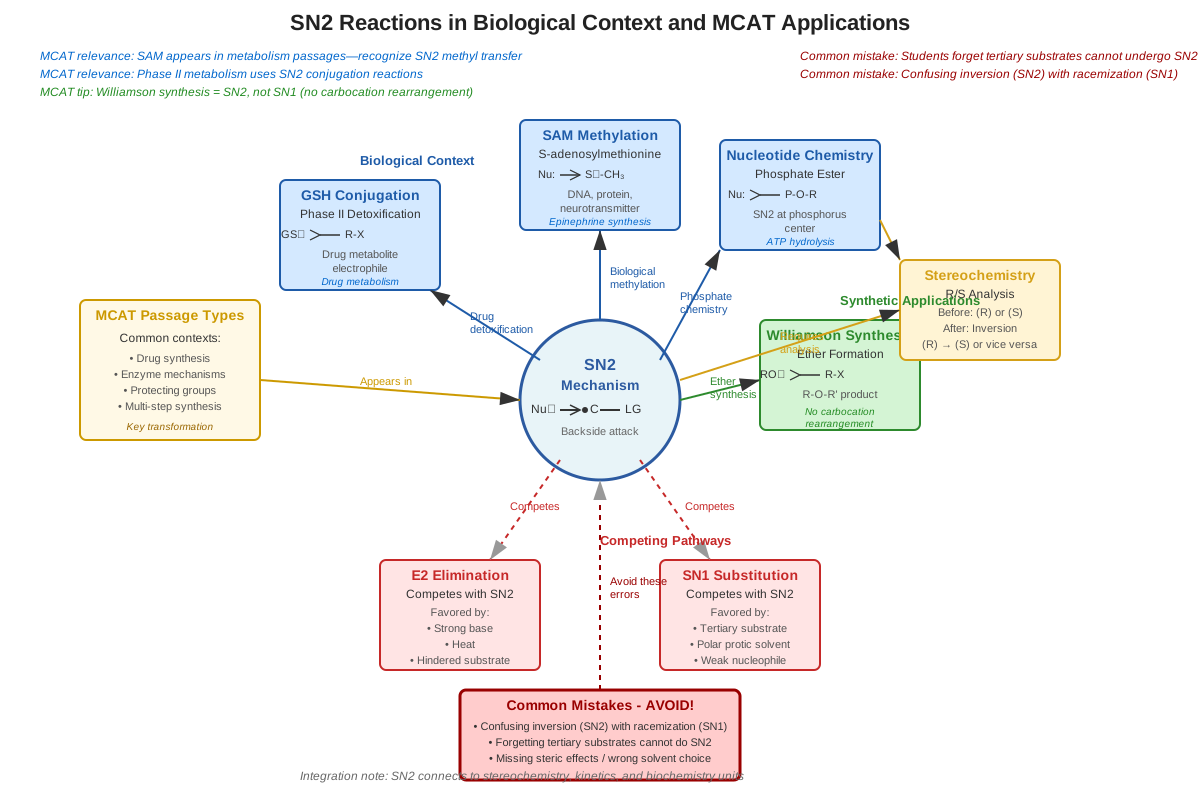
Overview
SN2 reactions represent one of the fundamental mechanisms in Organic Chemistry and constitute a critical component of the Substitution and Elimination unit tested on the MCAT. The term SN2 stands for "Substitution Nucleophilic Bimolecular," describing a single-step reaction mechanism where a nucleophile attacks an electrophilic carbon while simultaneously displacing a leaving group. This concerted process occurs without the formation of intermediate species and exhibits characteristic stereochemical, kinetic, and structural requirements that distinguish it from other substitution mechanisms.
Understanding SN2 reactions is essential for MCAT success because these reactions appear frequently in both discrete questions and passage-based scenarios within the Chemical and Physical Foundations of Biological Systems section. The MCAT tests not only the mechanistic details but also the ability to predict reaction outcomes based on substrate structure, nucleophile strength, leaving group ability, and solvent effects. Questions often require students to compare SN2 with SN1, E1, and E2 mechanisms, making a thorough understanding of the distinguishing features paramount.
Within the broader landscape of Organic Chemistry, SN2 reactions connect to multiple high-yield topics including stereochemistry (inversion of configuration), reaction kinetics (second-order rate laws), molecular structure (steric hindrance effects), and functional group transformations. Mastery of this mechanism provides the foundation for understanding biological processes such as enzyme-catalyzed substitutions, drug metabolism pathways, and the synthesis of pharmaceutically relevant compounds. The principles governing SN2 reactivity also illuminate fundamental concepts about molecular interactions, transition state theory, and the relationship between structure and reactivity that permeate all of chemistry.
Learning Objectives
- [ ] Define SN2 reactions using accurate Organic Chemistry terminology
- [ ] Explain why SN2 reactions matter for the MCAT
- [ ] Apply SN2 reactions to exam-style questions
- [ ] Identify common mistakes related to SN2 reactions
- [ ] Connect SN2 reactions to related Organic Chemistry concepts
- [ ] Predict the stereochemical outcome of SN2 reactions given substrate configuration
- [ ] Rank substrates, nucleophiles, and leaving groups by their SN2 reactivity
- [ ] Distinguish between conditions that favor SN2 versus SN1, E1, or E2 mechanisms
- [ ] Analyze reaction coordinate diagrams for SN2 processes and identify transition state characteristics
Prerequisites
- Basic bonding and molecular geometry: Understanding sp³ hybridization and tetrahedral geometry is essential for visualizing the backside attack mechanism and stereochemical inversion
- Acid-base chemistry and pKa values: Nucleophile strength correlates with basicity, requiring familiarity with relative base strengths and the relationship between pKa and nucleophilicity
- Functional group nomenclature: Recognizing alkyl halides, alcohols, ethers, and other functional groups enables identification of potential substrates and products
- Stereochemistry fundamentals: Knowledge of R/S configuration, enantiomers, and chirality is necessary to predict and understand inversion of configuration
- Basic thermodynamics and kinetics: Understanding activation energy, rate laws, and the relationship between molecular structure and reactivity underpins mechanistic analysis
Why This Topic Matters
SN2 reactions appear in approximately 3-5 questions per MCAT exam, either as discrete items or embedded within passage-based scenarios. The MCAT frequently tests this mechanism in the context of pharmaceutical synthesis, biochemical transformations, or comparative mechanism questions where students must distinguish between SN2, SN1, E1, and E2 pathways. Understanding SN2 chemistry is particularly important because the MCAT often presents experimental data (reaction rates, stereochemical outcomes, or product distributions) and asks students to deduce the operative mechanism.
In real-world and clinical contexts, SN2 reactions are fundamental to drug design and metabolism. Many pharmaceuticals undergo SN2-type transformations during Phase II metabolism, where nucleophilic groups on biomolecules attack electrophilic drug metabolites. The enzyme-catalyzed methylation of DNA, neurotransmitter synthesis, and the mechanism of action of certain alkylating chemotherapy agents all proceed through SN2-like mechanisms. Understanding these reactions provides insight into drug-drug interactions, toxicity mechanisms, and the rational design of therapeutic agents.
Common MCAT question formats include: (1) predicting relative reaction rates given different substrates or nucleophiles, (2) determining stereochemical outcomes, (3) identifying the mechanism from experimental data, (4) selecting optimal reaction conditions for a desired transformation, and (5) explaining why certain substrates fail to undergo SN2 reactions. Passage-based questions often present kinetic data, stereochemical analysis, or synthetic schemes requiring mechanistic interpretation. The ability to rapidly assess structural features and predict reactivity patterns is essential for efficient problem-solving under timed conditions.
Core Concepts
Definition and Mechanism
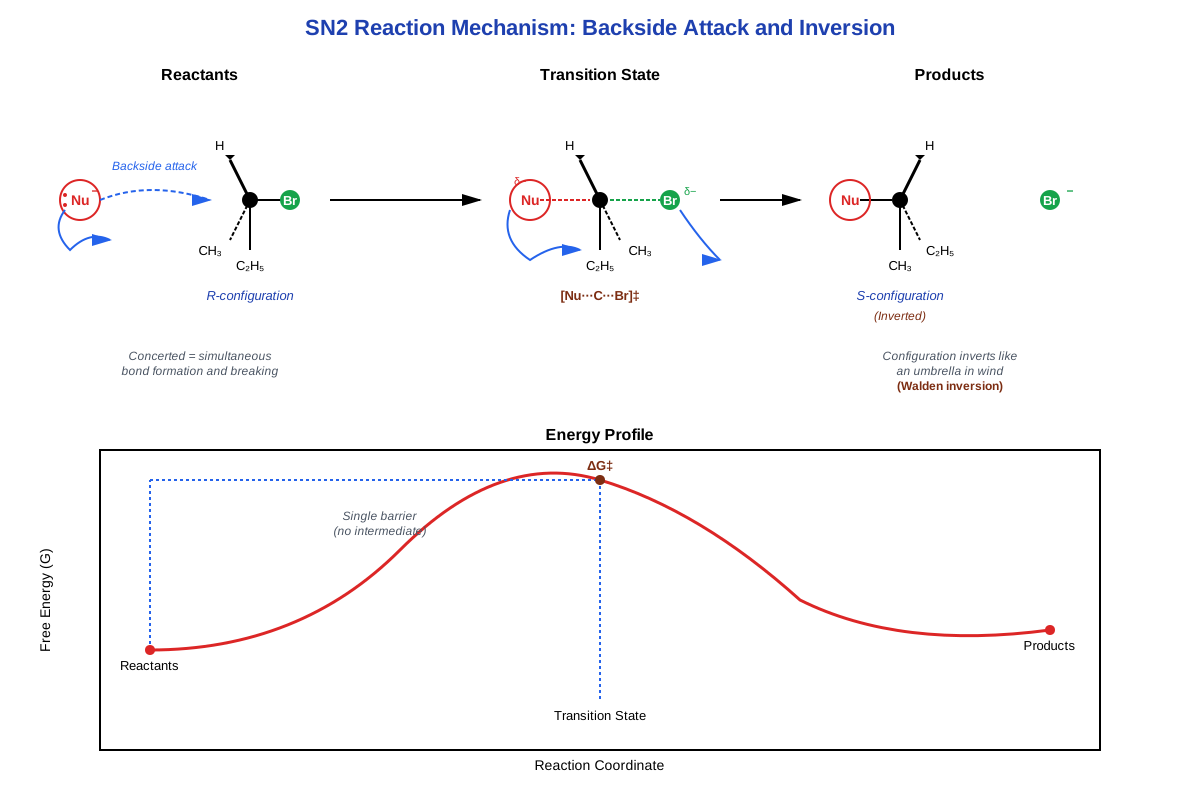
An SN2 reaction is a substitution nucleophilic bimolecular process in which a nucleophile attacks an electrophilic carbon atom bearing a leaving group, resulting in simultaneous bond formation and bond breaking in a single concerted step. The "2" in SN2 indicates that the rate-determining step involves two molecular species—the nucleophile and the substrate—making the reaction bimolecular with second-order kinetics.
The mechanism proceeds through a single transition state without forming discrete intermediates. The nucleophile approaches the electrophilic carbon from the side directly opposite the leaving group (called backside attack), passing through a transition state where the nucleophile is partially bonded, the leaving group is partially detached, and the carbon center exhibits partial sp² character with trigonal bipyramidal geometry. As the reaction progresses, the three substituents attached to the carbon center undergo inversion, similar to an umbrella flipping inside-out in the wind.
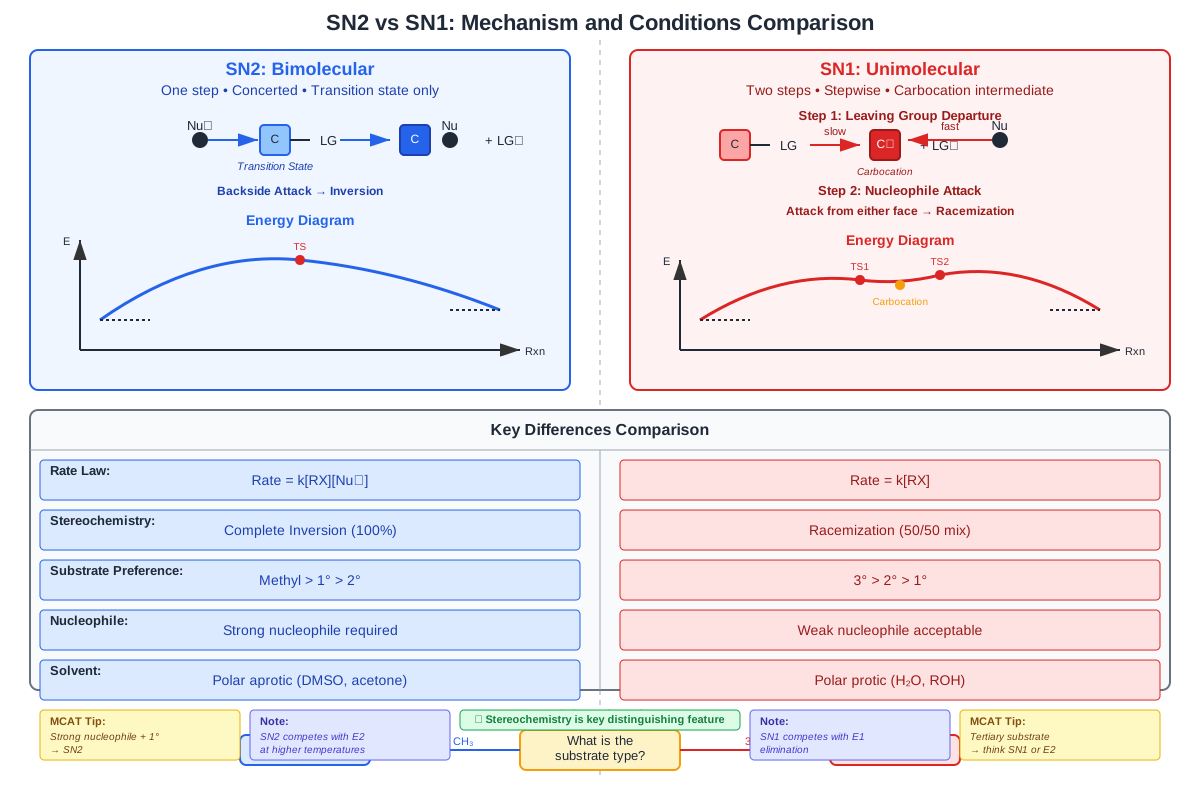
The rate law for an SN2 reaction is: Rate = k[nucleophile][substrate], reflecting the bimolecular nature of the mechanism. This second-order kinetics distinguishes SN2 from SN1 reactions, which exhibit first-order kinetics dependent only on substrate concentration.
Stereochemical Consequences
The backside attack mechanism of SN2 reactions produces a characteristic stereochemical outcome: inversion of configuration at the reaction center. When the substrate is a chiral molecule with a defined R or S configuration, the product will have the opposite configuration. This phenomenon, known as Walden inversion, serves as diagnostic evidence for the SN2 mechanism.
For example, if (R)-2-bromobutane undergoes SN2 substitution with hydroxide ion, the product will be (S)-2-butanol. The three groups attached to the stereocenter maintain their relative positions but invert their spatial arrangement, like turning a glove inside-out. This stereochemical outcome is absolute and predictable, making it a powerful tool for mechanistic determination and synthetic planning.
Substrate Structure and Steric Effects
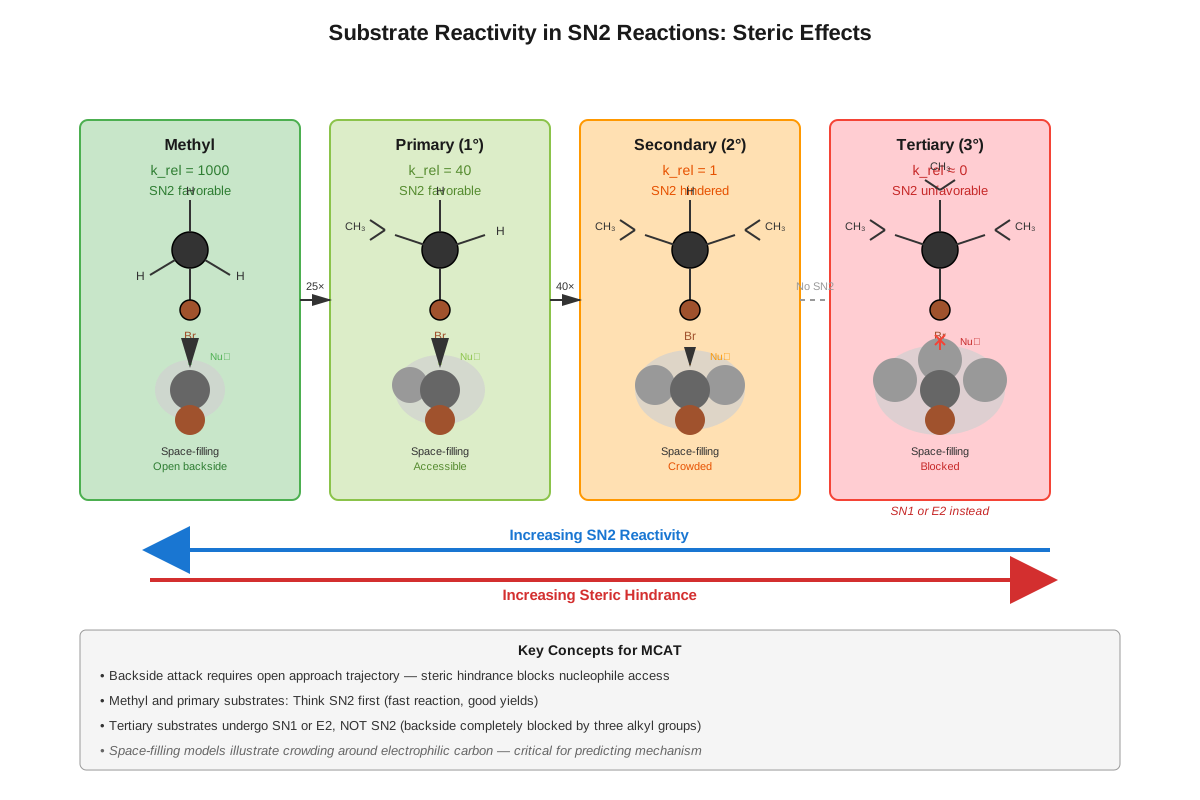
Steric hindrance is the dominant factor controlling SN2 reactivity. The backside attack requires the nucleophile to approach the electrophilic carbon through the surrounding substituents, and bulky groups create physical barriers that slow or prevent this approach.
The reactivity order for alkyl halides in SN2 reactions is:
methyl > primary (1°) > secondary (2°) >> tertiary (3°)
Methyl halides react fastest because the carbon bears only hydrogen atoms, providing unobstructed access for the nucleophile. Primary substrates have one alkyl group, creating modest steric hindrance. Secondary substrates have two alkyl groups, significantly impeding backside attack. Tertiary substrates are essentially unreactive in SN2 reactions because three alkyl groups create insurmountable steric barriers, forcing these substrates to react via SN1 mechanisms instead.
Branching near the reaction center dramatically reduces SN2 reactivity. For instance, neopentyl halides [(CH₃)₃CCH₂X] are primary substrates but react extremely slowly in SN2 reactions because the bulky tert-butyl group blocks nucleophilic approach.
Nucleophile Characteristics
A nucleophile is a species with a lone pair of electrons or a π bond that can form a new bond with an electrophilic carbon. Nucleophile strength profoundly affects SN2 reaction rates, and several factors determine nucleophilicity:
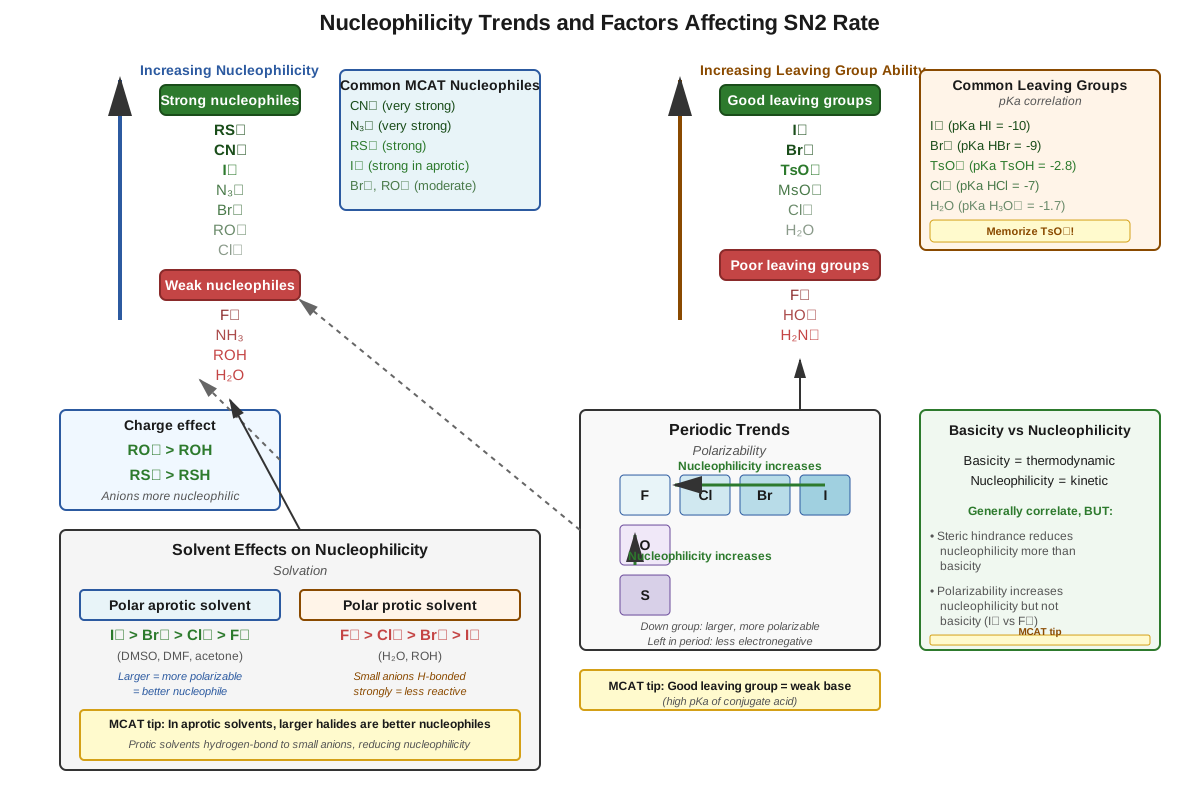
Charge: Negatively charged nucleophiles are generally stronger than their neutral counterparts (e.g., HO⁻ > H₂O, RO⁻ > ROH).
Electronegativity: Within the same row of the periodic table, nucleophilicity decreases with increasing electronegativity (e.g., NH₂⁻ > HO⁻ > F⁻) because less electronegative atoms hold their electrons less tightly and donate them more readily.
Size and polarizability: In polar aprotic solvents, larger atoms down a group are more nucleophilic because their electrons are more polarizable and less tightly held (e.g., I⁻ > Br⁻ > Cl⁻ > F⁻). However, in polar protic solvents, this trend reverses due to differential solvation effects.
Solvent effects: Polar protic solvents (water, alcohols) hydrogen-bond strongly to small, charged nucleophiles, decreasing their reactivity. Polar aprotic solvents (DMSO, DMF, acetone, acetonitrile) cannot hydrogen-bond effectively, leaving nucleophiles "naked" and highly reactive.
Leaving Group Ability
A leaving group is the substituent that departs with the electron pair from the carbon-leaving group bond. Good leaving groups are weak bases that can stabilize negative charge. The ability of a group to leave correlates inversely with its basicity—the weaker the base, the better the leaving group.
Common leaving groups in order of decreasing ability:
| Leaving Group | Conjugate Acid pKa | Relative Ability |
|---|---|---|
| I⁻ | -10 | Excellent |
| Br⁻ | -9 | Excellent |
| Cl⁻ | -7 | Good |
| H₂O (from R-OH₂⁺) | -1.7 | Good |
| TsO⁻ (tosylate) | -2.8 | Excellent |
| F⁻ | 3.2 | Poor |
| HO⁻ | 15.7 | Very poor |
| H₂N⁻ | 38 | Extremely poor |
Alcohols (ROH) are poor leaving groups because hydroxide is a strong base. However, protonating the alcohol converts it to ROH₂⁺, making water the leaving group, which is much better. Alternatively, alcohols can be converted to tosylates or mesylates, creating excellent leaving groups while preserving stereochemistry.
Solvent Effects
Solvent polarity and hydrogen-bonding ability dramatically influence SN2 reaction rates. Polar aprotic solvents (DMSO, DMF, acetonitrile, acetone) accelerate SN2 reactions because they solvate cations effectively but do not hydrogen-bond to nucleophiles, leaving them highly reactive. In these solvents, the nucleophilicity order follows polarizability: I⁻ > Br⁻ > Cl⁻ > F⁻.
Polar protic solvents (water, methanol, ethanol) hydrogen-bond strongly to nucleophiles, especially small, charged ones, creating a solvation shell that must be disrupted before the nucleophile can attack. This effect is most pronounced for small nucleophiles like fluoride, reversing the nucleophilicity order to F⁻ > Cl⁻ > Br⁻ > I⁻ in protic solvents.
Nonpolar solvents generally do not support SN2 reactions well because they cannot stabilize the developing charges in the transition state.
Energy Diagram and Transition State
The reaction coordinate diagram for an SN2 reaction shows a single energy maximum corresponding to the transition state, with no intermediate valleys. The transition state features partial bonds between the nucleophile and carbon and between the carbon and leaving group. The carbon center exhibits approximately sp² hybridization with trigonal bipyramidal geometry, where the nucleophile and leaving group occupy axial positions and the three substituents lie in an equatorial plane.
The activation energy (Ea) for SN2 reactions depends on nucleophile strength, leaving group ability, substrate structure, and solvent. Strong nucleophiles, good leaving groups, unhindered substrates, and polar aprotic solvents all lower the activation energy and increase reaction rates.
Concept Relationships
The core concepts of SN2 reactions are deeply interconnected. Substrate structure determines the feasibility of backside attack, with steric hindrance creating the reactivity hierarchy (methyl > 1° > 2° >> 3°). This structural requirement directly influences the stereochemical outcome—only substrates that can undergo backside attack will show inversion of configuration, providing mechanistic evidence.
Nucleophile strength and leaving group ability work in concert to determine reaction rate. Strong nucleophiles accelerate the forward reaction by lowering the activation energy for bond formation, while good leaving groups facilitate bond breaking. The balance between these factors determines overall reactivity, with the rate law Rate = k[Nu][substrate] reflecting both contributions.
Solvent effects modulate nucleophile strength through differential solvation. Polar aprotic solvents → enhanced nucleophilicity → faster SN2 reactions. This connection explains why changing from a protic to aprotic solvent can increase reaction rates by factors of 1000 or more.
The relationship between SN2 and competing mechanisms (SN1, E1, E2) depends on substrate structure and reaction conditions:
- Substrate structure: Methyl and 1° → SN2 favored; 3° → SN1/E1 favored; 2° → competition between all mechanisms
- Nucleophile/base strength: Strong nucleophiles favor SN2; weak nucleophiles favor SN1
- Temperature: Higher temperatures favor elimination (E2/E1) over substitution
- Steric bulk of base: Bulky bases favor E2 over SN2
Understanding these relationships enables prediction of reaction outcomes: Substrate structure → determines possible mechanisms → nucleophile/base strength → selects between substitution and elimination → solvent → modulates reaction rate.
Quick check — test yourself on SN2 reactions so far.
Try Flashcards →High-Yield Facts
⭐ SN2 reactions proceed through a single concerted step with a transition state, not an intermediate, resulting in second-order kinetics: Rate = k[Nu][substrate]
⭐ Backside attack in SN2 reactions causes inversion of configuration (Walden inversion) at chiral centers
⭐ Substrate reactivity order: methyl > 1° > 2° >> 3° (tertiary substrates do not undergo SN2 reactions due to steric hindrance)
⭐ Polar aprotic solvents (DMSO, DMF, acetone, acetonitrile) dramatically accelerate SN2 reactions compared to polar protic solvents
⭐ Good leaving groups are weak bases; leaving group ability correlates inversely with the pKa of the conjugate acid
- Strong nucleophiles are required for SN2 reactions; nucleophilicity increases with negative charge and decreases with electronegativity within a row
- In polar aprotic solvents, nucleophilicity increases down a group (I⁻ > Br⁻ > Cl⁻ > F⁻) due to polarizability
- In polar protic solvents, the nucleophilicity order reverses (F⁻ > Cl⁻ > Br⁻ > I⁻) due to differential solvation
- Hydroxide (HO⁻) and alkoxide (RO⁻) are poor leaving groups; alcohols must be protonated or converted to tosylates/mesylates to undergo substitution
- The transition state in SN2 reactions has partial sp² character with trigonal bipyramidal geometry
- Neopentyl halides [(CH₃)₃CCH₂X] are primary but react very slowly in SN2 due to steric hindrance from the adjacent tert-butyl group
- Allylic and benzylic substrates can undergo both SN2 and SN1 reactions depending on conditions due to resonance stabilization
Common Misconceptions
Misconception: All primary substrates react rapidly in SN2 reactions.
Correction: While primary substrates generally favor SN2 mechanisms, steric hindrance near the reaction center dramatically reduces reactivity. Neopentyl halides are primary but react extremely slowly because the bulky tert-butyl group blocks backside attack. The classification as 1°, 2°, or 3° refers only to the carbon bearing the leaving group, not to nearby branching.
Misconception: Strong bases are always good nucleophiles.
Correction: Basicity and nucleophilicity are related but distinct properties. Basicity measures thermodynamic stability (equilibrium constant for proton acceptance), while nucleophilicity measures kinetic reactivity (rate of attack on carbon). In polar aprotic solvents, iodide is an excellent nucleophile but a weak base. Conversely, tert-butoxide is a strong base but a poor nucleophile due to steric hindrance. Solvent effects also decouple these properties.
Misconception: SN2 reactions can occur at tertiary carbons if a strong enough nucleophile is used.
Correction: Tertiary substrates cannot undergo SN2 reactions regardless of nucleophile strength because three alkyl groups create insurmountable steric barriers to backside attack. With strong nucleophiles, tertiary substrates undergo E2 elimination instead. With weak nucleophiles, they proceed via SN1/E1 mechanisms. The steric constraint is absolute for SN2.
Misconception: Inversion of configuration means the molecule becomes its enantiomer.
Correction: Inversion of configuration refers specifically to the stereocenter undergoing substitution, changing R to S or vice versa. If the molecule has multiple stereocenters, only the one undergoing reaction inverts; others remain unchanged. The product is a diastereomer, not an enantiomer, unless the molecule has only one stereocenter.
Misconception: Polar solvents always accelerate SN2 reactions.
Correction: The distinction between polar protic and polar aprotic solvents is critical. Polar protic solvents (water, alcohols) hydrogen-bond to nucleophiles, decreasing their reactivity and slowing SN2 reactions. Polar aprotic solvents (DMSO, DMF) solvate cations but not anions effectively, leaving nucleophiles highly reactive and dramatically accelerating SN2 reactions. The presence or absence of hydrogen-bonding capability makes the difference.
Misconception: The leaving group takes both electrons from the C-X bond.
Correction: This is actually correct—the leaving group departs with both electrons from the σ bond, becoming negatively charged (or neutral if it was positively charged initially). The misconception arises when students think the bond breaks homolytically (one electron to each fragment), which would produce radicals. SN2 reactions involve heterolytic bond cleavage.
Worked Examples
Example 1: Predicting Relative Reaction Rates
Question: Rank the following substrates in order of decreasing SN2 reactivity with sodium iodide in acetone: (A) 2-chloro-2-methylpropane, (B) 1-chlorobutane, (C) 2-chlorobutane, (D) chloromethane.
Solution:
Step 1: Identify the substrate classification.
- (A) 2-chloro-2-methylpropane: tertiary (three alkyl groups on the carbon bearing chlorine)
- (B) 1-chlorobutane: primary (one alkyl group)
- (C) 2-chlorobutane: secondary (two alkyl groups)
- (D) chloromethane: methyl (no alkyl groups)
Step 2: Apply the SN2 reactivity order based on steric hindrance.
The reactivity order is: methyl > 1° > 2° >> 3°
Step 3: Consider the solvent.
Acetone is a polar aprotic solvent, which favors SN2 reactions and makes iodide a strong nucleophile. This confirms that SN2 is the operative mechanism for substrates that can undergo it.
Step 4: Rank the substrates.
- (D) chloromethane: methyl, most reactive
- (B) 1-chlorobutane: primary, second most reactive
- (C) 2-chlorobutane: secondary, third most reactive
- (A) 2-chloro-2-methylpropane: tertiary, essentially unreactive in SN2
Answer: D > B > C >> A
Key Concept Connection: This problem tests understanding of how substrate structure (specifically steric hindrance) controls SN2 reactivity. The tertiary substrate cannot undergo SN2 and would instead react via SN1/E1 mechanisms if at all.
Example 2: Stereochemical Outcome
Question: (R)-2-bromooctane is treated with sodium cyanide (NaCN) in DMSO. Draw the product and specify its stereochemistry. What mechanism is operative?
Solution:
Step 1: Identify the substrate and reaction conditions.
- Substrate: (R)-2-bromooctane (secondary alkyl bromide with defined stereochemistry)
- Nucleophile: CN⁻ (strong nucleophile, negatively charged)
- Solvent: DMSO (polar aprotic, favors SN2)
- Leaving group: Br⁻ (good leaving group)
Step 2: Determine the mechanism.
Secondary substrates can undergo both SN2 and SN1, but the strong nucleophile (CN⁻) and polar aprotic solvent (DMSO) strongly favor SN2. Additionally, if SN1 were operative, we would expect racemization, not inversion.
Step 3: Predict the stereochemical outcome.
SN2 reactions proceed with inversion of configuration. The (R)-configured starting material will produce an (S)-configured product.
Step 4: Draw the product.
The product is (S)-2-cyanooctane. The cyanide group replaces the bromine with inversion at the stereocenter. If the starting material had the bromine in a "wedge" position, the product will have the cyano group in a "dash" position (or vice versa), with the other three groups maintaining their relative positions but inverted spatially.
Answer: The product is (S)-2-cyanooctane, formed via an SN2 mechanism with inversion of configuration.
Key Concept Connection: This problem integrates substrate classification, nucleophile strength, solvent effects, and stereochemical consequences. The combination of a strong nucleophile and polar aprotic solvent definitively indicates SN2, and the stereochemical inversion confirms the mechanism.
Exam Strategy
When approaching SN2 reactions on the MCAT, use a systematic decision tree to quickly identify the mechanism and predict outcomes:
Step 1: Classify the substrate. Immediately determine whether the carbon bearing the leaving group is methyl, 1°, 2°, or 3°. If tertiary, eliminate SN2 as a possibility. If methyl or primary, SN2 is highly likely. If secondary, proceed to evaluate other factors.
Step 2: Evaluate the nucleophile. Strong nucleophiles (negatively charged species like HO⁻, RO⁻, CN⁻, N₃⁻, HS⁻) favor SN2. Weak nucleophiles (neutral species like H₂O, ROH) favor SN1. Watch for bulky bases (tert-butoxide, DBU), which favor E2 over SN2.
Step 3: Check the solvent. Polar aprotic solvents (DMSO, DMF, acetone, acetonitrile) strongly favor SN2. Polar protic solvents (water, alcohols) favor SN1 for substrates that can form stable carbocations.
Step 4: Consider temperature and leaving group. Higher temperatures favor elimination over substitution. Poor leaving groups (F⁻, HO⁻, NH₂⁻) prevent substitution reactions unless activated.
Trigger words and phrases that indicate SN2:
- "Inversion of configuration"
- "Backside attack"
- "Second-order kinetics"
- "Polar aprotic solvent"
- "Primary substrate"
- "Strong nucleophile"
Process-of-elimination tips:
- If the question mentions a tertiary substrate with a strong nucleophile, eliminate SN2 and select E2
- If stereochemistry is retained (not inverted), eliminate SN2
- If the rate law shows first-order kinetics, eliminate SN2
- If the solvent is water or an alcohol and the substrate is secondary or tertiary, favor SN1 over SN2
Time allocation: For discrete questions on SN2, spend 30-45 seconds classifying the substrate and identifying the mechanism, then 30-45 seconds predicting the outcome. For passage-based questions, use experimental data (kinetics, stereochemistry, product distribution) to confirm or rule out SN2, spending 60-90 seconds per question.
Memory Techniques
Mnemonic for substrate reactivity: "My Professor Says Tertiary Substrates Stink" = Methyl > Primary > Secondary >> Tertiary (for SN2 reactivity)
Mnemonic for polar aprotic solvents: "Don't Drink Acetone And Acetonitrile" = DMSO, DMF, Acetone, Acetonitrile (all favor SN2)
Visualization for inversion: Picture an umbrella flipping inside-out in the wind. The three substituents (umbrella ribs) maintain their relative positions but invert their spatial arrangement. The nucleophile enters from one side (outside of umbrella) and the leaving group exits from the opposite side (inside of umbrella).
Acronym for leaving group quality: "Weak Bases Leave Best" = Weak Bases are good Leaving groups; Basicity inversely correlates with leaving ability
Memory aid for nucleophilicity trends:
- In aprotic solvents: "Large Atoms Attack Better" (I⁻ > Br⁻ > Cl⁻ > F⁻)
- In protic solvents: "Small Atoms Survive Solvation" (F⁻ > Cl⁻ > Br⁻ > I⁻)
Rhyme for mechanism identification: "If the carbon's crowded tight, SN2 won't work right. If the 'nuke' is strong and base, SN2 will win the race."
Summary
SN2 reactions are substitution nucleophilic bimolecular processes characterized by a single concerted step in which a nucleophile attacks an electrophilic carbon from the backside, simultaneously displacing a leaving group. This mechanism exhibits second-order kinetics (Rate = k[Nu][substrate]), proceeds through a single transition state with no intermediates, and produces inversion of configuration at chiral centers. Substrate structure is the primary determinant of SN2 feasibility, with reactivity decreasing dramatically as steric hindrance increases: methyl > 1° > 2° >> 3° (tertiary substrates cannot undergo SN2). Strong nucleophiles, good leaving groups (weak bases), and polar aprotic solvents all accelerate SN2 reactions. The mechanism competes with SN1, E1, and E2 pathways, with substrate structure, nucleophile strength, and solvent polarity determining which mechanism predominates. For the MCAT, students must rapidly classify substrates, evaluate reaction conditions, predict stereochemical outcomes, and distinguish SN2 from competing mechanisms using kinetic and stereochemical data.
Key Takeaways
- SN2 is a concerted, single-step mechanism with second-order kinetics and backside attack geometry leading to inversion of configuration
- Substrate reactivity order (methyl > 1° > 2° >> 3°) is determined by steric hindrance; tertiary substrates cannot undergo SN2
- Strong nucleophiles and polar aprotic solvents (DMSO, DMF, acetone) dramatically favor SN2 reactions
- Good leaving groups are weak bases; leaving group ability correlates inversely with basicity
- Stereochemical inversion (Walden inversion) at chiral centers is diagnostic evidence for the SN2 mechanism
- Competition between SN2, SN1, E1, and E2 depends on substrate structure (1° vs 2° vs 3°), nucleophile/base strength, solvent, and temperature
- MCAT questions test mechanism identification from experimental data, prediction of reaction rates and stereochemistry, and selection of optimal conditions
Related Topics
SN1 Reactions: Understanding the unimolecular substitution mechanism that proceeds through carbocation intermediates helps distinguish conditions favoring SN1 versus SN2. Mastery of SN2 provides the foundation for comparing first-order versus second-order kinetics and stereochemical outcomes (racemization versus inversion).
E2 Elimination Reactions: The bimolecular elimination mechanism competes directly with SN2, especially with secondary substrates and strong bases. Understanding the structural and electronic factors that favor elimination over substitution is essential for predicting reaction outcomes.
Carbocation Stability and Rearrangements: Although SN2 reactions do not involve carbocations, understanding carbocation stability explains why tertiary substrates favor SN1 over SN2 and why certain substrates undergo rearrangements.
Stereochemistry and Chirality: SN2 reactions provide a practical application of stereochemical principles, particularly inversion of configuration. Mastery of R/S nomenclature and three-dimensional visualization is essential for predicting and analyzing SN2 outcomes.
Functional Group Transformations: SN2 reactions are fundamental tools for interconverting functional groups (alkyl halides to alcohols, ethers, amines, nitriles, etc.), making them essential for understanding organic synthesis and retrosynthetic analysis.
Practice CTA
Now that you have mastered the core concepts, mechanisms, and strategic approaches to SN2 reactions, it's time to solidify your understanding through active practice. Attempt the practice questions and flashcards designed specifically for this topic, focusing on applying the decision tree for mechanism identification, predicting stereochemical outcomes, and ranking reactivity. Remember that MCAT success comes not just from knowing the material but from rapid, accurate application under timed conditions. Each practice question you complete strengthens your pattern recognition and builds the confidence needed for test day. You've built a strong foundation—now put it to work!
Sign up free to keep reading
Create a free AnvayaPrep account to finish this MCAT guide on SN2 reactions — plus flashcards and practice questions.