Overview
Algorithms represent a fundamental concept in cognitive psychology that appears regularly on the MCAT Psychology/Sociology section. An algorithm is a methodical, step-by-step procedure or formula that guarantees a correct solution to a problem if followed precisely. Unlike heuristics (mental shortcuts that may or may not lead to correct answers), algorithms ensure accuracy through systematic exploration of all possible solutions. In the context of Cognition and Consciousness, algorithms exemplify deliberate, controlled processing that requires significant cognitive resources and time investment.
Understanding algorithms is essential for the MCAT because they illustrate key principles of problem-solving, decision-making, and information processing that underpin human cognition. The MCAT frequently tests the distinction between algorithmic and heuristic thinking, particularly in passages describing research studies on cognitive efficiency, problem-solving strategies, or decision-making under various conditions. Questions may present scenarios where test-takers must identify whether a character is using algorithmic reasoning (systematic, exhaustive) or heuristic reasoning (quick, approximate).
The study of algorithms connects to broader Psychology concepts including working memory capacity, cognitive load theory, executive function, and the dual-process model of thinking (System 1 vs. System 2). Algorithms represent System 2 thinking—slow, deliberate, and resource-intensive—contrasting with the fast, automatic processing of heuristics. This topic also relates to problem-solving strategies, mathematical cognition, and the trade-offs between accuracy and efficiency that characterize human decision-making across contexts from clinical diagnosis to everyday choices.
Learning Objectives
- [ ] Define Algorithms using accurate Psychology terminology
- [ ] Explain why Algorithms matters for the MCAT
- [ ] Apply Algorithms to exam-style questions
- [ ] Identify common mistakes related to Algorithms
- [ ] Connect Algorithms to related Psychology concepts
- [ ] Distinguish between algorithmic and heuristic problem-solving approaches in experimental scenarios
- [ ] Analyze the cognitive costs and benefits of algorithmic thinking in various contexts
- [ ] Evaluate when algorithmic versus heuristic strategies are most appropriate for different problem types
Prerequisites
- Basic understanding of cognitive processes: Necessary to contextualize algorithms within the broader framework of thinking and reasoning
- Familiarity with problem-solving concepts: Provides foundation for understanding algorithms as one type of problem-solving strategy
- Knowledge of working memory: Essential for understanding the cognitive demands and limitations of algorithmic processing
- Awareness of heuristics: Algorithms are best understood in contrast to heuristic approaches to problem-solving
Why This Topic Matters
Clinical and Real-World Significance
Algorithms play crucial roles in medical decision-making, diagnostic procedures, and treatment protocols. Clinical algorithms guide physicians through systematic diagnostic processes, ensuring that no critical symptoms or tests are overlooked. For example, the Advanced Cardiac Life Support (ACLS) algorithm provides step-by-step instructions for managing cardiac emergencies, guaranteeing that healthcare providers follow evidence-based procedures under high-stress conditions. Understanding when to rely on algorithmic thinking versus clinical intuition (heuristics) represents a fundamental skill in medical practice.
MCAT Exam Statistics
Algorithms appear in approximately 3-5% of Psychology/Sociology section questions, typically integrated into passages about cognitive psychology, problem-solving research, or decision-making studies. Questions most commonly appear in these formats:
- Discrete questions asking students to identify algorithmic versus heuristic approaches
- Passage-based questions describing research studies comparing problem-solving strategies
- Application questions requiring students to predict outcomes when subjects use different cognitive strategies
- Analysis questions asking students to evaluate the appropriateness of algorithmic thinking in specific scenarios
Common Exam Appearances
The MCAT presents algorithms in several characteristic ways:
- Research passages describing experiments where participants solve problems using different strategies
- Scenarios involving mathematical or logical problem-solving where systematic approaches are compared to shortcuts
- Clinical vignettes where diagnostic procedures follow algorithmic protocols
- Social psychology contexts examining decision-making in groups or under time pressure
- Cognitive load studies comparing performance when using algorithms versus heuristics
Core Concepts
Definition and Characteristics of Algorithms
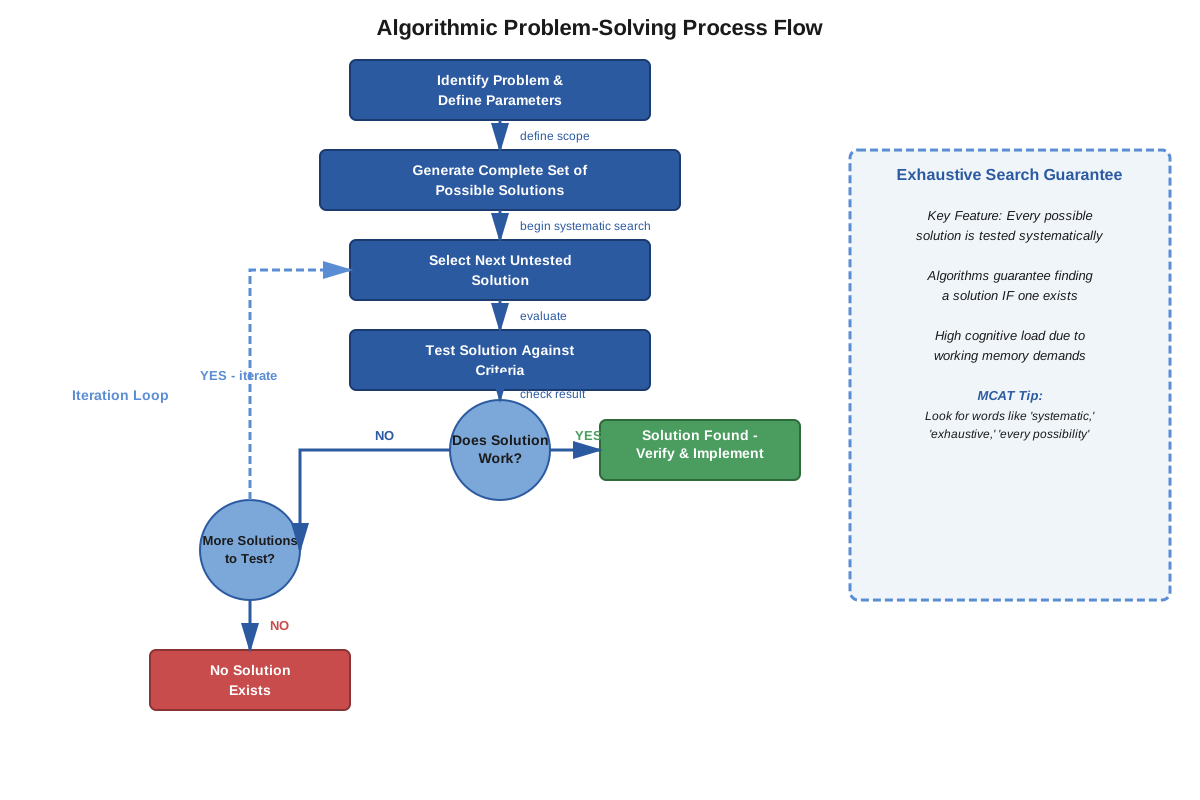
An algorithm is a logical, step-by-step procedure that systematically explores all possible solutions to guarantee finding the correct answer to a problem. The term originates from mathematics and computer science but has been adopted in Algorithms Psychology to describe a specific type of cognitive strategy. Algorithms possess several defining characteristics:
Systematic nature: Algorithms follow predetermined rules without deviation, ensuring consistency across applications. Each step logically follows from the previous one, creating a chain of reasoning that can be replicated by anyone following the same procedure.
Exhaustive search: Algorithms typically examine all possible solutions or combinations until finding the correct answer. This exhaustive approach guarantees accuracy but requires substantial time and cognitive resources.
Guaranteed solution: When properly executed, algorithms always produce the correct answer (assuming a solution exists). This certainty distinguishes algorithms from heuristics, which may fail to find optimal solutions.
High cognitive demand: Algorithmic processing requires sustained attention, working memory capacity, and executive control. The systematic nature of algorithms engages deliberate, controlled processing associated with System 2 thinking in dual-process models.
Types of Algorithms in Cognitive Psychology
Several algorithm types appear in psychological research and Algorithms MCAT questions:
Mathematical algorithms: Step-by-step procedures for solving mathematical problems, such as long division, the quadratic formula, or systematic equation solving. These algorithms guarantee correct answers when applied properly but require careful execution of each step.
Search algorithms: Systematic methods for finding specific items or information, such as alphabetically searching through a list or systematically checking each possibility in a combination lock. The exhaustive nature ensures the target will be found if present.
Decision trees: Branching algorithms that guide decision-making through a series of yes/no questions, with each answer determining the next step. Medical diagnostic algorithms often take this form, systematically ruling out conditions based on symptom presence or absence.
Trial-and-error algorithms: Systematic testing of all possible solutions until finding one that works. While seemingly random, true algorithmic trial-and-error follows a methodical pattern ensuring all possibilities are tested without repetition.
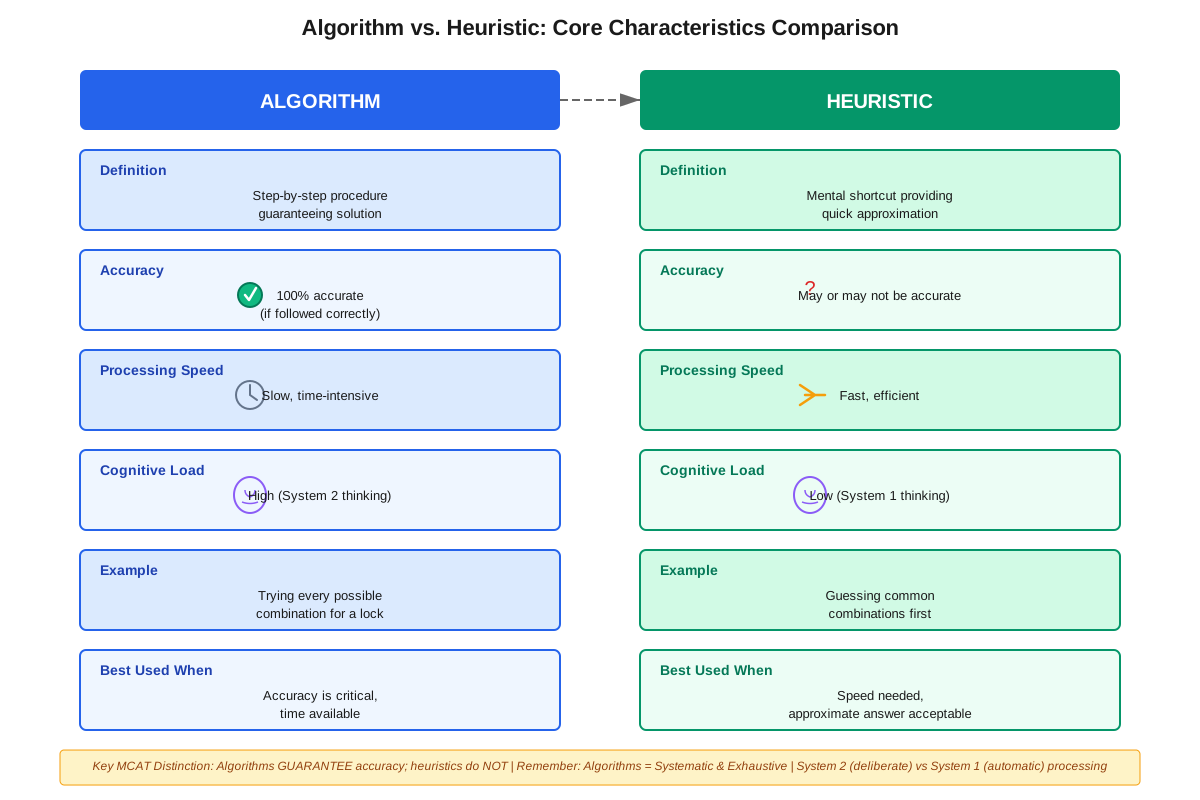
Algorithms Versus Heuristics
Understanding the distinction between algorithms and heuristics represents a high-yield concept for the MCAT:
| Feature | Algorithms | Heuristics |
|---|---|---|
| Accuracy | Guaranteed correct solution | May or may not reach correct solution |
| Speed | Slow, time-intensive | Fast, efficient |
| Cognitive demand | High (System 2 processing) | Low (System 1 processing) |
| Completeness | Exhaustive search of possibilities | Selective, shortcut-based approach |
| Flexibility | Rigid, rule-based | Adaptable to context |
| Best used when | Accuracy is critical, time is available | Speed is essential, approximate answers acceptable |
This comparison frequently appears in MCAT questions asking students to identify which strategy a research participant or clinical scenario character is employing.
Cognitive Costs and Benefits
Algorithmic thinking involves significant trade-offs that the MCAT tests regularly:
Benefits of algorithmic processing:
- Certainty: Algorithms eliminate guesswork and guarantee finding the solution
- Reliability: Results are consistent and reproducible across users and contexts
- Completeness: No potential solutions are overlooked
- Reduced bias: Systematic procedures minimize the influence of cognitive biases and emotional factors
Costs of algorithmic processing:
- Time consumption: Exhaustive searches require substantially more time than heuristic shortcuts
- Cognitive load: Algorithms tax working memory and attentional resources, potentially causing mental fatigue
- Inflexibility: Rigid procedures may not adapt well to novel situations or changing conditions
- Opportunity cost: Time spent on algorithmic processing cannot be allocated to other tasks
Algorithms in Problem-Solving Research
Cognitive psychologists study algorithms to understand human problem-solving capabilities and limitations. Classic research paradigms include:
Tower of Hanoi: Participants move disks between pegs following specific rules. Algorithmic solutions involve systematically working through the minimum number of moves, while heuristic approaches use rules of thumb that may not be optimal.
Anagram solving: Systematically testing all letter combinations (algorithmic) versus using linguistic knowledge to guess likely words (heuristic). Research shows most people use hybrid approaches, starting with heuristics and switching to algorithms when shortcuts fail.
Chess and game-playing: Expert players use both algorithms (calculating forced sequences of moves) and heuristics (recognizing patterns and positions). Novices rely more heavily on algorithmic thinking, systematically evaluating each possible move.
Factors Affecting Algorithm Use
Several variables influence whether individuals employ algorithmic strategies:
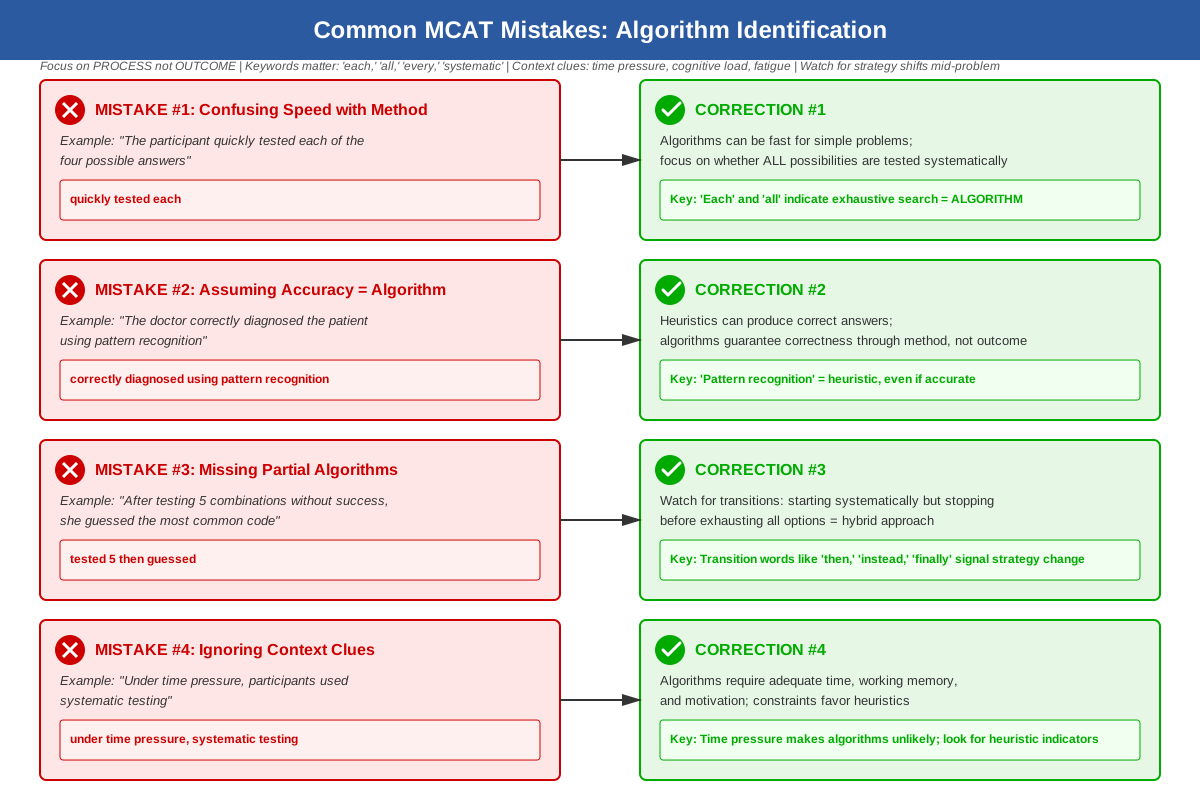
Time pressure: Under time constraints, people abandon algorithms in favor of faster heuristics, even when accuracy suffers. MCAT questions may describe experiments manipulating time limits to observe strategy shifts.
Problem complexity: As problems become more complex with more possible solutions, algorithmic approaches become impractical. The combinatorial explosion of possibilities exceeds working memory capacity and available time.
Individual differences: Cognitive abilities, particularly working memory capacity and processing speed, predict algorithmic success. Higher cognitive capacity enables sustained algorithmic processing.
Task importance: When stakes are high and errors costly, people invest more effort in algorithmic approaches despite the time and cognitive costs.
Expertise: Domain experts develop efficient algorithms through practice, reducing cognitive load and execution time. Novices find the same algorithms more demanding and time-consuming.
Concept Relationships
Algorithms connect to multiple concepts within Cognition and Consciousness and broader cognitive psychology:
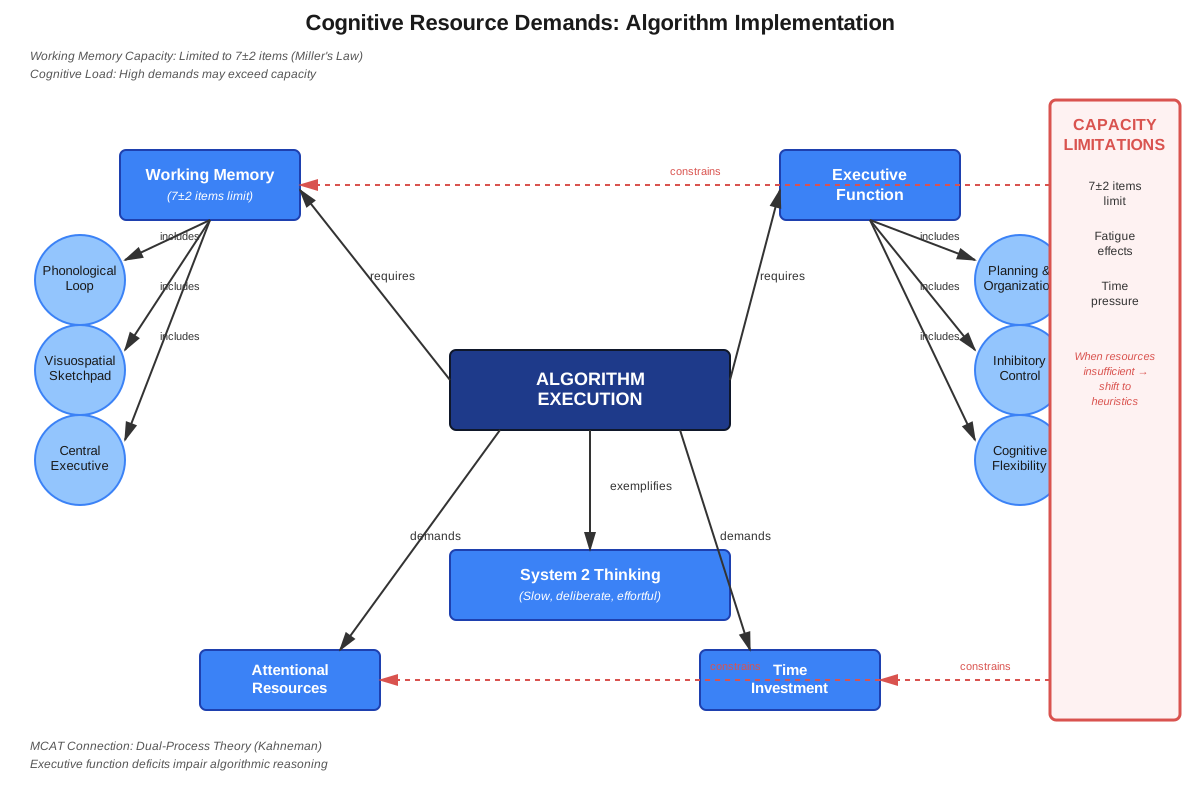
Algorithms → Working Memory: Algorithmic processing heavily depends on working memory capacity to maintain problem states, track progress through steps, and hold intermediate results. Limited working memory capacity constrains algorithmic problem-solving, explaining why complex algorithms often exceed human cognitive capabilities.
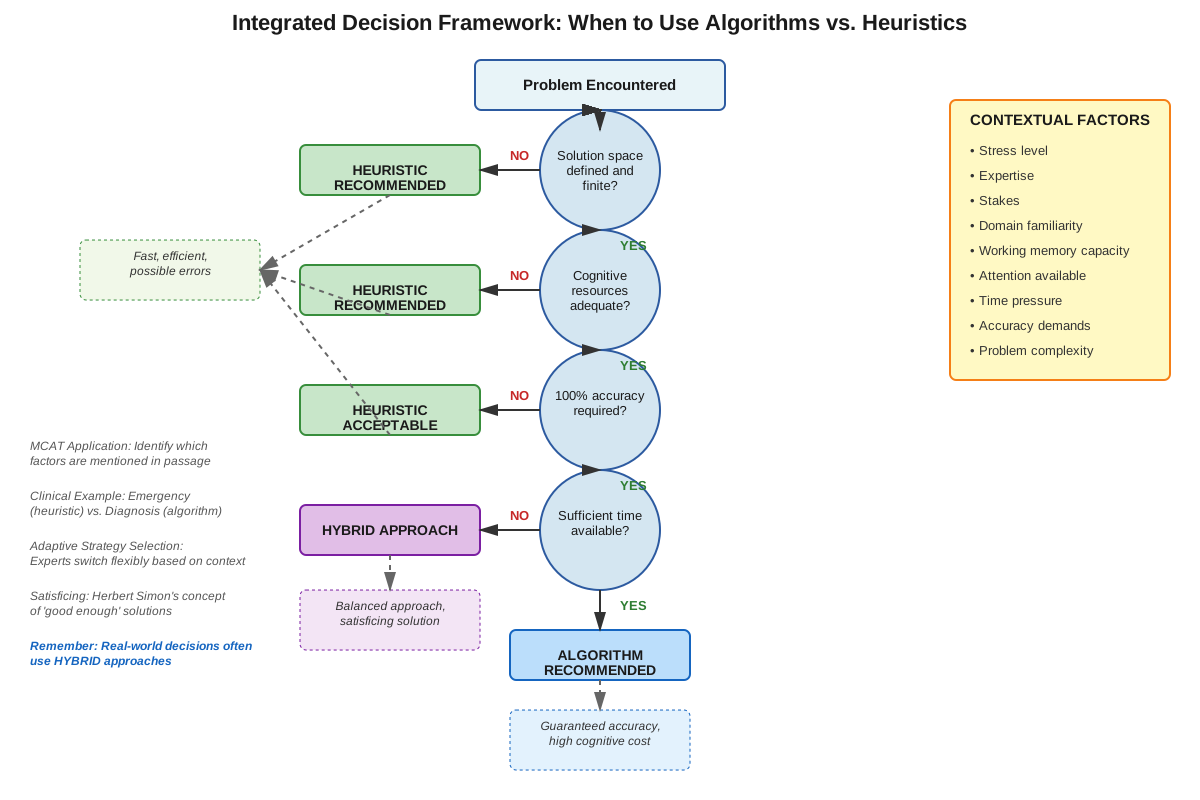
Algorithms ↔ Heuristics: These represent complementary problem-solving strategies along a continuum from guaranteed accuracy (algorithms) to efficient approximation (heuristics). Many real-world problem-solving situations involve switching between or combining both approaches.
Algorithms → Executive Function: Successful algorithm execution requires executive control processes including planning, monitoring progress, inhibiting impulsive responses, and maintaining focus despite distractions or fatigue.
Dual-Process Theory → Algorithms: Algorithms exemplify System 2 processing—slow, deliberate, conscious, and effortful—contrasting with System 1's fast, automatic, unconscious processing that characterizes heuristic thinking.
Algorithms → Cognitive Load: The systematic, exhaustive nature of algorithms imposes high cognitive load, potentially interfering with concurrent tasks and causing mental fatigue. This relationship explains performance decrements when algorithmic processing is combined with other demanding tasks.
Problem-Solving → Algorithms: Algorithms represent one category within the broader domain of problem-solving strategies, alongside heuristics, insight, and trial-and-error approaches. Understanding this hierarchy helps contextualize when algorithmic thinking is most appropriate.
Algorithms → Attention: Sustained algorithmic processing requires focused attention and is vulnerable to disruption by distractors, multitasking demands, or attentional fatigue.
High-Yield Facts
⭐ Algorithms guarantee correct solutions through systematic, step-by-step procedures that exhaustively examine all possibilities
⭐ Algorithms require high cognitive resources (working memory, attention, executive function) and are time-intensive compared to heuristics
⭐ The primary trade-off in algorithmic thinking is accuracy versus efficiency—algorithms maximize accuracy at the cost of speed
⭐ Algorithms represent System 2 processing: slow, deliberate, conscious, and effortful
⭐ Under time pressure or high cognitive load, people typically abandon algorithms in favor of faster heuristic strategies
- Algorithms are most appropriate when accuracy is critical, time is available, and the problem space is manageable
- Mathematical procedures like long division and the quadratic formula exemplify algorithmic approaches
- Clinical diagnostic algorithms systematically rule out conditions based on symptom patterns and test results
- Expertise reduces the cognitive demands of algorithms through practice and automatization of component steps
- The combinatorial explosion of possibilities in complex problems makes purely algorithmic approaches impractical
- Algorithms minimize cognitive biases because they follow predetermined rules rather than intuitive judgments
- Working memory capacity predicts success in algorithmic problem-solving tasks
- Hybrid strategies combining algorithmic and heuristic elements characterize most real-world problem-solving
Quick check — test yourself on Algorithms so far.
Try Flashcards →Common Misconceptions
Misconception: Algorithms are always superior to heuristics because they guarantee correct answers.
Correction: While algorithms ensure accuracy, they are often impractical due to time constraints, cognitive limitations, and problem complexity. Heuristics frequently provide sufficiently accurate solutions much more efficiently, making them more adaptive in many real-world contexts.
Misconception: Using an algorithm means simply trying every possible solution randomly until one works.
Correction: True algorithmic processing is systematic and organized, not random. Algorithms follow logical procedures that methodically explore the solution space without redundant testing. Random trial-and-error without systematic organization is not algorithmic.
Misconception: Algorithms require no thinking or intelligence—just mechanical following of steps.
Correction: Successful algorithm execution demands substantial cognitive resources including working memory, sustained attention, executive control, and monitoring for errors. Complex algorithms challenge even high-capacity individuals and require genuine cognitive effort.
Misconception: People either use algorithms or heuristics, but not both simultaneously.
Correction: Most real-world problem-solving involves hybrid strategies that combine algorithmic and heuristic elements. People may use heuristics to narrow possibilities then switch to algorithms for final verification, or use algorithms for critical steps while applying heuristics to less important components.
Misconception: Algorithms always take longer than heuristics to execute.
Correction: While algorithms are generally slower, expertise and practice can automate algorithmic procedures, making them nearly as fast as heuristics. Additionally, some simple algorithms (like alphabetical search in a short list) may be faster than generating and applying appropriate heuristics.
Misconception: Algorithms eliminate all errors in problem-solving.
Correction: Algorithms guarantee correct solutions only when executed perfectly. Execution errors—skipping steps, miscalculating intermediate results, or losing track of progress—can cause algorithmic approaches to fail. Human limitations in attention and working memory make execution errors common in complex algorithms.
Worked Examples
Example 1: Identifying Algorithmic vs. Heuristic Strategies
Scenario: A research study examines how participants solve anagrams (scrambled words). Group A is instructed to systematically test every possible letter combination until finding a valid word. Group B is told to use their knowledge of common letter patterns and word structures to make educated guesses. Both groups solve the anagram "TAERC" (which unscrambles to "CRATE").
Question: Which group is using an algorithmic approach, and what would be the predicted differences in solving time and accuracy?
Analysis:
Step 1: Identify the defining characteristics of each approach.
- Group A: "systematically test every possible letter combination" indicates exhaustive search
- Group B: "use knowledge of common patterns to make educated guesses" indicates selective, shortcut-based approach
Step 2: Match characteristics to definitions.
- Exhaustive, systematic testing = algorithmic approach
- Pattern-based educated guessing = heuristic approach
- Therefore, Group A uses algorithms; Group B uses heuristics
Step 3: Predict performance differences based on algorithm vs. heuristic properties.
- Accuracy: Group A should achieve 100% accuracy (algorithms guarantee solutions) while Group B may miss some anagrams if their heuristics fail
- Time: Group A should take longer (exhaustive search is time-intensive) while Group B should be faster (shortcuts reduce processing time)
- Cognitive load: Group A should show higher cognitive demands (systematic processing taxes working memory) while Group B should show lower demands
Answer: Group A uses an algorithmic approach. Predicted outcomes: Group A will show higher accuracy but longer solving times and greater cognitive load compared to Group B's heuristic approach.
Connection to learning objectives: This example demonstrates applying algorithm concepts to exam-style questions and distinguishing algorithmic from heuristic strategies in experimental contexts.
Example 2: Evaluating Appropriateness of Algorithmic Thinking
Scenario: A physician must diagnose a patient presenting with chest pain. Consider two approaches:
Approach 1: The physician systematically works through a comprehensive diagnostic algorithm, testing for every possible cause of chest pain in order of likelihood, conducting all recommended tests regardless of initial findings.
Approach 2: The physician uses clinical experience to quickly identify the most likely diagnoses based on patient history and presentation, ordering targeted tests to confirm or rule out these specific conditions.
Question: Evaluate the appropriateness of each approach considering the clinical context, and explain which represents algorithmic thinking.
Analysis:
Step 1: Identify which approach is algorithmic.
- Approach 1: "systematically works through," "every possible cause," "all recommended tests" = exhaustive, systematic = algorithmic
- Approach 2: "uses experience," "most likely diagnoses," "targeted tests" = selective, shortcut-based = heuristic
Step 2: Evaluate appropriateness considering context.
For Approach 1 (algorithmic):
- Benefits: Ensures no diagnoses are missed; reduces bias; provides comprehensive evaluation
- Drawbacks: Time-consuming (potentially dangerous in emergencies); expensive (unnecessary tests); high cognitive demands on physician
- Appropriateness: May be suitable for stable patients with unclear presentations where time permits thorough evaluation
For Approach 2 (heuristic):
- Benefits: Fast (critical in emergencies); efficient use of resources; leverages expertise
- Drawbacks: May miss rare conditions; vulnerable to cognitive biases; accuracy depends on physician experience
- Appropriateness: Better for emergency situations requiring rapid intervention; suitable when experienced physicians can reliably identify likely diagnoses
Step 3: Consider hybrid approaches.
- Optimal strategy likely combines both: use heuristics to quickly identify and address life-threatening conditions, then apply algorithmic thoroughness for comprehensive evaluation once patient is stable
Answer: Approach 1 represents algorithmic thinking. In emergency chest pain scenarios, Approach 2 (heuristic) is more appropriate because speed is critical and experienced physicians can reliably identify serious conditions. However, algorithmic approaches become more appropriate for stable patients requiring comprehensive evaluation. The best clinical practice often involves hybrid strategies that adapt to changing circumstances.
Connection to learning objectives: This example demonstrates analyzing cognitive costs and benefits of algorithmic thinking, evaluating when algorithms versus heuristics are most appropriate, and connecting algorithms to real-world (clinical) applications.
Exam Strategy
Approaching MCAT Questions on Algorithms
Step 1: Identify the question type
- Definition questions: "Which of the following best describes an algorithm?"
- Comparison questions: "How does the approach in the passage differ from heuristic thinking?"
- Application questions: "Which participant is using an algorithmic strategy?"
- Evaluation questions: "Why might the algorithmic approach fail in this scenario?"
Step 2: Look for trigger words and phrases
Algorithmic indicators:
- "Systematic," "step-by-step," "methodical"
- "All possibilities," "exhaustive," "every option"
- "Guaranteed," "certain," "ensures correct answer"
- "Follows procedure," "predetermined steps"
- "Time-consuming," "thorough," "comprehensive"
Heuristic indicators (for contrast):
- "Shortcut," "rule of thumb," "quick"
- "Educated guess," "likely," "probable"
- "Efficient," "fast," "approximate"
- "Based on experience," "intuitive"
Step 3: Apply the accuracy-efficiency trade-off framework
- Algorithms = high accuracy, low efficiency (slow, cognitively demanding)
- Heuristics = lower accuracy, high efficiency (fast, less demanding)
- Questions often test understanding of this fundamental trade-off
Step 4: Consider context and constraints
- Time pressure → favors heuristics over algorithms
- High stakes/critical accuracy → favors algorithms over heuristics
- Complex problems → may make algorithms impractical
- Available cognitive resources → affects algorithm feasibility
Process-of-Elimination Tips
Eliminate answers that:
- Confuse algorithms with heuristics (most common wrong answer)
- Suggest algorithms are always superior or always inferior (context matters)
- Claim algorithms require no cognitive effort (they're highly demanding)
- State algorithms involve random trial-and-error (they're systematic)
- Ignore the accuracy-efficiency trade-off
Keep answers that:
- Emphasize systematic, exhaustive characteristics
- Acknowledge both benefits (accuracy) and costs (time, cognitive load)
- Correctly distinguish algorithms from heuristics
- Consider contextual appropriateness
Time Allocation
- Discrete questions on algorithms: 60-90 seconds (straightforward definitions and comparisons)
- Passage-based questions: 90-120 seconds (requires integrating passage information with algorithm concepts)
- Complex application questions: 120+ seconds (may require working through scenarios systematically)
Exam Tip: When passages describe research studies comparing problem-solving strategies, immediately identify which groups use algorithmic versus heuristic approaches. This distinction forms the basis for most subsequent questions.
Memory Techniques
Mnemonic: SYSTEM for Algorithm Characteristics
Systematic procedure
Yields guaranteed solution
Slow and time-intensive
Thorough and exhaustive
Effortful (high cognitive demand)
Methodical step-by-step process
Visualization Strategy
Picture an algorithm as a detailed recipe that must be followed exactly:
- Each step is clearly defined (systematic)
- Following all steps guarantees the dish turns out correctly (guaranteed solution)
- Takes significant time to complete all steps (time-intensive)
- Requires careful attention to avoid mistakes (high cognitive demand)
- Must follow steps in order without skipping (methodical)
Contrast this with a heuristic as an experienced chef improvising:
- Uses general principles rather than exact measurements
- Works quickly based on intuition
- May not always produce perfect results
- Requires less conscious effort
Acronym: ACE for Algorithm vs. Heuristic Comparison
Accuracy: Algorithms guarantee it; heuristics approximate it
Cognitive load: Algorithms demand high; heuristics require low
Efficiency: Algorithms sacrifice it; heuristics maximize it
Memory Palace Technique
Create a mental journey through a library:
- Entrance (Definition): A systematic card catalog representing algorithmic organization
- First Room (Characteristics): Shelves arranged in perfect order, every book accounted for (exhaustive, systematic)
- Second Room (Comparison): Two reading areas—one with detailed instruction manuals (algorithms), one with quick reference guides (heuristics)
- Third Room (Applications): Medical textbooks with diagnostic flowcharts (clinical algorithms)
- Exit (Trade-offs): A scale balancing accuracy weights against efficiency weights
Summary
Algorithms represent systematic, step-by-step procedures that guarantee correct solutions through exhaustive exploration of all possibilities. As a fundamental concept in cognitive psychology and the MCAT Psychology/Sociology section, algorithms exemplify deliberate, controlled processing (System 2 thinking) that requires substantial cognitive resources including working memory, sustained attention, and executive function. The defining trade-off in algorithmic thinking balances guaranteed accuracy against efficiency costs—algorithms ensure correct answers but demand significant time and mental effort. Understanding algorithms requires distinguishing them from heuristics (mental shortcuts that prioritize speed over certainty) and recognizing when each approach is most appropriate based on contextual factors including time pressure, problem complexity, task importance, and available cognitive resources. MCAT questions typically test the ability to identify algorithmic versus heuristic strategies in research scenarios, evaluate the appropriateness of different approaches, and predict performance outcomes based on strategy choice. Mastery of this topic enables students to analyze problem-solving behavior, understand cognitive limitations, and connect algorithmic thinking to broader concepts in cognition, decision-making, and clinical reasoning.
Key Takeaways
- Algorithms are systematic, step-by-step procedures that guarantee correct solutions through exhaustive search of all possibilities
- The fundamental trade-off is accuracy versus efficiency: algorithms maximize accuracy but require substantial time and cognitive resources
- Algorithms represent System 2 processing (slow, deliberate, effortful) in contrast to heuristic System 1 processing (fast, automatic, efficient)
- MCAT questions primarily test the ability to distinguish algorithmic from heuristic approaches and evaluate contextual appropriateness
- Under time pressure, high cognitive load, or with complex problems, people typically abandon algorithms in favor of more efficient heuristics
- Successful algorithm execution depends on working memory capacity, sustained attention, and executive control—human cognitive limitations often make purely algorithmic approaches impractical
- Real-world problem-solving typically involves hybrid strategies that combine algorithmic thoroughness for critical steps with heuristic efficiency for less important components
Related Topics
Heuristics and Biases: Understanding mental shortcuts (availability, representativeness, anchoring) provides essential contrast to algorithmic thinking and explains why people often prefer efficient approximations over guaranteed accuracy. Mastering algorithms enables deeper comprehension of when and why heuristics fail.
Working Memory and Cognitive Load: The capacity limitations of working memory directly constrain algorithmic processing. Understanding these limitations explains why complex algorithms exceed human capabilities and why cognitive load affects strategy selection.
Dual-Process Theory (System 1 vs. System 2): Algorithms exemplify System 2's slow, deliberate processing. Comprehensive understanding of dual-process models requires mastery of both algorithmic (System 2) and heuristic (System 1) thinking.
Problem-Solving and Decision-Making: Algorithms represent one category within broader problem-solving frameworks. Progression to advanced topics in judgment and decision-making builds on foundational algorithm concepts.
Executive Function: The cognitive control processes required for successful algorithm execution connect to broader topics in executive function, including planning, monitoring, and cognitive flexibility.
Practice CTA
Now that you've mastered the core concepts of algorithms in cognitive psychology, reinforce your learning by attempting practice questions and reviewing flashcards on this topic. Focus on distinguishing algorithmic from heuristic approaches in various scenarios, and practice predicting performance outcomes based on strategy selection. The more you apply these concepts to MCAT-style questions, the more automatic your recognition of algorithmic thinking will become on test day. Remember: understanding the accuracy-efficiency trade-off is your key to success on algorithm questions. You've built a strong foundation—now strengthen it through deliberate practice!
Sign up free to keep reading
Create a free AnvayaPrep account to finish this MCAT guide on Algorithms — plus flashcards and practice questions.