Overview
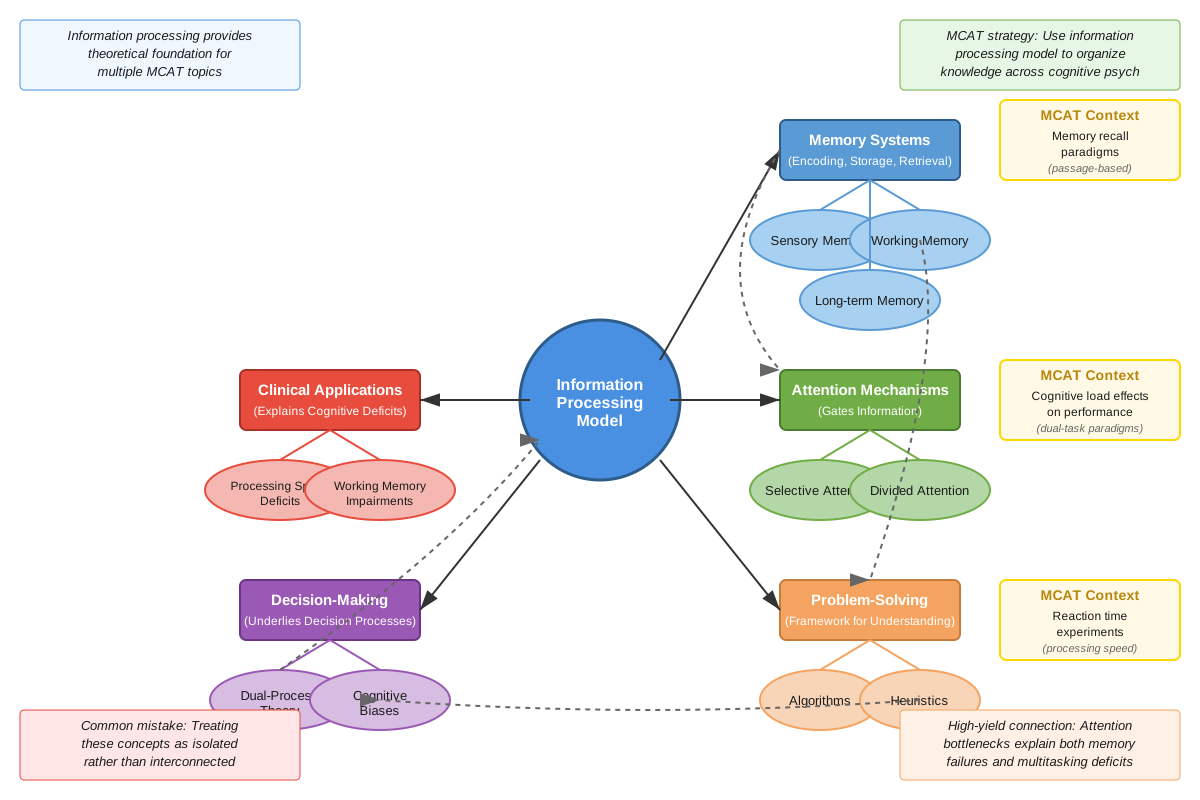
Information processing is a foundational framework in cognitive psychology that conceptualizes how the human mind receives, transforms, stores, retrieves, and uses information from the environment. This model draws an analogy between human cognition and computer processing, proposing that mental operations occur through a series of discrete stages: encoding (input), storage (retention), and retrieval (output). Understanding information processing is essential for the MCAT because it provides the theoretical backbone for numerous topics in Cognition and Consciousness, including memory systems, attention mechanisms, problem-solving strategies, and decision-making processes.
For the MCAT Psychology section, information processing represents a medium-yield topic that frequently appears in passage-based questions and discrete items testing cognitive psychology principles. Questions may present experimental scenarios examining reaction times, memory recall patterns, or attention paradigms, requiring students to apply information processing models to interpret data and predict outcomes. The framework also connects intimately with neuroscience concepts, as modern cognitive neuroscience seeks to identify the neural substrates underlying each processing stage.
The information processing approach revolutionized psychology by providing a testable, mechanistic model of cognition that moved beyond behaviorism's black-box approach. This topic bridges multiple MCAT domains: it connects to biological bases of behavior (neural mechanisms), sensation and perception (sensory input), memory (storage systems), and social psychology (schema processing). Mastering information processing enables students to understand how humans actively construct mental representations of reality rather than passively recording environmental stimuli—a concept that appears across diverse MCAT contexts from clinical reasoning to social cognition.
Learning Objectives
- [ ] Define Information processing using accurate Psychology terminology
- [ ] Explain why Information processing matters for the MCAT
- [ ] Apply Information processing to exam-style questions
- [ ] Identify common mistakes related to Information processing
- [ ] Connect Information processing to related Psychology concepts
- [ ] Describe the three-stage model of information processing and the function of each stage
- [ ] Compare and contrast serial versus parallel processing mechanisms
- [ ] Analyze how processing limitations (capacity and speed) affect cognitive performance
- [ ] Evaluate the role of automatic versus controlled processing in cognitive tasks
Prerequisites
- Basic understanding of memory systems: Information processing theory provides the framework for understanding how sensory, short-term, and long-term memory interact during cognitive tasks
- Familiarity with attention concepts: Selective and divided attention represent critical bottlenecks in information processing that determine what information enters conscious awareness
- Knowledge of sensation and perception: Sensory input represents the initial stage of information processing, where physical stimuli are transduced into neural signals
- Understanding of neural communication: The biological mechanisms underlying information processing depend on synaptic transmission and neural network activation patterns
Why This Topic Matters
Information processing provides the conceptual foundation for understanding virtually all cognitive phenomena tested on the MCAT. In clinical contexts, information processing models help explain cognitive deficits in neurological conditions (e.g., processing speed deficits in multiple sclerosis, working memory impairments in schizophrenia) and guide rehabilitation strategies. Healthcare providers must understand how patients process medical information to improve communication, informed consent, and treatment adherence.
On the MCAT, information processing appears in approximately 3-5% of Psychology/Sociology section questions, typically integrated with other cognitive topics rather than tested in isolation. Questions commonly present experimental paradigms such as Stroop tasks, dichotic listening studies, or memory recall experiments, requiring students to identify which processing stage is being manipulated or measured. Passage-based questions may describe research on cognitive aging, multitasking performance, or attention disorders, asking students to apply information processing principles to interpret findings.
The topic frequently appears in questions that require students to distinguish between different types of processing (automatic vs. controlled, serial vs. parallel), identify processing bottlenecks that limit performance, or predict how manipulating one processing stage affects overall cognitive performance. Understanding information processing also enables students to critically evaluate research methodology in cognitive psychology studies, a skill tested through experimental design questions on the MCAT.
Core Concepts
The Information Processing Model
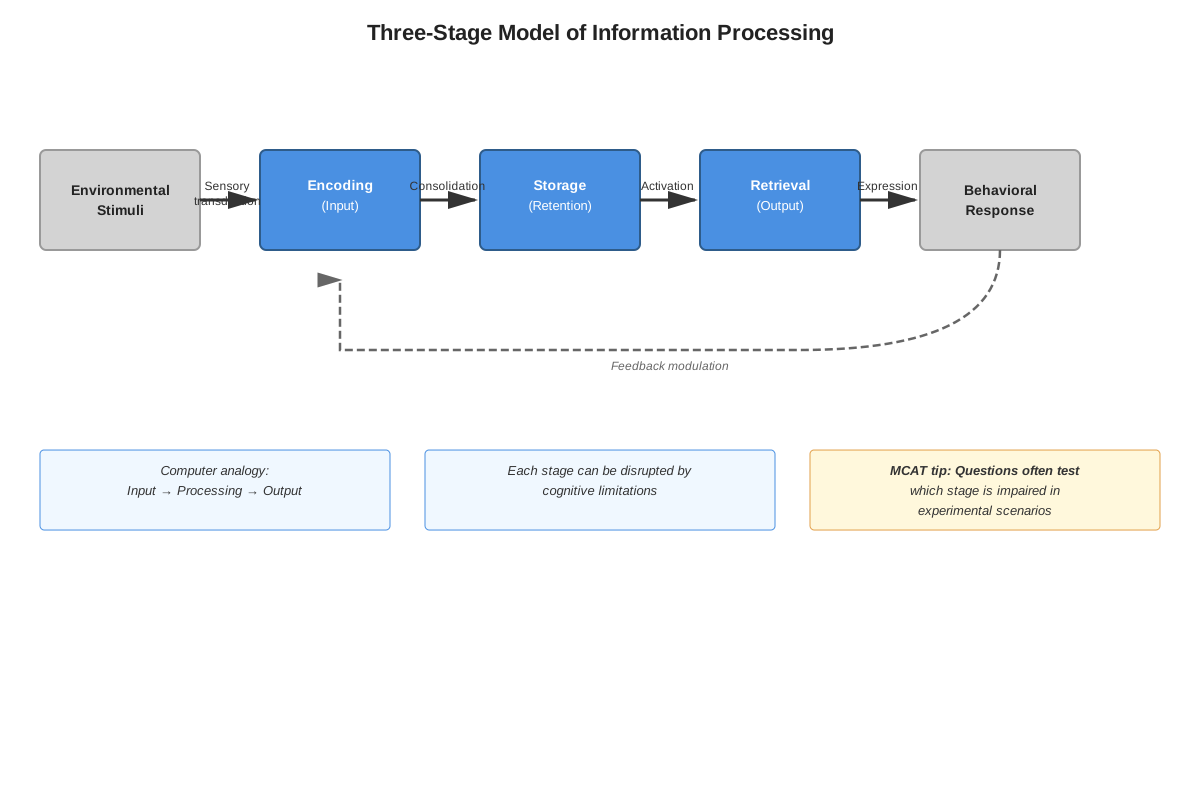
The information processing model conceptualizes human cognition as a system that manipulates information through distinct stages, analogous to how computers process data. This framework emerged in the 1950s-1960s during the "cognitive revolution" as psychologists sought alternatives to behaviorism's stimulus-response paradigm. The model proposes that cognitive processes can be broken down into component operations that transform information from one state to another.
The three fundamental stages are:
- Encoding: The process of transforming sensory input into a mental representation that the cognitive system can manipulate
- Storage: The retention of encoded information over time in various memory systems
- Retrieval: The process of accessing and bringing stored information back into conscious awareness
Each stage involves specific cognitive operations and has characteristic limitations in capacity (how much information can be processed) and duration (how long information persists). Understanding these limitations helps explain phenomena like forgetting, attention failures, and cognitive overload.
Encoding Processes
Encoding represents the initial transformation of environmental stimuli into mental representations. This process is not passive recording but active construction, where incoming information is interpreted based on existing knowledge, expectations, and attention allocation. Multiple encoding strategies exist, each producing different memory trace qualities:
- Structural encoding: Processing physical/sensory features (e.g., what a word looks like)
- Phonemic encoding: Processing sound-related features (e.g., how a word sounds)
- Semantic encoding: Processing meaning-related features (e.g., what a word means)
Research consistently demonstrates that semantic encoding produces the strongest, most durable memory traces—a principle known as levels of processing. The MCAT frequently tests this concept by presenting scenarios where encoding depth is manipulated and asking students to predict memory performance.
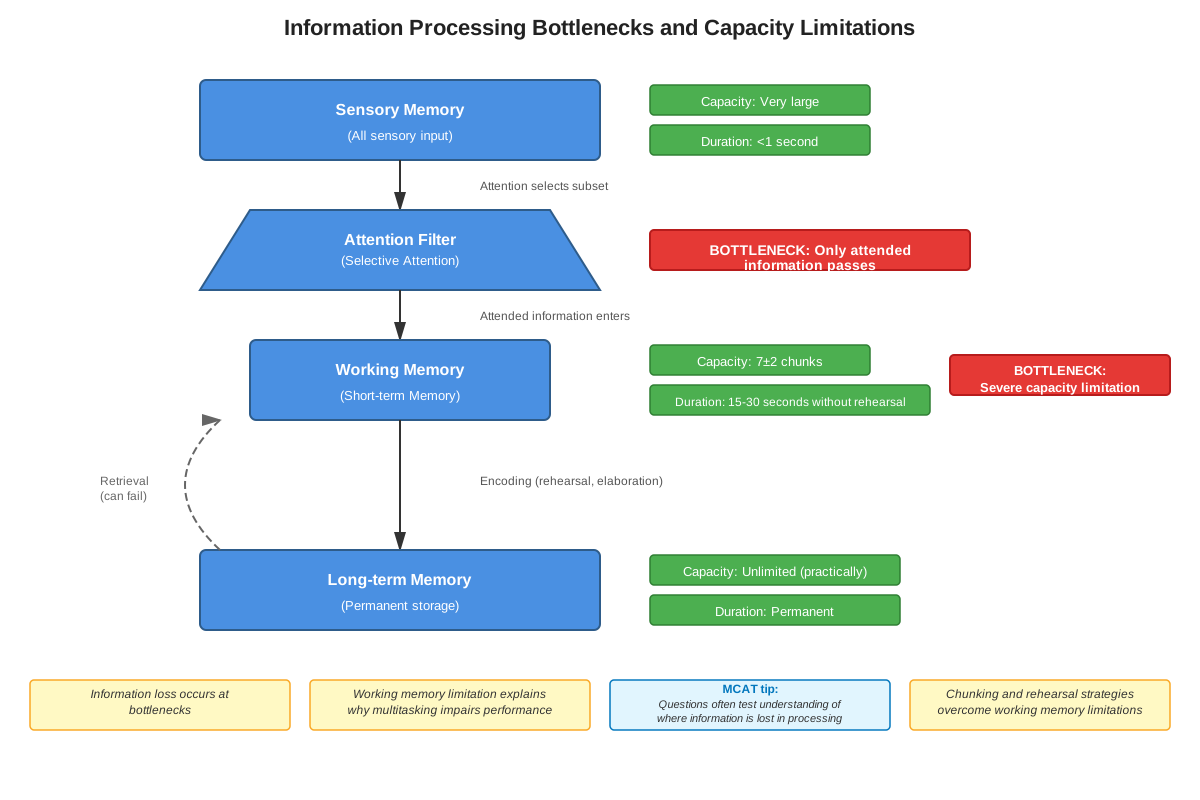
Attention serves as the gateway to encoding, determining which environmental stimuli receive processing resources. The selective attention mechanism filters information, allowing goal-relevant stimuli to undergo deeper processing while irrelevant information is attenuated or blocked. This filtering is necessary because human information processing has limited capacity—we cannot fully process all available sensory information simultaneously.
Storage Systems
Storage involves maintaining encoded information over time across multiple memory systems with different characteristics:
| Memory System | Duration | Capacity | Encoding Type |
|---|---|---|---|
| Sensory Memory | 0.5-3 seconds | Very large (all sensory input) | Modality-specific (iconic, echoic) |
| Short-Term/Working Memory | 15-30 seconds (without rehearsal) | 7±2 chunks | Primarily acoustic, some visual |
| Long-Term Memory | Potentially permanent | Essentially unlimited | Primarily semantic |
Sensory memory briefly holds sensory impressions after stimulus offset, allowing the cognitive system to extract relevant features for further processing. Iconic memory (visual) persists for approximately 0.5 seconds, while echoic memory (auditory) lasts 3-4 seconds.
Working memory represents an active workspace where information is temporarily maintained and manipulated during cognitive tasks. Baddeley's working memory model proposes multiple components: the phonological loop (verbal information), visuospatial sketchpad (visual/spatial information), episodic buffer (integrates information), and central executive (attentional control). The limited capacity of working memory (approximately 7±2 items) represents a critical bottleneck in information processing.
Long-term memory stores information for extended periods, potentially permanently. Information enters long-term memory through consolidation processes that stabilize memory traces. The MCAT tests understanding of how information transfers between memory systems and factors that facilitate or impair this transfer.
Retrieval Mechanisms
Retrieval involves accessing stored information and bringing it back into conscious awareness. Retrieval success depends on multiple factors:
- Encoding specificity: Retrieval is most successful when retrieval cues match encoding conditions
- Context-dependent memory: Environmental context present during encoding serves as an effective retrieval cue
- State-dependent memory: Internal physiological/emotional state during encoding affects retrieval
- Transfer-appropriate processing: Retrieval is enhanced when processing during retrieval matches processing during encoding
Retrieval can occur through recall (generating information from memory without external cues) or recognition (identifying previously encountered information among alternatives). Recognition typically shows superior performance because retrieval cues are provided, reducing the search demands on memory systems.
Serial vs. Parallel Processing
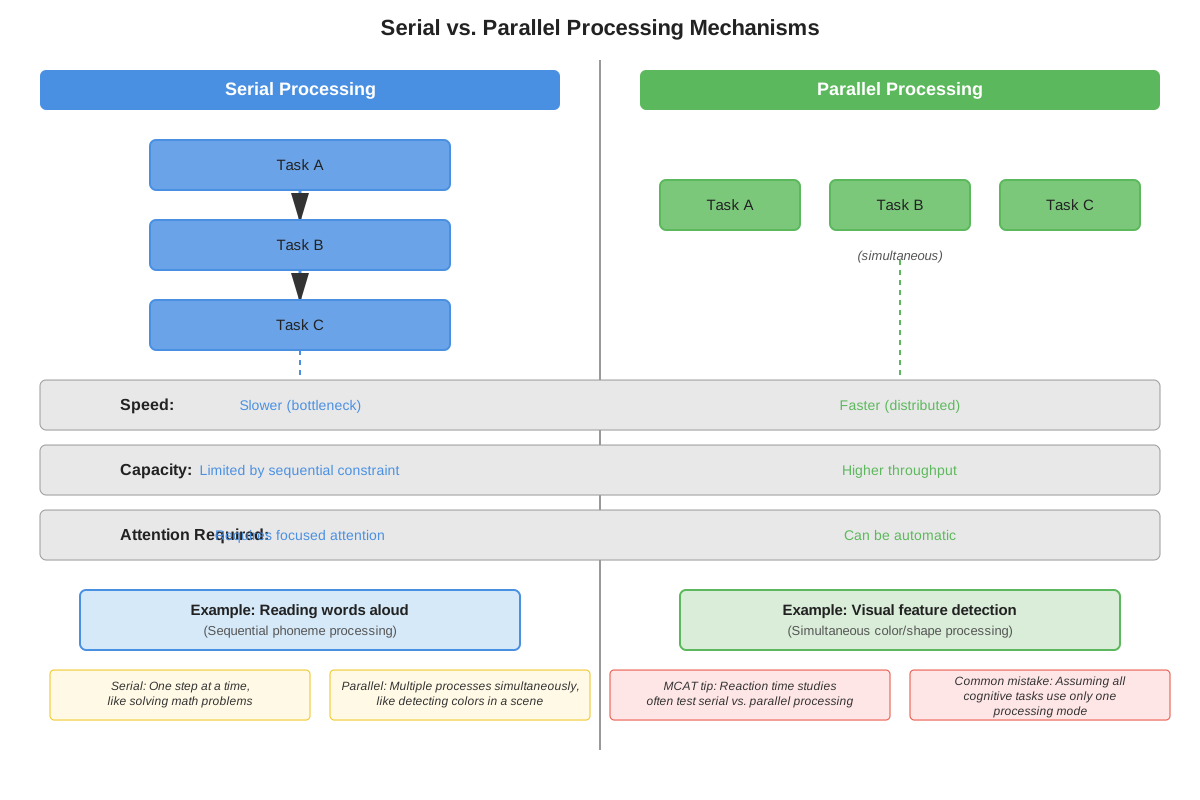
Information processing can occur through different organizational patterns:
Serial processing involves handling information sequentially, one item or operation at a time. This processing mode characterizes controlled, effortful cognitive tasks requiring attention. Serial processing is relatively slow but flexible, allowing complex problem-solving and novel task performance.
Parallel processing involves simultaneously processing multiple pieces of information or performing multiple operations concurrently. This mode characterizes automatic, well-learned tasks that require minimal attention. Parallel processing is fast and efficient but less flexible, operating through fixed processing routines.
The distinction between serial and parallel processing helps explain phenomena like the psychological refractory period—the delay in responding to a second stimulus when it appears shortly after a first stimulus, suggesting a serial bottleneck in response selection processes.
Automatic vs. Controlled Processing
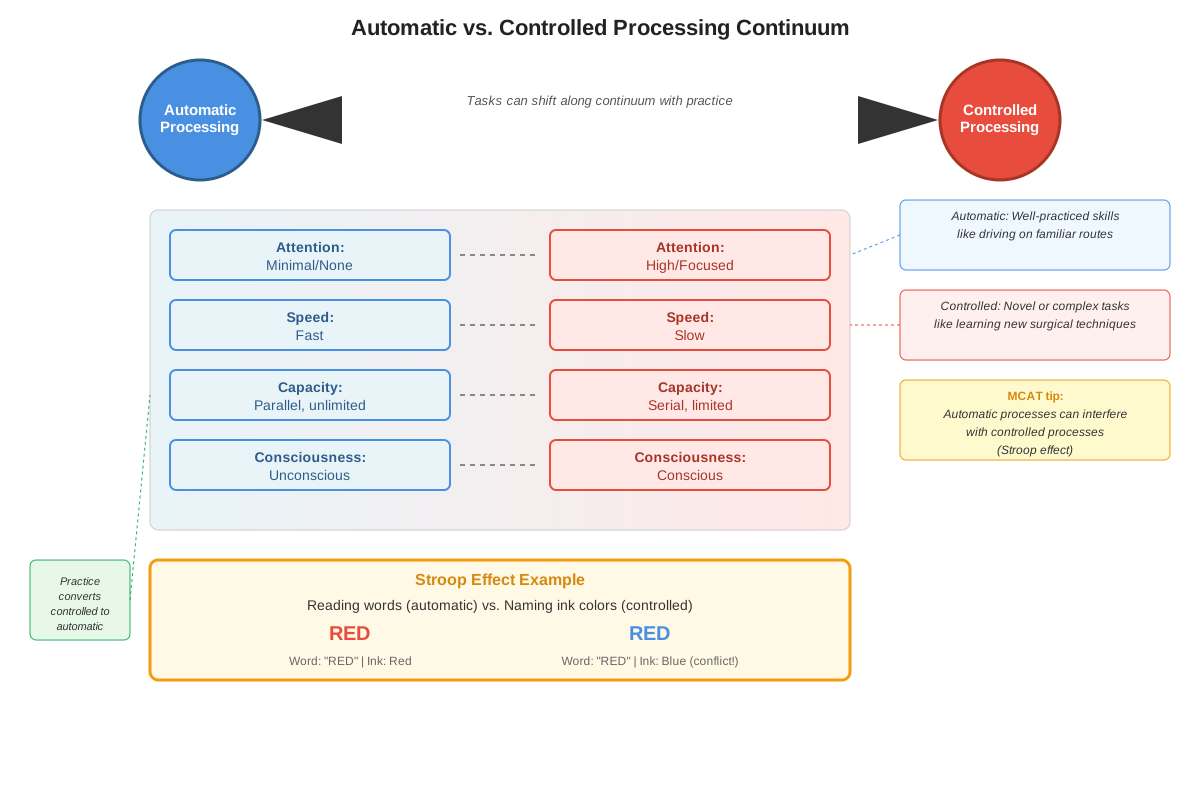
Automatic processing occurs without conscious awareness or intention, requires minimal attentional resources, and develops through extensive practice. Characteristics include:
- Fast execution
- Parallel operation (can occur simultaneously with other processes)
- Difficult to modify or suppress once initiated
- Not limited by working memory capacity
Controlled processing requires conscious attention and intention, consumes significant attentional resources, and remains flexible and adaptable. Characteristics include:
- Slower execution
- Serial operation (interferes with other controlled processes)
- Easily modified based on goals and context
- Limited by working memory capacity
The Stroop effect demonstrates the interaction between automatic and controlled processing: reading words is automatic for literate adults, so naming the ink color of color words (e.g., the word "RED" printed in blue ink) creates interference as automatic word reading competes with controlled color naming.
Processing Capacity and Speed
Information processing systems have inherent limitations that constrain cognitive performance:
Processing capacity refers to the amount of information that can be handled simultaneously. Capacity limitations appear most prominently in working memory and attention systems. The concept of cognitive load describes how task demands can exceed processing capacity, leading to performance decrements.
Processing speed refers to how quickly information can be transformed from one state to another. Processing speed varies across individuals and declines with aging, affecting performance on time-limited cognitive tasks. Reaction time measures provide indices of processing speed, with different reaction time paradigms isolating different processing stages.
The information processing rate can be quantified using measures like bits per second, though human information processing rarely approaches the theoretical maximum due to bottlenecks at various processing stages. Understanding these limitations helps explain phenomena like change blindness (failure to detect visual changes) and inattentional blindness (failure to notice unexpected stimuli)—both resulting from capacity limitations in attention and working memory.
Concept Relationships
Information processing concepts form an interconnected system where each component influences others. The encoding stage depends critically on attention mechanisms that determine which environmental stimuli receive processing resources. Attention acts as a filter or bottleneck, with limited capacity constraining how much information can be encoded simultaneously. The depth and quality of encoding directly affects storage success—information that receives deeper, more elaborate encoding forms stronger memory traces in long-term memory.
Storage systems exist in a hierarchical relationship: sensory memory → working memory → long-term memory. Information must pass through earlier stages to reach later ones, though the transfer is not automatic. Rehearsal and elaboration processes facilitate transfer from working memory to long-term memory, while consolidation processes stabilize long-term memory traces.
Retrieval success depends on both storage quality and the match between encoding and retrieval conditions (encoding specificity principle). Retrieval itself is a reconstructive process that can modify stored memories, creating a bidirectional relationship between retrieval and storage.
The distinction between automatic and controlled processing relates to the serial versus parallel processing dimension: automatic processes typically operate in parallel, while controlled processes operate serially. This relationship explains multitasking performance—people can simultaneously perform multiple automatic tasks but struggle when multiple tasks require controlled processing.
Processing capacity and speed limitations affect all stages of information processing. Limited capacity in working memory constrains encoding (how much can be processed), storage (how much can be maintained), and retrieval (how much can be searched). Processing speed affects how quickly information moves through the system, influencing reaction times and overall cognitive efficiency.
These concepts connect to broader Psychology topics: information processing provides the cognitive mechanisms underlying memory phenomena, explains attention failures in clinical conditions, and offers a framework for understanding decision-making and problem-solving. The model also connects to neuroscience, as researchers identify neural circuits implementing each processing stage, and to social psychology, where schema processing represents information processing applied to social information.
High-Yield Facts
⭐ Information processing conceptualizes cognition as occurring through three stages: encoding (input), storage (retention), and retrieval (output)
⭐ Semantic encoding (processing meaning) produces stronger memory traces than phonemic (sound) or structural (appearance) encoding—the levels of processing effect
⭐ Working memory has limited capacity (approximately 7±2 chunks) and duration (15-30 seconds without rehearsal), representing a critical bottleneck in information processing
⭐ Automatic processing is fast, parallel, requires minimal attention, and develops through practice; controlled processing is slow, serial, requires attention, and remains flexible
⭐ The Stroop effect demonstrates interference between automatic word reading and controlled color naming, illustrating the distinction between automatic and controlled processing
- Attention serves as a filter determining which information receives processing resources and enters conscious awareness
- Encoding specificity principle states that retrieval is most successful when retrieval cues match encoding conditions
- Serial processing handles information sequentially (one item at a time), while parallel processing handles multiple items simultaneously
- Sensory memory briefly holds sensory impressions (iconic memory ~0.5 sec for vision; echoic memory ~3-4 sec for audition)
- Processing speed and capacity limitations constrain cognitive performance, explaining phenomena like change blindness and inattentional blindness
- Recognition (identifying previously encountered information) typically shows better performance than recall (generating information without cues)
- The psychological refractory period demonstrates a serial bottleneck in response selection when two stimuli appear in rapid succession
Quick check — test yourself on Information processing so far.
Try Flashcards →Common Misconceptions
Misconception: Information processing is purely sequential, with information flowing linearly from encoding → storage → retrieval without feedback or interaction between stages.
Correction: Information processing involves extensive feedback and interaction between stages. Retrieval is a reconstructive process that can modify stored memories; existing knowledge in long-term memory influences encoding through top-down processing; and attention allocation during encoding depends on goals and expectations stored in memory.
Misconception: The information processing model claims human cognition works exactly like a computer, with identical mechanisms and limitations.
Correction: The computer analogy is a metaphor, not a literal equivalence. While both systems process information through stages, human cognition involves biological neural networks with properties (parallel distributed processing, neuroplasticity, emotional influences) that differ fundamentally from digital computers. The model provides a useful framework but should not be interpreted as claiming humans are biological computers.
Misconception: Automatic processing is always superior to controlled processing because it is faster and requires less effort.
Correction: Automatic and controlled processing serve different functions with distinct advantages. Automatic processing is efficient for routine, well-learned tasks but lacks flexibility and can produce errors when environmental conditions change. Controlled processing is necessary for novel situations, complex problem-solving, and tasks requiring adaptation. Optimal performance often requires appropriate coordination between both processing modes.
Misconception: Working memory and short-term memory are identical constructs referring to the same cognitive system.
Correction: While related, these terms have distinct meanings. Short-term memory refers simply to temporary storage of information. Working memory includes temporary storage plus active manipulation and processing of information. Working memory is a more comprehensive construct that includes multiple components (phonological loop, visuospatial sketchpad, central executive, episodic buffer) and emphasizes the active processing functions beyond mere storage.
Misconception: Processing capacity limitations are fixed and cannot be modified through training or strategy use.
Correction: While absolute capacity limits exist, effective capacity can be increased through strategies like chunking (grouping individual items into meaningful units), elaborative rehearsal (connecting new information to existing knowledge), and automatization (converting controlled processes to automatic through practice, freeing capacity for other tasks). Expertise in a domain effectively increases functional capacity through better organization and chunking of domain-relevant information.
Misconception: Information that enters sensory memory automatically transfers to working memory and then to long-term memory if given enough time.
Correction: Transfer between memory systems is not automatic and requires active processing. Information in sensory memory decays rapidly unless attention is allocated to it. Information in working memory requires rehearsal, elaboration, or consolidation processes to transfer to long-term memory. Simply maintaining information in working memory through maintenance rehearsal (repetition) produces weak long-term memory traces compared to elaborative rehearsal that processes meaning.
Worked Examples
Example 1: Analyzing a Dichotic Listening Experiment
Scenario: Researchers conduct a dichotic listening experiment where participants wear headphones presenting different messages simultaneously to each ear. Participants are instructed to "shadow" (repeat aloud) the message presented to the right ear while ignoring the left ear message. After the task, participants are asked what they remember from the left ear message. Most participants report remembering almost nothing from the unattended message, though they notice if the speaker's voice changed from male to female.
Question: Which information processing concepts explain these findings, and what do the results suggest about the stage at which selective attention operates?
Analysis:
This scenario tests understanding of selective attention as a filtering mechanism in information processing and the distinction between early versus late selection theories.
Step 1: Identify the processing stages involved. The unattended (left ear) message undergoes some level of processing because participants detect physical changes (voice gender), but semantic content is not remembered.
Step 2: Apply the encoding concept. The attended message receives full encoding (structural, phonemic, and semantic processing), allowing successful storage and retrieval. The unattended message receives only shallow encoding of physical features.
Step 3: Consider attention theories. The results support early selection theory—attention filters information early in processing based on physical characteristics, preventing unattended information from receiving semantic analysis. However, the fact that some physical features (voice gender) are detected suggests the filter is not absolute.
Step 4: Connect to storage and retrieval. Information that does not receive attention-based encoding fails to transfer from sensory memory to working memory, explaining why participants cannot recall unattended message content. The lack of encoding prevents storage, making retrieval impossible.
Conclusion: The findings demonstrate that selective attention operates as an early filter in information processing, limiting which information receives full encoding. Physical features of unattended stimuli receive some processing (explaining voice gender detection), but semantic content requires attention for encoding. This illustrates how attention serves as a bottleneck determining what information enters conscious awareness and memory systems.
Example 2: Predicting Performance on a Dual-Task Paradigm
Scenario: An experiment examines multitasking by having participants perform two tasks simultaneously:
- Condition A: Participants read a passage aloud (Task 1) while categorizing spoken words as "living" or "non-living" (Task 2)
- Condition B: Participants read a passage silently (Task 1) while categorizing spoken words as "living" or "non-living" (Task 2)
- Condition C: Participants read a passage aloud (Task 1) while tapping a simple rhythm with their finger (Task 2)
Question: Rank the conditions from best to worst dual-task performance, and explain your ranking using information processing principles.
Analysis:
This question tests understanding of automatic versus controlled processing, serial versus parallel processing, and processing capacity limitations.
Step 1: Analyze each task's processing demands.
- Reading aloud: Requires controlled processing (attention to words, phonological encoding, motor planning for speech)
- Reading silently: Requires controlled processing but less motor coordination
- Categorizing words as living/non-living: Requires controlled processing (semantic analysis, decision-making)
- Tapping a simple rhythm: Can become automatic with minimal practice, requires minimal attention
Step 2: Apply the principle that controlled processes interfere with each other because they compete for limited attentional resources and operate serially, while automatic processes can operate in parallel with controlled processes.
Step 3: Evaluate each condition:
- Condition A: Two controlled processes (reading aloud + semantic categorization) that both require phonological processing and verbal resources—maximum interference expected
- Condition B: Two controlled processes (silent reading + semantic categorization) but using somewhat different modalities (visual vs. auditory input)—moderate interference
- Condition C: One controlled process (reading aloud) + one automatic process (rhythm tapping)—minimal interference
Step 4: Rank conditions.
Best performance: Condition C (controlled + automatic tasks can operate in parallel)
Intermediate performance: Condition B (two controlled tasks but different input modalities reduce interference)
Worst performance: Condition A (two controlled tasks competing for the same phonological/verbal resources)
Conclusion: This example demonstrates how processing capacity limitations affect multitasking performance. When multiple tasks require controlled processing and compete for the same resources (phonological/verbal in Condition A), performance suffers due to serial processing bottlenecks. Tasks can be performed simultaneously more successfully when one becomes automatic (Condition C) or when tasks use different processing resources (Condition B). This illustrates the practical importance of understanding information processing principles for predicting cognitive performance.
Exam Strategy
When approaching MCAT questions on information processing, begin by identifying which processing stage (encoding, storage, or retrieval) the question addresses. Many questions describe experimental manipulations and ask students to predict effects on performance—determine whether the manipulation affects input (encoding), retention (storage), or output (retrieval) to narrow answer choices.
Trigger words that signal information processing concepts include:
- "Attention," "selective attention," "divided attention" → encoding stage, capacity limitations
- "Rehearsal," "elaboration," "consolidation" → transfer from working to long-term memory
- "Retrieval cues," "context effects," "encoding specificity" → retrieval stage
- "Automatic," "effortless," "parallel" → automatic processing
- "Controlled," "effortful," "serial," "attention-demanding" → controlled processing
- "Capacity," "bottleneck," "interference" → processing limitations
- "Reaction time," "processing speed" → temporal aspects of processing
For passage-based questions, identify the dependent variable being measured (reaction time, accuracy, recall performance) and determine which processing stage or mechanism it reflects. Passages often describe cognitive experiments manipulating attention, memory encoding strategies, or dual-task conditions—map these manipulations onto the information processing framework to predict outcomes.
Process-of-elimination strategy: Eliminate answers that confuse processing stages (e.g., claiming an encoding manipulation affects retrieval directly without affecting storage). Eliminate answers that violate capacity principles (e.g., suggesting unlimited parallel controlled processing). Eliminate answers that confuse automatic and controlled processing characteristics (e.g., claiming automatic processes require attention or that controlled processes cannot be modified).
Time allocation: Information processing questions typically require 60-90 seconds. Spend 20-30 seconds identifying the processing stage and mechanism being tested, 20-30 seconds evaluating answer choices against information processing principles, and 20-30 seconds confirming your answer by eliminating alternatives. If a question describes an experiment, quickly sketch the design (independent and dependent variables) to clarify the processing stage being manipulated and measured.
Watch for questions that require distinguishing between similar concepts: working memory versus short-term memory, automatic versus controlled processing, serial versus parallel processing, recall versus recognition. The MCAT frequently tests these distinctions through scenarios requiring students to apply the concepts rather than simply defining them.
Memory Techniques
Mnemonic for the three stages of information processing: "Every Student Retrieves" (Encoding → Storage → Retrieval)
Mnemonic for levels of processing (from shallow to deep): "Some People Study" (Structural → Phonemic → Semantic), with the reminder that deeper processing (Semantic) produces better memory
Mnemonic for working memory components (Baddeley's model): "Please Visit Every Class" (Phonological loop → Visuospatial sketchpad → Episodic buffer → Central executive)
Visualization for automatic vs. controlled processing: Picture a highway (automatic processing—fast, parallel lanes, well-practiced route) versus a maze (controlled processing—slow, one path at a time, requires attention and decision-making at each turn)
Acronym for factors affecting retrieval: "CEST"
- Context-dependent memory
- Encoding specificity
- State-dependent memory
- Transfer-appropriate processing
Visualization for serial vs. parallel processing: Picture a single-file line (serial—one person processed at a time) versus multiple checkout lanes (parallel—multiple people processed simultaneously)
Memory aid for capacity limitations: Remember "7±2" for working memory capacity by visualizing a phone number (seven digits)—this concrete example helps recall the abstract capacity limit
Conceptual anchor for encoding specificity: "Test where you study"—this practical application helps remember that matching encoding and retrieval contexts improves memory performance
Summary
Information processing provides a comprehensive framework for understanding human cognition by conceptualizing mental operations as occurring through distinct stages: encoding (transforming sensory input into mental representations), storage (retaining information across multiple memory systems), and retrieval (accessing stored information). This model, central to cognitive psychology and frequently tested on the MCAT, explains how humans actively construct mental representations rather than passively recording environmental stimuli. Critical concepts include the distinction between automatic processing (fast, parallel, attention-free) and controlled processing (slow, serial, attention-demanding), the role of attention as a filter determining what information receives processing resources, and the capacity limitations of working memory that constrain cognitive performance. Understanding how processing depth affects memory strength (levels of processing), how encoding conditions influence retrieval success (encoding specificity), and how multiple tasks interfere when competing for limited processing resources enables students to analyze experimental findings and predict cognitive performance across diverse contexts. Mastery of information processing concepts provides the foundation for understanding memory systems, attention mechanisms, problem-solving, and decision-making—all high-yield topics for MCAT Psychology.
Key Takeaways
- Information processing models cognition as three stages—encoding, storage, and retrieval—each with characteristic operations and limitations that constrain cognitive performance
- Attention serves as a critical bottleneck determining which environmental information receives processing resources and enters conscious awareness and memory systems
- Working memory has limited capacity (7±2 chunks) and duration (15-30 seconds), representing a fundamental constraint on information processing that explains numerous cognitive phenomena
- Automatic processing (fast, parallel, attention-free) and controlled processing (slow, serial, attention-demanding) serve complementary functions, with their interaction explaining multitasking performance and phenomena like the Stroop effect
- Semantic encoding produces stronger memory traces than shallow processing, and retrieval success depends on the match between encoding and retrieval conditions (encoding specificity principle)
- Processing capacity and speed limitations explain cognitive failures like change blindness, inattentional blindness, and dual-task interference—concepts frequently tested through experimental scenarios on the MCAT
- Information processing concepts connect broadly across psychology, providing mechanisms underlying memory, attention, problem-solving, and social cognition topics
Related Topics
- Memory Systems: Information processing provides the framework for understanding how sensory, working, and long-term memory interact; mastering information processing enables deeper understanding of memory encoding, consolidation, and retrieval mechanisms
- Attention and Consciousness: Selective and divided attention represent specific applications of information processing principles, particularly regarding capacity limitations and the distinction between automatic and controlled processing
- Problem-Solving and Decision-Making: These higher-order cognitive processes depend on information processing mechanisms, particularly working memory capacity and the interaction between automatic and controlled processing
- Cognitive Development: Changes in information processing capacity and speed across the lifespan explain developmental changes in memory, attention, and reasoning abilities
- Cognitive Neuroscience: Understanding information processing enables study of the neural substrates implementing each processing stage, connecting cognitive psychology to brain structure and function
Practice CTA
Now that you have mastered the core concepts of information processing, challenge yourself with practice questions that require applying these principles to experimental scenarios and clinical vignettes. Focus on questions that ask you to predict performance based on processing stage manipulations, distinguish between automatic and controlled processing, and explain cognitive phenomena using capacity limitations. Use flashcards to reinforce the distinctions between related concepts (working memory vs. short-term memory, serial vs. parallel processing, recall vs. recognition) and to memorize high-yield facts about processing characteristics. Remember: information processing provides the foundation for understanding virtually all cognitive phenomena on the MCAT—investing time to master this framework will pay dividends across numerous psychology questions. Your ability to quickly identify which processing stage or mechanism is being tested will significantly improve your efficiency and accuracy on test day!
Sign up free to keep reading
Create a free AnvayaPrep account to finish this MCAT guide on Information processing — plus flashcards and practice questions.