Overview
Sleep stages represent one of the most testable topics within Cognition and Consciousness on the MCAT Psychology section. Understanding the cyclical progression through distinct physiological and neurological states during sleep is essential for answering questions about circadian rhythms, memory consolidation, consciousness alterations, and various sleep disorders. The MCAT frequently tests students' ability to distinguish between the characteristics of each sleep stage, interpret polysomnography data, and apply knowledge of sleep architecture to experimental scenarios or clinical vignettes.
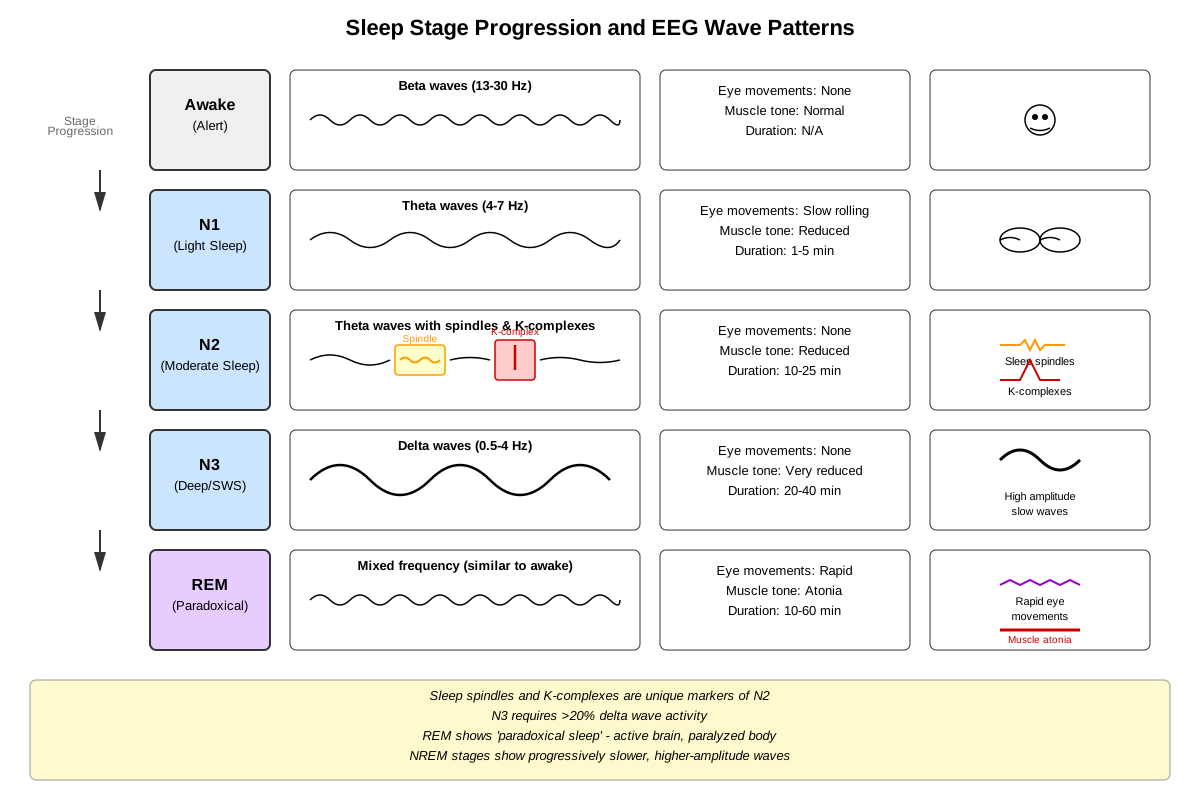
Sleep is not a uniform state of unconsciousness but rather a dynamic process involving multiple stages with distinct brain wave patterns, physiological changes, and functional purposes. The sleep cycle progresses through non-rapid eye movement (NREM) stages and rapid eye movement (REM) sleep, each serving different restorative and cognitive functions. NREM sleep consists of three stages (N1, N2, and N3), while REM sleep represents a qualitatively different state characterized by vivid dreaming and paradoxical brain activity resembling wakefulness. A complete sleep cycle typically lasts 90-110 minutes, and healthy adults experience 4-6 cycles per night, with the proportion of each stage changing across the night.
This topic connects intimately with broader Psychology concepts including consciousness states, memory formation and consolidation, biological rhythms, neurotransmitter systems, and developmental psychology. The MCAT expects students to integrate knowledge of sleep stages with understanding of brain structures (particularly the hypothalamus, thalamus, and brainstem), neurotransmitters (GABA, acetylcholine, serotonin, norepinephrine), and the relationship between sleep architecture and cognitive performance. Questions may present experimental data about sleep deprivation effects, ask students to identify sleep stages from EEG descriptions, or require application of sleep stage knowledge to understand psychiatric or neurological conditions.
Learning Objectives
- [ ] Define Sleep stages using accurate Psychology terminology
- [ ] Explain why Sleep stages matters for the MCAT
- [ ] Apply Sleep stages to exam-style questions
- [ ] Identify common mistakes related to Sleep stages
- [ ] Connect Sleep stages to related Psychology concepts
- [ ] Distinguish between NREM and REM sleep based on physiological and neurological characteristics
- [ ] Sequence the progression of sleep stages throughout a typical night and explain how stage proportions change
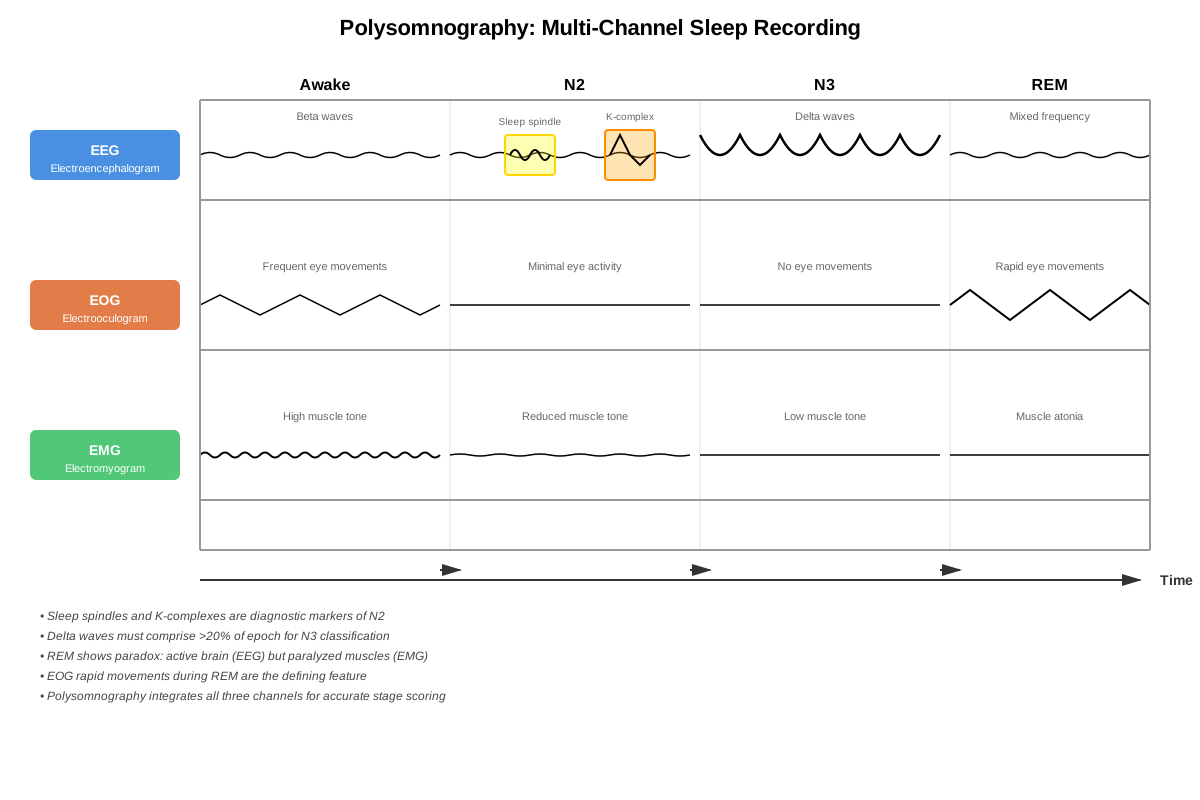
- [ ] Analyze polysomnography data (EEG, EMG, EOG) to identify specific sleep stages
- [ ] Predict the cognitive and physiological consequences of selective sleep stage deprivation
Prerequisites
- Basic neuroanatomy: Understanding brain structures (hypothalamus, thalamus, brainstem) is necessary because these regions regulate sleep-wake cycles and stage transitions
- Neurotransmitter systems: Knowledge of major neurotransmitters (acetylcholine, GABA, serotonin, norepinephrine) is required to understand the neurochemical basis of different sleep stages
- Brain wave patterns: Familiarity with EEG frequency bands (alpha, beta, theta, delta) enables interpretation of the electrical activity characteristic of each sleep stage
- Circadian rhythms: Understanding biological clocks and the suprachiasmatic nucleus provides context for when and why sleep stages occur
- Consciousness spectrum: Recognizing consciousness as a continuum helps position sleep stages within broader states of awareness
Why This Topic Matters
Sleep stages represent a high-yield topic for the MCAT because they integrate multiple testable concepts from neuroscience, physiology, and psychology. Questions about sleep appear regularly in both discrete format and within passages describing experimental manipulations, clinical cases, or research studies. The MCAT particularly favors questions that require students to interpret data (such as hypnograms or polysomnography results), apply knowledge to novel scenarios (such as predicting effects of pharmacological interventions), or connect sleep architecture to memory consolidation and learning.
Clinically, understanding sleep stages is fundamental to recognizing and diagnosing sleep disorders including insomnia, sleep apnea, narcolepsy, REM sleep behavior disorder, and parasomnias. Sleep architecture changes across the lifespan, with infants spending more time in REM sleep and elderly individuals experiencing reduced slow-wave sleep, making developmental considerations relevant for MCAT passages. Sleep deprivation studies consistently demonstrate stage-specific effects on cognitive performance, emotional regulation, and physical health, providing rich material for experimental passages.
Exam Insight: Approximately 2-4 questions per MCAT directly test sleep stages knowledge, with additional questions incorporating sleep concepts within broader passages about memory, consciousness, or neurological disorders. Questions frequently present hypnograms (graphs showing sleep stage progression) and ask students to identify abnormalities or predict consequences of disruptions.
The MCAT commonly presents sleep stages in the context of memory consolidation research, as different types of memory (declarative vs. procedural) consolidate preferentially during specific sleep stages. Understanding that slow-wave sleep (N3) facilitates declarative memory consolidation while REM sleep supports procedural memory and emotional processing enables students to answer complex experimental design questions. Additionally, the relationship between sleep stages and neurotransmitter systems frequently appears in passages about psychiatric medications or substance effects on sleep architecture.
Core Concepts
Sleep Architecture and Cycle Progression
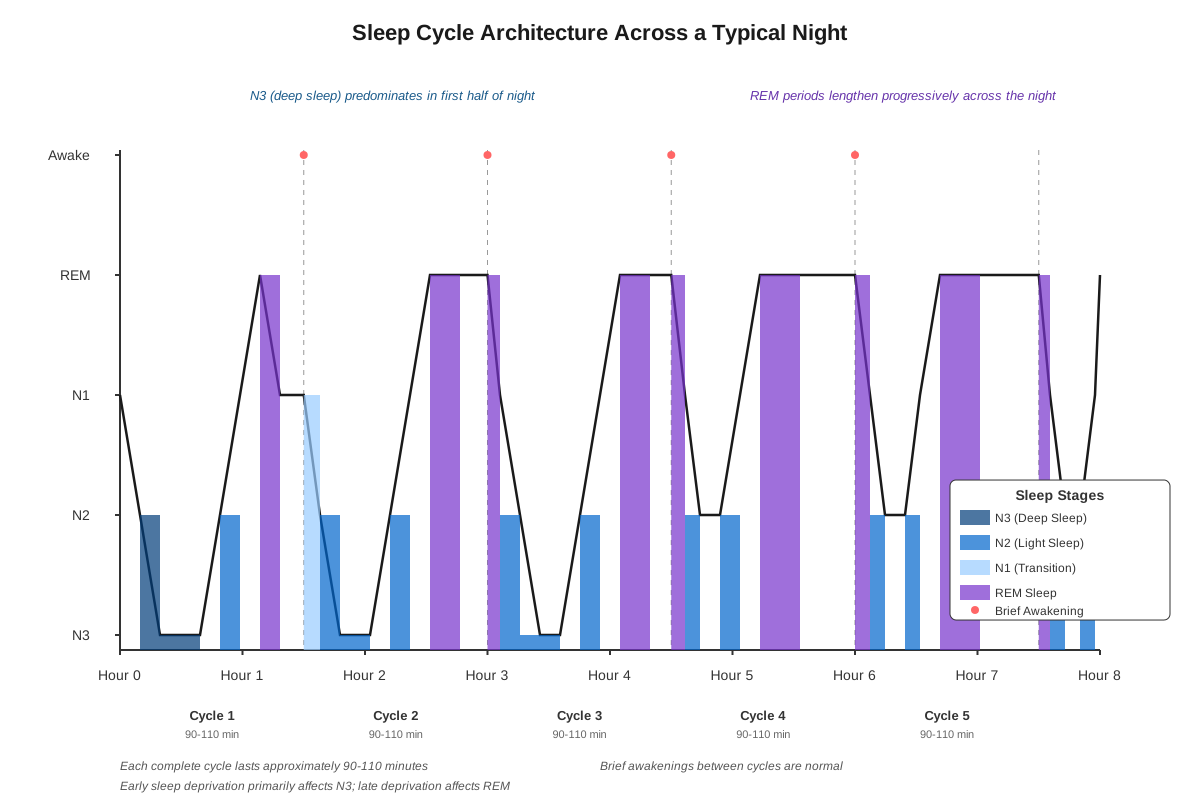
Sleep architecture refers to the structural organization of sleep, including the cyclical progression through different stages and the proportion of time spent in each stage. A complete sleep cycle typically lasts 90-110 minutes and includes progression through NREM stages (N1, N2, N3) followed by REM sleep. Healthy adults experience 4-6 complete cycles per night, though the composition of each cycle changes as the night progresses.
During the first half of the night, cycles contain longer periods of slow-wave sleep (N3), which is the deepest NREM stage. As the night progresses, N3 duration decreases while REM periods lengthen. The first REM period may last only 5-10 minutes, while REM periods in the final cycles before awakening can extend to 30-60 minutes. This shifting architecture reflects the different restorative and cognitive functions served by each stage.
NREM Stage 1 (N1)
NREM Stage 1 represents the transition from wakefulness to sleep, typically lasting 1-5 minutes during initial sleep onset. This lightest sleep stage occupies approximately 5% of total sleep time in adults. The defining characteristics include:
Brain wave activity: Transition from waking alpha waves (8-13 Hz) to slower theta waves (4-7 Hz). The EEG shows a mixed-frequency, low-amplitude pattern with occasional vertex sharp waves (brief, sharp negative EEG deflections maximal at the vertex of the head).
Physiological changes: Muscle tone decreases slightly compared to wakefulness but remains present. Eye movements slow and become rolling rather than rapid. Heart rate and breathing begin to slow. Body temperature starts to decrease.
Subjective experience: Individuals may experience hypnagogic hallucinations (vivid sensory experiences during sleep onset) or hypnic jerks (sudden muscle contractions causing a sensation of falling). People in N1 often deny they were sleeping if awakened, reporting they were "just resting their eyes."
Functional significance: N1 serves as a gateway to deeper sleep stages. Individuals are easily awakened from N1, and external stimuli readily return them to wakefulness. This stage has minimal restorative value but is necessary for sleep cycle initiation.
NREM Stage 2 (N2)
NREM Stage 2 represents light to moderate sleep depth and constitutes 45-55% of total sleep time in adults, making it the predominant sleep stage. N2 typically lasts 10-25 minutes in the first cycle, with duration increasing in later cycles.
Brain wave activity: The EEG continues to show theta wave activity but is distinguished by two characteristic waveforms:
- Sleep spindles: Brief bursts (0.5-2 seconds) of rhythmic 12-14 Hz activity, generated by thalamic pacemaker neurons. Sleep spindles occur periodically throughout N2 and play a role in memory consolidation and sensory gating (blocking external stimuli from disrupting sleep).
- K-complexes: Large, sharp negative deflections followed by positive components, lasting at least 0.5 seconds. K-complexes represent the brain's response to internal or external stimuli and help maintain sleep by suppressing cortical arousal.
Physiological changes: Muscle tone continues to decrease. Eye movements cease. Heart rate and breathing become more regular. Body temperature continues to decline. Metabolic rate decreases.
Arousal threshold: Individuals are more difficult to awaken from N2 than N1 but still relatively responsive to significant stimuli (such as hearing their name or a loud noise). Upon awakening, people typically recognize they were sleeping.
Functional significance: N2 provides moderate restorative benefits and contributes to memory consolidation, particularly through the action of sleep spindles. The sensory gating function helps maintain sleep continuity despite environmental disturbances.
NREM Stage 3 (N3) - Slow-Wave Sleep
NREM Stage 3, also called slow-wave sleep (SWS) or delta sleep, represents the deepest NREM stage. N3 occupies 15-25% of total sleep time in young adults but decreases significantly with aging. This stage predominates during the first third of the night, with the longest N3 periods occurring in the first 1-2 sleep cycles.
Brain wave activity: The defining feature is high-amplitude (>75 μV), low-frequency delta waves (0.5-4 Hz) comprising at least 20% of the epoch (modern sleep staging criteria). These synchronized, slow oscillations reflect widespread cortical neuronal populations firing in unison, indicating deep sleep and reduced cortical processing of external information.
Physiological changes:
- Muscle tone reaches its lowest point during NREM sleep (though not as low as REM)
- Heart rate and blood pressure reach their lowest levels
- Breathing becomes slow and regular
- Body temperature reaches its nadir
- Growth hormone secretion peaks during N3
- Parasympathetic nervous system dominance
- Reduced cerebral blood flow and glucose metabolism
Arousal threshold: N3 has the highest arousal threshold of all sleep stages. Awakening someone from slow-wave sleep requires intense stimulation, and individuals awakened from N3 experience sleep inertia—a period of disorientation, grogginess, and impaired cognitive performance lasting several minutes to half an hour.
Functional significance: N3 serves critical restorative functions including:
- Physical restoration and tissue repair
- Immune system strengthening
- Energy conservation and metabolic regulation
- Declarative memory consolidation: Information learned during wakefulness, particularly facts and events, is consolidated during slow-wave sleep through replay of hippocampal-cortical neural patterns
- Clearance of metabolic waste products from the brain via the glymphatic system
Parasomnias: Most NREM parasomnias (sleepwalking, sleep terrors, confusional arousals) occur during N3, particularly during the transition out of slow-wave sleep in the first third of the night. These represent incomplete arousals where motor and emotional systems activate while consciousness remains suppressed.
REM Sleep
Rapid Eye Movement (REM) sleep represents a qualitatively distinct state from NREM sleep, characterized by brain activity resembling wakefulness despite behavioral sleep. REM occupies 20-25% of total sleep time in adults, with periods lengthening across the night from 5-10 minutes initially to 30-60 minutes in final cycles.
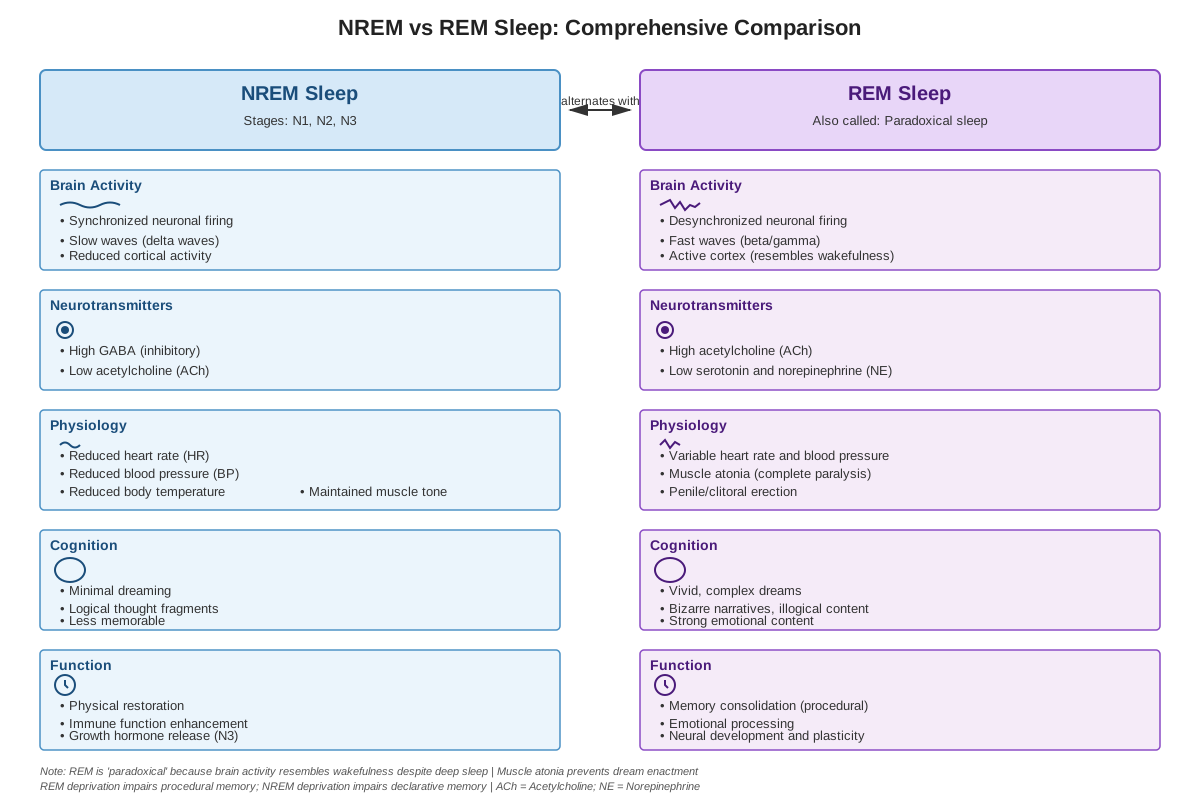
Brain wave activity: The EEG shows desynchronized, mixed-frequency, low-amplitude activity similar to waking beta waves, including theta waves and characteristic sawtooth waves (2-6 Hz sharply contoured waves preceding bursts of rapid eye movements). This activated brain pattern explains why REM is sometimes called paradoxical sleep—the brain appears awake while the body remains asleep.
Physiological changes:
- Rapid eye movements: Conjugate, rapid, jerky eye movements in various directions, generated by pontine brainstem structures
- Muscle atonia: Near-complete paralysis of voluntary muscles (except diaphragm and eye muscles) due to active inhibition of motor neurons by the brainstem. This REM atonia prevents dream enactment
- Autonomic instability: Irregular heart rate, blood pressure fluctuations, increased respiratory rate variability
- Increased brain metabolism: Cerebral blood flow and glucose metabolism increase to waking levels or higher
- Penile erections or clitoral engorgement: Occur during most REM periods regardless of dream content
- Poikilothermia: Temporary loss of thermoregulation (body temperature regulation)
Neurotransmitter profile: REM sleep involves a unique neurochemical state:
- High acetylcholine activity (cholinergic neurons in the brainstem actively promote REM)
- Minimal serotonin and norepinephrine (aminergic neurons are silent during REM)
- This neurochemical pattern contributes to the bizarre, emotional, and illogical nature of REM dreams
Dreaming: While dreams can occur in any sleep stage, REM dreams are typically:
- More vivid, bizarre, and emotionally intense
- Longer and more narrative-structured
- Better remembered if awakening occurs during REM
- Characterized by visual imagery, illogical progressions, and emotional reactivity
Functional significance:
- Procedural memory consolidation: Motor skills and implicit learning consolidate during REM sleep
- Emotional processing: REM sleep facilitates emotional memory integration and mood regulation
- Brain development: Infants spend 50% of sleep time in REM, suggesting a role in neural maturation
- Synaptic pruning and neural reorganization: REM may facilitate selective strengthening and weakening of synaptic connections
- Creative problem-solving: The associative, non-linear thinking during REM may support insight and creativity
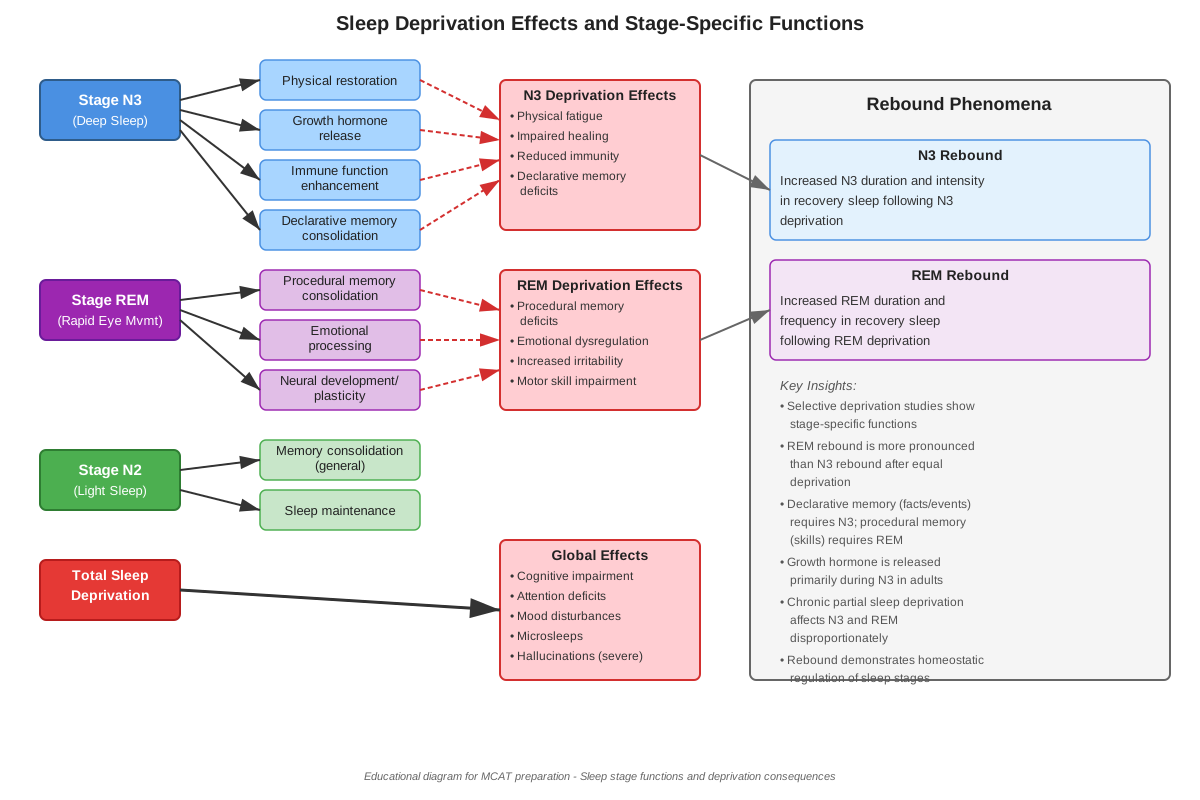
REM rebound: Following REM deprivation, individuals experience increased REM sleep duration and intensity, demonstrating the biological necessity of this stage.
Sleep Stage Comparison Table
| Feature | N1 | N2 | N3 (SWS) | REM |
|---|---|---|---|---|
| % of Sleep | 5% | 45-55% | 15-25% | 20-25% |
| EEG Pattern | Theta waves | Theta + spindles + K-complexes | Delta waves | Desynchronized, sawtooth waves |
| Eye Movements | Slow rolling | None | None | Rapid, conjugate |
| Muscle Tone | Slightly decreased | Decreased | Low | Atonia (paralyzed) |
| Arousal Threshold | Very low | Low-moderate | Very high | Variable (high to external stimuli, low to internal) |
| Dreams | Brief, fragmented | Possible but less vivid | Rare, thought-like | Vivid, bizarre, emotional |
| Predominant Time | Sleep onset | Throughout night | First third of night | Last third of night |
| Memory Function | Minimal | Moderate (spindles) | Declarative consolidation | Procedural consolidation |
| Parasomnias | Hypnic jerks | Rare | Sleepwalking, terrors | REM behavior disorder, nightmares |
Hypnogram Interpretation
A hypnogram is a graphical representation of sleep stages across the night, with time on the x-axis and sleep stages on the y-axis. MCAT questions frequently present hypnograms and ask students to identify normal patterns, abnormalities, or predict consequences of disruptions.
Normal hypnogram characteristics:
- Descending pattern: Initial progression from wakefulness → N1 → N2 → N3
- Cyclical pattern: Regular 90-110 minute cycles throughout the night
- N3 predominance early: Longest slow-wave sleep periods in first 2-3 cycles
- REM lengthening: REM periods increase in duration across the night
- Brief awakenings: Normal individuals briefly awaken 5-15 times per night but typically don't remember these arousals
- Less N3 later: Minimal or absent slow-wave sleep in final cycles
Abnormal patterns may indicate:
- Sleep deprivation: Increased N3 and REM (rebound effect)
- Depression: Shortened REM latency (time from sleep onset to first REM), increased REM density
- Sleep apnea: Frequent arousals, fragmented architecture
- Narcolepsy: Sleep-onset REM periods (entering REM within 15 minutes of sleep onset)
Quick check — test yourself on Sleep stages so far.
Try Flashcards →Concept Relationships
The sleep stages form an integrated system where each stage builds upon and influences the others. The progression follows a predictable sequence: Wakefulness → N1 → N2 → N3 → N2 → REM → (repeat cycle). This cyclical pattern is regulated by the interaction between homeostatic sleep drive (Process S, which increases with time awake) and circadian rhythm (Process C, which follows a 24-hour cycle controlled by the suprachiasmatic nucleus).
Within the sleep architecture, N1 serves as the gateway to deeper stages, while N2 acts as a transitional stage that occurs both when descending into deep sleep and when ascending from N3 toward REM. The relationship between N3 and REM is particularly important: these stages serve complementary functions, with N3 supporting physical restoration and declarative memory consolidation while REM facilitates emotional processing and procedural memory consolidation.
The neurotransmitter systems create a reciprocal relationship between sleep stages. Aminergic neurons (releasing serotonin and norepinephrine) promote wakefulness and NREM sleep but must be silenced for REM to occur. Cholinergic neurons promote both wakefulness and REM sleep. GABAergic neurons promote NREM sleep by inhibiting arousal systems. This neurochemical orchestration explains why certain medications affect specific sleep stages: selective serotonin reuptake inhibitors (SSRIs) suppress REM sleep, while benzodiazepines increase N2 but reduce N3.
Sleep stages connect to broader psychology concepts through multiple pathways:
- Memory consolidation → Different memory types consolidate during specific stages (declarative in N3, procedural in REM)
- Consciousness → Sleep stages represent different levels on the consciousness continuum
- Developmental psychology → Sleep architecture changes across the lifespan (infants have more REM, elderly have less N3)
- Psychopathology → Many psychiatric disorders show characteristic sleep architecture abnormalities
- Neuroscience → Sleep stages reflect different patterns of neural activity and neurotransmitter balance
High-Yield Facts
⭐ Sleep cycles last approximately 90-110 minutes, with 4-6 cycles occurring per night in healthy adults
⭐ N3 (slow-wave sleep) predominates in the first third of the night, while REM periods lengthen across the night
⭐ Sleep spindles and K-complexes are the defining EEG features of N2 sleep
⭐ Delta waves (high-amplitude, low-frequency) characterize N3 sleep and indicate the deepest NREM stage
⭐ REM sleep features muscle atonia (paralysis), rapid eye movements, and vivid dreams, with brain activity resembling wakefulness
- N2 constitutes approximately 50% of total sleep time, making it the predominant sleep stage in adults
- Declarative memory consolidation occurs primarily during slow-wave sleep (N3), while procedural memory consolidates during REM
- REM latency (time from sleep onset to first REM period) is normally 70-90 minutes but shortens in depression and narcolepsy
- Growth hormone secretion peaks during slow-wave sleep, supporting the restorative function of N3
- Most NREM parasomnias (sleepwalking, sleep terrors) occur during N3 in the first third of the night
- REM rebound occurs following REM deprivation, demonstrating the biological necessity of this stage
- Infants spend approximately 50% of sleep time in REM, compared to 20-25% in adults, suggesting a developmental role
- The arousal threshold is highest during N3 and variable during REM (high for external stimuli, low for internal signals)
- Acetylcholine levels are high during both wakefulness and REM but low during NREM sleep
- Sleep architecture deteriorates with aging: N3 decreases significantly, sleep fragmentation increases, and total sleep time decreases
Common Misconceptions
Misconception: All dreaming occurs exclusively during REM sleep → Correction: While REM dreams are more vivid, bizarre, and memorable, dreaming can occur during any sleep stage. NREM dreams tend to be more thought-like, less visual, and less emotional than REM dreams. Approximately 80% of REM awakenings yield dream reports, compared to 40-50% of NREM awakenings.
Misconception: Deeper sleep stages are always better and more restorative → Correction: Each sleep stage serves distinct functions, and optimal sleep requires appropriate proportions of all stages. While N3 provides physical restoration, REM sleep is equally essential for emotional regulation and procedural memory. Excessive N3 at the expense of REM (or vice versa) impairs overall functioning.
Misconception: The brain is inactive or "turned off" during sleep → Correction: The brain remains highly active during sleep, particularly during REM when metabolic activity matches or exceeds waking levels. Sleep involves active processes including memory consolidation, synaptic reorganization, and metabolic waste clearance. Even during N3, the brain generates synchronized delta waves requiring coordinated neuronal activity.
Misconception: Sleep stages progress linearly from N1 → N2 → N3 → REM without returning to earlier stages → Correction: Sleep architecture is cyclical, not linear. After reaching N3, sleepers typically return to N2 before entering REM. Each 90-110 minute cycle involves progression through stages with returns to lighter stages. The sequence is typically: N1 → N2 → N3 → N2 → REM → N2 → N3 (in early cycles) or N2 → REM (in later cycles).
Misconception: REM sleep is the deepest sleep stage because it's hardest to remember dreams from it → Correction: REM sleep is actually a light sleep stage in terms of arousal threshold to external stimuli. N3 (slow-wave sleep) is the deepest stage with the highest arousal threshold. The difficulty remembering dreams relates to the neurochemical state during REM (low norepinephrine impairs memory encoding) rather than sleep depth.
Misconception: Sleep spindles and K-complexes serve the same function in N2 → Correction: While both characterize N2, these waveforms serve different functions. Sleep spindles (generated by thalamic pacemakers) facilitate memory consolidation and sensory gating. K-complexes represent responses to stimuli and help maintain sleep by suppressing arousal. K-complexes can be evoked by external stimuli, while spindles occur spontaneously.
Misconception: Everyone needs exactly 8 hours of sleep with the same stage proportions → Correction: Sleep needs vary individually (typically 7-9 hours for adults) and across the lifespan. Stage proportions also vary: infants need more REM for brain development, while elderly individuals naturally experience reduced N3. Optimal sleep is determined by daytime functioning rather than arbitrary duration targets.
Worked Examples
Example 1: Hypnogram Interpretation
Question: A researcher presents a hypnogram showing a 23-year-old participant's sleep architecture. The first REM period occurs 25 minutes after sleep onset, and REM periods occupy 35% of total sleep time. N3 is nearly absent. What condition might this pattern suggest, and what is the underlying mechanism?
Analysis:
Step 1: Identify abnormalities in the hypnogram
- Normal REM latency: 70-90 minutes
- Observed REM latency: 25 minutes (shortened)
- Normal REM percentage: 20-25%
- Observed REM percentage: 35% (increased)
- Normal N3 percentage: 15-25%
- Observed N3: Nearly absent (decreased)
Step 2: Consider conditions associated with shortened REM latency
- Major depressive disorder
- Narcolepsy
- REM sleep deprivation rebound
- Withdrawal from REM-suppressing substances
Step 3: Integrate multiple findings
The combination of shortened REM latency, increased REM percentage, and reduced slow-wave sleep is most characteristic of major depressive disorder. This pattern represents one of the most consistent biological markers of depression.
Step 4: Explain the mechanism
Depression involves dysregulation of neurotransmitter systems, particularly:
- Altered cholinergic-aminergic balance favoring cholinergic activity
- Disrupted circadian rhythms affecting sleep-wake regulation
- Hyperarousal of stress systems (HPA axis) interfering with slow-wave sleep generation
- The shortened REM latency may reflect increased cholinergic tone or decreased aminergic inhibition of REM-promoting neurons
Answer: This pattern suggests major depressive disorder. The mechanism involves neurotransmitter imbalances (particularly cholinergic-aminergic dysregulation) and circadian rhythm disruption that advance REM sleep onset and suppress slow-wave sleep generation. This finding has diagnostic significance and may predict treatment response to antidepressants.
Connection to Learning Objectives: This example demonstrates application of sleep stage knowledge to clinical scenarios, interpretation of polysomnographic data, and integration with neurotransmitter systems and psychopathology.
Example 2: Sleep Deprivation Experiment
Question: Researchers selectively deprive participants of N3 sleep for three consecutive nights by awakening them whenever delta waves appear on EEG. On the fourth night, participants sleep without interruption. What changes would you predict in their sleep architecture, and what cognitive effects might have occurred during the deprivation period?
Analysis:
Step 1: Understand selective sleep stage deprivation
- Participants were awakened specifically during N3 (when delta waves appear)
- Other stages (N1, N2, REM) could occur normally
- This creates a specific deficit in slow-wave sleep functions
Step 2: Predict rebound effects (homeostatic response)
Following selective N3 deprivation, the recovery night would show:
- N3 rebound: Increased duration and intensity of slow-wave sleep
- Earlier onset of N3 in the first sleep cycle
- Higher delta wave amplitude (deeper slow-wave sleep)
- Potentially reduced REM sleep initially as the brain prioritizes N3 recovery
- Possible N3 intrusion into later sleep cycles where it normally doesn't occur
Step 3: Predict cognitive effects during deprivation
N3 serves specific functions, so its selective deprivation would impair:
- Declarative memory consolidation: Difficulty remembering facts, events, and explicit information learned during the day
- Physical restoration: Increased fatigue, reduced energy
- Immune function: Potential increased susceptibility to illness
- Metabolic regulation: Possible glucose metabolism disruption
- Attention and concentration: Impaired sustained attention
- Mood regulation: Increased irritability
Step 4: Consider why other functions might be preserved
- Procedural memory (motor skills) would be relatively preserved because REM sleep (which consolidates procedural memory) was not disrupted
- Emotional processing might be partially preserved due to intact REM sleep
- Basic alertness might be maintained because total sleep time wasn't drastically reduced
Answer: The recovery night would show significant N3 rebound with increased slow-wave sleep duration, earlier onset, and higher delta wave amplitude. During deprivation, participants would experience impaired declarative memory consolidation, reduced physical restoration, and decreased attention, while procedural memory would remain relatively intact due to preserved REM sleep. This demonstrates the specific functional roles of different sleep stages and the homeostatic regulation of sleep architecture.
Connection to Learning Objectives: This example applies sleep stage knowledge to experimental design, predicts consequences of stage-specific disruptions, connects sleep stages to memory systems, and demonstrates the relationship between sleep architecture and cognitive function.
Exam Strategy
Question Recognition
MCAT questions about sleep stages typically fall into several categories:
- Direct identification: "Which sleep stage is characterized by sleep spindles and K-complexes?" (Answer: N2)
- Hypnogram interpretation: Presenting a graph and asking about normal vs. abnormal patterns
- Functional questions: "During which sleep stage does declarative memory consolidation primarily occur?" (Answer: N3)
- Experimental manipulation: Describing sleep deprivation or pharmacological interventions and asking about predicted effects
- Clinical application: Presenting symptoms and asking which sleep stage abnormality might explain them
Trigger Words and Phrases
Watch for these high-yield terms that signal specific sleep stages:
N1 indicators: "Transition to sleep," "hypnagogic hallucations," "theta waves," "easily awakened"
N2 indicators: "Sleep spindles," "K-complexes," "light sleep," "most of the night"
N3 indicators: "Delta waves," "slow-wave sleep," "deepest sleep," "growth hormone," "sleepwalking," "declarative memory," "difficult to awaken," "sleep inertia"
REM indicators: "Rapid eye movements," "muscle atonia," "vivid dreams," "paradoxical sleep," "procedural memory," "desynchronized EEG," "similar to waking"
Process of Elimination Strategies
When unsure between answer choices:
- Use the EEG pattern as the gold standard: If a question describes brain waves, match them definitively to stages (delta = N3, spindles/K-complexes = N2, desynchronized = REM or wake)
- Consider timing within the night: If the question mentions "first third of the night," favor N3; if "last third," favor REM
- Match function to stage: Memory consolidation questions require knowing declarative → N3, procedural → REM
- Eliminate based on muscle tone: If the question mentions paralysis or atonia, only REM is correct; if it mentions movement (sleepwalking), only N3 is correct
- Use arousal threshold: "Difficult to awaken" = N3; "easily awakened" = N1 or N2
Time Allocation
Sleep stage questions are typically straightforward if you know the content. Allocate:
- 30-45 seconds for direct identification questions
- 60-90 seconds for hypnogram interpretation or functional questions
- 90-120 seconds for complex experimental passages requiring integration of multiple concepts
Exam Tip: If a passage presents polysomnography data (EEG, EMG, EOG), quickly create a mental table of the three measurements for each stage. This organization prevents confusion when answering multiple questions about the same data.
Common Question Traps
- Confusing REM with deep sleep: Remember that REM is paradoxical—brain activity suggests wakefulness, but the person is asleep. N3 is the deepest stage.
- Assuming all memory consolidation occurs in one stage: Different memory types consolidate in different stages (declarative in N3, procedural in REM).
- Forgetting that N2 is the predominant stage: When questions ask about "most of the night," N2 is often correct even though N3 and REM receive more attention.
- Misinterpreting REM rebound: Following total sleep deprivation, both N3 and REM show rebound, but N3 rebounds first (higher priority).
Memory Techniques
BATS Drink Blood Mnemonic
For remembering sleep stage progression and characteristics:
Bed time → Alpha waves (waking)
Theta waves → N1 (Transition)
Spindles and K-complexes → N2 (Sleep maintenance)
Delta waves → N3 (Deep sleep)
Brain active, Body paralyzed → REM (Both extremes)
Sleep Spindles vs. K-complexes
Spindles = Short bursts, Sensory gating, Spontaneous
K-complexes = Kick (sharp deflection), Keep sleeping (response to stimuli)
REM Characteristics: DREAMS
Desynchronized EEG
Rapid eye movements
Erections (penile/clitoral)
Atonia (muscle paralysis)
Memory consolidation (procedural)
Similar to waking brain activity
Stage Sequence: "No Rest During REM"
N1 → N2 → N3 → (return to) N2 → REM
Then the cycle repeats, helping remember the cyclical nature and that N2 occurs both before and after N3.
Memory Consolidation: "Deep Facts, REM Skills"
Deep sleep (N3) = Facts (declarative memory)
REM sleep = Skills (procedural memory)
Visualization Strategy
Picture sleep as descending and ascending a staircase:
- Ground floor = Wakefulness
- First step down = N1 (easy to return to ground)
- Second step = N2 (moderate depth)
- Basement = N3 (deepest, hardest to climb back up)
- Floating above the stairs = REM (paradoxical—deep sleep but active brain)
Each cycle involves going down the stairs, reaching the basement (in early cycles), then floating in REM, then starting the descent again.
Summary
Sleep stages represent a fundamental aspect of consciousness and cognition tested regularly on the MCAT. The sleep cycle progresses through NREM stages (N1, N2, N3) and REM sleep in approximately 90-110 minute cycles, with 4-6 cycles per night. N1 serves as a brief transition characterized by theta waves, N2 comprises about half of sleep time and features sleep spindles and K-complexes, N3 represents the deepest sleep with high-amplitude delta waves and serves physical restoration and declarative memory consolidation, and REM sleep involves paradoxical brain activation with muscle atonia and supports procedural memory consolidation and emotional processing. Sleep architecture changes across the night, with N3 predominating early and REM periods lengthening later. Understanding the distinct EEG patterns, physiological characteristics, functional roles, and temporal distribution of each stage enables students to interpret hypnograms, predict effects of sleep manipulations, and connect sleep to broader concepts including memory systems, consciousness, neurotransmitter function, and psychopathology. The MCAT expects integration of sleep stage knowledge with experimental design, clinical applications, and neurobiological mechanisms.
Key Takeaways
- Sleep cycles last 90-110 minutes and include progression through N1 → N2 → N3 → N2 → REM, with stage proportions changing across the night (N3 early, REM late)
- Each sleep stage has distinctive EEG patterns: theta waves (N1), sleep spindles and K-complexes (N2), delta waves (N3), and desynchronized activity with sawtooth waves (REM)
- N3 (slow-wave sleep) serves physical restoration and declarative memory consolidation, while REM sleep supports procedural memory consolidation and emotional processing
- REM sleep is paradoxical—brain activity resembles wakefulness while the body experiences muscle atonia (paralysis), preventing dream enactment
- Sleep architecture abnormalities characterize many conditions: shortened REM latency in depression, sleep-onset REM in narcolepsy, and reduced N3 with aging
- Selective sleep stage deprivation produces rebound effects, demonstrating homeostatic regulation and the biological necessity of each stage
- Understanding neurotransmitter systems (acetylcholine promotes REM, aminergic neurons promote wake/NREM, GABA promotes NREM) explains pharmacological effects on sleep architecture
Related Topics
Circadian Rhythms and Sleep-Wake Regulation: Understanding the suprachiasmatic nucleus, melatonin secretion, and the two-process model (homeostatic and circadian) provides context for when sleep stages occur and how they're regulated. Mastering sleep stages enables deeper understanding of circadian rhythm disorders.
Memory Systems and Consolidation: Sleep stages directly connect to different memory types (declarative, procedural, emotional). Understanding sleep architecture is essential for comprehending how learning becomes consolidated into long-term memory.
Consciousness and Altered States: Sleep stages represent points on the consciousness continuum. This foundation supports understanding other altered states including anesthesia, coma, meditation, and drug-induced states.
Neurotransmitter Systems: The neurochemical basis of sleep stages (cholinergic, aminergic, GABAergic systems) connects to broader understanding of neurotransmitter function, pharmacology, and psychiatric medication mechanisms.
Sleep Disorders: Mastering normal sleep architecture is prerequisite for understanding pathological sleep including insomnia, sleep apnea, narcolepsy, REM behavior disorder, and parasomnias.
Developmental Psychology: Sleep architecture changes dramatically across the lifespan, from infants (50% REM) through elderly adults (reduced N3). Understanding these changes connects sleep to broader developmental processes.
Practice CTA
Now that you've mastered the core concepts of sleep stages, reinforce your learning by attempting practice questions and flashcards. Focus on interpreting hypnograms, distinguishing between stage characteristics, and applying sleep stage knowledge to experimental scenarios. The more you practice identifying EEG patterns and predicting consequences of sleep manipulations, the more automatic this knowledge becomes for test day. Remember that sleep stages frequently appear in passages integrating multiple concepts—your solid foundation in this topic will help you tackle complex, multi-step questions with confidence. You've got this!
Sign up free to keep reading
Create a free AnvayaPrep account to finish this MCAT guide on Sleep stages — plus flashcards and practice questions.