Overview
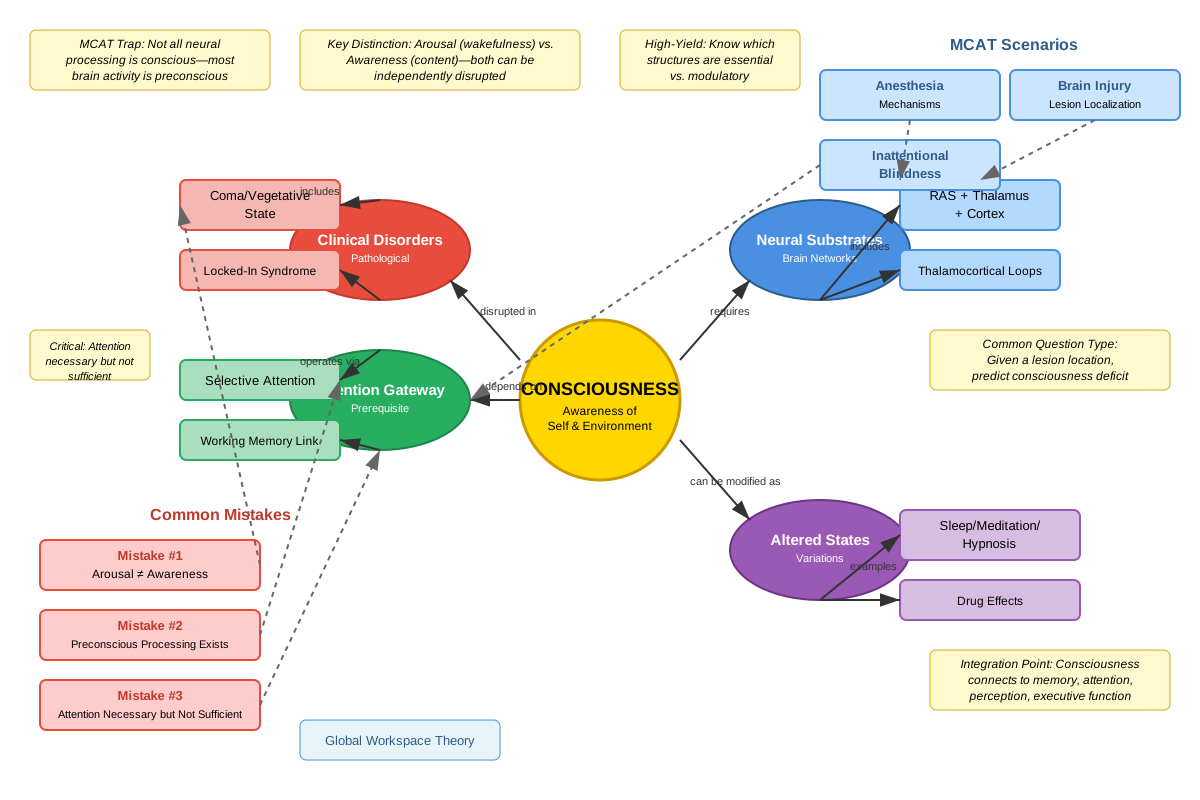
Consciousness represents one of the most fascinating and complex topics within Psychology, serving as a cornerstone concept that bridges neuroscience, cognitive psychology, and behavioral science. At its core, consciousness refers to the state of being aware of and able to think about one's own existence, sensations, thoughts, and surroundings. This seemingly simple definition belies the profound complexity of the phenomenon, which encompasses everything from our moment-to-moment awareness of the external world to our internal mental states, self-reflection, and subjective experiences.
For the MCAT, understanding consciousness psychology is essential because it appears across multiple contexts within the Psychological, Social, and Biological Foundations of Behavior section. Questions may address altered states of consciousness (such as sleep, meditation, or drug-induced states), the neural correlates of conscious experience, attention and awareness, or disorders of consciousness. The topic frequently appears in passage-based questions that integrate neuroscience with behavioral observations, requiring students to apply theoretical knowledge to experimental scenarios or clinical vignettes.
The study of cognition and consciousness reveals critical connections to numerous other psychological domains. Consciousness interfaces with attention (the gateway to conscious awareness), memory (both encoding and retrieval require conscious processing), perception (the transformation of sensory input into conscious experience), and executive function (conscious decision-making and self-regulation). Understanding consciousness also provides context for psychopathology, as many psychiatric and neurological conditions involve disruptions to normal conscious experience. Mastering this topic enables students to approach MCAT questions with a sophisticated understanding of how awareness, attention, and cognitive processing interact to produce the rich tapestry of human mental life.
Learning Objectives
- [ ] Define Consciousness using accurate Psychology terminology
- [ ] Explain why Consciousness matters for the MCAT
- [ ] Apply Consciousness to exam-style questions
- [ ] Identify common mistakes related to Consciousness
- [ ] Connect Consciousness to related Psychology concepts
- [ ] Distinguish between different states and levels of consciousness
- [ ] Analyze the neural substrates and biological mechanisms underlying conscious experience
- [ ] Evaluate experimental paradigms used to study consciousness in psychological research
Prerequisites
- Basic neuroanatomy: Understanding brain structures (cortex, thalamus, reticular formation) is essential for comprehending the neural basis of consciousness
- Neurotransmitter systems: Knowledge of neurotransmitter function helps explain altered states of consciousness and pharmacological effects
- Sensation and perception: Consciousness involves awareness of sensory input, requiring understanding of how sensory information is processed
- Attention mechanisms: Attention serves as the gateway to conscious awareness and selective processing
- Sleep-wake cycle basics: Familiarity with circadian rhythms provides context for understanding consciousness as a dynamic state
Why This Topic Matters
Clinical and Real-World Significance
Consciousness is fundamental to clinical medicine and psychological practice. Disorders of consciousness—including coma, vegetative state, and minimally conscious state—represent critical diagnostic and ethical challenges in neurology and intensive care. Understanding consciousness is essential for evaluating patients with traumatic brain injury, stroke, or neurodegenerative diseases. Additionally, altered states of consciousness induced by anesthesia, psychoactive substances, or meditation have profound implications for treatment, safety, and therapeutic interventions. The concept also underlies discussions of mental capacity, informed consent, and end-of-life decision-making.
MCAT Exam Statistics and Question Types
Consciousness appears in approximately 3-5% of Psychology/Sociology section questions, with medium frequency but high integration potential. Questions typically appear in three formats: (1) passage-based questions presenting experimental studies on attention, awareness, or altered states; (2) discrete questions testing definitions and distinctions between consciousness states; and (3) pseudo-discrete questions embedded in clinical vignettes requiring application of consciousness concepts to patient scenarios. The topic frequently appears alongside neuroscience content, requiring integration of biological and psychological perspectives.
Common Exam Passage Contexts
MCAT passages commonly present consciousness in several contexts: neuroimaging studies examining neural correlates of awareness, split-brain research demonstrating hemispheric specialization, studies of subliminal perception and unconscious processing, research on meditation or hypnosis effects, sleep deprivation experiments, or clinical cases involving altered consciousness. Passages may require students to interpret experimental designs, evaluate claims about conscious versus unconscious processing, or apply theoretical frameworks to novel situations.
Core Concepts
Definition and Components of Consciousness
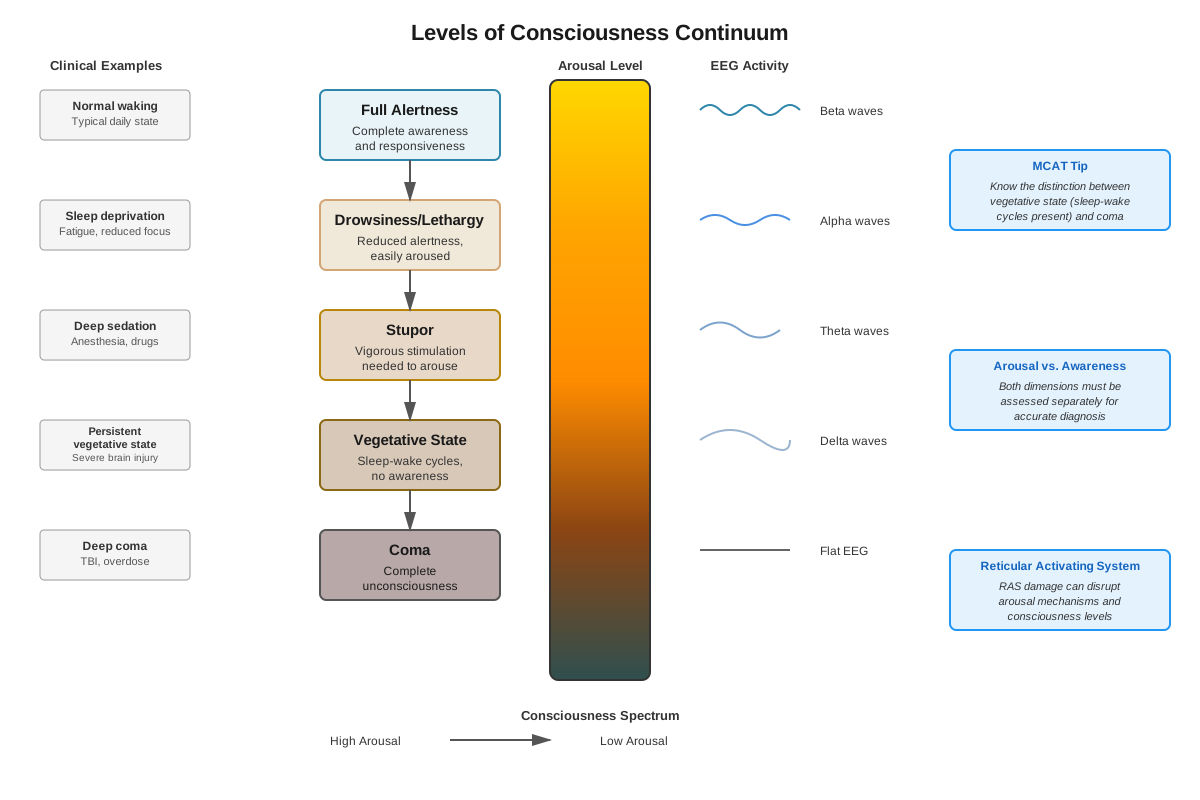
Consciousness is defined as the state of awareness of one's self and environment, encompassing both the content of awareness (what we are conscious of) and the level of awareness (how alert or responsive we are). This dual nature creates two fundamental dimensions that psychologists study separately. The content of consciousness includes all the thoughts, perceptions, feelings, and memories that occupy awareness at any given moment—the subjective "what it's like" to experience something, often called qualia. The level of consciousness refers to the degree of arousal and responsiveness, ranging from deep coma to full alertness.
Modern consciousness psychology recognizes several key components that constitute conscious experience. Awareness represents the most basic element—the simple registration that something is present in experience. Attention acts as the spotlight that selects certain information for conscious processing while filtering out other stimuli. Self-awareness involves the metacognitive ability to reflect on one's own mental states, recognizing oneself as the subject of experience. Intentionality refers to the "aboutness" of consciousness—that conscious states are always directed toward something, whether external objects or internal thoughts.
States of Consciousness
Consciousness exists along a continuum of states, each characterized by distinct patterns of awareness, responsiveness, and brain activity:
| State | Characteristics | EEG Pattern | Example |
|---|---|---|---|
| Alert wakefulness | Full awareness, responsive, goal-directed | Beta waves (13-30 Hz) | Normal daily activities |
| Relaxed wakefulness | Calm awareness, reduced vigilance | Alpha waves (8-12 Hz) | Quiet rest with eyes closed |
| Drowsiness | Reduced awareness, drifting attention | Theta waves (4-7 Hz) | Falling asleep |
| Sleep (NREM) | Minimal awareness, reduced responsiveness | Delta waves (0.5-4 Hz) | Deep sleep stages |
| Sleep (REM) | Dream consciousness, paralysis | Mixed frequency, similar to waking | Vivid dreaming |
| Minimally conscious | Fluctuating awareness, inconsistent responses | Variable, slowed | Brain injury recovery |
| Vegetative state | No awareness, reflexive responses only | Severely abnormal | Severe brain damage |
| Coma | No awareness, no voluntary responses | Minimal activity | Acute brain injury |
Altered States of Consciousness
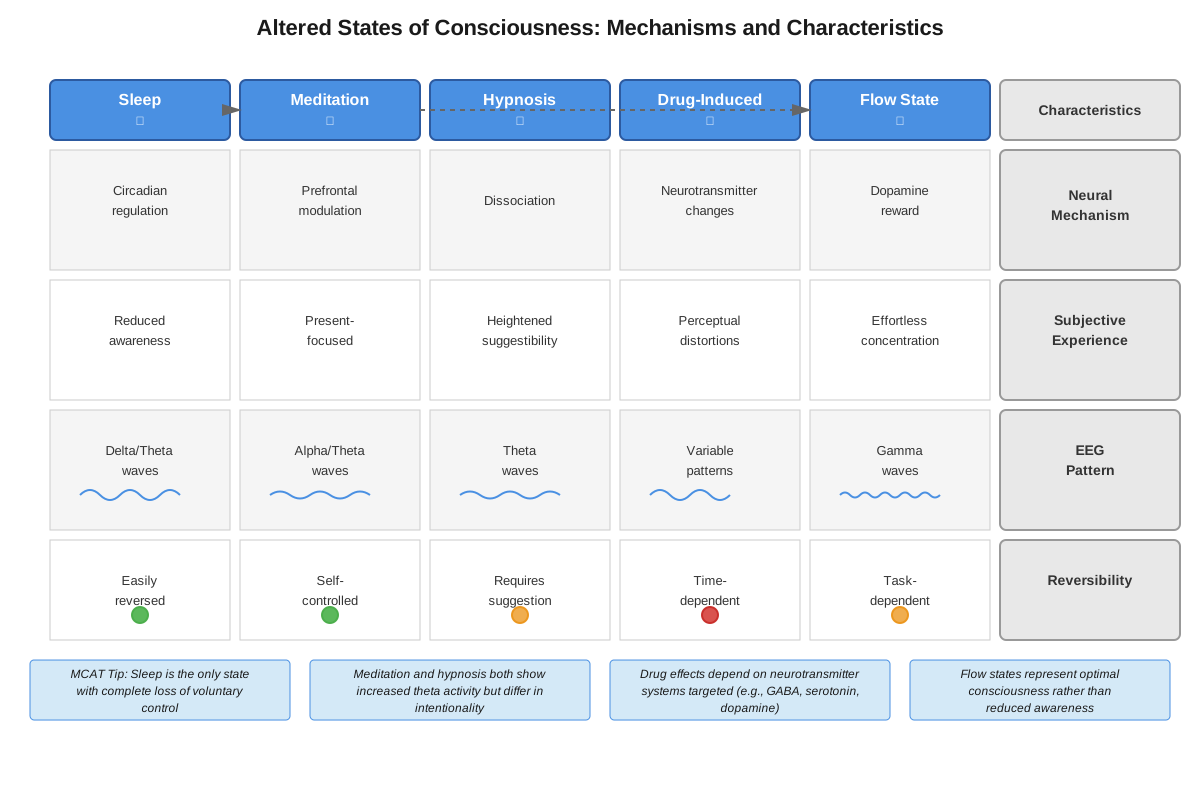
Altered states of consciousness represent deviations from normal waking awareness, induced by various means. These states demonstrate the flexibility and variability of conscious experience:
Meditation produces a focused, calm state characterized by heightened awareness of present-moment experience while reducing mind-wandering. Neuroimaging reveals increased activity in attention networks and altered default mode network function. Regular meditation practice can produce lasting changes in consciousness and attention.
Hypnosis creates a state of focused attention, heightened suggestibility, and reduced peripheral awareness. Hypnotized individuals may experience alterations in perception, memory, and voluntary control. The phenomenon remains controversial, with debate about whether hypnosis represents a distinct state or simply focused attention and social compliance.
Psychoactive drug effects vary by substance class. Depressants (alcohol, benzodiazepines) reduce consciousness level and cognitive function. Stimulants (caffeine, amphetamines) increase arousal and alertness. Hallucinogens (LSD, psilocybin) profoundly alter perceptual experience and self-awareness. Dissociatives (ketamine) create feelings of detachment from body and environment.
Flow states occur during optimal engagement with challenging activities, characterized by complete absorption, loss of self-consciousness, distorted time perception, and intrinsic reward. This state represents consciousness fully directed toward a single activity with minimal internal distraction.
Neural Correlates of Consciousness
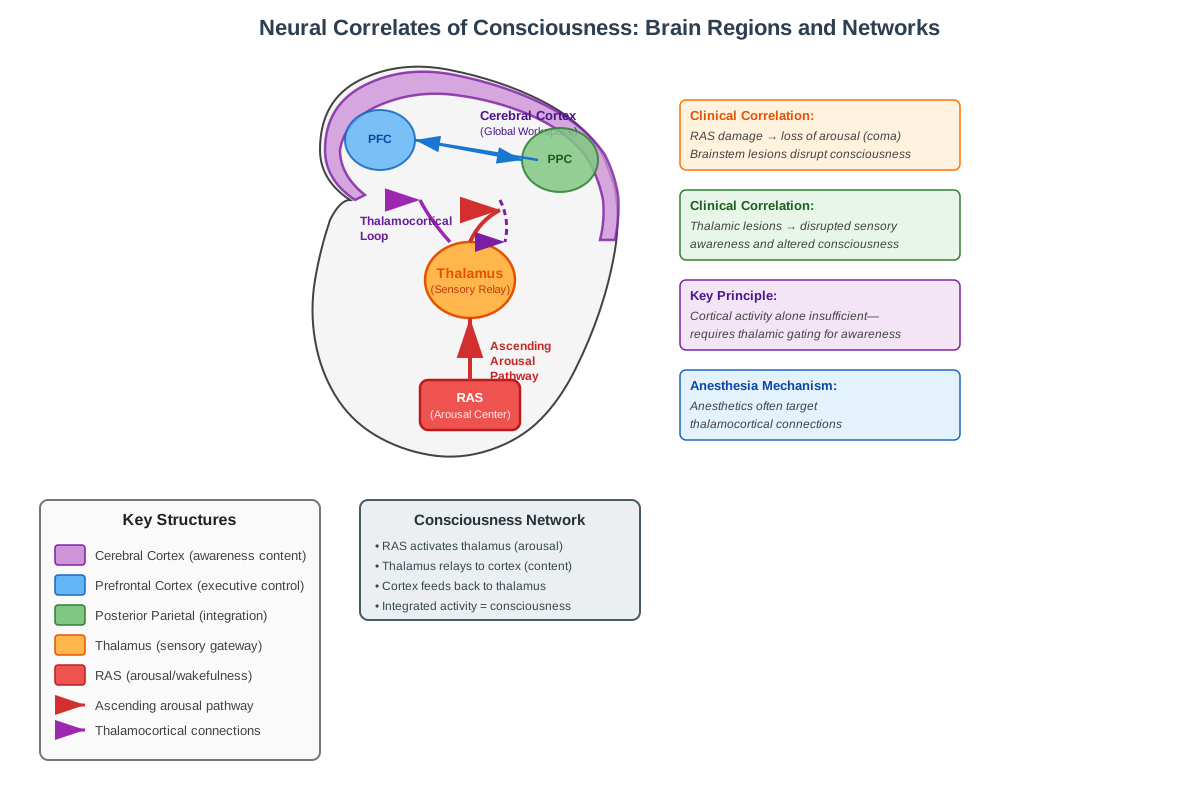
The neural correlates of consciousness (NCC) are the minimal neural mechanisms jointly sufficient for any specific conscious experience. Identifying these mechanisms represents a central goal of consciousness research.
The thalamus serves as a critical relay station, integrating sensory information and coordinating cortical activity. Damage to specific thalamic nuclei can produce profound alterations in consciousness. The reticular activating system (RAS), extending from the brainstem through the thalamus, regulates arousal and wakefulness. Damage to the RAS produces coma or persistent vegetative states.
The cerebral cortex, particularly the prefrontal cortex and posterior parietal cortex, generates the content of conscious experience. The global workspace theory proposes that consciousness arises when information becomes globally available across widespread cortical networks, enabling integration and flexible response. The default mode network, active during rest and self-referential thought, contributes to self-awareness and internal mental states.
Integrated information theory suggests consciousness corresponds to the degree of integrated information in a system—the extent to which the system's parts interact to form an irreducible whole. This theory provides a mathematical framework for quantifying consciousness and predicts that consciousness requires both differentiation (many distinct states) and integration (unified experience).
Conscious versus Unconscious Processing
A fundamental distinction in cognition and consciousness separates processes requiring conscious awareness from those operating automatically without awareness. This distinction has profound implications for understanding human behavior and cognition.
Unconscious processing includes automatic behaviors, implicit memory, subliminal perception, and procedural skills. Research demonstrates that substantial cognitive processing occurs outside awareness. Priming experiments show that subliminal stimuli can influence subsequent behavior and judgments. Blindsight patients with damage to primary visual cortex can respond to visual stimuli they report not seeing consciously, demonstrating dissociation between processing and awareness.
Conscious processing is typically slower, more flexible, and capacity-limited. It enables novel problem-solving, deliberate decision-making, and voluntary control. The dual-process theory distinguishes System 1 (fast, automatic, unconscious) from System 2 (slow, deliberate, conscious) thinking. While System 1 handles routine processing efficiently, System 2 engages for complex reasoning and situations requiring conscious attention.
The threshold of consciousness represents the point at which stimuli become consciously perceived. Factors affecting this threshold include attention, expectation, emotional salience, and stimulus intensity. Understanding this threshold helps explain phenomena like inattentional blindness (failing to notice unexpected stimuli when attention is engaged elsewhere) and change blindness (failing to detect changes in visual scenes).
Attention and Consciousness
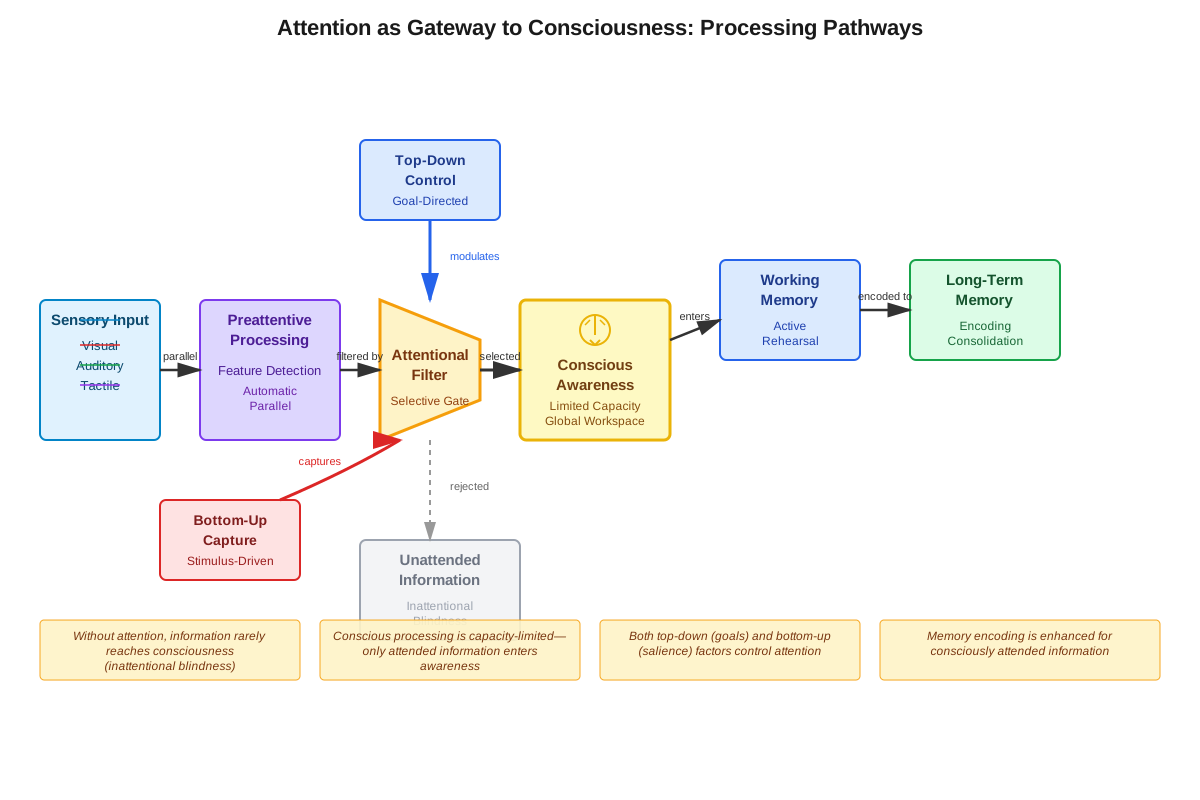
Attention and consciousness are intimately related but distinct. Attention selects information for processing, while consciousness represents awareness of that information. Most theories propose that attention is necessary but not sufficient for consciousness—attended information typically becomes conscious, but some attended information may remain unconscious.
Selective attention filters sensory input, allowing only relevant information to reach consciousness. The cocktail party effect demonstrates this selective filtering—the ability to focus on one conversation while filtering out others, yet still noticing personally relevant information (like one's name) from unattended channels.
Divided attention involves distributing attentional resources across multiple tasks. Performance typically suffers when tasks require conscious processing, but well-practiced automatic tasks can be performed simultaneously with minimal interference. This explains why experienced drivers can converse while driving routine routes but require full conscious attention in novel or dangerous situations.
Concept Relationships
The concepts within consciousness form an interconnected network. States of consciousness represent the foundational framework, with alert wakefulness serving as the baseline against which altered states are compared. The level of consciousness (arousal dimension) depends critically on neural correlates, particularly the reticular activating system and thalamus, which regulate the basic capacity for awareness.
The content of consciousness emerges from cortical processing, with attention serving as the gatekeeper that determines which information enters awareness. This creates a hierarchical relationship: Neural substrates → Arousal/Alertness → Attention → Conscious Content. Unconscious processing operates in parallel, handling routine tasks and influencing behavior without requiring conscious resources.
Altered states of consciousness modify this normal architecture through various mechanisms: meditation enhances attentional control, hypnosis increases suggestibility and focused attention, psychoactive drugs alter neurotransmitter function affecting arousal and perception, and sleep cycles through distinct states with varying consciousness levels.
The relationship to prerequisite topics is direct: Neuroanatomy provides the structural basis for consciousness, neurotransmitter systems modulate conscious states, sensation and perception supply the raw material for conscious content, and attention mechanisms regulate access to awareness. These relationships extend forward to topics like memory (consciousness affects encoding and retrieval), learning (conscious versus implicit learning), and psychological disorders (many involve disrupted consciousness).
Quick check — test yourself on Consciousness so far.
Try Flashcards →High-Yield Facts
⭐ Consciousness has two fundamental dimensions: level (degree of arousal/alertness) and content (what one is aware of)
⭐ The reticular activating system (RAS) in the brainstem is essential for maintaining wakefulness and arousal; damage produces coma
⭐ Attention is necessary but not sufficient for consciousness—attended information usually becomes conscious, but some processing occurs without awareness
⭐ Global workspace theory proposes consciousness arises when information becomes globally available across widespread brain networks
⭐ Altered states of consciousness include sleep, meditation, hypnosis, and drug-induced states, each with distinct neural signatures
- Blindsight demonstrates dissociation between visual processing and conscious awareness in patients with V1 damage
- Split-brain patients show that each hemisphere can have independent conscious experiences when the corpus callosum is severed
- Subliminal perception occurs when stimuli below the threshold of awareness influence behavior and cognition
- The default mode network is active during rest and self-referential thought, contributing to self-awareness
- Inattentional blindness occurs when focused attention on one task prevents conscious awareness of unexpected stimuli
- Qualia refers to the subjective, qualitative aspects of conscious experience—"what it's like" to experience something
- Vegetative state involves wakefulness without awareness, while minimally conscious state shows inconsistent but definite awareness
Common Misconceptions
Misconception: Consciousness is an all-or-nothing phenomenon—you're either conscious or unconscious.
Correction: Consciousness exists along multiple continua, including levels of arousal (from coma to full alertness) and degrees of awareness. States like minimally conscious state, drowsiness, and various altered states demonstrate gradations of consciousness.
Misconception: Unconscious processing is minimal and unimportant compared to conscious thought.
Correction: Unconscious processing handles vast amounts of information and controls most routine behaviors. Research shows that complex cognitive operations, including problem-solving and decision-making, can occur without conscious awareness. The unconscious mind is highly sophisticated and influences behavior substantially.
Misconception: Attention and consciousness are the same thing.
Correction: While closely related, attention and consciousness are distinct. Attention is the selection mechanism that determines what information receives processing resources, while consciousness is the awareness of that information. Some attended information may not reach consciousness, and some argue that consciousness without attention is possible in certain circumstances.
Misconception: The cerebral cortex alone generates consciousness.
Correction: Consciousness requires coordinated activity across multiple brain regions, including the thalamus, reticular activating system, and various cortical areas. Subcortical structures are essential for maintaining arousal and integrating information. Consciousness emerges from network interactions, not a single brain region.
Misconception: Hypnosis is a special trance state fundamentally different from normal consciousness.
Correction: Current evidence suggests hypnosis involves focused attention, heightened suggestibility, and expectation rather than a unique state of consciousness. Brain imaging shows patterns consistent with focused attention and reduced activity in regions associated with self-monitoring, but not a distinct "hypnotic state."
Misconception: People in vegetative states have no brain activity or processing.
Correction: Patients in vegetative states show substantial brain activity and can process sensory information at unconscious levels. Some patients demonstrate brain responses to commands (like "imagine playing tennis") despite showing no behavioral signs of awareness, complicating diagnosis and raising ethical questions about residual consciousness.
Worked Examples
Example 1: Interpreting a Split-Brain Research Study
Vignette: A research study examines a patient whose corpus callosum was severed to treat epilepsy. When an image of a spoon is presented to the patient's left visual field only, the patient reports seeing nothing. However, when asked to reach behind a screen with the left hand and select an object matching what was shown, the patient correctly selects a spoon. When asked why they selected the spoon, the patient confabulates an explanation unrelated to the image.
Question: Which of the following best explains this phenomenon?
A) The patient has damage to the visual cortex preventing conscious perception
B) The left hemisphere lacks conscious access to information processed by the right hemisphere
C) The patient is experiencing inattentional blindness due to divided attention
D) The right hemisphere cannot process visual information without the corpus callosum
Reasoning Process:
- Identify the key features: Information presented to left visual field (processed by right hemisphere), verbal report of seeing nothing (left hemisphere speaking), correct manual selection with left hand (controlled by right hemisphere), confabulation (left hemisphere explaining behavior it didn't initiate).
- Apply consciousness concepts: This demonstrates hemispheric specialization and the role of interhemispheric communication in unified consciousness. The right hemisphere processed the visual information and guided the left hand, but without the corpus callosum, this information couldn't reach the verbal left hemisphere.
- Evaluate options:
- A is incorrect—visual cortex is intact; the issue is interhemispheric communication
- B is correct—the left hemisphere (which controls speech) lacks access to right hemisphere information
- C is incorrect—this isn't about divided attention but about disconnected hemispheres
- D is incorrect—the right hemisphere clearly processed the visual information successfully
- Connect to learning objectives: This example demonstrates how consciousness can be divided, showing that unified conscious experience depends on integration of information across brain regions. It illustrates neural correlates of consciousness and the distinction between processing and conscious awareness.
Answer: B
Example 2: Analyzing Altered States of Consciousness
Vignette: A study investigates the effects of a meditation practice on attention and awareness. Participants undergo 8 weeks of mindfulness training, practicing daily focused attention on breath sensations. Post-training, participants show improved performance on sustained attention tasks, reduced mind-wandering, and increased activity in the dorsolateral prefrontal cortex during attention tasks. They also report enhanced awareness of present-moment experience and reduced automatic reactivity to emotional stimuli.
Question: These findings best support which conclusion about meditation's effects on consciousness?
A) Meditation produces an altered state incompatible with normal cognitive function
B) Meditation enhances conscious control over attention and reduces automatic processing
C) Meditation decreases overall consciousness level similar to sleep states
D) Meditation eliminates unconscious processing in favor of purely conscious cognition
Reasoning Process:
- Identify key findings: Improved sustained attention, reduced mind-wandering (automatic thought), increased prefrontal activity (executive control), enhanced present-moment awareness, reduced automatic emotional reactivity.
- Apply consciousness concepts: These findings indicate enhanced conscious control and awareness rather than reduced consciousness. The prefrontal cortex involvement suggests increased executive function and voluntary attention control. Reduced mind-wandering indicates less automatic, unconscious thought intrusion.
- Evaluate options:
- A is incorrect—improved attention performance shows enhanced, not impaired, function
- B is correct—all findings point to enhanced conscious control and reduced automatic processing
- C is incorrect—improved attention and increased prefrontal activity indicate heightened, not decreased, alertness
- D is incorrect—meditation doesn't eliminate unconscious processing; it enhances conscious awareness and control
- Connect to broader concepts: This illustrates how altered states of consciousness (meditation) can modify the relationship between conscious and unconscious processing, enhancing voluntary control while maintaining normal cognitive function. It demonstrates plasticity in consciousness and attention systems.
Answer: B
Exam Strategy
Approaching MCAT Consciousness Questions
When encountering consciousness questions, first determine whether the question addresses level (arousal/alertness) or content (what is experienced). Many questions test the distinction between these dimensions. For level-related questions, consider the neural substrates involved (RAS, thalamus) and the continuum from coma to full alertness. For content-related questions, focus on attention, cortical processing, and the specific experiences described.
Trigger Words and Phrases
Watch for these high-yield terms that signal specific concepts:
- "Aware of" or "reports experiencing" → conscious processing
- "Without awareness" or "automatically" → unconscious processing
- "Arousal," "alertness," or "responsiveness" → level of consciousness
- "Reticular activating system" or "brainstem" → arousal mechanisms
- "Global availability" or "widespread activation" → global workspace theory
- "Split-brain" or "corpus callosum" → hemispheric independence and integration
- "Subliminal" or "below threshold" → unconscious perception
- "Meditation," "hypnosis," or "drug-induced" → altered states
Process of Elimination Tips
For consciousness questions, eliminate options that:
- Confuse level and content of consciousness (common distractor)
- Suggest consciousness is all-or-nothing rather than graded
- Claim single brain regions generate consciousness independently
- Equate attention with consciousness without distinction
- Propose that unconscious processing is minimal or unimportant
- Suggest altered states eliminate normal cognitive function entirely
Time Allocation
Consciousness questions typically require 60-90 seconds. Passage-based questions may need additional time to identify the experimental manipulation and dependent variables. If a question involves distinguishing conscious from unconscious processing, quickly identify behavioral or neural evidence for awareness versus automatic processing. Don't overthink questions about altered states—focus on the specific characteristics and neural correlates rather than philosophical implications.
Exam Tip: When passages describe neuroimaging studies of consciousness, focus on which brain regions show activity and what that activity correlates with (behavioral reports, task performance, or stimulus presentation). The MCAT frequently tests whether students can connect neural activity patterns to conscious versus unconscious processing.
Memory Techniques
Mnemonic for States of Consciousness Continuum
"Can Very Motivated Students Really Dream?"
- Coma (lowest consciousness)
- Vegetative state
- Minimally conscious state
- Sleep
- Relaxed wakefulness
- Dream state (REM)
- (Alert wakefulness at top)
Visualization for Global Workspace Theory
Imagine consciousness as a theater stage with a spotlight. The spotlight (attention) illuminates certain information, making it visible to the entire audience (global brain networks). Information in the spotlight becomes "globally available" and can influence multiple cognitive systems. Information backstage (unconscious processing) continues working but isn't broadcast to the whole system.
Acronym for Neural Correlates
"TRAP Consciousness"
- Thalamus (relay and integration)
- Reticular activating system (arousal)
- Association cortex (content generation)
- Prefrontal cortex (executive awareness)
Memory Aid for Altered States
"My Happy Pills Slow Down"
- Meditation (focused awareness)
- Hypnosis (heightened suggestibility)
- Psychoactive drugs (various effects)
- Sleep (reduced consciousness)
- Dreaming (altered content)
Summary
Consciousness represents the state of awareness of self and environment, encompassing both the level of arousal and the content of experience. For the MCAT, students must understand consciousness as existing along multiple continua rather than as an all-or-nothing phenomenon. The neural correlates of consciousness involve coordinated activity across the reticular activating system (maintaining arousal), thalamus (integrating information), and cerebral cortex (generating content), with global workspace theory proposing that consciousness arises when information becomes globally available across brain networks. Attention serves as the gateway to consciousness, selecting information for awareness, though the two processes remain distinct. Altered states of consciousness—including sleep, meditation, hypnosis, and drug-induced states—demonstrate the flexibility of conscious experience and provide insights into underlying mechanisms. The distinction between conscious and unconscious processing is fundamental, with substantial cognitive operations occurring outside awareness while conscious processing enables flexible, deliberate control. Understanding consciousness requires integrating neuroscience, cognitive psychology, and behavioral observations, making it a high-yield topic for integrated MCAT questions.
Key Takeaways
- Consciousness has two fundamental dimensions: level (arousal/alertness) and content (what is experienced), each with distinct neural substrates
- The reticular activating system and thalamus are essential for maintaining arousal, while cortical networks generate conscious content
- Attention is necessary but not sufficient for consciousness—it selects information for processing, but selection doesn't guarantee awareness
- Altered states of consciousness (sleep, meditation, hypnosis, drugs) demonstrate that consciousness is flexible and modifiable, not a fixed state
- Unconscious processing is sophisticated and extensive, handling routine tasks and influencing behavior without requiring conscious awareness
- Global workspace theory explains consciousness as arising when information becomes globally available across widespread brain networks
- Clinical disorders of consciousness (coma, vegetative state, minimally conscious state) illustrate the dissociability of arousal and awareness
Related Topics
Sleep and Circadian Rhythms: Understanding consciousness provides the foundation for studying sleep as an altered state, including the distinct consciousness characteristics of NREM and REM sleep, and how circadian systems regulate consciousness levels across the 24-hour cycle.
Attention and Information Processing: Mastering consciousness enables deeper exploration of attention mechanisms, including selective attention, divided attention, and the relationship between attentional selection and conscious awareness.
Memory Systems: Consciousness connects to memory through the distinction between explicit (conscious) and implicit (unconscious) memory, and the role of conscious awareness in encoding and retrieval processes.
Psychological Disorders: Many psychiatric conditions involve disrupted consciousness, including dissociative disorders, psychotic disorders with altered reality perception, and mood disorders affecting self-awareness and metacognition.
Neuroscience of Perception: Understanding consciousness illuminates how sensory processing becomes conscious perception, including phenomena like blindsight, neglect, and the binding problem of unified conscious experience.
Practice CTA
Now that you've mastered the fundamentals of consciousness, it's time to solidify your understanding through active practice. Challenge yourself with MCAT-style practice questions that test your ability to apply these concepts to novel scenarios, interpret experimental findings, and distinguish between related but distinct phenomena. Use flashcards to reinforce high-yield facts, particularly the neural correlates of consciousness, characteristics of altered states, and distinctions between conscious and unconscious processing. Remember: understanding consciousness isn't just about memorizing definitions—it's about developing the conceptual framework to analyze any question involving awareness, attention, and mental states. Your investment in mastering this topic will pay dividends across multiple areas of the MCAT Psychology section. You've got this!
Sign up free to keep reading
Create a free AnvayaPrep account to finish this MCAT guide on Consciousness — plus flashcards and practice questions.