Overview
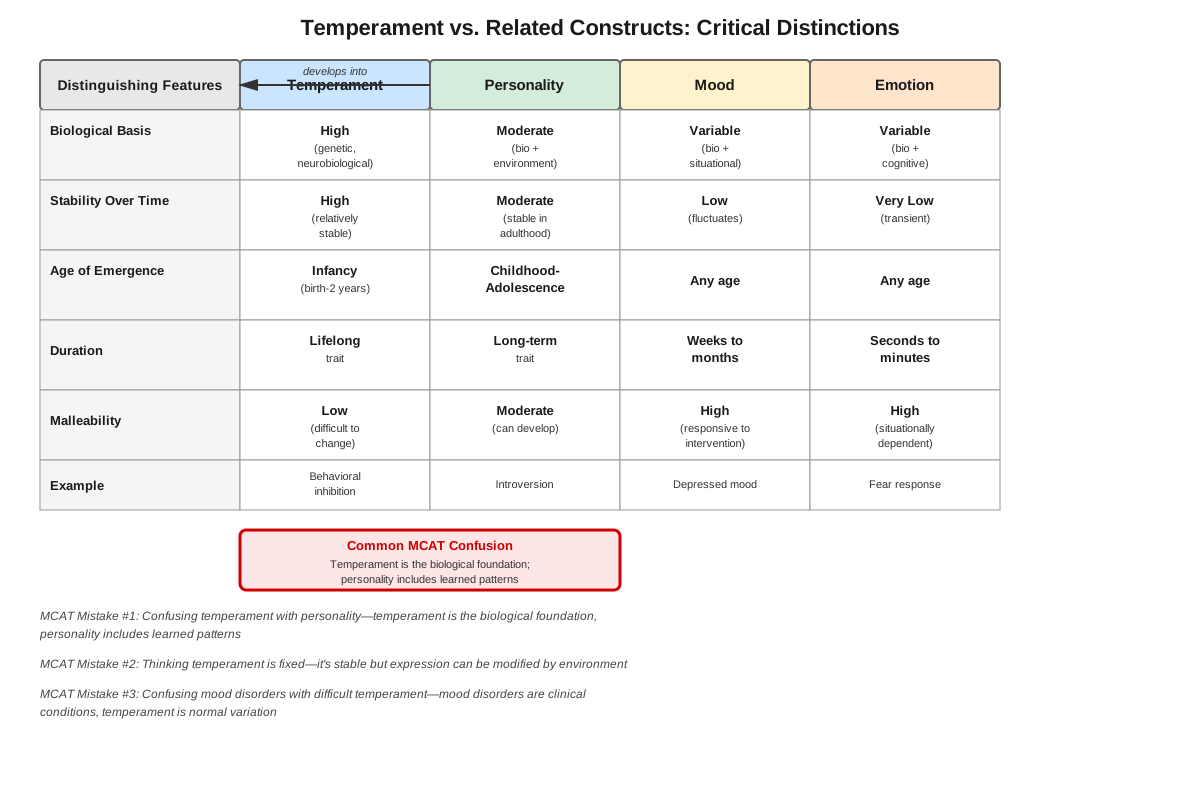
Temperament represents one of the foundational concepts in developmental psychology and personality theory, referring to the biologically-based individual differences in behavioral style and emotional reactivity that appear early in life and show relative stability across time and situations. Unlike personality, which develops through the interaction of innate predispositions with environmental experiences, temperament is considered the constitutional substrate—the raw material from which personality is built. Understanding temperament is crucial for the MCAT because it bridges multiple domains tested on the exam: biological bases of behavior, developmental psychology, individual differences, and the nature-nurture debate that permeates psychological science.
For MCAT preparation, temperament serves as a critical concept that connects biological psychology with social and developmental domains. Questions may present scenarios involving infant behavior, parenting challenges, or longitudinal studies tracking individuals from childhood to adulthood. The exam frequently tests the ability to distinguish temperament from related constructs like personality, mood, and emotional disorders, as well as to understand how early temperamental characteristics interact with environmental factors to produce developmental outcomes—a concept known as goodness-of-fit.
The study of temperament also illuminates broader themes in Psychology that appear throughout the MCAT: the relative contributions of genetics versus environment, the stability versus malleability of psychological traits, and how individual differences influence social interactions and life outcomes. Mastering temperament concepts enables students to approach questions about child development, attachment theory, personality formation, and even psychopathology with a more nuanced understanding of how biological predispositions shape psychological development within the broader framework of Development and Personality.
Learning Objectives
- [ ] Define Temperament using accurate Psychology terminology
- [ ] Explain why Temperament matters for the MCAT
- [ ] Apply Temperament to exam-style questions
- [ ] Identify common mistakes related to Temperament
- [ ] Connect Temperament to related Psychology concepts
- [ ] Distinguish between the major temperament classification systems (Thomas & Chess, Kagan, Rothbart)
- [ ] Analyze how goodness-of-fit influences developmental outcomes
- [ ] Evaluate the biological basis and heritability of temperamental traits
- [ ] Predict how specific temperamental characteristics might interact with environmental factors across development
Prerequisites
- Basic developmental stages: Understanding of infancy, childhood, and adolescence provides context for when temperamental characteristics emerge and stabilize
- Nature vs. nurture debate: Familiarity with genetic and environmental contributions to behavior is essential for understanding temperament's biological basis
- Basic personality concepts: Knowledge of trait theory and individual differences helps distinguish temperament from broader personality constructs
- Attachment theory fundamentals: Understanding caregiver-infant relationships contextualizes how temperament influences social-emotional development
- Heritability concepts: Basic genetics and behavioral genetics principles support understanding of temperament's biological foundations
Why This Topic Matters
Temperament holds significant clinical and real-world importance because it represents one of the earliest observable individual differences that predict later developmental outcomes. Pediatricians, clinical psychologists, and educators use temperament assessments to identify children who may be at risk for behavioral problems, to guide parenting interventions, and to optimize educational environments. For instance, children with "difficult" temperaments (high reactivity, poor adaptability) are at increased risk for developing behavioral disorders if they experience harsh or inconsistent parenting, but may thrive with patient, structured caregiving—demonstrating the critical concept of goodness-of-fit.
On the MCAT, temperament appears with moderate frequency, typically in 2-4 questions per exam administration. Questions most commonly appear in the Psychology and Sociology section, particularly within passages discussing developmental psychology, parenting styles, or longitudinal research. The topic appears in several question formats: discrete questions testing definitional knowledge, passage-based questions requiring application of temperament concepts to research scenarios, and questions integrating temperament with attachment theory, personality development, or psychopathology. Understanding temperament is particularly high-yield because it frequently appears in interdisciplinary passages that combine biological, psychological, and social perspectives.
Common exam scenarios include: research passages presenting longitudinal studies tracking temperamental characteristics from infancy to adulthood; clinical vignettes describing parent-child interactions where students must identify temperamental types; experimental studies examining physiological correlates of temperament (such as cortisol reactivity or amygdala activation); and social psychology passages exploring how temperament influences peer relationships or academic achievement. The MCAT particularly favors questions that test the ability to distinguish temperament from personality and to apply the goodness-of-fit concept to predict developmental outcomes.
Core Concepts
Definition and Characteristics of Temperament
Temperament refers to constitutionally-based individual differences in reactivity and self-regulation that appear early in life, show consistency across situations, and demonstrate relative stability over time. The term "constitutionally-based" indicates that temperament has biological and genetic foundations, distinguishing it from purely learned behaviors. Reactivity describes the intensity, speed, and threshold of emotional, motor, and attentional responses to stimuli, while self-regulation refers to processes that modulate reactivity, including attention, approach-withdrawal, and self-soothing behaviors.
Several key characteristics define temperament and distinguish it from related constructs. First, temperament emerges early—often observable in the first weeks or months of life—before extensive environmental shaping has occurred. Second, temperament shows cross-situational consistency; a highly reactive infant typically displays heightened responses across multiple contexts (feeding, bathing, social interaction). Third, temperament demonstrates moderate stability across development, though not absolute immutability. Fourth, temperament has a biological substrate, with evidence from twin studies, physiological measures, and neuroimaging supporting genetic and neurobiological foundations.
Thomas and Chess: The New York Longitudinal Study
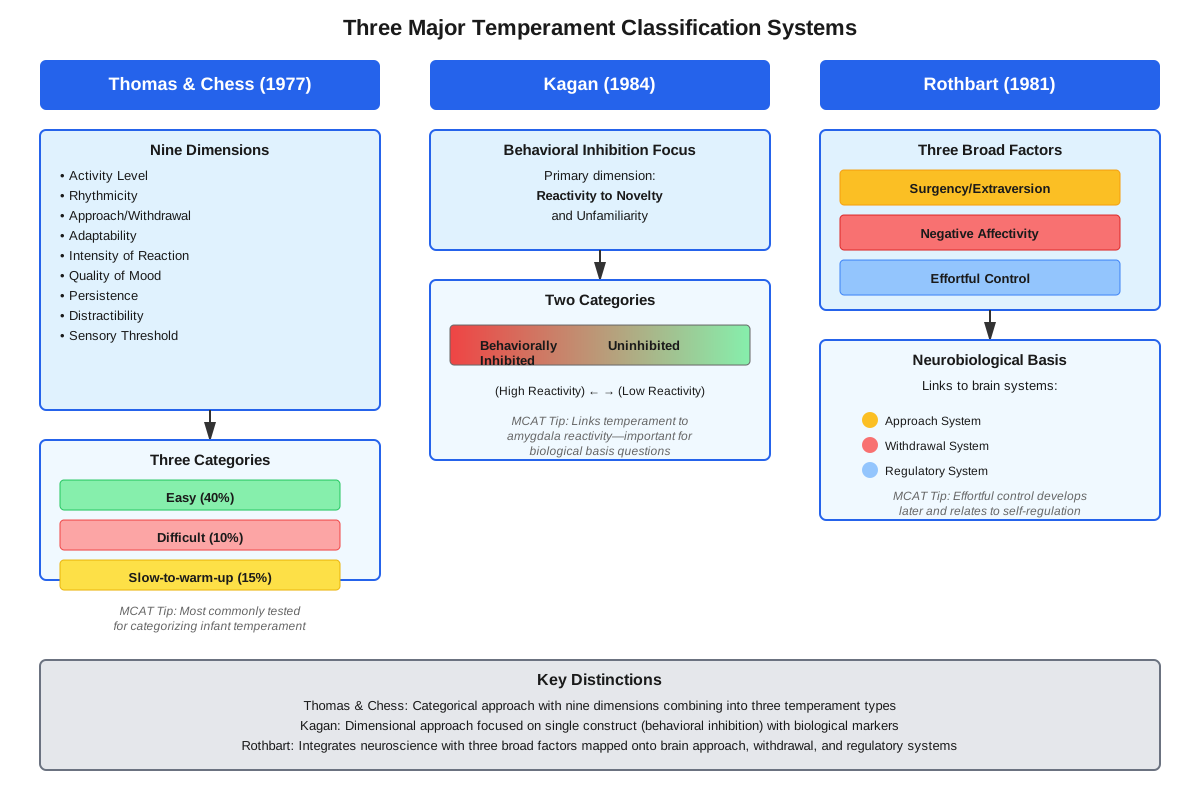
Alexander Thomas and Stella Chess conducted the landmark New York Longitudinal Study beginning in 1956, following 133 children from infancy through adulthood. Their research identified nine dimensions of temperament that could be assessed through parental reports and behavioral observations:
| Dimension | Description | Example |
|---|---|---|
| Activity Level | Frequency and intensity of motor activity | High: constantly moving; Low: content to sit quietly |
| Rhythmicity | Predictability of biological functions | Regular sleep/wake cycles vs. unpredictable patterns |
| Approach/Withdrawal | Initial response to new stimuli | Approaching new foods eagerly vs. rejecting them |
| Adaptability | Ease of modifying reactions to change | Quickly adjusting to new routines vs. prolonged resistance |
| Intensity | Energy level of responses | Loud crying vs. quiet fussing |
| Mood | Predominant emotional tone | Generally cheerful vs. frequently irritable |
| Persistence | Continuation of activity despite obstacles | Continuing difficult tasks vs. giving up quickly |
| Distractibility | Ease with which external stimuli alter behavior | Easily soothed vs. difficult to redirect |
| Sensory Threshold | Intensity of stimulation needed to evoke response | Awakening to slight sounds vs. sleeping through noise |
Based on these dimensions, Thomas and Chess identified three temperamental constellations. The easy child (approximately 40% of children) displays regularity in biological functions, positive approach to new stimuli, high adaptability, mild to moderate intensity, and predominantly positive mood. The difficult child (approximately 10% of children) shows irregularity, withdrawal from new stimuli, slow adaptability, high intensity, and frequently negative mood. The slow-to-warm-up child (approximately 15% of children) exhibits initial withdrawal from new stimuli but gradual adaptation with repeated exposure, low activity level, and mildly negative mood. Notably, approximately 35% of children do not fit neatly into these categories, displaying mixed temperamental profiles.
Kagan's Behavioral Inhibition
Jerome Kagan's research focused specifically on behavioral inhibition—the tendency to display fear, withdrawal, and restraint when confronted with unfamiliar people, objects, or situations. Through longitudinal studies beginning in the 1980s, Kagan demonstrated that approximately 15-20% of infants display high behavioral inhibition (high-reactive temperament), characterized by vigorous motor activity and crying when presented with novel stimuli at 4 months of age. These high-reactive infants were significantly more likely to become inhibited, fearful toddlers and anxious children compared to low-reactive infants.
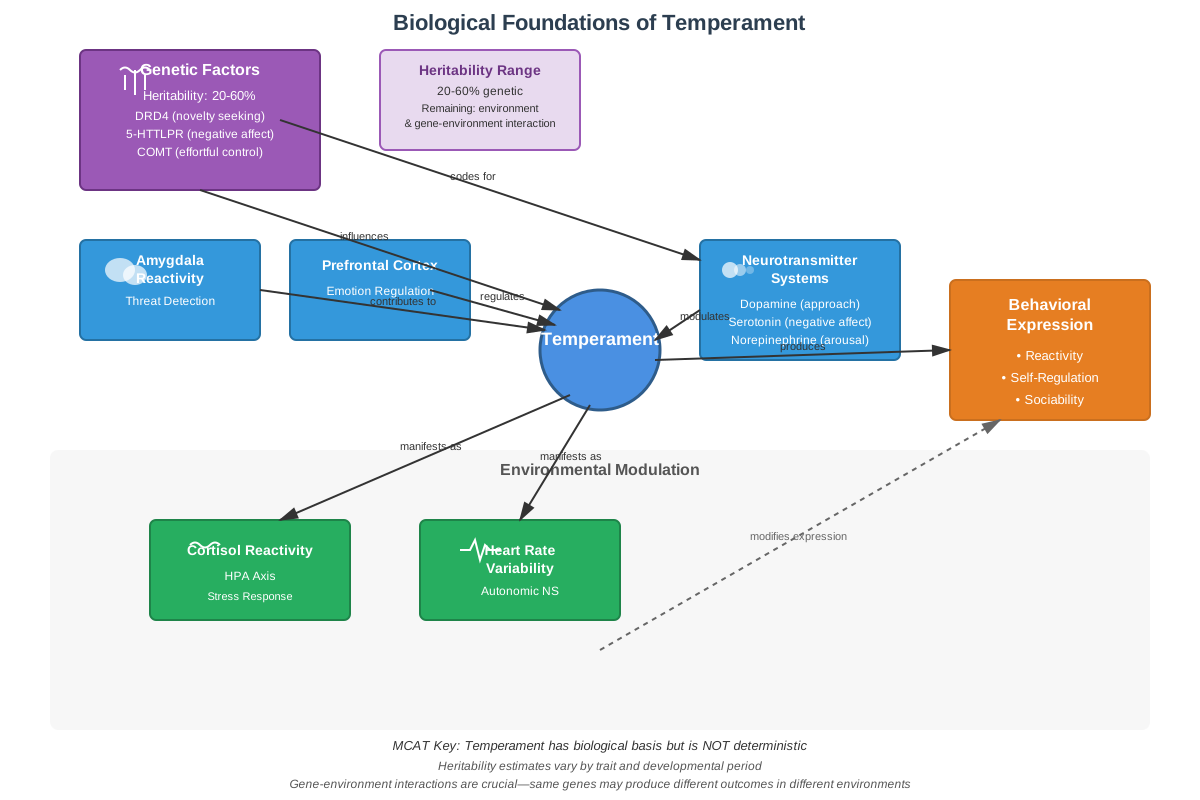
Kagan's work provided crucial evidence for the biological basis of temperament. High-reactive infants showed lower thresholds for amygdala activation, higher and more stable heart rates, greater pupillary dilation, and elevated cortisol levels in response to stress—physiological markers suggesting heightened reactivity of the fear circuitry. Importantly, Kagan demonstrated that while temperament shows stability, it is not deterministic; approximately 40% of high-reactive infants did not become inhibited children, suggesting that environmental factors and parenting practices can moderate temperamental predispositions.
Rothbart's Psychobiological Model
Mary Rothbart developed a comprehensive psychobiological model emphasizing the neurobiological systems underlying temperament. Her model identifies three broad temperamental factors that emerge sequentially during development:
- Negative affectivity/emotionality: Includes fear, frustration, sadness, and discomfort; emerges early in infancy; associated with amygdala and stress-response systems
- Surgency/extraversion: Encompasses activity level, positive anticipation, impulsivity, and approach behaviors; develops during infancy; linked to dopaminergic reward systems
- Effortful control: Involves attentional focusing, inhibitory control, and perceptual sensitivity; emerges later (12-18 months) as prefrontal cortex matures; represents self-regulatory capacity
Rothbart's model emphasizes that temperament reflects individual differences in underlying neural systems, particularly those involving emotion generation (limbic system) and emotion regulation (prefrontal cortex). This neurobiological perspective connects Temperament Psychology to broader MCAT topics including brain development, neurotransmitter systems, and the biological bases of behavior.
Goodness-of-Fit
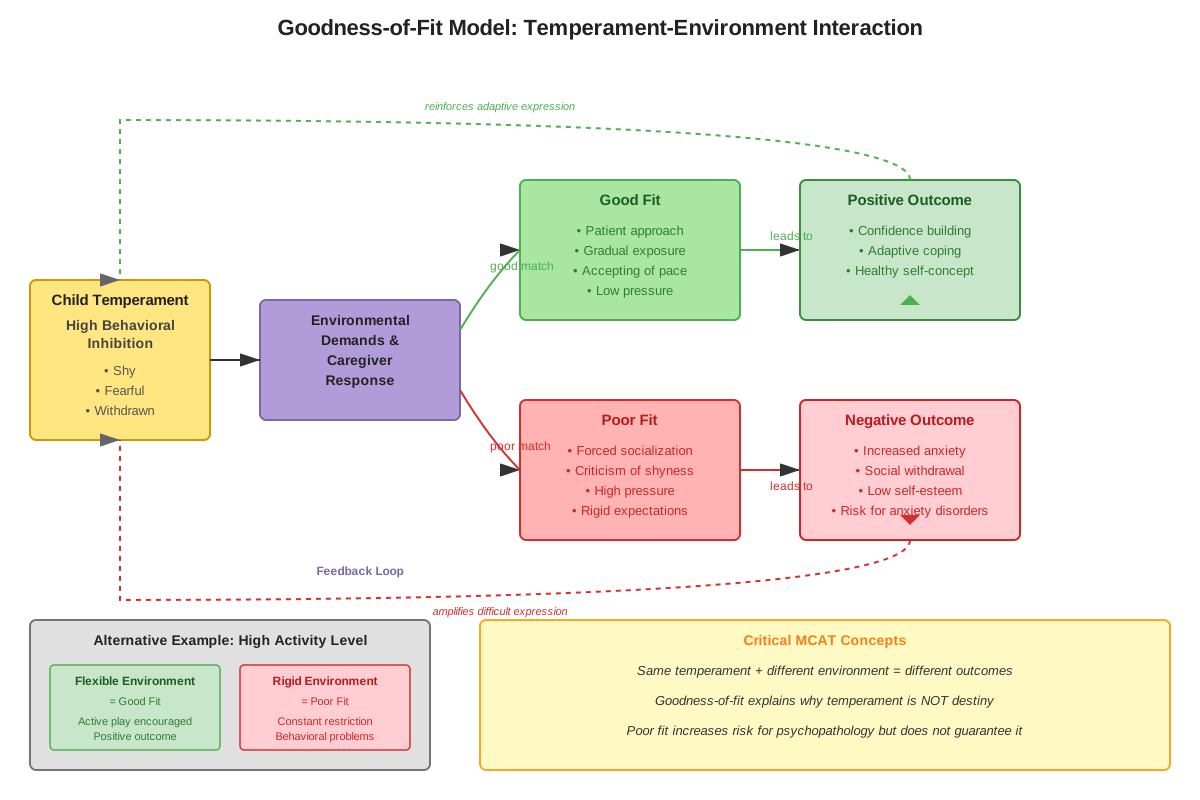
The goodness-of-fit concept, introduced by Thomas and Chess, describes the compatibility between a child's temperamental characteristics and the demands, expectations, and opportunities of the environment, particularly the caregiving environment. Optimal development occurs when there is consonance between temperament and environment; problems arise when there is dissonance.
For example, a highly active, intense child may thrive in an environment that provides ample opportunities for physical activity and parents who appreciate energetic behavior, but may struggle in a restrictive environment with parents who value quiet compliance. Similarly, a slow-to-warm-up child benefits from patient, gradual introductions to new situations but may develop anxiety if forced into novel situations without adequate preparation. The goodness-of-fit concept illustrates a crucial principle for the MCAT: developmental outcomes result from transactions between individual characteristics and environmental factors, not from either alone.
Poor goodness-of-fit can lead to negative developmental cascades. A difficult temperament combined with harsh, inconsistent parenting increases risk for conduct problems and oppositional behavior. Conversely, the same temperamental characteristics paired with patient, structured parenting may result in normal or even superior outcomes. This demonstrates that temperament represents vulnerability or resilience depending on environmental context—a concept known as differential susceptibility.
Biological Basis and Heritability
Twin studies consistently demonstrate moderate to substantial heritability for temperamental traits, with estimates typically ranging from 0.40 to 0.60, indicating that 40-60% of variance in temperament can be attributed to genetic factors. This heritability is comparable to that of adult personality traits and substantially higher than most environmental influences measured in developmental research.
Neurobiological research has identified specific brain systems and neurotransmitters associated with temperamental dimensions. Behavioral inhibition relates to heightened amygdala reactivity and lower thresholds for activation of the hypothalamic-pituitary-adrenal (HPA) axis. Surgency/extraversion correlates with dopaminergic activity in reward pathways. Effortful control depends on prefrontal cortex maturation and executive function networks. These biological substrates explain why temperament appears early (these brain systems are functional at birth or develop according to maturational timetables) and shows stability (brain structure and function show consistency across development).
Stability and Change
Temperament demonstrates moderate stability across development, with correlation coefficients typically ranging from 0.30 to 0.50 for assessments separated by several years. This moderate stability indicates that temperament is neither completely fixed nor entirely malleable. Several factors influence stability: extreme temperamental characteristics (very high or very low reactivity) show greater stability than moderate characteristics; stability increases with age as neural systems mature and consolidate; and environmental consistency promotes temperamental stability while environmental change can modify temperamental expression.
The concept of temperamental stability is crucial for MCAT questions because it illustrates the interplay between biological predispositions and environmental influences. Temperament provides the initial trajectory, but experiences can amplify, diminish, or redirect that trajectory. This perspective aligns with the biopsychosocial model emphasized throughout MCAT content.
Concept Relationships
Within the topic of temperament, the core concepts form an interconnected network. The nine dimensions identified by Thomas and Chess provide the descriptive foundation, characterizing the specific ways infants and children differ in behavioral style. These dimensions cluster into the three temperamental types (easy, difficult, slow-to-warm-up), which represent common patterns but not exhaustive categories. Kagan's behavioral inhibition represents a focused examination of one particularly important dimension—fear and withdrawal in response to novelty—demonstrating how specific temperamental characteristics have distinct biological substrates and developmental trajectories. Rothbart's model integrates these earlier approaches by organizing temperamental dimensions into three broad factors with clear neurobiological foundations, emphasizing both emotional reactivity and regulatory capacity.
The goodness-of-fit concept serves as the critical bridge between temperament and developmental outcomes, explaining why the same temperamental characteristics can lead to different results depending on environmental context. This concept connects temperament to attachment theory (prerequisite knowledge): an infant's temperament influences caregiving experiences, which in turn shape attachment security. For example, a highly reactive, difficult-to-soothe infant may challenge parental sensitivity, potentially leading to insecure attachment if parents become frustrated or withdrawn, but secure attachment if parents respond with patience and appropriate soothing strategies.
Temperament also connects forward to personality development. While temperament represents the constitutional foundation present from birth, personality emerges through the interaction of temperamental predispositions with socialization experiences, cognitive development, and cultural influences. Temperamental negative affectivity may contribute to adult neuroticism; surgency may develop into extraversion; effortful control may become conscientiousness. This progression illustrates the developmental continuity from biologically-based temperament to psychologically complex personality.
The relationship map can be visualized as: Genetic factors → influence → Neurobiological systems (amygdala, prefrontal cortex, neurotransmitters) → produce → Temperamental dimensions (reactivity, self-regulation) → cluster into → Temperamental types → interact with → Environmental factors (parenting, culture) → through → Goodness-of-fit → resulting in → Developmental outcomes (attachment, personality, psychopathology risk) → contributing to → Adult personality traits.
Quick check — test yourself on Temperament so far.
Try Flashcards →High-Yield Facts
⭐ Temperament refers to constitutionally-based individual differences in reactivity and self-regulation that appear early in life and show relative stability across time and situations.
⭐ Thomas and Chess identified three temperamental types: easy child (40%), difficult child (10%), and slow-to-warm-up child (15%), with 35% showing mixed patterns.
⭐ Goodness-of-fit describes the compatibility between a child's temperament and environmental demands; optimal development occurs when temperament and environment are consonant.
⭐ Behavioral inhibition (Kagan) refers to the tendency to display fear and withdrawal to unfamiliar stimuli and is associated with heightened amygdala reactivity and elevated cortisol.
⭐ Temperament shows moderate heritability (0.40-0.60) and moderate stability across development (correlations of 0.30-0.50), indicating both biological foundations and environmental malleability.
- Rothbart's model identifies three broad temperamental factors: negative affectivity, surgency/extraversion, and effortful control, each with distinct neurobiological substrates.
- Temperament differs from personality in that temperament is biologically-based and present from birth, while personality develops through interaction of temperament with experience.
- The nine temperamental dimensions identified by Thomas and Chess include activity level, rhythmicity, approach/withdrawal, adaptability, intensity, mood, persistence, distractibility, and sensory threshold.
- High-reactive infants (Kagan) show vigorous motor activity and crying to novel stimuli at 4 months and are more likely to become inhibited, fearful children.
- Effortful control emerges later than other temperamental dimensions (12-18 months) because it depends on prefrontal cortex maturation.
- Poor goodness-of-fit between difficult temperament and harsh parenting increases risk for conduct problems, illustrating gene-environment interaction.
- Temperamental characteristics show greater stability at the extremes (very high or very low reactivity) compared to moderate levels.
Common Misconceptions
Misconception: Temperament and personality are synonymous terms referring to the same construct.
Correction: Temperament refers specifically to biologically-based, early-appearing individual differences in reactivity and self-regulation, while personality is a broader construct that develops through the interaction of temperamental predispositions with cognitive development, socialization, and cultural influences. Temperament is the constitutional foundation upon which personality is built.
Misconception: A "difficult" temperament inevitably leads to behavioral problems and poor developmental outcomes.
Correction: Temperament interacts with environmental factors through goodness-of-fit. A difficult temperament increases risk for problems only when paired with poor environmental fit (such as harsh, inconsistent parenting). With appropriate, patient caregiving that accommodates the child's temperamental characteristics, children with difficult temperaments can achieve positive developmental outcomes.
Misconception: Because temperament is biologically-based and heritable, it is fixed and unchangeable.
Correction: While temperament shows moderate stability, it is not immutable. Temperament demonstrates moderate correlations across time (0.30-0.50), indicating substantial room for change. Environmental experiences, particularly consistent caregiving practices, can modify temperamental expression. Approximately 40% of high-reactive infants do not become inhibited children, demonstrating malleability.
Misconception: Temperament can be accurately assessed only through laboratory observations and physiological measurements.
Correction: While laboratory assessments and physiological measures provide valuable data, temperament can be reliably assessed through structured parental questionnaires and naturalistic observations. Thomas and Chess's original research relied primarily on parental interviews, which have been validated against observational and physiological measures.
Misconception: All infants fit into one of the three temperamental types identified by Thomas and Chess.
Correction: Only approximately 65% of children fit clearly into the easy, difficult, or slow-to-warm-up categories. About 35% of children show mixed temperamental profiles that do not conform to these types. The three types represent common patterns but not exhaustive categories.
Misconception: Behavioral inhibition and shyness are identical constructs.
Correction: Behavioral inhibition refers specifically to fear and withdrawal in response to unfamiliar stimuli and has clear biological markers (amygdala reactivity, cortisol elevation). Shyness is a broader social construct that may result from behavioral inhibition but can also arise from other factors such as social anxiety, lack of social skills, or cultural values. Not all behaviorally inhibited children become shy, and not all shy children were behaviorally inhibited infants.
Worked Examples
Example 1: Identifying Temperament Type and Predicting Outcomes
Vignette: A researcher conducts a longitudinal study following children from 6 months to 5 years of age. At 6 months, infant Sarah displays irregular sleep and feeding patterns, withdraws from new foods and toys, adapts slowly to changes in routine, cries intensely when distressed, and shows predominantly negative mood. Her parents respond with patience, maintain consistent routines, introduce new experiences gradually, and use gentle soothing techniques. At age 5, Sarah shows age-appropriate social skills, moderate anxiety in completely novel situations, but generally positive adaptation.
Question: Based on Thomas and Chess's framework, what is Sarah's temperamental type at 6 months, and how does the outcome at age 5 illustrate the goodness-of-fit concept?
Analysis:
Step 1: Identify the temperamental dimensions described. Sarah shows: irregularity (biological functions), withdrawal (initial response to new stimuli), slow adaptability, high intensity (crying), and negative mood. These characteristics align with five of the nine dimensions.
Step 2: Classify the temperamental type. The combination of irregularity, withdrawal, slow adaptability, high intensity, and negative mood defines the difficult child temperament pattern, which characterizes approximately 10% of children.
Step 3: Analyze the environmental response. Sarah's parents demonstrated optimal goodness-of-fit by: maintaining consistent routines (addressing irregularity), introducing new experiences gradually (accommodating withdrawal and slow adaptability), and using patient, gentle techniques (responding appropriately to intensity and negative mood).
Step 4: Connect parenting to outcome. The positive outcome at age 5 (age-appropriate social skills, generally positive adaptation) despite initial difficult temperament illustrates that developmental outcomes depend on the interaction between temperamental characteristics and environmental response. The consonance between Sarah's temperamental needs and her parents' caregiving approach produced optimal goodness-of-fit, preventing the negative cascade that might have occurred with harsh or inconsistent parenting.
Answer: Sarah displays a difficult temperament at 6 months. The positive outcome at age 5 despite difficult temperament illustrates goodness-of-fit: when environmental demands and parental responses are compatible with a child's temperamental characteristics, optimal development occurs even with challenging temperamental profiles. This example demonstrates that temperament represents risk or resilience depending on environmental context, not deterministic outcomes.
Example 2: Applying Kagan's Research to Predict Development
Vignette: In a laboratory study, 4-month-old infants are presented with novel visual stimuli (colorful mobiles), auditory stimuli (recorded voices), and olfactory stimuli (cotton swabs with dilute odors). Infant Marcus displays vigorous limb movements, arches his back, and cries intensely when presented with these stimuli. Physiological measurements reveal elevated heart rate, high cortisol levels, and large pupillary dilation. Infant Emma shows minimal motor activity, no crying, and low physiological arousal to the same stimuli.
Question: Based on Kagan's research on behavioral inhibition, what predictions can be made about Marcus and Emma's behavior at age 2 and age 7, and what is the neurobiological basis for these predictions?
Analysis:
Step 1: Classify temperamental reactivity. Marcus displays high-reactive temperament (vigorous motor activity, crying, elevated physiological arousal to novel stimuli). Emma displays low-reactive temperament (minimal motor activity, no distress, low physiological arousal).
Step 2: Apply Kagan's longitudinal findings. High-reactive infants like Marcus are significantly more likely to become behaviorally inhibited toddlers and anxious children. Predictions for Marcus at age 2: likely to show fear and withdrawal when encountering unfamiliar people, objects, or situations; may cling to caregivers in novel environments; may be slow to warm up to new playmates. Predictions for age 7: increased risk for anxiety, social reticence, and cautious behavior in unfamiliar situations. However, approximately 40% of high-reactive infants do not become inhibited children, so these are probabilistic predictions, not certainties.
Step 3: Predict Emma's trajectory. Low-reactive infants like Emma typically become uninhibited, sociable toddlers and outgoing children. Predictions for Emma at age 2: likely to approach new people and situations with minimal fear; may be described as bold or fearless. Predictions for age 7: likely to be socially confident and comfortable in novel situations.
Step 4: Explain neurobiological basis. Marcus's high reactivity reflects a lower threshold for amygdala activation in response to novelty. The amygdala, central to fear processing, triggers the physiological stress response (elevated cortisol via HPA axis activation, increased heart rate via sympathetic nervous system). This heightened reactivity of the fear circuitry explains both the immediate response to novel stimuli and the increased likelihood of later fearful, inhibited behavior. Emma's low reactivity indicates higher thresholds for amygdala activation and less reactive stress-response systems.
Answer: Marcus (high-reactive) is predicted to show behavioral inhibition at age 2 (fearful, withdrawn with novelty) and increased anxiety risk at age 7, though outcomes depend partly on environmental factors. Emma (low-reactive) is predicted to be uninhibited and socially confident. These predictions are based on individual differences in amygdala reactivity and stress-response system thresholds, demonstrating the neurobiological substrate of temperament.
Exam Strategy
When approaching Temperament MCAT questions, begin by identifying whether the question asks about definition/classification, biological basis, developmental outcomes, or the interaction between temperament and environment. Questions testing definitional knowledge typically present a scenario and ask students to identify the temperamental type or dimension; these require careful attention to specific characteristics described (regularity, intensity, adaptability, etc.).
Trigger words that signal temperament content include: "constitutionally-based," "early-appearing," "reactivity," "self-regulation," "behavioral inhibition," "goodness-of-fit," "difficult child," "easy child," and "slow-to-warm-up." When passages describe infant or early childhood behavior, particularly individual differences in emotional reactivity or responses to novelty, temperament concepts are likely being tested. Phrases like "biological basis of behavior," "stability across development," or "interaction between child characteristics and parenting" should activate temperament frameworks.
For questions involving developmental outcomes, always consider goodness-of-fit. If a question describes both a child's temperamental characteristics and environmental factors (especially parenting), the answer likely involves analyzing the compatibility between them. Eliminate answer choices that suggest temperament alone determines outcomes (too deterministic) or that ignore temperamental contributions entirely (too environmentalist). The correct answer typically acknowledges both temperamental predispositions and environmental moderation.
When distinguishing temperament from personality, remember the key differences: temperament is biologically-based, appears early, and focuses on reactivity and regulation; personality is broader, develops later, and includes cognitive and social components. If a question asks about infants or very young children, temperament is the appropriate construct; if it asks about adolescents or adults, personality is more likely relevant unless the question specifically addresses early-appearing, biologically-based characteristics.
For questions involving research design or interpretation, pay attention to the age of participants and the measures used. Temperament research typically involves infants and young children, uses parental reports or behavioral observations, and may include physiological measures (heart rate, cortisol, amygdala activation). Questions may present longitudinal data showing moderate stability—recognize that correlations of 0.30-0.50 across several years indicate meaningful but not perfect stability, supporting the view that temperament is moderately stable and moderately malleable.
Time allocation: Discrete temperament questions typically require 60-90 seconds. Passage-based questions may require 90-120 seconds, as they often involve integrating information about temperamental characteristics, environmental factors, and developmental outcomes. If a question seems to require choosing between biological and environmental explanations, consider whether an interactionist answer (goodness-of-fit, gene-environment interaction) is available—these are often correct for temperament questions.
Memory Techniques
Mnemonic for Thomas and Chess's Nine Dimensions: "A RAPID MAPS"
- Activity level
- Rhythmicity
- Approach/withdrawal
- aPtability (Adaptability)
- Intensity
- Distractibility
- Mood
- Persistence
- Sensory threshold
Mnemonic for Three Temperamental Types: "EDS" (Easy, Difficult, Slow-to-warm-up) with percentages "4-1-1.5" (40%, 10%, 15%)
Visualization for Goodness-of-Fit: Picture a key (temperament) and lock (environment). When the key fits the lock smoothly, the door opens to positive outcomes. When the key doesn't fit, the door remains stuck (poor outcomes). This image reinforces that the same key (temperament) can open some locks but not others—outcomes depend on the match.
Acronym for Rothbart's Three Factors: "NSE"
- Negative affectivity
- Surgency/extraversion
- Effortful control
Remember the developmental sequence: NS appear early (infancy), E appears later (12-18 months) as prefrontal cortex matures.
Memory aid for Kagan's High-Reactive Profile: "High-reactive babies are MACH fast" (Motor activity, Amygdala activation, Crying, Heart rate elevation). This captures both the behavioral (motor activity, crying) and physiological (amygdala, heart rate) components.
Conceptual anchor for Temperament vs. Personality: Temperament is the seed (biological, present from the start), personality is the tree (develops through interaction of seed with soil, water, sunlight—the environment). The tree's characteristics depend on both the seed's nature and the growing conditions.
Summary
Temperament represents constitutionally-based individual differences in reactivity and self-regulation that emerge early in life, show moderate stability across development, and have clear biological foundations. Thomas and Chess's landmark research identified nine temperamental dimensions that cluster into three types (easy, difficult, slow-to-warm-up), though many children show mixed profiles. Kagan's work on behavioral inhibition demonstrated that high-reactive infants show heightened amygdala activation and are more likely to become fearful, inhibited children, providing crucial evidence for the neurobiological basis of temperament. Rothbart's model organizes temperamental dimensions into three broad factors—negative affectivity, surgency/extraversion, and effortful control—each linked to specific brain systems. The goodness-of-fit concept explains how developmental outcomes result from the interaction between temperamental characteristics and environmental demands, particularly caregiving practices. While temperament shows moderate heritability and stability, it is not deterministic; environmental factors can amplify, diminish, or redirect temperamental trajectories. Understanding temperament is essential for the MCAT because it bridges biological, developmental, and social psychology, illustrating how genetic predispositions interact with experience to shape development within the framework of Development and Personality.
Key Takeaways
- Temperament is constitutionally-based, early-appearing, and moderately stable, distinguishing it from personality, which develops through temperament-environment interaction
- Thomas and Chess identified three temperamental types (easy 40%, difficult 10%, slow-to-warm-up 15%) based on nine dimensions including activity level, adaptability, and intensity
- Goodness-of-fit between temperament and environment determines developmental outcomes; the same temperamental characteristics can lead to positive or negative results depending on environmental compatibility
- Kagan's research demonstrated that behavioral inhibition has clear biological markers (amygdala reactivity, elevated cortisol) and predicts later anxiety, though outcomes are not deterministic
- Temperament shows moderate heritability (0.40-0.60) and moderate stability (correlations 0.30-0.50), indicating both biological foundations and environmental malleability
- Rothbart's three temperamental factors (negative affectivity, surgency, effortful control) have distinct neurobiological substrates and developmental trajectories
- For MCAT questions, always consider the interaction between temperamental predispositions and environmental factors rather than viewing either as solely determinative
Related Topics
- Attachment Theory: Temperament influences caregiving experiences and attachment security; understanding how infant characteristics shape parent-child relationships builds on temperament knowledge
- Personality Development: Temperament provides the constitutional foundation for personality; studying how temperamental traits develop into personality dimensions (Big Five) extends temperament concepts
- Gene-Environment Interaction: Temperament exemplifies how genetic predispositions interact with environmental factors; exploring diathesis-stress and differential susceptibility models deepens understanding
- Developmental Psychopathology: Temperamental characteristics (especially behavioral inhibition and effortful control) predict risk for anxiety, depression, and externalizing disorders; connecting temperament to psychopathology integrates developmental and clinical psychology
- Parenting Styles: Understanding how different parenting approaches interact with various temperamental profiles through goodness-of-fit connects temperament to socialization research
- Biological Bases of Behavior: The neurobiological substrates of temperament (amygdala, prefrontal cortex, neurotransmitter systems) connect to broader topics in behavioral neuroscience
Practice CTA
Now that you have mastered the core concepts of temperament, challenge yourself with practice questions and flashcards to solidify your understanding. Focus particularly on distinguishing temperament from related constructs, applying the goodness-of-fit concept to predict developmental outcomes, and connecting temperamental characteristics to their neurobiological foundations. The ability to integrate biological, developmental, and social perspectives on temperament will serve you well not only on temperament-specific questions but also on interdisciplinary passages throughout the MCAT Psychology section. Your investment in mastering this foundational concept will pay dividends across multiple content areas—keep up the excellent work!
Sign up free to keep reading
Create a free AnvayaPrep account to finish this MCAT guide on Temperament — plus flashcards and practice questions.