Overview
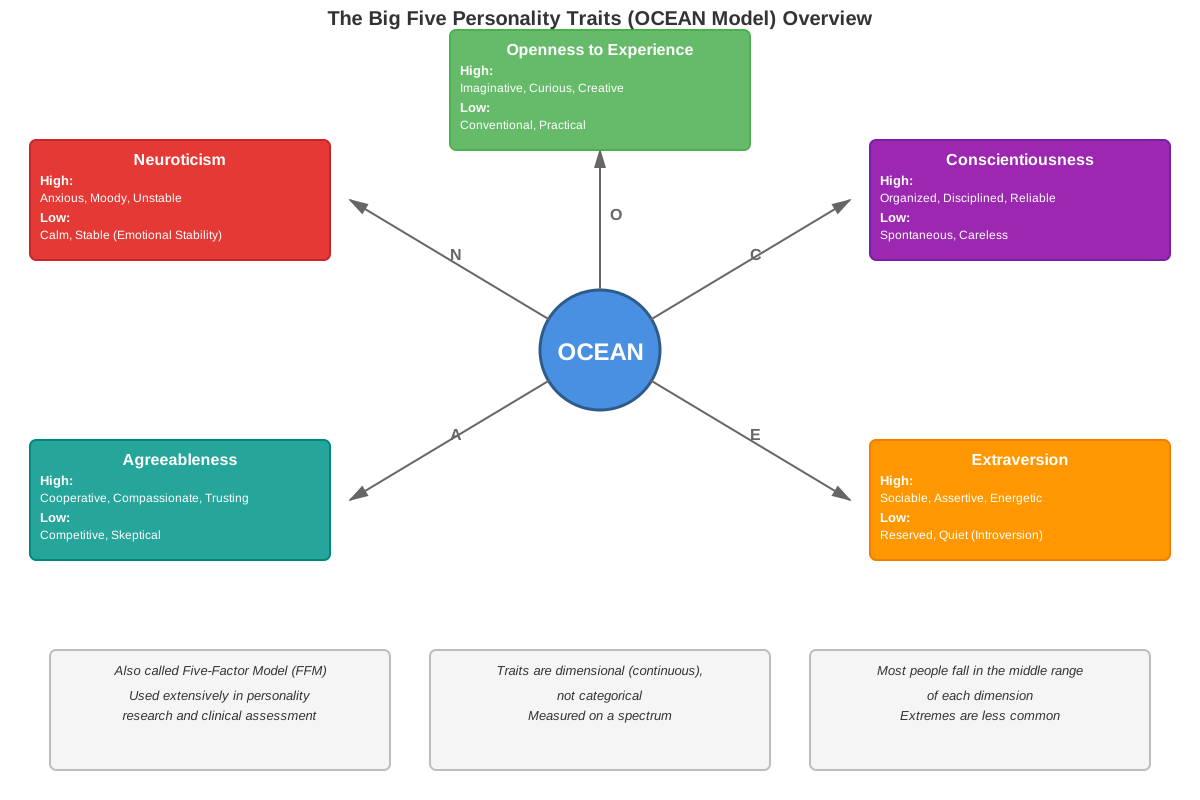
The Big Five personality traits represent one of the most empirically validated and widely accepted frameworks in personality psychology. This model, also known as the Five-Factor Model (FFM) or OCEAN model, proposes that human personality can be comprehensively described along five broad dimensions: Openness to Experience, Conscientiousness, Extraversion, Agreeableness, and Neuroticism. Unlike earlier trait theories that proposed dozens or even thousands of personality descriptors, the Big Five distills personality into these five fundamental dimensions that remain relatively stable across the lifespan and show consistency across cultures.
For the MCAT, understanding the Big Five personality traits is essential because this framework appears frequently in the Psychology and Sociology section, particularly in passages involving Development and Personality, clinical psychology, and behavioral research. The MCAT tests not only definitional knowledge but also the ability to apply these traits to experimental designs, interpret research findings, and analyze how personality influences health behaviors, social interactions, and psychological outcomes. Questions may present research scenarios examining correlations between specific traits and outcomes, or clinical vignettes where recognizing personality patterns aids in understanding patient behavior.
The Big Five framework connects to numerous other Psychology concepts tested on the MCAT, including trait theory versus other personality theories (psychodynamic, humanistic, social-cognitive), the nature versus nurture debate in personality development, the stability of personality across the lifespan, and the relationship between personality and mental health disorders. Understanding how the Big Five relates to concepts like self-concept, identity formation, and behavioral genetics provides a comprehensive foundation for tackling complex MCAT passages that integrate multiple psychological domains.
Learning Objectives
- [ ] Define Big Five personality traits using accurate Psychology terminology
- [ ] Explain why Big Five personality traits matters for the MCAT
- [ ] Apply Big Five personality traits to exam-style questions
- [ ] Identify common mistakes related to Big Five personality traits
- [ ] Connect Big Five personality traits to related Psychology concepts
- [ ] Distinguish between high and low expressions of each of the five personality dimensions
- [ ] Analyze research scenarios involving personality trait measurements and correlational studies
- [ ] Evaluate how personality traits interact with situational factors to influence behavior
Prerequisites
- Basic understanding of trait theory: The Big Five is a trait-based approach, requiring familiarity with the concept that personality consists of stable, enduring characteristics
- Correlation versus causation: Essential for interpreting personality research, as most Big Five studies examine correlational relationships rather than causal mechanisms
- Normal distribution concepts: Personality traits are typically normally distributed in populations, with most people falling near the middle of each dimension
- Reliability and validity in psychological measurement: Understanding how personality assessments are validated helps contextualize Big Five research findings
Why This Topic Matters
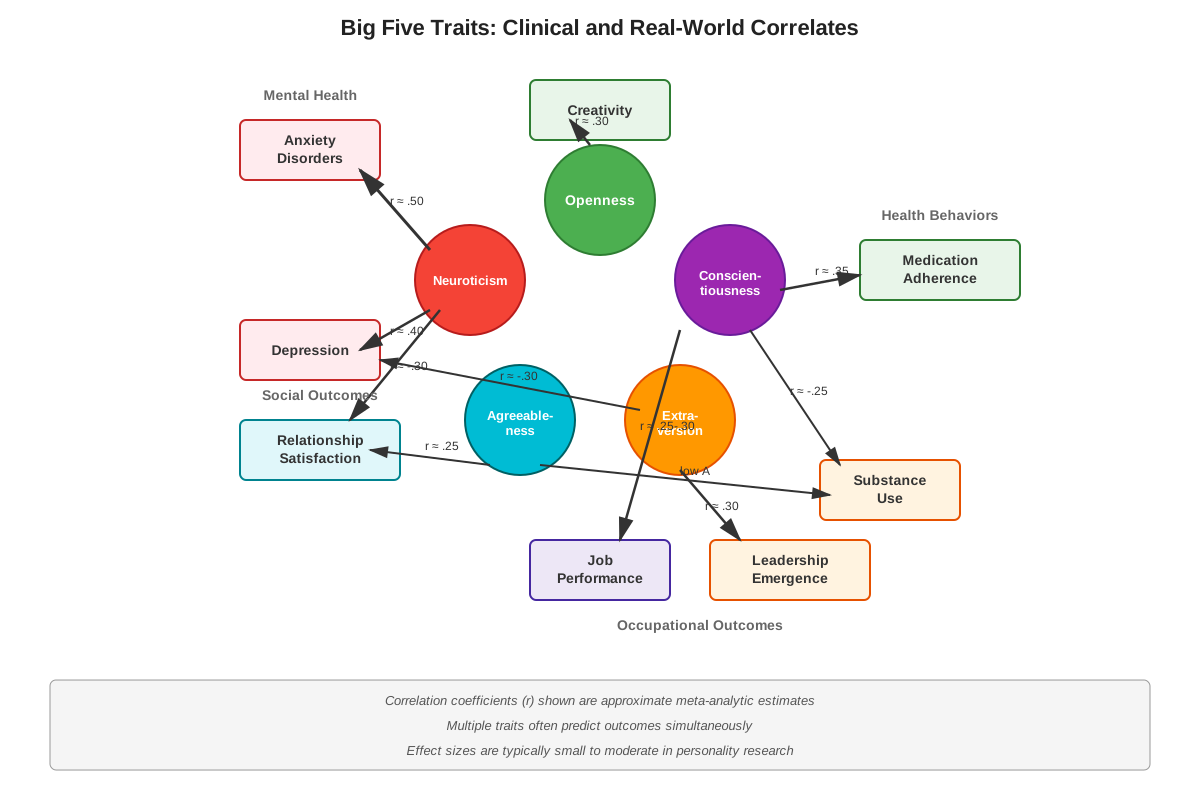
The Big Five personality traits framework has profound clinical and real-world significance. In healthcare settings, personality traits predict health behaviors, treatment adherence, and patient-provider communication patterns. For example, high conscientiousness correlates with better medication adherence and health outcomes, while high neuroticism associates with increased health anxiety and somatic complaints. Understanding these patterns helps healthcare providers tailor interventions and communication strategies to individual patients.
On the MCAT, the Big Five appears with moderate to high frequency, typically in 2-4 questions per exam administration. Questions most commonly appear in three formats: (1) passage-based questions presenting personality research studies where students must interpret findings or identify methodological considerations; (2) discrete questions testing definitional knowledge or asking students to identify which trait best explains a described behavior; and (3) pseudo-discrete questions embedded in clinical or social psychology passages where personality traits provide context for understanding behavior patterns.
The topic frequently appears in passages discussing longitudinal studies of personality development, twin studies examining heritability of traits, cross-cultural psychology research, or clinical studies correlating personality with mental health outcomes. The MCAT particularly favors questions that require students to distinguish between the five traits, recognize behavioral manifestations of high versus low trait expression, or understand how personality interacts with environmental factors. Recognizing the Big Five framework when it appears implicitly in passage content—even when not explicitly named—represents a high-yield skill for maximizing points in the Psychological, Social, and Biological Foundations of Behavior section.
Core Concepts
The Five-Factor Model Framework
The Big Five personality traits emerged from decades of lexical research examining how people describe personality in natural language. Researchers analyzed thousands of personality-descriptive adjectives and used factor analysis to identify five broad dimensions that consistently emerged across studies, cultures, and languages. This empirical foundation distinguishes the Big Five from theoretically-derived personality models, making it particularly robust for scientific research and clinical application.
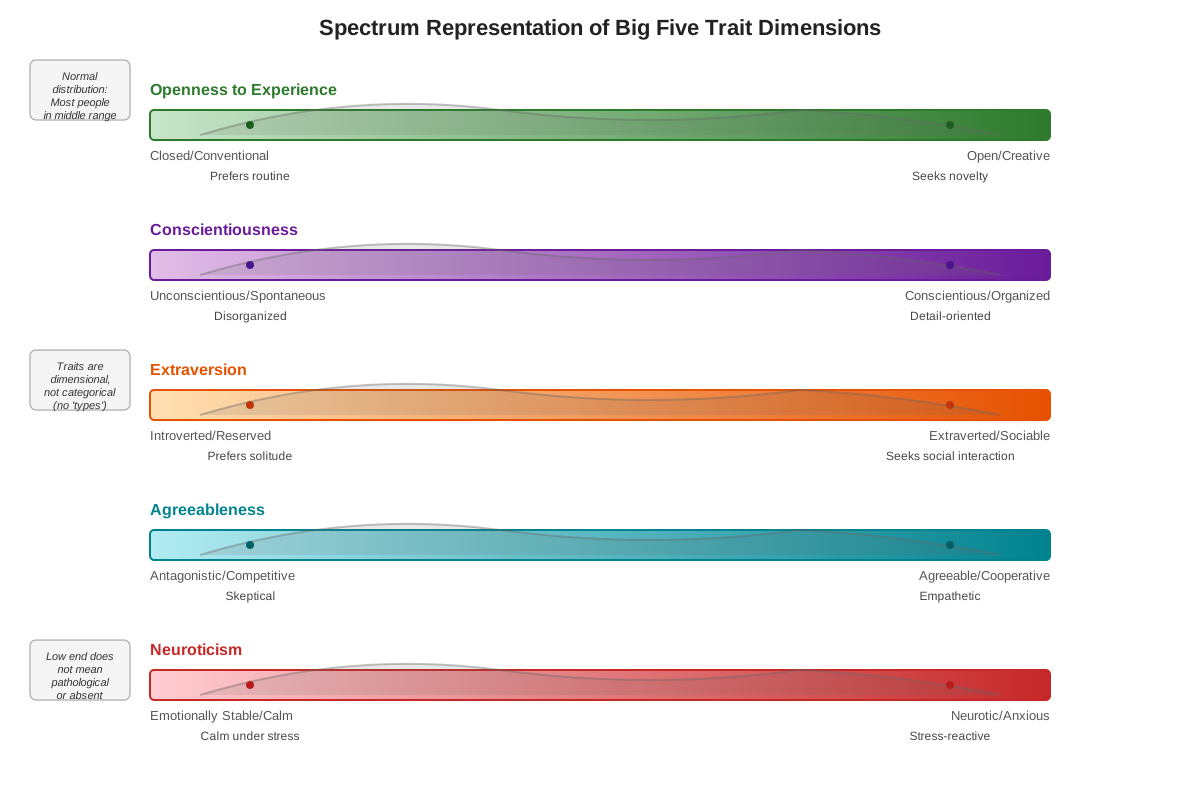
Each of the five dimensions represents a continuum rather than a category, meaning individuals fall somewhere along each spectrum rather than being classified as "having" or "not having" a trait. The traits are relatively independent of one another, though some correlations exist (for example, conscientiousness and neuroticism show a modest negative correlation). Importantly, no position on any dimension is inherently "good" or "bad"—each has adaptive value in different contexts, though extreme positions may present challenges.
Openness to Experience
Openness to Experience (sometimes called Openness or Intellect) reflects the degree to which individuals seek out, appreciate, and engage with novel experiences, ideas, and aesthetic stimuli. This dimension encompasses intellectual curiosity, creativity, imagination, appreciation for art and beauty, and willingness to consider unconventional ideas.
Individuals high in openness tend to be intellectually curious, creative, imaginative, and appreciative of diverse perspectives. They enjoy abstract thinking, philosophical discussions, and artistic experiences. They readily embrace change and novelty, often seeking out new experiences and unconventional ideas. In academic settings, high openness correlates with preference for theoretical and creative disciplines.
Individuals low in openness tend to be more conventional, practical, and traditional in their thinking. They prefer familiar routines and concrete, straightforward approaches to problems. They may show less interest in abstract ideas, artistic pursuits, or exploring unfamiliar cultures and perspectives. Low openness does not indicate lack of intelligence but rather a preference for practical, tried-and-true approaches.
Conscientiousness
Conscientiousness reflects the degree of organization, dependability, discipline, and goal-directed behavior an individual displays. This dimension encompasses self-discipline, achievement striving, orderliness, dutifulness, and deliberation before action.
High conscientiousness manifests as organized, disciplined, reliable, and achievement-oriented behavior. These individuals plan ahead, follow through on commitments, maintain orderly environments, and persist toward long-term goals despite obstacles. They tend to be punctual, thorough, and careful in their work. Research consistently shows conscientiousness as the personality trait most predictive of academic and occupational success, as well as positive health outcomes including longevity.
Low conscientiousness appears as spontaneous, flexible, and less concerned with organization or long-term planning. These individuals may be more impulsive, preferring to act on immediate opportunities rather than following predetermined plans. They may struggle with procrastination, disorganization, or following through on commitments. While this can create challenges in structured environments, it may facilitate adaptability and spontaneity in rapidly changing situations.
Extraversion
Extraversion (sometimes spelled Extroversion) reflects the degree to which individuals seek and enjoy social interaction, external stimulation, and high-energy activities. This dimension encompasses sociability, assertiveness, activity level, positive emotionality, and excitement-seeking.
High extraversion characterizes individuals who are outgoing, talkative, energetic, and enthusiastic in social situations. They gain energy from social interaction, prefer group activities to solitary pursuits, and readily engage with new people. Extraverts tend to experience positive emotions frequently and intensely, show assertiveness in social situations, and seek excitement and stimulation. They often dominate conversations and prefer being the center of attention.
Low extraversion (introversion) describes individuals who are reserved, quiet, and prefer solitary or small-group activities. Introverts find extensive social interaction draining rather than energizing, requiring alone time to recharge. They tend to be more reflective, preferring deep conversations with close friends over large social gatherings. Introversion should not be confused with shyness (which involves social anxiety) or social skills deficits—introverts simply prefer less stimulation and social interaction.
Agreeableness
Agreeableness reflects the degree to which individuals prioritize social harmony, cooperation, and concern for others. This dimension encompasses trust, altruism, compliance, modesty, and tender-mindedness.
High agreeableness manifests as compassionate, cooperative, trusting, and helpful behavior. These individuals prioritize maintaining positive relationships, readily compromise to avoid conflict, and show genuine concern for others' welfare. They tend to be empathetic, forgiving, and generous. High agreeableness facilitates teamwork and caregiving roles but may lead to difficulty asserting personal needs or setting boundaries.
Low agreeableness appears as competitive, skeptical, and direct in interpersonal interactions. These individuals prioritize their own interests, readily challenge others' ideas, and show less concern for social harmony. They may be perceived as argumentative, critical, or uncooperative. While this can create interpersonal friction, low agreeableness may be adaptive in competitive environments or situations requiring tough-minded decision-making without emotional interference.
Neuroticism (Emotional Stability)
Neuroticism (or its inverse, Emotional Stability) reflects the tendency to experience negative emotions and psychological distress. This dimension encompasses anxiety, depression, vulnerability to stress, emotional volatility, and self-consciousness.
High neuroticism characterizes individuals who frequently experience negative emotions such as anxiety, sadness, irritability, and emotional instability. They tend to perceive situations as threatening, worry excessively, and struggle to regulate emotional responses to stress. High neuroticism represents the strongest personality predictor of mental health disorders, particularly anxiety and mood disorders. These individuals may be more sensitive to criticism and experience stronger physiological stress responses.
Low neuroticism (high emotional stability) describes individuals who remain calm, even-tempered, and resilient in the face of stress. They experience negative emotions less frequently and less intensely, recover quickly from setbacks, and maintain emotional equilibrium across situations. They tend to be self-confident and less reactive to criticism or stressful events.
Measurement and Assessment
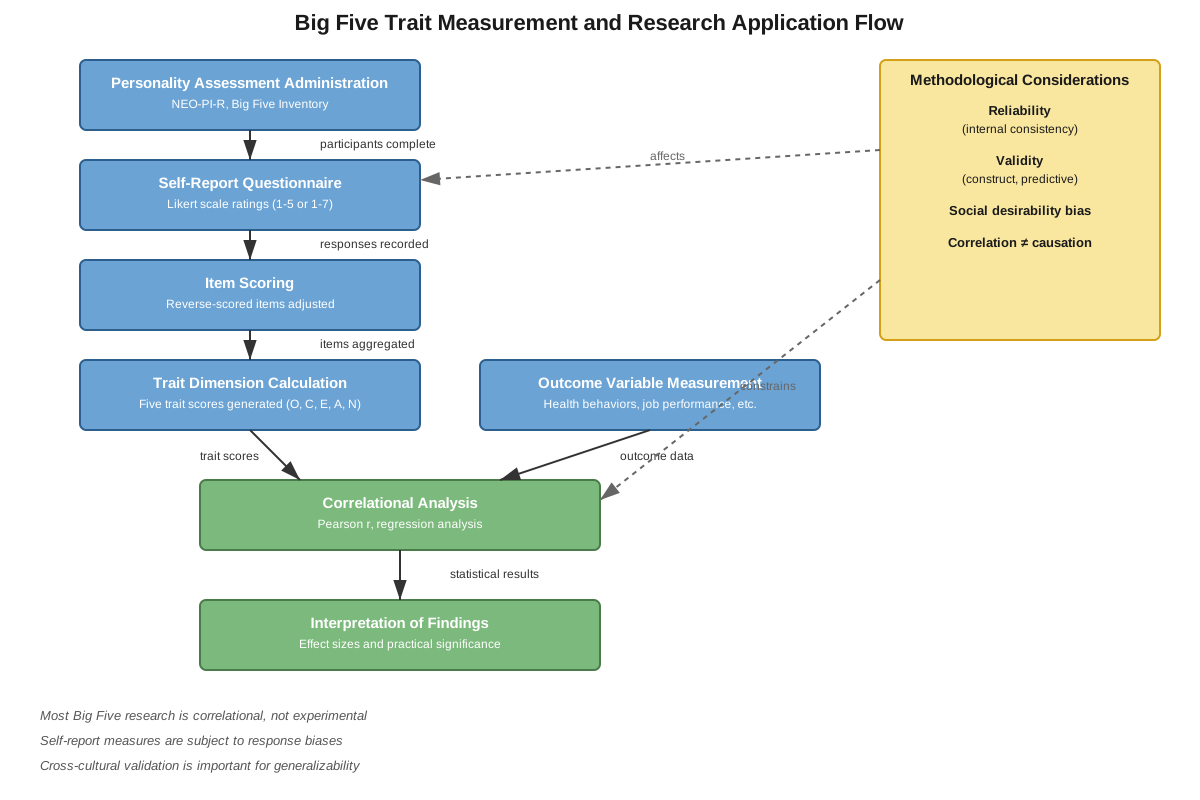
The Big Five traits are typically assessed using self-report questionnaires where individuals rate how well various statements describe them. The most widely used instruments include the NEO Personality Inventory (NEO-PI-R), the Big Five Inventory (BFI), and shorter measures like the Ten-Item Personality Inventory (TIPI). These assessments demonstrate strong reliability and validity across diverse populations.
Each trait is measured on a continuous scale, with scores typically standardized to allow comparison to population norms. Most people score near the middle of each dimension, with fewer individuals at the extremes. Importantly, personality assessment on the MCAT may appear in research passages describing study methodology, requiring students to understand how traits are operationalized and measured.
Concept Relationships
The five personality dimensions within the Big Five personality traits framework operate relatively independently, though some correlations exist. Conscientiousness and neuroticism show a modest negative correlation—individuals high in emotional stability tend to show greater self-discipline and organization. Extraversion and openness sometimes correlate positively, as both involve engagement with external stimuli (social for extraversion, intellectual/aesthetic for openness). Agreeableness and conscientiousness may correlate in contexts emphasizing social responsibility and rule-following.
The Big Five connects to broader personality psychology through its position as a trait theory, contrasting with psychodynamic theories (Freud's id/ego/superego), humanistic theories (Rogers' self-concept, Maslow's hierarchy), and social-cognitive theories (Bandura's reciprocal determinism). Understanding these theoretical distinctions helps contextualize MCAT passages comparing different personality frameworks.
The framework relates to Development and Personality concepts through research on personality stability and change across the lifespan. While the Big Five traits show substantial stability from early adulthood onward, systematic changes occur: conscientiousness and agreeableness tend to increase with age (personality maturation), while neuroticism, extraversion, and openness tend to decrease slightly. This connects to developmental psychology concepts of identity formation and psychosocial development.
The Big Five also connects to behavioral genetics and the nature-nurture debate. Twin studies indicate heritability estimates of approximately 40-60% for each trait, suggesting substantial genetic influence while leaving considerable room for environmental factors. This relates to MCAT content on gene-environment interactions and epigenetics.
Finally, the Big Five relates to health psychology and clinical psychology. Personality traits predict health behaviors (conscientiousness predicts exercise and preventive care), illness susceptibility (neuroticism predicts stress-related illness), and mental health outcomes (neuroticism represents the strongest personality risk factor for psychopathology). These connections frequently appear in MCAT passages integrating personality with health outcomes.
Quick check — test yourself on Big Five personality traits so far.
Try Flashcards →High-Yield Facts
⭐ The Big Five personality traits are: Openness to Experience, Conscientiousness, Extraversion, Agreeableness, and Neuroticism (OCEAN or CANOE acronym)
⭐ Each trait represents a continuous dimension rather than a categorical classification—individuals fall somewhere along each spectrum
⭐ Conscientiousness is the strongest personality predictor of academic and occupational success, as well as positive health outcomes including longevity
⭐ Neuroticism is the strongest personality predictor of mental health disorders, particularly anxiety and mood disorders
⭐ The Big Five traits show substantial stability from early adulthood through late life, though systematic changes occur (conscientiousness and agreeableness increase; neuroticism, extraversion, and openness decrease slightly)
- Twin studies indicate heritability estimates of approximately 40-60% for each Big Five trait, demonstrating both genetic and environmental influences
- The Big Five framework emerged from lexical research using factor analysis of personality-descriptive adjectives, providing an empirical rather than theoretical foundation
- Extraversion involves seeking social interaction and external stimulation, while introversion (low extraversion) involves preference for solitary activities—introversion is not the same as shyness or social anxiety
- Openness to Experience encompasses intellectual curiosity, creativity, and appreciation for novelty, not just "being open-minded" in social interactions
- Agreeableness reflects prioritizing social harmony and cooperation, with low agreeableness manifesting as competitiveness and skepticism rather than hostility
- The Big Five traits show cross-cultural consistency, though mean levels of specific traits vary across cultures
- No position on any Big Five dimension is inherently "good" or "bad"—each has adaptive value in different contexts
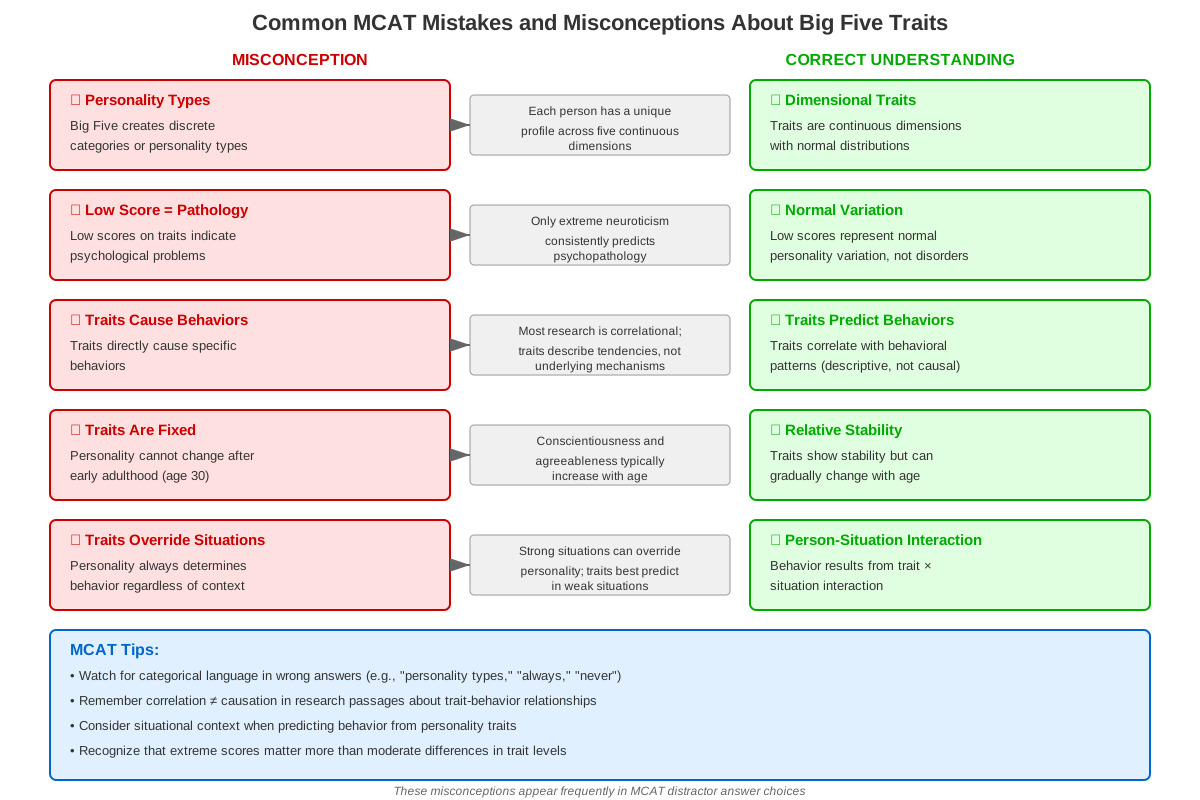
- Personality traits interact with situational factors to influence behavior (person-situation interaction), meaning behavior cannot be predicted from traits alone
- The Big Five framework is atheoretical, describing personality structure without explaining underlying mechanisms or developmental origins
- Facets (sub-dimensions) exist within each broad trait—for example, extraversion includes facets of sociability, assertiveness, and activity level
Common Misconceptions
Misconception: The Big Five traits are categories that people either have or don't have → Correction: Each trait represents a continuous dimension where individuals fall somewhere along a spectrum. Most people score near the middle of each dimension, with relatively few at the extremes. There is no threshold where someone "becomes" extraverted or conscientious.
Misconception: Introversion (low extraversion) is the same as shyness or social anxiety → Correction: Introversion reflects preference for less social stimulation and solitary activities, not fear or anxiety about social situations. Introverts can have excellent social skills and enjoy social interaction—they simply find it draining rather than energizing and prefer smaller doses. Shyness involves social anxiety and fear of negative evaluation, which is more closely related to neuroticism.
Misconception: High scores on all Big Five traits are better or more desirable → Correction: No position on any dimension is inherently superior. Each trait has adaptive value in different contexts. For example, low openness facilitates focus on practical, proven approaches; low agreeableness enables tough-minded decision-making; moderate extraversion may be optimal for many situations. Extreme positions on any trait can present challenges.
Misconception: Personality traits directly cause specific behaviors → Correction: Traits represent tendencies or predispositions, not deterministic causes. Behavior results from the interaction between personality traits and situational factors (person-situation interaction). Someone high in conscientiousness may still procrastinate in certain contexts, and someone low in agreeableness may cooperate when situational demands require it.
Misconception: The Big Five explains why people have certain personality traits → Correction: The Big Five is a descriptive framework that identifies the structure of personality, not an explanatory theory. It describes what personality traits exist and how they relate to each other, but does not explain developmental origins, underlying mechanisms, or why individual differences exist. Other theories address these explanatory questions.
Misconception: Openness to Experience means being socially open-minded or accepting of others → Correction: Openness primarily reflects intellectual curiosity, creativity, and appreciation for novelty and aesthetic experiences. While high openness may correlate with accepting diverse perspectives, the trait fundamentally concerns engagement with ideas, art, and novel experiences rather than social tolerance. Social acceptance relates more closely to agreeableness.
Misconception: Personality traits are fixed and unchangeable throughout life → Correction: While the Big Five traits show substantial stability, particularly after age 30, they are not completely immutable. Systematic changes occur across the lifespan (personality maturation), and significant life experiences can produce trait changes. Interventions can also produce modest personality change, though traits are generally more stable than attitudes or moods.
Worked Examples
Example 1: Research Interpretation Passage
Vignette: Researchers conducted a longitudinal study following 500 participants from age 25 to age 65, assessing Big Five personality traits every 10 years. Results showed that average conscientiousness scores increased from 3.2 (SD = 0.8) at age 25 to 3.9 (SD = 0.7) at age 65. Average neuroticism scores decreased from 3.5 (SD = 0.9) to 2.8 (SD = 0.8) over the same period. The researchers concluded that personality shows systematic change across adulthood.
Question: Which of the following best explains the pattern of results?
A) Cohort effects account for the observed differences
B) Personality maturation produces increased emotional stability and self-regulation with age
C) Selective attrition of neurotic participants biased the results
D) Measurement error increased with participant age
Analysis: This question tests understanding of personality development across the lifespan and interpretation of longitudinal research.
Step 1: Identify the key findings—conscientiousness increased and neuroticism decreased from early to late adulthood in a longitudinal design.
Step 2: Recall that longitudinal designs follow the same individuals over time, controlling for cohort effects (eliminating option A, which would apply to cross-sectional designs).
Step 3: Recognize the pattern as personality maturation—the well-documented tendency for conscientiousness and agreeableness to increase while neuroticism decreases with age. This reflects increased emotional stability and self-regulation.
Step 4: Consider alternative explanations. Selective attrition (option C) could bias results if highly neurotic participants dropped out, but the question provides no evidence for this. Measurement error (option D) would increase variability, not produce systematic directional changes.
Answer: B. The pattern reflects personality maturation, a robust finding in personality development research showing increased emotional stability (decreased neuroticism) and self-regulation (increased conscientiousness) with age.
Example 2: Clinical Application
Vignette: A 45-year-old patient consistently arrives late to appointments, frequently forgets to take prescribed medications, and reports difficulty maintaining organized records of health information. During consultations, the patient appears friendly and talkative, readily sharing personal information and expressing trust in the healthcare team. The patient reports feeling generally content and rarely worries about health concerns, even when facing serious diagnoses.
Question: Based on the Big Five personality framework, which trait pattern best characterizes this patient?
A) High conscientiousness, high agreeableness, low neuroticism
B) Low conscientiousness, high agreeableness, low neuroticism
C) Low conscientiousness, low agreeableness, high neuroticism
D) High conscientiousness, low agreeableness, high neuroticism
Analysis: This question requires applying Big Five concepts to recognize behavioral manifestations of personality traits in a clinical context.
Step 1: Analyze behaviors related to conscientiousness—arriving late, forgetting medications, and difficulty with organization all indicate low conscientiousness (lack of organization, discipline, and reliability).
Step 2: Analyze behaviors related to agreeableness—appearing friendly, readily sharing information, and expressing trust indicate high agreeableness (cooperative, trusting, warm interpersonal style).
Step 3: Analyze behaviors related to neuroticism—feeling generally content and rarely worrying, even about serious health concerns, indicates low neuroticism (emotional stability, lack of anxiety).
Step 4: Match the pattern to the options. The patient shows low conscientiousness, high agreeableness, and low neuroticism.
Answer: B. The patient's disorganization and unreliability indicate low conscientiousness, while the friendly, trusting interpersonal style indicates high agreeableness, and the lack of worry indicates low neuroticism (emotional stability).
Clinical Implication: Understanding this personality pattern helps healthcare providers anticipate challenges (medication non-adherence due to low conscientiousness) and leverage strengths (trusting relationship facilitates communication). Interventions might include simplified medication regimens, reminder systems, and structured organizational support.
Exam Strategy
When approaching Big Five personality traits questions on the MCAT, first determine whether the question asks for definitional knowledge (identifying which trait a behavior exemplifies) or application (interpreting research findings or predicting outcomes based on traits). Definitional questions require distinguishing between the five traits, while application questions require understanding how traits relate to outcomes.
Trigger words for each trait help identify which dimension is relevant:
- Openness: creative, imaginative, curious, unconventional, artistic, abstract
- Conscientiousness: organized, disciplined, reliable, achievement-oriented, planned, thorough
- Extraversion: outgoing, talkative, energetic, sociable, assertive, excitement-seeking
- Agreeableness: cooperative, trusting, helpful, compassionate, modest, compliant
- Neuroticism: anxious, worried, emotionally unstable, vulnerable, self-conscious, moody
For passage-based questions, identify whether the study is correlational or experimental. Most Big Five research is correlational, meaning you should avoid inferring causation. Watch for confounding variables and alternative explanations for observed relationships between traits and outcomes.
When questions present behavioral descriptions and ask which trait is demonstrated, use process of elimination by ruling out traits that clearly don't fit before selecting the best answer. Remember that behaviors can reflect multiple traits—choose the trait most directly and strongly related to the described behavior.
For questions about personality stability and change, recall that traits show substantial stability but are not completely fixed. Systematic changes occur with age (personality maturation), and significant life experiences can produce change. Distinguish between rank-order stability (relative position compared to peers remains stable) and mean-level change (average trait levels change with age).
Time allocation for Big Five questions should be standard—approximately 1 minute for discrete questions and 1.5 minutes for passage-based questions. These questions rarely require complex calculations or extensive reasoning, so spending excessive time usually indicates uncertainty about definitions rather than question complexity. If uncertain, make your best selection and move forward rather than overthinking.
Memory Techniques
The most widely used mnemonic for remembering the five traits is OCEAN or CANOE:
- Openness to Experience
- Conscientiousness
- Extraversion
- Agreeableness
- Neuroticism
To remember the characteristics of each trait, use these associations:
Openness: Think "Open to new experiences"—creative, curious, unconventional
Conscientiousness: Think "Careful and Controlled"—organized, disciplined, reliable
Extraversion: Think "Energized by External stimulation"—outgoing, talkative, sociable
Agreeableness: Think "Always Agreeable"—cooperative, trusting, helpful
Neuroticism: Think "Negative emotions and Nervousness"—anxious, worried, emotionally unstable
For remembering which traits predict specific outcomes:
- Conscientiousness = Success (academic, occupational, health)—both start with 'S' sound
- Neuroticism = Negative mental health—both start with 'N'
Visualize the Big Five as a personality "ocean" where each person navigates using their unique combination of the five dimensions as coordinates. This reinforces that personality is multidimensional and that everyone has a position on all five traits simultaneously.
For remembering that traits are continuous rather than categorical, visualize a dimmer switch rather than an on/off light switch—personality traits exist along a spectrum with infinite gradations, not as either/or categories.
Summary
The Big Five personality traits—Openness to Experience, Conscientiousness, Extraversion, Agreeableness, and Neuroticism—represent the most empirically validated framework for describing personality structure. Each trait exists as a continuous dimension where individuals fall along a spectrum, with most people scoring near the middle. Conscientiousness predicts academic, occupational, and health success, while neuroticism represents the strongest personality risk factor for mental health disorders. The traits show substantial stability from early adulthood onward, though systematic changes occur with age (personality maturation). Twin studies indicate approximately 40-60% heritability for each trait, demonstrating both genetic and environmental influences. The Big Five framework emerged from lexical research using factor analysis, providing an atheoretical, descriptive model of personality structure. For the MCAT, students must distinguish between the five traits, recognize behavioral manifestations of high versus low trait expression, interpret personality research findings, and understand how traits relate to developmental, clinical, and health psychology concepts. No position on any dimension is inherently superior—each has adaptive value in different contexts, and behavior results from the interaction between personality traits and situational factors.
Key Takeaways
- The Big Five personality traits (OCEAN: Openness, Conscientiousness, Extraversion, Agreeableness, Neuroticism) represent continuous dimensions, not categorical classifications
- Conscientiousness most strongly predicts positive outcomes (academic success, occupational performance, health, longevity), while neuroticism most strongly predicts mental health disorders
- Each trait shows approximately 40-60% heritability, demonstrating substantial genetic influence with considerable environmental contribution
- Personality traits show substantial stability across adulthood but are not completely fixed—systematic changes occur with age (conscientiousness and agreeableness increase; neuroticism decreases)
- Introversion (low extraversion) reflects preference for less stimulation, not social anxiety or poor social skills
- The Big Five framework is descriptive rather than explanatory—it identifies personality structure without explaining developmental origins or underlying mechanisms
- Behavior results from person-situation interactions, not traits alone—traits represent tendencies, not deterministic causes
Related Topics
Trait Theory versus Other Personality Theories: Understanding how the Big Five compares to psychodynamic (Freud), humanistic (Rogers, Maslow), and social-cognitive (Bandura) approaches provides theoretical context for personality psychology on the MCAT.
Behavioral Genetics and Heritability: The Big Five connects to twin studies, adoption studies, and gene-environment interactions, illustrating how personality demonstrates both genetic and environmental influences.
Personality Development Across the Lifespan: Exploring personality stability and change, critical periods for personality formation, and the relationship between personality and identity development in adolescence and emerging adulthood.
Personality and Psychopathology: Examining how Big Five traits, particularly neuroticism, relate to vulnerability for mental health disorders and how personality assessment informs clinical diagnosis and treatment planning.
Health Psychology and Personality: Investigating how personality traits predict health behaviors, illness susceptibility, treatment adherence, and patient-provider communication, integrating personality with biopsychosocial models of health.
Practice CTA
Now that you've mastered the foundational concepts of the Big Five personality traits, reinforce your learning by attempting practice questions and reviewing flashcards focused on this topic. Challenge yourself with passage-based questions that require applying the Big Five framework to research scenarios and clinical vignettes. The more you practice distinguishing between the five traits and recognizing their behavioral manifestations, the more automatic this knowledge becomes for test day. Remember that personality psychology integrates with numerous other MCAT topics—mastering the Big Five provides a foundation for understanding complex passages that connect personality to development, health, and social behavior. You've built a solid understanding of one of psychology's most important frameworks—now apply it!
Sign up free to keep reading
Create a free AnvayaPrep account to finish this MCAT guide on Big Five personality traits — plus flashcards and practice questions.