Overview
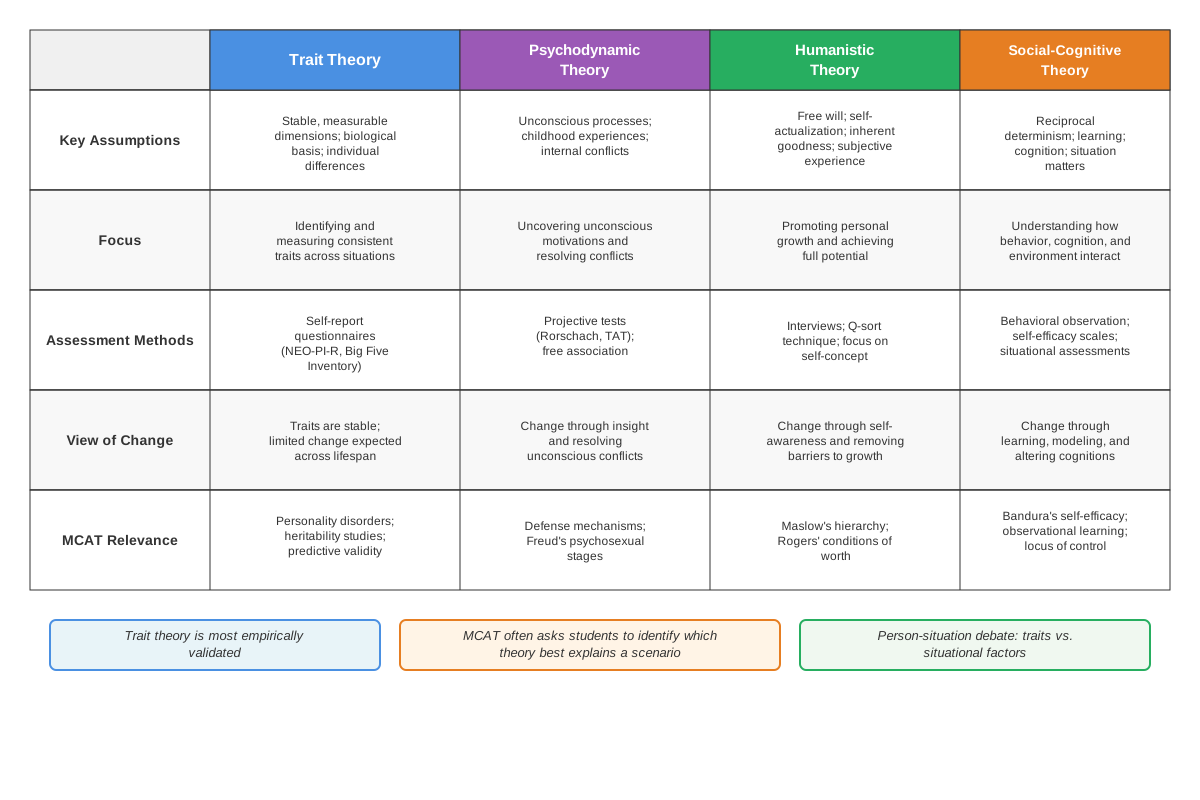
Trait theory represents one of the foundational approaches to understanding personality in Psychology, positing that individuals possess relatively stable and enduring characteristics that influence behavior across situations and over time. Unlike psychodynamic or humanistic theories that emphasize unconscious processes or self-actualization, trait theory focuses on identifying, measuring, and categorizing the specific dimensions along which people differ. This approach has produced some of the most empirically validated and widely used personality assessment tools in psychology, making it essential knowledge for the MCAT's Development and Personality content area.
For the MCAT, trait theory serves as a critical framework for understanding how psychologists conceptualize individual differences and predict behavior patterns. The exam frequently tests students' ability to distinguish between different trait models, understand how traits are measured and validated, and apply trait concepts to interpret research findings or clinical scenarios. Questions may present personality assessment data, ask students to identify which trait dimension best explains a behavior, or require differentiation between trait approaches and other personality theories. The biological and genetic underpinnings of traits also connect this topic to behavioral genetics and neuroscience content.
Trait theory bridges multiple domains within Psychology and the broader MCAT curriculum. It connects to developmental psychology through questions about trait stability across the lifespan, to social psychology through person-situation debates, to biological psychology through heritability studies, and to clinical psychology through personality disorder conceptualizations. Understanding trait theory provides the foundation for interpreting research methodologies like factor analysis, comprehending validity and reliability in psychological testing, and analyzing how individual differences influence health behaviors—all high-yield topics for the MCAT's Psychological, Social, and Biological Foundations of Behavior section.
Learning Objectives
- [ ] Define Trait theory using accurate Psychology terminology
- [ ] Explain why Trait theory matters for the MCAT
- [ ] Apply Trait theory to exam-style questions
- [ ] Identify common mistakes related to Trait theory
- [ ] Connect Trait theory to related Psychology concepts
- [ ] Compare and contrast major trait models (Allport, Cattell, Eysenck, Big Five)
- [ ] Analyze the biological and genetic basis of personality traits
- [ ] Evaluate the stability and consistency of traits across situations and developmental periods
- [ ] Interpret factor analysis results in the context of trait identification
Prerequisites
- Basic personality theory concepts: Understanding that personality refers to consistent patterns of thoughts, feelings, and behaviors helps contextualize trait theory as one approach among several theoretical frameworks
- Descriptive statistics and correlation: Trait research relies heavily on correlational methods and statistical concepts like normal distribution, which are necessary to understand how traits are measured and validated
- Nature vs. nurture debate: Familiarity with genetic and environmental influences on behavior provides context for understanding trait heritability studies
- Research methodology basics: Knowledge of validity, reliability, and factor analysis is essential for comprehending how traits are identified and assessed
Why This Topic Matters
Trait theory has profound real-world applications across clinical, organizational, and research settings. Clinicians use trait-based personality assessments to diagnose personality disorders, predict treatment outcomes, and understand individual differences in psychopathology. The Five-Factor Model (Big Five) has been linked to health outcomes, with conscientiousness predicting longevity and neuroticism correlating with various physical and mental health conditions. In organizational contexts, trait assessments inform hiring decisions, team composition, and leadership development. Understanding trait theory enables medical professionals to appreciate how stable personality characteristics influence patient compliance, health behaviors, and doctor-patient relationships.
On the MCAT, trait theory appears with moderate frequency, typically in 1-2 questions per exam. Questions most commonly take three forms: (1) discrete questions asking students to identify trait dimensions or theorists, (2) passage-based questions requiring interpretation of personality research findings, and (3) application questions presenting behavioral scenarios and asking which trait best explains the behavior. The Psychological, Social, and Biological Foundations of Behavior section frequently integrates trait concepts with research methodology, requiring students to evaluate study designs investigating personality or interpret factor analysis results. Trait theory also appears in questions about personality disorders, developmental stability, and behavioral genetics.
Exam passages commonly present trait theory in several contexts: research studies correlating personality dimensions with health outcomes or behaviors, cross-cultural comparisons of trait expression, longitudinal studies examining trait stability, twin studies investigating heritability, or clinical vignettes where personality characteristics influence medical scenarios. Students must be prepared to quickly identify which trait model is being referenced, understand the implications of trait scores, and connect personality dimensions to behavioral predictions or outcomes.
Core Concepts
Definition and Fundamental Assumptions
Trait theory is a major approach to personality psychology that conceptualizes personality as a collection of broad, stable dispositions or characteristics that predispose individuals to behave in particular ways across various situations. A trait is defined as a relatively enduring dimension of personality along which individuals differ in characteristic ways. Unlike state characteristics that fluctuate with circumstances, traits represent consistent patterns that persist across time and contexts.
The fundamental assumptions underlying trait theory include: (1) traits are relatively stable across the lifespan, particularly after age 30, (2) traits show cross-situational consistency, meaning individuals high in a trait will display related behaviors across different contexts, (3) traits exist on a continuum rather than as categorical types, with most people falling somewhere in the middle of any dimension, and (4) traits have biological and genetic foundations that contribute to their stability. These assumptions distinguish trait approaches from situationist perspectives that emphasize environmental determinants of behavior or psychodynamic theories that focus on unconscious processes.
Gordon Allport's Trait Classification
Gordon Allport, one of the pioneers of trait theory, proposed a hierarchical classification system distinguishing three levels of traits. Cardinal traits are rare, dominant characteristics that influence virtually all of a person's behaviors and define their entire personality (e.g., Machiavellian, narcissistic). Most people do not possess cardinal traits. Central traits are the 5-10 major characteristics that describe an individual's personality and influence behavior across many situations (e.g., honest, anxious, intelligent). These form the core of personality descriptions. Secondary traits are more specific, situational preferences or attitudes that appear only in certain contexts (e.g., food preferences, music tastes).
Allport emphasized the uniqueness of individual personality configurations and advocated for idiographic approaches that study individuals in depth, though he recognized the value of nomothetic approaches that identify universal trait dimensions. His work established the foundation for subsequent trait researchers who sought to identify the fundamental dimensions underlying personality variation.
Raymond Cattell's 16 Personality Factors
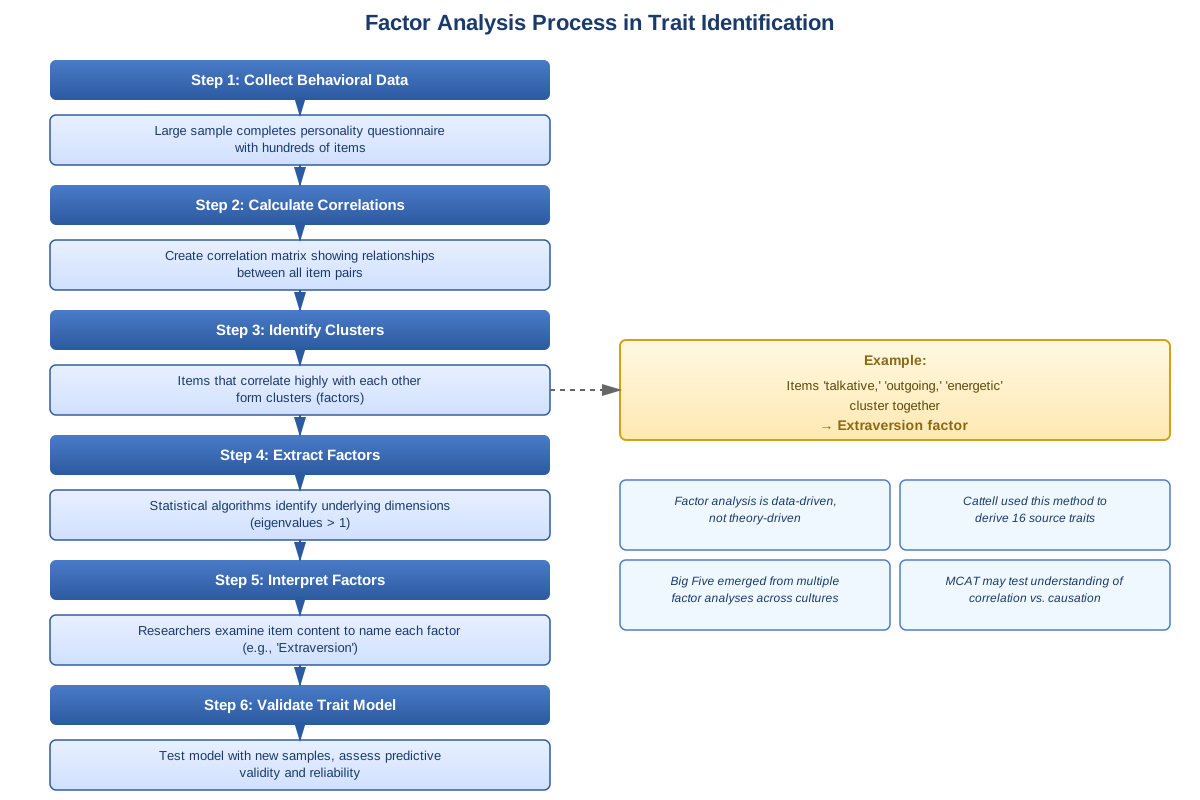
Raymond Cattell used factor analysis, a statistical technique that identifies clusters of correlated variables, to reduce thousands of personality descriptors to a manageable set of fundamental traits. He distinguished between surface traits—observable behaviors that cluster together—and source traits—underlying factors that generate surface trait patterns. Through extensive factor analytic research, Cattell identified 16 primary personality factors that he believed captured the essential dimensions of personality variation.
Cattell's 16 Personality Factor (16PF) questionnaire assesses dimensions including warmth, reasoning, emotional stability, dominance, liveliness, rule-consciousness, social boldness, sensitivity, vigilance, abstractedness, privateness, apprehension, openness to change, self-reliance, perfectionism, and tension. While comprehensive, the 16PF's complexity limited its widespread adoption compared to simpler models. However, Cattell's methodological contributions, particularly his application of factor analysis to personality research, profoundly influenced subsequent trait theorists.
Hans Eysenck's Three-Dimensional Model
Hans Eysenck proposed a more parsimonious trait model consisting of three superordinate dimensions, each with biological foundations. Extraversion-Introversion reflects sociability, assertiveness, and stimulation-seeking, with extraverts showing lower baseline cortical arousal and thus seeking external stimulation. Neuroticism-Emotional Stability captures emotional reactivity, anxiety, and mood fluctuations, linked to limbic system reactivity. Psychoticism (later refined to Psychoticism-Superego Control) reflects aggression, impulsivity, and lack of empathy, though this dimension proved less robust than the other two.
Eysenck emphasized the biological basis of traits, proposing that extraversion relates to reticular activating system functioning and neuroticism to limbic system reactivity. His model influenced subsequent biological approaches to personality and demonstrated that complex personality variation could be captured by a small number of broad dimensions. The Eysenck Personality Questionnaire (EPQ) operationalized these dimensions for assessment purposes.
The Five-Factor Model (Big Five)
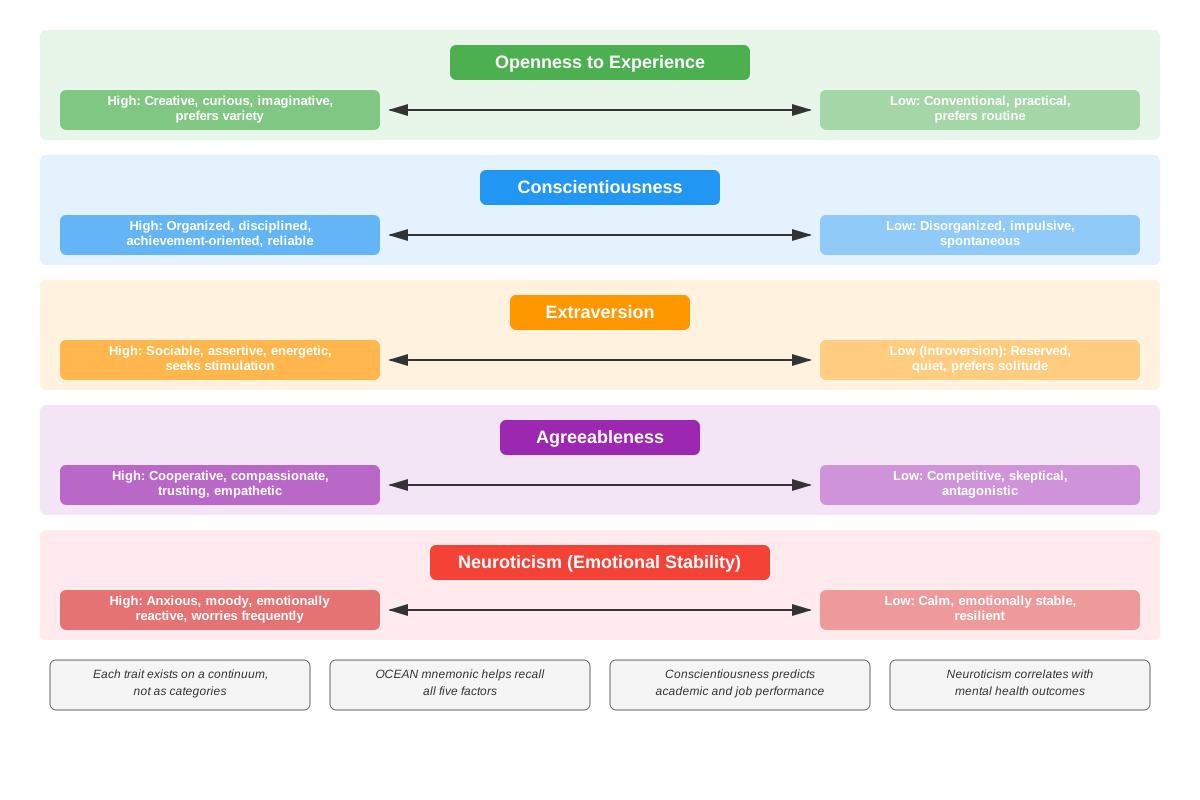
The Five-Factor Model or Big Five represents the current consensus model in trait psychology, emerging from multiple independent research programs using factor analysis on personality descriptors. The five dimensions are:
| Dimension | High Scorers | Low Scorers | Biological Correlates |
|---|---|---|---|
| Openness to Experience | Imaginative, curious, creative, open to new ideas | Conventional, practical, prefers routine | Associated with dopamine function; linked to cognitive flexibility |
| Conscientiousness | Organized, disciplined, achievement-oriented, reliable | Spontaneous, careless, disorganized | Related to prefrontal cortex function; predicts longevity and health |
| Extraversion | Sociable, assertive, energetic, excitement-seeking | Reserved, quiet, solitary, inhibited | Linked to dopamine sensitivity and reward system activation |
| Agreeableness | Cooperative, trusting, empathetic, compassionate | Competitive, skeptical, antagonistic | Associated with oxytocin and serotonin systems |
| Neuroticism | Anxious, emotionally reactive, vulnerable to stress | Calm, emotionally stable, resilient | Related to amygdala reactivity and stress hormone regulation |
The Big Five model demonstrates remarkable cross-cultural validity, appearing in personality research across diverse languages and cultures. Each dimension shows moderate heritability (approximately 40-60%), substantial stability across adulthood, and predictive validity for important life outcomes including job performance, relationship satisfaction, mental health, and longevity. The model's acronym OCEAN or CANOE helps students remember the five factors.
Trait Measurement and Assessment
Trait assessment typically employs self-report questionnaires where individuals rate themselves on items reflecting trait-relevant behaviors, thoughts, or feelings. The NEO Personality Inventory (NEO-PI-R) is the most widely used Big Five assessment, measuring each of the five factors plus six facets within each domain. Other common instruments include the Minnesota Multiphasic Personality Inventory (MMPI), primarily used for clinical assessment, and the Myers-Briggs Type Indicator (MBTI), though the latter lacks strong empirical support.
Valid trait measures must demonstrate reliability (consistency across time and items) and validity (actually measuring the intended construct). Convergent validity is established when a trait measure correlates with other measures of the same trait, while discriminant validity requires that the measure not correlate strongly with measures of different traits. Predictive validity is demonstrated when trait scores predict relevant behavioral outcomes. Factor analysis confirms construct validity by showing that items cluster as theoretically expected.
Biological and Genetic Foundations
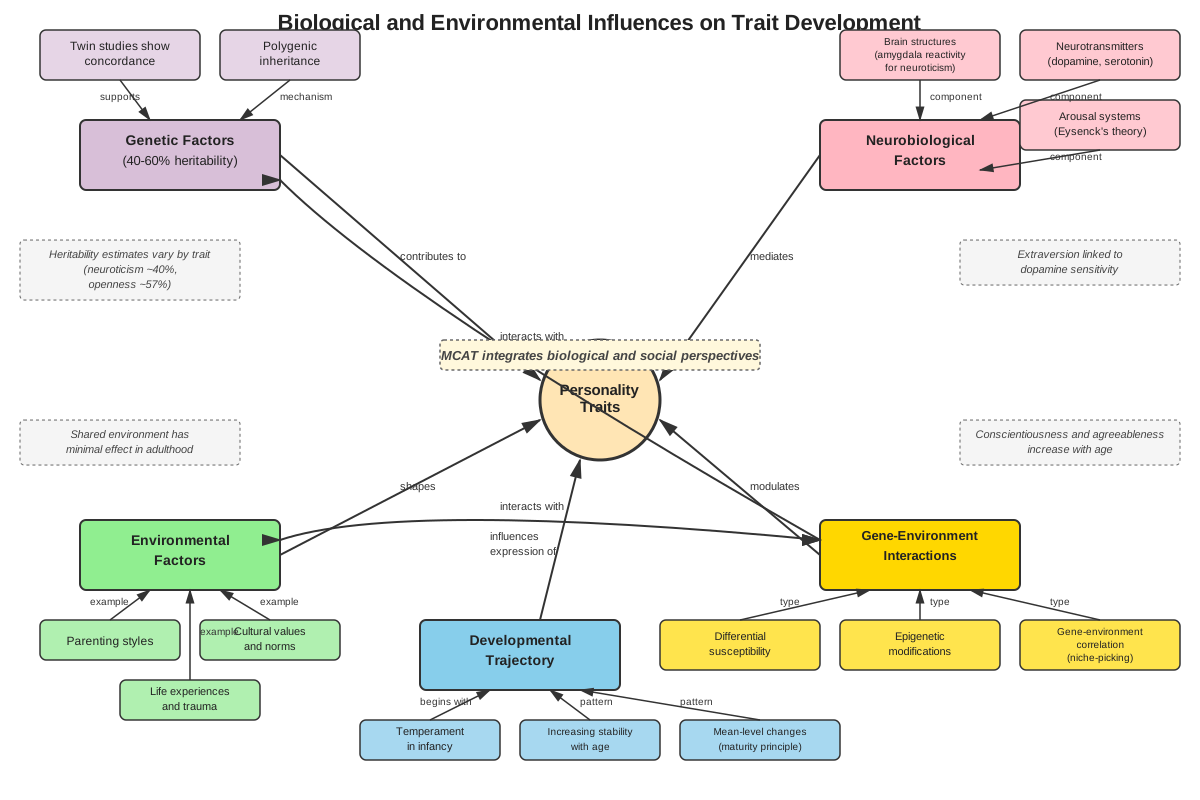
Twin studies consistently demonstrate that personality traits have substantial genetic components, with heritability estimates typically ranging from 40-60% for Big Five dimensions. Identical (monozygotic) twins reared apart show personality correlations of approximately .40-.50, while fraternal (dizygotic) twins show correlations around .20-.25, supporting genetic influence. Adoption studies further confirm that adopted children's personalities correlate more strongly with biological parents than adoptive parents.
Neurobiological research has identified brain structures and neurotransmitter systems associated with specific traits. Extraversion correlates with dopamine system sensitivity and reward-related brain activation. Neuroticism shows associations with amygdala reactivity and stress hormone regulation. Conscientiousness relates to prefrontal cortex functioning and executive control. These biological foundations help explain trait stability and cross-situational consistency, as underlying neural architecture remains relatively constant.
Trait Stability and Change
Research demonstrates that traits show increasing stability across the lifespan, with the greatest changes occurring during childhood and adolescence and relative stability emerging by age 30. The stability coefficient (correlation between trait scores at two time points) increases from approximately .30 in childhood to .70-.80 in adulthood. However, mean-level changes do occur, with most people showing increases in conscientiousness and agreeableness and decreases in neuroticism and openness as they age—a pattern called personality maturation.
The person-situation debate addresses whether traits or situations better predict behavior. Walter Mischel challenged trait theory by demonstrating that cross-situational consistency coefficients rarely exceed .30, suggesting situations strongly influence behavior. However, subsequent research showed that (1) aggregating behaviors across multiple occasions increases consistency, (2) some people show greater cross-situational consistency than others, and (3) the interaction between person and situation provides the best prediction. This led to interactionist perspectives recognizing that traits and situations jointly determine behavior.
Concept Relationships
The various trait models form a hierarchical relationship, with simpler models representing broader dimensions and more complex models capturing finer distinctions. Allport's framework → established the conceptual foundation → leading to Cattell's empirical approach → which used factor analysis to identify source traits → influencing Eysenck's biological model → that reduced traits to three superordinate dimensions → culminating in the Big Five → which represents the current consensus integrating breadth and parsimony.
Trait theory connects to behavioral genetics through heritability studies demonstrating genetic influences on personality. It relates to developmental psychology through research on trait stability and personality maturation across the lifespan. Connections to social psychology emerge in person-situation debates and research on how traits influence social behavior. Links to clinical psychology include trait-based conceptualizations of personality disorders and the relationship between traits (especially neuroticism) and psychopathology. Biological psychology connections involve neurobiological correlates of traits and neurotransmitter system associations.
Within trait theory itself, the concepts interconnect as follows: Trait definition and assumptions → provide the theoretical foundation → for trait identification methods (factor analysis) → which produce trait models (Cattell, Eysenck, Big Five) → that require valid measurement instruments → which demonstrate trait stability and predictive validity → supporting the biological and genetic foundations → that explain why traits show cross-situational consistency and temporal stability.
Quick check — test yourself on Trait theory so far.
Try Flashcards →High-Yield Facts
⭐ The Big Five (OCEAN/CANOE) dimensions are: Openness, Conscientiousness, Extraversion, Agreeableness, and Neuroticism—this is the most commonly tested trait model on the MCAT.
⭐ Traits show moderate heritability (40-60%) based on twin and adoption studies, demonstrating substantial genetic influence on personality.
⭐ Factor analysis is the statistical technique used to identify trait dimensions by finding clusters of correlated personality descriptors.
⭐ Traits show increasing stability across the lifespan, with greatest stability after age 30, though mean-level changes (personality maturation) continue throughout adulthood.
⭐ Conscientiousness is the Big Five trait most strongly associated with longevity and health outcomes, making it clinically relevant.
- Gordon Allport distinguished cardinal traits (rare, dominant), central traits (5-10 major characteristics), and secondary traits (situational preferences).
- Raymond Cattell identified 16 primary personality factors through factor analysis, distinguishing surface traits from underlying source traits.
- Hans Eysenck proposed three dimensions: Extraversion-Introversion, Neuroticism-Emotional Stability, and Psychoticism, each with biological foundations.
- Extraversion is associated with dopamine system sensitivity and lower baseline cortical arousal, explaining stimulation-seeking behavior.
- Neuroticism correlates with amygdala reactivity and predicts vulnerability to anxiety and mood disorders.
- The person-situation debate questioned whether traits or situations better predict behavior, leading to interactionist perspectives recognizing both influences.
- Identical twins reared apart show personality correlations of .40-.50, providing strong evidence for genetic influence on traits.
- Cross-situational consistency increases when behaviors are aggregated across multiple occasions rather than single observations.
- The NEO-PI-R is the most widely used assessment instrument for measuring the Big Five personality dimensions.
- Personality maturation refers to mean-level increases in conscientiousness and agreeableness and decreases in neuroticism with age.
Common Misconceptions
Misconception: Traits are fixed and unchangeable throughout life. → Correction: While traits show substantial stability, especially after age 30, they are not immutable. Mean-level changes occur across the lifespan (personality maturation), and significant life events or interventions can produce trait changes. Traits are better understood as relatively stable rather than absolutely fixed.
Misconception: The Big Five and Myers-Briggs Type Indicator (MBTI) are equally valid trait models. → Correction: The Big Five has far stronger empirical support, cross-cultural validity, and predictive power than the MBTI. The MBTI uses categorical types rather than continuous dimensions, lacks robust psychometric properties, and shows poor test-retest reliability. The Big Five is the scientifically validated model tested on the MCAT.
Misconception: High trait scores are always better than low scores. → Correction: Traits are descriptive dimensions, not evaluative judgments. Extreme scores on either end can be adaptive or maladaptive depending on context. Very high conscientiousness can lead to perfectionism and rigidity, while very high agreeableness can result in being exploited. Moderate scores often represent optimal functioning.
Misconception: Traits completely determine behavior regardless of situation. → Correction: The person-situation debate resolved that both traits and situations influence behavior, with their interaction providing the best prediction. Traits represent behavioral tendencies or probabilities, not deterministic causes. Strong situations can override trait influences, while weak situations allow greater trait expression.
Misconception: Eysenck's three dimensions and the Big Five are incompatible models. → Correction: Eysenck's Extraversion and Neuroticism dimensions closely correspond to the Big Five dimensions of the same names. His Psychoticism dimension relates inversely to both Agreeableness and Conscientiousness. The models represent different levels of analysis rather than contradictory frameworks, with the Big Five providing finer distinctions.
Misconception: Factor analysis objectively reveals the "true" number of personality traits. → Correction: Factor analysis is a statistical tool whose results depend on methodological choices (items included, rotation method, criteria for factor extraction). The convergence on five factors across multiple studies provides strong support for the Big Five, but factor analysis itself doesn't definitively prove this is the only valid structure. Different levels of analysis (broader or narrower) can be useful for different purposes.
Worked Examples
Example 1: Interpreting Research Findings
Scenario: A longitudinal study follows 500 participants from age 20 to age 50, measuring Big Five personality traits every five years. Results show that conscientiousness scores increase by an average of 0.5 standard deviations, neuroticism decreases by 0.3 standard deviations, and the correlation between conscientiousness scores at age 20 and age 50 is r = .65. What do these findings indicate about personality traits?
Analysis: This question tests understanding of trait stability, mean-level change, and personality maturation.
Step 1: Interpret the stability coefficient. The correlation of r = .65 between conscientiousness scores 30 years apart indicates substantial rank-order stability—people who are relatively high in conscientiousness at age 20 tend to remain relatively high at age 50. This supports the trait theory assumption of temporal stability.
Step 2: Interpret the mean-level changes. The increase in conscientiousness and decrease in neuroticism represent personality maturation—normative changes that occur as people age. These changes don't contradict trait stability because rank-order can remain stable even as the entire group's average scores shift.
Step 3: Connect to trait theory principles. These findings demonstrate that traits are relatively stable (supporting trait theory's core assumptions) but not completely fixed (allowing for developmental changes). The pattern of increasing conscientiousness and decreasing neuroticism is well-documented and reflects increased emotional regulation and responsibility with age.
Step 4: Consider MCAT implications. Questions might ask students to identify which statement the data support (trait stability vs. trait change—both are true), explain why the correlation isn't 1.0 (some individual change occurs), or predict behavioral outcomes (increased conscientiousness predicts better health behaviors and job performance).
Conclusion: The findings support both trait stability (high correlation across 30 years) and personality maturation (mean-level changes in expected directions), demonstrating that trait theory accommodates both consistency and change.
Example 2: Applying Traits to Clinical Scenarios
Scenario: A 35-year-old patient consistently misses medical appointments, fails to adhere to prescribed medication regimens, and reports difficulty maintaining employment due to disorganization and missed deadlines. Personality assessment reveals very low conscientiousness (5th percentile) and moderately high neuroticism (75th percentile). How might understanding these trait profiles inform treatment planning?
Analysis: This question requires applying trait theory to predict behavior and inform clinical interventions.
Step 1: Identify relevant trait dimensions. Low conscientiousness predicts poor organization, lack of planning, difficulty with self-discipline, and reduced goal-directed behavior. High neuroticism predicts emotional reactivity, anxiety, and stress vulnerability. Together, these traits create a profile associated with poor treatment adherence and difficulty managing chronic conditions.
Step 2: Connect traits to behavioral predictions. Research demonstrates that conscientiousness is the strongest Big Five predictor of health behaviors and treatment adherence. Low conscientiousness specifically predicts medication non-adherence, missed appointments, and difficulty implementing lifestyle changes. High neuroticism predicts increased healthcare utilization but paradoxically poorer health outcomes due to stress-related physiological effects.
Step 3: Develop trait-informed interventions. Understanding this patient's trait profile suggests interventions should include: (1) external structure and reminders (phone alerts, pill organizers) to compensate for low conscientiousness, (2) simplified treatment regimens to reduce organizational demands, (3) stress management techniques to address high neuroticism, (4) frequent follow-up to maintain engagement, and (5) collaborative goal-setting that builds self-efficacy.
Step 4: Consider limitations. While traits predict behavioral tendencies, they don't determine outcomes. Situational factors (social support, treatment complexity, side effects) also influence adherence. Trait-informed approaches should complement, not replace, assessment of situational barriers and patient preferences.
Conclusion: Trait profiles provide valuable information for predicting patient behavior and tailoring interventions, with low conscientiousness suggesting need for external structure and high neuroticism indicating stress management focus. This demonstrates clinical applications of trait theory for the MCAT.
Exam Strategy
When approaching MCAT questions on trait theory, first identify which trait model is being referenced—questions may describe research using the Big Five, present Eysenck's biological approach, or discuss Cattell's factor analysis. Key trigger words include "personality dimensions," "factor analysis," "heritability," "stability," and specific trait names (especially the Big Five). If a question presents behavioral descriptions without naming traits, mentally map behaviors to likely trait dimensions (e.g., organized and disciplined → high conscientiousness; anxious and emotionally reactive → high neuroticism).
For research-based passages, focus on methodology and interpretation. Questions often test understanding of factor analysis (identifying clusters of correlated variables), heritability studies (twin and adoption study designs), or longitudinal research (stability coefficients and mean-level changes). When passages present correlations between traits and outcomes, remember that correlation doesn't imply causation—traits may predict outcomes without causing them, and third variables (genetic factors, environments) may influence both.
Process-of-elimination strategies should leverage your knowledge of trait characteristics. Eliminate options suggesting traits are completely fixed or entirely situational (both extremes are incorrect). Eliminate options confusing trait models (e.g., attributing Big Five dimensions to Eysenck). Eliminate options suggesting traits have no biological basis or are entirely learned. When questions ask about trait stability, eliminate options suggesting either no stability or perfect stability—the correct answer typically acknowledges substantial but imperfect stability.
Time allocation for trait theory questions should be standard (approximately 1-1.5 minutes for discrete questions, proportional time for passage-based questions). These questions rarely require complex calculations, so extended time usually indicates overthinking. If you can identify the trait model and understand the basic principle being tested, select your answer confidently. Don't second-guess straightforward questions about trait definitions or characteristics—these are often more direct than they appear.
Memory Techniques
OCEAN mnemonic for the Big Five: Openness, Conscientiousness, Extraversion, Agreeableness, Neuroticism. Alternative: CANOE (same traits, different order). Visualize an ocean or canoe to anchor the mnemonic.
"3-16-5" progression for remembering trait model evolution: Eysenck proposed 3 dimensions, Cattell identified 16 factors, and the Big Five consensus settled on 5 dimensions. This sequence also reflects increasing empirical validation and acceptance.
Biological anchors for Big Five traits:
- Openness → Open mind (cognitive flexibility, dopamine)
- Conscientiousness → Cortex (prefrontal control, executive function)
- Extraversion → Energy (dopamine, reward sensitivity)
- Agreeableness → Affection (oxytocin, social bonding)
- Neuroticism → Nervous system (amygdala, stress reactivity)
"ACE" for Allport's trait hierarchy: All-encompassing (cardinal), Central (5-10 major traits), Extra/situational (secondary). Remember that most people don't have cardinal traits—they're rare.
Twin study heritability: Visualize identical twins showing 40-60% similarity in personality even when raised apart—this range appears frequently on the MCAT. Remember: "Twins apart, 40-60 in the heart" (personality traits).
Stability increases with age: Picture personality as a river that starts turbulent (childhood/adolescence) but becomes calmer and more predictable as it flows (adulthood), with the most stable course after age 30.
Summary
Trait theory represents a fundamental approach to personality psychology that conceptualizes individual differences as relatively stable, enduring characteristics that influence behavior across situations and time. The field evolved from Allport's hierarchical classification through Cattell's factor-analytic identification of 16 factors and Eysenck's three-dimensional biological model to the current Big Five consensus (Openness, Conscientiousness, Extraversion, Agreeableness, Neuroticism). These traits demonstrate moderate heritability (40-60%), substantial stability especially after age 30, cross-cultural validity, and predictive power for important life outcomes. Factor analysis serves as the primary method for identifying trait dimensions by finding clusters of correlated personality descriptors. While the person-situation debate challenged trait theory's assumption of cross-situational consistency, interactionist perspectives recognize that traits and situations jointly determine behavior, with traits representing behavioral tendencies rather than deterministic causes. For the MCAT, students must recognize trait models, understand biological and genetic foundations, interpret research findings about stability and change, and apply trait concepts to predict behavior and inform interventions.
Key Takeaways
- Trait theory defines personality as stable, enduring characteristics that show consistency across situations and time, distinguishing it from situational or psychodynamic approaches
- The Big Five (OCEAN) represents the current consensus model: Openness, Conscientiousness, Extraversion, Agreeableness, and Neuroticism, each showing moderate heritability and predictive validity
- Factor analysis is the statistical technique used to identify trait dimensions by finding clusters of correlated personality descriptors, forming the empirical foundation of trait models
- Traits demonstrate substantial but not perfect stability, with increasing stability across the lifespan (especially after age 30) and personality maturation (increases in conscientiousness and agreeableness, decreases in neuroticism)
- Twin and adoption studies demonstrate 40-60% heritability for personality traits, with biological correlates including neurotransmitter systems and brain structures
- The person-situation debate resolved that traits and situations interact to determine behavior, with traits representing probabilistic tendencies rather than deterministic causes
- Conscientiousness is the Big Five trait most strongly associated with health outcomes, longevity, and treatment adherence, making it clinically significant
Related Topics
Personality Disorders: Trait theory provides dimensional models for understanding personality pathology, with disorders conceptualized as extreme or maladaptive trait configurations. The Big Five relates to personality disorder clusters, and dimensional approaches increasingly supplement categorical diagnosis.
Behavioral Genetics: Twin studies, adoption studies, and molecular genetics research investigating the heritability of personality traits connect to broader questions about nature versus nurture and gene-environment interactions.
Social Cognitive Theory: Albert Bandura's approach emphasizes reciprocal determinism and situational influences, providing a contrasting perspective to trait theory's focus on stable dispositions. Understanding both approaches enables comprehensive personality analysis.
Psychodynamic and Humanistic Theories: These alternative personality frameworks emphasize unconscious processes (psychodynamic) or self-actualization (humanistic) rather than measurable traits, providing important contrasts for MCAT questions asking students to distinguish theoretical approaches.
Developmental Psychology: Trait stability and change across the lifespan, temperament in infancy and childhood, and personality maturation connect trait theory to developmental processes and life-span perspectives.
Practice CTA
Now that you've mastered the core concepts of trait theory, reinforce your understanding by attempting practice questions and reviewing flashcards focused on this topic. Challenge yourself to identify trait dimensions in behavioral scenarios, interpret research findings about personality stability and heritability, and distinguish between different trait models. Active retrieval through practice questions will solidify your knowledge and prepare you for the diverse ways the MCAT tests trait theory concepts. Remember that trait theory frequently appears integrated with research methodology and biological psychology content, so practice interdisciplinary application of these concepts. You've built a strong foundation—now demonstrate your mastery through deliberate practice!
Sign up free to keep reading
Create a free AnvayaPrep account to finish this MCAT guide on Trait theory — plus flashcards and practice questions.