Overview
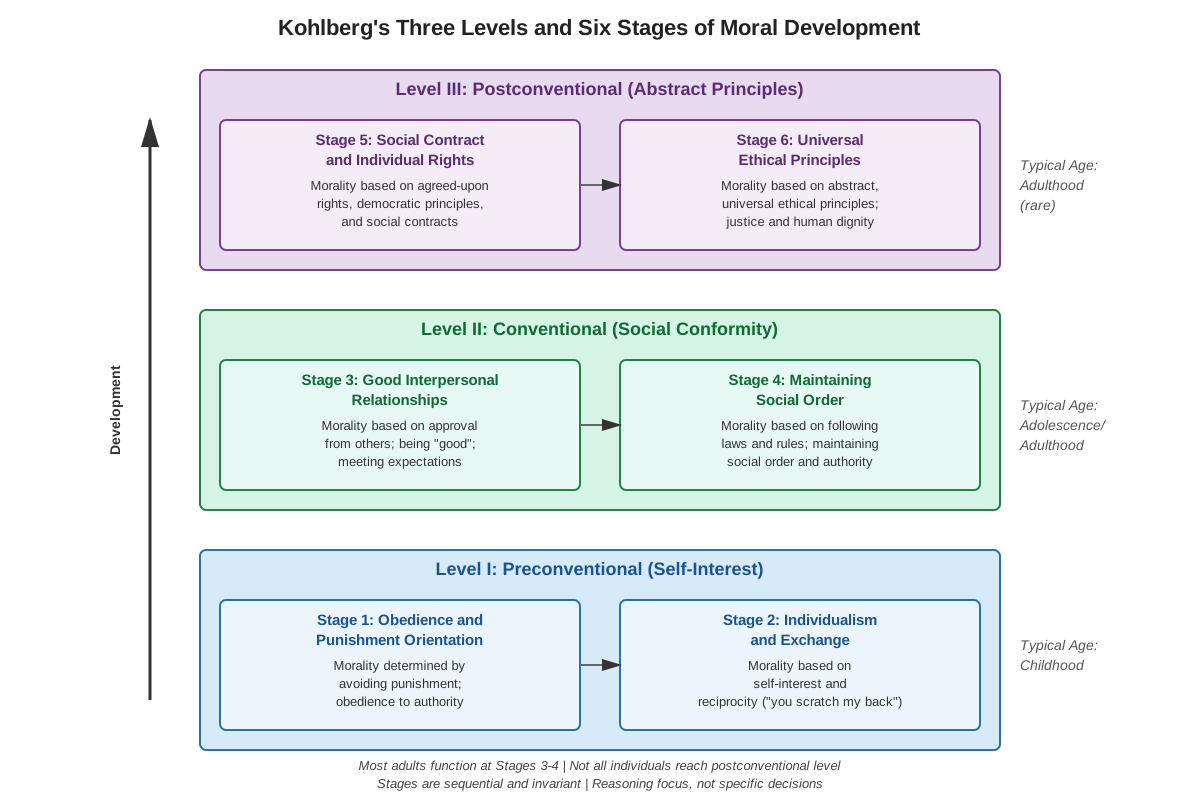
Kohlberg moral development is a foundational theory in developmental Psychology that describes how individuals progress through distinct stages of moral reasoning from childhood through adulthood. Developed by psychologist Lawrence Kohlberg in the 1950s and refined over subsequent decades, this theory proposes that moral reasoning evolves through six sequential stages organized into three levels: preconventional, conventional, and postconventional. Each stage represents a qualitatively different way of thinking about right and wrong, justice, and ethical obligations. Kohlberg built upon Jean Piaget's earlier work on moral development, conducting longitudinal studies using moral dilemmas—most famously the "Heinz dilemma"—to assess how individuals justify their moral decisions rather than focusing on the decisions themselves.
For the MCAT, Kohlberg moral development represents a high-yield topic within the Development and Personality section of the Psychological, Social, and Biological Foundations of Behavior section. The exam frequently tests students' ability to identify which stage of moral reasoning a person is demonstrating based on their justification for a moral choice. Questions may present clinical vignettes, research scenarios, or everyday situations requiring students to distinguish between convention-based reasoning, self-interest, and abstract ethical principles. Understanding this theory is essential not only for answering direct questions about moral development but also for analyzing passages about decision-making, social development, and cognitive maturation.
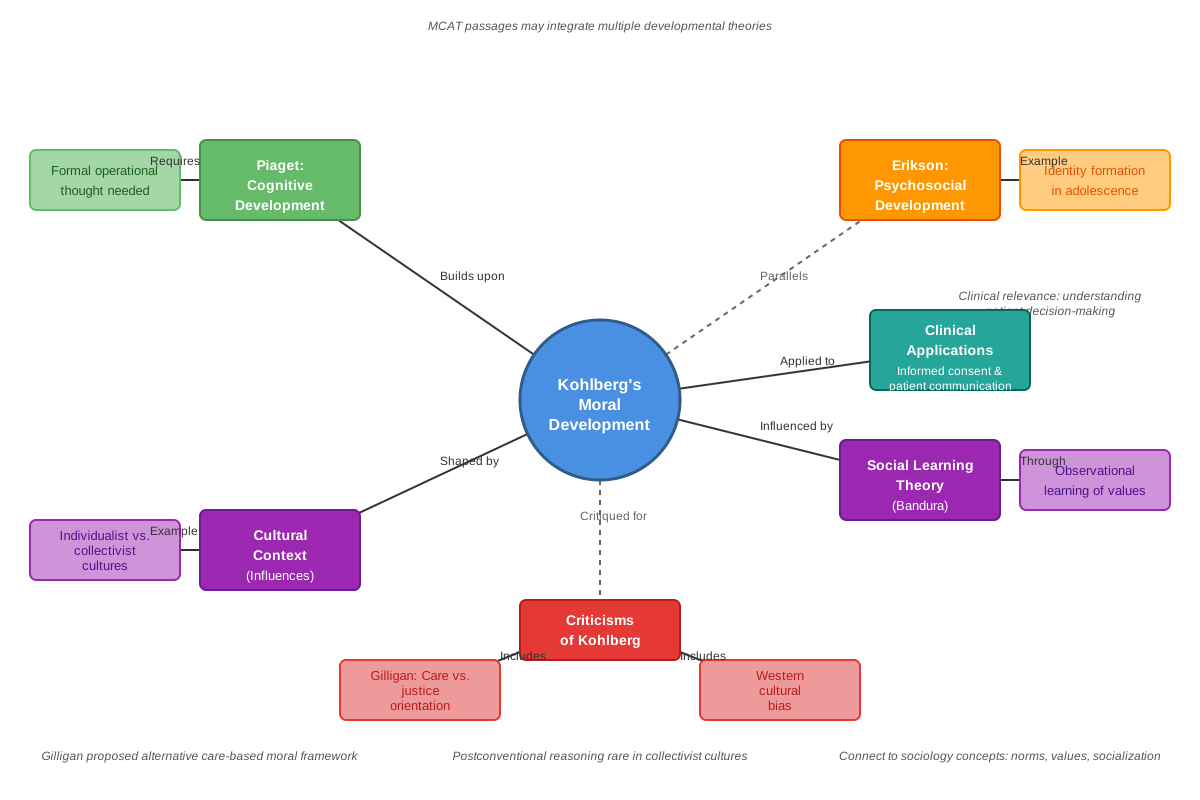
The theory connects to broader Psychology concepts including cognitive development (particularly Piaget's stages), social development, identity formation, and cultural influences on behavior. Kohlberg's framework also intersects with topics in sociology, as moral reasoning both shapes and is shaped by social norms, cultural values, and institutional structures. Recognizing these connections enables students to integrate knowledge across multiple MCAT content areas and approach interdisciplinary passages with confidence.
Learning Objectives
- [ ] Define Kohlberg moral development using accurate Psychology terminology
- [ ] Explain why Kohlberg moral development matters for the MCAT
- [ ] Apply Kohlberg moral development to exam-style questions
- [ ] Identify common mistakes related to Kohlberg moral development
- [ ] Connect Kohlberg moral development to related Psychology concepts
- [ ] Distinguish between the six stages of moral development based on reasoning patterns
- [ ] Analyze moral dilemmas to determine the stage of reasoning being demonstrated
- [ ] Evaluate criticisms of Kohlberg's theory, including cultural and gender bias concerns
- [ ] Compare and contrast preconventional, conventional, and postconventional moral reasoning
Prerequisites
- Piaget's stages of cognitive development: Kohlberg's theory builds directly on Piagetian concepts, particularly the transition from concrete to abstract thinking
- Basic developmental psychology principles: Understanding that development proceeds through predictable stages provides the framework for Kohlberg's sequential model
- Social learning theory: Recognizing how individuals acquire values and behaviors through observation helps contextualize moral development within broader socialization processes
- Cognitive development concepts: Moral reasoning requires increasingly sophisticated cognitive abilities, making general cognitive development essential background knowledge
Why This Topic Matters
Kohlberg moral development has profound clinical and real-world significance. Healthcare professionals regularly encounter ethical dilemmas requiring moral reasoning, from informed consent issues to end-of-life decisions. Understanding how patients at different developmental stages approach moral questions helps providers communicate effectively and respect diverse reasoning patterns. In pediatric settings, recognizing that children's moral reasoning differs qualitatively from adults' reasoning informs how medical information is presented and how assent is obtained. The theory also illuminates why adolescents may make risky decisions despite knowing the rules—they may still be reasoning at conventional levels focused on peer approval rather than abstract principles.
On the MCAT, moral development appears in approximately 2-4 questions per exam, typically in the Psychological, Social, and Biological Foundations of Behavior section. Questions most commonly present scenarios requiring stage identification, ask students to predict behavior based on developmental stage, or test understanding of how moral reasoning changes across the lifespan. The topic frequently appears in passages about child development, adolescent behavior, cross-cultural psychology, or ethical decision-making in medical contexts.
Exam Tip: MCAT passages often embed moral development questions within broader discussions of social development, cultural psychology, or healthcare ethics. Watch for scenarios describing why someone made a choice, not just what choice they made.
Common question formats include: identifying the stage demonstrated in a vignette, predicting how someone at a particular stage would respond to a dilemma, recognizing limitations or criticisms of the theory, and connecting moral development to other developmental domains. Discrete questions may ask about the sequence of stages or characteristics distinguishing one level from another, while passage-based questions typically require applying the theory to novel situations or research findings.
Core Concepts
The Three Levels and Six Stages
Kohlberg moral development consists of three hierarchical levels, each containing two stages, for a total of six stages. Progression through these stages is invariant (always in the same order), though not everyone reaches the highest stages. The stages represent qualitatively different structures of moral reasoning, not simply more knowledge about rules.
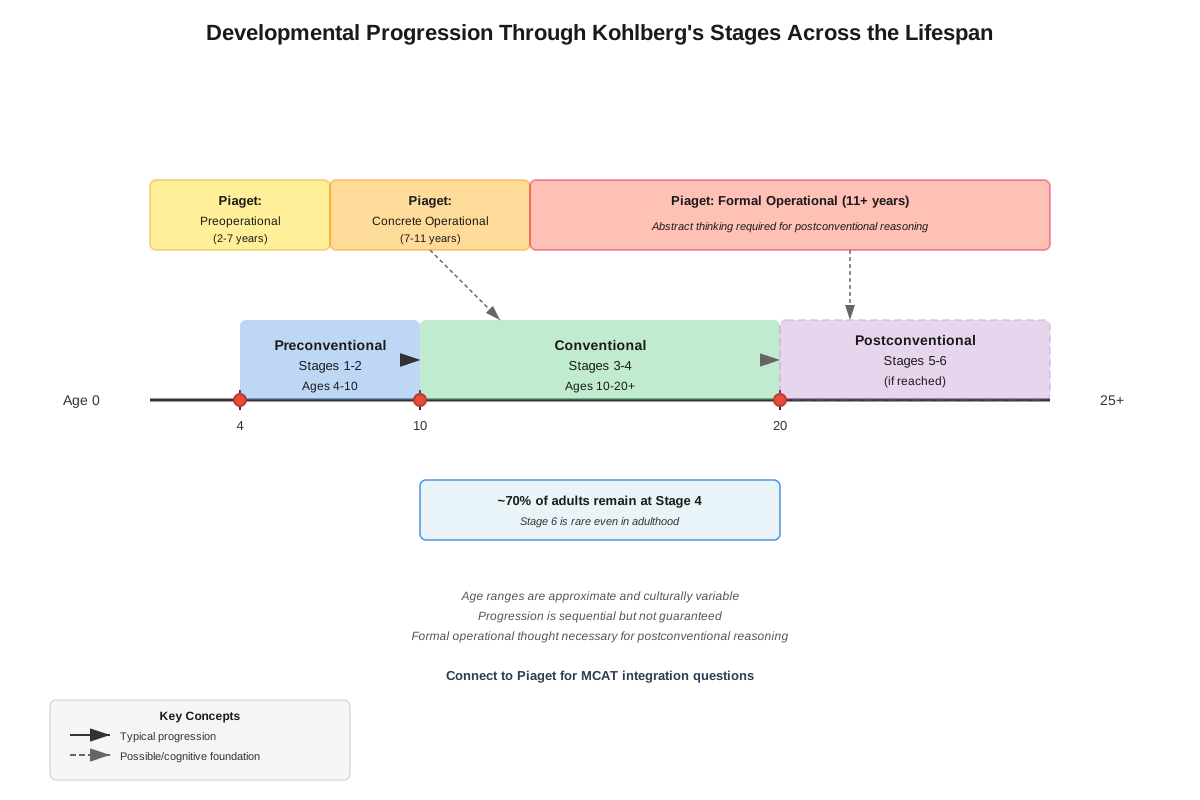
Level 1: Preconventional Morality (typically ages 4-10, but some adolescents and adults remain here)
At the preconventional level, moral reasoning is based on external consequences and self-interest. Individuals have not yet internalized societal conventions or norms.
Stage 1: Obedience and Punishment Orientation
- Moral reasoning focuses on avoiding punishment
- "Right" means obeying authority to avoid negative consequences
- No consideration of others' perspectives or intentions
- Example: "Stealing is wrong because you'll get caught and punished"
- Egocentric perspective dominates
Stage 2: Instrumental Relativist Orientation (Self-Interest)
- Moral reasoning based on satisfying one's own needs and occasionally others' needs
- "Right" means fair exchange or mutual benefit
- Recognition that others have needs, but viewed through lens of "what's in it for me?"
- Example: "I'll help you with homework if you help me with mine"
- Simple reciprocity: "You scratch my back, I'll scratch yours"
Level 2: Conventional Morality
Conventional morality (typically emerges in adolescence, most adults reason here) involves internalizing social norms and maintaining social order. Moral reasoning focuses on conforming to expectations and fulfilling social roles.
Stage 3: Interpersonal Concordance (Good Boy/Good Girl)
- Moral reasoning based on gaining approval and maintaining relationships
- "Right" means living up to others' expectations and being "nice"
- Strong emphasis on intentions: "He meant well"
- Conformity to stereotypical images of majority behavior
- Example: "Helping others is right because it makes me a good person and people will like me"
- Golden Rule reasoning: treat others as you want to be treated
Stage 4: Law and Order Orientation
- Moral reasoning based on maintaining social order and fulfilling duties
- "Right" means following laws, rules, and legitimate authority
- Focus on society as a whole rather than immediate relationships
- Emphasis on "doing one's duty" and respecting authority
- Example: "Laws must be obeyed to prevent social chaos, even if they seem unfair in individual cases"
- Rigid adherence to rules and social conventions
Level 3: Postconventional Morality
Postconventional morality (achieved by some adults, typically not before age 20) involves reasoning based on self-chosen ethical principles that may transcend laws and social conventions. Individuals distinguish between legal and moral rightness.
Stage 5: Social Contract Orientation
- Moral reasoning based on democratically agreed-upon rights and standards
- "Right" means upholding values and rights that society has agreed upon
- Recognition that laws are social contracts that can be changed through democratic process
- Emphasis on greatest good for greatest number (utilitarian reasoning)
- Example: "Civil disobedience may be justified when laws violate fundamental human rights"
- Balance between individual rights and social welfare
Stage 6: Universal Ethical Principles
- Moral reasoning based on self-chosen, abstract ethical principles
- "Right" means following universal principles of justice, equality, and human dignity
- Principles are comprehensive, universal, and consistent
- When laws conflict with principles, principles take precedence
- Example: "All human life has inherent dignity; actions must respect this regardless of laws or consequences"
- Very rare; even Kohlberg questioned whether this stage exists empirically
Kohlberg's Methodology
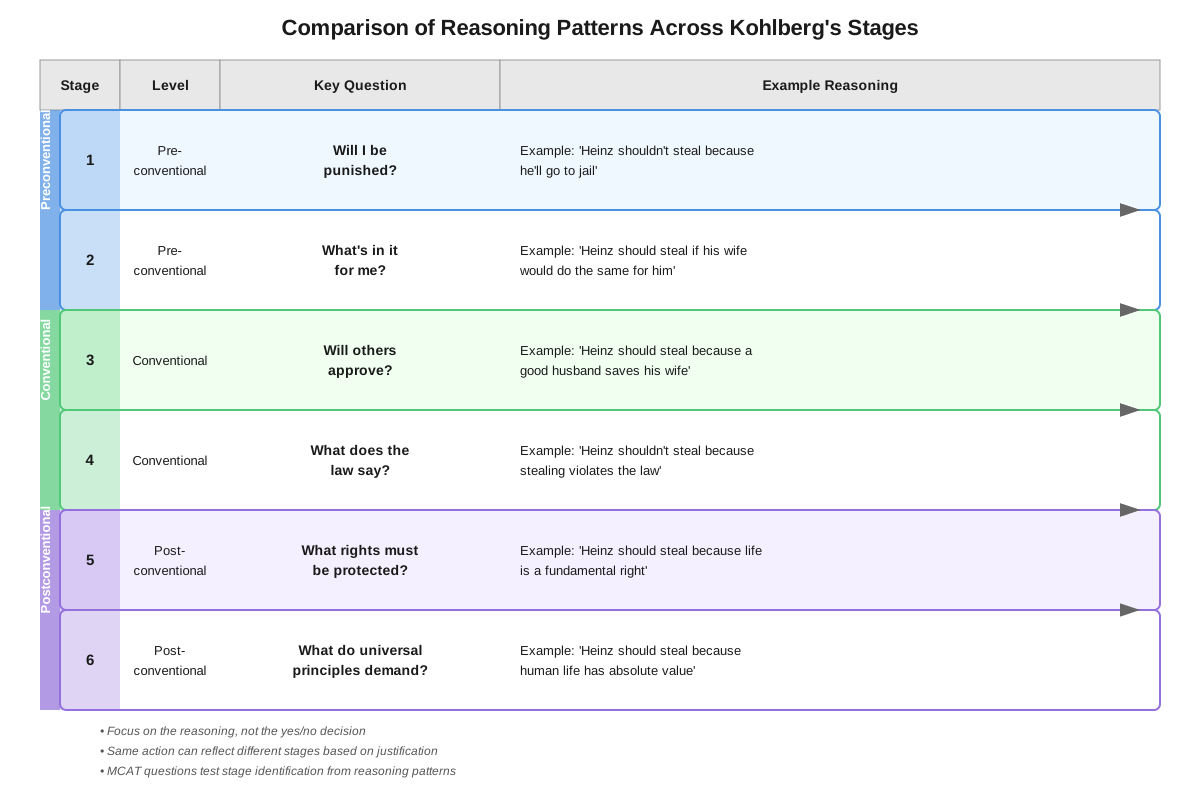
Kohlberg assessed moral development using moral dilemmas—hypothetical scenarios presenting conflicts between different moral values. The most famous is the Heinz dilemma: A man's wife is dying from cancer. A druggist has discovered a cure but charges ten times what it costs to make. The husband cannot afford it and the druggist refuses to lower the price. Should Heinz steal the drug?
Critically, Kohlberg focused on the reasoning behind the answer, not the answer itself. Both "yes, steal" and "no, don't steal" can be justified at any stage—what matters is why.
| Stage | "Yes, Steal" Reasoning | "No, Don't Steal" Reasoning |
|---|---|---|
| Stage 1 | "He won't get caught" | "He'll go to jail" |
| Stage 2 | "He needs his wife to cook for him" | "The druggist needs to make money too" |
| Stage 3 | "Good husbands save their wives" | "Stealing makes you a bad person" |
| Stage 4 | "Marriage vows require it" | "Laws against theft must be upheld" |
| Stage 5 | "Life is a fundamental right" | "Property rights protect everyone" |
| Stage 6 | "Human life has absolute value" | "Respecting autonomy means not stealing" |
Key Characteristics of the Theory
Sequential and Invariant: Individuals progress through stages in order without skipping stages. Regression to earlier stages is rare and typically associated with trauma or extreme stress.
Universal: Kohlberg claimed the stages are universal across cultures, though the rate of progression and ultimate stage reached may vary.
Qualitative Differences: Each stage represents a different structure of thinking, not just more sophisticated content. The shift between stages involves cognitive reorganization.
Cognitive Prerequisites: Progression requires cognitive development. For example, postconventional reasoning requires formal operational thinking (abstract reasoning ability).
Not Age-Dependent: While stages correlate with age ranges, age doesn't cause stage progression—cognitive and social experiences do.
Concept Relationships
The six stages of Kohlberg moral development build hierarchically, with each stage incorporating and transcending the reasoning of previous stages. Preconventional morality (Stages 1-2) → focuses on consequences and self-interest → provides foundation for Conventional morality (Stages 3-4) → which internalizes social norms and relationships → which enables Postconventional morality (Stages 5-6) → where abstract principles transcend specific social conventions.
Within each level, the second stage represents a more sophisticated version of the first. Stage 2 advances beyond Stage 1 by recognizing others' perspectives (though still self-interested). Stage 4 extends Stage 3 reasoning from immediate relationships to society-wide systems. Stage 6 universalizes the social contract thinking of Stage 5.
Kohlberg moral development connects intimately with Piaget's cognitive development stages. Preconventional reasoning corresponds roughly with preoperational and concrete operational thinking. Conventional reasoning requires concrete operational abilities. Postconventional reasoning demands formal operational thought—the ability to think abstractly about hypothetical principles. This means cognitive development is necessary but not sufficient for moral development; one cannot reason at Stage 5 without formal operational abilities, but having formal operational thinking doesn't guarantee postconventional moral reasoning.
The theory also relates to identity development (Erikson, Marcia). Adolescents exploring identity often question conventional moral standards, potentially facilitating transition to postconventional reasoning. The social development domain intersects with moral development as peer relationships (Stage 3) and understanding social systems (Stage 4) require increasingly sophisticated social cognition.
Cultural influences on development connect to criticisms of Kohlberg's theory. Collectivist cultures may emphasize Stage 3-4 reasoning (relationships and social harmony) over Stage 5-6 (individual rights and abstract principles), raising questions about whether the theory reflects Western, individualistic bias.
High-Yield Facts
⭐ Kohlberg's theory contains three levels (preconventional, conventional, postconventional) and six stages (two per level) of moral reasoning
⭐ Kohlberg assessed moral development by analyzing the reasoning behind moral decisions, not the decisions themselves
⭐ Preconventional morality (Stages 1-2) focuses on consequences and self-interest; conventional morality (Stages 3-4) focuses on social approval and maintaining order; postconventional morality (Stages 5-6) focuses on abstract ethical principles
⭐ Stage progression is sequential and invariant—individuals cannot skip stages
⭐ Most adults reason at the conventional level (Stages 3-4); postconventional reasoning is relatively rare
- Stage 1 reasoning centers on avoiding punishment; Stage 2 reasoning centers on mutual benefit and self-interest
- Stage 3 emphasizes being "good" and gaining approval; Stage 4 emphasizes following laws and maintaining social order
- Stage 5 involves social contract reasoning and recognition that laws can be changed; Stage 6 involves universal ethical principles
- Cognitive development (particularly formal operational thinking) is necessary for postconventional moral reasoning
- Carol Gilligan criticized Kohlberg's theory for gender bias, arguing it emphasizes justice over care
- Cross-cultural research suggests the theory may reflect Western, individualistic values rather than universal development
- The Heinz dilemma is the most famous moral dilemma used to assess moral reasoning stages
Quick check — test yourself on Kohlberg moral development so far.
Try Flashcards →Common Misconceptions
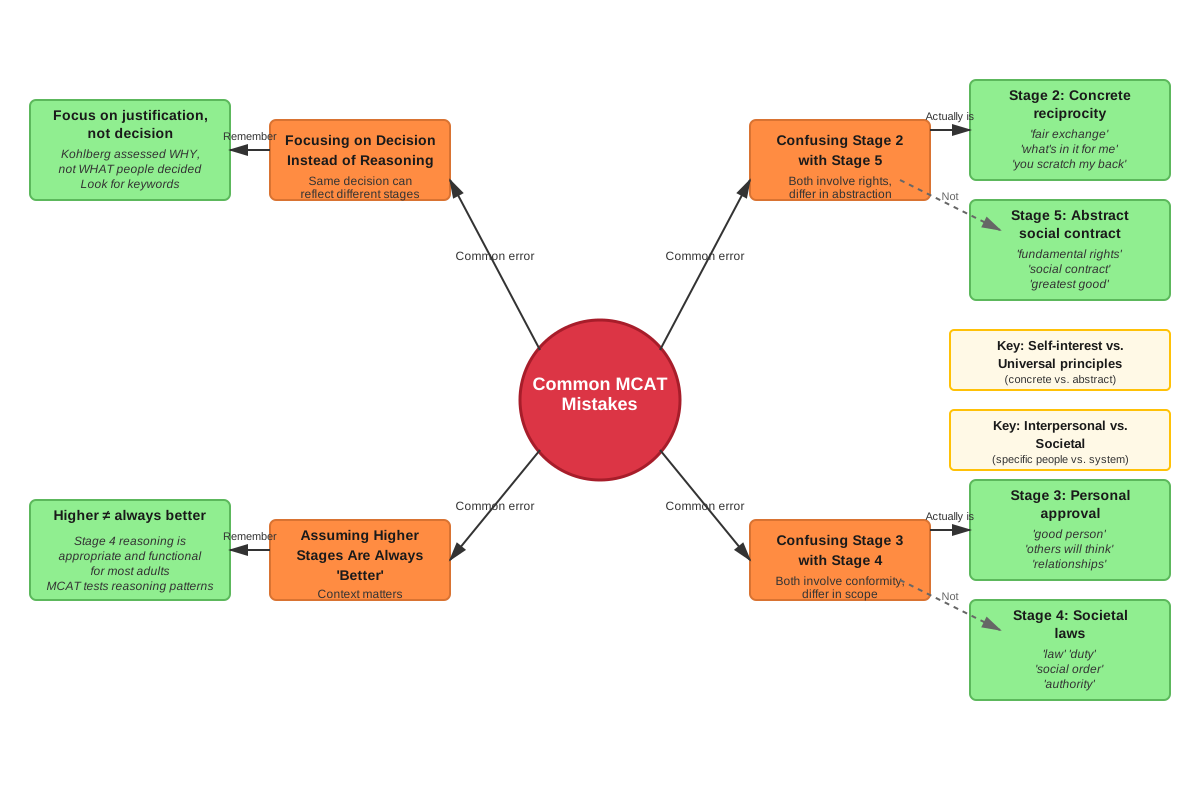
Misconception: Higher stages are "better" people who make more moral choices.
Correction: Stages describe reasoning patterns, not moral behavior or character. Someone at Stage 2 might act generously out of self-interest, while someone at Stage 5 might act selfishly despite sophisticated reasoning. The theory describes how people think about morality, not how morally they behave.
Misconception: The answer to a moral dilemma determines the stage of reasoning.
Correction: Kohlberg emphasized that the same answer ("yes, steal the drug" or "no, don't steal") can be justified at any stage. What determines the stage is the reasoning and justification provided, not the conclusion reached. This is perhaps the most commonly tested distinction on the MCAT.
Misconception: Everyone eventually reaches postconventional morality with enough time.
Correction: Most adults remain at conventional levels (Stages 3-4) throughout their lives. Postconventional reasoning requires specific cognitive abilities (formal operational thought) and experiences that challenge conventional thinking. Age alone does not guarantee progression.
Misconception: Kohlberg's stages apply only to children and adolescents.
Correction: While the theory describes development from childhood, many adults continue to reason at preconventional or conventional levels. The theory describes potential development across the entire lifespan, not just childhood.
Misconception: Stage 4 reasoning (law and order) is rigid and inflexible compared to Stage 3 (interpersonal).
Correction: While Stage 4 emphasizes rules and social order, it actually represents more sophisticated reasoning than Stage 3 because it considers society-wide implications rather than just immediate relationships. The apparent rigidity reflects broader perspective-taking, not cognitive limitation.
Misconception: Cultural differences in moral reasoning indicate some cultures are less developed.
Correction: Cross-cultural research reveals that Kohlberg's higher stages may reflect Western, individualistic values (emphasis on individual rights and abstract principles) rather than universal moral development. Collectivist cultures may emphasize relational harmony and social cohesion (Stage 3-4 reasoning) as mature moral thinking, not as developmental limitations.
Misconception: Moral development and cognitive development are the same thing.
Correction: While cognitive development (especially reaching formal operational stage) is necessary for advanced moral reasoning, it is not sufficient. Many people with formal operational thinking abilities still reason at conventional levels. Moral development requires both cognitive maturity and specific social-moral experiences.
Worked Examples
Example 1: Stage Identification in a Clinical Vignette
Scenario: A 15-year-old patient refuses to take prescribed medication for a chronic condition. When asked why, he states: "All my friends think taking pills is weird and makes you look sick. I don't want them to think I'm different or make fun of me. I'd rather skip the medication when I'm around them so they'll still accept me."
Analysis:
Step 1: Identify what the question is asking. We need to determine which stage of moral reasoning this adolescent is demonstrating.
Step 2: Examine the reasoning, not the decision. The patient is refusing medication (the behavior), but we need to focus on why—his justification.
Step 3: Identify key phrases indicating the stage:
- "All my friends think..."
- "I don't want them to think I'm different"
- "...so they'll still accept me"
Step 4: Match reasoning to stage characteristics. The patient's reasoning centers on:
- Gaining peer approval
- Maintaining relationships
- Being accepted by others
- Conforming to group expectations
- Concern with being perceived as "good" or "normal"
Step 5: Determine the level and stage. This reasoning is characteristic of Stage 3: Interpersonal Concordance (Good Boy/Good Girl). The patient is at the conventional level, making decisions based on social approval and maintaining relationships rather than self-interest (preconventional) or abstract principles (postconventional).
Connection to Learning Objectives: This example demonstrates how to apply Kohlberg's theory to clinical scenarios, a common MCAT question format. The key is identifying that Stage 3 reasoning focuses on approval and relationships, distinguishing it from Stage 2 (self-interest) or Stage 4 (rules and duty).
Example 2: Comparing Reasoning Across Stages
Scenario: A research study presents participants with the following dilemma: "A doctor has five patients who will die without organ transplants. A healthy person comes in for a routine checkup. Should the doctor kill the healthy person and use their organs to save the five patients?"
Four participants provide the following justifications for answering "No":
Participant A: "The doctor would lose their medical license and go to prison for murder."
Participant B: "Doctors have a professional duty to 'do no harm.' The medical code of ethics explicitly prohibits killing patients, and these rules exist to maintain trust in the healthcare system."
Participant C: "Killing is wrong because it violates the fundamental principle that every human life has inherent dignity and worth that cannot be sacrificed for utilitarian calculations."
Participant D: "No one would ever go to the doctor again if they thought they might be killed. The doctor needs patients to trust them."
Analysis:
Let's identify each participant's stage:
Participant A: Stage 1 (Obedience and Punishment Orientation)
- Reasoning focuses on avoiding punishment (losing license, going to prison)
- External consequences determine rightness
- No consideration of principles, duties, or others' perspectives beyond consequences
- Preconventional level
Participant B: Stage 4 (Law and Order Orientation)
- Reasoning emphasizes professional duties and established codes
- Focus on maintaining social systems (healthcare trust)
- Rules exist for societal benefit
- Conventional level
Participant C: Stage 6 (Universal Ethical Principles)
- Reasoning based on abstract, universal principle (inherent human dignity)
- Principle transcends utilitarian calculations
- Self-chosen ethical framework
- Postconventional level
Participant D: Stage 2 (Self-Interest/Instrumental Orientation)
- Reasoning based on practical consequences for the doctor's interests
- Recognition of others' perspectives (patients' trust) but through lens of self-interest
- Reciprocal relationship: doctor needs patients, patients need doctor
- Preconventional level
Key Insight: All four participants reached the same conclusion ("No, don't kill"), but their reasoning spans four different stages across all three levels. This illustrates Kohlberg's fundamental principle: the reasoning matters more than the answer.
Connection to Learning Objectives: This example demonstrates how to distinguish between stages based on subtle differences in reasoning, apply the theory to complex ethical scenarios, and avoid the common mistake of judging stage by decision rather than justification.
Exam Strategy
When approaching Kohlberg moral development questions on the MCAT, follow this systematic approach:
Step 1: Identify the reasoning, not the decision. The MCAT will often present scenarios where multiple characters make the same choice but for different reasons, or different choices for reasons at the same stage. Always focus on the justification provided.
Step 2: Look for trigger words and phrases:
- Stage 1: "punishment," "get caught," "avoid consequences," "authority says"
- Stage 2: "fair exchange," "mutual benefit," "what's in it for me," "you scratch my back"
- Stage 3: "good person," "approval," "relationships," "what others think," "intentions matter"
- Stage 4: "duty," "law," "social order," "rules," "authority," "everyone did it"
- Stage 5: "social contract," "rights," "democratic process," "greatest good," "laws can change"
- Stage 6: "universal principles," "inherent dignity," "justice," "regardless of laws"
Step 3: Determine the level first, then the specific stage. Ask:
- Is reasoning based on consequences/self-interest? → Preconventional (Stages 1-2)
- Is reasoning based on social approval/maintaining order? → Conventional (Stages 3-4)
- Is reasoning based on abstract principles? → Postconventional (Stages 5-6)
Then distinguish within the level:
- Preconventional: punishment vs. mutual benefit?
- Conventional: relationships vs. social systems?
- Postconventional: social contract vs. universal principles?
Step 4: Use process of elimination. Eliminate answers that:
- Confuse the decision with the reasoning
- Place conventional reasoning at postconventional levels (common distractor)
- Suggest stage regression without trauma/extreme circumstances
- Claim most adults reach Stage 6 (very rare)
Step 5: Watch for criticism questions. The MCAT may ask about limitations of Kohlberg's theory:
- Gender bias (Gilligan's critique about justice vs. care orientation)
- Cultural bias (Western, individualistic values)
- Methodology issues (hypothetical dilemmas vs. real behavior)
- Overemphasis on cognition vs. emotion in moral reasoning
Time Management Tip: Kohlberg questions typically require 60-90 seconds. Spend 30 seconds identifying key reasoning phrases, 30 seconds matching to stage characteristics, and 30 seconds confirming your answer and eliminating distractors.
Common Question Formats:
- "Which stage of moral development is this person demonstrating?" (Direct application)
- "Based on Kohlberg's theory, how would someone at Stage X respond?" (Prediction)
- "What criticism has been raised about Kohlberg's theory?" (Evaluation)
- "Which statement best represents Stage X reasoning?" (Recognition)
Memory Techniques
Mnemonic for the Six Stages
"Please Pay Good Lawyers Serious Cash"
- Please = Punishment (Stage 1: Obedience and Punishment)
- Pay = Payback/Personal interest (Stage 2: Self-Interest)
- Good = Good boy/girl (Stage 3: Interpersonal Concordance)
- Lawyers = Law and order (Stage 4: Law and Order)
- Serious = Social contract (Stage 5: Social Contract)
- Cash = Conscience/Universal principles (Stage 6: Universal Ethical Principles)
Level Visualization
Preconventional = PRE-social: Think "before society matters"—reasoning is about ME and MY consequences
Conventional = CON-forming: Think "conforming to society"—reasoning is about SOCIAL approval and ORDER
Postconventional = POST-society: Think "beyond society"—reasoning is about PRINCIPLES that transcend social norms
The "Why" Hierarchy
Visualize a ladder with three sections:
Bottom rungs (Preconventional): "Why should I?" → "Because of what happens to ME"
- Rung 1: "I'll be punished"
- Rung 2: "What's in it for me?"
Middle rungs (Conventional): "Why should I?" → "Because of SOCIETY"
- Rung 3: "People will approve/disapprove"
- Rung 4: "It's the rule/law"
Top rungs (Postconventional): "Why should I?" → "Because of PRINCIPLES"
- Rung 5: "It's a social contract we agreed to"
- Rung 6: "It's universally right"
Stage 3 vs. Stage 4 Distinction
Stage 3 = Small circle (immediate relationships, face-to-face interactions, "What will my friends/family think?")
Stage 4 = Large circle (society-wide, institutions, "What if everyone did this?")
Both are conventional (society-focused), but Stage 4 zooms out to the bigger picture.
Summary
Kohlberg moral development theory describes how moral reasoning evolves through six sequential stages organized into three levels: preconventional (self-focused), conventional (society-focused), and postconventional (principle-focused). The theory emphasizes that moral development is assessed through the reasoning behind moral decisions, not the decisions themselves. Preconventional reasoning (Stages 1-2) centers on avoiding punishment and pursuing self-interest. Conventional reasoning (Stages 3-4) focuses on gaining social approval and maintaining social order through rules and laws. Postconventional reasoning (Stages 5-6) involves abstract ethical principles that may transcend specific laws or social conventions. Progression through stages is sequential and invariant, requiring both cognitive development and social-moral experiences. Most adults reason at conventional levels, with postconventional reasoning being relatively rare. For the MCAT, students must be able to identify stages based on reasoning patterns, distinguish between similar-sounding justifications at different stages, and recognize criticisms of the theory including potential gender and cultural bias.
Key Takeaways
- Kohlberg's theory consists of three levels and six stages of moral reasoning that progress sequentially from self-interest to social conformity to abstract principles
- The reasoning behind a moral decision determines the stage, not the decision itself—the same answer can be justified at any stage
- Preconventional morality focuses on consequences and self-interest; conventional morality focuses on social approval and maintaining order; postconventional morality focuses on universal ethical principles
- Most adults reason at conventional levels (Stages 3-4); postconventional reasoning requires formal operational thinking and is relatively rare
- Stage 3 emphasizes interpersonal relationships and approval; Stage 4 emphasizes societal rules and maintaining social systems—both are conventional but differ in scope
- Common MCAT questions require identifying stages from vignettes, distinguishing between similar reasoning at different stages, and recognizing criticisms of the theory (gender bias, cultural bias)
- Cognitive development is necessary but not sufficient for moral development—formal operational thinking enables but doesn't guarantee postconventional reasoning
Related Topics
Carol Gilligan's Ethics of Care: Gilligan's critique of Kohlberg led to an alternative framework emphasizing care and relationships over justice and rights. Understanding this criticism deepens comprehension of gender considerations in moral development and provides contrast for MCAT comparison questions.
Piaget's Theory of Moral Development: Piaget's earlier two-stage model (heteronomous vs. autonomous morality) provided the foundation for Kohlberg's work. Comparing these theories helps students understand the evolution of moral development research.
Erikson's Psychosocial Development: Erikson's stages of identity development intersect with moral development, particularly during adolescence when identity exploration may facilitate questioning of conventional moral standards.
Social Cognitive Theory: Understanding how moral reasoning relates to observational learning, modeling, and self-efficacy connects Kohlberg's cognitive-developmental approach to social learning perspectives.
Cultural Psychology: Examining how individualistic vs. collectivistic cultures approach moral reasoning illuminates limitations of Kohlberg's theory and prepares students for cross-cultural MCAT passages.
Neurodevelopment and Decision-Making: The biological basis of moral reasoning, including prefrontal cortex development and its role in abstract thinking, connects moral development to neuropsychology topics.
Mastering Kohlberg moral development provides essential foundation for understanding how individuals make ethical decisions across the lifespan, a concept that appears throughout MCAT passages involving development, social psychology, and healthcare ethics.
Practice CTA
Now that you've mastered the core concepts of Kohlberg moral development, it's time to solidify your understanding through active practice. Challenge yourself with practice questions that require you to identify stages from complex vignettes, distinguish between subtle reasoning differences, and apply the theory to novel scenarios. Use flashcards to memorize the characteristics of each stage and the trigger words that signal different levels of reasoning. Remember: understanding the why behind moral decisions is what separates good MCAT performance from great performance. You've built the foundation—now practice applying it until stage identification becomes second nature. Your ability to quickly and accurately analyze moral reasoning will serve you well not only on test day but throughout your medical career!
Sign up free to keep reading
Create a free AnvayaPrep account to finish this MCAT guide on Kohlberg moral development — plus flashcards and practice questions.