Overview
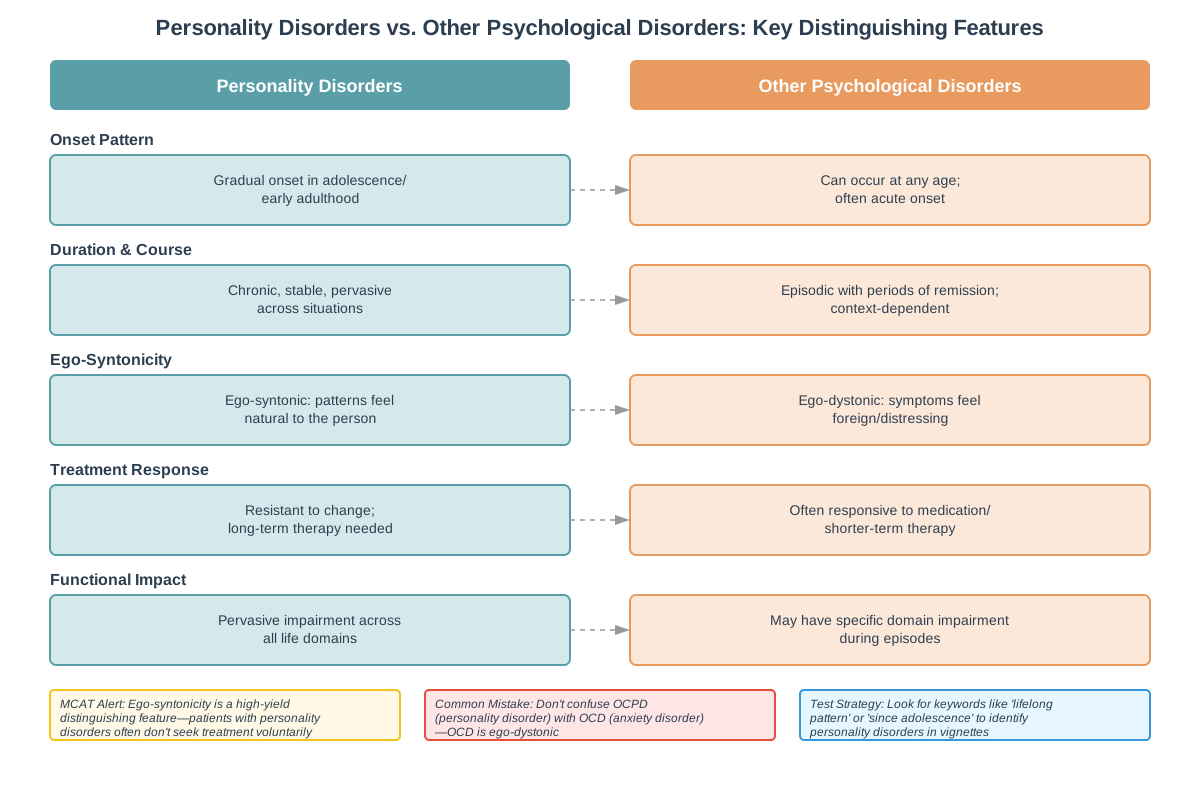
Personality disorders represent a critical category of psychological conditions characterized by enduring, inflexible patterns of thinking, feeling, and behaving that deviate markedly from cultural expectations and cause significant distress or impairment. Unlike many other psychological disorders that represent episodic changes from baseline functioning (such as major depressive disorder or generalized anxiety disorder), personality disorders reflect deeply ingrained patterns that typically emerge in adolescence or early adulthood and persist throughout the lifespan. These disorders affect how individuals perceive themselves, relate to others, and respond to their environment, creating pervasive difficulties across multiple life domains including work, relationships, and social functioning.
For the MCAT, understanding personality disorders Psychology is essential because these conditions frequently appear in Psych/Soc passages, particularly in questions testing the ability to distinguish between different psychological disorder categories, recognize symptom patterns, and apply diagnostic criteria. The MCAT emphasizes the biopsychosocial model of mental health, and personality disorders exemplify how biological predispositions, psychological factors, and social influences interact to shape human behavior and psychopathology. Questions may present clinical vignettes requiring students to identify specific personality disorder features, differentiate personality disorders from other mental health conditions, or analyze how these disorders impact social relationships and identity formation.
Within the broader context of Psychological Disorders and Treatment, personality disorders occupy a unique position. They are classified on a separate axis in traditional diagnostic frameworks (historically Axis II in DSM-IV, though DSM-5 integrated all disorders) to emphasize their pervasive, enduring nature. Understanding personality disorders connects to fundamental Psychology concepts including personality theory, social cognition, attachment theory, and developmental psychology. These disorders also intersect with topics such as stress and coping, social perception, identity formation, and therapeutic approaches—all high-yield areas for MCAT preparation.
Learning Objectives
- [ ] Define personality disorders using accurate Psychology terminology
- [ ] Explain why personality disorders matters for the MCAT
- [ ] Apply personality disorders to exam-style questions
- [ ] Identify common mistakes related to personality disorders
- [ ] Connect personality disorders to related Psychology concepts
- [ ] Differentiate among the three clusters of personality disorders and identify defining features of each
- [ ] Analyze how personality disorders differ from other psychological disorders in terms of onset, duration, and treatment response
- [ ] Evaluate the role of biological, psychological, and social factors in the development and maintenance of personality disorders
Prerequisites
- Basic personality theory: Understanding of trait theories and personality dimensions provides the foundation for recognizing when personality patterns become pathological
- Diagnostic criteria fundamentals: Familiarity with how psychological disorders are classified and diagnosed is necessary to understand the unique diagnostic considerations for personality disorders
- Normal psychological development: Knowledge of typical adolescent and adult development helps identify when personality patterns deviate significantly from expected norms
- Social psychology basics: Understanding social cognition, attribution, and interpersonal relationships is essential for recognizing the interpersonal dysfunction central to many personality disorders
- Psychopathology overview: General knowledge of psychological disorder categories helps contextualize where personality disorders fit within the broader mental health landscape
Why This Topic Matters
Personality disorders represent a clinically significant category affecting approximately 9-15% of the general population, with even higher prevalence in clinical settings. These conditions create substantial personal suffering and societal burden through impaired occupational functioning, relationship difficulties, increased healthcare utilization, and elevated risk for comorbid conditions including substance use disorders, mood disorders, and suicidal behavior. Understanding personality disorders is crucial for any healthcare professional, as these patients frequently present in medical settings with complex presentations that challenge treatment adherence and provider-patient relationships.
For the MCAT, personality disorders appear with moderate frequency in the Psych/Soc section, typically accounting for 2-4 questions per exam. These questions most commonly appear in three formats: (1) passage-based questions presenting case vignettes requiring disorder identification, (2) discrete questions testing knowledge of diagnostic criteria and cluster classifications, and (3) research-based passages examining studies on personality disorder etiology, treatment outcomes, or social functioning. The MCAT particularly favors questions that require students to distinguish personality disorders from similar-appearing conditions (such as differentiating schizoid personality disorder from autism spectrum disorder, or borderline personality disorder from bipolar disorder).
Common exam scenarios include passages describing longitudinal studies of personality development, clinical case presentations requiring differential diagnosis, research on attachment styles and their relationship to personality pathology, and studies examining treatment approaches for personality disorders. The MCAT frequently tests the ability to recognize that personality disorders are ego-syntonic (experienced as consistent with one's self-concept) rather than ego-dystonic, a key distinguishing feature from many other psychological conditions. Questions may also explore how personality disorders impact medical treatment adherence, healthcare utilization patterns, or physician-patient communication—connecting psychological concepts to practical healthcare delivery issues.
Core Concepts
Definition and Diagnostic Criteria
A personality disorder is defined as an enduring pattern of inner experience and behavior that deviates markedly from the expectations of the individual's culture, is pervasive and inflexible, has an onset in adolescence or early adulthood, is stable over time, and leads to clinically significant distress or impairment in functioning. This pattern must manifest in at least two of the following areas: (1) cognition (ways of perceiving and interpreting self, others, and events), (2) affectivity (range, intensity, lability, and appropriateness of emotional response), (3) interpersonal functioning, and (4) impulse control.
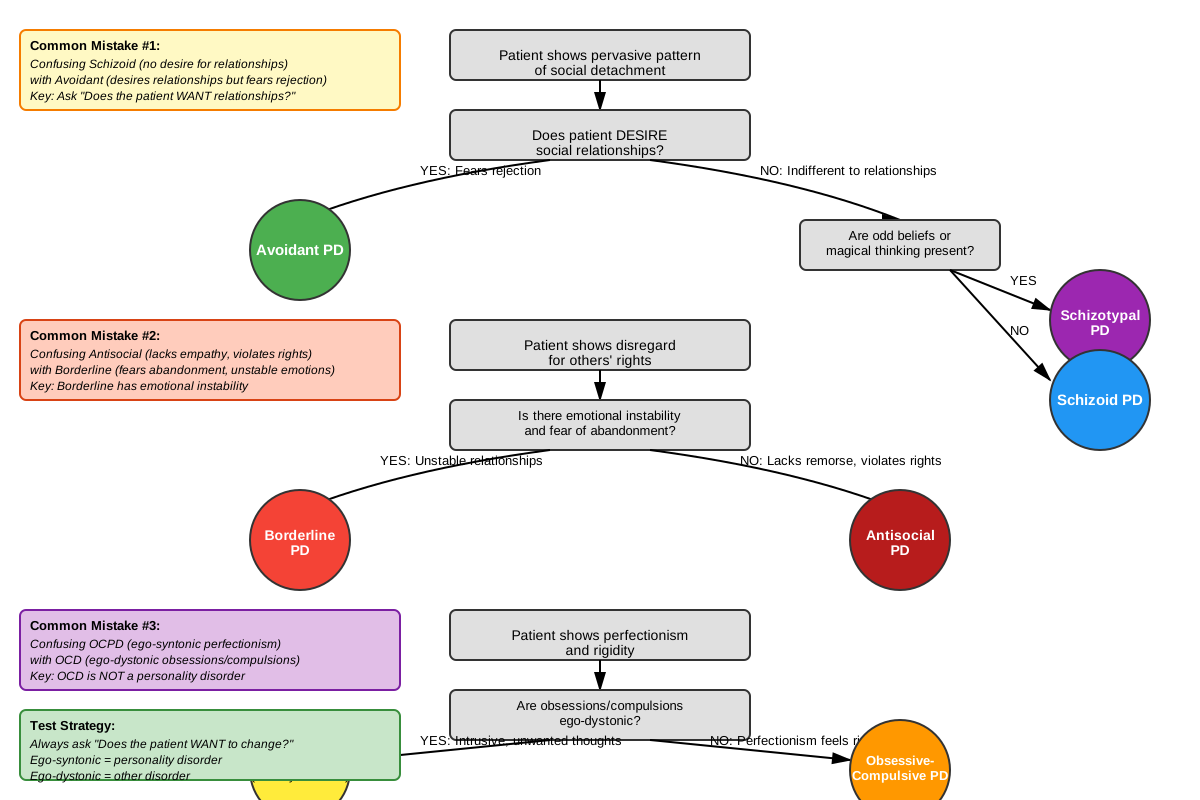
The ego-syntonic nature of personality disorders distinguishes them from most other psychological conditions. Individuals with personality disorders typically view their patterns of thinking and behaving as consistent with their self-concept and may not recognize these patterns as problematic, even when they cause significant dysfunction. This contrasts with ego-dystonic disorders like obsessive-compulsive disorder or panic disorder, where individuals recognize their symptoms as foreign or distressing. This distinction has important treatment implications, as individuals with personality disorders may lack motivation for change and may not seek treatment unless external pressures or comorbid conditions (like depression) drive them to do so.
The Three-Cluster System
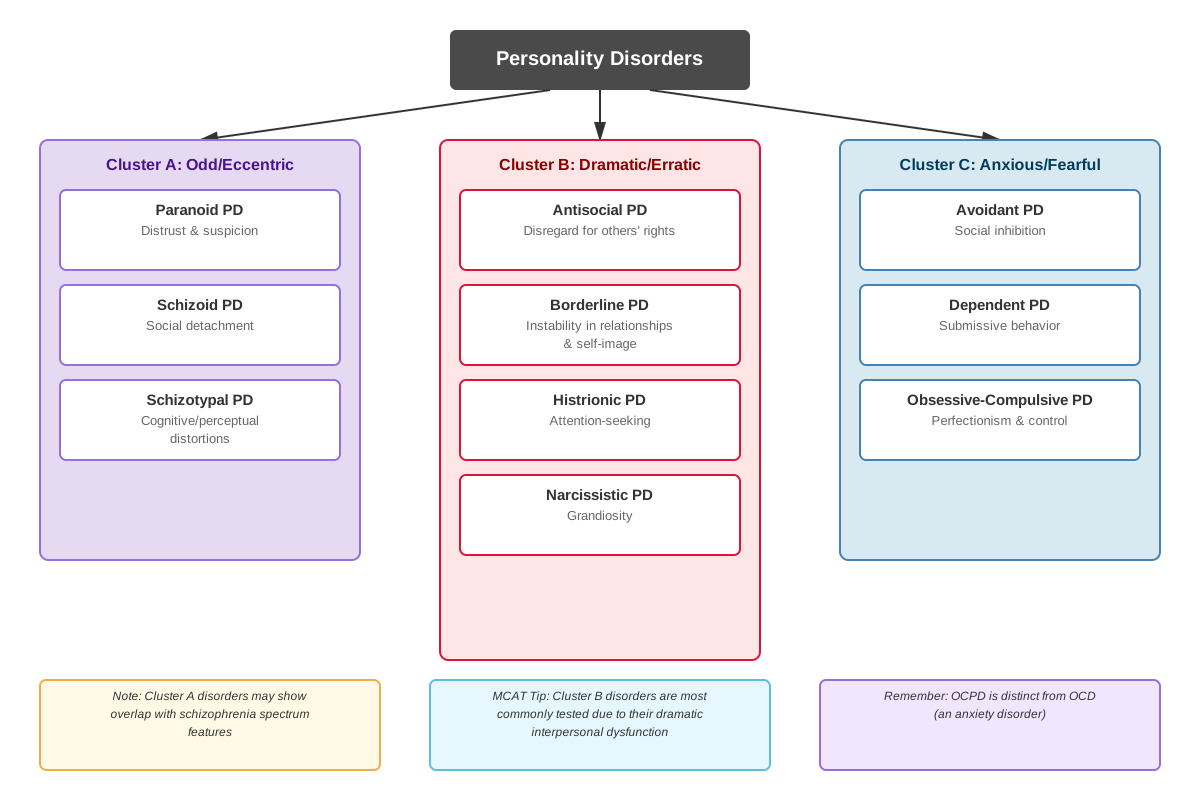
The DSM-5 organizes the ten specific personality disorders into three clusters based on descriptive similarities:
Cluster A: "Odd or Eccentric" disorders are characterized by unusual thinking and behavior patterns:
- Paranoid Personality Disorder: Pervasive distrust and suspiciousness of others, interpreting their motives as malevolent. Individuals suspect others are exploiting or deceiving them, doubt loyalty of friends, are reluctant to confide in others, perceive attacks on their character, and bear grudges.
- Schizoid Personality Disorder: Detachment from social relationships and restricted range of emotional expression. Individuals neither desire nor enjoy close relationships, choose solitary activities, have little interest in sexual experiences, take pleasure in few activities, lack close friends, appear indifferent to praise or criticism, and show emotional coldness or flat affect.
- Schizotypal Personality Disorder: Acute discomfort in close relationships, cognitive or perceptual distortions, and eccentricities of behavior. Features include ideas of reference, odd beliefs or magical thinking, unusual perceptual experiences, odd thinking and speech, suspiciousness, inappropriate or constricted affect, odd behavior or appearance, lack of close friends, and excessive social anxiety.
Cluster B: "Dramatic, Emotional, or Erratic" disorders involve problems with impulse control and emotional regulation:
- Antisocial Personality Disorder: Disregard for and violation of the rights of others occurring since age 15, with evidence of conduct disorder before age 15. Features include failure to conform to social norms, deceitfulness, impulsivity, irritability and aggressiveness, reckless disregard for safety, consistent irresponsibility, and lack of remorse.
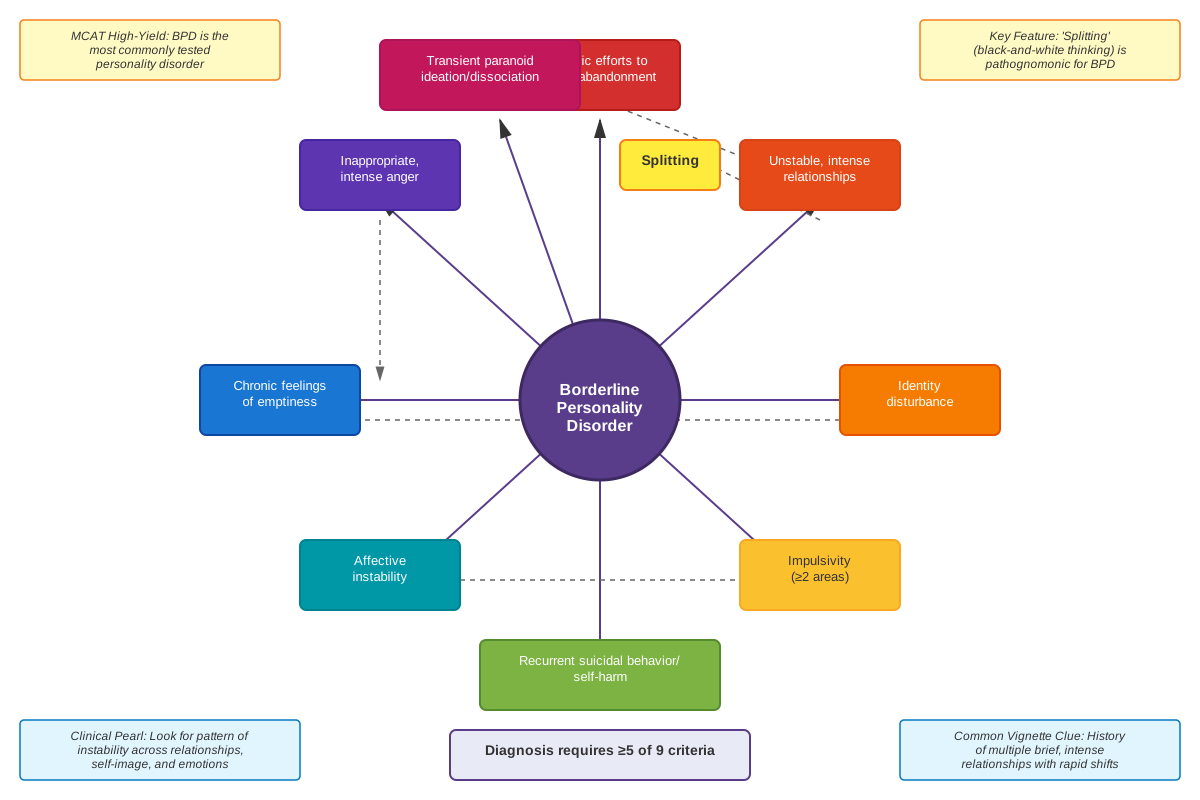
- Borderline Personality Disorder: Pervasive pattern of instability in interpersonal relationships, self-image, and affects, with marked impulsivity. Characteristics include frantic efforts to avoid abandonment, unstable and intense relationships alternating between idealization and devaluation, identity disturbance, impulsivity in potentially self-damaging areas, recurrent suicidal behavior or self-harm, affective instability, chronic feelings of emptiness, inappropriate intense anger, and transient stress-related paranoid ideation or dissociation.
- Histrionic Personality Disorder: Excessive emotionality and attention-seeking behavior. Individuals are uncomfortable when not the center of attention, display inappropriate sexually seductive or provocative behavior, show rapidly shifting and shallow emotions, use physical appearance to draw attention, have impressionistic speech lacking detail, show self-dramatization and exaggerated emotional expression, are suggestible, and consider relationships more intimate than they are.
- Narcissistic Personality Disorder: Grandiosity, need for admiration, and lack of empathy. Features include grandiose sense of self-importance, preoccupation with fantasies of success or power, belief in being "special," requirement for excessive admiration, sense of entitlement, interpersonal exploitation, lack of empathy, envy of others or belief others are envious, and arrogant behaviors or attitudes.
Cluster C: "Anxious or Fearful" disorders are characterized by anxiety and fearfulness:
- Avoidant Personality Disorder: Social inhibition, feelings of inadequacy, and hypersensitivity to negative evaluation. Individuals avoid occupational activities involving interpersonal contact, are unwilling to get involved unless certain of being liked, show restraint in intimate relationships due to fear of shame, are preoccupied with being criticized or rejected, are inhibited in new situations due to feelings of inadequacy, view themselves as socially inept, and are reluctant to take risks or engage in new activities.
- Dependent Personality Disorder: Excessive need to be taken care of, leading to submissive and clinging behavior and fears of separation. Features include difficulty making decisions without reassurance, need for others to assume responsibility for major life areas, difficulty expressing disagreement, difficulty initiating projects, going to excessive lengths to obtain support, feeling uncomfortable or helpless when alone, urgently seeking another relationship when one ends, and unrealistic preoccupation with fears of being left to care for oneself.
- Obsessive-Compulsive Personality Disorder (OCPD): Preoccupation with orderliness, perfectionism, and control at the expense of flexibility, openness, and efficiency. Characteristics include preoccupation with details and rules, perfectionism that interferes with task completion, excessive devotion to work, being overly conscientious about morality, inability to discard worthless objects, reluctance to delegate, miserly spending style, and rigidity and stubbornness. Note that OCPD differs from obsessive-compulsive disorder (OCD)—OCPD involves ego-syntonic personality traits, while OCD involves ego-dystonic intrusive thoughts and compulsive behaviors.
Comparison Table of Personality Disorder Clusters
| Cluster | Descriptive Label | Core Features | Example Disorders | Typical Presentation |
|---|---|---|---|---|
| A | Odd/Eccentric | Unusual thinking, social detachment, suspiciousness | Paranoid, Schizoid, Schizotypal | Social isolation, odd beliefs, distrust |
| B | Dramatic/Erratic | Emotional dysregulation, impulsivity, interpersonal instability | Antisocial, Borderline, Histrionic, Narcissistic | Intense relationships, impulsive behavior, attention-seeking |
| C | Anxious/Fearful | Anxiety, fear of rejection, need for control or support | Avoidant, Dependent, OCPD | Social anxiety, submissiveness, rigidity |
Etiology and Development
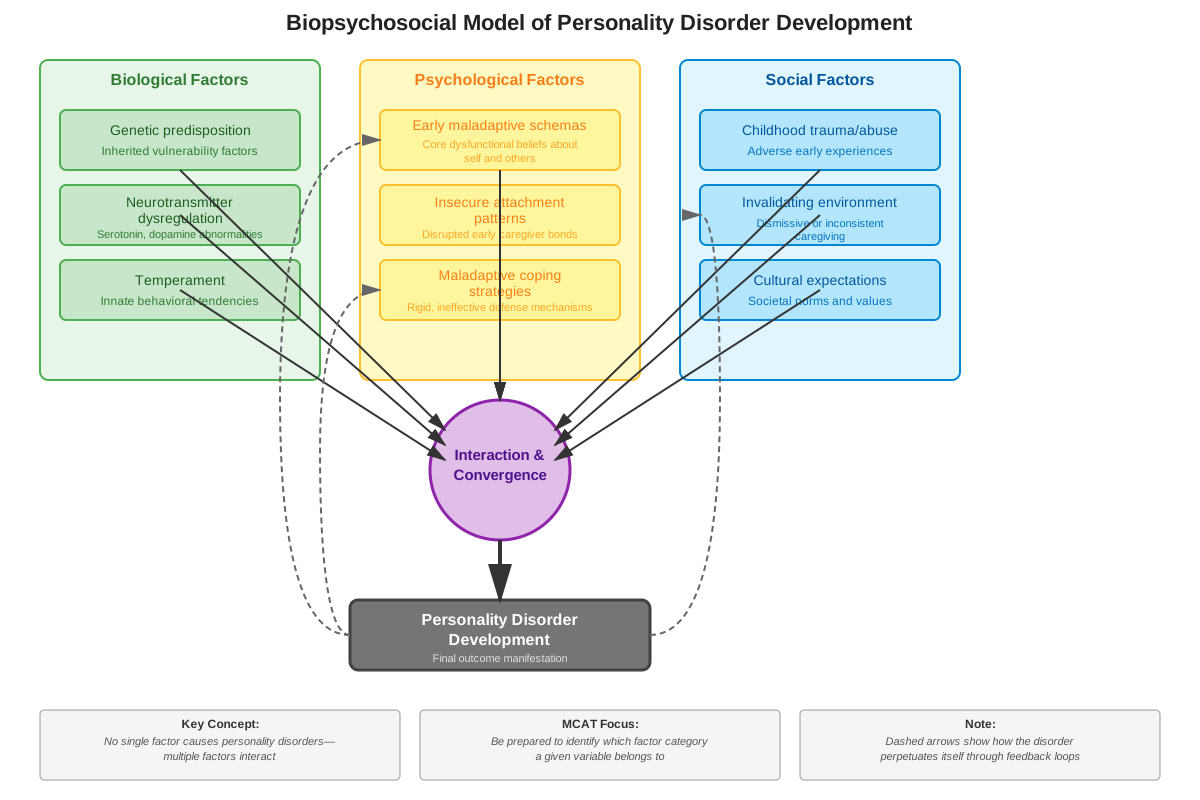
The development of personality disorders reflects complex interactions among biological, psychological, and social factors. Biological factors include genetic predisposition (heritability estimates range from 40-60% for most personality disorders), temperamental characteristics present from early childhood, and neurobiological differences in brain structure and function. For example, individuals with borderline personality disorder show reduced activity in prefrontal regions involved in emotional regulation and increased amygdala reactivity to emotional stimuli.
Psychological factors include early attachment experiences, with insecure attachment patterns (particularly disorganized attachment) associated with increased risk for personality disorders. Cognitive schemas developed in childhood—such as beliefs about self-worth, trustworthiness of others, and controllability of the environment—shape personality development. Maladaptive coping strategies that may be adaptive in dysfunctional family environments can become rigid personality patterns that persist into adulthood even when no longer adaptive.
Social and environmental factors include childhood adversity (abuse, neglect, trauma), family dysfunction, parenting styles (particularly inconsistent, invalidating, or overprotective parenting), and cultural context. The diathesis-stress model explains how biological vulnerabilities interact with environmental stressors to produce personality pathology. For instance, a child with temperamental emotional sensitivity (diathesis) raised in an invalidating environment (stress) may develop borderline personality disorder features.
Clinical Course and Prognosis
Personality disorders typically emerge in adolescence or early adulthood, though diagnosis is generally not made until age 18 (except antisocial personality disorder, which requires evidence of conduct disorder before age 15). The longitudinal course varies by disorder. Some personality disorders, particularly those in Cluster B, show improvement with age—a phenomenon called "burnout" particularly noted in antisocial and borderline personality disorders. However, Cluster A and C disorders tend to remain more stable across the lifespan.
Comorbidity is extremely common, with most individuals meeting criteria for multiple personality disorders and high rates of co-occurring Axis I disorders (mood disorders, anxiety disorders, substance use disorders). This comorbidity complicates treatment and worsens prognosis. Personality disorders are associated with increased risk for suicide, particularly borderline and antisocial personality disorders, as well as increased healthcare utilization, occupational impairment, and relationship difficulties.
Treatment Approaches
Treatment of personality disorders presents unique challenges due to their ego-syntonic nature, pervasiveness, and stability. Psychotherapy is the primary treatment modality. Dialectical Behavior Therapy (DBT), developed specifically for borderline personality disorder, combines cognitive-behavioral techniques with mindfulness and distress tolerance skills. Mentalization-Based Therapy focuses on improving the capacity to understand mental states in self and others. Schema-Focused Therapy targets early maladaptive schemas underlying personality pathology.
Pharmacotherapy plays a limited role, as no medications are FDA-approved specifically for personality disorders. However, medications may target specific symptom dimensions (mood instability, impulsivity, cognitive-perceptual symptoms) or comorbid conditions. Psychosocial interventions address functional impairments in work, relationships, and daily living. The therapeutic relationship itself is often a primary vehicle for change, providing a corrective emotional experience and opportunity to practice new interpersonal patterns.
Concept Relationships
The concepts within personality disorders form an interconnected framework. The three-cluster system organizes specific disorders based on phenomenological similarities, but underlying dimensions (such as emotional dysregulation, interpersonal dysfunction, and cognitive distortions) cut across clusters. The ego-syntonic nature of personality disorders → explains why individuals rarely seek treatment voluntarily → which impacts treatment engagement and outcomes. The developmental trajectory (emerging in adolescence/early adulthood and persisting across the lifespan) → distinguishes personality disorders from episodic conditions → which affects both diagnosis and treatment planning.
Personality disorders connect to prerequisite topics in multiple ways. Personality theory provides the foundation for understanding when normal personality variation becomes pathological—personality disorders represent extreme, inflexible variants of normal personality traits. Developmental psychology explains how early experiences shape personality formation, with critical periods in childhood and adolescence when personality patterns crystallize. Attachment theory directly relates to personality disorder development, particularly for borderline and dependent personality disorders, which often involve insecure attachment patterns.
Connections to related topics include social psychology (personality disorders fundamentally involve disturbances in social cognition and interpersonal functioning), biological bases of behavior (genetic and neurobiological factors contribute to personality disorder vulnerability), stress and coping (personality disorders involve maladaptive coping strategies), and psychological treatment approaches (different therapeutic modalities target personality pathology through various mechanisms). Understanding personality disorders also enhances comprehension of other psychological disorders, as personality pathology often complicates the presentation and treatment of conditions like depression, anxiety disorders, and substance use disorders.
The relationship map: Biological vulnerability + Environmental stressors → Maladaptive personality development → Ego-syntonic patterns of thinking/feeling/behaving → Interpersonal dysfunction and distress → Potential treatment seeking (often due to comorbid conditions or external pressure) → Psychotherapy targeting core patterns → Gradual personality change and improved functioning.
Quick check — test yourself on Personality disorders so far.
Try Flashcards →High-Yield Facts
⭐ Personality disorders are ego-syntonic (experienced as consistent with self-concept), unlike most other psychological disorders which are ego-dystonic (experienced as foreign or distressing).
⭐ Personality disorders require onset by early adulthood and must represent stable, enduring patterns rather than episodic changes in functioning.
⭐ Cluster A disorders (Paranoid, Schizoid, Schizotypal) are characterized by odd or eccentric behavior and social detachment.
⭐ Cluster B disorders (Antisocial, Borderline, Histrionic, Narcissistic) involve dramatic, emotional, or erratic behavior with problems in impulse control and emotional regulation.
⭐ Cluster C disorders (Avoidant, Dependent, OCPD) are characterized by anxious or fearful behavior patterns.
- Borderline personality disorder features include fear of abandonment, unstable relationships with idealization/devaluation, identity disturbance, impulsivity, self-harm, affective instability, emptiness, anger, and transient paranoia or dissociation.
- Antisocial personality disorder requires evidence of conduct disorder before age 15 and cannot be diagnosed before age 18.
- Obsessive-Compulsive Personality Disorder (OCPD) differs from OCD—OCPD involves ego-syntonic personality traits focused on perfectionism and control, while OCD involves ego-dystonic obsessions and compulsions.
- Schizotypal personality disorder includes cognitive-perceptual distortions (ideas of reference, magical thinking, unusual perceptions) but does not meet criteria for schizophrenia.
- Personality disorders show high comorbidity with each other and with other mental health conditions, particularly mood, anxiety, and substance use disorders.
- Dialectical Behavior Therapy (DBT) is the evidence-based treatment specifically developed for borderline personality disorder.
- Personality disorders typically improve with age, particularly Cluster B disorders, in a phenomenon sometimes called "burnout."
Common Misconceptions
Misconception: Personality disorders and personality traits are the same thing.
Correction: Personality disorders represent extreme, inflexible, maladaptive variants of normal personality traits that cause significant distress or impairment. Normal personality traits exist on a continuum and allow for flexibility and adaptation, while personality disorders involve rigid patterns that persist even when dysfunctional.
Misconception: Obsessive-Compulsive Personality Disorder (OCPD) and Obsessive-Compulsive Disorder (OCD) are the same condition.
Correction: OCPD is a personality disorder characterized by ego-syntonic perfectionism, rigidity, and need for control, while OCD is an anxiety disorder involving ego-dystonic intrusive thoughts (obsessions) and repetitive behaviors (compulsions). Individuals with OCPD view their traits as appropriate and desirable, while those with OCD recognize their symptoms as irrational and distressing.
Misconception: People with antisocial personality disorder are always violent criminals.
Correction: While antisocial personality disorder involves disregard for others' rights and violation of social norms, not all individuals with this disorder engage in violent behavior. Many display their antisocial traits through manipulation, deceitfulness, irresponsibility, and lack of remorse without physical aggression. The disorder exists on a spectrum of severity.
Misconception: Personality disorders cannot be treated or improved.
Correction: While personality disorders are chronic and stable, evidence-based psychotherapies (particularly DBT for borderline personality disorder) demonstrate significant improvement in symptoms and functioning. Many personality disorders, especially Cluster B disorders, show natural improvement with age. Treatment focuses on increasing flexibility, improving coping strategies, and enhancing interpersonal functioning rather than complete personality transformation.
Misconception: Schizoid and schizotypal personality disorders are mild forms of schizophrenia.
Correction: While these Cluster A disorders share some phenomenological features with schizophrenia (social detachment, odd thinking), they are distinct conditions. Individuals with schizoid or schizotypal personality disorder do not experience the psychotic symptoms (hallucinations, delusions, disorganized speech/behavior) that define schizophrenia. The relationship is one of shared vulnerability factors rather than a continuum of severity.
Misconception: Personality disorders are caused solely by childhood trauma or bad parenting.
Correction: Personality disorders result from complex interactions among genetic predisposition, temperament, neurobiological factors, early experiences, attachment patterns, and environmental stressors. While adverse childhood experiences increase risk, they are neither necessary nor sufficient for personality disorder development. The diathesis-stress model best explains etiology, with biological vulnerabilities interacting with environmental factors.
Misconception: People with narcissistic personality disorder have high self-esteem.
Correction: Despite grandiose presentation, individuals with narcissistic personality disorder often have fragile self-esteem that requires constant external validation. Their grandiosity serves as a defense against underlying feelings of inadequacy and vulnerability. They are hypersensitive to criticism and perceived slights, which would not occur if self-esteem were genuinely high and stable.
Worked Examples
Example 1: Differential Diagnosis Case
Clinical Vignette: A 28-year-old woman presents to the emergency department following a suicide gesture after her boyfriend suggested they "take a break" from their relationship. She reports feeling "empty" most of the time and describes her relationships as intensely passionate initially but inevitably ending badly when the other person "shows their true colors." She has a history of cutting herself when distressed, multiple brief psychiatric hospitalizations, and difficulty maintaining employment despite above-average intelligence. She describes feeling like "a different person" depending on who she's with and reports occasional paranoid thoughts when stressed, believing others are conspiring against her.
Question: Which personality disorder best fits this presentation?
Analysis:
- Identify key features: Fear of abandonment (suicide gesture after relationship threat), unstable intense relationships with idealization/devaluation pattern, identity disturbance ("different person" with different people), self-harm (cutting), affective instability, chronic emptiness, and transient stress-related paranoia.
- Consider differential diagnosis:
- Borderline Personality Disorder: Matches all nine DSM-5 criteria (fear of abandonment, unstable relationships, identity disturbance, impulsivity, self-harm, affective instability, emptiness, anger, transient paranoia)
- Histrionic Personality Disorder: While both involve emotional intensity, histrionic lacks the self-harm, identity disturbance, and fear of abandonment central to this case
- Bipolar Disorder: Could explain mood instability, but the chronic nature, relationship pattern, and identity disturbance point to personality disorder rather than episodic mood disorder
- Dependent Personality Disorder: While both involve fear of abandonment, dependent personality involves submissiveness and need for caretaking rather than the intense, unstable relationships and self-harm seen here
- Apply diagnostic criteria: The patient meets at least 5 of 9 criteria for borderline personality disorder (only 5 required for diagnosis), with pattern present since early adulthood and causing significant impairment.
Answer: Borderline Personality Disorder. This case exemplifies the classic presentation with fear of abandonment, relationship instability, identity disturbance, self-harm, affective instability, emptiness, and transient paranoia—all hallmark features of borderline personality disorder.
Learning Objective Connection: This example demonstrates application of personality disorder diagnostic criteria to exam-style clinical vignettes and illustrates the importance of distinguishing personality disorders from other conditions with overlapping features.
Example 2: Research Interpretation
Passage Summary: A longitudinal study followed 200 individuals diagnosed with personality disorders at age 25 for 20 years. Researchers assessed symptom severity, functional impairment, and quality of life at 5-year intervals. Results showed that individuals with Cluster B disorders demonstrated significant symptom reduction over time, with 60% no longer meeting diagnostic criteria by age 45. In contrast, Cluster A and C disorders showed minimal change. Individuals who engaged in psychotherapy showed greater improvement than those who did not. Comorbid substance use disorders predicted worse outcomes across all clusters.
Question: Which conclusion is best supported by the study findings?
Analysis:
- Identify key findings:
- Cluster B disorders improve significantly over time (60% remission by age 45)
- Cluster A and C disorders remain stable
- Psychotherapy associated with better outcomes
- Substance use comorbidity predicts worse prognosis
- Evaluate potential conclusions:
- "Personality disorders are untreatable" → Contradicted by improvement data and psychotherapy effects
- "All personality disorders follow the same course" → Contradicted by differential outcomes across clusters
- "Cluster B personality disorders show age-related improvement" → Supported by 60% remission rate and symptom reduction over time
- "Psychotherapy is unnecessary for personality disorder treatment" → Contradicted by better outcomes in therapy group
- Consider alternative explanations: The age-related improvement in Cluster B disorders aligns with the "burnout" phenomenon documented in the literature, where impulsivity and emotional dysregulation decrease with age. The stability of Cluster A and C disorders reflects their more trait-like, less behaviorally dramatic nature.
Answer: The study best supports the conclusion that Cluster B personality disorders demonstrate significant age-related improvement, with many individuals achieving remission by middle age, while Cluster A and C disorders remain more stable. This finding has important implications for prognosis and treatment planning.
Learning Objective Connection: This example demonstrates how to apply knowledge of personality disorder course and prognosis to interpret research findings, a common MCAT question format. It also illustrates the importance of understanding differences among personality disorder clusters.
Exam Strategy
When approaching MCAT questions on personality disorders, begin by identifying whether the question asks about (1) diagnostic criteria and classification, (2) differential diagnosis, (3) etiology and development, or (4) treatment and prognosis. Each question type requires a different approach.
Trigger words and phrases to watch for include:
- "Enduring pattern" or "stable over time" → suggests personality disorder rather than episodic condition
- "Since adolescence" or "early adulthood" → indicates personality disorder onset pattern
- "Ego-syntonic" or "consistent with self-concept" → distinguishes personality disorders from other conditions
- Cluster descriptors: "odd/eccentric," "dramatic/erratic," "anxious/fearful"
- Specific disorder features: "fear of abandonment" (borderline), "lack of remorse" (antisocial), "need for admiration" (narcissistic), "social detachment" (schizoid)
Process-of-elimination strategies:
- Rule out episodic conditions first: If the vignette describes recent onset or episodic symptoms, eliminate personality disorders and consider mood, anxiety, or psychotic disorders
- Check age and duration criteria: Personality disorders require onset by early adulthood and stable pattern; eliminate if these criteria aren't met
- Distinguish similar disorders: When choosing between similar-appearing conditions (e.g., OCPD vs. OCD, schizotypal vs. schizophrenia), focus on ego-syntonic vs. ego-dystonic nature and presence/absence of psychotic symptoms
- Consider cluster characteristics: Narrow to one cluster based on overall presentation (odd vs. dramatic vs. anxious), then differentiate specific disorders within that cluster
Time allocation: Personality disorder questions typically require 60-90 seconds. Spend 20-30 seconds identifying key features in the vignette, 20-30 seconds narrowing to the correct cluster, and 20-30 seconds selecting the specific disorder or answering the question. Don't get bogged down trying to match every detail—focus on the most prominent, defining features.
Exam Tip: When a vignette describes relationship problems, always consider personality disorders in your differential. Interpersonal dysfunction is central to most personality disorders and is a high-yield distinguishing feature.
Exam Tip: Remember that personality disorders are diagnoses of exclusion for substance effects and medical conditions. If a passage mentions recent substance use or medical illness, consider whether these could better explain the symptoms before selecting a personality disorder.
Memory Techniques
Cluster Mnemonic - "ODE":
- Odd/Eccentric = Cluster A
- Dramatic/Erratic = Cluster B
- Emotional/Anxious = Cluster C (note: "E" for "Emotional" helps remember the anxious/fearful nature)
Cluster A Mnemonic - "Weird Paranoid Schizos":
- Weird = Schizotypal (odd beliefs, magical thinking, perceptual distortions)
- Paranoid = Paranoid (distrust, suspiciousness)
- Schizos = Schizoid (social detachment, restricted affect)
Cluster B Mnemonic - "BAHN" (like a train):
- Borderline (unstable relationships, self-harm, fear of abandonment)
- Antisocial (disregard for others' rights, lack of remorse)
- Histrionic (attention-seeking, excessive emotionality)
- Narcissistic (grandiosity, need for admiration, lack of empathy)
Cluster C Mnemonic - "OCAD" (like an art school):
- Obsessive-Compulsive Personality Disorder (perfectionism, rigidity, control)
- C (skip)
- Avoidant (social inhibition, fear of rejection)
- Dependent (need to be taken care of, submissiveness)
Borderline Features Mnemonic - "PRAISE":
- Paranoid ideation (transient, stress-related)
- Relationships unstable (idealization/devaluation)
- Abandonment fears
- Identity disturbance
- Suicidal behavior/self-harm
- Emotional instability (affective instability)
(Note: This covers 6 of 9 criteria; add "impulsivity," "emptiness," and "anger" to complete)
Visualization Strategy: Picture each cluster as a different section of a hospital:
- Cluster A ward: Dimly lit, isolated rooms, patients alone and suspicious
- Cluster B ward: Chaotic, dramatic, alarms going off, intense interactions
- Cluster C ward: Quiet but tense, patients anxiously seeking reassurance or rigidly organizing
Ego-Syntonic vs. Ego-Dystonic: Visualize "ego-syntonic" as symptoms that are "in sync" with the person's self-concept (they fit together), while "ego-dystonic" symptoms are "out of sync" (they clash with self-concept).
Summary
Personality disorders represent enduring, inflexible patterns of thinking, feeling, and behaving that deviate from cultural expectations and cause significant distress or impairment. These ego-syntonic conditions emerge by early adulthood and persist across the lifespan, distinguishing them from episodic psychological disorders. The DSM-5 organizes ten personality disorders into three clusters: Cluster A (odd/eccentric: paranoid, schizoid, schizotypal), Cluster B (dramatic/erratic: antisocial, borderline, histrionic, narcissistic), and Cluster C (anxious/fearful: avoidant, dependent, OCPD). Development involves complex interactions among genetic predisposition, temperament, early experiences, and environmental factors, best explained by the diathesis-stress model. While personality disorders are chronic and stable, many show improvement with age, particularly Cluster B disorders. Treatment primarily involves psychotherapy, with DBT showing particular efficacy for borderline personality disorder. For the MCAT, understanding diagnostic criteria, cluster classification, differential diagnosis from similar conditions, and the ego-syntonic nature of these disorders is essential for successfully answering Psych/Soc questions involving personality pathology.
Key Takeaways
- Personality disorders are ego-syntonic, enduring patterns that emerge by early adulthood and persist across the lifespan, distinguishing them from episodic psychological disorders
- The three-cluster system organizes disorders by phenomenology: Cluster A (odd/eccentric), Cluster B (dramatic/erratic), and Cluster C (anxious/fearful)
- Borderline personality disorder is the most commonly tested specific disorder, characterized by fear of abandonment, unstable relationships, identity disturbance, self-harm, and affective instability
- OCPD differs fundamentally from OCD: OCPD involves ego-syntonic personality traits of perfectionism and control, while OCD involves ego-dystonic obsessions and compulsions
- Personality disorders result from biopsychosocial interactions including genetic vulnerability, temperament, early attachment experiences, and environmental stressors
- Treatment primarily involves psychotherapy (especially DBT for borderline personality disorder), with many disorders showing natural improvement with age
- High comorbidity with other personality disorders and Axis I conditions complicates diagnosis and treatment, requiring careful differential diagnosis
Related Topics
- Attachment Theory: Understanding attachment styles (secure, anxious, avoidant, disorganized) provides insight into personality disorder development, particularly borderline and dependent personality disorders
- Psychotic Disorders: Differentiating Cluster A personality disorders from schizophrenia spectrum disorders requires understanding the presence/absence of true psychotic symptoms
- Mood Disorders: Distinguishing personality disorders (particularly borderline) from bipolar disorder and major depressive disorder is essential for accurate diagnosis
- Anxiety Disorders: Understanding how Cluster C personality disorders differ from anxiety disorders helps clarify the distinction between trait-like personality patterns and episodic anxiety conditions
- Therapeutic Approaches: Mastering personality disorders enables deeper understanding of psychotherapy modalities, particularly DBT, cognitive-behavioral therapy, and psychodynamic approaches
- Developmental Psychology: Knowledge of normal personality development across the lifespan contextualizes when personality patterns become pathological
Practice CTA
Now that you've mastered the core concepts of personality disorders, it's time to solidify your understanding through active practice. Complete the practice questions to test your ability to apply diagnostic criteria, differentiate among disorders, and analyze clinical vignettes—the exact skills the MCAT will assess. Use the flashcards to reinforce high-yield facts and diagnostic features until you can recall them automatically. Remember, personality disorders appear regularly on the MCAT, and mastering this topic will give you confidence when approaching Psych/Soc passages. Your investment in understanding these complex conditions will pay dividends not only on test day but throughout your medical career. You've got this!
Sign up free to keep reading
Create a free AnvayaPrep account to finish this MCAT guide on Personality disorders — plus flashcards and practice questions.