Overview
Psychoanalytic theory represents one of the most influential frameworks in the history of Psychology, fundamentally shaping our understanding of personality development, unconscious processes, and human motivation. Developed primarily by Sigmund Freud in the late 19th and early 20th centuries, this theoretical approach posits that human behavior is largely determined by unconscious mental processes, childhood experiences, and internal psychological conflicts. While modern psychology has moved beyond many of Freud's original assertions, psychoanalytic concepts remain essential for understanding the historical foundations of psychological thought and continue to influence contemporary therapeutic approaches and personality theories.
For the MCAT, Psychoanalytic theory appears regularly in the Development and Personality section of the Psychology curriculum, typically accounting for 2-4 questions per exam. The MCAT tests not only factual knowledge of psychoanalytic concepts but also the ability to apply these theories to clinical vignettes, research scenarios, and developmental case studies. Students must understand the structural model of personality (id, ego, superego), psychosexual stages of development, defense mechanisms, and the contributions of neo-Freudian theorists who modified and expanded upon Freud's original framework.
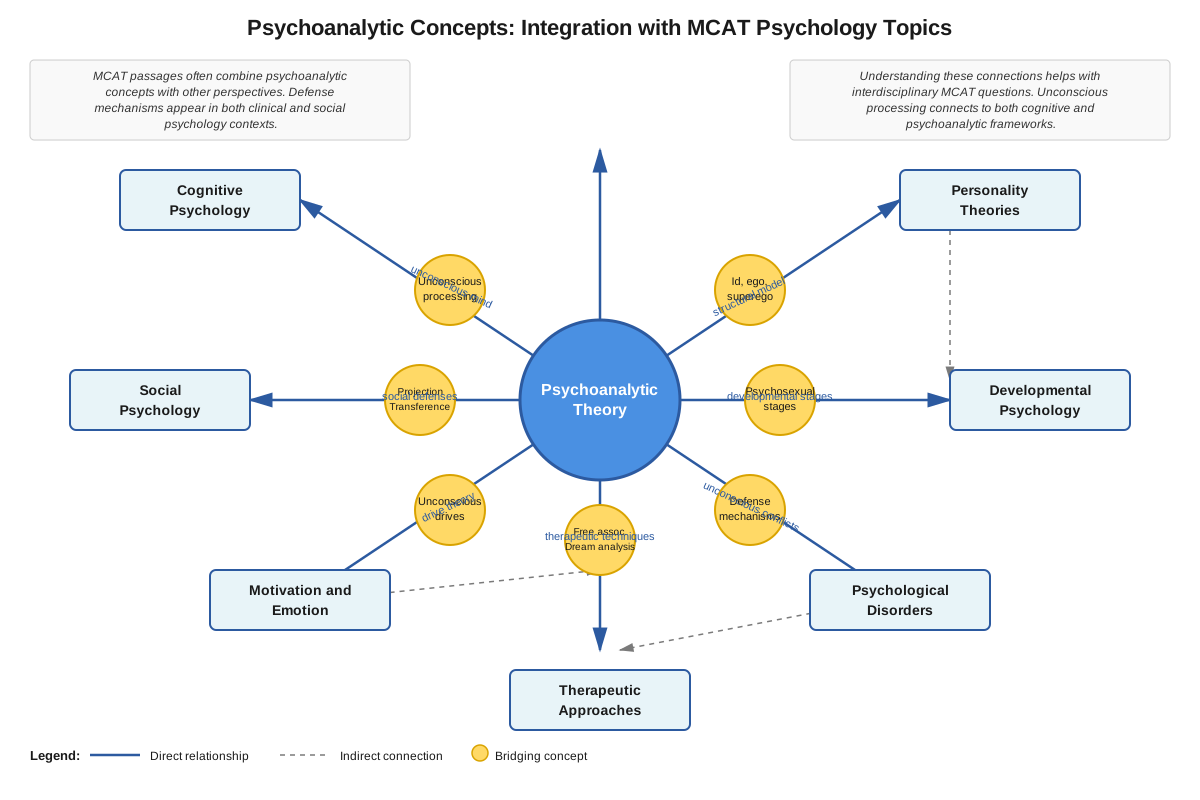
Understanding psychoanalytic theory provides crucial context for numerous related psychological concepts tested on the MCAT, including personality theories, developmental psychology, motivation and emotion, psychological disorders, and therapeutic approaches. The theory's emphasis on early childhood experiences connects directly to attachment theory and social development, while its focus on unconscious processes relates to cognitive psychology and decision-making. Additionally, psychoanalytic concepts frequently appear in MCAT passages discussing therapeutic interventions, making this topic essential for achieving competitive scores in the Psychological, Social, and Biological Foundations of Behavior section.
Learning Objectives
- [ ] Define Psychoanalytic theory using accurate Psychology terminology
- [ ] Explain why Psychoanalytic theory matters for the MCAT
- [ ] Apply Psychoanalytic theory to exam-style questions
- [ ] Identify common mistakes related to Psychoanalytic theory
- [ ] Connect Psychoanalytic theory to related Psychology concepts
- [ ] Differentiate between the id, ego, and superego and explain their interactions
- [ ] Describe all five psychosexual stages and identify age-appropriate developmental tasks
- [ ] Compare and contrast Freud's original theory with neo-Freudian modifications
- [ ] Analyze clinical vignettes to identify specific defense mechanisms in action
Prerequisites
- Basic developmental psychology concepts: Understanding general principles of human development provides context for psychoanalytic stage theory
- Fundamental personality psychology: Familiarity with the concept of personality traits and individual differences helps frame psychoanalytic contributions to personality theory
- Introduction to psychological perspectives: Knowledge of different schools of thought (behavioral, cognitive, humanistic) allows for comparison and contrast with psychoanalytic approaches
- Basic understanding of consciousness: Awareness of conscious versus unconscious mental processes forms the foundation for psychoanalytic concepts
Why This Topic Matters
Psychoanalytic theory holds significant clinical and real-world relevance despite its controversial status in contemporary psychology. Psychodynamic therapy, which evolved from psychoanalytic principles, remains one of the major therapeutic orientations practiced today, particularly for treating personality disorders, depression, and anxiety. The theory's emphasis on unconscious motivations has influenced fields beyond psychology, including literature, art, film studies, and cultural criticism. Understanding defense mechanisms helps clinicians and individuals recognize maladaptive coping strategies, while the concept of transference remains central to therapeutic relationships across multiple treatment modalities.
On the MCAT, psychoanalytic theory appears with moderate frequency, typically in 2-4 discrete questions per exam and within 1-2 passage-based question sets. Questions most commonly test knowledge of defense mechanisms (approximately 40% of psychoanalytic questions), the structural model of personality (30%), and psychosexual stages (20%), with the remaining questions addressing neo-Freudian theorists and general psychoanalytic principles. The MCAT favors application-based questions over pure recall, frequently presenting clinical vignettes where students must identify which defense mechanism a patient is exhibiting or determine which psychosexual stage corresponds to a described developmental challenge.
This topic commonly appears in MCAT passages discussing therapeutic approaches, personality assessment, developmental case studies, and research on unconscious processing. Passages may describe therapy sessions where students must identify psychoanalytic concepts in action, present research comparing psychodynamic therapy to other treatment modalities, or explore developmental trajectories that align with or contradict psychoanalytic predictions. The interdisciplinary nature of psychoanalytic theory means it can appear in questions bridging psychology with sociology (cultural influences on personality development) or biology (the relationship between drives and neurobiological systems).
Core Concepts
Fundamental Principles of Psychoanalytic Theory
Psychoanalytic theory is a comprehensive framework for understanding personality, development, and psychopathology based on the premise that unconscious mental processes exert powerful influences on behavior, thoughts, and emotions. The theory emphasizes determinism—the idea that all behavior has underlying causes, often rooted in unconscious conflicts and early childhood experiences. Central to this approach is the concept that psychological energy, termed libido, drives human behavior and must be managed and channeled throughout development.
The theory operates on several key assumptions: (1) behavior is determined by unconscious forces rather than conscious choice alone; (2) early childhood experiences, particularly those occurring before age six, fundamentally shape personality structure; (3) psychological conflicts between competing internal forces create anxiety and motivate defensive responses; and (4) symptoms of psychological distress represent symbolic expressions of unconscious conflicts. These principles distinguish psychoanalytic theory from behavioral approaches (which focus on observable behavior and environmental contingencies) and humanistic perspectives (which emphasize conscious choice and self-actualization).
The Structural Model: Id, Ego, and Superego
Freud's structural model divides personality into three interacting systems, each operating according to different principles and serving distinct functions. This tripartite model represents one of the most frequently tested psychoanalytic concepts on the MCAT.
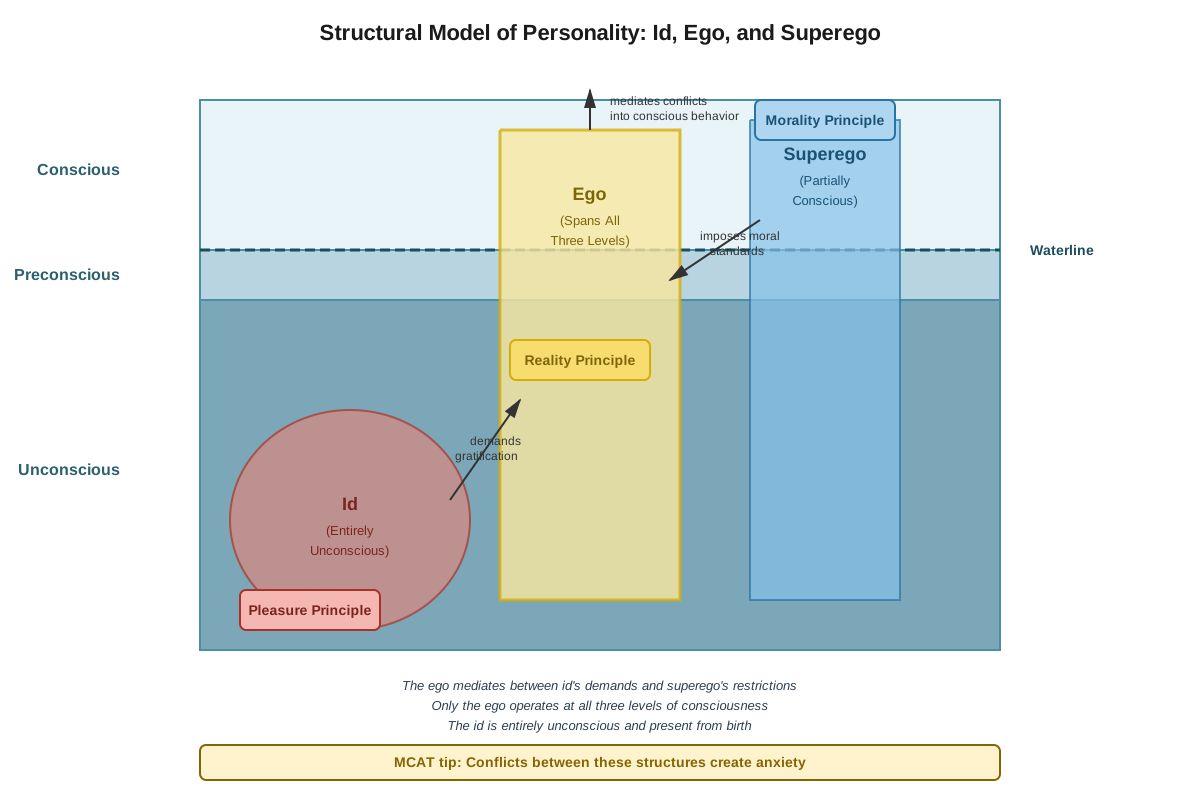
The id represents the most primitive component of personality, present from birth and operating entirely in the unconscious mind. The id functions according to the pleasure principle, seeking immediate gratification of all desires, urges, and needs without consideration of reality or morality. It houses basic biological drives including hunger, thirst, and sexual impulses (collectively termed Eros or life instincts) as well as aggressive and destructive impulses (Thanatos or death instincts). The id operates through primary process thinking, characterized by illogical, irrational, and fantasy-based mental activity. When the id's demands cannot be immediately satisfied, it creates mental images of desired objects—a process called wish fulfillment.
The ego develops during the first few years of life as the child learns to navigate reality constraints. Operating according to the reality principle, the ego mediates between the id's demands, the superego's moral restrictions, and the external world's practical limitations. The ego functions primarily at the conscious and preconscious levels (though some ego processes remain unconscious) and employs secondary process thinking—logical, rational, reality-oriented cognition. The ego's primary role involves finding realistic and socially acceptable ways to satisfy id impulses while avoiding punishment or guilt. This balancing act requires considerable psychological energy and generates anxiety when conflicts become difficult to manage.
The superego emerges around ages 3-6 through the internalization of parental and societal values during the phallic stage. This moral component of personality consists of two subsystems: the conscience (internalized punishments and prohibitions—what one should not do) and the ego ideal (internalized rewards and standards—what one should strive toward). The superego operates according to the morality principle, striving for perfection rather than pleasure or reality. An overly harsh superego generates excessive guilt and may lead to overly inhibited behavior, while an underdeveloped superego results in antisocial or impulsive behavior patterns.
| Structure | Operating Principle | Level of Consciousness | Primary Function | Thought Process |
|---|---|---|---|---|
| Id | Pleasure principle | Entirely unconscious | Immediate gratification of drives | Primary process (illogical, fantasy-based) |
| Ego | Reality principle | Conscious, preconscious, some unconscious | Mediate between id, superego, and reality | Secondary process (logical, rational) |
| Superego | Morality principle | Largely unconscious | Enforce moral standards and ideals | Evaluative (judgmental) |
Levels of Consciousness
Freud conceptualized the mind as existing at three levels of awareness, often illustrated using the iceberg metaphor. The conscious mind represents the small portion of mental activity currently in awareness—thoughts, perceptions, and feelings actively being experienced at any given moment. The preconscious (or subconscious) contains information not currently in awareness but readily accessible through focused attention, such as memories that can be easily recalled. The unconscious mind comprises the vast majority of mental content, including repressed memories, primitive desires, traumatic experiences, and unacceptable impulses that remain outside awareness but continue to influence behavior, emotions, and thoughts.
Psychosexual Stages of Development
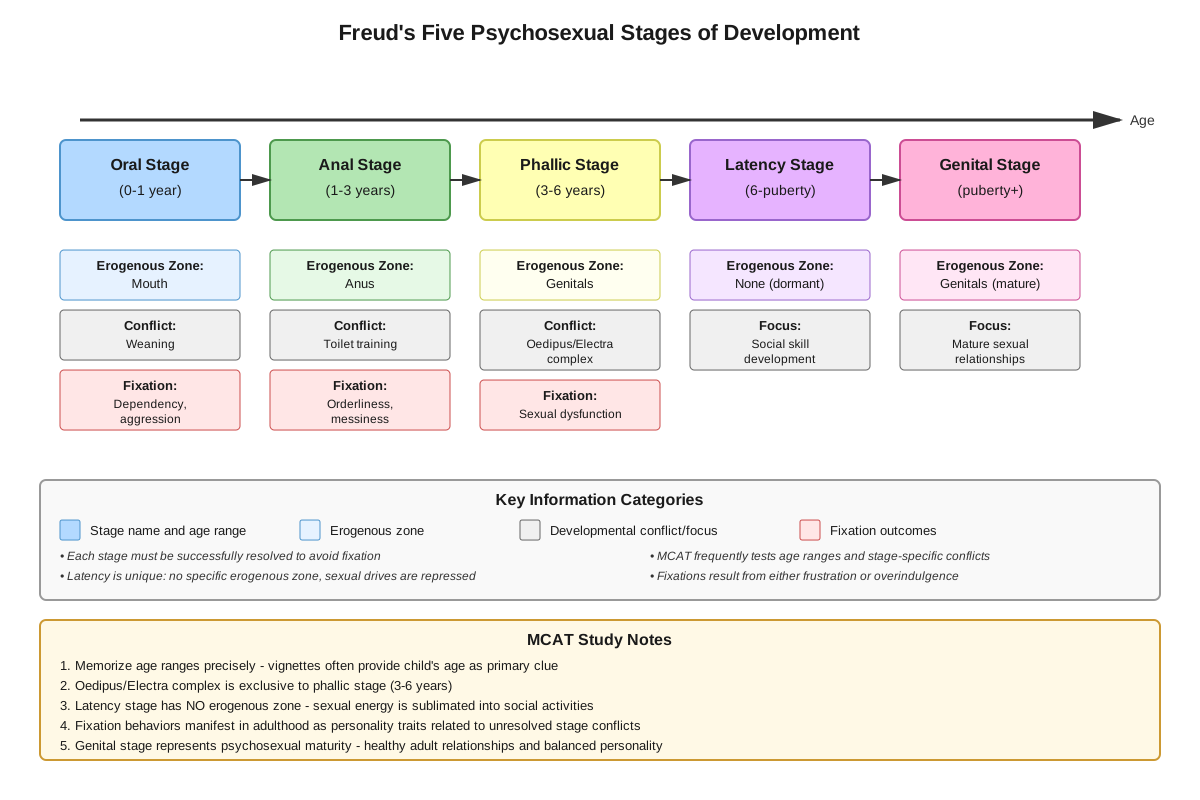
Freud proposed that personality develops through a series of five psychosexual stages, each characterized by the focus of libidinal energy on a particular erogenous zone. Successful navigation of each stage requires appropriate gratification—neither too much (leading to overindulgence) nor too little (leading to frustration). Fixation occurs when conflicts at a particular stage remain unresolved, causing some libidinal energy to remain permanently invested in that stage and resulting in characteristic personality traits and behaviors in adulthood.
Oral Stage (0-18 months): Libidinal energy centers on the mouth, with pleasure derived from sucking, biting, and oral exploration. The primary developmental task involves weaning. Oral fixation may result from either excessive gratification or frustration during this period. Oral-receptive personality traits (resulting from overindulgence) include dependency, passivity, gullibility, and excessive optimism, while oral-aggressive traits (resulting from frustration) include verbal hostility, sarcasm, argumentativeness, and pessimism. Adult behaviors potentially reflecting oral fixation include smoking, overeating, nail-biting, and excessive talking.
Anal Stage (18 months-3 years): Libidinal focus shifts to the anus, with pleasure derived from retention and elimination of feces. The primary developmental task involves toilet training, representing the child's first experience with external regulation of instinctual impulses. Anal fixation produces two contrasting personality patterns. The anal-retentive personality (resulting from overly strict or early toilet training) manifests as excessive orderliness, stubbornness, stinginess, perfectionism, and need for control. The anal-expulsive personality (resulting from overly lenient toilet training) displays messiness, disorganization, recklessness, and defiance of authority.
Phallic Stage (3-6 years): Libidinal energy focuses on the genitals, with pleasure derived from genital stimulation. This stage features the Oedipus complex (in boys) and Electra complex (in girls)—though Freud himself never used the term Electra complex, and it was coined by Carl Jung. During the Oedipus complex, boys develop unconscious sexual desires for their mothers and view their fathers as rivals, experiencing castration anxiety (fear that the father will punish these desires through castration). Resolution occurs through identification with the father, internalizing masculine characteristics and moral standards, which forms the superego. The female equivalent involves girls experiencing penis envy, desiring their fathers, and viewing mothers as rivals. Freud's theory of female psychosexual development has been extensively criticized as biased and unsupported. Phallic fixation may result in vanity, exhibitionism, sexual promiscuity, or conversely, sexual anxiety and identity confusion.
Latency Stage (6 years-puberty): Sexual impulses become dormant as libidinal energy is sublimated into social activities, intellectual pursuits, and same-sex friendships. This stage represents a period of relative calm between the intense conflicts of the phallic stage and the reawakening of sexual impulses during adolescence. Children develop social skills, academic competencies, and hobbies during this period. Freud considered this stage less critical for personality development than the earlier stages.
Genital Stage (puberty onward): Sexual impulses reemerge with the onset of puberty, now directed toward opposite-sex peers rather than parents. The primary developmental task involves establishing mature, reciprocal sexual relationships and balancing personal needs with social responsibilities. Successful navigation of previous stages allows individuals to develop the capacity for genuine intimacy, productive work, and contribution to society. Unresolved conflicts from earlier stages interfere with the ability to form healthy adult relationships.
Defense Mechanisms
Defense mechanisms are unconscious psychological strategies employed by the ego to manage anxiety arising from conflicts between the id, superego, and reality. These mechanisms distort, deny, or falsify reality to protect the individual from overwhelming anxiety. While defense mechanisms serve adaptive functions in the short term, overreliance on primitive defenses can lead to psychological dysfunction. Defense mechanisms exist on a continuum from immature/primitive to mature/adaptive.
Repression represents the most fundamental defense mechanism, involving the unconscious blocking of unacceptable thoughts, feelings, or memories from conscious awareness. Unlike suppression (conscious, intentional forgetting), repression operates entirely outside awareness. For example, a person who experienced childhood abuse may have no conscious memory of the traumatic events, though these repressed memories may influence current behavior and relationships.
Denial involves refusing to acknowledge anxiety-provoking realities, treating them as if they do not exist. This primitive defense is common in substance use disorders (an alcoholic insisting they don't have a drinking problem) and serious medical diagnoses (a patient refusing to accept a cancer diagnosis despite clear evidence).
Projection occurs when unacceptable impulses or characteristics are attributed to others rather than recognized in oneself. A person harboring hostile feelings toward a colleague might instead perceive the colleague as hostile toward them. This mechanism is particularly common in paranoid thinking patterns.
Displacement involves redirecting emotional impulses from the original source (which may be threatening) to a safer, substitute target. The classic example involves a person who is angry at their boss but cannot express this anger directly, instead coming home and yelling at family members or kicking the dog.
Reaction formation transforms unacceptable impulses into their opposite in consciousness. A person experiencing strong sexual attraction they consider inappropriate might instead express exaggerated disgust or moral outrage. This mechanism is theorized to underlie some cases of extreme homophobia in individuals struggling with their own sexual orientation.
Rationalization involves creating logical-sounding explanations for behaviors actually motivated by unconscious impulses. After failing to receive a desired promotion, a person might convince themselves they didn't really want the position anyway because it would have required too much travel. This mechanism is illustrated by Aesop's fable of the fox and the sour grapes.
Regression involves reverting to behaviors characteristic of earlier developmental stages when faced with stress or anxiety. An adult experiencing significant stress might engage in childlike behaviors such as thumb-sucking, temper tantrums, or excessive dependency on others. A previously toilet-trained child might resume bedwetting following the birth of a sibling.
Sublimation represents the most mature defense mechanism, involving channeling unacceptable impulses into socially acceptable and often productive activities. Aggressive impulses might be sublimated into competitive sports, while sexual energy might be channeled into creative artistic expression. Freud considered sublimation essential for civilization, as it allows instinctual energy to fuel cultural and scientific achievements.
Intellectualization involves focusing on abstract, intellectual aspects of a situation to avoid experiencing associated emotions. A person diagnosed with a terminal illness might obsessively research medical literature and statistics rather than processing their emotional response to the diagnosis.
Compartmentalization allows contradictory attitudes or behaviors to exist simultaneously by keeping them in separate mental "compartments." A person might maintain strict ethical standards in their professional life while engaging in unethical behavior in their personal relationships, never recognizing the contradiction.
Neo-Freudian Theorists
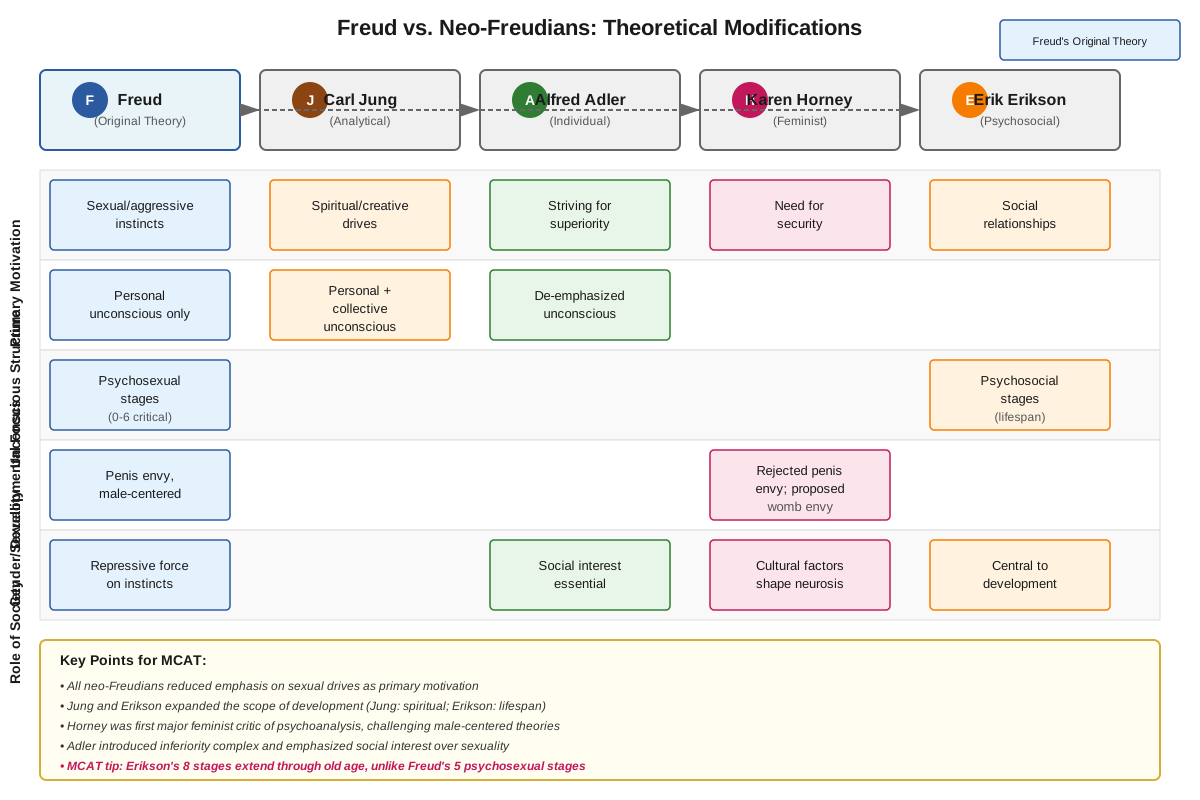
Several prominent psychologists trained in psychoanalytic theory but subsequently modified Freud's framework, de-emphasizing sexual drives and unconscious processes while emphasizing social, cultural, and interpersonal factors. These neo-Freudian or psychodynamic theorists expanded and refined psychoanalytic concepts.
Carl Jung developed analytical psychology, introducing concepts including the collective unconscious (universal, inherited reservoir of ancestral memories and symbols shared by all humans) and archetypes (universal symbolic images and themes appearing across cultures, such as the mother, hero, and shadow). Jung also proposed personality dimensions including introversion-extraversion and developed the concept of individuation (the lifelong process of integrating conscious and unconscious aspects of personality).
Alfred Adler founded individual psychology, emphasizing social interest and the striving for superiority rather than sexual drives. Adler introduced the concept of inferiority complex (feelings of inadequacy that motivate compensatory striving) and emphasized the importance of birth order in personality development. He viewed humans as primarily motivated by social connections and the desire to overcome feelings of inferiority through achievement and contribution to society.
Karen Horney challenged Freud's theories about female psychology, rejecting penis envy and proposing instead that women's psychological struggles stemmed from social and cultural restrictions rather than biological factors. She introduced the concept of basic anxiety (feelings of helplessness and isolation in a potentially hostile world) and described three neurotic trends: moving toward people (compliance), moving against people (aggression), and moving away from people (detachment).
Erik Erikson extended psychoanalytic theory across the entire lifespan, proposing eight psychosocial stages (rather than Freud's five psychosexual stages ending in adolescence). Erikson emphasized ego development and social relationships rather than id impulses, with each stage presenting a developmental crisis that must be resolved. His theory remains highly influential in developmental psychology and is frequently tested alongside psychoanalytic concepts on the MCAT.
Quick check — test yourself on Psychoanalytic theory so far.
Try Flashcards →Concept Relationships
The components of psychoanalytic theory form an interconnected system where each element influences and depends upon others. The structural model (id, ego, superego) operates across the levels of consciousness (conscious, preconscious, unconscious), with the id entirely unconscious, the superego largely unconscious, and the ego spanning all three levels. This structural organization creates internal conflicts that generate anxiety, which the ego manages through defense mechanisms. The development of these personality structures occurs through progression (or fixation) in the psychosexual stages, with early experiences fundamentally shaping the balance of power among id, ego, and superego.
The relationship flows as follows: Biological drives (id) → Developmental experiences (psychosexual stages) → Personality structure formation (ego and superego development) → Internal conflicts → Anxiety → Defense mechanisms → Observable behavior and personality traits. Fixation at any psychosexual stage disrupts this developmental progression, resulting in characteristic personality patterns and increased reliance on specific defense mechanisms.
Psychoanalytic theory connects to numerous prerequisite and related topics within psychology. The emphasis on early childhood experiences links directly to attachment theory (Bowlby, Ainsworth) and social development, while the concept of unconscious processing relates to modern cognitive psychology research on implicit memory and automatic processing. The defense mechanisms concept appears in discussions of stress and coping, psychological disorders (particularly anxiety and personality disorders), and therapeutic approaches. The neo-Freudian modifications bridge psychoanalytic theory to humanistic psychology (through emphasis on growth and self-actualization) and social-cognitive theories (through emphasis on social learning and cultural factors).
Understanding psychoanalytic theory provides essential context for personality theories tested on the MCAT, including trait theories (which emerged partly in reaction to psychoanalytic approaches), humanistic theories (which explicitly rejected psychoanalytic determinism), and social-cognitive theories (which challenged the emphasis on unconscious processes). The theory's therapeutic applications connect to the broader topic of psychological treatments, where psychodynamic therapy represents one of the major therapeutic orientations alongside cognitive-behavioral, humanistic, and biomedical approaches.
High-Yield Facts
⭐ The id operates according to the pleasure principle, seeking immediate gratification; the ego operates according to the reality principle, mediating between id, superego, and external reality; the superego operates according to the morality principle, enforcing internalized moral standards.
⭐ Defense mechanisms are unconscious strategies used by the ego to reduce anxiety; repression is the most fundamental defense mechanism, involving unconscious blocking of threatening thoughts or memories from awareness.
⭐ The five psychosexual stages in order are: oral (0-18 months), anal (18 months-3 years), phallic (3-6 years), latency (6 years-puberty), and genital (puberty onward).
⭐ Fixation occurs when developmental conflicts at a particular psychosexual stage remain unresolved, causing personality characteristics associated with that stage to persist into adulthood.
⭐ The Oedipus complex occurs during the phallic stage (ages 3-6) when boys develop unconscious sexual desires for their mothers and experience castration anxiety regarding their fathers; resolution through identification with the father forms the superego.
- The unconscious mind contains repressed memories, primitive desires, and unacceptable impulses that remain outside awareness but influence behavior, thoughts, and emotions.
- Sublimation is considered the most mature defense mechanism, involving channeling unacceptable impulses into socially acceptable and productive activities.
- Projection involves attributing one's own unacceptable thoughts or feelings to others, while displacement redirects impulses from the original threatening source to a safer substitute target.
- Reaction formation transforms unacceptable impulses into their opposite in consciousness (e.g., expressing exaggerated disgust toward something one unconsciously desires).
- Neo-Freudian theorists (Jung, Adler, Horney, Erikson) modified psychoanalytic theory by de-emphasizing sexual drives and emphasizing social, cultural, and interpersonal factors.
- Carl Jung introduced the collective unconscious (universal inherited memories) and archetypes (universal symbolic images), while Alfred Adler emphasized inferiority complex and birth order.
- Anal-retentive personality traits (orderliness, stubbornness, perfectionism) result from fixation during the anal stage due to overly strict toilet training, while anal-expulsive traits (messiness, disorganization) result from overly lenient training.
- The latency stage (ages 6-puberty) represents a period when sexual impulses are dormant and energy is sublimated into social activities and intellectual pursuits.
- Rationalization involves creating logical-sounding explanations for behaviors actually motivated by unconscious impulses (e.g., "sour grapes" phenomenon).
- Regression involves reverting to behaviors characteristic of earlier developmental stages when experiencing stress or anxiety.
Common Misconceptions
Misconception: The id, ego, and superego are physical structures in the brain that can be located through neuroimaging. → Correction: These are theoretical constructs representing different aspects of personality functioning, not anatomical structures. They describe psychological processes and motivational systems rather than brain regions.
Misconception: Defense mechanisms are always pathological and should be eliminated through therapy. → Correction: Defense mechanisms serve adaptive functions by protecting the ego from overwhelming anxiety. Mature defenses like sublimation are psychologically healthy. Problems arise only when individuals rely excessively on primitive defenses or when defenses prevent appropriate reality testing and emotional processing.
Misconception: Psychoanalytic theory claims that all behavior is sexually motivated. → Correction: While Freud emphasized sexual drives (libido), he also recognized aggressive drives (Thanatos) and acknowledged that libidinal energy could be channeled into non-sexual pursuits through sublimation. Neo-Freudian theorists further de-emphasized sexual motivation in favor of social and interpersonal factors.
Misconception: Fixation at a psychosexual stage means development stops completely at that stage. → Correction: Fixation means that some libidinal energy remains invested in that stage, resulting in characteristic personality traits, but the individual continues to progress through subsequent stages. Fixation creates vulnerabilities and tendencies rather than complete developmental arrest.
Misconception: The Oedipus complex and Electra complex are equivalent processes for boys and girls. → Correction: Freud's theory proposed fundamentally different processes for male and female development during the phallic stage. Boys experience castration anxiety and resolve the Oedipus complex through identification with the father, while Freud theorized girls experience penis envy and have a more complicated, less complete resolution. These gender-specific theories have been extensively criticized as biased and lacking empirical support.
Misconception: Repression and suppression are the same defense mechanism. → Correction: Repression is an unconscious process where threatening material is automatically blocked from awareness without conscious effort. Suppression is a conscious, intentional decision to avoid thinking about something distressing. Suppression is not considered a true defense mechanism because it operates consciously.
Misconception: All neo-Freudian theorists rejected psychoanalytic theory entirely. → Correction: Neo-Freudian theorists modified and expanded psychoanalytic theory rather than rejecting it completely. They retained concepts like unconscious processes, early childhood importance, and internal conflicts while de-emphasizing sexual drives and incorporating social and cultural factors.
Misconception: The latency stage is unimportant for development because sexual impulses are dormant. → Correction: While Freud considered the latency stage less critical than earlier stages, it remains important for developing social skills, academic competencies, peer relationships, and sublimating instinctual energy into productive activities. Modern developmental psychology recognizes middle childhood as crucial for cognitive and social development.
Worked Examples
Example 1: Identifying Defense Mechanisms in a Clinical Vignette
Vignette: A 45-year-old man recently diagnosed with terminal cancer spends hours each day researching survival statistics, treatment protocols, and molecular mechanisms of his disease. He discusses his condition in detached, clinical terms and becomes irritated when family members express emotional concern. When his wife cries, he responds by explaining the biochemical basis of his tumor rather than acknowledging her feelings or his own.
Question: Which defense mechanism is this patient primarily employing?
Step 1 - Identify the key behavioral pattern: The patient is focusing intensely on abstract, intellectual aspects of his diagnosis while avoiding emotional engagement with the situation. He responds to emotional expressions with factual information and maintains emotional distance.
Step 2 - Consider relevant defense mechanisms: Several defenses involve avoiding emotional experience:
- Denial: Refusing to acknowledge reality (not present here—he acknowledges the diagnosis)
- Repression: Unconsciously blocking threatening material from awareness (he's aware of the diagnosis)
- Intellectualization: Focusing on abstract, intellectual aspects to avoid emotions (matches the pattern)
- Rationalization: Creating logical explanations for emotionally-driven behavior (not the primary pattern)
Step 3 - Match pattern to definition: The patient's behavior exemplifies intellectualization—he's dealing with the anxiety-provoking reality of terminal illness by focusing exclusively on its intellectual and scientific aspects, thereby avoiding the emotional impact of his impending death.
Step 4 - Consider why other defenses don't fit: This is not denial because he acknowledges the diagnosis; it's not rationalization because he's not justifying behavior with false explanations; it's not sublimation because he's not channeling the anxiety into productive activity but rather using intellectual focus as a shield against emotional experience.
Answer: Intellectualization. This defense mechanism allows the patient to maintain psychological distance from overwhelming emotions by treating his terminal diagnosis as an intellectual problem to be analyzed rather than an emotional reality to be processed.
Example 2: Applying Psychosexual Stage Theory to Personality Development
Vignette: A 32-year-old woman presents to therapy with complaints of relationship difficulties. She describes herself as a perfectionist who becomes extremely anxious when her apartment is disorganized. She reports difficulty delegating tasks at work because others "never do things correctly." She describes her childhood as strictly regimented, with parents who emphasized cleanliness and had rigid expectations for behavior. She was toilet trained very early (before 18 months) and recalls her mother's strong disapproval when accidents occurred.
Question: According to psychoanalytic theory, at which psychosexual stage did this patient likely experience fixation, and what developmental experience contributed to this fixation?
Step 1 - Identify personality characteristics: The patient displays excessive orderliness, perfectionism, need for control, difficulty delegating, and anxiety about messiness or disorder.
Step 2 - Match characteristics to psychosexual stages:
- Oral stage fixation: dependency, passivity, or verbal aggression (not present)
- Anal stage fixation: orderliness, stubbornness, perfectionism, control (matches perfectly)
- Phallic stage fixation: vanity, exhibitionism, sexual concerns (not present)
Step 3 - Identify the specific anal fixation pattern: The patient's traits match anal-retentive personality characteristics, which result from overly strict or early toilet training. The anal-expulsive pattern (messiness, disorganization) results from overly lenient training and doesn't match this presentation.
Step 4 - Connect developmental history to theory: The patient's history of very early toilet training (before 18 months, which is earlier than the typical anal stage of 18 months-3 years) and parental emphasis on cleanliness and rigid behavioral expectations aligns with psychoanalytic theory's explanation for anal-retentive personality development.
Step 5 - Explain the mechanism: According to psychoanalytic theory, the premature and strict toilet training created conflict during the anal stage. The child's natural impulses for autonomy and control over bodily functions were met with excessive external control and disapproval. This unresolved conflict resulted in fixation, with libidinal energy remaining invested in anal-stage concerns, manifesting as adult personality traits centered on control, orderliness, and perfectionism.
Answer: The patient likely experienced fixation at the anal stage (18 months-3 years), specifically developing an anal-retentive personality pattern. The developmental experience contributing to this fixation was overly strict and premature toilet training, with rigid parental expectations and strong disapproval of accidents. This created unresolved conflict around control and autonomy during the anal stage, resulting in persistent personality characteristics including perfectionism, excessive orderliness, need for control, and anxiety about disorder—all representing symbolic continuation of the original toilet-training conflict.
Exam Strategy
When approaching MCAT questions on psychoanalytic theory, first identify whether the question asks for factual recall (definitions, stage sequences, theorist contributions) or application (identifying defense mechanisms in vignettes, matching personality traits to fixations). Application questions are more common and typically more challenging.
Trigger words for defense mechanisms: Watch for phrases indicating emotional avoidance or distortion of reality. "Refuses to acknowledge" suggests denial; "blames others for their own feelings" indicates projection; "focuses on facts rather than feelings" suggests intellectualization; "takes anger out on someone else" indicates displacement; "expresses the opposite of what they feel" suggests reaction formation; "creates logical explanations for emotional behavior" indicates rationalization.
Trigger words for psychosexual stages: Age ranges are crucial—memorize the approximate ages for each stage. "Toilet training" always indicates the anal stage; "attracted to opposite-sex parent" indicates the phallic stage and Oedipus/Electra complex; "oral behaviors" (smoking, overeating, nail-biting) in adults suggest oral fixation; "perfectionism and control" suggest anal-retentive fixation.
Trigger words for structural model: "Immediate gratification" or "instinctual drives" indicate the id; "mediating" or "balancing" indicates the ego; "moral standards" or "guilt" indicate the superego. Questions may present conflicts between these structures—identify which structure represents each side of the conflict.
Process of elimination strategy: When identifying defense mechanisms, eliminate options that don't involve unconscious processes (suppression is conscious, not a true defense). Eliminate defenses that don't match the emotional tone (denial involves refusing to acknowledge reality, not redirecting emotions). For psychosexual stages, eliminate stages that don't match the age range or developmental task described.
Time allocation: Discrete questions on psychoanalytic theory should take 60-75 seconds. Passage-based questions may require 90-120 seconds if you need to identify multiple concepts within a clinical vignette. Don't overthink defense mechanism questions—the correct answer usually matches the most obvious pattern once you know the definitions.
Common question formats: (1) "Which defense mechanism is illustrated?" followed by a behavioral description; (2) "This personality pattern suggests fixation at which stage?" followed by trait descriptions; (3) "According to psychoanalytic theory, this behavior is motivated by..." followed by a scenario; (4) "Which theorist would most likely explain this behavior by..." followed by different theoretical perspectives.
Red flags: Be cautious of answer choices that confuse similar-sounding concepts (repression vs. suppression, displacement vs. projection, anal-retentive vs. anal-expulsive). Watch for answers that attribute conscious motivation to unconscious processes or vice versa. Be alert for questions that require distinguishing Freud's original theory from neo-Freudian modifications.
Memory Techniques
Mnemonic for psychosexual stages (in order): "Old Age Pensioners Love Grandchildren"
- Oral (0-18 months)
- Anal (18 months-3 years)
- Phallic (3-6 years)
- Latency (6 years-puberty)
- Genital (puberty onward)
Mnemonic for structural model operating principles: "PRM" (like "perm" for hair)
- Pleasure principle = Id
- Reality principle = Ego
- Morality principle = Superego
Mnemonic for common defense mechanisms: "Proper Reasoning Requires Deliberate Reflection, Rationalization, Regression, Sublimation, Intellectualization"
- Projection: attributing own feelings to others
- Repression: unconsciously blocking threatening material
- Reaction formation: expressing opposite of true feelings
- Displacement: redirecting emotions to safer target
- Reflection: (skip this—just for the mnemonic flow)
- Rationalization: creating logical explanations for emotional behavior
- Regression: reverting to earlier developmental behaviors
- Sublimation: channeling impulses into productive activities
- Intellectualization: focusing on facts to avoid emotions
Visualization for anal-retentive vs. anal-expulsive: Picture a person "retaining" (holding tightly) everything—they're organized, controlled, and perfectionistic. Picture a person "expelling" (throwing out) everything—they're messy, disorganized, and careless. The visual of holding tight vs. throwing away helps distinguish these fixation patterns.
Visualization for id, ego, superego: Picture a devil (id) on one shoulder demanding immediate pleasure, an angel (superego) on the other shoulder insisting on moral perfection, and a referee (ego) in the middle trying to negotiate a realistic compromise. This classic imagery captures the structural model's dynamics.
Acronym for neo-Freudian theorists: "JAHE" (sounds like "jay")
- Jung: collective unconscious, archetypes
- Adler: inferiority complex, birth order
- Horney: basic anxiety, challenged female psychology theories
- Erikson: psychosocial stages across lifespan
Summary
Psychoanalytic theory represents a comprehensive framework for understanding personality development, unconscious processes, and psychological conflict, developed primarily by Sigmund Freud and subsequently modified by neo-Freudian theorists. The theory's structural model divides personality into id (pleasure-seeking, unconscious drives), ego (reality-oriented mediator), and superego (internalized moral standards), operating across conscious, preconscious, and unconscious levels of awareness. Personality develops through five psychosexual stages—oral, anal, phallic, latency, and genital—with fixation at any stage resulting in characteristic adult personality patterns. The ego employs defense mechanisms (unconscious strategies including repression, denial, projection, displacement, reaction formation, rationalization, regression, and sublimation) to manage anxiety arising from internal conflicts. Neo-Freudian theorists including Jung, Adler, Horney, and Erikson expanded the theory by de-emphasizing sexual drives and incorporating social, cultural, and interpersonal factors. For MCAT success, students must recognize defense mechanisms in clinical vignettes, match personality traits to psychosexual fixations, distinguish among id/ego/superego functions, and understand how neo-Freudian modifications differ from Freud's original formulations.
Key Takeaways
- The structural model consists of id (pleasure principle, unconscious drives), ego (reality principle, conscious mediator), and superego (morality principle, internalized standards)—these interact to produce behavior and personality
- The five psychosexual stages in order are oral, anal, phallic, latency, and genital; fixation at any stage due to excessive gratification or frustration results in characteristic adult personality traits
- Defense mechanisms are unconscious ego strategies for managing anxiety; repression is the most fundamental, while sublimation is the most mature; the MCAT frequently tests identification of defenses in clinical vignettes
- The Oedipus complex (phallic stage, ages 3-6) involves boys' unconscious desire for mothers and castration anxiety regarding fathers, resolved through identification that forms the superego
- Neo-Freudian theorists (Jung, Adler, Horney, Erikson) modified psychoanalytic theory by de-emphasizing sexual drives and emphasizing social, cultural, and interpersonal factors while retaining concepts of unconscious processes and early childhood importance
- Anal-retentive personality (orderliness, perfectionism, control) results from overly strict toilet training, while anal-expulsive personality (messiness, disorganization) results from overly lenient training
- Psychoanalytic concepts connect to numerous MCAT topics including attachment theory, stress and coping, psychological disorders, therapeutic approaches, and personality theories
Related Topics
Erikson's Psychosocial Development Theory: Extends developmental theory across the entire lifespan with eight stages, each presenting a psychosocial crisis; frequently tested alongside psychoanalytic theory and represents a neo-Freudian modification emphasizing social relationships over sexual drives.
Personality Theories: Includes trait theories (Big Five, Eysenck), humanistic theories (Rogers, Maslow), and social-cognitive theories (Bandura, Rotter); understanding psychoanalytic theory provides historical context and contrast for these alternative approaches.
Psychological Disorders: Many disorders (particularly anxiety disorders, personality disorders, and dissociative disorders) were originally conceptualized through psychoanalytic frameworks; defense mechanisms remain relevant for understanding symptom formation and coping patterns.
Therapeutic Approaches: Psychodynamic therapy evolved from psychoanalytic principles and represents one of the major therapeutic orientations; understanding psychoanalytic concepts is essential for comparing treatment modalities on the MCAT.
Attachment Theory: Bowlby's attachment theory was influenced by psychoanalytic emphasis on early childhood experiences while incorporating ethological and evolutionary perspectives; secure, anxious, and avoidant attachment patterns relate to early caregiver relationships similar to psychoanalytic developmental concepts.
Practice CTA
Now that you've mastered the core concepts of psychoanalytic theory, it's time to solidify your understanding through active practice. Challenge yourself with MCAT-style practice questions focusing on defense mechanism identification, psychosexual stage application, and structural model scenarios. Use flashcards to drill the definitions of each defense mechanism and the characteristics of each psychosexual stage until you can instantly recognize them in clinical vignettes. The difference between a good MCAT score and a great one often comes down to rapid, accurate application of theoretical concepts to novel scenarios—and psychoanalytic theory appears frequently enough that mastery here will directly boost your Psychology section score. You've built the foundation; now practice applying it until these concepts become second nature!
Sign up free to keep reading
Create a free AnvayaPrep account to finish this MCAT guide on Psychoanalytic theory — plus flashcards and practice questions.