Overview
The James-Lange theory represents one of the foundational perspectives in understanding human emotion, proposing a counterintuitive sequence: physiological arousal precedes and causes emotional experience rather than following it. Named after psychologists William James and Carl Lange who independently proposed similar ideas in the 1880s, this theory fundamentally challenged common-sense notions about emotion by suggesting that we feel afraid because we run from danger, not that we run because we feel afraid. This paradigm shift positioned bodily responses as the primary driver of emotional consciousness, making the theory essential for understanding how Psychology conceptualizes the relationship between mind and body.
For the MCAT, the James-Lange theory serves as a critical anchor point within the broader topic of Emotion Motivation and Stress. Test-makers frequently use this theory to assess whether students can distinguish between competing models of emotion, apply theoretical frameworks to experimental scenarios, and analyze the causal relationships between physiological and psychological phenomena. Understanding this theory requires integrating knowledge from multiple domains: neuroanatomy (autonomic nervous system responses), cognitive psychology (perception and interpretation), and behavioral science (observable responses to stimuli).
The theory's significance extends beyond historical interest—it connects directly to modern research on embodied cognition, biofeedback interventions, and psychophysiological disorders. On the MCAT, James-Lange theory Psychology concepts appear in passages discussing anxiety disorders, stress responses, facial feedback hypothesis, and therapeutic interventions. Mastery of this theory enables students to critically evaluate research designs, predict experimental outcomes, and understand why certain clinical interventions target physiological symptoms to modify emotional states. The theory also serves as a conceptual foundation for understanding competing models like the Cannon-Bard theory and Schachter-Singer two-factor theory, making it indispensable for comparative analysis questions.
Learning Objectives
- [ ] Define James-Lange theory using accurate Psychology terminology
- [ ] Explain why James-Lange theory matters for the MCAT
- [ ] Apply James-Lange theory to exam-style questions
- [ ] Identify common mistakes related to James-Lange theory
- [ ] Connect James-Lange theory to related Psychology concepts
- [ ] Compare and contrast James-Lange theory with at least two competing emotion theories
- [ ] Analyze experimental evidence that supports or challenges James-Lange theory predictions
- [ ] Predict how damage to specific physiological systems would affect emotional experience according to James-Lange theory
Prerequisites
- Basic neuroanatomy of the autonomic nervous system: Understanding sympathetic and parasympathetic divisions is essential because James-Lange theory centers on physiological arousal patterns that these systems control
- Definition of emotion as a psychological construct: Familiarity with emotion as involving subjective experience, physiological changes, and behavioral responses provides the framework for understanding how theories organize these components
- Stimulus-response relationships: Basic behavioral psychology concepts help students understand the proposed sequence from environmental trigger to bodily response to emotional feeling
- Concept of arousal: General understanding of physiological activation states enables comprehension of how different arousal patterns might correspond to different emotions
Why This Topic Matters
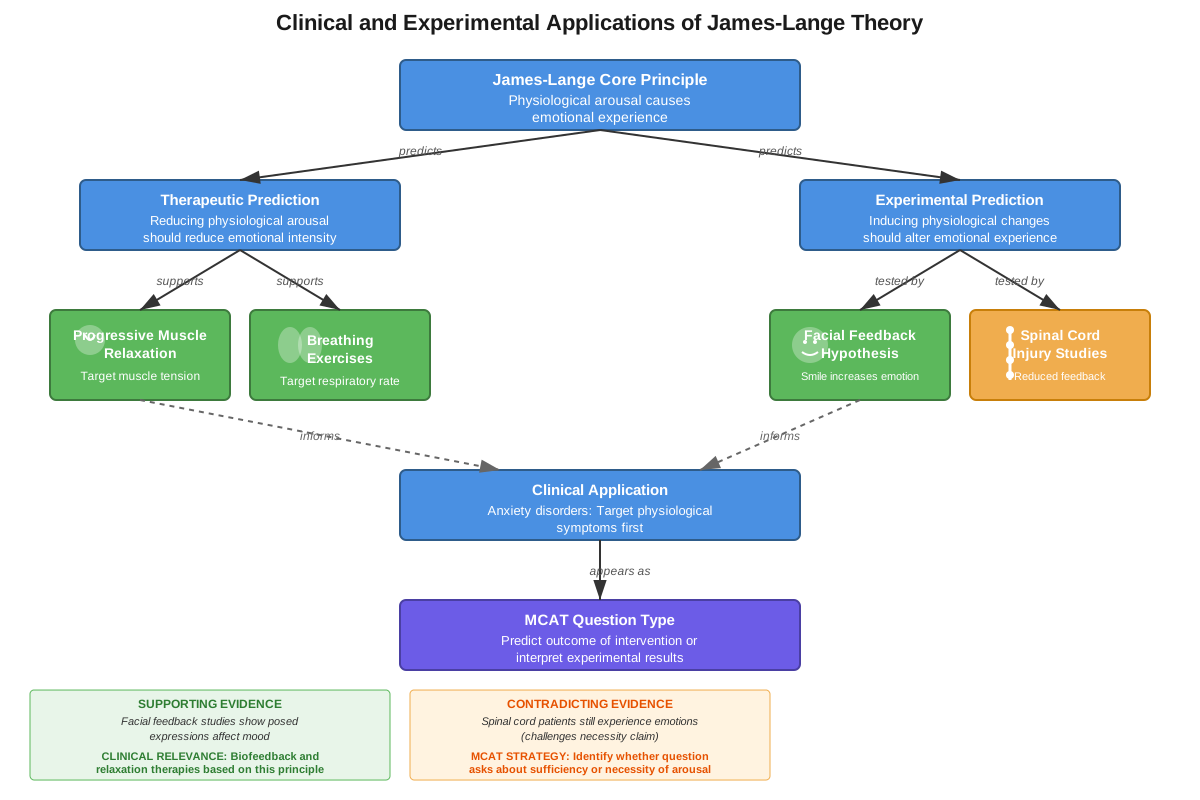
The James-Lange theory MCAT relevance extends across multiple question formats and content categories. Clinically, this theory informs therapeutic approaches that target physiological symptoms—such as progressive muscle relaxation for anxiety or breathing exercises for panic attacks—based on the premise that changing bodily states can modify emotional experiences. The theory also provides a framework for understanding psychosomatic conditions where emotional states manifest as physical symptoms, and conversely, how physical conditions can influence mood and affect.
From an exam statistics perspective, emotion theories appear in approximately 3-5% of Psychology/Sociology section questions, with James-Lange theory specifically tested in comparative analysis questions, experimental design passages, and clinical vignettes. The MCAT frequently presents research scenarios where students must identify which theory best explains observed results or predict outcomes based on theoretical assumptions. Questions may ask students to evaluate whether experimental findings support or contradict James-Lange predictions, requiring deep conceptual understanding rather than mere memorization.
Common exam presentations include: (1) passages describing patients with spinal cord injuries and altered emotional experiences, (2) experiments manipulating facial expressions or posture and measuring subsequent mood changes, (3) neuroimaging studies showing temporal sequences of brain activation during emotional episodes, and (4) clinical scenarios involving medications that affect autonomic nervous system function and their impact on emotional states. The theory also appears in questions about the facial feedback hypothesis, which extends James-Lange logic to suggest that facial expressions influence emotional experience. Understanding this theory enables students to navigate complex passages that integrate physiological psychology, clinical psychology, and research methodology—making it a high-yield topic for comprehensive MCAT preparation.
Core Concepts
The Central Proposition of James-Lange Theory
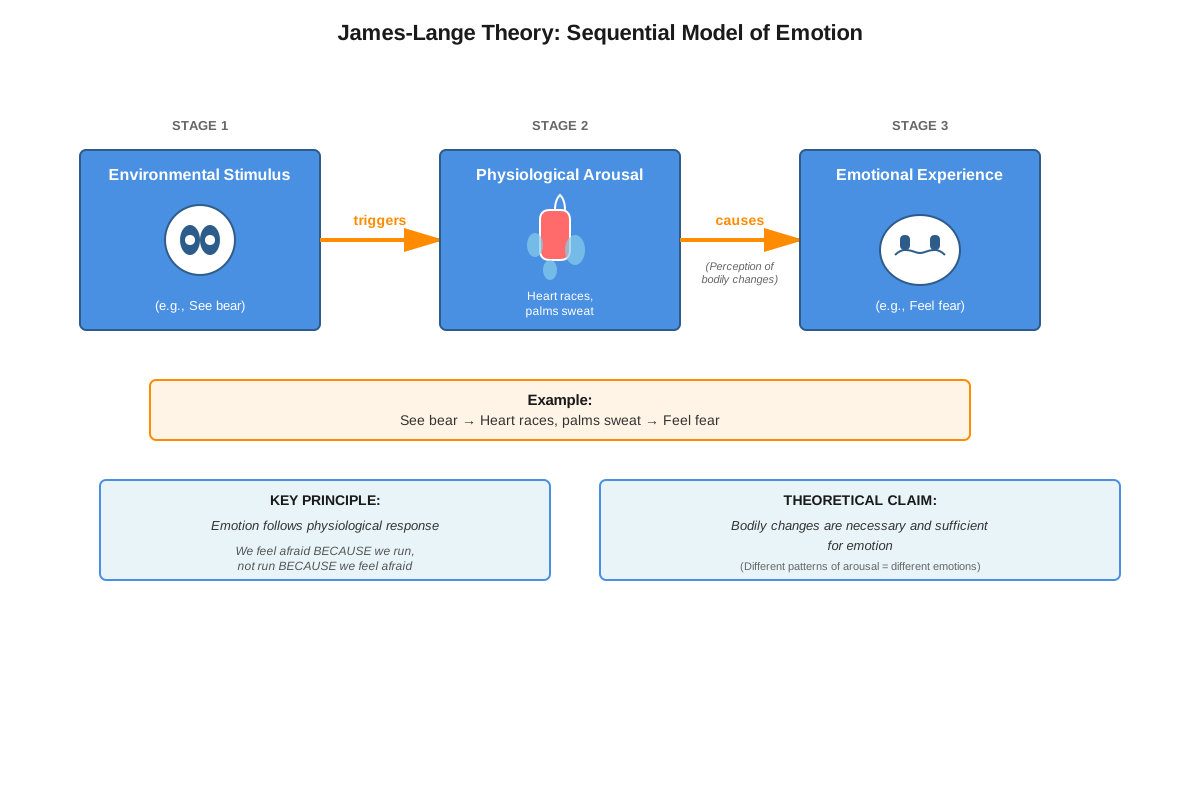
The James-Lange theory fundamentally proposes that emotion results from physiological arousal rather than causing it. The theory posits a specific causal sequence: (1) an individual perceives an emotionally relevant stimulus in the environment, (2) this perception triggers specific patterns of physiological arousal and bodily changes, (3) the brain detects and interprets these bodily changes through interoceptive feedback, and (4) the subjective experience of emotion emerges from this interpretation of physiological state. This sequence inverts the intuitive understanding that emotional feelings cause bodily responses.
William James famously illustrated this with the bear example: common sense suggests we see a bear, feel afraid, and then run. James-Lange theory proposes instead that we see a bear, our body automatically responds with increased heart rate, rapid breathing, and muscle tension, and we interpret these bodily changes as the feeling of fear. The emotion is the perception of the physiological changes, not a separate mental state that causes those changes. This makes physiological arousal both necessary and sufficient for emotional experience according to the theory.
Physiological Specificity and Emotion Differentiation
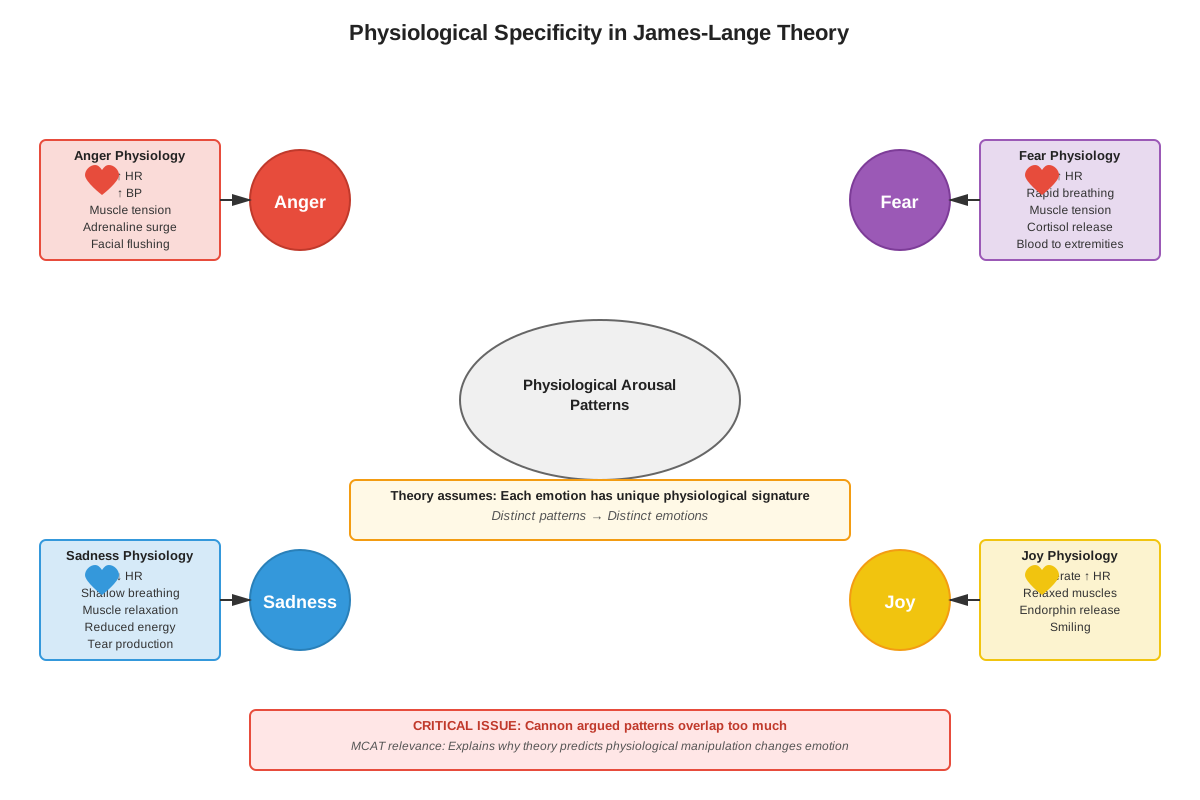
A critical implication of James-Lange theory is that different emotions must correspond to distinct patterns of physiological arousal. If emotion is the perception of bodily changes, then each discrete emotion (fear, anger, joy, sadness) requires a unique physiological signature that the brain can differentiate. The theory assumes that the autonomic nervous system produces sufficiently varied response patterns to account for the rich diversity of human emotional experience.
For example, according to James-Lange logic:
- Fear might involve increased heart rate, peripheral vasoconstriction (cold hands), and inhibited digestion
- Anger might involve increased heart rate, peripheral vasodilation (flushed face), and muscle tension
- Sadness might involve decreased heart rate, lacrimation, and reduced muscle tone
- Joy might involve moderate heart rate increase, relaxed muscles, and activated reward pathways
This specificity requirement represents both a strength and vulnerability of the theory. It provides testable predictions but also faces challenges from research showing substantial overlap in physiological patterns across different emotions.
The Role of Interoception
Interoception—the perception of internal bodily states—serves as the crucial mechanism linking physiological changes to emotional experience in James-Lange theory. The brain continuously monitors signals from visceral organs, cardiovascular system, respiratory system, and musculoskeletal system through specialized receptors and ascending neural pathways. The insular cortex and somatosensory cortex play key roles in processing these interoceptive signals and constructing representations of bodily state.
According to the theory, individual differences in interoceptive sensitivity should predict emotional intensity and clarity. People who are more attuned to their internal physiological states should experience emotions more vividly because they have richer information about their bodily changes. This prediction has received some empirical support from studies showing correlations between interoceptive accuracy (measured by heartbeat detection tasks) and emotional awareness.
Temporal Sequence and Causality
The temporal ordering proposed by James-Lange theory creates specific, testable predictions. Physiological changes must precede conscious emotional experience, and manipulating physiological state should directly alter emotional feelings. This causal chain can be represented as:
Environmental Stimulus → Automatic Physiological Response → Perception of Bodily Changes → Subjective Emotional Experience
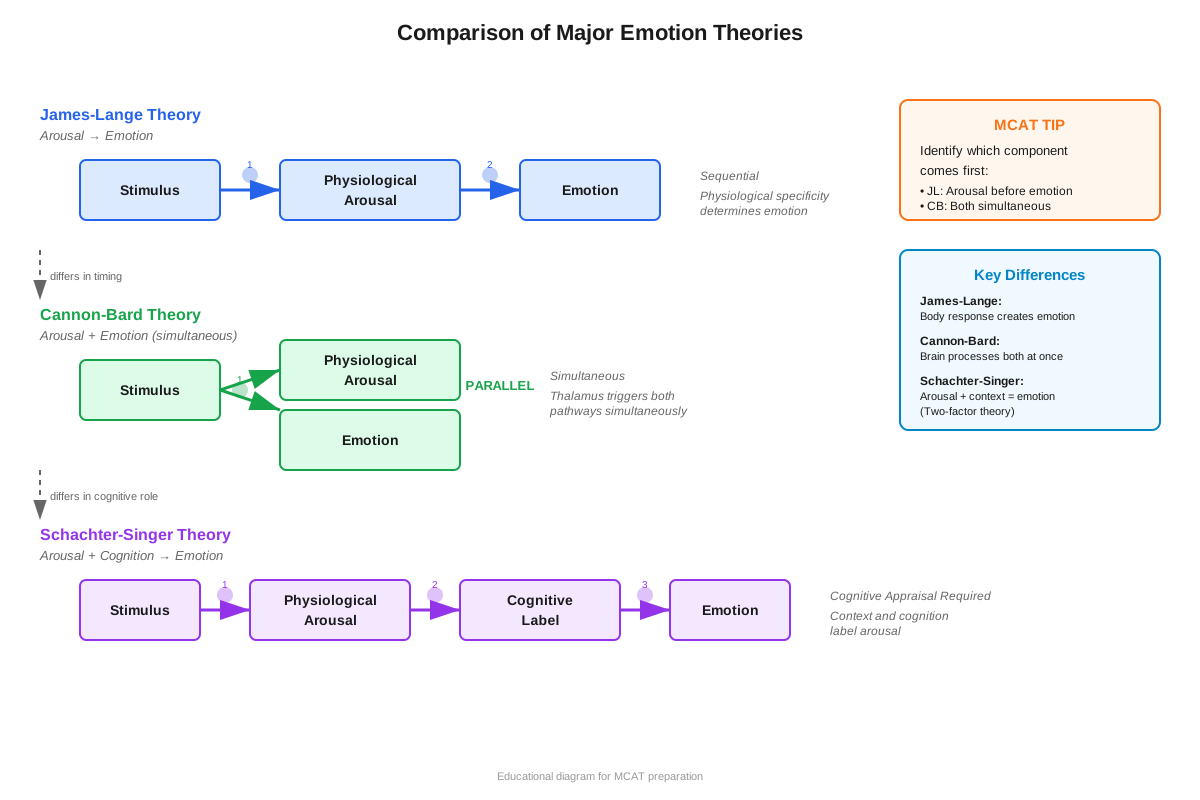
This sequence distinguishes James-Lange from other theories. The Cannon-Bard theory, for instance, proposes that physiological arousal and emotional experience occur simultaneously and independently, both triggered by thalamic activation. The Schachter-Singer two-factor theory agrees that physiological arousal precedes emotion but adds that cognitive appraisal of the situation is necessary to label the arousal as a specific emotion.
Evolutionary and Adaptive Functions
James-Lange theory implicitly connects emotions to adaptive behavioral responses. The physiological changes that constitute emotion prepare the organism for appropriate action: fear-related arousal prepares for escape, anger-related arousal prepares for confrontation, and disgust-related responses facilitate avoidance of pathogens. From this perspective, emotions are fundamentally embodied action-readiness states rather than purely mental phenomena.
This evolutionary framing helps explain why physiological responses might precede conscious awareness—automatic bodily preparation for adaptive behavior provides survival advantages in time-critical situations. The subjective feeling of emotion, in this view, serves to bring these automatic preparations into consciousness, allowing for more flexible behavioral control and learning from emotional experiences.
Concept Relationships
The James-Lange theory exists within a network of interconnected concepts in Emotion Motivation and Stress psychology. The theory directly builds upon understanding of the autonomic nervous system, particularly the sympathetic division's role in arousal and the parasympathetic division's role in recovery. The physiological changes central to James-Lange theory—heart rate, respiration, perspiration, muscle tension—are all mediated by autonomic pathways, making neuroanatomical knowledge essential for applying the theory.
The relationship map flows as follows:
Stimulus Perception → activates → Autonomic Nervous System → produces → Physiological Arousal Patterns → detected by → Interoceptive Systems → processed in → Insular and Somatosensory Cortices → generates → Subjective Emotional Experience
James-Lange theory contrasts with and informs understanding of competing emotion theories. The Cannon-Bard theory emerged partly as a critique of James-Lange, arguing that physiological responses are too slow and undifferentiated to account for rapid, distinct emotional experiences. This theoretical tension helps students understand the importance of temporal dynamics and specificity in emotion research. The Schachter-Singer two-factor theory can be viewed as a synthesis that accepts James-Lange's emphasis on physiological arousal while adding cognitive appraisal as a necessary component for emotion labeling.
The theory also connects to the facial feedback hypothesis, which extends James-Lange logic to propose that facial expressions influence emotional experience. Studies showing that holding a pen in one's teeth (forcing a smile) can enhance positive mood support this James-Lange-derived prediction. Similarly, research on embodied cognition and body posture effects on emotion (power posing studies) draws on James-Lange principles.
Understanding James-Lange theory enables comprehension of clinical interventions targeting physiological symptoms. Biofeedback therapy, progressive muscle relaxation, and breathing exercises for anxiety all operate on the implicit assumption that changing bodily states can modify emotional experience—a direct application of James-Lange logic. Conversely, understanding how medications affecting autonomic function (beta-blockers, for instance) might influence emotional experience requires James-Lange framework.
High-Yield Facts
⭐ James-Lange theory proposes that physiological arousal precedes and causes emotional experience, not the reverse
⭐ According to James-Lange theory, each distinct emotion corresponds to a unique pattern of physiological arousal
⭐ The theory predicts that manipulating physiological state (facial expressions, posture, heart rate) should directly alter emotional feelings
⭐ Interoception—the perception of internal bodily states—serves as the mechanism linking physiological changes to emotional experience
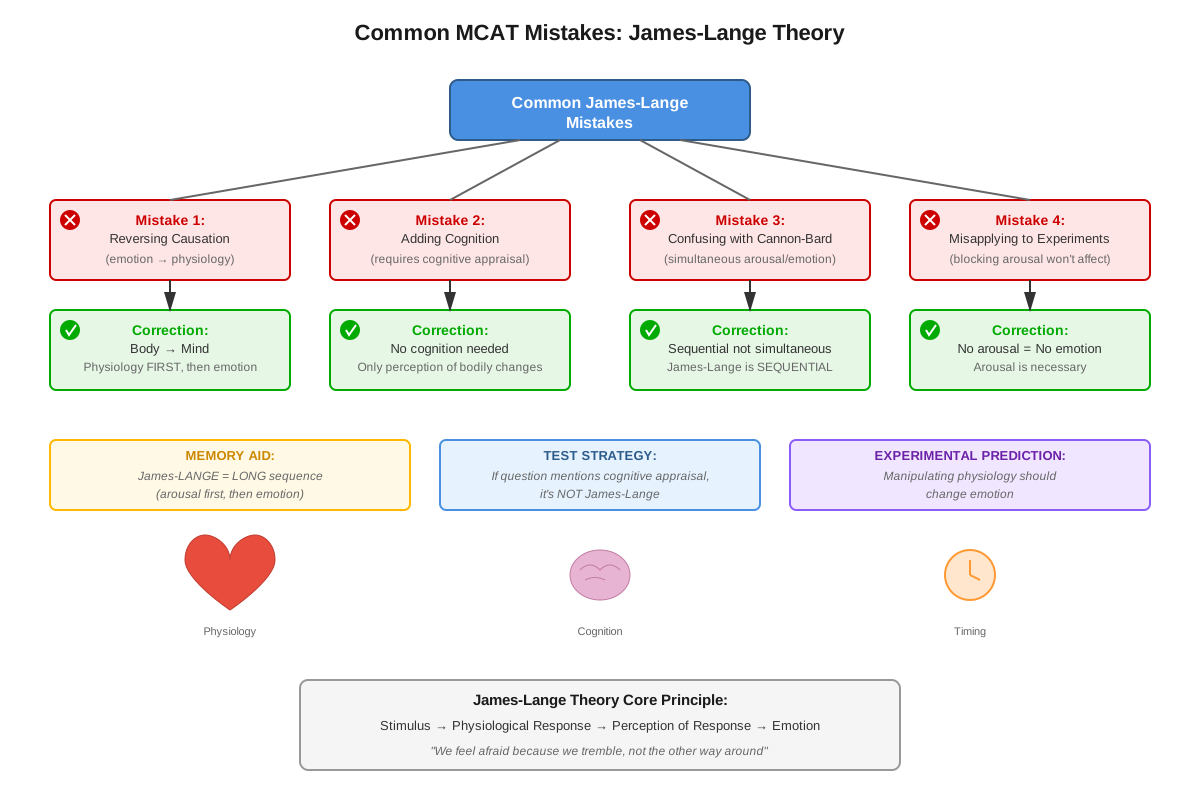
⭐ The temporal sequence is: Stimulus → Physiological Response → Perception of Response → Emotion
- William James and Carl Lange independently proposed similar theories in the 1880s, giving the theory its dual name
- The theory was challenged by Cannon-Bard theory, which argued physiological responses are too slow and undifferentiated to account for distinct emotions
- Research on spinal cord injury patients showing reduced emotional intensity provides some support for James-Lange predictions
- The facial feedback hypothesis extends James-Lange logic to suggest that facial expressions influence emotional experience
- James-Lange theory implies that individuals with better interoceptive awareness should experience more intense or clearer emotions
- The theory connects to therapeutic interventions like biofeedback and progressive muscle relaxation that target physiological symptoms to modify emotions
- Modern neuroscience has identified the insular cortex as crucial for interoceptive processing, supporting the theory's emphasis on bodily awareness
Quick check — test yourself on James Lange theory so far.
Try Flashcards →Common Misconceptions
Misconception: James-Lange theory claims that physiological arousal is the only component of emotion → Correction: The theory specifically addresses the causal relationship and temporal sequence between physiological arousal and subjective emotional experience, not whether other components (cognition, behavior) are involved in the broader emotional episode
Misconception: According to James-Lange theory, all emotions feel the same because physiological arousal is similar across emotions → Correction: The theory actually requires that different emotions correspond to distinct, differentiable patterns of physiological arousal; the criticism that arousal patterns are too similar comes from opponents of the theory (like Cannon), not from the theory itself
Misconception: James-Lange theory suggests people consciously analyze their heart rate and breathing to determine what emotion they're feeling → Correction: The perception of bodily changes is typically automatic and unconscious; the brain integrates interoceptive signals without deliberate analysis, and the emotional feeling emerges from this integration
Misconception: The theory applies only to intense emotions like fear and anger → Correction: James-Lange theory is proposed as a general model for all emotional experiences, from subtle mood shifts to intense emotional episodes, though it's most easily illustrated with strong emotions that have obvious physiological correlates
Misconception: James-Lange theory has been completely disproven and is only of historical interest → Correction: While the theory has limitations and has been refined, modern research on interoception, embodied cognition, and facial feedback provides substantial support for the core principle that bodily states influence emotional experience; the theory remains relevant for understanding emotion-body relationships
Misconception: According to James-Lange theory, people with identical physiological arousal must experience identical emotions → Correction: The theory emphasizes patterns of arousal and their perception; individual differences in interoceptive sensitivity, prior experiences, and baseline physiological states mean that similar arousal patterns might be perceived differently by different individuals
Worked Examples
Example 1: Experimental Design Analysis
Scenario: Researchers conduct an experiment where participants are asked to hold a pen either between their teeth (forcing facial muscles into a smile-like configuration) or between their lips (preventing smiling). Participants then rate the funniness of cartoons. Results show that participants holding the pen in their teeth rate cartoons as significantly funnier than those holding the pen in their lips.
Question: Which emotion theory best explains these results, and what is the underlying mechanism?
Step 1 - Identify the manipulation: The experiment manipulates facial muscle configuration without participants' awareness that they're being induced to smile or not smile.
Step 2 - Identify the measured outcome: The dependent variable is subjective emotional experience (perceived humor/amusement).
Step 3 - Determine the causal sequence: Facial expression (physiological state) → altered emotional experience (finding cartoons funnier). The bodily state precedes and influences the emotional feeling.
Step 4 - Match to theory: This sequence matches James-Lange theory predictions. According to James-Lange, physiological changes (including facial expressions) precede and cause emotional experience. By manipulating facial muscles to mimic a smile, researchers induced the physiological state associated with positive emotion, which then influenced participants' emotional experience of the cartoons.
Step 5 - Explain the mechanism: The facial feedback hypothesis, derived from James-Lange theory, proposes that facial expressions send interoceptive signals to the brain. When facial muscles are configured in a smile pattern, the brain receives feedback consistent with positive emotion, which enhances the experience of amusement. This demonstrates that bodily states can directly influence emotional feelings, supporting the James-Lange causal sequence.
Connection to learning objectives: This example demonstrates application of James-Lange theory to experimental scenarios and illustrates how the theory generates testable predictions about the relationship between physiological manipulation and emotional experience.
Example 2: Clinical Vignette Analysis
Scenario: A 35-year-old patient with a complete spinal cord injury at the cervical level reports to their psychologist that they still experience emotions but that these feelings seem "less intense" and "more cognitive than visceral" compared to before their injury. The patient describes feeling angry about frustrating situations but notes the anger "stays in my head" rather than feeling it throughout their body. The patient's autonomic nervous system function below the injury level is significantly impaired.
Question: How does James-Lange theory explain this patient's altered emotional experience?
Step 1 - Identify relevant physiological changes: Spinal cord injury has disrupted ascending interoceptive pathways that carry information about bodily states (heart rate, muscle tension, gut feelings) from below the injury level to the brain.
Step 2 - Apply James-Lange predictions: According to James-Lange theory, emotional experience depends on perceiving physiological arousal. If interoceptive feedback is reduced due to spinal cord injury, the theory predicts that emotional intensity should decrease because the brain receives less information about bodily changes.
Step 3 - Analyze the patient's description: The patient's report of "less intense" emotions and feelings that are "more cognitive than visceral" aligns precisely with James-Lange predictions. The patient can still cognitively appraise situations as anger-inducing, but without full interoceptive feedback about bodily arousal, the subjective emotional experience is diminished.
Step 4 - Consider alternative explanations: Cannon-Bard theory would predict that emotions should remain intact despite reduced peripheral feedback because it proposes that emotional experience and physiological arousal are independent, both triggered by central brain structures. The patient's reduced emotional intensity therefore supports James-Lange over Cannon-Bard.
Step 5 - Clinical implications: Understanding this through James-Lange framework suggests that interventions focusing on enhancing remaining interoceptive awareness or using cognitive strategies to compensate for reduced bodily feedback might help the patient maintain emotional connection to experiences.
Connection to learning objectives: This example demonstrates application of James-Lange theory to clinical scenarios, identification of supporting evidence for the theory, and comparison with competing theoretical frameworks.
Exam Strategy
When approaching James-Lange theory MCAT questions, first identify whether the question asks about the theory itself or requires applying the theory to evaluate evidence or scenarios. Questions directly about the theory typically test understanding of the causal sequence and temporal ordering. Look for trigger phrases like "according to James-Lange theory" or "which theory proposes that physiological arousal precedes emotion."
Key trigger words and phrases to watch for:
- "Physiological arousal causes emotion"
- "Perception of bodily changes"
- "Interoceptive feedback"
- "Temporal sequence of emotional response"
- "Facial feedback hypothesis"
- "Embodied emotion"
- "Autonomic nervous system and emotion"
Process-of-elimination strategies:
- Eliminate options that reverse causality: If an answer choice suggests that emotional feelings cause physiological arousal, it contradicts James-Lange theory and can be eliminated when the question asks for James-Lange predictions.
- Eliminate options requiring cognitive appraisal: If an answer choice emphasizes that people must cognitively interpret or label their arousal in context, this describes Schachter-Singer two-factor theory, not James-Lange. James-Lange proposes that specific arousal patterns directly produce specific emotions without requiring additional cognitive interpretation.
- Eliminate options proposing simultaneous occurrence: If an answer suggests that physiological arousal and emotional experience happen at the same time and independently, this describes Cannon-Bard theory, not James-Lange.
- Look for specificity requirements: Correct James-Lange applications should acknowledge that the theory requires different emotions to have distinct physiological signatures. Options that ignore this requirement may be incorrect.
Time allocation advice: James-Lange questions are typically straightforward conceptual questions that shouldn't require more than 60-90 seconds once you've identified what's being asked. If a passage presents experimental data, spend time understanding the manipulation and measured outcomes before attempting to match results to theory. For comparative questions asking which theory best explains results, systematically evaluate each theory's predictions rather than jumping to the first plausible answer.
Common question formats:
- Direct definition: "Which of the following best describes James-Lange theory?"
- Experimental prediction: "According to James-Lange theory, what result would be expected if..."
- Evidence evaluation: "Which finding provides the strongest support for James-Lange theory?"
- Theory comparison: "How does James-Lange theory differ from Cannon-Bard theory?"
- Clinical application: "A patient with [condition affecting physiology] would be expected to experience altered emotions according to which theory?"
Memory Techniques
Mnemonic for the causal sequence: "SPPE" - Stimulus → Physiological response → Perception of response → Emotion
Mnemonic for distinguishing theories: "JL-Body First, CB-Same Time, SS-Two Steps"
- James-Lange: Body changes first, then emotion
- Cannon-Bard: Body and emotion at the same time
- Schachter-Singer: Two steps needed (arousal + cognitive label)
Visualization strategy: Picture William James running from a bear while checking his pulse. He notices his racing heart and thinks, "My heart is pounding, therefore I must be afraid!" This image captures the counterintuitive sequence where bodily awareness precedes emotional feeling.
Acronym for key components: "PAPI" - Physiological arousal → Awareness of arousal → Perception/interpretation → Identification of emotion
Association technique: Link "James-Lange" with "Body-Language"—both start with similar sounds, and the theory emphasizes that the body's "language" (physiological signals) communicates emotion to the brain.
Contrast memory aid: Remember that James-Lange is the "backwards" theory—it reverses common sense by putting body before mind. When you see "James-Lange," think "backwards from intuition."
Summary
The James-Lange theory fundamentally proposes that emotional experience results from perceiving physiological arousal rather than causing it, establishing a specific causal sequence where environmental stimuli trigger automatic bodily responses, and the brain's interpretation of these physiological changes constitutes the subjective feeling of emotion. This theory requires that distinct emotions correspond to differentiable patterns of physiological arousal and that interoceptive awareness—the perception of internal bodily states—serves as the crucial mechanism linking physical changes to emotional consciousness. For the MCAT, students must understand how James-Lange theory differs from competing models (Cannon-Bard's simultaneous activation and Schachter-Singer's two-factor approach), apply the theory to predict experimental outcomes and clinical presentations, and recognize evidence that supports or challenges its core propositions. The theory's emphasis on embodiment connects to modern research on facial feedback, body posture effects on emotion, and therapeutic interventions targeting physiological symptoms, making it essential for understanding the mind-body relationship in emotion. Mastery requires recognizing the temporal sequence, understanding the specificity requirement for different emotions, and applying the theory's logic to novel scenarios involving physiological manipulation or impairment.
Key Takeaways
- James-Lange theory proposes that physiological arousal precedes and causes emotional experience: the sequence is stimulus → bodily response → perception of response → emotion, not stimulus → emotion → bodily response
- The theory requires distinct physiological patterns for different emotions: each emotion must have a unique arousal signature that the brain can differentiate through interoceptive feedback
- Interoception is the key mechanism: the brain's perception of internal bodily states through specialized receptors and neural pathways transforms physiological changes into emotional feelings
- The theory generates testable predictions: manipulating physiological state should alter emotional experience, and impairing interoceptive feedback should reduce emotional intensity
- James-Lange differs from Cannon-Bard (simultaneous) and Schachter-Singer (requires cognitive appraisal): understanding these distinctions is essential for comparative MCAT questions
- Clinical and experimental applications are high-yield: spinal cord injury studies, facial feedback experiments, and embodied cognition research all test James-Lange principles
- The theory connects to therapeutic interventions: biofeedback, relaxation techniques, and breathing exercises operate on James-Lange logic that changing bodily states modifies emotional experience
Related Topics
Cannon-Bard Theory of Emotion: This competing theory proposes that physiological arousal and emotional experience occur simultaneously and independently, both triggered by thalamic activation. Mastering James-Lange theory provides the foundation for understanding how Cannon-Bard emerged as a critique and alternative model.
Schachter-Singer Two-Factor Theory: This theory synthesizes elements of James-Lange (physiological arousal is necessary) with cognitive appraisal (situational interpretation is also necessary). Understanding James-Lange enables comprehension of how two-factor theory builds upon and modifies earlier models.
Facial Feedback Hypothesis: This extension of James-Lange logic proposes that facial expressions influence emotional experience. Mastery of James-Lange theory is prerequisite for understanding the theoretical basis and empirical research on facial feedback.
Autonomic Nervous System Structure and Function: Deep understanding of sympathetic and parasympathetic divisions, their effects on various organ systems, and patterns of activation is essential for applying James-Lange theory to specific physiological scenarios.
Interoception and Body Awareness: Advanced study of how the brain processes internal bodily signals, the role of the insular cortex, and individual differences in interoceptive sensitivity extends James-Lange concepts into modern neuroscience.
Embodied Cognition: This broader framework proposing that cognitive processes are grounded in bodily states builds on James-Lange principles and extends them beyond emotion to other mental phenomena.
Practice CTA
Now that you've mastered the core concepts of James-Lange theory, it's time to solidify your understanding through active practice. Challenge yourself with the practice questions and flashcards designed specifically for this topic—they'll help you identify any remaining gaps in your knowledge and build the rapid recall essential for MCAT success. Remember, understanding the theory conceptually is just the first step; applying it confidently to novel scenarios under timed conditions is what separates good scores from great ones. You've built a strong foundation—now put it to work and watch your confidence soar!
Sign up free to keep reading
Create a free AnvayaPrep account to finish this MCAT guide on James Lange theory — plus flashcards and practice questions.