Overview
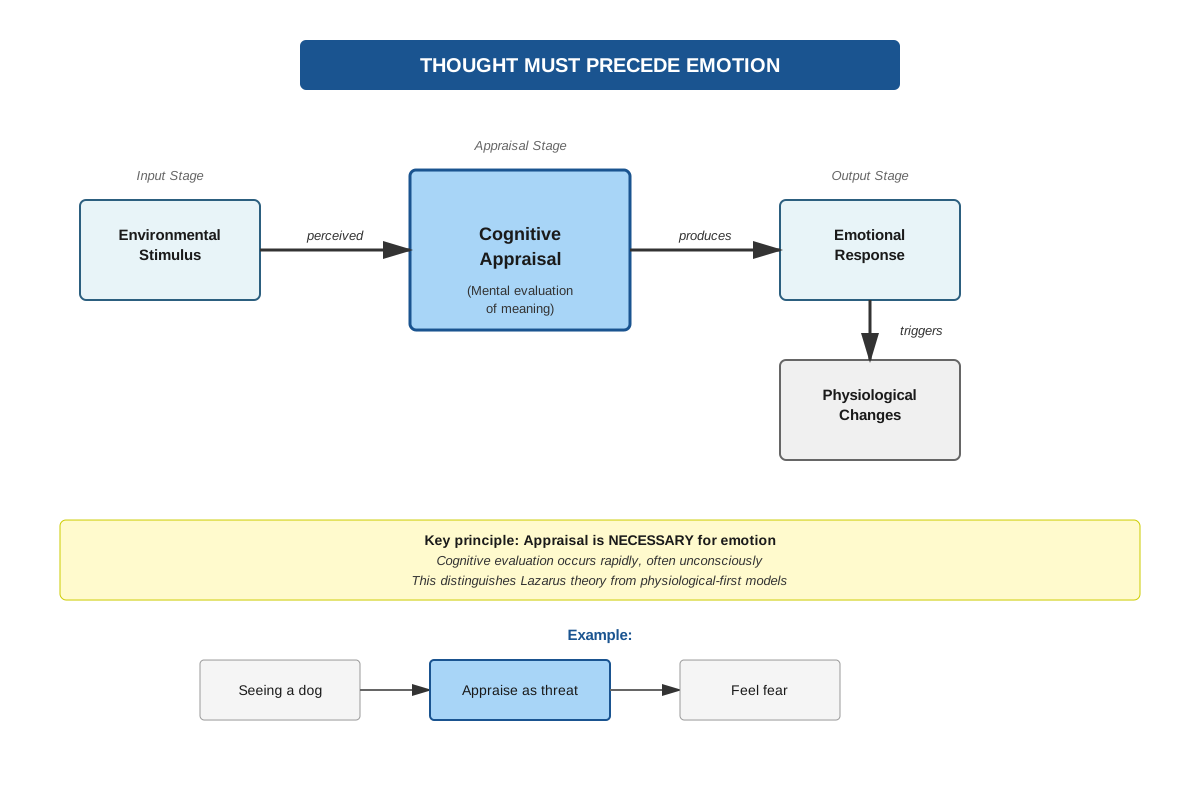
Lazarus theory, also known as the cognitive-appraisal theory of emotion, represents a pivotal framework in understanding how humans experience emotions. Developed by psychologist Richard Lazarus in the 1960s and refined throughout his career, this theory posits that cognitive appraisal—the mental evaluation of a stimulus or situation—is not just important but absolutely necessary for emotional experience. Unlike earlier theories that suggested emotions could arise from physiological responses alone, Lazarus theory argues that thought must precede emotion. When encountering any stimulus, individuals first appraise its personal relevance and meaning before experiencing an emotional response. This appraisal process occurs rapidly, often outside conscious awareness, but remains fundamentally cognitive in nature.
For the MCAT, understanding Lazarus theory Psychology is essential because it bridges multiple domains tested on the exam: cognition, emotion, stress response, and individual differences in psychological reactions. The theory appears frequently in passages dealing with Emotion Motivation and Stress, particularly in contexts examining why different people respond differently to identical situations. The MCAT often presents scenarios where test-takers must identify the cognitive appraisal process or distinguish Lazarus's approach from competing emotion theories like James-Lange, Cannon-Bard, or Schachter-Singer. Questions may ask students to predict emotional responses based on how individuals interpret events, or to explain why cognitive reframing can alter emotional experiences.
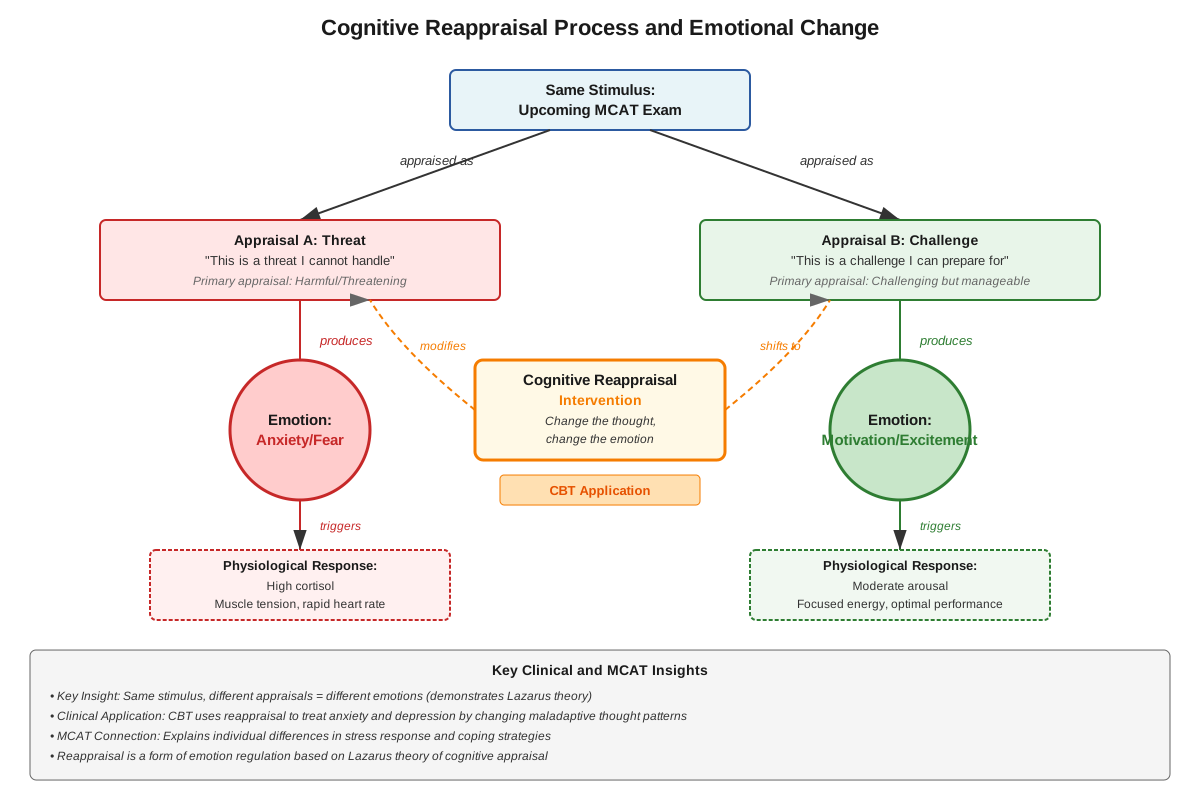
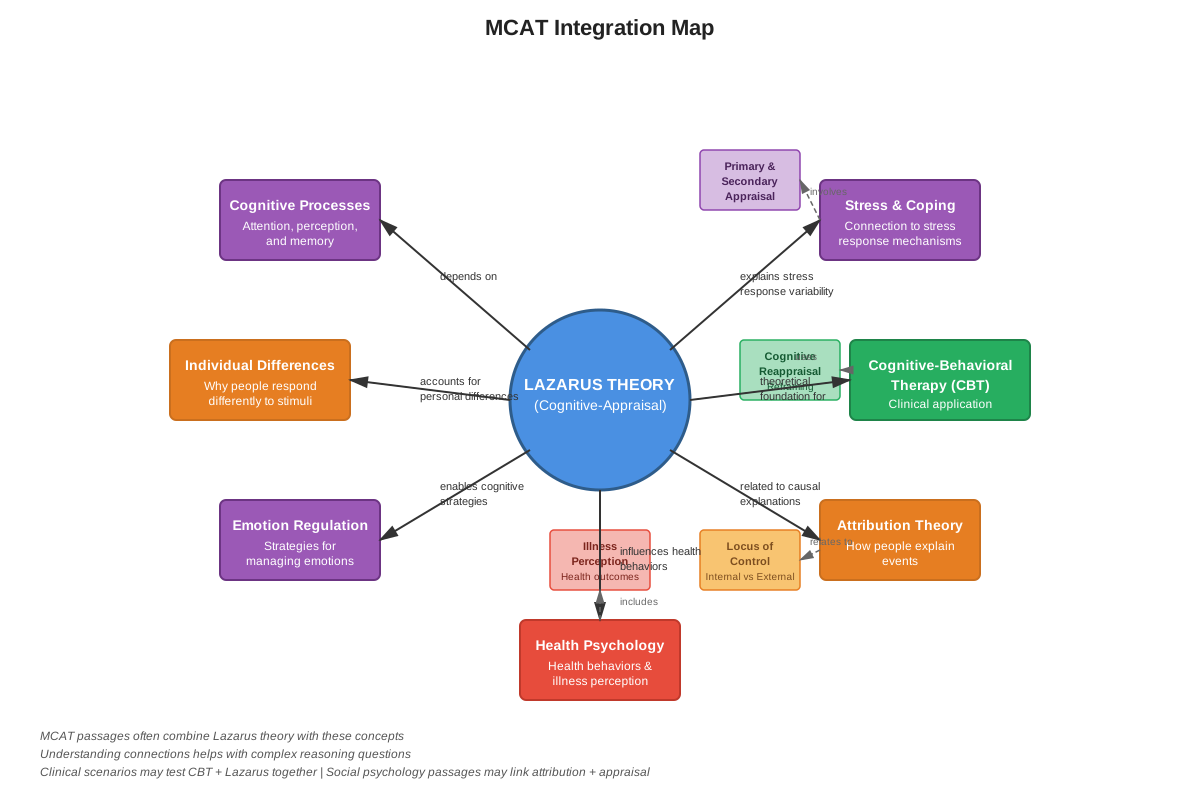
The big-picture significance of Lazarus theory MCAT content extends beyond emotion theory alone. It connects to stress and coping mechanisms, psychotherapy approaches (particularly cognitive-behavioral therapy), health psychology, and social psychology concepts like attribution theory. Lazarus's framework explains why the same stressor (such as an upcoming exam) produces anxiety in one student but excitement in another—the difference lies in cognitive appraisal. This theory also underpins modern understanding of stress management, resilience, and psychological interventions, making it clinically relevant and frequently tested in both discrete questions and passage-based items on the Psychology section of the MCAT.
Learning Objectives
- [ ] Define Lazarus theory using accurate Psychology terminology
- [ ] Explain why Lazarus theory matters for the MCAT
- [ ] Apply Lazarus theory to exam-style questions
- [ ] Identify common mistakes related to Lazarus theory
- [ ] Connect Lazarus theory to related Psychology concepts
- [ ] Distinguish between primary and secondary appraisal processes
- [ ] Compare and contrast Lazarus theory with other major emotion theories
- [ ] Analyze how cognitive reappraisal can modify emotional responses in clinical scenarios
Prerequisites
- Basic emotion concepts: Understanding what emotions are and their components (physiological, cognitive, behavioral) provides the foundation for comparing different emotion theories
- Autonomic nervous system function: Knowledge of sympathetic and parasympathetic responses helps distinguish physiological components from cognitive appraisal
- Stress response basics: Familiarity with the general adaptation syndrome and stress terminology enables understanding of how appraisal relates to stress
- Cognitive processes: Basic understanding of perception, attention, and memory supports comprehension of how appraisal operates as a cognitive function
Why This Topic Matters
Lazarus theory holds substantial clinical and real-world significance in modern psychology and medicine. The theory forms the theoretical foundation for cognitive-behavioral therapy (CBT), one of the most empirically supported psychotherapy approaches. When therapists help patients reframe negative thought patterns, they're applying Lazarus's principle that changing cognitive appraisal changes emotional experience. In health psychology, the theory explains why patient education and cognitive reframing improve outcomes for chronic illness—by changing how patients appraise their condition, healthcare providers can reduce anxiety and depression while improving adherence to treatment.
On the MCAT, Lazarus theory Psychology appears with moderate frequency but high importance. Approximately 3-5% of Psychology/Sociology section questions directly or indirectly test emotion theories, with Lazarus theory being among the top three most commonly featured. The theory appears in multiple question formats: discrete questions asking for theory identification or comparison, passage-based questions analyzing experimental designs testing appraisal processes, and clinical vignettes requiring application of appraisal concepts to predict or explain emotional responses. The MCAT particularly favors questions that require distinguishing Lazarus theory from other emotion theories or applying the concept of reappraisal to stress management scenarios.
Common exam passage contexts include: research studies comparing emotional responses across different populations, clinical scenarios involving stress management interventions, social psychology experiments examining how framing affects emotional reactions, and neuroscience passages discussing the relationship between cortical processing and emotional experience. The MCAT often presents situations where understanding the primacy of cognition in Lazarus's model is key to selecting the correct answer. Additionally, questions may integrate Lazarus theory with other testable concepts like coping mechanisms, attribution theory, or the biopsychosocial model, requiring students to synthesize multiple frameworks.
Core Concepts
The Fundamental Premise of Lazarus Theory
Lazarus theory fundamentally asserts that cognitive appraisal is both necessary and sufficient for emotional experience. This represents a stark departure from earlier emotion theories. According to Lazarus, when an individual encounters any stimulus—whether a growling dog, a job promotion, or a medical diagnosis—the brain immediately evaluates that stimulus for personal significance before any emotional response occurs. This evaluation happens so rapidly it often feels instantaneous, but it remains a cognitive process involving interpretation, memory retrieval, and judgment.
The theory explicitly rejects the possibility of "pure" emotional responses devoid of cognitive input. Even seemingly automatic emotional reactions, like fear upon seeing a snake, involve split-second appraisals of threat. This cognitive-first position distinguishes Lazarus from theorists like Robert Zajonc, who argued that some emotional responses could occur without cognitive processing. For the MCAT, understanding this "cognition-first" stance is crucial for distinguishing Lazarus theory from alternatives.
Primary Appraisal
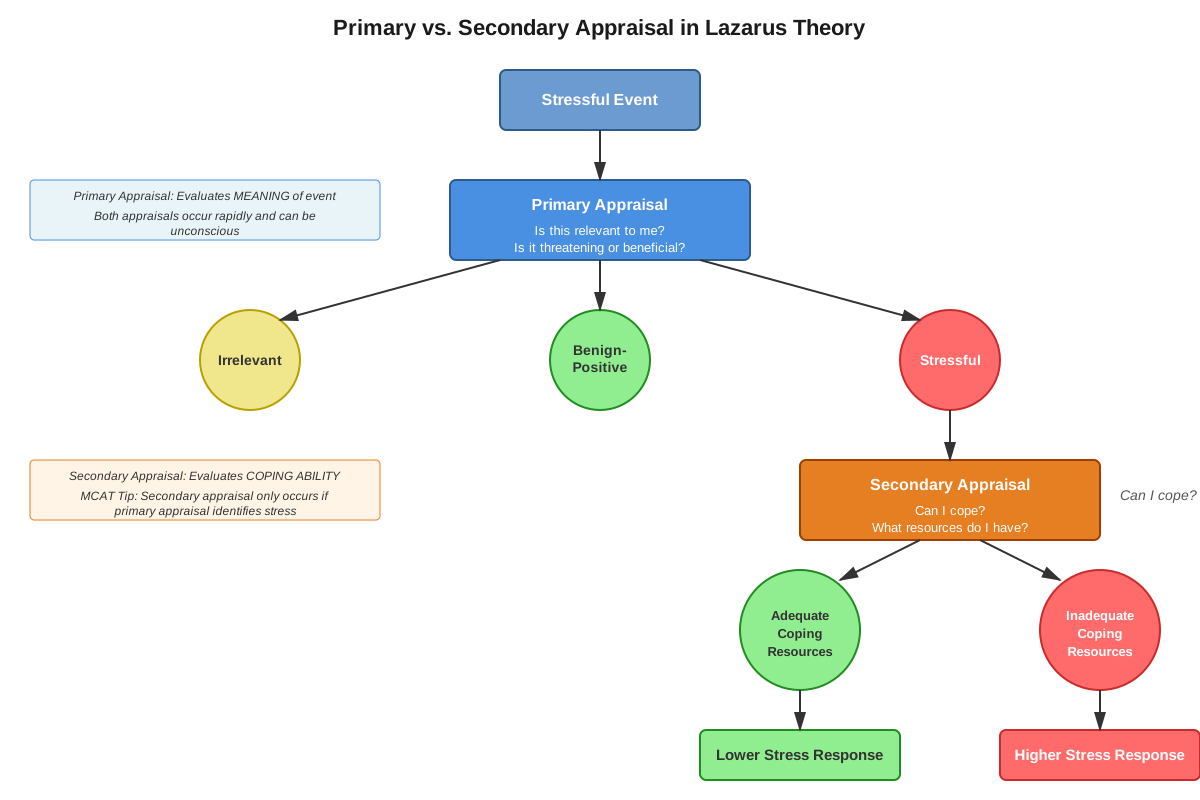
Primary appraisal constitutes the first stage of Lazarus's cognitive evaluation process. During primary appraisal, individuals assess whether a stimulus is relevant to their well-being and, if so, whether it is positive (beneficial), negative (threatening or harmful), or neutral (irrelevant). This appraisal answers three fundamental questions:
- Is this situation relevant to me?
- Is it congruent or incongruent with my goals?
- What type of ego-involvement does it have (self-esteem, moral values, ego-identity, etc.)?
Primary appraisal categorizes stimuli into several types:
- Irrelevant: The stimulus has no implications for well-being (e.g., hearing about an event in a distant country that doesn't affect you)
- Benign-positive: The stimulus is appraised as positive, leading to pleasant emotions (e.g., receiving unexpected praise)
- Stressful: The stimulus poses a challenge, threat, or harm/loss
Within the stressful category, Lazarus identified three subcategories:
- Harm/loss: Damage has already occurred (e.g., death of a loved one, injury)
- Threat: Potential for future harm exists (e.g., upcoming difficult exam, financial instability)
- Challenge: The situation presents an opportunity for growth or gain, though it requires effort (e.g., starting a new job, competing in athletics)
The distinction between threat and challenge appraisals is particularly important for the MCAT. Both involve potential stressors, but challenge appraisals tend to produce more positive emotions (excitement, determination) and better coping responses, while threat appraisals generate anxiety and defensive coping.
Secondary Appraisal
Secondary appraisal occurs simultaneously with or immediately following primary appraisal and involves evaluating one's resources and options for coping with the situation. This stage answers the question: "What can I do about this?" Secondary appraisal assesses:
- Available coping resources (physical, social, psychological, material)
- Coping options and strategies
- Likelihood that a given coping strategy will accomplish what it is supposed to
- Likelihood that one can apply a particular strategy effectively
Secondary appraisal significantly influences the intensity and quality of emotional response. For example, two students might both appraise an upcoming exam as threatening (primary appraisal), but if one believes they have adequate study materials, time, and ability (positive secondary appraisal), they'll experience less anxiety than the student who feels unprepared and helpless (negative secondary appraisal).
The interaction between primary and secondary appraisal determines the final emotional response and coping behavior. This dynamic process explains individual differences in emotional reactions to identical situations—differences arise not from the situation itself but from how individuals appraise both the situation and their capacity to handle it.
Reappraisal
Reappraisal represents the ongoing process of modifying initial appraisals based on new information from the environment or from one's own coping responses. As situations evolve and individuals receive feedback about their coping efforts, they continuously update their appraisals. Reappraisal can occur in three ways:
- Situation changes: External circumstances shift, requiring new appraisal (e.g., a threatening situation resolves)
- New information: Additional data changes the meaning of the situation (e.g., learning that a "serious" medical symptom is actually benign)
- Coping feedback: The success or failure of coping attempts informs new appraisals (e.g., studying effectively reduces exam threat appraisal)
Reappraisal is clinically significant because it forms the basis for cognitive therapy interventions. By helping patients reappraise situations more realistically or adaptively, therapists can reduce negative emotions and improve coping. The MCAT frequently tests understanding of how cognitive reframing (a form of reappraisal) can alter emotional responses without changing external circumstances.
Comparison with Other Emotion Theories
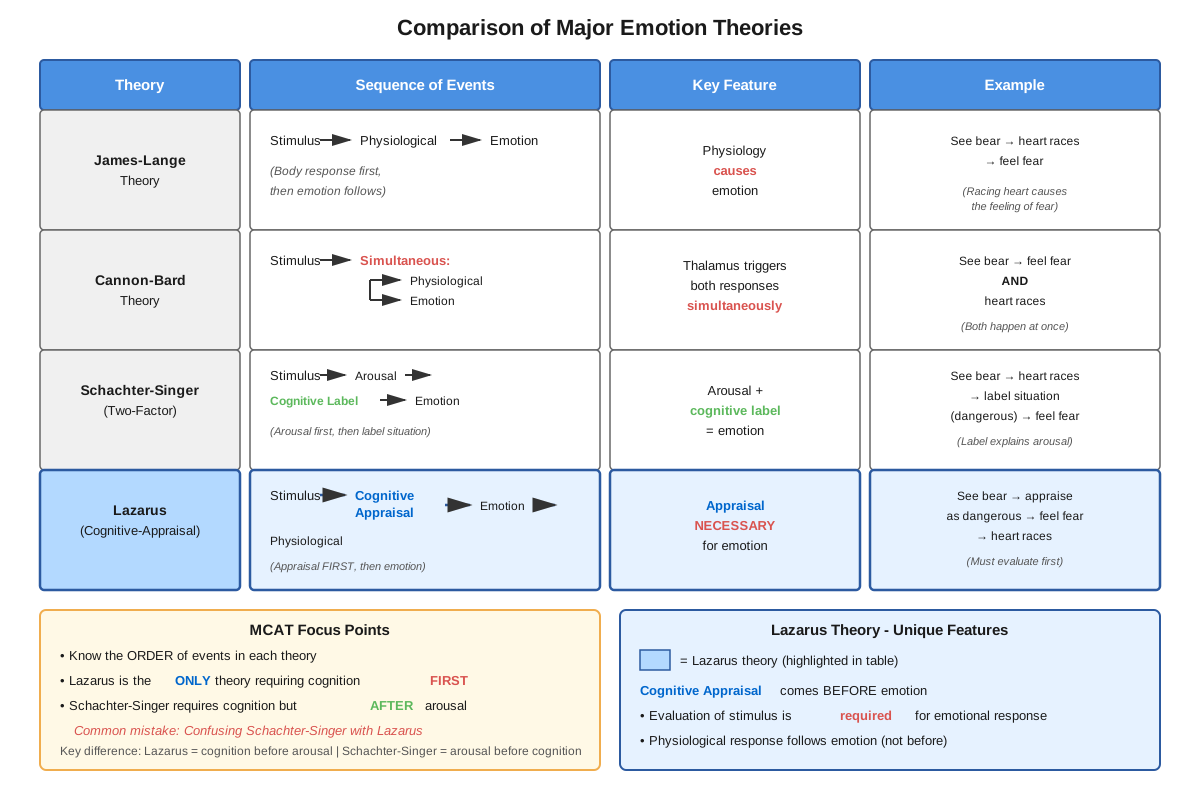
Understanding how Lazarus theory differs from other major emotion theories is essential for MCAT success:
| Theory | Sequence | Key Feature | Example |
|---|---|---|---|
| James-Lange | Stimulus → Physiological response → Emotion | Emotion follows bodily changes | See bear → heart races → feel fear |
| Cannon-Bard | Stimulus → Simultaneous physiological response AND emotion | Thalamus sends simultaneous signals | See bear → heart races AND feel fear simultaneously |
| Schachter-Singer | Stimulus → Physiological arousal → Cognitive label → Emotion | Two-factor: arousal + cognitive label | Arousal + context interpretation = specific emotion |
| Lazarus | Stimulus → Cognitive appraisal → Emotion AND physiological response | Cognition must precede emotion | See bear → appraise as threat → fear and physiological response |
The critical distinction is that Lazarus theory places cognitive appraisal as the necessary first step, while James-Lange places physiology first, Cannon-Bard suggests simultaneity, and Schachter-Singer requires both arousal and cognition but doesn't specify which comes first. For MCAT questions, identifying which component comes first often determines the correct answer.
The Role of Individual Differences
Lazarus theory elegantly explains why individuals respond differently to identical situations. Since emotional responses depend on personal appraisal rather than objective stimulus properties, factors that influence appraisal create individual differences:
- Personal beliefs and values: What matters to one person may be irrelevant to another
- Past experiences: Previous encounters with similar situations shape current appraisals
- Cultural background: Cultural norms influence what is appraised as threatening, challenging, or beneficial
- Personality traits: Optimism, neuroticism, and other traits bias appraisal patterns
- Current psychological state: Mood, stress level, and mental health affect appraisal processes
- Available resources: Perceived social support, skills, and material resources influence secondary appraisal
This emphasis on individual differences makes Lazarus theory particularly useful for explaining phenomena in health psychology, clinical psychology, and social psychology—all areas heavily tested on the MCAT.
Concept Relationships
The concepts within Lazarus theory form an integrated system where each component influences the others. The relationship flows as follows:
Stimulus encounter → Primary appraisal (Is this relevant? Positive/negative? Threat/challenge/harm?) → Secondary appraisal (Can I cope? What resources do I have?) → Emotional response (specific emotion based on both appraisals) → Coping behavior (action taken) → Reappraisal (evaluation of situation after coping) → Modified emotional response (cycle continues)
This cyclical process demonstrates that emotions are not static reactions but dynamic processes that evolve as situations and appraisals change. The bidirectional arrows between appraisal and emotion indicate that while appraisal primarily drives emotion, emotional states can also influence subsequent appraisals (mood-congruent processing).
Lazarus theory connects to prerequisite knowledge of stress responses by explaining the cognitive mechanism that triggers the physiological stress response. The general adaptation syndrome (alarm, resistance, exhaustion) is activated based on how situations are appraised, not based on objective stressor properties. This connection explains why psychological stress management techniques work—they modify appraisal patterns.
The theory also relates to coping mechanisms (problem-focused vs. emotion-focused coping). Secondary appraisal determines which coping strategy individuals employ. When secondary appraisal suggests the situation is controllable, problem-focused coping predominates; when appraisal suggests limited control, emotion-focused coping becomes more common.
In cognitive psychology, Lazarus theory connects to attention, memory, and decision-making processes. Appraisal requires selective attention to relevant stimulus features, retrieval of relevant memories for comparison, and rapid decision-making about significance and coping options. In social psychology, the theory links to attribution theory (how we explain events influences how we appraise them) and social comparison (comparing ourselves to others affects appraisal of our coping resources).
For clinical applications, Lazarus theory provides the theoretical foundation for cognitive-behavioral therapy (CBT), cognitive restructuring, and stress inoculation training. These interventions work by systematically modifying maladaptive appraisal patterns, demonstrating the practical application of Lazarus's theoretical framework.
Quick check — test yourself on Lazarus theory so far.
Try Flashcards →High-Yield Facts
⭐ Lazarus theory asserts that cognitive appraisal must occur before emotional experience—cognition is necessary for emotion.
⭐ Primary appraisal evaluates whether a stimulus is irrelevant, benign-positive, or stressful (harm/loss, threat, or challenge).
⭐ Secondary appraisal assesses available coping resources and options for dealing with the appraised situation.
⭐ The same objective situation can produce different emotions in different people based on individual differences in appraisal.
⭐ Reappraisal is the process of modifying initial appraisals based on new information or coping feedback, forming the basis for cognitive therapy.
- Challenge appraisals (viewing stressors as opportunities) produce more adaptive coping than threat appraisals (viewing stressors as dangers).
- Lazarus theory differs from James-Lange by placing cognition before physiology, not after.
- The theory explains why cognitive reframing techniques can reduce negative emotions without changing external circumstances.
- Secondary appraisal of low coping resources intensifies negative emotions even when primary appraisal is only moderately threatening.
- Lazarus explicitly rejected Zajonc's claim that emotions could occur without cognitive processing, maintaining that even "automatic" emotions involve rapid appraisal.
- Cultural factors influence appraisal patterns, explaining cross-cultural differences in emotional responses to similar situations.
- The theory integrates cognitive, emotional, and physiological components while maintaining the primacy of cognitive processes.
Common Misconceptions
Misconception: Lazarus theory says all appraisal is conscious and deliberate.
Correction: Appraisal often occurs rapidly and automatically, outside conscious awareness. Lazarus distinguished between automatic appraisal (fast, unconscious) and deliberate appraisal (slow, conscious), but both are cognitive processes. The theory requires cognition, not consciousness.
Misconception: Primary and secondary appraisal occur in strict sequence, with primary always completing before secondary begins.
Correction: Primary and secondary appraisal typically occur simultaneously or in rapid alternation. The distinction is conceptual (what vs. how to cope) rather than strictly temporal. Both appraisals interact dynamically to produce the final emotional response.
Misconception: Lazarus theory and Schachter-Singer two-factor theory are essentially the same because both involve cognition.
Correction: While both theories incorporate cognitive elements, they differ fundamentally. Schachter-Singer requires unexplained physiological arousal that is then labeled based on context. Lazarus theory places cognitive appraisal as the primary driver that produces both emotion and physiological response, without requiring pre-existing unexplained arousal.
Misconception: Reappraisal always reduces negative emotions.
Correction: Reappraisal can increase, decrease, or maintain emotional intensity depending on the direction of change. If new information makes a situation seem more threatening or if coping attempts fail, reappraisal can intensify negative emotions. Therapeutic reappraisal aims to make appraisals more realistic and adaptive, which often (but not always) reduces distress.
Misconception: According to Lazarus, the objective properties of a situation don't matter—only subjective appraisal matters.
Correction: While Lazarus emphasized that appraisal mediates emotional response, he acknowledged that objective situation characteristics influence appraisal. Extremely dangerous situations are more likely to be appraised as threatening. The theory explains how subjective factors create individual differences in response to the same objective situation, not that objective reality is irrelevant.
Misconception: Lazarus theory only applies to negative emotions and stress.
Correction: Although Lazarus's work emphasized stress and coping, the theory applies to all emotions. Positive emotions result from appraisals of benefit, goal congruence, and adequate resources. The appraisal framework explains the full range of emotional experience, not just negative emotions.
Worked Examples
Example 1: Medical School Interview Scenario
Vignette: Two students, Alex and Jordan, both receive invitations to interview at their top-choice medical school. Alex feels excited and energized, immediately beginning to prepare. Jordan feels anxious and overwhelmed, worrying about potential failure. Using Lazarus theory, explain why these students have different emotional responses to the identical situation.
Analysis:
Step 1 - Identify the stimulus: Both students encounter the same objective stimulus: a medical school interview invitation.
Step 2 - Analyze primary appraisal: Both students likely appraise the interview as personally relevant (not irrelevant) and as a stressful situation (not benign-positive). However, the key difference lies in the subcategory of stressful appraisal:
- Alex appraises the interview as a challenge—an opportunity to demonstrate abilities and achieve a goal
- Jordan appraises the interview as a threat—a situation where failure could harm self-esteem and future prospects
Step 3 - Analyze secondary appraisal: The students differ in their assessment of coping resources:
- Alex's secondary appraisal: "I have good communication skills, I can prepare effectively, and I have supportive friends to practice with" (positive assessment of coping resources)
- Jordan's secondary appraisal: "I'm not good at interviews, I don't know how to prepare, and I might freeze up" (negative assessment of coping resources)
Step 4 - Predict emotional and behavioral outcomes:
- Alex: Challenge appraisal + positive secondary appraisal = excitement, confidence, approach behavior (active preparation)
- Jordan: Threat appraisal + negative secondary appraisal = anxiety, self-doubt, possible avoidance behavior (procrastination on preparation)
Connection to learning objectives: This example demonstrates how identical objective situations produce different emotions based on individual differences in cognitive appraisal (both primary and secondary). It illustrates the practical application of Lazarus theory to predict emotional responses and explains why interventions targeting appraisal (like cognitive reframing or building coping skills) can modify emotional experiences.
Example 2: Distinguishing Emotion Theories
MCAT-Style Question: A researcher conducts an experiment where participants are exposed to a loud, unexpected noise. The researcher measures the sequence of responses. According to Lazarus theory, which sequence would be expected?
A) Loud noise → increased heart rate → feeling of fear → appraisal of danger
B) Loud noise → appraisal of danger → feeling of fear and increased heart rate
C) Loud noise → increased heart rate → appraisal of arousal as fear based on context
D) Loud noise → simultaneous appraisal of danger and increased heart rate → feeling of fear
Analysis:
Step 1 - Recall Lazarus theory's key principle: Cognitive appraisal must precede emotional experience. The sequence is: stimulus → appraisal → emotion and physiological response.
Step 2 - Evaluate each option:
Option A: This sequence (stimulus → physiology → emotion → appraisal) represents the James-Lange theory, where physiological response precedes emotion, with appraisal coming last. This contradicts Lazarus's cognition-first principle. Incorrect.
Option B: This sequence (stimulus → appraisal → emotion and physiology) perfectly matches Lazarus theory. The loud noise is immediately appraised for its significance (danger), and this appraisal produces both the emotional experience (fear) and physiological response (increased heart rate). Correct.
Option C: This sequence (stimulus → arousal → cognitive labeling of arousal) represents Schachter-Singer two-factor theory, where unexplained physiological arousal is labeled based on contextual cues. This differs from Lazarus, where appraisal drives the response rather than labeling pre-existing arousal. Incorrect.
Option D: This sequence suggests simultaneity between appraisal and physiological response, more consistent with Cannon-Bard theory (though Cannon-Bard emphasizes emotion and physiology as simultaneous, not appraisal and physiology). Lazarus places appraisal temporally before both emotion and physiology. Incorrect.
Answer: B
Key reasoning: The distinguishing feature of Lazarus theory is that cognitive appraisal is the necessary first step that triggers both emotional experience and physiological response. Any sequence that places physiology, emotion, or arousal before appraisal contradicts Lazarus theory.
Exam Strategy
When approaching MCAT questions on Lazarus theory, employ these strategic approaches:
Trigger words and phrases to recognize:
- "Cognitive appraisal," "evaluation of significance," "interpretation of meaning" → strongly suggest Lazarus theory
- "Primary appraisal," "secondary appraisal," "reappraisal" → definitively indicate Lazarus framework
- "Individual differences in emotional response to the same situation" → often explained by Lazarus theory
- "Cognitive reframing," "changing interpretation" → applications of Lazarus principles
- Questions asking "which comes first" in emotion sequences → likely testing theory distinctions
Process-of-elimination strategies:
- Identify the sequence: If a question asks about the order of events in emotional experience, immediately map each answer choice to a specific theory. Eliminate options that contradict the theory specified in the question.
- Check for cognition-first: For Lazarus theory questions, any option that places physiological response, emotional experience, or behavioral response before cognitive appraisal can be eliminated immediately.
- Look for appraisal types: If answer choices mention primary vs. secondary appraisal, ensure the option correctly identifies what each assesses (primary = significance; secondary = coping resources).
- Consider individual differences: When a question presents different emotional responses to the same situation, Lazarus theory is often the best explanation because it emphasizes subjective appraisal over objective stimulus properties.
Time allocation advice:
Lazarus theory questions typically require moderate time investment (60-90 seconds for discrete questions, 90-120 seconds for passage-based questions). Don't rush—carefully reading the sequence of events or the specific appraisal process described is essential. However, once you've identified the key sequence or appraisal type, the answer usually becomes clear quickly.
Common question formats:
- Theory identification: "Which theory best explains this emotional response?" → Map the scenario to theory sequences
- Application: "According to Lazarus theory, what would happen if...?" → Apply appraisal principles to predict outcomes
- Comparison: "How does Lazarus theory differ from [other theory]?" → Focus on the cognition-first principle
- Intervention: "Which intervention aligns with Lazarus theory?" → Look for cognitive reframing or appraisal modification
Red flags in answer choices:
- Options suggesting emotions can occur without any cognitive processing (contradicts Lazarus)
- Options placing physiological arousal before appraisal in the Lazarus framework
- Options confusing primary and secondary appraisal functions
- Options suggesting appraisal must be conscious or deliberate (Lazarus includes automatic appraisal)
Memory Techniques
Mnemonic for the sequence: "CAP-ER"
- Cognitive appraisal
- Affect (emotion)
- Physiological response
- Evaluation (reappraisal)
- Response (coping behavior)
Mnemonic for Primary Appraisal categories: "I Be Stressed"
- Irrelevant
- Benign-positive
- Stressful (Harm/loss, Threat, Challenge)
Visualization strategy: Picture a FILTER (representing cognitive appraisal) that all stimuli must pass through before reaching the emotion center. The filter has two layers:
- First layer (Primary): Sorts stimuli by relevance and type (irrelevant items bounce off, relevant items pass through)
- Second layer (Secondary): Evaluates coping resources (items pass through with different colors representing different emotional intensities based on perceived coping ability)
Acronym for distinguishing theories: "JCSL" (pronounced "Jicksel")
- James-Lange: Physiology first
- Cannon-Bard: Simultaneous
- Schachter-Singer: Arousal + Label
- Lazarus: Cognition first
Memory palace technique: Imagine walking through a house:
- Front door (stimulus encounter): You see something
- Entryway (primary appraisal): You immediately evaluate "Is this important? Good or bad?"
- Living room (secondary appraisal): You assess "Can I handle this? What resources do I have?"
- Kitchen (emotional response): Based on your evaluations, you feel specific emotions
- Back door (reappraisal): New information comes in, and you re-evaluate
Summary
Lazarus theory represents a cognitive-appraisal approach to emotion that fundamentally asserts cognition must precede emotional experience. When individuals encounter any stimulus, they engage in rapid cognitive appraisal processes that determine their emotional response. Primary appraisal evaluates whether the stimulus is relevant and whether it represents harm/loss, threat, or challenge. Secondary appraisal assesses available coping resources and options. Together, these appraisals produce specific emotional experiences and physiological responses. The theory elegantly explains individual differences in emotional reactions to identical situations—differences arise from variations in how people appraise situations and their coping capacity, not from the objective situations themselves. Reappraisal, the ongoing modification of initial appraisals, forms the basis for cognitive therapy interventions. For the MCAT, distinguishing Lazarus's cognition-first approach from other emotion theories (James-Lange, Cannon-Bard, Schachter-Singer) is essential, as is understanding how appraisal processes explain stress responses, coping behaviors, and therapeutic interventions. The theory bridges cognitive psychology, emotion research, stress and coping, and clinical applications, making it a high-yield topic that connects to multiple testable concepts across the Psychology section.
Key Takeaways
- Lazarus theory places cognitive appraisal as the necessary first step in emotional experience—cognition must precede emotion
- Primary appraisal evaluates stimulus relevance and type (irrelevant, benign-positive, or stressful: harm/loss, threat, challenge)
- Secondary appraisal assesses coping resources and options, determining emotional intensity and coping strategy selection
- Individual differences in emotional responses to identical situations result from differences in cognitive appraisal, not objective stimulus properties
- Reappraisal (modifying initial appraisals) provides the theoretical foundation for cognitive therapy and stress management interventions
- Lazarus theory differs from other emotion theories by placing cognition first, unlike James-Lange (physiology first), Cannon-Bard (simultaneous), or Schachter-Singer (arousal + labeling)
- The theory explains connections between cognition, emotion, stress, coping, and therapeutic interventions—making it a high-yield integrative concept for the MCAT
Related Topics
Coping Mechanisms (Problem-Focused vs. Emotion-Focused): Secondary appraisal in Lazarus theory directly determines which coping strategy individuals employ. Understanding how appraisal of controllability influences coping strategy selection builds on Lazarus's framework.
Cognitive-Behavioral Therapy (CBT): CBT's theoretical foundation rests on Lazarus's principle that changing cognitive appraisals changes emotional responses. Mastering Lazarus theory enables deeper understanding of therapeutic mechanisms.
Stress and Health: The transactional model of stress (also developed by Lazarus and Folkman) extends appraisal theory to explain stress responses and their health consequences. This represents a direct application of Lazarus theory to health psychology.
Attribution Theory: How individuals explain events (attributions) influences how they appraise situations. Understanding both frameworks reveals how cognitive processes shape emotional and behavioral responses.
Schachter-Singer Two-Factor Theory: Comparing this theory with Lazarus theory clarifies the role of cognition in emotion and helps distinguish between different cognitive-emotion models on the MCAT.
Emotion Regulation Strategies: Cognitive reappraisal is one of several emotion regulation strategies. Understanding Lazarus theory provides the foundation for comprehending the full range of emotion regulation approaches.
Practice CTA
Now that you've mastered the core concepts of Lazarus theory, it's time to solidify your understanding through active practice. Challenge yourself with practice questions that require you to distinguish between emotion theories, apply appraisal concepts to novel scenarios, and predict emotional responses based on cognitive appraisal patterns. Use flashcards to drill the key distinctions between primary and secondary appraisal, and practice identifying trigger words that signal Lazarus theory in MCAT passages. Remember: understanding the theory conceptually is just the first step—applying it accurately under timed conditions is what translates knowledge into MCAT points. You've built a strong foundation; now reinforce it through deliberate practice, and you'll be fully prepared to tackle any emotion theory question the MCAT presents!
Sign up free to keep reading
Create a free AnvayaPrep account to finish this MCAT guide on Lazarus theory — plus flashcards and practice questions.