Overview
Motivation is a fundamental psychological construct that explains why organisms initiate, direct, sustain, and terminate behavior toward specific goals. In Psychology, motivation encompasses the internal and external forces that activate behavior and give it direction and persistence. Understanding motivation is essential for the MCAT because it integrates biological, cognitive, and social perspectives—bridging neuroscience, behavioral psychology, and social psychology in ways that frequently appear across multiple sections of the exam.
For the MCAT, Motivation Psychology represents a high-yield topic within the broader unit of Emotion Motivation and Stress. Questions on this topic typically require students to distinguish between different theoretical frameworks (such as drive-reduction theory versus incentive theory), identify the biological substrates of motivated behavior (including hypothalamic regulation and dopaminergic pathways), and apply motivational concepts to clinical scenarios involving eating disorders, addiction, or behavioral change. The MCAT tests not just definitional knowledge but the ability to analyze experimental designs, interpret data about motivated behaviors, and predict outcomes based on motivational principles.
The study of motivation connects intimately with emotion, stress responses, learning theories, and social influences on behavior. Motivational states influence cognitive processes like attention and memory, while emotional experiences can either enhance or diminish motivation. Understanding these interconnections allows students to approach complex MCAT passages that integrate multiple psychological domains, making motivation a cornerstone concept for achieving mastery in the Psychological, Social, and Biological Foundations of Behavior section.
Learning Objectives
- [ ] Define Motivation using accurate Psychology terminology
- [ ] Explain why Motivation matters for the MCAT
- [ ] Apply Motivation to exam-style questions
- [ ] Identify common mistakes related to Motivation
- [ ] Connect Motivation to related Psychology concepts
- [ ] Compare and contrast major theories of motivation (instinct, drive-reduction, arousal, incentive, and self-determination theories)
- [ ] Analyze the biological mechanisms underlying motivated behaviors, including the role of the hypothalamus and neurotransmitter systems
- [ ] Evaluate how intrinsic and extrinsic motivation differentially affect behavior and performance in various contexts
Prerequisites
- Basic neuroanatomy: Understanding brain structures (particularly the hypothalamus, limbic system, and reward pathways) is essential for comprehending the biological basis of motivation
- Homeostasis: Familiarity with physiological balance and regulatory mechanisms provides the foundation for drive-reduction theory
- Classical and operant conditioning: Knowledge of learning principles helps explain how motivational states are acquired and modified through experience
- Basic emotion concepts: Understanding emotional processes is necessary because motivation and emotion are closely intertwined psychological phenomena
Why This Topic Matters
Clinical and Real-World Significance
Motivation underlies virtually every health behavior and clinical intervention. Understanding motivational principles is critical for explaining patient adherence to treatment regimens, the development and maintenance of addictive behaviors, eating disorders (anorexia nervosa, bulimia nervosa, binge eating disorder), and obesity. Healthcare providers must understand what drives behavior change to design effective interventions, whether for smoking cessation, exercise adoption, or medication compliance. Motivational interviewing, a widely-used clinical technique, directly applies psychological theories of motivation to facilitate behavioral change in patients.
Exam Statistics and Question Types
Motivation appears in approximately 3-5% of MCAT Psychological, Social, and Biological Foundations of Behavior questions. Questions typically fall into three categories: (1) theory-based questions requiring students to identify which motivational theory best explains a described behavior, (2) biological mechanism questions testing knowledge of hypothalamic regulation and neurotransmitter systems, and (3) application questions presenting research scenarios or clinical vignettes where students must predict outcomes based on motivational principles.
Common Exam Passage Contexts
MCAT passages on motivation frequently appear in the following contexts: experimental studies examining the effects of reward types on task performance, research on eating behavior and metabolic regulation, studies of goal-setting and achievement motivation, investigations of intrinsic versus extrinsic motivation in educational or workplace settings, and clinical research on addiction or behavioral interventions. Passages often require integration of motivation with other topics such as social influence, cognitive processes, or stress responses.
Core Concepts
Definition and Components of Motivation
Motivation is defined as the psychological process that arouses, directs, and maintains behavior toward achieving a goal. It answers three fundamental questions about behavior: Why does behavior start? (activation), What direction does behavior take? (direction), and Why does behavior persist or stop? (persistence and termination). Motivation comprises both the energizing aspect (the intensity or strength of the motivated state) and the directional aspect (the specific goal or outcome being pursued).
The construct of motivation includes several key components: needs (biological or psychological requirements for well-being), drives (internal states of tension that motivate behavior to reduce the tension), incentives (external stimuli that pull behavior toward goals), and goals (desired end-states that direct behavior). Understanding these components allows for analysis of motivated behavior from multiple theoretical perspectives.
Major Theories of Motivation
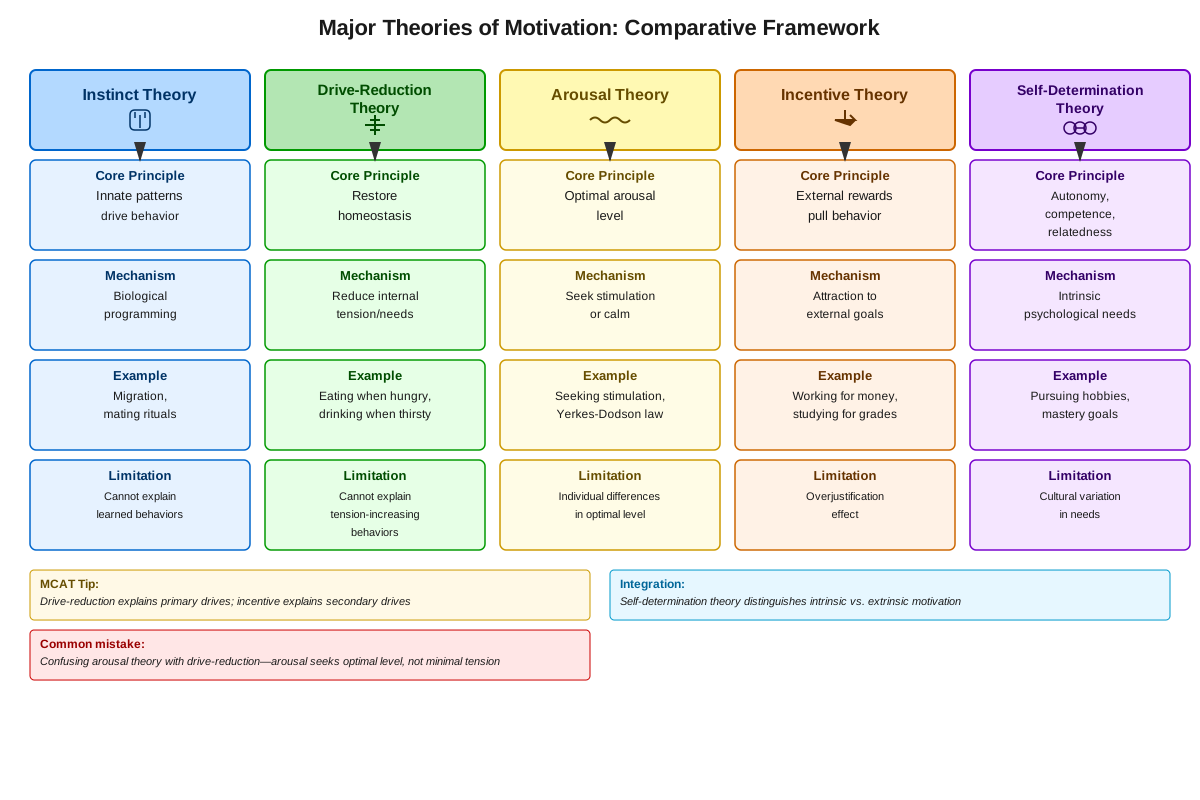
Instinct Theory
Instinct theory proposes that organisms are born with innate, biologically determined patterns of behavior that are species-specific and do not require learning. Early psychologists like William James and William McDougall catalogued human instincts, suggesting that behaviors such as parenting, aggression, and curiosity arise from evolutionary programming. While instinct theory has limited explanatory power for complex human behavior, it laid groundwork for evolutionary psychology and remains relevant for understanding fixed action patterns in animals. The MCAT may present instinct theory in historical context or contrast it with learning-based explanations of behavior.
Drive-Reduction Theory
Drive-reduction theory, developed by Clark Hull, posits that physiological needs create aroused tension states (drives) that motivate organisms to reduce the need and return to homeostasis. For example, food deprivation creates hunger (a drive), which motivates eating behavior to restore energy balance. Primary drives are biological (hunger, thirst, temperature regulation), while secondary drives are learned through association with primary drives (money becomes motivating because it can satisfy primary needs).
The theory's strength lies in explaining motivated behaviors that restore physiological balance. However, it cannot account for behaviors that increase arousal (such as seeking novel experiences) or behaviors that occur in the absence of biological need (eating dessert when already full). The MCAT frequently tests students' ability to recognize when drive-reduction theory applies versus when alternative theories better explain behavior.
Arousal Theory
Arousal theory addresses drive-reduction theory's limitations by proposing that organisms are motivated to maintain an optimal level of arousal—not necessarily minimal arousal. The Yerkes-Dodson law describes an inverted U-shaped relationship between arousal and performance: performance is poor at very low and very high arousal levels, with optimal performance occurring at moderate arousal. The optimal arousal level varies by task complexity (simple tasks benefit from higher arousal, while complex tasks require lower arousal for best performance).
This theory explains sensation-seeking behaviors, curiosity, and exploratory behavior. Individuals differ in their optimal arousal levels, with some people being sensation seekers who pursue high-arousal activities. The MCAT may present experimental data showing performance curves across arousal levels or scenarios requiring application of the Yerkes-Dodson law.
Incentive Theory
Incentive theory emphasizes external stimuli (incentives) that pull behavior toward goals, rather than internal drives that push behavior. Incentives can be positive (rewards that attract behavior) or negative (punishments that repel behavior). This theory integrates well with learning principles, particularly operant conditioning, where reinforcement and punishment shape motivated behavior.
The expectancy-value theory extends incentive theory by proposing that motivation depends on both the expectation of obtaining the incentive and the value placed on that incentive. Motivation = Expectancy × Value. If either expectancy or value is zero, motivation will be absent. This framework is particularly useful for understanding achievement motivation and goal-directed behavior in academic and professional contexts.
Cognitive Theories: Self-Determination Theory
Self-determination theory (SDT), developed by Deci and Ryan, distinguishes between intrinsic motivation (engaging in behavior for inherent satisfaction) and extrinsic motivation (engaging in behavior for external rewards or to avoid punishment). SDT proposes that humans have three innate psychological needs: autonomy (feeling in control of one's behavior), competence (feeling effective and capable), and relatedness (feeling connected to others).
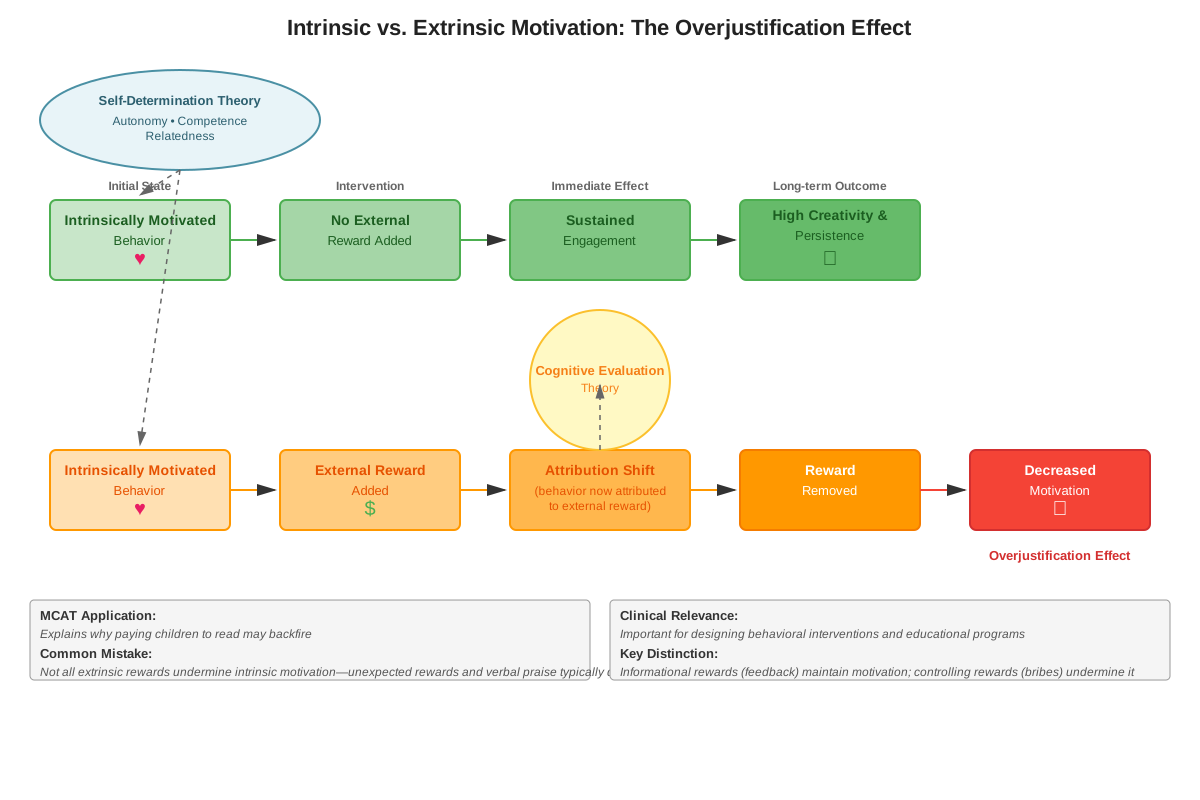
When these needs are satisfied, intrinsic motivation flourishes. However, external rewards can sometimes undermine intrinsic motivation through the overjustification effect—when people attribute their behavior to external rewards rather than internal interest, intrinsic motivation decreases. For example, paying children for reading may reduce their natural enjoyment of reading. The MCAT frequently tests understanding of when external rewards enhance versus undermine motivation.
| Theory | Key Principle | Strengths | Limitations |
|---|---|---|---|
| Instinct | Innate behavioral patterns | Explains species-typical behaviors | Limited for complex human behavior |
| Drive-Reduction | Behavior reduces physiological needs | Explains homeostatic behaviors | Cannot explain arousal-increasing behaviors |
| Arousal | Optimal arousal level sought | Explains sensation-seeking | Doesn't address all goal-directed behavior |
| Incentive | External stimuli pull behavior | Integrates with learning theory | Underemphasizes internal states |
| Self-Determination | Intrinsic vs. extrinsic motivation | Explains quality of motivation | Complex to measure and apply |
Biological Bases of Motivation
Hypothalamic Regulation
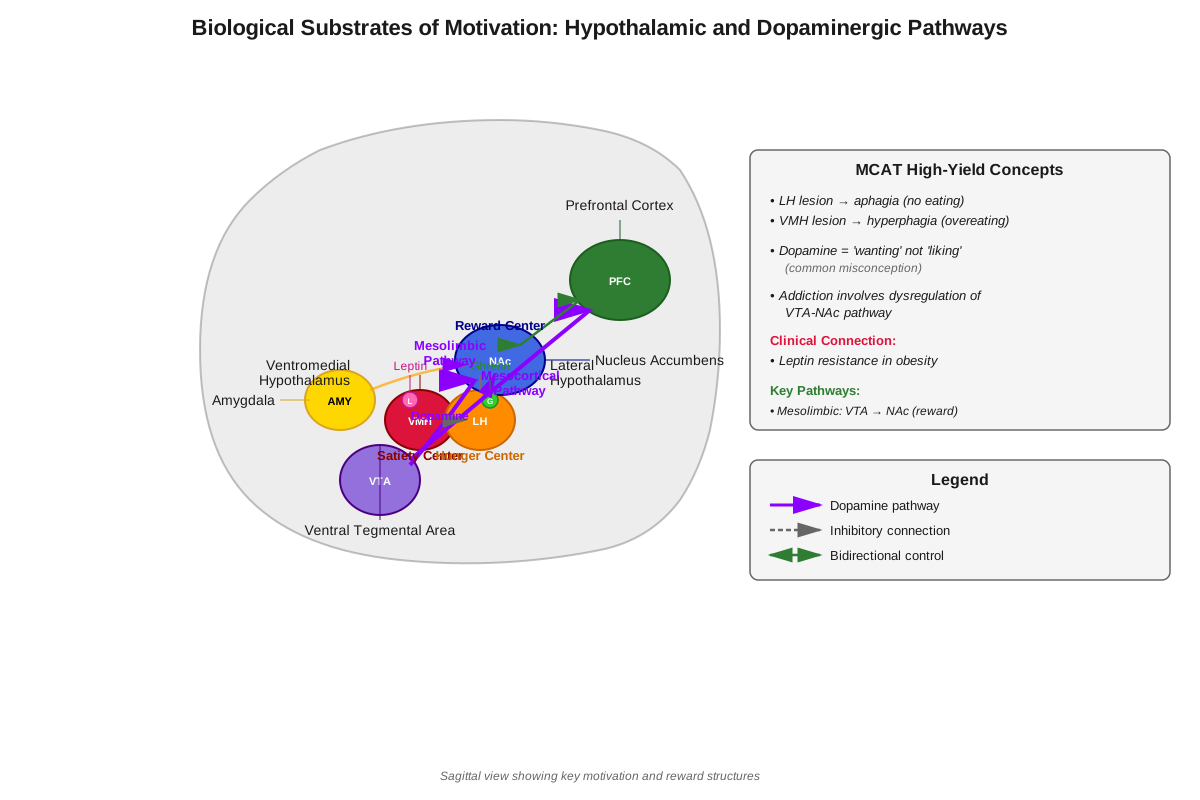
The hypothalamus serves as the primary brain structure regulating motivated behaviors related to survival. Different hypothalamic nuclei control specific motivated states:
- Lateral hypothalamus (LH): Stimulation triggers eating and drinking; damage causes aphagia (refusal to eat) and adipsia (refusal to drink). The LH is considered a "feeding center."
- Ventromedial hypothalamus (VMH): Stimulation suppresses eating; damage causes hyperphagia (excessive eating) and obesity. The VMH is considered a "satiety center."
- Anterior hypothalamus: Regulates responses to heat (cooling mechanisms)
- Posterior hypothalamus: Regulates responses to cold (warming mechanisms)
- Suprachiasmatic nucleus: Regulates circadian rhythms, affecting sleep-wake motivation
Neurotransmitter Systems
Dopamine plays a central role in motivation, particularly in the mesolimbic reward pathway (ventral tegmental area to nucleus accumbens). This pathway mediates the rewarding and reinforcing effects of natural rewards (food, sex) and drugs of abuse. Dopamine is associated with wanting and seeking rewards, rather than the pleasure of consuming them (which involves opioid systems).
Serotonin influences motivation through effects on mood, impulse control, and satiety. Low serotonin is associated with increased impulsivity and difficulty delaying gratification. Norepinephrine contributes to arousal and alertness, affecting motivation through its role in the stress response and attention systems.
Hunger and Eating Motivation
Hunger motivation involves complex interactions between physiological signals and psychological factors. Glucostatic theory proposes that blood glucose levels regulate hunger (low glucose triggers hunger). Lipostatic theory suggests that body fat stores are monitored, with leptin (a hormone produced by fat cells) signaling satiety to the brain. Ghrelin, produced by the stomach, signals hunger, while peptide YY and cholecystokinin (CCK) signal satiety.
Psychological factors profoundly influence eating motivation: set point theory proposes that each person has a biologically determined weight that the body defends through metabolic adjustments, while settling point theory suggests that weight settles at a point determined by the interaction of biology and environment. External cues (food availability, portion size, social context) and learned preferences shape eating behavior beyond physiological need.
Achievement Motivation
Achievement motivation refers to the desire to accomplish goals, master skills, and meet standards of excellence. Henry Murray first identified the need for achievement (nAch), and David McClelland developed methods to measure it. Individuals high in achievement motivation prefer moderately challenging tasks (where success is possible but not guaranteed), seek feedback on performance, and persist in the face of difficulty.
Attribution theory explains how people's beliefs about the causes of success and failure affect motivation. Attributing success to internal, stable, controllable factors (such as ability and effort) promotes continued motivation, while attributing failure to external, unstable, uncontrollable factors protects motivation. Conversely, attributing failure to stable internal factors (low ability) undermines motivation and can lead to learned helplessness.
Maslow's Hierarchy of Needs
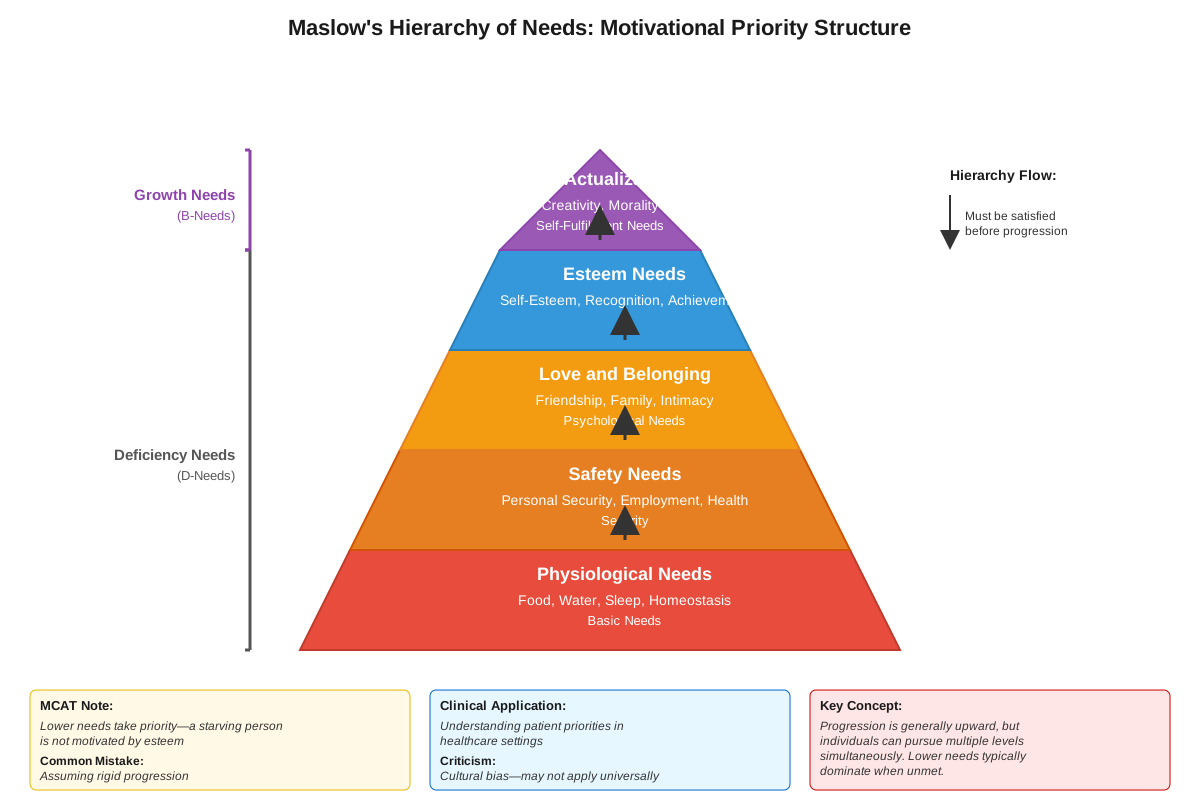
Abraham Maslow's hierarchy of needs organizes human motivations into a pyramid with five levels:
- Physiological needs (base): Food, water, shelter, sleep
- Safety needs: Security, stability, protection from harm
- Love and belongingness needs: Relationships, affection, group membership
- Esteem needs: Achievement, recognition, respect
- Self-actualization (peak): Realizing personal potential, creativity, personal growth
Maslow proposed that lower-level needs must be substantially satisfied before higher-level needs become motivating. While influential, this theory has limited empirical support—people often pursue higher-level needs despite unmet lower-level needs. The MCAT may present scenarios requiring identification of which need level is motivating behavior or critique of the theory's assumptions.
Concept Relationships
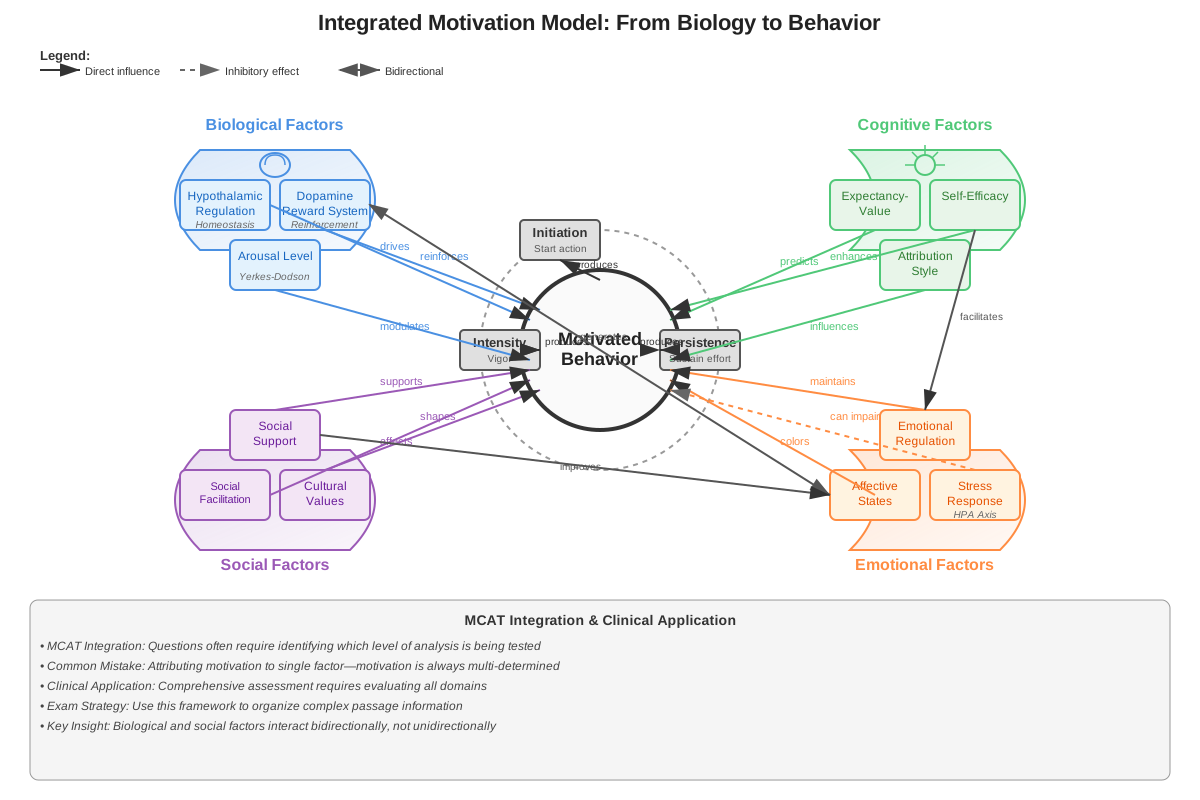
Motivation concepts form an interconnected network where biological, cognitive, and social factors converge. At the foundation, biological drives (regulated by the hypothalamus and neurotransmitter systems) create the physiological basis for motivated behavior → these drives interact with learning processes (classical and operant conditioning) to create secondary drives and learned incentives → cognitive appraisals (expectancies, attributions, self-efficacy beliefs) modulate how biological and learned factors translate into actual behavior → social and cultural contexts shape which goals are valued and which behaviors are reinforced.
The relationship between intrinsic and extrinsic motivation demonstrates concept integration: intrinsic motivation arises from satisfaction of autonomy, competence, and relatedness needs (self-determination theory) → extrinsic rewards can either enhance motivation (when they provide information about competence) or undermine it (overjustification effect) → the effect depends on cognitive interpretation of the reward's meaning → this connects to attribution theory, where perceived causes of behavior affect future motivation.
Motivation connects to prerequisite topics: homeostasis provides the physiological framework for drive-reduction theory → brain structures (hypothalamus, limbic system, reward pathways) implement motivated behaviors → learning principles explain how neutral stimuli become incentives and how behaviors are reinforced. Motivation also connects forward to emotion (motivated behaviors often produce emotional responses; emotional states influence motivation), stress (chronic stress depletes motivational resources; motivation affects stress appraisal), and social psychology (social comparison affects achievement motivation; group membership satisfies belongingness needs).
Quick check — test yourself on Motivation so far.
Try Flashcards →High-Yield Facts
⭐ The lateral hypothalamus (LH) promotes eating and drinking; damage causes aphagia and adipsia, while the ventromedial hypothalamus (VMH) promotes satiety; damage causes hyperphagia and obesity.
⭐ Intrinsic motivation arises from internal satisfaction and is associated with better long-term performance and well-being than extrinsic motivation, which depends on external rewards or punishments.
⭐ The Yerkes-Dodson law describes an inverted U-shaped relationship between arousal and performance, with optimal performance at moderate arousal levels; optimal arousal is lower for complex tasks than simple tasks.
⭐ The overjustification effect occurs when external rewards undermine intrinsic motivation by shifting the perceived cause of behavior from internal interest to external reward.
⭐ Drive-reduction theory explains homeostatic behaviors that reduce physiological needs, but cannot account for behaviors that increase arousal or occur without biological need.
- Self-determination theory identifies three innate psychological needs: autonomy, competence, and relatedness; satisfaction of these needs promotes intrinsic motivation and psychological well-being.
- The mesolimbic dopamine pathway (ventral tegmental area to nucleus accumbens) mediates reward and reinforcement, playing a central role in motivation for both natural rewards and addictive substances.
- Incentive theory emphasizes that external stimuli pull behavior toward goals; expectancy-value theory extends this by proposing that motivation equals expectancy times value.
- Ghrelin (produced by the stomach) signals hunger, while leptin (produced by fat cells) signals satiety to the hypothalamus; these hormones regulate eating motivation.
- Achievement motivation is characterized by preference for moderately challenging tasks, seeking performance feedback, and persistence; it is influenced by attributions about success and failure causes.
- Maslow's hierarchy organizes needs from physiological (base) through safety, love/belongingness, esteem, to self-actualization (peak), proposing that lower needs must be met before higher needs motivate behavior.
- Arousal theory explains sensation-seeking behavior and exploratory motivation that drive-reduction theory cannot account for.
Common Misconceptions
Misconception: Motivation is a single, unitary construct that either exists or doesn't. → Correction: Motivation is multidimensional, varying in both intensity (how strong) and quality (intrinsic versus extrinsic). Two people can be equally motivated but for different reasons, leading to different behavioral outcomes and persistence patterns.
Misconception: External rewards always increase motivation and performance. → Correction: External rewards can undermine intrinsic motivation through the overjustification effect, particularly when the task is already interesting and the reward is expected and tangible. Unexpected rewards or verbal praise that provides competence information typically do not undermine intrinsic motivation.
Misconception: The lateral hypothalamus is the only brain region involved in hunger motivation. → Correction: While the lateral hypothalamus plays a critical role in initiating eating, hunger motivation involves multiple brain regions (ventromedial hypothalamus, arcuate nucleus, nucleus accumbens, prefrontal cortex) and peripheral signals (ghrelin, leptin, insulin, CCK) in a complex regulatory network.
Misconception: Drive-reduction theory can explain all motivated behaviors. → Correction: Drive-reduction theory effectively explains homeostatic behaviors but fails to account for behaviors that increase arousal (sensation-seeking, curiosity, exploration) or behaviors that occur in the absence of biological need (eating palatable food when satiated, pursuing challenging hobbies).
Misconception: People must satisfy all lower-level needs in Maslow's hierarchy before pursuing higher-level needs. → Correction: While Maslow proposed this progression, empirical evidence shows that people often pursue higher-level needs (esteem, self-actualization) despite unmet lower-level needs. The hierarchy is better understood as describing general priorities rather than strict prerequisites.
Misconception: High arousal always impairs performance. → Correction: According to the Yerkes-Dodson law, the relationship between arousal and performance is curvilinear (inverted U-shape). Moderate arousal optimizes performance, while both very low and very high arousal impair it. Additionally, optimal arousal level depends on task complexity—simple tasks benefit from higher arousal than complex tasks.
Worked Examples
Example 1: Distinguishing Motivational Theories
Vignette: A researcher observes that rats will cross an electrified grid to reach a lever that delivers a small electrical stimulation to their lateral hypothalamus, even though they have unlimited access to food and water in their home cage. The rats appear to prefer this stimulation to eating or drinking.
Question: Which motivational theory best explains this behavior?
Analysis:
- Step 1: Identify key features of the behavior. The rats are not reducing a biological drive (they have food and water available). They are actively seeking stimulation that increases arousal. The behavior is not homeostatic.
- Step 2: Evaluate each theory:
- Instinct theory: This is not a species-typical, innate behavior pattern—it requires learning to press the lever.
- Drive-reduction theory: This theory predicts behavior should reduce drives and restore homeostasis. The rats are not reducing any drive; they're seeking stimulation. This theory does not fit.
- Arousal theory: This theory proposes organisms seek optimal arousal levels and will engage in behaviors that increase arousal when it's too low. The rats are seeking stimulation that increases arousal. This theory fits well.
- Incentive theory: The brain stimulation serves as a powerful incentive pulling behavior. This theory also fits.
- Step 3: Determine best answer. Both arousal theory and incentive theory can explain this behavior. However, the fact that rats prefer this stimulation to natural rewards (food, water) and that it directly stimulates reward pathways suggests incentive theory is most appropriate, as the brain stimulation serves as an artificial but powerful incentive. The behavior also demonstrates that motivation is not solely about drive reduction.
Connection to learning objectives: This example applies motivational theories to experimental data, requires distinguishing between theories based on behavioral features, and demonstrates why drive-reduction theory has limitations.
Example 2: Intrinsic vs. Extrinsic Motivation Application
Vignette: A school implements a reading program where students receive $5 for each book they read. Initially, the number of books read increases dramatically. However, when the program ends six months later, students read significantly fewer books than they did before the program started, even though they had previously enjoyed reading.
Question: What psychological phenomenon explains this outcome, and what does it reveal about motivation?
Analysis:
- Step 1: Identify the pattern. Students initially increased reading (positive effect of reward), but after reward removal, reading decreased below baseline (negative long-term effect).
- Step 2: Apply self-determination theory. Before the program, students were intrinsically motivated—they read for enjoyment (internal satisfaction). The monetary reward introduced extrinsic motivation. When students received money for reading, they likely began attributing their reading behavior to the external reward rather than internal interest.
- Step 3: Identify the mechanism. This is the overjustification effect. The external reward undermined intrinsic motivation by shifting the perceived locus of causality from internal (reading is enjoyable) to external (reading earns money). When the external justification disappeared, the internal justification had been weakened, resulting in less reading than baseline.
- Step 4: Consider conditions. The overjustification effect is most likely when: (1) the activity is already intrinsically interesting, (2) the reward is expected and tangible, (3) the reward is salient and contingent on performing the activity. All these conditions were met in this scenario.
Implications: This example demonstrates why healthcare interventions using external rewards must be carefully designed. For behaviors that patients already find somewhat rewarding (exercise for someone who enjoys it), external rewards might undermine long-term adherence. However, for behaviors that are not intrinsically motivating (taking unpleasant medication), external rewards or incentives may be beneficial without risk of undermining intrinsic motivation that doesn't exist.
Connection to learning objectives: This example applies motivation concepts to a practical scenario, identifies a common mistake (assuming external rewards always help), and connects motivation to behavioral change—a key MCAT theme.
Exam Strategy
Approaching MCAT Motivation Questions
When encountering motivation questions, first identify whether the question asks about (1) theoretical frameworks, (2) biological mechanisms, or (3) application to behavior. For theory questions, extract key features of the described behavior: Is it homeostatic or arousal-seeking? Is it driven by internal satisfaction or external reward? Does it involve biological needs or learned goals? Match these features to theory characteristics.
For biological mechanism questions, focus on the hypothalamus and neurotransmitter systems. Remember the mnemonic "Lateral = Lack" (damage to lateral hypothalamus causes lack of eating/drinking) and "Ventromedial = Very Much" (damage to ventromedial hypothalamus causes very much eating). Questions about reward and addiction almost always involve dopamine and the mesolimbic pathway.
Trigger Words and Phrases
Watch for these high-yield trigger phrases:
- "Inherent satisfaction" or "for its own sake" → signals intrinsic motivation
- "External reward" or "to obtain" → signals extrinsic motivation
- "Restore balance" or "reduce tension" → signals drive-reduction theory
- "Optimal level" or "moderate arousal" → signals arousal theory or Yerkes-Dodson law
- "Attracted to" or "pulled toward" → signals incentive theory
- "Lateral hypothalamus" → think eating/drinking initiation
- "Ventromedial hypothalamus" → think satiety
Process of Elimination Tips
When evaluating answer choices about motivational theories, eliminate options that contradict the behavior's key features. If behavior increases arousal, eliminate drive-reduction theory. If behavior occurs without external reward, eliminate pure incentive explanations. If behavior is learned rather than innate, eliminate instinct theory.
For intrinsic versus extrinsic motivation questions, determine whether the behavior is performed for internal satisfaction (intrinsic) or external outcomes (extrinsic). Remember that the same behavior can be motivated intrinsically or extrinsically depending on the person's reasons—reading for enjoyment is intrinsic; reading to earn money is extrinsic.
Time Allocation
Motivation questions typically require 60-90 seconds. Spend 20-30 seconds identifying the question type and extracting key behavioral features from the passage or vignette. Spend 30-40 seconds evaluating answer choices against these features. Reserve 10-20 seconds for final verification. Don't overthink these questions—they usually test straightforward application of well-defined concepts rather than subtle distinctions.
Memory Techniques
Mnemonics for Hypothalamic Functions
"Lateral = Lack": Damage to the Lateral hypothalamus causes Lack of eating and drinking (aphagia and adipsia). The lateral hypothalamus is the "feeding center."
"Ventromedial = Very Much": Damage to the Ventromedial hypothalamus causes Very Much eating (hyperphagia). The ventromedial hypothalamus is the "satiety center."
Acronym for Self-Determination Theory Needs
ACR = Autonomy, Competence, Relatedness. These three innate psychological needs must be satisfied for intrinsic motivation to flourish.
Visualization for Yerkes-Dodson Law
Visualize a mountain or hill (inverted U-shape). At the base (low arousal), you're sleepy and perform poorly. At the peak (moderate arousal), you're alert and focused—optimal performance. At the far side descending (high arousal), you're anxious and scattered—poor performance again. For complex tasks, the peak shifts left (lower optimal arousal); for simple tasks, it shifts right (higher optimal arousal).
Mnemonic for Maslow's Hierarchy
"Please Stop Loving Expensive Stuff" (bottom to top):
- Physiological needs
- Safety needs
- Love and belongingness needs
- Eesteem needs
- Self-actualization
Memory Aid for Hunger Hormones
"Ghrelin = Growling": Ghrelin makes your stomach growl—it signals hunger.
"Leptin = Lean": Leptin helps you stay lean—it signals satiety (you have enough fat stores).
Summary
Motivation is the psychological process that arouses, directs, and maintains goal-directed behavior. Multiple theoretical frameworks explain motivated behavior: instinct theory emphasizes innate patterns, drive-reduction theory focuses on homeostatic restoration, arousal theory proposes organisms seek optimal arousal levels, incentive theory emphasizes external stimuli that pull behavior, and self-determination theory distinguishes intrinsic from extrinsic motivation. The hypothalamus serves as the primary brain structure regulating survival-related motivated behaviors, with the lateral hypothalamus initiating eating/drinking and the ventromedial hypothalamus promoting satiety. Dopamine in the mesolimbic pathway mediates reward and reinforcement. Intrinsic motivation (behavior for inherent satisfaction) generally produces better long-term outcomes than extrinsic motivation (behavior for external rewards), and external rewards can undermine intrinsic motivation through the overjustification effect. The Yerkes-Dodson law describes an inverted U-shaped relationship between arousal and performance, with optimal arousal varying by task complexity. For the MCAT, students must distinguish between motivational theories based on behavioral characteristics, understand biological mechanisms of motivated behavior, and apply motivational principles to predict outcomes in experimental and clinical scenarios.
Key Takeaways
- Motivation encompasses activation, direction, and persistence of goal-directed behavior, explained by multiple complementary theories rather than a single framework
- The lateral hypothalamus initiates eating/drinking (damage causes aphagia/adipsia), while the ventromedial hypothalamus promotes satiety (damage causes hyperphagia)
- Intrinsic motivation (behavior for inherent satisfaction) is generally superior to extrinsic motivation (behavior for external rewards) for long-term performance and well-being
- The overjustification effect occurs when external rewards undermine intrinsic motivation by shifting perceived causality from internal to external
- The Yerkes-Dodson law describes optimal performance at moderate arousal, with optimal arousal lower for complex tasks than simple tasks
- Drive-reduction theory explains homeostatic behaviors but cannot account for arousal-seeking or behaviors occurring without biological need
- Dopamine in the mesolimbic pathway mediates reward and reinforcement, playing a central role in motivation for natural rewards and addictive substances
Related Topics
- Emotion: Emotional states influence motivation (fear motivates avoidance, interest motivates exploration), and motivated behaviors produce emotional responses; understanding emotion-motivation interactions is essential for comprehensive MCAT preparation
- Stress and Coping: Chronic stress depletes motivational resources and affects goal-directed behavior; motivation influences stress appraisal (challenge versus threat); these topics frequently appear together in MCAT passages
- Learning and Memory: Classical and operant conditioning explain how neutral stimuli become incentives and how motivated behaviors are reinforced; understanding learning principles deepens comprehension of acquired motivation
- Social Psychology: Social comparison affects achievement motivation, group membership satisfies belongingness needs, and social influence shapes which goals are pursued; motivation and social psychology integrate in many MCAT scenarios
- Personality: Individual differences in motivational tendencies (achievement motivation, sensation-seeking) relate to personality traits; understanding these connections enables analysis of complex behavioral patterns
Practice CTA
Now that you've mastered the core concepts of motivation, it's time to solidify your understanding through active practice. Attempt the practice questions and flashcards for this topic to test your ability to distinguish between motivational theories, identify biological mechanisms, and apply concepts to MCAT-style scenarios. Active retrieval through practice is the most effective way to ensure you can quickly and accurately answer motivation questions on test day. Remember: understanding the concepts is the first step—being able to apply them under timed conditions is what earns points on the MCAT. You've built a strong foundation; now strengthen it through deliberate practice!
Sign up free to keep reading
Create a free AnvayaPrep account to finish this MCAT guide on Motivation — plus flashcards and practice questions.