Overview
Explicit memory represents one of the two major divisions of long-term memory and constitutes a cornerstone concept in Psychology tested extensively on the MCAT. Also known as declarative memory, explicit memory encompasses all memories that can be consciously recalled and verbally expressed. This memory system allows individuals to deliberately retrieve facts, events, and experiences—from remembering the capital of France to recalling what happened at last year's birthday party. Understanding explicit memory is essential not only for mastering the Learning and Memory section of the MCAT but also for comprehending how patients with various neurological conditions experience memory deficits.
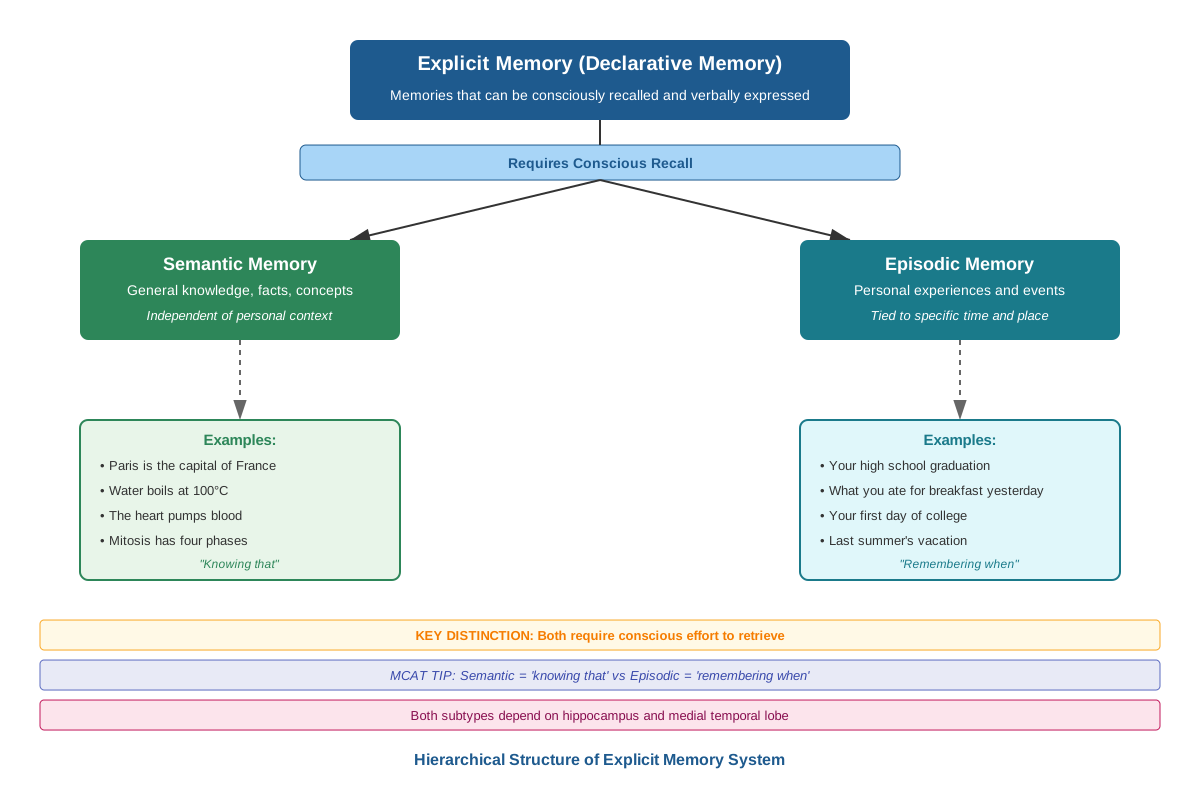
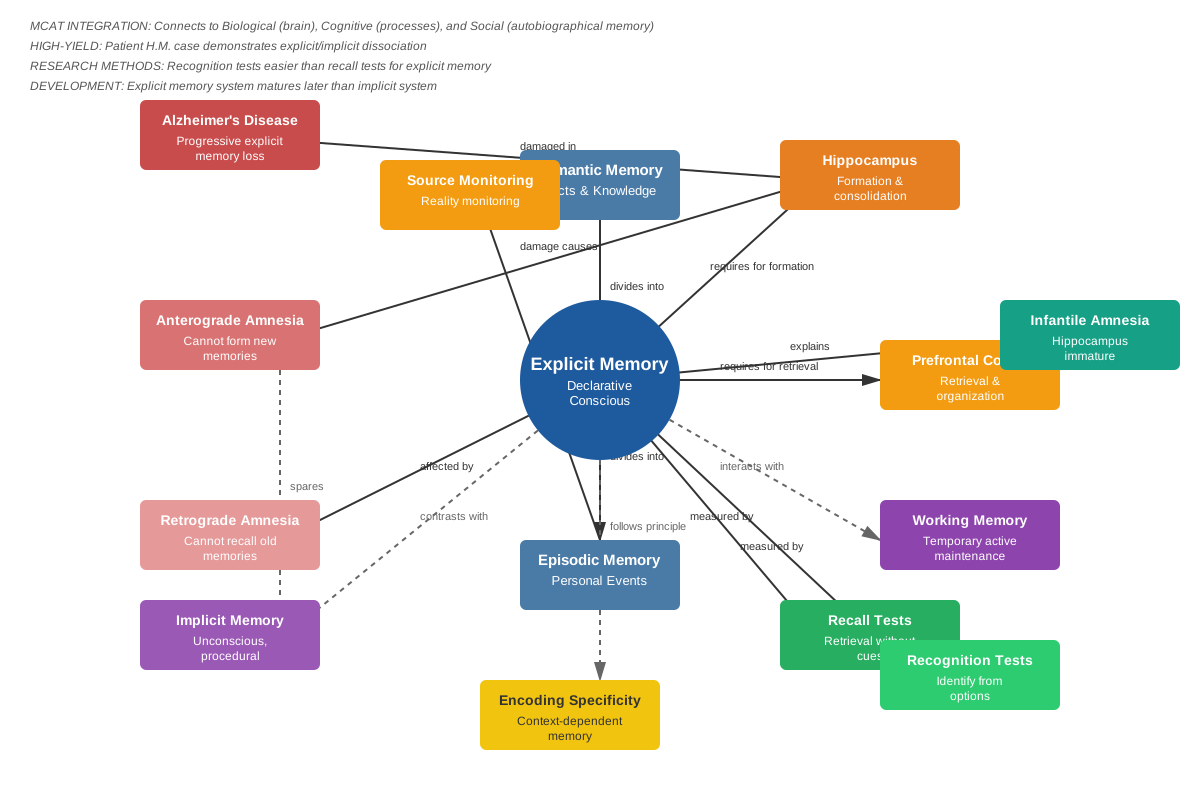
The explicit memory system divides into two distinct subtypes: semantic memory (general knowledge and facts) and episodic memory (personal experiences tied to specific times and places). This distinction proves critical for MCAT success, as test questions frequently require students to differentiate between these memory types or identify which brain structures support each function. The hippocampus and surrounding medial temporal lobe structures play indispensable roles in forming new explicit memories, making this topic directly relevant to understanding conditions like Alzheimer's disease and anterograde amnesia.
For the MCAT, explicit memory connects to numerous other Psychology concepts including memory encoding and retrieval, brain anatomy and function, cognitive development across the lifespan, and various psychological disorders. Questions may appear in discrete format testing straightforward definitions, or more commonly, within passage-based questions requiring application of explicit memory principles to experimental designs, clinical vignettes, or research scenarios. Mastering this topic provides the foundation for understanding implicit memory (its counterpart), working memory systems, and the broader neuroscience of learning.
Learning Objectives
- [ ] Define Explicit memory using accurate Psychology terminology
- [ ] Explain why Explicit memory matters for the MCAT
- [ ] Apply Explicit memory to exam-style questions
- [ ] Identify common mistakes related to Explicit memory
- [ ] Connect Explicit memory to related Psychology concepts
- [ ] Distinguish between semantic and episodic memory with specific examples
- [ ] Describe the neuroanatomical structures underlying explicit memory formation and retrieval
- [ ] Analyze how explicit memory differs from implicit memory across multiple dimensions
- [ ] Predict how damage to specific brain regions would affect explicit memory function
Prerequisites
- Basic brain anatomy: Understanding of major brain structures (hippocampus, cortex, temporal lobe) is necessary to comprehend where explicit memories are processed and stored
- General memory concepts: Familiarity with encoding, storage, and retrieval processes provides the framework for understanding how explicit memories form
- Long-term vs. short-term memory distinction: Recognizing that explicit memory is a subdivision of long-term memory helps place this concept within the broader memory taxonomy
- Consciousness and awareness: Basic understanding that consciousness involves awareness of mental content is essential since explicit memory requires conscious retrieval
Why This Topic Matters
Clinical and Real-World Significance
Explicit memory dysfunction underlies many neurological and psychiatric conditions encountered in medical practice. Alzheimer's disease patients initially lose the ability to form new explicit memories while retaining implicit memory functions like motor skills. Patients with hippocampal damage from stroke, trauma, or surgical intervention (like the famous patient H.M.) demonstrate profound explicit memory deficits while maintaining normal implicit memory. Understanding explicit memory helps clinicians differentiate between various dementia types, assess traumatic brain injury severity, and evaluate the cognitive effects of medications or treatments.
MCAT Exam Statistics and Frequency
Explicit memory appears in approximately 15-20% of Psychology and Sociology section questions, either directly or as part of broader memory-related passages. The MCAT frequently tests this concept through:
- Experimental passage analysis: Studies comparing memory performance across different conditions or populations
- Clinical vignettes: Patient cases requiring identification of memory system dysfunction
- Discrete questions: Direct testing of definitions and distinctions between memory types
- Research methodology questions: Experimental designs measuring explicit versus implicit memory
Common Exam Appearances
MCAT passages commonly present explicit memory in contexts such as aging research comparing younger and older adults' recall abilities, neuroimaging studies showing hippocampal activation during memory tasks, or clinical cases of amnesia patients. Questions may ask students to identify which memory system is being tested by a particular experimental task, predict outcomes based on brain lesion locations, or explain why certain interventions would or wouldn't improve explicit memory performance.
Core Concepts
Definition and Fundamental Characteristics
Explicit memory (also called declarative memory) refers to the long-term memory system responsible for storing information that can be consciously recalled and verbally declared or expressed. This memory type requires intentional, effortful retrieval and involves awareness that one is remembering. When you deliberately try to remember someone's name, recall historical dates for an exam, or describe what you ate for breakfast, you are accessing explicit memory.
The defining features of explicit memory include:
- Conscious awareness: The individual knows they are retrieving a memory
- Intentional retrieval: Accessing these memories typically requires deliberate effort
- Verbal expression: These memories can be described in words
- Flexible use: Explicit memories can be applied in contexts different from where they were learned
- Hippocampal dependence: Formation requires intact hippocampal function
The Two Subtypes: Semantic and Episodic Memory
Explicit memory divides into two functionally and neurologically distinct subtypes that the MCAT tests extensively:
| Feature | Semantic Memory | Episodic Memory |
|---|---|---|
| Definition | General knowledge and facts about the world | Personal experiences tied to specific times and places |
| Time reference | Timeless, context-free | Temporally dated, context-specific |
| Examples | Paris is the capital of France; water boils at 100°C | Your high school graduation; what you did last Tuesday |
| Retrieval cue | "What is...?" or "Define..." | "When did...?" or "Remember when..." |
| Subjective experience | Knowing | Remembering/re-experiencing |
| Brain regions | Lateral temporal cortex, frontal regions | Hippocampus, medial temporal lobe, prefrontal cortex |
| Vulnerability | Relatively preserved in early Alzheimer's | Impaired early in Alzheimer's disease |
Semantic memory stores decontextualized facts, concepts, and general knowledge accumulated throughout life. This includes vocabulary, mathematical operations, historical facts, and conceptual understanding. Importantly, semantic memories lack information about when or where the knowledge was acquired—you know that dogs are mammals, but probably cannot recall the specific moment you learned this fact.
Episodic memory captures personally experienced events embedded within spatial and temporal contexts. These memories include the "what, where, and when" of experiences and often contain emotional and sensory details. Episodic memories have a subjective quality of "mental time travel," allowing individuals to re-experience past events. The ability to form new episodic memories is particularly vulnerable to hippocampal damage.
Neuroanatomical Basis
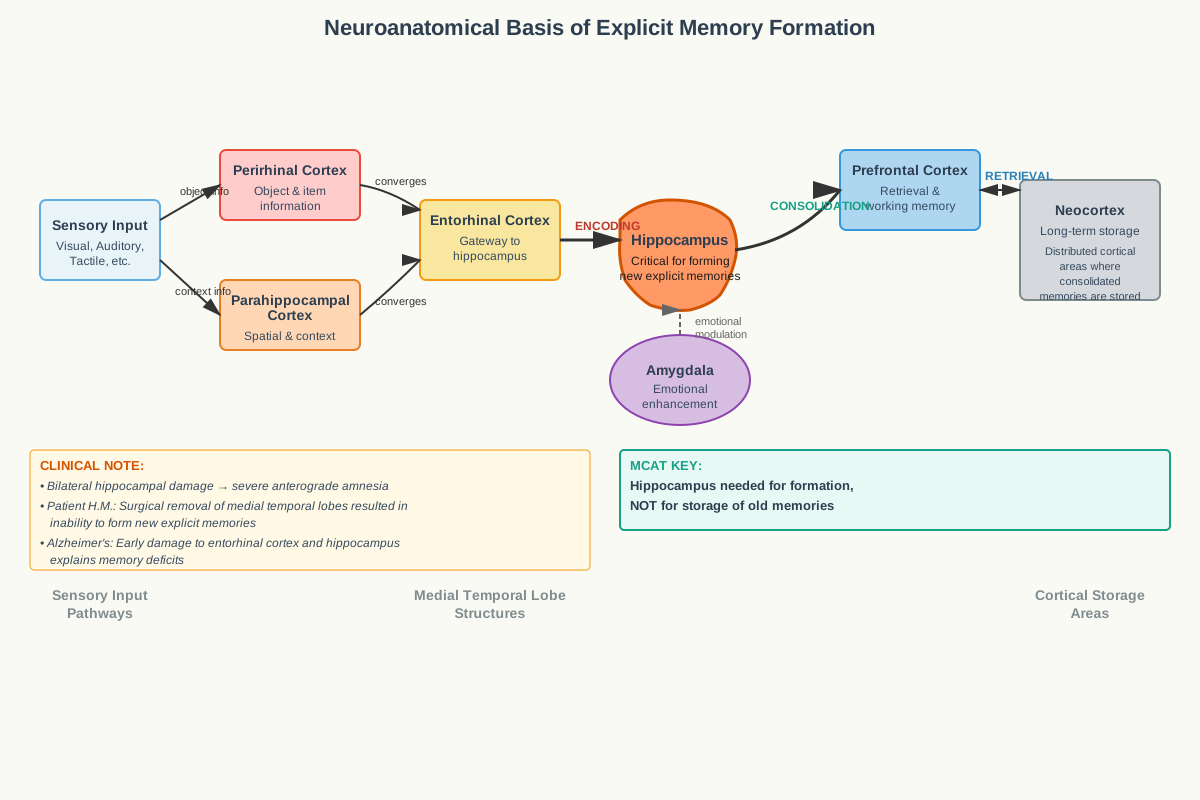
The hippocampus and surrounding medial temporal lobe structures (entorhinal cortex, perirhinal cortex, parahippocampal cortex) are critical for explicit memory formation. The hippocampus acts as a binding mechanism, linking together distributed cortical representations to form coherent memories. During encoding, the hippocampus receives processed sensory information from various cortical regions and creates associations between these elements.
The memory consolidation process involves:
- Initial encoding: Hippocampus rapidly binds together cortical representations
- Consolidation: Over time (days to years), memories become less hippocampus-dependent
- Storage: Eventually, memories are stored primarily in neocortical regions
- Retrieval: Hippocampus helps reconstruct memories by reactivating cortical patterns
The prefrontal cortex plays essential roles in explicit memory retrieval, particularly for episodic memories, by implementing strategic search processes and monitoring retrieved information. The diencephalon (including mammillary bodies and thalamus) also contributes to explicit memory, as damage to these structures (as in Korsakoff's syndrome) produces severe amnesia.
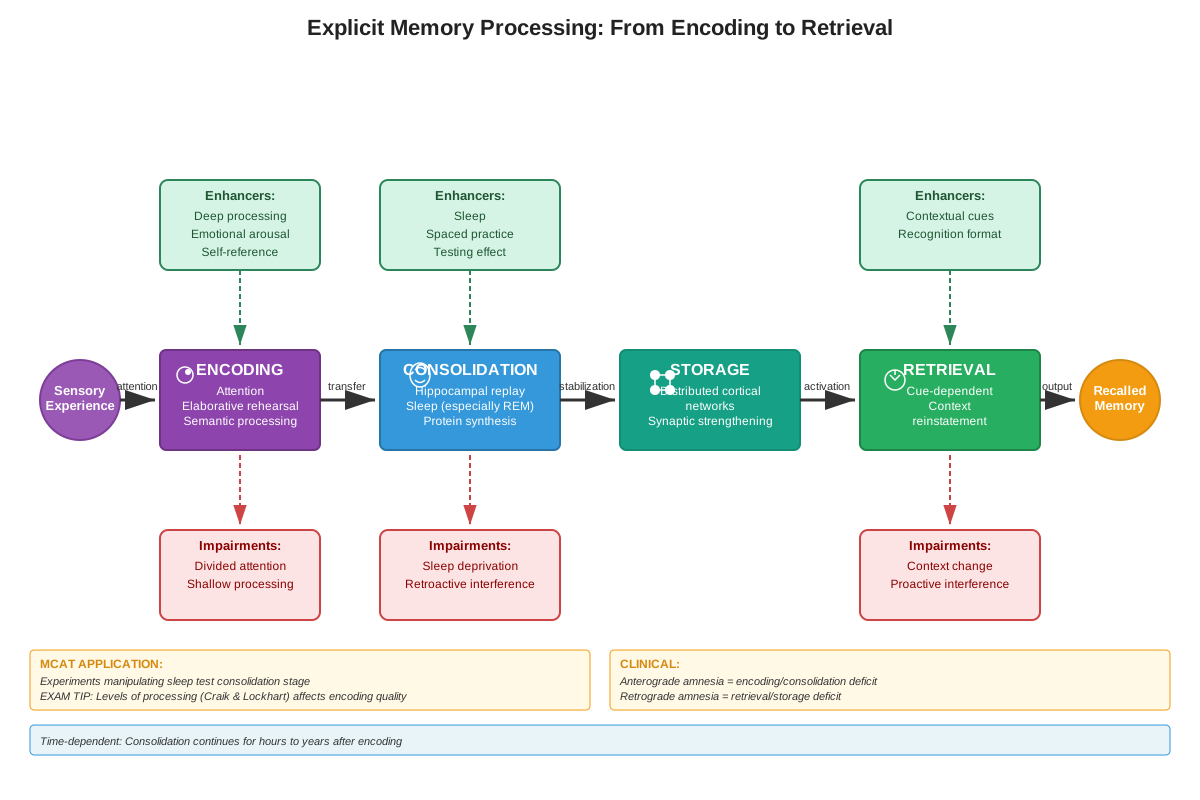
Encoding, Storage, and Retrieval Processes
Encoding explicit memories requires attention and often benefits from elaborative processing—connecting new information to existing knowledge. Strategies that enhance explicit memory encoding include:
- Elaborative rehearsal: Thinking deeply about meaning rather than superficial features
- Organization: Structuring information into categories or hierarchies
- Visualization: Creating mental images
- Self-reference: Relating information to oneself
- Generation: Actively producing information rather than passively reading
Storage of explicit memories involves synaptic changes in neural networks, with the hippocampus initially necessary but cortical regions eventually maintaining the memory independently. This process, called systems consolidation, explains why older memories often survive hippocampal damage while recent memories are lost.
Retrieval of explicit memories can occur through:
- Recall: Generating information from memory without cues (e.g., essay questions)
- Recognition: Identifying previously encountered information (e.g., multiple-choice questions)
- Cued recall: Using hints or prompts to access memories
Recognition typically proves easier than recall because it requires less complete memory reconstruction and benefits from familiarity processes.
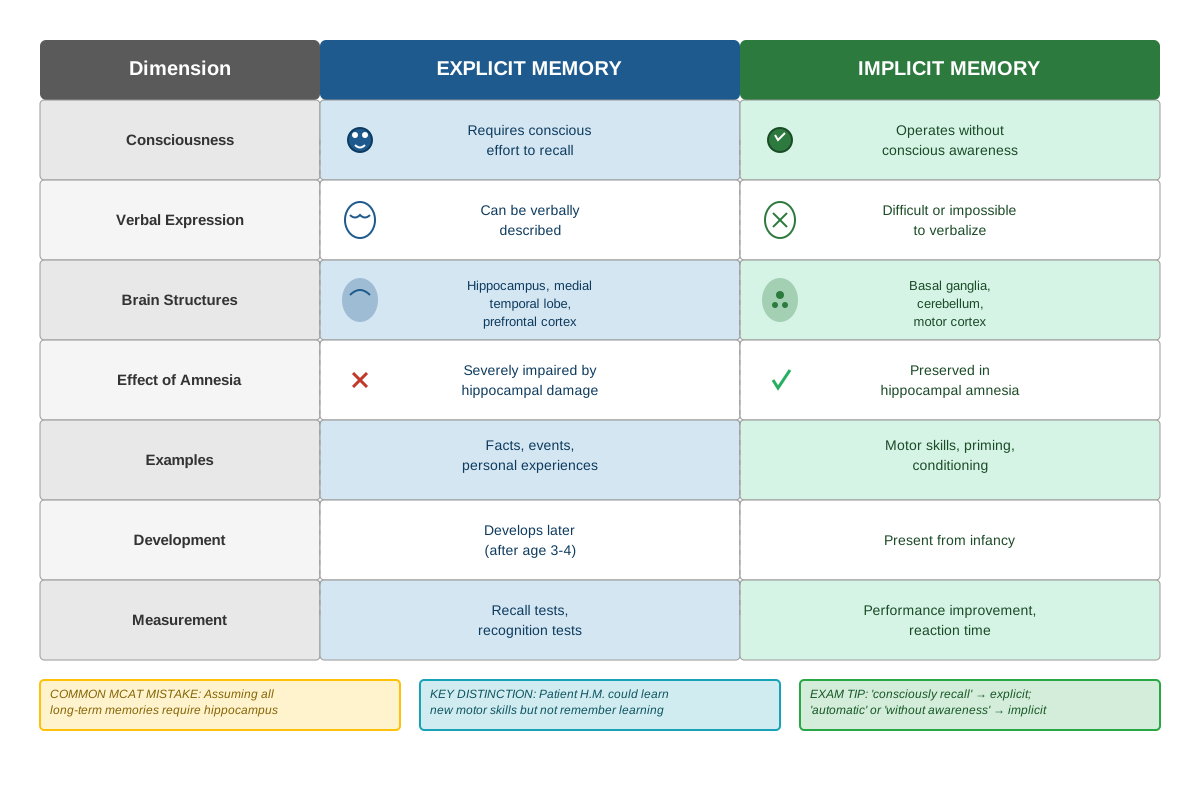
Explicit vs. Implicit Memory
Understanding the distinction between explicit and implicit memory systems is crucial for MCAT success:
| Dimension | Explicit Memory | Implicit Memory |
|---|---|---|
| Awareness | Conscious, intentional | Unconscious, automatic |
| Expression | Verbal declaration | Performance/behavior |
| Brain structures | Hippocampus, medial temporal lobe | Basal ganglia, cerebellum, motor cortex |
| Examples | Facts, events | Skills, priming, conditioning |
| Amnesia effect | Severely impaired | Often intact |
| Development | Develops later in childhood | Present from infancy |
| Measurement | Recall/recognition tests | Indirect tests (reaction time, performance) |
Implicit memory (nondeclarative memory) includes procedural memory (skills and habits), priming (facilitated processing of previously encountered stimuli), and classical conditioning. These memories influence behavior without conscious awareness and rely on different neural systems than explicit memory.
Memory Assessment Methods
The MCAT frequently presents research scenarios requiring identification of whether a task measures explicit or implicit memory:
Explicit memory tasks:
- Free recall (listing items from a studied list)
- Cued recall (providing category names as hints)
- Recognition (identifying old vs. new items)
- Source memory (remembering where information was learned)
Implicit memory tasks:
- Priming (faster identification of previously seen words)
- Skill learning (improved performance on motor tasks)
- Perceptual learning (enhanced discrimination abilities)
Concept Relationships
Explicit memory connects hierarchically and functionally to numerous psychology concepts. At the broadest level, explicit memory is one subdivision of long-term memory, which itself contrasts with short-term/working memory. Within explicit memory, semantic memory and episodic memory represent parallel but distinct systems that can be independently affected by brain damage or disease.
The relationship flows: Sensory input → Attention → Working memory → Encoding processes → Explicit memory formation (hippocampus-dependent) → Consolidation → Long-term storage (cortical) → Retrieval (hippocampus and prefrontal cortex).
Explicit memory contrasts with implicit memory, forming a fundamental dichotomy in long-term memory systems. While explicit memory requires the hippocampus, implicit memory depends on the basal ganglia (procedural memory), amygdala (emotional conditioning), and cerebellum (motor learning).
Forgetting affects explicit memory through decay, interference, and retrieval failure. Amnesia specifically disrupts explicit memory formation (anterograde amnesia) or retrieval (retrograde amnesia), often leaving implicit memory intact. Alzheimer's disease progressively destroys explicit memory, beginning with episodic memory before affecting semantic memory.
The levels of processing framework explains why elaborative encoding enhances explicit memory: deeper semantic processing creates stronger, more retrievable memories than shallow perceptual processing. Context-dependent memory and state-dependent memory phenomena demonstrate how retrieval cues facilitate explicit memory access.
Quick check — test yourself on Explicit memory so far.
Try Flashcards →High-Yield Facts
⭐ Explicit memory requires conscious, intentional retrieval and can be verbally expressed, distinguishing it from implicit memory
⭐ The hippocampus and medial temporal lobe structures are essential for forming new explicit memories but not for retrieving very old memories (systems consolidation)
⭐ Semantic memory stores general facts and knowledge without temporal/spatial context, while episodic memory stores personally experienced events with specific time and place information
⭐ Patient H.M., who had bilateral hippocampal removal, could not form new explicit memories but retained implicit memory abilities, demonstrating the dissociation between memory systems
⭐ Recognition is typically easier than recall because it requires less complete memory reconstruction and benefits from familiarity signals
- Explicit memory develops later in childhood than implicit memory, explaining childhood amnesia (inability to recall early life events)
- Alzheimer's disease initially impairs episodic memory formation while relatively preserving semantic memory and implicit memory
- The prefrontal cortex is critical for strategic retrieval of explicit memories, particularly episodic memories requiring temporal ordering
- Elaborative rehearsal (deep, meaningful processing) produces stronger explicit memories than maintenance rehearsal (rote repetition)
- Anterograde amnesia (inability to form new explicit memories) results from hippocampal damage, while retrograde amnesia (loss of old memories) can result from various brain injuries
- Korsakoff's syndrome, caused by thiamine deficiency in chronic alcoholism, produces severe explicit memory deficits due to diencephalic damage
- The encoding specificity principle states that retrieval is most successful when the retrieval context matches the encoding context
Common Misconceptions
Misconception: Explicit memory and semantic memory are the same thing.
Correction: Semantic memory is one subtype of explicit memory; the other subtype is episodic memory. Explicit memory encompasses both semantic (facts) and episodic (personal experiences) memory systems.
Misconception: The hippocampus permanently stores all explicit memories.
Correction: The hippocampus is essential for forming new explicit memories and retrieving recent ones, but through consolidation, older memories become stored in cortical regions and can survive hippocampal damage. This explains why amnesia patients often lose recent memories but retain older ones.
Misconception: Amnesia patients cannot learn anything new.
Correction: Amnesia patients with hippocampal damage cannot form new explicit memories but typically retain the ability to form implicit memories, including learning new motor skills, showing priming effects, and forming conditioned responses—they simply have no conscious awareness of the learning experiences.
Misconception: Episodic memory is less important than semantic memory.
Correction: Both memory types are equally important but serve different functions. Episodic memory allows mental time travel and autobiographical continuity, while semantic memory provides the knowledge base for understanding the world. Episodic memory is actually more vulnerable to aging and disease.
Misconception: Explicit memory retrieval is like playing back a video recording.
Correction: Explicit memory retrieval is a reconstructive process that pieces together distributed information, making memories susceptible to distortion, suggestion, and false memories. Each retrieval can actually modify the memory through reconsolidation.
Misconception: If someone recognizes information, they must have explicit memory of it.
Correction: Recognition can be based on either explicit memory (consciously remembering the item) or implicit memory (feeling of familiarity without conscious recollection). This distinction between "remembering" and "knowing" is important in memory research.
Worked Examples
Example 1: Identifying Memory Types in a Clinical Case
Vignette: A 68-year-old patient suffered a stroke affecting bilateral hippocampal regions. During evaluation, the neurologist notes that the patient can still ride a bicycle, shows improved performance on a mirror-tracing task with practice, and demonstrates faster word identification for previously presented words. However, the patient cannot recall what he ate for breakfast, cannot remember the neurologist's name despite multiple introductions, and cannot learn new facts about his medical condition.
Question: Which memory systems are impaired and which are intact?
Analysis:
Step 1: Identify behaviors requiring explicit memory (conscious recall of facts and events):
- Recalling breakfast (episodic memory) - IMPAIRED
- Remembering the neurologist's name (episodic/semantic memory) - IMPAIRED
- Learning new medical facts (semantic memory) - IMPAIRED
Step 2: Identify behaviors requiring implicit memory (unconscious, performance-based):
- Riding a bicycle (procedural memory) - INTACT
- Improving on mirror-tracing (procedural memory) - INTACT
- Faster word identification (priming) - INTACT
Step 3: Connect to neuroanatomy:
Bilateral hippocampal damage specifically impairs explicit memory formation while leaving implicit memory systems (basal ganglia for procedural memory, perceptual systems for priming) intact.
Answer: The patient has severe anterograde amnesia affecting explicit memory (both episodic and semantic) due to hippocampal damage, while implicit memory systems remain functional. This dissociation demonstrates that explicit and implicit memory rely on distinct neural substrates.
Example 2: Experimental Design Analysis
Passage excerpt: Researchers investigated age-related memory changes by presenting young adults (ages 20-30) and older adults (ages 65-75) with a list of 40 words. After a 30-minute delay, participants completed two tasks: (1) free recall—writing down as many words as possible, and (2) word-stem completion—completing three-letter word beginnings with the first word that comes to mind, where half the stems could be completed with studied words.
Results: Young adults recalled significantly more words than older adults in free recall (28 vs. 18 words). However, both groups showed equivalent word-stem completion rates for studied words (65% vs. 63%).
Question: What do these results suggest about aging's effects on different memory systems?
Analysis:
Step 1: Identify which task measures which memory type:
- Free recall = explicit memory test (conscious, intentional retrieval)
- Word-stem completion = implicit memory test (priming, unconscious influence)
Step 2: Interpret the pattern of results:
- Age difference in explicit memory (free recall) suggests aging impairs conscious retrieval
- No age difference in implicit memory (priming) suggests aging spares unconscious memory processes
Step 3: Connect to neuroanatomical knowledge:
Aging particularly affects hippocampal and prefrontal function, which support explicit memory. The neural systems supporting priming (perceptual processing regions) are relatively preserved in normal aging.
Answer: The results demonstrate a dissociation between explicit and implicit memory in aging. Explicit memory (measured by free recall) declines with age, likely due to hippocampal and prefrontal changes. Implicit memory (measured by priming) remains intact, consistent with preserved perceptual processing systems. This pattern supports the distinction between memory systems and their differential vulnerability to aging.
Exam Strategy
Approaching MCAT Questions on Explicit Memory
When encountering explicit memory questions, follow this systematic approach:
- Identify the memory system being tested: Look for keywords indicating conscious recall (remember, recall, recognize) versus unconscious influence (performance, speed, automatic)
- Determine the subtype: If explicit memory is involved, decide whether it's semantic (facts, knowledge) or episodic (personal experiences, events with time/place)
- Consider the neuroanatomy: Questions about brain damage or neuroimaging often require knowing that hippocampus = explicit memory formation
- Apply the dissociation principle: Remember that explicit and implicit memory can be independently affected—damage to one system doesn't necessarily impair the other
Trigger Words and Phrases
Explicit memory indicators:
- "Consciously recall"
- "Deliberately remember"
- "Verbally report"
- "Recognition test"
- "Free recall"
- "Episodic memory" or "semantic memory"
- "Declarative knowledge"
Implicit memory indicators (to distinguish):
- "Without awareness"
- "Automatic"
- "Performance improvement"
- "Priming"
- "Procedural"
- "Skill learning"
Hippocampal involvement indicators:
- "Medial temporal lobe"
- "Anterograde amnesia"
- "New memory formation"
- "Patient H.M."
- "Alzheimer's disease" (early stages)
Process-of-Elimination Tips
When uncertain between answer choices:
- Eliminate options confusing explicit and implicit memory: If the question describes conscious recall, eliminate answers mentioning procedural memory, priming, or conditioning
- Eliminate options misidentifying brain regions: If hippocampal damage is described, eliminate answers suggesting intact explicit memory formation or impaired implicit memory
- Eliminate options confusing semantic and episodic memory: Semantic = timeless facts; episodic = time-and-place-specific events. Use this distinction to eliminate incorrect characterizations
- Watch for "always/never" statements: Memory systems show individual variation and context-dependence; absolute statements are often incorrect
Time Allocation
For discrete questions on explicit memory: 60-90 seconds maximum. These typically test straightforward definitions or distinctions.
For passage-based questions: Allocate time to carefully identify which memory system the experimental task measures before attempting questions. Misidentifying the memory system will cascade into multiple wrong answers.
Memory Techniques
Mnemonics for Key Distinctions
"EXPLICIT = EXPRESSED": Explicit memories can be EXpressed in words and require EXertion (effort) to retrieve
"HIPPO CAMPS at EXPLICIT locations": The HIPPOcampus is essential for EXPLICIT memory formation
"Semantic = School facts; Episodic = Events in your life": Both start with the same letter to help distinguish the two explicit memory subtypes
"HIP people DECLARE facts": HIPpocampus enables DECLARative (explicit) memory
Visualization Strategy
Picture a filing cabinet with two drawers:
- Top drawer (Semantic): Contains index cards with facts, definitions, and general knowledge—no dates or personal notes, just information
- Bottom drawer (Episodic): Contains photographs of personal experiences, each labeled with "when" and "where"
Both drawers require you to consciously open them (explicit retrieval), but they contain different types of information.
Acronym for Memory Systems
"DEEP SEA" for explicit memory characteristics:
- Declarative
- Effortful retrieval
- Expressible verbally
- Personal (episodic) or Public knowledge (semantic)
- Spatial/temporal context (episodic)
- Episodic and semantic subtypes
- Aware of remembering
Summary
Explicit memory represents the long-term memory system responsible for consciously accessible information that can be verbally declared. This memory type divides into semantic memory (general facts and knowledge) and episodic memory (personally experienced events with temporal and spatial context). The hippocampus and medial temporal lobe structures are essential for forming new explicit memories through a process of binding distributed cortical representations. Over time, through consolidation, these memories become less dependent on the hippocampus and are maintained in cortical regions. Explicit memory contrasts fundamentally with implicit memory, which operates unconsciously and depends on different brain structures. Understanding this distinction is crucial for interpreting clinical cases of amnesia, where explicit memory is typically impaired while implicit memory remains intact. The MCAT frequently tests explicit memory through experimental passages, clinical vignettes, and discrete questions requiring students to identify memory types, predict effects of brain damage, or analyze research designs. Mastery requires knowing the defining features of explicit memory, the semantic-episodic distinction, the neuroanatomical basis, and how explicit memory relates to other memory systems and psychological concepts.
Key Takeaways
- Explicit memory is the conscious, declarative long-term memory system that can be verbally expressed, contrasting with unconscious implicit memory
- Semantic memory stores context-free facts and knowledge, while episodic memory stores personally experienced events with specific time and place information
- The hippocampus is essential for forming new explicit memories but not for storing very old memories, which become cortically based through consolidation
- Hippocampal damage produces anterograde amnesia (inability to form new explicit memories) while typically sparing implicit memory functions
- Recognition is easier than recall because it requires less complete memory reconstruction and can benefit from familiarity processes
- Explicit memory develops later than implicit memory and is more vulnerable to aging and neurodegenerative diseases like Alzheimer's
- MCAT questions often require distinguishing between explicit and implicit memory based on task characteristics, brain regions involved, or patterns of impairment
Related Topics
Implicit Memory: Understanding explicit memory's counterpart is essential for recognizing dissociations between memory systems and interpreting amnesia cases. Mastering explicit memory provides the foundation for learning about procedural memory, priming, and classical conditioning.
Working Memory: This temporary memory system feeds information into explicit memory through encoding processes. Understanding how working memory and explicit memory interact explains why attention and rehearsal affect long-term retention.
Forgetting and Memory Distortion: Explicit memories are susceptible to various forms of forgetting and distortion. Building on explicit memory knowledge enables deeper understanding of interference, decay, and false memory phenomena.
Brain Structure and Function: The neuroanatomical basis of explicit memory connects to broader neuroscience topics including hippocampal anatomy, cortical organization, and neural plasticity mechanisms.
Cognitive Development: Explicit memory capabilities change across the lifespan, from childhood amnesia through normal aging and pathological decline. Understanding explicit memory enables comprehension of developmental memory changes.
Amnesia and Memory Disorders: Clinical conditions affecting explicit memory, including Alzheimer's disease, Korsakoff's syndrome, and traumatic brain injury, build directly on explicit memory concepts.
Practice CTA
Now that you've mastered the core concepts of explicit memory, it's time to solidify your understanding through active practice. Complete the practice questions to test your ability to apply these concepts to MCAT-style scenarios, and use the flashcards to reinforce the key distinctions and facts. Remember, explicit memory itself benefits from retrieval practice—actively testing yourself is one of the most effective ways to ensure you'll remember this material on test day. The distinction between explicit and implicit memory, and between semantic and episodic memory, appears frequently on the MCAT, so investing time in practice now will pay dividends in your score. You've built a strong foundation—now strengthen it through application!
Sign up free to keep reading
Create a free AnvayaPrep account to finish this MCAT guide on Explicit memory — plus flashcards and practice questions.