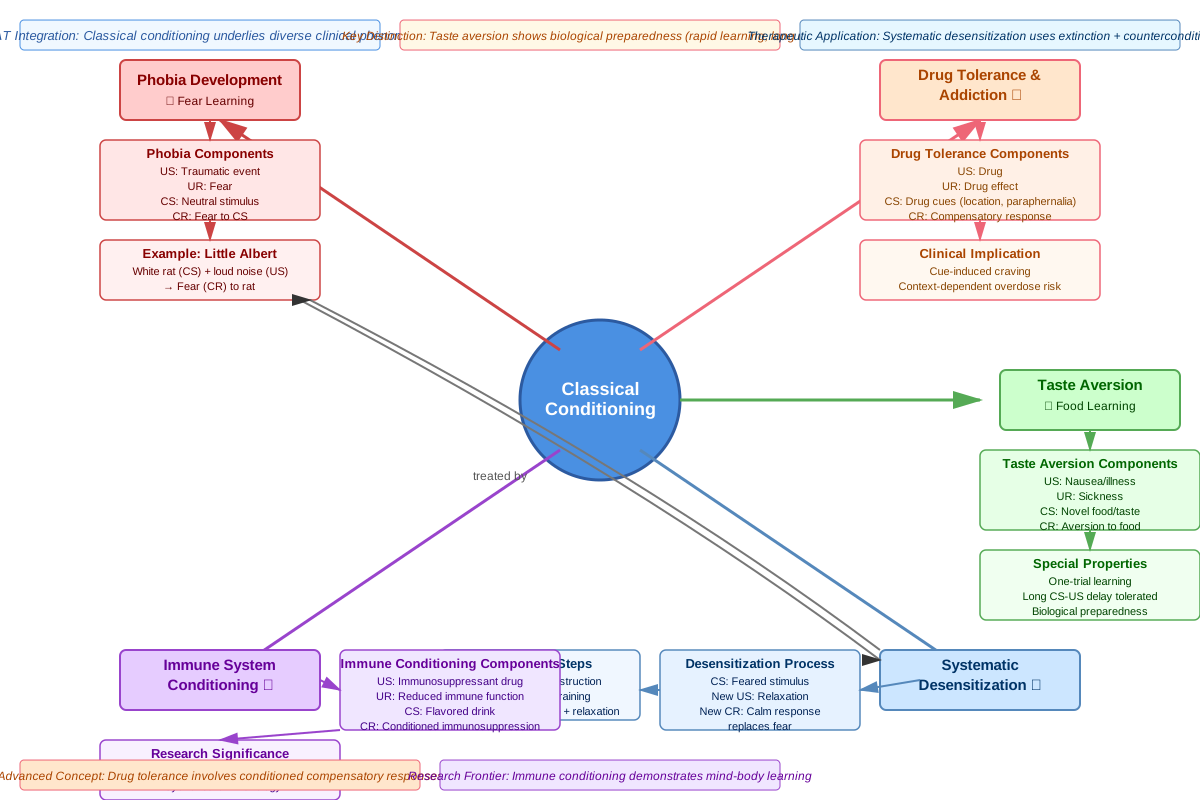
Overview
Classical conditioning is a foundational learning mechanism in Psychology that describes how organisms learn to associate previously neutral stimuli with biologically significant events, resulting in automatic behavioral and physiological responses. First systematically studied by Ivan Pavlov in his famous experiments with dogs, classical conditioning represents one of the most fundamental forms of associative learning and serves as a cornerstone concept in understanding how experiences shape behavior. This learning process occurs when a neutral stimulus becomes associated with an unconditioned stimulus through repeated pairings, eventually eliciting a conditioned response even in the absence of the original unconditioned stimulus.
For the MCAT, classical conditioning is a high-yield topic that appears frequently across multiple question formats, including discrete questions, passage-based questions, and experimental design scenarios. The exam tests not only definitional knowledge but also the ability to identify classical conditioning in novel contexts, distinguish it from other learning paradigms (particularly operant conditioning), and apply conditioning principles to clinical scenarios such as phobias, addiction, and therapeutic interventions. Understanding classical conditioning is essential for success in the Psychology and Sociology section, as it connects to broader themes in behavioral psychology, neuroscience, and clinical treatment approaches.
Classical conditioning sits at the intersection of Learning and Memory processes and connects to numerous other Psychology concepts including habituation, sensitization, operant conditioning, observational learning, and cognitive processes. It provides the mechanistic foundation for understanding how emotional responses develop, how phobias form, how drug tolerance emerges, and how therapeutic techniques like systematic desensitization work. Mastery of this topic enables students to analyze complex behavioral scenarios and understand the biological and psychological mechanisms underlying learned associations.
Learning Objectives
- [ ] Define Classical conditioning using accurate Psychology terminology
- [ ] Explain why Classical conditioning matters for the MCAT
- [ ] Apply Classical conditioning to exam-style questions
- [ ] Identify common mistakes related to Classical conditioning
- [ ] Connect Classical conditioning to related Psychology concepts
- [ ] Distinguish between the four key components of classical conditioning (US, UR, CS, CR) in novel scenarios
- [ ] Analyze the processes of acquisition, extinction, spontaneous recovery, generalization, and discrimination
- [ ] Evaluate the role of timing and contingency in establishing conditioned responses
- [ ] Predict outcomes of classical conditioning manipulations in experimental and clinical contexts
Prerequisites
- Basic understanding of stimulus and response: Classical conditioning fundamentally involves pairing stimuli with responses, requiring familiarity with these basic behavioral units
- Concept of learning as behavioral change: Students should understand that learning represents relatively permanent changes in behavior resulting from experience
- Awareness of biological reflexes: Many classical conditioning examples involve innate reflexes (salivation, fear responses), so understanding reflexive behavior is helpful
- Basic experimental design principles: Recognizing independent and dependent variables aids in understanding classical conditioning experiments
Why This Topic Matters
Classical conditioning has profound clinical and real-world significance across multiple domains of human behavior and health. In clinical psychology, classical conditioning explains the development and maintenance of phobias, anxiety disorders, and post-traumatic stress disorder (PTSD), where neutral stimuli become associated with traumatic events and subsequently trigger fear responses. The principles also underlie exposure therapy and systematic desensitization, evidence-based treatments that use extinction processes to reduce conditioned fear responses. In addiction medicine, classical conditioning explains drug tolerance, withdrawal symptoms, and cue-induced cravings—environmental cues associated with drug use can trigger physiological responses and relapse even after prolonged abstinence.
On the MCAT, classical conditioning appears in approximately 3-5 questions per exam administration, making it one of the most frequently tested topics in the Psychology and Sociology section. Questions typically appear in three formats: (1) discrete questions asking students to identify components or processes, (2) passage-based questions describing experiments where students must analyze results using conditioning principles, and (3) clinical vignettes requiring application of conditioning concepts to patient scenarios. The exam particularly favors questions that require distinguishing classical from operant conditioning, identifying the timing relationships between stimuli, and predicting outcomes of extinction or generalization.
Common passage contexts include animal learning experiments (often involving fear conditioning or taste aversion), clinical case studies of phobia development or treatment, research on drug addiction and tolerance, and studies examining immune system conditioning or other physiological responses. The MCAT frequently tests higher-order thinking by presenting novel conditioning scenarios and asking students to identify which component represents the conditioned stimulus or predict what will happen after extinction training. Understanding classical conditioning also enables students to answer questions about related topics including memory consolidation, emotional processing, and behavioral modification techniques.
Core Concepts
Fundamental Components of Classical Conditioning
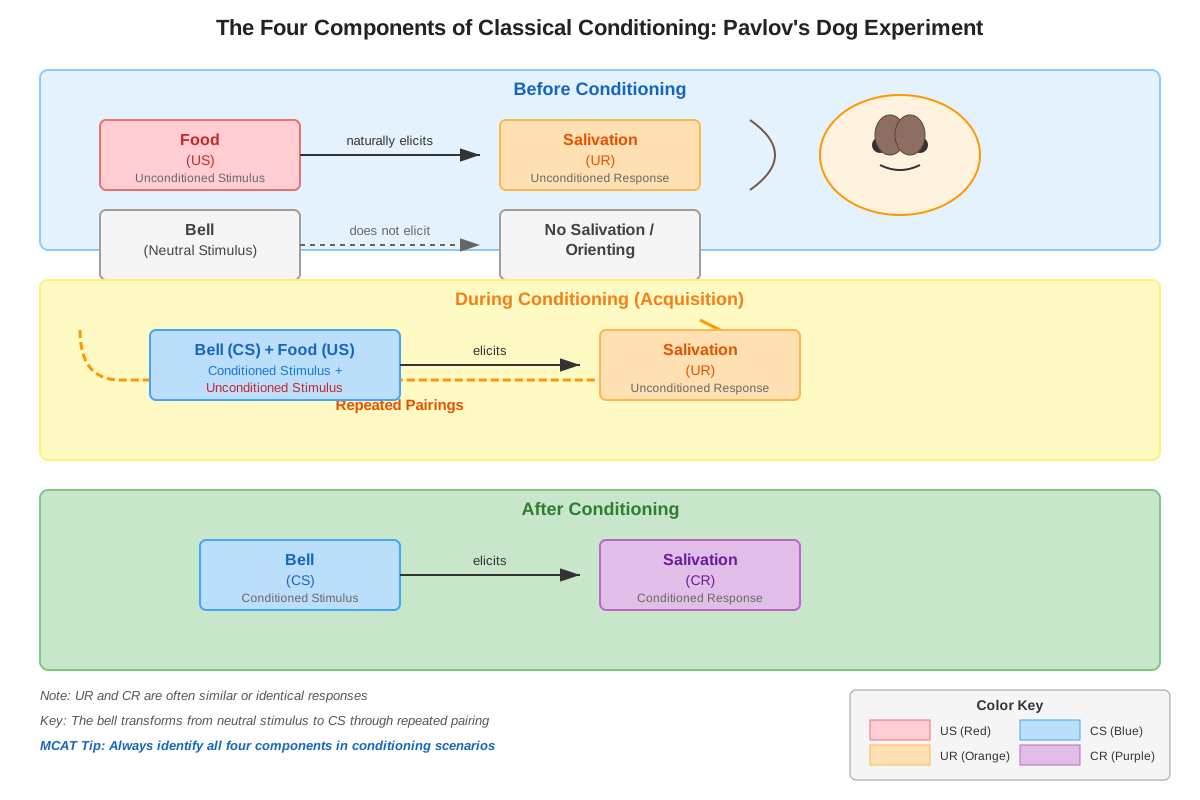
Classical conditioning (also called Pavlovian conditioning or respondent conditioning) involves four essential components that students must be able to identify in any scenario. The unconditioned stimulus (US) is a stimulus that naturally and automatically triggers a response without any prior learning. Examples include food (which naturally causes salivation), a loud noise (which naturally causes startle), or a puff of air to the eye (which naturally causes blinking). The US has biological significance and elicits an innate response.
The unconditioned response (UR) is the natural, automatic response to the unconditioned stimulus. This response occurs reflexively without learning—salivation to food, startle to loud noise, or blinking to an air puff. The UR is typically a physiological or emotional response that serves an adaptive function. Importantly, the UR occurs before any conditioning takes place.
The conditioned stimulus (CS) begins as a neutral stimulus—something that does not naturally produce the response of interest. Through repeated pairing with the unconditioned stimulus, this neutral stimulus becomes a conditioned stimulus that can elicit a learned response. In Pavlov's experiments, the bell or tone was initially neutral (dogs don't naturally salivate to bells), but after repeated pairings with food, the bell became a conditioned stimulus. The CS must be detectable and distinguishable to the organism.
The conditioned response (CR) is the learned response to the conditioned stimulus. After conditioning, the CS alone can elicit this response even without the US present. The CR often resembles the UR but may differ in magnitude, timing, or quality. For example, a dog may salivate to a bell (CR) after the bell has been paired with food, but the amount of salivation may be less than the salivation to actual food (UR).
The Acquisition Process
Acquisition refers to the initial learning phase when the conditioned stimulus and unconditioned stimulus are paired, and the conditioned response is established. During acquisition, the strength of the conditioned response typically increases with each pairing trial, following a negatively accelerated learning curve—rapid initial learning that gradually plateaus. Several factors influence the speed and strength of acquisition.
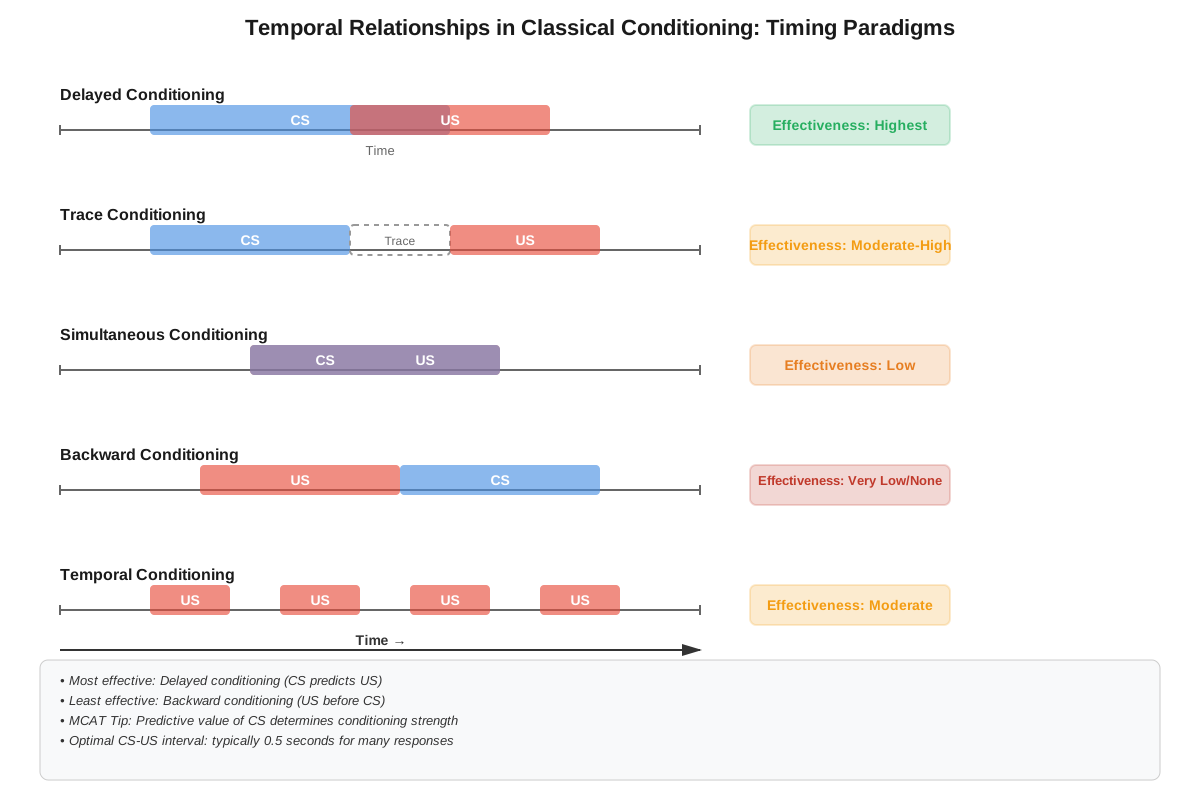
Temporal contiguity—the timing relationship between CS and US—critically affects conditioning success. In forward conditioning, the CS precedes the US, which is generally most effective. Delay conditioning (CS begins before US and continues until US onset) typically produces the strongest conditioning. Trace conditioning (CS ends before US begins, leaving a temporal gap) produces weaker conditioning because the organism must maintain a memory trace of the CS. Simultaneous conditioning (CS and US presented together) produces weak or no conditioning because the CS provides no predictive information. Backward conditioning (US precedes CS) typically produces minimal conditioning and may even produce inhibitory learning.
Contingency—the predictive relationship between CS and US—matters as much as contiguity. The CS must reliably predict the US occurrence. If the US sometimes occurs without the CS, or if the CS sometimes occurs without the US, conditioning will be weaker. Robert Rescorla's research demonstrated that organisms learn about the predictive relationship, not just temporal pairing, highlighting the cognitive aspects of classical conditioning.
Extinction and Recovery Phenomena
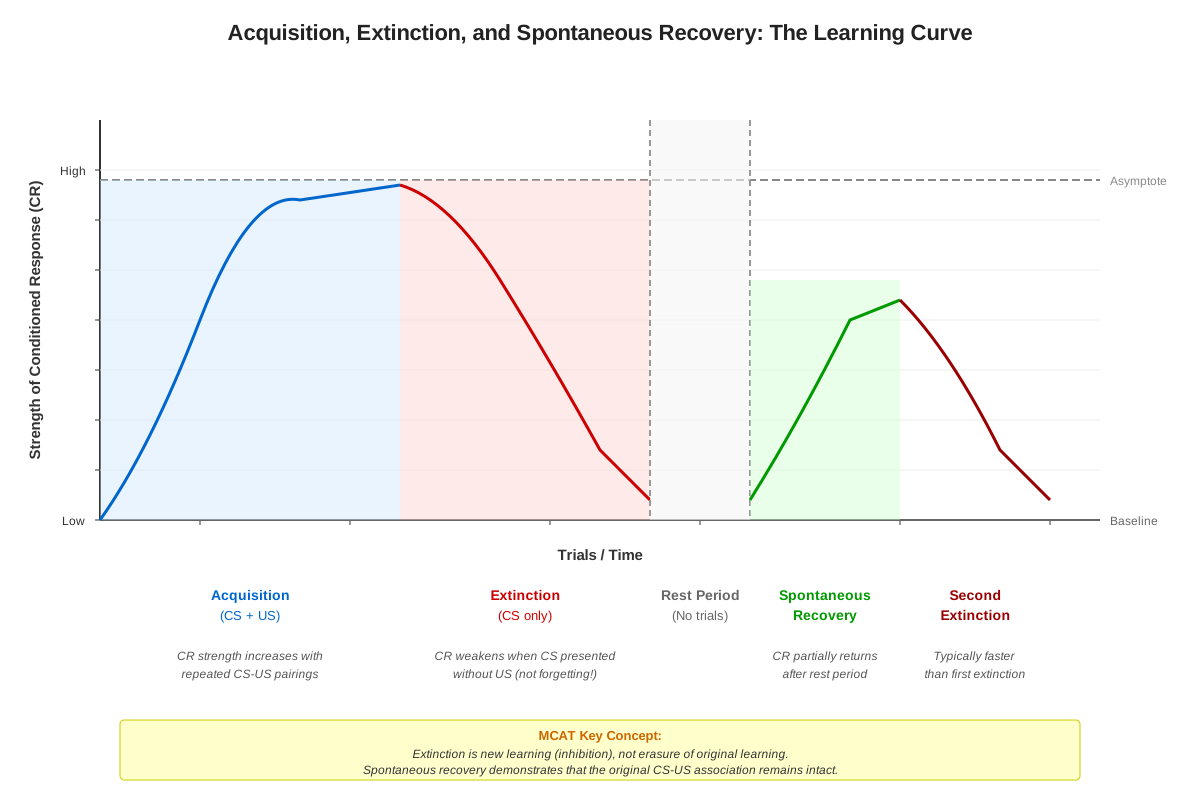
Extinction occurs when the conditioned stimulus is repeatedly presented without the unconditioned stimulus, leading to a gradual decrease in the conditioned response. Importantly, extinction does not erase the original learning; instead, it represents new learning that inhibits the conditioned response. This distinction has critical implications for understanding why conditioned responses can return after extinction.
Spontaneous recovery demonstrates that extinction does not eliminate the original association. After a rest period following extinction, presenting the CS again will often elicit the CR, though typically at a weaker level than before extinction. With repeated extinction sessions separated by rest periods, spontaneous recovery becomes progressively weaker. This phenomenon explains why phobias can resurface after successful treatment and why addiction relapse often occurs even after prolonged abstinence.
Renewal occurs when a conditioned response that was extinguished in one context returns when the organism is placed in a different context. For example, if a fear response is extinguished in a therapist's office but the person returns to the original environment where conditioning occurred, the fear may return. This context-dependency of extinction has important implications for therapy—treatment effects may not generalize to real-world environments.
Reinstatement refers to the return of a conditioned response after extinction when the organism experiences the unconditioned stimulus alone (without the CS). For instance, if a person's fear of dogs has been extinguished but they later experience a dog bite (US), their fear response to the sight of dogs (CS) may return even though the sight wasn't paired with the new bite.
Generalization and Discrimination
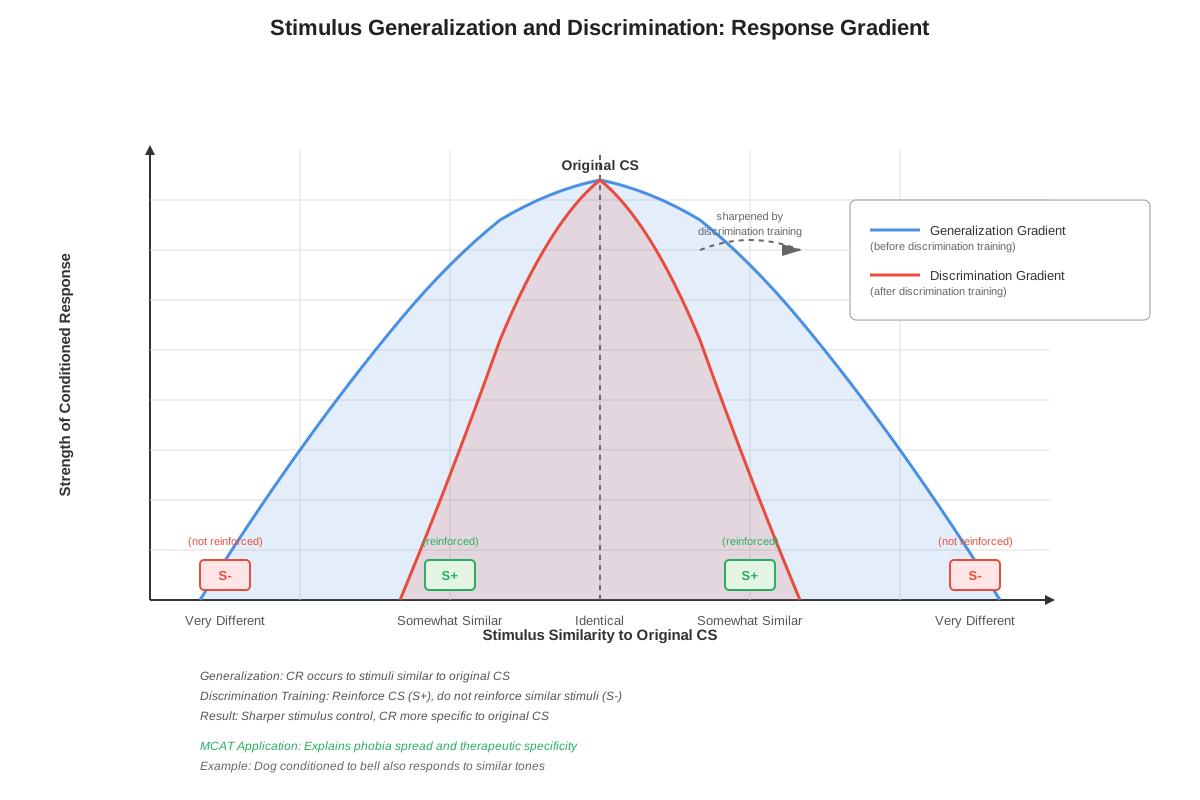
Stimulus generalization occurs when stimuli similar to the conditioned stimulus also elicit the conditioned response. The more similar a stimulus is to the original CS, the stronger the CR it will elicit, creating a generalization gradient. For example, if a person develops a fear of a specific dog, they may also fear other dogs, with the fear response being strongest for dogs most similar to the original. Generalization is adaptive because it allows organisms to respond to new situations based on past learning, but overgeneralization can be maladaptive, as seen in anxiety disorders.
Stimulus discrimination is the learned ability to distinguish between the conditioned stimulus and similar stimuli that have not been paired with the unconditioned stimulus. Discrimination training involves reinforcing responses to one stimulus (CS+) while not reinforcing responses to similar stimuli (CS-). Over time, the organism learns to respond only to the CS+ and not to the CS-. Discrimination is essential for adaptive behavior, allowing organisms to make fine distinctions between safe and dangerous situations.
The balance between generalization and discrimination determines behavioral flexibility. Too much generalization leads to inappropriate responses in safe situations (as in phobias), while too much discrimination might prevent adaptive responses to novel but similar situations.
Higher-Order Conditioning
Higher-order conditioning (also called second-order conditioning) occurs when a well-established conditioned stimulus is used to condition a new neutral stimulus, without ever pairing the new stimulus with the original unconditioned stimulus. For example, if a tone (CS1) has been paired with food (US) until it reliably elicits salivation (CR), then a light (CS2) can be paired with the tone (CS1) until the light alone elicits salivation. The light has never been directly paired with food, yet it produces the conditioned response through its association with the first-order CS.
Higher-order conditioning typically produces weaker responses than first-order conditioning and is more susceptible to extinction. However, it demonstrates the power of associative learning and helps explain how complex chains of associations develop in human behavior. In real-world contexts, higher-order conditioning explains how abstract symbols (like money or grades) can acquire motivational properties through association with primary reinforcers, and how advertising works by pairing products with already-conditioned positive stimuli.
Special Forms of Classical Conditioning
Taste aversion learning (also called the Garcia effect) represents a specialized form of classical conditioning with unique properties. When an organism consumes a novel food (CS) and later experiences nausea (US), it develops a strong aversion (CR) to that food, even if the nausea occurs hours after consumption. This violates typical conditioning principles in several ways: (1) conditioning occurs with only one pairing, (2) long delays between CS and US still produce strong conditioning, and (3) organisms preferentially associate tastes (rather than sights or sounds) with nausea. These properties reflect evolutionary preparedness—organisms that quickly learned to avoid foods that made them sick had survival advantages.
Evaluative conditioning involves changes in the liking or valuing of a stimulus through pairing with positive or negative stimuli. Unlike traditional classical conditioning, evaluative conditioning may not require awareness of the CS-US contingency and is highly resistant to extinction. This form of conditioning is particularly relevant to understanding attitude formation, prejudice development, and advertising effects.
Fear conditioning is extensively studied because of its relevance to anxiety disorders and PTSD. In fear conditioning paradigms, a neutral stimulus (like a tone or context) is paired with an aversive stimulus (like a shock), leading to conditioned fear responses including freezing, increased heart rate, and stress hormone release. Fear conditioning involves specific neural circuits including the amygdala, and understanding these mechanisms has informed treatments for anxiety disorders.
Concept Relationships
Classical conditioning concepts form an interconnected system where each element influences others. The relationship begins with the acquisition process, where repeated CS-US pairings establish the association. The strength of acquisition depends on temporal contiguity (timing) and contingency (predictability), which together determine how quickly and strongly the CR develops. Strong acquisition leads to robust generalization, where similar stimuli also elicit the CR, but discrimination training can narrow the range of effective stimuli.
Once established, conditioned responses can undergo extinction when the CS is presented without the US, but extinction does not erase the original learning, as evidenced by spontaneous recovery, renewal, and reinstatement. These recovery phenomena demonstrate that the original CS-US association remains intact even after extinction, with extinction representing new inhibitory learning that competes with the original excitatory association.
Higher-order conditioning builds upon first-order associations, creating chains of learned relationships that extend the reach of classical conditioning beyond direct CS-US pairings. This connects to cognitive psychology concepts, as higher-order conditioning requires memory of the first-order association and demonstrates that conditioning involves more than simple reflexive associations.
Classical conditioning connects to prerequisite knowledge of reflexes and innate responses (which provide the unconditioned responses), and to broader Learning and Memory concepts including habituation (decreased response to repeated stimulation) and sensitization (increased response to repeated stimulation). It contrasts with operant conditioning, where behavior is modified by consequences rather than by stimulus associations. Understanding this distinction is crucial: classical conditioning involves involuntary responses to stimuli, while operant conditioning involves voluntary behaviors influenced by reinforcement or punishment.
The neural mechanisms of classical conditioning connect to neuroscience topics, particularly the roles of the amygdala in fear conditioning, the cerebellum in eyeblink conditioning, and the hippocampus in contextual conditioning. These connections help explain why certain brain injuries affect specific types of learning and memory.
Quick check — test yourself on Classical conditioning so far.
Try Flashcards →High-Yield Facts
⭐ Classical conditioning involves pairing a neutral stimulus (which becomes the CS) with an unconditioned stimulus (US) until the CS alone elicits a conditioned response (CR) similar to the unconditioned response (UR).
⭐ The most effective temporal arrangement is delay conditioning, where the CS begins before the US and continues until US onset; backward conditioning (US before CS) produces minimal or no conditioning.
⭐ Extinction does not erase the original learning—it represents new inhibitory learning, as demonstrated by spontaneous recovery, renewal, and reinstatement of the CR.
⭐ Stimulus generalization causes similar stimuli to elicit the CR, while discrimination training teaches the organism to respond only to the specific CS and not to similar stimuli.
⭐ Higher-order conditioning occurs when an established CS is used to condition a new neutral stimulus without ever pairing the new stimulus with the original US.
- Contingency (predictive relationship) is as important as contiguity (temporal pairing) for establishing strong conditioning.
- Taste aversion learning violates typical conditioning principles by occurring with one trial, tolerating long CS-US delays, and showing biological preparedness for taste-nausea associations.
- The conditioned response (CR) often resembles but is not identical to the unconditioned response (UR)—it may differ in magnitude, timing, or quality.
- Spontaneous recovery demonstrates that time alone can partially restore an extinguished response without any additional CS-US pairings.
- Context plays a crucial role in conditioning—extinction is often context-specific, and renewal occurs when the organism returns to the original conditioning context.
- Fear conditioning involves the amygdala and forms the basis for understanding phobias, PTSD, and anxiety disorders.
- Blocking occurs when a previously conditioned CS prevents conditioning to a new CS presented simultaneously, demonstrating that organisms learn about predictive relationships rather than just temporal pairings.
Common Misconceptions
Misconception: The conditioned response (CR) is always identical to the unconditioned response (UR).
Correction: While the CR often resembles the UR, they are not identical. The CR may be weaker in magnitude, differ in timing, or even be opposite in direction (as in compensatory drug responses). For example, a dog may salivate less to a bell (CR) than to actual food (UR), and drug-related cues may trigger compensatory physiological responses opposite to the drug's direct effects.
Misconception: Extinction erases or deletes the original learned association.
Correction: Extinction represents new inhibitory learning that suppresses the CR rather than erasing the original CS-US association. Evidence for this includes spontaneous recovery (CR returns after a rest period), renewal (CR returns in the original context), and reinstatement (CR returns after re-exposure to the US alone). The original association remains intact but is inhibited by extinction learning.
Misconception: Classical conditioning only involves simple reflexes and cannot explain complex human behaviors.
Correction: Classical conditioning influences complex behaviors including emotional responses, attitudes, preferences, immune system responses, and drug tolerance. Higher-order conditioning extends classical conditioning to abstract stimuli, and evaluative conditioning shapes attitudes and preferences. Many anxiety disorders, phobias, and addiction phenomena involve classical conditioning mechanisms.
Misconception: Any temporal pairing of stimuli will produce classical conditioning.
Correction: Effective conditioning requires not just temporal contiguity but also contingency—the CS must reliably predict the US. If the US occurs frequently without the CS, or if the CS occurs without the US, conditioning will be weak or absent. Additionally, timing matters: backward conditioning (US before CS) produces minimal conditioning because the CS provides no predictive information.
Misconception: Classical conditioning and operant conditioning are the same thing.
Correction: Classical conditioning involves learning associations between stimuli and produces involuntary responses (respondent behavior), while operant conditioning involves learning associations between behaviors and their consequences and produces voluntary responses (operant behavior). In classical conditioning, the organism is passive (responses are elicited); in operant conditioning, the organism is active (behaviors are emitted). For example, salivating to a bell is classical conditioning; pressing a lever to receive food is operant conditioning.
Misconception: The neutral stimulus must be presented before any conditioning can occur.
Correction: While the stimulus begins as neutral, it becomes the conditioned stimulus through pairing with the US. The term "neutral stimulus" refers to its status before conditioning, not a requirement that it be presented alone first. In fact, presenting the neutral stimulus alone repeatedly before conditioning (latent inhibition) can actually impair subsequent conditioning.
Misconception: Generalization is always maladaptive and discrimination is always adaptive.
Correction: Both generalization and discrimination serve adaptive functions depending on context. Generalization allows organisms to respond appropriately to novel but similar situations without requiring new learning for every slight variation. Discrimination prevents wasted responses to irrelevant stimuli. Problems arise when generalization is too broad (as in phobias) or discrimination is too narrow (failing to recognize danger in novel forms).
Worked Examples
Example 1: Identifying Components in a Clinical Scenario
Scenario: A patient undergoing chemotherapy for cancer develops severe nausea (a side effect of the chemotherapy drugs). After several treatment sessions in the same hospital room with distinctive floral wallpaper, the patient begins feeling nauseous upon entering the room, even before receiving chemotherapy. Eventually, the patient feels nauseous when seeing floral patterns anywhere.
Analysis:
First, identify the unconditioned stimulus (US)—the stimulus that naturally produces the response without learning. The chemotherapy drugs naturally cause nausea, so the US = chemotherapy drugs.
Second, identify the unconditioned response (UR)—the natural response to the US. The nausea that occurs as a direct result of the chemotherapy drugs is the UR = nausea to chemotherapy drugs.
Third, identify the conditioned stimulus (CS)—the initially neutral stimulus that becomes associated with the US. The hospital room (particularly the floral wallpaper) was initially neutral but became associated with chemotherapy through repeated pairings. The CS = hospital room/floral wallpaper.
Fourth, identify the conditioned response (CR)—the learned response to the CS. The nausea that now occurs in response to the hospital room (before chemotherapy is administered) is the CR = nausea to hospital room.
The scenario also demonstrates stimulus generalization—the patient now feels nauseous to floral patterns in other contexts, not just the specific hospital room. The CR has generalized to stimuli similar to the original CS.
Clinical implications: This phenomenon, called anticipatory nausea, affects many chemotherapy patients and can significantly impact quality of life and treatment adherence. Understanding the classical conditioning mechanism suggests interventions: (1) varying the treatment environment to prevent strong CS-US associations, (2) using extinction procedures by exposing patients to the hospital environment without chemotherapy, or (3) using relaxation techniques to create competing associations with the treatment context.
Example 2: Analyzing an Experimental Design
Scenario: Researchers conduct an experiment with three groups of rats. Group 1 receives a tone followed immediately by a mild shock (tone → shock). Group 2 receives the same tone and shock, but the shock occurs 30 seconds after the tone ends (tone → 30-second gap → shock). Group 3 receives the tone and shock randomly, with no consistent relationship between them. After training, all groups are tested by presenting the tone alone and measuring freezing behavior (a fear response).
Prediction and Analysis:
Group 1 should show the strongest conditioned fear response (most freezing to the tone). This group receives delay conditioning with immediate CS-US pairing, which is optimal for acquisition. The tone reliably predicts the shock with minimal delay, satisfying both contiguity and contingency requirements.
Group 2 should show moderate conditioned fear response (some freezing, but less than Group 1). This group receives trace conditioning with a 30-second gap between CS offset and US onset. While the tone still predicts the shock (contingency is maintained), the temporal gap reduces conditioning effectiveness because the organism must maintain a memory trace of the tone. Trace conditioning produces weaker associations than delay conditioning.
Group 3 should show minimal or no conditioned fear response (little to no freezing). This group receives unpaired presentations where the tone does not reliably predict the shock. Although the tone and shock occur in temporal proximity, there is no contingency—the shock is equally likely to occur with or without the tone. This demonstrates that temporal pairing alone is insufficient; the CS must provide predictive information about the US.
Key principle demonstrated: This experiment illustrates that both temporal contiguity (timing) and contingency (predictive relationship) are necessary for effective classical conditioning. The comparison between Groups 1 and 2 shows the importance of timing, while the comparison between Groups 2 and 3 shows the importance of contingency.
MCAT application: Questions might ask students to predict which group shows the strongest conditioning, explain why Group 3 shows minimal conditioning despite experiencing both tone and shock, or identify what type of conditioning each group received. Understanding that contingency matters as much as contiguity is crucial for answering higher-level MCAT questions about conditioning.
Exam Strategy
When approaching Classical conditioning MCAT questions, begin by systematically identifying the four components (US, UR, CS, CR) in any scenario. Create a mental or written table with these four elements, which prevents confusion and ensures accurate analysis. Remember that the US and UR exist before any learning occurs—they represent natural, unlearned relationships. The CS begins as neutral and the CR is learned through association.
Trigger words that signal classical conditioning include: "paired with," "associated with," "elicited," "involuntary response," "automatic response," "reflex," and "emotional response." Watch for scenarios describing fear, anxiety, nausea, salivation, or other physiological/emotional responses that occur to previously neutral stimuli. Phrases like "after several pairings" or "eventually began to respond to" indicate that conditioning has occurred.
To distinguish classical from operant conditioning, ask: "Is the response voluntary or involuntary?" Classical conditioning involves involuntary responses (respondent behavior) like salivation, fear, or nausea. Operant conditioning involves voluntary behaviors (operant behavior) like pressing a lever or studying. Also ask: "What is being learned?" In classical conditioning, organisms learn stimulus-stimulus associations (CS predicts US). In operant conditioning, organisms learn behavior-consequence associations (behavior leads to reinforcement or punishment).
For timing questions, remember the effectiveness hierarchy: delay conditioning (CS begins before US, overlaps) > trace conditioning (CS ends before US begins) > simultaneous conditioning (CS and US together) > backward conditioning (US before CS). If a question asks about optimal conditioning parameters, choose the option with the CS preceding the US by a brief interval.
When questions involve extinction, remember that extinction does not erase learning. If answer choices suggest the association is "forgotten" or "deleted," eliminate them. Correct answers will indicate that the response is "suppressed," "inhibited," or that "new learning occurred." Be alert for questions about spontaneous recovery, renewal, or reinstatement, which demonstrate that the original association persists after extinction.
For generalization and discrimination questions, remember that generalization involves responding to similar stimuli (broader response), while discrimination involves responding only to specific stimuli (narrower response). Generalization gradients show stronger responses to stimuli more similar to the original CS. Discrimination requires differential reinforcement—responding to CS+ but not CS-.
Time allocation: Discrete classical conditioning questions should take 60-90 seconds. Quickly identify the four components, eliminate obviously incorrect answers, and select the best option. Passage-based questions may require 90-120 seconds as you must extract information from the passage, but the same systematic approach applies. Don't overthink—MCAT questions test straightforward application of conditioning principles, not obscure exceptions.
Process of elimination tips: Eliminate answers that confuse US with CS or UR with CR (very common wrong answers). Eliminate answers suggesting extinction erases learning. Eliminate answers that describe voluntary behaviors when the question involves classical conditioning. Eliminate answers that violate timing principles (e.g., suggesting backward conditioning is most effective).
Memory Techniques
Mnemonic for the four components: "U-U-C-C: Unconditioned comes first, Conditioned comes second". The unconditioned stimulus (US) and unconditioned response (UR) represent the natural, unlearned relationship that exists before conditioning. The conditioned stimulus (CS) and conditioned response (CR) represent the learned relationship that develops through conditioning.
Mnemonic for temporal arrangements: "Delay is Dandy, Trace is Tough, Simultaneous is Sad, Backward is Bad" (from most to least effective conditioning).
Visualization for extinction: Picture extinction as placing a heavy blanket over the original association rather than erasing it. The association is still there underneath (explaining spontaneous recovery), but it's suppressed by the blanket of extinction learning. Removing the blanket (time passing, context change, or US re-exposure) allows the association to peek through again.
Acronym for recovery phenomena: "SRR" - Spontaneous recovery (time brings it back), Renewal (context brings it back), Reinstatement (US alone brings it back). All three demonstrate that extinction doesn't erase the original learning.
Conceptual anchor for generalization vs. discrimination: Think of generalization as casting a wide net (responding to many similar stimuli) and discrimination as using a fine filter (responding only to specific stimuli). Generalization is the default; discrimination requires training.
Memory aid for higher-order conditioning: "CS1 becomes the new US" - The first-order conditioned stimulus (CS1) acts like an unconditioned stimulus to condition a second-order CS (CS2), even though CS2 never directly contacts the original US.
Pavlov's dogs visual: Create a vivid mental image of Pavlov's classic experiment: a dog in a harness, a bell ringing, food appearing, and saliva dripping. Label each element (bell = CS, food = US, salivation to food = UR, salivation to bell = CR). This concrete image provides a reference point for analyzing any conditioning scenario.
Summary
Classical conditioning represents a fundamental learning mechanism where organisms learn associations between stimuli, resulting in conditioned responses to previously neutral stimuli. The process involves pairing a neutral stimulus (which becomes the conditioned stimulus, CS) with an unconditioned stimulus (US) that naturally elicits an unconditioned response (UR), until the CS alone can elicit a conditioned response (CR). Effective conditioning requires both temporal contiguity (appropriate timing, with delay conditioning being most effective) and contingency (the CS must reliably predict the US). Once established, conditioned responses can undergo extinction when the CS is presented without the US, but extinction represents new inhibitory learning rather than erasure of the original association, as evidenced by spontaneous recovery, renewal, and reinstatement. Stimulus generalization causes similar stimuli to elicit the CR, while discrimination training narrows responses to specific stimuli. Higher-order conditioning extends learning by using established CSs to condition new neutral stimuli. Classical conditioning explains numerous real-world phenomena including phobias, drug tolerance, taste aversions, and emotional responses, making it essential for understanding both normal and pathological behavior. For MCAT success, students must accurately identify the four components in any scenario, understand the principles governing acquisition and extinction, and distinguish classical conditioning from operant conditioning.
Key Takeaways
- Classical conditioning involves four essential components: unconditioned stimulus (US), unconditioned response (UR), conditioned stimulus (CS), and conditioned response (CR), which must be accurately identified in any scenario
- Effective conditioning requires both temporal contiguity (proper timing, with delay conditioning being optimal) and contingency (the CS must reliably predict the US)
- Extinction does not erase the original learning but represents new inhibitory learning, as demonstrated by spontaneous recovery, renewal, and reinstatement phenomena
- Stimulus generalization causes similar stimuli to elicit the CR, while discrimination training teaches organisms to respond only to specific stimuli
- Classical conditioning differs fundamentally from operant conditioning: classical involves involuntary responses to stimuli (stimulus-stimulus associations), while operant involves voluntary behaviors influenced by consequences (behavior-consequence associations)
- Higher-order conditioning, taste aversion learning, and fear conditioning represent specialized forms with unique properties and clinical significance
- Classical conditioning principles explain numerous clinical phenomena including phobias, PTSD, drug tolerance, anticipatory nausea, and provide the foundation for therapeutic techniques like systematic desensitization
Related Topics
Operant Conditioning: The complementary learning mechanism involving voluntary behaviors modified by reinforcement and punishment; understanding the distinction between classical and operant conditioning is crucial for MCAT success
Observational Learning: Learning through watching others, which represents a more cognitively complex form of learning that builds on associative learning foundations
Memory Consolidation: The process by which learned associations become stable long-term memories; classical conditioning provides a model system for studying memory formation
Biological Bases of Learning: Neural mechanisms underlying conditioning, including the roles of the amygdala in fear conditioning, cerebellum in motor conditioning, and hippocampus in contextual conditioning
Behavioral Therapies: Clinical applications of conditioning principles including systematic desensitization, exposure therapy, and aversion therapy for treating anxiety disorders, phobias, and addictions
Habituation and Sensitization: Simpler forms of non-associative learning that interact with classical conditioning and share some neural mechanisms
Practice CTA
Now that you've mastered the core concepts of classical conditioning, it's time to solidify your understanding through active practice. Challenge yourself with practice questions that require you to identify conditioning components in novel scenarios, predict outcomes of experimental manipulations, and apply conditioning principles to clinical situations. Use flashcards to drill the definitions of key terms and the distinctions between related concepts. The more you practice applying these principles to diverse contexts, the more automatic your recognition will become on test day. Remember: classical conditioning is one of the highest-yield topics in Psychology—your investment in mastering it will pay dividends across multiple questions on the MCAT. You've got this!
Sign up free to keep reading
Create a free AnvayaPrep account to finish this MCAT guide on Classical conditioning — plus flashcards and practice questions.