Overview
The conditioned stimulus (CS) is a foundational concept in classical conditioning, one of the most heavily tested topics in the Psychology section of the MCAT. Originally a neutral stimulus that produces no particular response, a conditioned stimulus becomes capable of eliciting a learned response after repeated pairing with an unconditioned stimulus. This transformation represents the essence of associative learning—the process by which organisms learn relationships between environmental events and adapt their behavior accordingly.
Understanding the conditioned stimulus is essential for MCAT success because it appears across multiple contexts within the Learning and Memory domain. Questions may present experimental scenarios requiring identification of the CS, clinical vignettes involving phobias or therapeutic interventions, or passages exploring the neurobiological mechanisms underlying classical conditioning. The concept integrates seamlessly with broader psychological principles including behavioral modification, emotional learning, memory consolidation, and even aspects of social psychology when examining learned attitudes and prejudices.
The conditioned stimulus serves as a bridge connecting basic learning theory to complex human behaviors tested throughout the MCAT Psychology section. Mastery of this concept enables students to analyze how neutral environmental cues acquire meaning through experience, how these associations can be modified or extinguished, and how classical conditioning principles apply to real-world phenomena ranging from advertising effectiveness to the development of anxiety disorders. This topic typically appears in 3-5 questions per MCAT administration, making it a high-yield area deserving focused study attention.
Learning Objectives
- [ ] Define conditioned stimulus using accurate Psychology terminology
- [ ] Explain why conditioned stimulus matters for the MCAT
- [ ] Apply conditioned stimulus to exam-style questions
- [ ] Identify common mistakes related to conditioned stimulus
- [ ] Connect conditioned stimulus to related Psychology concepts
- [ ] Distinguish between conditioned and unconditioned stimuli in experimental and real-world scenarios
- [ ] Analyze the temporal relationship between CS and US presentation and predict conditioning outcomes
- [ ] Evaluate how stimulus generalization and discrimination affect conditioned responses
Prerequisites
- Classical conditioning fundamentals: Understanding the basic paradigm established by Ivan Pavlov provides the framework within which the conditioned stimulus operates
- Unconditioned stimulus and unconditioned response: These concepts form the foundation upon which conditioned associations are built through pairing
- Neutral stimulus: Recognizing that a CS begins as a neutral stimulus is essential for understanding the learning process
- Basic neuroanatomy: Familiarity with brain structures involved in learning (amygdala, hippocampus) helps contextualize conditioning mechanisms
- Behavioral terminology: General understanding of stimulus-response relationships and behavioral measurement
Why This Topic Matters
Clinical and Real-World Significance
The conditioned stimulus concept has profound clinical applications that extend far beyond laboratory settings. Phobias, one of the most common anxiety disorders, often develop when neutral stimuli become conditioned through traumatic associations—a patient who experiences a panic attack in an elevator may develop a phobia where the elevator itself (CS) triggers anxiety. Exposure therapy, a gold-standard treatment for anxiety disorders, works by repeatedly presenting the CS without the feared outcome, leading to extinction of the conditioned response. Additionally, conditioned stimuli play crucial roles in addiction, where environmental cues (drug paraphernalia, specific locations) become powerful triggers for craving and relapse even after prolonged abstinence.
MCAT Examination Statistics
Classical conditioning, with the conditioned stimulus as its centerpiece, appears in approximately 8-12% of Psychology/Sociology section questions. The MCAT frequently tests this concept through:
- Experimental design passages requiring identification of CS, US, CR, and UR components
- Clinical vignettes describing therapeutic interventions or disorder development
- Discrete questions testing definitional knowledge and conceptual relationships
- Data interpretation involving conditioning curves and extinction patterns
Common Exam Presentations
MCAT passages typically present conditioned stimulus concepts through research scenarios (animal or human studies examining acquisition, extinction, or spontaneous recovery), clinical case studies (patients with phobias, PTSD, or substance use disorders), or applied contexts (advertising, education, behavioral modification programs). Questions often require students to identify which element in a scenario serves as the CS, predict outcomes based on timing or pairing schedules, or explain why conditioning succeeded or failed based on stimulus characteristics.
Core Concepts
Definition and Fundamental Characteristics
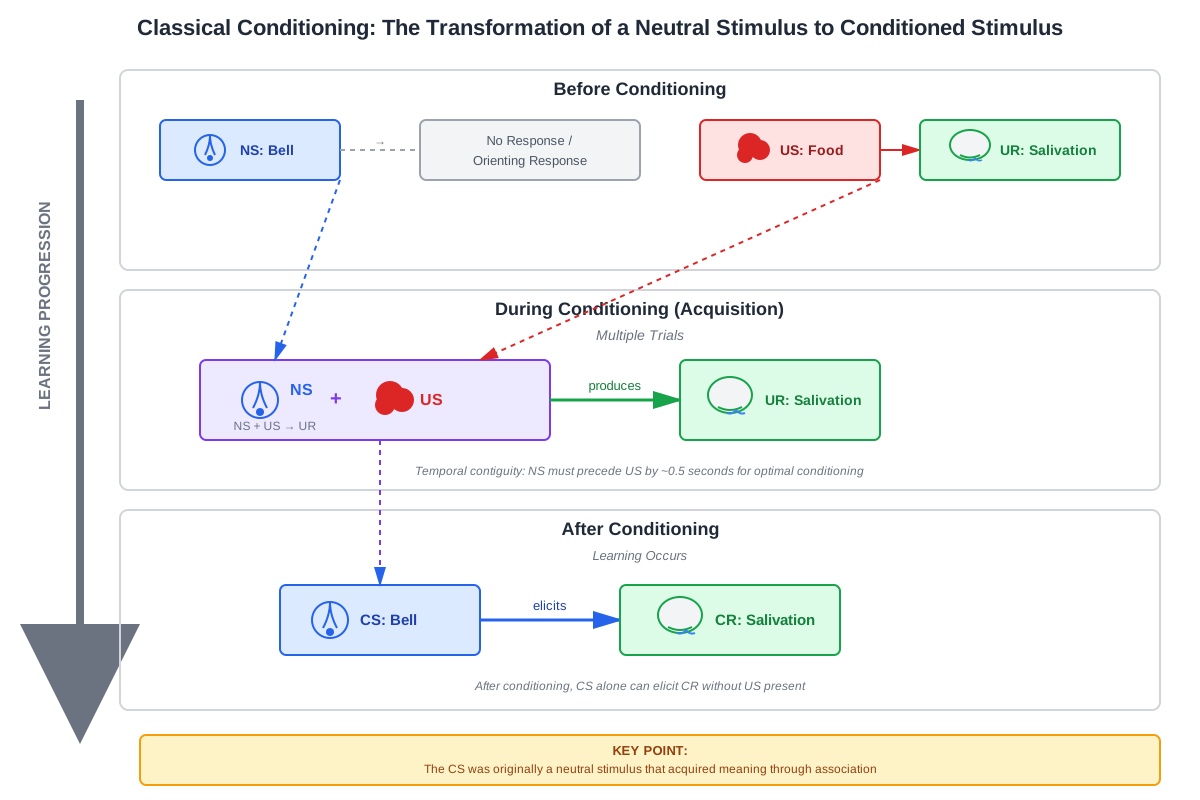
A conditioned stimulus is an initially neutral stimulus that, through repeated pairing with an unconditioned stimulus, acquires the ability to elicit a conditioned response. The CS represents learned significance—it gains meaning only through experience and association. Before conditioning, the stimulus produces no particular response or only an orienting response (brief attention). After conditioning, the same stimulus reliably triggers a learned behavioral or physiological reaction.
The transformation from neutral to conditioned stimulus requires several key elements:
- Temporal contiguity: The CS must occur close in time to the unconditioned stimulus
- Contingency: The CS must reliably predict the occurrence of the US
- Salience: More noticeable or distinctive stimuli condition more readily
- Biological preparedness: Some CS-US pairings form more easily due to evolutionary predispositions
The Acquisition Process
Acquisition refers to the initial learning phase during which a neutral stimulus becomes a conditioned stimulus. This process follows a predictable pattern:
| Phase | Stimulus Presentation | Response | Strength |
|---|---|---|---|
| Before Conditioning | Neutral Stimulus alone | No response or orienting | Baseline |
| During Acquisition | NS → US (paired) | UR occurs | Increasing |
| After Conditioning | CS alone | CR occurs | Established |
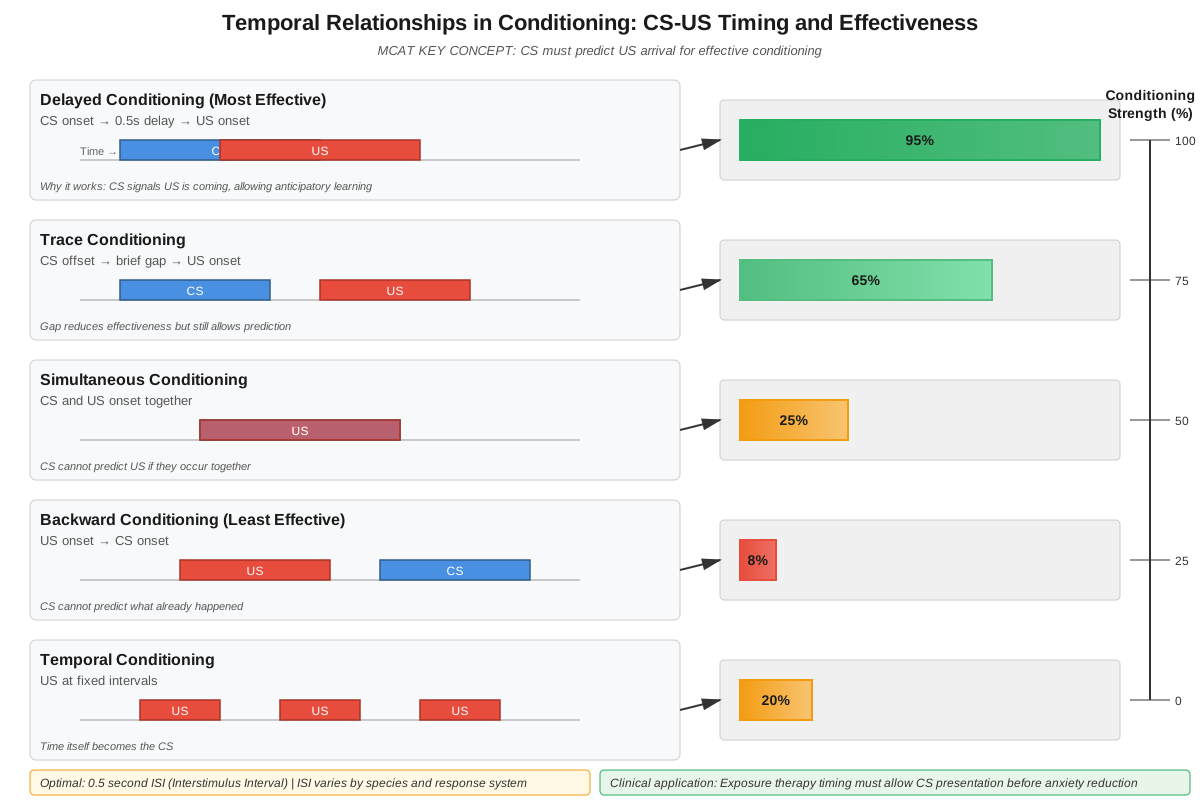
The strength of conditioning increases with repeated pairings, typically following a negatively accelerated learning curve—early pairings produce rapid increases in response strength, while later pairings yield diminishing returns. The optimal interstimulus interval (time between CS onset and US onset) varies by response system but generally ranges from 0.5 to 1 second for most conditioning paradigms. Forward conditioning (CS precedes US) produces the strongest learning, while backward conditioning (US precedes CS) typically produces weak or no conditioning.
Temporal Relationships in Conditioning
The timing of CS and US presentation critically determines conditioning success:
Delayed conditioning: CS begins before US and continues until US presentation (most effective)
Trace conditioning: CS begins and ends before US presentation, leaving a temporal gap (moderately effective)
Simultaneous conditioning: CS and US presented at exactly the same time (less effective)
Backward conditioning: US presented before CS (generally ineffective or produces inhibitory conditioning)
These temporal patterns matter for MCAT questions because they determine whether effective learning occurs and influence the strength of the conditioned response.
Stimulus Generalization and Discrimination
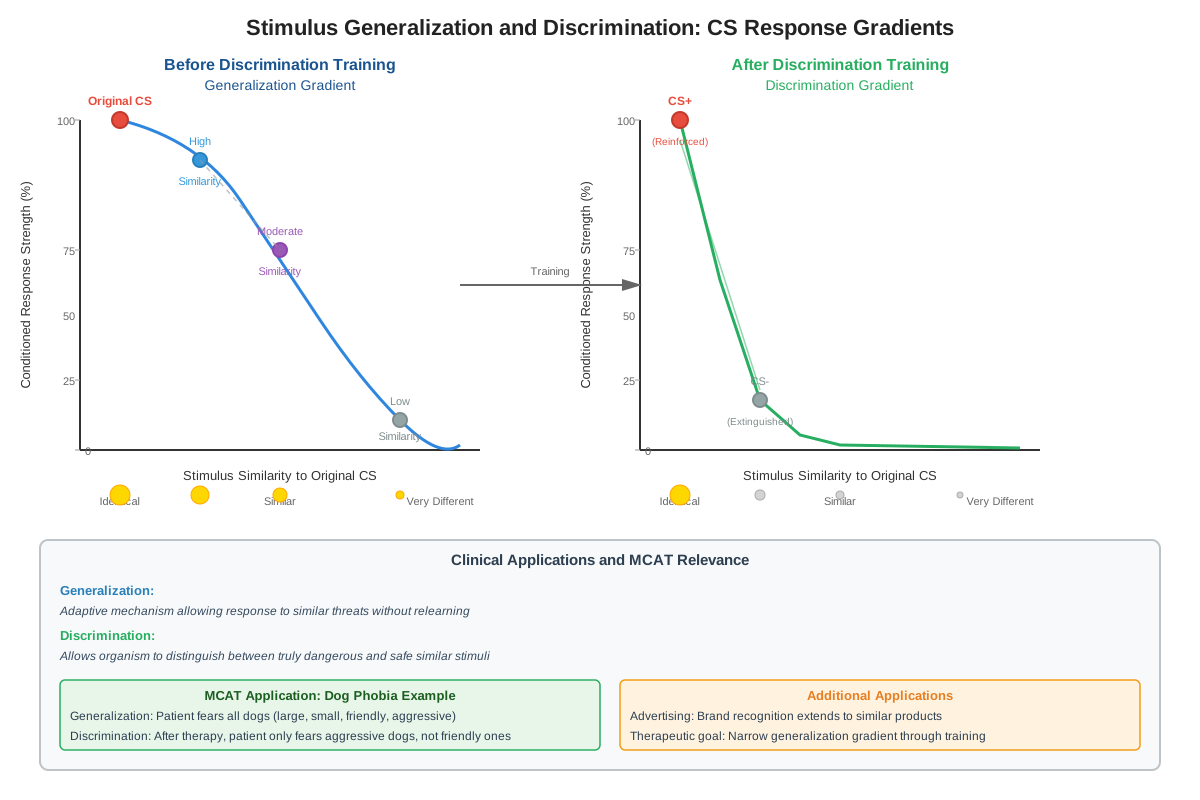
Once a stimulus becomes conditioned, organisms often respond to similar stimuli—a phenomenon called stimulus generalization. If a dog learns to salivate to a 1000 Hz tone (CS), it will also salivate to 900 Hz or 1100 Hz tones, though typically with weaker responses as similarity decreases. This creates a generalization gradient where response strength decreases as stimuli become less similar to the original CS.
Discrimination represents the opposite process—learning to respond differently to distinct stimuli. Through differential reinforcement (pairing one stimulus with the US while presenting another stimulus without the US), organisms learn to respond only to the specific CS. This process is essential for adaptive behavior, preventing overgeneralization that would lead to inappropriate responses.
Extinction and Spontaneous Recovery
Extinction occurs when the CS is repeatedly presented without the US, leading to gradual weakening and eventual disappearance of the conditioned response. Importantly, extinction does not erase the original learning—it represents new learning that inhibits the conditioned response. Evidence for this comes from spontaneous recovery, where a previously extinguished CR reappears after a rest period, though typically at reduced strength.
The extinction process follows a pattern:
- Initial presentations of CS alone produce full-strength CR
- Continued presentations lead to progressively weaker CR
- Eventually, CR no longer occurs
- After time passes, CS presentation may again elicit CR (spontaneous recovery)
- Rapid re-extinction occurs with additional CS-alone presentations
Higher-Order Conditioning
Once established, a conditioned stimulus can itself serve as a "teaching stimulus" for new learning—a process called higher-order conditioning or second-order conditioning. If a tone (CS1) reliably predicts food (US), and then a light is repeatedly paired with the tone, the light (CS2) may come to elicit salivation even though it was never directly paired with food. This demonstrates that conditioned stimuli acquire genuine predictive value and can transfer learned significance to other neutral stimuli.
Higher-order conditioning typically produces weaker responses than first-order conditioning and rarely extends beyond second or third order. This concept helps explain complex human learning, including how abstract symbols and language acquire meaning through chains of association.
Concept Relationships
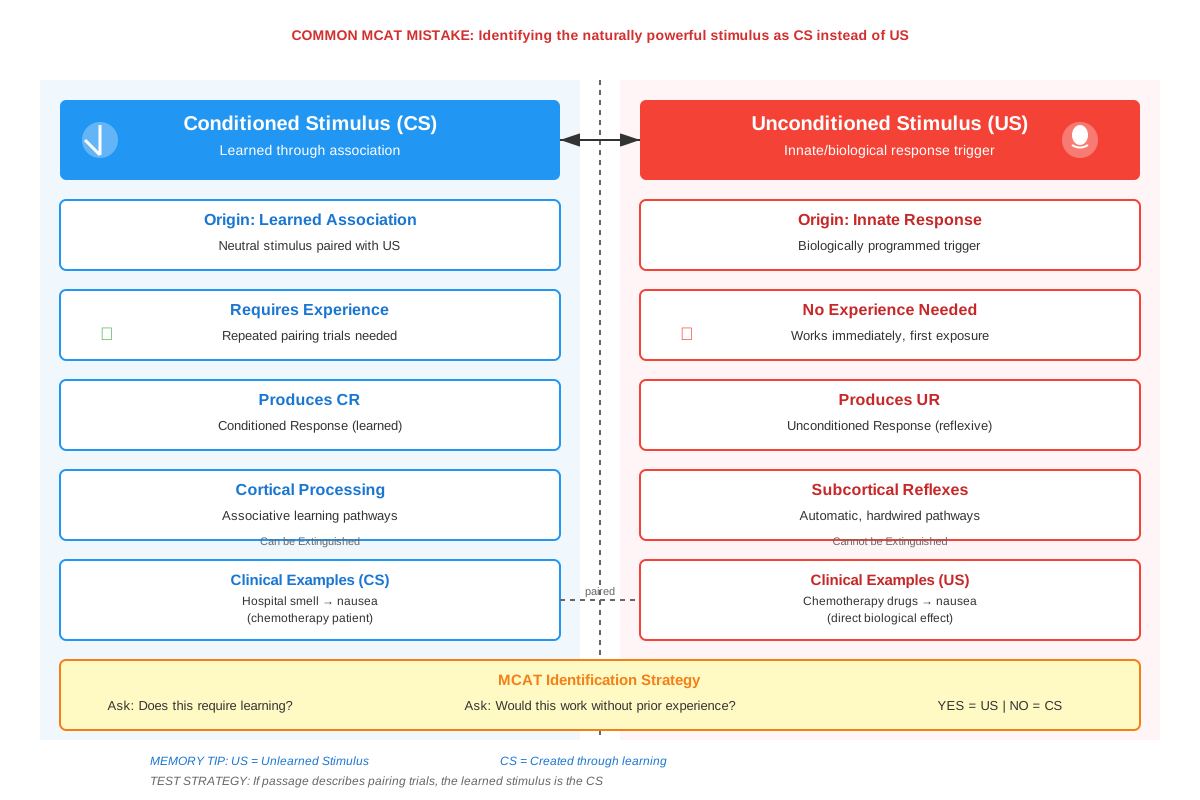
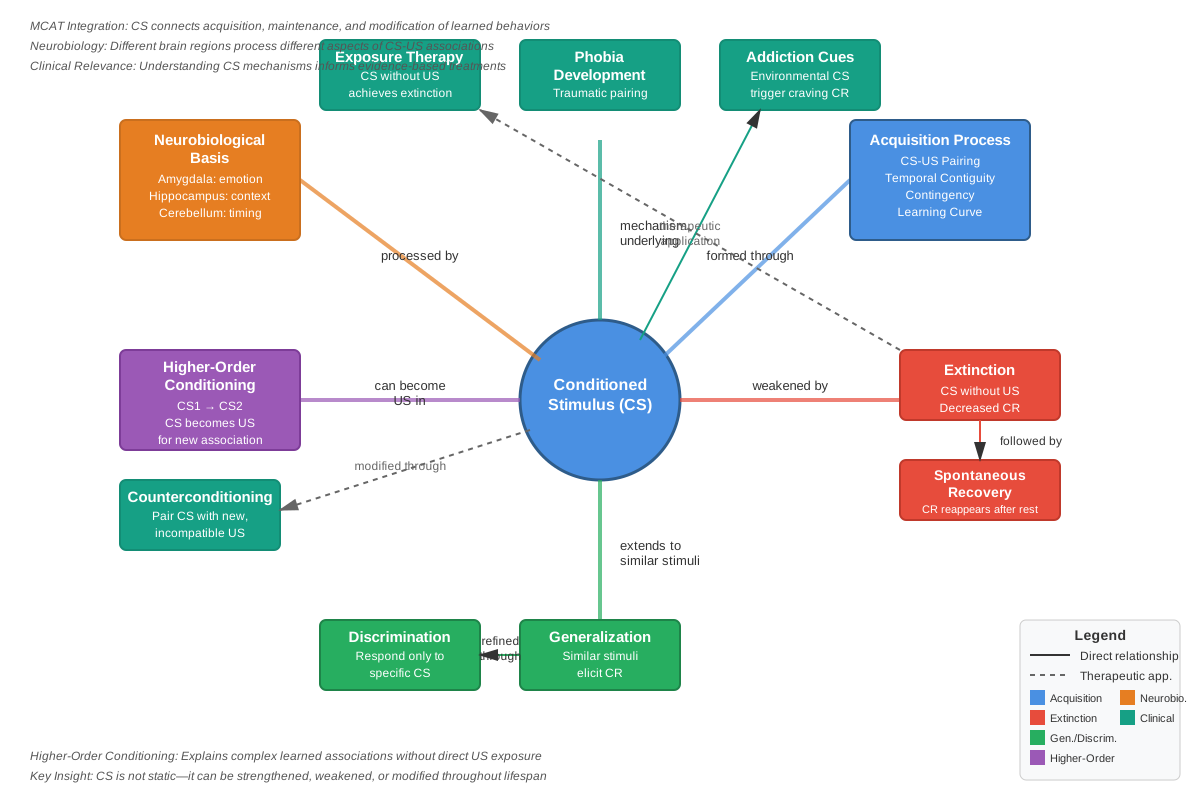
The conditioned stimulus exists within an interconnected web of classical conditioning concepts. The CS cannot be understood in isolation—it functions only in relation to the unconditioned stimulus (US), which is the biologically significant event that naturally triggers a response. The CS-US pairing creates the fundamental association that defines classical conditioning.
The CS directly produces the conditioned response (CR), which is the learned behavior elicited after conditioning. While the CR often resembles the unconditioned response (UR) triggered by the US, they are distinct phenomena—one is learned, the other innate. The relationship flows: CS → CR (learned pathway) parallels US → UR (innate pathway).
Relationship map:
Neutral Stimulus → (repeated pairing with US) → Conditioned Stimulus → (elicits) → Conditioned Response
The CS connects to broader learning concepts including operant conditioning (where consequences rather than associations drive learning), observational learning (where CS-US relationships can be learned vicariously), and memory consolidation (where CS-US associations must be encoded and stored). The amygdala plays a crucial role in emotional conditioning, while the hippocampus contributes to contextual aspects of CS processing.
Extinction relates to CS function by demonstrating that conditioned stimuli can lose their predictive power, while spontaneous recovery shows the persistence of CS-US associations even after apparent elimination. Stimulus generalization extends CS effects to similar stimuli, while discrimination refines CS specificity. These processes collectively determine how conditioned stimuli function in real-world environments where perfect experimental control is impossible.
Quick check — test yourself on Conditioned stimulus so far.
Try Flashcards →High-Yield Facts
⭐ A conditioned stimulus is initially neutral and gains significance only through pairing with an unconditioned stimulus
⭐ The CS must precede the US for optimal conditioning; forward conditioning is most effective
⭐ Extinction of a CR does not erase the CS-US association; spontaneous recovery demonstrates this
⭐ Stimulus generalization causes organisms to respond to stimuli similar to the original CS
⭐ The strength of conditioning depends on CS-US contingency (reliability of prediction), not just contiguity (temporal proximity)
- A CS can elicit a CR even on the first presentation after sufficient acquisition trials
- Higher-order conditioning allows a CS to serve as a US for new learning, though with diminished effectiveness
- Biological preparedness means certain CS-US pairings (taste-illness) condition more readily than others
- The interstimulus interval (time between CS and US onset) critically affects conditioning success
- Discrimination training involves presenting CS+ with US and CS- without US to create differential responding
- Latent inhibition occurs when extensive pre-exposure to a neutral stimulus impairs later conditioning of that stimulus
- Context can serve as a CS, explaining why environmental cues trigger conditioned responses
Common Misconceptions
Misconception: The conditioned stimulus and unconditioned stimulus are interchangeable terms for the same thing.
Correction: These are fundamentally different. The US naturally and automatically triggers a response without learning (food causes salivation), while the CS is initially neutral and only gains response-eliciting power through association with the US (a tone alone doesn't cause salivation until paired with food).
Misconception: The conditioned response and unconditioned response are identical.
Correction: While often similar, the CR and UR differ in important ways. The CR is typically weaker, may have different timing, and sometimes shows qualitative differences. For example, in drug conditioning, the CR may be opposite to the UR (compensatory response).
Misconception: Once extinction occurs, the CS-US association is permanently erased.
Correction: Extinction represents inhibitory learning that suppresses the CR rather than erasing the original association. Evidence includes spontaneous recovery, rapid reacquisition, renewal effects (CR returns in different contexts), and reinstatement (US presentation alone can restore CR).
Misconception: Any stimulus paired with a US will become an equally effective CS.
Correction: CS effectiveness depends on multiple factors including salience (noticeability), biological preparedness (evolutionary relevance), prior experience (latent inhibition), and competition with other potential CSs (blocking). Some stimuli condition much more readily than others.
Misconception: The CS must always be presented immediately before the US for conditioning to occur.
Correction: While short delays (0.5-1 second) work best for many responses, taste aversion learning demonstrates that CS-US intervals of hours can produce strong conditioning when biologically relevant. The optimal interval varies by response system and ecological validity.
Misconception: Classical conditioning only applies to simple reflexes and animal behavior.
Correction: Classical conditioning principles explain complex human phenomena including phobias, emotional responses to advertising, prejudice formation, placebo effects, immune system conditioning, and aspects of addiction. The CS concept has broad applicability across human psychology.
Worked Examples
Example 1: Identifying Components in a Research Scenario
Scenario: Researchers study fear conditioning in rats. They place rats in a chamber and present a 10-second tone. Two seconds before the tone ends, they deliver a mild foot shock. After 20 pairings, rats freeze (stop moving) when they hear the tone, even without shock.
Analysis:
Let's systematically identify each component:
Step 1: Identify the unconditioned stimulus (US)
The foot shock is the US because it naturally and automatically causes fear and freezing without any learning. Shock → freezing is an innate defensive response.
Step 2: Identify the unconditioned response (UR)
Freezing in response to shock is the UR—the natural, unlearned reaction to the aversive stimulus.
Step 3: Identify the conditioned stimulus (CS)
The tone is the CS. Initially, the tone was neutral (didn't cause freezing), but through repeated pairing with shock, it acquired the ability to elicit freezing. The tone now predicts shock.
Step 4: Identify the conditioned response (CR)
Freezing in response to the tone alone (without shock) is the CR—the learned response to the previously neutral stimulus.
Step 5: Evaluate the conditioning procedure
This represents delayed conditioning (CS begins before US and overlaps with it) with an 8-second interstimulus interval. This is longer than optimal for some responses but appropriate for fear conditioning. The forward temporal relationship (tone precedes shock) facilitates strong learning.
MCAT Application: Questions might ask "What serves as the conditioned stimulus?" (answer: tone) or "If researchers present the tone repeatedly without shock, what process occurs?" (answer: extinction). Understanding that the CS is the learned predictor is essential.
Example 2: Clinical Application to Phobia Development
Scenario: A patient reports intense anxiety when seeing dogs. History reveals that at age 6, she was bitten by a large dog while it was barking. Now, even friendly dogs trigger panic attacks. She also feels anxious around cats and other furry animals, though less intensely than with dogs.
Analysis:
Step 1: Identify the original conditioning event
The dog bite represents the US (unconditioned stimulus)—a naturally aversive event that produces fear and pain without learning. The fear and pain are the UR (unconditioned response).
Step 2: Identify what became the conditioned stimulus
The dog (its visual appearance, barking sound, and presence) served as the CS. Before the bite, dogs were relatively neutral stimuli. Through the traumatic pairing (dog + bite), the dog itself became a conditioned stimulus capable of eliciting fear.
Step 3: Identify the conditioned response
The panic attacks and intense anxiety when seeing dogs represent the CR—a learned fear response to the conditioned stimulus. This demonstrates how a single, intense pairing can produce strong conditioning (one-trial learning), especially with biologically prepared associations (animals and danger).
Step 4: Explain stimulus generalization
The patient's anxiety around cats and other furry animals demonstrates stimulus generalization—the CR extends to stimuli similar to the original CS. The intensity gradient (stronger fear of dogs than cats) is typical of generalization, where response strength decreases with decreasing similarity to the original CS.
Step 5: Consider therapeutic implications
Exposure therapy would involve presenting the CS (dogs) repeatedly without the US (biting), leading to extinction of the CR (fear response). Starting with less similar stimuli (pictures of dogs, small dogs at a distance) and gradually progressing represents systematic desensitization, which uses the generalization gradient therapeutically.
MCAT Application: Clinical vignettes often require identifying how neutral stimuli became conditioned through traumatic experiences and explaining treatment mechanisms through classical conditioning principles. Recognizing that phobias represent conditioned fear responses to CSs is high-yield knowledge.
Exam Strategy
Approaching MCAT Questions on Conditioned Stimuli
When encountering classical conditioning questions, use this systematic approach:
- Read carefully for temporal sequence: Identify what comes first, second, and third in the scenario
- Find the naturally aversive or appetitive stimulus: This is your US
- Identify what predicts the US: This is your CS
- Distinguish learned from unlearned responses: CRs are learned; URs are automatic
Trigger Words and Phrases
Watch for these high-yield terms that signal conditioned stimulus concepts:
- "Initially neutral stimulus"
- "After repeated pairings"
- "Predicts the occurrence of"
- "Learned to respond to"
- "Acquired significance"
- "Previously associated with"
Phrases indicating other components:
- "Naturally causes" or "automatically triggers" → suggests US
- "Without prior learning" → suggests UR
- "Learned response" → suggests CR
Process of Elimination Tips
When questions ask "Which serves as the conditioned stimulus?":
- Eliminate any option that naturally causes the response without learning (that's the US)
- Eliminate any option that is a response/behavior rather than a stimulus
- Eliminate any option presented after the US (backward conditioning rarely works)
- Select the initially neutral stimulus that comes to predict the US
For questions about extinction:
- Eliminate options suggesting the association is permanently erased
- Select options indicating the CR weakens but the association remains (evidenced by spontaneous recovery)
Time Allocation
Classical conditioning questions typically require 60-90 seconds:
- 20-30 seconds: Read and identify components
- 20-30 seconds: Apply concept to question stem
- 20-30 seconds: Evaluate answer choices
Don't overthink these questions—they test straightforward application of definitions. If you find yourself spending over 90 seconds, you may be overcomplicating the scenario.
Exam Tip: When passages describe experiments, create a quick notation system: NS (neutral stimulus), US, UR, CS, CR. Map the scenario using these abbreviations to clarify relationships before attempting questions.
Memory Techniques
Mnemonic for Conditioning Components
"Can Unicorns Cause Unusual Reactions?"
- Conditioned Stimulus (learned predictor)
- Unconditioned Stimulus (natural trigger)
- Conditioned Response (learned reaction)
- Unconditioned Response (natural reaction)
Temporal Sequence Visualization
Visualize conditioning as a timeline:
BEFORE: NS → nothing special
DURING: NS + US → UR (repeated pairings)
AFTER: CS → CR (learning achieved)
Distinguishing CS from US
CS = "Cue Signal" (it signals/predicts what's coming)
US = "Unlearned Stimulus" (works without learning)
Extinction vs. Erasure
Remember: "Extinction is Inhibition, not Elimination"
The original learning remains; extinction adds inhibitory learning that suppresses the response.
Forward vs. Backward Conditioning
"Forward Forecasts" (CS predicts US → effective)
"Backward is Backward" (US before CS → ineffective)
Generalization vs. Discrimination
Generalization = "General response" (respond to similar stimuli)
Discrimination = "Distinct response" (respond only to specific stimulus)
Summary
The conditioned stimulus represents the cornerstone of classical conditioning and associative learning. Beginning as a neutral stimulus with no particular significance, the CS acquires response-eliciting power through repeated, predictive pairing with an unconditioned stimulus. This transformation exemplifies how organisms learn relationships between environmental events and adapt their behavior accordingly. The effectiveness of conditioning depends on temporal relationships (CS must precede US), contingency (CS must reliably predict US), and stimulus characteristics (salience, biological preparedness). Once established, conditioned stimuli can undergo extinction (weakening through CS-alone presentations), demonstrate spontaneous recovery (reappearance after rest), and participate in higher-order conditioning (serving as teaching stimuli for new associations). Stimulus generalization extends CS effects to similar stimuli, while discrimination training creates specificity. Understanding the conditioned stimulus is essential for analyzing experimental designs, explaining clinical phenomena like phobias and addiction triggers, and predicting behavioral outcomes—all frequent MCAT question types that make this a high-yield topic deserving thorough mastery.
Key Takeaways
- The conditioned stimulus is an initially neutral stimulus that gains response-eliciting power through association with an unconditioned stimulus
- Effective conditioning requires the CS to precede and reliably predict the US (forward conditioning with contingency)
- Extinction weakens the CR but does not erase the CS-US association, as evidenced by spontaneous recovery
- Stimulus generalization causes responses to similar stimuli, while discrimination training creates specificity
- Classical conditioning explains diverse phenomena from phobias to advertising effectiveness, making it highly relevant for MCAT passages
- The CS-US temporal relationship critically determines conditioning success, with delayed conditioning most effective
- Higher-order conditioning demonstrates that established CSs can serve as teaching stimuli for new learning
Related Topics
Operant Conditioning: While classical conditioning involves CS-US associations, operant conditioning focuses on behavior-consequence relationships. Understanding both paradigms allows comprehensive analysis of learning scenarios on the MCAT.
Biological Bases of Learning: The neural mechanisms underlying CS processing (amygdala for emotional conditioning, cerebellum for motor conditioning) connect classical conditioning to neuroanatomy and physiology.
Memory Consolidation: CS-US associations must be encoded, consolidated, and retrieved—processes that link classical conditioning to memory systems tested throughout the Psychology section.
Behavioral Therapies: Exposure therapy, systematic desensitization, and aversion therapy all apply classical conditioning principles, making CS understanding essential for clinical psychology questions.
Observational Learning: While classical conditioning requires direct experience, observational learning demonstrates that CS-US relationships can be acquired vicariously, expanding learning theory applications.
Practice CTA
Now that you've mastered the conditioned stimulus concept, reinforce your learning by attempting practice questions and flashcards. Focus on identifying CS components in experimental scenarios, distinguishing CS from US in clinical vignettes, and applying extinction and generalization principles. Each practice question strengthens your ability to quickly analyze classical conditioning scenarios under timed conditions. Remember: the MCAT rewards not just knowledge but rapid, accurate application—practice transforms understanding into test-day performance. You've built a solid foundation; now cement it through active retrieval and application!
Sign up free to keep reading
Create a free AnvayaPrep account to finish this MCAT guide on Conditioned stimulus — plus flashcards and practice questions.