Overview
Episodic memory represents one of the most clinically and experimentally significant components of human long-term memory systems. As a distinct subtype of declarative (explicit) memory, episodic memory enables individuals to consciously recall specific personal experiences, complete with contextual details about when and where those events occurred. Unlike semantic memory, which stores general facts and knowledge divorced from personal experience, episodic memory is fundamentally autobiographical—it allows you to mentally "travel back in time" to re-experience past events from your own life. This capacity to remember your first day of college, what you ate for breakfast yesterday, or the conversation you had with a friend last week exemplifies episodic memory in action.
For the MCAT, episodic memory appears frequently in the Psychology and Sociology section, particularly within passages exploring Learning and Memory processes, cognitive development across the lifespan, and neurological disorders affecting memory systems. The exam tests not only definitional knowledge but also the ability to distinguish episodic memory from other memory types, understand its neural substrates (especially the hippocampus and prefrontal cortex), and apply this knowledge to experimental designs and clinical scenarios. Questions may present research studies examining memory consolidation, case studies of patients with temporal lobe damage, or scenarios requiring students to identify which type of memory is being accessed in specific situations.
Understanding episodic memory provides essential scaffolding for grasping broader concepts in cognitive psychology, including memory encoding and retrieval processes, the constructive nature of memory, source monitoring, and the distinction between different long-term memory systems. This topic connects intimately with neuroanatomy (hippocampal function), developmental psychology (childhood amnesia), clinical psychology (memory disorders in dementia and amnesia), and social psychology (autobiographical memory's role in identity formation). Mastering episodic memory MCAT content requires integrating knowledge across multiple domains, making it a high-yield topic that frequently appears in interdisciplinary passages.
Learning Objectives
- [ ] Define episodic memory using accurate Psychology terminology
- [ ] Explain why episodic memory matters for the MCAT
- [ ] Apply episodic memory to exam-style questions
- [ ] Identify common mistakes related to episodic memory
- [ ] Connect episodic memory to related Psychology concepts
- [ ] Distinguish episodic memory from semantic memory and other memory systems using specific examples
- [ ] Describe the neural substrates underlying episodic memory formation and retrieval
- [ ] Analyze experimental paradigms used to study episodic memory in research contexts
- [ ] Evaluate how episodic memory changes across development and in pathological conditions
Prerequisites
- Declarative vs. procedural memory distinction: Episodic memory is a subtype of declarative memory, requiring understanding of this fundamental division in long-term memory systems
- Basic brain anatomy: Knowledge of the hippocampus, temporal lobes, and prefrontal cortex is essential for understanding episodic memory's neural basis
- Encoding, storage, and retrieval processes: These fundamental memory stages apply specifically to how episodic memories are formed and accessed
- Attention and consciousness: Episodic memory formation requires conscious awareness and attentional resources during encoding
- Long-term vs. short-term memory: Episodic memories represent consolidated long-term memories, distinct from working memory processes
Why This Topic Matters
Clinical and Real-World Significance
Episodic memory dysfunction represents a hallmark feature of numerous neurological and psychiatric conditions encountered in clinical practice. Alzheimer's disease characteristically presents with progressive episodic memory impairment—patients lose the ability to form new episodic memories and gradually lose access to older autobiographical memories, while semantic knowledge and procedural skills remain relatively preserved in early stages. Temporal lobe epilepsy, traumatic brain injury, and Korsakoff's syndrome (thiamine deficiency-related amnesia) all prominently affect episodic memory systems. Understanding episodic memory also illuminates the reconstructive nature of eyewitness testimony in legal contexts, where memory distortions and false memories can have profound consequences. The ability to form and retrieve episodic memories fundamentally shapes personal identity, social relationships, and adaptive decision-making based on past experiences.
MCAT Examination Statistics
Episodic memory Psychology concepts appear in approximately 15-20% of Psychology and Sociology passages dealing with cognitive processes. The MCAT frequently tests this topic through:
- Research study passages presenting experimental manipulations of encoding conditions and testing recognition or recall
- Clinical vignettes describing patients with selective memory impairments requiring differential diagnosis
- Theoretical passages exploring memory models and the distinction between memory systems
- Developmental psychology contexts examining how episodic memory emerges in childhood
Questions typically assess the ability to distinguish memory types, identify neural correlates, predict outcomes of hippocampal damage, and interpret experimental findings about memory consolidation and retrieval.
Common Exam Presentations
The MCAT presents episodic memory through several recurring frameworks: (1) case studies of amnesia patients (e.g., patient H.M.) who retain semantic and procedural memory but cannot form new episodic memories; (2) experimental studies using recognition or free recall paradigms to test memory for specific events; (3) neuroimaging studies showing hippocampal activation during autobiographical memory retrieval; (4) developmental studies examining childhood amnesia and the emergence of episodic memory around age 3-4; and (5) social psychology contexts exploring how episodic memories contribute to self-concept and narrative identity.
Core Concepts
Definition and Characteristics of Episodic Memory
Episodic memory refers to the long-term memory system responsible for storing and retrieving personally experienced events along with their spatiotemporal context—the "what," "where," and "when" of past experiences. Coined by Endel Tulving in 1972, this memory system enables mental time travel, the subjective sense of re-experiencing past events from one's own perspective. When you recall attending your high school graduation, you don't simply know the fact that you graduated (semantic memory); you can mentally re-experience specific moments—seeing your family in the audience, feeling nervous walking across the stage, hearing your name called—complete with sensory details and emotional states.
Key characteristics distinguish episodic memory from other memory systems:
- Autonoetic consciousness: The self-aware, subjective experience of remembering; the feeling of "I was there"
- Contextual specificity: Memories are bound to particular times and places
- Sensory-perceptual details: Rich multimodal information including sights, sounds, emotions, and thoughts
- Temporal organization: Events are remembered in relation to other events and can be sequenced chronologically
- Susceptibility to forgetting: Episodic memories are more vulnerable to decay and interference than semantic memories
- Constructive retrieval: Memories are reconstructed rather than replayed, making them subject to distortion
Episodic vs. Semantic Memory
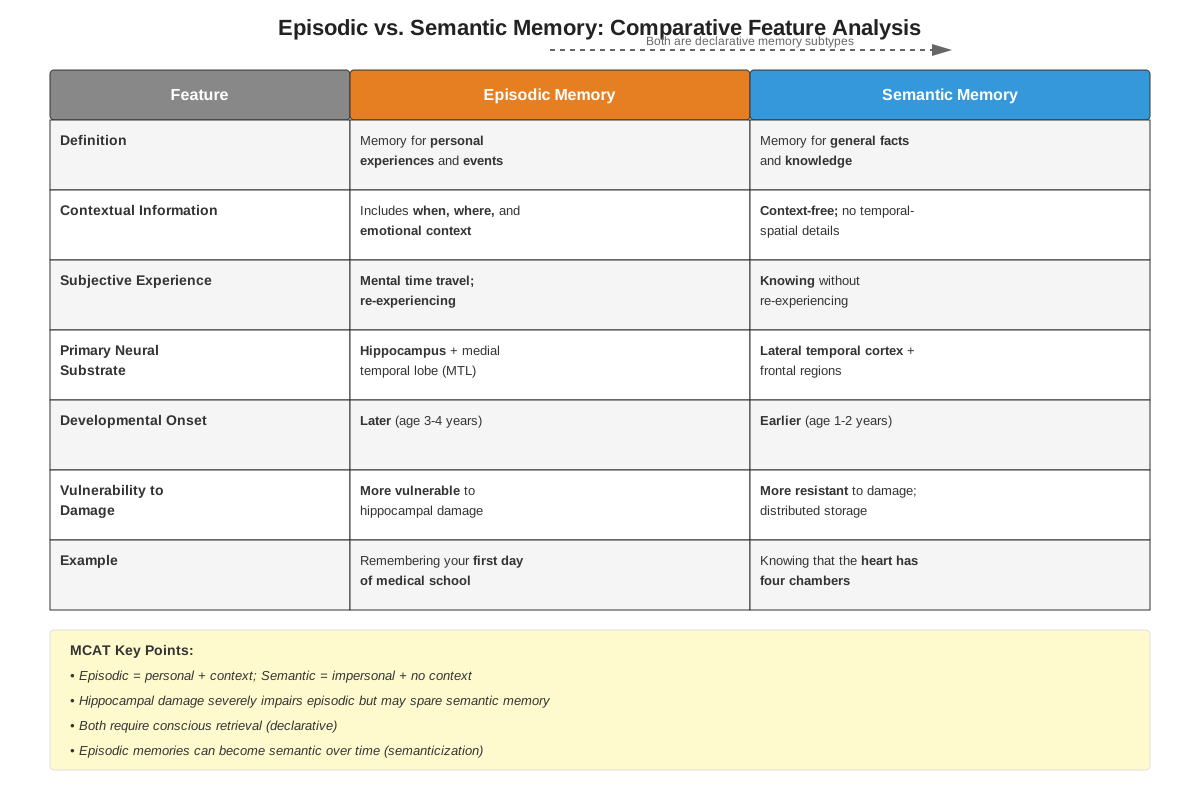
Both episodic and semantic memory constitute subtypes of declarative memory (explicit memory that can be consciously recalled and verbally described), but they differ fundamentally in content and phenomenology:
| Feature | Episodic Memory | Semantic Memory |
|---|---|---|
| Content | Personal experiences and events | General facts and knowledge |
| Context | Bound to specific time and place | Context-free, decontextualized |
| Consciousness | Autonoetic (self-knowing) | Noetic (knowing without personal experience) |
| Example | Remembering your 10th birthday party | Knowing that birthdays occur annually |
| Retrieval experience | Mental time travel, re-experiencing | Accessing factual knowledge |
| Vulnerability | More susceptible to forgetting | More resistant to forgetting |
| Development | Emerges around age 3-4 | Develops earlier |
The MCAT frequently tests the ability to distinguish these memory types. A critical insight: semantic memories often originate as episodic memories but become decontextualized through repeated retrieval. You may remember learning that Paris is the capital of France (episodic), but eventually you simply know this fact without remembering when or where you learned it (semantic).
Neural Substrates of Episodic Memory
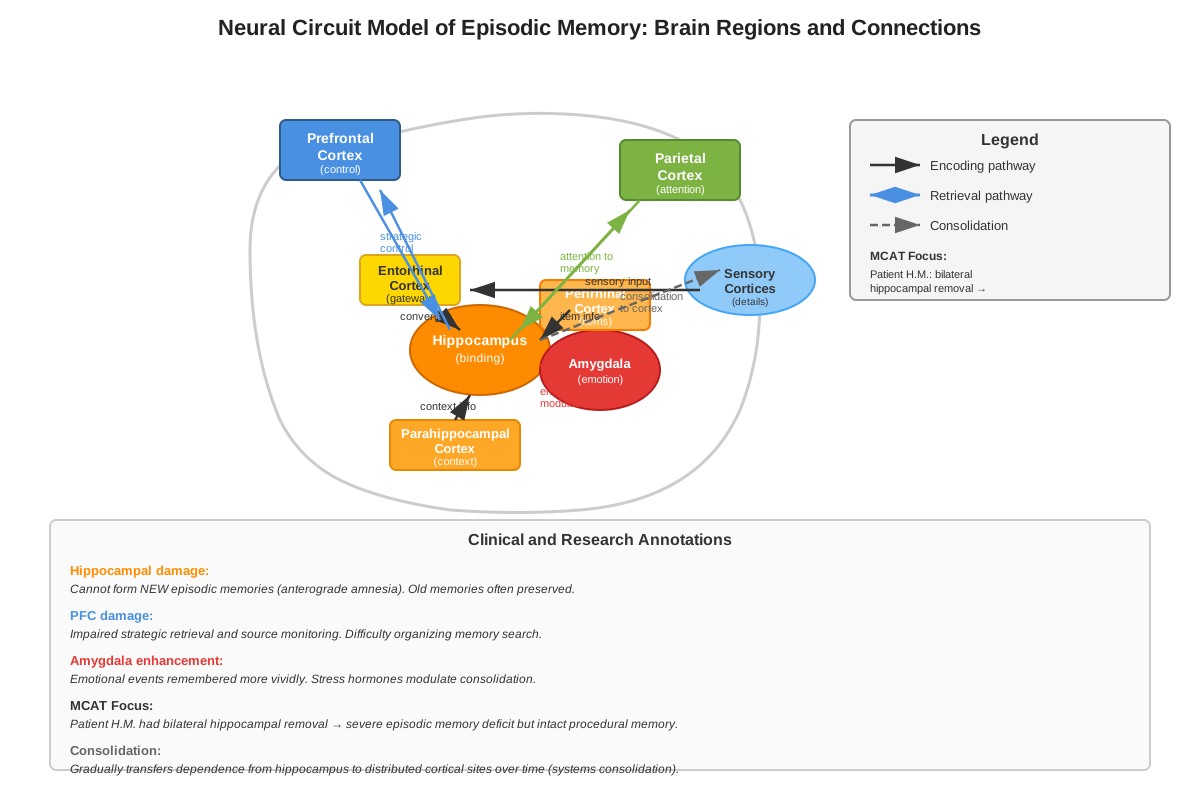
The hippocampus and surrounding medial temporal lobe structures serve as the critical neural substrate for episodic memory formation and consolidation. The famous case of patient H.M., who underwent bilateral medial temporal lobe resection to treat epilepsy, demonstrated that hippocampal damage produces profound anterograde amnesia (inability to form new episodic memories) while leaving semantic memory, procedural memory, and older episodic memories relatively intact.
The episodic memory system involves several interconnected brain regions:
- Hippocampus: Binds together distributed cortical representations into coherent episodic memories; critical for encoding spatial and temporal context
- Prefrontal cortex: Supports strategic encoding processes, source monitoring, and temporal organization of memories
- Parietal cortex: Contributes to the subjective experience of recollection and attention to retrieved memory content
- Amygdala: Modulates emotional aspects of episodic memories, enhancing consolidation of emotionally arousing events
- Parahippocampal cortex: Processes contextual information, particularly spatial and scene-related details
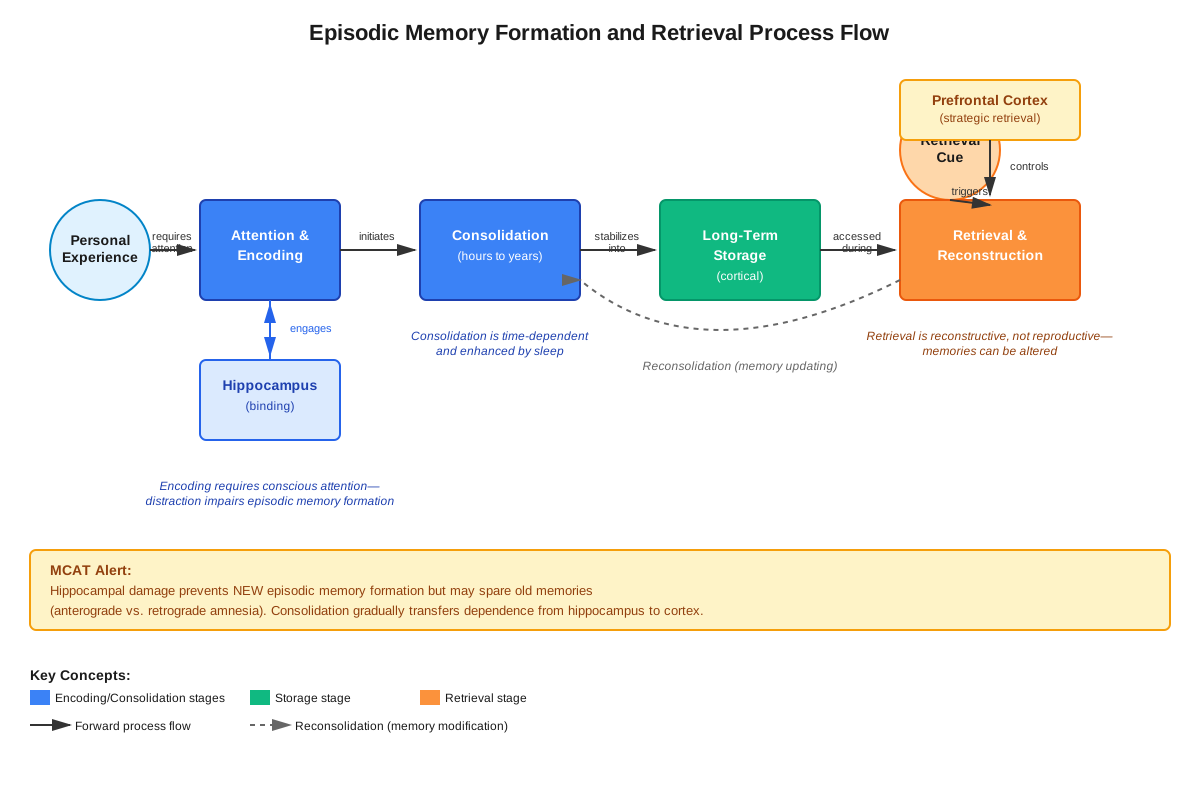
The consolidation process gradually transfers episodic memories from hippocampal-dependent storage to distributed cortical networks, though the hippocampus may remain involved in retrieving detailed, contextually rich memories even after consolidation.
Encoding and Retrieval Processes
Episodic memory formation requires successful encoding of event details along with contextual information. Several factors enhance episodic encoding:
- Levels of processing: Deeper, semantic processing (thinking about meaning) produces stronger episodic memories than shallow, perceptual processing
- Elaborative encoding: Connecting new information to existing knowledge and generating associations
- Distinctiveness: Unique or unusual events are better remembered
- Emotional arousal: Emotionally significant events receive enhanced consolidation
- Attention: Divided attention during encoding impairs episodic memory formation
Retrieval of episodic memories involves reconstructing past experiences using available cues. The encoding specificity principle states that retrieval is most successful when retrieval cues match the conditions present during encoding. Context-dependent memory demonstrates that returning to the physical or mental context where learning occurred facilitates retrieval.
Two primary retrieval processes operate in episodic memory:
- Recollection: Retrieving specific contextual details and re-experiencing the event; associated with hippocampal activation
- Familiarity: A sense of having encountered something before without retrieving specific details; can support recognition without recollection
Episodic Memory Across Development
Childhood amnesia (infantile amnesia) refers to the inability of adults to recall episodic memories from approximately the first 3-4 years of life. Several factors contribute to this phenomenon:
- Immature hippocampal development in early childhood
- Lack of well-developed self-concept necessary for autobiographical memory
- Limited language abilities for encoding and rehearsing experiences
- Rapid neurogenesis in the developing hippocampus may interfere with memory stability
Episodic memory capacity improves throughout childhood and adolescence as the prefrontal cortex matures, enabling better strategic encoding and retrieval. In healthy aging, episodic memory shows gradual decline, particularly for source memory (remembering where or when information was learned) and associative memory (binding together multiple elements of an event). This contrasts with semantic memory, which remains stable or even improves with age due to accumulated knowledge.
Episodic Memory in Clinical Conditions
Understanding how episodic memory is selectively affected in various conditions is high-yield for the MCAT:
- Alzheimer's disease: Progressive episodic memory impairment due to hippocampal and temporal lobe degeneration; early symptom is difficulty forming new episodic memories
- Korsakoff's syndrome: Severe anterograde and retrograde amnesia for episodic information; often accompanied by confabulation (fabricating memories to fill gaps)
- Temporal lobe epilepsy: Seizure activity disrupts hippocampal function, impairing episodic memory
- Transient global amnesia: Temporary inability to form new episodic memories, typically resolving within 24 hours
- Post-traumatic stress disorder (PTSD): Intrusive episodic memories of traumatic events with enhanced sensory-perceptual detail
Concept Relationships
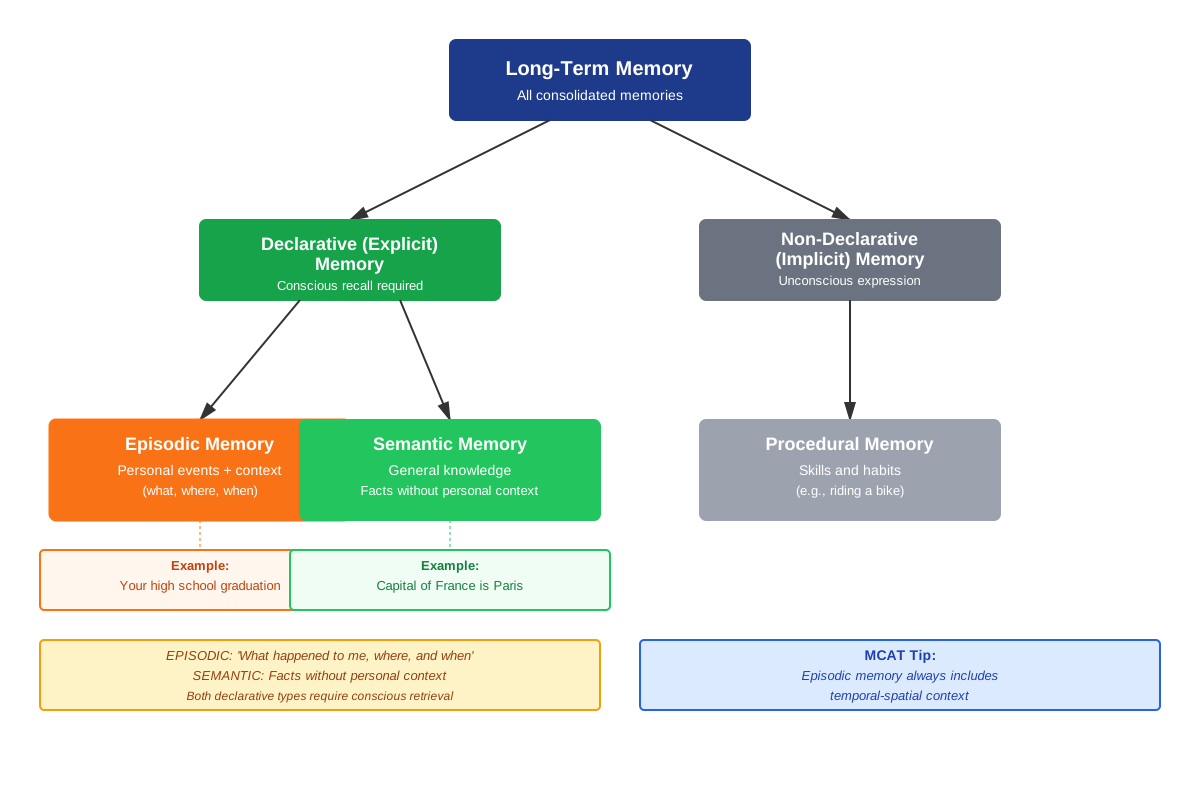
Episodic memory exists within a hierarchical organization of memory systems. At the broadest level, long-term memory divides into declarative (explicit) and non-declarative (implicit) memory. Episodic memory, along with semantic memory, comprises the declarative memory system, which requires conscious awareness for both encoding and retrieval. This contrasts with procedural memory (skills and habits) and other implicit memory forms that operate without conscious awareness.
Within episodic memory itself, several interconnected processes operate sequentially: attention during an event → encoding of event details and context → consolidation via hippocampal-cortical interactions → storage in distributed cortical networks → retrieval using contextual cues → reconsolidation when memories are reactivated. Each stage depends on the previous one, and disruption at any point impairs episodic memory.
Episodic memory connects intimately with working memory, which maintains and manipulates information during encoding and retrieval. The central executive component of working memory directs attention to relevant event features during encoding and coordinates retrieval processes. Episodic memory also interacts with semantic memory through a bidirectional relationship: repeated retrieval of episodic memories can lead to semantic knowledge (semanticization), while semantic knowledge provides schemas that guide episodic encoding and reconstruction.
The relationship map flows as follows:
Attention → enables → Episodic Encoding → requires → Hippocampal Processing → produces → Consolidation → results in → Cortical Storage → accessed through → Cue-Dependent Retrieval → generates → Conscious Recollection → may undergo → Reconsolidation → can transform into → Semantic Memory
Quick check — test yourself on Episodic memory so far.
Try Flashcards →High-Yield Facts
⭐ Episodic memory is the declarative memory system for personally experienced events with specific spatiotemporal context, enabling mental time travel to re-experience past events.
⭐ The hippocampus and medial temporal lobe structures are essential for forming new episodic memories; bilateral hippocampal damage causes severe anterograde amnesia for episodic information while sparing semantic and procedural memory.
⭐ Episodic memory is distinguished from semantic memory by its contextual specificity, autonoetic consciousness (subjective sense of remembering), and greater vulnerability to forgetting.
⭐ Childhood amnesia (inability to recall events before age 3-4) results from immature hippocampal development, underdeveloped self-concept, and limited language abilities during early childhood.
⭐ Episodic memory retrieval involves reconstruction rather than replay, making memories susceptible to distortion, suggestion, and false memory formation.
- Encoding specificity principle: Retrieval is most successful when retrieval cues match encoding conditions, explaining context-dependent memory effects.
- Consolidation gradually transfers episodic memories from hippocampal-dependent to cortical storage, though the hippocampus may remain involved in retrieving detailed memories.
- Alzheimer's disease characteristically presents with progressive episodic memory impairment as an early symptom, while semantic and procedural memory remain relatively preserved initially.
- Levels of processing: Deeper, semantic processing during encoding produces stronger episodic memories than shallow, perceptual processing.
- Emotional arousal enhances episodic memory consolidation through amygdala modulation, explaining why emotionally significant events are better remembered.
- Source memory (remembering where, when, or from whom information was learned) represents a specific aspect of episodic memory that declines with aging and frontal lobe damage.
- Episodic memory shows greater age-related decline than semantic memory, particularly for associative memory and source memory.
Common Misconceptions
Misconception: Episodic memories are accurate recordings of past events, like video recordings that can be replayed.
Correction: Episodic memories are reconstructive, not reproductive. Each retrieval reconstructs the memory using available information, schemas, and current knowledge, making memories susceptible to distortion, suggestion, and incorporation of post-event information. The subjective vividness of a memory does not guarantee its accuracy.
Misconception: Episodic and semantic memory are completely separate, independent systems.
Correction: While episodic and semantic memory have distinct characteristics and can be selectively impaired, they interact dynamically. Episodic memories can become semanticized (lose contextual details) through repeated retrieval, and semantic knowledge provides schemas that influence episodic encoding and reconstruction. They represent different ends of a continuum rather than completely separate systems.
Misconception: The hippocampus permanently stores all episodic memories.
Correction: The hippocampus is critical for encoding and initial consolidation of episodic memories, but through systems consolidation, memories gradually become independent of the hippocampus and are stored in distributed cortical networks. However, the hippocampus may remain involved in retrieving highly detailed, contextually rich episodic memories even after consolidation.
Misconception: Patients with episodic memory impairment (like H.M.) cannot learn anything new.
Correction: Patients with hippocampal damage and episodic memory deficits can still acquire new semantic knowledge (though slowly) and form new procedural memories (motor skills, habits). They can also demonstrate implicit memory through priming effects. The deficit is specific to consciously recollecting personally experienced events with contextual details.
Misconception: Childhood amnesia means young children cannot form any memories.
Correction: Young children (ages 0-3) do form memories, but these are typically not retained into adulthood as accessible episodic memories. Children can demonstrate memory through behavior and recognition, and they do form semantic memories during this period. Childhood amnesia specifically refers to the later inability of adults to retrieve episodic memories from early childhood, not an inability to form memories during that period.
Misconception: Stronger emotional experiences always produce more accurate episodic memories.
Correction: While emotional arousal enhances memory consolidation and makes memories more vivid and persistent, it does not necessarily improve accuracy. Emotional memories can be just as susceptible to distortion as neutral memories, and the subjective confidence in emotional memories often exceeds their actual accuracy. The "flashbulb memory" phenomenon demonstrates vivid but often inaccurate memories of emotionally significant events.
Worked Examples
Example 1: Distinguishing Memory Systems in a Clinical Case
Vignette: A 68-year-old patient presents with progressive memory complaints. Neuropsychological testing reveals that he cannot remember what he ate for breakfast this morning or that he met with the doctor yesterday. However, he can accurately describe facts about World War II, play chess at his previous skill level, and has learned to use his new smartphone through repeated practice, though he doesn't remember the learning sessions. Which memory systems are impaired and which are preserved?
Analysis:
Step 1: Identify the impaired abilities
- Cannot remember eating breakfast (recent personal event with specific time/place context)
- Cannot remember meeting with the doctor yesterday (recent personal event)
- These represent failures of episodic memory—inability to consciously recall personally experienced events with spatiotemporal context
Step 2: Identify preserved abilities
- Can describe WWII facts = semantic memory (general knowledge, decontextualized facts) is preserved
- Can play chess at previous skill level = procedural memory (motor and cognitive skills) is preserved
- Learned to use smartphone through practice = implicit learning is preserved, though he cannot explicitly recall the learning episodes (episodic memory impairment)
Step 3: Determine likely neural substrate
The selective impairment of episodic memory with preserved semantic and procedural memory suggests hippocampal or medial temporal lobe dysfunction, consistent with early Alzheimer's disease or other conditions affecting these structures. This pattern mirrors patient H.M.'s deficits after bilateral medial temporal lobe resection.
Step 4: Connect to learning objectives
This example demonstrates the critical distinction between episodic memory and other memory systems, the neural specificity of episodic memory (hippocampal dependence), and the clinical presentation of episodic memory disorders—all high-yield concepts for the MCAT.
Example 2: Analyzing an Episodic Memory Experiment
Vignette: Researchers conduct a study where participants view 50 common objects in a laboratory setting. Half the participants are instructed to rate how pleasant each object is (deep processing), while the other half rate the size of each object (shallow processing). One week later, participants return and complete two memory tests: (1) free recall—listing as many objects as they can remember, and (2) recognition—identifying which objects they saw from a list mixing studied objects with new objects. Results show that deep processing participants recall more objects and show higher recognition accuracy. Additionally, participants who are tested in the same room where they studied show better recall than those tested in a different room.
Analysis:
Step 1: Identify the memory system being tested
This experiment tests episodic memory—participants must remember specific objects they personally encountered during a particular event (the study session) at a specific time and place. Both recall and recognition tests assess episodic memory, though recognition is typically easier because it provides retrieval cues.
Step 2: Explain the processing depth effect
The levels of processing framework predicts that deeper, semantic processing (rating pleasantness, which requires thinking about meaning and personal relevance) produces stronger episodic memory traces than shallow, perceptual processing (rating size, which requires only superficial analysis). This occurs because deep processing creates more elaborate memory traces with richer associations, facilitating later retrieval.
Step 3: Explain the context effect
The finding that participants tested in the same room show better recall demonstrates context-dependent memory, a principle of episodic memory retrieval. According to the encoding specificity principle, retrieval is enhanced when the retrieval context matches the encoding context. The physical environment becomes part of the episodic memory trace, and returning to that environment provides additional retrieval cues that facilitate memory access.
Step 4: Predict additional findings
Based on episodic memory principles, we would predict:
- Recognition performance would exceed recall performance (recognition provides more retrieval cues)
- Participants would show better memory for distinctive or unusual objects (distinctiveness effect)
- If tested immediately rather than after one week, performance would be higher (forgetting curve)
- Participants might falsely recognize semantically related objects that weren't presented (false memory based on semantic associations)
Step 5: Connect to neural mechanisms
The hippocampus would show activation during both encoding (particularly during deep processing) and retrieval phases. The prefrontal cortex would be more active during deep processing (semantic elaboration) and during effortful recall. This experiment's design allows researchers to examine how encoding manipulations affect hippocampal-dependent episodic memory formation.
Exam Strategy
Approaching MCAT Questions on Episodic Memory
When encountering episodic memory questions, follow this systematic approach:
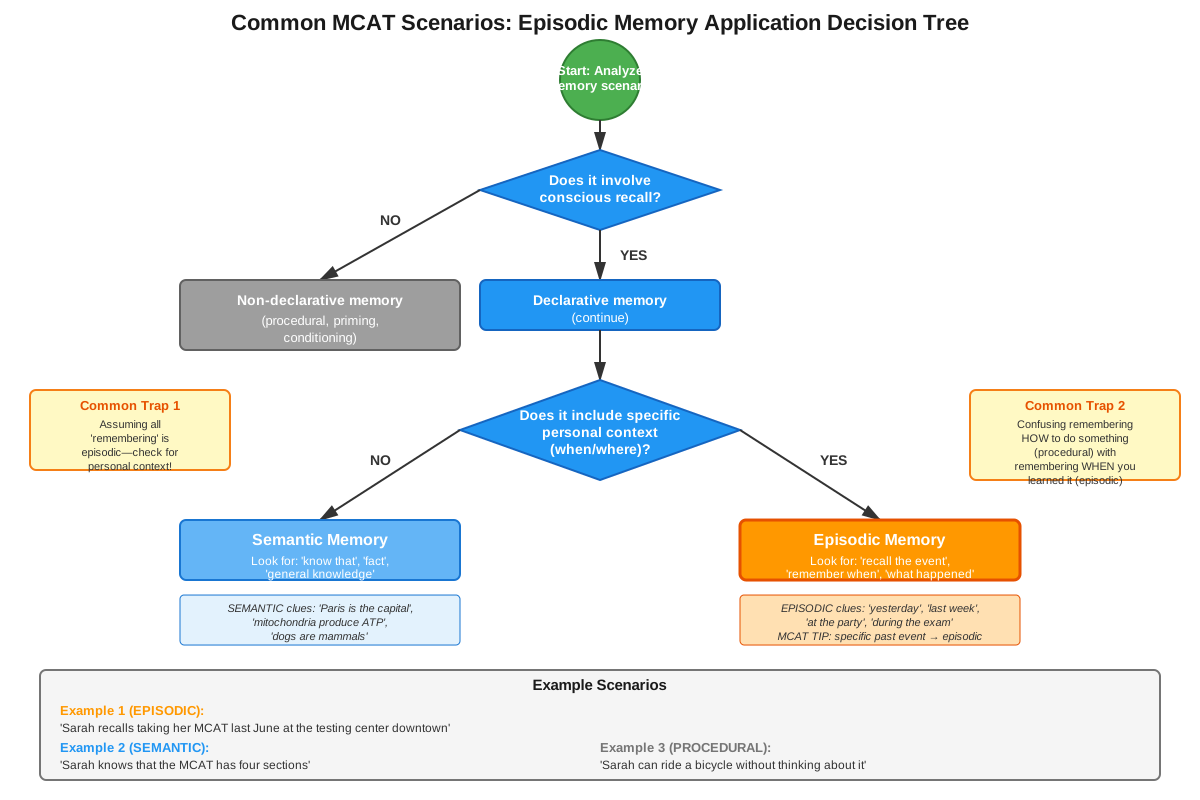
- Identify the memory type being described: Look for contextual specificity (when/where), personal experience, and conscious recollection—hallmarks of episodic memory
- Distinguish from semantic memory: If the question involves decontextualized facts or general knowledge without personal experience, it's semantic, not episodic
- Consider the neural substrate: Hippocampal involvement strongly suggests episodic memory; questions about brain damage often test this association
- Apply encoding and retrieval principles: Questions about improving memory or explaining memory failures often require applying levels of processing, encoding specificity, or context-dependent memory
Trigger Words and Phrases
Watch for these high-yield terms that signal episodic memory content:
- "Personally experienced events"
- "Remembering when/where"
- "Autobiographical memory"
- "Mental time travel"
- "Recollection" (vs. "knowing")
- "Contextual details"
- "Hippocampal damage/dysfunction"
- "Patient H.M." or similar amnesia cases
- "Childhood amnesia"
- "Source memory" (remembering the source of information)
Phrases indicating OTHER memory types (eliminate these):
- "General knowledge" or "facts" without personal context → semantic memory
- "Motor skills" or "habits" → procedural memory
- "Without conscious awareness" → implicit memory
- "Temporary storage" or "manipulation" → working memory
Process of Elimination Tips
When distinguishing between memory types:
- If it involves conscious awareness of a personal past event with context → episodic memory
- If it involves facts/knowledge without remembering learning them → semantic memory
- If it involves skills performed without conscious thought → procedural memory
- If it shows learning without conscious memory → implicit memory
For questions about brain regions:
- Hippocampus/medial temporal lobe → episodic memory formation
- Prefrontal cortex → working memory, strategic encoding/retrieval
- Cerebellum/basal ganglia → procedural memory
- Amygdala → emotional memory (modulates episodic memory)
Time Allocation
Episodic memory questions typically appear in passages requiring integration of multiple concepts. Allocate:
- 1-1.5 minutes for discrete questions testing definitions or distinctions
- 2-2.5 minutes for passage-based questions requiring application to experimental designs or clinical cases
- Priority: First eliminate obviously incorrect memory types, then distinguish between remaining options using contextual specificity and conscious awareness criteria
Memory Techniques
Mnemonics for Key Distinctions
EPISODIC memory characteristics:
- Experiential (personally experienced)
- Personal (autobiographical)
- In context (time and place)
- Sensory details (rich perceptual information)
- Occurred to me (first-person perspective)
- Detailed (specific event features)
- In the past (temporal reference)
- Conscious recollection (autonoetic awareness)
HIPPOCAMPUS for episodic memory:
- Holds new memories temporarily
- Integrates context (spatial/temporal)
- Personal events encoded here
- Patient H.M. lost this function
- Only for episodic (not procedural)
- Consolidates to cortex
- Anterograde amnesia when damaged
- Medial temporal lobe location
- Place cells for spatial context
- Underlies mental time travel
- Source memory depends on it
Visualization Strategy
Visualize memory systems as a branching tree:
- Trunk: Long-term memory
- Left branch: Declarative (explicit) memory
- Upper left twig: Episodic memory (picture yourself at a specific event, with a calendar and location marker)
- Lower left twig: Semantic memory (picture a textbook or encyclopedia)
- Right branch: Non-declarative (implicit) memory
- Upper right twig: Procedural memory (picture riding a bicycle)
- Lower right twig: Other implicit forms (priming, conditioning)
Acronym for Encoding Enhancement
DEEP processing improves episodic memory:
- Distinctive (unique features)
- Elaborate (connect to existing knowledge)
- Emotional (arousal enhances consolidation)
- Personal relevance (self-reference effect)
Summary
Episodic memory represents the declarative memory system enabling conscious recollection of personally experienced events with specific spatiotemporal context, characterized by autonoetic consciousness and the subjective experience of mental time travel. Distinguished from semantic memory by its contextual specificity and personal nature, episodic memory depends critically on hippocampal and medial temporal lobe structures for encoding and consolidation, with gradual transfer to distributed cortical networks through systems consolidation. The MCAT frequently tests the ability to distinguish episodic from other memory types, understand its neural basis (particularly hippocampal involvement), and apply principles of encoding and retrieval to experimental and clinical scenarios. Key high-yield concepts include the selective impairment of episodic memory following hippocampal damage (as in patient H.M. and Alzheimer's disease), childhood amnesia resulting from immature hippocampal development, the reconstructive nature of episodic retrieval making memories susceptible to distortion, and encoding factors that enhance episodic memory formation such as deep processing and emotional arousal. Understanding episodic memory requires integrating knowledge of memory systems, neural substrates, developmental changes, and clinical presentations—making it a cornerstone topic for MCAT Psychology preparation.
Key Takeaways
- Episodic memory stores personally experienced events with spatiotemporal context, enabling mental time travel and autonoetic consciousness, distinguishing it from semantic memory's decontextualized facts
- The hippocampus is essential for episodic memory formation; bilateral hippocampal damage causes severe anterograde amnesia for episodic information while sparing semantic and procedural memory
- Episodic memory is reconstructive rather than reproductive, making memories susceptible to distortion, false memories, and post-event information incorporation
- Childhood amnesia (inability to recall events before age 3-4) results from immature hippocampal development, underdeveloped self-concept, and limited language abilities
- Encoding specificity and context-dependent memory demonstrate that retrieval is enhanced when retrieval conditions match encoding conditions
- Alzheimer's disease characteristically presents with progressive episodic memory impairment as an early symptom, while semantic and procedural memory remain relatively preserved initially
- Levels of processing, emotional arousal, distinctiveness, and elaborative encoding enhance episodic memory formation and later retrieval
Related Topics
Semantic Memory: The complementary declarative memory system storing general knowledge and facts without personal context; understanding the episodic-semantic distinction and their interaction through semanticization is essential for comprehensive memory system knowledge.
Memory Consolidation: The process by which episodic memories are stabilized and transferred from hippocampal-dependent to cortical storage; includes systems consolidation (hippocampus to cortex) and synaptic consolidation (cellular-level changes).
Source Monitoring: The ability to remember the source of information (where, when, from whom it was learned), a specific aspect of episodic memory that depends on prefrontal cortex function and declines with aging.
False Memory and Memory Distortion: The reconstructive nature of episodic memory makes it susceptible to suggestion, misinformation, and false memory formation; critical for understanding eyewitness testimony reliability and memory accuracy.
Amnesia Syndromes: Clinical conditions affecting episodic memory, including anterograde amnesia (inability to form new memories), retrograde amnesia (loss of old memories), and specific syndromes like Korsakoff's syndrome and transient global amnesia.
Autobiographical Memory: The broader system of memory for one's life history, encompassing both episodic memories of specific events and semantic knowledge about one's life; important for understanding identity formation and self-concept.
Practice CTA
Now that you've mastered the core concepts of episodic memory, it's time to solidify your understanding through active retrieval practice. Challenge yourself with MCAT-style practice questions that require distinguishing episodic from other memory types, applying encoding and retrieval principles to experimental scenarios, and analyzing clinical cases of memory impairment. Use flashcards to drill the key distinctions between episodic and semantic memory, the neural substrates of episodic memory, and high-yield clinical presentations. Remember: episodic memory itself is enhanced through elaborative encoding and retrieval practice—so actively testing yourself on this material will create stronger, more retrievable memories than passive review alone. You've built a solid foundation; now strengthen it through deliberate practice that mirrors the exam format you'll encounter on test day!
Sign up free to keep reading
Create a free AnvayaPrep account to finish this MCAT guide on Episodic memory — plus flashcards and practice questions.