Overview
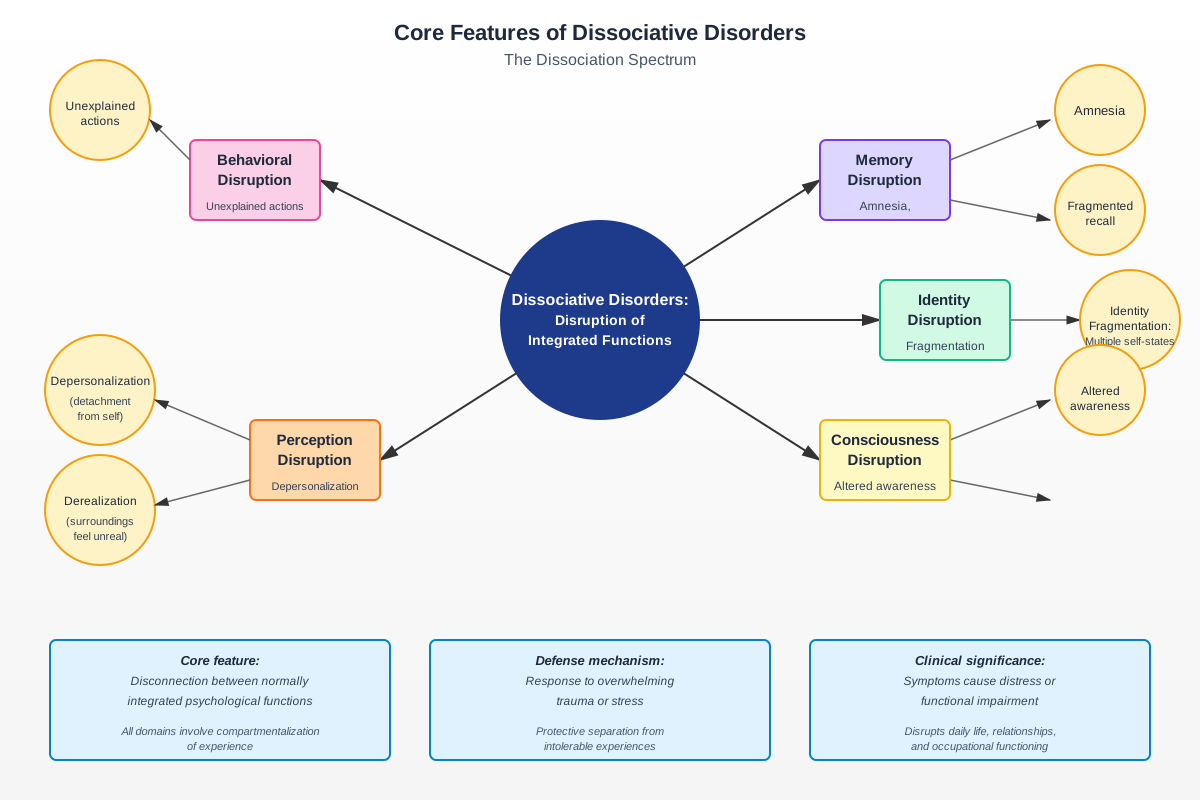
Dissociative disorders represent a fascinating and clinically significant category of psychological conditions characterized by disruptions in consciousness, memory, identity, emotion, perception, body representation, motor control, and behavior. These disorders involve a disconnection between thoughts, memories, feelings, actions, or sense of identity—essentially, a breakdown in the normally integrated functions of consciousness. The hallmark feature is dissociation, a defense mechanism where the mind separates certain memories or thoughts from conscious awareness, typically in response to overwhelming trauma or stress.
For the MCAT, understanding dissociative disorders is essential because they exemplify key principles in Psychology including trauma response, memory systems, consciousness, and the relationship between stress and psychopathology. These disorders frequently appear in Psychological Disorders and Treatment passages that test your ability to distinguish between different psychiatric conditions, understand etiology, and recognize symptom patterns. The MCAT particularly emphasizes the ability to differentiate dissociative disorders from similar conditions like psychotic disorders, anxiety disorders, and somatic symptom disorders.
Dissociative disorders Psychology connects to broader themes including memory consolidation and retrieval, the neurobiology of stress and trauma, defense mechanisms, and the biopsychosocial model of mental illness. Understanding these disorders requires integrating knowledge of cognitive psychology (particularly memory systems), biological psychology (stress response systems), and social psychology (impact of trauma and adverse experiences). This topic serves as an excellent example of how psychological disorders can arise from the interaction of biological vulnerabilities, psychological trauma, and social-environmental factors—a framework the MCAT tests extensively across all behavioral science content.
Learning Objectives
- [ ] Define Dissociative disorders using accurate Psychology terminology
- [ ] Explain why Dissociative disorders matters for the MCAT
- [ ] Apply Dissociative disorders to exam-style questions
- [ ] Identify common mistakes related to Dissociative disorders
- [ ] Connect Dissociative disorders to related Psychology concepts
- [ ] Distinguish between the major subtypes of dissociative disorders based on presenting symptoms
- [ ] Analyze the relationship between trauma exposure and the development of dissociative symptoms
- [ ] Evaluate clinical vignettes to differentiate dissociative disorders from other psychiatric conditions with overlapping features
Prerequisites
- Memory systems (episodic, semantic, procedural): Dissociative disorders fundamentally involve disruptions in memory encoding, storage, and retrieval
- Stress and trauma response: Understanding the physiological and psychological responses to trauma is essential for comprehending dissociative disorder etiology
- Defense mechanisms: Dissociation functions as a psychological defense mechanism, requiring familiarity with ego defense concepts
- Consciousness and attention: Dissociative disorders involve alterations in conscious awareness and attentional processes
- Basic psychiatric diagnostic criteria: Familiarity with DSM-5 diagnostic framework helps understand how dissociative disorders are classified
Why This Topic Matters
Dissociative disorders MCAT content appears regularly in Psychology/Sociology passages, particularly those involving clinical vignettes, research studies on trauma, or questions about differential diagnosis. While not the highest-frequency topic, dissociative disorders appear in approximately 2-4% of MCAT Psychology questions, often in contexts requiring students to distinguish between similar-appearing conditions or understand the relationship between trauma and psychopathology.
Clinically, dissociative disorders represent some of the most severe responses to psychological trauma. Dissociative Identity Disorder (DID), formerly known as Multiple Personality Disorder, captures public imagination but is relatively rare; however, other dissociative conditions like depersonalization/derealization disorder and dissociative amnesia are more common than previously recognized. Understanding these conditions illuminates fundamental principles about how the mind protects itself from overwhelming experiences and how memory systems can be disrupted by extreme stress.
On the MCAT, dissociative disorders commonly appear in several contexts: (1) clinical vignettes requiring differential diagnosis between dissociative disorders and conditions with similar presentations (psychotic disorders, PTSD, borderline personality disorder); (2) research passages examining the relationship between childhood trauma and adult psychopathology; (3) questions testing understanding of memory systems and how they can be disrupted; and (4) scenarios requiring application of the biopsychosocial model to understand disorder etiology. The exam particularly favors questions that test your ability to recognize key distinguishing features and understand the role of trauma in disorder development.
Core Concepts
Definition and Fundamental Features
Dissociative disorders are a class of psychiatric conditions characterized by disruption of and/or discontinuity in the normal integration of consciousness, memory, identity, emotion, perception, body representation, motor control, and behavior. The core feature across all dissociative disorders is dissociation—a psychological process involving a detachment from reality, not in the sense of losing touch with reality (as in psychosis), but rather experiencing a disconnection between different aspects of consciousness and memory.
Dissociation exists on a continuum from normal, everyday experiences (like "highway hypnosis" when driving) to pathological dissociation that significantly impairs functioning. Pathological dissociation typically develops as a response to overwhelming trauma, particularly when experienced during childhood when the personality and identity are still forming. The dissociative response serves as a defense mechanism, allowing the individual to psychologically escape from an unbearable situation when physical escape is impossible.
Major Types of Dissociative Disorders
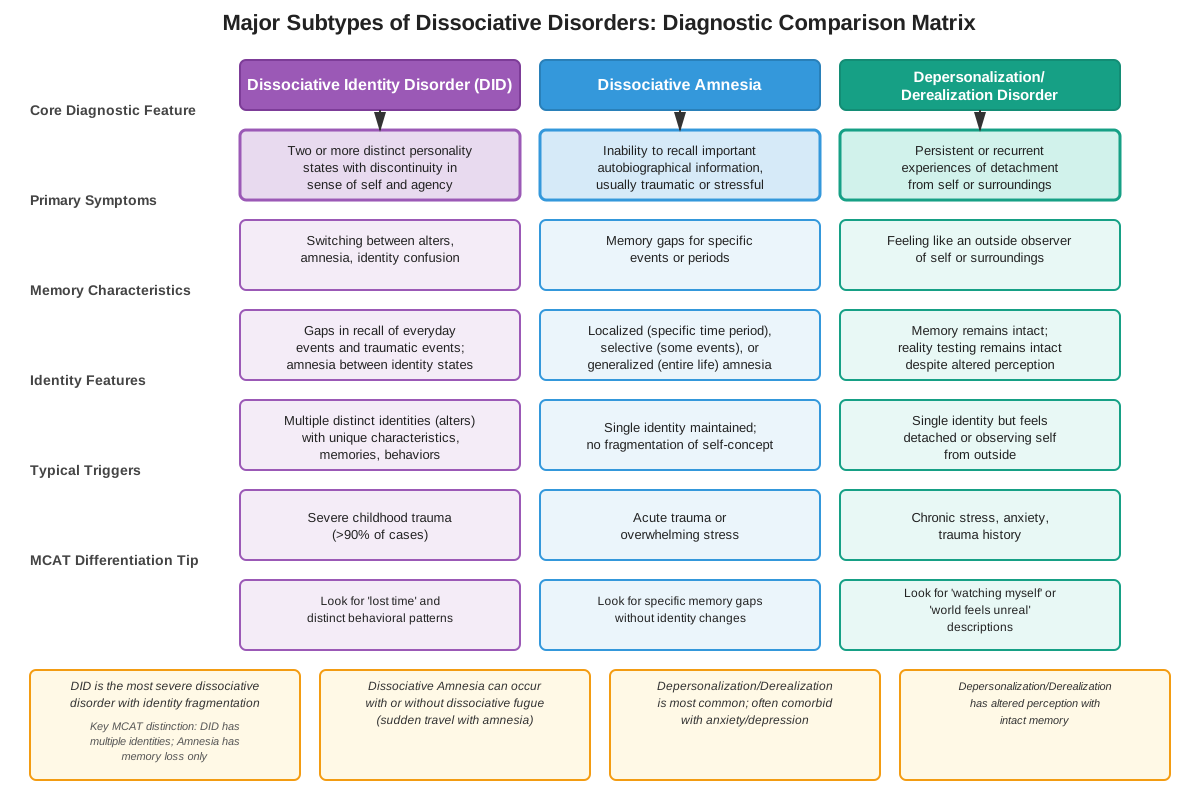
| Disorder | Core Feature | Key Symptoms | Typical Onset |
|---|---|---|---|
| Dissociative Identity Disorder (DID) | Presence of two or more distinct personality states | Identity fragmentation, amnesia between states, identity confusion | Childhood (symptoms emerge in adulthood) |
| Dissociative Amnesia | Inability to recall important autobiographical information | Memory gaps inconsistent with ordinary forgetting, usually trauma-related | Any age, often following trauma |
| Depersonalization/Derealization Disorder | Persistent feelings of detachment from self or surroundings | Feeling like an outside observer of one's life, surroundings seem unreal | Adolescence or early adulthood |
Dissociative Identity Disorder (DID)
Dissociative Identity Disorder represents the most severe form of dissociative pathology, characterized by the presence of two or more distinct personality states or an experience of possession. Each personality state (often called "alters") has its own relatively enduring pattern of perceiving, relating to, and thinking about the environment and self. The disorder involves marked discontinuity in sense of self and sense of agency, accompanied by related alterations in affect, behavior, consciousness, memory, perception, cognition, and sensory-motor functioning.
Critical features include:
- Recurrent gaps in recall of everyday events, important personal information, and/or traumatic events that are inconsistent with ordinary forgetting
- Identity fragmentation rather than identity proliferation—the personality states represent a failure to integrate various aspects of identity, memory, and consciousness
- Switching between personality states, which may be observable to others or experienced only subjectively
- Symptoms cause clinically significant distress or impairment in functioning
DID almost always develops in response to severe, repeated childhood trauma (typically before age 9), most commonly physical or sexual abuse. The disorder represents an extreme form of compartmentalization where traumatic memories and experiences are segregated into separate identity states as a survival mechanism.
Dissociative Amnesia
Dissociative amnesia involves an inability to recall important autobiographical information, usually of a traumatic or stressful nature, that is inconsistent with ordinary forgetting. The memory loss is typically reversible, distinguishing it from amnesia due to neurological conditions. The forgotten information is usually still stored in memory but is inaccessible to conscious recall.
Types of memory loss in dissociative amnesia:
- Localized amnesia: Inability to recall events during a specific period (most common type)
- Selective amnesia: Can remember some but not all events during a specific period
- Generalized amnesia: Complete loss of memory for one's entire life (rare)
- Systematized amnesia: Loss of memory for specific categories of information
- Continuous amnesia: Inability to recall events from a specific time up to and including the present
Dissociative fugue is a subtype involving sudden, unexpected travel away from home or work with inability to recall one's past and confusion about identity or assumption of a new identity. This represents one of the most dramatic presentations but is relatively rare.
Depersonalization/Derealization Disorder
Depersonalization/derealization disorder involves persistent or recurrent experiences of unreality, detachment, or being an outside observer with respect to one's thoughts, feelings, sensations, body, or actions (depersonalization) and/or experiences of unreality or detachment with respect to surroundings (derealization). Crucially, reality testing remains intact—individuals know their experiences are not real, distinguishing this from psychotic disorders.
Depersonalization symptoms include:
- Feeling detached from or as if one is an outside observer of one's mental processes or body
- Feeling like a robot or that one is not in control of speech or movements
- Emotional or physical numbing of sensory experiences
- Distortions in perception of time, space, or body
Derealization symptoms include:
- Surroundings seem unreal, dreamlike, foggy, lifeless, or visually distorted
- Feeling detached from surroundings
- Distortions in perception of distance, size, or shape of objects
This disorder often begins in adolescence or early adulthood and may be triggered by severe stress, though it can also occur without clear precipitants. Episodes may be brief or persistent, and the disorder is often chronic.
Etiology and Risk Factors
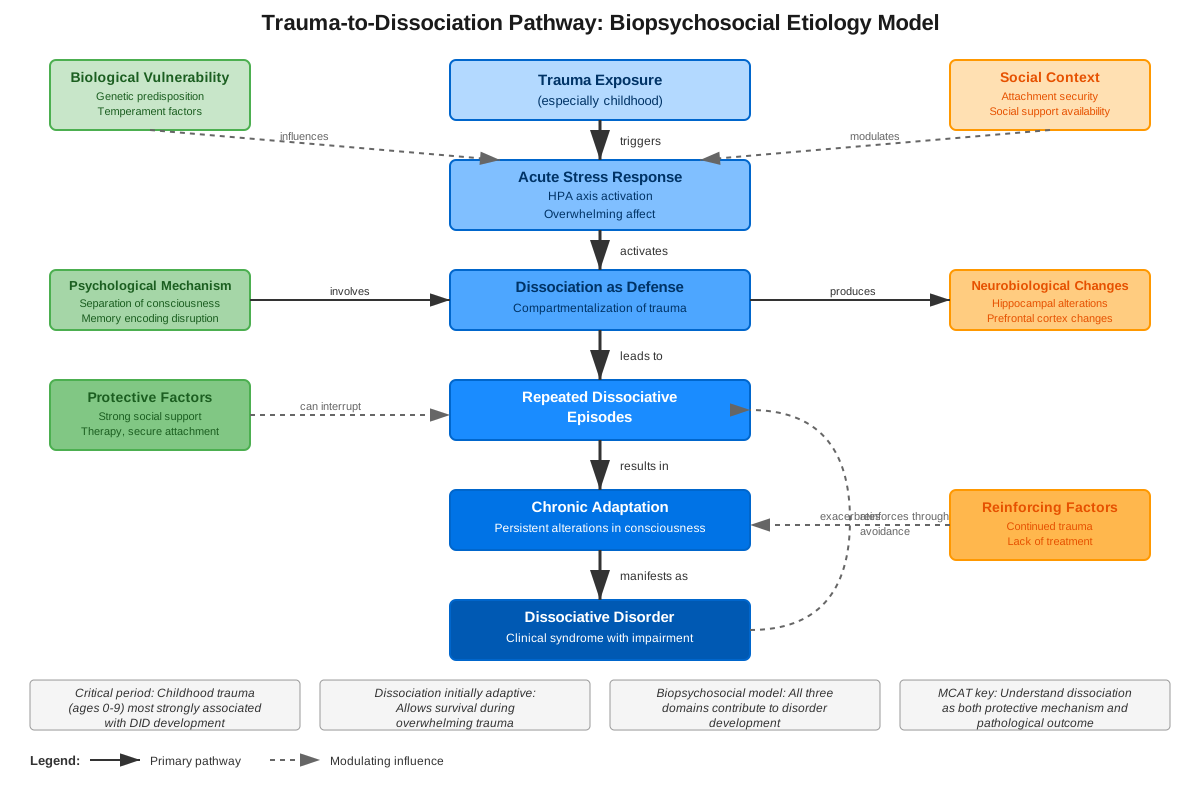
The development of dissociative disorders involves complex interactions between biological vulnerabilities, psychological factors, and environmental stressors:
Biological factors:
- Alterations in brain regions involved in memory and consciousness (hippocampus, amygdala, prefrontal cortex)
- Disruptions in neurotransmitter systems (particularly those involved in stress response)
- Possible genetic vulnerability to dissociative responses
Psychological factors:
- Trauma exposure, particularly repeated childhood trauma
- Use of dissociation as a coping mechanism
- Lack of integrated sense of self
- High hypnotizability (ability to enter dissociative states)
Social/Environmental factors:
- Childhood abuse or neglect
- Lack of social support during and after trauma
- Cultural factors that may influence expression of dissociative symptoms
- Attachment disruptions in early childhood
Differential Diagnosis Considerations
Distinguishing dissociative disorders from other conditions is crucial for MCAT questions:
Dissociative disorders vs. Psychotic disorders: In dissociative disorders, reality testing remains intact; individuals recognize their experiences as unusual. In psychotic disorders, there is loss of reality testing with delusions and hallucinations believed to be real.
Dissociative disorders vs. PTSD: While both involve trauma, PTSD is characterized by intrusive re-experiencing, avoidance, negative alterations in cognition/mood, and hyperarousal. Dissociative disorders primarily involve disconnection and memory disruption. However, PTSD can include dissociative symptoms (dissociative subtype).
Dissociative disorders vs. Borderline Personality Disorder: BPD may include transient dissociative symptoms during stress, but these are not the primary feature. BPD is characterized by instability in relationships, self-image, and affects, plus marked impulsivity.
Dissociative disorders vs. Malingering/Factitious Disorder: Genuine dissociative disorders involve unconscious processes, while malingering involves conscious fabrication for external gain and factitious disorder involves conscious symptom production for sick role.
Concept Relationships
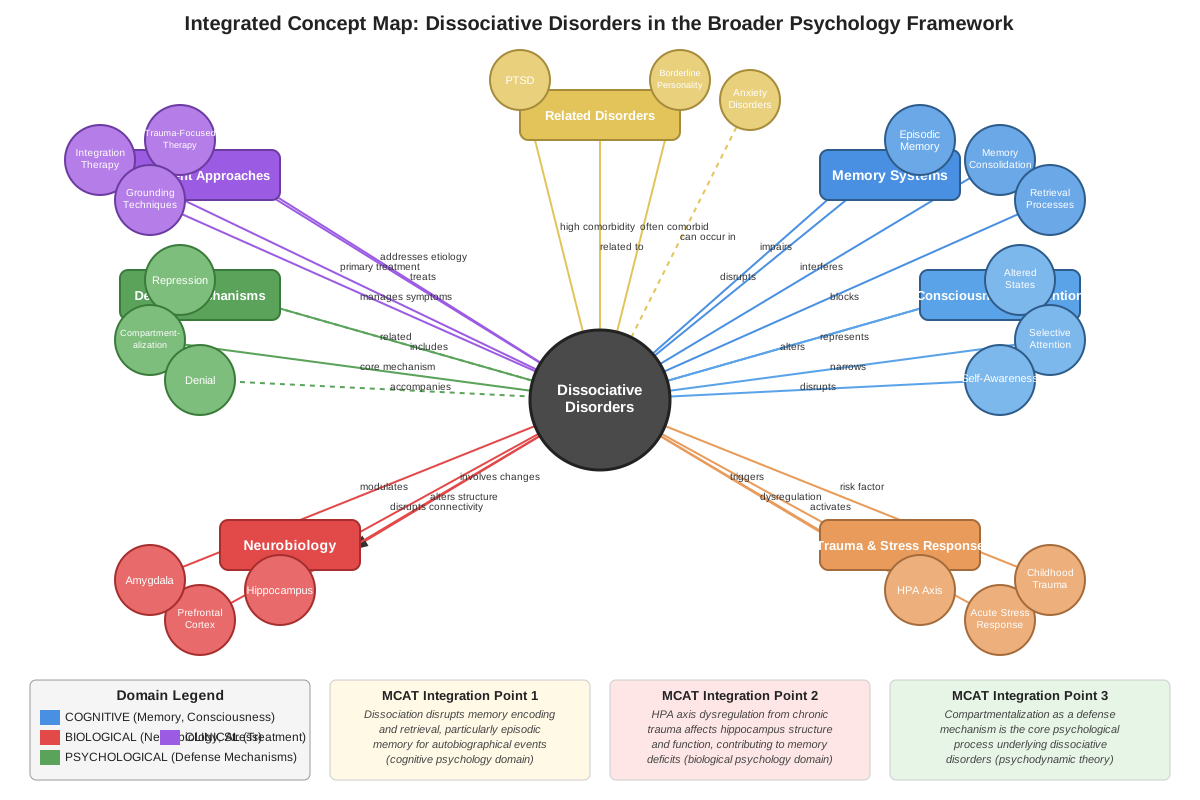
Dissociative disorders connect to multiple domains within Psychological Disorders and Treatment and broader Psychology concepts. The relationship begins with trauma and stress response: overwhelming traumatic experiences (particularly in childhood) → activate extreme stress responses → when escape is impossible, the mind employs dissociation as a psychological escape → repeated use of dissociation becomes pathological → development of dissociative disorders.
Within memory systems, dissociative disorders demonstrate how episodic memory (autobiographical events) can be disrupted while semantic memory (general knowledge) and procedural memory (skills) remain largely intact. This selective disruption illustrates the modular nature of memory systems and how stress hormones (particularly cortisol) can interfere with hippocampal-dependent memory consolidation.
Dissociative disorders also connect to consciousness concepts, demonstrating that consciousness is not unitary but rather composed of multiple integrated processes that can become disconnected. The disorders illustrate how attention can be narrowed during trauma (peritraumatic dissociation) and how this narrowed attention may contribute to fragmented memory encoding.
The relationship to defense mechanisms is fundamental: dissociation represents an unconscious defense against overwhelming affect. This connects to psychodynamic concepts about how the mind protects itself from unbearable psychological pain. The progression is: unbearable experience → psychological defense activated → dissociation separates experience from conscious awareness → if chronic, develops into disorder.
Dissociative disorders also relate to attachment theory: disrupted early attachments and childhood trauma occur in the same developmental period when identity formation is occurring, potentially explaining why severe childhood trauma can lead to identity fragmentation in DID. The relationship is: insecure/disorganized attachment + trauma → failure to develop integrated sense of self → identity fragmentation.
Quick check — test yourself on Dissociative disorders so far.
Try Flashcards →High-Yield Facts
⭐ Dissociative disorders are characterized by disruption in consciousness, memory, identity, or perception, with dissociation serving as a defense mechanism against overwhelming trauma.
⭐ Dissociative Identity Disorder (DID) involves two or more distinct personality states with recurrent gaps in memory; it almost always develops from severe, repeated childhood trauma before age 9.
⭐ Dissociative amnesia involves inability to recall important autobiographical information (usually traumatic) that is inconsistent with ordinary forgetting; the most common type is localized amnesia for a specific time period.
⭐ In depersonalization/derealization disorder, reality testing remains intact—patients know their experiences are not real, which distinguishes this from psychotic disorders.
⭐ Dissociative fugue (a subtype of dissociative amnesia) involves sudden, unexpected travel with inability to recall one's past and confusion about identity.
- Dissociative disorders are more common in individuals with history of childhood trauma, particularly physical or sexual abuse.
- The key difference between dissociative and psychotic disorders is that dissociative disorders maintain reality testing while psychotic disorders involve loss of reality testing.
- Depersonalization involves feeling detached from oneself (observing oneself from outside), while derealization involves feeling that surroundings are unreal or dreamlike.
- Dissociative symptoms exist on a continuum from normal (highway hypnosis) to pathological (dissociative disorders).
- Treatment for dissociative disorders typically involves trauma-focused psychotherapy, with the goal of integrating dissociated memories and identity states.
- Dissociative disorders must be distinguished from malingering (conscious fabrication for external gain) and factitious disorder (conscious symptom production for sick role).
- The hippocampus and amygdala play crucial roles in dissociative disorders, as these brain regions are involved in memory consolidation and stress response.
Common Misconceptions
Misconception: Dissociative Identity Disorder is the same as schizophrenia or involves "split personality" in the sense of psychosis.
Correction: DID involves distinct personality states but maintains reality testing and does not involve the hallucinations, delusions, or thought disorder characteristic of schizophrenia. The term "split personality" is misleading; DID involves fragmentation of identity, not a split from reality.
Misconception: People with dissociative amnesia are faking their memory loss for attention or to avoid responsibility.
Correction: Dissociative amnesia involves genuine inability to access memories due to psychological (not neurological) mechanisms. The memory loss is unconscious and involuntary, distinguishing it from malingering. Patients typically experience significant distress about their memory gaps.
Misconception: Depersonalization/derealization disorder means the person is losing touch with reality and becoming psychotic.
Correction: A defining feature of depersonalization/derealization disorder is that reality testing remains intact. Patients know their experiences of unreality are not actually real, which is the opposite of psychosis where patients believe their altered perceptions are real.
Misconception: Dissociative disorders are extremely rare and unlikely to appear on the MCAT.
Correction: While DID is relatively rare, dissociative symptoms are common, and depersonalization/derealization disorder has a lifetime prevalence of approximately 2%. The MCAT tests understanding of these disorders regularly, particularly in differential diagnosis questions.
Misconception: Dissociative amnesia always involves complete loss of all memories (generalized amnesia).
Correction: Localized amnesia (inability to recall events during a specific period) is the most common type. Generalized amnesia (complete loss of memory for one's entire life) is actually quite rare.
Misconception: If someone can remember some details from a traumatic event, they cannot have dissociative amnesia.
Correction: Selective amnesia (remembering some but not all events from a period) is a recognized subtype. Memory loss in dissociative amnesia can be partial and may involve specific aspects of events rather than complete blackouts.
Misconception: Dissociative disorders only develop immediately after trauma.
Correction: While dissociative symptoms may begin during or shortly after trauma, dissociative disorders can develop years later. DID symptoms often don't become apparent until adulthood, even though the causative trauma occurred in childhood.
Worked Examples
Example 1: Differential Diagnosis Vignette
Clinical Vignette: A 28-year-old woman presents to the emergency department brought by police who found her wandering in a city 200 miles from her home. She cannot recall her name, address, or any personal information. She appears confused about how she arrived at this location and has no memory of the past three days. Physical examination and toxicology screen are unremarkable. She appears distressed by her inability to remember.
Question: Which diagnosis is most consistent with this presentation?
Analysis:
Let's systematically evaluate the key features:
- Sudden travel away from home: Suggests dissociative fugue
- Inability to recall personal information: Indicates amnesia
- Confusion about identity: Characteristic of fugue state
- Time-limited memory loss (past three days): Suggests localized amnesia
- Distress about symptoms: Rules out malingering (which typically lacks genuine distress)
- Normal physical exam and toxicology: Rules out substance-induced or medical causes
Answer: This presentation is most consistent with dissociative amnesia with dissociative fugue. The combination of sudden, unexpected travel with inability to recall one's past and confusion about identity defines dissociative fugue. The localized amnesia for the past three days and the patient's distress support a genuine dissociative disorder rather than malingering.
Key reasoning: The MCAT wants you to recognize the classic triad of dissociative fugue: (1) sudden travel, (2) amnesia for past, and (3) identity confusion. The normal medical workup rules out organic causes, and the patient's distress suggests genuine pathology rather than fabrication.
Example 2: Distinguishing Dissociative from Psychotic Symptoms
Clinical Vignette: A 22-year-old college student reports that for the past six months, he frequently feels as though he is "watching himself from outside his body" and that his surroundings often seem "foggy and unreal, like I'm in a dream." He finds these experiences disturbing and recognizes they are unusual. He denies hearing voices, has no paranoid ideation, and his thought process is logical and organized. He reports these experiences began after a serious car accident. His academic performance has declined due to difficulty concentrating.
Question: What is the most likely diagnosis, and what is the key distinguishing feature from a psychotic disorder?
Analysis:
Symptom breakdown:
- "Watching himself from outside his body": Classic depersonalization
- Surroundings seem "foggy and unreal": Classic derealization
- "Recognizes they are unusual": Intact reality testing (crucial!)
- Finds experiences disturbing: Insight into abnormality of experiences
- No hallucinations or delusions: Rules out psychotic disorder
- Logical, organized thought process: No formal thought disorder
- Onset after trauma (car accident): Common trigger for dissociative symptoms
- Functional impairment: Meets clinical significance criterion
Answer: The most likely diagnosis is depersonalization/derealization disorder. The key distinguishing feature from a psychotic disorder is intact reality testing—the patient recognizes his experiences as unusual and not real. In psychotic disorders, patients lack insight and believe their altered perceptions are real (e.g., believing they actually are outside their body, not just feeling that way).
Key reasoning: The MCAT frequently tests the distinction between dissociative and psychotic symptoms. The critical differentiator is reality testing: dissociative disorders maintain insight that experiences are not real, while psychotic disorders involve believing altered perceptions are real. Watch for phrases like "recognizes as unusual," "knows it's not real," or "finds it disturbing" as clues pointing toward dissociative rather than psychotic pathology.
Exam Strategy
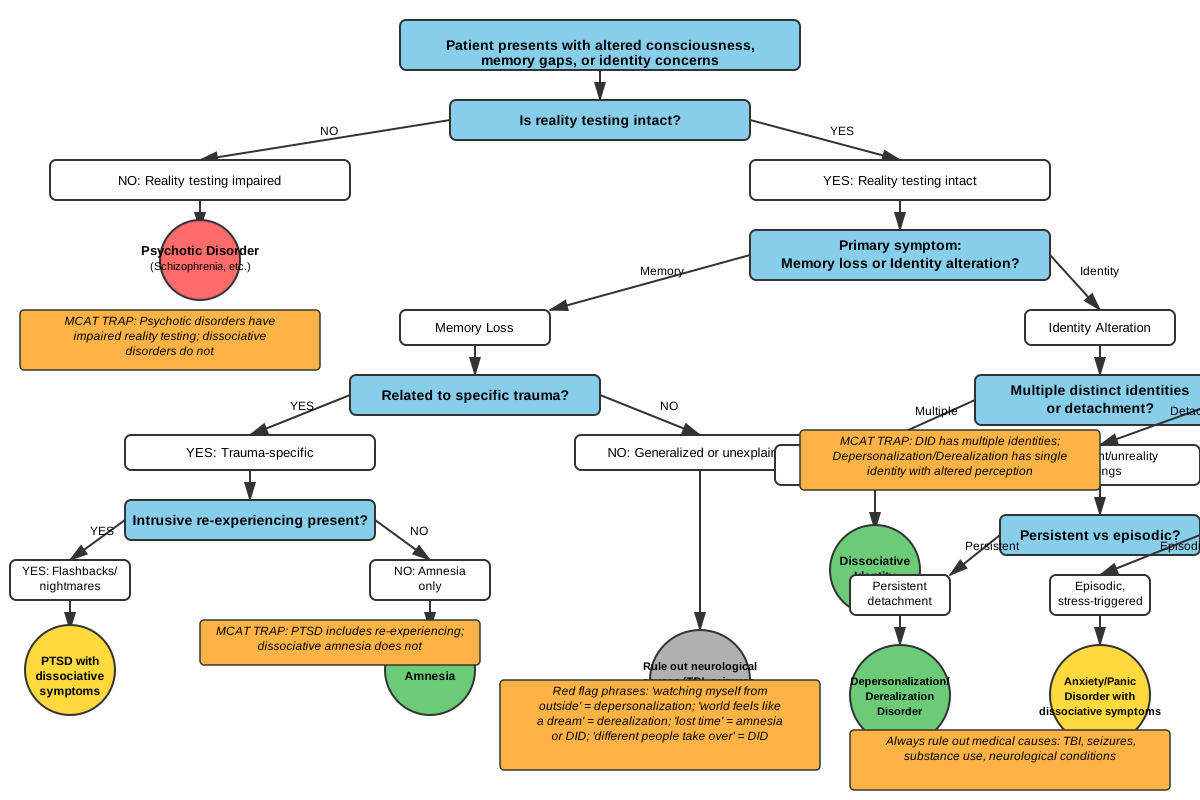
When approaching dissociative disorders MCAT questions, use this systematic approach:
Step 1: Identify the core symptom domain
- Memory disruption → Consider dissociative amnesia
- Identity fragmentation/multiple personality states → Consider DID
- Feelings of unreality/detachment → Consider depersonalization/derealization disorder
Step 2: Assess reality testing
- Does the patient recognize experiences as unusual? → Dissociative disorder
- Does the patient believe altered perceptions are real? → Consider psychotic disorder
Step 3: Look for trauma history
- Childhood trauma, especially before age 9 → Increases likelihood of DID
- Recent trauma or severe stress → May trigger any dissociative disorder
- No clear trauma → Doesn't rule out dissociative disorder but consider other diagnoses
Step 4: Evaluate memory pattern
- Gaps in autobiographical memory inconsistent with normal forgetting → Dissociative amnesia
- Memory loss for specific time period → Localized amnesia (most common)
- Complete life history loss → Generalized amnesia (rare, consider carefully)
Exam Tip: Trigger words for dissociative disorders include "detached," "unreal," "dreamlike," "watching myself," "gaps in memory," "can't remember," "distinct personality states," and "out of body." These phrases should immediately activate your dissociative disorder differential.
Process of Elimination Strategy:
- Rule out medical/substance causes first (look for normal physical exam, negative toxicology)
- Distinguish from psychotic disorders (check reality testing)
- Distinguish from PTSD (look for primary dissociative symptoms vs. re-experiencing/hyperarousal)
- Distinguish from malingering (look for genuine distress, consistency of presentation)
Time Allocation: Dissociative disorder questions typically require 60-90 seconds. Spend 20-30 seconds identifying key features, 20-30 seconds considering differential diagnosis, and 20-30 seconds selecting and confirming your answer. Don't overthink—the MCAT usually provides clear distinguishing features.
Common Question Formats:
- Clinical vignette requiring diagnosis (most common)
- Differential diagnosis questions (distinguishing from similar disorders)
- Questions about etiology or risk factors
- Treatment approach questions (less common but possible)
Memory Techniques
Mnemonic for Dissociative Disorder Types - "DID DAD":
- Dissociative Identity Disorder (multiple personality states)
- Dissociative Amnesia (memory gaps)
- Depersonalization/Derealization disorder (feelings of unreality)
Mnemonic for Dissociative Amnesia Types - "LSSGC" (Think: "Lost Some Specific General Continuous memories"):
- Localized (specific time period - most common)
- Selective (some but not all from period)
- Systematized (specific categories)
- Generalized (entire life - rare)
- Continuous (from specific time to present)
Visualization for Depersonalization vs. Derealization:
- Depersonalization: Picture a PERSON watching themselves on a movie screen (detached from SELF)
- Derealization: Picture the REAL world covered in fog or behind a glass wall (surroundings seem unreal)
Acronym for DID Key Features - "RIMS":
- Recurrent gaps in recall
- Identity fragmentation (two or more personality states)
- Marked discontinuity in sense of self
- Severe childhood trauma (almost always present)
Memory Aid for Reality Testing:
"Dissociative = Distressing but Detected" (patients recognize experiences as unusual)
"Psychotic = Perceived as Perfectly real" (patients believe experiences are real)
Summary
Dissociative disorders represent a category of psychological conditions characterized by disruption in consciousness, memory, identity, or perception, typically developing as a defense mechanism against overwhelming trauma. The three major types—Dissociative Identity Disorder (multiple personality states with amnesia), Dissociative Amnesia (inability to recall important autobiographical information), and Depersonalization/Derealization Disorder (feelings of detachment from self or surroundings)—share the common feature of dissociation but differ in their primary symptom presentation. For the MCAT, the critical distinctions involve recognizing that dissociative disorders maintain reality testing (unlike psychotic disorders), understanding the central role of trauma in etiology, and being able to differentiate between the subtypes based on whether the primary disruption involves identity, memory, or perception. These disorders illustrate fundamental principles about memory systems, consciousness, trauma response, and psychological defense mechanisms, making them valuable for testing integrated understanding of psychological concepts. Success on MCAT questions requires recognizing key trigger words, systematically evaluating symptom patterns, and carefully distinguishing dissociative disorders from conditions with overlapping features.
Key Takeaways
- Dissociative disorders involve disruption in consciousness, memory, identity, or perception, with dissociation serving as a psychological defense against trauma
- The three major types are DID (identity fragmentation), dissociative amnesia (memory gaps), and depersonalization/derealization disorder (feelings of unreality)
- Reality testing remains intact in dissociative disorders—this is the key distinction from psychotic disorders
- Severe childhood trauma (particularly before age 9) is almost always present in DID and commonly associated with other dissociative disorders
- Dissociative amnesia most commonly presents as localized amnesia (inability to recall specific time period), not generalized amnesia
- Depersonalization involves detachment from self (watching oneself), while derealization involves surroundings seeming unreal
- MCAT questions focus on differential diagnosis, requiring systematic evaluation of reality testing, trauma history, and primary symptom domain
Related Topics
Post-Traumatic Stress Disorder (PTSD): Understanding PTSD is essential for distinguishing it from dissociative disorders; both involve trauma, but PTSD is characterized by re-experiencing, avoidance, negative cognition/mood changes, and hyperarousal rather than primary dissociative symptoms. PTSD can include a dissociative subtype with prominent depersonalization/derealization.
Memory Systems and Processes: Deep understanding of episodic, semantic, and procedural memory systems explains why dissociative disorders selectively disrupt autobiographical memory while preserving other memory types. This connects to hippocampal function and stress effects on memory consolidation.
Psychotic Disorders: Mastering the distinction between dissociative and psychotic disorders is crucial for MCAT success. Focus on reality testing, insight, and the nature of perceptual disturbances to differentiate these conditions.
Trauma and Stress-Related Disorders: This broader category includes PTSD, acute stress disorder, and adjustment disorders. Understanding how different individuals respond to trauma with different symptom patterns provides context for dissociative disorders.
Personality Disorders: Particularly Borderline Personality Disorder, which can include transient dissociative symptoms. Understanding how dissociative symptoms in personality disorders differ from primary dissociative disorders aids differential diagnosis.
Practice CTA
Now that you've mastered the core concepts of dissociative disorders, it's time to solidify your understanding through active practice. Challenge yourself with MCAT-style practice questions focusing on clinical vignettes and differential diagnosis scenarios—these will build your pattern recognition skills and confidence. Use flashcards to reinforce the distinguishing features of each dissociative disorder subtype and the key differences from similar conditions. Remember, the MCAT rewards not just knowledge but the ability to apply that knowledge quickly and accurately under pressure. Your investment in understanding dissociative disorders will pay dividends not only on test day but in developing the clinical reasoning skills essential for medical practice. You've got this!
Sign up free to keep reading
Create a free AnvayaPrep account to finish this MCAT guide on Dissociative disorders — plus flashcards and practice questions.