Overview
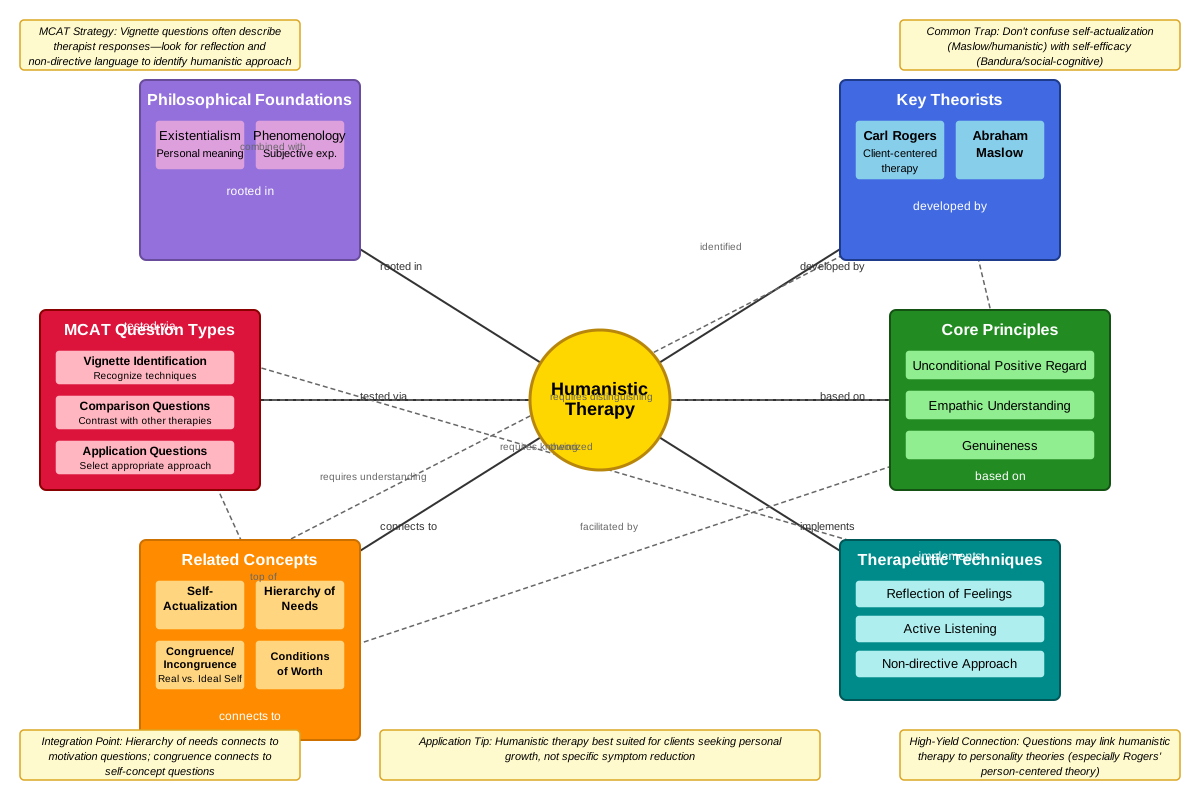
Humanistic therapy represents a fundamental approach to psychological treatment that emerged as a "third force" in psychology, distinct from psychoanalytic and behavioral traditions. Rooted in the philosophical traditions of existentialism and phenomenology, humanistic therapy emphasizes the inherent capacity of individuals for self-actualization, personal growth, and positive change. This therapeutic approach views psychological distress not as pathology requiring "fixing," but rather as a natural consequence of blocked growth potential or incongruence between one's authentic self and lived experience.
For the MCAT, understanding humanistic therapy Psychology is essential because it represents one of the major therapeutic paradigms tested in the Psychological Disorders and Treatment section. The exam frequently contrasts humanistic approaches with other therapeutic modalities—particularly psychoanalytic, cognitive-behavioral, and biomedical treatments—requiring students to identify distinguishing features, underlying assumptions, and appropriate clinical applications. Questions may present clinical vignettes where students must recognize humanistic therapeutic techniques, identify the theoretical framework guiding a therapist's interventions, or evaluate which approach best suits a particular client's needs.
The significance of humanistic therapy MCAT content extends beyond isolated therapeutic techniques to encompass broader themes in Psychology, including personality development, motivation, self-concept, and the nature of psychological health. Humanistic therapy connects directly to Abraham Maslow's hierarchy of needs, Carl Rogers' theory of personality, and fundamental concepts about human nature that appear throughout the MCAT psychology curriculum. Mastering this topic enables students to understand how theoretical perspectives on human nature translate into practical therapeutic interventions, a connection the MCAT frequently tests through application-based questions.
Learning Objectives
- [ ] Define Humanistic therapy using accurate Psychology terminology
- [ ] Explain why Humanistic therapy matters for the MCAT
- [ ] Apply Humanistic therapy to exam-style questions
- [ ] Identify common mistakes related to Humanistic therapy
- [ ] Connect Humanistic therapy to related Psychology concepts
- [ ] Compare and contrast humanistic therapy with psychodynamic, behavioral, and cognitive approaches
- [ ] Analyze clinical vignettes to identify specific humanistic therapeutic techniques
- [ ] Evaluate the theoretical assumptions underlying humanistic approaches to treatment
Prerequisites
- Basic personality theories: Understanding foundational personality concepts provides context for how humanistic theorists view the self and personal development
- Maslow's hierarchy of needs: This motivational framework directly informs humanistic therapy's emphasis on self-actualization as the ultimate therapeutic goal
- Psychological defense mechanisms: Familiarity with how individuals protect the ego helps contrast psychoanalytic and humanistic perspectives on psychological functioning
- Basic therapeutic terminology: Knowledge of general therapy concepts (therapist-client relationship, therapeutic alliance, treatment goals) enables understanding of humanistic-specific approaches
- Self-concept and identity: Understanding how individuals develop and maintain self-perceptions is fundamental to grasping humanistic therapy's focus on congruence
Why This Topic Matters
Clinical and Real-World Significance
Humanistic therapy has profoundly influenced modern psychotherapy practice, even among therapists who don't identify primarily as humanistic practitioners. The emphasis on empathy, unconditional positive regard, and the therapeutic relationship has become foundational across virtually all therapeutic modalities. Client-centered approaches pioneered by Carl Rogers transformed therapy from an expert-driven, directive process to a collaborative partnership that respects client autonomy and wisdom. These principles now inform evidence-based practices, informed consent procedures, and ethical guidelines across mental health professions. Humanistic therapy remains particularly effective for individuals experiencing existential concerns, identity issues, relationship difficulties, and problems related to self-esteem and personal growth.
MCAT Exam Statistics and Question Types
Humanistic therapy appears in approximately 5-8% of MCAT psychology questions, with particular concentration in passages and discrete questions addressing therapeutic approaches and psychological treatment. The exam most commonly tests this topic through:
- Comparison questions requiring students to distinguish humanistic from other therapeutic approaches
- Application scenarios where students identify which therapeutic technique is being demonstrated
- Theoretical foundation questions assessing understanding of underlying assumptions about human nature
- Treatment matching questions requiring selection of appropriate therapy for specific presenting problems
Questions typically appear as both passage-based and discrete items, with passages often presenting research studies comparing therapeutic outcomes or describing therapist-client interactions that students must analyze through different theoretical lenses.
Common Exam Presentation Formats
The MCAT presents humanistic therapy content through several recurring formats: clinical vignettes describing therapist behaviors or statements that exemplify humanistic principles; research passages comparing therapeutic effectiveness across different modalities; theoretical discussions requiring identification of underlying assumptions; and questions about appropriate treatment selection based on client characteristics or presenting concerns. Students must recognize both explicit mentions of humanistic concepts and implicit demonstrations of humanistic principles in therapist-client interactions.
Core Concepts
Fundamental Principles of Humanistic Therapy
Humanistic therapy is grounded in the philosophical assumption that humans possess an innate drive toward growth, self-actualization, and psychological health. Unlike psychoanalytic approaches that view humans as driven by unconscious conflicts or behavioral approaches that see behavior as shaped primarily by environmental contingencies, humanistic therapy operates from an optimistic view of human nature. This perspective holds that psychological problems arise when environmental or social conditions block natural growth tendencies, creating incongruence between the authentic self and lived experience.
The phenomenological approach central to humanistic therapy emphasizes subjective experience as the primary reality. Therapists seek to understand the client's unique perceptual world rather than imposing external diagnostic categories or interpretations. This contrasts sharply with medical model approaches that emphasize objective symptoms and standardized diagnoses. The humanistic therapist views the client as the expert on their own experience, with the therapist serving as a facilitator of self-discovery rather than an authority who provides answers or interpretations.
Person-Centered Therapy (Client-Centered Therapy)
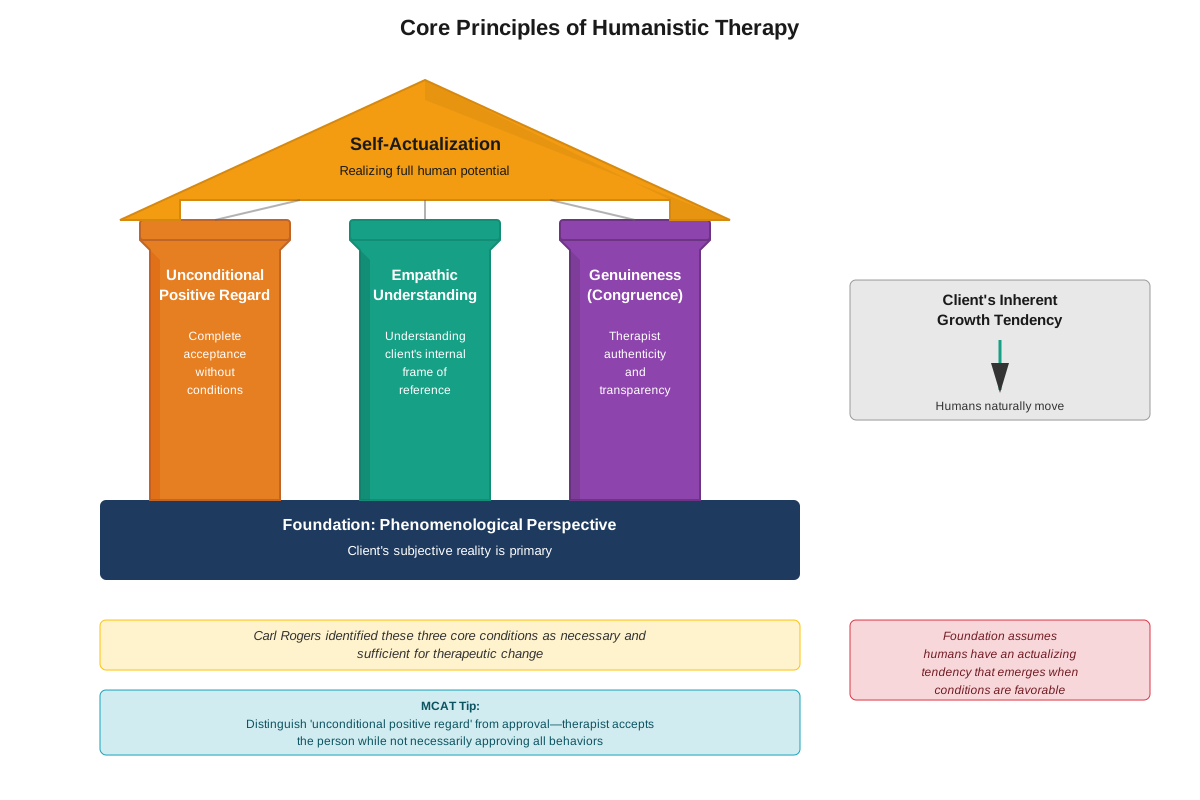
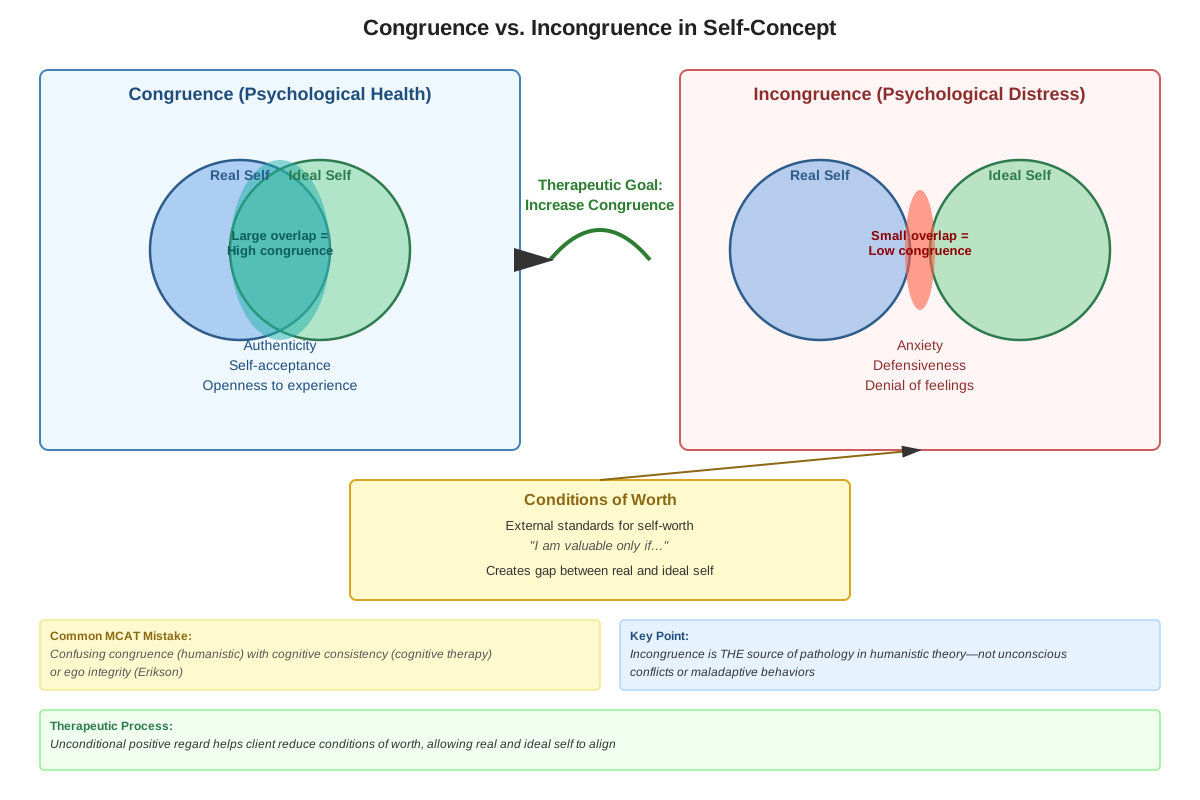
Developed by Carl Rogers, person-centered therapy (also called client-centered therapy) represents the most influential humanistic therapeutic approach. Rogers proposed that psychological distress results from incongruence—a mismatch between one's organismic self (authentic feelings, needs, and experiences) and one's self-concept (beliefs about oneself). This incongruence typically develops when individuals receive conditional positive regard from significant others, learning that acceptance depends on meeting external standards rather than being valued for their authentic selves.
Rogers identified three core conditions necessary and sufficient for therapeutic change:
- Unconditional positive regard (also called nonpossessive warmth): The therapist accepts and values the client completely, without judgment or conditions. This acceptance is not contingent on the client behaving in particular ways or making specific changes. The therapist communicates that the client has inherent worth regardless of their thoughts, feelings, or behaviors.
- Empathic understanding (or accurate empathy): The therapist strives to deeply understand the client's subjective experience from the client's internal frame of reference. This goes beyond intellectual understanding to involve sensing the client's feelings and personal meanings as if they were one's own, without losing the "as if" quality. The therapist communicates this understanding back to the client, helping them feel truly heard and understood.
- Congruence (or genuineness): The therapist is authentic and transparent in the therapeutic relationship, with alignment between internal experience and external expression. Rather than maintaining a professional facade, the congruent therapist is real and honest, modeling the very quality the client needs to develop.
Therapeutic Techniques and Process
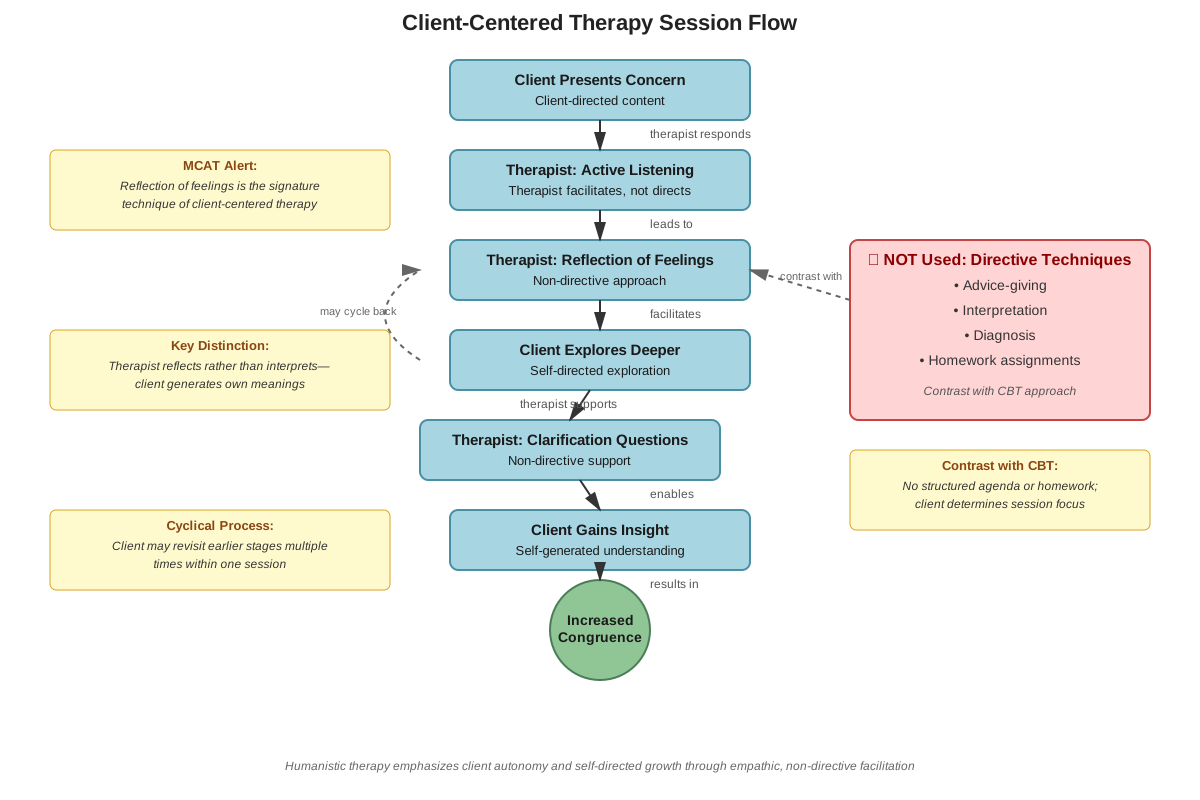
Person-centered therapy employs active listening and reflection as primary techniques. The therapist carefully attends to both verbal and nonverbal communication, reflecting back the emotional content and meaning of client statements. This reflection serves multiple purposes: it demonstrates empathic understanding, helps clients feel heard, clarifies communication, and enables clients to hear their own thoughts and feelings from a new perspective.
Reflection of feeling involves the therapist identifying and mirroring the emotional content of client communications. For example, if a client says, "I got the promotion, but now I'm working all the time and never see my family," the therapist might respond, "It sounds like you're feeling torn between professional success and personal relationships." This technique helps clients become more aware of their emotional experiences and validates those feelings.
The therapeutic process in person-centered therapy is nondirective, meaning the therapist does not guide the conversation toward specific topics, provide advice, or interpret the client's experience. Instead, the client determines the direction and pace of therapy. This approach respects client autonomy and reinforces the belief that clients possess the inner resources necessary for growth and problem-solving.
Gestalt Therapy
Gestalt therapy, developed by Fritz Perls, represents another major humanistic approach, though it incorporates more directive techniques than person-centered therapy. Gestalt therapy emphasizes present-moment awareness and personal responsibility, operating from the principle that psychological health requires full awareness of one's current experience and acceptance of responsibility for one's choices.
Key Gestalt concepts include:
- Here-and-now focus: Emphasis on present experience rather than past history or future concerns
- Personal responsibility: Clients are encouraged to own their feelings and choices, often through language changes (e.g., replacing "I can't" with "I won't")
- Awareness: Bringing unconscious or avoided aspects of experience into conscious awareness
- Contact: Authentic engagement with one's environment and relationships
Gestalt therapy employs active techniques including the empty chair technique (dialoguing with an imagined person or part of oneself in an empty chair), exaggeration exercises (amplifying gestures or statements to increase awareness), and dream work (acting out different elements of dreams to reclaim projected aspects of self).
Existential Therapy
Existential therapy addresses fundamental questions about human existence, meaning, freedom, and responsibility. This approach focuses on existential concerns or ultimate concerns that all humans face:
- Death and mortality: Anxiety about finitude and non-being
- Freedom and responsibility: The burden of choice and accountability for one's life
- Isolation: Fundamental aloneness despite relationships with others
- Meaninglessness: The challenge of creating purpose in an indifferent universe
Existential therapists help clients confront these concerns authentically rather than avoiding them through distraction or denial. The approach emphasizes authenticity (living in accordance with one's true values and choices) versus inauthenticity (living according to others' expectations or societal roles). Therapy focuses on helping clients exercise their freedom to create meaning and make authentic choices despite life's inherent uncertainties.
Comparison with Other Therapeutic Approaches
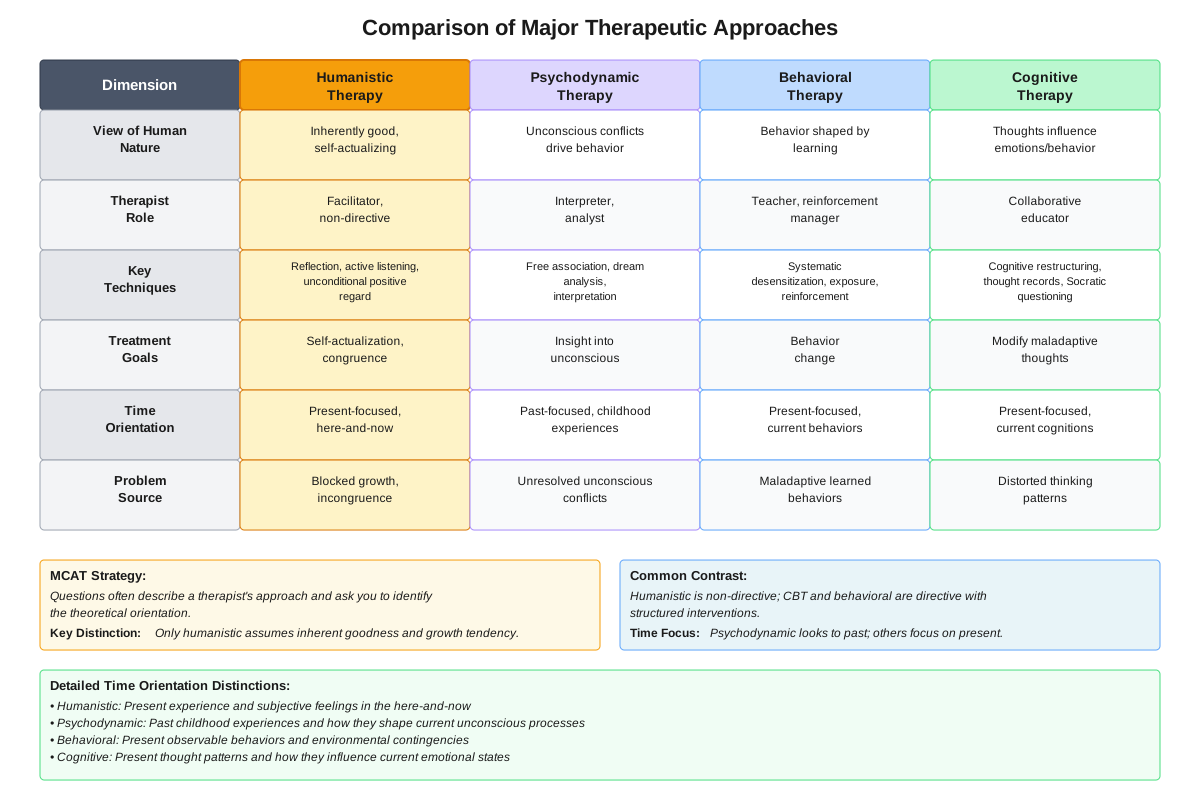
| Aspect | Humanistic Therapy | Psychodynamic Therapy | Cognitive-Behavioral Therapy | Biomedical Approach |
|---|---|---|---|---|
| View of human nature | Inherently growth-oriented and positive | Driven by unconscious conflicts | Neutral; shaped by learning | Biological organism |
| Cause of problems | Blocked growth, incongruence | Unconscious conflicts, early trauma | Maladaptive thoughts/behaviors | Biological dysfunction |
| Therapist role | Facilitator, authentic partner | Expert interpreter | Active teacher/collaborator | Medical expert |
| Focus | Present subjective experience | Past experiences, unconscious | Present thoughts and behaviors | Symptoms and biology |
| Techniques | Reflection, empathy, genuineness | Free association, interpretation | Cognitive restructuring, exposure | Medication, procedures |
| Goal | Self-actualization, congruence | Insight into unconscious | Symptom reduction, skill building | Symptom elimination |
Concept Relationships
The concepts within humanistic therapy form an interconnected theoretical framework. The fundamental assumption of innate growth potential → leads to → therapeutic approaches that facilitate rather than direct change. This facilitative stance → requires → the core conditions (unconditional positive regard, empathy, congruence) → which create → a safe therapeutic environment → enabling → clients to explore incongruence between authentic self and self-concept → resulting in → increased self-awareness and personal growth → ultimately achieving → greater congruence and self-actualization.
Humanistic therapy connects to prerequisite concepts through multiple pathways. Maslow's hierarchy of needs provides the theoretical foundation for understanding self-actualization as the ultimate therapeutic goal, with therapy addressing deficiency needs that block growth toward being needs. The concept of self-concept from personality psychology directly informs Rogers' theory of incongruence and the development of psychological distress. Defense mechanisms from psychodynamic theory contrast with humanistic explanations of how individuals respond to threatening experiences, with humanistic approaches emphasizing conscious awareness rather than unconscious defenses.
Humanistic therapy relates to broader psychology concepts tested on the MCAT. The emphasis on subjective experience connects to phenomenology and perception. The therapeutic relationship exemplifies social psychology principles about interpersonal influence and relationship formation. The focus on personal growth and optimal functioning relates to positive psychology and concepts of psychological well-being. Understanding these connections enables students to integrate humanistic therapy into the broader conceptual network of MCAT psychology content.
Quick check — test yourself on Humanistic therapy so far.
Try Flashcards →High-Yield Facts
⭐ Carl Rogers developed person-centered (client-centered) therapy, which emphasizes the therapeutic relationship and core conditions as necessary and sufficient for change
⭐ The three core conditions are unconditional positive regard, empathic understanding, and congruence (genuineness), all of which must be present for therapeutic change
⭐ Incongruence between organismic self and self-concept causes psychological distress in Rogers' theory, resulting from conditional positive regard during development
⭐ Humanistic therapy is nondirective, with the client determining the direction and pace of therapy rather than the therapist imposing structure or interpretations
⭐ Humanistic approaches view humans as inherently growth-oriented with innate drives toward self-actualization, contrasting with psychodynamic emphasis on unconscious conflicts
- Reflection of feeling is a primary technique where therapists mirror the emotional content of client communications to demonstrate empathy and increase awareness
- Gestalt therapy emphasizes present-moment awareness and personal responsibility, using more directive techniques than person-centered therapy
- The empty chair technique is a Gestalt intervention where clients dialogue with imagined others or parts of themselves
- Existential therapy addresses ultimate concerns including death, freedom, isolation, and meaninglessness
- Humanistic therapy focuses on subjective experience (phenomenology) rather than objective symptoms or external observations
- Self-actualization represents the highest level of Maslow's hierarchy and the ultimate goal of humanistic therapy
- Conditional positive regard from caregivers leads to incongruence as individuals learn to value themselves only when meeting external standards
Common Misconceptions
Misconception: Humanistic therapy is just being nice and supportive to clients without any specific therapeutic technique.
Correction: While warmth and support are important, humanistic therapy involves specific, intentional techniques including accurate empathic reflection, maintaining congruence, and providing unconditional positive regard. These require significant skill and training to implement effectively. The nondirective approach is itself a deliberate therapeutic stance based on theoretical principles about human nature and change processes.
Misconception: Unconditional positive regard means approving of all client behaviors and never challenging clients.
Correction: Unconditional positive regard refers to accepting and valuing the client as a person, not necessarily approving of all behaviors. A therapist can express concern about harmful behaviors while still maintaining positive regard for the client's inherent worth. The distinction is between the person (always valued) and specific behaviors (which may be problematic).
Misconception: Humanistic therapy and person-centered therapy are completely different approaches.
Correction: Person-centered therapy (developed by Carl Rogers) is a specific type of humanistic therapy. Humanistic therapy is the broader category that includes person-centered therapy, Gestalt therapy, existential therapy, and other approaches sharing humanistic assumptions about human nature. All person-centered therapy is humanistic, but not all humanistic therapy is person-centered.
Misconception: Because humanistic therapy is nondirective, therapists remain passive and just listen without actively participating.
Correction: Nondirective does not mean passive. Humanistic therapists actively listen, reflect feelings, communicate empathic understanding, and maintain genuine presence. They work hard to understand the client's subjective experience and communicate that understanding. The nondirective aspect refers to not imposing the therapist's agenda, interpretations, or solutions, not to the therapist's level of engagement.
Misconception: Humanistic therapy ignores the past and only focuses on present experience.
Correction: While humanistic therapy emphasizes present subjective experience, it does not ignore the past. Clients often discuss past experiences, particularly how past conditional positive regard contributed to current incongruence. The difference is that humanistic therapists explore how past experiences affect current functioning rather than extensively analyzing childhood as the primary therapeutic work. Gestalt therapy particularly emphasizes the present, but even this approach acknowledges that past experiences influence current awareness.
Misconception: Humanistic therapy works the same way for all clients regardless of their specific problems.
Correction: While humanistic therapy applies the same core principles (unconditional positive regard, empathy, congruence) across clients, the specific application varies based on each client's unique subjective experience and needs. The phenomenological approach means therapy is tailored to each individual's perceptual world. Additionally, different humanistic approaches (person-centered, Gestalt, existential) may be more appropriate for different presenting concerns.
Worked Examples
Example 1: Identifying Humanistic Therapy in a Clinical Vignette
Question: A therapist is working with a 28-year-old client who expresses frustration about her career. The client states, "I should be happy—I'm doing exactly what my parents always wanted, but I feel empty inside." The therapist responds, "It sounds like you're experiencing a disconnect between what you're doing and what feels meaningful to you." Which therapeutic approach is the therapist most likely using?
A) Psychodynamic therapy
B) Cognitive-behavioral therapy
C) Person-centered therapy
D) Biomedical approach
Reasoning Process:
First, identify the key features of the therapist's response. The therapist is:
- Reflecting the emotional content ("disconnect," "meaningful")
- Not interpreting unconscious meaning
- Not challenging cognitive distortions
- Not focusing on symptoms or biology
- Helping the client become aware of incongruence between actions and authentic feelings
Second, connect these features to therapeutic approaches:
- Psychodynamic therapy would likely interpret the unconscious meaning of the client's statement or explore childhood origins of the conflict
- Cognitive-behavioral therapy would identify and challenge the "should" statement as a cognitive distortion
- Person-centered therapy uses reflection to help clients become aware of incongruence between their authentic self and their lived experience
- Biomedical approaches focus on biological symptoms and treatments
Third, recognize the specific humanistic concept being demonstrated. The client is describing incongruence between her organismic self (what feels meaningful) and her self-concept/behavior (doing what parents wanted). The therapist's reflection demonstrates empathic understanding and helps increase the client's awareness of this incongruence without imposing interpretation or advice.
Answer: C) Person-centered therapy
Connection to Learning Objectives: This example demonstrates application of humanistic therapy concepts to exam-style questions, specifically identifying the nondirective, reflective approach characteristic of person-centered therapy and recognizing the concept of incongruence.
Example 2: Comparing Therapeutic Approaches
Question: A research study compares four therapeutic approaches for treating clients with low self-esteem. Which statement best describes how a humanistic therapist would conceptualize and treat this problem?
A) Low self-esteem results from unconscious conflicts between ego and superego; treatment involves making these conflicts conscious through interpretation
B) Low self-esteem results from maladaptive thought patterns; treatment involves identifying and restructuring negative automatic thoughts
C) Low self-esteem results from incongruence between authentic self and self-concept due to conditional positive regard; treatment involves providing unconditional positive regard and empathic understanding
D) Low self-esteem results from neurotransmitter imbalances; treatment involves medication to correct these imbalances
Reasoning Process:
First, identify the theoretical framework in each option:
- Option A describes psychodynamic conceptualization and treatment
- Option B describes cognitive-behavioral conceptualization and treatment
- Option C describes humanistic conceptualization and treatment
- Option D describes biomedical conceptualization and treatment
Second, analyze the humanistic explanation in Option C:
- Incongruence is the core humanistic concept explaining psychological distress
- Conditional positive regard is the developmental cause of incongruence
- Unconditional positive regard and empathic understanding are core conditions for therapeutic change
- The explanation focuses on the self-concept and authentic experience, central humanistic concerns
Third, verify that Option C aligns with humanistic principles:
- Emphasizes subjective experience and self-concept (phenomenological approach)
- Identifies blocked growth (conditional positive regard) as the cause
- Proposes facilitative rather than directive treatment
- Focuses on the therapeutic relationship as the mechanism of change
Answer: C
Connection to Learning Objectives: This example requires understanding the theoretical foundations of humanistic therapy, distinguishing it from other approaches, and recognizing how humanistic principles translate into specific conceptualizations of psychological problems and treatment approaches.
Exam Strategy
Approaching MCAT Questions on Humanistic Therapy
When encountering questions about therapeutic approaches, first identify whether the question asks about theory (underlying assumptions), technique (specific interventions), or application (matching therapy to client needs). For humanistic therapy questions, look for emphasis on subjective experience, the therapeutic relationship, and growth-oriented assumptions about human nature.
Trigger Words and Phrases
Watch for these terms that signal humanistic therapy:
- "Unconditional positive regard," "empathy," "genuineness," or "congruence"
- "Client-centered" or "person-centered"
- "Nondirective" or "client determines the direction"
- "Reflection" or "active listening"
- "Incongruence" or "authentic self"
- "Self-actualization" or "growth potential"
- "Subjective experience" or "phenomenological"
- "Here and now" (particularly for Gestalt)
- "Existential concerns" or "meaning"
Conversely, terms like "unconscious," "interpretation," "cognitive distortion," "exposure," "medication," or "diagnosis" typically signal non-humanistic approaches.
Process-of-Elimination Tips
When comparing therapeutic approaches:
- Eliminate options that emphasize unconscious processes (psychodynamic) if the question describes present-focused, conscious awareness
- Eliminate options that describe directive, structured interventions (CBT) if the question emphasizes client-directed exploration
- Eliminate biomedical options if the question focuses on psychological rather than biological mechanisms
- Choose humanistic options when the therapist is reflecting, empathizing, or facilitating rather than interpreting, teaching, or prescribing
Time Allocation Advice
Humanistic therapy questions are typically straightforward once you recognize the key concepts. Spend 60-70 seconds on discrete questions, using 10-15 seconds to identify the therapeutic approach being described and 45-55 seconds to evaluate options. For passage-based questions, note any mentions of therapeutic approaches while reading, then reference those sections when answering related questions. Don't overthink these questions—if you see the core conditions or nondirective approach, humanistic therapy is likely the answer.
Memory Techniques
Mnemonic for Core Conditions: "GEU"
- Genuineness (congruence)
- Empathy (empathic understanding)
- Unconditional positive regard
Remember: "GEU" sounds like "you," reminding you that person-centered therapy focuses on the client's (your) subjective experience and inherent worth.
Mnemonic for Humanistic vs. Other Approaches: "GROW"
- Growth-oriented (not pathology-focused)
- Relationship-centered (not technique-centered)
- Organismic self valued (not unconscious analyzed)
- Warmth and acceptance (not interpretation or restructuring)
Visualization Strategy for Incongruence
Picture two overlapping circles (like a Venn diagram):
- One circle represents the "organismic self" (authentic feelings and needs)
- The other represents "self-concept" (beliefs about oneself)
- When circles overlap completely = congruence = psychological health
- When circles barely overlap = incongruence = psychological distress
- Therapy increases overlap by providing unconditional positive regard, allowing authentic self to emerge
Acronym for Gestalt Therapy: "AWARE"
- Awareness (present-moment focus)
- Wholeness (integration of parts)
- Authenticity (genuine expression)
- Responsibility (owning choices)
- Experience (here-and-now emphasis)
Summary
Humanistic therapy represents a major therapeutic paradigm emphasizing innate human growth potential, subjective experience, and the therapeutic relationship as the primary mechanism of change. Carl Rogers' person-centered therapy, the most influential humanistic approach, proposes that psychological distress results from incongruence between one's authentic organismic self and self-concept, typically developing through conditional positive regard. The three core conditions—unconditional positive regard, empathic understanding, and congruence—are necessary and sufficient for therapeutic change. Unlike psychodynamic approaches that emphasize unconscious conflicts or cognitive-behavioral approaches that focus on thoughts and behaviors, humanistic therapy adopts a nondirective stance where clients determine the direction of therapy while therapists facilitate self-discovery through reflection and empathic presence. Other humanistic approaches include Gestalt therapy, which emphasizes present-moment awareness and personal responsibility using more directive techniques, and existential therapy, which addresses fundamental concerns about death, freedom, isolation, and meaning. For the MCAT, students must distinguish humanistic therapy from other approaches, recognize its theoretical foundations, identify its techniques in clinical vignettes, and understand its applications to various presenting problems.
Key Takeaways
- Humanistic therapy views humans as inherently growth-oriented with innate drives toward self-actualization, contrasting with psychodynamic and behavioral assumptions about human nature
- Carl Rogers' person-centered therapy requires three core conditions: unconditional positive regard, empathic understanding, and congruence (genuineness)
- Incongruence between organismic self and self-concept causes psychological distress, typically resulting from conditional positive regard during development
- Humanistic therapy is nondirective, with therapists facilitating client self-discovery through reflection rather than providing interpretations, advice, or structured interventions
- Reflection of feeling and active listening are primary techniques that demonstrate empathy and help clients increase self-awareness
- Gestalt therapy emphasizes present-moment awareness and personal responsibility, while existential therapy addresses ultimate concerns about death, freedom, isolation, and meaning
- On the MCAT, distinguish humanistic therapy by its focus on subjective experience, the therapeutic relationship, and growth facilitation rather than symptom reduction, unconscious analysis, or cognitive restructuring
Related Topics
Psychodynamic Therapy: Understanding psychodynamic approaches provides essential contrast with humanistic therapy, particularly regarding views of human nature, the role of the unconscious, and therapeutic techniques. Mastering humanistic therapy enables better discrimination between these major therapeutic paradigms.
Cognitive-Behavioral Therapy (CBT): CBT represents another major therapeutic approach frequently compared with humanistic therapy on the MCAT. Understanding both approaches enables analysis of how different theoretical assumptions lead to different therapeutic techniques and goals.
Personality Theories: Humanistic personality theories (particularly Rogers' and Maslow's) provide the theoretical foundation for humanistic therapy. Deeper study of these theories enhances understanding of therapeutic applications.
Self-Concept and Identity: The humanistic emphasis on congruence between authentic self and self-concept connects to broader concepts about identity formation, self-perception, and self-esteem tested throughout MCAT psychology.
Therapeutic Effectiveness Research: Understanding research on comparative therapeutic effectiveness helps contextualize when humanistic approaches are most appropriate and how they compare to other modalities in treating specific disorders.
Practice CTA
Now that you've mastered the core concepts of humanistic therapy, test your understanding with practice questions and flashcards. Focus particularly on distinguishing humanistic approaches from other therapeutic modalities and identifying the core conditions in clinical vignettes. Remember, the MCAT rewards not just memorization but genuine understanding of how theoretical principles translate into therapeutic practice. You've built a strong foundation—now apply it to practice questions to solidify your mastery and boost your confidence for test day. Every practice question you work through strengthens your ability to quickly recognize humanistic therapy concepts and apply them accurately under time pressure!
Sign up free to keep reading
Create a free AnvayaPrep account to finish this MCAT guide on Humanistic therapy — plus flashcards and practice questions.