Overview
Somatic symptom disorders represent a category of psychological conditions in which individuals experience significant physical symptoms that cause distress or functional impairment, but where psychological factors play a substantial role in the onset, severity, or maintenance of these symptoms. These disorders occupy a unique intersection between mind and body, illustrating the powerful influence of psychological processes on physical health and symptom perception. Understanding these conditions is essential for MCAT preparation because they frequently appear in passages that test the biopsychosocial model of health, the relationship between stress and physical symptoms, and the distinction between psychological and purely medical conditions.
For the MCAT, somatic symptom disorders are particularly important within the Psychological Disorders and Treatment unit because they challenge students to think critically about the mind-body connection and to differentiate between various presentations of medically unexplained symptoms. These disorders demonstrate how cognitive processes, emotional states, and behavioral patterns can manifest as genuine physical symptoms, making them ideal for testing integrated knowledge across biological, psychological, and social domains. The MCAT frequently uses these disorders to assess understanding of diagnostic criteria, the role of anxiety in symptom amplification, and the distinction between conscious and unconscious processes in symptom production.
The study of somatic symptom disorders connects to broader Psychology concepts including stress and coping, health psychology, anxiety disorders, and the biopsychosocial approach to understanding illness. These disorders also relate to important MCAT themes such as the placebo effect, the role of attention in symptom perception, and how cultural factors influence the expression of psychological distress through physical symptoms. Mastering this topic provides a foundation for understanding how psychological interventions can effectively treat conditions with physical manifestations.
Learning Objectives
- [ ] Define Somatic symptom disorders using accurate Psychology terminology
- [ ] Explain why Somatic symptom disorders matters for the MCAT
- [ ] Apply Somatic symptom disorders to exam-style questions
- [ ] Identify common mistakes related to Somatic symptom disorders
- [ ] Connect Somatic symptom disorders to related Psychology concepts
- [ ] Differentiate between the major subtypes of somatic symptom disorders based on DSM-5 criteria
- [ ] Analyze the role of cognitive and behavioral factors in the maintenance of somatic symptoms
- [ ] Evaluate clinical vignettes to distinguish somatic symptom disorders from medical conditions and malingering
Prerequisites
- Basic understanding of the DSM-5 classification system: Necessary to comprehend how somatic symptom disorders are categorized and diagnosed within the broader framework of psychological disorders
- Knowledge of anxiety disorders: Relevant because anxiety often co-occurs with and contributes to somatic symptom disorders, and understanding anxiety mechanisms helps explain symptom amplification
- Familiarity with the biopsychosocial model: Essential for understanding how biological, psychological, and social factors interact to produce and maintain physical symptoms
- Basic neuroanatomy and stress physiology: Needed to understand how psychological stress can produce genuine physiological changes and physical symptoms
- Understanding of conscious vs. unconscious processes: Critical for distinguishing between different types of somatic symptom disorders and differentiating them from malingering
Why This Topic Matters
Somatic symptom disorders have significant clinical relevance because they are surprisingly common in medical settings, with studies suggesting that 25-50% of primary care visits involve medically unexplained symptoms. These disorders cause substantial suffering, functional impairment, and healthcare utilization, making them important for future physicians to recognize and manage appropriately. Understanding these conditions helps prevent unnecessary medical procedures, reduces healthcare costs, and ensures patients receive appropriate psychological treatment rather than repeated medical investigations.
For the MCAT specifically, somatic symptom disorders appear with moderate frequency in the Psychology and Behavioral Sciences section, typically in 1-3 questions per exam. These questions most commonly appear in passage-based formats where students must analyze clinical vignettes, interpret patient behaviors, or evaluate treatment approaches. The MCAT uses these disorders to test critical thinking about the mind-body connection, diagnostic reasoning, and the application of psychological principles to medical contexts. Questions may ask students to distinguish between different somatic symptom disorders, identify appropriate treatments, or explain the psychological mechanisms underlying symptom development.
Common exam presentations include passages describing patients with multiple unexplained symptoms, scenarios involving excessive health anxiety, or research studies examining the effectiveness of cognitive-behavioral interventions for medically unexplained symptoms. The MCAT particularly favors questions that require students to differentiate somatic symptom disorders from factitious disorders, malingering, and genuine medical conditions—testing the ability to recognize subtle diagnostic distinctions that reflect real-world clinical challenges.
Core Concepts
Definition and Classification of Somatic Symptom Disorders
Somatic symptom disorders are a group of psychological conditions characterized by prominent somatic (bodily) symptoms associated with significant distress and impairment. The key feature distinguishing these disorders is not the absence of medical explanation, but rather the presence of excessive thoughts, feelings, or behaviors related to the somatic symptoms. According to DSM-5 criteria, the diagnosis emphasizes the patient's psychological response to symptoms rather than focusing solely on whether symptoms are medically explained or unexplained.
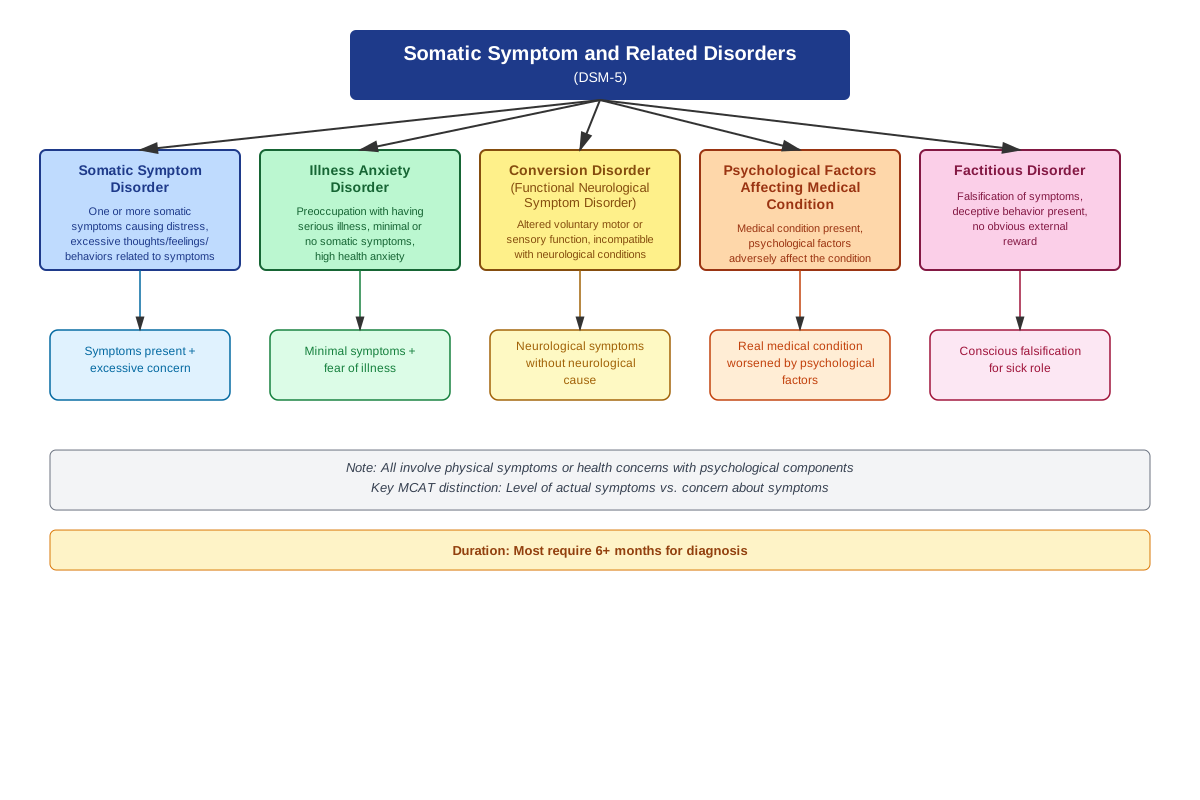
The major categories within somatic symptom disorders include:
- Somatic Symptom Disorder (SSD): The primary condition characterized by one or more somatic symptoms causing distress or functional impairment, accompanied by excessive thoughts, feelings, or behaviors related to these symptoms
- Illness Anxiety Disorder: Preoccupation with having or acquiring a serious illness, with minimal or no somatic symptoms present
- Conversion Disorder (Functional Neurological Symptom Disorder): Neurological symptoms (such as paralysis, blindness, or seizures) that are incompatible with recognized neurological conditions
- Psychological Factors Affecting Other Medical Conditions: Psychological factors that adversely affect a medical condition by influencing its course or treatment
- Factitious Disorder: Deliberate falsification of symptoms or induction of injury, though this is sometimes classified separately
Somatic Symptom Disorder (SSD)
Somatic Symptom Disorder represents the core condition within this category and is diagnosed when an individual experiences one or more distressing somatic symptoms that disrupt daily life. The critical diagnostic feature is not whether the symptoms have a medical explanation, but rather the presence of excessive thoughts, feelings, or behaviors related to the symptoms. These excessive responses must include at least one of the following:
- Disproportionate and persistent thoughts about the seriousness of symptoms
- Persistently high level of anxiety about health or symptoms
- Excessive time and energy devoted to symptoms or health concerns
The symptoms must persist for at least six months (though any single symptom need not be continuously present). Patients with SSD genuinely experience their symptoms—they are not feigning or consciously producing them. The disorder exists on a spectrum of severity from mild (one criterion met) to severe (multiple symptoms plus many excessive thoughts and behaviors).
Illness Anxiety Disorder
Illness Anxiety Disorder (formerly called hypochondriasis) involves preoccupation with having or acquiring a serious illness despite having few or no somatic symptoms. If somatic symptoms are present, they are mild in intensity. The key features include:
- High level of anxiety about health
- Excessive health-related behaviors (e.g., repeatedly checking body for signs of illness) or maladaptive avoidance (e.g., avoiding medical appointments)
- Preoccupation present for at least six months
- The feared illness may change over time
Individuals with illness anxiety disorder misinterpret normal bodily sensations as evidence of serious disease. They may become temporarily reassured by negative medical tests but quickly develop new health concerns. This disorder is distinguished from SSD by the relative absence of somatic symptoms and the predominance of anxiety about having an undiagnosed disease.
Conversion Disorder (Functional Neurological Symptom Disorder)
Conversion disorder involves neurological symptoms affecting voluntary motor or sensory function that cannot be explained by neurological disease or other medical conditions. Common presentations include:
- Motor symptoms: weakness, paralysis, abnormal movements, gait disturbances, swallowing difficulties
- Sensory symptoms: altered, reduced, or absent sensation; vision or hearing problems
- Seizure-like episodes
- Mixed presentations
The term "conversion" historically referred to the psychoanalytic concept that psychological distress is "converted" into physical symptoms. Modern understanding emphasizes that these symptoms are genuine (not feigned) and involve altered neural processing rather than structural brain damage. Clinical findings must demonstrate incompatibility with recognized neurological conditions—for example, "glove anesthesia" (loss of sensation in a glove-like distribution) doesn't follow anatomical nerve distributions.
Conversion disorder often occurs following psychological stress or trauma, though patients may not recognize the connection. The symptoms are not intentionally produced, distinguishing this from factitious disorder and malingering.
Psychological Mechanisms and Etiology
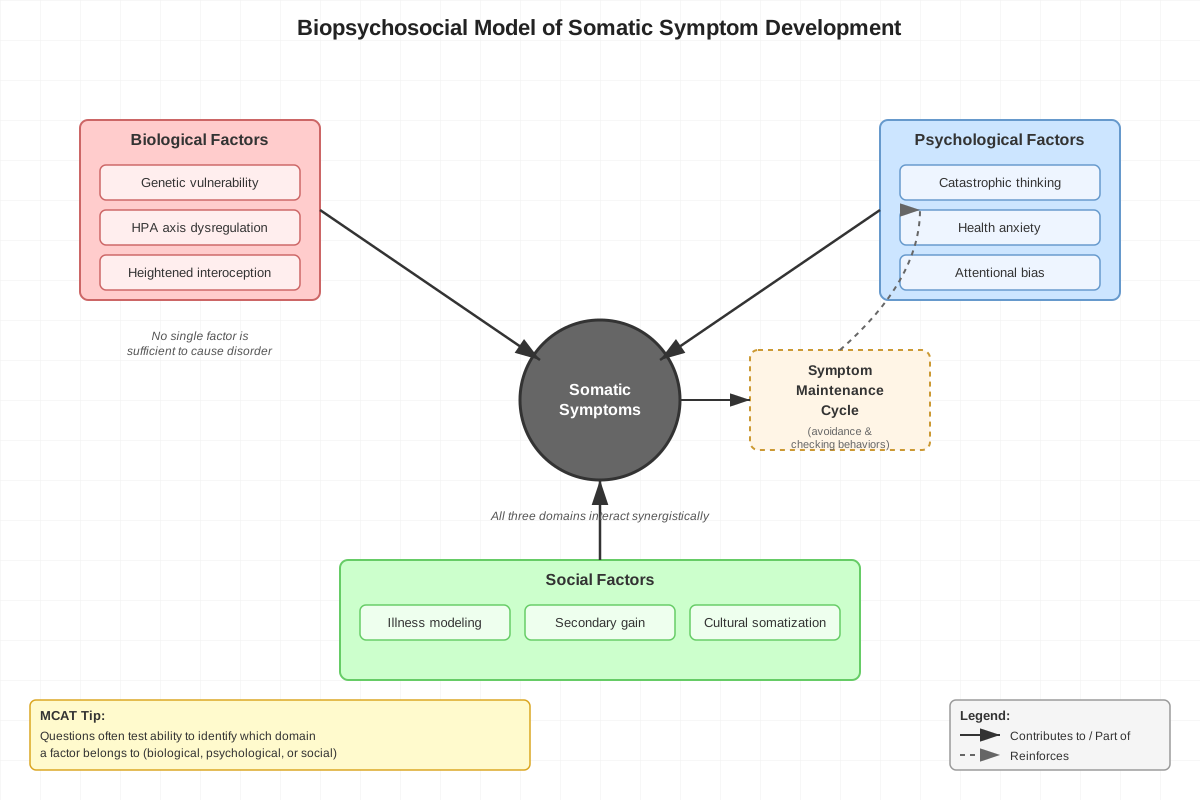
Multiple psychological mechanisms contribute to the development and maintenance of somatic symptom disorders:
Cognitive factors include:
- Attentional bias: Selective attention to bodily sensations, amplifying awareness of normal physiological processes
- Catastrophic misinterpretation: Tendency to interpret benign symptoms as evidence of serious disease
- Illness schemas: Rigid beliefs about illness based on past experiences or cultural learning
- Confirmation bias: Seeking information that confirms health fears while dismissing reassuring evidence
Behavioral factors include:
- Checking behaviors: Repeatedly examining body parts or seeking medical reassurance
- Avoidance: Limiting activities due to fear of symptom exacerbation
- Sick role adoption: Organizing life around illness identity
- Reassurance-seeking: Repeatedly consulting doctors or researching symptoms online
Emotional factors include:
- Anxiety amplification: Anxiety increases physiological arousal, creating more symptoms to worry about
- Alexithymia: Difficulty identifying and expressing emotions, leading to somatic expression of distress
- Emotional regulation deficits: Using physical symptoms as a way to manage overwhelming emotions
Learning and developmental factors include:
- Modeling: Learning illness behaviors from family members
- Reinforcement: Receiving attention or avoiding responsibilities when symptomatic
- Trauma history: Past medical trauma or childhood adversity increasing vulnerability
Distinguishing Features: Critical Differentials
| Condition | Symptom Awareness | Intentionality | Primary Motivation | Key Features |
|---|---|---|---|---|
| Somatic Symptom Disorder | Genuine symptoms | Not intentional | Relief from distress | Excessive thoughts/behaviors about symptoms |
| Illness Anxiety Disorder | Minimal symptoms | Not intentional | Fear of disease | Preoccupation with having undiagnosed illness |
| Conversion Disorder | Genuine neurological symptoms | Not intentional | Unconscious conflict resolution | Incompatible with neurological disease |
| Factitious Disorder | Falsified or induced | Intentional | Assume sick role | Deception without external reward |
| Malingering | Falsified or exaggerated | Intentional | External incentive | Clear secondary gain (money, avoiding work) |
| Psychological Factors Affecting Medical Condition | Real medical condition | Not intentional | N/A | Psychological factors worsen actual disease |
This table is critical for MCAT questions that present clinical vignettes requiring diagnostic differentiation.
Treatment Approaches
Understanding treatment is important for MCAT questions about intervention strategies:
Cognitive-Behavioral Therapy (CBT) is the first-line psychological treatment, targeting:
- Cognitive restructuring of catastrophic health beliefs
- Behavioral experiments to test feared outcomes
- Gradual reduction of checking and reassurance-seeking
- Attention training to reduce symptom focus
- Activity scheduling to improve functioning
Mindfulness-based interventions help patients:
- Observe bodily sensations without judgment
- Reduce reactivity to symptoms
- Accept uncertainty about health
Pharmacological approaches may include:
- Antidepressants (SSRIs) for comorbid anxiety or depression
- Not typically used as primary treatment for somatic symptoms themselves
Physician-patient relationship management:
- Regular scheduled appointments (not symptom-contingent)
- Validation of symptom experience while avoiding unnecessary tests
- Collaborative goal-setting focused on functioning rather than symptom elimination
Concept Relationships
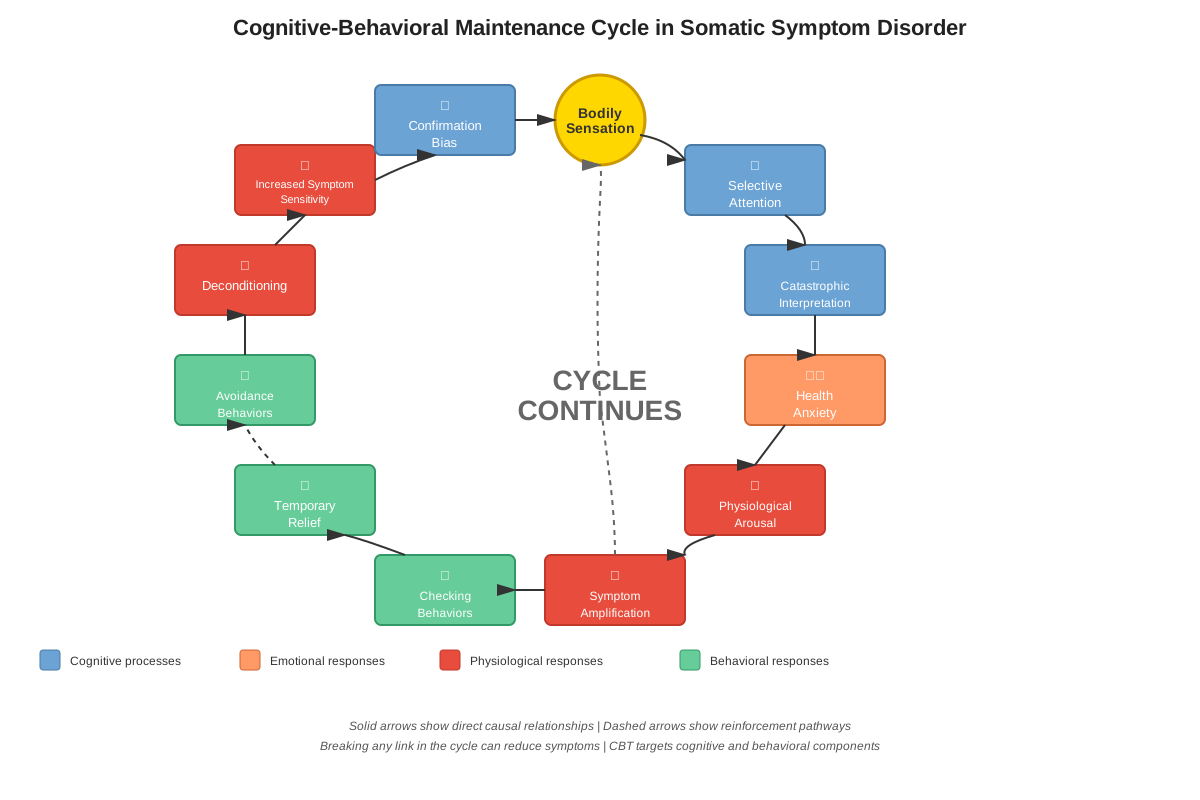
The concepts within somatic symptom disorders form an interconnected network centered on the mind-body relationship. At the core is the principle that psychological processes can produce genuine physical symptoms—this connects Somatic Symptom Disorder → to → Conversion Disorder, both involving real symptom experiences without full medical explanation. The cognitive mechanisms of catastrophic misinterpretation and attentional bias → lead to → symptom amplification, which → maintains → the cycle of anxiety and physical symptoms in both SSD and Illness Anxiety Disorder.
Illness Anxiety Disorder represents the cognitive extreme of this spectrum, where health anxiety → dominates → even in the relative absence of physical symptoms. This connects to broader anxiety disorder concepts, particularly the role of worry, safety behaviors, and reassurance-seeking in maintaining anxiety. The checking and avoidance behaviors seen across somatic symptom disorders → parallel → compulsions in OCD and safety behaviors in panic disorder.
Conversion Disorder connects to neurological concepts, demonstrating how psychological stress → can alter → neural processing to produce neurological symptoms. This relates to the broader concept of psychosomatic medicine and the biopsychosocial model, where biological vulnerability + psychological stress + social factors → interact → to produce illness presentations.
The distinction between somatic symptom disorders and factitious disorder/malingering hinges on the concept of intentionality: unconscious processes → produce → symptoms in somatic symptom disorders, while conscious deception → characterizes → factitious disorder and malingering. This connects to the broader psychological concept of defense mechanisms and the distinction between conscious and unconscious mental processes.
Treatment approaches connect these disorders to learning theory: CBT targets the cognitive distortions and behavioral reinforcement patterns → that maintain → symptom focus and disability. The effectiveness of psychological interventions → demonstrates → that these are fundamentally psychological conditions, even when symptoms are physical.
Quick check — test yourself on Somatic symptom disorders so far.
Try Flashcards →High-Yield Facts
⭐ Somatic symptom disorder is diagnosed based on excessive thoughts, feelings, or behaviors about symptoms—NOT on whether symptoms are medically explained or unexplained
⭐ The key distinction between illness anxiety disorder and somatic symptom disorder is that illness anxiety involves minimal or no somatic symptoms, with predominant health anxiety
⭐ Conversion disorder symptoms must be incompatible with recognized neurological or medical conditions and typically involve motor or sensory function
⭐ Symptoms in somatic symptom disorders are NOT intentionally produced—this distinguishes them from factitious disorder and malingering
⭐ Malingering is not a mental disorder but involves intentional symptom fabrication for external gain (money, avoiding work); factitious disorder involves intentional fabrication to assume the sick role without external reward
- Somatic symptom disorders are more common in women than men across most subtypes
- Cognitive-behavioral therapy is the first-line psychological treatment for somatic symptom disorders
- Patients with somatic symptom disorder genuinely experience their symptoms and are not "faking" or imagining them
- Conversion disorder often occurs following psychological stress or trauma, though patients may not recognize the temporal connection
- Reassurance-seeking and repeated medical consultations paradoxically maintain anxiety in somatic symptom disorders rather than reducing it
- Cultural factors significantly influence how psychological distress is expressed through somatic symptoms
- Comorbidity with anxiety and depressive disorders is extremely common in somatic symptom disorders
- The DSM-5 shifted focus from medically unexplained symptoms to the patient's psychological response to symptoms
Common Misconceptions
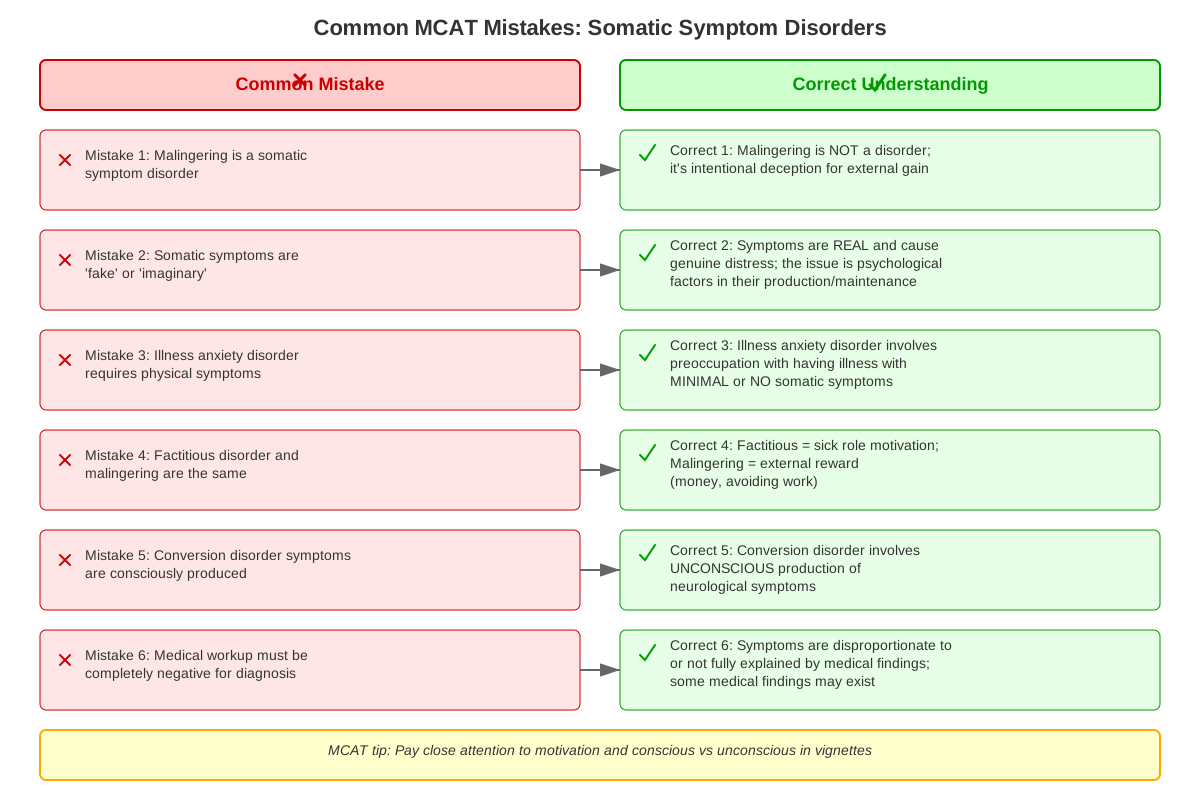
Misconception: Patients with somatic symptom disorder are "faking" their symptoms or seeking attention.
Correction: Patients genuinely experience their symptoms and are not consciously producing them. The symptoms are real, even when psychological factors play a major role. This distinguishes somatic symptom disorders from malingering and factitious disorder, where deception is involved.
Misconception: Somatic symptom disorder can only be diagnosed when medical tests are negative and no physical cause is found.
Correction: The DSM-5 explicitly moved away from requiring medically unexplained symptoms. Somatic symptom disorder is diagnosed based on excessive thoughts, feelings, or behaviors about symptoms, regardless of whether a medical condition is present. A person can have both a medical condition AND somatic symptom disorder if their psychological response is disproportionate.
Misconception: Illness anxiety disorder and somatic symptom disorder are the same thing.
Correction: Illness anxiety disorder involves preoccupation with having a serious illness with minimal or no somatic symptoms present. Somatic symptom disorder requires one or more distressing somatic symptoms. The focus in illness anxiety is on fear of undiagnosed disease; in somatic symptom disorder, it's on the distress and impairment caused by existing symptoms.
Misconception: Conversion disorder symptoms are "all in the patient's head" and not real.
Correction: Conversion disorder involves genuine neurological symptoms with altered neural processing. Neuroimaging studies show different patterns of brain activation in conversion disorder compared to voluntary movement or feigning. The symptoms are real and involuntary, not imagined or consciously produced.
Misconception: Providing medical reassurance will reduce anxiety in patients with illness anxiety disorder.
Correction: Reassurance-seeking is actually a maintaining factor in illness anxiety disorder. While reassurance provides temporary relief, it reinforces the belief that symptoms are dangerous and prevents the patient from learning to tolerate uncertainty. Repeated reassurance paradoxically increases anxiety over time.
Misconception: Somatic symptom disorders are rare and not clinically significant.
Correction: Somatic symptom disorders are common, with medically unexplained symptoms accounting for 25-50% of primary care visits. These disorders cause significant functional impairment, healthcare utilization, and suffering, making them clinically important and economically costly.
Misconception: If a patient has a history of trauma, their physical symptoms must be conversion disorder.
Correction: While trauma is associated with increased risk of conversion disorder, many trauma survivors develop other conditions (PTSD, depression, anxiety) or have unrelated medical conditions. Conversion disorder requires specific neurological symptoms incompatible with medical conditions, not just a trauma history plus physical symptoms.
Worked Examples
Example 1: Diagnostic Differentiation
Clinical Vignette: A 32-year-old woman presents to her primary care physician for the eighth time this year, complaining of persistent headaches, abdominal pain, and fatigue. Extensive medical workup including imaging, blood tests, and specialist consultations have revealed no medical abnormalities. She spends several hours daily researching her symptoms online and checking her body for new problems. She has stopped working because she fears her symptoms indicate a serious undiagnosed condition. She becomes temporarily relieved after negative test results but quickly develops new concerns. When asked about stress, she reports her symptoms are her only concern.
Question: Which diagnosis best fits this presentation?
Analysis:
Let's systematically evaluate the key features:
- Presence of somatic symptoms: Yes—headaches, abdominal pain, fatigue
- Medical explanation: Extensive negative workup
- Excessive thoughts/behaviors: Yes—hours spent researching, body checking, stopped working
- Duration: Eight visits this year suggests >6 months
- Functional impairment: Yes—stopped working
- Intentionality: No evidence of conscious fabrication
Differential considerations:
- Somatic Symptom Disorder: Strong candidate—has multiple somatic symptoms PLUS excessive thoughts and behaviors about symptoms, with significant functional impairment
- Illness Anxiety Disorder: Less likely—patient has prominent somatic symptoms, not just fear of disease with minimal symptoms
- Conversion Disorder: No—symptoms are not neurological in nature
- Factitious Disorder: No—no evidence of intentional symptom production
- Malingering: No—no clear external incentive
Answer: Somatic Symptom Disorder is the best diagnosis. The patient has multiple distressing somatic symptoms accompanied by excessive thoughts (preoccupation with symptoms), behaviors (researching, checking), and functional impairment (stopped working). The key is recognizing that the diagnosis is based on the psychological response to symptoms, not just the presence of medically unexplained symptoms.
Learning objective connection: This example demonstrates application of diagnostic criteria to distinguish between somatic symptom disorder subtypes and illustrates the importance of focusing on excessive thoughts/behaviors rather than medical explanation.
Example 2: Mechanism and Treatment
Clinical Vignette: A 45-year-old man develops sudden paralysis of his right arm following a heated argument with his employer about potential job termination. Neurological examination reveals inconsistent findings: the arm appears completely paralyzed during formal testing, but the patient uses it briefly when distracted. MRI and nerve conduction studies are normal. The patient seems surprisingly unconcerned about the paralysis (la belle indifférence) and mentions he was supposed to complete a major project requiring extensive computer work.
Question: What is the most likely diagnosis, and what psychological mechanism best explains the symptom development?
Analysis:
Diagnostic features:
- Neurological symptom: Paralysis affecting voluntary motor function
- Incompatibility with neurological disease: Inconsistent findings, normal testing, uses arm when distracted
- Temporal relationship: Onset following psychological stressor (job conflict)
- La belle indifférence: Inappropriate lack of concern (though not required for diagnosis)
- Potential secondary gain: Avoids work project, may influence job termination decision
Diagnosis: Conversion Disorder (Functional Neurological Symptom Disorder)
Psychological mechanisms:
The symptom development can be understood through multiple psychological lenses:
- Primary gain (psychodynamic perspective): The paralysis "solves" an unconscious psychological conflict—the patient faces an impossible situation (potential job loss, overwhelming work demands) and the symptom provides an unconscious escape without conscious decision-making or guilt
- Dissociation: Under extreme stress, the connection between conscious intention and motor execution becomes disrupted, resulting in genuine inability to move the arm despite intact neural pathways
- Attention and expectation: Once the symptom develops, the patient's expectation that the arm "won't work" becomes self-fulfilling through altered neural processing, even though the motor pathways are intact
- Conditioning: The symptom may be maintained through reinforcement—avoiding stressful work, receiving attention and concern from others
Treatment approach:
The most effective treatment would involve:
- Physical therapy with gradual retraining of motor function
- Cognitive-behavioral therapy addressing stress management and coping skills
- Exploration of the temporal relationship between stress and symptom onset
- Avoiding excessive medical investigation that reinforces illness beliefs
- Addressing the underlying stressor (job situation) through problem-solving
Important distinction: While secondary gain is present (avoiding work), this is NOT malingering because the symptom is not intentionally produced. The patient genuinely cannot move the arm voluntarily, even though the paralysis serves a psychological function.
Learning objective connection: This example illustrates the application of conversion disorder criteria, demonstrates the distinction between conscious and unconscious processes, and connects psychological mechanisms to symptom development and treatment planning.
Exam Strategy
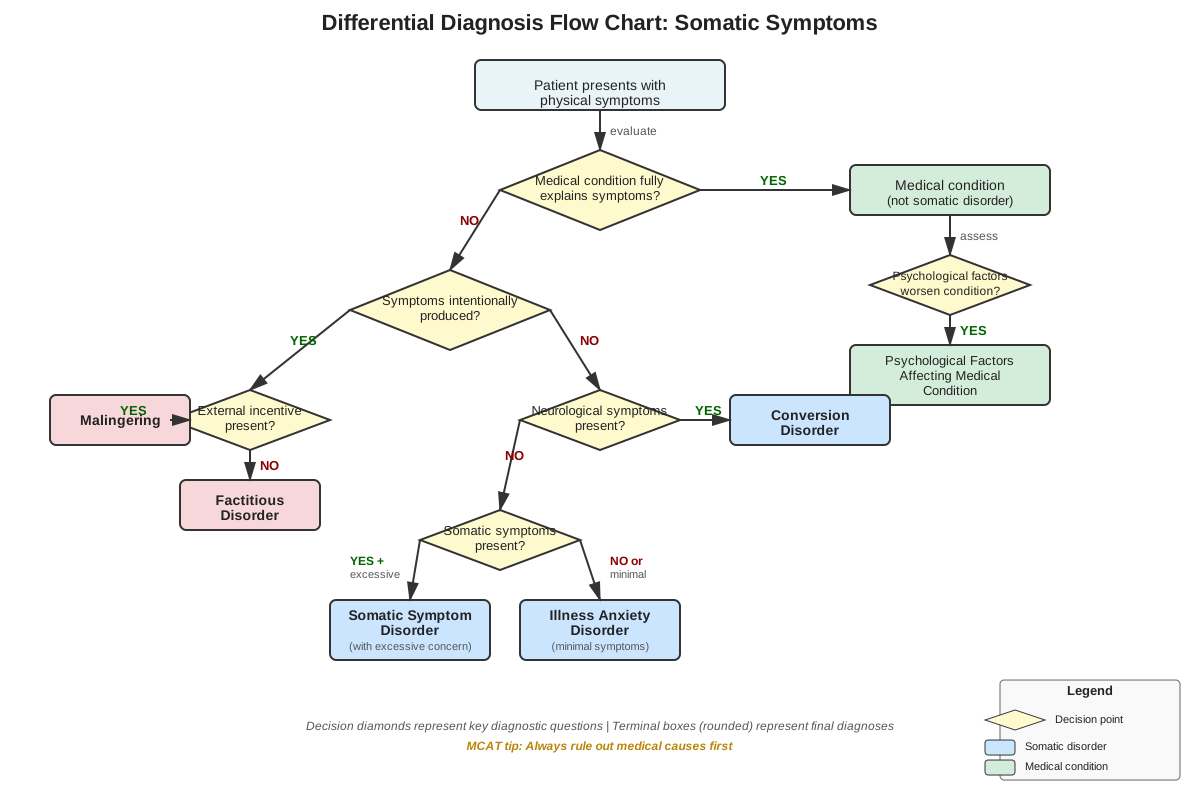
When approaching somatic symptom disorders questions on the MCAT, use this systematic strategy:
Step 1: Identify the symptom type
- Neurological symptoms (paralysis, blindness, seizures) → think Conversion Disorder
- Multiple varied physical symptoms → think Somatic Symptom Disorder
- Minimal symptoms with disease preoccupation → think Illness Anxiety Disorder
Step 2: Assess intentionality
Look for clues about whether symptoms are consciously produced:
- Trigger words for unconscious/genuine: "patient is distressed," "genuinely experiences," "unaware," "inconsistent with voluntary control"
- Trigger words for conscious/intentional: "only when observed," "inconsistent across settings," "clear external incentive," "evidence of deception"
Step 3: Evaluate the psychological response
For somatic symptom disorder specifically, look for evidence of:
- Excessive time/energy devoted to symptoms
- Disproportionate anxiety about symptoms
- Persistent thoughts about symptom seriousness
Exam Tip: The MCAT loves to test the distinction between somatic symptom disorder and illness anxiety disorder. If the vignette emphasizes multiple physical symptoms with excessive worry ABOUT those symptoms → SSD. If it emphasizes fear of having an undiagnosed disease with minimal actual symptoms → Illness Anxiety Disorder.
Step 4: Rule out malingering and factitious disorder
- Malingering: Look for clear external incentive (money, avoiding legal consequences, obtaining drugs)
- Factitious disorder: Look for intentional production WITHOUT external incentive, desire to assume sick role
- Key distinction: Both involve intentionality; somatic symptom disorders do NOT
Process of elimination tips:
- If the question mentions "intentionally producing symptoms" → eliminate all somatic symptom disorders
- If neurological symptoms are described as "impossible anatomically" or "inconsistent with disease" → strongly consider Conversion Disorder
- If the patient has an actual diagnosed medical condition but excessive response → consider "Psychological Factors Affecting Other Medical Conditions" or SSD with comorbid medical condition
- If the vignette emphasizes doctor-shopping and reassurance-seeking with minimal symptoms → Illness Anxiety Disorder
Time allocation: These questions typically require 90-120 seconds. Spend:
- 30 seconds reading and identifying key features
- 30 seconds applying diagnostic criteria
- 30 seconds eliminating wrong answers
- 15-30 seconds confirming your choice
Common trap answers:
- Offering "malingering" when secondary gain is present but symptoms are genuine
- Confusing illness anxiety disorder with generalized anxiety disorder (GAD focuses on multiple life domains, not specifically health)
- Selecting "no disorder" because medical tests are negative (remember: somatic symptom disorders are real psychological conditions)
Memory Techniques
Mnemonic for Somatic Symptom Disorder criteria: "STEP"
- Somatic symptoms (one or more)
- Thoughts excessive about symptoms
- Energy/time devoted to symptoms excessively
- Persistent (at least 6 months)
Mnemonic for distinguishing the main disorders: "SICI"
- Somatic Symptom Disorder = Symptoms present + excessive response
- Illness Anxiety = Imagined disease (minimal symptoms)
- Conversion = Can't move/sense (neurological)
- Intentional = If intentional, it's NOT somatic symptom disorder (factitious/malingering)
Visualization for Conversion Disorder:
Picture a "conversion" of psychological stress into a physical "outlet"—like stress being channeled through a funnel that exits as a neurological symptom. The pathway is unconscious, like water flowing downhill without conscious direction.
Acronym for excessive behaviors in SSD: "WATCH"
- Worrying persistently
- Avoiding activities
- Time spent on symptoms
- Checking body repeatedly
- Health anxiety high
Memory aid for intentionality spectrum:
Think of a continuum from unconscious to conscious:
- Unconscious ← Somatic Symptom Disorders | Conversion Disorder → Factitious Disorder → Malingering → Conscious
- Left side = genuine psychological disorders
- Right side = intentional deception
Rhyme for illness anxiety disorder:
"Minimal symptoms, maximal fear—convinced that disease is always near"
Summary
Somatic symptom disorders represent a critical category of psychological conditions where physical symptoms and psychological factors intersect, making them essential for MCAT preparation and clinical understanding. The core principle is that these disorders involve genuine physical symptoms or health concerns where psychological processes play a significant role, but symptoms are NOT intentionally produced. The major subtypes include Somatic Symptom Disorder (characterized by distressing physical symptoms plus excessive thoughts, feelings, or behaviors about those symptoms), Illness Anxiety Disorder (preoccupation with having a serious disease despite minimal symptoms), and Conversion Disorder (neurological symptoms incompatible with medical conditions). Successful MCAT performance requires distinguishing these disorders from each other and from factitious disorder and malingering based on symptom type, intentionality, and psychological response patterns. Treatment primarily involves cognitive-behavioral therapy targeting catastrophic thinking, attention to symptoms, and maladaptive behaviors. Understanding these disorders demonstrates mastery of the biopsychosocial model and the powerful influence of psychological processes on physical health.
Key Takeaways
- Somatic symptom disorders involve genuine physical symptoms or health concerns with significant psychological components, but symptoms are NOT consciously produced (distinguishing them from factitious disorder and malingering)
- The DSM-5 diagnosis of Somatic Symptom Disorder focuses on excessive thoughts, feelings, or behaviors about symptoms rather than requiring medically unexplained symptoms
- Illness Anxiety Disorder is distinguished by minimal or no somatic symptoms with predominant fear of having an undiagnosed serious illness
- Conversion Disorder involves neurological symptoms (motor or sensory) that are incompatible with recognized neurological or medical conditions and often follow psychological stress
- Cognitive-behavioral therapy is the first-line treatment, targeting catastrophic health beliefs, attention biases, and maladaptive behaviors like checking and reassurance-seeking
- The key MCAT skill is differentiating between disorders based on symptom type (neurological vs. general physical), presence/absence of symptoms, intentionality (conscious vs. unconscious), and motivation (external gain vs. sick role vs. genuine distress)
- These disorders illustrate the biopsychosocial model and demonstrate how psychological processes can produce real physical symptoms through mechanisms like attention amplification, catastrophic misinterpretation, and altered neural processing
Related Topics
Anxiety Disorders: Understanding generalized anxiety disorder, panic disorder, and health anxiety provides context for the anxiety mechanisms that amplify somatic symptoms and maintain illness preoccupation in somatic symptom disorders.
Stress and Coping: The relationship between psychological stress and physical symptoms is fundamental to understanding how somatic symptom disorders develop, particularly the role of stress in triggering conversion symptoms.
Biopsychosocial Model: This framework is essential for understanding how biological vulnerability, psychological factors, and social context interact to produce and maintain somatic symptom presentations.
Placebo and Nocebo Effects: These phenomena demonstrate the powerful influence of expectations and beliefs on physical symptoms, directly relating to mechanisms in somatic symptom disorders.
Defense Mechanisms: Understanding unconscious psychological processes helps explain how conversion disorder symptoms serve psychological functions without conscious awareness.
Health Psychology and Behavioral Medicine: Broader study of psychological factors in physical illness, including how psychological interventions can improve medical outcomes.
Mastering somatic symptom disorders provides a foundation for understanding the mind-body connection that is central to these related topics and essential for integrated MCAT questions.
Practice CTA
Now that you've mastered the core concepts of somatic symptom disorders, it's time to solidify your understanding through active practice. Challenge yourself with practice questions that test your ability to differentiate between disorder subtypes, analyze clinical vignettes, and apply diagnostic criteria under timed conditions. Use flashcards to reinforce high-yield facts and diagnostic distinctions. Remember: understanding these disorders demonstrates sophisticated thinking about the mind-body connection—a skill that will serve you well not only on the MCAT but throughout your medical career. You've got this!
Sign up free to keep reading
Create a free AnvayaPrep account to finish this MCAT guide on Somatic symptom disorders — plus flashcards and practice questions.