Overview
The hearing pathways represent one of the most intricate sensory systems tested on the MCAT, tracing the journey of auditory information from mechanical sound waves in the environment to neural signals interpreted by the cerebral cortex. Understanding these pathways requires integrating knowledge of anatomy, physiology, and neural processing—making it a high-yield topic that bridges multiple disciplines within Psychology and the biological sciences. The auditory system exemplifies how the brain transforms physical stimuli into meaningful perceptions, a central theme in Sensation and Perception.
For the MCAT, mastery of hearing pathways extends beyond simple memorization of anatomical structures. Test-makers frequently embed this topic within complex passages that require students to trace signal transduction, identify points of neural processing, or predict the effects of lesions at specific locations along the auditory pathway. Questions may present clinical vignettes involving hearing loss, ask students to differentiate between conductive and sensorineural deficits, or require application of lateralization principles to explain how the brain localizes sound sources in space.
The hearing pathways connect intimately with broader Psychology concepts including neural processing, sensory adaptation, attention, and even language comprehension. The pathway's multiple relay stations—from the cochlea through the brainstem to the auditory cortex—demonstrate hierarchical processing principles that apply across sensory modalities. Additionally, understanding how auditory information reaches consciousness provides insight into disorders of perception, the neural basis of communication, and the integration of multisensory information that underlies complex behaviors tested throughout the MCAT Psychological, Social, and Biological Foundations section.
Learning Objectives
- [ ] Define hearing pathways using accurate Psychology terminology
- [ ] Explain why hearing pathways matters for the MCAT
- [ ] Apply hearing pathways to exam-style questions
- [ ] Identify common mistakes related to hearing pathways
- [ ] Connect hearing pathways to related Psychology concepts
- [ ] Trace the complete neural pathway from the cochlea to the primary auditory cortex, identifying all major relay stations
- [ ] Differentiate between ipsilateral and contralateral projections at each level of the auditory pathway
- [ ] Analyze how lesions at different points along the pathway produce distinct patterns of hearing deficits
- [ ] Explain the functional significance of bilateral representation in the auditory cortex
Prerequisites
- Basic neuroanatomy: Understanding of brain regions (brainstem, thalamus, cortex) is essential for locating auditory relay stations
- Cranial nerve function: Knowledge of cranial nerve VIII (vestibulocochlear nerve) provides the foundation for understanding how auditory signals exit the cochlea
- Action potential physiology: Comprehension of neural signal transmission is necessary to understand how mechanical vibrations become electrical signals
- Cochlear anatomy: Familiarity with the organ of Corti, hair cells, and basilar membrane mechanics explains the initial transduction process
- Cerebral cortex organization: Understanding of cortical lobes and functional specialization helps locate and understand the primary auditory cortex
Why This Topic Matters
Clinical and Real-World Significance
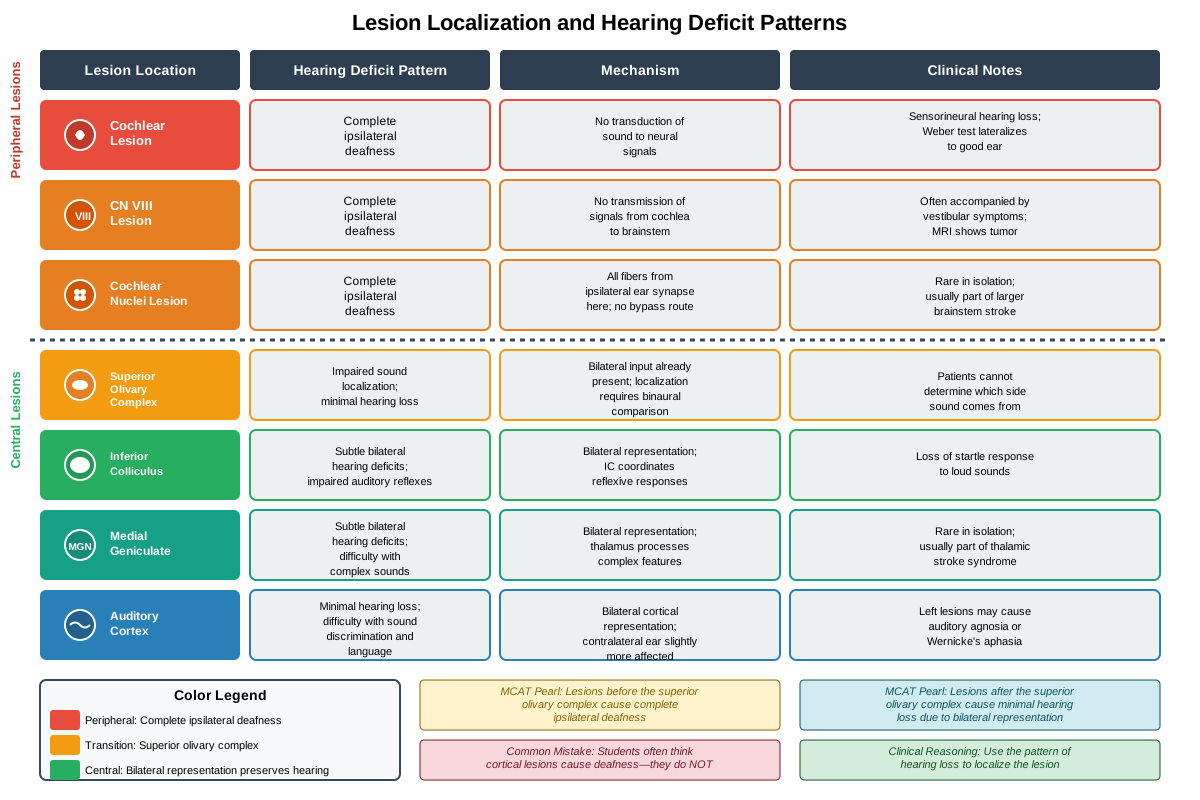
Hearing pathways are clinically relevant for diagnosing and localizing neurological lesions. Audiologists and neurologists use knowledge of these pathways to differentiate between peripheral hearing loss (damage to the ear or cochlear nerve) and central hearing loss (damage to brainstem or cortical structures). Understanding bilateral cortical representation explains why unilateral cortical strokes rarely cause complete deafness, while damage to the cochlear nerve produces profound ipsilateral hearing loss. This clinical reasoning appears frequently in MCAT passages.
Exam Statistics and Question Types
Hearing pathways appear in approximately 3-5% of Psychology/Sociology section questions, often embedded within longer passages about sensory processing, neurological disorders, or research studies on auditory perception. Questions typically take three forms: (1) discrete questions asking students to identify structures or trace pathways, (2) passage-based questions requiring application of pathway knowledge to interpret experimental results or clinical presentations, and (3) questions connecting auditory processing to higher-order functions like language comprehension or attention.
Common Exam Presentations
The MCAT frequently presents hearing pathways through clinical vignettes describing patients with hearing deficits following strokes, tumors, or trauma. Passages may describe research studies using functional imaging to identify brain regions activated during auditory tasks. Experimental passages might present data on sound localization, requiring students to apply knowledge of how bilateral pathways enable spatial hearing. Questions often require distinguishing between damage at different levels (peripheral vs. central) or predicting which ear would be affected by lesions at specific locations.
Core Concepts
Auditory Transduction in the Cochlea
The hearing pathways begin with mechanical transduction in the cochlea, where sound waves are converted into neural signals. Sound vibrations enter the ear canal, vibrate the tympanic membrane, and are amplified by the ossicles (malleus, incus, stapes) before reaching the oval window of the cochlea. Within the fluid-filled cochlea, these vibrations create traveling waves along the basilar membrane, which contains the organ of Corti—the sensory epithelium for hearing.
Hair cells within the organ of Corti serve as the mechanoreceptors for audition. Inner hair cells (approximately 3,500 per cochlea) are the primary sensory receptors, while outer hair cells (approximately 12,000 per cochlea) amplify sound signals and sharpen frequency tuning. When the basilar membrane vibrates, stereocilia on hair cells bend, opening mechanically-gated ion channels. This depolarization triggers neurotransmitter release (primarily glutamate) onto the dendrites of spiral ganglion neurons, which form the auditory portion of cranial nerve VIII (the vestibulocochlear nerve).
The cochlea performs tonotopic organization—different frequencies activate different regions along the basilar membrane. High frequencies maximally stimulate the base (near the oval window), while low frequencies maximally stimulate the apex. This spatial frequency map is preserved throughout the entire auditory pathway, a principle critical for understanding how the brain processes pitch.
The Cochlear Nerve and Cochlear Nuclei
Spiral ganglion neurons form the cochlear nerve, which carries auditory information from the cochlea to the brainstem. These first-order neurons are bipolar, with peripheral processes contacting hair cells and central processes projecting to the cochlear nuclei in the medulla (the most caudal part of the brainstem). The cochlear nuclei represent the first central processing station and consist of three subdivisions: the dorsal cochlear nucleus, the anterior ventral cochlear nucleus, and the posterior ventral cochlear nucleus.
At the cochlear nuclei, all auditory nerve fibers synapse, making this the only obligatory synapse in the ascending auditory pathway. Here, the signal diverges into multiple parallel pathways that extract different features of sound. Some neurons project to the superior olivary complex for sound localization, others project to higher centers for frequency and intensity processing. The tonotopic organization established in the cochlea is maintained in the cochlear nuclei, with different regions responding preferentially to different frequencies.
The Superior Olivary Complex and Sound Localization
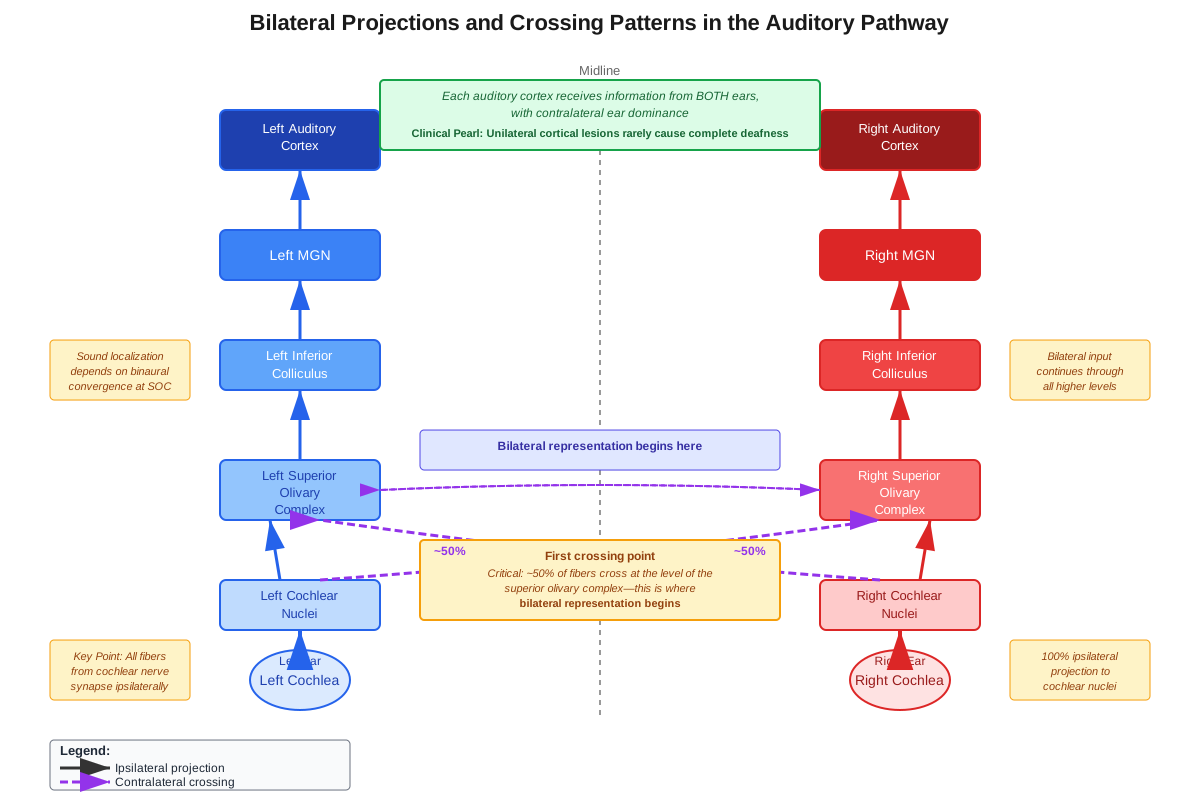
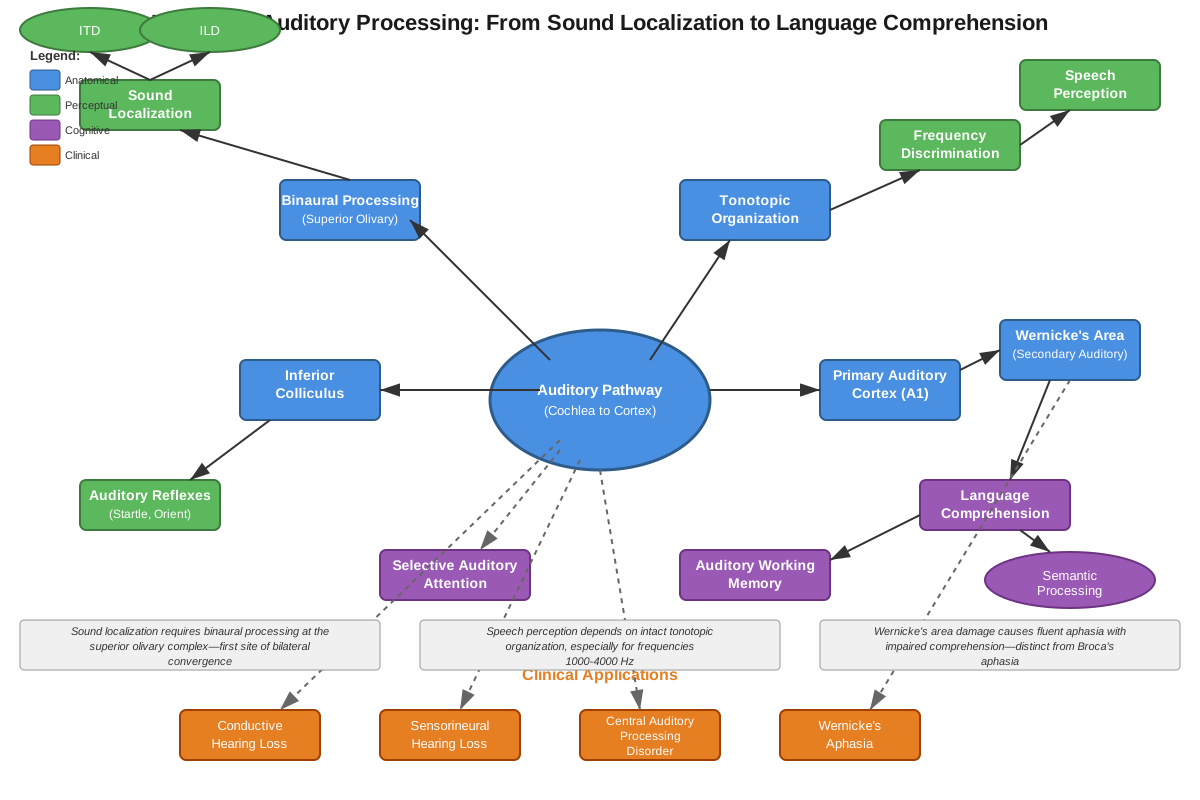
The superior olivary complex (SOC) in the pons receives bilateral input from both cochlear nuclei and is the first site where information from both ears converges. This bilateral convergence is essential for sound localization—determining the spatial origin of sounds. The SOC contains two major subdivisions with distinct functions:
The medial superior olive (MSO) compares the timing of sounds arriving at each ear (interaural time differences or ITDs). Because sound travels at finite speed, sounds from one side reach the near ear slightly before the far ear. The MSO contains coincidence detector neurons that fire maximally when inputs from both ears arrive simultaneously, indicating the sound originated from a specific angle. ITDs are most useful for localizing low-frequency sounds.
The lateral superior olive (LSO) compares the intensity of sounds at each ear (interaural level differences or ILDs). The head creates an acoustic shadow, making sounds louder at the near ear than the far ear. LSO neurons receive excitatory input from the ipsilateral ear and inhibitory input from the contralateral ear, creating a neural representation of sound location. ILDs are most useful for localizing high-frequency sounds.
The Lateral Lemniscus and Inferior Colliculus
From the superior olivary complex and cochlear nuclei, auditory information ascends through the lateral lemniscus, a major ascending tract in the brainstem. Some fibers synapse in the nuclei of the lateral lemniscus, while others project directly to the inferior colliculus in the midbrain. The inferior colliculus serves as a major integration center where nearly all ascending auditory information converges.
The inferior colliculus performs complex processing including integration of frequency, intensity, and spatial information. It maintains tonotopic organization and contains neurons sensitive to specific sound features like frequency modulation and sound duration. The inferior colliculus also participates in reflexive responses to sound through connections to motor centers, enabling the acoustic startle reflex and orientation movements toward sound sources.
Importantly, by the level of the inferior colliculus, auditory information is bilaterally represented—each inferior colliculus receives information from both ears. This bilateral representation continues throughout higher levels of the pathway and has critical clinical implications: unilateral lesions above the cochlear nuclei typically do not cause complete hearing loss in either ear.
The Medial Geniculate Nucleus
From the inferior colliculus, auditory information projects to the medial geniculate nucleus (MGN) of the thalamus via the brachium of the inferior colliculus. The MGN serves as the thalamic relay for auditory information, analogous to the lateral geniculate nucleus for vision. The MGN consists of ventral, dorsal, and medial divisions with distinct functions:
The ventral division maintains precise tonotopic organization and projects to the primary auditory cortex, forming the main lemniscal pathway for conscious sound perception. The dorsal and medial divisions have less precise tonotopy and project to secondary auditory areas and other cortical regions, contributing to multisensory integration and emotional responses to sound.
Like other thalamic nuclei, the MGN does more than simply relay information—it filters, modulates, and integrates auditory signals. Descending projections from the cortex to the MGN enable top-down attentional modulation of auditory processing, allowing selective attention to specific sounds in complex acoustic environments.
Primary Auditory Cortex
The final destination of the main auditory pathway is the primary auditory cortex (A1), located in the superior temporal gyrus within the temporal lobe (specifically, Brodmann areas 41 and 42, also called Heschl's gyrus). The MGN projects to A1 via the auditory radiations, which travel through the internal capsule.
The primary auditory cortex maintains tonotopic organization, with different regions responding preferentially to different frequencies. In humans, high frequencies are represented anterolaterally, while low frequencies are represented posteromedially. This frequency map is not simply a passive representation but actively processes complex sound features including temporal patterns, frequency modulation, and sound intensity.
A1 is bilaterally organized—each hemisphere receives information predominantly from the contralateral ear but also receives significant ipsilateral input. This bilateral representation explains why unilateral cortical lesions rarely cause complete deafness. However, such lesions may impair sound localization and the ability to process complex sounds, particularly in the contralateral auditory field.
Secondary Auditory Areas and Higher Processing
Beyond the primary auditory cortex, auditory information projects to secondary auditory areas in the superior temporal gyrus and surrounding regions. These areas perform higher-order processing including:
- Wernicke's area (posterior superior temporal gyrus, typically left hemisphere): Critical for language comprehension
- Auditory association cortex: Integrates auditory information with other sensory modalities and memory
- Planum temporale: Involved in processing complex sounds including music and speech
The auditory cortex also sends descending projections back through the pathway, creating feedback loops that modulate processing at every level from the MGN down to the cochlea itself (via olivocochlear efferents). These descending pathways enable attention, expectation, and experience to shape auditory perception.
Summary Table of Pathway Structures
| Structure | Location | Key Functions | Lateralization |
|---|---|---|---|
| Cochlea | Inner ear | Transduction, frequency analysis | Ipsilateral only |
| Cochlear nuclei | Medulla | First central synapse, signal divergence | Ipsilateral input |
| Superior olivary complex | Pons | Sound localization (ITD, ILD) | First bilateral convergence |
| Lateral lemniscus | Brainstem | Ascending tract | Bilateral |
| Inferior colliculus | Midbrain | Integration, reflexes | Bilateral |
| Medial geniculate nucleus | Thalamus | Thalamic relay, filtering | Bilateral |
| Primary auditory cortex | Temporal lobe | Conscious perception, tonotopic map | Bilateral (contralateral predominance) |
Quick check — test yourself on Hearing pathways so far.
Try Flashcards →Concept Relationships
The hearing pathways demonstrate hierarchical sensory processing, where each level extracts increasingly complex features from the auditory signal. The pathway begins with mechanical transduction in the cochlea → converts to neural signals in the cochlear nerve → undergoes initial processing in the cochlear nuclei → achieves bilateral integration at the superior olivary complex → undergoes feature extraction in the inferior colliculus → passes through thalamic filtering in the MGN → reaches conscious perception in the primary auditory cortex.
The concept of tonotopic organization connects all levels of the pathway, demonstrating how spatial maps of sensory information are preserved through multiple synapses. This principle parallels retinotopic organization in the visual system and somatotopic organization in the somatosensory system, illustrating a general principle of sensory processing tested across MCAT topics.
Bilateral representation beginning at the superior olivary complex connects to broader concepts of brain lateralization and explains clinical patterns of hearing loss. This contrasts with the visual system, where complete decussation at the optic chiasm creates distinct patterns of visual field deficits. Understanding these differences helps students predict outcomes of lesions in different sensory systems.
The hearing pathways also connect to attention and perception concepts in Psychology. Descending pathways from cortex to thalamus and even to the cochlea demonstrate that perception is not passive reception but active construction, where expectations and attention shape what we hear. This connects to top-down processing, selective attention, and the cocktail party effect—all testable MCAT concepts.
Finally, connections between auditory cortex and language areas (particularly Wernicke's area) link hearing pathways to language and cognition, demonstrating how sensory processing enables higher-order functions. Damage to these connections can produce specific deficits like pure word deafness, where patients can hear sounds but cannot comprehend speech.
High-Yield Facts
⭐ The cochlear nuclei in the medulla are the only obligatory synapse in the ascending auditory pathway—all auditory nerve fibers synapse here.
⭐ The superior olivary complex is the first site of bilateral convergence, enabling sound localization through comparison of interaural time and level differences.
⭐ By the level of the inferior colliculus, auditory information is bilaterally represented, meaning each side receives input from both ears.
⭐ The primary auditory cortex is located in the superior temporal gyrus (Heschl's gyrus) in the temporal lobe.
⭐ Unilateral cortical lesions rarely cause complete deafness due to bilateral representation, but may impair sound localization and complex sound processing.
- The medial geniculate nucleus of the thalamus serves as the thalamic relay for auditory information before it reaches the cortex.
- Tonotopic organization is maintained throughout the entire auditory pathway from cochlea to cortex, with high frequencies represented at the base of the cochlea and anterolaterally in the cortex.
- The lateral lemniscus is the major ascending auditory tract in the brainstem, carrying information from the cochlear nuclei and superior olivary complex to the inferior colliculus.
- Inner hair cells are the primary sensory receptors for hearing, while outer hair cells amplify signals and sharpen frequency tuning.
- The medial superior olive uses interaural time differences (ITDs) to localize low-frequency sounds, while the lateral superior olive uses interaural level differences (ILDs) to localize high-frequency sounds.
- Descending pathways from cortex to lower auditory structures enable top-down modulation of auditory processing, supporting selective attention.
- Damage to the cochlear nerve produces profound ipsilateral hearing loss because information from each ear initially travels ipsilaterally.
Common Misconceptions
Misconception: The auditory pathway is entirely contralateral, like the visual pathway after the optic chiasm.
Correction: The auditory pathway becomes bilateral at the superior olivary complex in the pons. From this point upward, each side of the brain receives information from both ears, with contralateral predominance. This is why unilateral cortical lesions don't cause complete deafness in either ear.
Misconception: The primary auditory cortex is located in the frontal lobe near Broca's area.
Correction: The primary auditory cortex is located in the superior temporal gyrus of the temporal lobe (Heschl's gyrus, Brodmann areas 41 and 42). While it connects to language areas, it is anatomically distinct from Broca's area, which is in the inferior frontal gyrus.
Misconception: All auditory information must pass through every structure in the pathway sequentially.
Correction: While the cochlear nuclei are an obligatory synapse, the pathway contains parallel processing streams. Some fibers bypass certain structures, and information can reach higher centers through multiple routes. This parallel processing allows simultaneous extraction of different sound features.
Misconception: Damage to one auditory cortex causes complete deafness in the contralateral ear.
Correction: Due to bilateral representation throughout most of the pathway, unilateral cortical damage typically does not cause complete deafness in either ear. Instead, it may cause subtle deficits in sound localization, processing complex sounds, or perceiving sounds in the contralateral auditory space.
Misconception: The thalamus is just a passive relay station that transmits auditory information without processing it.
Correction: The medial geniculate nucleus actively filters, modulates, and integrates auditory information. It receives descending input from the cortex that enables attentional modulation, and it performs significant processing before information reaches the cortex.
Misconception: High-frequency sounds are processed at the apex of the cochlea.
Correction: High-frequency sounds maximally stimulate the base of the cochlea (near the oval window), while low-frequency sounds maximally stimulate the apex. This tonotopic organization is preserved throughout the pathway, with high frequencies represented anterolaterally in the auditory cortex.
Worked Examples
Example 1: Localizing a Lesion Based on Hearing Deficits
Clinical Vignette: A 62-year-old patient presents with complete hearing loss in the right ear following a brainstem stroke. Hearing in the left ear is normal. Audiological testing confirms profound sensorineural hearing loss on the right with no response to bone conduction testing. Where is the lesion most likely located?
Analysis:
Step 1: Determine whether the deficit is peripheral or central. Complete unilateral hearing loss suggests damage before bilateral convergence occurs in the pathway.
Step 2: Identify where bilateral convergence begins. The superior olivary complex in the pons is the first site where information from both ears converges. Above this level, each side receives bilateral input.
Step 3: Consider structures that carry only ipsilateral information. The cochlear nerve and cochlear nuclei carry information exclusively from the ipsilateral ear.
Step 4: Distinguish between cochlear nerve and cochlear nuclei. The vignette states this is a brainstem stroke, making cochlear nuclei more likely than the peripheral cochlear nerve. Additionally, the cochlear nerve is outside the brainstem proper.
Step 5: Apply anatomical knowledge. The cochlear nuclei are located in the medulla. A lesion here would destroy all auditory input from the ipsilateral ear before any bilateral processing occurs.
Answer: The lesion is most likely in the right cochlear nuclei in the medulla. This explains complete right-sided hearing loss because all auditory information from the right ear must synapse in the right cochlear nuclei before ascending. Damage here eliminates all right ear input before bilateral convergence occurs.
Key Principle: Unilateral hearing loss indicates damage at or before the superior olivary complex, where bilateral convergence begins. Lesions above this level (inferior colliculus, MGN, or cortex) would not cause complete unilateral deafness due to bilateral representation.
Example 2: Predicting Deficits from Cortical Damage
Research Scenario: A study examines patients with unilateral strokes affecting the left primary auditory cortex. Researchers test pure tone detection, sound localization, and speech comprehension. Which deficits would you predict?
Analysis:
Step 1: Recall bilateral representation. By the time auditory information reaches the cortex, each hemisphere receives input from both ears (with contralateral predominance). Therefore, complete deafness in either ear is unlikely.
Step 2: Consider pure tone detection. Simple detection of pure tones relies on basic processing that is bilaterally represented. Patients would likely show minimal deficits in detecting pure tones in either ear, though subtle threshold elevations might occur for contralateral (right ear) sounds.
Step 3: Analyze sound localization. Sound localization requires comparing information from both ears and depends on intact bilateral processing. Unilateral cortical damage would impair the ability to accurately localize sounds, particularly in the contralateral (right) auditory space.
Step 4: Evaluate speech comprehension. The left hemisphere typically contains Wernicke's area (posterior superior temporal gyrus), critical for language comprehension. Damage to left auditory cortex, especially if extending to Wernicke's area, would significantly impair speech comprehension despite preserved ability to hear sounds.
Step 5: Consider complex sound processing. The auditory cortex processes complex temporal patterns and frequency modulations. Damage would impair processing of complex sounds (like speech or music) more than simple pure tones.
Predicted Deficits:
- Minimal pure tone detection deficits (bilateral representation compensates)
- Impaired sound localization, especially in the right auditory field
- Significant speech comprehension deficits (left hemisphere language dominance)
- Difficulty processing complex sounds and temporal patterns
- Possible auditory neglect of the right auditory space
Key Principle: Cortical auditory deficits are typically subtle for simple sounds but profound for complex processing and language. Bilateral representation prevents complete deafness but cannot fully compensate for higher-order processing deficits.
Exam Strategy
Approaching MCAT Questions on Hearing Pathways
When encountering hearing pathway questions, first determine the level of the question: Is it asking about anatomy (identifying structures), physiology (explaining function), or clinical reasoning (predicting deficits)? Anatomical questions require precise knowledge of structure locations and connections. Physiological questions require understanding what each structure does. Clinical questions require applying pathway knowledge to predict outcomes of lesions.
Trigger Words and Phrases
Watch for these key phrases that signal hearing pathway questions:
- "Sound localization" → Think superior olivary complex, interaural time/level differences, bilateral convergence
- "Unilateral hearing loss" → Lesion must be at or before the superior olivary complex (cochlear nerve or cochlear nuclei)
- "Bilateral representation" → Structures from superior olivary complex upward; explains why cortical lesions don't cause complete deafness
- "Tonotopic organization" → Frequency mapping preserved throughout pathway; high frequencies at base/anterolateral, low frequencies at apex/posteromedial
- "Thalamic relay" → Medial geniculate nucleus
- "Superior temporal gyrus" → Primary auditory cortex location
- "First central synapse" → Cochlear nuclei (obligatory synapse)
Process of Elimination Tips
When unsure about pathway questions, use these elimination strategies:
- Eliminate options suggesting complete unilateral deafness from cortical lesions (bilateral representation prevents this)
- Eliminate options placing auditory cortex in frontal or parietal lobes (it's in the temporal lobe)
- Eliminate options suggesting the thalamus is bypassed (MGN is an obligatory relay to cortex)
- Eliminate options confusing ipsilateral and contralateral (remember bilateral representation begins at superior olivary complex)
Time Allocation
For discrete questions on hearing pathways, spend 60-90 seconds. These typically test straightforward anatomical or physiological knowledge. For passage-based questions, allocate 90-120 seconds, as you'll need to integrate passage information with pathway knowledge. If a question requires tracing the entire pathway, quickly sketch the pathway (cochlea → cochlear nuclei → SOC → IC → MGN → cortex) to avoid missing steps.
Memory Techniques
Pathway Mnemonic: "Can Cats Safely Ignore Large Mice?"
This mnemonic traces the ascending auditory pathway:
- Cochlea
- Cochlear nuclei
- Superior olivary complex
- Inferior colliculus
- Lateral lemniscus (the tract connecting structures)
- Medial geniculate nucleus
- (Cortex)
Bilateral Representation Rule: "SOC and Up"
Remember: "SOC and up" = Superior Olivary Complex and everything above it has bilateral representation. Everything before SOC (cochlea, cochlear nerve, cochlear nuclei) is ipsilateral only.
Sound Localization: "TIME is MEDial, LEVEL is LATeral"
- Interaural TIME differences → MEDial superior olive (MSO)
- Interaural LEVEL differences → LATeral superior olive (LSO)
Frequency Mapping: "High Base, Low Apex"
For cochlear tonotopy: High frequencies at the Base (near oval window), Low frequencies at the Apex (far end). Think of a bass guitar (low frequency) with a long neck reaching toward the apex.
Cortical Location: "Hear with your Temples"
The auditory cortex is in the temporal lobe, near your temples. When you cup your hands behind your ears to hear better, you're gesturing near the temporal lobes where auditory processing occurs.
Summary
The hearing pathways represent a hierarchical sensory processing system that transforms mechanical sound waves into conscious auditory perception through multiple neural relay stations. Beginning with transduction in the cochlea, auditory information travels via the cochlear nerve to the cochlear nuclei in the medulla—the only obligatory synapse in the pathway. From there, signals project to the superior olivary complex in the pons, where bilateral convergence first occurs, enabling sound localization through comparison of interaural time and level differences. Information then ascends through the lateral lemniscus to the inferior colliculus in the midbrain, where complex integration occurs. After passing through the medial geniculate nucleus of the thalamus, auditory information reaches the primary auditory cortex in the superior temporal gyrus. Tonotopic organization is maintained throughout the pathway, and bilateral representation from the superior olivary complex upward explains why unilateral cortical lesions rarely cause complete deafness. Understanding this pathway enables prediction of deficits from lesions at different levels and connects to broader concepts of sensory processing, attention, and language comprehension tested throughout the MCAT Psychology section.
Key Takeaways
- The cochlear nuclei in the medulla are the only obligatory synapse; all auditory nerve fibers must synapse here before ascending
- Bilateral representation begins at the superior olivary complex and continues through all higher structures, preventing complete deafness from unilateral cortical lesions
- The superior olivary complex enables sound localization by comparing interaural time differences (medial division) and interaural level differences (lateral division)
- Tonotopic organization is preserved throughout the entire pathway from cochlea to cortex, with high frequencies represented at the base/anterolaterally and low frequencies at the apex/posteromedially
- The primary auditory cortex is located in the superior temporal gyrus (Heschl's gyrus) of the temporal lobe, not in the frontal lobe
- Unilateral hearing loss indicates damage at or before the superior olivary complex (cochlear nerve or cochlear nuclei), while cortical lesions cause subtle deficits in complex sound processing and localization
- The medial geniculate nucleus serves as the thalamic relay, actively filtering and modulating auditory information before it reaches the cortex
Related Topics
Visual Pathways: Understanding auditory pathways facilitates learning visual pathways, as both demonstrate hierarchical sensory processing with thalamic relays. However, visual pathways show complete decussation at the optic chiasm, contrasting with the bilateral representation in auditory pathways.
Somatosensory Pathways: Like auditory pathways, somatosensory pathways maintain topographic organization (somatotopy) and relay through the thalamus. Comparing these systems reinforces general principles of sensory processing.
Language and Brain Lateralization: Mastery of auditory pathways enables deeper understanding of language processing, particularly Wernicke's area and its role in speech comprehension, a high-yield MCAT topic.
Attention and Perception: The descending pathways in the auditory system exemplify top-down processing and selective attention, connecting to broader cognitive psychology concepts.
Vestibular System: The vestibular system shares cranial nerve VIII with the auditory system and has parallel processing pathways, making it a natural extension of auditory pathway knowledge.
Practice CTA
Now that you've mastered the hearing pathways, reinforce your understanding by attempting practice questions and flashcards on this topic. Focus on questions requiring you to trace the pathway, predict deficits from lesions, and apply sound localization principles. Challenge yourself with passage-based questions that integrate hearing pathways with clinical scenarios or research studies. The more you practice applying this knowledge, the more automatic your recall will become on test day. Remember: understanding the logic of the pathway is more powerful than pure memorization—you've got this!
Sign up free to keep reading
Create a free AnvayaPrep account to finish this MCAT guide on Hearing pathways — plus flashcards and practice questions.