Overview
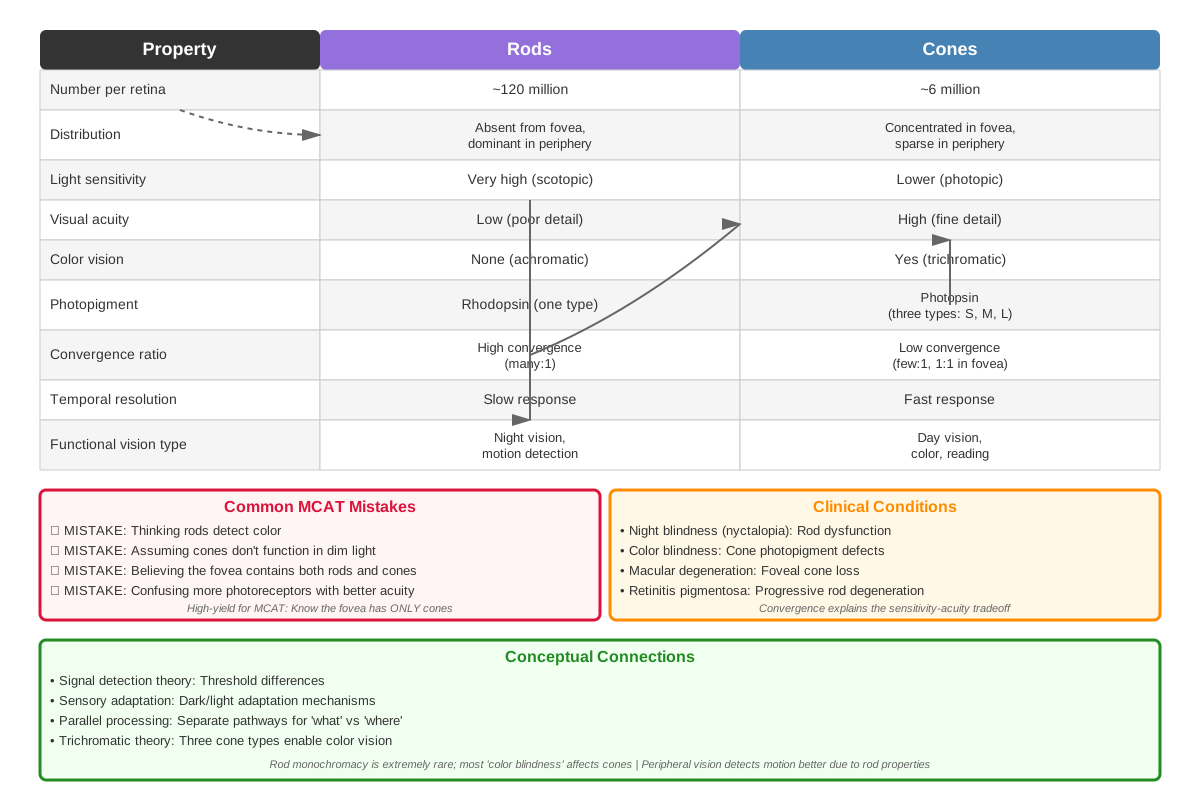
Rods and cones are the two types of photoreceptor cells located in the retina of the eye that convert light energy into neural signals, enabling vision. These specialized neurons form the foundation of visual sensation and perception, translating electromagnetic radiation into the electrochemical language of the nervous system. Rods are responsible for vision in low-light conditions (scotopic vision) and detect brightness but not color, while cones function in bright light (photopic vision) and enable color perception and fine visual acuity. Understanding the structural and functional differences between these photoreceptors is essential for comprehending how humans perceive their visual environment under varying lighting conditions.
For the MCAT, rods and cones Psychology represents a critical intersection of biological psychology, sensory physiology, and perception. This topic appears frequently in both the Psychological, Social, and Biological Foundations of Behavior section and occasionally in passages that integrate biology with behavioral science. Questions may test knowledge of photoreceptor distribution across the retina, the biochemical basis of phototransduction, adaptation mechanisms, or clinical conditions affecting vision. The MCAT particularly emphasizes understanding how structural differences between rods and cones produce functional differences in visual capabilities.
Within the broader context of Psychology and Sensation and Perception, rods and cones serve as the initial transducers in the visual pathway. They connect directly to concepts such as sensory adaptation, signal transduction, neural processing in the visual cortex, and perceptual phenomena like dark adaptation and color vision. Mastery of photoreceptor function provides the foundation for understanding more complex topics including feature detection, parallel processing in vision, and the relationship between sensation (the physical detection of stimuli) and perception (the psychological interpretation of sensory information).
Learning Objectives
- [ ] Define rods and cones using accurate Psychology terminology
- [ ] Explain why rods and cones matters for the MCAT
- [ ] Apply rods and cones to exam-style questions
- [ ] Identify common mistakes related to rods and cones
- [ ] Connect rods and cones to related Psychology concepts
- [ ] Compare and contrast the structural and functional properties of rods versus cones
- [ ] Explain the distribution patterns of photoreceptors across the retina and their functional implications
- [ ] Describe the process of dark adaptation and the differential roles of rods and cones
- [ ] Analyze how photoreceptor dysfunction relates to specific visual deficits
Prerequisites
- Basic eye anatomy: Understanding the structure of the retina, including its layered organization, is necessary to appreciate where photoreceptors are located and how they connect to other retinal cells
- Neural signal transduction: Familiarity with how neurons convert stimuli into action potentials provides context for understanding phototransduction
- Electromagnetic spectrum: Knowledge that visible light represents a narrow band of electromagnetic radiation helps explain why photoreceptors respond to specific wavelengths
- Basic neuroanatomy: Understanding the visual pathway from retina to visual cortex contextualizes the role of photoreceptors as the first step in visual processing
Why This Topic Matters
Clinical and Real-World Significance: Photoreceptor function directly impacts daily life and clinical medicine. Night blindness (nyctalopia) results from rod dysfunction, while color blindness stems from cone abnormalities. Age-related macular degeneration, the leading cause of vision loss in older adults, primarily affects the cone-rich fovea. Understanding photoreceptor biology helps explain why peripheral vision detects motion better in dim light (rod dominance in periphery) and why reading requires adequate lighting (cone function for acuity). These concepts also explain practical phenomena like why astronomers use averted vision to see faint stars (utilizing peripheral rods) and why it takes time to see in a dark theater (dark adaptation).
Exam Statistics and Frequency: Rods and cones appear on approximately 15-20% of MCAT exams that include sensation and perception content. Questions typically fall into three categories: (1) discrete questions testing direct knowledge of photoreceptor properties, (2) passage-based questions requiring application of photoreceptor concepts to experimental scenarios or clinical vignettes, and (3) questions integrating photoreceptor function with neural processing or perceptual phenomena. The MCAT particularly favors questions that require students to predict visual capabilities under different lighting conditions or explain visual deficits based on photoreceptor distribution.
Common Exam Appearances: This topic frequently appears in passages describing vision research, evolutionary adaptations in different species, or clinical cases involving visual complaints. Experimental passages might present data on spectral sensitivity curves, adaptation rates, or visual acuity measurements under varying conditions. The MCAT often integrates photoreceptor concepts with other topics such as sensory adaptation, signal detection theory, or the duplex theory of vision. Questions may ask students to interpret graphs showing photoreceptor distribution, predict outcomes of retinal damage, or explain why certain visual tasks are easier under specific lighting conditions.
Core Concepts
Photoreceptor Structure and Function
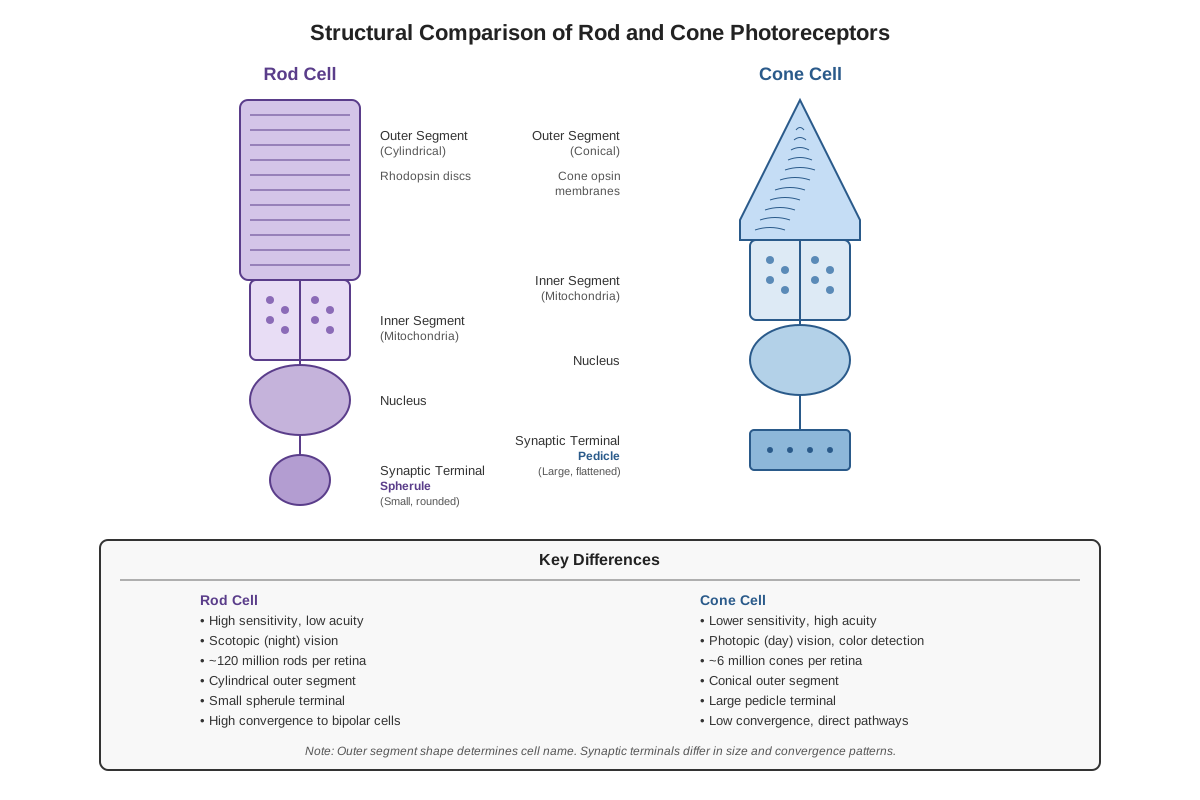
Photoreceptors are specialized sensory neurons in the retina that contain photopigments capable of absorbing light and initiating neural signals. Both rods and cones share a basic structural organization consisting of an outer segment containing photopigment-filled membranous discs, an inner segment with metabolic machinery, a cell body with the nucleus, and a synaptic terminal that connects to bipolar and horizontal cells. The key distinction lies in their outer segment morphology: rods have cylindrical outer segments with stacked disc membranes, while cones have tapered, conical outer segments with continuous membrane infoldings.
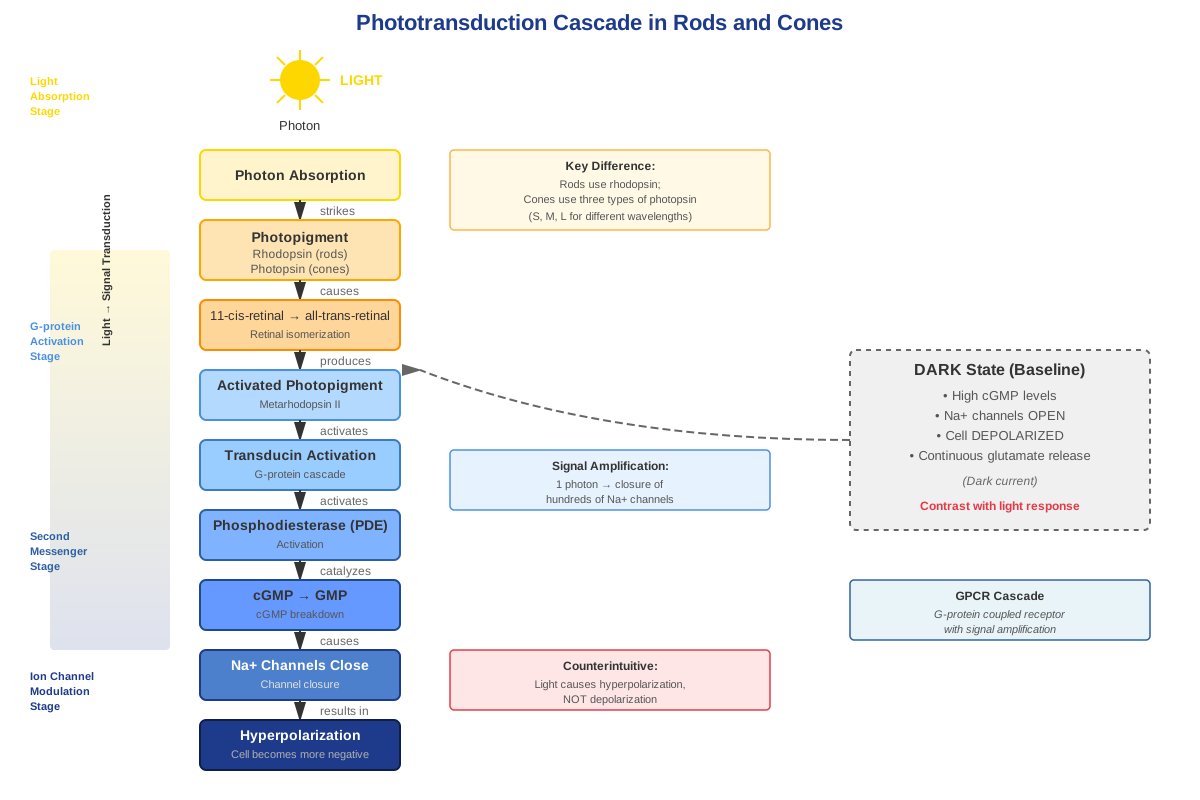
The phototransduction cascade represents the biochemical process by which light energy converts to neural signals. When photons strike photopigment molecules (rhodopsin in rods, photopsins in cones), the light-sensitive retinal component undergoes isomerization from 11-cis-retinal to all-trans-retinal. This conformational change activates the associated opsin protein, triggering a G-protein cascade that ultimately closes sodium channels in the photoreceptor membrane. Paradoxically, light causes photoreceptors to hyperpolarize rather than depolarize—they are maximally active (releasing glutamate) in darkness and become less active when stimulated by light. This unusual property reflects the fact that photoreceptors are tonically active in the dark.
Rod Characteristics and Function
Rods are highly sensitive photoreceptors specialized for scotopic vision (vision in dim light). The human retina contains approximately 120 million rods distributed primarily in the peripheral retina, with none present in the fovea centralis. Rods contain the photopigment rhodopsin (also called visual purple), which has peak sensitivity around 500 nm (blue-green light). The high sensitivity of rods results from several factors: (1) large outer segments with numerous photopigment-containing discs, (2) high amplification in the phototransduction cascade, and (3) extensive neural convergence—many rods synapse onto single bipolar cells, pooling their signals.
This convergence creates a trade-off: while it enhances sensitivity by summing weak signals, it reduces spatial resolution and visual acuity. Rods cannot distinguish fine details or colors; they provide only achromatic (black-and-white) vision. Rods are responsible for peripheral vision and motion detection in low light. The absolute threshold for vision (the minimum light intensity detectable) is determined by rod function—under optimal conditions, rods can detect a single photon. However, rods become saturated (maximally stimulated) in bright light, which is why cone function dominates in daylight conditions.
Cone Characteristics and Function
Cones are photoreceptors specialized for photopic vision (vision in bright light), color perception, and high visual acuity. The human retina contains approximately 6 million cones, concentrated heavily in the fovea centralis, the central region of the retina responsible for sharp, detailed vision. Unlike rods, cones show minimal convergence in the fovea—some cones have one-to-one connections with bipolar cells, preserving spatial information and enabling fine detail discrimination.
Humans possess three types of cones, each containing a different photopigment sensitive to different wavelengths:
| Cone Type | Peak Sensitivity | Color Perceived | Percentage of Cones |
|---|---|---|---|
| S-cones (Short) | ~420 nm | Blue | ~5-10% |
| M-cones (Medium) | ~530 nm | Green | ~30-40% |
| L-cones (Long) | ~560 nm | Red | ~50-60% |
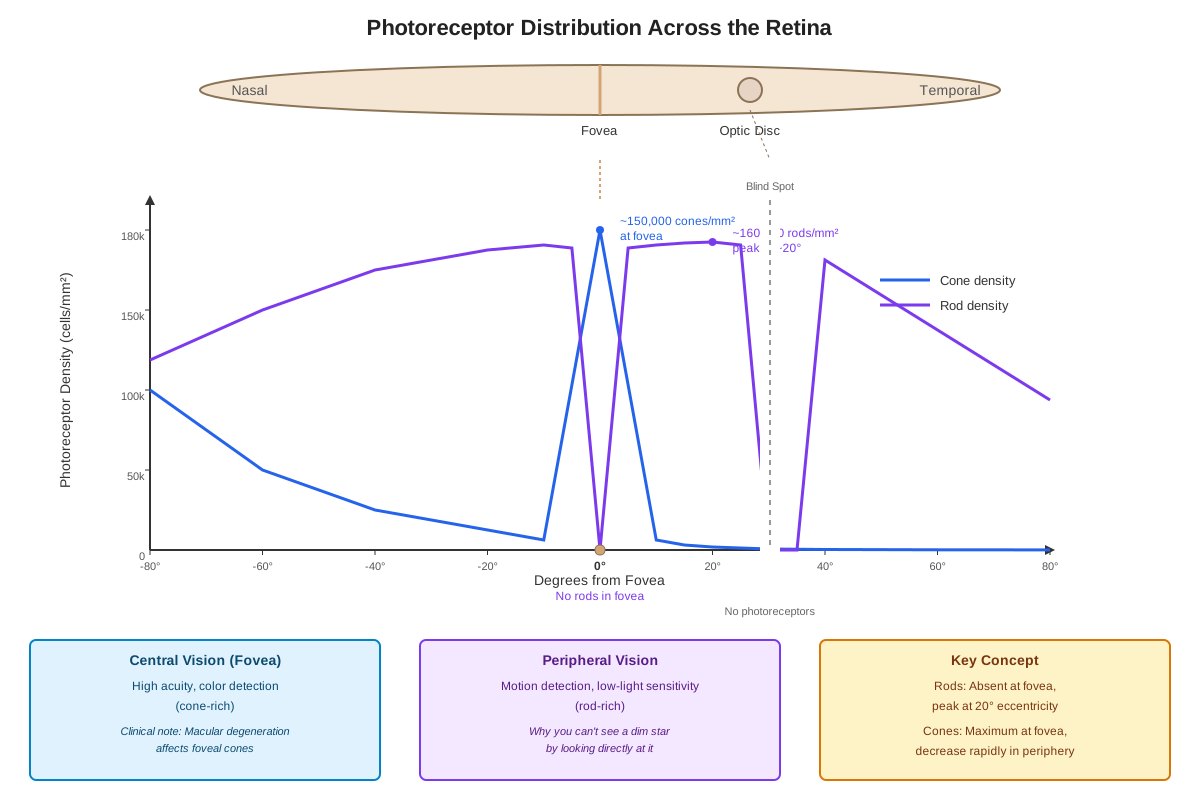
This trichromatic theory of color vision explains how the relative activation of these three cone types enables perception of millions of color combinations. Cones require significantly more light than rods to function effectively, which is why color perception diminishes in dim lighting. The high concentration of cones in the fovea (approximately 150,000 cones per square millimeter) enables the sharp central vision necessary for reading, facial recognition, and other tasks requiring fine detail.
Photoreceptor Distribution and the Duplex Retina
The duplex theory of vision states that the visual system operates through two distinct mechanisms: the rod system for low-light vision and the cone system for bright-light, color vision. Photoreceptor distribution across the retina reflects this functional division. The fovea contains exclusively cones (approximately 200,000 total), providing maximum acuity but no scotopic vision capability. Moving from the fovea toward the periphery, cone density decreases while rod density increases, reaching maximum rod concentration in a ring approximately 20 degrees from the fovea.
The optic disc (blind spot) contains no photoreceptors because this is where the optic nerve exits the eye and blood vessels enter. Interestingly, we don't perceive this blind spot in normal vision because the brain "fills in" missing information through perceptual completion. The distribution pattern explains several perceptual phenomena: why we must look directly at objects to see fine details (using the cone-rich fovea), why peripheral vision is better for detecting motion in dim light (rod dominance), and why stars appear brighter when viewed slightly off-center (averted vision utilizes peripheral rods).
Dark Adaptation and Light Adaptation
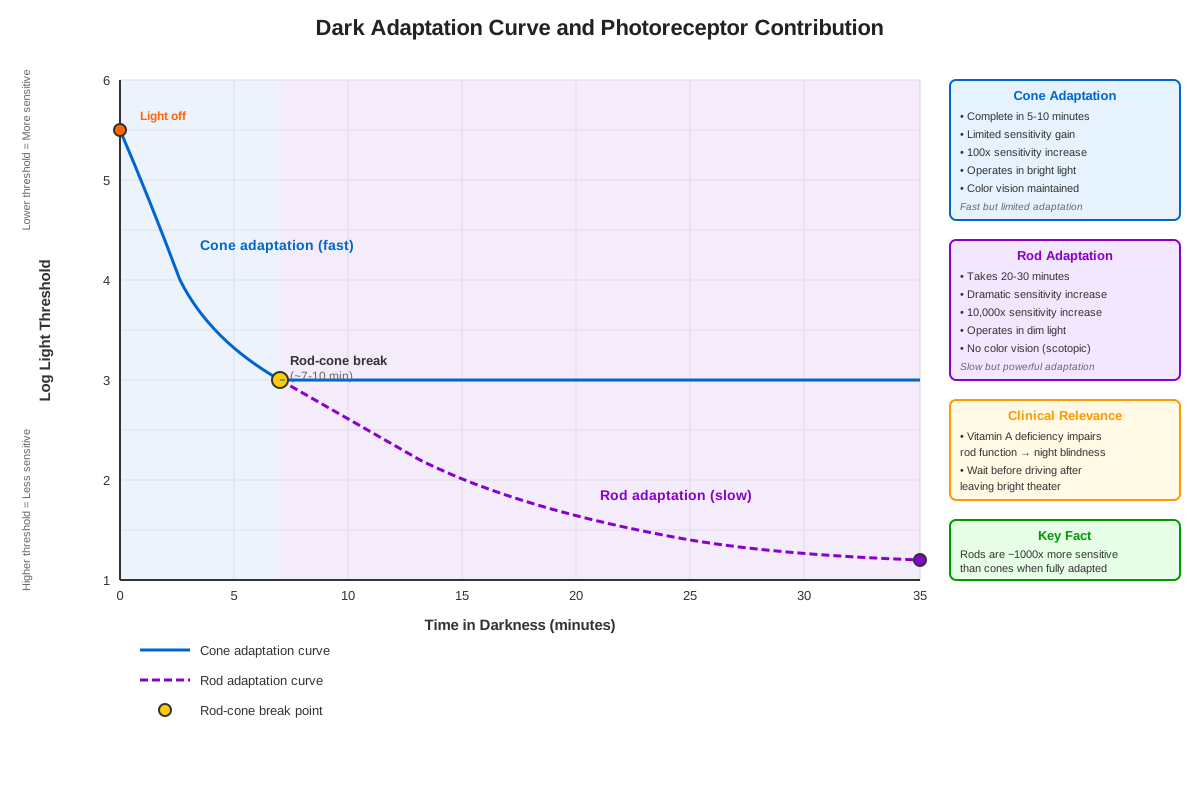
Dark adaptation refers to the process by which the visual system increases sensitivity when transitioning from bright to dim lighting. This process occurs in two phases: an initial rapid phase (5-10 minutes) reflecting cone adaptation, followed by a slower phase (20-30 minutes) reflecting rod adaptation. The dark adaptation curve shows sensitivity increasing over time, with a distinct break (the rod-cone break) marking the transition from cone to rod dominance. Complete dark adaptation takes approximately 30-40 minutes, after which rod sensitivity increases by a factor of 25,000 or more.
The biochemical basis involves regeneration of photopigments that were bleached (broken down) by light exposure. Rhodopsin regeneration is slower than photopsin regeneration, explaining the prolonged rod adaptation phase. Vitamin A deficiency impairs photopigment regeneration, causing night blindness. Light adaptation occurs much more rapidly (about 1 minute) when moving from darkness to bright light, as photoreceptors quickly become saturated and reduce their sensitivity. This explains the temporary blindness experienced when lights suddenly turn on in a dark room.
Spectral Sensitivity and Visual Pigments
Spectral sensitivity describes how responsive photoreceptors are to different wavelengths of light. The Purkinje shift demonstrates the difference between rod and cone spectral sensitivity: in bright light (cone vision), red objects appear brighter than blue objects of equal luminance, but in dim light (rod vision), blue objects appear relatively brighter because rhodopsin's peak sensitivity is shifted toward shorter wavelengths compared to cone photopsins. This phenomenon explains why red warning lights are used in situations requiring dark adaptation (submarines, astronomy)—red light stimulates cones but not rods, preserving rod sensitivity.
Each photopigment consists of an opsin protein bound to retinal (a vitamin A derivative). The specific amino acid sequence of the opsin determines the wavelength of maximum absorption. Genetic variations in opsin genes cause color vision deficiencies: protanopia (red-blindness) results from absent or dysfunctional L-cones, deuteranopia (green-blindness) from M-cone defects, and tritanopia (blue-blindness, rare) from S-cone defects. These conditions are typically X-linked recessive, affecting approximately 8% of males but less than 1% of females.
Concept Relationships
The relationship between rods and cones forms the foundation of the duplex visual system, where these two photoreceptor types provide complementary capabilities that together enable vision across a wide range of lighting conditions. Photoreceptor distribution → determines → visual capabilities in different retinal regions: the cone-dominated fovea provides high acuity and color vision, while the rod-dominated periphery provides motion detection and scotopic vision.
Phototransduction mechanisms → connect to → neural signal processing: the hyperpolarization of photoreceptors in response to light represents the first step in converting electromagnetic energy into neural signals that travel through bipolar cells, ganglion cells, and ultimately to the visual cortex. Convergence patterns → influence → sensitivity versus acuity trade-off: high rod convergence increases sensitivity but decreases resolution, while minimal cone convergence in the fovea preserves spatial information for high acuity.
Dark adaptation → links to → photopigment regeneration: the time course of adaptation reflects the biochemical process of rebuilding rhodopsin and photopsins after light exposure. This connects to nutritional factors (vitamin A availability) and clinical conditions (night blindness). Spectral sensitivity differences → explain → perceptual phenomena like the Purkinje shift and inform practical applications like the use of red lighting to preserve night vision.
The broader connection to sensation and perception emerges through understanding that photoreceptors perform transduction (converting physical energy to neural signals), which is distinct from perception (the brain's interpretation of those signals). This distinction appears throughout sensory psychology and is frequently tested on the MCAT. Photoreceptor function also connects to sensory adaptation (decreased sensitivity with prolonged stimulation), absolute thresholds (minimum detectable stimulus intensity), and difference thresholds (minimum detectable change in stimulus intensity).
Quick check — test yourself on Rods and cones so far.
Try Flashcards →High-Yield Facts
⭐ Rods are responsible for scotopic (low-light) vision and contain rhodopsin with peak sensitivity around 500 nm; cones are responsible for photopic (bright-light) vision, color perception, and high acuity
⭐ The human retina contains approximately 120 million rods and 6 million cones; rods dominate the periphery while cones concentrate in the fovea
⭐ Three cone types (S, M, L) with peak sensitivities around 420 nm (blue), 530 nm (green), and 560 nm (red) enable trichromatic color vision
⭐ Photoreceptors hyperpolarize in response to light (rather than depolarize) and are maximally active in darkness
⭐ Dark adaptation takes 30-40 minutes to complete, with a rod-cone break marking the transition from cone to rod dominance around 7-10 minutes
- The fovea contains only cones (no rods), providing maximum acuity but no scotopic vision capability
- High rod convergence (many rods → one bipolar cell) increases sensitivity but decreases spatial resolution
- The Purkinje shift describes how blue objects appear relatively brighter in dim light due to rhodopsin's spectral sensitivity
- Vitamin A deficiency impairs photopigment regeneration and causes night blindness (nyctalopia)
- The optic disc contains no photoreceptors, creating a blind spot approximately 15 degrees temporal to the fovea
- Light adaptation occurs much faster (about 1 minute) than dark adaptation (30-40 minutes)
- Color vision deficiencies typically result from absent or dysfunctional cone types and are usually X-linked recessive
- Rods saturate in bright light, which is why cone function dominates in daylight conditions
- The absolute threshold for vision is determined by rod function—rods can detect single photons under optimal conditions
- Peripheral vision is superior for motion detection in low light due to rod dominance and high convergence
Common Misconceptions
Misconception: Rods and cones are evenly distributed throughout the retina.
Correction: Photoreceptor distribution is highly specialized—cones concentrate heavily in the fovea (with zero rods present), while rods dominate the peripheral retina. This distribution pattern directly determines regional visual capabilities.
Misconception: Photoreceptors depolarize when stimulated by light, like most sensory neurons.
Correction: Photoreceptors uniquely hyperpolarize in response to light. They are tonically active (depolarized and releasing glutamate) in darkness, and light causes them to become less active through closure of sodium channels.
Misconception: Cones only function in bright light and are completely inactive in dim lighting.
Correction: While cones require more light than rods to function optimally, they remain active across a range of lighting conditions. The transition from cone to rod dominance is gradual, not absolute, which is why we retain some color perception in moderately dim lighting.
Misconception: Having three cone types means humans can see three colors.
Correction: The three cone types enable perception of millions of colors through their differential activation patterns. Color perception results from comparing the relative activation levels of S, M, and L cones, not from each cone type signaling a single color.
Misconception: The blind spot is located in the center of vision where the fovea is located.
Correction: The blind spot (optic disc) is located approximately 15 degrees temporal (toward the temple) from the fovea in each eye. The fovea itself has the highest concentration of cones and provides the sharpest vision, not a blind spot.
Misconception: Dark adaptation is complete within a few minutes of entering a dark environment.
Correction: Complete dark adaptation requires 30-40 minutes, with rod adaptation continuing long after the initial cone adaptation phase (5-10 minutes). This is why pilots and astronomers must wait extended periods to achieve full night vision capability.
Misconception: Red-green color blindness means inability to see any red or green colors.
Correction: Most "color blind" individuals have anomalous trichromacy (altered but present cone function) rather than true dichromacy (complete absence of a cone type). They can perceive reddish and greenish hues but have difficulty discriminating between certain shades.
Worked Examples
Example 1: Predicting Visual Capabilities Based on Retinal Damage
Question: A patient suffers retinal damage that selectively destroys photoreceptors in a circular region 5 degrees in diameter centered on the fovea. Which visual capabilities would be most impaired?
Analysis:
First, identify what photoreceptors are present in the foveal region. The fovea contains exclusively cones at very high density, with no rods present. This region is responsible for central vision, high visual acuity, and color perception.
Second, consider the functional consequences of losing foveal cones:
- Visual acuity: The patient would lose the ability to see fine details, making reading, facial recognition, and any task requiring sharp central vision extremely difficult
- Color perception: Central color vision would be severely impaired, though peripheral color vision (from peripheral cones) would remain
- Bright light vision: Central photopic vision would be lost
- Scotopic vision: Paradoxically, the patient would retain relatively normal night vision in the affected region because the fovea normally contains no rods
Third, predict compensatory strategies: The patient would need to use peripheral vision for tasks previously performed with central vision, a technique called "eccentric viewing" used by patients with macular degeneration.
Answer: The patient would experience severe impairment in visual acuity (inability to read standard print), central color vision loss, and difficulty with any task requiring fine detail discrimination. However, peripheral vision, motion detection, and scotopic vision would remain relatively intact. This pattern is characteristic of macular degeneration.
Connection to Learning Objectives: This example applies knowledge of photoreceptor distribution to predict functional outcomes, demonstrating how structural organization determines visual capabilities—a high-yield concept for MCAT passages involving clinical cases or experimental manipulations.
Example 2: Interpreting Dark Adaptation Data
Question: An experiment measures visual threshold (minimum detectable light intensity) over 40 minutes after subjects move from bright light to complete darkness. The graph shows threshold decreasing rapidly for the first 7 minutes, plateauing briefly, then decreasing more gradually until 35 minutes. At minute 20, subjects are exposed to a brief flash of red light (650 nm). What happens to the adaptation curve, and why?
Analysis:
First, interpret the initial curve pattern. The rapid initial decrease (first 7 minutes) represents cone adaptation—cones adapt quickly but have limited sensitivity range. The plateau and subsequent gradual decrease represent the rod-cone break and rod adaptation phase. Rods adapt more slowly but achieve much greater sensitivity.
Second, consider the effect of the red light flash. Red light (650 nm) falls near the peak sensitivity of L-cones (~560 nm) but is far from rhodopsin's peak sensitivity (~500 nm). Therefore, red light strongly stimulates cones but only weakly stimulates rods.
Third, predict the outcome: The red flash would partially bleach cone photopigments, causing a temporary increase in threshold (decreased sensitivity) for cone vision. However, because red light poorly stimulates rhodopsin, rod adaptation would continue relatively undisturbed. The adaptation curve would show a small upward deflection (increased threshold) immediately after the flash, but only in the cone-dominated early phase. The rod adaptation phase would continue its gradual progression with minimal interruption.
Answer: The adaptation curve would show a brief increase in threshold (decreased sensitivity) immediately after the red flash, but this effect would be minimal and limited to cone function. Rod adaptation would continue largely unaffected because rhodopsin is relatively insensitive to red light. This explains why red lighting is used in situations requiring preserved dark adaptation (submarines, astronomy)—it allows cone function for reading instruments while maintaining rod sensitivity for night vision.
Connection to Learning Objectives: This example integrates multiple concepts—dark adaptation phases, spectral sensitivity differences between rods and cones, and photopigment bleaching—to analyze experimental data, a common MCAT question format.
Exam Strategy
Approaching MCAT Questions on Rods and Cones: Begin by identifying whether the question focuses on structural differences, functional capabilities, distribution patterns, or adaptation processes. Many questions present scenarios requiring you to predict visual outcomes based on lighting conditions, retinal location, or photoreceptor type. Create a mental checklist: What lighting conditions? What retinal region? What visual task (acuity, color, motion detection)?
Trigger Words and Phrases: Watch for these high-yield terms that signal specific concepts:
- "Dim light," "scotopic," "night vision" → rod function
- "Bright light," "photopic," "daylight" → cone function
- "Central vision," "fovea," "reading," "fine detail" → cone-dominated foveal region
- "Peripheral vision," "motion detection" → rod-dominated periphery
- "Color perception," "wavelength discrimination" → cone function, trichromatic theory
- "Dark adaptation," "time to adjust" → rod-cone break, photopigment regeneration
- "Vitamin A deficiency" → photopigment synthesis, night blindness
- "Red-green color blindness" → cone deficiency, X-linked inheritance
Process-of-Elimination Tips: When evaluating answer choices, eliminate options that:
- Confuse rod and cone properties (e.g., claiming rods provide color vision)
- Misstate photoreceptor distribution (e.g., placing rods in the fovea)
- Reverse the direction of photoreceptor response (claiming depolarization to light)
- Confuse adaptation time courses (claiming rapid rod adaptation)
- Misidentify spectral sensitivities (e.g., claiming rhodopsin is most sensitive to red light)
For questions comparing rods and cones, create a quick mental table of opposing properties: sensitivity (rods high, cones low), acuity (rods low, cones high), color (rods no, cones yes), convergence (rods high, cones low in fovea), number (rods ~120M, cones ~6M).
Time Allocation: Discrete questions on photoreceptors should take 60-90 seconds—they typically test direct recall or simple application. Passage-based questions may require 90-120 seconds as you must integrate passage information with content knowledge. If a question asks you to interpret experimental data or graphs, spend extra time ensuring you understand what variables are being measured and how they relate to photoreceptor function.
Common Question Formats:
- Predict visual capabilities given specific damage or conditions
- Interpret graphs of spectral sensitivity, adaptation curves, or photoreceptor distribution
- Explain clinical symptoms based on photoreceptor dysfunction
- Compare visual performance across different lighting conditions or retinal regions
- Apply knowledge to evolutionary scenarios (e.g., nocturnal vs. diurnal animals)
Memory Techniques
RODS Mnemonic for rod properties:
- Responsive in dim light (scotopic vision)
- One type (only rhodopsin)
- Distributed in periphery
- Sensitive but poor acuity (high convergence)
CONES Mnemonic for cone properties:
- Color vision (three types)
- Operative in bright light (photopic)
- Numerous in fovea
- Excellent acuity (low convergence)
- Spectral types: Short, Medium, Long
"3-6-120" Memory Aid: 3 cone types, 6 million cones, 120 million rods—remembering these numbers helps recall the relative abundance and diversity of photoreceptor types.
Spectral Sensitivity Visualization: Picture a rainbow spectrum and remember "Blue Rods, Red Cones"—rhodopsin peaks in the blue-green region (~500 nm), while the longest-wavelength cone (L-cone) peaks in the red region (~560 nm). This helps remember the Purkinje shift: blue objects appear relatively brighter in dim light (rod vision).
Dark Adaptation Timeline: Use the "7-30 Rule"—the rod-cone break occurs around 7 minutes, and complete adaptation takes about 30 minutes. This provides anchor points for interpreting adaptation curves.
Fovea = Focus: The similar starting letters help remember that the fovea is where you focus for detailed vision, and it contains only cones (no rods). "Fovea Focuses with Cones."
Convergence Concept: Visualize many rods converging like tributaries into a river (high convergence = high sensitivity but poor resolution), versus cones as separate streams (low convergence = preserved spatial information = high acuity).
Summary
Rods and cones are the two photoreceptor types that enable vision by transducing light energy into neural signals through phototransduction. Rods, numbering approximately 120 million, dominate the peripheral retina and provide highly sensitive scotopic vision through rhodopsin, but lack color perception and fine acuity due to high neural convergence. Cones, numbering approximately 6 million, concentrate in the fovea and provide photopic vision, color perception through three spectral types (S, M, L), and high visual acuity due to minimal convergence. The duplex retina reflects specialized distribution: the cone-only fovea enables sharp central vision, while the rod-dominated periphery excels at motion detection in dim light. Dark adaptation involves a two-phase process with a rod-cone break around 7 minutes, requiring 30-40 minutes for complete rod adaptation. Understanding photoreceptor properties, distribution patterns, spectral sensitivities, and adaptation mechanisms enables prediction of visual capabilities under varying conditions and explanation of clinical visual deficits—essential skills for MCAT success.
Key Takeaways
- Rods provide sensitive scotopic vision without color perception; cones provide photopic vision with color discrimination and high acuity
- The human retina contains ~120 million rods (peripheral) and ~6 million cones (concentrated in fovea)
- Three cone types (S, M, L) with peak sensitivities at ~420, 530, and 560 nm enable trichromatic color vision
- Photoreceptors uniquely hyperpolarize in response to light and are maximally active in darkness
- Dark adaptation requires 30-40 minutes with a rod-cone break at 7-10 minutes marking the transition to rod dominance
- High rod convergence increases sensitivity but decreases acuity; minimal cone convergence in fovea preserves spatial resolution
- Photoreceptor distribution determines regional visual capabilities: foveal cones for acuity and color, peripheral rods for motion detection and scotopic vision
Related Topics
Visual Processing Pathways: Understanding how signals from photoreceptors travel through bipolar cells, ganglion cells, the lateral geniculate nucleus, and ultimately to the visual cortex builds on photoreceptor knowledge and explains how raw sensory data becomes conscious perception.
Feature Detection and Parallel Processing: The visual system processes different stimulus attributes (color, motion, form) through parallel pathways that begin with photoreceptor signals, connecting rod and cone function to higher-order perceptual processing.
Sensory Adaptation: Dark and light adaptation exemplify the broader principle of sensory adaptation—decreased sensitivity with prolonged stimulation—that applies across all sensory modalities and frequently appears on the MCAT.
Trichromatic and Opponent-Process Theories: While trichromatic theory explains color perception at the photoreceptor level, opponent-process theory describes neural processing at subsequent stages, showing how cone signals are recombined to create color perception.
Signal Detection Theory: Understanding absolute and difference thresholds for vision connects to signal detection theory, which describes how sensory systems distinguish signals from noise—a concept applicable across sensory modalities and decision-making contexts.
Practice CTA
Now that you've mastered the core concepts of rods and cones, it's time to solidify your understanding through active practice. Attempt the practice questions to test your ability to apply these concepts to MCAT-style scenarios, and use the flashcards to reinforce high-yield facts and relationships. Remember, understanding photoreceptor function provides the foundation for more complex topics in sensation, perception, and biological psychology—concepts that appear frequently throughout the MCAT. Your investment in mastering this material will pay dividends across multiple sections of the exam. Challenge yourself to explain these concepts without referring back to the guide, and identify any remaining areas of uncertainty to target for review. You've got this!
Sign up free to keep reading
Create a free AnvayaPrep account to finish this MCAT guide on Rods and cones — plus flashcards and practice questions.