Overview
Taste is a fundamental chemical sense that plays a critical role in survival, nutrition, and behavior. Within the context of Psychology and the MCAT, taste represents a key component of Sensation and Perception, bridging biological mechanisms with psychological experience. The gustatory system detects chemical stimuli in the environment and translates them into neural signals that the brain interprets as distinct taste qualities. Understanding taste requires knowledge of receptor physiology, neural pathways, perceptual processing, and the integration of multiple sensory modalities.
For the MCAT, taste is particularly important because it exemplifies bottom-up sensory processing while also demonstrating top-down influences from cognition, memory, and emotion. Questions on this topic frequently appear in passages discussing sensory disorders, evolutionary psychology, neuroscience, or experimental design studies examining perception. The MCAT tests not only factual knowledge about taste receptors and pathways but also the ability to apply these concepts to novel scenarios, interpret experimental data, and understand how taste interacts with other sensory systems—particularly olfaction.
Taste connects to broader psychological concepts including sensory adaptation, perceptual constancy, signal detection theory, and the relationship between physiological states and behavior. The gustatory system also provides excellent examples of how biological structures give rise to subjective experience, a central theme in psychology. Mastering taste prepares students to tackle questions about sensory processing, neural coding, evolutionary adaptations, and the biopsychosocial model of human experience.
Learning Objectives
- [ ] Define Taste using accurate Psychology terminology
- [ ] Explain why Taste matters for the MCAT
- [ ] Apply Taste to exam-style questions
- [ ] Identify common mistakes related to Taste
- [ ] Connect Taste to related Psychology concepts
- [ ] Describe the five basic taste qualities and their adaptive significance
- [ ] Trace the neural pathway from taste receptors to cortical processing centers
- [ ] Explain the interaction between taste and smell in flavor perception
- [ ] Analyze how genetic variation, age, and experience influence taste perception
Prerequisites
- Basic neuroanatomy: Understanding of neurons, synapses, and neural pathways is essential for tracing gustatory signals from receptors to brain regions
- Sensory transduction principles: Knowledge of how physical/chemical stimuli convert to electrical signals provides the foundation for understanding taste receptor mechanisms
- Brain structure and function: Familiarity with cortical regions, particularly the primary sensory cortices and limbic system, helps contextualize where taste information is processed
- Evolutionary psychology basics: Understanding natural selection and adaptive behaviors explains why certain taste preferences exist
- General chemistry: Basic knowledge of molecules and chemical properties aids in understanding how tastants interact with receptors
Why This Topic Matters
Taste has significant clinical and real-world relevance that extends beyond academic interest. Taste disorders (dysgeusia, ageusia) affect millions of people and can result from medications, infections, neurological conditions, or aging. These disorders impact nutrition, quality of life, and mental health. Understanding taste mechanisms helps explain phenomena like food aversions in chemotherapy patients, the role of taste in obesity and eating disorders, and how taste preferences influence dietary choices and public health outcomes.
On the MCAT, taste appears in approximately 2-4% of Psychology/Sociology section questions, either as the primary topic or integrated into broader passages about sensation, perception, or neuroscience. Questions typically fall into three categories: (1) discrete questions testing factual knowledge about taste receptors, pathways, or qualities; (2) passage-based questions requiring interpretation of experimental studies on taste perception; and (3) application questions connecting taste to behavior, evolution, or other sensory systems.
Common MCAT passage contexts include: studies comparing taste sensitivity across populations, experiments manipulating taste perception through cross-modal sensory integration, research on genetic variations in taste receptors (particularly for bitter compounds), investigations of taste adaptation or sensory-specific satiety, and clinical cases involving taste disorders. The exam frequently tests the distinction between taste and flavor, the role of taste in conditioned taste aversion, and how expectations or context influence taste perception—demonstrating both bottom-up and top-down processing.
Core Concepts
Definition and Basic Taste Qualities
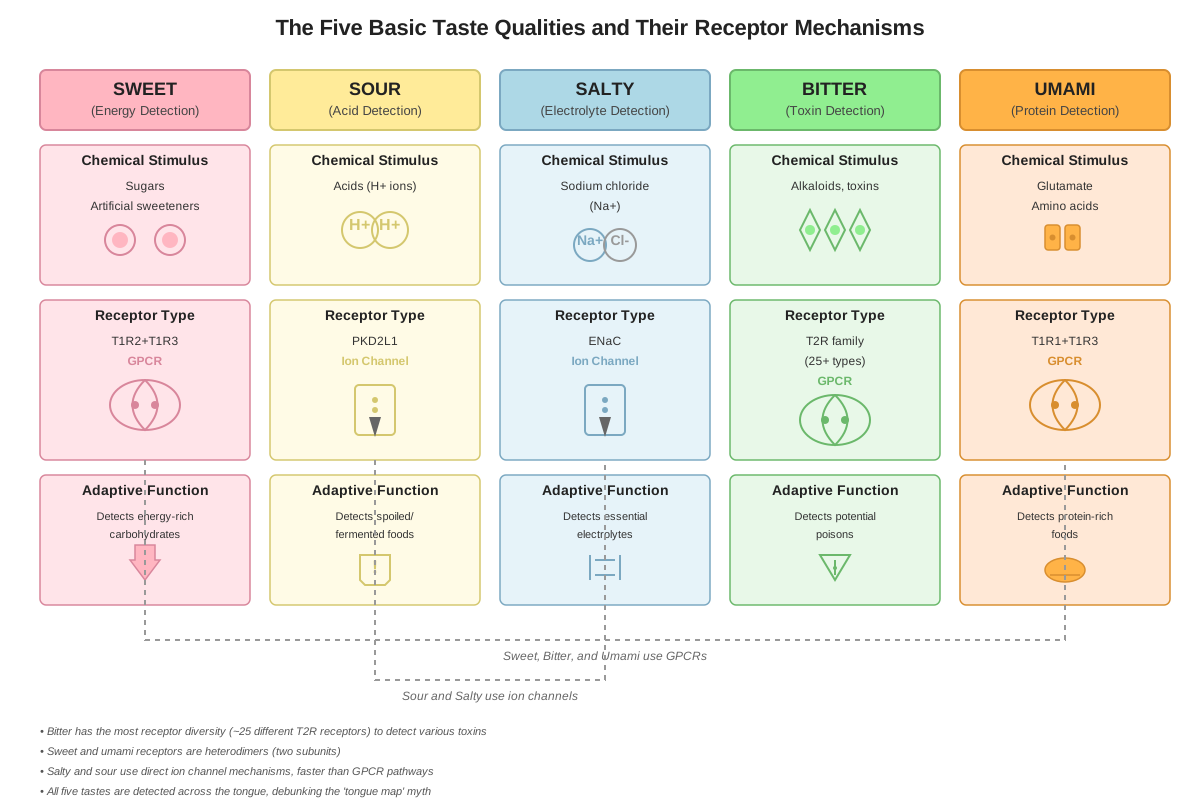
Taste (gustation) is the chemical sense that detects dissolved substances in the oral cavity through specialized receptor cells located primarily on the tongue. Unlike the more complex sense of smell, taste is traditionally categorized into five basic qualities: sweet, sour, salty, bitter, and umami. Each taste quality serves an adaptive function related to nutrition and survival.
Sweet taste typically indicates the presence of carbohydrates and energy-rich foods, promoting consumption of calorie-dense nutrients. Salty taste detects sodium and other electrolytes essential for fluid balance and neural function. Sour taste responds to acidic substances (hydrogen ions), which can signal unripe fruit or spoiled food, triggering caution. Bitter taste is particularly sensitive and detects potentially toxic alkaloids and poisons, serving as a protective mechanism—humans can detect bitter compounds at very low concentrations. Umami, the most recently recognized basic taste, responds to glutamate and other amino acids, signaling protein-rich foods.
Taste Receptor Anatomy and Physiology
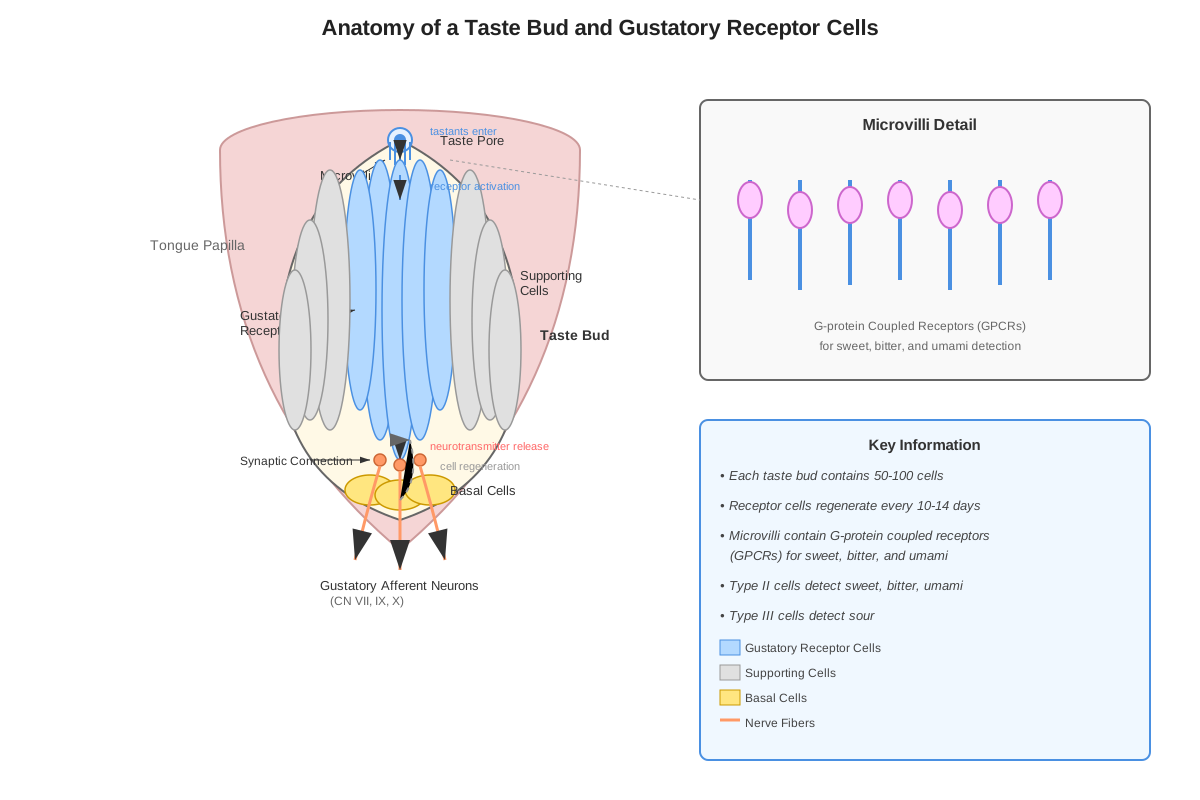
Taste receptors are organized into taste buds, which are clusters of 50-150 specialized epithelial cells located primarily on raised structures called papillae on the tongue's surface. Four types of papillae exist: fungiform papillae (mushroom-shaped, located on the anterior two-thirds of the tongue), foliate papillae (ridge-like structures on the lateral edges), circumvallate papillae (large, circular structures arranged in a V-shape at the back of the tongue), and filiform papillae (most numerous but contain no taste buds, providing texture sensation).
Within each taste bud, three types of cells exist: Type I cells (support cells), Type II cells (receptor cells for sweet, bitter, and umami), and Type III cells (receptor cells for sour and salty, also called presynaptic cells). Taste receptor cells are not neurons but specialized epithelial cells that synapse with sensory neurons. These cells have a lifespan of approximately 10-14 days and are continuously replaced, making the gustatory system remarkably regenerative compared to other sensory systems.
Taste Transduction Mechanisms
The process by which chemical stimuli become neural signals varies by taste quality. Salty and sour tastes involve direct ion channel mechanisms. Sodium ions (Na+) pass through specialized sodium channels (ENaC channels) in salty taste detection, directly depolarizing the receptor cell. Hydrogen ions (H+) block potassium channels and enter cells through various mechanisms in sour taste detection, also causing depolarization.
Sweet, bitter, and umami tastes utilize G-protein coupled receptors (GPCRs). Sweet and umami tastants bind to heterodimeric receptors (T1R2+T1R3 for sweet; T1R1+T1R3 for umami), while bitter compounds bind to a family of approximately 25-30 different T2R receptors. This explains why bitter taste has such broad sensitivity—the multiple receptor types can detect diverse toxic compounds. When activated, these GPCRs trigger second messenger cascades involving phospholipase C, IP3, and calcium release, ultimately leading to neurotransmitter release onto sensory neurons.
Neural Pathways and Central Processing
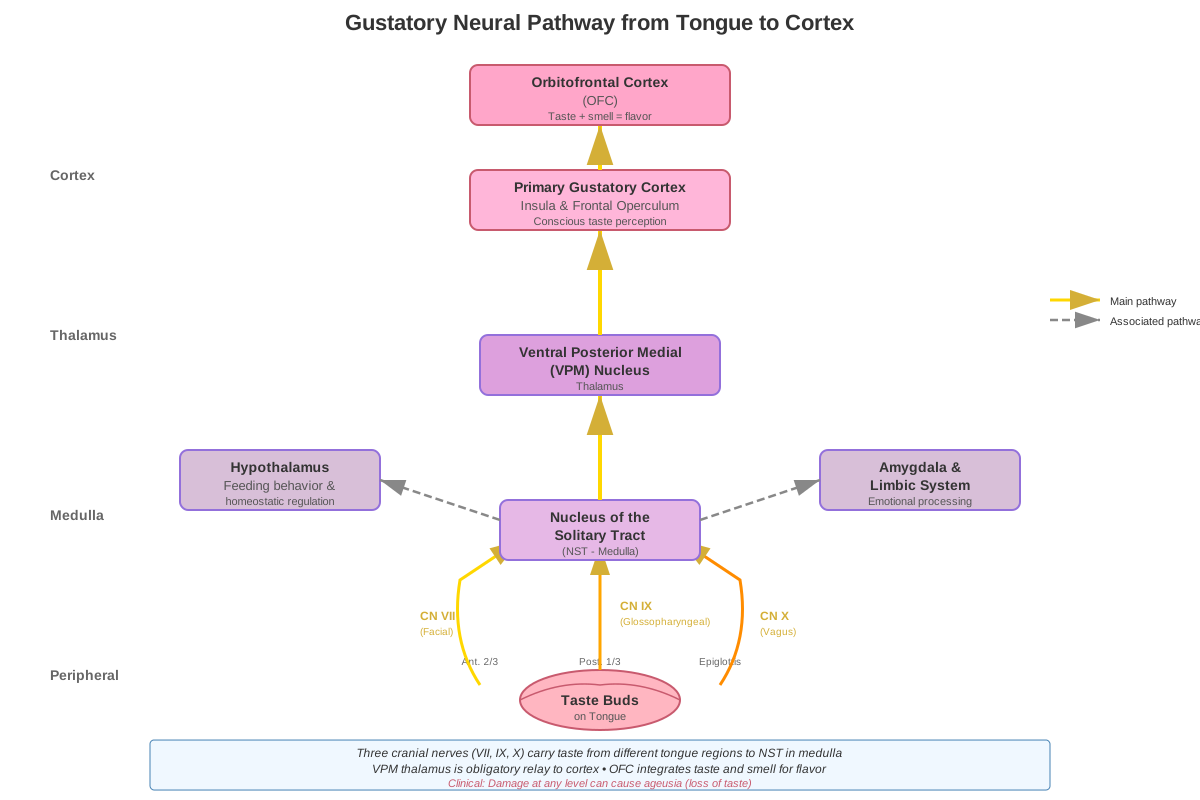
Taste information travels through three cranial nerves to reach the brain. The facial nerve (CN VII) via the chorda tympani branch carries signals from the anterior two-thirds of the tongue. The glossopharyngeal nerve (CN IX) transmits information from the posterior third of the tongue. The vagus nerve (CN X) carries taste information from the throat and epiglottis. All three nerves synapse in the nucleus of the solitary tract (NST) in the medulla.
From the NST, taste information projects to the ventral posterior medial (VPM) nucleus of the thalamus, which then relays signals to the primary gustatory cortex in the anterior insula and frontal operculum. Additional projections reach the orbitofrontal cortex (where taste integrates with smell to create flavor), the amygdala (for emotional responses to taste), and the hypothalamus (for homeostatic regulation and feeding behavior).
| Pathway Component | Structure | Function |
|---|---|---|
| Receptors | Taste buds on papillae | Detect chemical stimuli |
| Peripheral nerves | CN VII, IX, X | Transmit signals to brainstem |
| First synapse | Nucleus of solitary tract | Initial processing and integration |
| Thalamic relay | VPM nucleus | Relay to cortex |
| Primary cortex | Anterior insula/frontal operculum | Conscious taste perception |
| Secondary processing | Orbitofrontal cortex | Flavor integration, hedonic value |
Taste vs. Flavor
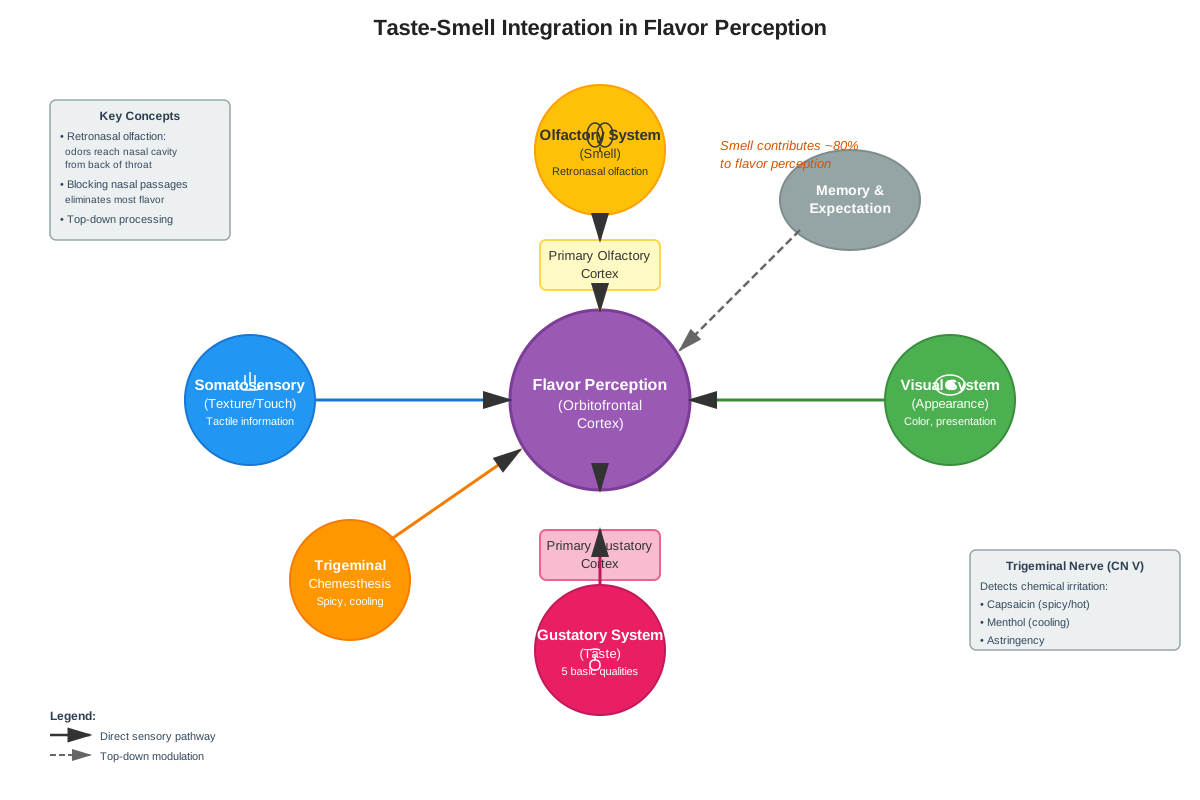
A critical distinction for the MCAT is between taste and flavor. Taste refers specifically to the five basic qualities detected by gustatory receptors. Flavor is the integrated perceptual experience combining taste, smell (olfaction), texture (somatosensation), temperature, and even visual and auditory cues. The majority of what people commonly call "taste" is actually flavor, with olfaction contributing approximately 80% of flavor perception.
This explains why food seems bland when experiencing nasal congestion—the taste receptors function normally, but retronasal olfaction (smell from the back of the throat reaching the nasal cavity) is blocked. The orbitofrontal cortex serves as the primary integration site where gustatory and olfactory information combine to create the unified flavor experience.
Individual Differences in Taste Perception
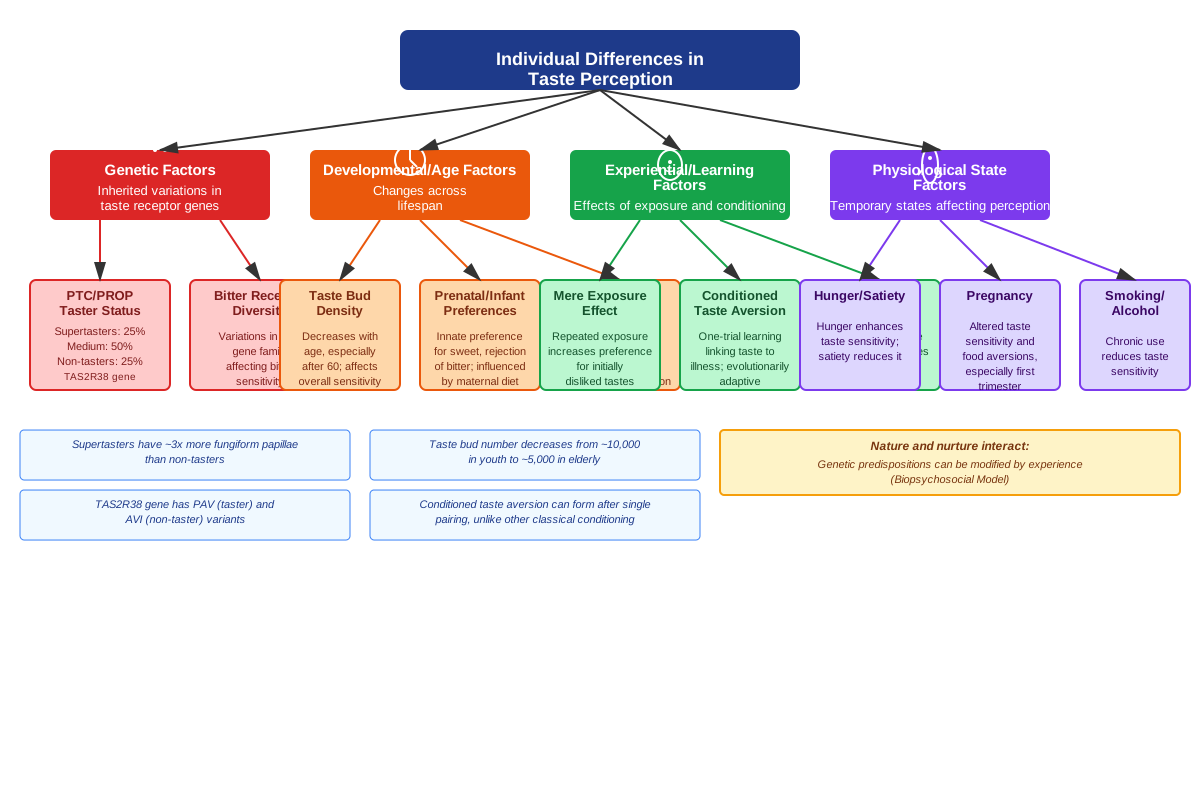
Genetic variation significantly influences taste perception. The most studied example involves phenylthiocarbamide (PTC) and 6-n-propylthiouracil (PROP), bitter compounds that some individuals taste intensely while others cannot taste at all. This variation results from polymorphisms in the TAS2R38 gene encoding a bitter taste receptor. Individuals are classified as supertasters (highly sensitive, possessing two functional alleles), medium tasters (moderate sensitivity, one functional allele), or non-tasters (insensitive, two non-functional alleles).
Supertasters have a higher density of fungiform papillae and taste buds, making them more sensitive to all taste qualities, not just bitter. This heightened sensitivity influences food preferences, dietary choices, and potentially health outcomes. Supertasters often avoid bitter vegetables, strong coffee, and alcohol, while non-tasters may consume more of these substances.
Age also affects taste perception. Older adults experience decreased taste sensitivity due to reduced taste bud regeneration, medications, and age-related changes in neural processing. Children typically have more taste buds than adults and show heightened sensitivity, particularly to bitter tastes—an adaptive mechanism protecting them from toxins during vulnerable developmental periods.
Taste Adaptation and Modification
Sensory adaptation occurs in the gustatory system, though less completely than in other sensory modalities. Continuous exposure to a tastant reduces perceived intensity, but taste receptors do not adapt as fully as olfactory receptors. Cross-adaptation occurs when exposure to one substance reduces sensitivity to another similar substance (e.g., one sweet substance reducing sensitivity to another sweet substance).
Taste modification can occur through various mechanisms. Miracle fruit contains miraculin, a protein that binds to sweet receptors and causes them to respond to acidic conditions, making sour foods taste sweet. Gymnemic acid from Gymnema sylvestre selectively blocks sweet taste receptors. These phenomena demonstrate the specificity of taste receptors and provide tools for studying taste mechanisms.
Concept Relationships
The core concepts of taste form an integrated system flowing from molecular mechanisms to perceptual experience. Chemical stimuli in the environment → interact with taste receptors on papillae → trigger transduction mechanisms (either direct ion channels or GPCR cascades) → cause receptor cell depolarization → release neurotransmitters onto sensory neurons → signals travel via cranial nerves VII, IX, and X → synapse in the nucleus of the solitary tract → project to the VPM thalamus → reach primary gustatory cortex for conscious perception → integrate with olfactory information in orbitofrontal cortex to create flavor.
Individual differences in genetic makeup influence receptor expression and sensitivity, modulating every step of this pathway. Evolutionary pressures shaped the five basic taste qualities to serve adaptive functions, connecting taste to broader concepts of natural selection and survival. The distinction between taste and flavor connects gustatory processing to multisensory integration and demonstrates how the brain constructs unified perceptual experiences from diverse sensory inputs.
Taste adaptation relates to general principles of sensory processing and neural efficiency. The regenerative capacity of taste receptor cells connects to concepts of neuroplasticity and cellular turnover. The emotional and motivational aspects of taste (processed through amygdala and hypothalamus connections) link sensation to behavior, demonstrating how sensory systems influence decision-making, learning (particularly conditioned taste aversion), and homeostatic regulation.
Quick check — test yourself on Taste so far.
Try Flashcards →High-Yield Facts
⭐ The five basic taste qualities are sweet, sour, salty, bitter, and umami, each serving distinct adaptive functions related to nutrition and toxin avoidance
⭐ Taste receptors are specialized epithelial cells (not neurons) located in taste buds on papillae, with a lifespan of 10-14 days
⭐ Flavor is the integrated experience of taste, smell, texture, temperature, and other sensory inputs; taste alone contributes only about 20% of flavor perception
⭐ Three cranial nerves (VII, IX, X) carry taste information to the nucleus of the solitary tract in the medulla
⭐ The primary gustatory cortex is located in the anterior insula and frontal operculum; flavor integration occurs in the orbitofrontal cortex
- Salty and sour tastes use direct ion channel mechanisms, while sweet, bitter, and umami use G-protein coupled receptors
- Bitter taste receptors (T2R family) include approximately 25-30 different types, allowing detection of diverse toxic compounds
- Supertasters have higher fungiform papillae density and greater sensitivity to all taste qualities due to TAS2R38 gene variants
- Taste sensitivity decreases with age due to reduced taste bud regeneration and neural changes
- The orbitofrontal cortex integrates gustatory and olfactory information to create the unified flavor experience
- Retronasal olfaction (smell from the back of the throat) is the primary reason food tastes bland during nasal congestion
- Conditioned taste aversion can develop after a single pairing of a taste with illness, demonstrating the biological preparedness of the gustatory system
Common Misconceptions
Misconception: The tongue has distinct regions for different tastes (the "tongue map" showing sweet at the tip, bitter at the back, etc.)
Correction: All taste qualities can be detected across the entire tongue surface. While slight sensitivity differences exist between regions, all areas with taste buds can detect all five basic tastes. The tongue map myth originated from a misinterpretation of early research and has been thoroughly debunked.
Misconception: Taste and flavor are the same thing
Correction: Taste refers specifically to the five basic qualities detected by gustatory receptors (sweet, sour, salty, bitter, umami), while flavor is the integrated perceptual experience combining taste, smell, texture, temperature, and other sensory inputs. Most of what people call "taste" is actually flavor, with olfaction contributing the majority of flavor perception.
Misconception: Taste receptors are neurons that send signals directly to the brain
Correction: Taste receptors are specialized epithelial cells, not neurons. They synapse with sensory neurons of cranial nerves VII, IX, and X, which then transmit signals to the brain. This distinction is important for understanding taste receptor regeneration and the cellular mechanisms of transduction.
Misconception: Once taste receptors adapt to a stimulus, they stop responding completely
Correction: Taste receptors show adaptation but do not adapt as completely as olfactory receptors. Some response persists even with continuous stimulation. This incomplete adaptation makes sense adaptively—continuous monitoring of what's in the mouth remains important for detecting harmful substances.
Misconception: Supertasters only have enhanced bitter taste sensitivity
Correction: While supertasters are identified by their sensitivity to bitter compounds like PROP, they actually have enhanced sensitivity to all taste qualities due to higher taste bud density. This heightened overall sensitivity influences food preferences across all taste categories and affects dietary choices broadly.
Misconception: Taste information goes directly from receptors to the cortex
Correction: Taste information follows a specific pathway: receptors → cranial nerves → nucleus of the solitary tract (medulla) → VPM thalamus → primary gustatory cortex. The thalamic relay is essential, and the initial brainstem processing in the NST is critical for reflexive responses and integration with autonomic functions.
Worked Examples
Example 1: Experimental Design and Taste Perception
Scenario: Researchers conduct an experiment where participants taste solutions while wearing nose clips that prevent airflow through the nasal passages. Participants report that a cherry-flavored solution tastes "sweet but bland" and cannot identify the cherry flavor. When nose clips are removed, participants immediately identify the cherry flavor. Explain these results using principles of taste and flavor perception.
Analysis:
Step 1: Identify the sensory systems involved. The cherry-flavored solution contains both tastants (sugar providing sweetness) and volatile aromatic compounds (providing cherry scent).
Step 2: Recognize that taste receptors on the tongue detect only the five basic qualities. The sweetness comes from sugar molecules binding to T1R2+T1R3 receptors on Type II taste receptor cells, triggering GPCR-mediated transduction.
Step 3: Understand that "cherry" is not a basic taste quality—it's an olfactory perception. The aromatic compounds that create cherry flavor are detected by olfactory receptors in the nasal epithelium.
Step 4: Explain the nose clip effect. With nose clips preventing airflow, retronasal olfaction (smell from the back of the throat reaching the nasal cavity) is blocked. Taste receptors function normally, detecting sweetness, but olfactory input is absent.
Step 5: Connect to flavor integration. The orbitofrontal cortex normally integrates gustatory information (sweet) with olfactory information (cherry aroma) to create the unified flavor experience. With nose clips, only gustatory input reaches the brain, resulting in the "sweet but bland" perception.
Step 6: Explain the restoration of flavor. Removing nose clips allows retronasal olfaction to resume. Aromatic compounds reach olfactory receptors, and the complete sensory information (taste + smell) integrates in the orbitofrontal cortex, producing the full cherry flavor perception.
Conclusion: This experiment demonstrates that flavor is a multisensory integration of taste and smell, with olfaction contributing the majority of flavor perception. It illustrates the distinction between taste (basic qualities detected by gustatory receptors) and flavor (integrated perceptual experience).
Example 2: Genetic Variation and Taste Sensitivity
Scenario: A study examines three groups of participants classified as non-tasters, medium tasters, and supertasters based on their sensitivity to PROP. Researchers measure consumption of cruciferous vegetables (broccoli, Brussels sprouts, kale) and find that supertasters consume significantly less than the other groups. Additionally, supertasters rate the bitterness of black coffee higher than other groups. Explain the biological basis for these findings and their implications.
Analysis:
Step 1: Identify the genetic basis. PROP sensitivity results from polymorphisms in the TAS2R38 gene, which encodes a bitter taste receptor. Supertasters have two functional alleles (homozygous dominant), medium tasters have one functional allele (heterozygous), and non-tasters have two non-functional alleles (homozygous recessive).
Step 2: Explain the receptor-level mechanism. Functional TAS2R38 receptors bind PROP and similar bitter compounds, triggering GPCR-mediated transduction cascades. Supertasters have more functional receptors and higher receptor density, producing stronger signals in response to bitter compounds.
Step 3: Connect to papillae density. Supertasters have a higher density of fungiform papillae on the tongue, meaning more taste buds and more receptor cells overall. This anatomical difference amplifies sensitivity to all taste qualities, not just bitter.
Step 4: Explain vegetable consumption patterns. Cruciferous vegetables contain glucosinolates and other bitter compounds. Supertasters perceive these vegetables as intensely bitter and unpleasant, leading to avoidance. Non-tasters perceive minimal bitterness and consume these vegetables more readily.
Step 5: Address the coffee finding. Coffee contains multiple bitter compounds (caffeine, chlorogenic acids, quinides). Supertasters' enhanced bitter sensitivity makes coffee taste more intensely bitter, potentially affecting consumption patterns and preferences.
Step 6: Consider broader implications. These genetic differences influence dietary choices, nutritional intake, and potentially health outcomes. Supertasters may have lower intake of beneficial phytochemicals from bitter vegetables but may also avoid excessive alcohol or tobacco due to heightened sensitivity to their bitter components.
Conclusion: Genetic variation in taste receptors creates meaningful individual differences in food perception and dietary behavior. The TAS2R38 polymorphism demonstrates how molecular-level differences in receptor function scale up to influence behavior and lifestyle choices, illustrating the connection between genetics, sensation, perception, and behavior.
Exam Strategy
When approaching MCAT questions on taste, first determine whether the question asks about taste specifically (the five basic qualities) or flavor (integrated multisensory experience). Many incorrect answer choices exploit confusion between these concepts. Watch for trigger words: "gustatory" always refers to taste alone, while "flavor," "aroma," and "retronasal" indicate olfactory involvement.
For pathway questions, memorize the sequence: receptors → CN VII/IX/X → nucleus of the solitary tract → VPM thalamus → primary gustatory cortex (insula/frontal operculum) → orbitofrontal cortex for integration. Questions often test whether students know the thalamic relay occurs or can identify the correct cortical regions. Remember that the primary gustatory cortex is NOT in the parietal lobe with other primary sensory cortices—it's in the insula.
Process-of-elimination strategies work well for taste questions. If an answer choice mentions only four basic tastes (omitting umami), it's likely incorrect. If a choice claims complete sensory adaptation for taste, eliminate it—taste shows incomplete adaptation. If a choice states taste receptors are neurons, it's wrong—they're epithelial cells. If a choice places all taste processing in a single brain region without mentioning integration, it's oversimplified.
For experimental passage questions, identify the independent and dependent variables carefully. Taste studies often manipulate one sensory modality while measuring perception of another, testing multisensory integration. Pay attention to control conditions—proper taste experiments should control for olfactory input, temperature, texture, and visual cues. Questions may ask you to identify confounding variables or suggest improvements to experimental design.
Time allocation: Discrete taste questions should take 60-90 seconds. Read carefully to distinguish taste from flavor, identify the specific concept being tested (anatomy, pathway, transduction mechanism, or perceptual phenomenon), and select the answer. Passage-based questions may take 90-120 seconds; quickly identify the experimental manipulation, predict the expected result based on taste principles, then find the matching answer choice.
Memory Techniques
Mnemonic for the five basic tastes: "Sweet Sally's Sour Bitter Umbrella" (Sweet, Salty, Sour, Bitter, Umami)
Mnemonic for cranial nerves carrying taste: "7, 9, 10 - taste again" (CN VII, IX, X)
Mnemonic for taste pathway: "Really Nice Tacos Very Intensely Flavored" (Receptors → Nerves → NST (nucleus of solitary Tract) → VPM thalamus → Insula → Flavor integration in orbitofrontal cortex)
Visualization for taste vs. flavor: Picture taste as a simple five-color palette (representing the five basic qualities) and flavor as a complex painting created by mixing those colors with many others (smell, texture, temperature). This reinforces that taste is a component of the richer flavor experience.
Acronym for transduction mechanisms: "SALTY SOUR = Simple; SWEET BITTER UMAMI = GPCR" (Direct ion channels for salty/sour; G-protein coupled receptors for sweet/bitter/umami)
Memory aid for supertaster genetics: Think "Super = Two" (two functional alleles), "Medium = One" (one functional allele), "Non = None" (no functional alleles)
Spatial memory technique: Visualize the tongue with taste buds as tiny cities, cranial nerves as highways leading to the brainstem (NST as a major hub), then a highway to the thalamus (VPM as a relay station), and finally to the cortex (insula as the destination). This creates a mental map of the pathway.
Summary
Taste is the chemical sense detecting five basic qualities—sweet, sour, salty, bitter, and umami—through specialized receptor cells in taste buds located on tongue papillae. These receptors use either direct ion channels (salty, sour) or G-protein coupled receptors (sweet, bitter, umami) to transduce chemical signals into neural activity. Information travels via cranial nerves VII, IX, and X to the nucleus of the solitary tract, then through the VPM thalamus to the primary gustatory cortex in the anterior insula and frontal operculum. Flavor, distinct from taste, represents the integrated multisensory experience combining taste with olfaction (the dominant contributor), texture, temperature, and other inputs, primarily in the orbitofrontal cortex. Genetic variation, particularly in bitter taste receptors like TAS2R38, creates individual differences in taste sensitivity, influencing food preferences and dietary behavior. Understanding taste requires integrating molecular mechanisms, neural pathways, perceptual processing, and the interaction between bottom-up sensory input and top-down cognitive influences.
Key Takeaways
- Taste detects five basic qualities (sweet, sour, salty, bitter, umami) through specialized epithelial receptor cells in taste buds, not neurons
- Flavor is the integrated multisensory experience combining taste, smell, texture, and temperature; olfaction contributes approximately 80% of flavor perception
- The gustatory pathway proceeds from receptors through cranial nerves VII, IX, and X to the nucleus of the solitary tract, VPM thalamus, and primary gustatory cortex in the insula
- Salty and sour tastes use direct ion channel mechanisms, while sweet, bitter, and umami use G-protein coupled receptors
- Genetic variation in taste receptors (particularly TAS2R38) creates supertasters, medium tasters, and non-tasters with different sensitivities and food preferences
- The orbitofrontal cortex integrates gustatory and olfactory information to create unified flavor experiences
- Taste receptors regenerate every 10-14 days, making the gustatory system highly regenerative compared to other sensory systems
Related Topics
Olfaction (Smell): Understanding olfactory mechanisms is essential for comprehending flavor perception, as smell contributes the majority of flavor experience. Mastering taste provides the foundation for understanding how these chemical senses integrate.
Sensory Transduction: The mechanisms by which taste receptors convert chemical signals to neural activity exemplify broader principles of sensory transduction applicable to all sensory systems.
Neural Pathways and Brain Structure: Tracing the gustatory pathway reinforces knowledge of cranial nerves, brainstem structures, thalamic nuclei, and cortical organization relevant to all sensory systems.
Sensation and Perception: Taste demonstrates the distinction between sensation (receptor activation) and perception (conscious experience), including bottom-up and top-down processing.
Behavioral Genetics: Individual differences in taste sensitivity illustrate how genetic variation influences behavior, connecting molecular biology to psychology.
Learning and Memory: Conditioned taste aversion demonstrates powerful associative learning mechanisms with biological preparedness, connecting sensation to behavioral modification.
Practice CTA
Now that you've mastered the core concepts of taste, it's time to solidify your understanding through active practice. Challenge yourself with MCAT-style practice questions that test your ability to apply these concepts to novel scenarios, interpret experimental data, and integrate taste with other psychological principles. Use flashcards to reinforce high-yield facts, particularly the pathway components, transduction mechanisms, and the critical distinction between taste and flavor. Remember: understanding taste isn't just about memorizing facts—it's about building a framework for analyzing how sensory systems translate physical stimuli into psychological experience. Your ability to think critically about these mechanisms will serve you well across many MCAT questions. You've got this!
Sign up free to keep reading
Create a free AnvayaPrep account to finish this MCAT guide on Taste — plus flashcards and practice questions.