Overview
Transduction is a fundamental mechanism of horizontal gene transfer in bacteria, representing a critical process by which genetic material is transferred from one bacterial cell to another via a bacteriophage (bacterial virus). This process stands as one of three primary methods bacteria use to acquire new genetic information, alongside transformation and conjugation. Understanding transduction is essential for comprehending bacterial evolution, antibiotic resistance spread, and the molecular mechanisms that drive microbial diversity.
For the MCAT, transduction biology represents a medium-yield topic that frequently appears in passages related to microbiology, bacterial genetics, and molecular biology. The exam tests not only the basic mechanism of transduction but also its implications for bacterial adaptation, the distinction between generalized and specialized transduction, and how this process contributes to genetic variation in prokaryotic populations. Questions may present experimental scenarios involving phage-mediated gene transfer or ask students to predict outcomes of transduction events in bacterial populations.
Transduction MCAT questions typically integrate this concept with broader themes in biology, including viral life cycles, DNA recombination, gene expression, and evolutionary mechanisms. The topic bridges microbiology with molecular genetics, requiring students to understand both the mechanistic details of how bacteriophages package and transfer DNA, and the broader biological significance of horizontal gene transfer in bacterial populations. Mastery of transduction enables deeper understanding of how bacteria rapidly acquire traits such as antibiotic resistance, virulence factors, and metabolic capabilities—concepts that appear across multiple MCAT disciplines including biochemistry, molecular biology, and even behavioral sciences when discussing public health implications.
Learning Objectives
- [ ] Define Transduction using accurate Biology terminology
- [ ] Explain why Transduction matters for the MCAT
- [ ] Apply Transduction to exam-style questions
- [ ] Identify common mistakes related to Transduction
- [ ] Connect Transduction to related Biology concepts
- [ ] Distinguish between generalized and specialized transduction mechanisms
- [ ] Predict the outcomes of transduction events in bacterial populations
- [ ] Analyze experimental data involving bacteriophage-mediated gene transfer
Prerequisites
- Bacterial cell structure: Understanding bacterial chromosome organization, plasmids, and cell wall structure is essential for comprehending how genetic material is packaged and transferred
- Viral structure and life cycles: Knowledge of lytic and lysogenic cycles provides the foundation for understanding how bacteriophages interact with bacterial hosts
- DNA structure and replication: Familiarity with DNA as genetic material and basic replication mechanisms is necessary to understand how genetic information is transferred and integrated
- Basic genetics terminology: Understanding genes, alleles, genotype, and phenotype enables comprehension of how transduction affects bacterial traits
- Horizontal vs. vertical gene transfer: Recognizing the distinction between inheritance from parent cells versus acquisition from environmental sources contextualizes transduction's evolutionary significance
Why This Topic Matters
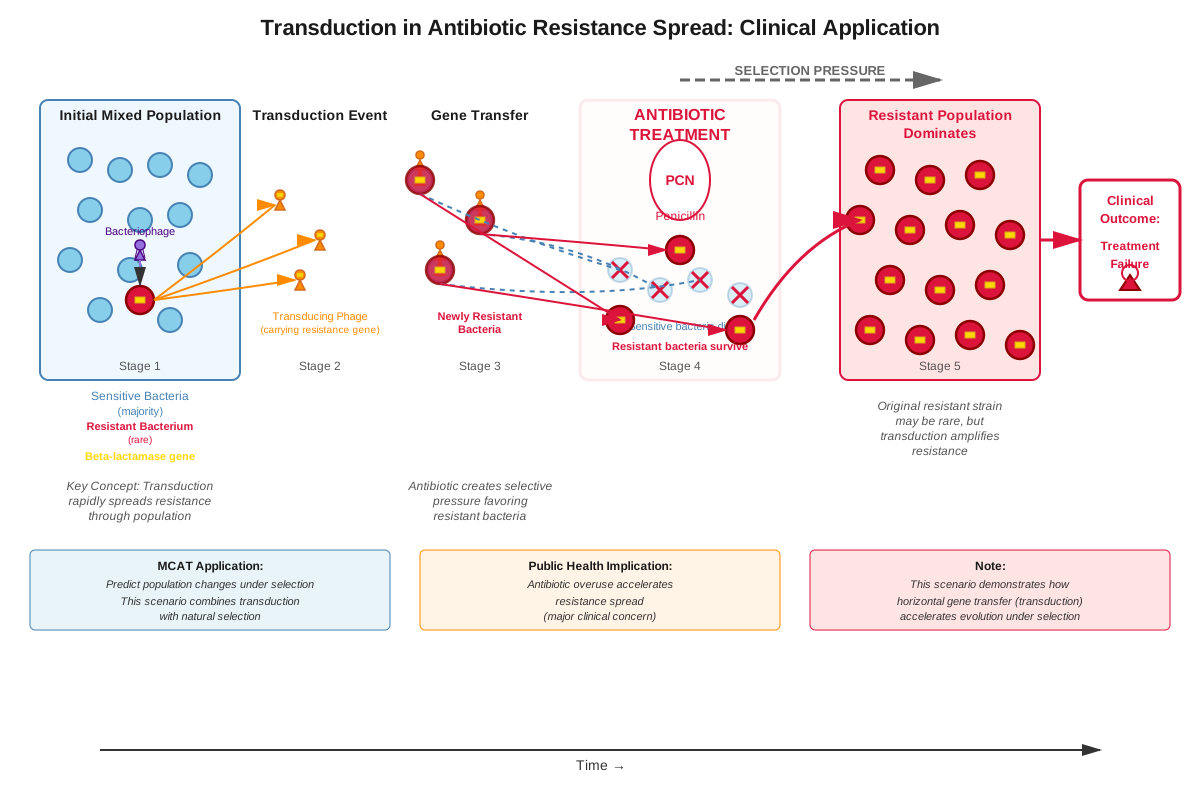
Transduction has profound clinical and real-world significance, particularly in the context of antibiotic resistance and bacterial pathogenicity. Many pathogenic bacteria acquire virulence factors through transduction, including toxin-producing genes in Corynebacterium diphtheriae (diphtheria toxin) and Streptococcus pyogenes (erythrogenic toxin). The spread of antibiotic resistance genes via transduction represents a major public health challenge, as bacteria can rapidly acquire resistance without requiring direct cell-to-cell contact or uptake of naked DNA from the environment.
On the MCAT, transduction appears in approximately 2-4% of biology passages, typically in the context of microbiology, genetics, or molecular biology sections. Questions may appear as discrete items testing basic mechanisms or, more commonly, within passages describing experimental scenarios involving bacterial genetics. The MCAT frequently tests transduction through:
- Experimental analysis passages: Students must interpret results from bacterial crosses or phage infection experiments
- Comparative questions: Distinguishing transduction from transformation and conjugation
- Application scenarios: Predicting how specific mutations or phage characteristics affect gene transfer efficiency
- Clinical vignettes: Understanding how pathogenic bacteria acquire virulence factors
The topic commonly appears alongside discussions of bacterial adaptation, evolution, genetic recombination, and biotechnology applications. MCAT passages may present novel experimental designs where students must apply their understanding of transduction mechanisms to interpret data or predict outcomes, making conceptual mastery more important than simple memorization.
Core Concepts
Definition and Basic Mechanism
Transduction is the process by which bacterial DNA is transferred from one bacterium (donor) to another bacterium (recipient) through a bacteriophage vector. Unlike transformation (uptake of naked DNA) or conjugation (direct cell-to-cell transfer through pili), transduction requires a viral intermediary. The process occurs when a bacteriophage (or simply phage)—a virus that specifically infects bacteria—accidentally packages bacterial DNA instead of, or in addition to, its own viral DNA during viral replication within a host cell.
The fundamental mechanism involves several key steps:
- Phage infection: A bacteriophage attaches to and injects its genetic material into a bacterial host cell
- Viral replication: The phage DNA is replicated, and viral proteins are synthesized
- Packaging error: During assembly of new viral particles, bacterial DNA fragments are mistakenly packaged into phage heads
- Release: The phage particles (some containing bacterial DNA) are released when the host cell lyses
- Infection of recipient: The transducing phage attaches to a new bacterial host and injects the bacterial DNA it carries
- Recombination: The transferred bacterial DNA may recombine with the recipient's chromosome, permanently incorporating new genetic information
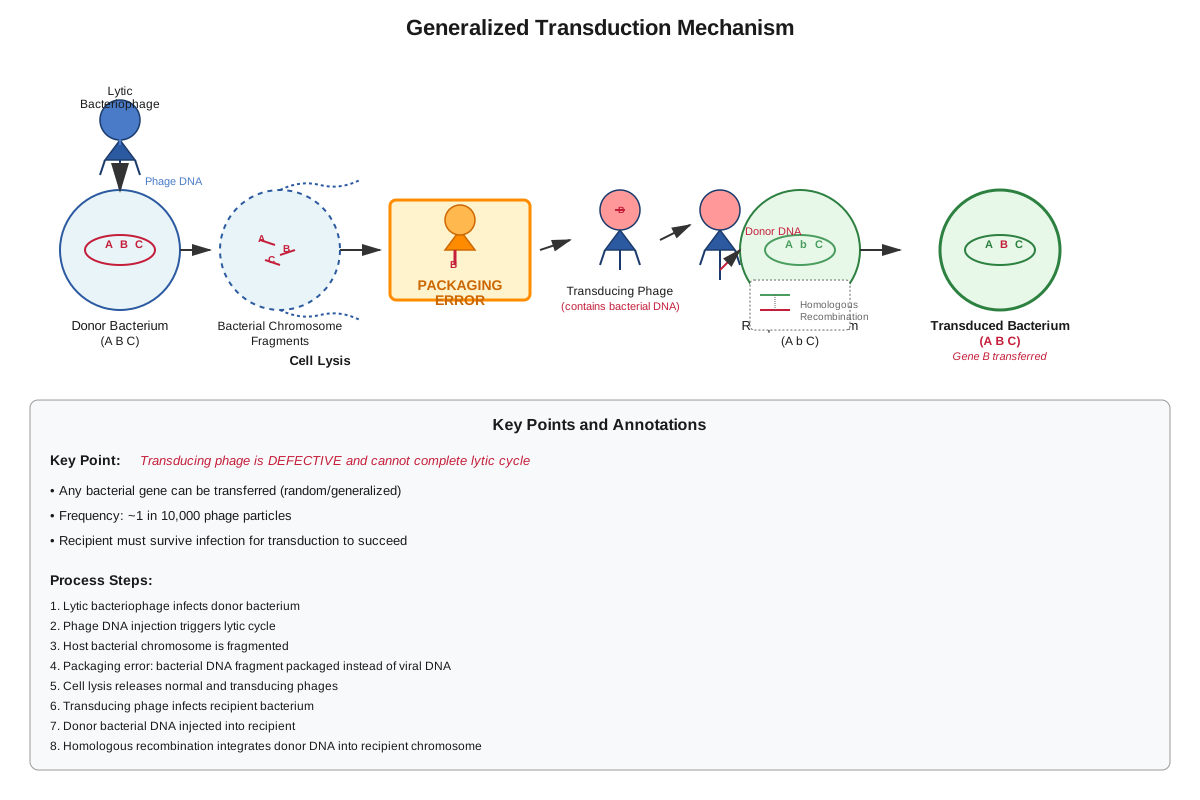
Generalized Transduction
Generalized transduction can transfer any portion of the bacterial chromosome with roughly equal probability. This process occurs during the lytic cycle of bacteriophage infection, where the phage reproduces and destroys the host cell.
The mechanism of generalized transduction proceeds as follows:
- A virulent (lytic) phage infects a bacterial cell and takes over the cellular machinery
- The phage DNA directs degradation of the host bacterial chromosome into fragments
- During the assembly phase, the phage packaging machinery occasionally mistakes bacterial DNA fragments for phage DNA
- These bacterial DNA fragments (approximately the same size as the phage genome) are packaged into phage heads, creating transducing particles
- When the cell lyses, both normal phages and transducing particles are released
- Transducing particles can inject bacterial DNA into new host cells, but cannot complete a lytic cycle (they lack viral genes)
- The injected bacterial DNA can integrate into the recipient's chromosome through homologous recombination
Key characteristics of generalized transduction:
- Can transfer any bacterial gene
- Occurs only during lytic cycle
- Transducing particles are defective (cannot reproduce)
- Frequency is typically low (1 in 10,000 to 1 in 100,000 phage particles)
- Requires homologous recombination for stable inheritance
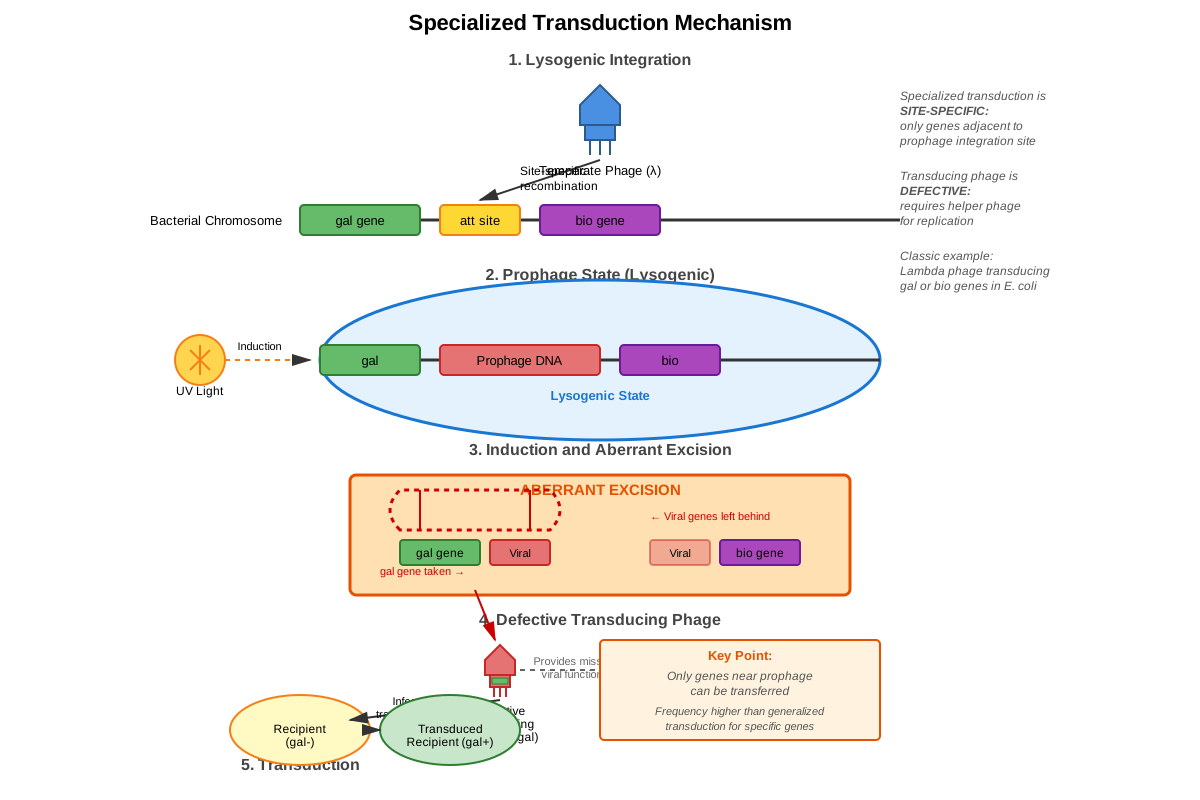
Specialized Transduction
Specialized transduction (also called restricted transduction) transfers only specific bacterial genes located near the prophage integration site. This process is associated with temperate phages that can undergo lysogenic cycles.
The mechanism of specialized transduction involves:
- A temperate phage integrates its DNA into the bacterial chromosome at a specific site, becoming a prophage
- The prophage remains dormant, replicating along with the bacterial chromosome
- Upon induction (triggered by stress, UV light, or chemicals), the prophage excises from the chromosome
- Aberrant excision occasionally occurs, where the excision is imprecise
- The excised DNA includes some phage genes plus adjacent bacterial genes, while leaving some phage genes behind
- This hybrid DNA (part phage, part bacterial) is packaged into phage particles
- These specialized transducing particles can transfer the specific bacterial genes to new hosts
- The transferred genes may integrate into the recipient chromosome or remain as episomes
Key characteristics of specialized transduction:
- Transfers only genes near prophage integration site
- Occurs during lysogenic cycle (specifically during induction)
- Transducing particles may be defective or functional depending on which phage genes are retained
- Higher frequency than generalized transduction for specific genes
- Can result in lysogenic conversion (phenotypic change due to prophage genes)
Comparison Table: Generalized vs. Specialized Transduction
| Feature | Generalized Transduction | Specialized Transduction |
|---|---|---|
| Phage type | Virulent (lytic) phages | Temperate (lysogenic) phages |
| Genes transferred | Any bacterial genes | Only genes near prophage site |
| Mechanism | Random packaging of bacterial DNA fragments | Aberrant excision of prophage |
| Phage cycle | Lytic cycle | Lysogenic cycle (during induction) |
| Frequency | Low (1:10⁴-10⁵) | Higher for specific genes |
| Transducing particle | Always defective | May be defective or functional |
| Example phages | P1 (E. coli), P22 (Salmonella) | Lambda (λ) phage (E. coli) |
Molecular Requirements for Successful Transduction
For transduction to result in stable genetic change, several molecular events must occur:
Homologous recombination: The transferred bacterial DNA must share sufficient sequence similarity with the recipient's chromosome to allow recombination. This typically requires:
- Regions of DNA homology (similar sequences) on both donor and recipient DNA
- Functional recombination machinery (RecA protein and associated enzymes)
- Integration of the donor DNA segment, replacing the corresponding recipient sequence
Abortive transduction: When homologous recombination does not occur, the transferred DNA remains in the cytoplasm without replicating. This DNA can be transcribed and translated temporarily, producing a transient phenotype in the recipient cell. However, when the cell divides, only one daughter cell receives the DNA, and it is eventually diluted out and lost.
Complete transduction: When recombination successfully integrates the donor DNA into the recipient chromosome, the new genetic information is stably inherited by all descendant cells, resulting in permanent genetic change.
Biological Significance and Applications
Transduction plays crucial roles in bacterial evolution and has important practical applications:
Bacterial pathogenicity: Many bacterial toxins and virulence factors are encoded by prophages and spread through specialized transduction. Examples include:
- Diphtheria toxin (Corynebacterium diphtheriae)
- Shiga toxin (E. coli O157:H7)
- Cholera toxin (Vibrio cholerae)
- Botulinum toxin (Clostridium botulinum)
Antibiotic resistance: Transduction can transfer antibiotic resistance genes between bacterial strains, contributing to the spread of resistance in bacterial populations.
Biotechnology applications: Transduction principles are used in:
- Bacterial strain construction for research
- Gene mapping in bacteria
- Development of phage therapy approaches
- Creation of bacterial vectors for genetic engineering
Concept Relationships
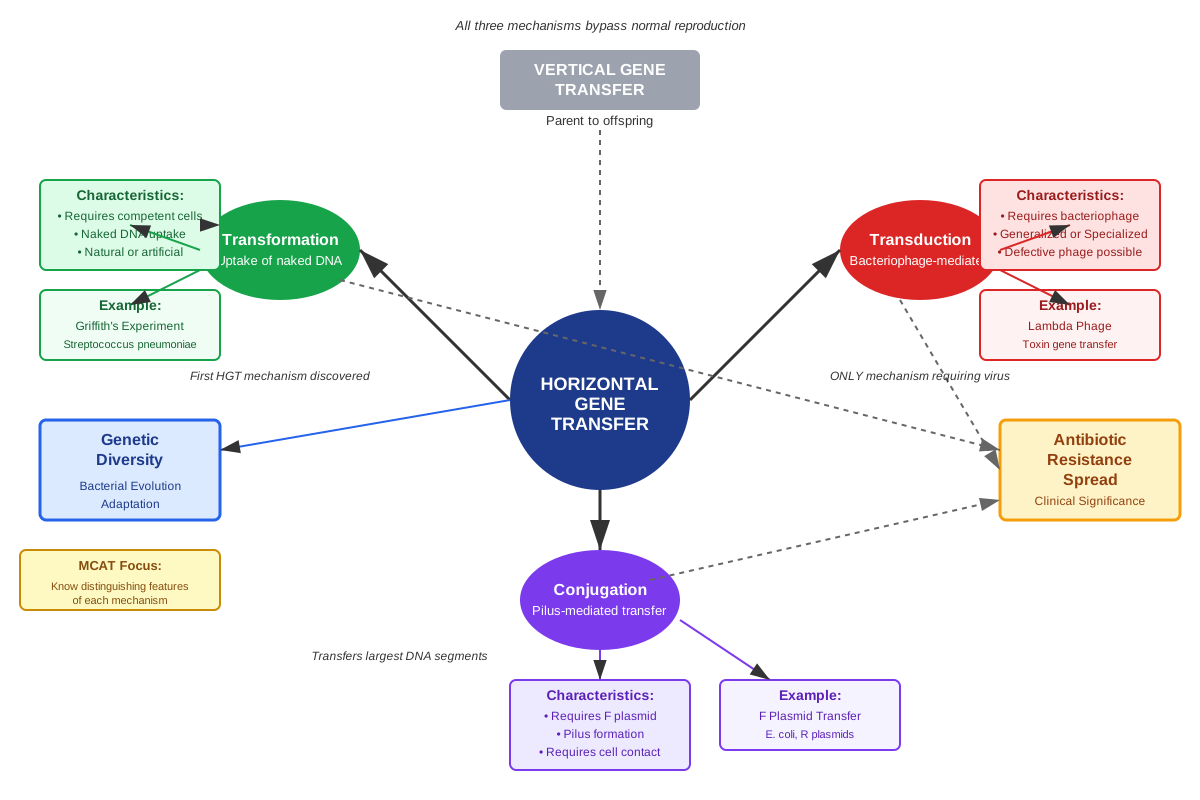
Transduction exists within a network of interconnected biological concepts. At the most fundamental level, transduction represents one mechanism of horizontal gene transfer → which contrasts with vertical gene transfer (parent to offspring inheritance). The three mechanisms of horizontal gene transfer in bacteria—transformation, conjugation, and transduction—each provide different routes for genetic exchange, with transduction being unique in requiring a viral vector.
Within transduction itself, the relationship flows: Bacteriophage infection → Viral replication cycle (either lytic or lysogenic) → DNA packaging errors → Gene transfer → Recombination or abortive transduction. The type of phage cycle determines the type of transduction: Lytic cycle → Generalized transduction, while Lysogenic cycle → Specialized transduction.
Transduction connects to broader concepts in microbiology and genetics:
- Viral life cycles provide the mechanistic foundation for understanding how transduction occurs
- Homologous recombination determines whether transduced DNA becomes permanently integrated
- Bacterial evolution is accelerated by transduction, enabling rapid adaptation
- Gene regulation may be affected when new genes are introduced via transduction
- Population genetics must account for horizontal gene transfer when modeling bacterial evolution
The concept also links to clinical microbiology: Prophage integration → Lysogenic conversion → Acquisition of virulence factors → Increased pathogenicity. This pathway explains how non-pathogenic bacteria can become dangerous pathogens through transduction events.
High-Yield Facts
⭐ Transduction requires a bacteriophage vector to transfer DNA between bacterial cells, distinguishing it from transformation (naked DNA uptake) and conjugation (direct cell contact).
⭐ Generalized transduction occurs during the lytic cycle and can transfer any bacterial gene with equal probability, while specialized transduction occurs during lysogenic cycle induction and transfers only genes near the prophage integration site.
⭐ Transducing particles in generalized transduction are always defective (cannot complete viral replication) because they contain bacterial DNA instead of complete viral genomes.
⭐ Homologous recombination is required for stable integration of transduced DNA into the recipient chromosome; without it, only abortive transduction occurs.
⭐ Many bacterial toxins are encoded by prophages and spread through specialized transduction, including diphtheria toxin, Shiga toxin, and cholera toxin.
- Generalized transduction frequency is typically 1 in 10,000 to 1 in 100,000 phage particles, making it a relatively rare event.
- Specialized transduction results from aberrant excision of prophage DNA, creating hybrid molecules containing both phage and bacterial genes.
- The P1 phage is a classic example used for generalized transduction in E. coli, while lambda (λ) phage is the prototypical example for specialized transduction.
- Transduced DNA that does not recombine can still be expressed temporarily (abortive transduction), producing a transient phenotype in one cell generation.
- Lysogenic conversion refers to phenotypic changes in bacteria resulting from prophage gene expression, often conferring new virulence properties.
- Cotransduction occurs when two bacterial genes are close enough on the chromosome to be packaged together in a single transducing particle, allowing gene mapping.
- Transduction can transfer chromosomal DNA or plasmid DNA, though chromosomal transfer is more common in typical transduction scenarios.
Quick check — test yourself on Transduction so far.
Try Flashcards →Common Misconceptions
Misconception: Transduction is the same as transformation because both involve DNA uptake by bacteria.
Correction: Transduction requires a bacteriophage vector to deliver DNA into the recipient cell, while transformation involves uptake of naked DNA from the environment. The mechanisms, requirements, and efficiency of these processes are fundamentally different.
Misconception: All bacteriophages can perform both generalized and specialized transduction.
Correction: Only virulent (lytic) phages perform generalized transduction, while only temperate (lysogenic) phages can perform specialized transduction. The type of transduction is determined by the phage's life cycle capabilities.
Misconception: Transducing particles can reproduce and create more transducing particles in recipient cells.
Correction: Transducing particles in generalized transduction are defective and cannot complete viral replication because they lack essential viral genes. They can only inject DNA once. In specialized transduction, particles may be defective or functional depending on which genes were retained during aberrant excision.
Misconception: Transduced DNA automatically becomes part of the recipient's genome.
Correction: Transduced DNA must undergo homologous recombination to integrate stably into the recipient chromosome. Without recombination, the DNA remains extrachromosomal and is eventually lost (abortive transduction), though it may be temporarily expressed.
Misconception: Specialized transduction can transfer any gene if the right conditions are present.
Correction: Specialized transduction can only transfer genes located immediately adjacent to the prophage integration site. The genes that can be transferred are predetermined by where the prophage integrates into the bacterial chromosome, making this process "specialized" or "restricted."
Misconception: Transduction occurs at high frequency and is the primary mechanism of bacterial genetic exchange.
Correction: Transduction is actually a relatively rare event (typically 1:10⁴-10⁵ for generalized transduction). While important for bacterial evolution and pathogenicity, conjugation is generally more efficient for large-scale gene transfer, and transformation may be more common in natural environments with high DNA concentrations.
Worked Examples
Example 1: Distinguishing Transduction Types
Question: A researcher is studying gene transfer in E. coli using bacteriophage P1. After infecting a donor strain carrying genes for lactose metabolism (lac+) and tryptophan synthesis (trp+), the phage lysate is used to infect a recipient strain that is lac- and trp-. The researcher observes that approximately 1 in 50,000 recipient cells become lac+, and among these lac+ transductants, about 60% are also trp+. What type of transduction is occurring, and what does the 60% cotransduction frequency tell us?
Solution:
Step 1: Identify the type of transduction
The key clues are:
- P1 is a virulent phage that undergoes lytic cycles
- Any gene can be transferred (both lac and trp genes)
- Low frequency (1:50,000)
- The phage lysate was produced after lytic infection
These characteristics indicate generalized transduction. P1 phage is the classic example of a generalized transducing phage.
Step 2: Interpret the cotransduction frequency
The 60% cotransduction frequency (where lac+ and trp+ are transferred together) indicates that these genes are physically close on the bacterial chromosome. During generalized transduction, the packaging machinery can only fit a DNA fragment of limited size (approximately the size of the phage genome). If two genes are cotransduced 60% of the time, they must be close enough to frequently fit within a single packaged DNA fragment.
Step 3: Apply to gene mapping
The cotransduction frequency is inversely related to the distance between genes. A 60% cotransduction frequency suggests the lac and trp genes are relatively close (within the packaging limit of P1, which is about 2% of the E. coli chromosome). If they were farther apart, the cotransduction frequency would be lower or zero.
Answer: This is generalized transduction mediated by P1 phage. The 60% cotransduction frequency indicates that the lac and trp genes are located close together on the bacterial chromosome, close enough to be packaged together in a single transducing particle more than half the time.
Example 2: Specialized Transduction Scenario
Question: A temperate bacteriophage integrates into the bacterial chromosome between gene X and gene Y. After several generations, UV light induces the prophage to excise and enter the lytic cycle. Analysis of the resulting phage particles reveals that some particles can transfer gene Y to recipient bacteria, but gene X is never transferred. Additionally, these transducing particles cannot complete a lytic cycle in recipient cells. Explain these observations using your knowledge of specialized transduction.
Solution:
Step 1: Understand the prophage integration site
The prophage integrated between genes X and Y, establishing a specific chromosomal location:
[Gene X] --- [Prophage] --- [Gene Y]Step 2: Analyze the aberrant excision
During UV-induced excision, the prophage occasionally excises imprecisely. The observation that gene Y (but not gene X) is transferred indicates the aberrant excision occurred asymmetrically:
Normal excision would remove only prophage DNA:
[Gene X] --- --- [Gene Y] + [Complete Prophage]Aberrant excision that includes gene Y:
[Gene X] --- --- + [Partial Prophage + Gene Y]The excision "cut" on the left side occurred at the correct position (between gene X and the prophage), but the "cut" on the right side occurred beyond the prophage boundary, including gene Y. This explains why gene Y is transferred but gene X is not—the aberrant excision extended in only one direction.
Step 3: Explain why transducing particles are defective
The transducing particles cannot complete a lytic cycle because the aberrant excision left behind some essential phage genes (on the left side) while including gene Y. The resulting DNA molecule contains:
- Some phage genes (enough for DNA injection and possibly integration)
- Gene Y (bacterial DNA)
- Missing essential phage genes (left behind in the chromosome)
Without all essential phage genes, these particles cannot direct synthesis of new phage particles in recipient cells, making them defective transducing particles.
Step 4: Consider the mechanism in recipient cells
When these specialized transducing particles infect recipient cells:
- They inject DNA containing partial phage genes + gene Y
- Gene Y can be expressed (potentially changing the recipient's phenotype)
- The DNA may integrate into the recipient chromosome if sufficient homology exists
- No new phage particles are produced because essential genes are missing
Answer: These observations are consistent with specialized transduction resulting from aberrant excision. The prophage excised imprecisely, extending beyond its normal boundary to include gene Y but not gene X. The resulting transducing particles are defective because they lack essential phage genes that were left behind during aberrant excision, preventing them from completing a lytic cycle. This is characteristic of specialized transduction, where only genes adjacent to the prophage integration site can be transferred, and the direction of aberrant excision determines which specific genes are included.
Exam Strategy
When approaching MCAT questions on transduction, employ these strategic approaches:
Trigger words to recognize transduction questions:
- "bacteriophage," "phage," "viral vector"
- "gene transfer," "horizontal gene transfer"
- "lytic cycle," "lysogenic cycle," "prophage"
- "transducing particle," "generalized," "specialized"
- "bacterial strain," "donor and recipient bacteria"
Decision tree for transduction questions:
- First, confirm it's transduction: Look for viral involvement. If the question mentions naked DNA uptake → transformation; if it mentions pili or direct contact → conjugation; if it mentions bacteriophage → transduction.
- Determine the type:
- Lytic cycle + any gene transferred → generalized transduction
- Lysogenic cycle + specific genes near integration site → specialized transduction
- Consider the outcome:
- Will recombination occur? (requires homology)
- Is the transducing particle defective? (always in generalized; sometimes in specialized)
- Is the phenotype stable or transient? (stable if recombination occurs; transient if abortive)
Process of elimination strategies:
- Eliminate answers that confuse transduction types: If the question describes a lytic phage, eliminate answers mentioning specialized transduction or prophage integration.
- Watch for mechanism confusion: Eliminate answers that describe transformation or conjugation mechanisms when the question clearly involves phages.
- Check for recombination requirements: If an answer suggests transduced DNA is automatically inherited without mentioning recombination, it's likely incorrect.
- Frequency clues: Generalized transduction is rare (10⁻⁴ to 10⁻⁵); if an answer suggests high-frequency transfer without conjugation, be skeptical.
Time allocation advice:
For discrete questions on transduction (30-45 seconds):
- Quickly identify the type of gene transfer (10 seconds)
- Determine generalized vs. specialized if applicable (10 seconds)
- Apply the mechanism to answer the question (10-25 seconds)
For passage-based questions (60-90 seconds per question):
- Skim the passage for experimental design details (20-30 seconds)
- Identify what type of transduction is being studied (10-15 seconds)
- Locate relevant data in figures/tables (15-20 seconds)
- Apply transduction principles to interpret results (15-25 seconds)
Exam Tip: MCAT passages often present novel experimental scenarios. Don't panic if the specific phage or bacterial species is unfamiliar—focus on applying the fundamental principles of transduction mechanisms rather than memorizing specific examples.
Memory Techniques
Mnemonic for types of horizontal gene transfer:
"TTC" - Transformation, Transduction, Conjugation
- Transformation: Takes up naked DNA (both start with T)
- Transduction: Transferred by virus (both start with T)
- Conjugation: Cell-to-cell contact (both start with C)
Mnemonic for distinguishing transduction types:
"GEL" - Generalized transduction, Everything (any gene), Lytic cycle
"SLS" - Specialized transduction, Limited genes (specific location), Lysogenic cycle (during induction)
Visualization strategy for generalized transduction:
Imagine a phage as a "packaging machine" that has become "confused" during the lytic cycle. Picture the bacterial chromosome being chopped into fragments (like cutting a rope into pieces), and the packaging machine randomly grabbing pieces of bacterial DNA instead of phage DNA—like a factory worker accidentally packaging the wrong product. This creates defective "packages" (transducing particles) that deliver bacterial DNA instead of functional virus.
Visualization strategy for specialized transduction:
Picture a prophage as a "bookmark" inserted into a specific page of a book (the bacterial chromosome). When you try to remove the bookmark, you accidentally tear out part of the page with it. The bookmark (prophage) now has some of the page (bacterial genes) attached. This "sloppy removal" (aberrant excision) means you can only transfer text from that specific page location—hence "specialized" for specific genes.
Acronym for transduction requirements:
"HARP" - Requirements for successful transduction:
- Homology (sequence similarity for recombination)
- Attachment (phage must attach to recipient)
- Recombination (integration into chromosome)
- Phage (viral vector required)
Memory aid for specialized transduction examples:
"Diphtheria Shiga Cholera Botulinum" → "Don't Shake Cold Bottles"
All are toxins transferred by specialized transduction via prophages.
Summary
Transduction is a bacteriophage-mediated mechanism of horizontal gene transfer in bacteria, representing a critical process for bacterial evolution and pathogenicity. The two types—generalized and specialized—differ fundamentally in their mechanisms and outcomes. Generalized transduction occurs during lytic cycles when packaging errors result in bacterial DNA fragments being randomly packaged into phage heads, allowing transfer of any bacterial gene with low frequency. Specialized transduction occurs when temperate phages undergo aberrant excision from the chromosome during induction of the lysogenic cycle, transferring only genes adjacent to the prophage integration site. Both types require homologous recombination for stable integration of transferred DNA; without recombination, only transient expression occurs (abortive transduction). Transduction has profound clinical significance, as many bacterial virulence factors and antibiotic resistance genes spread through this mechanism. For the MCAT, students must distinguish transduction from transformation and conjugation, differentiate between generalized and specialized transduction, understand the molecular requirements for successful gene transfer, and apply these concepts to experimental scenarios and clinical contexts.
Key Takeaways
- Transduction is bacteriophage-mediated horizontal gene transfer, distinct from transformation (naked DNA) and conjugation (cell contact)
- Generalized transduction (lytic cycle) can transfer any gene randomly; specialized transduction (lysogenic cycle) transfers only genes near prophage integration sites
- Transducing particles in generalized transduction are always defective; in specialized transduction they may be defective or functional depending on which genes were retained
- Homologous recombination is required for stable inheritance of transduced DNA; without it, only abortive (transient) transduction occurs
- Many bacterial toxins and virulence factors are encoded by prophages and spread through specialized transduction, making this process clinically significant
- Cotransduction frequency indicates physical proximity of genes on the bacterial chromosome, enabling gene mapping
- The MCAT tests transduction through experimental analysis, comparison with other gene transfer mechanisms, and application to bacterial evolution and pathogenicity
Related Topics
Bacterial Conjugation: The direct cell-to-cell transfer of genetic material through pili, particularly F plasmids and Hfr strains. Mastering transduction provides context for understanding how conjugation differs mechanistically while serving similar evolutionary functions.
Bacterial Transformation: The uptake of naked DNA from the environment by competent bacterial cells. Understanding transduction helps distinguish the requirements and mechanisms of different horizontal gene transfer methods.
Bacteriophage Life Cycles: Detailed study of lytic and lysogenic cycles, including molecular regulation of the lysogenic-lytic switch. Transduction knowledge builds directly on understanding these viral life cycles.
Homologous Recombination: The molecular mechanisms by which DNA sequences are exchanged between similar DNA molecules. This process is essential for understanding how transduced DNA integrates into recipient chromosomes.
Bacterial Genetics and Gene Mapping: Techniques for determining gene order and distance on bacterial chromosomes, including use of cotransduction frequencies. Transduction serves as one tool for genetic mapping.
Antibiotic Resistance Mechanisms: How bacteria acquire and spread resistance genes through various mechanisms including transduction. Understanding transduction illuminates one pathway for resistance dissemination.
Bacterial Pathogenicity and Virulence Factors: The molecular basis of bacterial disease, including toxins and other virulence factors often encoded by prophages and spread through specialized transduction.
Practice CTA
Now that you've mastered the core concepts of transduction, it's time to solidify your understanding through active practice. Challenge yourself with MCAT-style practice questions that test your ability to distinguish between transduction types, analyze experimental scenarios, and apply these concepts to novel situations. Work through the flashcards to reinforce high-yield facts and ensure rapid recall during the exam. Remember, understanding transduction not only prepares you for direct questions on this topic but also strengthens your broader comprehension of bacterial genetics, evolution, and clinical microbiology—all frequent MCAT themes. Your investment in mastering this medium-yield topic will pay dividends across multiple question types. You've got this!
Sign up free to keep reading
Create a free AnvayaPrep account to finish this MCAT guide on Transduction — plus flashcards and practice questions.