Overview
Sensation is the foundational process by which sensory receptors detect and respond to environmental stimuli, converting physical energy into neural signals that the brain can interpret. This process represents the first critical step in how organisms interact with their environment, preceding the more complex cognitive process of perception. In Psychology, sensation encompasses the mechanisms by which specialized receptor cells transduce various forms of energy—including light, sound waves, chemical molecules, pressure, and temperature—into electrochemical signals that travel along neural pathways to the central nervous system.
Understanding sensation is essential for the MCAT because it bridges multiple disciplines tested on the exam: biology (neural anatomy and physiology), physics (properties of light and sound), chemistry (chemical sensing), and psychology (behavioral responses to stimuli). The Sensation and Perception unit appears consistently in the Psychological, Social, and Biological Foundations of Behavior section, accounting for approximately 5-8% of psychology-related questions. Questions often integrate sensation with topics like neural processing, consciousness, attention, and behavioral responses, requiring students to apply knowledge across multiple domains.
The relationship between Sensation Psychology concepts and broader MCAT content is particularly important because sensory systems exemplify fundamental principles of biological organization, neural communication, and adaptive behavior. Mastery of sensation provides the foundation for understanding perception, attention, consciousness, and even social cognition, as all higher-order mental processes depend on accurate sensory input. Additionally, clinical applications of sensory dysfunction appear frequently in passage-based questions, making this topic both conceptually and practically significant for exam success.
Learning Objectives
- [ ] Define Sensation using accurate Psychology terminology
- [ ] Explain why Sensation matters for the MCAT
- [ ] Apply Sensation to exam-style questions
- [ ] Identify common mistakes related to Sensation
- [ ] Connect Sensation to related Psychology concepts
- [ ] Distinguish between sensation and perception at the mechanistic level
- [ ] Explain the process of sensory transduction across different sensory modalities
- [ ] Analyze how threshold concepts (absolute and difference thresholds) apply to sensory detection
- [ ] Evaluate the role of sensory adaptation in behavioral responses
Prerequisites
- Basic neural anatomy and physiology: Understanding action potentials, synaptic transmission, and neural pathways is essential because sensation relies on converting stimuli into neural signals
- Cell membrane structure and function: Receptor cells use membrane proteins and ion channels to detect stimuli and generate electrical signals
- Basic physics concepts: Properties of waves (frequency, amplitude, wavelength) are necessary to understand visual and auditory sensation
- Chemical bonding and molecular recognition: Taste and smell depend on chemical interactions between molecules and receptor proteins
- General biology: Understanding of specialized cell types and their functions provides context for how sensory receptor cells operate
Why This Topic Matters
Sensation represents a critical interface between the physical world and psychological experience, making it clinically relevant across multiple medical specialties. Sensory deficits—whether from aging, disease, injury, or congenital conditions—profoundly impact quality of life and often serve as diagnostic indicators for neurological, metabolic, and systemic disorders. Physicians must understand normal sensory function to recognize pathology, from diabetic neuropathy affecting touch sensation to age-related hearing loss to visual field defects indicating stroke.
On the MCAT, sensation appears in approximately 3-5 discrete questions per exam, but sensory concepts also integrate into passages about neuroscience, behavior, development, and clinical scenarios. Questions typically fall into three categories: (1) direct testing of sensory mechanisms and thresholds, (2) application of sensory principles to experimental design or data interpretation, and (3) integration of sensation with perception, attention, or consciousness in passage-based questions. The exam frequently tests the distinction between sensation and perception, the concept of sensory transduction, and threshold phenomena.
Common passage contexts include: experimental studies measuring sensory thresholds under various conditions, clinical vignettes describing patients with sensory deficits, research on sensory adaptation or habituation, and studies examining how sensory information influences behavior or decision-making. The MCAT particularly favors questions that require students to apply sensory principles to novel situations rather than simply recall definitions, emphasizing the importance of deep conceptual understanding over memorization.
Core Concepts
Definition and Scope of Sensation
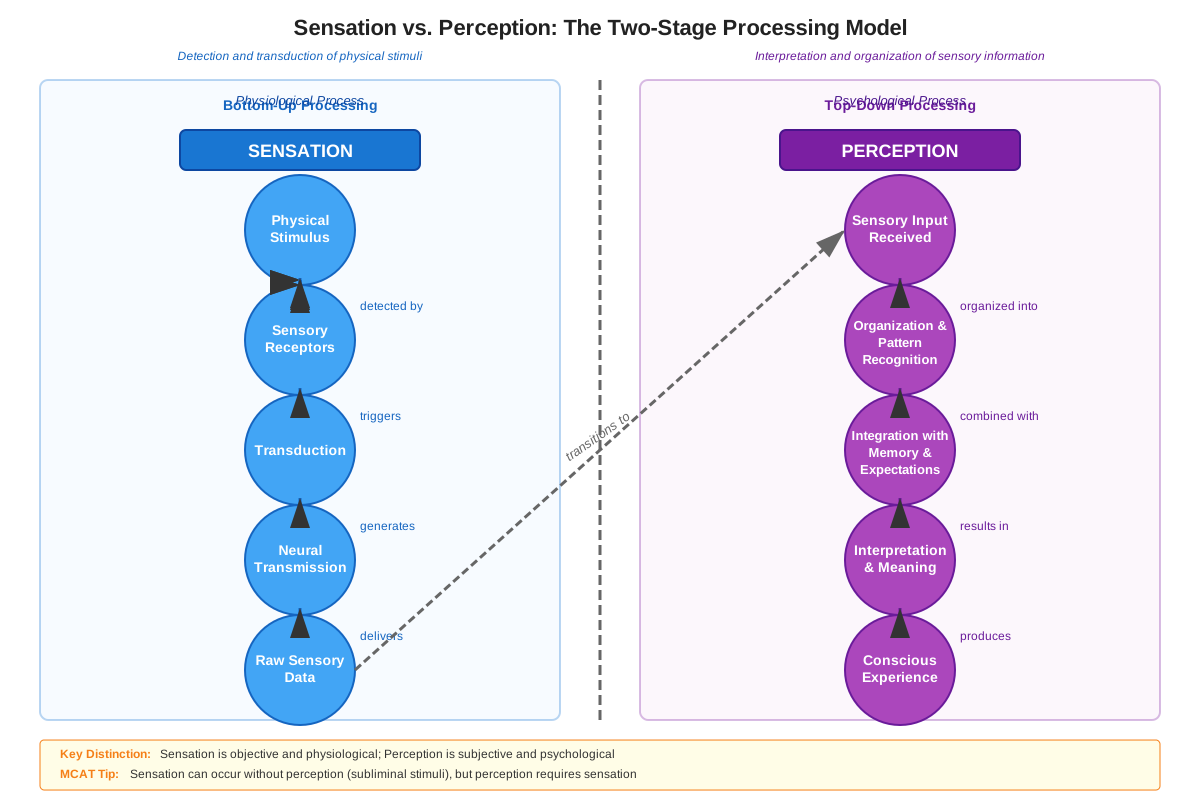
Sensation is the process by which specialized receptor cells detect physical or chemical stimuli from the environment and convert them into neural signals. This process is fundamentally distinct from perception, which involves the brain's interpretation and organization of sensory information into meaningful experiences. Sensation is a bottom-up process, beginning with stimulus detection and proceeding toward central processing, whereas perception involves top-down influences including expectations, memories, and context.
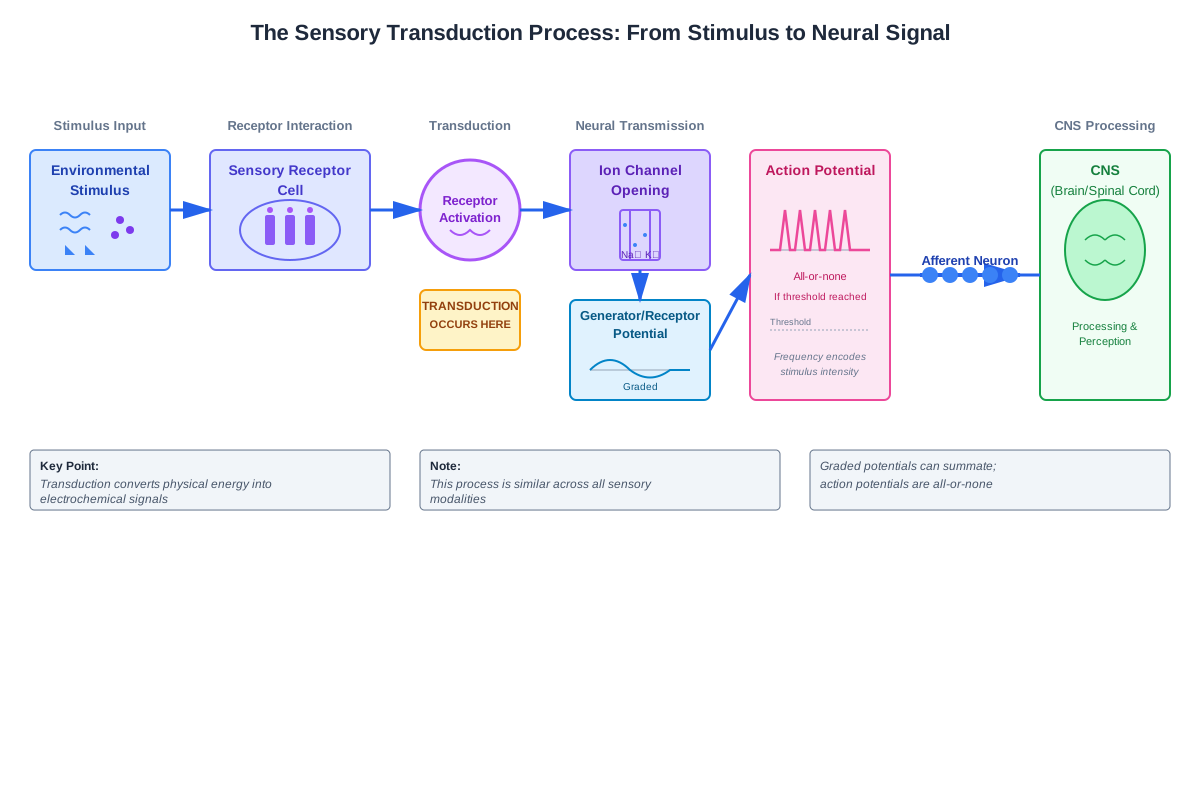
The sensory process follows a consistent sequence across all modalities: (1) a physical or chemical stimulus is present in the environment, (2) specialized receptor cells detect the stimulus, (3) transduction occurs—the conversion of stimulus energy into electrochemical neural signals, (4) neural signals travel along sensory pathways to the brain, and (5) the brain receives and begins processing the information. This final step transitions from pure sensation into perception.
Sensory Modalities
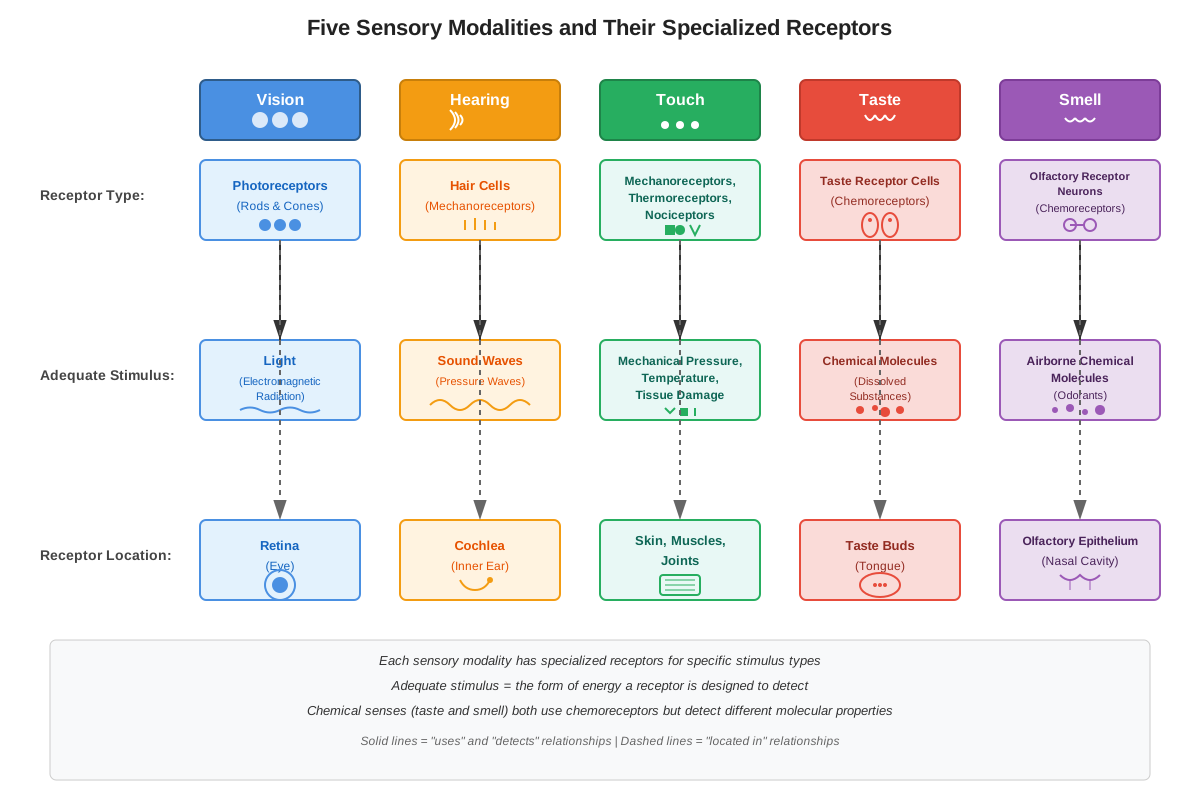
Humans possess multiple sensory systems, each specialized for detecting specific types of environmental information:
| Sensory Modality | Stimulus Type | Receptor Location | Primary Receptor Cells |
|---|---|---|---|
| Vision | Electromagnetic radiation (light) | Retina | Rods and cones (photoreceptors) |
| Audition (Hearing) | Sound waves (mechanical) | Cochlea (inner ear) | Hair cells |
| Gustation (Taste) | Chemical molecules | Taste buds (tongue) | Gustatory receptor cells |
| Olfaction (Smell) | Chemical molecules (volatile) | Olfactory epithelium (nasal cavity) | Olfactory receptor neurons |
| Somatosensation (Touch) | Mechanical pressure, temperature | Skin, tissues | Mechanoreceptors, thermoreceptors |
| Nociception (Pain) | Tissue damage, noxious stimuli | Throughout body | Nociceptors |
| Proprioception | Body position, movement | Muscles, joints, tendons | Proprioceptors |
| Vestibular sense | Head position, acceleration | Inner ear (semicircular canals) | Hair cells |
Sensory Transduction
Transduction is the critical process by which sensory receptors convert stimulus energy into neural signals. Despite differences across sensory modalities, transduction follows common principles. Receptor cells contain specialized proteins that respond to specific stimulus properties. When an appropriate stimulus is present, these proteins undergo conformational changes that alter ion channel activity, changing the membrane potential of the receptor cell.
For example, in vision, photoreceptor cells (rods and cones) contain photopigments that change shape when struck by photons of light. This conformational change triggers a cascade of biochemical events that ultimately hyperpolarizes the photoreceptor cell, reducing neurotransmitter release. In contrast, auditory hair cells in the cochlea have stereocilia that bend in response to sound-induced fluid movements, opening mechanically-gated ion channels and depolarizing the cell.
The specificity of transduction mechanisms ensures that each sensory system responds selectively to its appropriate stimulus type—a principle called adequate stimulus. Photoreceptors are exquisitely sensitive to light but do not respond to sound waves, while auditory receptors respond to mechanical vibrations but not to light.
Sensory Thresholds
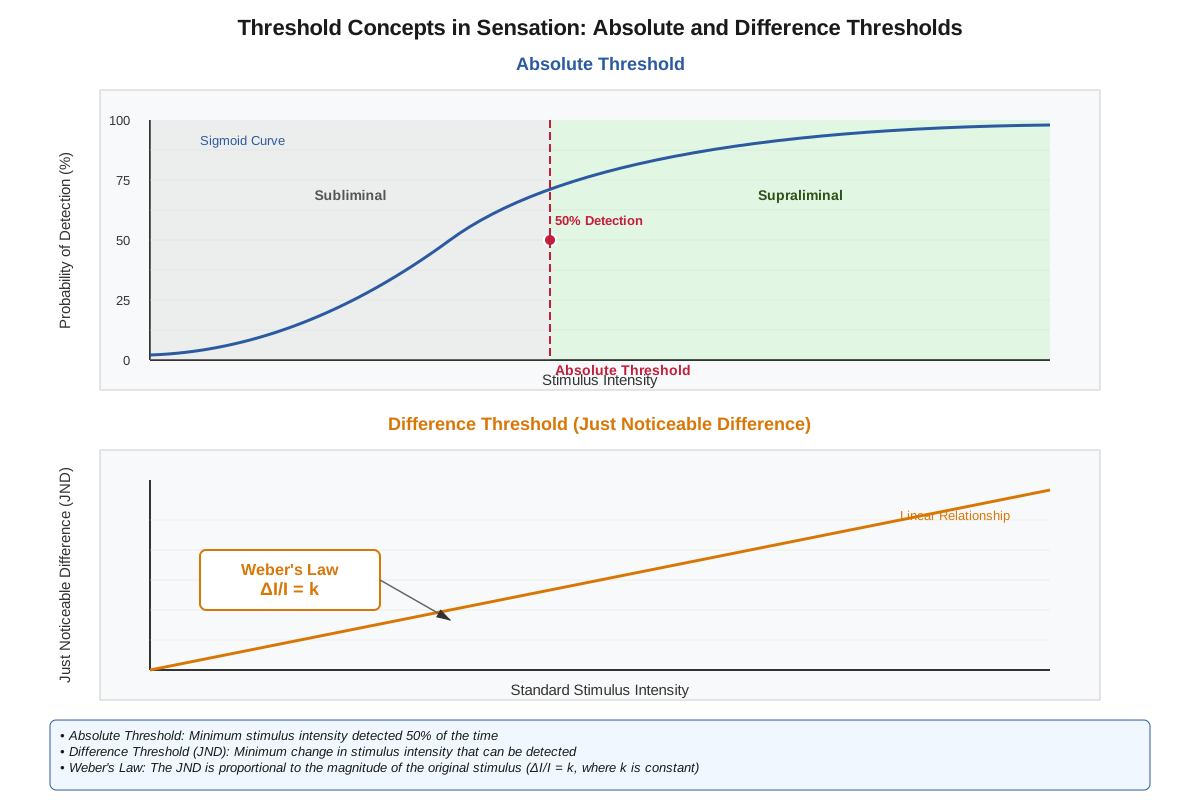
Understanding sensory thresholds is crucial for Sensation MCAT questions. The absolute threshold is defined as the minimum stimulus intensity required for detection 50% of the time. This probabilistic definition acknowledges that sensory detection is not all-or-nothing but varies due to neural noise, attention, and other factors. Absolute thresholds differ dramatically across sensory modalities and demonstrate the remarkable sensitivity of human sensory systems—for example, the human eye can detect a single photon under ideal conditions.
The difference threshold (also called the just noticeable difference or JND) is the minimum difference between two stimuli required for detection 50% of the time. Weber's Law describes the relationship between stimulus intensity and the difference threshold: the JND is proportional to the magnitude of the original stimulus. Mathematically, ΔI/I = k, where ΔI is the difference threshold, I is the original stimulus intensity, and k is Weber's constant (which varies by sensory modality). This means that detecting a difference between two bright lights requires a larger absolute change than detecting a difference between two dim lights.
Signal detection theory provides a more sophisticated framework for understanding sensory thresholds by acknowledging that detection depends not only on stimulus intensity but also on psychological factors like motivation, expectation, and the consequences of errors. This theory distinguishes between sensitivity (the ability to detect a stimulus) and response bias (the tendency to report detecting a stimulus).
Sensory Adaptation
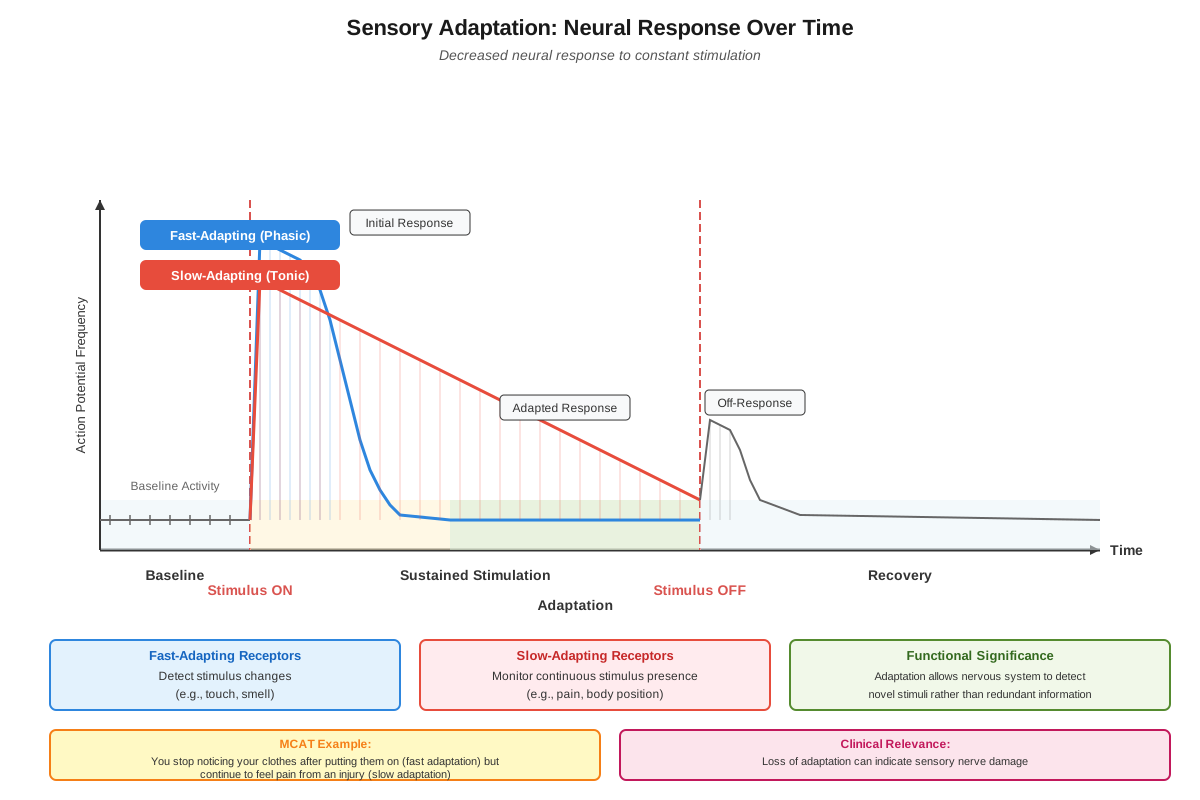
Sensory adaptation refers to the decreased responsiveness of sensory receptors to constant stimulation over time. This phenomenon allows sensory systems to remain sensitive to changes in the environment rather than being overwhelmed by constant, unchanging stimuli. Adaptation occurs at the receptor level through biochemical changes that reduce receptor sensitivity and at neural levels through changes in firing patterns.
Different sensory systems adapt at different rates. Olfactory receptors adapt rapidly—you quickly stop noticing a constant smell. Visual receptors adapt more slowly, which is why you continue to see objects even when they remain stationary. Pain receptors (nociceptors) typically show minimal adaptation, which is functionally important because pain signals potential tissue damage that requires sustained attention.
Adaptation should be distinguished from habituation, which is a psychological process involving decreased behavioral response to repeated stimuli, and from sensory fatigue, which involves temporary receptor dysfunction from overstimulation.
Sensory Coding
Sensory systems must encode multiple dimensions of stimulus information: modality (what type of stimulus), intensity (how strong), location (where), and timing (when and for how long). Sensory coding refers to the mechanisms by which neural signals represent these stimulus properties.
Labeled line coding explains how the nervous system distinguishes between different sensory modalities and submodalities. Each sensory pathway is "labeled" by its destination in the brain—signals traveling along the optic nerve are interpreted as visual information regardless of how they were generated (which is why pressing on your closed eye produces the sensation of light, called a phosphene).
Stimulus intensity is coded primarily through firing rate (more intense stimuli produce higher frequency action potentials) and population coding (more intense stimuli activate more receptor cells). Stimulus location is coded through receptive fields—the specific region of sensory space that activates a particular receptor or neuron. Temporal information is preserved through the timing of neural firing patterns.
Concept Relationships
The concepts within sensation form an integrated system where each component depends on others. The process begins with sensory modalities (the "what" of sensation), each of which employs specific transduction mechanisms (the "how") to convert environmental stimuli into neural signals. The effectiveness of transduction determines sensory thresholds (the limits of detection), which can be measured and predicted using principles like Weber's Law and signal detection theory.
Sensory adaptation modulates the ongoing process of sensation, adjusting sensitivity based on stimulus constancy and allowing sensory systems to remain responsive to change. All of these processes contribute to sensory coding, which determines how stimulus properties are represented in neural signals that the brain can interpret.
The relationship flows: Environmental Stimulus → Detected by Sensory Modality → Transduction converts to neural signal → Signal strength relative to Threshold determines detection → Adaptation modulates ongoing response → Sensory Coding represents stimulus properties → Neural signal transmitted to brain → Perception begins.
Sensation connects to prerequisite topics through its dependence on neural physiology (action potentials, synaptic transmission), cell biology (membrane receptors, ion channels), and physics/chemistry (properties of light, sound, and chemical stimuli). Sensation provides the foundation for related topics including perception (interpretation of sensory information), attention (selective processing of sensory input), consciousness (awareness of sensory experience), and psychophysics (quantitative relationships between physical stimuli and psychological experience).
Quick check — test yourself on Sensation so far.
Try Flashcards →High-Yield Facts
⭐ Sensation is the detection and transduction of environmental stimuli into neural signals, while perception is the interpretation and organization of those signals into meaningful experiences
⭐ Transduction is the conversion of stimulus energy into electrochemical neural signals, occurring through specialized receptor proteins in sensory cells
⭐ The absolute threshold is the minimum stimulus intensity detected 50% of the time, reflecting the probabilistic nature of sensory detection
⭐ Weber's Law states that the difference threshold (JND) is proportional to the original stimulus intensity: ΔI/I = k
⭐ Sensory adaptation is the decreased responsiveness to constant stimulation, occurring at both receptor and neural levels
- Signal detection theory accounts for both sensory sensitivity and psychological factors (motivation, expectation) in detection decisions
- Labeled line coding explains how the brain distinguishes sensory modalities based on which neural pathway carries the signal
- Adequate stimulus refers to the specific type of energy that a sensory receptor is designed to detect
- Sensory coding uses firing rate, population coding, and receptive fields to represent stimulus intensity, location, and other properties
- Different sensory modalities adapt at different rates, with olfaction adapting rapidly and pain showing minimal adaptation
Common Misconceptions
Misconception: Sensation and perception are the same process or interchangeable terms.
Correction: Sensation is the initial detection and transduction of stimuli into neural signals (bottom-up processing), while perception is the brain's interpretation and organization of those signals into meaningful experiences (involving both bottom-up and top-down processing). The MCAT frequently tests the distinction between these processes.
Misconception: Absolute threshold is a fixed value where detection suddenly becomes possible.
Correction: Absolute threshold is defined probabilistically as the stimulus intensity detected 50% of the time. Detection varies due to neural noise, attention, fatigue, and other factors, making it a statistical rather than absolute boundary.
Misconception: Sensory adaptation means receptors stop functioning or become damaged.
Correction: Sensory adaptation is a normal, reversible process where receptors become less responsive to constant stimulation but remain fully functional and can respond to changes or new stimuli. This is an adaptive mechanism, not dysfunction.
Misconception: Weber's Law means that the difference threshold is constant regardless of stimulus intensity.
Correction: Weber's Law states that the difference threshold is proportional to (not independent of) the original stimulus intensity. The ratio ΔI/I remains constant, but the absolute difference (ΔI) increases as stimulus intensity (I) increases.
Misconception: All sensory information reaches conscious awareness.
Correction: Much sensory information is processed unconsciously or filtered out before reaching awareness. Attention, sensory gating, and neural filtering mechanisms prevent sensory overload by selecting relevant information for conscious processing.
Misconception: Transduction occurs in the brain where sensory information is processed.
Correction: Transduction occurs at the receptor cells in sensory organs (retina, cochlea, taste buds, etc.), converting stimulus energy into neural signals before those signals travel to the brain. The brain receives already-transduced neural signals, not raw physical stimuli.
Worked Examples
Example 1: Applying Weber's Law to Auditory Discrimination
Question: A researcher is studying auditory discrimination. A participant can just barely detect the difference between a 100 dB sound and a 110 dB sound. According to Weber's Law, what is the minimum intensity difference the participant could detect between a 200 dB sound and a louder sound?
Solution:
Step 1: Identify the given information and what we need to find.
- Original stimulus (I₁) = 100 dB
- Difference threshold (ΔI₁) = 110 - 100 = 10 dB
- New stimulus (I₂) = 200 dB
- Need to find: ΔI₂
Step 2: Recall Weber's Law: ΔI/I = k (constant)
Step 3: Calculate Weber's constant from the first condition.
- k = ΔI₁/I₁ = 10/100 = 0.10
Step 4: Apply Weber's constant to the new condition.
- ΔI₂/I₂ = k
- ΔI₂/200 = 0.10
- ΔI₂ = 0.10 × 200 = 20 dB
Step 5: Determine the minimum detectable louder sound.
- Minimum detectable sound = 200 + 20 = 220 dB
Answer: The participant could just barely detect the difference between a 200 dB sound and a 220 dB sound (a 20 dB difference).
Key Concept Connection: This example demonstrates that Weber's Law predicts proportional, not absolute, difference thresholds. As stimulus intensity doubles (100 to 200 dB), the difference threshold also doubles (10 to 20 dB), maintaining a constant ratio. This principle applies across sensory modalities and is frequently tested on the MCAT in experimental contexts.
Example 2: Distinguishing Sensation from Perception in a Clinical Vignette
Passage Context: A patient reports that after a stroke affecting the visual cortex, she can detect light flashes in her left visual field but cannot identify objects or recognize faces in that region. Neurological examination confirms that her retinal photoreceptors and optic nerve are functioning normally, with intact pupillary light reflexes.
Question: Which statement best explains this patient's condition?
A) The patient has impaired sensation but intact perception in the affected visual field.
B) The patient has intact sensation but impaired perception in the affected visual field.
C) The patient has both impaired sensation and impaired perception in the affected visual field.
D) The patient has neither impaired sensation nor impaired perception; the deficit is attentional.
Solution:
Step 1: Define the key terms in the context of this case.
- Sensation: Detection and transduction of light stimuli by photoreceptors, transmission of signals through the optic nerve
- Perception: Interpretation and organization of visual signals in the visual cortex to recognize objects and faces
Step 2: Analyze the evidence for sensation.
- Patient can detect light flashes (stimulus detection is occurring)
- Retinal photoreceptors are functioning normally (transduction is intact)
- Optic nerve is functioning normally (signal transmission is intact)
- Pupillary light reflex is intact (confirms sensory pathway to midbrain is functional)
- Conclusion: Sensation is intact
Step 3: Analyze the evidence for perception.
- Patient cannot identify objects or recognize faces (interpretation is impaired)
- Stroke affected visual cortex (the brain region responsible for visual perception)
- Conclusion: Perception is impaired
Step 4: Eliminate incorrect answers.
- A is incorrect: Sensation is intact, not impaired
- C is incorrect: Sensation is intact
- D is incorrect: The deficit is clearly perceptual, not attentional, as the patient can detect stimuli but cannot interpret them
Answer: B is correct. The patient has intact sensation (detection and transduction of visual stimuli) but impaired perception (interpretation of visual information) due to visual cortex damage.
Key Concept Connection: This example illustrates the critical distinction between sensation and perception that the MCAT frequently tests. Damage at different points in the sensory-perceptual pathway produces different deficits: receptor or nerve damage impairs sensation, while cortical damage impairs perception. Understanding this distinction is essential for analyzing clinical vignettes and experimental passages.
Exam Strategy
When approaching Sensation MCAT questions, first determine whether the question is asking about sensation specifically or about the broader process including perception. Watch for trigger words: "detection," "transduction," "receptor," and "threshold" typically indicate sensation, while "interpretation," "recognition," "organization," and "meaning" suggest perception. Many MCAT questions deliberately test whether students can distinguish these processes.
For threshold questions, immediately identify whether the question involves absolute threshold (minimum detection) or difference threshold (discrimination between stimuli). If Weber's Law is relevant, look for information about the original stimulus intensity and the difference threshold, then apply the constant ratio principle. Remember that Weber's Law applies to difference thresholds, not absolute thresholds.
When passages describe experimental studies of sensation, pay attention to the independent and dependent variables. Common experimental designs include: measuring thresholds under different conditions, examining sensory adaptation over time, or testing how sensory deficits affect behavior. Always consider whether confounding variables (attention, motivation, fatigue) might affect results, as signal detection theory questions often test this understanding.
Process-of-elimination strategies for sensation questions:
- Eliminate answers that confuse sensation with perception
- Eliminate answers that describe sensory processes occurring in the wrong location (e.g., transduction in the brain rather than receptors)
- Eliminate answers that violate Weber's Law by suggesting constant absolute (rather than proportional) difference thresholds
- Eliminate answers that describe adaptation as permanent damage rather than reversible adjustment
Time allocation: Most sensation questions can be answered in 60-90 seconds. If a question requires calculations (Weber's Law), budget 90-120 seconds. Passage-based questions integrating sensation with other concepts may require 90-120 seconds after reading the passage.
Memory Techniques
MCAT Sensation Sequence Mnemonic: "Students Rarely Take Careful Notes About Perception"
- Stimulus present in environment
- Receptor detects stimulus
- Transduction converts to neural signal
- Conducted along sensory pathway
- Nervous system receives signal
- Arrives at brain
- Perception begins
Weber's Law Memory Aid: "Weber's Way: When intensity doubles, difference doubles" - Remember that Weber's Law describes proportional (not absolute) relationships, with the ratio ΔI/I remaining constant.
Adaptation vs. Habituation Distinction:
- Adaptation = At the receptor (physiological)
- Habituation = Higher processing (psychological)
Threshold Types Visualization: Picture a staircase where each step represents increasing stimulus intensity. The absolute threshold is the first step you can detect (minimum to sense anything). The difference threshold is the height difference between steps that you can notice (minimum to sense a change).
Sensory Modality Organization: Use the acronym "VAGO SPINS" for the eight primary sensory modalities:
- Vision
- Audition
- Gustation
- Olfaction
- Somatosensation
- Pain (nociception)
- Interoception (internal body states)
- Navigate (vestibular)
- Self-position (proprioception)
Summary
Sensation is the foundational process by which specialized receptor cells detect environmental stimuli and convert them into neural signals through transduction, preceding the interpretive process of perception. Understanding sensation requires mastery of several interconnected concepts: the distinction between sensation and perception, the mechanisms of sensory transduction across different modalities, the principles governing sensory thresholds (including absolute threshold, difference threshold, and Weber's Law), the phenomenon of sensory adaptation, and the methods by which sensory systems encode stimulus properties. For MCAT success, students must be able to apply these concepts to experimental designs, clinical vignettes, and novel scenarios rather than simply recalling definitions. The key to mastering sensation is recognizing it as a bottom-up, physiological process occurring at receptors and in sensory pathways, distinct from the top-down, interpretive process of perception that occurs in higher brain regions. Questions frequently test the ability to distinguish these processes, apply Weber's Law to calculate difference thresholds, and understand how sensory adaptation affects ongoing stimulus detection.
Key Takeaways
- Sensation is the detection and transduction of stimuli into neural signals, fundamentally distinct from perception (interpretation of those signals)
- Transduction occurs at specialized receptor cells and converts various forms of energy (light, sound, chemicals, pressure) into electrochemical neural signals
- Absolute threshold (minimum detection) and difference threshold (minimum discrimination) are defined probabilistically at 50% detection rates
- Weber's Law (ΔI/I = k) describes how difference thresholds are proportional to original stimulus intensity, not constant in absolute terms
- Sensory adaptation is a reversible decrease in receptor responsiveness to constant stimulation, allowing sensory systems to remain sensitive to changes
- Different sensory modalities use specialized transduction mechanisms but follow common principles of sensory coding (firing rate, population coding, receptive fields)
- MCAT questions frequently test the sensation-perception distinction, threshold concepts, and application of sensory principles to experimental and clinical contexts
Related Topics
Perception: Building directly on sensation, perception involves the brain's interpretation, organization, and conscious experience of sensory information. Mastering sensation provides the foundation for understanding perceptual processes like pattern recognition, depth perception, and perceptual constancies.
Attention: Selective attention determines which sensory information reaches conscious awareness and receives further processing. Understanding sensation clarifies what information is available for attentional selection.
Consciousness: Sensory information provides much of the content of conscious experience. The relationship between sensory processing and consciousness involves questions about which sensory signals reach awareness and why.
Psychophysics: This field quantifies relationships between physical stimuli and psychological experiences, extending threshold concepts into more sophisticated measurement techniques.
Neuroanatomy of Sensory Systems: Detailed study of sensory pathways, including the visual system (retina to visual cortex), auditory system (cochlea to auditory cortex), and somatosensory system (receptors to somatosensory cortex), builds on foundational sensation concepts.
Practice CTA
Now that you have mastered the core concepts of sensation, reinforce your understanding by attempting practice questions and reviewing flashcards focused on this topic. Active retrieval through practice is essential for converting knowledge into exam-ready skills. Challenge yourself with questions that require application of Weber's Law, distinction between sensation and perception, and analysis of experimental designs measuring sensory thresholds. Each practice question you complete strengthens your ability to recognize how sensation concepts appear in various MCAT contexts. Your investment in understanding sensation will pay dividends not only on direct sensation questions but also on integrated passages involving neuroscience, behavior, and clinical scenarios. You've built a strong foundation—now apply it!
Sign up free to keep reading
Create a free AnvayaPrep account to finish this MCAT guide on Sensation — plus flashcards and practice questions.