Overview
Vision pathways represent one of the most anatomically complex and clinically significant topics within Sensation and Perception for the MCAT Psychology section. These pathways describe the complete route that visual information travels from the moment light enters the eye until it reaches the visual cortex in the occipital lobe, where conscious perception occurs. Understanding these pathways requires integrating knowledge of neuroanatomy, sensory processing, and brain organization—making it a high-yield topic that frequently appears in interdisciplinary MCAT passages combining psychology, biology, and behavioral sciences.
The vision pathways MCAT content extends beyond simple memorization of anatomical structures. Students must understand the functional significance of each component, recognize how damage at different points produces specific visual deficits, and apply this knowledge to clinical vignettes and experimental scenarios. The pathways involve multiple synaptic connections, crossing of nerve fibers at the optic chiasm, and sophisticated processing in the lateral geniculate nucleus (LGN) and visual cortex. This topic bridges fundamental neuroscience with higher-order cognitive processes like attention, perception, and consciousness.
Mastery of vision pathways provides essential context for understanding broader Psychology concepts including parallel processing, feature detection, perceptual organization, and the distinction between sensation and perception. The MCAT frequently tests this material through questions about visual field deficits, hemispheric specialization, and the neural basis of visual perception. Additionally, vision pathways connect to topics in biological sciences (neuroanatomy, action potentials) and demonstrate how the nervous system transforms physical stimuli into psychological experiences—a core theme throughout MCAT psychology content.
Learning Objectives
- [ ] Define Vision pathways using accurate Psychology terminology
- [ ] Explain why Vision pathways matters for the MCAT
- [ ] Apply Vision pathways to exam-style questions
- [ ] Identify common mistakes related to Vision pathways
- [ ] Connect Vision pathways to related Psychology concepts
- [ ] Trace the complete anatomical route from photoreceptors to visual cortex, identifying all major structures
- [ ] Predict specific visual field deficits resulting from lesions at different points along the pathway
- [ ] Distinguish between the functions of the magnocellular and parvocellular pathways
- [ ] Explain the significance of contralateral visual field representation in the brain
Prerequisites
- Basic eye anatomy: Understanding of retinal structure (rods, cones, bipolar cells, ganglion cells) is essential because vision pathways begin with retinal ganglion cell axons
- Action potential propagation: Knowledge of how neurons transmit electrical signals explains information transfer along the visual pathway
- Brain anatomy: Familiarity with major brain regions (thalamus, occipital lobe, cerebral hemispheres) provides spatial context for pathway structures
- Sensory transduction: Understanding how physical stimuli convert to neural signals establishes the foundation for visual processing
- Lateralization of brain function: Awareness that each hemisphere processes contralateral sensory information is crucial for understanding visual field mapping
Why This Topic Matters
Vision pathways hold significant clinical relevance because damage anywhere along these pathways produces characteristic visual deficits that aid in neurological diagnosis. Strokes, tumors, traumatic injuries, and neurodegenerative diseases can affect specific pathway components, creating predictable patterns of vision loss. Physicians use visual field testing to localize lesions and guide treatment decisions, making this knowledge directly applicable to medical practice.
For the MCAT, vision pathways appear with moderate frequency (approximately 2-3 questions per exam) but carry high importance because they integrate multiple disciplines. Questions typically appear in Sensation and Perception passages but may also emerge in biological sciences passages about the nervous system. The MCAT tests this content through several question formats: identifying structures from diagrams, predicting visual deficits from lesion locations, interpreting experimental results about visual processing, and analyzing clinical vignettes describing patients with vision problems.
Common MCAT passage contexts include research studies on visual attention, clinical cases of stroke patients with visual field cuts, evolutionary psychology discussions of visual system development, and neuroscience experiments examining parallel processing streams. The exam particularly favors questions requiring students to apply anatomical knowledge to predict functional outcomes—for example, determining which visual field quadrant is affected by damage to a specific brain region. This application-based testing approach means rote memorization is insufficient; students must develop deep conceptual understanding of pathway organization and function.
Core Concepts
Retinal Processing and Ganglion Cell Output
The vision pathways begin in the retina, where photoreceptors (rods and cones) transduce light energy into neural signals. These signals undergo initial processing through bipolar cells before reaching retinal ganglion cells (RGCs), whose axons form the optic nerve. This represents the first critical concept: vision pathways technically start with RGC axons, not photoreceptors themselves. RGCs perform sophisticated processing, including center-surround receptive field organization and contrast detection, before information ever leaves the eye.
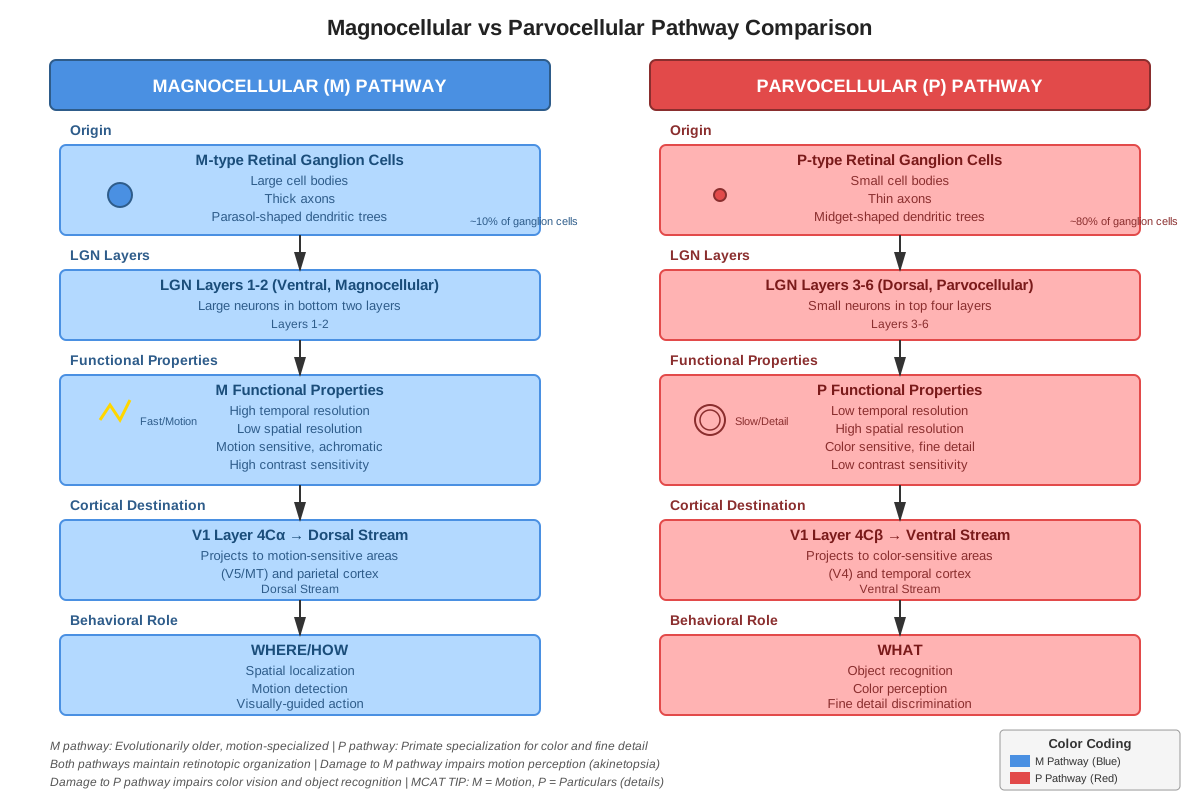
RGCs divide into two major functional classes relevant for MCAT content: magnocellular (M) cells and parvocellular (P) cells. M cells have large cell bodies, thick axons with fast conduction velocities, and respond to motion, depth, and gross spatial relationships. They show transient responses to stimuli and are relatively insensitive to color. P cells have smaller cell bodies, thinner axons with slower conduction, and process fine detail, color, and texture. They exhibit sustained responses and are crucial for high-acuity vision. This parallel processing begins at the retinal level and continues throughout the visual system—a concept the MCAT frequently tests.
The Optic Nerve and Optic Chiasm
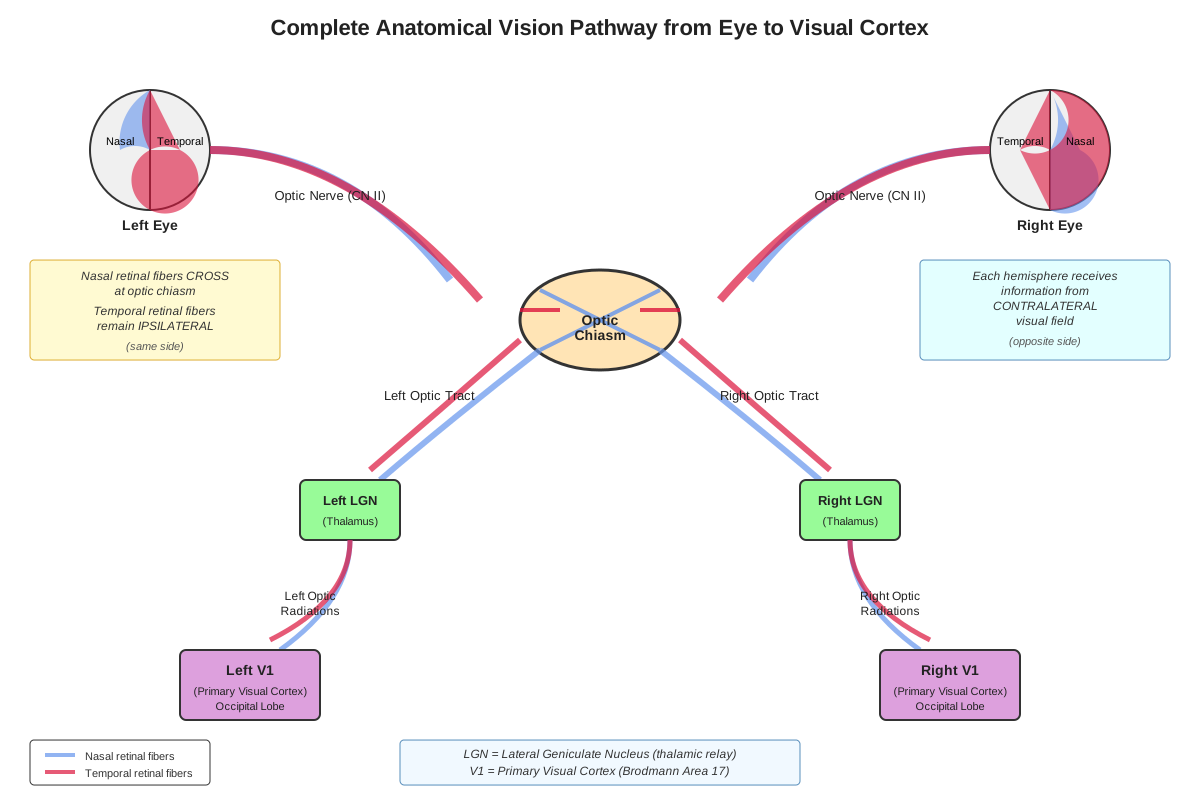
Axons from all retinal ganglion cells in each eye converge to form the optic nerve (cranial nerve II), which exits the eye at the optic disc (creating the blind spot). Each optic nerve contains approximately one million axons carrying information from the entire visual field of that eye. The optic nerves from both eyes travel posteriorly and meet at the optic chiasm, located at the base of the brain just anterior to the pituitary gland.
The optic chiasm represents the most critical anatomical feature for understanding visual field deficits. At this junction, axons from the nasal (medial) retina of each eye cross to the opposite side of the brain, while axons from the temporal (lateral) retina remain on the same side (ipsilateral). This partial decussation means that after the chiasm, each side of the brain receives information from the contralateral visual field. Specifically:
- The left optic tract (after the chiasm) carries information from the left nasal retina and right temporal retina
- This corresponds to the right visual field (because of the inverted image on the retina)
- Therefore, the left hemisphere processes the right visual field, and vice versa
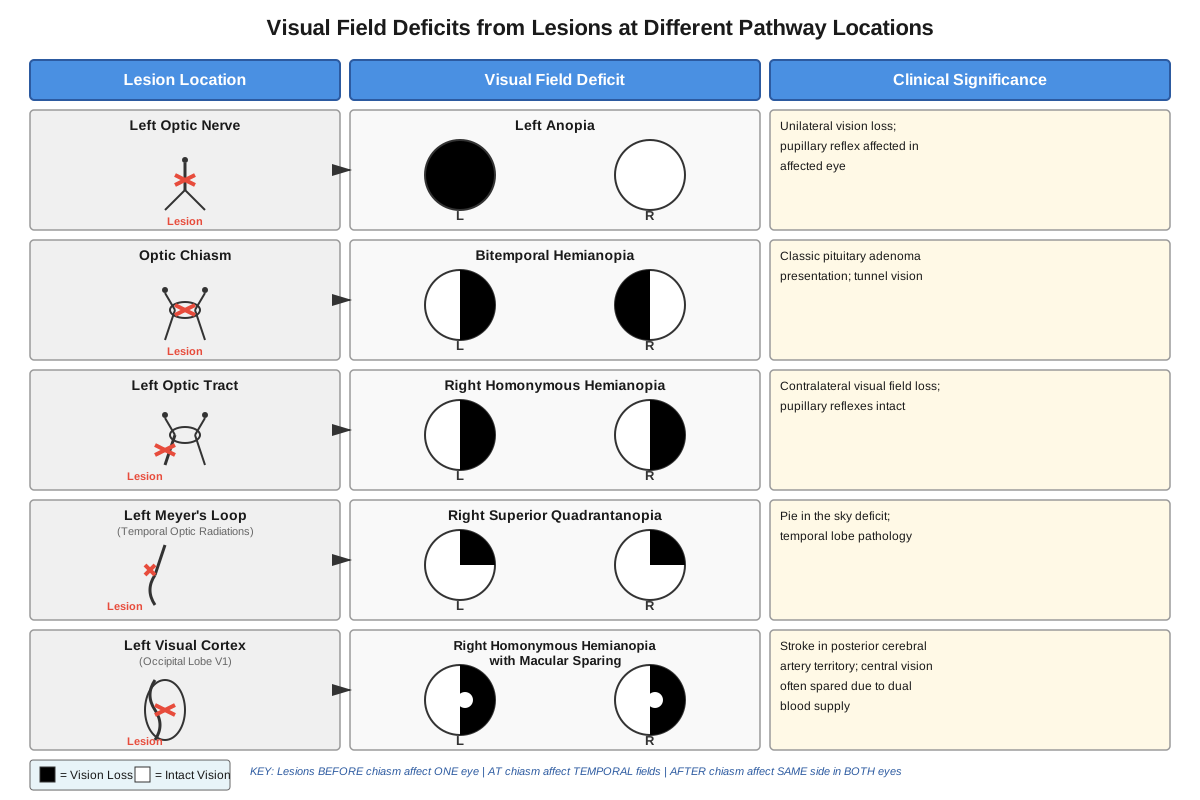
Understanding this crossing pattern is essential for predicting lesion effects. Damage before the chiasm (optic nerve) affects one eye only, while damage after the chiasm affects the same visual field in both eyes.
Optic Tracts and the Lateral Geniculate Nucleus
After the optic chiasm, the reorganized axons form the optic tracts. Each optic tract contains fibers from both eyes but represents only the contralateral visual field. The optic tracts project primarily to the lateral geniculate nucleus (LGN) of the thalamus, though some fibers branch to other structures including the superior colliculus (for reflexive eye movements) and the pretectal area (for pupillary light reflexes).
The LGN serves as the major relay station for visual information and maintains the segregation of M and P pathways. The LGN has six layers:
| Layer | Cell Type | Input Source | Function |
|---|---|---|---|
| 1-2 | Magnocellular | M ganglion cells | Motion, depth, spatial relationships |
| 3-6 | Parvocellular | P ganglion cells | Color, fine detail, texture |
Each layer receives input from only one eye, maintaining ocular dominance columns that persist into the visual cortex. The LGN performs more than simple relay; it modulates visual information based on attention, arousal state, and feedback from the cortex. This bidirectional communication allows higher brain centers to influence what visual information reaches conscious awareness—a concept relevant to attention and perception questions on the MCAT.
Optic Radiations and Primary Visual Cortex
From the LGN, axons form the optic radiations (also called geniculocalcarine tracts), which fan out through the white matter of the temporal and parietal lobes before reaching the primary visual cortex (V1) in the occipital lobe. The optic radiations have two major divisions with clinical significance:
- Meyer's loop: Fibers representing the superior visual field sweep anteriorly through the temporal lobe before turning back toward the occipital cortex. Temporal lobe lesions affecting Meyer's loop produce "pie in the sky" deficits (superior quadrantanopia).
- Dorsal fibers: Fibers representing the inferior visual field travel through the parietal lobe more directly. Parietal lesions produce "pie on the floor" deficits (inferior quadrantanopia).
The primary visual cortex (V1), also called striate cortex or Brodmann area 17, occupies the banks of the calcarine fissure in the occipital lobe. V1 maintains precise retinotopic organization, meaning adjacent points on the retina map to adjacent points in the cortex. However, the representation is not proportional—the fovea (central vision) occupies a disproportionately large cortical area, reflecting its importance for high-acuity vision. This cortical magnification explains why central vision is so much more detailed than peripheral vision.
Visual Processing Streams Beyond V1
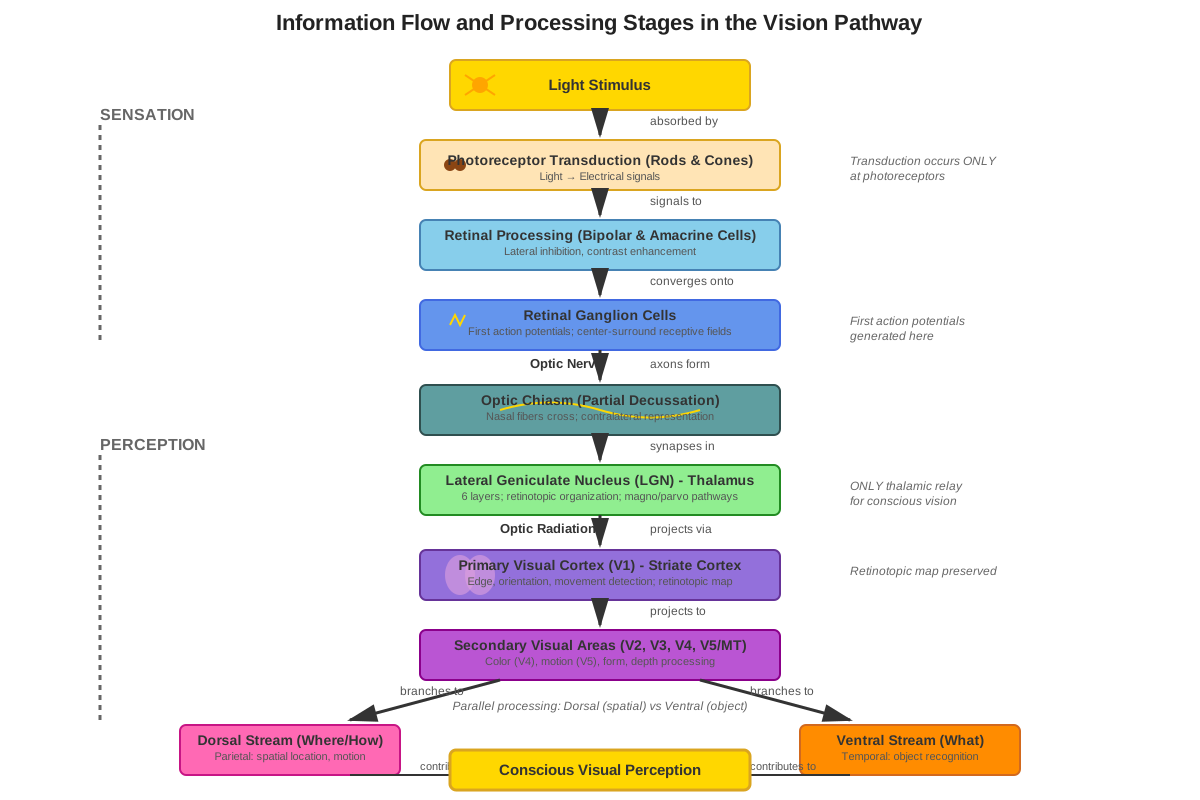
While V1 represents the endpoint of the primary vision pathways, understanding the subsequent processing streams is important for MCAT questions about perception and cognition. From V1, visual information diverges into two major pathways:
Dorsal stream ("where/how" pathway): Projects from V1 to the parietal lobe, processing spatial location, motion, and visually guided action. This stream enables reaching for objects, navigating space, and tracking moving stimuli. Damage produces spatial neglect or difficulty with visually guided movements.
Ventral stream ("what" pathway): Projects from V1 to the temporal lobe, processing object identity, color, and form. This stream enables object recognition and face perception. Damage produces visual agnosias (inability to recognize objects despite intact basic vision).
This parallel processing architecture—beginning with M and P cells and continuing through dorsal and ventral streams—represents a fundamental principle of visual system organization frequently tested on the MCAT.
Visual Field Mapping and Lesion Localization
Understanding how visual fields map onto the pathways enables prediction of specific deficits from lesions at different locations:
- Optic nerve lesion: Complete blindness in the ipsilateral eye (monocular vision loss)
- Optic chiasm lesion: Bitemporal hemianopia (loss of both temporal visual fields) because crossing nasal retinal fibers are damaged. This classically occurs with pituitary tumors compressing the chiasm from below.
- Optic tract lesion: Contralateral homonymous hemianopia (loss of the same visual field in both eyes). For example, left optic tract damage causes right visual field loss in both eyes.
- Meyer's loop lesion: Contralateral superior quadrantanopia ("pie in the sky")
- Dorsal optic radiation lesion: Contralateral inferior quadrantanopia ("pie on the floor")
- Complete V1 lesion: Contralateral homonymous hemianopia with macular sparing (central vision preserved due to bilateral representation)
Concept Relationships
The vision pathways integrate multiple hierarchical levels of processing, with each stage building upon the previous one. Photoreceptor transduction (prerequisite knowledge) → retinal ganglion cell processing → optic nerve transmission → optic chiasm reorganization → LGN relay and modulation → optic radiation projection → V1 cortical processing → higher-order visual areas. This sequential organization means damage at earlier stages affects all subsequent processing, while damage at later stages produces more specific deficits.
The parallel processing streams (M and P pathways) demonstrate how the visual system simultaneously analyzes different stimulus features. This connects to broader Psychology concepts of parallel processing in cognition and the binding problem (how the brain integrates separately processed features into unified percepts). The segregation of "what" and "where" streams relates to attention (selective processing of object identity versus location) and memory (different neural systems for object recognition versus spatial navigation).
Vision pathways also connect to lateralization concepts, as each hemisphere processes the contralateral visual field. This relates to split-brain research, hemispheric specialization, and the organization of other sensory systems (which also show contralateral representation). The retinotopic organization in V1 exemplifies somatotopic mapping principles seen throughout the nervous system (like the motor and somatosensory homunculi).
The bidirectional connections between LGN and cortex illustrate top-down processing, where expectations and attention modulate sensory input. This connects to perception topics including perceptual set, selective attention, and the distinction between sensation (pathway transmission) and perception (cortical interpretation). Understanding these relationships enables students to answer complex MCAT questions that integrate multiple psychological concepts.
Quick check — test yourself on Vision pathways so far.
Try Flashcards →High-Yield Facts
⭐ The optic chiasm is where nasal retinal fibers cross; temporal retinal fibers remain ipsilateral, resulting in each hemisphere processing the contralateral visual field
⭐ Pituitary tumors classically compress the optic chiasm from below, causing bitemporal hemianopia (loss of both temporal visual fields)
⭐ The lateral geniculate nucleus (LGN) is a thalamic relay station with six layers: layers 1-2 are magnocellular (motion/depth), layers 3-6 are parvocellular (color/detail)
⭐ Damage to the optic tract or structures beyond produces homonymous hemianopia (same visual field loss in both eyes), while optic nerve damage affects only one eye
⭐ Meyer's loop carries information about the superior visual field through the temporal lobe; damage causes "pie in the sky" deficits (superior quadrantanopia)
- The primary visual cortex (V1) is located in the occipital lobe along the calcarine fissure and maintains retinotopic organization with cortical magnification of the fovea
- Magnocellular cells have fast conduction, respond to motion and depth, and show transient responses; parvocellular cells have slower conduction, respond to color and detail, and show sustained responses
- The dorsal stream ("where/how" pathway) projects to the parietal lobe for spatial processing; the ventral stream ("what" pathway) projects to the temporal lobe for object recognition
- Each optic nerve contains approximately one million axons from retinal ganglion cells; these axons are myelinated by oligodendrocytes (CNS), not Schwann cells
- Macular sparing in occipital lobe lesions occurs because the foveal representation has bilateral vascular supply and large cortical representation
- The superior colliculus receives some optic tract fibers and mediates reflexive eye movements and visual attention orienting
- Optic radiations are white matter tracts; damage produces visual field deficits without affecting pupillary reflexes (which use a separate pathway through the pretectal area)
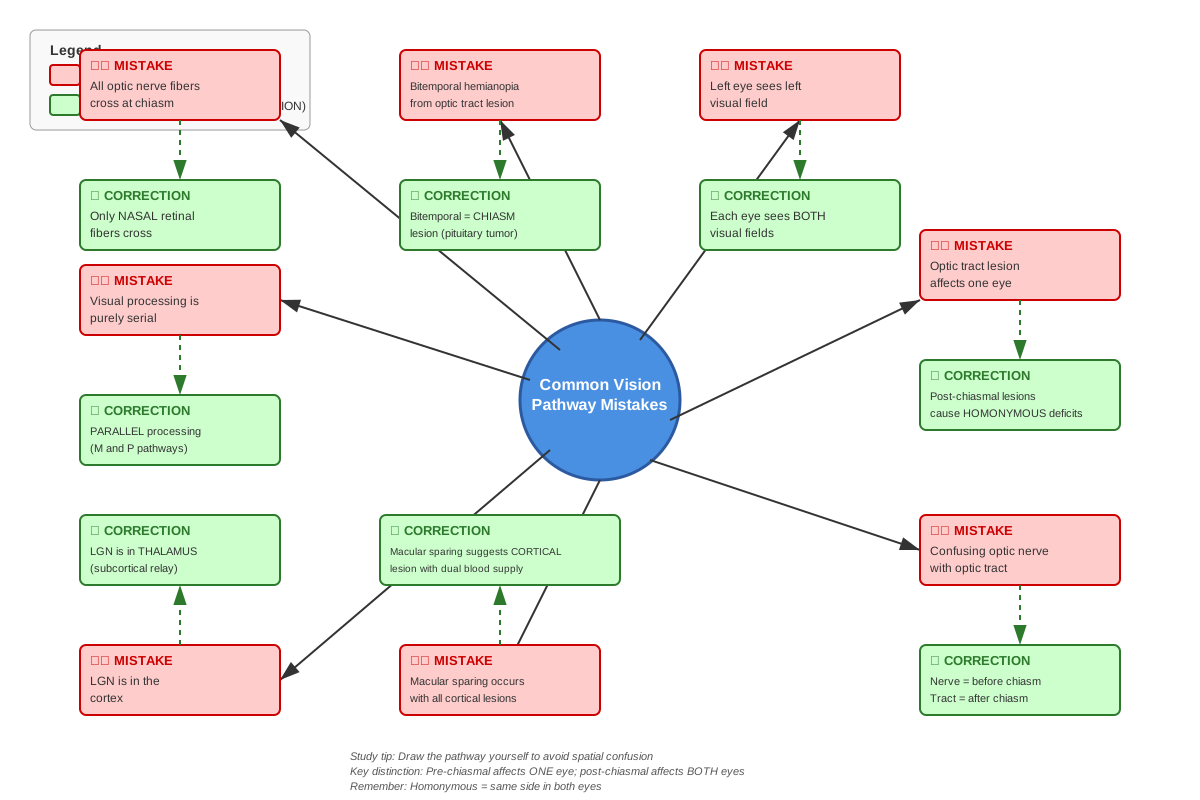
Common Misconceptions
Misconception: The optic chiasm is where all visual information crosses to the opposite hemisphere.
Correction: Only fibers from the nasal (medial) retina cross at the optic chiasm; temporal (lateral) retinal fibers remain ipsilateral. This partial decussation ensures each hemisphere receives information from the contralateral visual field, not the contralateral eye.
Misconception: Damage to the left eye causes loss of the left visual field.
Correction: Damage to the left optic nerve (before the chiasm) causes complete blindness in the left eye, affecting both visual fields as seen by that eye. Damage after the chiasm (left optic tract or left visual cortex) causes loss of the right visual field in both eyes (homonymous hemianopia).
Misconception: The LGN simply relays information without processing.
Correction: The LGN actively modulates visual information based on attention, arousal, and cortical feedback. It maintains segregation of M and P pathways, preserves ocular dominance, and participates in top-down attentional control of visual processing.
Misconception: Visual field deficits from brain lesions always affect both eyes equally.
Correction: While lesions after the optic chiasm typically produce homonymous deficits (affecting both eyes), the severity may differ between eyes, and some lesions produce incomplete deficits. Additionally, optic nerve lesions affect only one eye (monocular vision loss).
Misconception: The visual cortex is only in the occipital lobe.
Correction: The primary visual cortex (V1) is in the occipital lobe, but higher-order visual processing areas extend into the temporal lobe (ventral stream for object recognition) and parietal lobe (dorsal stream for spatial processing). Complete visual perception requires these distributed cortical networks.
Misconception: All retinal ganglion cells are identical and transmit the same information.
Correction: RGCs divide into functionally distinct classes (magnocellular and parvocellular being the major divisions), each processing different visual features. This parallel processing begins at the retinal level and continues throughout the visual system.
Worked Examples
Example 1: Clinical Vignette - Stroke Patient
Question: A 68-year-old patient presents to the emergency department with sudden vision loss. Examination reveals that the patient cannot see anything in the left visual field of either eye, but pupillary reflexes are intact bilaterally. Where is the most likely location of the lesion?
Step 1 - Analyze the deficit pattern: The patient has lost the left visual field in both eyes. This is homonymous hemianopia (same field in both eyes), which indicates damage after the optic chiasm. If the lesion were before the chiasm (optic nerve), only one eye would be affected.
Step 2 - Determine lateralization: Loss of the left visual field means the right hemisphere is affected. Remember: each hemisphere processes the contralateral visual field. The left visual field is processed by the right optic tract, right LGN, right optic radiations, and right visual cortex.
Step 3 - Consider pupillary reflexes: The pupillary light reflex pathway branches from the optic tract before the LGN, projecting to the pretectal area and then to the Edinger-Westphal nucleus. Since pupillary reflexes are intact, the lesion must be after this branching point—either in the optic radiations or visual cortex.
Step 4 - Localize the lesion: The most common cause of sudden, complete homonymous hemianopia with intact pupillary reflexes is a stroke affecting the optic radiations or primary visual cortex. Given the acute presentation, this is likely a posterior cerebral artery (PCA) stroke affecting the right occipital lobe.
Answer: Right optic radiations or right primary visual cortex (V1), most likely due to right posterior cerebral artery stroke. This demonstrates how understanding vision pathways enables neurological localization from clinical presentations—a high-yield MCAT skill.
Example 2: Experimental Research Passage
Question: Researchers record neural activity in the lateral geniculate nucleus (LGN) while presenting visual stimuli to experimental subjects. They find that some LGN neurons respond strongly to rapidly moving stimuli but show little response to stationary colored patterns. Other neurons show the opposite pattern: strong responses to colored stationary stimuli but weak responses to motion. Which of the following best explains these findings?
A) The LGN contains both sensory and motor neurons
B) The LGN receives input from both magnocellular and parvocellular pathways
C) The LGN processes information from both eyes separately
D) The LGN sends output to both dorsal and ventral streams
Step 1 - Identify the key observation: Different LGN neurons respond preferentially to either motion or color/detail. This suggests functional specialization within the LGN.
Step 2 - Recall LGN organization: The LGN has six layers divided into magnocellular (layers 1-2) and parvocellular (layers 3-6) divisions. These receive input from M and P retinal ganglion cells, respectively.
Step 3 - Match functions to pathways: Magnocellular cells respond to motion, depth, and gross spatial relationships with transient responses. Parvocellular cells respond to color, fine detail, and texture with sustained responses. This matches the experimental observations perfectly.
Step 4 - Evaluate answer choices:
- A is incorrect: The LGN is a sensory relay nucleus and doesn't contain motor neurons
- B is correct: The parallel M and P pathways explain the different response properties
- C is incorrect: While true that the LGN maintains ocular dominance, this doesn't explain the motion versus color distinction
- D is incorrect: The LGN receives input from pathways and sends output to V1; the dorsal/ventral stream division occurs after V1
Answer: B. This question demonstrates how the MCAT tests understanding of parallel processing streams and functional specialization within vision pathways, requiring integration of anatomical and functional knowledge.
Exam Strategy
When approaching vision pathways MCAT questions, first determine whether the question asks about anatomy (structure identification), function (what each component does), or clinical application (predicting deficits from lesions). Most questions combine these elements, requiring integrated understanding.
Trigger words to recognize:
- "Visual field deficit" or "hemianopia" → Think about lesion localization along the pathway
- "Contralateral" or "ipsilateral" → Focus on the optic chiasm crossing pattern
- "Motion detection" or "color perception" → Consider M versus P pathway specialization
- "Temporal lobe" or "parietal lobe" → Think about optic radiation anatomy and quadrantanopias
- "Both eyes" versus "one eye" → Distinguish pre-chiasmal (one eye) from post-chiasmal (both eyes) lesions
Process-of-elimination strategies:
- For visual field deficit questions, immediately eliminate answers that confuse left/right or ipsilateral/contralateral relationships
- If pupillary reflexes are mentioned as intact, eliminate lesions in the optic nerve or tract (before the pretectal branching)
- For questions about parallel processing, eliminate answers that don't distinguish M and P pathways
- If a question mentions "one eye only," eliminate any post-chiasmal lesion locations
Time allocation: Vision pathway questions often include diagrams or clinical vignettes. Spend 15-20 seconds orienting to the diagram or clinical presentation, identifying the key deficit pattern. Then spend 30-40 seconds systematically working through the pathway to localize the lesion or identify the structure. Don't rush—these questions reward careful, systematic reasoning.
Common question formats:
- Diagram-based: Identify structures or predict effects of lesions at marked locations
- Clinical vignette: Determine lesion location from described visual deficits
- Experimental passage: Interpret results of visual processing studies in terms of pathway organization
- Conceptual: Explain why certain deficits occur or how visual information is processed
Memory Techniques
Mnemonic for optic chiasm crossing: "Nasal fibers Navigate to the opposite side; Temporal fibers Take the same side" (Nasal cross, Temporal stay)
Mnemonic for LGN layers: "Magno Makes Motion" (Magnocellular = Motion, layers 1-2); "Parvo Paints Pretty Pictures" (Parvocellular = color/detail, layers 3-6)
Visualization for Meyer's loop: Picture a temporal lobe tumor growing upward, cutting the loop that carries superior visual field information, creating a "pie in the sky" deficit (superior quadrantanopia). The tumor "eats the pie from below."
Acronym for visual field deficits: "CHIASM" - Crossing fibers, Hormone tumors (pituitary), Injury causes, Affects temporal fields, Symmetric loss, Midline structure
Memory palace technique: Visualize walking through the pathway from front to back:
- Enter through the eye (retina/optic nerve)
- Cross a bridge (optic chiasm) where some people switch sides
- Pass through a relay station (LGN) with six floors
- Take radiating roads (optic radiations) through different neighborhoods (temporal/parietal)
- Arrive at the destination (V1 in occipital lobe)
Rhyme for streams: "Dorsal stream knows where things are and how to get there; Ventral stream knows what things are, beyond compare"
Summary
Vision pathways describe the complete anatomical and functional route that visual information travels from the retina to the visual cortex and beyond. Beginning with retinal ganglion cells, which divide into magnocellular (motion/depth) and parvocellular (color/detail) streams, axons form the optic nerve and converge at the optic chiasm. At this critical junction, nasal retinal fibers cross while temporal fibers remain ipsilateral, ensuring each hemisphere processes the contralateral visual field. After reorganization, the optic tracts project primarily to the lateral geniculate nucleus of the thalamus, which maintains parallel pathway segregation across six layers. From the LGN, optic radiations fan through temporal and parietal lobes—with Meyer's loop carrying superior field information through the temporal lobe—before reaching primary visual cortex (V1) in the occipital lobe. V1 maintains retinotopic organization with cortical magnification of central vision and serves as the gateway to higher-order processing in dorsal (spatial/"where") and ventral (object/"what") streams. Understanding this pathway organization enables prediction of specific visual field deficits from lesions at different locations, a critical skill for MCAT clinical vignettes and a foundation for understanding broader concepts in sensation, perception, and cognitive neuroscience.
Key Takeaways
- The optic chiasm is where nasal retinal fibers cross to the opposite hemisphere while temporal fibers remain ipsilateral, resulting in each hemisphere processing the contralateral visual field
- Lesions before the optic chiasm affect one eye only (monocular vision loss), while lesions after the chiasm affect the same visual field in both eyes (homonymous hemianopia)
- The lateral geniculate nucleus maintains segregation of magnocellular (motion/depth, layers 1-2) and parvocellular (color/detail, layers 3-6) pathways
- Meyer's loop carries superior visual field information through the temporal lobe; damage causes "pie in the sky" deficits
- Primary visual cortex (V1) in the occipital lobe maintains retinotopic organization and serves as the gateway to dorsal (spatial) and ventral (object recognition) processing streams
- Pupillary light reflexes use a separate pathway branching before the LGN, so intact reflexes with visual field loss indicate post-geniculate lesions
- Understanding the systematic organization of vision pathways enables precise neurological localization from clinical presentations—a high-yield MCAT skill
Related Topics
Retinal anatomy and phototransduction: Understanding the cellular organization of the retina and the biochemical cascade of phototransduction provides essential context for where vision pathways begin. Mastering vision pathways enables deeper understanding of how retinal processing shapes the information transmitted to the brain.
Attention and selective perception: The bidirectional connections between cortex and LGN demonstrate neural mechanisms of attention. Vision pathway knowledge provides the anatomical substrate for understanding how attention modulates sensory processing.
Hemispheric lateralization and split-brain research: The contralateral organization of visual fields relates directly to broader principles of hemispheric specialization. Understanding vision pathways enhances comprehension of split-brain patient behavior and lateralized cognitive functions.
Perceptual organization and Gestalt principles: The parallel processing streams and hierarchical organization of visual areas provide the neural basis for perceptual grouping and object recognition. Vision pathways explain how the brain constructs unified percepts from distributed processing.
Memory systems and spatial navigation: The dorsal stream's role in spatial processing connects to hippocampal place cells and spatial memory. Understanding the "where" pathway provides context for how visual information supports navigation and spatial cognition.
Practice CTA
Now that you've mastered the anatomical organization and functional principles of vision pathways, challenge yourself with practice questions that require applying this knowledge to clinical vignettes, experimental scenarios, and conceptual problems. Focus especially on questions requiring you to predict visual field deficits from lesion locations and to distinguish between magnocellular and parvocellular pathway functions. The flashcards will help solidify the anatomical sequence and key facts about each pathway component. Remember: vision pathways integrate multiple MCAT topics, so mastering this material strengthens your understanding across psychology, biology, and behavioral sciences. Your ability to systematically work through these pathways—from retina to cortex—will serve you well on test day and beyond!
Sign up free to keep reading
Create a free AnvayaPrep account to finish this MCAT guide on Vision pathways — plus flashcards and practice questions.