Overview
Globalization is a multifaceted sociological phenomenon that describes the increasing interconnectedness of societies, economies, cultures, and political systems across the world. This process involves the flow of goods, services, capital, people, information, and ideas across national borders, fundamentally reshaping how communities interact and function on a global scale. For the MCAT, understanding globalization is essential because it serves as a foundational concept that influences health disparities, disease transmission patterns, healthcare access, cultural competency in medicine, and the social determinants of health that physicians encounter daily in increasingly diverse patient populations.
Globalization Sociology examines how this worldwide integration affects social structures, cultural identities, economic inequalities, and power dynamics between nations and within societies. The MCAT frequently tests this concept within the context of Demographics and Social Change, requiring students to analyze how globalization drives migration patterns, urbanization, cultural diffusion, and the spread of both beneficial innovations (like medical technologies) and harmful phenomena (like infectious diseases or health misinformation). Understanding globalization enables test-takers to interpret complex passages about public health interventions, healthcare delivery systems in different countries, and the social factors that influence patient outcomes in our interconnected world.
The significance of Globalization MCAT questions extends beyond memorizing definitions—students must apply sociological frameworks to real-world scenarios involving transnational health challenges, cultural adaptation, economic development's impact on health, and the tension between global homogenization and local cultural preservation. This topic intersects with numerous other Sociology concepts including social inequality, cultural capital, modernization theory, and social movements, making it a high-yield area that appears across multiple question types and passage contexts on the exam.
Learning Objectives
- [ ] Define Globalization using accurate Sociology terminology
- [ ] Explain why Globalization matters for the MCAT
- [ ] Apply Globalization to exam-style questions
- [ ] Identify common mistakes related to Globalization
- [ ] Connect Globalization to related Sociology concepts
- [ ] Distinguish between economic, cultural, and political dimensions of globalization
- [ ] Analyze the relationship between globalization and health disparities across populations
- [ ] Evaluate both positive and negative consequences of globalization on social structures
- [ ] Compare different theoretical perspectives on globalization (modernization theory, world systems theory, dependency theory)
Prerequisites
- Basic understanding of culture and cultural systems: Necessary to comprehend how globalization affects cultural diffusion, acculturation, and cultural imperialism
- Familiarity with social stratification and inequality: Required to analyze how globalization creates winners and losers within and between societies
- Knowledge of demographic transitions: Essential for understanding migration patterns and population changes driven by globalization
- Understanding of social institutions: Needed to evaluate how globalization transforms economic, political, educational, and healthcare systems
- Awareness of modernization and social change: Provides context for globalization as a contemporary form of large-scale societal transformation
Why This Topic Matters
Globalization represents one of the most significant social forces shaping contemporary healthcare and medical practice. Physicians today treat patients from diverse cultural backgrounds, encounter diseases that spread rapidly across borders, and work within healthcare systems influenced by international pharmaceutical companies, medical tourism, and global health organizations. The MCAT recognizes this reality by incorporating globalization into passages about infectious disease outbreaks (like COVID-19 or Ebola), healthcare access disparities between developed and developing nations, cultural barriers to medical treatment, and the social determinants of health in immigrant populations.
From an exam statistics perspective, globalization appears in approximately 15-20% of Sociology/Psychology section passages, often integrated with questions about social inequality, cultural competency, or public health. Questions typically present scenarios requiring students to identify how globalization affects health outcomes, analyze the relationship between economic development and healthcare access, or evaluate cultural conflicts arising from the spread of Western medical practices to traditional societies. The topic frequently appears in passages discussing: international health interventions, migration and refugee health, the spread of lifestyle diseases (obesity, diabetes) to developing nations, pharmaceutical access and intellectual property issues, and telemedicine or digital health technologies crossing borders.
Common question formats include: identifying examples of cultural, economic, or political globalization in a passage; analyzing how globalization contributes to health disparities; distinguishing between globalization and related concepts like Westernization or modernization; evaluating consequences of globalization from different theoretical perspectives; and applying concepts like cultural imperialism, brain drain, or the digital divide to healthcare scenarios. Understanding globalization provides a framework for interpreting complex, multi-layered passages that reflect the interconnected nature of modern medical practice and public health challenges.
Core Concepts
Definition and Dimensions of Globalization
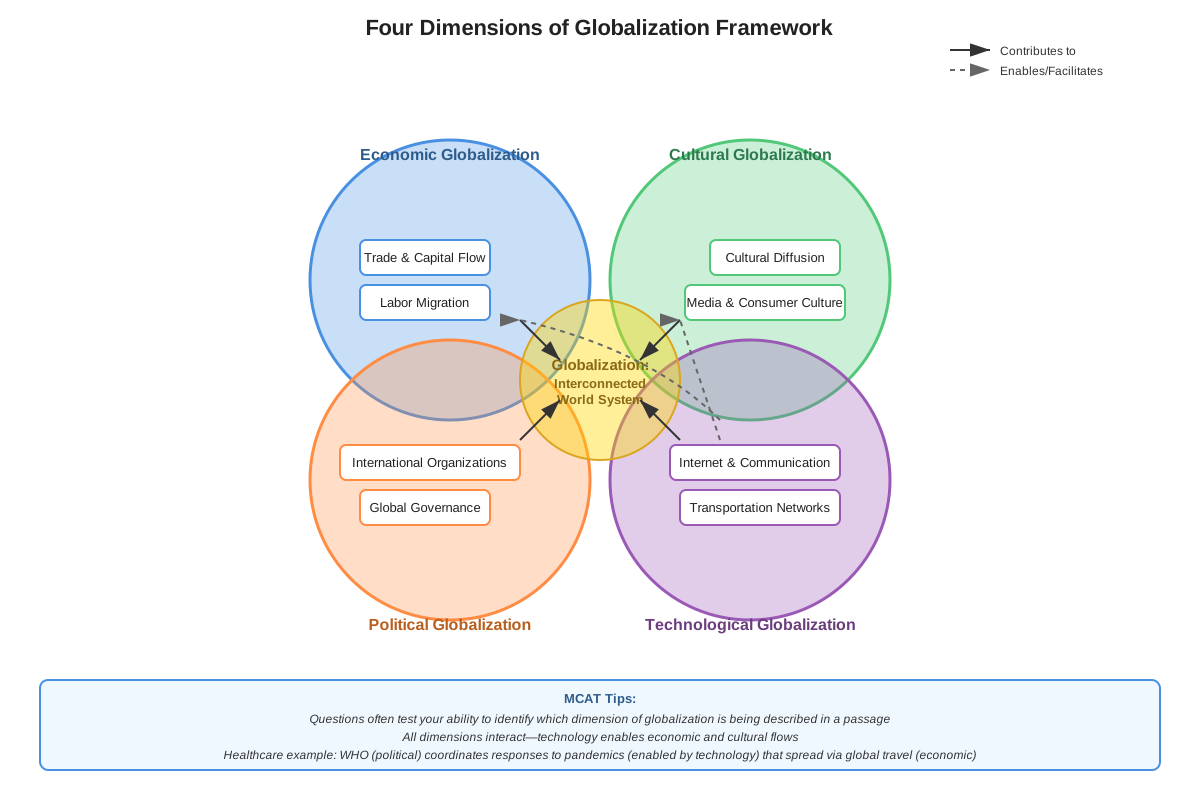
Globalization refers to the process by which societies, economies, and cultures become increasingly interconnected and interdependent through the exchange of goods, services, information, people, and ideas across national boundaries. This phenomenon accelerated dramatically in the late 20th century due to advances in transportation, communication technologies, and the reduction of trade barriers. Globalization is not a monolithic process but rather encompasses multiple distinct yet interrelated dimensions that transform societies simultaneously.
The economic dimension involves the integration of national economies into a global marketplace through international trade, foreign direct investment, multinational corporations, and the flow of capital across borders. This creates global supply chains where products are designed in one country, manufactured in another, and sold worldwide. For healthcare, economic globalization manifests in pharmaceutical companies operating internationally, medical device manufacturing in developing countries, and the commodification of healthcare services through medical tourism.
The cultural dimension encompasses the worldwide spread of ideas, values, norms, behaviors, and cultural products. This includes the diffusion of languages (especially English), entertainment media, food preferences, fashion trends, and lifestyle practices. Cultural globalization can lead to both cultural homogenization (the reduction of cultural diversity as dominant cultures spread) and cultural hybridization (the blending of global and local cultural elements to create new forms). In medicine, cultural globalization affects health behaviors, body image ideals, dietary patterns, and attitudes toward Western versus traditional medicine.
The political dimension involves the increasing influence of international organizations (United Nations, World Health Organization, World Trade Organization), transnational governance structures, international law, and global social movements. Political globalization affects healthcare through international health regulations, global disease surveillance systems, humanitarian medical interventions, and debates over pharmaceutical patents and access to essential medicines.
The technological dimension focuses on the rapid spread of information and communication technologies that enable instantaneous global communication. The internet, mobile phones, and social media platforms create networks that transcend geographic boundaries, facilitating the exchange of medical knowledge, telemedicine consultations, and health information (both accurate and misleading). The digital divide—the gap between those with and without access to digital technologies—represents a significant source of health inequality in the globalized world.
Theoretical Perspectives on Globalization
Different sociological theories offer competing explanations for globalization's causes, mechanisms, and consequences, each providing valuable frameworks for analyzing MCAT passages.
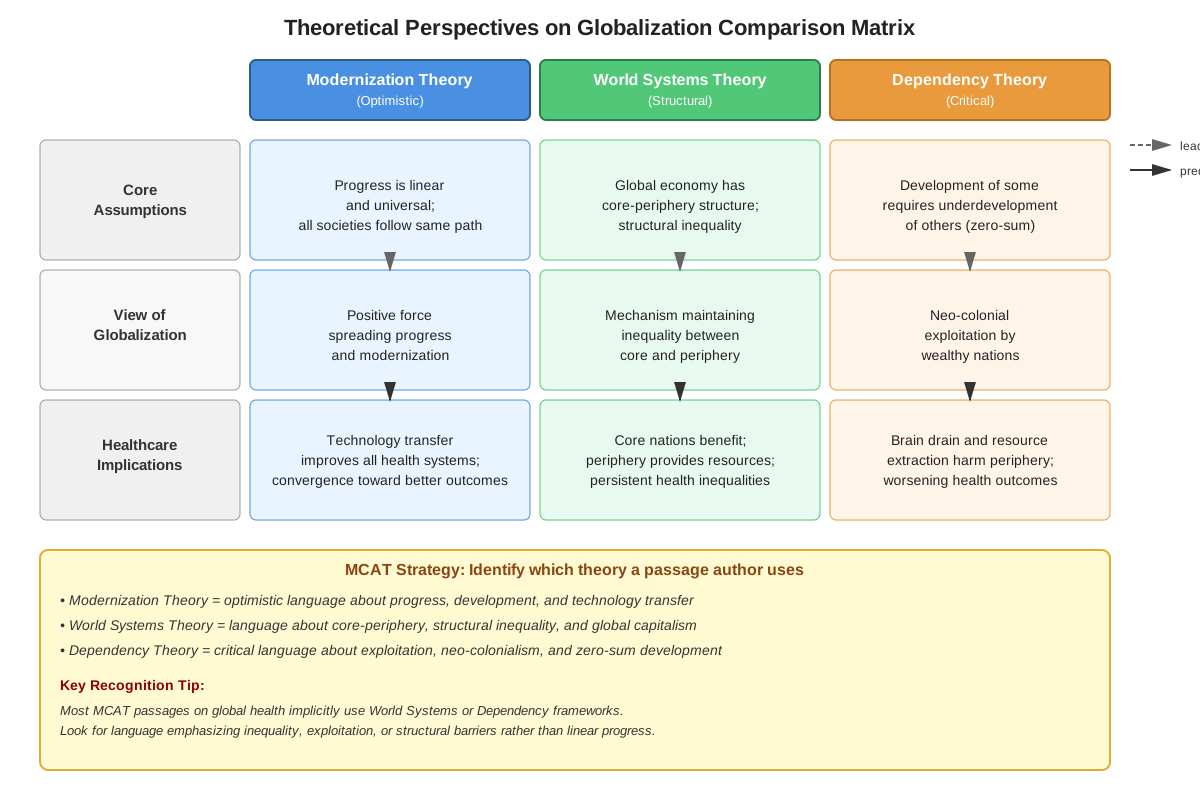
Modernization theory views globalization as a positive, evolutionary process through which traditional societies adopt the characteristics of modern, developed nations. This perspective emphasizes technology transfer, economic development, democratization, and the spread of rational, scientific thinking (including modern medicine) as beneficial outcomes. Modernization theorists argue that globalization raises living standards, improves health outcomes, and promotes universal human rights. However, critics note this theory's ethnocentric assumptions and failure to account for persistent inequalities.
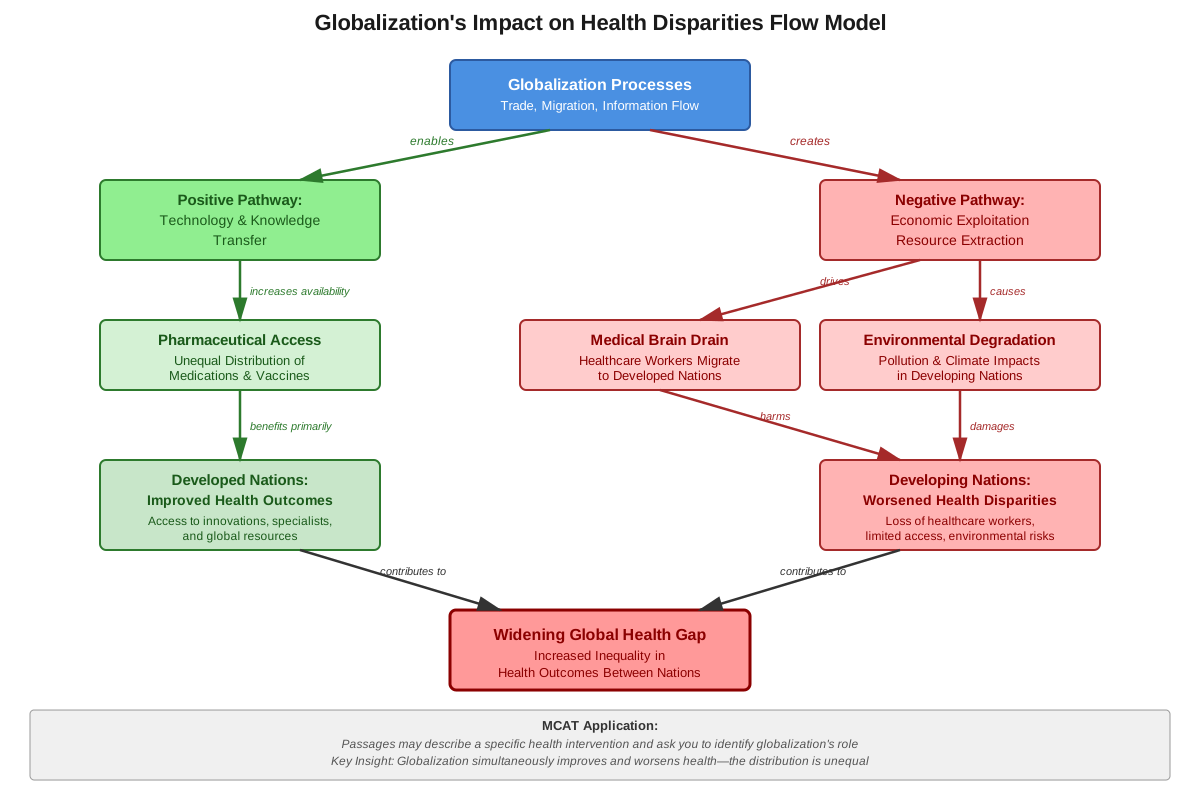
World systems theory (developed by Immanuel Wallerstein) conceptualizes the global economy as a hierarchical system divided into core nations (wealthy, industrialized countries that dominate global trade and extract resources), peripheral nations (poor countries that provide raw materials and cheap labor), and semi-peripheral nations (intermediate countries with mixed characteristics). This theory emphasizes how globalization perpetuates and deepens inequalities between nations, with core countries benefiting at the expense of peripheral ones. In healthcare, this manifests as brain drain—the migration of skilled healthcare workers from poor to wealthy countries—and unequal access to medical innovations.
Dependency theory extends world systems theory by arguing that underdevelopment in poor countries results directly from their exploitation by wealthy nations through colonialism and neocolonial economic relationships. This perspective highlights how globalization can trap developing nations in dependent relationships, forcing them to export raw materials while importing expensive manufactured goods and services, including pharmaceuticals and medical technologies.
Hyperglobalist perspective argues that globalization represents a fundamentally new era in human history, where nation-states are becoming less relevant as economic and cultural forces transcend borders. This view emphasizes the emergence of a truly global culture and economy.
Skeptical perspective questions whether globalization is genuinely new or simply a continuation of historical patterns of international trade and cultural exchange. Skeptics note that nation-states remain powerful actors and that much economic activity remains regional rather than truly global.
Transformationalist perspective occupies a middle ground, acknowledging that globalization is reshaping societies in unprecedented ways while recognizing that its outcomes remain uncertain and contested, varying significantly across different regions and populations.
Consequences of Globalization
Globalization produces both beneficial and harmful effects, often simultaneously affecting different populations unequally.
Positive consequences include: increased economic growth and poverty reduction in some developing nations (particularly East Asian countries); rapid dissemination of medical knowledge and technologies; improved communication enabling international collaboration on health challenges; greater cultural awareness and cosmopolitanism; spread of democratic values and human rights norms; and access to diverse goods, services, and cultural products.
Negative consequences include: widening income inequality both within and between nations; cultural imperialism and loss of local traditions; environmental degradation from increased production and consumption; exploitation of workers in developing countries; rapid spread of infectious diseases; homogenization of global culture dominated by Western (particularly American) values; and disruption of traditional social structures and support systems.
Globalization and Health
The relationship between globalization and health outcomes is complex and multifaceted. Epidemiological globalization refers to the rapid international spread of infectious diseases facilitated by air travel, trade, and population mobility. Recent examples include HIV/AIDS, SARS, H1N1 influenza, Ebola, and COVID-19. Globalization enables pathogens to cross borders within hours, requiring coordinated international public health responses.
Nutrition transition describes how globalization spreads Western dietary patterns high in processed foods, sugar, and saturated fats to developing countries, contributing to rising rates of obesity, diabetes, and cardiovascular disease. Simultaneously, multinational food corporations market unhealthy products aggressively in countries with weak regulatory systems.
Medical brain drain occurs when healthcare professionals migrate from resource-poor to resource-rich countries seeking better opportunities, depleting the healthcare workforce in countries that can least afford to lose skilled workers. This represents a transfer of human capital from poor to wealthy nations, exacerbating global health inequalities.
Pharmaceutical globalization involves both positive aspects (wider availability of life-saving medications) and negative aspects (intellectual property protections that limit access to affordable generic drugs, unethical clinical trials in developing countries, and counterfeit medication markets).
Medical tourism enables patients to travel internationally for healthcare services, often seeking lower costs or shorter wait times. While this provides options for wealthy patients, it can divert healthcare resources from local populations in destination countries and raise ethical concerns about quality and continuity of care.
Globalization and Culture
Cultural imperialism (or cultural hegemony) describes the dominance of Western, particularly American, cultural values, products, and practices spreading globally, often displacing local traditions. This raises concerns about cultural homogenization and the loss of cultural diversity. In healthcare, this manifests as the global spread of Western biomedical models potentially marginalizing traditional healing practices and indigenous medical knowledge.
Glocalization represents the adaptation of global products, practices, or ideas to fit local cultural contexts—a blending of "global" and "local." This concept recognizes that globalization doesn't simply impose uniformity but rather interacts with local cultures to create hybrid forms. Examples include McDonald's offering culturally-specific menu items or the integration of traditional healing practices with Western medicine.
Cultural convergence describes the tendency for cultures to become more similar as they share technologies, organizational structures, and cultural practices. Cultural divergence refers to the opposite tendency—the deliberate preservation or assertion of cultural distinctiveness in response to globalizing forces.
Westernization specifically refers to the adoption of Western European and North American cultural practices, values, and institutions. While related to globalization, Westernization is more specific and directional, whereas globalization theoretically involves multidirectional cultural flows (though in practice, Western culture dominates).
Globalization and Social Inequality
Globalization affects social stratification in complex ways. Within countries, globalization often increases inequality by benefiting educated, skilled workers who can participate in the global economy while disadvantaging less-educated workers whose jobs are outsourced or automated. This creates a dual labor market with high-paying knowledge economy jobs and low-paying service sector jobs, with fewer middle-class opportunities.
Between countries, globalization has reduced absolute poverty in some regions (particularly East Asia) while increasing relative inequality between the world's richest and poorest nations. The benefits of globalization are distributed unequally, with some countries successfully integrating into the global economy while others remain marginalized.
Transnational corporations wield enormous economic and political power, sometimes exceeding that of small nations. These corporations can influence health outcomes through employment practices, environmental policies, product marketing, and lobbying efforts that shape regulations.
The digital divide creates new forms of inequality based on access to information and communication technologies. In healthcare, this affects access to telemedicine, health information, electronic medical records, and participation in the digital economy that increasingly determines economic opportunities.
Concept Relationships
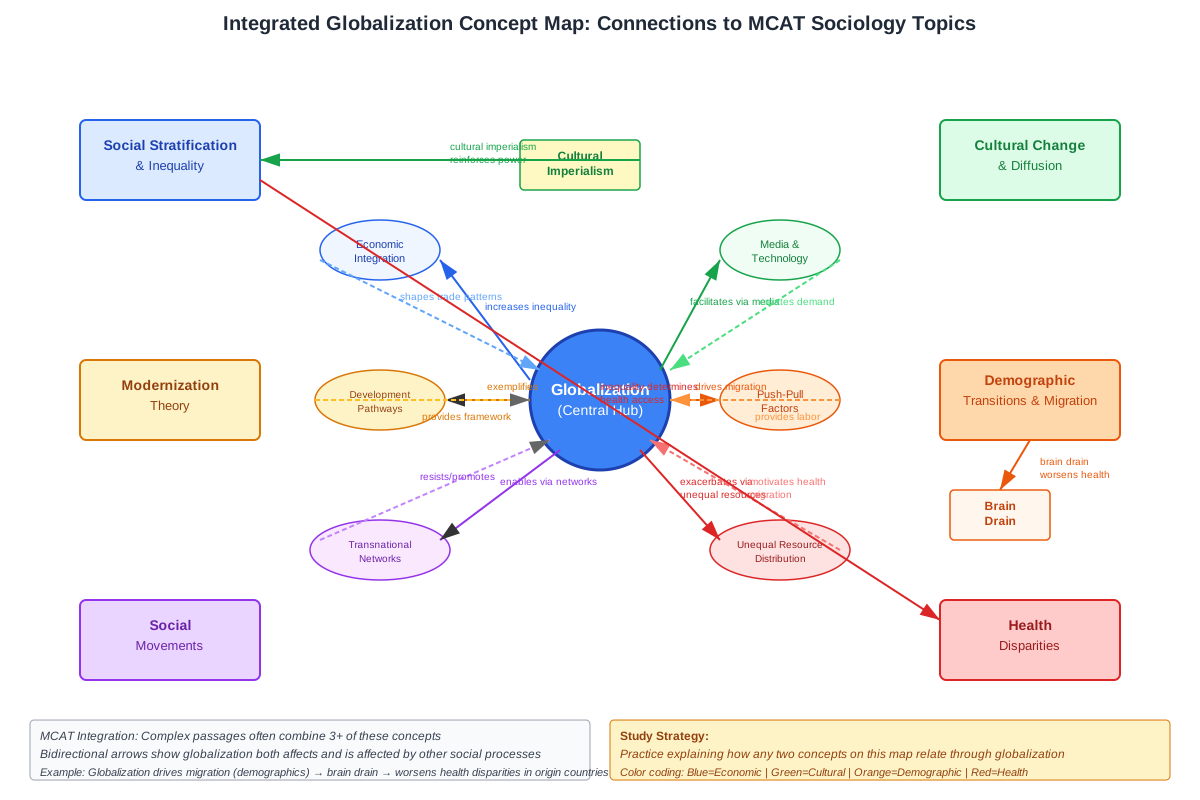
Globalization serves as an overarching framework that connects numerous sociological concepts tested on the MCAT. The process of globalization → drives demographic changes including international migration, urbanization, and changing population structures → which in turn affect social institutions like healthcare systems, educational systems, and family structures → leading to transformations in cultural norms and values through cultural diffusion and hybridization.
Economic globalization → creates new patterns of social stratification both within and between nations → resulting in health disparities as different populations experience unequal access to resources, healthcare, and healthy environments → which manifest as differences in disease prevalence, life expectancy, and quality of life. These health disparities connect to social determinants of health including income, education, employment, and social support systems—all of which are reshaped by globalization.
Cultural globalization → influences identity formation as individuals navigate between global and local cultural frameworks → affecting socialization processes as children are exposed to diverse cultural influences through media and technology → which impacts health behaviors, body image, dietary choices, and attitudes toward medicine and healthcare.
Political globalization → strengthens international organizations and transnational governance → enabling coordinated responses to global health challenges but also creating tensions with national sovereignty → connecting to concepts of social movements as groups organize across borders to address issues like climate change, human rights, or access to medicines.
Technological globalization → reduces barriers to communication and information exchange → facilitating the spread of both medical knowledge and health misinformation → connecting to concepts of social networks and social capital as people maintain relationships across geographic distances and access resources through global connections.
The relationship between globalization and modernization is particularly important for the MCAT. While related, these concepts are distinct: modernization refers to the internal transformation of societies toward industrial, urban, rational-bureaucratic forms, while globalization emphasizes the interconnection between societies. Globalization can accelerate modernization but also creates unique phenomena (like transnational identities and global social movements) that transcend the modernization framework.
Quick check — test yourself on Globalization so far.
Try Flashcards →High-Yield Facts
⭐ Globalization is the process of increasing interconnectedness and interdependence among societies through the exchange of goods, services, information, people, and ideas across national borders.
⭐ Globalization has four primary dimensions: economic (trade, investment, corporations), cultural (values, ideas, media), political (international organizations, governance), and technological (communication, information exchange).
⭐ Cultural imperialism refers to the dominance and spread of Western cultural values and practices globally, potentially displacing local traditions and creating cultural homogenization.
⭐ World systems theory divides the global economy into core nations (wealthy, dominant), peripheral nations (poor, exploited), and semi-peripheral nations (intermediate status).
⭐ Brain drain describes the migration of skilled professionals, including healthcare workers, from developing to developed countries, depleting human capital in resource-poor nations.
⭐ Glocalization represents the adaptation of global products or practices to fit local cultural contexts, creating hybrid forms that blend global and local elements.
- Medical tourism involves patients traveling internationally for healthcare services, raising ethical concerns about resource allocation and quality of care.
- The digital divide creates health inequalities based on differential access to information and communication technologies.
- Epidemiological globalization enables rapid international spread of infectious diseases through increased travel and trade.
- Nutrition transition describes the global spread of Western dietary patterns contributing to rising rates of chronic diseases in developing countries.
- Modernization theory views globalization as a positive evolutionary process, while dependency theory emphasizes exploitation and perpetuation of inequalities.
- Cultural convergence describes cultures becoming more similar through globalization, while cultural divergence involves deliberate preservation of cultural distinctiveness.
- Globalization affects social stratification by creating winners (educated, skilled workers) and losers (those whose jobs are outsourced or automated).
- Transnational corporations wield significant power in the global economy, influencing health through employment, environmental, and marketing practices.
- Globalization simultaneously reduces absolute poverty in some regions while increasing relative inequality between the world's richest and poorest populations.
Common Misconceptions
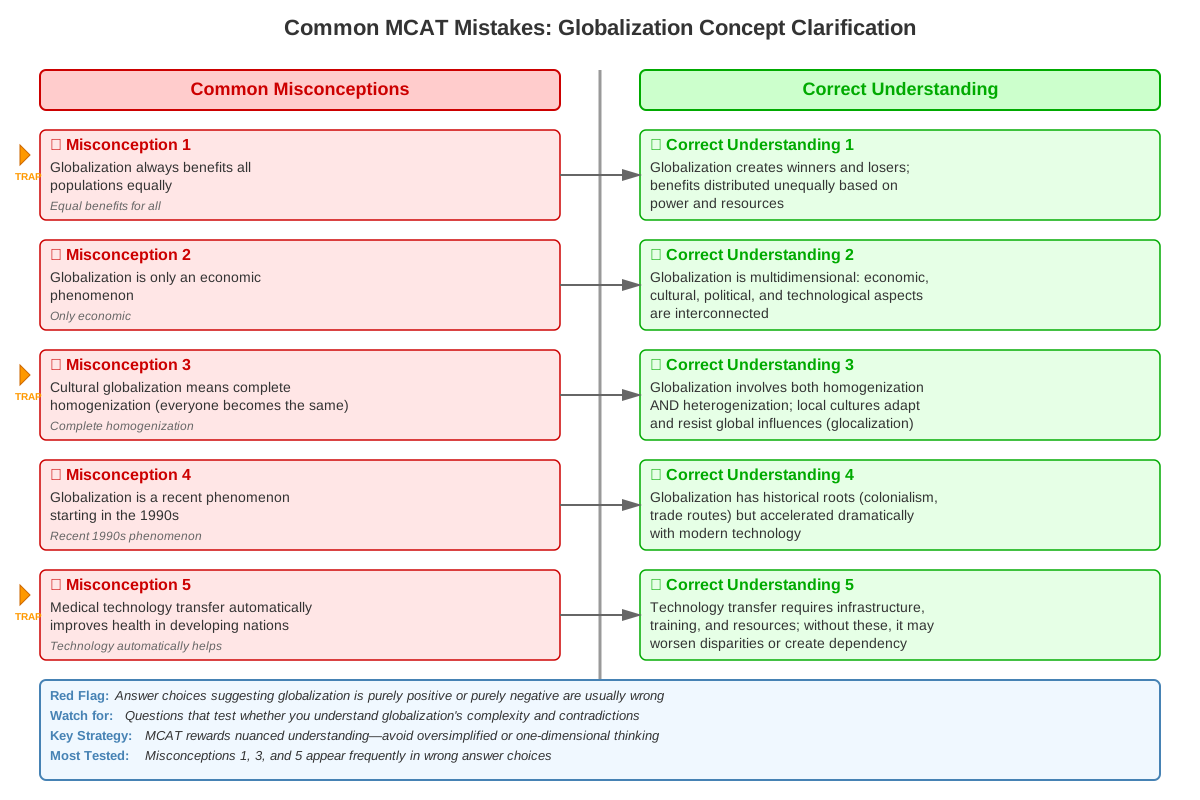
Misconception: Globalization and Westernization are synonymous terms. → Correction: While related, these concepts are distinct. Westernization specifically refers to the adoption of Western European and North American cultural practices, while globalization theoretically involves multidirectional flows of culture, goods, and ideas among all regions. However, in practice, Western (particularly American) culture does dominate global cultural flows, making Westernization a significant component of cultural globalization but not identical to it.
Misconception: Globalization is an entirely new phenomenon that began in the late 20th century. → Correction: While contemporary globalization has unique characteristics (particularly regarding speed and scope enabled by technology), international trade, cultural exchange, and migration have occurred throughout human history. The Silk Road, European colonialism, and earlier waves of migration represent historical forms of interconnection. What distinguishes contemporary globalization is its intensity, speed, technological basis, and the degree to which it affects all aspects of social life simultaneously.
Misconception: Globalization uniformly benefits all populations by spreading wealth, technology, and opportunities. → Correction: Globalization produces highly unequal outcomes, creating both winners and losers within and between societies. While some populations experience economic growth and improved access to goods and services, others face job losses, cultural disruption, environmental degradation, and exploitation. World systems theory and dependency theory specifically emphasize how globalization can perpetuate and deepen inequalities, with wealthy core nations benefiting at the expense of poor peripheral nations.
Misconception: Cultural globalization inevitably leads to complete cultural homogenization and the loss of all local traditions. → Correction: While cultural imperialism and homogenization are real concerns, globalization also produces cultural hybridization (glocalization) where global and local elements blend to create new cultural forms. Additionally, globalization can strengthen cultural awareness and identity as groups deliberately preserve traditions in response to globalizing forces (cultural divergence). The outcome is more complex than simple homogenization, involving simultaneous processes of convergence, divergence, and hybridization.
Misconception: The digital divide only refers to access to computers and internet connectivity. → Correction: The digital divide encompasses multiple dimensions including not just access to technology but also digital literacy (skills to use technology effectively), quality of access (broadband versus dial-up), and the ability to create content versus merely consuming it. In healthcare contexts, the digital divide affects access to telemedicine, health information, electronic medical records, and participation in digital health interventions, creating significant health inequalities.
Misconception: Brain drain only harms developing countries without any benefits. → Correction: While brain drain depletes human capital in source countries, it can also produce benefits through remittances (money sent home by migrants), knowledge transfer when professionals return with new skills, and diaspora networks that facilitate investment and collaboration. However, these potential benefits rarely compensate fully for the loss of skilled healthcare workers in countries with severe shortages, making brain drain a net negative for healthcare systems in most developing countries.
Misconception: Globalization makes nation-states irrelevant and powerless. → Correction: While globalization constrains national sovereignty in some ways, nation-states remain powerful actors that shape globalization through policies on trade, immigration, regulation, and international cooperation. Different countries experience and respond to globalization differently based on their political systems, economic strength, and policy choices. The transformationalist perspective recognizes that globalization reshapes but does not eliminate the importance of nation-states.
Worked Examples
Example 1: Analyzing Globalization's Impact on Health Disparities
Passage Summary: A research study examines health outcomes in a Southeast Asian country that has rapidly integrated into the global economy over the past 30 years. The study finds that urban, educated populations have experienced significant improvements in life expectancy and reductions in infectious disease mortality. However, rural populations show increasing rates of diabetes and cardiovascular disease, while their access to healthcare has not improved proportionally. Additionally, the country has experienced significant emigration of physicians and nurses to wealthy nations.
Question: Which of the following best explains the health disparities described in the passage?
A) Modernization theory suggests that all populations will eventually benefit equally from globalization
B) The digital divide prevents rural populations from accessing health information
C) Economic globalization has created unequal benefits, with urban populations gaining access to resources while rural populations experience nutrition transition without corresponding healthcare improvements
D) Cultural imperialism has forced Western dietary practices on unwilling populations
Worked Solution:
Step 1: Identify the key phenomena described in the passage:
- Urban populations: improved health outcomes
- Rural populations: increasing chronic disease, inadequate healthcare access
- Physician/nurse emigration (brain drain)
- Rapid economic integration (globalization)
Step 2: Connect to globalization concepts:
- Unequal distribution of globalization's benefits (world systems theory perspective)
- Nutrition transition (spread of Western dietary patterns causing chronic disease)
- Brain drain (loss of healthcare workers to wealthy nations)
- Urban-rural divide in access to resources
Step 3: Evaluate each answer choice:
A) Incorrect - Modernization theory's assumption of eventual equal benefits ignores persistent inequalities and doesn't explain the current disparities or increasing chronic disease.
B) Partially relevant but incomplete - While the digital divide may play a role, it doesn't explain the nutrition transition or the pattern of urban improvement versus rural decline.
C) Correct - This answer integrates multiple globalization concepts: economic globalization creating unequal benefits (urban areas integrate more successfully), nutrition transition explaining rising chronic disease (global spread of unhealthy dietary patterns), and inadequate healthcare infrastructure (partly due to brain drain) preventing rural populations from managing new health challenges.
D) Incorrect - "Cultural imperialism" is too strong and inaccurate; dietary changes result from complex economic and social factors, not force. This answer also doesn't address the urban-rural disparity or healthcare access issues.
Answer: C
Key Learning Points: This question requires integrating multiple globalization concepts (economic integration, nutrition transition, brain drain, unequal distribution of benefits) to explain a complex health disparity pattern. The MCAT frequently presents scenarios where globalization produces simultaneous positive and negative effects on different populations, requiring nuanced analysis rather than simplistic "globalization is good" or "globalization is bad" thinking.
Example 2: Distinguishing Between Related Concepts
Passage Summary: A medical anthropologist studies how a traditional healing practice in a Latin American country has evolved over the past 20 years. While the core spiritual beliefs remain unchanged, practitioners now advertise their services on social media, accept credit card payments, and incorporate some biomedical terminology when explaining treatments to clients. The practice has attracted international clients seeking "authentic" healing experiences, generating significant income for practitioners. However, some community elders express concern that the practice is losing its cultural meaning.
Question: The scenario described best illustrates which concept?
A) Cultural imperialism
B) Glocalization
C) Westernization
D) Cultural convergence
Worked Solution:
Step 1: Identify the key features of the scenario:
- Traditional practice maintains core elements (spiritual beliefs)
- Adoption of modern technologies and business practices (social media, credit cards)
- Integration of biomedical language
- Adaptation to serve international clients
- Tension between change and tradition
Step 2: Review relevant concept definitions:
- Cultural imperialism: Dominance of Western culture displacing local traditions
- Glocalization: Adaptation of global elements to fit local contexts, creating hybrid forms
- Westernization: Adoption of Western cultural practices and values
- Cultural convergence: Cultures becoming more similar through shared practices
Step 3: Evaluate each answer:
A) Incorrect - Cultural imperialism implies displacement or domination. Here, the traditional practice persists and adapts rather than being replaced.
B) Correct - Glocalization perfectly describes this scenario: a local cultural practice (traditional healing) incorporates global elements (technology, business practices, biomedical language) while maintaining its core identity and cultural meaning. The practice adapts to global forces without being eliminated, creating a hybrid form that blends local and global elements.
C) Incorrect - While some Western elements are adopted (technology, business practices), the core practice remains rooted in local tradition. Westernization would imply more complete adoption of Western medical practices and abandonment of traditional beliefs.
D) Incorrect - Cultural convergence describes cultures becoming more similar. This scenario shows adaptation and hybridization of one specific practice rather than overall cultural convergence between societies.
Answer: B
Key Learning Points: The MCAT frequently tests the ability to distinguish between related globalization concepts. Glocalization is particularly important because it represents a more nuanced understanding than simple cultural imperialism or homogenization. Key indicators of glocalization include: maintenance of core cultural elements, selective adoption of global practices, adaptation to serve both local and global audiences, and creation of hybrid forms. The presence of tension or debate about changes (elders' concerns) is realistic and doesn't negate the glocalization process.
Exam Strategy
When approaching MCAT questions about globalization, employ these strategic approaches:
Identify the dimension of globalization: Questions often focus on one specific dimension (economic, cultural, political, technological). Quickly determine which dimension the passage emphasizes, as this narrows the relevant concepts and likely answer choices. Trigger words include: "trade" and "corporations" (economic), "values" and "traditions" (cultural), "international organizations" and "governance" (political), "internet" and "communication" (technological).
Look for inequality patterns: Globalization questions frequently involve disparities—between nations (core versus peripheral), within nations (urban versus rural, educated versus uneducated), or across time (winners and losers from globalization). When you see unequal outcomes, consider world systems theory, dependency theory, or concepts like brain drain and the digital divide.
Distinguish between related concepts: The MCAT loves to test whether you can differentiate globalization from Westernization, modernization, or urbanization; cultural imperialism from glocalization; and cultural convergence from cultural divergence. Create a mental checklist of defining features for each concept and match them to passage details.
Apply theoretical perspectives appropriately: Different theories predict different outcomes. Modernization theory emphasizes benefits and eventual convergence; world systems theory and dependency theory emphasize exploitation and persistent inequality; transformationalist perspectives acknowledge complexity and uncertainty. Match the theory to the pattern described in the passage.
Watch for both positive and negative consequences: Globalization produces complex, mixed outcomes. Be suspicious of answer choices that present globalization as entirely beneficial or entirely harmful. The most sophisticated (and often correct) answers acknowledge both positive and negative effects, often affecting different populations unequally.
Connect to health outcomes: Since this appears in the MCAT's Sociology section, questions often link globalization to health disparities, disease transmission, healthcare access, or health behaviors. Always consider how the globalization process described would affect health outcomes for different populations.
Time management: Globalization passages tend to be complex with multiple interrelated concepts. Budget 1.5-2 minutes for reading and note-taking, identifying the main globalization dimension and key populations affected. This upfront investment pays off by making questions easier to answer quickly.
Process of elimination: Eliminate answers that: confuse related concepts (e.g., using "Westernization" when "glocalization" is correct), present overly simplistic views (all good or all bad), ignore inequality patterns clearly described in the passage, or misapply theoretical perspectives (e.g., using modernization theory to explain exploitation).
Memory Techniques
ECPT Dimensions Mnemonic: Remember the four dimensions of globalization with "Every Culture Produces Technology"
- Economic (trade, corporations, capital flows)
- Cultural (values, ideas, media, practices)
- Political (international organizations, governance)
- Technological (communication, information exchange)
Core-Semi-Peripheral Visualization: Picture a target with three rings. The bullseye (core) is wealthy and powerful, extracting resources from the outer rings. The middle ring (semi-peripheral) has mixed characteristics, while the outer ring (peripheral) provides resources but remains poor. This visual reinforces world systems theory's hierarchical structure.
Glocalization = Global + Local: The term itself is a mnemonic. When you see cultural practices that blend international and traditional elements, think "glocal" = maintaining local identity while incorporating global elements.
Brain Drain Direction: Remember that brains (skilled workers) "drain" from poor to rich countries, like water flowing downhill from high (developing countries with high need) to low (developed countries with resources). This helps you avoid reversing the direction.
CHIN for Negative Consequences: Remember major negative effects with CHIN:
- Cultural imperialism/homogenization
- Health disparities and disease spread
- Inequality (within and between nations)
- Natural environment degradation
Three Theories Spectrum: Visualize a spectrum from optimistic to pessimistic:
- Left (Optimistic): Modernization theory - globalization benefits everyone eventually
- Center: Transformationalist - complex, uncertain outcomes
- Right (Pessimistic): World systems/dependency theory - globalization perpetuates exploitation
Digital Divide = Access + Skills: Remember that the digital divide isn't just about having technology (access) but also knowing how to use it effectively (digital literacy/skills). Both components create health inequalities.
Summary
Globalization represents the increasing interconnectedness and interdependence of societies through the exchange of goods, services, information, people, and ideas across national borders. This multidimensional process encompasses economic integration through trade and multinational corporations, cultural diffusion of values and practices, political coordination through international organizations, and technological advances enabling instant global communication. For the MCAT, understanding globalization requires mastering multiple theoretical perspectives—modernization theory emphasizes benefits and development, while world systems theory and dependency theory highlight exploitation and persistent inequalities between core and peripheral nations. Globalization produces complex, often contradictory outcomes: economic growth alongside widening inequality, cultural exchange alongside cultural imperialism, medical advances alongside brain drain and health disparities. Key concepts include glocalization (blending global and local elements), the digital divide (unequal access to technology), nutrition transition (spread of unhealthy dietary patterns), and epidemiological globalization (rapid disease transmission). MCAT questions typically require analyzing how globalization affects health outcomes for different populations, distinguishing between related concepts like Westernization and cultural convergence, and applying theoretical frameworks to explain patterns of inequality and social change in healthcare contexts.
Key Takeaways
- Globalization is a multidimensional process (economic, cultural, political, technological) creating increasing interconnectedness among societies, with profound implications for health disparities and healthcare delivery
- Different theoretical perspectives predict different outcomes: modernization theory emphasizes benefits, while world systems theory and dependency theory highlight exploitation and inequality between core and peripheral nations
- Glocalization represents the blending of global and local cultural elements, creating hybrid forms rather than simple homogenization or cultural imperialism
- Globalization produces unequal outcomes, creating winners (educated, urban, skilled populations) and losers (rural, less-educated populations; peripheral nations) both within and between societies
- Key health-related consequences include brain drain (migration of healthcare workers), nutrition transition (spread of unhealthy diets), epidemiological globalization (rapid disease transmission), and the digital divide (unequal access to health information and telemedicine)
- MCAT questions require distinguishing between related concepts (globalization versus Westernization, cultural imperialism versus glocalization) and analyzing complex scenarios where globalization simultaneously produces positive and negative effects on different populations
- Understanding globalization provides a framework for interpreting passages about international health interventions, migration and health, cultural competency in medicine, and social determinants of health in our interconnected world
Related Topics
Social Inequality and Stratification: Globalization fundamentally reshapes patterns of social stratification within and between societies, creating new forms of inequality based on education, skills, and access to global networks. Mastering globalization enables deeper understanding of how economic systems create and perpetuate disparities.
Culture and Society: Globalization drives cultural change through diffusion, hybridization, and sometimes imperialism. Understanding cultural globalization connects to broader concepts of cultural capital, socialization, and identity formation in multicultural contexts.
Demographics and Population Change: Globalization drives international migration, urbanization, and demographic transitions. These population movements have profound implications for healthcare systems, disease patterns, and social support structures.
Social Movements and Collective Behavior: Globalization enables transnational social movements addressing issues like climate change, human rights, and access to medicines. Understanding how globalization facilitates collective action across borders connects to theories of social change.
Health and Medicine: Globalization affects virtually every aspect of healthcare—disease transmission, pharmaceutical access, medical tourism, telemedicine, and health disparities. This topic provides essential context for understanding contemporary public health challenges and healthcare delivery systems.
Practice CTA
Now that you've mastered the core concepts of globalization and its implications for healthcare and society, it's time to test your understanding with practice questions and flashcards. Focus particularly on distinguishing between related concepts (glocalization versus cultural imperialism, modernization versus world systems theory) and analyzing complex scenarios where globalization produces mixed outcomes for different populations. Remember that globalization questions often require integrating multiple concepts to explain patterns of health disparities, cultural change, or social inequality. Your ability to think critically about these interconnections will serve you well not only on the MCAT but also in understanding the complex, globalized world you'll navigate as a physician. You've got this!
Sign up free to keep reading
Create a free AnvayaPrep account to finish this MCAT guide on Globalization — plus flashcards and practice questions.