Overview
Social movements represent organized, collective efforts by groups of people to promote or resist social change. These movements emerge when individuals unite around shared grievances, goals, or visions for society, mobilizing resources and coordinating actions to influence public opinion, policy, or cultural norms. Understanding social movements is fundamental to Sociology because they serve as primary mechanisms through which societies evolve, power structures shift, and marginalized voices gain representation.
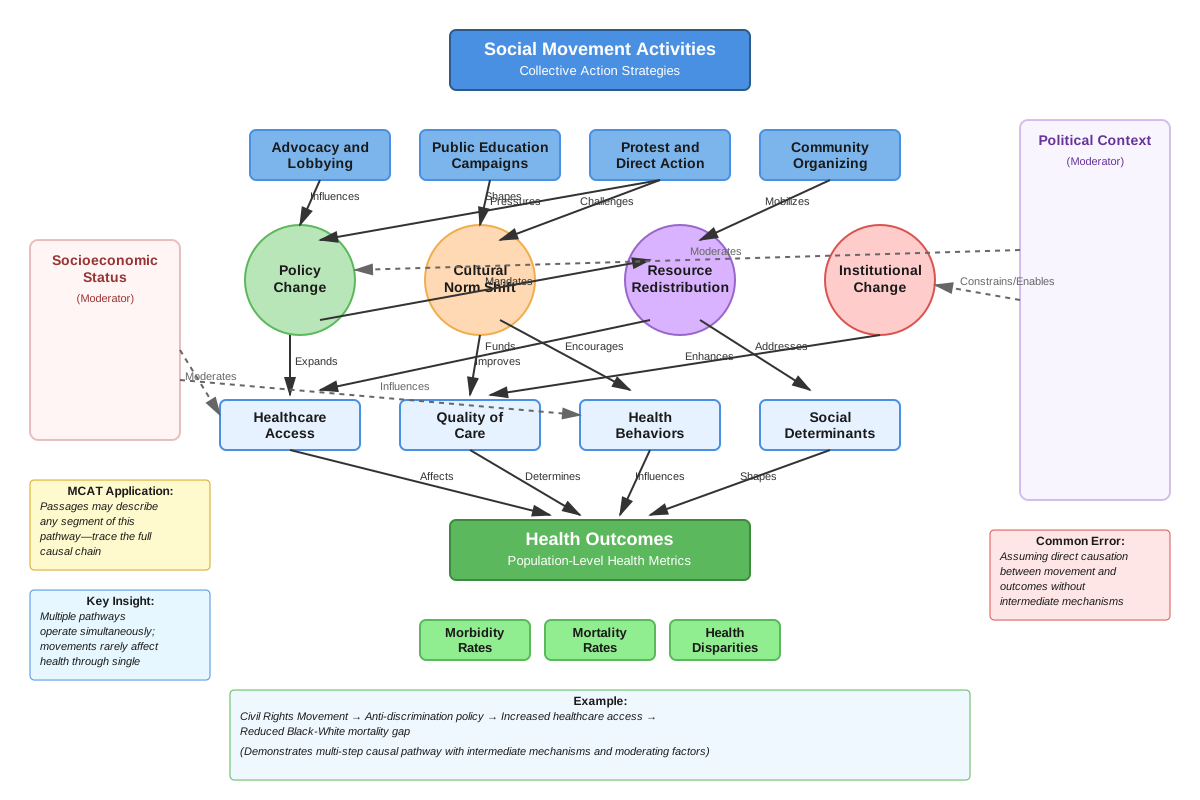
For the MCAT, social movements appear frequently in the Psychological, Social, and Biological Foundations of Behavior section, particularly within questions addressing Demographics and Social Change. The exam tests students' ability to analyze how collective behavior shapes health outcomes, access to healthcare, public health policy, and health disparities. Questions may present scenarios involving civil rights movements affecting healthcare access, environmental justice campaigns addressing pollution-related health issues, or patient advocacy groups influencing medical research priorities. Understanding the stages, types, and theories of social movements enables test-takers to interpret complex sociological passages and apply theoretical frameworks to real-world health scenarios.
Social movements connect to broader sociological concepts including collective behavior, social change, power and authority, social inequality, and cultural dynamics. They represent the intersection of micro-level individual motivations and macro-level structural transformations. Mastering this topic provides essential context for understanding how societies address health disparities, implement public health interventions, and respond to emerging health crises through organized collective action.
Learning Objectives
- [ ] Define social movements using accurate Sociology terminology
- [ ] Explain why social movements matters for the MCAT
- [ ] Apply social movements to exam-style questions
- [ ] Identify common mistakes related to social movements
- [ ] Connect social movements to related Sociology concepts
- [ ] Distinguish between different types of social movements and their characteristics
- [ ] Analyze the stages of social movement development and predict movement trajectories
- [ ] Evaluate the role of resource mobilization, framing, and political opportunity in movement success
- [ ] Compare and contrast major theoretical perspectives on social movements
Prerequisites
- Social structure and institutions: Understanding how societies organize themselves provides context for why movements challenge or defend existing arrangements
- Culture and socialization: Knowledge of how values, norms, and beliefs are transmitted explains what movements seek to change or preserve
- Social stratification and inequality: Familiarity with systems of hierarchy and disadvantage clarifies the grievances that motivate many movements
- Collective behavior: Basic understanding of crowd dynamics and group psychology underlies the mechanisms through which movements mobilize participants
- Power and authority: Recognizing different forms of power helps explain what movements challenge and how they gain influence
Why This Topic Matters
Social movements have profound implications for healthcare delivery, public health policy, and health outcomes—making them highly relevant for future physicians. Historical examples include the HIV/AIDS activism of the 1980s-90s that transformed drug approval processes, the disability rights movement that improved healthcare accessibility, and contemporary movements addressing racial health disparities. Understanding these dynamics helps medical professionals recognize how organized advocacy shapes the healthcare landscape and influences patient populations.
On the MCAT, social movements appear in approximately 3-5% of Sociology questions, typically within passage-based questions in the Psychological, Social, and Biological Foundations section. Questions commonly present scenarios requiring students to identify movement types, analyze factors contributing to movement success or failure, or apply theoretical frameworks to interpret collective action. The exam frequently connects social movements to health-related contexts: patient advocacy groups, public health campaigns, healthcare reform efforts, or community responses to environmental health hazards.
Passages often describe a social movement scenario and ask students to identify the movement type, predict its trajectory based on stage theories, or explain its emergence using resource mobilization or political process theory. Discrete questions may test knowledge of movement characteristics, the relationship between movements and social change, or the distinction between social movements and other forms of collective behavior. Strong performance requires both conceptual understanding and the ability to apply theoretical frameworks to novel scenarios.
Core Concepts
Definition and Characteristics of Social Movements
Social movements are organized, sustained collective efforts by a significant number of people to promote, resist, or undo social change. Unlike spontaneous collective behavior such as riots or fads, social movements demonstrate several defining characteristics: organization (formal or informal leadership structures), persistence over time (lasting months to decades), collective identity (shared sense of "we"), and clear goals (specific changes sought). Movements mobilize participants through shared grievances, ideological frameworks, and coordinated strategies.
Social movements differ from other forms of collective action in their duration, organization, and intentionality. While a protest may last hours and a crowd may form spontaneously, social movements maintain momentum across extended periods through institutional structures, resource networks, and sustained commitment. They represent collective behavior that is purposeful rather than spontaneous, organized rather than chaotic, and goal-directed rather than expressive.
Types of Social Movements
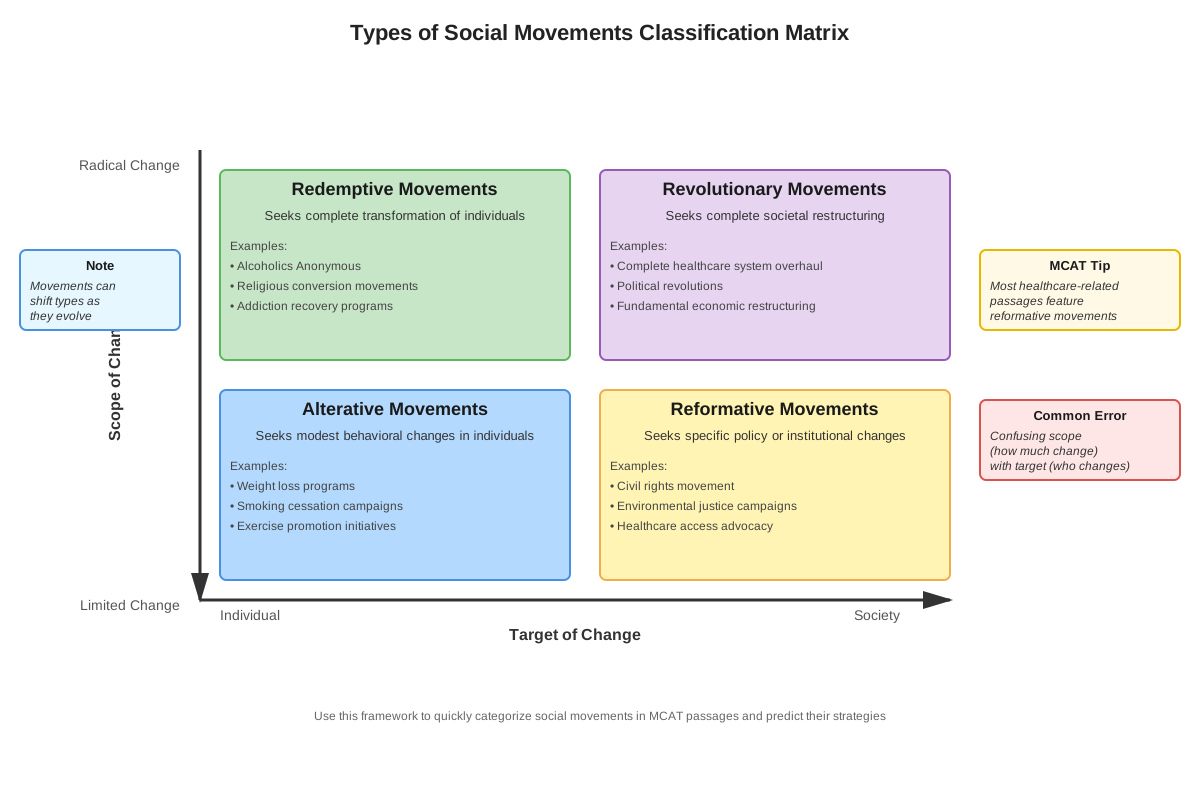
Social movements can be classified along multiple dimensions, with the most common typology based on the scope and direction of change sought:
| Movement Type | Scope of Change | Target | Example |
|---|---|---|---|
| Revolutionary | Complete transformation | Entire social structure | Communist movements, anti-colonial independence movements |
| Reformative | Limited, specific changes | Specific policies/practices | Civil rights movement, women's suffrage |
| Redemptive | Complete individual change | Individual behavior/beliefs | Religious conversion movements, recovery programs |
| Alternative | Limited individual change | Specific individual behaviors | Anti-smoking campaigns, recycling initiatives |
Revolutionary movements seek fundamental restructuring of society, targeting political systems, economic arrangements, or cultural foundations. These movements often emerge when groups perceive the existing system as irredeemably flawed. Reformative movements work within existing structures to achieve specific policy changes or social reforms, accepting the basic framework while seeking modifications. Redemptive movements focus on transforming individuals completely, often through spiritual or ideological conversion. Alternative movements target specific behavioral changes in individuals without seeking broader transformation.
Additional classification schemes distinguish between proactive movements (seeking change) and reactive movements (resisting change), or between old social movements (focused on economic redistribution and class) and new social movements (emphasizing identity, culture, and quality of life issues).
Stages of Social Movement Development
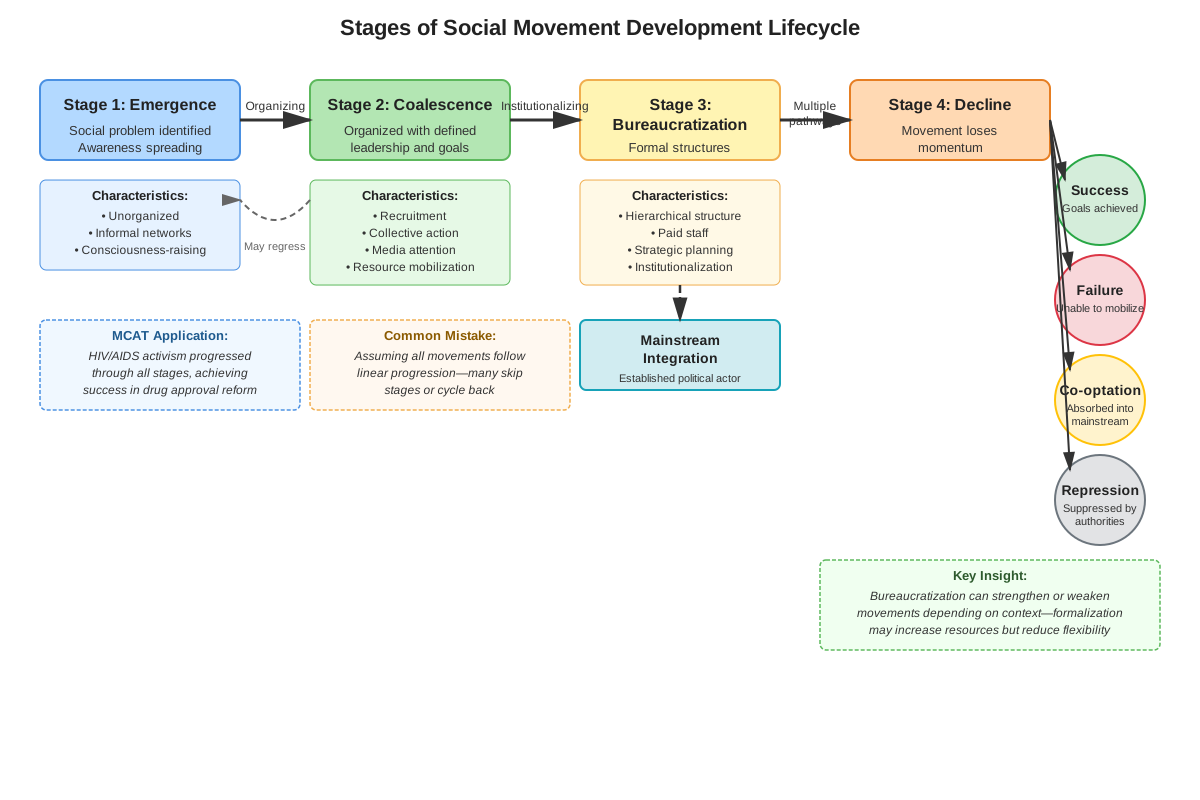
Social movements typically progress through predictable stages, though not all movements complete the full cycle:
- Emergence: Discontent crystallizes around specific grievances; preliminary organization begins; early leaders articulate problems and potential solutions
- Coalescence: Movement gains momentum; formal organization develops; collective identity strengthens; tactics and strategies become coordinated
- Bureaucratization (Institutionalization): Movement establishes formal structures; professional leadership emerges; routinized procedures develop; focus shifts to maintenance
- Decline: Movement loses momentum through success (goals achieved), failure (goals unattainable), repression (external suppression), co-optation (absorption into mainstream), or fragmentation (internal divisions)
Understanding these stages helps predict movement trajectories and explain why some movements succeed while others fail. The transition from emergence to coalescence requires effective mobilization of resources and participants. Bureaucratization can enhance efficiency but may alienate grassroots members who value spontaneity and ideological purity. Decline is inevitable but takes various forms depending on internal dynamics and external pressures.
Theoretical Perspectives on Social Movements
Resource Mobilization Theory
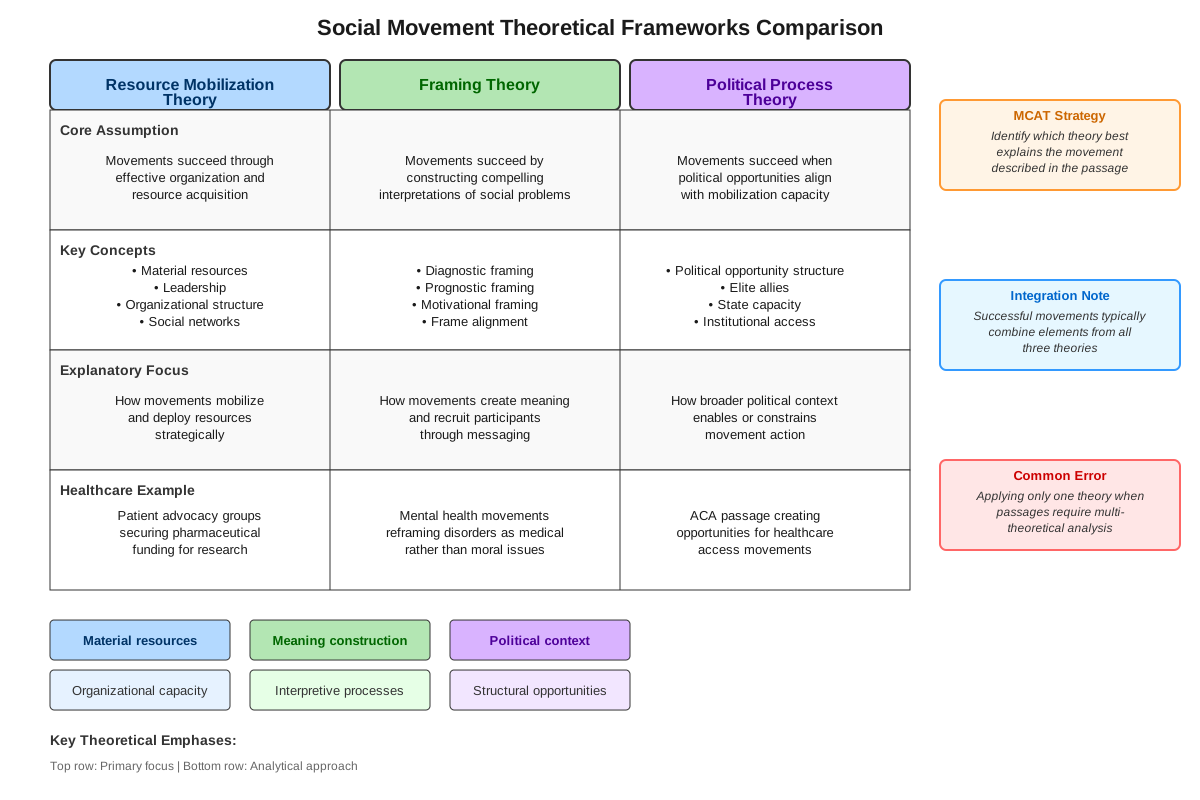
Resource mobilization theory emphasizes that movements succeed or fail based on their ability to acquire and deploy resources—including money, labor, expertise, media access, and legitimacy. This perspective challenges earlier theories that attributed movements to psychological factors like frustration or irrationality, instead viewing movements as rational, strategic actors competing for resources in a political marketplace.
Key concepts include social movement organizations (formal groups that constitute the movement), resource aggregation (pooling individual contributions), and tactical repertoires (available strategies for action). Successful movements effectively mobilize both tangible resources (funding, facilities) and intangible resources (commitment, solidarity, legitimacy). This theory explains why movements with similar grievances achieve different outcomes based on organizational capacity and resource access.
Political Process Theory
Political process theory (also called political opportunity theory) argues that movements emerge and succeed when political conditions create openings for collective action. The political opportunity structure includes factors like elite divisions, institutional access, state capacity for repression, and availability of influential allies. Movements arise not simply because grievances exist, but because political conditions make success seem possible.
This perspective emphasizes that movements are embedded in broader political contexts. Changes in government, shifts in public opinion, or divisions among elites can create windows of opportunity that savvy movements exploit. Conversely, unified opposition or effective repression can suppress movements regardless of their resources or grievances. The theory explains the timing of movement emergence and the variation in movement outcomes across different political contexts.
Framing Theory
Framing theory focuses on how movements construct and communicate interpretations of reality that motivate participation and garner support. Collective action frames are shared understandings that define problems, attribute blame, propose solutions, and motivate action. Effective frames resonate with cultural values, connect to personal experiences, and provide compelling narratives.
Three core framing tasks include diagnostic framing (identifying problems and causes), prognostic framing (proposing solutions and strategies), and motivational framing (providing rationales for action). Frame alignment processes—including frame bridging (linking movements to compatible frames), frame amplification (emphasizing certain values), frame extension (expanding frame boundaries), and frame transformation (changing fundamental understandings)—help movements recruit participants and build coalitions.
Movement Tactics and Strategies
Social movements employ diverse tactics depending on their goals, resources, and political context. Conventional tactics include lobbying, electoral campaigns, litigation, and public education—working within established institutional channels. Disruptive tactics include protests, strikes, boycotts, and civil disobedience—challenging normal operations to force attention and concessions. Violent tactics include property destruction, armed resistance, and terrorism—though most movements avoid violence due to legitimacy costs and repression risks.
Tactical choices reflect strategic calculations about effectiveness, available resources, and acceptable risks. Movements often employ tactical innovation, developing new forms of action that catch opponents off-guard and attract media attention. The repertoire of contention refers to the culturally available set of tactics that movements can deploy, which evolves over time as new forms emerge and old forms become obsolete.
Social Movement Outcomes and Impacts
Movement success is multidimensional and difficult to measure. Direct outcomes include policy changes, institutional reforms, or cultural shifts explicitly sought by movements. Indirect outcomes include unintended consequences, spillover effects on other movements, or long-term cultural transformations. Some movements achieve procedural gains (access to decision-making) without substantive gains (actual policy changes), while others transform culture without formal policy victories.
Movements also face backlash and countermovements—organized opposition that emerges in response to movement gains. The interaction between movements and countermovements shapes the ultimate trajectory of social change. Additionally, movements experience co-optation when authorities adopt movement rhetoric or symbolic concessions while avoiding substantive change, potentially demobilizing participants while preserving existing power structures.
Concept Relationships
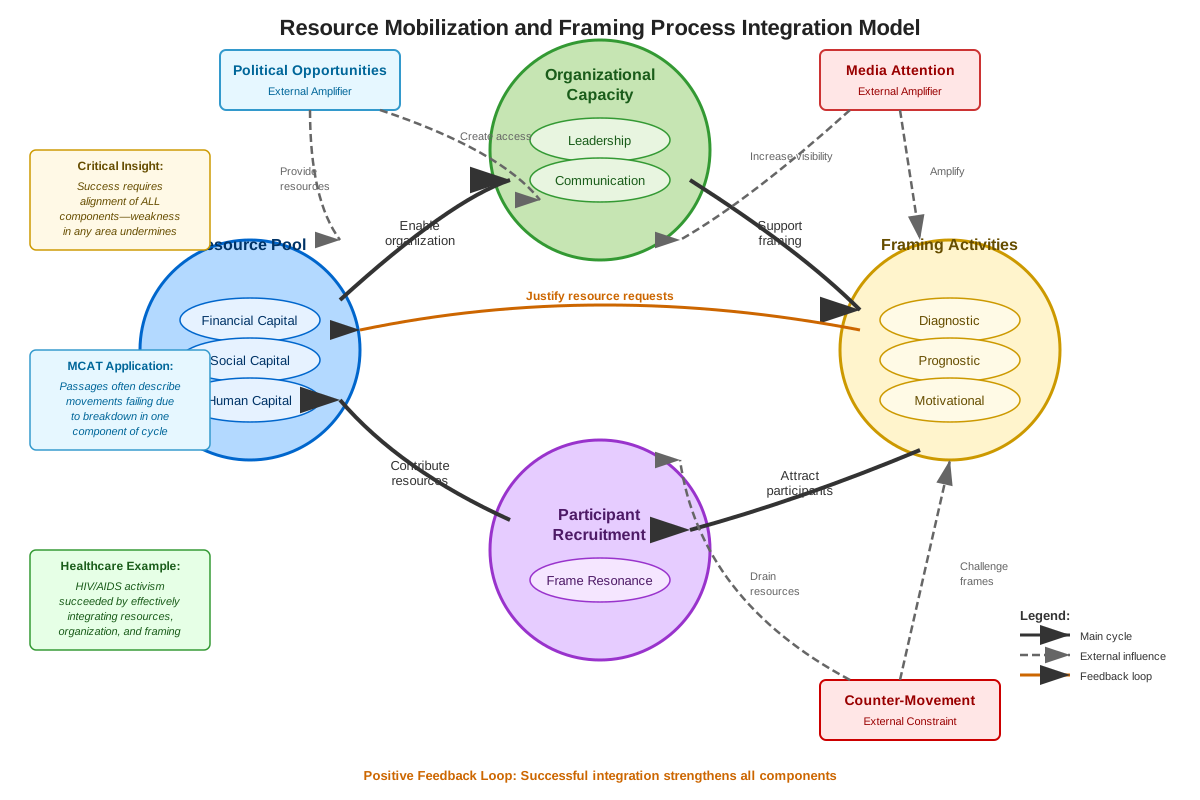
Social movements emerge from the intersection of structural conditions (inequality, political opportunities) and agency (mobilization, framing). Social inequality creates grievances that motivate movements, while political opportunity structures determine when movements can effectively challenge existing arrangements. Resource mobilization provides the organizational capacity to sustain collective action, while framing processes construct shared understandings that motivate participation.
The relationship flows: Structural conditions → Grievances → Framing → Mobilization → Collective action → Outcomes → Social change (or backlash). Each stage influences subsequent stages, with feedback loops as outcomes reshape opportunities and grievances. For example, partial movement success may create new political opportunities while also triggering countermovements.
Social movements connect to collective behavior (the broader category of group action), social change (the ultimate target or result), culture (the symbolic systems movements challenge or defend), power and authority (the structures movements contest), and social institutions (the targets of movement demands). Understanding these connections enables comprehensive analysis of how societies transform over time through organized collective action.
Quick check — test yourself on Social movements so far.
Try Flashcards →High-Yield Facts
⭐ Social movements are organized, sustained collective efforts to promote or resist social change, distinguished from spontaneous collective behavior by their duration, organization, and clear goals
⭐ The four main types of social movements are revolutionary (complete societal transformation), reformative (specific policy changes), redemptive (complete individual transformation), and alternative (limited individual change)
⭐ Resource mobilization theory emphasizes that movement success depends on acquiring and deploying resources including money, labor, expertise, and legitimacy
⭐ Political process theory argues that movements emerge when political opportunity structures create openings, including elite divisions, institutional access, and reduced repression
⭐ Framing theory focuses on how movements construct interpretations through diagnostic framing (identifying problems), prognostic framing (proposing solutions), and motivational framing (justifying action)
- Social movements progress through stages: emergence, coalescence, bureaucratization, and decline (through success, failure, repression, co-optation, or fragmentation)
- New social movements emphasize identity, culture, and quality of life rather than economic redistribution, distinguishing them from old social movements focused on class
- Collective action frames must resonate with cultural values and personal experiences to effectively mobilize participants and garner public support
- Movements employ conventional tactics (lobbying, litigation), disruptive tactics (protests, boycotts), or violent tactics depending on goals, resources, and context
- Movement outcomes include direct policy changes, indirect cultural transformations, procedural gains in access, and unintended consequences including backlash and countermovements
Common Misconceptions
Misconception: Social movements are spontaneous, emotional reactions to grievances → Correction: Social movements are organized, strategic efforts requiring sustained mobilization of resources, careful framing of issues, and exploitation of political opportunities. While emotions play a role, movements succeed through rational planning and coordination.
Misconception: All social movements seek progressive change → Correction: Social movements can be progressive (seeking change) or conservative/reactionary (resisting change or seeking to restore previous conditions). Countermovements opposing progressive movements are themselves social movements with organization, goals, and strategies.
Misconception: Grievances alone are sufficient to generate social movements → Correction: Grievances are necessary but insufficient. Movements require resource mobilization, favorable political opportunities, effective framing, and organizational capacity. Many grievances persist without generating movements due to lack of these factors.
Misconception: Social movements either completely succeed or completely fail → Correction: Movement outcomes are multidimensional and often mixed. Movements may achieve some goals while failing at others, gain procedural access without substantive change, or transform culture without policy victories. Success is complex and difficult to measure.
Misconception: Revolutionary movements are always violent → Correction: Revolutionary movements seek fundamental social transformation but may employ nonviolent tactics. The distinction between revolutionary and reformative concerns the scope of change sought, not the tactics employed. Many revolutionary movements use civil disobedience and mass mobilization rather than violence.
Misconception: Once movements bureaucratize, they inevitably decline → Correction: Bureaucratization can enhance movement effectiveness by providing stable resources, professional expertise, and sustained pressure. While bureaucratization may alienate some grassroots members, it can also enable long-term influence and policy impact.
Worked Examples
Example 1: Identifying Movement Type and Stage
Scenario: A group of patients with a rare disease forms an organization to raise awareness, fund research, and advocate for insurance coverage of experimental treatments. The organization has grown from informal meetings to a registered nonprofit with paid staff, an annual conference, and partnerships with medical researchers. Recently, a major pharmaceutical company announced plans to develop a treatment for the disease.
Analysis:
Step 1: Identify the movement type
This is a reformative social movement because it seeks specific, limited changes (research funding, insurance coverage, treatment development) within existing healthcare and insurance systems rather than complete transformation of society or individuals. The scope is focused on particular policies and practices affecting one disease community.
Step 2: Determine the current stage
The movement has progressed to the bureaucratization/institutionalization stage. Evidence includes: formal organizational structure (registered nonprofit), professional leadership (paid staff), routinized activities (annual conference), and established relationships with institutional actors (pharmaceutical partnerships). The movement has moved beyond spontaneous organizing to stable, formalized operations.
Step 3: Predict likely trajectory
The pharmaceutical company's treatment development suggests potential movement toward the decline stage through success. If effective treatments become available and insurance coverage is secured, the movement's primary goals will be achieved. However, the organization may persist in modified form, focusing on patient support, treatment access, or related issues—a common pattern where successful movements transform rather than disappear.
Connection to learning objectives: This example demonstrates application of movement typology and stage theory to analyze real-world scenarios, a common MCAT question format.
Example 2: Applying Theoretical Frameworks
Scenario: In the 1960s, the environmental movement emerged in the United States, leading to major legislation including the Clean Air Act and creation of the Environmental Protection Agency. Factors contributing to movement success included: publication of Rachel Carson's "Silent Spring" highlighting pesticide dangers, visible environmental disasters (oil spills, river fires), growing middle-class concern about quality of life, bipartisan political support, and formation of organizations like the Sierra Club and Environmental Defense Fund.
Analysis:
Step 1: Apply resource mobilization theory
The movement successfully mobilized multiple resources: financial resources (middle-class donations), human resources (volunteer activists and professional staff), expertise (scientists providing credibility), media access (coverage of disasters and Carson's book), and legitimacy (bipartisan support). The formation of formal organizations enabled resource aggregation and sustained pressure on policymakers.
Step 2: Apply political process theory
The political opportunity structure was favorable: bipartisan consensus created elite allies rather than unified opposition; visible disasters made environmental problems undeniable; growing middle-class political power provided electoral incentives for politicians to respond; and the 1960s cultural climate emphasized social reform. These opportunities made success achievable, motivating participation.
Step 3: Apply framing theory
The movement employed effective diagnostic framing (pollution threatens health and quality of life), prognostic framing (regulation and enforcement can protect environment), and motivational framing (citizens have responsibility to protect nature for future generations). Carson's book provided a compelling narrative that resonated with cultural values of health, family, and stewardship.
Step 4: Synthesize perspectives
All three theories explain different aspects of movement success. Resources enabled sustained action, political opportunities made success possible, and effective framing motivated participation and public support. The interaction of these factors—not any single element—explains the environmental movement's policy achievements.
Connection to learning objectives: This example demonstrates how to apply multiple theoretical frameworks to analyze movement emergence and success, integrating concepts to provide comprehensive explanations.
Exam Strategy
When approaching MCAT questions on social movements, begin by identifying what the question asks: movement type, stage, theoretical explanation, or outcome prediction. Passage-based questions typically provide a scenario requiring application of concepts rather than simple recall.
Trigger words and phrases to watch for:
- "Organized effort" or "collective action" → signals social movement rather than spontaneous collective behavior
- "Seeks to change policy" or "advocates for reform" → suggests reformative movement
- "Fundamental transformation" or "revolutionary change" → indicates revolutionary movement
- "Resources," "funding," or "organization" → points toward resource mobilization theory
- "Political climate," "opportunity," or "elite divisions" → suggests political process theory
- "Framing," "interpretation," or "meaning" → indicates framing theory perspective
Process-of-elimination strategies:
- Eliminate options confusing movement types (revolutionary vs. reformative is commonly tested)
- Rule out answers attributing movements solely to grievances without considering resources or opportunities
- Reject options suggesting movements are irrational or purely emotional
- Eliminate answers confusing stages (emergence vs. coalescence vs. bureaucratization)
- Discard options treating all movements as progressive or change-seeking
Time allocation advice:
Social movement questions often appear in passages requiring careful reading to identify relevant details. Allocate 1-2 minutes to read the passage, noting movement characteristics, resources, political context, and outcomes. Spend 30-45 seconds per question, using passage details to eliminate incorrect options. If uncertain between two answers, return to the passage to identify supporting evidence rather than relying on assumptions.
Exam Tip: When questions ask about movement success or failure, consider all three major theories (resource mobilization, political process, framing) and look for passage details supporting each perspective. The correct answer often integrates multiple theoretical insights rather than relying on a single framework.
Memory Techniques
MNEMONIC for movement types - "RARA":
- Revolutionary (complete societal change)
- Alternative (limited individual change)
- Redemptive (complete individual change)
- Alternative... wait, that's wrong! Use: Reformative (limited societal change)
Better mnemonic: "Really Radical Reformers Redeem Alternatives"
- Revolutionary - Radical societal transformation
- Reformative - Reform specific policies
- Redemptive - Redeem/transform individuals completely
- Alternative - Alter specific individual behaviors
MNEMONIC for movement stages - "ECBD":
- Emergence (discontent crystallizes)
- Coalescence (momentum builds)
- Bureaucratization (formal structures develop)
- Decline (movement ends)
Visualization for theoretical perspectives:
Imagine a movement as a boat navigating toward an island (goal):
- Resource mobilization = the boat itself, oars, supplies (tangible resources needed)
- Political process = the wind and currents (external conditions enabling or hindering progress)
- Framing = the map and compass (interpretive tools guiding direction and motivating crew)
ACRONYM for framing tasks - "DPM":
- Diagnostic (identify problem)
- Prognostic (propose solution)
- Motivational (justify action)
Summary
Social movements are organized, sustained collective efforts to promote or resist social change, distinguished from spontaneous collective behavior by their duration, organization, and purposeful goals. The four main movement types—revolutionary, reformative, redemptive, and alternative—differ in the scope and target of change sought. Movements typically progress through stages of emergence, coalescence, bureaucratization, and decline, though not all movements complete this cycle. Three major theoretical perspectives explain movement dynamics: resource mobilization theory emphasizes acquiring and deploying resources; political process theory focuses on political opportunity structures that enable or constrain collective action; and framing theory examines how movements construct interpretations that motivate participation. Movement success depends on the interaction of resources, opportunities, and effective framing, with outcomes ranging from direct policy changes to indirect cultural transformations. Understanding social movements is essential for analyzing how societies change, how marginalized groups gain voice, and how collective action shapes health policy and healthcare delivery—making this topic highly relevant for MCAT success and future medical practice.
Key Takeaways
- Social movements are organized, sustained efforts to promote or resist change, requiring resources, favorable political opportunities, and effective framing to succeed
- The four movement types (revolutionary, reformative, redemptive, alternative) differ in scope and target of change, with reformative movements most common in stable democracies
- Resource mobilization theory, political process theory, and framing theory provide complementary explanations for movement emergence, strategies, and outcomes
- Movements progress through predictable stages (emergence, coalescence, bureaucratization, decline) though trajectories vary based on internal dynamics and external pressures
- Movement success is multidimensional, including direct policy changes, indirect cultural impacts, procedural gains, and unintended consequences like backlash
- Understanding social movements enables analysis of how collective action shapes health policy, healthcare access, and public health interventions
- MCAT questions test ability to identify movement types, apply theoretical frameworks, and analyze movement dynamics in health-related contexts
Related Topics
Collective Behavior: Broader category including crowds, riots, fads, and panics—understanding the distinction between spontaneous collective behavior and organized social movements deepens comprehension of when and why sustained movements emerge versus temporary collective episodes.
Social Change: The ultimate outcome or target of social movements—studying theories of social change (modernization, conflict, cyclical) provides context for understanding how movements fit into broader patterns of societal transformation.
Power, Authority, and Social Inequality: Social movements challenge or defend existing power structures and respond to inequality—mastering these concepts clarifies what movements contest and why certain groups mobilize while others remain quiescent.
Culture and Ideology: Movements both reflect and reshape cultural values, norms, and belief systems—understanding cultural dynamics explains how movements frame issues and why certain frames resonate while others fail.
Political Sociology: The study of power, governance, and political institutions—this broader field contextualizes how movements interact with political systems, influence policy, and navigate institutional constraints.
Practice CTA
Now that you've mastered the core concepts of social movements, test your understanding with practice questions and flashcards. Focus on applying theoretical frameworks to novel scenarios, distinguishing between movement types, and analyzing the factors contributing to movement success or failure. Remember that social movements questions on the MCAT often appear in passage-based formats requiring careful analysis of specific details—practice extracting relevant information and connecting it to theoretical concepts. Your ability to analyze collective action and social change will serve you well not only on the exam but throughout your medical career as you navigate healthcare advocacy, policy debates, and community health initiatives. Keep pushing forward—you're building essential skills for both test day and your future as a physician!
Sign up free to keep reading
Create a free AnvayaPrep account to finish this MCAT guide on Social movements — plus flashcards and practice questions.