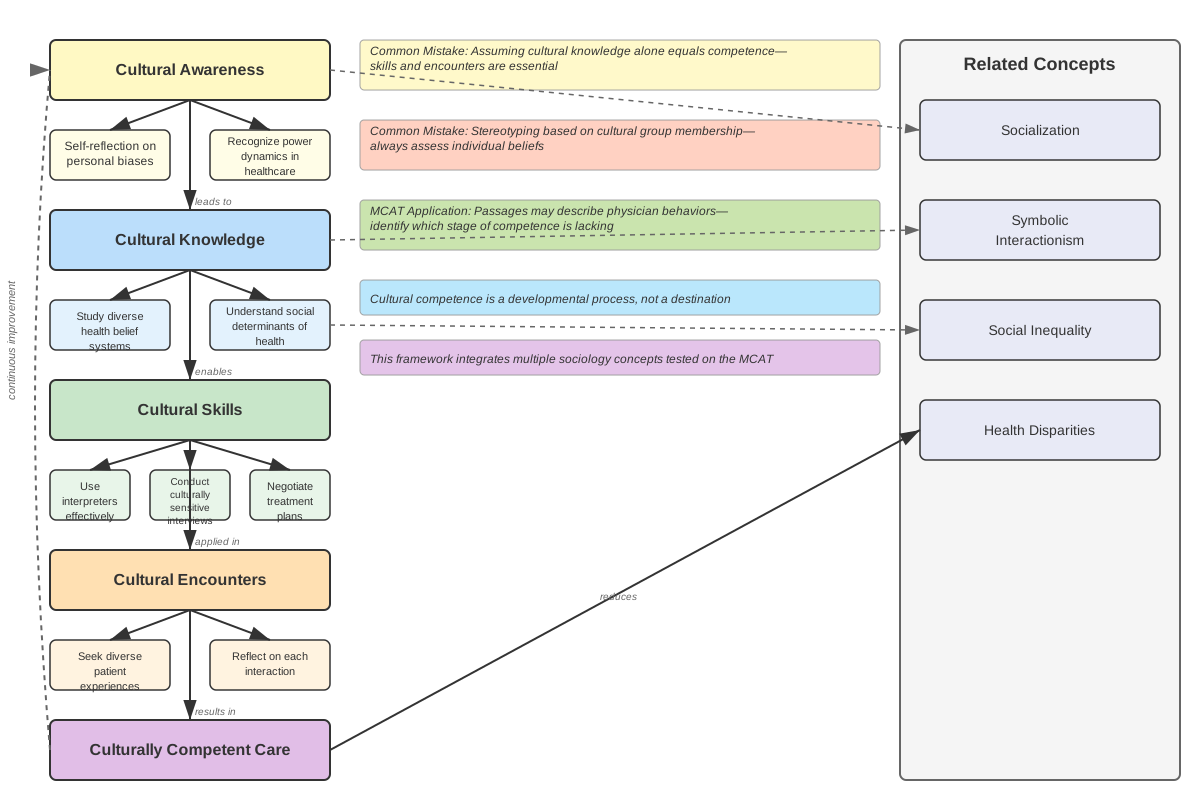
Overview
Culture is one of the most fundamental concepts in Sociology and represents a cornerstone of the MCAT's Psychological, Social, and Biological Foundations of Behavior section. Culture encompasses the shared beliefs, values, norms, behaviors, and material objects that characterize a group or society. Understanding culture is essential for medical professionals because healthcare delivery occurs within cultural contexts that profoundly influence patient beliefs about illness, treatment preferences, communication styles, and health-seeking behaviors. The MCAT tests culture extensively because physicians must navigate diverse cultural landscapes to provide effective, patient-centered care.
Within the broader framework of Social Structure and Institutions, culture serves as the invisible architecture that shapes how societies organize themselves, how institutions function, and how individuals understand their place in the social world. Culture operates at multiple levels—from the macro-level patterns that define entire civilizations to the micro-level interactions between individuals. The MCAT frequently presents passages exploring cultural differences in health beliefs, the impact of cultural competence on healthcare outcomes, and the tension between cultural relativism and universal ethical standards in medicine.
Mastering Culture for the MCAT requires more than memorizing definitions; students must develop the ability to analyze how cultural elements interact, recognize cultural phenomena in research scenarios, and apply sociological frameworks to novel situations. This topic connects intimately with other high-yield concepts including socialization, social inequality, demographic characteristics, and social change. Questions on culture often appear in passages discussing health disparities, patient-provider communication, or the social determinants of health—making this topic both frequently tested and clinically relevant.
Learning Objectives
- [ ] Define Culture using accurate Sociology terminology
- [ ] Explain why Culture matters for the MCAT
- [ ] Apply Culture to exam-style questions
- [ ] Identify common mistakes related to Culture
- [ ] Connect Culture to related Sociology concepts
- [ ] Distinguish between material and non-material culture with specific examples
- [ ] Compare and contrast cultural universals, cultural relativism, and ethnocentrism
- [ ] Analyze how culture is transmitted through socialization and social institutions
- [ ] Evaluate the relationship between culture and social inequality
Prerequisites
- Basic understanding of society and social groups: Culture exists within the context of organized human groups, and understanding how societies function provides the foundation for analyzing cultural patterns.
- Familiarity with sociological perspective: The ability to view human behavior through a sociological lens (rather than purely psychological or biological) is necessary to appreciate culture as a collective phenomenon.
- Awareness of diversity: Recognition that human populations vary across multiple dimensions prepares students to understand cultural variation without judgment.
Why This Topic Matters
Clinical and Real-World Significance
Culture profoundly impacts every aspect of healthcare delivery. Patients' cultural backgrounds influence their explanatory models of disease (how they understand what causes illness), their willingness to seek medical care, their adherence to treatment regimens, and their preferences for end-of-life care. For example, some cultures emphasize family-centered decision-making rather than individual autonomy, which directly challenges the Western bioethical principle of patient autonomy. Physicians who lack cultural competence may misdiagnose conditions, fail to establish therapeutic relationships, or inadvertently offend patients, leading to poorer health outcomes and increased health disparities.
Exam Statistics and Question Types
Culture appears in approximately 15-20% of Psychological, Social, and Biological Foundations questions, making it one of the highest-yield sociology topics. The MCAT tests culture through multiple question formats: discrete questions asking for definitions or comparisons, passage-based questions requiring application of cultural concepts to research scenarios, and questions integrating culture with other topics like social inequality or demographics. Culture questions often appear in passages discussing health disparities among ethnic groups, cross-cultural psychology research, or anthropological studies of health behaviors.
Common Exam Contexts
The MCAT frequently presents culture in the following contexts: (1) research studies comparing health beliefs or behaviors across ethnic or national groups; (2) clinical vignettes exploring miscommunication between providers and patients from different cultural backgrounds; (3) passages discussing the social determinants of health and how cultural factors contribute to health disparities; (4) studies examining cultural change, assimilation, or acculturation in immigrant populations; and (5) ethical dilemmas involving conflicts between cultural practices and medical standards of care.
Core Concepts
Defining Culture
Culture is the complex system of shared meanings, beliefs, values, norms, behaviors, symbols, and material objects that members of a society use to make sense of their world and to guide their interactions with one another. Culture is learned (not biologically inherited), shared among group members, transmitted across generations, and adaptive (changing in response to environmental and social conditions). This definition distinguishes culture from individual personality traits or biological characteristics.
Culture Sociology examines how cultural elements shape social life and how social structures, in turn, influence cultural patterns. Sociologists view culture as both a product of human interaction and a force that constrains and enables human behavior. Culture provides the "toolkit" of symbols, stories, rituals, and worldviews that people use to solve problems and construct strategies of action.
Material vs. Non-Material Culture
Culture consists of two fundamental components:
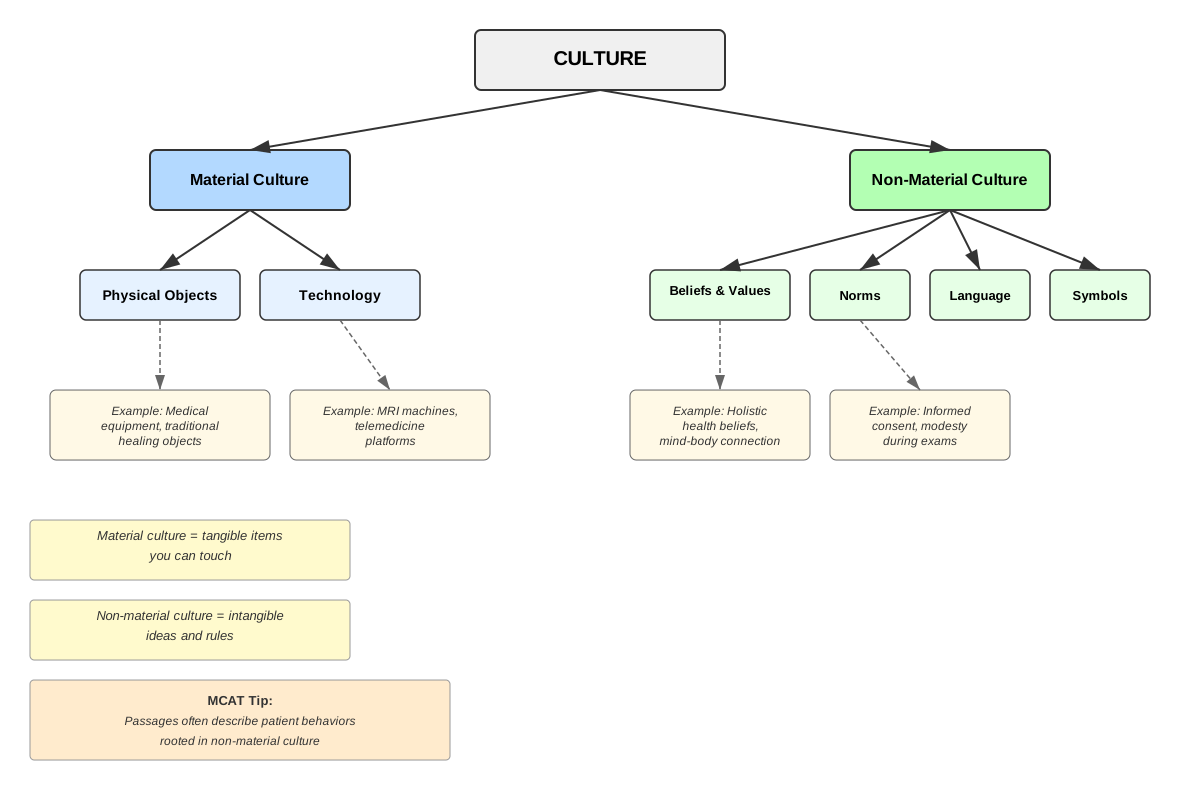
Material culture includes the physical objects, resources, and spaces that people use to define their culture. Examples include technology, buildings, clothing, tools, artwork, and food. Material culture is tangible and observable. For the MCAT, recognize that material culture reflects underlying values and beliefs—for instance, the prevalence of single-family homes in American suburbs reflects cultural values of privacy and nuclear family structure.
Non-material culture encompasses the intangible aspects of culture, including:
- Values: Deeply held beliefs about what is good, desirable, and important (e.g., individualism, collectivism, equality)
- Norms: Rules and expectations for behavior in specific situations (further divided into folkways, mores, and taboos)
- Beliefs: Convictions about what is true or false, real or unreal
- Language: The system of symbols used for communication
- Symbols: Anything that carries particular meaning recognized by people who share a culture
| Component | Definition | MCAT Example |
|---|---|---|
| Values | Core principles about what is desirable | Autonomy in Western medicine vs. family-centered decision-making in collectivist cultures |
| Norms | Behavioral expectations | Maintaining eye contact during conversations (varies by culture) |
| Folkways | Casual norms; minor sanctions if violated | Appropriate greeting behaviors |
| Mores | Serious norms; significant sanctions if violated | Prohibitions against harming patients |
| Taboos | Strongest norms; severe sanctions if violated | Incest prohibitions, cannibalism |
| Symbols | Objects/gestures with shared meaning | White coat symbolizing medical authority |
Cultural Universals
Cultural universals are patterns or traits that exist in all known human cultures. Despite tremendous cultural diversity, all societies have developed solutions to universal human problems. Examples include:
- Language and communication systems
- Family structures and kinship systems
- Methods of food acquisition and preparation
- Religious or spiritual belief systems
- Art and aesthetic expression
- Systems of social control and governance
- Rites of passage marking life transitions
The existence of cultural universals suggests that certain social institutions emerge from fundamental human needs and biological imperatives. However, while the general pattern is universal, the specific form varies dramatically across cultures. For example, all cultures have marriage customs, but definitions of marriage, acceptable partners, and marital practices differ widely.
Ethnocentrism vs. Cultural Relativism
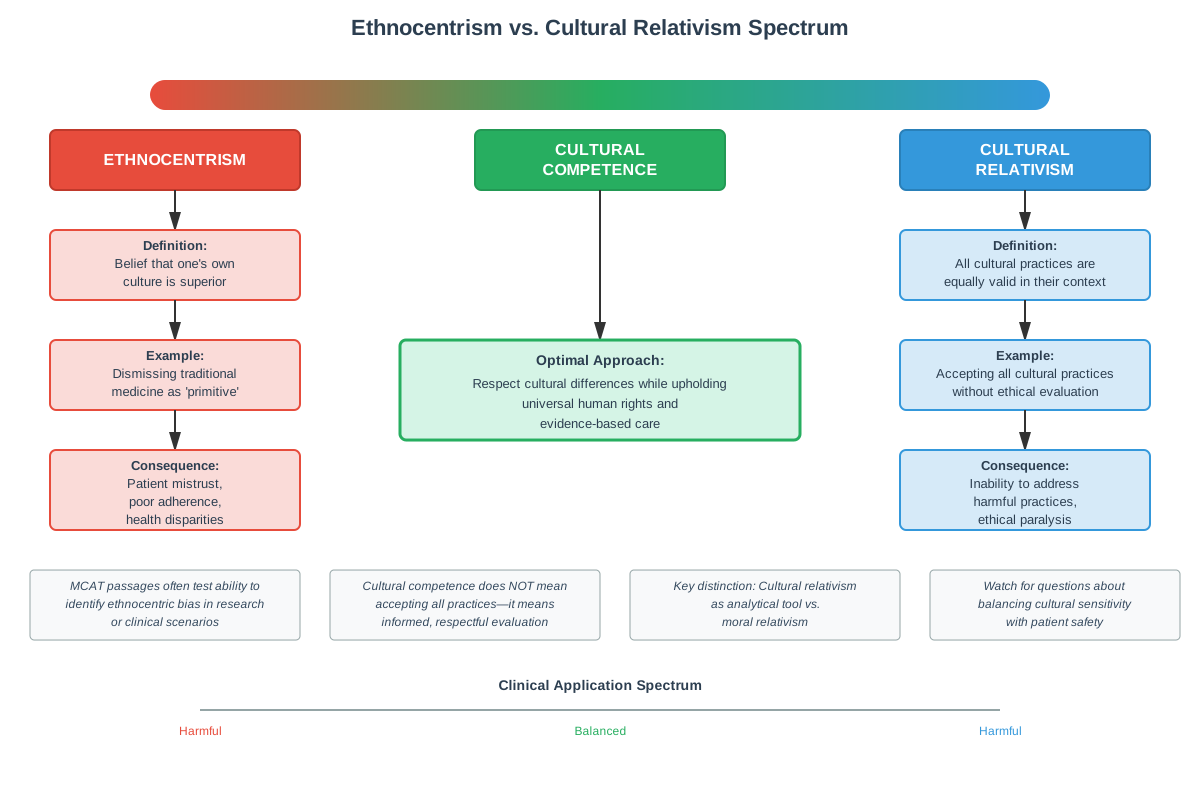
Ethnocentrism is the practice of judging another culture by the standards of one's own culture, typically viewing one's own culture as superior. Ethnocentrism can lead to cultural misunderstandings, prejudice, and discrimination. In healthcare, ethnocentric providers might dismiss patients' traditional healing practices as "primitive" or "irrational," damaging the therapeutic relationship and reducing treatment adherence.
Cultural relativism is the principle that a culture should be understood on its own terms rather than judged by the standards of another culture. Cultural relativism encourages understanding and tolerance but raises ethical challenges when cultural practices conflict with human rights or medical ethics. The MCAT often tests the tension between respecting cultural diversity and maintaining universal ethical standards.
Exam Tip: The MCAT generally favors cultural relativism over ethnocentrism, but watch for questions that present ethical dilemmas where cultural practices harm individuals (e.g., female genital cutting, refusing life-saving treatment for children). In these cases, the correct answer typically balances cultural sensitivity with protection of vulnerable individuals.
Subcultures and Countercultures
Subcultures are groups within a larger culture that share distinctive values, norms, and lifestyles while still participating in the dominant culture. Examples include ethnic communities, professional groups (physicians form a medical subculture), religious communities, and age-based groups. Subcultures add diversity to society without fundamentally challenging the dominant culture.
Countercultures are subcultures that actively reject and oppose significant elements of the dominant culture. Countercultures seek to replace mainstream values with alternative ones. Historical examples include the 1960s hippie movement and various political or religious movements that challenge established norms.
For the MCAT, recognize that healthcare settings contain multiple subcultures (nursing culture, physician culture, administrative culture) that may have different values and communication styles, potentially leading to interprofessional conflicts.
Cultural Transmission and Socialization
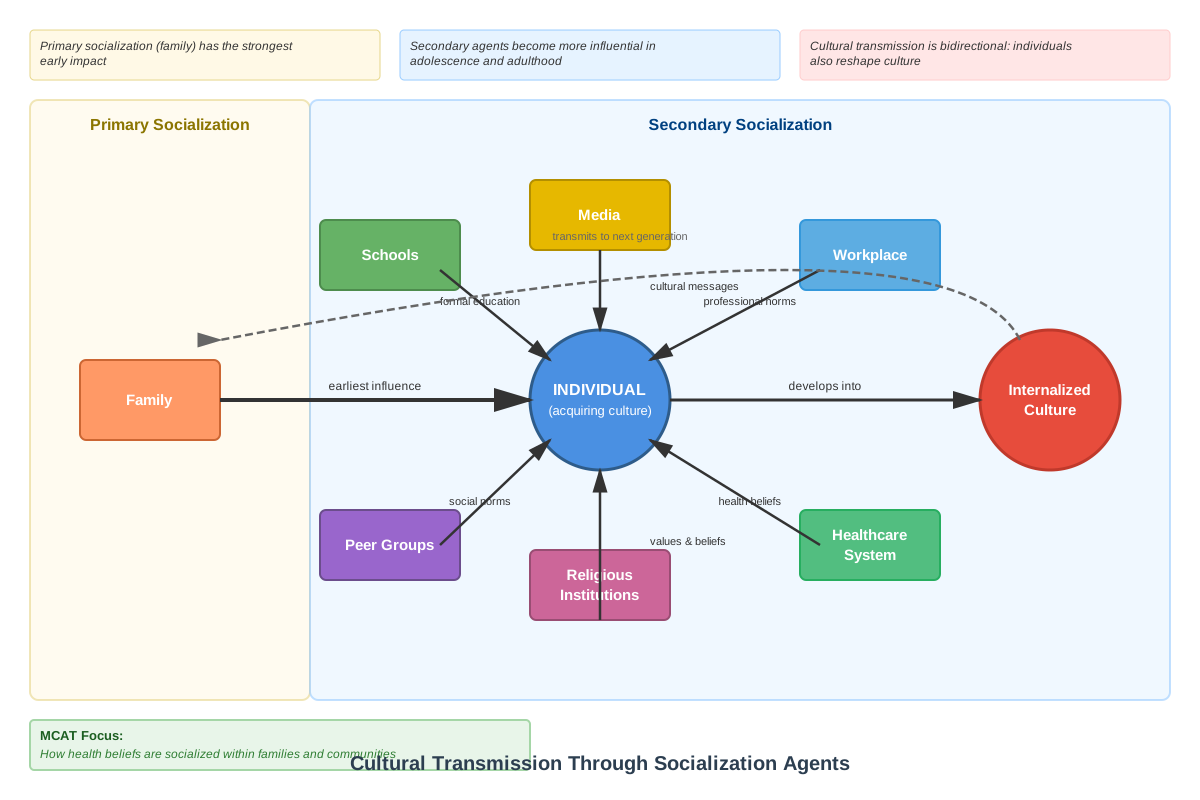
Culture is transmitted from one generation to the next through socialization—the lifelong process by which individuals learn and internalize cultural norms, values, and behaviors. Key agents of socialization include:
- Family: Primary socialization occurs in early childhood within the family
- Education: Schools transmit both explicit curriculum and hidden curriculum (implicit cultural values)
- Peers: Peer groups become increasingly influential during adolescence
- Media: Mass media and social media transmit cultural messages and shape values
- Religion: Religious institutions transmit moral frameworks and worldviews
Cultural transmission is not passive; individuals actively interpret, negotiate, and sometimes resist cultural messages. This explains both cultural continuity (why cultures persist across generations) and cultural change (why cultures evolve over time).
Cultural Diffusion and Cultural Change
Cultural diffusion is the spread of cultural elements (beliefs, practices, technologies) from one culture to another through contact. Diffusion occurs through:
- Direct diffusion: Face-to-face contact between cultures
- Forced diffusion: One culture compels another to adopt its practices (colonialism)
- Indirect diffusion: Cultural elements spread through intermediaries (trade, media)
Cultural lag occurs when material culture changes more rapidly than non-material culture, creating a period of maladjustment. For example, reproductive technologies (material culture) have advanced faster than societal consensus about their ethical use (non-material culture), creating ongoing debates about issues like surrogacy and genetic engineering.
Assimilation and Multiculturalism
Assimilation is the process by which individuals or groups adopt the cultural traits of another group, typically a minority group adopting the dominant culture. Assimilation can be:
- Forced: Imposed by the dominant group (e.g., residential schools for indigenous children)
- Voluntary: Chosen by individuals seeking social mobility or acceptance
Multiculturalism is the perspective that cultural diversity should be respected and maintained rather than eliminated through assimilation. Multicultural societies recognize multiple cultural traditions as legitimate and valuable. The MCAT often contrasts these approaches in questions about immigrant health, health disparities, and culturally competent care.
Concept Relationships
Culture serves as the foundational concept connecting numerous sociological topics tested on the MCAT. Understanding these relationships enhances the ability to answer complex, integrated questions.
Culture → Socialization: Culture provides the content of socialization—the specific values, norms, and behaviors that individuals learn. Socialization is the mechanism through which culture is transmitted and internalized. Without culture, there would be nothing to socialize individuals into; without socialization, culture could not persist across generations.
Culture → Social Structure and Institutions: Culture shapes how societies organize their institutions (family, education, healthcare, economy, government). Conversely, social institutions reinforce and transmit cultural values. For example, the American healthcare system reflects cultural values of individualism, technological innovation, and market-based solutions.
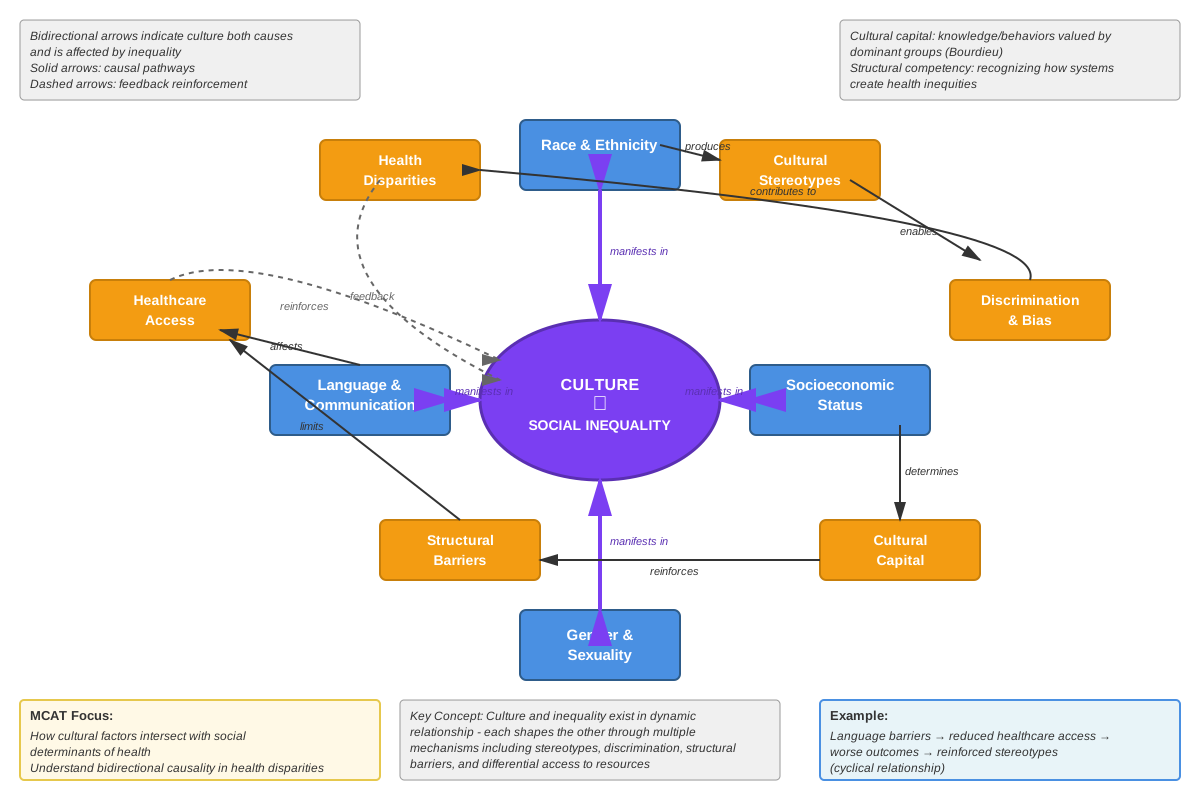
Culture → Social Inequality: Cultural beliefs and values can legitimize or challenge systems of inequality. Cultural capital (knowledge, skills, education, and advantages that a person has, which give them a higher status in society) contributes to social stratification. Dominant groups often define their cultural practices as superior, marginalizing other cultural traditions.
Culture → Demographics: Demographic characteristics (race, ethnicity, religion, nationality) are often associated with distinct cultural patterns, though the relationship is not deterministic. The MCAT frequently tests understanding that demographic categories are socially constructed and that cultural variation exists within demographic groups.
Culture → Health and Illness: Culture shapes explanatory models of disease, health-seeking behaviors, treatment preferences, and patient-provider communication. Understanding culture is essential for addressing health disparities and providing culturally competent care.
Relationship Map:
Cultural Values and Beliefs
    ↓
Transmitted through Socialization
    ↓
Internalized by Individuals
    ↓
Expressed through Norms and Behaviors
    ↓
Reinforced by Social Institutions
    ↓
Shape Social Structure and Inequality
    ↓
Influence Health Behaviors and Outcomes
Quick check — test yourself on Culture so far.
Try Flashcards →High-Yield Facts
⭐ Culture is learned, not biologically inherited—it is transmitted through socialization, not genetics, distinguishing it from instinctive behaviors.
⭐ Material culture consists of physical objects; non-material culture includes values, norms, beliefs, and symbols—both components interact to form complete cultural systems.
⭐ Ethnocentrism involves judging other cultures by one's own standards; cultural relativism involves understanding cultures on their own terms—the MCAT generally favors cultural relativism with ethical boundaries.
⭐ Cultural universals are patterns found in all cultures, but their specific forms vary widely—this explains both human commonality and cultural diversity.
⭐ Subcultures share distinctive traits while participating in the dominant culture; countercultures actively oppose dominant cultural values—this distinction is frequently tested.
- Folkways are casual norms with minor sanctions; mores are serious norms with significant sanctions; taboos are the strongest norms with severe sanctions—understanding this hierarchy helps analyze cultural responses to norm violations.
- Cultural diffusion spreads cultural elements between societies through direct contact, forced imposition, or indirect transmission—this explains cultural change and globalization.
- Cultural lag occurs when material culture changes faster than non-material culture—this concept frequently appears in questions about technology and social change.
- Assimilation involves adopting another culture's traits; multiculturalism involves maintaining cultural diversity—these represent different approaches to cultural pluralism.
- Cultural capital refers to knowledge and skills that confer social status—this concept links culture to social stratification and inequality.
- Language is a crucial component of culture that shapes thought and perception—the Sapir-Whorf hypothesis suggests language influences how people perceive reality.
- Symbols are objects, gestures, or words that carry shared meaning within a culture—recognizing symbolic meanings is essential for cross-cultural communication.
Common Misconceptions
Misconception: Culture and race are the same thing.
Correction: Race is a socially constructed category based on perceived physical characteristics, while culture refers to shared beliefs, values, and practices. People of the same race may have very different cultures, and people of different races may share the same culture. Culture is learned; race is an assigned social category.
Misconception: Cultural relativism means accepting all cultural practices without judgment, even those that harm people.
Correction: Cultural relativism is an analytical tool for understanding cultures on their own terms, not an ethical mandate to accept all practices. The MCAT recognizes that cultural sensitivity must be balanced with universal ethical principles, particularly regarding human rights and protection of vulnerable individuals. Physicians can respect cultural diversity while advocating against harmful practices.
Misconception: Subcultures and countercultures are the same thing.
Correction: Subcultures exist within and generally accept the dominant culture while maintaining distinctive characteristics. Countercultures actively reject and oppose significant elements of the dominant culture, seeking to replace mainstream values. All countercultures are subcultures, but not all subcultures are countercultures.
Misconception: Cultural universals mean that all cultures are essentially the same.
Correction: Cultural universals indicate that all societies address certain fundamental human needs (family, language, religion, etc.), but the specific forms these institutions take vary dramatically. The existence of marriage in all cultures doesn't mean all cultures define marriage the same way or practice it similarly.
Misconception: Assimilation is always voluntary and beneficial.
Correction: Assimilation can be forced (through policies that suppress minority cultures) or voluntary (when individuals choose to adopt dominant cultural traits). Forced assimilation often causes psychological harm, cultural loss, and intergenerational trauma. Even voluntary assimilation involves trade-offs, as individuals may lose connection to their heritage culture while gaining acceptance in the dominant culture.
Misconception: Material culture is less important than non-material culture.
Correction: Both components are essential and interact continuously. Material culture reflects and reinforces non-material culture (values and beliefs), while non-material culture shapes what material objects societies create and how they use them. Technology (material culture) can drive changes in values and norms (non-material culture), demonstrating their interdependence.
Worked Examples
Example 1: Cultural Competence in Healthcare
Vignette: A physician is treating a 45-year-old patient from a collectivist culture who has been diagnosed with terminal cancer. When the physician attempts to discuss prognosis and treatment options with the patient, the patient's adult children intervene, stating that in their culture, such information should be shared with the family first, and they will decide what to tell their parent. The physician feels uncomfortable because this conflicts with the principle of patient autonomy emphasized in Western medical ethics.
Question: Which concept best explains the family's behavior?
A) Ethnocentrism
B) Cultural relativism
C) Cultural values regarding family decision-making
D) Counterculture
Analysis:
Step 1: Identify the cultural phenomenon. The family's behavior reflects their culture's values about decision-making authority and information sharing. In collectivist cultures, family-centered decision-making is normative, contrasting with the individualistic emphasis on patient autonomy in Western medicine.
Step 2: Evaluate each option:
- Option A (Ethnocentrism): This would involve judging another culture by one's own standards. The family is not judging the physician's culture; they are expressing their own cultural values. Incorrect.
- Option B (Cultural relativism): This is an analytical approach, not a description of the family's behavior. Incorrect.
- Option C (Cultural values regarding family decision-making): This directly describes what's happening. The family's behavior reflects their cultural values about appropriate decision-making processes. Correct.
- Option D (Counterculture): A counterculture actively opposes dominant cultural values. The family is expressing their own culture's mainstream values, not opposing them. Incorrect.
Step 3: Connect to learning objectives. This question tests the ability to apply cultural concepts to clinical scenarios and recognize how cultural values shape health-related behaviors. It also illustrates the tension between cultural relativism (respecting the family's cultural values) and Western bioethical principles (patient autonomy).
Answer: C
Clinical Application: Culturally competent physicians recognize that different cultures have different values regarding medical decision-making. The appropriate response involves respectfully exploring the family's preferences, explaining the legal and ethical framework in which the physician practices, and negotiating a solution that respects both the family's cultural values and the patient's rights.
Example 2: Cultural Change and Health Behaviors
Vignette: Researchers studying immigrant health observe that recent immigrants from a particular country have lower rates of obesity and diabetes than the general U.S. population. However, after 10-15 years in the United States, these immigrants' rates of obesity and diabetes increase to match or exceed those of the general population. The researchers note that dietary patterns change over time, with traditional foods being replaced by processed American foods.
Question: Which concept best explains the changing health patterns observed in this immigrant population?
A) Cultural diffusion
B) Cultural universals
C) Assimilation and acculturation
D) Subculture formation
Analysis:
Step 1: Identify the process. Immigrants are adopting American dietary practices over time, and this cultural change is associated with changing health outcomes. This represents adoption of host culture traits.
Step 2: Evaluate each option:
- Option A (Cultural diffusion): While diffusion involves the spread of cultural elements between groups, this term doesn't specifically capture the process of immigrants adopting host culture traits. Less precise than another option.
- Option B (Cultural universals): These are patterns found in all cultures. The question describes cultural change specific to immigration, not universal patterns. Incorrect.
- Option C (Assimilation and acculturation): Assimilation is the process by which individuals adopt the cultural traits of another group. Acculturation refers to cultural change resulting from contact between cultures. This directly describes what's happening—immigrants are adopting American dietary practices. Correct.
- Option D (Subculture formation): This would involve maintaining distinctive cultural traits while participating in the larger culture. The vignette describes loss of traditional practices, not maintenance of a distinct subculture. Incorrect.
Step 3: Recognize the public health implications. This example illustrates how cultural change can impact health outcomes. The "healthy immigrant effect" (immigrants initially having better health than the native-born population) often diminishes over time as immigrants adopt less healthy behaviors from the host culture.
Answer: C
Connection to Health Disparities: This example demonstrates how culture influences health behaviors and outcomes. Understanding acculturation processes helps explain health disparities and informs culturally tailored interventions that preserve protective cultural practices while promoting healthy adaptation.
Exam Strategy
Approaching Culture Questions
Step 1: Identify whether the question asks about culture as a whole or specific cultural components. Questions may ask about the general definition of culture, or they may focus on specific elements (values, norms, symbols, material vs. non-material culture). Read carefully to determine the scope.
Step 2: Watch for trigger words:
- "Shared beliefs and practices" → Culture definition
- "Judging by one's own standards" → Ethnocentrism
- "Understanding on its own terms" → Cultural relativism
- "Physical objects" → Material culture
- "Values and beliefs" → Non-material culture
- "Found in all societies" → Cultural universals
- "Adopting another culture's traits" → Assimilation
- "Spread between cultures" → Cultural diffusion
Step 3: Distinguish between descriptive and normative questions. Descriptive questions ask you to identify or explain cultural phenomena (What is happening? Why?). Normative questions involve ethical judgments (What should happen?). For normative questions, the MCAT typically favors cultural sensitivity balanced with protection of vulnerable individuals.
Step 4: Apply the cultural relativism framework carefully. The MCAT generally favors cultural relativism over ethnocentrism, but not absolutely. When cultural practices conflict with medical ethics or harm individuals (especially children or other vulnerable populations), the correct answer typically prioritizes protection while maintaining respect.
Process of Elimination Tips
Eliminate options that:
- Confuse culture with biological or genetic inheritance
- Confuse race/ethnicity with culture
- Present ethnocentric judgments as neutral descriptions
- Suggest that cultural relativism means accepting all practices without ethical boundaries
- Confuse subcultures with countercultures
- Treat culture as static rather than dynamic
Favor options that:
- Recognize culture as learned and shared
- Acknowledge cultural diversity without judgment
- Balance cultural sensitivity with ethical principles
- Recognize the influence of culture on health behaviors and outcomes
- Understand culture as both constraining and enabling human behavior
Time Allocation
Culture questions typically require 60-90 seconds. Definitional questions can be answered quickly (30-45 seconds) if concepts are well-memorized. Application questions requiring analysis of passages or vignettes need more time (90-120 seconds) to identify the relevant cultural phenomenon and evaluate options. Don't overthink—the MCAT rarely requires deep philosophical analysis of culture; it tests whether you can identify and apply core sociological concepts.
Memory Techniques
Mnemonic for Components of Culture: "VBLNS"
Values - What we consider important
Beliefs - What we consider true
Language - How we communicate
Norms - How we should behave
Symbols - What represents meaning
Mnemonic for Types of Norms: "FoMoTa"
Folkways - Casual norms (minor violations = mild disapproval)
Mores - Serious norms (violations = significant sanctions)
Taboos - Strongest norms (violations = severe punishment)
Visualization: Imagine a "foam" (Fo-Mo) that's soft and casual, then "more" serious foam, then a "taboo" sign with severe warnings.
Ethnocentrism vs. Cultural Relativism
Ethnocentrism: "Ethno" sounds like "ethnic" + "centrism" = putting your own ethnic/cultural group at the center, judging others by your standards.
Cultural Relativism: "Relative" = understanding something relative to its own context, not yours.
Visualization: Picture ethnocentrism as looking at the world through a telescope with your culture at the center, everything else at the periphery. Picture cultural relativism as having multiple windows, each showing a different cultural perspective, all equally valid for understanding.
Material vs. Non-Material Culture
Material = Matter = Physical things you can touch
Non-Material = Mind = Ideas, beliefs, values you cannot touch
Cultural Diffusion Types: "DIF"
Direct - Face-to-face contact
Indirect - Through intermediaries
Forced - Imposed by power
Summary
Culture is the comprehensive system of shared meanings, beliefs, values, norms, behaviors, and material objects that characterize a society and guide social interaction. As a foundational concept in Sociology, culture appears frequently on the MCAT in contexts ranging from health disparities to patient-provider communication. Understanding culture requires distinguishing between material culture (physical objects) and non-material culture (values, norms, beliefs, symbols), recognizing cultural universals that appear across all societies while appreciating the tremendous diversity in their specific forms, and navigating the tension between ethnocentrism (judging other cultures by one's own standards) and cultural relativism (understanding cultures on their own terms). Culture is transmitted through socialization, changes through processes like diffusion and assimilation, and profoundly influences health behaviors and outcomes. For the MCAT, students must be able to define cultural concepts precisely, apply them to clinical and research scenarios, recognize how culture intersects with social inequality and institutions, and balance cultural sensitivity with universal ethical principles in medical practice.
Key Takeaways
- Culture is learned and shared, not biologically inherited, consisting of both material (physical objects) and non-material (values, norms, beliefs, symbols) components that together shape social life.
- Cultural relativism (understanding cultures on their own terms) is generally preferred over ethnocentrism (judging by one's own standards), but must be balanced with universal ethical principles, especially regarding protection of vulnerable individuals.
- Cultural universals exist across all societies, but their specific forms vary dramatically, explaining both human commonality and cultural diversity.
- Culture is transmitted through socialization and changes through diffusion, assimilation, and acculturation, making it dynamic rather than static.
- Subcultures maintain distinctive traits while participating in the dominant culture; countercultures actively oppose dominant values—a crucial distinction for exam questions.
- Culture profoundly influences health beliefs, behaviors, and outcomes, making cultural competence essential for addressing health disparities and providing effective patient care.
- Norms exist in a hierarchy from folkways (casual) to mores (serious) to taboos (strongest), with increasingly severe sanctions for violations.
Related Topics
Socialization: The process through which culture is transmitted to individuals, including agents of socialization (family, education, peers, media) and stages of socialization across the lifespan. Mastering culture provides the foundation for understanding what content is transmitted during socialization.
Social Inequality: Cultural beliefs and practices can legitimize or challenge systems of stratification. Cultural capital (knowledge and skills that confer status) links culture to social class. Understanding culture enables analysis of how inequality is culturally constructed and maintained.
Demographics and Social Change: Demographic characteristics (race, ethnicity, religion) are often associated with cultural patterns, though the relationship is complex. Cultural change accompanies demographic shifts through immigration, generational change, and social movements.
Social Institutions: Culture shapes how societies organize institutions (family, education, healthcare, religion, economy, government), and institutions reinforce cultural values. Understanding culture is prerequisite to analyzing institutional functions and dysfunctions.
Health and Medicine: Culture influences explanatory models of disease, health-seeking behaviors, treatment adherence, and patient-provider communication. Cultural competence in healthcare builds directly on foundational knowledge of culture.
Practice CTA
Now that you have mastered the core concepts of culture, reinforce your learning by attempting practice questions and reviewing flashcards. Focus on applying cultural concepts to novel scenarios rather than simply memorizing definitions—the MCAT rewards deep understanding and analytical thinking. Culture is one of the highest-yield topics in Sociology, and investing time to master it will pay dividends across multiple question types. You have built a strong foundation; now practice applying it to achieve excellence on test day!
Sign up free to keep reading
Create a free AnvayaPrep account to finish this MCAT guide on Culture — plus flashcards and practice questions.