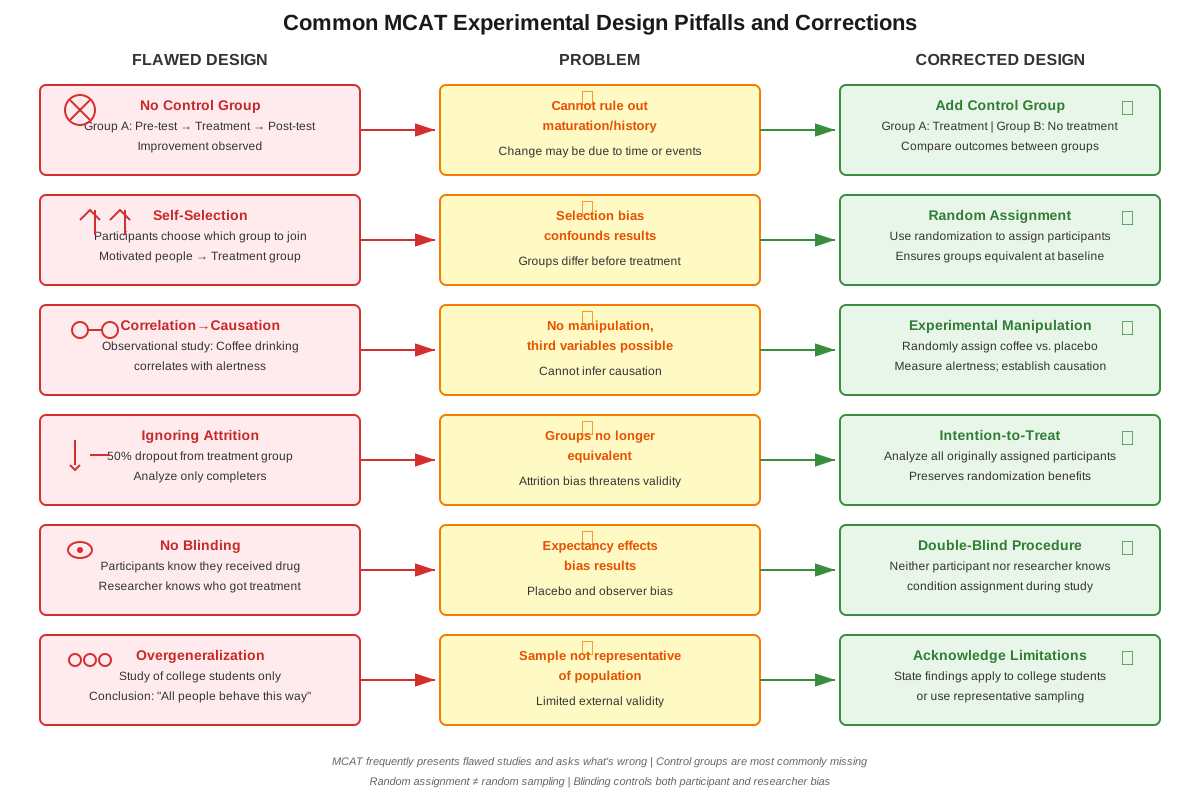
Overview
Experimental methods represent the gold standard of research design in sociology and the behavioral sciences, providing researchers with the most robust tools for establishing causal relationships between variables. In the context of the MCAT, understanding experimental methods is crucial because these designs form the foundation for evaluating scientific claims, interpreting research findings, and critically analyzing the validity of studies presented in passage-based questions. The MCAT frequently tests students' ability to identify independent and dependent variables, recognize potential confounding factors, distinguish between experimental and control groups, and evaluate the internal and external validity of research designs.
Within the broader landscape of Sociology and Research Methods and Statistics, experimental methods occupy a central position as the primary approach for testing hypotheses about cause-and-effect relationships in human behavior and social phenomena. Unlike correlational or observational studies that can only identify associations between variables, true experiments allow researchers to manipulate independent variables while controlling extraneous factors, thereby establishing causation rather than mere correlation. This distinction becomes particularly important on the MCAT when students must evaluate whether a study's conclusions are justified based on its methodology.
The mastery of Experimental methods MCAT content extends beyond simple memorization of definitions; it requires understanding the logic of experimental design, recognizing threats to validity, and applying these principles to novel scenarios. This topic connects intimately with statistical analysis, ethical considerations in research, sampling methods, and the broader epistemological foundations of scientific inquiry. Students who thoroughly understand experimental methods gain a framework for critically evaluating any research study they encounter, whether in MCAT passages or in their future medical careers where evidence-based practice demands rigorous evaluation of clinical trials and intervention studies.
Learning Objectives
- [ ] Define Experimental methods using accurate Sociology terminology
- [ ] Explain why Experimental methods matters for the MCAT
- [ ] Apply Experimental methods to exam-style questions
- [ ] Identify common mistakes related to Experimental methods
- [ ] Connect Experimental methods to related Sociology concepts
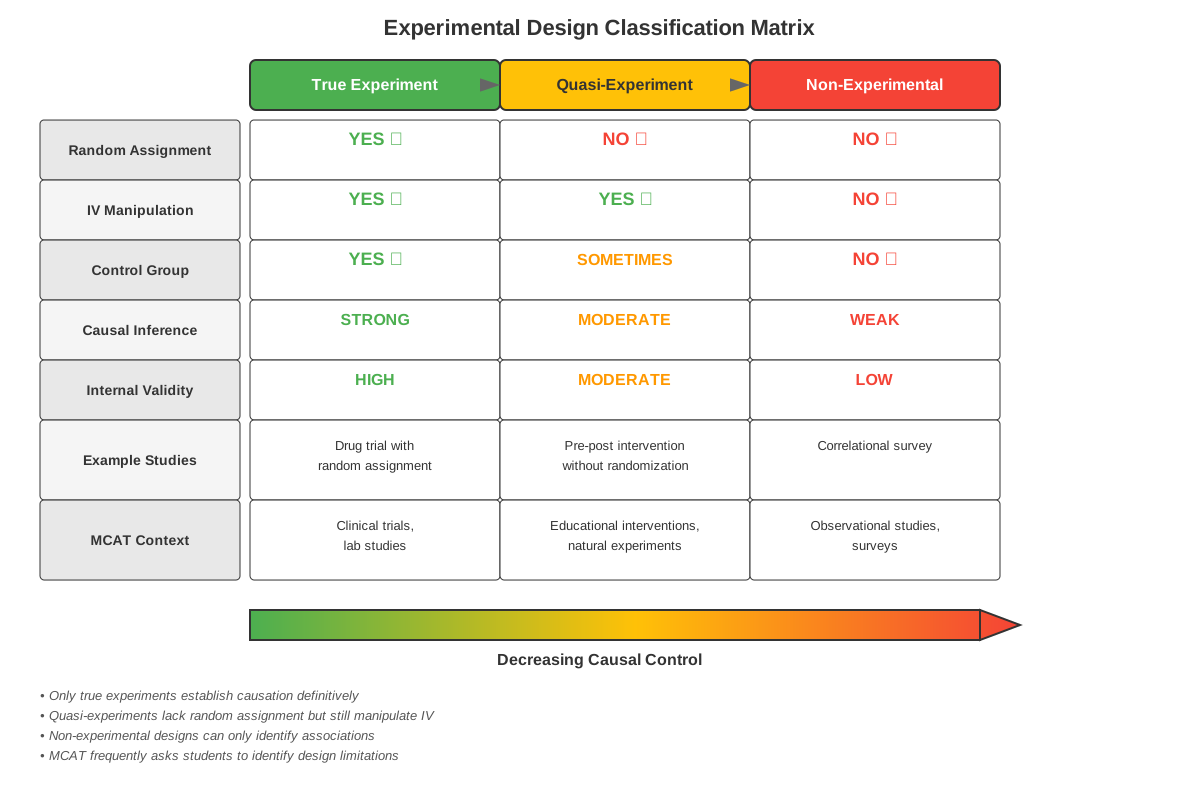
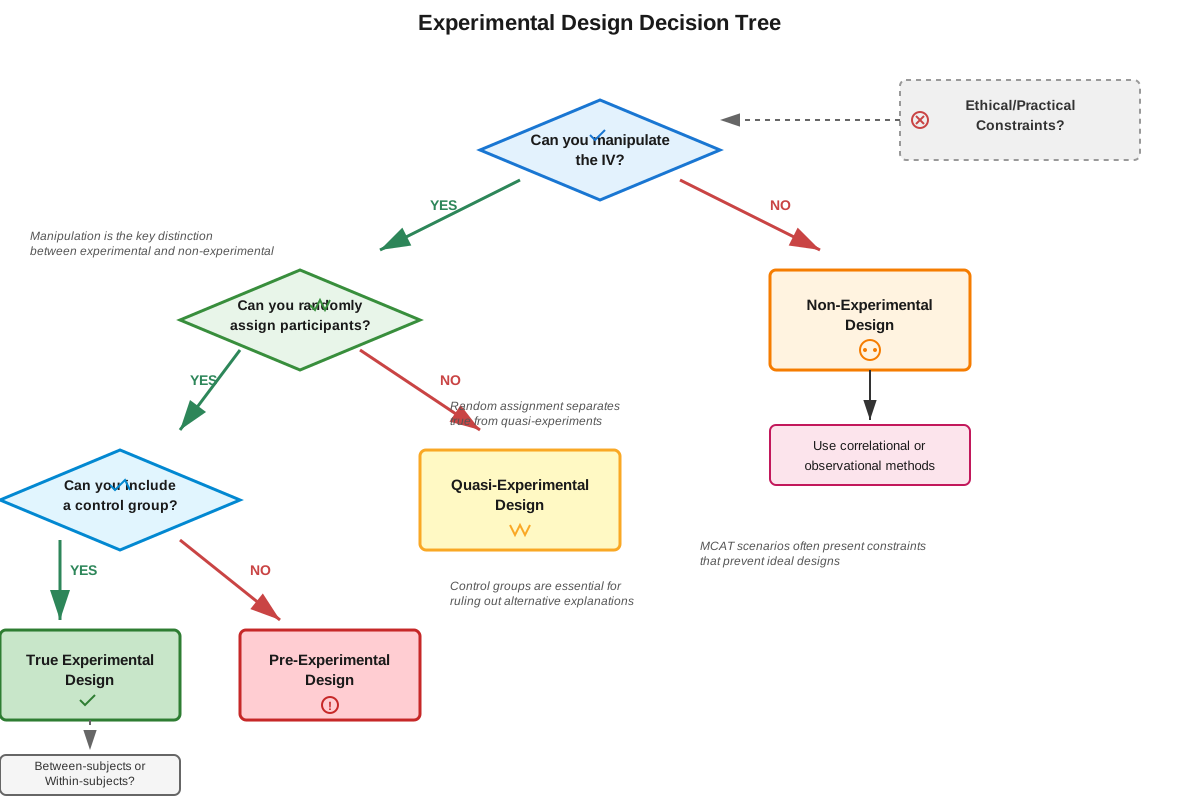
- [ ] Distinguish between true experiments, quasi-experiments, and non-experimental designs
- [ ] Evaluate threats to internal and external validity in experimental research
- [ ] Analyze the role of randomization, control groups, and manipulation in establishing causality
- [ ] Identify appropriate experimental designs for different research questions
Prerequisites
- Basic research terminology: Understanding terms like hypothesis, variable, population, and sample provides the foundation for discussing experimental components
- Correlation vs. causation: Recognizing that correlation does not imply causation is essential for appreciating why experimental methods are necessary
- Independent and dependent variables: Knowing how to identify what is manipulated versus what is measured forms the basis of experimental logic
- Basic statistical concepts: Familiarity with concepts like mean, standard deviation, and statistical significance helps interpret experimental results
- Scientific method: Understanding the general process of scientific inquiry contextualizes experimental methods within broader research practices
Why This Topic Matters
Experimental methods Sociology content appears consistently across MCAT sections, particularly in the Psychological, Social, and Biological Foundations of Behavior section. Research suggests that approximately 15-20% of questions in this section involve interpreting research designs, with experimental methods being the most frequently tested research approach. The MCAT uses experimental methods content to assess critical thinking skills, scientific reasoning, and the ability to evaluate evidence—core competencies for future physicians.
In clinical practice, physicians must constantly evaluate research findings to make evidence-based treatment decisions. Randomized controlled trials (RCTs), which represent the pinnacle of experimental design, form the basis for clinical guidelines and treatment protocols. Understanding experimental methods enables future physicians to critically assess whether a new treatment truly causes improved outcomes or whether observed effects might be due to confounding variables, placebo effects, or methodological flaws.
On the MCAT, experimental methods typically appear in several formats: passage-based questions requiring interpretation of a described study's design, discrete questions testing knowledge of experimental terminology and concepts, and questions asking students to identify flaws in research methodology or suggest improvements to study designs. Students may encounter passages describing social psychology experiments, public health interventions, or behavioral studies, all requiring application of experimental methods principles. The exam frequently tests the ability to distinguish between different types of variables, identify appropriate control conditions, recognize threats to validity, and determine whether causal conclusions are justified based on the research design employed.
Core Concepts
Definition and Fundamental Characteristics
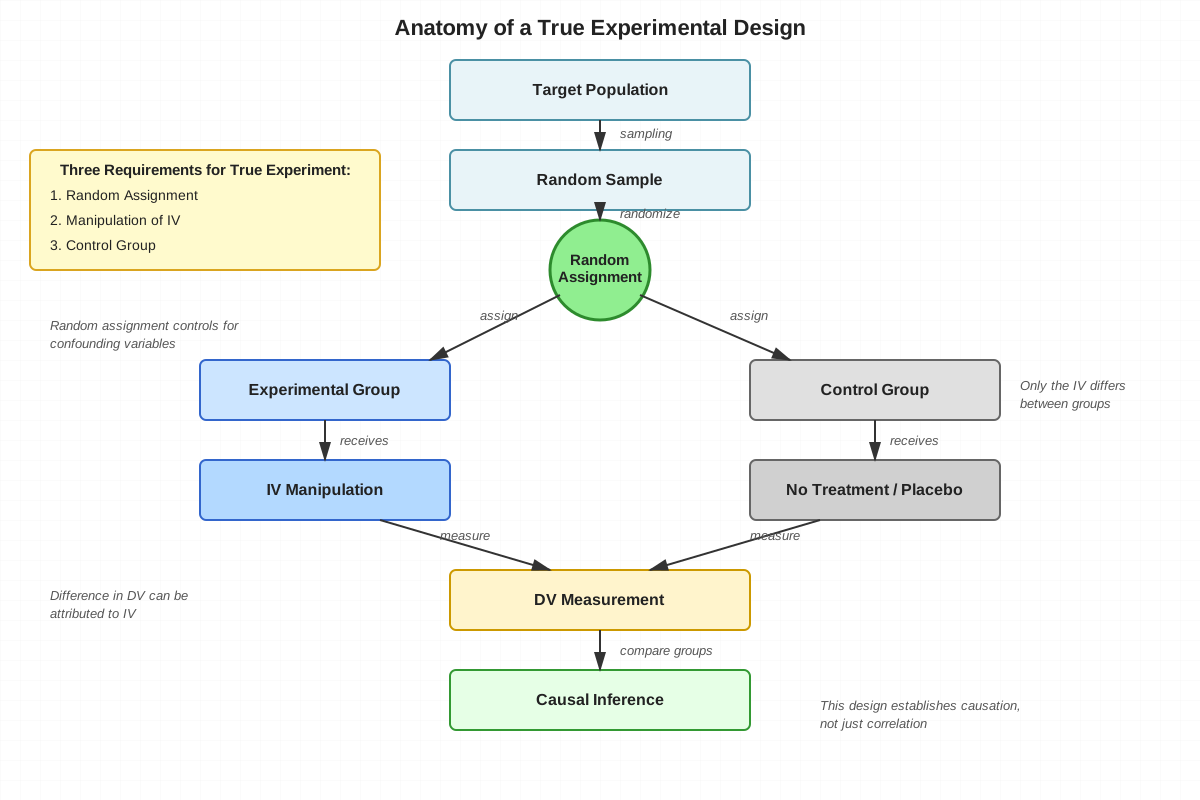
Experimental methods refer to research designs in which investigators actively manipulate one or more independent variables (the presumed cause) while measuring the effect on one or more dependent variables (the presumed effect), all while controlling extraneous variables that might influence the outcome. The defining feature that distinguishes true experiments from other research approaches is the researcher's active manipulation of conditions rather than passive observation of naturally occurring phenomena.
A true experiment requires three essential components: (1) manipulation of the independent variable by the researcher, (2) random assignment of participants to different experimental conditions, and (3) control over extraneous variables that might confound results. These three elements work together to establish the internal validity necessary for causal inference. Without manipulation, researchers cannot determine whether changes in one variable actually cause changes in another. Without randomization, pre-existing differences between groups might explain observed effects. Without control, alternative explanations for results remain plausible.
Independent and Dependent Variables
The independent variable (IV) represents the factor that researchers systematically manipulate or vary across experimental conditions. In a study examining whether sleep deprivation affects cognitive performance, sleep duration would be the independent variable, with researchers assigning participants to different sleep conditions (e.g., 4 hours, 6 hours, or 8 hours of sleep). The independent variable is "independent" because its values are determined by the researcher's design rather than by participants' characteristics or behaviors.
The dependent variable (DV) represents the outcome that researchers measure to assess the effect of the independent variable. In the sleep deprivation example, cognitive performance (measured through reaction time tests, memory tasks, or problem-solving assessments) would be the dependent variable. The dependent variable "depends" on the independent variable—researchers hypothesize that changes in the IV will cause changes in the DV.
Confounding variables (also called extraneous variables or third variables) represent factors other than the independent variable that might influence the dependent variable, potentially creating alternative explanations for observed effects. In the sleep study, factors like caffeine consumption, stress levels, baseline cognitive ability, or time of day when testing occurs could all confound results if not properly controlled. Effective experimental design aims to eliminate or minimize confounding through randomization, standardization of procedures, and careful control of testing conditions.
Experimental and Control Groups
The experimental group (or treatment group) receives the manipulation of the independent variable—the intervention, treatment, or condition hypothesized to produce an effect. The control group serves as a comparison baseline, either receiving no treatment, a placebo, or a standard treatment against which the experimental condition is compared. The logic of experimental design requires comparing outcomes between groups that differ only in the independent variable; any difference in the dependent variable can then be attributed to the IV rather than to other factors.
Different types of control conditions serve different purposes:
| Control Type | Description | Purpose | Example |
|---|---|---|---|
| No-treatment control | Participants receive no intervention | Establishes baseline performance | Measuring natural recovery rate without medication |
| Placebo control | Participants receive an inert treatment | Controls for expectancy effects | Sugar pill in drug trials |
| Wait-list control | Participants receive treatment after study ends | Ethical alternative when withholding treatment is problematic | Therapy study where controls receive treatment later |
| Active control | Participants receive standard/alternative treatment | Compares new intervention to existing options | New antidepressant vs. established medication |
Randomization and Random Assignment
Random assignment represents the most powerful tool for establishing equivalence between experimental and control groups before manipulation of the independent variable. By randomly assigning participants to conditions, researchers ensure that any pre-existing differences between individuals (age, personality, intelligence, socioeconomic status, etc.) are distributed equally across groups on average. This process eliminates selection bias—the threat that observed differences between groups result from pre-existing characteristics rather than from the experimental manipulation.
Random assignment differs fundamentally from random sampling (randomly selecting participants from a population). Random sampling enhances external validity (generalizability), while random assignment enhances internal validity (ability to establish causation). A study can have random assignment without random sampling, or vice versa, though ideally both would be employed.
The mechanics of randomization typically involve using random number generators, coin flips, or random number tables to assign each participant to a condition with equal probability. In more sophisticated designs, stratified random assignment ensures equal distribution of specific characteristics (like gender or age groups) across conditions, while matched random assignment pairs participants with similar characteristics before randomly assigning one member of each pair to each condition.
Experimental Designs
Between-subjects designs (also called independent groups designs) assign different participants to different experimental conditions. Each participant experiences only one level of the independent variable. This design requires larger sample sizes but avoids problems with practice effects, fatigue, or carryover effects from repeated testing. A study comparing three different teaching methods by assigning different students to each method exemplifies a between-subjects design.
Within-subjects designs (also called repeated measures designs) expose the same participants to all levels of the independent variable. Each participant serves as their own control, which increases statistical power and requires fewer participants. However, this design introduces potential order effects—the sequence in which conditions are experienced might influence results. Researchers address order effects through counterbalancing, systematically varying the order of conditions across participants. A study measuring reaction time before and after caffeine consumption in the same individuals represents a within-subjects design.
Mixed designs combine between-subjects and within-subjects factors, with some independent variables manipulated between participants and others within participants. For example, a study might compare two therapy types (between-subjects) while measuring symptom severity at multiple time points (within-subjects).
Factorial designs include two or more independent variables, allowing researchers to examine not only the main effect of each variable but also interaction effects—whether the effect of one independent variable depends on the level of another independent variable. A 2×2 factorial design examining both medication type (drug A vs. drug B) and therapy presence (therapy vs. no therapy) could reveal whether medication effectiveness depends on whether therapy is also provided.
Internal and External Validity
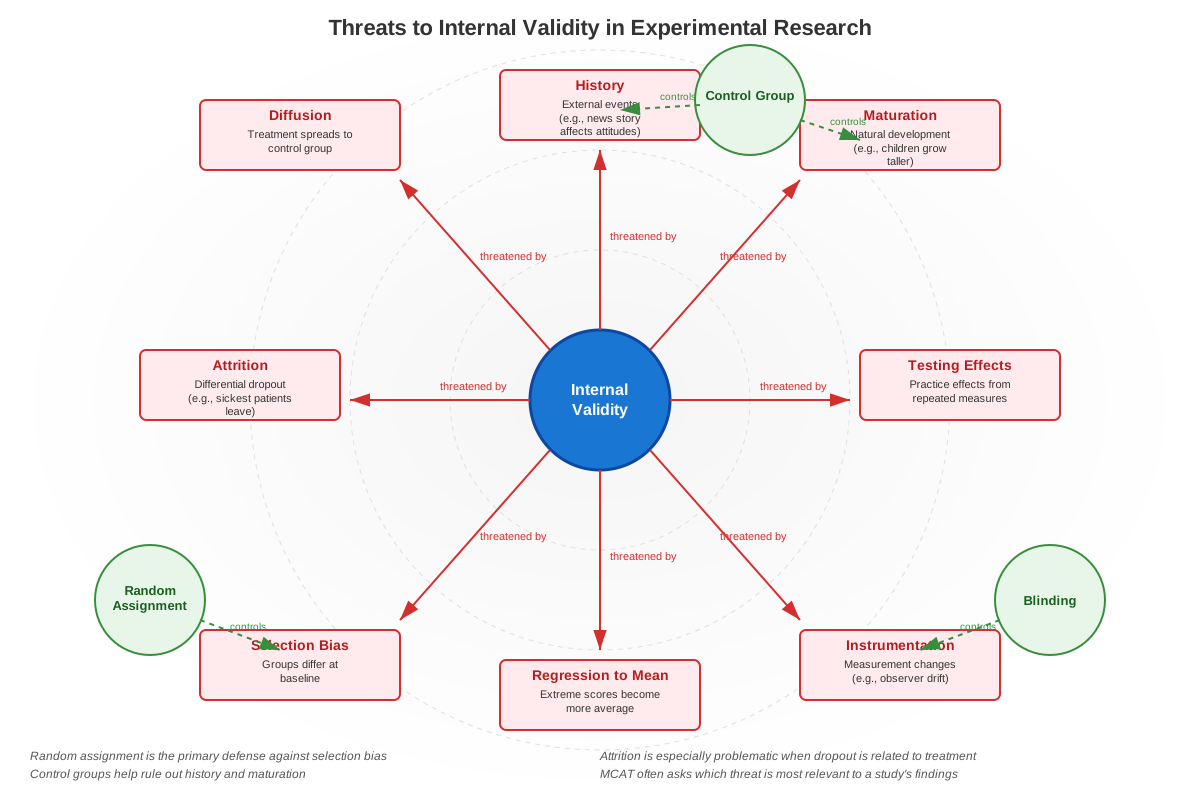
Internal validity refers to the degree to which a study establishes a causal relationship between the independent and dependent variables, free from confounding influences. High internal validity means that observed effects can confidently be attributed to the manipulation rather than to alternative explanations. Threats to internal validity include:
- History: External events occurring during the study that affect the dependent variable
- Maturation: Natural changes in participants over time (aging, fatigue, learning)
- Testing effects: Changes resulting from repeated measurement rather than from the IV
- Instrumentation: Changes in measurement tools or procedures during the study
- Statistical regression: Extreme scores tending toward the mean on repeated testing
- Selection bias: Pre-existing differences between groups
- Attrition: Differential dropout rates between conditions
- Diffusion of treatment: Control group participants learning about or receiving aspects of the treatment
External validity refers to the generalizability of findings beyond the specific study context—to other populations, settings, times, and operational definitions of variables. A study with high external validity produces findings that apply broadly rather than only to the specific participants, location, and procedures used. Threats to external validity include artificial laboratory settings, unrepresentative samples, and unique historical or cultural contexts.
These two types of validity often exist in tension: highly controlled laboratory experiments maximize internal validity but may sacrifice external validity, while field experiments conducted in natural settings enhance external validity but may compromise internal validity due to reduced control over extraneous variables.
Quasi-Experimental Designs
Quasi-experimental designs resemble true experiments but lack random assignment of participants to conditions. Researchers might assign participants based on pre-existing groups (comparing students in different schools), self-selection (comparing people who choose to participate in a program versus those who don't), or naturally occurring events (comparing outcomes before and after a policy change). While quasi-experiments can provide valuable evidence, especially when true experiments are impractical or unethical, they cannot establish causation as definitively as true experiments because pre-existing differences between groups might explain observed effects.
Common quasi-experimental designs include nonequivalent control group designs (comparing intact groups that were not randomly formed), interrupted time series designs (measuring outcomes repeatedly before and after an intervention), and regression discontinuity designs (comparing individuals just above and below a cutoff point for receiving an intervention).
Blinding and Double-Blind Procedures
Blinding (or masking) refers to keeping participants unaware of which experimental condition they are in, particularly whether they are receiving the active treatment or a placebo. This procedure controls for expectancy effects and placebo effects—the phenomenon where participants' beliefs about treatment can influence outcomes independent of the treatment's actual pharmacological or therapeutic properties.
Double-blind procedures extend blinding to both participants and researchers who interact with participants or assess outcomes. This additional layer prevents experimenter bias—the tendency for researchers' expectations to unconsciously influence how they treat participants, collect data, or interpret results. In pharmaceutical trials, neither patients nor the clinicians administering treatment know who receives the active drug versus placebo until after data collection is complete.
Concept Relationships
Experimental methods form the methodological foundation upon which causal claims in sociology and behavioral science rest. The relationship between concepts within experimental design follows a logical hierarchy: the fundamental requirement for manipulation of independent variables necessitates the identification and operational definition of both independent and dependent variables. This manipulation alone, however, remains insufficient for causal inference without random assignment, which eliminates selection bias and creates equivalent groups. The equivalence established through randomization enables researchers to attribute differences in the dependent variable to the independent variable rather than to confounding variables.
The distinction between experimental and control groups emerges directly from the manipulation requirement—researchers need a comparison baseline to determine whether the manipulation produced an effect. The choice between between-subjects and within-subjects designs influences both the statistical power of the study and the types of threats to validity that must be addressed, with within-subjects designs requiring counterbalancing to address order effects.
Internal validity and external validity exist in a dynamic relationship with experimental design choices. Increasing control to enhance internal validity (through laboratory settings, strict protocols, and homogeneous samples) often decreases external validity by creating artificial conditions that may not generalize to real-world contexts. Conversely, conducting research in naturalistic settings to enhance external validity typically requires sacrificing some degree of control, potentially introducing confounding variables that threaten internal validity.
The relationship map flows as follows:
Research Question → Identification of IV and DV → Manipulation of IV → Random Assignment to Conditions → Experimental vs. Control Groups → Control of Confounding Variables → Measurement of DV → Analysis of Results → Evaluation of Internal Validity → Consideration of External Validity → Causal Conclusions (if warranted)
Experimental methods connect to prerequisite knowledge of correlation versus causation by providing the methodological tools necessary to move beyond correlational observations to causal claims. They connect forward to statistical analysis, as experimental data require appropriate statistical tests (t-tests, ANOVA, etc.) to determine whether observed differences between groups are statistically significant. Experimental methods also connect to ethical considerations in research, as manipulation and control raise questions about informed consent, potential harm, and the ethics of withholding potentially beneficial treatments from control groups.
Quick check — test yourself on Experimental methods so far.
Try Flashcards →High-Yield Facts
⭐ True experiments require three essential elements: manipulation of the independent variable, random assignment to conditions, and control of extraneous variables
⭐ Random assignment eliminates selection bias and establishes group equivalence before manipulation, enabling causal inference
⭐ The independent variable is manipulated by the researcher; the dependent variable is measured to assess the effect of manipulation
⭐ Internal validity refers to the ability to establish causation; external validity refers to generalizability of findings
⭐ Confounding variables are extraneous factors that provide alternative explanations for observed effects and must be controlled
- Double-blind procedures prevent both participant expectancy effects and experimenter bias from influencing results
- Between-subjects designs assign different participants to different conditions; within-subjects designs expose the same participants to all conditions
- Quasi-experimental designs lack random assignment and therefore cannot establish causation as definitively as true experiments
- Factorial designs allow examination of interaction effects between multiple independent variables
- Placebo controls are necessary to separate the pharmacological effects of treatments from psychological expectancy effects
- Counterbalancing addresses order effects in within-subjects designs by systematically varying the sequence of conditions
- Operational definitions specify exactly how variables are manipulated and measured, enabling replication
Common Misconceptions
Misconception: Random assignment and random sampling are the same thing.
Correction: Random assignment refers to randomly assigning participants to experimental conditions and enhances internal validity by creating equivalent groups. Random sampling refers to randomly selecting participants from a population and enhances external validity by creating representative samples. A study can have one without the other.
Misconception: Correlation can establish causation if the correlation is strong enough.
Correction: No degree of correlation, regardless of strength, can establish causation. Only experimental manipulation with proper controls can determine whether one variable causes changes in another. Strong correlations might suggest relationships worth investigating experimentally, but correlation alone never proves causation due to the possibility of confounding variables or reverse causation.
Misconception: The control group always receives no treatment.
Correction: Control groups can take various forms depending on the research question. Placebo controls receive inert treatments, active controls receive standard treatments, and wait-list controls receive treatment after the study. The key is that the control condition differs from the experimental condition only in the independent variable being tested.
Misconception: Quasi-experiments are failed experiments or poor-quality research.
Correction: Quasi-experiments are legitimate research designs used when random assignment is impractical, unethical, or impossible. While they cannot establish causation as definitively as true experiments, well-designed quasi-experiments provide valuable evidence, especially when combined with statistical controls for confounding variables. Many important policy and educational interventions can only be studied through quasi-experimental designs.
Misconception: Blinding is only necessary in medical drug trials.
Correction: Blinding is important in any study where participants' or researchers' expectations might influence outcomes. This includes psychological interventions, educational programs, social psychology experiments, and behavioral studies. Expectancy effects and experimenter bias can occur in any domain where beliefs about treatment effectiveness might influence behavior or assessment.
Misconception: Within-subjects designs are always superior because they require fewer participants.
Correction: While within-subjects designs offer greater statistical power and require smaller samples, they introduce potential problems with order effects, practice effects, and carryover effects. Between-subjects designs are preferable when exposure to one condition might permanently change participants or when the research question requires comparing independent groups. The optimal design depends on the specific research question and practical constraints.
Misconception: High internal validity automatically means high external validity.
Correction: Internal and external validity often exist in tension. Highly controlled laboratory experiments that maximize internal validity may use artificial settings, constrained procedures, and homogeneous samples that limit generalizability. Conversely, field experiments in natural settings may enhance external validity while sacrificing some internal validity due to reduced control over confounding variables.
Worked Examples
Example 1: Evaluating an Experimental Design
Scenario: Researchers want to test whether a new cognitive training program improves memory in older adults. They recruit 100 adults aged 65-75 from a local senior center. Fifty participants who volunteer first are assigned to the training program (meeting twice weekly for 8 weeks), while the remaining 50 serve as controls and continue their normal activities. At the end of 8 weeks, all participants complete memory tests, and the training group shows significantly better performance.
Question: What are the major threats to internal validity in this design, and how could the study be improved?
Analysis:
Step 1: Identify the independent and dependent variables.
- IV: Participation in cognitive training program (training vs. no training)
- DV: Memory test performance
Step 2: Evaluate whether this is a true experiment.
This is a quasi-experiment, not a true experiment, because participants were not randomly assigned to conditions. The first 50 volunteers were assigned to training, while the remaining 50 served as controls.
Step 3: Identify threats to internal validity.
- Selection bias: The first volunteers might differ systematically from later volunteers in motivation, baseline cognitive ability, or other characteristics. Any observed differences in memory could result from these pre-existing differences rather than from the training.
- History: External events occurring during the 8-week period might affect the groups differently. If the training group participants discuss memory strategies with each other outside of sessions, this social interaction (rather than the training itself) might explain improvements.
- Testing effects: If the same or similar memory tests are used at baseline and follow-up, practice effects might explain improvements, though this would affect both groups equally if both are pre-tested.
- Attrition: Participants who drop out might differ from those who complete the study. If less motivated or more cognitively impaired individuals drop out of the training group, the remaining participants would show artificially inflated performance.
- Lack of control for attention and social interaction: The training group receives twice-weekly sessions involving social interaction and attention from instructors, while the control group continues normal activities. Improvements might result from social stimulation rather than from the specific cognitive training content.
Step 4: Suggest improvements.
- Implement random assignment: Use a random number generator to assign all 100 participants to training or control conditions, eliminating selection bias.
- Add an active control group: Have the control group meet on the same schedule for social activities or general education (not memory-specific) to control for attention and social interaction effects.
- Implement blinding: Use research assistants who are unaware of participants' group assignments to administer memory tests, preventing experimenter bias.
- Use multiple memory measures: Include various types of memory tests (verbal, visual, working memory, long-term memory) to assess whether training produces broad or specific effects.
- Include follow-up assessments: Test participants at 3 and 6 months after training ends to determine whether effects persist.
Conclusion: While the original study might show that the training group performs better, the lack of random assignment and appropriate controls means we cannot confidently conclude that the training program caused the improvement. The improved design would provide much stronger evidence for causation.
Example 2: Analyzing a Factorial Design
Scenario: Researchers conduct a 2×2 factorial experiment examining the effects of exercise intensity (moderate vs. high) and exercise duration (30 minutes vs. 60 minutes) on mood improvement. They randomly assign 120 participants to one of four conditions:
- Group 1: Moderate intensity, 30 minutes (n=30)
- Group 2: Moderate intensity, 60 minutes (n=30)
- Group 3: High intensity, 30 minutes (n=30)
- Group 4: High intensity, 60 minutes (n=30)
After a single exercise session, participants complete a standardized mood questionnaire. Results show:
- Moderate/30min: Mood score = 65
- Moderate/60min: Mood score = 70
- High/30min: Mood score = 75
- High/60min: Mood score = 72
Question: Interpret the main effects and interaction effects in this study.
Analysis:
Step 1: Identify the design components.
- This is a true experiment with random assignment
- Two independent variables (factors): intensity (2 levels) and duration (2 levels)
- One dependent variable: mood score
- Between-subjects design (each participant experiences only one condition)
Step 2: Calculate main effects.
Main effect of intensity (averaging across duration):
- Moderate intensity average: (65 + 70) / 2 = 67.5
- High intensity average: (75 + 72) / 2 = 73.5
- Main effect: High intensity produces better mood than moderate intensity (difference of 6 points)
Main effect of duration (averaging across intensity):
- 30-minute average: (65 + 75) / 2 = 70
- 60-minute average: (70 + 72) / 2 = 71
- Main effect: 60 minutes produces slightly better mood than 30 minutes (difference of 1 point)
Step 3: Examine interaction effects.
An interaction effect occurs when the effect of one independent variable depends on the level of the other independent variable. To identify interactions, examine whether the effect of one variable is consistent across levels of the other variable.
Effect of duration at moderate intensity: 70 - 65 = 5 points improvement
Effect of duration at high intensity: 72 - 75 = -3 points (actually a decrease)
The effect of duration is not consistent across intensity levels. At moderate intensity, longer duration improves mood, but at high intensity, longer duration actually decreases mood. This represents an interaction effect.
Step 4: Interpret the findings.
The interaction suggests that the optimal exercise prescription depends on intensity. For moderate-intensity exercise, longer duration is beneficial. However, for high-intensity exercise, shorter duration is actually more effective for mood improvement. The 60-minute high-intensity session might cause excessive fatigue that counteracts mood benefits.
Step 5: Consider implications.
This interaction demonstrates why factorial designs are valuable—they reveal that simple main effects don't tell the whole story. A researcher examining only duration (ignoring intensity) would conclude that 60 minutes is slightly better than 30 minutes. A researcher examining only intensity would conclude that high intensity is better than moderate intensity. But the interaction reveals that the optimal combination is high intensity for 30 minutes, which produces the highest mood scores.
Practical significance: Exercise recommendations for mood improvement should consider both intensity and duration together, not as independent factors. The "more is better" assumption doesn't hold for high-intensity exercise.
Exam Strategy
When approaching MCAT questions about experimental methods, begin by identifying the research design type. Ask: Is this a true experiment (with random assignment), a quasi-experiment (without random assignment), or a correlational study (with no manipulation)? This fundamental distinction determines what conclusions can be drawn. Look for explicit statements about random assignment—phrases like "participants were randomly assigned" or "random allocation" indicate a true experiment, while phrases like "participants were selected based on" or "naturally occurring groups" suggest a quasi-experiment.
Trigger words and phrases to watch for:
- "Randomly assigned" or "random allocation" → True experiment, can establish causation
- "Self-selected" or "volunteered for" → Potential selection bias
- "Pre-existing groups" or "intact groups" → Quasi-experimental design
- "Controlled for" → Attempt to address confounding variables
- "Blinded" or "masked" → Control for expectancy effects
- "Placebo" → Control for psychological effects of treatment
- "Statistically significant" → Results unlikely due to chance, but doesn't guarantee practical significance
- "Correlation" or "association" → Cannot establish causation
Process-of-elimination strategies:
- Eliminate answers that claim causation from non-experimental designs: If a study lacks manipulation or random assignment, eliminate any answer choice stating that one variable "causes" changes in another.
- Identify the most serious threat to validity: When asked about study limitations, prioritize threats that provide alternative explanations for the entire effect (like selection bias or confounding variables) over minor methodological issues.
- Match the conclusion to the design: Strong causal language ("X causes Y") requires true experimental designs. Weaker language ("X is associated with Y" or "X predicts Y") is appropriate for correlational or quasi-experimental designs.
- Consider practical constraints: When asked how to improve a study, eliminate suggestions that are unethical (randomly assigning people to harmful conditions) or impossible (randomly assigning people to demographic categories like gender or ethnicity).
Time allocation advice:
Experimental methods questions typically appear in passage-based formats requiring 1.5-2 minutes per question. Spend 30-45 seconds identifying the key design features (manipulation, random assignment, control group) and potential threats to validity. Use the remaining time to carefully read answer choices, eliminating options that mischaracterize the design or draw inappropriate conclusions. Don't get bogged down in minor details—focus on the fundamental logic of the experimental design and whether causal conclusions are justified.
For discrete questions about experimental methods terminology, these should take 30-45 seconds. If you immediately recognize the concept being tested, select your answer and move on. If uncertain, use process of elimination based on your understanding of the relationships between concepts (e.g., if you know random assignment relates to internal validity rather than external validity, you can eliminate half the options).
Memory Techniques
MNEMONIC for essential elements of true experiments: "MRC"
- Manipulation of the independent variable
- Random assignment to conditions
- Control of extraneous variables
MNEMONIC for threats to internal validity: "HIM STAR"
- History (external events during study)
- Instrumentation (changes in measurement)
- Maturation (natural changes over time)
- Selection bias (pre-existing group differences)
- Testing effects (effects of repeated measurement)
- Attrition (differential dropout)
- Regression to the mean (extreme scores moving toward average)
Visualization for independent vs. dependent variables:
Picture the independent variable as a puppet master (the researcher controls it) and the dependent variable as a puppet (it responds to the manipulation). The researcher pulls the strings of the IV to see how the DV responds.
Acronym for types of validity: "IE"
- Internal validity = Inside the study (can we establish causation within this specific study?)
- External validity = Extending beyond the study (can we generalize to other contexts?)
Memory aid for between vs. within subjects:
- Between-subjects: Different people between groups (like standing between two separate groups of people)
- Within-subjects: Same people within all conditions (everything happens within the same group)
Visualization for confounding variables:
Imagine trying to see if fertilizer (IV) helps plants grow (DV), but some plants also get more sunlight. The sunlight confounds (confuses) the results—you can't tell if growth is from fertilizer or sunlight. Picture the confounding variable as a fog that obscures the true relationship between IV and DV.
Summary
Experimental methods represent the most rigorous approach to establishing causal relationships in sociology and behavioral science research. True experiments require three essential elements: manipulation of independent variables, random assignment of participants to conditions, and control of extraneous variables. These design features work together to eliminate alternative explanations for observed effects, enabling researchers to conclude that changes in the independent variable caused changes in the dependent variable. The distinction between experimental and control groups provides the comparison necessary to assess treatment effects, while randomization ensures that groups are equivalent before manipulation. Internal validity—the ability to establish causation within a study—depends on minimizing threats like selection bias, confounding variables, and history effects. External validity—the generalizability of findings—often exists in tension with internal validity, as highly controlled experiments may sacrifice real-world applicability. Quasi-experimental designs, which lack random assignment, provide valuable evidence when true experiments are impractical but cannot establish causation as definitively. For the MCAT, students must be able to identify design components, evaluate whether causal conclusions are justified, recognize threats to validity, and suggest appropriate improvements to research designs.
Key Takeaways
- True experiments require manipulation, random assignment, and control—all three elements are necessary to establish causation
- Random assignment eliminates selection bias by creating equivalent groups before the independent variable is manipulated
- The independent variable is what researchers manipulate; the dependent variable is what they measure to assess effects
- Internal validity (establishing causation) and external validity (generalizability) often exist in tension, requiring design trade-offs
- Confounding variables provide alternative explanations for observed effects and must be controlled through randomization, standardization, or statistical methods
- Control groups serve as comparison baselines and can take various forms (no-treatment, placebo, active control) depending on the research question
- Quasi-experiments lack random assignment and therefore cannot establish causation as definitively as true experiments, though they remain valuable when experiments are impractical
Related Topics
Correlational Research Methods: Understanding correlational designs provides essential contrast to experimental methods, highlighting why correlation cannot establish causation and when observational approaches are more appropriate than experiments.
Statistical Analysis: Mastering experimental methods enables progression to understanding how experimental data are analyzed through t-tests, ANOVA, and other statistical procedures that determine whether observed differences are statistically significant.
Sampling Methods: Knowledge of experimental design connects to sampling techniques, as the way participants are selected (random sampling) and assigned (random assignment) both influence the validity and generalizability of findings.
Research Ethics: Experimental manipulation raises ethical considerations about informed consent, potential harm, deception, and the ethics of withholding potentially beneficial treatments from control groups.
Validity and Reliability: Deeper exploration of measurement validity and reliability builds on experimental methods by examining how accurately variables are operationalized and measured.
Practice CTA
Now that you've mastered the core concepts of experimental methods, it's time to apply this knowledge to MCAT-style practice questions. Challenge yourself with passage-based questions that require identifying design flaws, evaluating whether causal conclusions are justified, and suggesting improvements to research designs. Use flashcards to reinforce key terminology and distinctions between concepts like internal versus external validity, random assignment versus random sampling, and between-subjects versus within-subjects designs. Remember: understanding experimental methods isn't just about memorizing definitions—it's about developing the critical thinking skills to evaluate any research study you encounter. Your ability to analyze experimental designs will serve you not only on the MCAT but throughout your medical career as you evaluate clinical trials and make evidence-based treatment decisions. You've got this!
Sign up free to keep reading
Create a free AnvayaPrep account to finish this MCAT guide on Experimental methods — plus flashcards and practice questions.