Overview
Observational studies represent a fundamental category of research methodology in which investigators systematically observe and record phenomena without manipulating variables or intervening in the natural course of events. Unlike experimental designs where researchers actively control independent variables, observational studies allow scientists to examine relationships, patterns, and associations as they naturally occur in real-world settings. This research approach is particularly valuable in Sociology when ethical constraints, practical limitations, or the nature of the research question makes experimental manipulation impossible or inappropriate.
For the MCAT, understanding observational studies is essential because these methodologies form the backbone of much sociological and epidemiological research that appears in exam passages. The MCAT frequently presents data from observational studies in the Psychological, Social, and Biological Foundations of Behavior section, requiring test-takers to critically evaluate study designs, identify potential sources of bias, distinguish correlation from causation, and assess the validity of conclusions drawn from observational data. Questions may ask students to identify the type of observational study presented, recognize limitations inherent to the design, or compare observational approaches to experimental methods.
Within the broader framework of Research Methods and Statistics, observational studies occupy a critical position alongside experimental designs, forming a complementary approach to scientific inquiry. While experiments excel at establishing causality through controlled manipulation, observational studies provide ecological validity and access to phenomena that cannot be ethically or practically studied through experimentation. This topic connects directly to concepts such as correlation versus causation, confounding variables, selection bias, and the hierarchy of evidence in research design—all high-yield concepts for MCAT success.
Learning Objectives
- [ ] Define observational studies using accurate Sociology terminology
- [ ] Explain why observational studies matters for the MCAT
- [ ] Apply observational studies to exam-style questions
- [ ] Identify common mistakes related to observational studies
- [ ] Connect observational studies to related Sociology concepts
- [ ] Distinguish between the major types of observational studies (cohort, case-control, cross-sectional)
- [ ] Evaluate the strengths and limitations of observational study designs
- [ ] Analyze how confounding variables and bias affect observational research validity
Prerequisites
- Basic research design principles: Understanding the difference between independent and dependent variables is essential for recognizing what researchers measure versus what occurs naturally in observational studies
- Correlation versus causation: Distinguishing between association and causal relationships forms the foundation for interpreting observational study findings appropriately
- Sampling methods: Knowledge of how participants are selected affects the ability to evaluate selection bias and generalizability in observational research
- Basic statistical concepts: Familiarity with measures of association (relative risk, odds ratios) enables interpretation of observational study results
Why This Topic Matters
Observational studies have profound real-world significance across medicine, public health, and social sciences. Many landmark discoveries in epidemiology—including the link between smoking and lung cancer, the relationship between diet and cardiovascular disease, and the identification of social determinants of health—emerged from observational research. When randomized controlled trials are unethical (such as exposing people to harmful substances) or impractical (such as studying rare diseases or long-term outcomes), observational studies provide the only viable research approach.
For MCAT test-takers, observational studies appear with moderate to high frequency in the Psychological, Social, and Biological Foundations of Behavior section. Exam statistics suggest that 3-5 questions per exam directly or indirectly assess understanding of observational study designs. These questions typically appear in two formats: (1) passage-based questions requiring interpretation of study methodology and results, and (2) discrete questions testing conceptual understanding of research design principles.
Common MCAT passage scenarios include: presenting epidemiological data from cohort studies examining disease risk factors; describing case-control studies investigating associations between exposures and health outcomes; reporting cross-sectional survey data on social behaviors or attitudes; and comparing observational findings to experimental results. The exam frequently tests whether students can identify study design types, recognize limitations such as confounding or selection bias, and appropriately interpret the strength of evidence provided by different observational approaches.
Core Concepts
Definition and Fundamental Characteristics
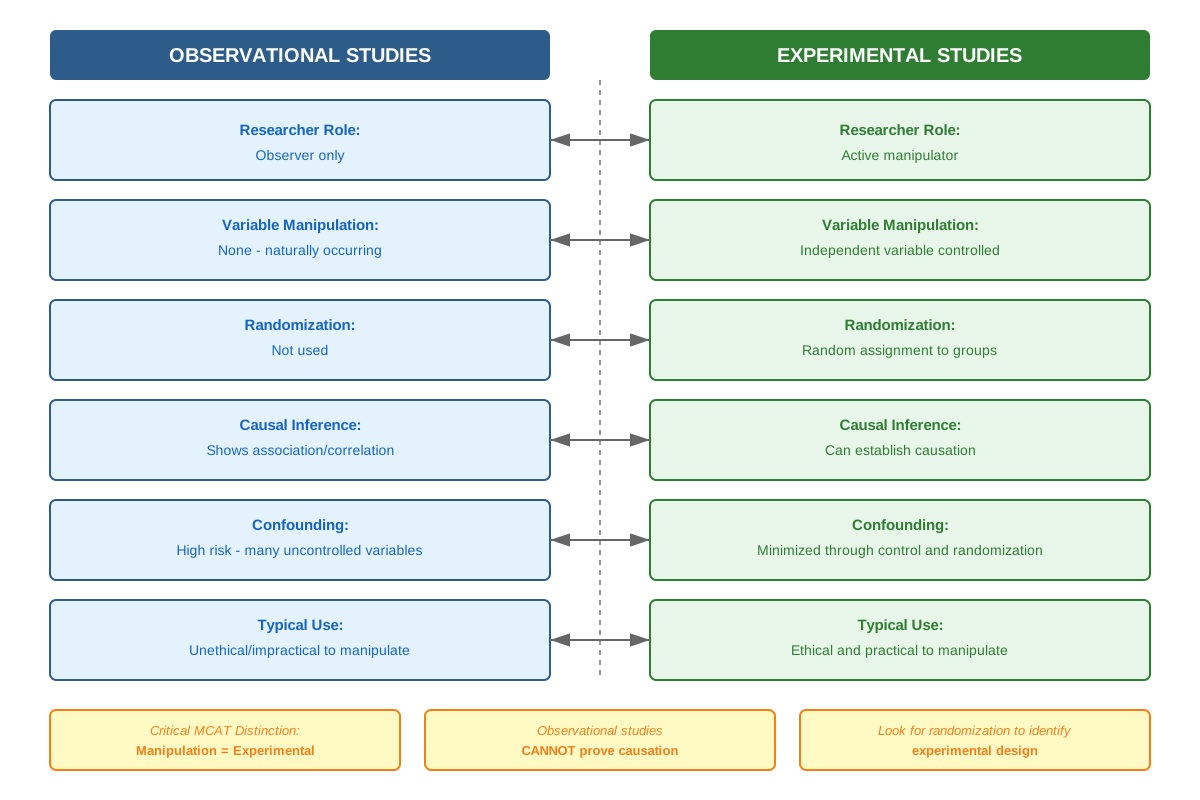
Observational studies are research investigations in which the investigator observes and measures variables of interest without actively manipulating or intervening in the conditions being studied. The defining characteristic distinguishing observational from experimental research is the absence of researcher-controlled assignment of exposures or treatments. Instead, participants self-select or naturally fall into different exposure groups based on their behaviors, characteristics, or circumstances.
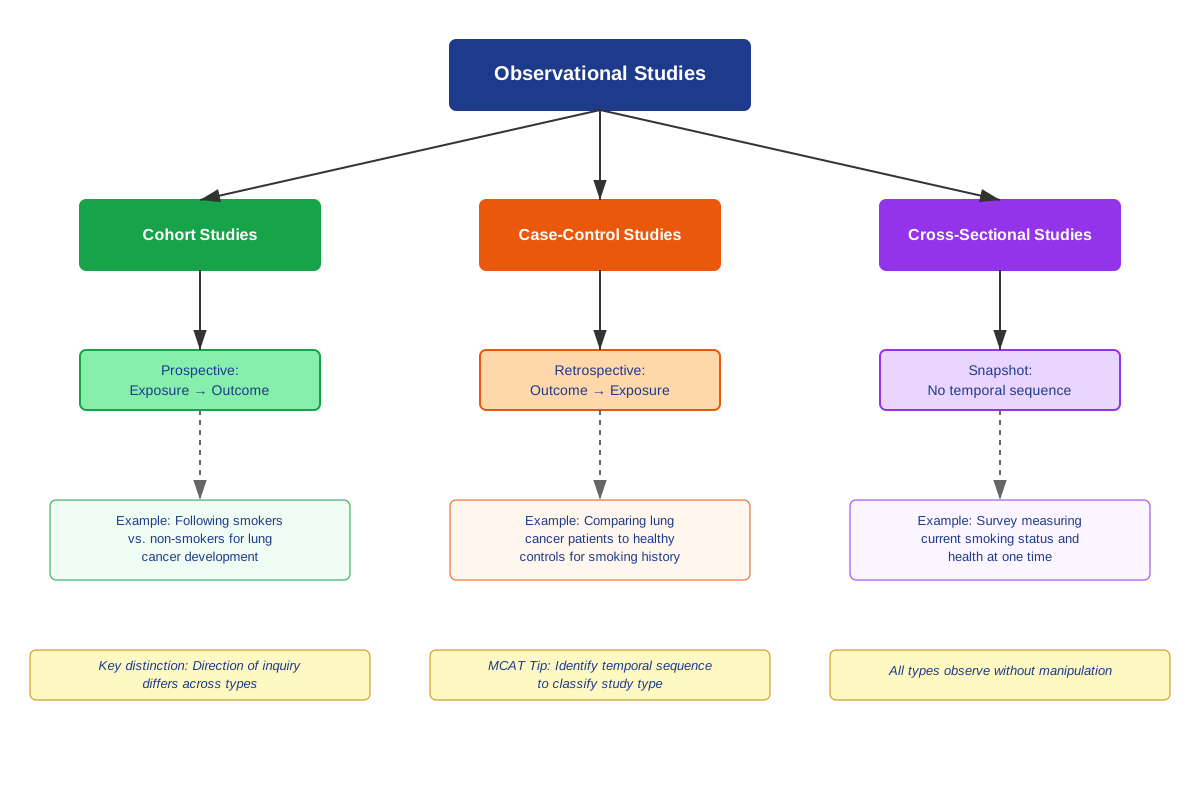
Key features of observational studies include: naturalistic observation of phenomena as they occur in real-world settings; measurement of associations between variables rather than causal manipulation; potential for confounding variables to influence observed relationships; and greater ecological validity compared to controlled experiments. These studies can be either prospective (following participants forward in time) or retrospective (looking backward at past exposures and outcomes).
Major Types of Observational Studies
Cohort Studies
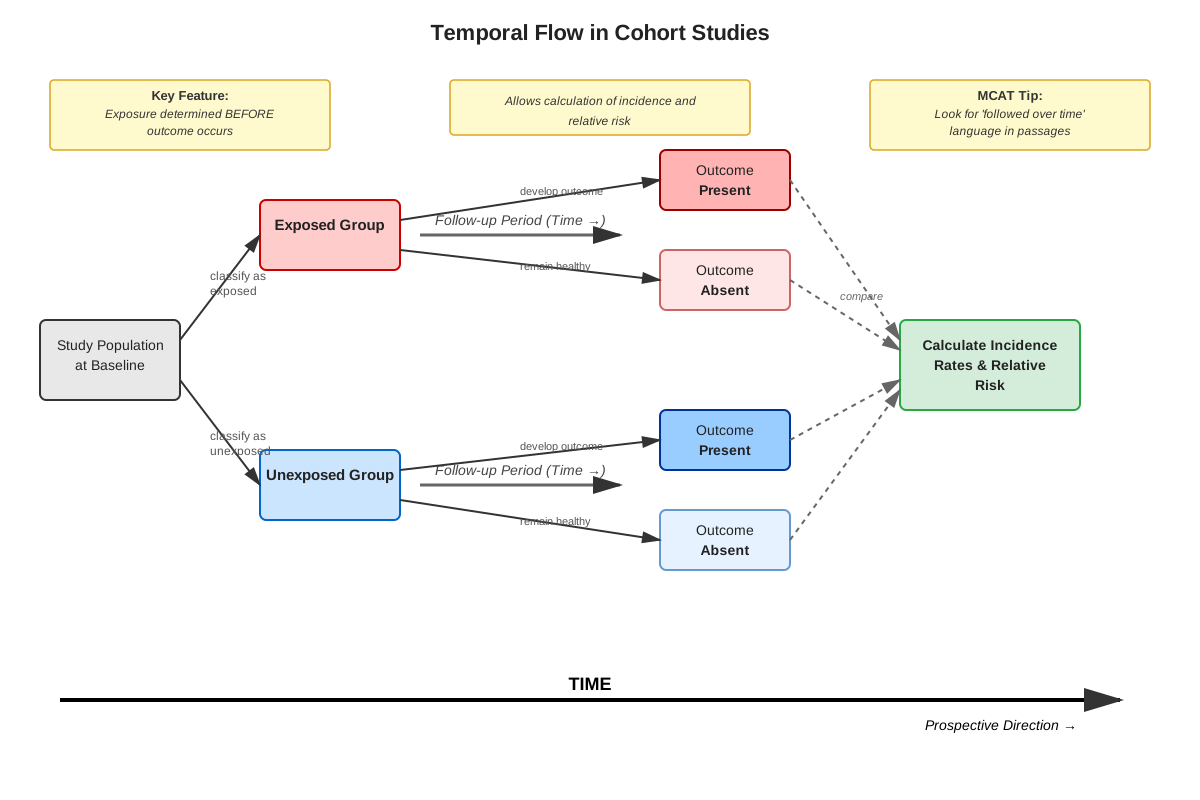
Cohort studies follow groups of individuals (cohorts) over time to examine how different exposures or characteristics relate to subsequent outcomes. Researchers identify participants based on exposure status at baseline, then track them prospectively to observe who develops the outcome of interest. For example, the famous Framingham Heart Study followed residents of Framingham, Massachusetts, for decades to identify cardiovascular disease risk factors.
Prospective cohort studies begin in the present and follow participants into the future, offering the advantage of collecting data systematically as events unfold. Retrospective cohort studies use existing records to reconstruct past exposures and trace outcomes that have already occurred. Cohort studies can calculate incidence rates (new cases developing over time) and relative risk (comparing outcome rates between exposed and unexposed groups).
Strengths of cohort studies include: establishing temporal sequence (exposure precedes outcome); calculating incidence and relative risk directly; examining multiple outcomes from a single exposure; and reducing recall bias compared to retrospective designs. Limitations include: time-consuming and expensive nature; participant attrition over long follow-up periods; inefficiency for studying rare outcomes; and potential for confounding variables.
Case-Control Studies
Case-control studies work backward from outcomes to exposures, comparing individuals with a condition (cases) to similar individuals without the condition (controls) to identify factors associated with the outcome. Researchers select participants based on outcome status, then retrospectively investigate past exposures. For instance, a case-control study might compare lung cancer patients (cases) to healthy individuals (controls) regarding their smoking history.
This design is particularly efficient for studying rare diseases or outcomes with long latency periods. Rather than following thousands of people for years hoping some develop a rare condition, researchers can identify existing cases and matched controls, then examine their exposure histories. Case-control studies calculate the odds ratio as the measure of association, which approximates relative risk when the outcome is rare.
Strengths include: efficiency for rare outcomes; relatively quick and inexpensive; ability to examine multiple exposures for a single outcome; and practical when prospective follow-up is infeasible. Limitations include: susceptibility to recall bias (cases may remember exposures differently than controls); difficulty establishing temporal sequence; inability to calculate incidence or prevalence directly; and challenges in selecting appropriate control groups.
Cross-Sectional Studies
Cross-sectional studies examine exposures and outcomes simultaneously at a single point in time, providing a "snapshot" of a population. Surveys assessing health behaviors and disease prevalence exemplify this design. For example, a cross-sectional study might survey college students about stress levels and academic performance during a single semester.
These studies measure prevalence (existing cases at one time point) rather than incidence (new cases developing over time). Cross-sectional designs cannot establish temporal sequence—researchers cannot determine whether the exposure preceded the outcome or vice versa—limiting causal inference.
Strengths include: quick and relatively inexpensive; useful for describing population characteristics; efficient for studying multiple exposures and outcomes; and valuable for public health planning. Limitations include: inability to establish causality or temporal sequence; measuring prevalence rather than incidence; susceptibility to survival bias (only studying individuals who survived to the study point); and potential for reverse causation.
Comparison Table of Observational Study Types
| Feature | Cohort Study | Case-Control Study | Cross-Sectional Study |
|---|---|---|---|
| Starting point | Exposure status | Outcome status | Neither (simultaneous) |
| Direction | Forward in time | Backward in time | Single time point |
| Measure of association | Relative risk, incidence | Odds ratio | Prevalence ratio |
| Temporal sequence | Established | Difficult to establish | Cannot establish |
| Best for | Common outcomes, multiple outcomes | Rare outcomes, multiple exposures | Prevalence, hypothesis generation |
| Time required | Long (prospective) | Moderate | Short |
| Cost | High | Moderate | Low |
| Recall bias | Low | High | Moderate |
Confounding and Bias in Observational Studies
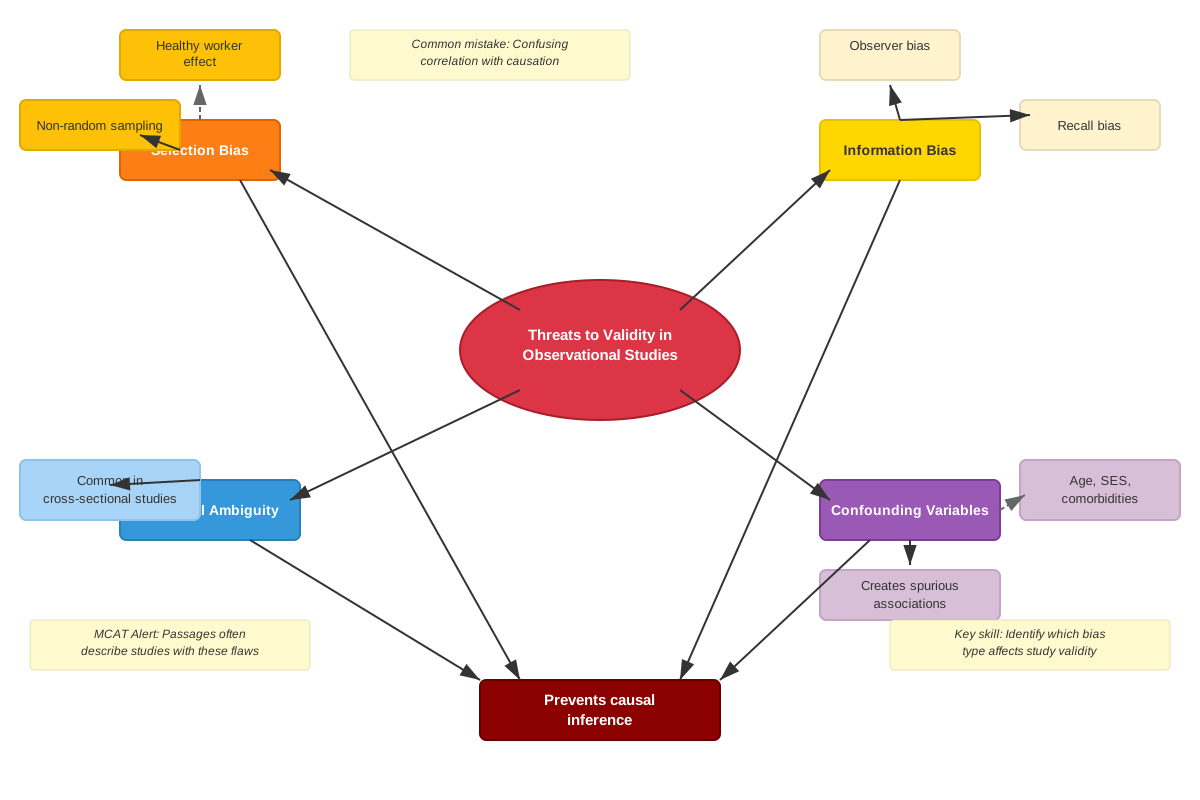
Confounding occurs when a third variable is associated with both the exposure and outcome, creating a spurious association or masking a true relationship. For example, in studying the relationship between coffee consumption and heart disease, age might be a confounder if older individuals both drink more coffee and have higher heart disease risk independent of coffee consumption. Researchers address confounding through: restriction (limiting study to specific groups); matching (pairing cases and controls on confounding variables); stratification (analyzing subgroups separately); and statistical adjustment (multivariable analysis).
Selection bias arises when the method of selecting participants creates systematic differences between groups being compared. Berkson's bias occurs in hospital-based case-control studies when hospitalization rates differ between exposed and unexposed individuals. Healthy worker effect appears in occupational cohort studies when employed individuals are healthier than the general population.
Information bias results from systematic errors in measuring exposures or outcomes. Recall bias is particularly problematic in case-control studies when cases remember past exposures more thoroughly than controls. Observer bias occurs when researchers' knowledge of exposure status influences outcome assessment, or vice versa.
Establishing Causality from Observational Data
While observational studies cannot prove causation as definitively as randomized experiments, Bradford Hill criteria provide a framework for evaluating causal relationships from observational evidence:
- Strength of association: Larger effect sizes suggest causality
- Consistency: Replication across different populations and settings
- Specificity: Specific exposure linked to specific outcome
- Temporality: Exposure precedes outcome (essential criterion)
- Biological gradient: Dose-response relationship
- Plausibility: Biologically or socially plausible mechanism
- Coherence: Consistent with existing knowledge
- Experiment: Supporting experimental evidence when available
- Analogy: Similar cause-effect relationships exist
Concept Relationships
Observational studies connect intimately with fundamental research methodology concepts. The distinction between observational and experimental designs forms the primary conceptual framework: experiments manipulate independent variables and randomly assign participants to conditions, establishing causality through control, while observational studies measure naturally occurring variation, establishing associations that may or may not be causal.
Within observational studies, the three major types form a hierarchy based on temporal sequence and causal inference strength: cohort studies (strongest observational evidence) → case-control studies (moderate evidence) → cross-sectional studies (weakest for causality). This hierarchy reflects each design's ability to establish temporal sequence and control for confounding.
The concept of confounding variables bridges observational studies to statistical analysis methods. Confounding → necessitates → statistical adjustment techniques (stratification, multivariable regression) → which connect to → understanding of correlation versus causation. Similarly, various bias types (selection bias, information bias, recall bias) → affect → internal validity → which determines → the strength of conclusions that can be drawn.
Observational studies also connect forward to evidence-based medicine and the hierarchy of evidence: systematic reviews and meta-analyses → randomized controlled trials → cohort studies → case-control studies → cross-sectional studies → case reports. Understanding where observational studies fit in this hierarchy helps evaluate the strength of research findings presented in MCAT passages.
High-Yield Facts
⭐ Observational studies observe naturally occurring phenomena without researcher manipulation of variables, distinguishing them fundamentally from experimental designs
⭐ Cohort studies follow participants forward in time from exposure to outcome, establishing temporal sequence and calculating relative risk
⭐ Case-control studies work backward from outcome to exposure, making them efficient for rare diseases but susceptible to recall bias
⭐ Cross-sectional studies measure exposure and outcome simultaneously, preventing establishment of temporal sequence and causality
⭐ Confounding occurs when a third variable is associated with both exposure and outcome, creating spurious associations or masking true relationships
- Cohort studies can be prospective (following participants into the future) or retrospective (using existing records of past exposures)
- Case-control studies calculate odds ratios, which approximate relative risk when the outcome is rare
- Recall bias is particularly problematic in case-control studies when cases remember exposures more thoroughly than controls
- Selection bias occurs when the method of selecting participants creates systematic differences between comparison groups
- Bradford Hill criteria provide a framework for evaluating whether observational associations represent causal relationships, with temporality being the only essential criterion
Quick check — test yourself on Observational studies so far.
Try Flashcards →Common Misconceptions
Misconception: Observational studies can never establish causation → Correction: While observational studies cannot prove causation as definitively as randomized experiments, strong observational evidence meeting Bradford Hill criteria (particularly temporality, consistency, dose-response, and biological plausibility) can support causal inference. The smoking-lung cancer link was established primarily through observational studies before experimental evidence was available.
Misconception: Cohort studies always follow participants prospectively into the future → Correction: Cohort studies can be either prospective (starting now and following forward) or retrospective (using existing records to reconstruct past exposures and outcomes). Both types follow the cohort design logic of starting with exposure status and determining subsequent outcomes.
Misconception: Case-control studies are inferior to cohort studies in all situations → Correction: Case-control studies are actually superior for studying rare outcomes because they efficiently identify existing cases rather than following thousands of people hoping some develop the rare condition. Each design has optimal applications depending on the research question.
Misconception: Cross-sectional studies are useless because they cannot establish causality → Correction: Cross-sectional studies serve valuable purposes including describing population characteristics, measuring disease prevalence, generating hypotheses for future research, and informing public health planning, even though they cannot establish temporal sequence or causality.
Misconception: Controlling for confounding variables in statistical analysis completely eliminates confounding → Correction: Statistical adjustment can only control for measured confounders. Unmeasured or unknown confounding variables may still bias results, which is why randomization in experimental studies is superior—it balances both measured and unmeasured confounders across groups.
Misconception: A strong correlation in an observational study proves causation → Correction: Correlation does not imply causation. Strong associations may result from confounding, reverse causation, or chance. Multiple Bradford Hill criteria should be met before inferring causality from observational data.
Worked Examples
Example 1: Identifying Study Design and Limitations
Vignette: Researchers want to investigate the relationship between social media use and depression among adolescents. They recruit 1,000 high school students and administer surveys measuring both current social media use (hours per day) and current depressive symptoms using a validated scale. They find that students reporting more than 3 hours of daily social media use have depression scores 40% higher than students reporting less than 1 hour daily.
Question: What type of observational study is this, and what is the primary limitation for establishing causality?
Analysis:
Step 1: Identify when measurements occurred. Both exposure (social media use) and outcome (depression) were measured simultaneously at a single time point using surveys.
Step 2: Classify the study design. Simultaneous measurement of exposure and outcome at one time point defines a cross-sectional study.
Step 3: Identify the primary limitation. Cross-sectional studies cannot establish temporal sequence—we cannot determine whether social media use preceded depression or whether depression led to increased social media use (reverse causation). Students who are already depressed might use social media more as a coping mechanism or due to social withdrawal.
Step 4: Consider additional limitations. Confounding variables (such as family stress, academic pressure, or pre-existing mental health conditions) might be associated with both increased social media use and depression. Self-report bias might affect measurement accuracy.
Answer: This is a cross-sectional study. The primary limitation is the inability to establish temporal sequence—we cannot determine whether social media use causes depression or whether depression leads to increased social media use. Confounding variables might also explain the observed association.
Connection to learning objectives: This example demonstrates application of observational study concepts to exam-style questions, requiring identification of study type and evaluation of limitations for causal inference.
Example 2: Comparing Study Designs for a Research Question
Vignette: A research team wants to study the relationship between childhood exposure to secondhand smoke and development of asthma in adulthood. They are considering three possible study designs:
Design A: Identify 500 adults with asthma and 500 adults without asthma, then interview them about childhood secondhand smoke exposure.
Design B: Survey 1,000 adults about current secondhand smoke exposure and current asthma status.
Design C: Identify 1,000 children, measure their secondhand smoke exposure, and follow them for 20 years to see who develops asthma.
Question: Identify each study design, and explain which would provide the strongest evidence for causality and why.
Analysis:
Design A Analysis: This design starts with outcome status (asthma present or absent) and looks backward to past exposure (childhood secondhand smoke). This is a case-control study. Strengths include efficiency and relatively low cost. Limitations include recall bias (adults with asthma might remember or report childhood smoke exposure differently than healthy adults) and difficulty establishing precise temporal sequence.
Design B Analysis: This design measures exposure and outcome simultaneously at one time point. This is a cross-sectional study. Major limitation: cannot establish temporal sequence since current exposure and current asthma are measured together, not childhood exposure and adult asthma as intended. This design actually fails to address the research question properly.
Design C Analysis: This design starts with exposure status (childhood secondhand smoke exposure) and follows participants forward in time to observe who develops the outcome (adult asthma). This is a prospective cohort study. Strengths include establishing clear temporal sequence (exposure precedes outcome), calculating incidence rates and relative risk directly, and minimizing recall bias through prospective data collection.
Comparison: Design C (prospective cohort) would provide the strongest evidence for causality because it: (1) establishes temporal sequence definitively—childhood exposure is measured before adult asthma develops; (2) minimizes recall bias through prospective measurement; (3) allows calculation of incidence and relative risk; and (4) can measure dose-response relationships. However, it requires 20 years and substantial resources.
Design A (case-control) would be more practical and efficient but susceptible to recall bias and provides weaker evidence for causality. Design B (cross-sectional) is inappropriate for this research question because it measures current rather than childhood exposure.
Answer: Design A is case-control, Design B is cross-sectional, and Design C is prospective cohort. Design C provides the strongest evidence for causality because it establishes temporal sequence, minimizes bias, and allows direct calculation of incidence, though it requires the most time and resources.
Connection to learning objectives: This example requires distinguishing between observational study types, evaluating their relative strengths and limitations, and applying this knowledge to select appropriate designs for specific research questions—all critical MCAT skills.
Exam Strategy
When approaching MCAT questions about observational studies, use this systematic approach:
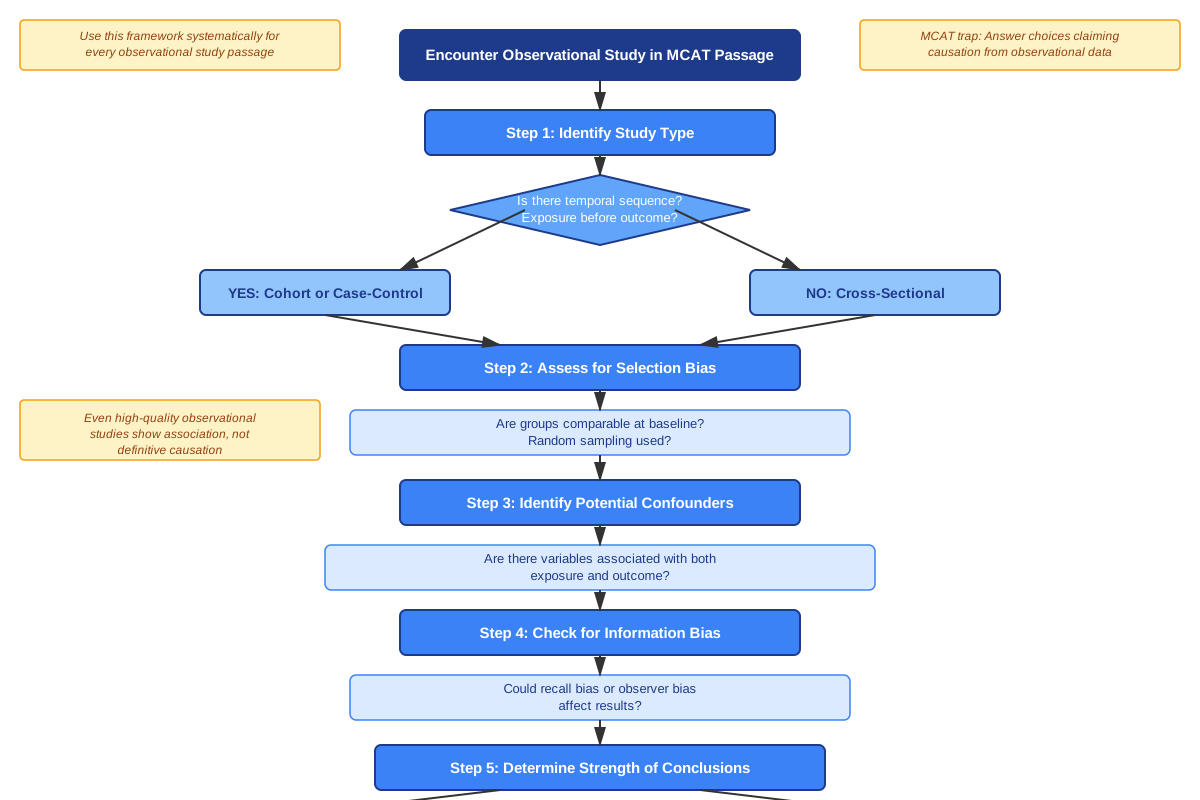
Step 1: Identify the study design by determining the starting point and direction. Ask: "Did researchers start with exposure status and follow forward (cohort), start with outcome status and look backward (case-control), or measure everything simultaneously (cross-sectional)?" Look for temporal language: "followed over time," "tracked for 10 years" suggests cohort; "compared patients with disease to controls" suggests case-control; "surveyed at one time point" suggests cross-sectional.
Step 2: Recognize trigger words and phrases:
- Cohort study triggers: "followed," "prospective," "tracked over time," "incidence," "relative risk," "developed the outcome"
- Case-control triggers: "compared cases to controls," "retrospective," "odds ratio," "patients with [disease] were matched with," "looked back at exposure history"
- Cross-sectional triggers: "survey," "prevalence," "at one time point," "snapshot," "simultaneously measured"
Step 3: Evaluate for limitations based on study type. For cohort studies, consider loss to follow-up and confounding. For case-control studies, immediately think about recall bias and selection of appropriate controls. For cross-sectional studies, recognize inability to establish temporal sequence.
Step 4: Assess causality carefully. If a question asks whether an observational study "proves" or "demonstrates" causation, be skeptical. Look for answer choices using more appropriate language like "suggests an association," "is consistent with," or "supports the hypothesis." Remember that correlation does not equal causation.
Process of elimination tips: Eliminate answers that claim observational studies prove causation without qualification. Eliminate answers that confuse study types (e.g., claiming a cross-sectional study establishes temporal sequence). Eliminate answers that ignore obvious confounding variables. When comparing study designs, eliminate answers that claim one design is always superior without considering the specific research context.
Time allocation: Spend 30-45 seconds identifying the study design, then focus remaining time on the specific question being asked. Don't get bogged down in passage details irrelevant to the question. If asked to identify limitations, quickly scan for the most obvious issues (recall bias in case-control, temporal sequence in cross-sectional, confounding in any design).
Exam Tip: If a passage describes an observational study finding an association and asks what can be concluded, the correct answer will almost never claim causation has been proven. Look for qualified language acknowledging association without claiming causation.
Memory Techniques
Mnemonic for Cohort Study: "COHORT = Come On, Here's Our Research Team" - emphasizes that researchers Come On (start now) and follow participants forward, establishing temporal sequence (Here's Our) and calculating Research (Relative risk) over Team (Time).
Mnemonic for Case-Control Study: "CCRO = Cases Come Retrospectively, Odds" - Cases Come first (researchers start by identifying cases), look Retrospectively at exposures, and calculate Odds ratios.
Mnemonic for Cross-Sectional Study: "SNAP = Snapshot, No Association Proven" - emphasizes the single time point (Snapshot) and inability to prove causation (No Association Proven).
Visualization for Study Types: Picture a timeline arrow:
- Cohort: Arrow points forward → (exposure) ----future----> (outcome)
- Case-control: Arrow points backward ← (exposure) <----past---- (outcome)
- Cross-sectional: Vertical line | (exposure and outcome measured simultaneously)
Mnemonic for Bradford Hill Criteria: "Strong Scientists Can't Tolerate Bad Pseudo-science, Claiming Absurd Explanations"
- Strength of association
- Specificity
- Consistency
- Temporality
- Biological gradient (dose-response)
- Plausibility
- Coherence
- Analogy
- Experiment
Memory aid for bias types: "SIR = Selection, Information, Recall" - the three major bias categories in observational studies, with Recall being a specific type of Information bias particularly relevant to case-control studies.
Summary
Observational studies constitute a fundamental research methodology in which investigators observe and measure naturally occurring phenomena without manipulating variables. The three major types—cohort, case-control, and cross-sectional studies—differ in their starting point, temporal direction, and ability to establish causality. Cohort studies follow participants from exposure to outcome, establishing temporal sequence and calculating relative risk, making them the strongest observational design for causal inference. Case-control studies work backward from outcome to exposure, providing efficiency for rare diseases but susceptibility to recall bias. Cross-sectional studies measure exposure and outcome simultaneously, preventing establishment of temporal sequence. All observational studies face challenges from confounding variables and various forms of bias that limit causal inference compared to randomized experiments. For the MCAT, students must identify study designs from passage descriptions, recognize design-specific limitations, evaluate the strength of evidence for causality, and distinguish correlation from causation. Understanding Bradford Hill criteria helps evaluate when observational associations may represent causal relationships despite the absence of experimental manipulation.
Key Takeaways
- Observational studies observe naturally occurring phenomena without researcher manipulation, fundamentally distinguishing them from experimental designs that control and manipulate variables
- Cohort studies follow participants forward from exposure to outcome, establishing temporal sequence and providing the strongest observational evidence for causality
- Case-control studies work backward from outcome to exposure, offering efficiency for rare diseases but high susceptibility to recall bias
- Cross-sectional studies measure exposure and outcome simultaneously at one time point, preventing establishment of temporal sequence and causality
- Confounding variables associated with both exposure and outcome can create spurious associations or mask true relationships in all observational designs
- Observational studies can support causal inference when Bradford Hill criteria are met, particularly temporality, consistency, dose-response, and biological plausibility
- The MCAT frequently tests ability to identify study designs, recognize design-specific limitations, and appropriately interpret the strength of evidence from observational data
Related Topics
Experimental Study Designs: Understanding randomized controlled trials and quasi-experimental designs provides essential contrast to observational methods, highlighting how random assignment controls for confounding and strengthens causal inference. Mastering observational studies creates the foundation for appreciating why experiments are considered the gold standard for establishing causality.
Correlation and Causation: This fundamental concept directly builds on observational study limitations, exploring why associations do not necessarily imply causal relationships and how to evaluate evidence for causality. Understanding observational studies provides concrete examples of when correlation may or may not reflect causation.
Sampling Methods and Bias: Knowledge of probability and non-probability sampling techniques connects to selection bias in observational studies, explaining how participant recruitment affects generalizability and internal validity. This topic extends understanding of how methodological choices impact research quality.
Measures of Association: Relative risk, odds ratios, and prevalence ratios represent the statistical measures calculated from different observational study designs. Understanding these measures requires foundation knowledge of observational study types and their appropriate applications.
Epidemiology and Public Health: Observational studies form the methodological backbone of epidemiological research investigating disease patterns, risk factors, and health outcomes in populations. Mastering observational study designs enables deeper understanding of how public health knowledge is generated.
Practice CTA
Now that you have mastered the core concepts of observational studies, it's time to solidify your understanding through active practice. Attempt the practice questions and flashcards designed specifically for this topic—they will challenge you to apply these concepts in MCAT-style scenarios, identify study designs from complex passages, and evaluate research limitations. Remember that recognizing observational study types and their limitations is a high-yield skill that appears repeatedly on the MCAT. Each practice question you complete strengthens your ability to quickly identify study designs and avoid common traps on test day. You've built the foundation—now practice applying it until these concepts become second nature!
Sign up free to keep reading
Create a free AnvayaPrep account to finish this MCAT guide on Observational studies — plus flashcards and practice questions.