Overview
Aggression is a fundamental concept in Sociology that examines behaviors intended to cause harm or injury to another individual or group. Within the MCAT's Social Interaction and Identity framework, aggression represents a critical area of study because it bridges biological, psychological, and sociological perspectives on human behavior. Understanding aggression requires students to integrate knowledge about evolutionary adaptations, neurobiological mechanisms, social learning processes, and cultural influences that shape when, how, and why individuals engage in harmful behaviors toward others.
For the Aggression MCAT content, students must recognize that aggression exists on a spectrum from subtle verbal hostility to overt physical violence, and that sociological frameworks distinguish between different types of aggression based on intent, motivation, and social context. The MCAT frequently tests aggression within passages exploring social hierarchies, group dynamics, gender socialization, media influences, and stress responses. Questions often require students to differentiate between biological predispositions and socially learned aggressive behaviors, or to analyze how situational factors interact with individual characteristics to produce aggressive outcomes.
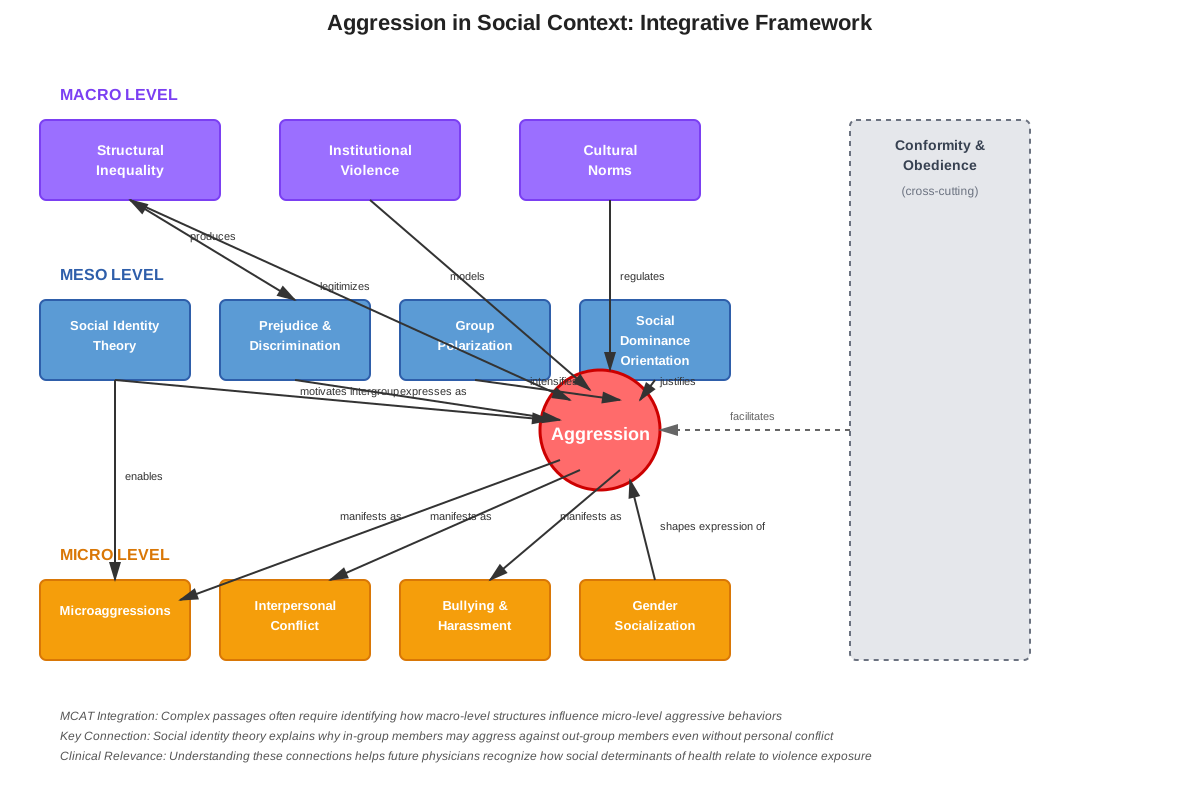
The study of Aggression Sociology connects to broader themes in social psychology including conformity, obedience, prejudice, and intergroup conflict. Aggression also intersects with identity formation, as cultural norms about acceptable aggressive behavior vary by gender, social class, and ethnicity. Mastering this topic enables students to analyze complex social phenomena including bullying, domestic violence, warfare, and systemic oppression through a sociological lens that considers both individual agency and structural constraints.
Learning Objectives
- [ ] Define Aggression using accurate Sociology terminology
- [ ] Explain why Aggression matters for the MCAT
- [ ] Apply Aggression to exam-style questions
- [ ] Identify common mistakes related to Aggression
- [ ] Connect Aggression to related Sociology concepts
- [ ] Distinguish between instrumental and hostile aggression with clinical examples
- [ ] Analyze how social learning theory, frustration-aggression hypothesis, and biological factors contribute to aggressive behavior
- [ ] Evaluate the role of situational variables (deindividuation, anonymity, heat, crowding) in facilitating aggression
Prerequisites
- Basic understanding of socialization processes: Necessary to comprehend how aggressive behaviors are learned and reinforced through social interactions
- Familiarity with nature vs. nurture debates: Essential for evaluating biological versus environmental contributions to aggression
- Knowledge of operant and classical conditioning: Required to understand behavioral reinforcement patterns that maintain aggressive responses
- Awareness of social identity theory: Needed to analyze intergroup aggression and in-group/out-group dynamics
- Understanding of the limbic system and prefrontal cortex: Provides neurobiological context for impulse control and emotional regulation
Why This Topic Matters
Aggression appears frequently on the MCAT Psychological, Social, and Biological Foundations of Behavior section, typically in 2-4 questions per exam. Questions may appear as discrete items testing definitional knowledge or within passages examining social phenomena like violence prevention programs, media effects research, or cross-cultural studies of conflict. The MCAT particularly favors questions that require students to distinguish between types of aggression, identify theoretical explanations for aggressive behavior, or analyze how multiple factors (biological, psychological, social) interact to produce aggressive outcomes.
Clinically, understanding aggression is essential for future physicians who will encounter patients affected by violence, abuse, and trauma. Healthcare providers must recognize risk factors for aggressive behavior, implement de-escalation techniques, and understand how social determinants of health contribute to violence exposure. Aggression also relates to public health initiatives addressing gun violence, intimate partner violence, and community safety.
The MCAT commonly presents aggression within passages about gender socialization (examining why males exhibit more physical aggression), media violence effects (testing knowledge of observational learning), or stress and frustration (exploring situational triggers). Students should expect questions requiring them to apply the frustration-aggression hypothesis, evaluate claims about biological determinism, or analyze how deindividuation facilitates aggressive behavior in crowds.
Core Concepts
Definition and Types of Aggression
Aggression is defined as any behavior intended to harm another individual who is motivated to avoid that harm. This definition emphasizes three critical components: (1) intentionality—the behavior must be purposeful, not accidental; (2) harm—the behavior must cause physical or psychological injury; and (3) unwillingness—the target must wish to avoid the harm. Accidentally bumping someone in a crowded hallway does not constitute aggression because intent is absent, while verbal insults qualify as aggression even without physical contact because psychological harm is intended.
Sociologists and psychologists distinguish between two primary types of aggression based on underlying motivation:
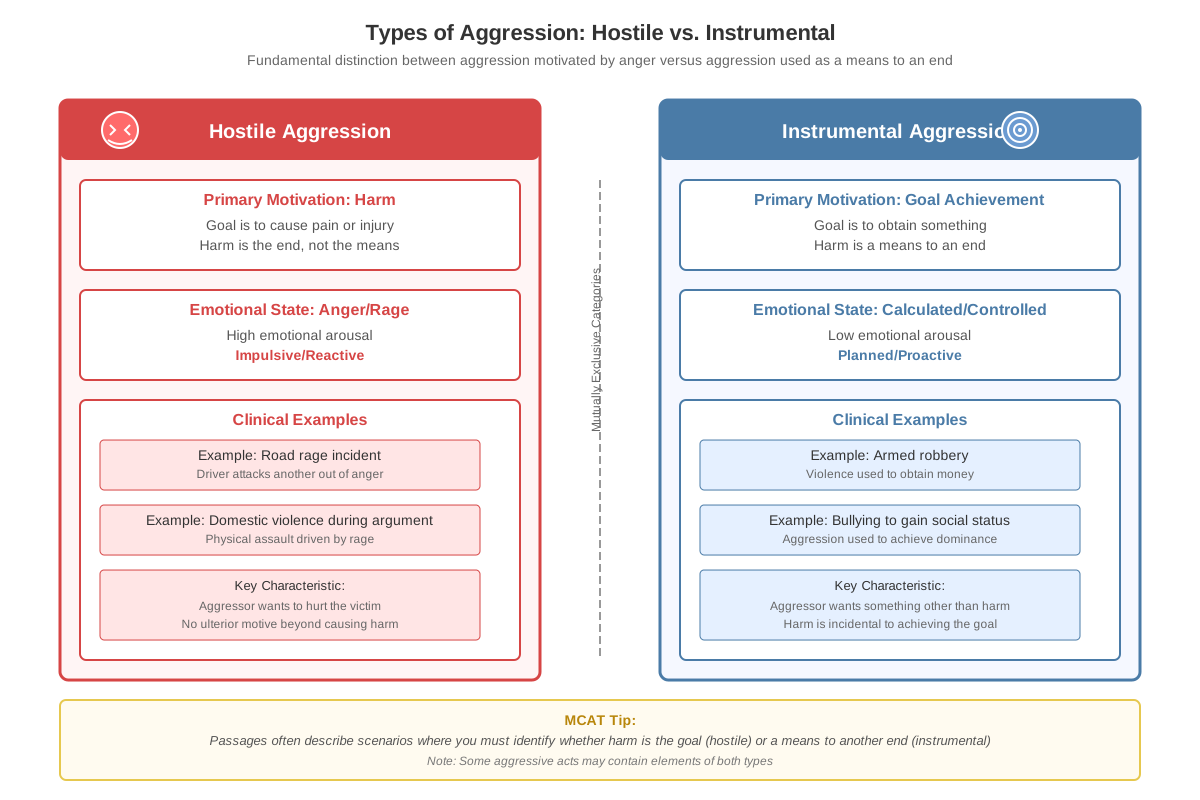
Instrumental aggression (also called proactive aggression) occurs when harm is inflicted as a means to achieve another goal. The aggression serves as a tool or instrument for obtaining a desired outcome such as money, status, territory, or resources. A robbery involving violence exemplifies instrumental aggression—the perpetrator's primary goal is obtaining valuables, with violence serving as the method. Similarly, a child who pushes another child off a swing to gain access demonstrates instrumental aggression. The harm itself is not the goal but rather a calculated means to an end.
Hostile aggression (also called reactive or affective aggression) occurs when harm itself is the primary goal, typically driven by anger, frustration, or emotional arousal. The aggressor seeks to inflict pain or injury as an end in itself, often in response to perceived provocation or threat. A person who punches someone during a heated argument exemplifies hostile aggression—the goal is to hurt the other person, not to obtain resources or achieve another objective. Hostile aggression tends to be impulsive, emotionally charged, and accompanied by physiological arousal.
Additional classifications include:
- Physical aggression: Behaviors causing bodily harm (hitting, kicking, weapon use)
- Verbal aggression: Language intended to cause psychological harm (insults, threats, yelling)
- Relational aggression: Harm to social relationships or status (gossip, social exclusion, reputation damage)
- Direct aggression: Face-to-face confrontation with the target
- Indirect aggression: Harm inflicted through intermediaries or covert means
Biological Perspectives on Aggression
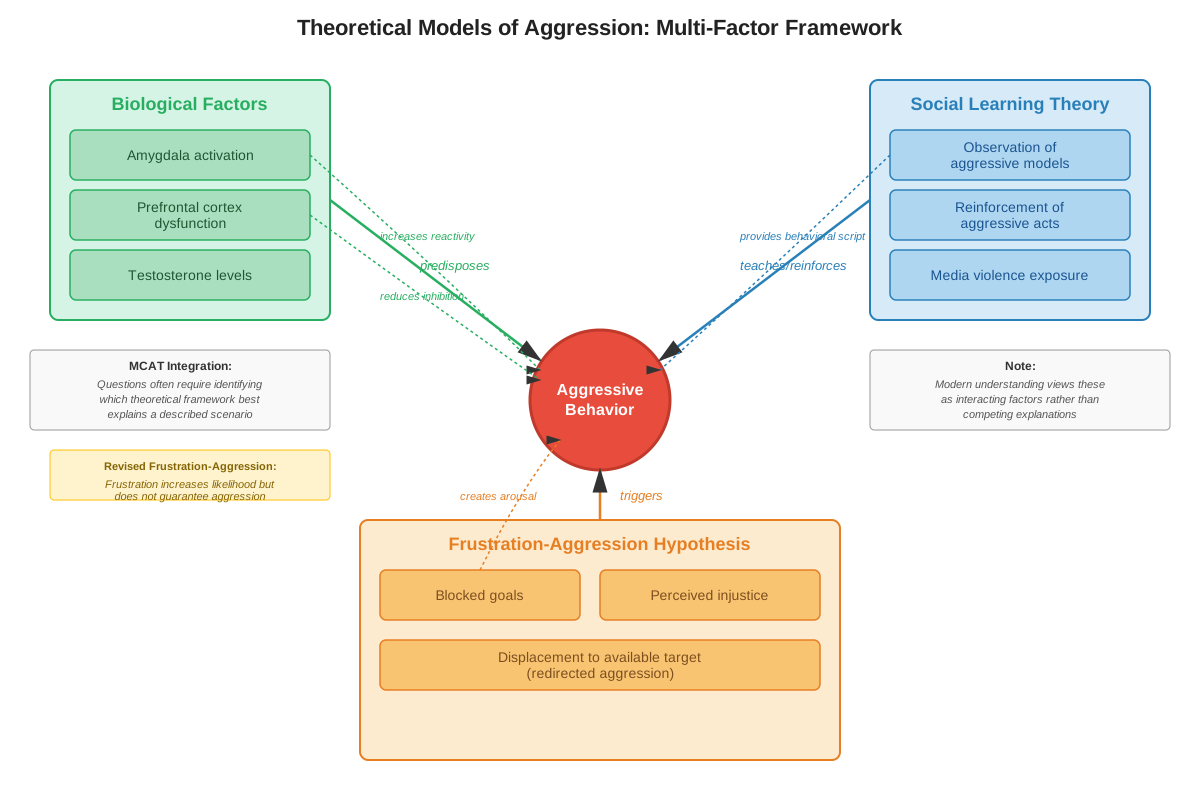
Biological approaches examine genetic, neurological, and hormonal factors contributing to aggressive behavior. The amygdala, a limbic system structure, plays a central role in processing threats and triggering aggressive responses. Hyperactivity in the amygdala or reduced connectivity between the amygdala and prefrontal cortex (which regulates impulses) correlates with increased aggression. Damage to the prefrontal cortex impairs judgment and impulse control, potentially increasing aggressive behavior.
Testosterone, an androgen hormone, shows positive correlations with aggression across species, though the relationship in humans is complex and bidirectional—aggression can also increase testosterone levels. Serotonin demonstrates an inverse relationship with aggression; lower serotonin activity associates with impulsive aggression and reduced behavioral inhibition. Genetic studies suggest heritability estimates for aggression ranging from 40-50%, indicating substantial genetic influence while leaving considerable room for environmental factors.
Evolutionary psychology proposes that aggression evolved as an adaptive strategy for competition over resources, mates, and status. Males across species typically exhibit more physical aggression than females, potentially reflecting sexual selection pressures favoring male competitiveness. However, biological predispositions interact extensively with social learning and cultural norms, and biological factors alone cannot explain the substantial variation in aggression across individuals, situations, and cultures.
Social Learning Theory and Aggression
Social learning theory, developed by Albert Bandura, posits that aggression is learned through observation, imitation, and reinforcement. Bandura's famous Bobo doll experiments demonstrated that children who observed adults behaving aggressively toward an inflatable doll subsequently exhibited similar aggressive behaviors, even without direct reinforcement. This research established that aggression can be acquired vicariously through modeling, particularly when the model is perceived as similar, powerful, or rewarded for aggressive behavior.
Four key processes facilitate observational learning of aggression:
- Attention: The observer must notice the aggressive behavior
- Retention: The observer must remember the observed behavior
- Reproduction: The observer must possess the physical and cognitive capabilities to replicate the behavior
- Motivation: The observer must have incentive to perform the behavior (expectation of reward or avoidance of punishment)
Reinforcement patterns strongly influence whether learned aggressive behaviors persist. Positive reinforcement occurs when aggression produces desired outcomes (obtaining toys, gaining peer status, achieving compliance). Negative reinforcement occurs when aggression removes aversive stimuli (stopping teasing, ending conflict). Punishment may suppress aggression temporarily but can also model aggressive behavior if delivered harshly, creating a paradox where punishment intended to reduce aggression actually teaches it.
Media violence research examines whether exposure to violent content increases aggressive behavior. Meta-analyses indicate small to moderate positive correlations between media violence exposure and aggressive thoughts, feelings, and behaviors, though causality remains debated. The General Aggression Model proposes that media violence influences aggression through multiple pathways: teaching aggressive scripts, priming aggressive cognitions, desensitizing emotional responses to violence, and creating hostile attribution biases.
Frustration-Aggression Hypothesis
The frustration-aggression hypothesis, originally proposed by Dollard and colleagues, suggests that frustration—the blocking of goal-directed behavior—creates an instigation toward aggression. In its original formulation, the hypothesis claimed that frustration always leads to aggression and that aggression always stems from frustration. This strong version proved too simplistic, as frustration sometimes produces responses other than aggression (withdrawal, problem-solving, learned helplessness), and aggression sometimes occurs without prior frustration (instrumental aggression).
The revised frustration-aggression hypothesis, refined by Leonard Berkowitz, proposes that frustration creates negative affect (unpleasant emotional arousal), which then increases the likelihood of aggression but does not guarantee it. Whether aggression occurs depends on:
- Intensity of frustration: Greater goal blockage produces stronger aggressive instigation
- Arbitrariness: Unjustified or unexpected frustration generates more aggression than legitimate obstacles
- Proximity to goal: Frustration occurring close to goal achievement produces stronger reactions
- Aggressive cues: Environmental stimuli associated with aggression (weapons, violent imagery) prime aggressive responses
- Individual differences: Personality traits, prior learning, and cultural norms moderate the frustration-aggression link
The weapons effect demonstrates that merely seeing weapons can increase aggressive behavior in frustrated individuals, suggesting that environmental cues interact with emotional states to facilitate aggression.
Situational and Social Factors
Multiple situational variables influence aggressive behavior:
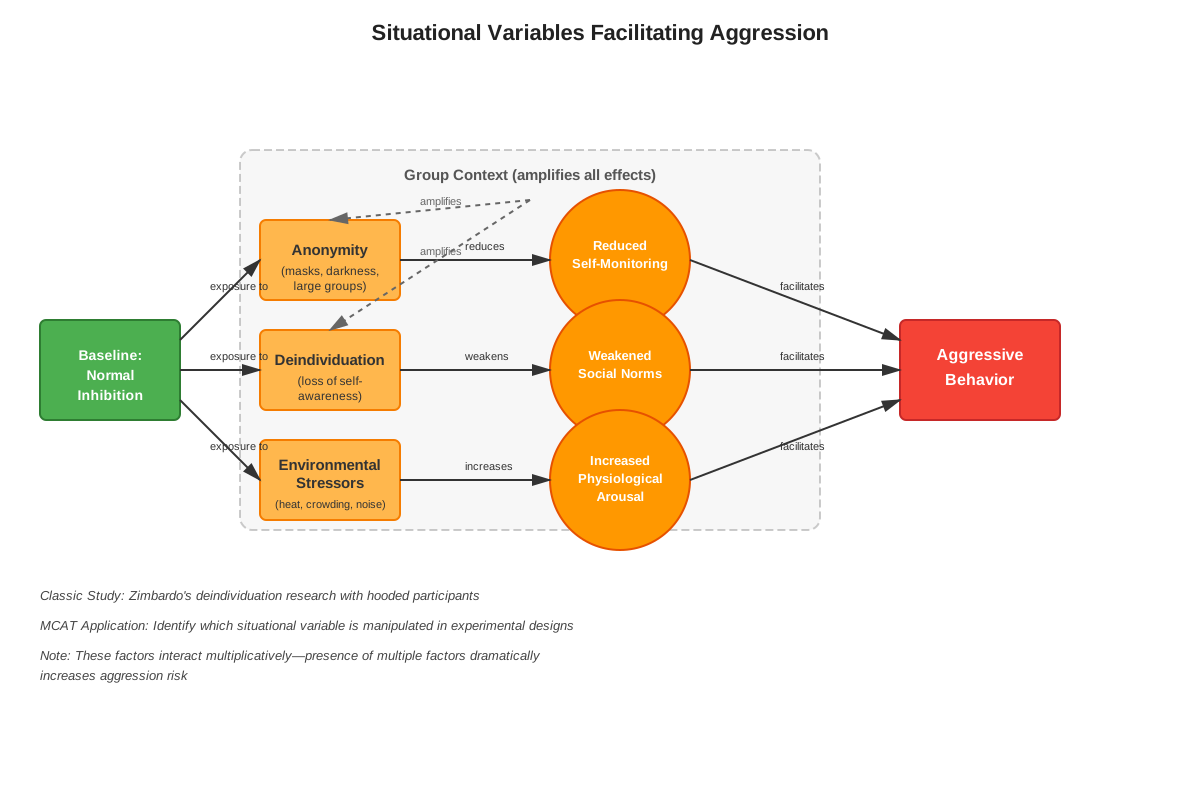
Deindividuation occurs when individuals lose self-awareness and sense of personal responsibility within groups, often leading to disinhibited behavior including aggression. Factors promoting deindividuation include anonymity, group immersion, arousal, and reduced accountability. Classic research by Zimbardo demonstrated that participants wearing hoods and masks (increasing anonymity) delivered longer electric shocks to confederates than identifiable participants. Deindividuation helps explain mob violence, rioting, and online aggression where anonymity reduces normal behavioral constraints.
Heat and aggression show positive correlations—violent crime rates increase during hot weather, and laboratory studies find that uncomfortable heat increases hostile thoughts and aggressive behavior. The relationship may reflect physiological arousal misattributed to anger, or heat-induced irritability lowering the threshold for aggressive responses.
Crowding and noise create stress and arousal that can facilitate aggression, particularly when combined with other provocations. Chronic exposure to environmental stressors may deplete self-control resources, reducing capacity to inhibit aggressive impulses.
Alcohol consumption strongly correlates with aggression and violence. Alcohol impairs prefrontal cortex functioning, reducing impulse control and judgment. It also narrows attention to immediate provocative cues while reducing consideration of long-term consequences, a phenomenon called alcohol myopia. Additionally, alcohol may provide a socially acceptable excuse for aggressive behavior, creating expectancy effects where individuals behave aggressively because they believe alcohol justifies such behavior.
Cultural and Gender Differences
Culture of honor describes societies where reputation and social status depend on willingness to respond aggressively to insults or threats. Research comparing Southern and Northern United States regions found that Southern males (from culture of honor backgrounds) responded more aggressively to insults than Northern males, suggesting cultural norms shape aggressive responses. Cultures of honor typically emerge in environments where formal law enforcement is weak and individuals must protect resources through reputation for toughness.
Gender differences in aggression show consistent patterns: males exhibit more physical aggression across cultures and age groups, while females show equal or greater relational aggression. These differences reflect both biological factors (testosterone, physical size) and socialization processes that encourage male physical dominance while teaching females to value relationships and discourage overt conflict. However, gender differences narrow considerably when examining verbal and relational aggression, and situational factors often override gender in predicting aggressive behavior.
Social scripts are culturally learned sequences of expected behaviors in specific situations. Aggressive scripts learned through socialization and media exposure guide behavior when situational cues activate them. Individuals with extensive aggressive script repertoires more readily interpret ambiguous situations as hostile and respond aggressively.
Quick check — test yourself on Aggression so far.
Try Flashcards →Concept Relationships
The concepts within aggression form an integrated framework where biological predispositions interact with learning experiences and situational factors to produce aggressive behavior. Biological factors (amygdala reactivity, testosterone, serotonin) establish baseline tendencies and physiological capacity for aggression → Social learning processes (observation, modeling, reinforcement) teach specific aggressive behaviors and when to deploy them → Cognitive factors (hostile attribution bias, aggressive scripts) shape interpretation of social situations → Situational triggers (frustration, provocation, environmental cues) activate learned aggressive responses → Cultural norms and social contexts determine whether aggression is expressed, inhibited, or redirected.
The distinction between instrumental and hostile aggression connects to different motivational systems: instrumental aggression links to reward-seeking and goal-directed behavior (connecting to operant conditioning and rational choice), while hostile aggression links to emotional arousal and threat response (connecting to limbic system activation and frustration-aggression hypothesis).
Deindividuation and culture of honor both demonstrate how social context modulates individual aggressive tendencies—deindividuation through reduced accountability in groups, culture of honor through normative expectations about defending reputation. Both illustrate that aggression cannot be understood solely through individual psychology but requires analysis of social structures and cultural meanings.
The relationship between media violence and social learning theory exemplifies how modern environments create novel opportunities for observational learning beyond direct interpersonal experience. This connects to broader sociological themes about how technology and mass media reshape socialization processes.
Understanding aggression enables analysis of related topics including prejudice and discrimination (intergroup aggression), social influence (how groups facilitate or inhibit aggression), stress and coping (aggression as maladaptive stress response), and deviance (aggression as violation of social norms).
High-Yield Facts
⭐ Aggression requires three components: intentionality, harm, and an unwilling target—accidental harm is not aggression
⭐ Instrumental aggression uses harm as a means to achieve goals; hostile aggression seeks harm as the goal itself
⭐ Social learning theory demonstrates that aggression is learned through observation, imitation, and reinforcement, not solely through biological instinct
⭐ Frustration-aggression hypothesis (revised version): frustration creates negative affect that increases aggression likelihood but does not guarantee it
⭐ Deindividuation reduces self-awareness and personal responsibility in groups, facilitating aggressive behavior through anonymity
- The amygdala processes threats and triggers aggression; the prefrontal cortex inhibits aggressive impulses through executive control
- Testosterone correlates positively with aggression; serotonin correlates negatively with impulsive aggression
- Relational aggression (harming social relationships) shows minimal gender differences, while physical aggression shows consistent male predominance
- Weapons effect: presence of weapons increases aggressive behavior in frustrated individuals by priming aggressive cognitions
- Culture of honor societies show heightened aggressive responses to insults due to cultural norms linking reputation to willingness to retaliate
- Alcohol myopia narrows attention to immediate provocative cues while reducing consideration of consequences, facilitating aggression
- Aggressive scripts are learned behavioral sequences activated by situational cues, guiding aggressive responses
Common Misconceptions
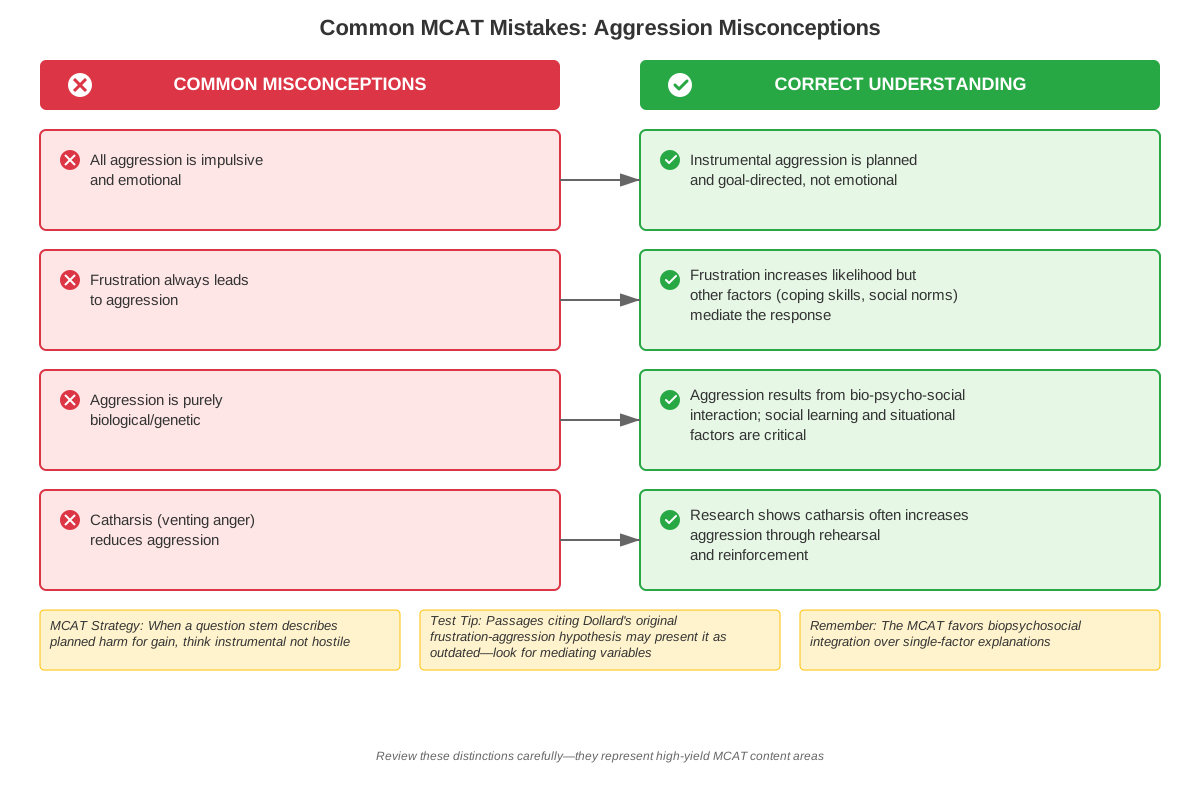
Misconception: Aggression is purely instinctual and biologically determined → Correction: While biological factors influence aggression, substantial evidence demonstrates that aggressive behaviors are learned through socialization, modeling, and reinforcement. Cross-cultural variation in aggression rates and the effectiveness of intervention programs prove that aggression is modifiable through environmental changes.
Misconception: Catharsis (venting anger through aggressive behavior) reduces subsequent aggression → Correction: Research consistently shows that expressing aggression typically increases rather than decreases subsequent aggressive behavior by reinforcing aggressive responses and priming aggressive cognitions. Catharsis theory lacks empirical support.
Misconception: All aggression is hostile/emotional in nature → Correction: Instrumental aggression involves calculated use of harm to achieve goals without emotional arousal. Many aggressive acts (robbery, strategic military actions, competitive business practices) are instrumental rather than hostile.
Misconception: Frustration always leads to aggression → Correction: The revised frustration-aggression hypothesis recognizes that frustration creates negative affect that may produce various responses including withdrawal, problem-solving, or learned helplessness. Aggression is one possible outcome, not an inevitable consequence.
Misconception: Media violence has no effect on real-world aggression → Correction: While media violence is not the sole or primary cause of aggression, meta-analyses demonstrate small to moderate positive correlations between media violence exposure and aggressive thoughts, feelings, and behaviors. The effect size is comparable to other recognized public health concerns.
Misconception: Males are more aggressive than females across all aggression types → Correction: Gender differences are pronounced for physical aggression but minimal or reversed for relational aggression. Females engage in substantial aggression through social exclusion, gossip, and relationship manipulation—forms often overlooked when aggression is defined narrowly as physical violence.
Misconception: Deindividuation always increases aggression → Correction: Deindividuation increases conformity to situational norms, which may be prosocial or antisocial. In contexts where group norms favor helping behavior, deindividuation can increase altruism. The effect depends on what behaviors the immediate social context makes salient.
Worked Examples
Example 1: Distinguishing Aggression Types
Vignette: A researcher observes three scenarios: (A) A child pushes another child to steal their toy; (B) A driver honks and yells at another driver who cut them off; (C) A person accidentally steps on someone's foot in a crowded subway.
Question: Which scenarios represent aggression, and what types?
Analysis:
Step 1: Apply the definition of aggression (intentional harm to unwilling target)
- Scenario A: Intentional (child deliberately pushes), harmful (physical force), unwilling target (victim wants to keep toy) → Aggression
- Scenario B: Intentional (driver chooses to honk/yell), harmful (psychological distress), unwilling target (other driver doesn't want harassment) → Aggression
- Scenario C: Unintentional (accidental contact) → Not aggression (lacks intentionality)
Step 2: Classify aggression types for A and B
- Scenario A: The child's primary goal is obtaining the toy; pushing is the method → Instrumental aggression (harm as means to goal)
- Scenario B: The driver's primary goal is expressing anger and causing distress to the offending driver; no tangible goal beyond harm → Hostile aggression (harm as the goal)
Answer: Scenarios A and B represent aggression; C does not. A exemplifies instrumental aggression; B exemplifies hostile aggression.
Connection to Learning Objectives: This example demonstrates application of definitional criteria and classification systems to real-world scenarios, a common MCAT question format.
Example 2: Analyzing Multiple Factors in Aggression
Vignette: A study examines factors predicting aggressive behavior in a simulated driving scenario. Participants are randomly assigned to conditions varying temperature (comfortable vs. uncomfortably hot), frustration (easy vs. difficult navigation), and anonymity (identifiable vs. anonymous). Results show highest aggression in the hot, frustrated, anonymous condition.
Question: Explain how three different theoretical perspectives account for these findings.
Analysis:
Frustration-Aggression Hypothesis: The difficult navigation condition creates goal blockage (frustration), generating negative affect that instigates aggression. The effect is stronger in the hot condition because heat adds additional negative affect, lowering the threshold for aggressive response. This explains the main effects of frustration and temperature.
Deindividuation Theory: The anonymity condition reduces self-awareness and personal accountability, removing normal inhibitions against aggressive behavior. When participants cannot be identified, they feel less responsible for their actions and more likely to act on aggressive impulses generated by frustration and heat. This explains why anonymity amplifies the effects of other factors.
Biological Perspective: Heat increases physiological arousal (elevated heart rate, blood pressure, cortisol), which can be misattributed to anger in frustrating situations. The arousal provides energy for aggressive responses while the frustration provides the cognitive interpretation. Anonymity then removes the social constraint that would normally inhibit expression of this aroused, angry state.
Synthesis: The highest aggression in the combined condition reflects additive and interactive effects: frustration creates aggressive instigation, heat intensifies arousal and negative affect, and anonymity removes inhibitions. No single factor alone produces maximal aggression; the interaction demonstrates that aggressive behavior emerges from multiple converging influences.
Connection to Learning Objectives: This example requires integrating multiple theoretical perspectives and understanding how biological, psychological, and social factors interact—a high-level skill frequently tested on the MCAT.
Exam Strategy
When approaching MCAT questions on aggression, first identify whether the question asks about definition/classification (instrumental vs. hostile), theoretical explanation (biological, social learning, frustration-aggression), or application to scenarios.
Trigger words indicating aggression content include: "intentional harm," "violent behavior," "hostile," "instrumental," "frustration," "modeling," "observational learning," "deindividuation," "anonymity," "culture of honor," and "media violence." Questions using phrases like "goal-directed harm" signal instrumental aggression, while "emotionally-driven" or "reactive" suggest hostile aggression.
Process of elimination strategies:
- Eliminate options suggesting aggression is purely biological/instinctual—the MCAT favors biopsychosocial integration
- Eliminate options claiming catharsis reduces aggression—this is empirically unsupported
- Eliminate options confusing correlation with causation in media violence research
- Be suspicious of extreme language ("always," "never," "only") regarding frustration-aggression relationships
Common question formats:
- Scenario classification: Present a behavior and ask whether it's aggression and what type
- Theory application: Describe a research finding and ask which theory best explains it
- Factor analysis: Present multiple variables and ask which combination predicts highest aggression
- Intervention evaluation: Describe an anti-aggression program and ask why it would/wouldn't work based on theory
Time allocation: Aggression questions typically require 60-90 seconds. Spend 20-30 seconds identifying the theoretical framework being tested, 20-30 seconds eliminating clearly wrong answers, and 20-30 seconds choosing between remaining options. Don't overthink definitional questions—apply the three-component definition systematically.
Exam Tip: When passages present research on aggression, pay attention to whether studies are correlational or experimental. The MCAT frequently asks about causal claims, and only experimental designs with random assignment support causation. Media violence research is particularly prone to this distinction.
Memory Techniques
Mnemonic for aggression definition components: "I HIT"
- Intentional
- Harmful
- Involves unwilling
- Target
Mnemonic for instrumental vs. hostile aggression: "MEAN vs. MAD"
- Means to an End, Achieve goal, Not emotional = Instrumental
- Motivated by Anger, Destroy/harm = Hostile
Mnemonic for social learning theory processes: "ARRM" (like "arm" yourself with knowledge)
- Attention
- Retention
- Reproduction
- Motivation
Visualization for frustration-aggression hypothesis: Picture a person trying to open a jammed door (frustration/goal blockage) → face turns red with negative affect → person kicks the door (aggression). Add environmental cues: if a baseball bat is visible nearby (weapons effect), aggression increases.
Acronym for factors increasing aggression: "HAAFD" (sounds like "half-ed")
- Heat
- Alcohol
- Anonymity (deindividuation)
- Frustration
- Dehumanization
Memory palace technique: Imagine walking through a house where each room represents a theoretical perspective. Living room = Social Learning (TV showing Bobo doll experiment), Kitchen = Frustration-Aggression (blocked refrigerator door), Basement = Biological (brain diagrams on walls), Attic = Cultural (honor culture artifacts).
Summary
Aggression encompasses intentional behaviors aimed at harming unwilling targets, classified as instrumental (harm as means to goals) or hostile (harm as the goal itself). Understanding aggression for the MCAT requires integrating biological factors (amygdala, testosterone, serotonin), social learning processes (observation, modeling, reinforcement), cognitive mechanisms (aggressive scripts, hostile attribution bias), and situational variables (frustration, deindividuation, heat, alcohol). The revised frustration-aggression hypothesis explains how goal blockage creates negative affect that increases aggression likelihood without guaranteeing it. Social learning theory demonstrates that aggression is acquired through observational learning, particularly when models are rewarded. Deindividuation in groups reduces self-awareness and accountability, facilitating aggressive behavior. Cultural factors including honor cultures and gender socialization shape when and how aggression is expressed. Effective MCAT preparation requires distinguishing aggression types, applying multiple theoretical perspectives to scenarios, and recognizing how biological, psychological, and social factors interact to produce aggressive outcomes.
Key Takeaways
- Aggression requires intentionality, harm, and an unwilling target—distinguish it from accidental harm or assertiveness
- Instrumental aggression uses harm to achieve goals; hostile aggression seeks harm as the primary goal
- Social learning theory proves aggression is learned through observation and reinforcement, not purely instinctual
- Frustration creates negative affect that increases but does not guarantee aggression—situational and individual factors moderate the relationship
- Deindividuation, heat, alcohol, and frustration are high-yield situational factors that facilitate aggressive behavior
- Biological factors (amygdala, hormones) interact with social learning and cultural norms—avoid biological determinism
- Gender differences are pronounced for physical aggression but minimal for relational aggression
Related Topics
Prejudice and Discrimination: Aggression often targets out-group members; understanding intergroup aggression requires knowledge of social identity theory, stereotyping, and in-group favoritism. Mastering aggression provides foundation for analyzing hate crimes and systemic violence.
Social Influence and Group Behavior: Deindividuation connects to broader concepts of conformity, obedience, and group polarization. Understanding how groups facilitate aggression enables analysis of mob behavior, organizational violence, and collective action.
Stress, Coping, and Health: Aggression represents one maladaptive coping response to stress. Exploring the relationship between chronic stress, cortisol, and aggression connects to health psychology and psychoneuroimmunology.
Socialization and Identity Formation: Gender differences in aggression reflect differential socialization processes. Understanding how children learn gender-appropriate aggressive behaviors connects to broader themes of identity development and social role acquisition.
Deviance and Social Control: Aggression as norm violation connects to theories of deviance, labeling theory, and formal/informal social control mechanisms. This enables analysis of criminal justice responses to violence.
Practice CTA
Now that you've mastered the core concepts of aggression, test your knowledge with practice questions and flashcards. Focus on distinguishing instrumental from hostile aggression, applying the frustration-aggression hypothesis to novel scenarios, and integrating biological, psychological, and social factors in your explanations. Remember that aggression questions often appear in passages about social phenomena—practice extracting relevant information quickly and connecting it to theoretical frameworks. Your ability to analyze aggression from multiple perspectives will serve you well not only on the MCAT but in understanding complex social problems throughout your medical career. You've got this!
Sign up free to keep reading
Create a free AnvayaPrep account to finish this MCAT guide on Aggression — plus flashcards and practice questions.