Overview
Prejudice is a fundamental concept in Sociology that appears frequently on the MCAT, particularly within the Social Stratification and Inequality framework. Prejudice refers to preconceived, typically negative attitudes toward individuals based solely on their membership in a particular social group—whether defined by race, ethnicity, gender, religion, sexual orientation, socioeconomic status, or other characteristics. Unlike discrimination, which involves behavioral actions, prejudice operates at the cognitive and affective level, encompassing beliefs, emotions, and evaluations that precede and often motivate discriminatory behavior. Understanding prejudice is essential for medical professionals because healthcare disparities, patient-provider interactions, and public health outcomes are all significantly influenced by prejudicial attitudes within both healthcare systems and society at large.
The MCAT tests prejudice extensively because it represents a critical intersection between individual psychology and broader social structures. Questions may present clinical vignettes involving implicit bias in diagnosis, research scenarios examining stereotype threat effects on health outcomes, or passages analyzing how prejudicial attitudes perpetuate health inequalities across demographic groups. The exam expects students to distinguish prejudice from related concepts like stereotypes (cognitive schemas), discrimination (behavioral manifestations), and institutional racism (systemic patterns). Furthermore, test-takers must understand how prejudice operates at multiple levels—individual, interpersonal, and institutional—and how it connects to power dynamics, social identity theory, and intergroup conflict.
Within the broader Sociology curriculum, prejudice serves as a foundational concept linking micro-level social psychology to macro-level social stratification. It connects directly to topics including stereotyping, discrimination, racism, sexism, social identity formation, in-group/out-group dynamics, and the perpetuation of inequality. Mastering prejudice enables deeper understanding of how social hierarchies are maintained, how healthcare disparities emerge, and how interventions might reduce bias in medical settings. This topic bridges the psychological and sociological perspectives that the MCAT integrates throughout its Psychological, Social, and Biological Foundations of Behavior section.
Learning Objectives
- [ ] Define Prejudice using accurate Sociology terminology
- [ ] Explain why Prejudice matters for the MCAT
- [ ] Apply Prejudice to exam-style questions
- [ ] Identify common mistakes related to Prejudice
- [ ] Connect Prejudice to related Sociology concepts
- [ ] Distinguish between prejudice, stereotypes, and discrimination with clinical examples
- [ ] Analyze how prejudice operates at individual, interpersonal, and institutional levels
- [ ] Evaluate the relationship between prejudice and social stratification systems
- [ ] Apply theories of prejudice formation (social identity theory, realistic conflict theory) to healthcare scenarios
Prerequisites
- Attitudes and attitude formation: Prejudice is fundamentally an attitude structure with cognitive, affective, and behavioral components
- Social cognition and schemas: Understanding how mental shortcuts and categorization processes underlie prejudicial thinking
- Group dynamics and social identity: Prejudice emerges from in-group favoritism and out-group derogation processes
- Basic understanding of social inequality: Prejudice both reflects and reinforces existing stratification systems
- Stereotypes: Prejudice builds upon stereotypical beliefs about group characteristics
Why This Topic Matters
Clinical and Real-World Significance
Prejudice directly impacts healthcare delivery and patient outcomes in measurable ways. Implicit racial bias among healthcare providers has been documented to affect pain management decisions, diagnostic accuracy, treatment recommendations, and patient-provider communication quality. Studies demonstrate that prejudicial attitudes contribute to disparities in cardiovascular care, maternal mortality rates, mental health treatment access, and chronic disease management across racial, ethnic, and socioeconomic groups. Medical students and physicians who understand prejudice mechanisms are better equipped to recognize their own biases, implement bias-reduction strategies, and advocate for equitable care systems. Additionally, prejudice affects patient behavior—experiences of discrimination correlate with reduced healthcare utilization, medication non-adherence, and mistrust of medical institutions, particularly among marginalized populations.
MCAT Exam Statistics and Question Types
Prejudice appears in approximately 15-20% of Psychological, Social, and Biological Foundations of Behavior section questions, making it a high-yield topic. The MCAT tests prejudice through multiple question formats: discrete questions asking for definitions and distinctions between related concepts; passage-based questions analyzing research studies on implicit bias, stereotype threat, or discrimination; and clinical vignettes requiring application of prejudice concepts to patient care scenarios. Common question stems include identifying examples of prejudice versus discrimination, analyzing how prejudice perpetuates health disparities, evaluating interventions to reduce bias, and connecting prejudice to social stratification theories.
Common Exam Passage Contexts
MCAT passages frequently present prejudice within these frameworks: (1) research studies examining implicit association tests or other bias measurement tools; (2) healthcare disparity investigations showing differential treatment patterns; (3) social psychology experiments on intergroup contact or prejudice reduction; (4) public health analyses of how stigma affects disease screening and treatment; (5) sociological examinations of how prejudice maintains social hierarchies. Recognizing these contexts helps students quickly identify when prejudice concepts apply and which theoretical frameworks the question is testing.
Core Concepts
Definition and Components of Prejudice
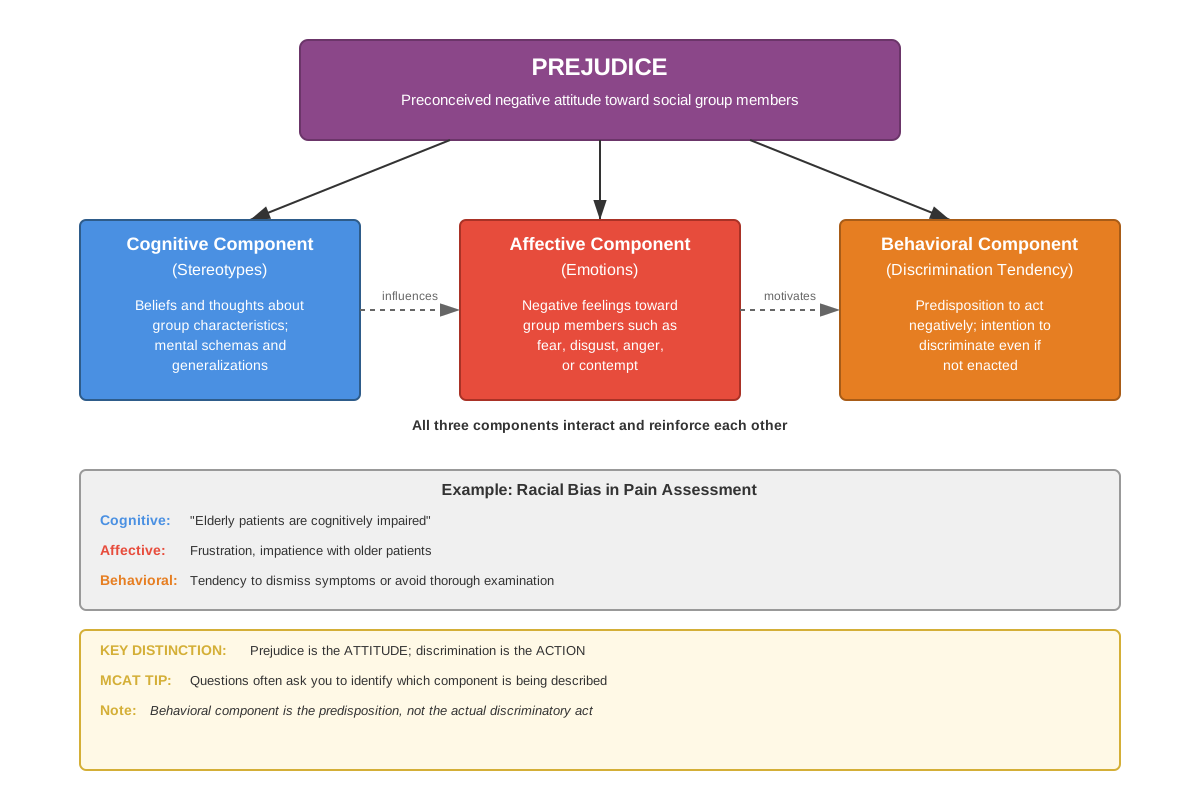
Prejudice is defined as a preconceived judgment or opinion, typically negative and unfavorable, formed about individuals based solely on their membership in a particular social group, without adequate knowledge or examination of the facts. In Prejudice Sociology, this concept encompasses three interrelated components that mirror the tripartite model of attitudes:
- Cognitive component: Beliefs and thoughts about the target group (often overlapping with stereotypes)
- Affective component: Emotional reactions and feelings toward group members (fear, disgust, contempt, anger)
- Behavioral component: Predisposition to act in certain ways (which may manifest as discrimination when enacted)
The critical distinction is that prejudice exists at the attitudinal level—it represents internal mental states rather than observable actions. A physician might harbor prejudicial attitudes about patients with substance use disorders (believing they are morally weak, feeling disgust, being predisposed to provide minimal care) without necessarily acting on these attitudes in every clinical encounter, though such attitudes frequently do influence behavior.
Types and Targets of Prejudice
Prejudice manifests across numerous dimensions of social identity:
| Type of Prejudice | Target Group | Common Manifestations in Healthcare |
|---|---|---|
| Racism | Racial/ethnic minorities | Differential pain management, diagnostic delays, treatment disparities |
| Sexism | Women and gender minorities | Dismissal of symptoms, underrepresentation in research, gender-based violence |
| Ageism | Older or younger individuals | Patronizing communication, treatment withholding, assumption of cognitive decline |
| Classism | Lower socioeconomic groups | Judgment about lifestyle choices, reduced time spent with patients, access barriers |
| Ableism | People with disabilities | Assumptions about quality of life, communication barriers, exclusion from decisions |
| Homophobia/Transphobia | LGBTQ+ individuals | Refusal of care, inappropriate questioning, lack of culturally competent care |
| Weight bias | Individuals with obesity | Attribution of all health problems to weight, stigmatizing language, treatment delays |
Understanding these specific forms helps identify prejudice in MCAT passages and clinical scenarios, as questions often test whether students can recognize prejudice across different social categories.
Explicit vs. Implicit Prejudice
Explicit prejudice refers to consciously held and openly expressed negative attitudes toward group members. These attitudes are deliberate, accessible to conscious awareness, and typically measured through self-report questionnaires. Explicit prejudice has declined in many societies due to changing social norms, though it persists in certain contexts and populations.
Implicit prejudice (or implicit bias) refers to unconscious, automatic negative associations with particular social groups. These attitudes operate outside conscious awareness and control, influencing judgments and behaviors even among individuals who explicitly reject prejudice. Implicit prejudice is typically measured through reaction-time tasks like the Implicit Association Test (IAT), which assesses the strength of automatic associations between social categories and evaluative concepts.
MCAT Exam Tip: Questions often present scenarios where healthcare providers explicitly endorse egalitarian values but demonstrate implicit bias in their clinical decisions. Recognizing this dissociation is key to answering correctly.
The distinction matters clinically because implicit biases can affect medical decision-making even among well-intentioned providers who consciously reject prejudice. Research demonstrates that implicit racial bias predicts differences in treatment recommendations, diagnostic accuracy, and patient-provider communication quality, independent of explicit attitudes.
Levels of Prejudice
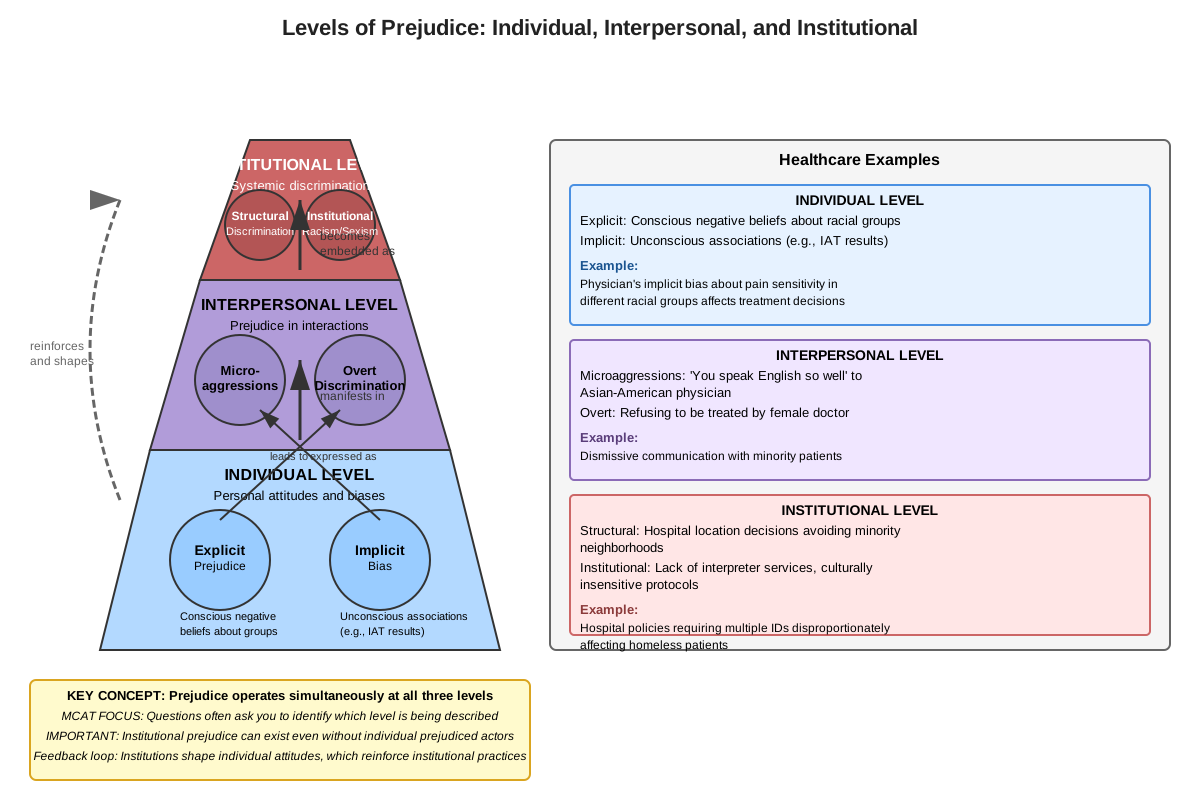
Prejudice MCAT questions frequently require distinguishing between three levels at which prejudice operates:
Individual-level prejudice: Personal attitudes, beliefs, and feelings held by specific individuals toward members of other groups. This represents the psychological dimension of prejudice, rooted in individual cognitive processes, personality factors, and personal experiences.
Interpersonal-level prejudice: Prejudicial attitudes expressed and enacted in direct interactions between individuals. This includes microaggressions (brief, commonplace verbal or behavioral indignities), biased communication patterns, and differential treatment in face-to-face encounters.
Institutional-level prejudice: Prejudicial attitudes embedded within organizational policies, practices, and cultural norms that systematically disadvantage certain groups. In healthcare, this includes biased clinical algorithms, unequal resource allocation, and structural barriers to care access. Institutional prejudice connects directly to Social Stratification and Inequality by showing how individual attitudes become codified into systems that perpetuate group-based hierarchies.
Theories of Prejudice Formation
Several theoretical frameworks explain how and why prejudice develops:
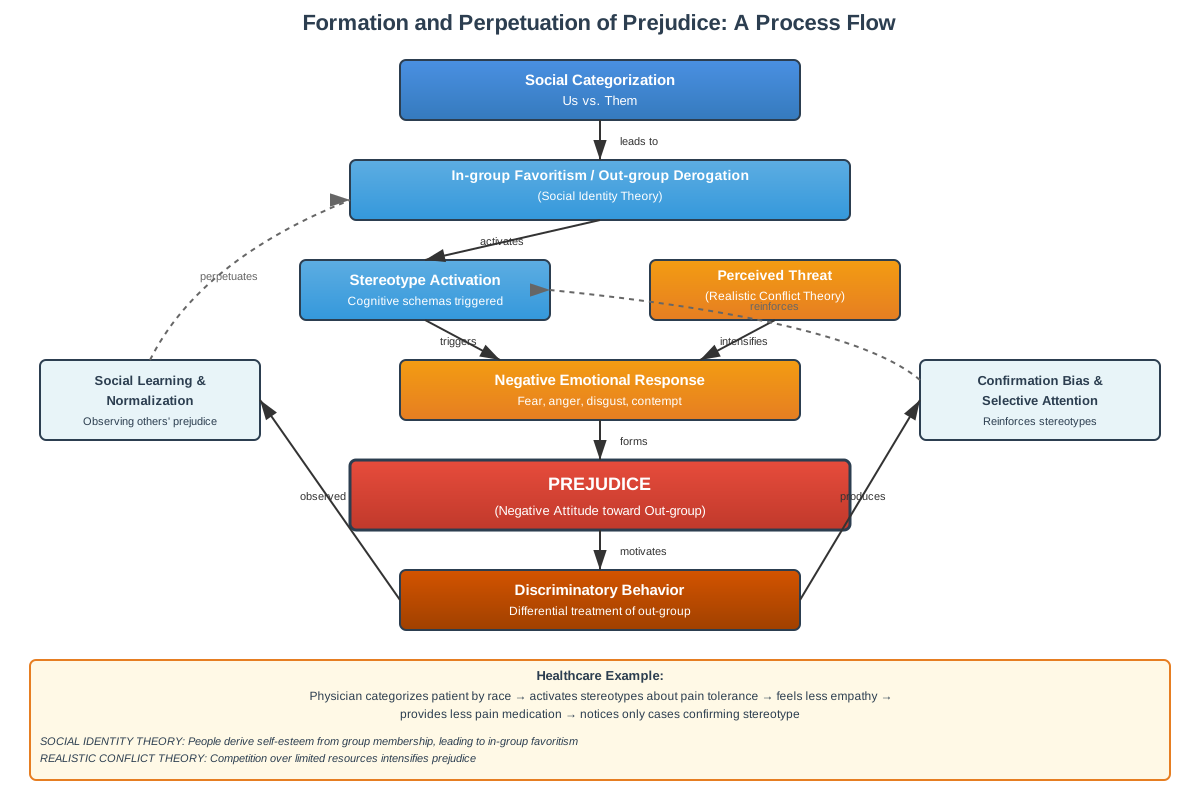
Social Identity Theory: Proposed by Henri Tajfel and John Turner, this theory posits that individuals derive part of their self-concept from membership in social groups. To maintain positive self-esteem, people engage in social categorization (dividing the world into in-groups and out-groups), social identification (adopting the identity of their in-group), and social comparison (comparing their in-group favorably to out-groups). Prejudice emerges as a byproduct of in-group favoritism and out-group derogation, serving to enhance collective self-esteem.
Realistic Conflict Theory: This framework suggests that prejudice arises from competition between groups for limited resources (jobs, housing, healthcare access, political power). When groups perceive their interests as incompatible, intergroup hostility and prejudice intensify. The theory explains why prejudice often increases during economic downturns or when resources become scarce.
Social Learning Theory: Prejudice is acquired through observation, imitation, and reinforcement. Children learn prejudicial attitudes by observing parents, peers, media representations, and cultural messages. When prejudicial expressions are rewarded (through social approval) or go unpunished, they are reinforced and maintained.
Cognitive Theories: These approaches emphasize how normal cognitive processes contribute to prejudice formation. Categorization (grouping people into social categories) simplifies social perception but leads to stereotyping. The outgroup homogeneity effect (perceiving outgroup members as more similar to each other than they actually are) and the ultimate attribution error (attributing negative outgroup behavior to dispositional factors while attributing positive behavior to situational factors) perpetuate prejudicial thinking.
Relationship Between Prejudice, Stereotypes, and Discrimination
These three concepts form an interconnected system but must be distinguished:
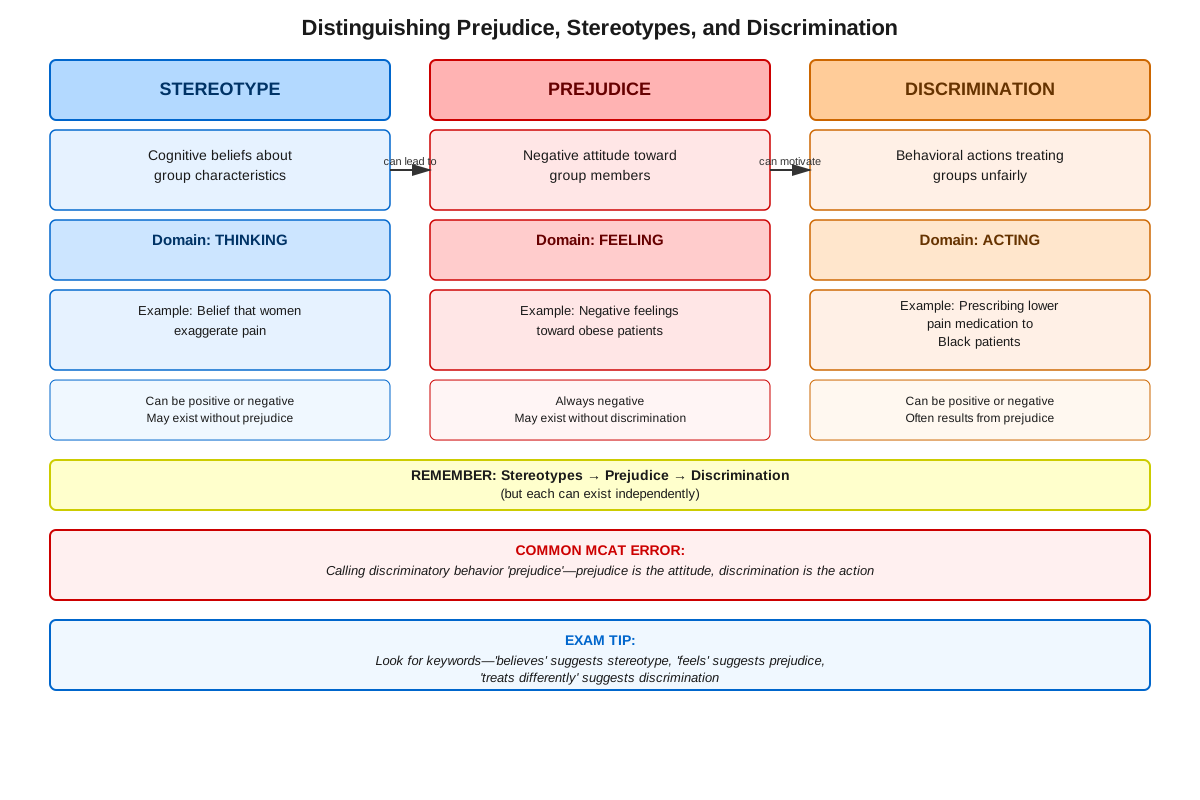
Stereotypes are cognitive schemas—generalized beliefs about the characteristics, attributes, and behaviors of members of a particular group. They represent the cognitive component of prejudice and can be positive, negative, or neutral (though negative stereotypes are most relevant to inequality).
Prejudice is the affective component—the emotional evaluation and attitude toward group members based on their group membership. Prejudice typically builds upon stereotypical beliefs but adds emotional valence.
Discrimination is the behavioral component—actual actions that treat individuals differently (typically unfavorably) based on their group membership. Discrimination represents the enactment of prejudicial attitudes.
The relationship typically flows: Stereotypes → Prejudice → Discrimination, though this sequence is not inevitable. Individuals may hold stereotypes without prejudice, or harbor prejudice without engaging in discrimination (due to social norms, legal constraints, or personal values). However, prejudice significantly increases the likelihood of discriminatory behavior.
Functions of Prejudice
Understanding why prejudice persists requires examining its psychological and social functions:
- Ego-defensive function: Prejudice protects self-esteem by allowing individuals to project their own unacceptable impulses onto outgroups or feel superior by comparison
- Utilitarian function: Prejudice serves practical purposes, such as justifying unequal resource distribution or rationalizing one's advantaged position in social hierarchies
- Value-expressive function: Prejudice allows individuals to express core values and affirm their identity by defining themselves against outgroups
- Knowledge function: Prejudice provides (albeit inaccurate) cognitive shortcuts that simplify complex social environments and reduce uncertainty
These functions explain why prejudice is difficult to eliminate—it serves multiple psychological needs and social purposes beyond simple ignorance or misinformation.
Quick check — test yourself on Prejudice so far.
Try Flashcards →Concept Relationships
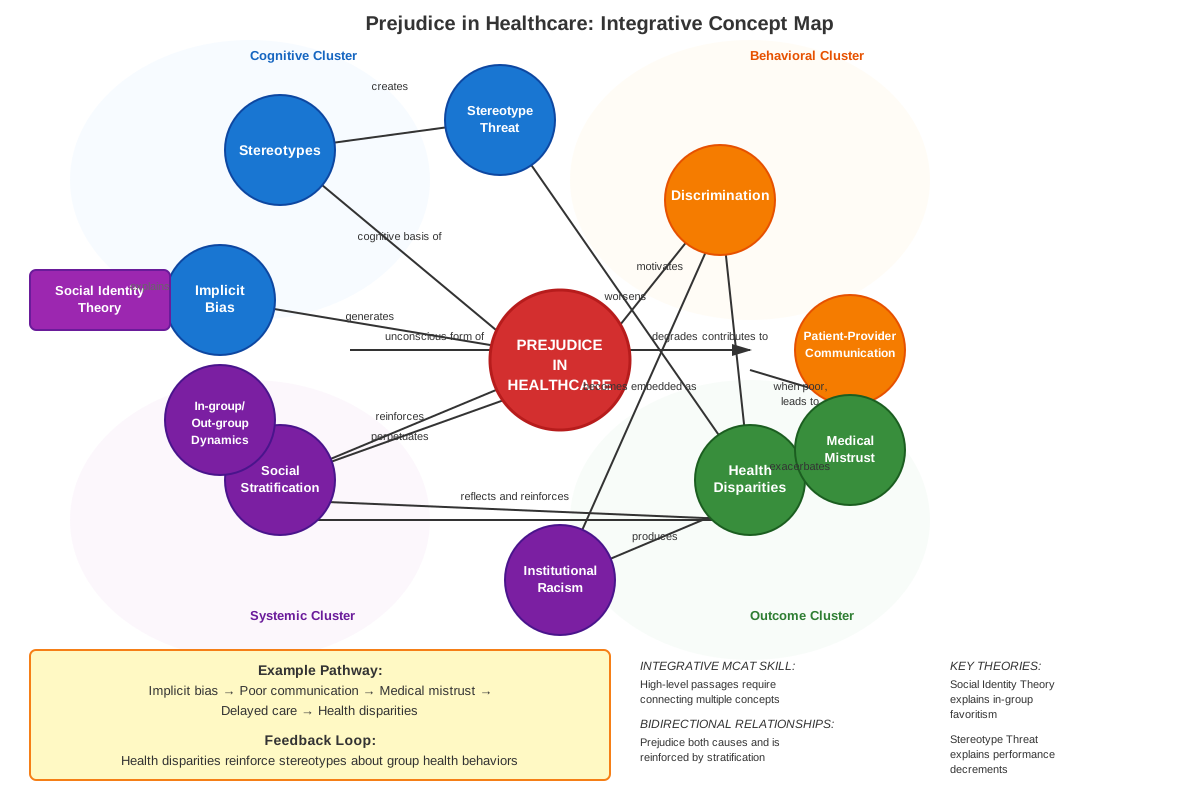
Prejudice sits at the center of a complex network of sociological and psychological concepts. At the most fundamental level, stereotypes provide the cognitive foundation upon which prejudice builds—generalized beliefs about group characteristics create the mental framework that prejudicial attitudes elaborate with emotional content. This prejudice then frequently (though not inevitably) motivates discrimination, the behavioral manifestation of negative attitudes. This stereotype → prejudice → discrimination pathway represents the primary conceptual flow students must understand.
Prejudice connects upward to macro-level concepts in Social Stratification and Inequality. Prejudicial attitudes both reflect and reinforce existing social hierarchies by providing ideological justification for unequal treatment and resource distribution. For example, prejudice against lower socioeconomic groups helps rationalize wealth inequality by attributing poverty to personal failings rather than structural factors. This relationship is bidirectional: social stratification systems generate prejudice (through realistic conflict over resources and status), while prejudice legitimizes and perpetuates stratification.
At the group level, prejudice emerges from social identity processes. In-group favoritism and out-group derogation create the psychological conditions for prejudice, as individuals enhance their self-esteem through favorable social comparisons. This connects to intergroup conflict theories, which explain how competition for resources intensifies prejudicial attitudes. The contact hypothesis (Allport's intergroup contact theory) provides the counterpoint, suggesting that positive intergroup contact under specific conditions (equal status, common goals, institutional support) can reduce prejudice.
Prejudice also relates to socialization processes, as prejudicial attitudes are transmitted across generations through family, peer, media, and institutional channels. This connects to cultural capital and habitus concepts, as prejudice becomes embedded in taken-for-granted worldviews that feel natural rather than learned.
In healthcare contexts, prejudice links to health disparities, medical mistrust, stereotype threat (where awareness of negative stereotypes impairs performance), and implicit bias in clinical decision-making. Understanding these connections allows students to analyze how individual-level prejudice scales up to produce population-level health inequalities.
High-Yield Facts
⭐ Prejudice is an attitude (cognitive and affective), while discrimination is a behavior—this distinction appears frequently in MCAT questions requiring concept differentiation
⭐ Implicit prejudice operates unconsciously and can exist even among individuals who explicitly reject prejudice—questions often test whether students recognize that well-intentioned providers can still exhibit bias
⭐ Prejudice operates at individual, interpersonal, and institutional levels—MCAT passages frequently require identifying which level is being described
⭐ Social Identity Theory explains prejudice as emerging from in-group favoritism and out-group derogation to maintain positive self-esteem—this is the most commonly tested theoretical framework
⭐ Realistic Conflict Theory posits that prejudice intensifies when groups compete for limited resources—watch for passages describing economic scarcity or resource competition
- Prejudice serves multiple psychological functions (ego-defensive, utilitarian, value-expressive, knowledge), which explains its persistence despite education efforts
- The contact hypothesis suggests that intergroup contact reduces prejudice under specific conditions: equal status, common goals, intergroup cooperation, and institutional support
- Stereotype threat (awareness of negative stereotypes) can impair performance and health outcomes among stigmatized groups, creating a self-fulfilling prophecy
- Prejudice contributes to health disparities through multiple pathways: biased clinical decision-making, reduced healthcare utilization due to anticipated discrimination, chronic stress from discrimination experiences, and unequal resource allocation
- The ultimate attribution error leads people to attribute negative outgroup behavior to dispositional factors while attributing positive behavior to situational factors, perpetuating prejudice
- Microaggressions are brief, commonplace indignities that communicate prejudicial attitudes, often unconsciously, and accumulate to affect mental and physical health
- Prejudice can be measured explicitly (self-report questionnaires) or implicitly (reaction-time tasks like the IAT), with implicit measures better predicting subtle discriminatory behaviors
Common Misconceptions
Misconception: Prejudice and discrimination are the same thing and always occur together.
Correction: Prejudice is an internal attitude (thoughts and feelings), while discrimination is external behavior (actions). A person can hold prejudicial attitudes without discriminating (due to social norms or legal constraints), or discriminate without personal prejudice (following organizational policies). The MCAT frequently tests this distinction.
Misconception: Prejudice only exists among explicitly racist or bigoted individuals.
Correction: Implicit prejudice operates unconsciously and affects even individuals who consciously reject prejudice and endorse egalitarian values. Research demonstrates that most people harbor some implicit biases that can influence behavior despite explicit commitments to equality. Healthcare providers with strong egalitarian values can still exhibit implicit bias in clinical decisions.
Misconception: Stereotypes are always negative, and positive stereotypes are harmless.
Correction: While stereotypes are often negative, positive stereotypes also exist (e.g., "Asians are good at math"). However, even positive stereotypes are harmful because they reduce individuals to group characteristics, create pressure to conform to expectations, and can have negative implications (the "math-smart" stereotype implies deficits in other areas). The MCAT may present scenarios with positive stereotypes to test whether students recognize them as problematic.
Misconception: Prejudice is primarily a problem of individual ignorance that education alone can solve.
Correction: While education can help, prejudice serves multiple psychological and social functions (ego-defense, status justification, group identity) and is embedded in institutional structures. Reducing prejudice requires addressing these deeper functions and systemic factors, not just providing information. Questions may present education interventions and ask students to evaluate their likely effectiveness.
Misconception: Institutional prejudice requires conscious intent to discriminate.
Correction: Institutional prejudice can exist in policies and practices that appear neutral but systematically disadvantage certain groups, regardless of individual intent. For example, clinical algorithms that adjust kidney function estimates by race embed prejudicial assumptions into medical decision-making, even if no individual provider intends to discriminate. The MCAT tests whether students can identify institutional-level prejudice even without explicit discriminatory intent.
Misconception: Experiencing prejudice affects all group members equally.
Correction: The impact of prejudice varies based on multiple intersecting identities (intersectionality), individual resilience factors, social support, and cumulative exposure. Additionally, some individuals may internalize prejudice (accepting negative stereotypes about their own group), while others develop strong resistance. Questions may present scenarios requiring analysis of differential impacts.
Worked Examples
Example 1: Distinguishing Prejudice, Stereotypes, and Discrimination
Vignette: Dr. Martinez believes that elderly patients are generally cognitively impaired and unable to understand complex medical information (Belief A). When meeting with an 80-year-old patient, she feels frustrated and impatient (Feeling B). She directs all explanations to the patient's adult daughter rather than the patient himself, using simplified language and speaking loudly (Behavior C).
Question: Which component represents prejudice?
Analysis:
- Belief A represents a stereotype—a generalized belief about characteristics of elderly individuals as a group
- Feeling B represents the affective component of prejudice—the emotional reaction (frustration, impatience) toward the patient based on age group membership
- Behavior C represents discrimination—actual differential treatment based on group membership
Answer: Feeling B most clearly represents prejudice, though the complete scenario demonstrates how stereotypes, prejudice, and discrimination interconnect. The prejudicial attitude (frustration and impatience based on age) builds upon the stereotype (belief about cognitive impairment) and motivates the discriminatory behavior (directing communication to the daughter).
Key Learning Point: MCAT questions often present scenarios containing all three concepts and ask students to identify which is which. Remember that prejudice specifically refers to the attitudinal/emotional component, while stereotypes are cognitive and discrimination is behavioral.
Example 2: Identifying Levels of Prejudice
Passage Context: A research study examines racial disparities in pain management. Findings include: (1) Individual physicians report no conscious racial bias on self-report measures; (2) The same physicians show implicit racial bias on reaction-time tasks; (3) Black patients receive lower doses of pain medication than White patients with identical conditions; (4) Hospital protocols require additional documentation and approval for opioid prescriptions for patients from zip codes with predominantly minority populations.
Question: Which finding represents institutional-level prejudice?
Analysis:
- Finding 1 addresses explicit individual-level attitudes (absence of conscious prejudice)
- Finding 2 addresses implicit individual-level attitudes (unconscious prejudice)
- Finding 3 represents interpersonal-level prejudice manifesting as discrimination (differential treatment in direct patient-provider interactions)
- Finding 4 represents institutional-level prejudice—organizational policies that systematically disadvantage certain groups regardless of individual provider attitudes
Answer: Finding 4 represents institutional-level prejudice because the policy is embedded in organizational structures and creates systematic disparities based on race (via zip code as a proxy), independent of any individual provider's attitudes.
Key Learning Point: Institutional prejudice doesn't require individual prejudicial intent—it exists in policies and practices that produce systematic group-based disadvantages. MCAT questions frequently test whether students can identify institutional-level factors versus individual-level attitudes. Watch for keywords like "policy," "protocol," "organizational," and "systematic."
Exam Strategy
Approaching MCAT Questions on Prejudice
When encountering prejudice-related questions, follow this systematic approach:
- Identify the level of analysis: Determine whether the question addresses individual attitudes, interpersonal interactions, or institutional structures. This immediately narrows answer choices.
- Distinguish between concepts: If the question asks about prejudice specifically, eliminate answers describing stereotypes (beliefs without emotional content) or discrimination (behaviors rather than attitudes).
- Look for implicit vs. explicit markers: Questions often hinge on whether prejudice is conscious or unconscious. Phrases like "unaware," "automatic," "despite stated beliefs," or "reaction-time task" signal implicit prejudice.
- Consider the theoretical framework: Identify whether the passage invokes Social Identity Theory (in-group/out-group dynamics), Realistic Conflict Theory (resource competition), or other frameworks, as this guides interpretation.
Trigger Words and Phrases
Watch for these high-yield terms that signal prejudice concepts:
- Prejudice-specific: "attitude toward," "feelings about," "negative evaluation," "affective response," "bias"
- Implicit prejudice: "unconscious," "automatic," "implicit association," "unaware," "despite explicit beliefs"
- Institutional level: "policy," "systematic," "structural," "organizational practice," "embedded in"
- Theories: "in-group favoritism," "out-group derogation," "social identity," "resource competition," "intergroup contact"
- Healthcare context: "health disparities," "differential treatment," "clinical decision-making," "implicit bias training"
Process of Elimination Tips
When uncertain between answer choices:
- Eliminate answers that confuse prejudice with discrimination: If the answer describes behavior rather than attitudes, it's likely wrong for a prejudice question
- Eliminate answers that ignore the implicit/explicit distinction: If the passage describes unconscious bias, eliminate answers suggesting conscious awareness
- Eliminate answers that misidentify the level: If the passage describes organizational policies, eliminate answers focusing on individual attitudes
- Watch for "always" and "never" statements: Prejudice concepts rarely involve absolutes—be suspicious of extreme language
Time Allocation
Prejudice questions typically require 60-90 seconds:
- 15-20 seconds: Read and categorize the question (definition, application, analysis)
- 30-40 seconds: Analyze the passage or vignette, identifying key concepts and levels
- 15-20 seconds: Evaluate answer choices using process of elimination
- 10 seconds: Verify your answer addresses what the question actually asks
For passage-based questions, invest time upfront identifying the theoretical framework and level of analysis, as this accelerates answering multiple related questions.
Memory Techniques
Mnemonic for Prejudice Components
CAB - The three components of prejudice (matching the attitude structure):
- Cognitive: Beliefs and thoughts (overlaps with stereotypes)
- Affective: Emotions and feelings (the core of prejudice)
- Behavioral: Predisposition to act (leads to discrimination)
Distinguishing the Three Related Concepts
"Stereotypes THINK, Prejudice FEELS, Discrimination DOES"
This simple phrase captures the essential distinction:
- Stereotypes = cognitive (thinking)
- Prejudice = affective (feeling)
- Discrimination = behavioral (doing)
Levels of Prejudice
"I-I-I" - Individual, Interpersonal, Institutional
Visualize three concentric circles expanding outward:
- Inner circle: Individual (one person's attitudes)
- Middle circle: Interpersonal (between people)
- Outer circle: Institutional (organizational systems)
Social Identity Theory Steps
"CIC" - Categorization, Identification, Comparison
Remember the sequence:
- Categorization: Divide world into groups
- Identification: Adopt in-group identity
- Comparison: Compare favorably to out-groups (generating prejudice)
Contact Hypothesis Conditions
"ECIS" (pronounced "easy-sis") - Equal status, Common goals, Intergroup cooperation, Support
For intergroup contact to reduce prejudice, remember these four essential conditions using ECIS.
Summary
Prejudice represents a preconceived, typically negative attitude toward individuals based solely on their social group membership, encompassing cognitive beliefs, affective emotions, and behavioral predispositions. Distinguished from stereotypes (cognitive schemas) and discrimination (behavioral actions), prejudice operates at individual, interpersonal, and institutional levels, with both explicit (conscious) and implicit (unconscious) forms. The MCAT tests prejudice extensively because it fundamentally shapes healthcare disparities, patient-provider interactions, and health outcomes across demographic groups. Key theoretical frameworks include Social Identity Theory (prejudice emerges from in-group favoritism and out-group derogation), Realistic Conflict Theory (competition for resources intensifies prejudice), and cognitive approaches (normal mental processes contribute to prejudice formation). Prejudice serves multiple psychological functions—ego-defensive, utilitarian, value-expressive, and knowledge—which explains its persistence despite interventions. Understanding prejudice requires recognizing its embeddedness within broader social stratification systems, where it both reflects and reinforces group-based inequalities. For MCAT success, students must distinguish prejudice from related concepts, identify its level of operation, recognize implicit versus explicit forms, and apply theoretical frameworks to healthcare scenarios involving bias and discrimination.
Key Takeaways
- Prejudice is an attitude (thoughts and feelings), stereotype is a belief, and discrimination is a behavior—this distinction is the most frequently tested concept
- Implicit prejudice operates unconsciously and affects even individuals who explicitly reject prejudice, making it particularly relevant to healthcare provider bias
- Prejudice operates at three levels—individual, interpersonal, and institutional—with institutional prejudice embedded in policies regardless of individual intent
- Social Identity Theory explains prejudice through in-group favoritism and out-group derogation, serving as the primary theoretical framework for MCAT questions
- Prejudice serves multiple psychological functions (ego-defense, status justification, identity expression), explaining why education alone cannot eliminate it
- Prejudice directly contributes to health disparities through biased clinical decisions, reduced healthcare utilization, chronic stress, and unequal resource allocation
- The contact hypothesis specifies conditions under which intergroup contact reduces prejudice: equal status, common goals, cooperation, and institutional support
Related Topics
Discrimination: The behavioral manifestation of prejudice, involving differential treatment based on group membership. Understanding discrimination builds directly on prejudice concepts and is essential for analyzing health disparities.
Stereotypes and Stereotype Threat: Cognitive schemas about group characteristics and the performance-impairing effects of stereotype awareness. Mastering prejudice enables deeper understanding of how stereotypes operate and affect health outcomes.
Social Identity and In-group/Out-group Dynamics: The psychological processes underlying group formation and intergroup relations. These concepts provide the theoretical foundation for understanding prejudice development.
Institutional Racism and Structural Inequality: Systemic patterns of discrimination embedded in organizational policies and social structures. Prejudice at the institutional level connects directly to these broader stratification concepts.
Implicit Bias in Healthcare: Unconscious prejudicial attitudes affecting clinical decision-making. This applied topic builds on fundamental prejudice concepts to address real-world medical practice.
Health Disparities: Systematic differences in health outcomes across demographic groups. Understanding how prejudice contributes to disparities integrates individual-level attitudes with population-level outcomes.
Intersectionality: The interconnected nature of social categorizations creating overlapping systems of discrimination. This advanced concept extends prejudice analysis to multiple, intersecting identities.
Practice CTA
Now that you've mastered the core concepts of prejudice, it's time to solidify your understanding through active practice. Complete the associated practice questions to test your ability to distinguish prejudice from related concepts, identify levels of operation, and apply theoretical frameworks to MCAT-style passages. Work through the flashcards to reinforce high-yield facts and ensure rapid recall during the exam. Remember: understanding prejudice isn't just about exam success—it's foundational knowledge for becoming a physician who recognizes bias, advocates for equity, and provides culturally competent care to all patients. Your investment in mastering this topic will serve you throughout medical training and practice.
Sign up free to keep reading
Create a free AnvayaPrep account to finish this MCAT guide on Prejudice — plus flashcards and practice questions.