Overview
Nonverbal communication refers to the transmission of messages or information without the use of words, encompassing a wide range of behaviors including facial expressions, body language, gestures, eye contact, posture, tone of voice, and physical distance between communicators. Within Sociology, nonverbal communication represents a fundamental component of social interaction that operates alongside—and often supersedes—verbal communication in conveying meaning, establishing relationships, and maintaining social order. This form of communication is deeply embedded in cultural contexts and serves critical functions in identity formation, impression management, and the negotiation of social hierarchies.
For the MCAT, understanding nonverbal communication is essential because it appears frequently in both the Psychological, Social, and Biological Foundations of Behavior section and in passage-based questions that require analysis of social interactions, physician-patient communication, and cultural competency scenarios. The MCAT tests not only definitional knowledge but also the ability to apply concepts of nonverbal communication to interpret research findings, analyze experimental designs, and evaluate clinical scenarios. Questions may present studies examining how nonverbal cues affect medical outcomes, how cultural differences in nonverbal behavior impact healthcare delivery, or how nonverbal communication relates to concepts like social identity, impression management, and group dynamics.
Within the broader framework of Social Interaction and Identity, nonverbal communication connects intimately with dramaturgical approaches to social life, symbolic interactionism, and theories of self-presentation. It serves as a primary mechanism through which individuals perform social roles, signal group membership, establish dominance or submission, and navigate the complex landscape of interpersonal relationships. Understanding nonverbal communication provides the foundation for analyzing more complex sociological phenomena including stigma, discrimination, social support networks, and the formation of in-groups and out-groups.
Learning Objectives
- [ ] Define Nonverbal communication using accurate Sociology terminology
- [ ] Explain why Nonverbal communication matters for the MCAT
- [ ] Apply Nonverbal communication to exam-style questions
- [ ] Identify common mistakes related to Nonverbal communication
- [ ] Connect Nonverbal communication to related Sociology concepts
- [ ] Differentiate between the major channels of nonverbal communication and their specific functions
- [ ] Analyze how cultural context modulates the interpretation of nonverbal cues
- [ ] Evaluate the relative impact of verbal versus nonverbal messages when they conflict
Prerequisites
- Basic understanding of social interaction: Nonverbal communication operates within the broader context of how individuals engage with one another in social settings
- Familiarity with culture and socialization: Cultural norms shape both the production and interpretation of nonverbal behaviors
- Knowledge of symbolic interactionism: Nonverbal cues function as symbols that carry shared meanings within social groups
- Understanding of social roles and identity: Nonverbal communication serves as a tool for performing and negotiating social identities
Why This Topic Matters
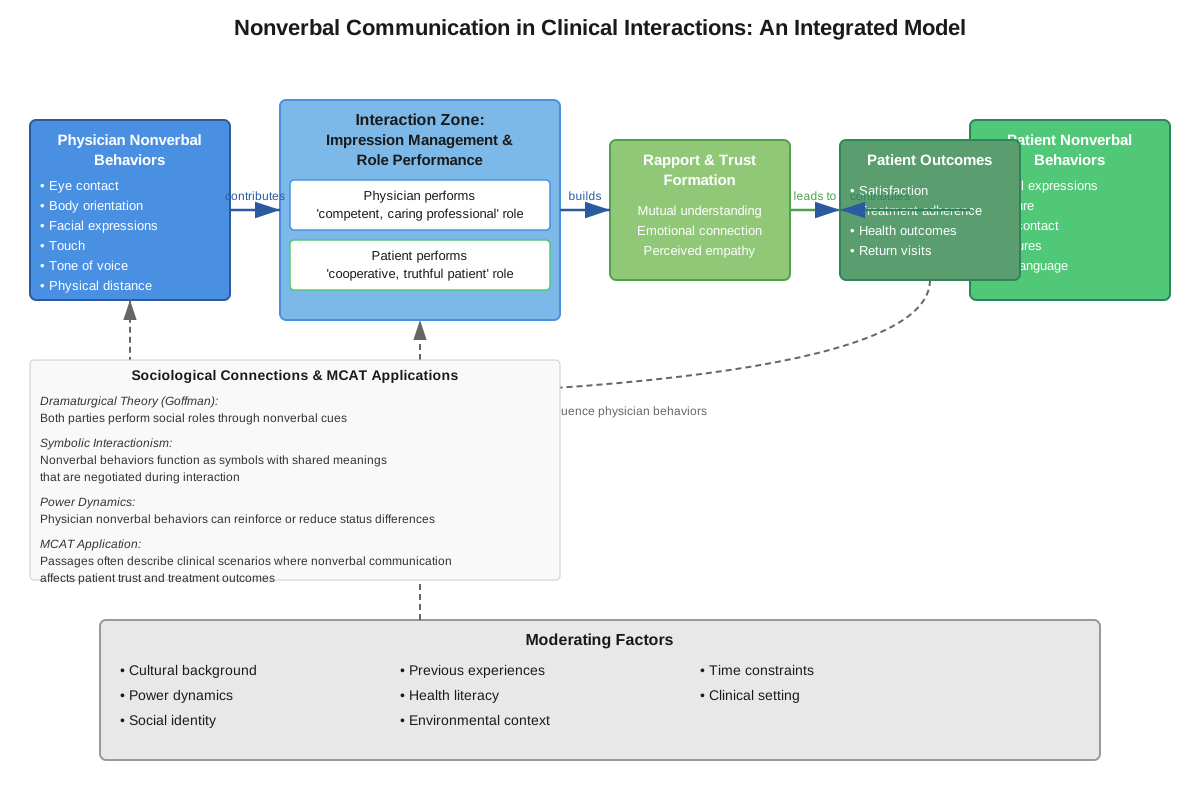
In clinical and real-world contexts, nonverbal communication profoundly impacts healthcare outcomes. Research consistently demonstrates that physician nonverbal behaviors—including eye contact, body orientation, facial expressions, and touch—significantly influence patient satisfaction, treatment adherence, and health outcomes. Patients form judgments about physician competence, empathy, and trustworthiness primarily through nonverbal channels, often within the first few seconds of an encounter. Understanding nonverbal communication enables healthcare providers to build therapeutic alliances, detect patient distress or deception, and communicate effectively across cultural boundaries. Additionally, nonverbal communication plays crucial roles in detecting mental health conditions, assessing pain levels in non-verbal patients, and recognizing signs of abuse or neglect.
On the MCAT, nonverbal communication appears with high frequency, particularly in the Psychological, Social, and Biological Foundations of Behavior section. Approximately 8-12% of questions in the sociology domain involve some aspect of nonverbal communication, either as the primary focus or as a component of broader social interaction scenarios. Questions typically appear in three formats: (1) passage-based questions presenting research studies on nonverbal behavior and requiring interpretation of findings, (2) discrete questions testing definitional knowledge and the ability to identify examples of specific nonverbal channels, and (3) clinical vignettes requiring application of nonverbal communication concepts to physician-patient interactions or healthcare disparities.
Common exam scenarios include passages describing experiments on facial expression recognition across cultures, studies examining how physician body language affects patient outcomes, research on personal space preferences in different populations, and investigations of how nonverbal cues signal social status or group membership. The MCAT frequently tests the ability to distinguish between different channels of nonverbal communication, recognize cultural variations in nonverbal behavior, and understand how nonverbal cues interact with verbal messages to create overall meaning.
Core Concepts
Definition and Fundamental Characteristics
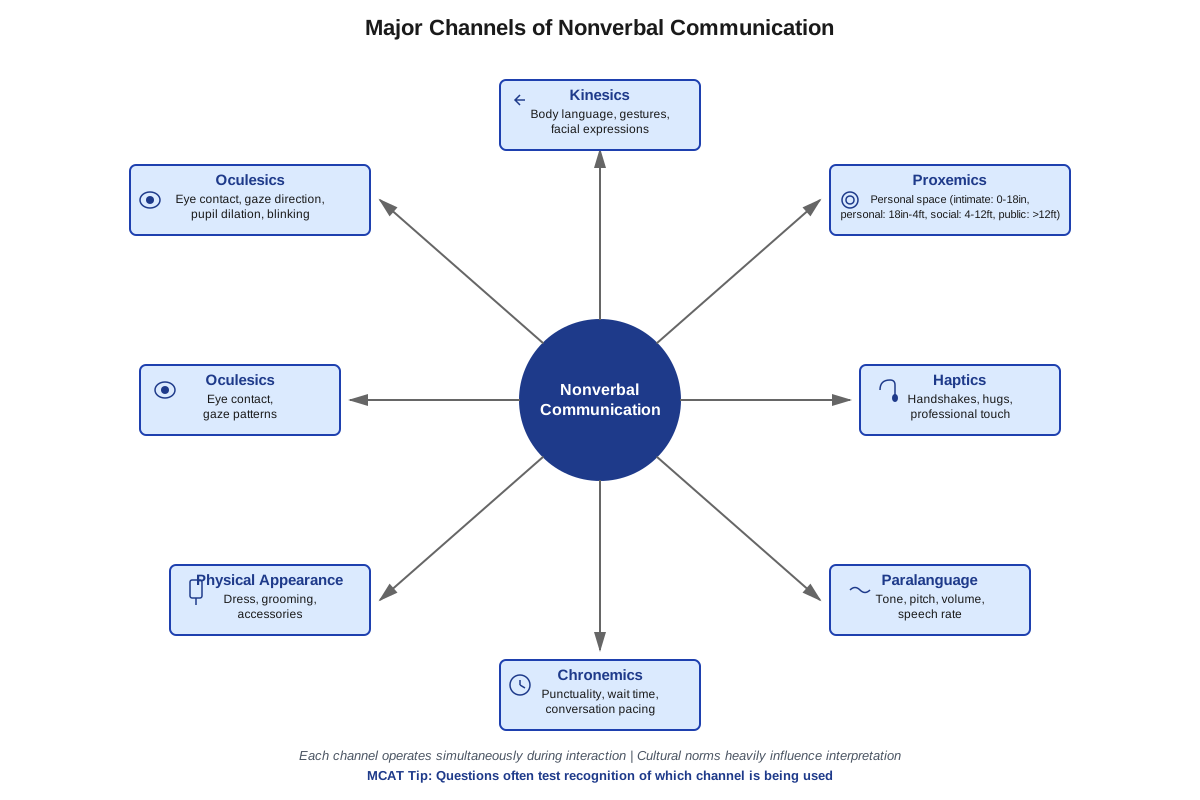
Nonverbal communication encompasses all aspects of communication that occur without words, including visual cues (facial expressions, gestures, posture, eye contact), auditory cues (tone of voice, pitch, volume, speech rate), spatial cues (physical distance, territoriality), and tactile cues (touch). This form of communication is characterized by several key properties: it is continuous (always occurring in face-to-face interaction), multi-channeled (operating through multiple sensory modalities simultaneously), largely unconscious (both in production and interpretation), and culturally variable (with meanings shaped by social context).
Nonverbal communication serves multiple functions in social interaction. It regulates conversation flow through turn-taking cues, complements verbal messages by reinforcing or emphasizing spoken content, substitutes for words when verbal communication is impossible or inappropriate, contradicts verbal messages (creating mixed signals), and accents particular words or phrases to modify meaning. Importantly, when verbal and nonverbal messages conflict, receivers typically trust the nonverbal channel more, as it is perceived as less subject to conscious control and therefore more authentic.
Major Channels of Nonverbal Communication
Kinesics (Body Language)
Kinesics refers to the study of body movements, gestures, and posture as forms of communication. This channel includes emblems (gestures with direct verbal translations, such as the "thumbs up" sign), illustrators (movements that accompany and emphasize speech), affect displays (facial expressions showing emotion), regulators (behaviors that control conversation flow, like nodding), and adaptors (self-touching behaviors often indicating anxiety or discomfort).
Facial expressions represent a particularly important subset of kinesics. Research by Paul Ekman identified seven universal facial expressions recognized across cultures: happiness, sadness, anger, fear, surprise, disgust, and contempt. However, cultural display rules govern when and how these expressions should be shown, leading to significant cross-cultural variation in emotional expression despite universal recognition capabilities.
Proxemics (Use of Space)
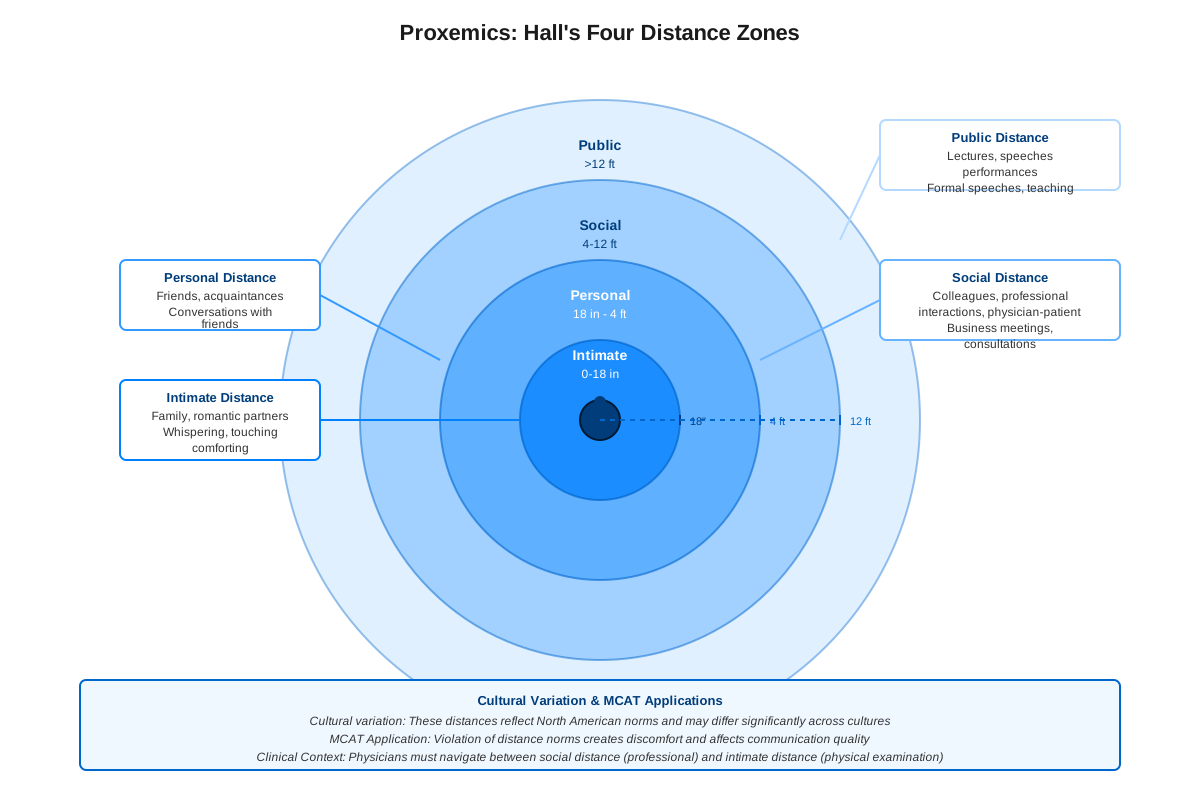
Proxemics, a term coined by anthropologist Edward T. Hall, examines how individuals use physical space in communication. Hall identified four distinct distance zones in North American culture:
| Distance Zone | Range | Typical Interactions |
|---|---|---|
| Intimate distance | 0-18 inches | Close relationships, comforting, physical intimacy |
| Personal distance | 18 inches - 4 feet | Friends, casual conversations |
| Social distance | 4-12 feet | Professional interactions, formal business |
| Public distance | 12+ feet | Public speaking, formal presentations |
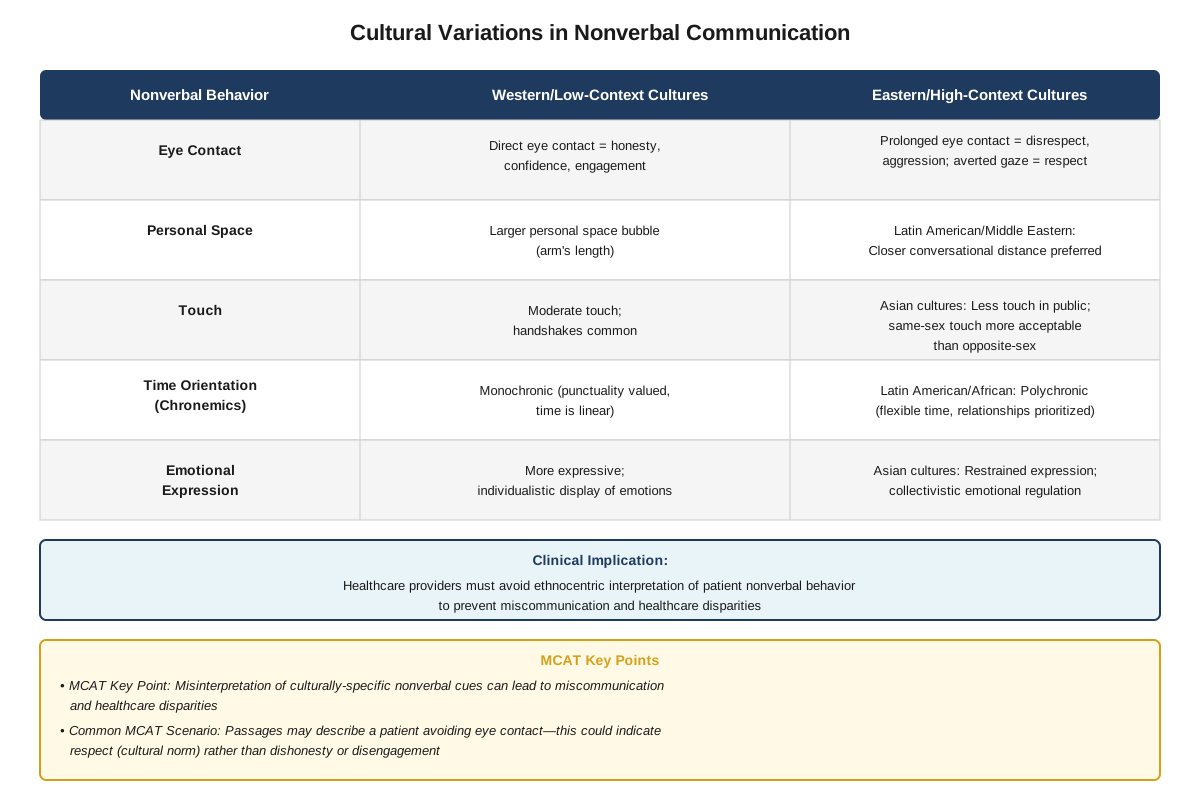
These distances vary significantly across cultures, with contact cultures (Mediterranean, Latin American, Middle Eastern) preferring closer interaction distances than non-contact cultures (Northern European, North American, Asian). Violations of expected spatial norms create discomfort and can signal dominance, intimacy, or aggression depending on context.
Haptics (Touch)
Haptics involves communication through touch, one of the most powerful nonverbal channels. Touch communicates affection, support, power, and professional care, but is highly regulated by cultural norms, relationship type, and context. In healthcare settings, appropriate touch can increase patient compliance, reduce anxiety, and strengthen the therapeutic relationship, while inappropriate touch can constitute boundary violations or harassment.
Touch varies along several dimensions: duration, intensity, location on the body, and frequency. Status-touch hypothesis suggests that higher-status individuals initiate touch more frequently with lower-status individuals than vice versa, making touch a marker of social hierarchy.
Paralanguage (Vocal Characteristics)
Paralanguage encompasses the vocal elements that accompany speech but are not the words themselves: tone, pitch, volume, speech rate, pauses, and vocal quality. These elements dramatically alter message meaning—the same words spoken with different paralinguistic features can convey sarcasm, anger, affection, or uncertainty. Vocal segregates (sounds like "um," "uh," "ah") often indicate hesitation, uncertainty, or cognitive processing.
Research demonstrates that paralanguage carries significant emotional information and affects persuasiveness, credibility, and likability judgments. In medical contexts, physician vocal tone predicts malpractice claims better than the content of physician-patient conversations.
Chronemics (Use of Time)
Chronemics examines how individuals perceive and use time as communication. Monochronic cultures (North American, Northern European) view time linearly, value punctuality, and prefer to complete one task before beginning another. Polychronic cultures (Latin American, Middle Eastern, African) view time more fluidly, prioritize relationships over schedules, and comfortably multitask.
In healthcare, chronemic behaviors communicate respect, priorities, and power dynamics. Physician lateness or rushing through appointments sends messages about patient value, while spending time with patients communicates care and thoroughness.
Physical Appearance and Artifacts
Physical appearance, including body type, attractiveness, clothing, jewelry, and other artifacts, communicates social identity, status, group membership, and personality. The halo effect describes the tendency to attribute positive qualities to attractive individuals, while stigma can attach to appearance features that deviate from social norms.
In professional contexts, appearance management constitutes part of impression management strategies, with clothing and grooming signaling competence, authority, and adherence to professional norms.
Cultural Variations in Nonverbal Communication
Nonverbal communication exhibits profound cultural variation, making cultural competence essential for effective cross-cultural interaction. Eye contact norms vary dramatically: direct eye contact signals honesty and attention in Western cultures but can indicate disrespect or aggression in many Asian, African, and Latin American cultures. Gestures carry culture-specific meanings—the "OK" sign (thumb and forefinger forming a circle) means approval in North America but is obscene in some Mediterranean and Latin American countries.
High-context cultures (Asian, Middle Eastern, Latin American) rely heavily on nonverbal cues and situational factors to convey meaning, while low-context cultures (North American, Northern European) depend more on explicit verbal communication. This difference affects everything from negotiation styles to conflict resolution approaches.
The Mehrabian Formula and Its Limitations
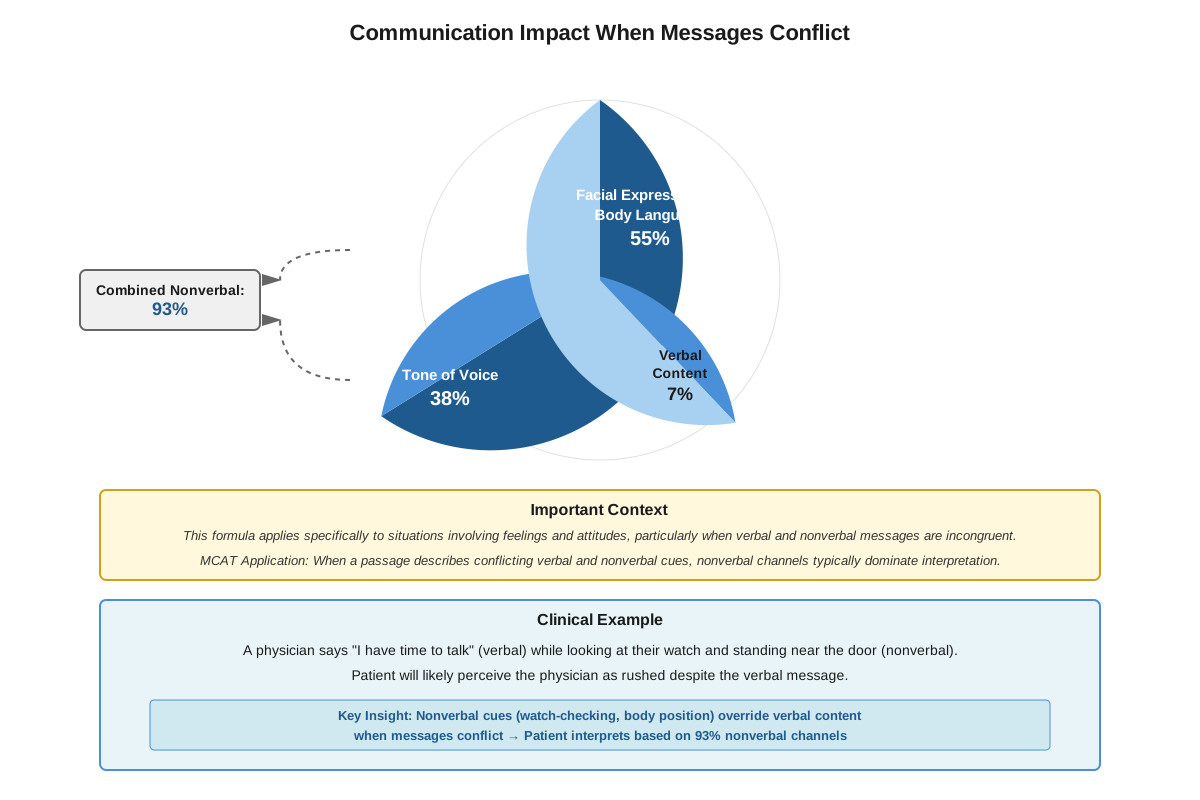
Albert Mehrabian's research on communication of feelings produced the often-cited finding that communication is 7% verbal, 38% vocal, and 55% facial. However, this Mehrabian formula applies only to situations where verbal and nonverbal messages conflict and specifically concerns the communication of feelings and attitudes, not all communication. The MCAT may test understanding of both the formula and its limitations.
Concept Relationships
Nonverbal communication connects intimately with multiple sociological concepts within the domain of Social Interaction and Identity. Impression management (Goffman's dramaturgical approach) relies heavily on nonverbal channels—individuals control facial expressions, posture, appearance, and spatial positioning to create desired impressions. The front stage performance includes carefully managed nonverbal behaviors, while back stage regions allow relaxation of nonverbal control.
Symbolic interactionism provides the theoretical foundation for understanding how nonverbal cues function as symbols carrying shared meanings. Through socialization, individuals learn to interpret and produce culturally appropriate nonverbal behaviors, which then facilitate social interaction by providing continuous feedback and regulating conversation flow.
Nonverbal communication also connects to social identity theory and in-group/out-group dynamics. Group members often share distinctive nonverbal patterns (dialects of body language) that signal membership and facilitate in-group cohesion while marking boundaries with out-groups. Microaggressions frequently operate through subtle nonverbal channels—facial expressions, tone of voice, or body orientation that communicate devaluation or exclusion.
The relationship map flows as follows: Culture and Socialization → shape production and interpretation of → Nonverbal Communication → which enables → Impression Management and Social Interaction → which construct → Social Identity and Group Membership → which influence → Social Hierarchies and Power Dynamics → which are maintained through → Nonverbal Communication (creating a feedback loop).
Quick check — test yourself on Nonverbal communication so far.
Try Flashcards →High-Yield Facts
⭐ Nonverbal communication encompasses all message transmission without words, including kinesics, proxemics, haptics, paralanguage, chronemics, and appearance
⭐ When verbal and nonverbal messages conflict, receivers typically trust the nonverbal channel as more authentic
⭐ Seven universal facial expressions exist (happiness, sadness, anger, fear, surprise, disgust, contempt), but cultural display rules govern their expression
⭐ Edward T. Hall identified four distance zones: intimate (0-18"), personal (18"-4'), social (4-12'), and public (12'+), with significant cultural variation
⭐ High-context cultures rely more heavily on nonverbal communication than low-context cultures
- Emblems are gestures with direct verbal translations, while illustrators accompany and emphasize speech
- The status-touch hypothesis suggests higher-status individuals initiate touch more frequently than lower-status individuals
- Monochronic cultures view time linearly and value punctuality, while polychronic cultures view time fluidly and prioritize relationships
- Paralanguage (tone, pitch, volume, rate) can completely alter the meaning of identical words
- Physical appearance triggers the halo effect, where attractiveness leads to attribution of other positive qualities
- Adaptors are self-touching behaviors that often indicate anxiety, discomfort, or cognitive processing
- Eye contact norms vary dramatically across cultures, with direct eye contact valued in Western cultures but potentially disrespectful in many Asian and Latin American cultures
Common Misconceptions
Misconception: Nonverbal communication is universal and means the same thing across all cultures → Correction: While some facial expressions show universal recognition, most nonverbal behaviors are culturally specific. Gestures, personal space preferences, eye contact norms, and touch behaviors vary dramatically across cultures, and interpreting nonverbal cues requires cultural context.
Misconception: The Mehrabian formula (7% verbal, 38% vocal, 55% facial) applies to all communication → Correction: This formula applies only to communication of feelings and attitudes when verbal and nonverbal messages conflict. It does not mean that words are unimportant in all communication contexts, particularly when conveying factual information or complex ideas.
Misconception: People who avoid eye contact are lying or untrustworthy → Correction: Eye contact patterns vary by culture, personality, neurodevelopmental factors (autism spectrum), and social anxiety. In many cultures, avoiding direct eye contact with authority figures signals respect rather than deception.
Misconception: Nonverbal communication is always unconscious and uncontrollable → Correction: While many nonverbal behaviors occur automatically, individuals can consciously control and manage nonverbal communication as part of impression management strategies. Actors, politicians, and healthcare providers often deliberately modulate nonverbal behaviors.
Misconception: Crossing arms always indicates defensiveness or closed-mindedness → Correction: Arm crossing can indicate many things including physical comfort, temperature regulation, habit, or simply having nowhere else to put one's arms. Context, cultural norms, and accompanying behaviors must be considered before interpreting any single nonverbal cue.
Misconception: More nonverbal communication is always better in healthcare settings → Correction: Appropriate nonverbal communication improves healthcare outcomes, but excessive or inappropriate nonverbal behaviors (too much touch, standing too close, overly intense eye contact) can make patients uncomfortable and damage the therapeutic relationship.
Worked Examples
Example 1: Cultural Differences in Physician-Patient Communication
Vignette: A study examines physician-patient interactions across three cultural groups. Researchers find that patients from Culture A rate physicians who maintain steady eye contact and stand 2 feet away as more trustworthy, while patients from Culture B rate the same physicians as aggressive and disrespectful. Patients from Culture B prefer physicians who maintain less direct eye contact and stand 4 feet away. The study concludes that nonverbal communication norms vary by culture and affect patient satisfaction.
Question: Which concept best explains why the same physician nonverbal behaviors produce opposite patient reactions across cultures?
Analysis: This question tests understanding of cultural variation in nonverbal communication interpretation. Let's work through the reasoning:
- Identify the nonverbal channels involved: The vignette describes eye contact (kinesics) and physical distance (proxemics)
- Recognize the cultural variation: The same behaviors (direct eye contact, close distance) are interpreted positively in Culture A but negatively in Culture B
- Apply relevant concepts: This exemplifies how high-context versus low-context cultures, or contact versus non-contact cultures, interpret nonverbal cues differently. Culture A likely represents a low-context, contact culture (Western/North American) where direct eye contact signals honesty and closer distances are comfortable. Culture B likely represents a high-context, non-contact culture (Asian or some Latin American) where direct eye contact with authority figures can signal disrespect and greater personal space is preferred.
- Connect to broader theory: This demonstrates that nonverbal communication is not universal but rather culturally constructed through socialization. The same physical behaviors carry different symbolic meanings across cultural contexts.
Answer: Cultural display rules and proxemic norms vary across societies, causing identical nonverbal behaviors to carry different meanings and produce different emotional responses depending on cultural context.
Example 2: Conflicting Verbal and Nonverbal Messages
Vignette: During a medical interview, a patient verbally reports feeling "fine" and "not worried" about upcoming surgery. However, the patient exhibits rapid speech, higher vocal pitch, frequent self-touching (rubbing hands together), minimal eye contact, and forward-leaning posture. The physician notes these observations in the patient record.
Question: How should the physician interpret the patient's communication, and what principle of nonverbal communication does this illustrate?
Analysis: This question requires applying the principle that nonverbal communication often reveals true feelings when verbal and nonverbal messages conflict.
- Identify the verbal message: Patient states feeling "fine" and "not worried"
- Catalog the nonverbal cues:
- Paralanguage: rapid speech, higher pitch (indicators of anxiety)
- Haptics/Kinesics: self-touching/adaptors (self-soothing behaviors indicating stress)
- Kinesics: minimal eye contact (possible anxiety or discomfort)
- Kinesics: forward-leaning posture (engagement but also tension)
- Recognize the conflict: Verbal message indicates calm, but nonverbal channels indicate anxiety
- Apply the principle: When verbal and nonverbal messages conflict, the nonverbal channel is typically more accurate because it is less subject to conscious control. The patient may be consciously trying to appear calm (verbal message) but unconsciously displaying anxiety (nonverbal channels).
- Clinical application: The physician should recognize the patient's actual anxiety and address it, perhaps by saying, "I notice you seem a bit tense. It's completely normal to feel anxious about surgery. Would you like to talk about any concerns?"
Answer: The physician should interpret the patient as anxious despite verbal denial. This illustrates the principle that nonverbal communication is often more reliable than verbal communication when messages conflict, as nonverbal channels are less subject to conscious control and therefore more likely to reveal true emotional states.
Exam Strategy
When approaching MCAT questions on nonverbal communication, begin by identifying which specific channel or channels are being described (kinesics, proxemics, haptics, paralanguage, chronemics, appearance). Questions often hinge on distinguishing between these categories or recognizing how multiple channels work together.
Trigger words and phrases to watch for include:
- "Body language," "gestures," "facial expressions" → kinesics
- "Personal space," "distance," "proximity" → proxemics
- "Touch," "physical contact" → haptics
- "Tone of voice," "pitch," "volume," "speech rate" → paralanguage
- "Punctuality," "time use," "scheduling" → chronemics
- "Appearance," "clothing," "attractiveness" → physical appearance/artifacts
- "Cultural differences," "cross-cultural" → expect variation in interpretation
- "Conflicting messages," "mixed signals" → nonverbal likely more accurate
For passage-based questions, pay attention to the study design and what is being measured. If a study manipulates physician body language and measures patient satisfaction, the question likely tests understanding of how nonverbal communication affects healthcare outcomes. If a study examines gesture recognition across cultures, expect questions about universal versus culturally specific nonverbal behaviors.
Process-of-elimination strategies:
- Eliminate answers that claim nonverbal communication is entirely universal (it's not)
- Eliminate answers that apply the Mehrabian formula to all communication contexts (it only applies to feelings/attitudes when messages conflict)
- Eliminate answers that attribute single meanings to nonverbal cues without considering context
- Eliminate answers that ignore cultural variation in nonverbal interpretation
Time allocation: Most nonverbal communication questions can be answered in 60-90 seconds. If a question requires more time, it likely involves a complex passage requiring careful analysis of study design or results. Don't get bogged down trying to remember every detail—focus on the core principles (channels, cultural variation, conflict between verbal/nonverbal) and apply them to the specific scenario.
Exam Tip: When a question presents a clinical scenario with both verbal and nonverbal information, assume the nonverbal information is more reliable for assessing true emotional states or attitudes. The MCAT frequently tests this principle.
Memory Techniques
Mnemonic for channels of nonverbal communication - "KHPPCA":
- Kinesics (body language)
- Haptics (touch)
- Proxemics (space)
- Paralanguage (vocal characteristics)
- Chronemics (time)
- Appearance (physical appearance/artifacts)
Mnemonic for Hall's distance zones - "I Prefer Social Parties":
- Intimate (0-18 inches)
- Personal (18 inches - 4 feet)
- Social (4-12 feet)
- Public (12+ feet)
Mnemonic for types of gestures - "EIARA":
- Emblems (direct verbal translation)
- Illustrators (accompany speech)
- Affect displays (show emotion)
- Regulators (control conversation)
- Adaptors (self-touching, anxiety)
Visualization strategy: Picture a physician-patient interaction and mentally "scan" from top to bottom and near to far, identifying nonverbal channels: facial expressions (kinesics), eye contact (kinesics), tone of voice (paralanguage), posture (kinesics), hand gestures (kinesics), touch (haptics), distance (proxemics), clothing (appearance), and whether the physician is on time (chronemics). This systematic scan helps ensure you don't miss relevant nonverbal information in vignettes.
Acronym for universal facial expressions - "HASS FAD":
- Happiness
- Anger
- Sadness
- Surprise
- Fear
- Anger (already listed, so substitute Contempt)
- Disgust
(Revised: HASS FDC - Happiness, Anger, Sadness, Surprise, Fear, Disgust, Contempt)
Summary
Nonverbal communication encompasses all message transmission without words, operating through six primary channels: kinesics (body language and facial expressions), proxemics (use of space), haptics (touch), paralanguage (vocal characteristics), chronemics (use of time), and physical appearance. This form of communication is continuous, multi-channeled, largely unconscious, and culturally variable. When verbal and nonverbal messages conflict, receivers typically trust nonverbal channels as more authentic because they are perceived as less subject to conscious control. While seven facial expressions show universal recognition across cultures (happiness, sadness, anger, fear, surprise, disgust, contempt), most nonverbal behaviors vary significantly across cultural contexts, with high-context cultures relying more heavily on nonverbal cues than low-context cultures. Understanding nonverbal communication is essential for the MCAT because it appears frequently in questions about social interaction, physician-patient communication, cultural competency, and healthcare outcomes, requiring students to identify channels, recognize cultural variation, and apply principles to clinical scenarios.
Key Takeaways
- Nonverbal communication operates through six channels (KHPPCA): kinesics, haptics, proxemics, paralanguage, chronemics, and appearance
- When verbal and nonverbal messages conflict, the nonverbal channel is typically more reliable and trusted
- Seven universal facial expressions exist, but cultural display rules govern when and how emotions should be expressed
- Edward T. Hall's four distance zones (intimate, personal, social, public) vary significantly across contact and non-contact cultures
- High-context cultures rely more heavily on nonverbal communication than low-context cultures
- The Mehrabian formula (7% verbal, 38% vocal, 55% facial) applies only to communication of feelings when messages conflict, not all communication
- Nonverbal communication connects to impression management, symbolic interactionism, social identity, and power dynamics in social interaction
Related Topics
Impression Management and Dramaturgy: Goffman's theatrical approach to social interaction relies heavily on nonverbal communication for front-stage performances. Mastering nonverbal communication provides the foundation for understanding how individuals strategically present themselves in social situations.
Cultural Competence in Healthcare: Effective cross-cultural medical care requires understanding how nonverbal communication norms vary across cultures. This topic builds directly on nonverbal communication concepts to address healthcare disparities and patient-provider communication.
Social Identity and Group Dynamics: Groups develop distinctive nonverbal patterns that signal membership and facilitate cohesion. Understanding nonverbal communication enables deeper analysis of in-group/out-group formation and maintenance.
Emotion and Emotional Expression: The biological and social aspects of emotion connect intimately with nonverbal communication, particularly facial expressions and paralanguage. This topic explores the interplay between physiological emotional states and their social expression.
Power, Status, and Social Hierarchies: Nonverbal behaviors both reflect and construct social hierarchies through patterns of touch, space use, and body language. This topic examines how nonverbal communication maintains social stratification.
Practice CTA
Now that you've mastered the core concepts of nonverbal communication, it's time to test your knowledge with practice questions and flashcards. Focus particularly on identifying channels of nonverbal communication in clinical vignettes, recognizing cultural variations in interpretation, and applying the principle that nonverbal messages are more reliable when they conflict with verbal messages. Remember that the MCAT rewards not just memorization but the ability to apply concepts to novel scenarios—practice analyzing how nonverbal communication operates in different social contexts. You've built a strong foundation in this high-yield topic; reinforce it through active retrieval practice!
Sign up free to keep reading
Create a free AnvayaPrep account to finish this MCAT guide on Nonverbal communication — plus flashcards and practice questions.