Overview
Impression management is a fundamental concept in Sociology that describes the conscious and unconscious processes by which individuals attempt to control or influence how others perceive them. Rooted in Erving Goffman's dramaturgical approach to social interaction, impression management represents the strategic presentation of self in everyday life. Individuals engage in impression management by carefully selecting behaviors, appearances, and communication styles that align with the image they wish to project to their audience. This concept is essential for understanding how people navigate social situations, maintain social identities, and achieve interpersonal goals.
For the MCAT, impression management is a high-yield topic within the Social Interaction and Identity content category. The exam frequently tests students' ability to recognize impression management strategies in experimental passages, clinical vignettes, and scenarios involving doctor-patient interactions. Understanding impression management enables test-takers to analyze how individuals modify their behavior in response to social contexts, how healthcare professionals establish credibility and rapport, and how patients may present symptoms differently depending on their audience. This topic intersects with concepts of self-presentation, social roles, stigma management, and the construction of social identity.
Within the broader framework of Sociology, impression management connects to symbolic interactionism, social psychology, and the study of social structures. It provides insight into how micro-level interactions (individual behaviors) relate to macro-level phenomena (social norms and expectations). The concept helps explain conformity, deviance, professional socialization, and the maintenance of social order. For MCAT success, students must understand not only the theoretical foundations of impression management but also its practical applications in healthcare settings, research contexts, and everyday social encounters.
Learning Objectives
- [ ] Define impression management using accurate Sociology terminology
- [ ] Explain why impression management matters for the MCAT
- [ ] Apply impression management to exam-style questions
- [ ] Identify common mistakes related to impression management
- [ ] Connect impression management to related Sociology concepts
- [ ] Distinguish between front stage and back stage behaviors in Goffman's dramaturgical model
- [ ] Analyze specific impression management strategies and their appropriate contexts
- [ ] Evaluate the relationship between impression management and social desirability bias in research settings
Prerequisites
- Basic understanding of social interaction: Impression management builds on fundamental concepts of how individuals communicate and relate to one another in social contexts
- Familiarity with the concept of self: Understanding the distinction between self-concept, self-identity, and self-presentation is necessary to grasp how individuals manage impressions
- Knowledge of social norms: Impression management strategies are shaped by cultural expectations and social rules that govern appropriate behavior
- Awareness of social roles: Individuals manage impressions differently depending on the roles they occupy (student, professional, patient, etc.)
Why This Topic Matters
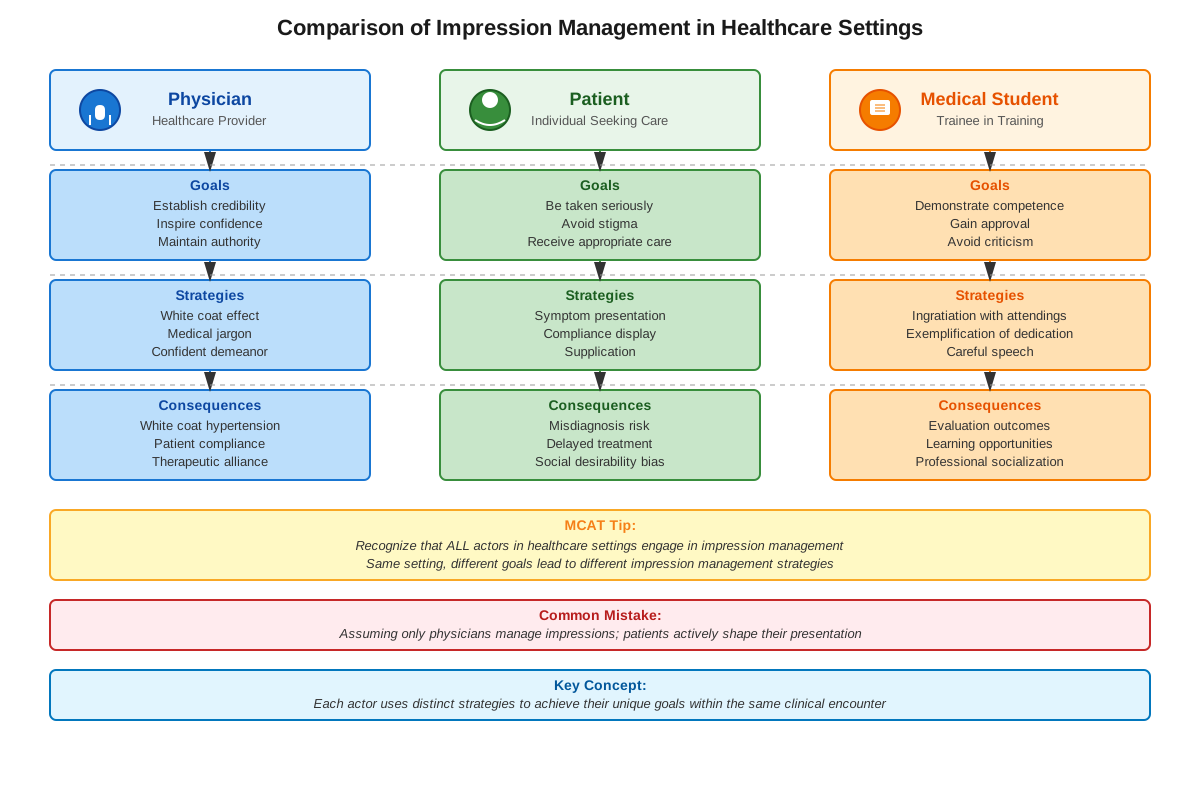
Impression management has profound clinical and real-world significance in healthcare settings. Physicians engage in impression management to establish credibility, inspire confidence, and build therapeutic relationships with patients. The "white coat effect" exemplifies how medical professionals use symbols and behaviors to manage impressions of authority and competence. Patients also engage in impression management, sometimes minimizing symptoms to appear healthy or exaggerating complaints to ensure their concerns are taken seriously. Understanding these dynamics helps healthcare providers recognize when patients may not be providing complete information and adjust their communication strategies accordingly.
On the MCAT, impression management appears with high frequency in the Psychological, Social, and Biological Foundations of Behavior section. Approximately 3-5% of questions in the Sociology domain directly or indirectly test this concept. Questions typically present scenarios involving social interactions and ask students to identify which impression management strategy is being employed, predict how individuals will behave in different social contexts, or recognize how impression management affects research validity (through social desirability bias). The topic commonly appears in passages about:
- Healthcare provider-patient communication and the therapeutic relationship
- Research methodology, particularly regarding participant behavior in observational studies
- Social psychology experiments examining conformity and self-presentation
- Professional socialization and the development of occupational identities
- Stigma management among individuals with chronic illnesses or marginalized identities
The MCAT frequently integrates impression management with other high-yield topics such as the looking-glass self, social identity theory, and attribution theory, requiring students to synthesize multiple concepts within a single question or passage.
Core Concepts
Definition and Theoretical Foundation
Impression management (also called self-presentation) refers to the process by which individuals attempt to control the impressions others form of them. Sociologist Erving Goffman introduced this concept in his 1959 work "The Presentation of Self in Everyday Life," using a dramaturgical approach that compares social interaction to theatrical performance. In this framework, individuals are actors who perform roles for audiences, carefully managing their appearance, manner, and setting to create desired impressions.
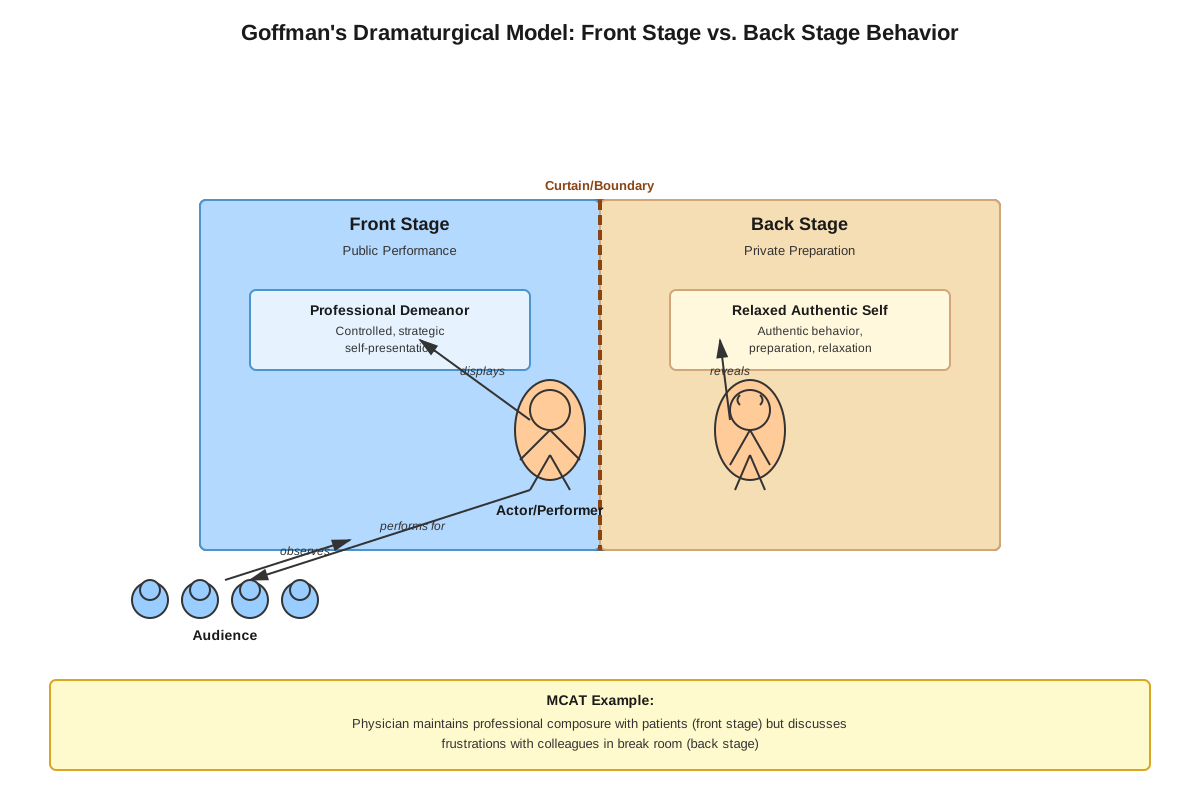
Goffman distinguished between front stage and back stage regions of social life. The front stage represents spaces where individuals perform for an audience and carefully manage their behavior according to social expectations and role requirements. Examples include a physician's examination room, a classroom during lectures, or a job interview setting. The back stage represents private spaces where individuals can relax their performances, drop their social masks, and behave more authentically. Examples include a hospital break room where physicians discuss cases informally, a teacher's lounge, or one's home with close family members.
Core Components of Impression Management
Impression management involves several key elements that work together to create a coherent social performance:
- Setting: The physical environment and props that support the performance (medical equipment, professional attire, office décor)
- Appearance: Physical characteristics and dress that convey social information (white coat, business suit, casual clothing)
- Manner: Behaviors and demeanor that indicate the role being performed (authoritative tone, friendly smile, formal posture)
- Expression control: The regulation of verbal and nonverbal communication to maintain the desired impression
Impression Management Strategies
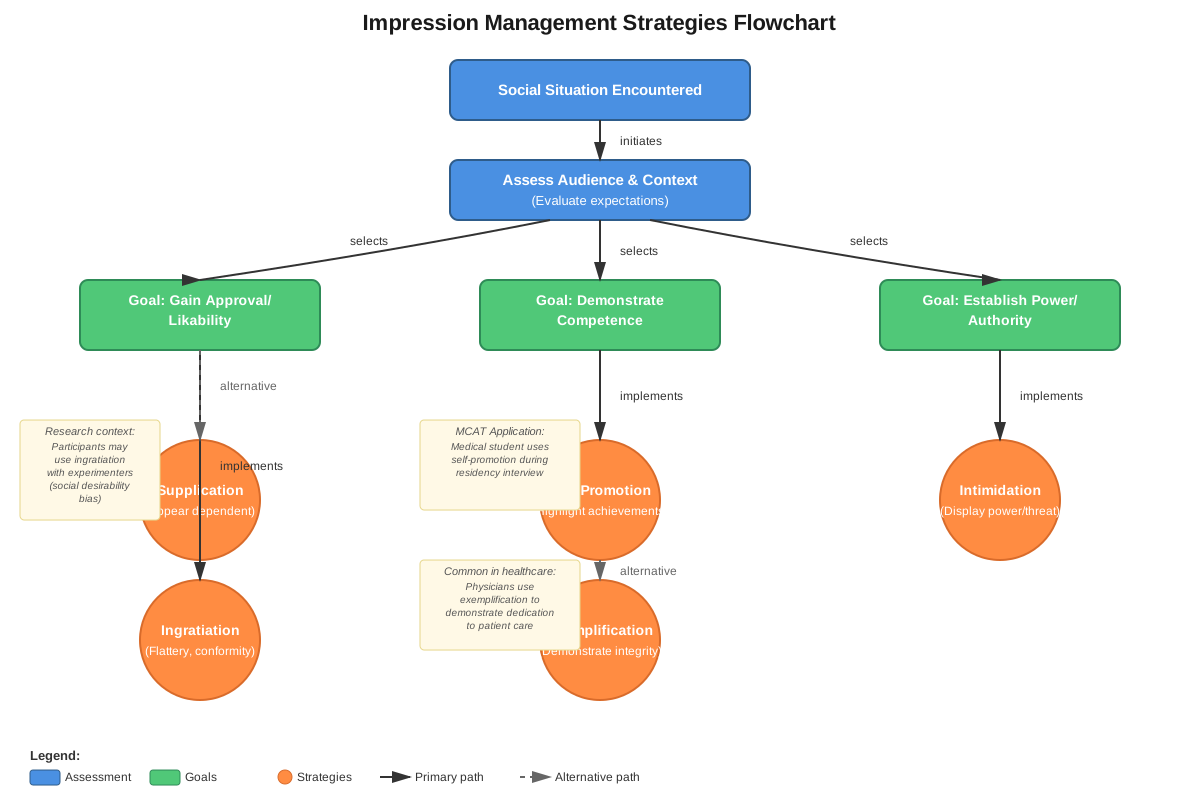
Individuals employ various strategies to manage impressions, depending on their goals and the social context:
| Strategy | Description | Example |
|---|---|---|
| Ingratiation | Using flattery, conformity, or favors to make oneself likeable | A medical student complimenting an attending physician's teaching style |
| Self-promotion | Highlighting one's abilities and accomplishments | A job candidate emphasizing their research publications |
| Exemplification | Demonstrating dedication, commitment, or moral worthiness | A resident staying late to show dedication to patient care |
| Intimidation | Projecting power or threat to gain compliance | A supervisor using stern tone and body language to assert authority |
| Supplication | Appearing weak or dependent to elicit help | A patient emphasizing symptom severity to ensure treatment |
Defensive and Assertive Impression Management
Impression management can be categorized as either defensive or assertive:
Assertive impression management involves proactive efforts to establish a desired identity before any threat to one's image occurs. This includes:
- Strategic self-disclosure to shape how others perceive you
- Carefully curating social media profiles
- Dressing professionally for a first day at a new job
- A physician introducing credentials when meeting a new patient
Defensive impression management involves reactive efforts to repair or protect one's image after a threat or failure. This includes:
- Accounts: Explanations for problematic behavior (excuses or justifications)
- Apologies: Accepting responsibility and expressing remorse
- Disclaimers: Preemptive statements that excuse upcoming behavior ("I'm not racist, but...")
- Self-handicapping: Creating obstacles to performance to have ready excuses for potential failure
Impression Management in Healthcare Contexts
In medical settings, impression management operates at multiple levels. Healthcare providers manage impressions to:
- Establish professional credibility and expertise
- Create psychological distance appropriate to the professional role
- Inspire patient confidence in treatment recommendations
- Maintain composure during emotionally challenging situations
Patients manage impressions to:
- Appear compliant and cooperative to receive better care
- Minimize stigmatized conditions (mental illness, substance use)
- Legitimize their sick role and justify seeking medical attention
- Maintain dignity despite physical vulnerability
Social Desirability Bias and Research Implications
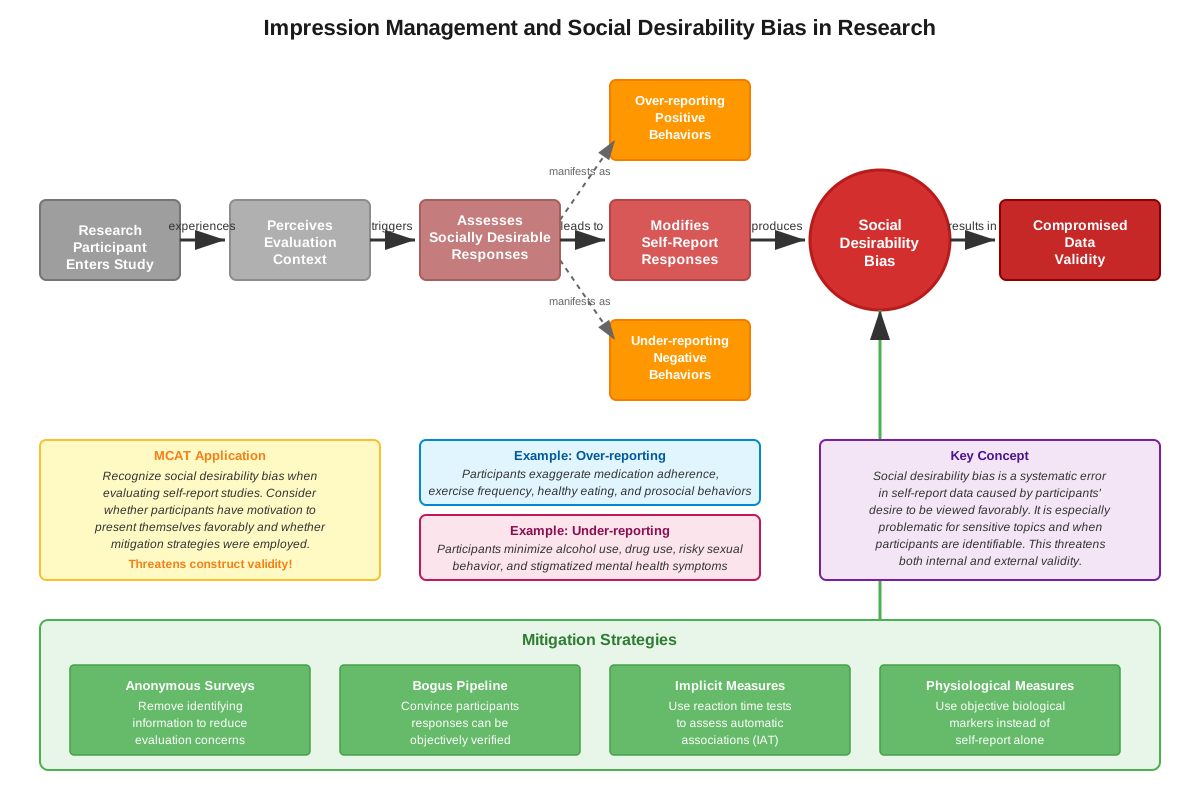
Social desirability bias represents a critical application of impression management in research contexts. Participants in studies may provide responses that make them appear more socially acceptable rather than answering truthfully. This bias threatens the validity of self-report measures, particularly for sensitive topics like:
- Substance use and risky behaviors
- Prejudice and discriminatory attitudes
- Compliance with medical recommendations
- Sexual behavior and relationship satisfaction
Researchers employ various strategies to minimize social desirability bias, including:
- Ensuring anonymity and confidentiality
- Using indirect questioning techniques
- Employing bogus pipeline procedures (convincing participants that deception can be detected)
- Utilizing implicit measures that bypass conscious self-presentation
Concept Relationships
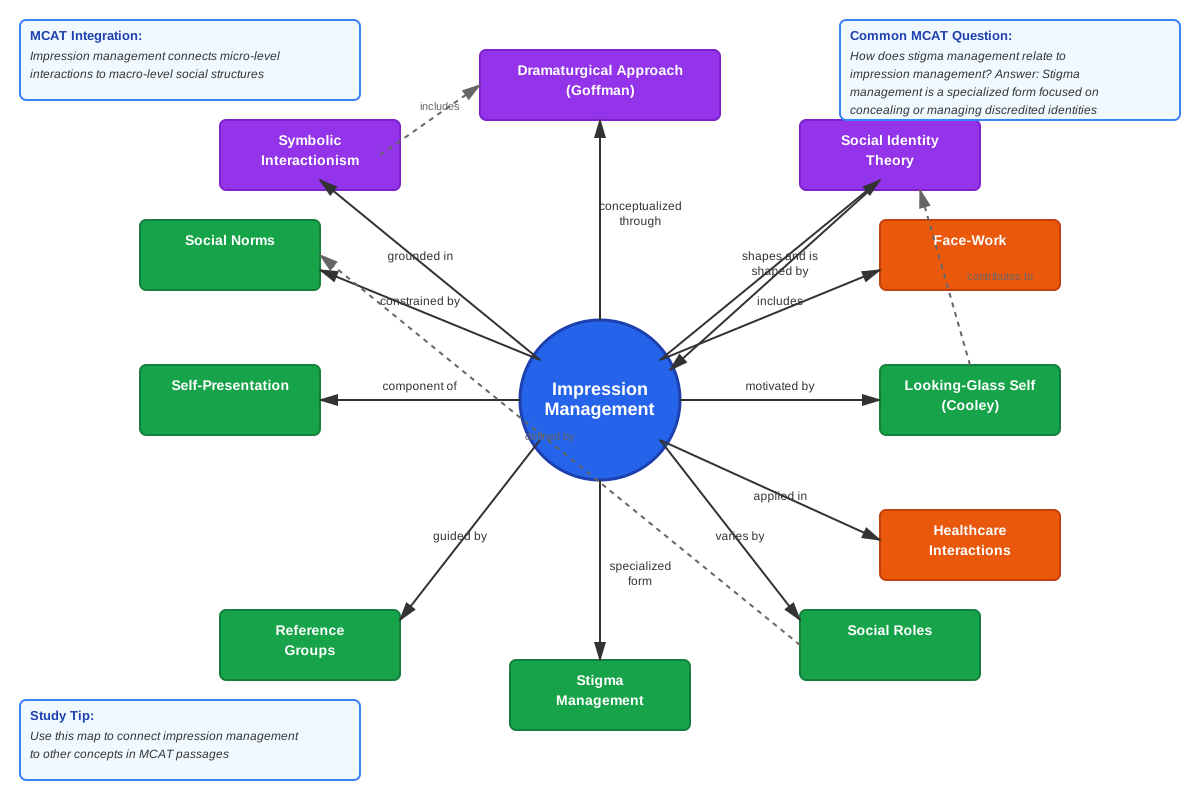
Impression management serves as a central node connecting multiple sociological and psychological concepts. The dramaturgical approach that underlies impression management directly relates to symbolic interactionism, the theoretical perspective emphasizing that social reality is constructed through meaningful interactions using shared symbols. Both frameworks emphasize that the self is not fixed but emerges through social interaction.
Social roles → provide the scripts for impression management → which maintains social identity. Individuals learn the expectations associated with various roles (physician, student, parent) and manage impressions to demonstrate competent role performance. This process reinforces both individual identity and broader social structures.
Impression management connects to Cooley's looking-glass self concept, which proposes that self-concept develops through imagining how others perceive us. Impression management represents the active attempt to shape those perceptions: looking-glass self (passive perception) → impression management (active control) → self-concept (internalized identity).
The concept also relates to stigma management (Goffman's other major contribution), where individuals with stigmatized identities employ impression management strategies to control information about discrediting attributes. Stigma → creates need for impression management → through passing (concealing stigma) or covering (minimizing stigma's obtrusiveness).
In research methodology, impression management manifests as social desirability bias → which threatens internal validity → requiring methodological controls. This connection is frequently tested on the MCAT in passages about study design and interpretation of research findings.
Finally, impression management relates to attribution theory: individuals manage impressions to influence how others attribute causes to their behavior. Behavior → impression management → desired attribution (internal vs. external, stable vs. unstable).
Quick check — test yourself on Impression management so far.
Try Flashcards →High-Yield Facts
⭐ Impression management is the process by which individuals attempt to control how others perceive them through strategic self-presentation
⭐ Erving Goffman's dramaturgical approach compares social interaction to theatrical performance, with front stage (public) and back stage (private) regions
⭐ Front stage behavior is carefully managed for an audience, while back stage behavior is more relaxed and authentic
⭐ Social desirability bias occurs when research participants manage impressions by providing socially acceptable rather than truthful responses
⭐ Assertive impression management is proactive (establishing desired identity), while defensive impression management is reactive (repairing threatened identity)
- The five main impression management strategies are ingratiation, self-promotion, exemplification, intimidation, and supplication
- Healthcare providers use impression management to establish credibility, while patients use it to legitimize illness and maintain dignity
- Self-handicapping involves creating obstacles to performance to have ready excuses for potential failure
- Impression management connects to symbolic interactionism by emphasizing that social reality is constructed through meaningful interactions
- The concept applies to both individual micro-level interactions and macro-level social structures like professional roles and organizational cultures
Common Misconceptions
Misconception: Impression management is always conscious and deliberate → Correction: While some impression management is strategic and conscious, much of it occurs automatically and unconsciously as individuals have internalized social norms and role expectations through socialization
Misconception: Impression management is inherently deceptive or manipulative → Correction: Impression management is a normal, necessary aspect of social interaction that allows society to function smoothly; it becomes problematic only when it involves deliberate deception or harm
Misconception: Back stage behavior represents the "true self" while front stage behavior is "fake" → Correction: Both front stage and back stage behaviors are authentic aspects of self; individuals have multiple, context-dependent identities rather than one essential true self
Misconception: Impression management only occurs in formal or professional settings → Correction: Impression management occurs in virtually all social interactions, including casual encounters with friends and family, though the strategies and intensity vary by context
Misconception: Social desirability bias and impression management are the same thing → Correction: Social desirability bias is a specific manifestation of impression management that occurs in research settings; impression management is the broader concept encompassing all self-presentation efforts
Misconception: Successful impression management means everyone perceives you as you intend → Correction: Impression management is an attempt to control perceptions, but audiences actively interpret performances and may form impressions different from those intended; it's an interactive process, not unilateral control
Worked Examples
Example 1: Clinical Vignette Analysis
Vignette: Dr. Martinez is a newly hired emergency department physician. On her first day, she arrives early, wears a pristine white coat with her credentials prominently displayed, and introduces herself to patients using her full title. When speaking with patients, she maintains a calm, authoritative demeanor even during chaotic situations. However, in the break room with colleagues, she removes her white coat, jokes about the stressful cases, and admits feeling overwhelmed by the new environment.
Question: Which concept best explains the difference between Dr. Martinez's behavior with patients versus colleagues?
Analysis:
- Step 1: Identify the key behavioral difference: Dr. Martinez presents herself formally and authoritatively with patients but more casually and vulnerably with colleagues
- Step 2: Recognize the different audiences: patients (public audience requiring professional impression) versus colleagues (peer audience allowing more authentic expression)
- Step 3: Apply Goffman's dramaturgical framework: The examination room represents the front stage where Dr. Martinez performs her professional role, while the break room represents the back stage where she can relax her performance
- Step 4: Connect to impression management: Dr. Martinez is engaging in impression management by strategically presenting different aspects of herself depending on the social context and audience
Answer: The concept of front stage versus back stage behavior in Goffman's dramaturgical approach best explains this difference. Dr. Martinez manages impressions differently depending on whether she's in public (front stage with patients) or private (back stage with colleagues) settings.
Learning objective addressed: Apply impression management to exam-style questions; distinguish between front stage and back stage behaviors
Example 2: Research Methodology Application
Scenario: A research team is studying medication adherence among patients with hypertension. They conduct face-to-face interviews asking patients how consistently they take their prescribed medications. The study finds that 85% of patients report taking medications as prescribed, but pharmacy refill data suggests only 50% of patients are actually adherent. When the researchers repeat the study using anonymous online surveys, reported adherence drops to 55%, closely matching the pharmacy data.
Question: What explains the discrepancy between the initial interview data and the pharmacy records?
Analysis:
- Step 1: Identify the discrepancy: Self-reported adherence (85%) is much higher than objective adherence (50%) in face-to-face interviews
- Step 2: Consider the social context: Face-to-face interviews create a situation where patients are presenting themselves to an interviewer (audience)
- Step 3: Apply impression management concepts: Patients are likely engaging in impression management to appear as responsible, compliant patients
- Step 4: Identify the specific bias: This represents social desirability bias, where participants provide socially acceptable responses rather than truthful ones
- Step 5: Explain why anonymity reduced the bias: Anonymous online surveys removed the audience, reducing the need for impression management and allowing more honest responses
Answer: Social desirability bias explains the discrepancy. In face-to-face interviews, patients engaged in impression management by overstating their medication adherence to appear as compliant, responsible patients. The anonymous format reduced this bias by eliminating the need to manage impressions for an interviewer.
Learning objective addressed: Connect impression management to related Sociology concepts; evaluate the relationship between impression management and social desirability bias in research settings
Exam Strategy
When approaching MCAT questions about impression management, follow this systematic approach:
Step 1: Identify the social context and audience
Look for clues about who is observing whom and what the social setting is (formal vs. informal, public vs. private, professional vs. personal). Questions often hinge on recognizing when someone has moved from front stage to back stage or vice versa.
Step 2: Watch for trigger words and phrases
- "Presents oneself as..." → likely impression management
- "In front of [audience] but not when alone" → front stage vs. back stage
- "To appear more..." → specific impression management strategy
- "Self-report" or "survey responses" → potential social desirability bias
- "Professional demeanor" or "maintaining composure" → impression management in professional roles
Step 3: Distinguish impression management from related concepts
The MCAT often includes distractors that reference related but distinct concepts:
- Conformity: Changing behavior to match group norms (may or may not involve impression management)
- Obedience: Following direct orders from authority (not primarily about managing impressions)
- Self-fulfilling prophecy: Expectations causing predicted outcomes (different mechanism)
- Fundamental attribution error: Attributing others' behavior to disposition rather than situation (about perception, not self-presentation)
Step 4: Apply process of elimination
If a question asks about behavior change across contexts, eliminate answers that:
- Suggest the person has a personality disorder or is being deceptive (impression management is normal)
- Reference biological or cognitive processes rather than social processes
- Don't account for the audience or social context
Step 5: Time allocation
Impression management questions are typically straightforward once you identify the key elements. Allocate 60-75 seconds for standalone questions and 90-120 seconds for passage-based questions. Don't overthink—if you've identified the audience and context correctly, the answer usually becomes clear.
Exam Tip: When a passage describes someone behaving differently in two settings, immediately think "front stage vs. back stage" and look for which setting has a more formal audience or higher stakes for the individual's social identity.
Memory Techniques
Mnemonic for Impression Management Strategies: "I SEE IS"
- Ingratiation (making yourself likeable)
- Self-promotion (highlighting abilities)
- Exemplification (showing dedication)
- Exemplification (repeated for emphasis—this is the most commonly tested)
- Intimidation (projecting power)
- Supplication (appearing needy)
Visualization for Front Stage vs. Back Stage:
Picture a theater with a curtain. Everything in front of the curtain (visible to the audience) is front stage—formal, performed, managed. Everything behind the curtain (hidden from audience) is back stage—relaxed, authentic, unmanaged. When you see a question about behavioral differences, visualize the person moving from in front of the curtain to behind it.
Acronym for Social Desirability Bias: "FACE"
- False responses
- Audience present
- Concern about judgment
- Exaggerated socially acceptable answers
Memory Palace Technique:
Associate impression management concepts with rooms in a house:
- Living room (front stage): Where you entertain guests, everything is neat and formal
- Bedroom (back stage): Private space where you can be yourself
- Bathroom mirror (looking-glass self): Where you check how you appear to others
- Closet (impression management strategies): Where you select the "costume" for your performance
Summary
Impression management represents a fundamental process of social interaction whereby individuals strategically control how others perceive them through careful management of behavior, appearance, and communication. Rooted in Erving Goffman's dramaturgical approach, the concept distinguishes between front stage performances (public, managed behavior) and back stage regions (private, relaxed behavior). Individuals employ various strategies—including ingratiation, self-promotion, exemplification, intimidation, and supplication—to create desired impressions depending on their goals and social context. For the MCAT, understanding impression management is essential for analyzing healthcare interactions, recognizing social desirability bias in research, and connecting micro-level behaviors to broader sociological frameworks. The concept intersects with symbolic interactionism, social identity, stigma management, and research methodology, making it a high-yield topic that appears frequently across multiple question types and passage contexts.
Key Takeaways
- Impression management is the strategic process of controlling how others perceive you through self-presentation, operating both consciously and unconsciously in social interactions
- Goffman's dramaturgical approach distinguishes front stage (public, managed) from back stage (private, relaxed) behavior, with different impression management demands in each region
- Five main strategies—ingratiation, self-promotion, exemplification, intimidation, and supplication—serve different impression management goals depending on context
- Social desirability bias in research represents impression management in action, threatening study validity when participants provide socially acceptable rather than truthful responses
- Impression management is normal and necessary for social functioning, not inherently deceptive, and occurs across all social contexts from casual to professional
- Healthcare settings involve bidirectional impression management, with providers establishing credibility and patients legitimizing illness while maintaining dignity
- The concept connects to multiple high-yield MCAT topics including symbolic interactionism, social identity, stigma, and research methodology
Related Topics
Symbolic Interactionism: The theoretical framework emphasizing that social reality is constructed through meaningful interactions; impression management represents one mechanism through which individuals create and maintain shared meanings
Social Identity Theory: Explains how individuals derive self-concept from group memberships; impression management helps individuals signal group belonging and maintain positive social identities
Stigma and Stigma Management: Goffman's related concept examining how individuals with discrediting attributes manage information about themselves; extends impression management to marginalized populations
Attribution Theory: Examines how people explain causes of behavior; impression management attempts to influence whether observers make internal or external attributions
Research Methodology and Validity: Understanding impression management is essential for recognizing threats to validity in behavioral research, particularly social desirability bias and demand characteristics
Professional Socialization: The process of learning professional roles involves mastering appropriate impression management strategies for occupational contexts
Mastering impression management provides the foundation for understanding these related topics and enables sophisticated analysis of social interaction across multiple MCAT content areas.
Practice CTA
Now that you've mastered the core concepts of impression management, it's time to solidify your understanding through active practice. Challenge yourself with MCAT-style practice questions that require you to apply these concepts to novel scenarios, particularly those involving healthcare interactions and research methodology. Use flashcards to reinforce the distinctions between front stage and back stage behavior, memorize the five impression management strategies, and practice identifying social desirability bias in research contexts. Remember that impression management appears frequently on the MCAT, often integrated with other high-yield sociology concepts, so developing fluency with this topic will pay dividends across multiple questions. You've built a strong conceptual foundation—now transform that knowledge into test-day success through deliberate practice!
Sign up free to keep reading
Create a free AnvayaPrep account to finish this MCAT guide on Impression management — plus flashcards and practice questions.