Overview
Healthcare represents one of the most critical social institutions examined in the MCAT's Sociology section, functioning as a complex system that shapes population health outcomes, social stratification, and access to medical resources. Within the framework of Social Structure and Institutions, healthcare operates as both a formal organizational system and a cultural phenomenon that reflects broader societal values, power dynamics, and inequalities. Understanding Healthcare Sociology requires examining how medical care is organized, delivered, and experienced across different populations, as well as how social factors—including socioeconomic status, race, gender, and geography—create systematic disparities in health outcomes and access to services.
The MCAT extensively tests healthcare concepts because they bridge multiple disciplines: sociology, psychology, biology, and ethics. Questions frequently present clinical vignettes that require students to identify social determinants of health, recognize patterns of health disparities, understand different healthcare delivery models, and analyze how institutional structures create barriers or facilitate access to care. Healthcare MCAT questions often embed sociological concepts within patient scenarios, requiring test-takers to move beyond purely biomedical thinking to consider the social context of illness and treatment.
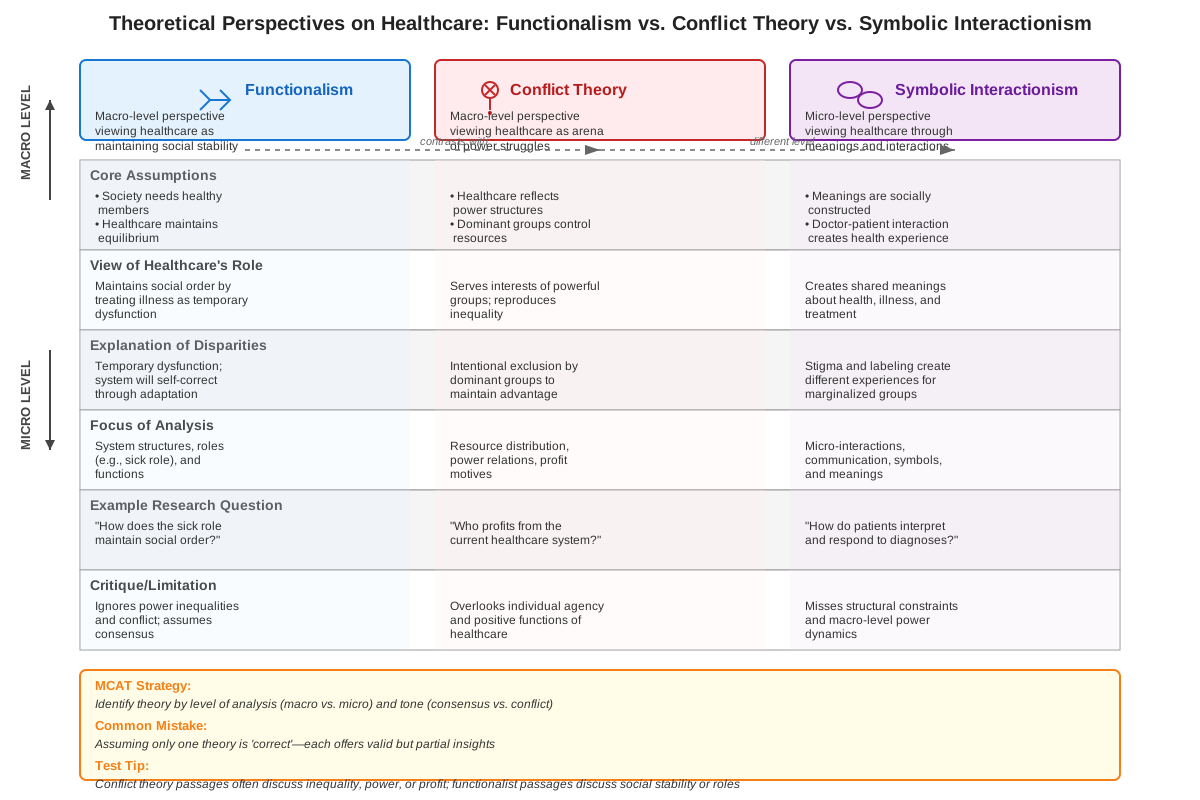
Mastery of healthcare as a sociological topic connects directly to understanding social inequality, stratification systems, demographic trends, and institutional discrimination. Healthcare serves as a lens through which broader sociological theories become tangible: conflict theory explains resource competition and power imbalances in medical systems, functionalism illuminates how healthcare maintains social stability, and symbolic interactionism reveals how doctor-patient relationships shape health experiences. This topic's integration across MCAT sections makes it particularly high-yield, appearing not only in Sociology passages but also in Psychology and Biological Sciences contexts where social factors influence physiological outcomes.
Learning Objectives
- [ ] Define Healthcare using accurate Sociology terminology
- [ ] Explain why Healthcare matters for the MCAT
- [ ] Apply Healthcare to exam-style questions
- [ ] Identify common mistakes related to Healthcare
- [ ] Connect Healthcare to related Sociology concepts
- [ ] Analyze healthcare systems using major sociological theoretical frameworks (functionalism, conflict theory, symbolic interactionism)
- [ ] Distinguish between different healthcare delivery models and their sociological implications
- [ ] Evaluate how social determinants of health create and perpetuate health disparities across populations
Prerequisites
- Basic understanding of social institutions: Healthcare functions as one of several major institutions (alongside education, family, religion, economy) that organize society
- Familiarity with social stratification: Healthcare access and outcomes vary systematically by social class, race, and other stratification dimensions
- Knowledge of sociological theoretical perspectives: Functionalist, conflict, and symbolic interactionist frameworks provide analytical tools for examining healthcare systems
- Understanding of culture and socialization: Health beliefs, illness behaviors, and treatment-seeking patterns are culturally shaped and socially learned
Why This Topic Matters
Healthcare represents one of the most frequently tested sociological topics on the MCAT because it directly connects to the exam's emphasis on understanding social determinants of health and health disparities. Medical schools prioritize applicants who can recognize how social factors influence patient outcomes, making this topic essential for demonstrating cultural competency and holistic patient care perspectives. Real-world clinical practice requires physicians to navigate complex healthcare systems, understand insurance barriers, recognize how socioeconomic factors affect treatment adherence, and address health inequities—all competencies the MCAT assesses through healthcare sociology questions.
Statistically, healthcare-related questions appear in approximately 15-20% of MCAT Sociology passages, often integrated with psychological concepts like stress, illness behavior, and patient-provider communication. Questions typically present clinical scenarios requiring students to identify social barriers to care, recognize patterns of health disparities, distinguish between healthcare system models, or apply sociological theories to medical situations. The MCAT particularly favors questions about healthcare access, the sick role, medicalization, and social determinants of health.
Common passage formats include: (1) research studies examining health disparities across demographic groups, (2) patient vignettes where social factors complicate medical treatment, (3) comparative analyses of healthcare systems across countries, and (4) discussions of healthcare policy changes and their social impacts. Questions often require students to move beyond surface-level understanding to analyze underlying structural factors, making this topic particularly challenging for those who focus exclusively on memorization rather than conceptual application.
Core Concepts
Healthcare as a Social Institution
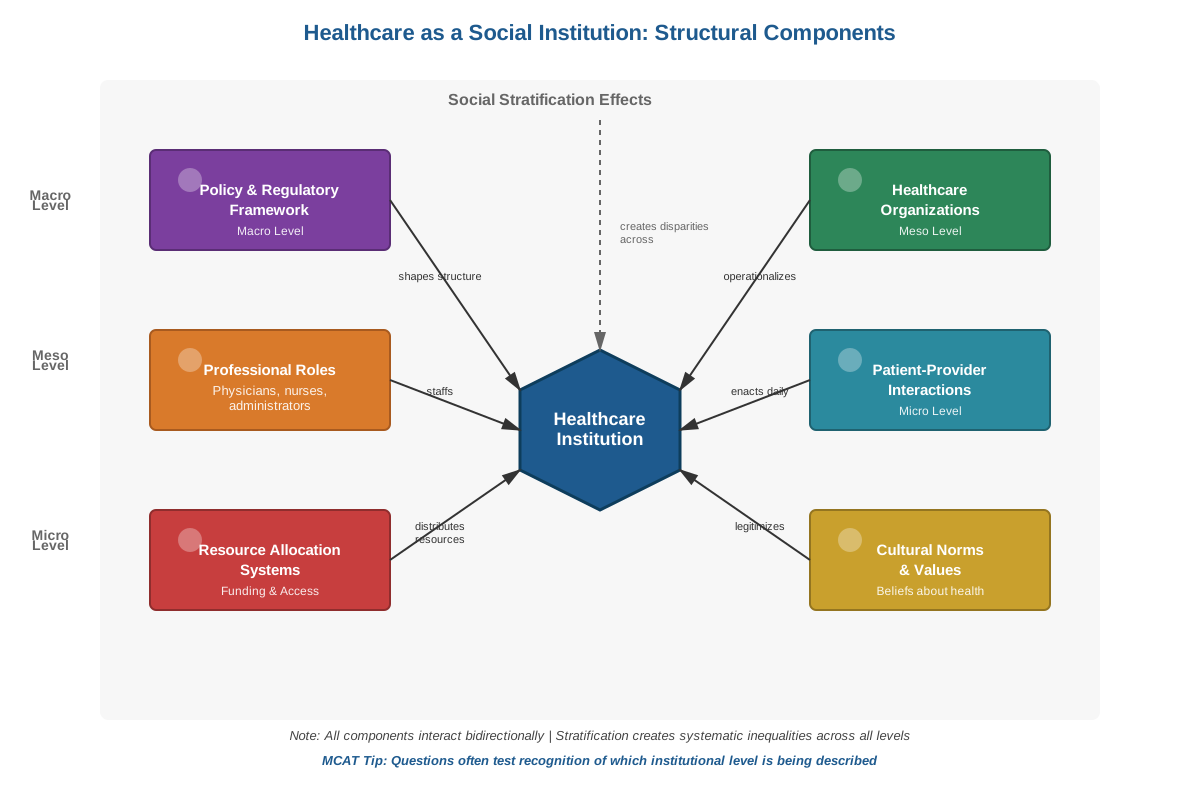
Healthcare constitutes a formal social institution—an organized system of social relationships, norms, and practices designed to meet fundamental societal needs related to illness, injury, and wellness. As an institution, healthcare encompasses hospitals, clinics, insurance systems, regulatory agencies, professional organizations, and the complex web of relationships among patients, providers, administrators, and policymakers. The healthcare system includes not only the delivery of medical services but also public health infrastructure, pharmaceutical industries, medical education, and health policy frameworks.
From a sociological perspective, healthcare serves multiple functions: treating illness and injury (manifest function), maintaining workforce productivity, socializing individuals into the sick role, and serving as a mechanism of social control. Healthcare institutions also perform latent functions, including creating employment, generating economic activity, and reinforcing social hierarchies through differential access and treatment quality.
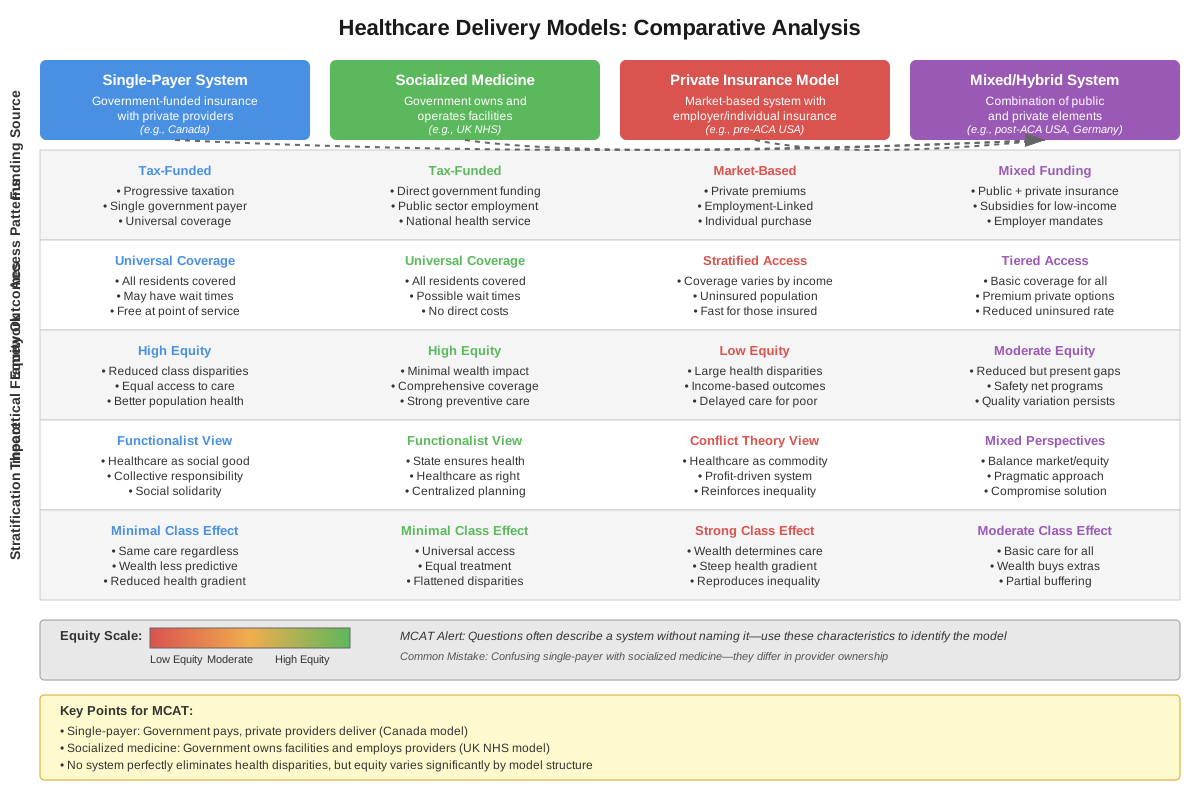
Healthcare Delivery Models
Different societies organize healthcare delivery through distinct models, each reflecting underlying values about individual responsibility, collective welfare, and the role of government:
| Model | Description | Examples | Key Features |
|---|---|---|---|
| Beveridge Model | Government-owned and operated; funded through taxes | UK (NHS), Spain, Cuba | Universal coverage; no medical bills; government as single payer and provider |
| Bismarck Model | Insurance-based; employers and employees fund nonprofit "sickness funds" | Germany, France, Japan | Universal coverage; private providers; nonprofit insurance; no profit motive |
| National Health Insurance | Private providers; government-run insurance program | Canada, Taiwan, South Korea | Single-payer system; private delivery; universal coverage |
| Out-of-Pocket Model | No systematic healthcare system; individuals pay directly | Rural areas in developing nations | Limited access; high inequality; catastrophic costs |
| Mixed/Hybrid Model | Combination of multiple approaches | United States | Multiple payers; private insurance; public programs (Medicare, Medicaid); significant uninsured population |
The United States healthcare system represents a unique hybrid combining private insurance (employer-based and individual), public programs (Medicare for elderly, Medicaid for low-income, VA for veterans), and out-of-pocket payment. This fragmentation creates significant administrative complexity, cost inefficiencies, and coverage gaps that contribute to health disparities.
Social Determinants of Health
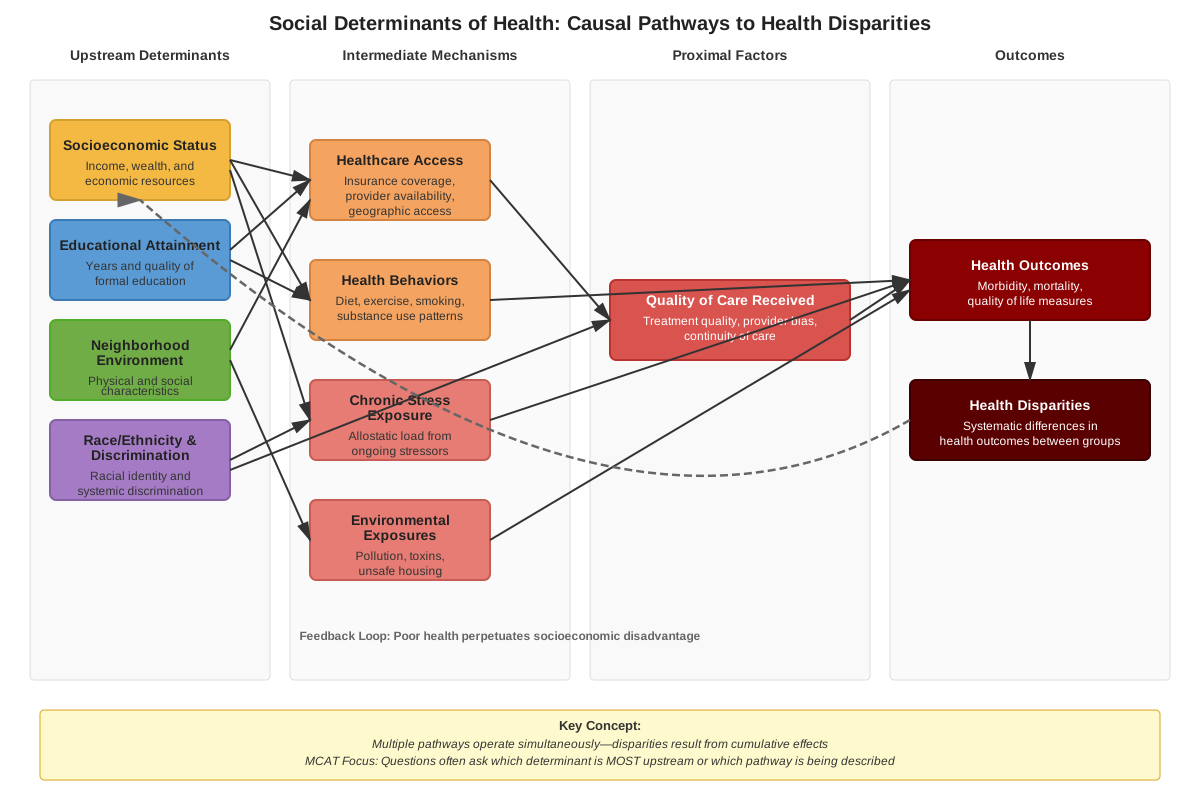
Social determinants of health are the conditions in which people are born, grow, live, work, and age that shape health outcomes. These upstream factors often exert greater influence on population health than individual behaviors or medical interventions. The World Health Organization identifies five key domains:
- Economic stability: Employment status, income level, poverty, food security, housing stability
- Education access and quality: Literacy, educational attainment, early childhood education
- Healthcare access and quality: Insurance coverage, provider availability, cultural competency of care
- Neighborhood and built environment: Housing quality, transportation, safety, environmental conditions, access to healthy foods
- Social and community context: Social cohesion, discrimination, incarceration, social support networks
These determinants operate through multiple pathways. Low socioeconomic status creates chronic stress (allostatic load), limits access to nutritious food and safe exercise environments, reduces healthcare access, and increases exposure to environmental toxins. Educational attainment correlates strongly with health literacy, enabling individuals to navigate healthcare systems, understand medical information, and engage in preventive behaviors.
Health Disparities and Health Equity
Health disparities are systematic, avoidable differences in health outcomes and healthcare access across population groups defined by social, economic, demographic, or geographic characteristics. These disparities reflect broader patterns of social inequality and institutional discrimination. Key dimensions include:
- Racial/ethnic disparities: African Americans experience higher rates of hypertension, diabetes, maternal mortality, and infant mortality; lower life expectancy; and reduced access to preventive care
- Socioeconomic disparities: Lower-income individuals face higher disease burden, reduced life expectancy, and barriers to care including cost, transportation, and time constraints
- Geographic disparities: Rural populations experience provider shortages, hospital closures, and longer travel distances to specialty care
- Gender disparities: Women face unique barriers including reproductive health restrictions, underrepresentation in medical research, and dismissal of pain complaints
Health equity represents the principle that everyone should have fair opportunity to achieve optimal health, requiring removal of systematic barriers and addressing root causes of disparities. Achieving equity demands not equal treatment but rather differential resource allocation to address historical disadvantages and structural barriers.
Healthcare Access and Barriers
Healthcare access encompasses multiple dimensions: availability (sufficient supply of services), accessibility (geographic proximity), affordability (financial capacity to pay), accommodation (organization of services to meet patient needs), and acceptability (cultural appropriateness and patient willingness to seek care).
Barriers to healthcare access operate at multiple levels:
- Structural barriers: Lack of insurance, high deductibles and copayments, limited provider networks, geographic maldistribution of services, transportation challenges
- Cultural barriers: Language differences, cultural beliefs about illness and treatment, mistrust of medical institutions (particularly among historically marginalized groups), provider bias and discrimination
- Individual barriers: Health literacy limitations, competing priorities (work, childcare), fear of diagnosis, stigma associated with certain conditions
The inverse care law describes the phenomenon where availability of good medical care tends to vary inversely with population need—those with greatest health needs often have least access to quality care.
The Sick Role
Sociologist Talcott Parsons conceptualized the sick role as a temporary, medically sanctioned form of deviant behavior with specific rights and obligations. When legitimately ill, individuals gain:
Rights:
- Exemption from normal social responsibilities (work, school, household duties)
- Not held responsible for their condition (illness is beyond personal control)
Obligations:
- Must want to get well (illness is undesirable state to exit)
- Must seek competent medical help and cooperate with treatment
The sick role concept illuminates how societies manage illness as potential disruption to social functioning. However, critics note its limitations: it assumes acute rather than chronic illness, reflects Western biomedical assumptions, ignores how some conditions carry stigma and blame (addiction, obesity, STIs), and overlooks how social factors may prevent fulfilling obligations (lack of insurance, work demands).
Medicalization
Medicalization describes the process by which non-medical problems become defined and treated as medical conditions requiring professional intervention. This expansion of medical jurisdiction transforms human experiences—childbirth, menopause, sadness, shyness, sexual dysfunction—into pathologies requiring diagnosis and treatment. Medicalization occurs through multiple mechanisms: pharmaceutical marketing creating disease awareness, professional boundary expansion, insurance coverage requirements, and cultural shifts toward biomedical explanations.
Examples include: ADHD diagnosis expansion, erectile dysfunction as medical condition, premenstrual dysphoric disorder, social anxiety disorder, and low testosterone ("Low T") campaigns. While medicalization can reduce stigma and increase access to helpful treatments, critics argue it pathologizes normal human variation, creates pharmaceutical dependence, ignores social causes of distress, and extends medical social control.
Healthcare Professions and Power
Healthcare operates through hierarchical professional structures with physicians occupying dominant positions. Professional dominance describes physicians' authority over medical knowledge, treatment decisions, and other healthcare workers. This power derives from: extensive education and credentialing, legal monopoly over certain procedures, cultural authority as experts, and control over medical institutions.
The healthcare hierarchy creates interprofessional dynamics affecting patient care. Nurses, despite extensive patient contact and clinical knowledge, historically occupied subordinate positions, though nursing professionalization has challenged traditional hierarchies. Allied health professionals (physical therapists, social workers, pharmacists) navigate complex relationships with physician authority. Understanding these power dynamics helps explain communication breakdowns, patient safety issues, and resistance to team-based care models.
Concept Relationships
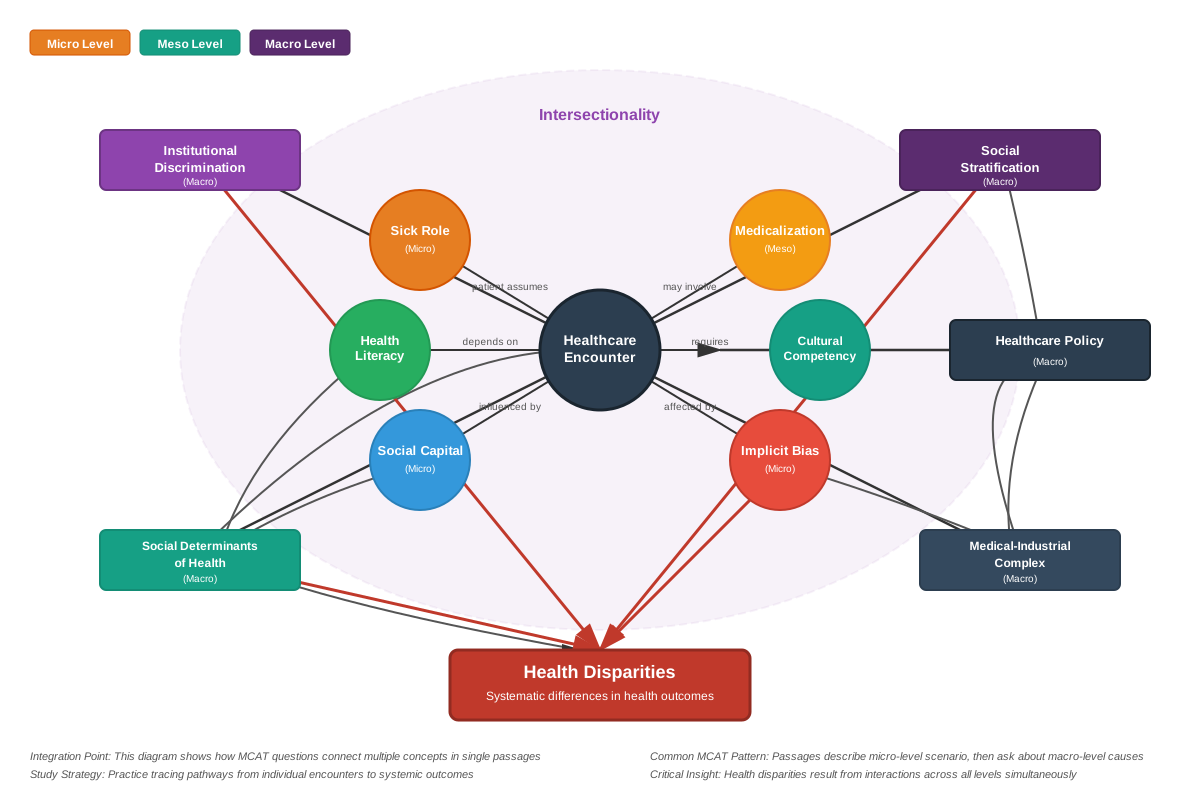
Healthcare concepts form an interconnected system where structural factors shape individual experiences and outcomes. Social determinants of health → create conditions that → produce health disparities → which are perpetuated by → barriers to healthcare access → resulting in differential utilization of → healthcare delivery systems. This causal chain operates within broader social stratification systems, where class, race, and gender hierarchies determine resource distribution.
Medicalization connects to healthcare professionalization and power, as expanding medical jurisdiction increases professional authority and pharmaceutical markets. The sick role links to social control functions of healthcare institutions, illustrating how societies manage deviance and maintain productivity. Healthcare delivery models reflect broader political-economic systems and cultural values about individualism versus collectivism, connecting to topics in political sociology and cultural sociology.
The relationship between healthcare and other social institutions creates feedback loops: educational institutions produce health literacy and credentials for healthcare professions; economic institutions determine employment-based insurance and healthcare funding; family institutions provide informal care and health socialization; government institutions regulate healthcare and fund public programs. Understanding these interconnections enables analysis of how changes in one institutional domain ripple through healthcare systems.
Quick check — test yourself on Healthcare so far.
Try Flashcards →High-Yield Facts
⭐ Social determinants of health (economic stability, education, healthcare access, neighborhood environment, social context) have greater impact on population health outcomes than individual medical care or personal behaviors.
⭐ The United States operates a hybrid healthcare system combining private insurance, public programs (Medicare, Medicaid), and out-of-pocket payment, resulting in higher costs and more uninsured individuals than other developed nations.
⭐ Health disparities are systematic differences in health outcomes across groups defined by race, socioeconomic status, geography, or other social characteristics, reflecting broader patterns of social inequality.
⭐ The sick role includes rights (exemption from responsibilities, not blamed for illness) and obligations (must seek help, must want to recover), but applies primarily to acute rather than chronic conditions.
⭐ Medicalization transforms non-medical problems into medical conditions requiring professional treatment, expanding medical jurisdiction but potentially pathologizing normal human experiences.
- The inverse care law states that availability of quality medical care varies inversely with population need—those with greatest health needs often have least access.
- Healthcare access encompasses five dimensions: availability, accessibility, affordability, accommodation, and acceptability (the "5 A's").
- Cultural competency in healthcare requires understanding how cultural beliefs, language barriers, and historical experiences of discrimination affect patient-provider interactions and treatment adherence.
- Professional dominance describes physicians' authority over medical knowledge, treatment decisions, and other healthcare workers, creating hierarchical power structures.
- Health literacy—the ability to obtain, process, and understand basic health information—significantly affects healthcare utilization, treatment adherence, and health outcomes.
- Preventive care (screenings, vaccinations, health education) reduces disease burden and costs but remains underutilized, particularly among disadvantaged populations facing access barriers.
Common Misconceptions
Misconception: Healthcare disparities result primarily from individual choices and behaviors rather than structural factors.
Correction: While individual behaviors matter, social determinants of health (economic conditions, education, neighborhood environment) exert greater influence on population health outcomes. Structural barriers systematically limit healthy choices for disadvantaged groups—food deserts restrict nutritious eating, unsafe neighborhoods prevent exercise, work schedules conflict with clinic hours, and lack of insurance delays preventive care.
Misconception: The sick role applies equally to all types of illness and across all cultural contexts.
Correction: The sick role concept, developed in mid-20th century America, applies primarily to acute, biomedically-recognized conditions. It poorly describes chronic illness (where "getting well" is impossible), stigmatized conditions (where patients are blamed), mental illness (where legitimacy is questioned), and non-Western cultural contexts with different illness beliefs and healing systems.
Misconception: Universal healthcare systems provide identical care to all citizens regardless of social position.
Correction: Even in countries with universal coverage, social gradients in health persist. Higher socioeconomic groups experience better health outcomes due to social determinants operating outside the healthcare system (education, working conditions, housing, stress), differential treatment within healthcare systems (implicit bias, communication quality), and supplemental private insurance providing faster access to specialists and elective procedures.
Misconception: Medicalization always benefits patients by reducing stigma and increasing treatment access.
Correction: Medicalization produces mixed effects. While it can reduce moral blame and enable insurance coverage, it also pathologizes normal human variation, creates pharmaceutical dependence, ignores social causes of distress, extends medical social control, and may increase rather than reduce stigma by labeling individuals as diseased or disordered.
Misconception: Healthcare access means only having health insurance coverage.
Correction: Insurance is necessary but insufficient for healthcare access. The "5 A's" framework identifies multiple dimensions: availability (sufficient providers), accessibility (geographic proximity, transportation), affordability (out-of-pocket costs beyond premiums), accommodation (appointment availability, hours, wait times), and acceptability (cultural appropriateness, language concordance, trust). Barriers in any dimension limit effective access.
Misconception: Health disparities will naturally decrease as overall medical technology and knowledge advance.
Correction: Technological advances often initially widen disparities as advantaged groups gain earlier access to innovations (the "diffusion of innovations" pattern). Without deliberate intervention addressing root causes—structural racism, economic inequality, geographic isolation—disparities persist or worsen even as overall population health improves. The gap between groups matters as much as absolute levels.
Worked Examples
Example 1: Analyzing Healthcare Access Barriers
Vignette: Maria, a 45-year-old Latina woman working two part-time jobs without benefits, experiences persistent abdominal pain. She delays seeking care for three months. When she finally visits an emergency department, she is diagnosed with advanced ovarian cancer. Which factors most likely contributed to her delayed care-seeking?
Analysis Process:
Step 1: Identify relevant healthcare access dimensions from the "5 A's" framework.
Step 2: Analyze structural barriers:
- Affordability: Part-time employment typically excludes health insurance benefits; without coverage, Maria faces full out-of-pocket costs for consultation, diagnostic tests, and treatment
- Accommodation: Multiple jobs create scheduling conflicts with clinic hours; taking time off risks income loss or job termination
- Availability: Uninsured patients often lack established primary care relationships, limiting preventive care and early symptom evaluation
Step 3: Consider cultural and individual factors:
- Acceptability: Language barriers, cultural beliefs about illness, or previous negative healthcare experiences may reduce willingness to seek care
- Health literacy: Limited understanding of symptom significance or healthcare navigation may delay recognition of need
Step 4: Connect to broader concepts:
- This scenario illustrates how social determinants of health (economic instability, employment conditions) create barriers to healthcare access
- The outcome demonstrates the inverse care law—Maria's high health need corresponds with low access to quality care
- Her situation reflects health disparities affecting low-income and minority populations
Answer: Multiple intersecting barriers contributed to delayed care: lack of insurance (affordability), work schedule conflicts (accommodation), absence of primary care relationship (availability), and potentially cultural or linguistic factors (acceptability). These structural barriers, rooted in economic instability and employment conditions, exemplify how social determinants of health produce disparities in outcomes.
Example 2: Applying Sociological Theories to Healthcare Systems
Vignette: A sociologist compares healthcare systems across three countries: Country A has government-owned hospitals and tax-funded universal coverage; Country B has private providers with mandatory nonprofit insurance; Country C has private insurance tied to employment with significant uninsured population. Analyze these systems using functionalist and conflict theory perspectives.
Analysis Process:
Step 1: Identify healthcare models:
- Country A: Beveridge model (UK-style)
- Country B: Bismarck model (Germany-style)
- Country C: Hybrid/mixed model (US-style)
Step 2: Apply functionalist perspective:
Functionalism views social institutions as serving necessary societal functions and maintaining stability.
- Country A: Universal coverage ensures entire population can fulfill productive roles; healthcare as public good maintains social cohesion; government provision reflects collective responsibility values
- Country B: Mandatory insurance ensures workforce health while preserving private provision; nonprofit structure balances efficiency with equity; system maintains social stability through universal access
- Country C: Employment-based insurance incentivizes workforce participation; private competition theoretically drives innovation; system reflects individualist values and market mechanisms
Step 3: Apply conflict theory perspective:
Conflict theory emphasizes power struggles, resource competition, and how institutions perpetuate inequality.
- Country A: While providing universal access, government control may reflect elite interests in maintaining productive workforce; rationing decisions favor politically powerful groups; bureaucratic control limits patient autonomy
- Country B: Mandatory participation ensures labor force health benefiting employers; insurance tied to employment maintains worker dependence; system preserves class distinctions through supplemental private options
- Country C: Employment-based system concentrates power with employers and insurance corporations; profit motive creates incentives to deny coverage; uninsured population serves as exploitable labor pool; system perpetuates racial and economic health disparities; medical-industrial complex accumulates wealth while populations suffer
Step 4: Synthesize insights:
Each theoretical lens reveals different aspects. Functionalism illuminates how systems maintain social order and reflect cultural values; conflict theory exposes power dynamics, profit motives, and inequality perpetuation. Neither perspective alone captures full complexity.
Answer: Functionalist analysis emphasizes how each system maintains social stability and reflects cultural values about collective versus individual responsibility. Conflict analysis reveals how systems perpetuate inequality, concentrate power among elites (government bureaucrats, insurance corporations, employers), and serve dominant class interests. Country C's hybrid model particularly demonstrates conflict theory's explanatory power regarding health disparities and profit-driven care limitations.
Exam Strategy
MCAT healthcare questions typically embed sociological concepts within clinical vignettes, requiring students to identify social factors affecting patient outcomes. Successful approaches include:
Trigger Word Recognition: Watch for phrases indicating social determinants ("low-income neighborhood," "uninsured," "limited English proficiency," "rural area," "works multiple jobs"), healthcare access barriers ("delayed care-seeking," "missed appointments," "medication non-adherence"), or health disparities ("racial differences in outcomes," "socioeconomic gradient"). These phrases signal questions testing healthcare sociology rather than purely biomedical knowledge.
Structural vs. Individual Analysis: MCAT questions often present answer choices contrasting individual-level explanations (patient non-compliance, poor choices, lack of motivation) with structural explanations (access barriers, social determinants, systemic discrimination). Generally favor structural explanations—the exam emphasizes social context over individual blame. However, read carefully; some questions legitimately test individual factors like health literacy or illness beliefs.
Theory Application: When questions ask about healthcare systems or policies, consider which sociological theory provides the best analytical framework. Functionalist answers emphasize social stability, system maintenance, and societal needs. Conflict theory answers highlight power imbalances, resource competition, and inequality perpetuation. Symbolic interactionist answers focus on meaning-making, doctor-patient communication, and subjective illness experiences. Match the theory to the question focus.
Comparative Analysis: Questions comparing healthcare systems across countries test understanding of delivery models (Beveridge, Bismarck, National Health Insurance, hybrid). Create a mental comparison table noting: funding source (taxes vs. insurance premiums), provider type (public vs. private), coverage extent (universal vs. selective), and underlying values (collective vs. individual responsibility).
Process of Elimination: Eliminate answers that: (1) blame patients for structural problems, (2) oversimplify complex social phenomena, (3) ignore power dynamics and inequality, (4) contradict established patterns of health disparities, or (5) suggest individual medical care alone can overcome social determinants. The MCAT consistently emphasizes social context and structural factors.
Time Management: Healthcare passages often integrate multiple concepts (disparities, access, social determinants, delivery models). Spend 1-2 minutes identifying the passage's main sociological theme before attempting questions. This investment prevents re-reading and enables faster, more accurate question answering.
Memory Techniques
5 A's of Healthcare Access - "Available Accessible Affordable Accommodating Acceptable"
Visualize five doors labeled with each "A" that patients must pass through to receive care; barriers at any door prevent access.
Social Determinants Domains - "Economic Education Healthcare Neighborhood Social" = "EEHNS" (sounds like "Athens")
Picture ancient Athens with five pillars supporting population health, each pillar representing one domain.
Sick Role Rights and Obligations - "Relieved Responsibility, Not Blamed" (Rights) + "Seek Help, Want Well" (Obligations)
Mnemonic: "RR NB SHWW" - "Really Responsible, Not Blamed, Should Help, Want Wellness"
Healthcare Delivery Models:
- Beveridge = British (government owns everything)
- Bismarck = Business insurance (employers and employees fund)
- National Health Insurance = No Hospital Insurance needed (government insures, private provides)
- Hybrid = Hodgepodge (United States mixing everything)
Medicalization Process - Picture a "medical-ization" factory with conveyor belt transforming normal life experiences (childbirth, aging, sadness, shyness) into medical diagnoses (requiring intervention), with pharmaceutical companies and medical professionals operating the machinery.
Summary
Healthcare represents a fundamental social institution organizing medical care delivery, shaping health outcomes, and reflecting broader patterns of social inequality. The MCAT extensively tests healthcare sociology because it bridges biomedical knowledge with social context, requiring students to recognize how structural factors—social determinants of health, healthcare access barriers, delivery system organization—influence patient outcomes beyond individual biology or behavior. Key concepts include understanding different healthcare delivery models (Beveridge, Bismarck, National Health Insurance, hybrid), recognizing how social determinants of health create systematic health disparities across racial, socioeconomic, and geographic lines, analyzing healthcare access through multiple dimensions (availability, accessibility, affordability, accommodation, acceptability), and applying sociological theories to healthcare phenomena. The sick role concept illuminates how societies manage illness as temporary deviance, while medicalization reveals expanding medical jurisdiction over human experiences. Successful MCAT performance requires moving beyond individual-level explanations to identify structural barriers, power dynamics, and social contexts that shape health and healthcare. Understanding these concepts enables analysis of clinical vignettes through sociological lenses, recognizing that optimal patient care demands addressing social factors alongside biological pathology.
Key Takeaways
- Social determinants of health (economic stability, education, healthcare access, neighborhood environment, social context) exert greater influence on population health than individual medical care or personal behaviors
- Health disparities reflect systematic patterns of social inequality, with disadvantaged groups experiencing worse outcomes due to structural barriers rather than individual choices
- Healthcare access requires multiple dimensions beyond insurance: availability, accessibility, affordability, accommodation, and acceptability—barriers in any dimension limit effective care
- The United States hybrid healthcare system combines private insurance, public programs, and out-of-pocket payment, creating fragmentation, high costs, and coverage gaps that perpetuate disparities
- Medicalization expands medical jurisdiction by transforming non-medical problems into conditions requiring professional treatment, producing both benefits (reduced stigma, treatment access) and harms (pathologizing normalcy, pharmaceutical dependence)
- The sick role grants temporary exemption from responsibilities and freedom from blame in exchange for seeking help and wanting recovery, but applies primarily to acute, biomedically-recognized conditions
- Sociological theories provide distinct analytical lenses: functionalism emphasizes healthcare's role maintaining social stability; conflict theory reveals power imbalances and inequality perpetuation; symbolic interactionism illuminates meaning-making in illness experiences
Related Topics
Social Epidemiology: Examines how social factors distribute disease and health across populations, providing empirical foundation for understanding health disparities and social determinants. Mastering healthcare sociology enables deeper analysis of epidemiological patterns.
Medical Sociology and the Sick Role: Explores broader sociological perspectives on health, illness, and medical institutions, including illness behavior, doctor-patient relationships, and healthcare professionalization. Healthcare systems provide institutional context for these micro-level interactions.
Social Stratification and Inequality: Analyzes how societies organize hierarchical differences in resources, power, and prestige. Healthcare disparities exemplify how stratification systems produce differential life chances and outcomes across social groups.
Demographic Transitions and Population Health: Examines how population age structures, birth rates, and mortality patterns change with economic development. Healthcare system organization both influences and responds to demographic shifts.
Social Movements and Healthcare Reform: Studies collective action seeking healthcare system change, including universal coverage advocacy, patients' rights movements, and health equity campaigns. Understanding healthcare structures illuminates targets and strategies of reform movements.
Practice CTA
Now that you've mastered the core concepts of healthcare sociology, test your understanding with practice questions and flashcards. Focus particularly on applying social determinants of health to clinical vignettes, distinguishing between healthcare delivery models, and analyzing access barriers through the "5 A's" framework. Remember: MCAT success requires not just memorizing definitions but recognizing how structural factors shape health outcomes in complex, real-world scenarios. Challenge yourself to think beyond individual-level explanations and identify the social contexts that make certain health outcomes more or less likely across different populations. Your ability to integrate sociological thinking with clinical reasoning will distinguish you on exam day and throughout your medical career!
Sign up free to keep reading
Create a free AnvayaPrep account to finish this MCAT guide on Healthcare — plus flashcards and practice questions.