Overview
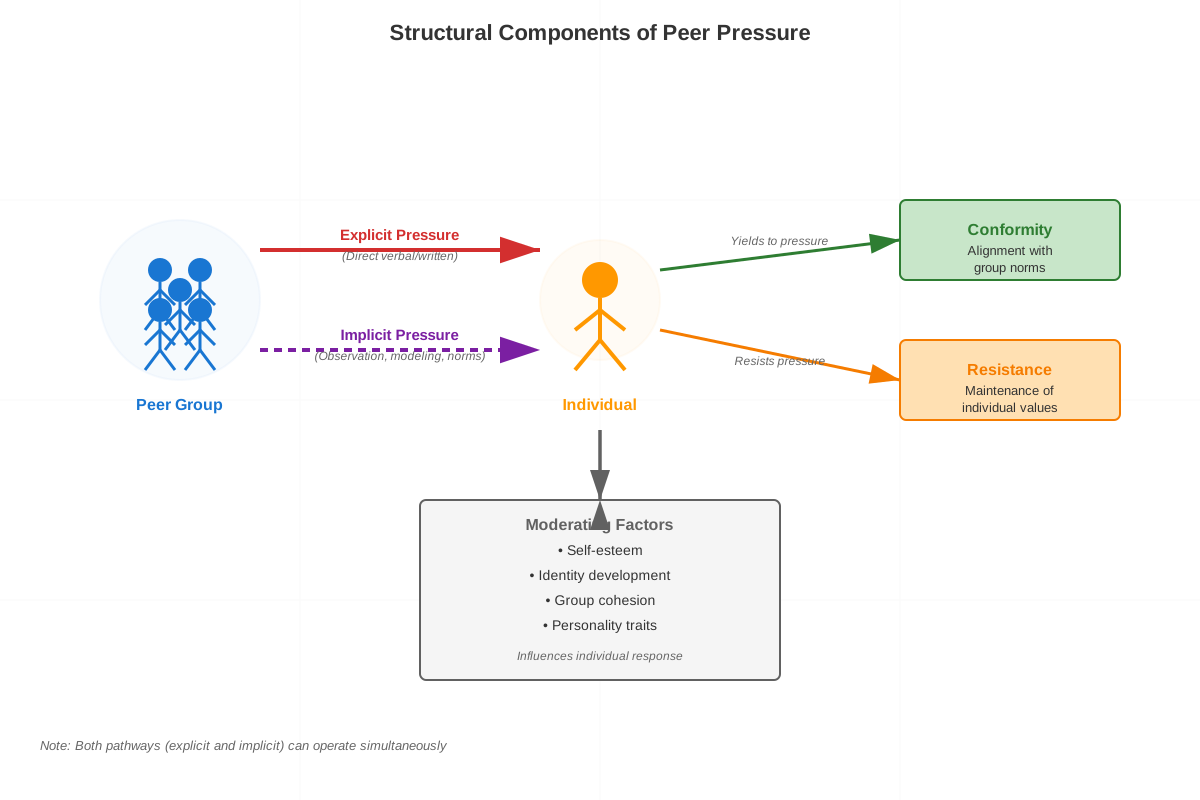
Peer pressure is a fundamental concept in Sociology that describes the influence exerted by a peer group on its individual members to conform to group attitudes, values, and behaviors. This phenomenon represents one of the most powerful forces shaping human behavior across the lifespan, particularly during adolescence and young adulthood. Within the context of Social Interaction and Identity, peer pressure serves as a critical mechanism through which individuals negotiate their social positions, develop their sense of self, and learn cultural norms. Understanding peer pressure requires examining both its explicit forms (direct requests or demands from peers) and implicit manifestations (subtle social cues that communicate group expectations).
For the MCAT, peer pressure represents a high-yield topic that frequently appears in Psychological, Social, and Biological Foundations of Behavior passages. The exam tests not only definitional knowledge but also the ability to apply sociological frameworks to analyze complex social scenarios, predict behavioral outcomes, and understand the interplay between individual agency and social forces. Questions may present clinical vignettes involving adolescent health behaviors, medical decision-making influenced by social networks, or public health interventions that must account for peer dynamics.
The concept of peer pressure connects intimately with broader sociological theories including conformity, social identity theory, reference groups, and socialization processes. It intersects with psychological concepts such as cognitive dissonance, moral development, and decision-making under social influence. Mastering peer pressure enables deeper understanding of how social structures shape individual choices, why certain health behaviors cluster within social networks, and how medical professionals can leverage or mitigate social influences to improve patient outcomes—all critical competencies assessed on the MCAT.
Learning Objectives
- [ ] Define peer pressure using accurate Sociology terminology
- [ ] Explain why peer pressure matters for the MCAT
- [ ] Apply peer pressure to exam-style questions
- [ ] Identify common mistakes related to peer pressure
- [ ] Connect peer pressure to related Sociology concepts
- [ ] Distinguish between positive and negative peer pressure in clinical contexts
- [ ] Analyze the mechanisms through which peer pressure operates at different developmental stages
- [ ] Evaluate the interaction between peer pressure and individual factors (personality, self-esteem, identity development)
Prerequisites
- Socialization: Understanding how individuals learn and internalize social norms provides the foundation for comprehending why peer pressure is effective
- Group dynamics: Knowledge of in-groups, out-groups, and group cohesion explains the social context in which peer pressure operates
- Conformity: Familiarity with basic conformity research (Asch, Sherif) establishes the experimental basis for understanding peer influence
- Identity formation: Awareness of how individuals develop their sense of self helps explain vulnerability to peer pressure during identity-critical periods
- Social norms: Understanding descriptive and injunctive norms clarifies the standards against which peer pressure operates
Why This Topic Matters
Peer pressure has profound clinical and public health significance. Healthcare providers regularly encounter patients whose health behaviors—smoking, substance use, sexual activity, medication adherence, diet, and exercise—are heavily influenced by peer groups. Adolescent medicine, in particular, requires understanding peer dynamics to effectively counsel young patients about risk behaviors. Public health interventions increasingly leverage peer influence through peer education programs, social network interventions, and community-based approaches that recognize the power of social connections in shaping health outcomes.
On the MCAT, peer pressure appears with notable frequency in the Psychological, Social, and Biological Foundations of Behavior section. Exam statistics indicate that social processes and behavior change constitute approximately 10-15% of this section, with peer pressure representing a core concept within this domain. Questions typically appear in three formats: (1) passage-based questions requiring analysis of research studies examining peer influence on behavior, (2) discrete questions testing definitional knowledge and ability to distinguish peer pressure from related concepts, and (3) clinical vignettes requiring application of peer pressure concepts to predict patient behavior or design interventions.
Common MCAT passages present scenarios involving adolescent risk-taking, college student health behaviors, medical decision-making within families or communities, or public health campaigns targeting socially influenced behaviors. Test-takers must recognize peer pressure mechanisms, distinguish it from other forms of social influence (authority, persuasion, coercion), predict outcomes based on group characteristics, and recommend evidence-based approaches to leverage or counteract peer influence. The ability to quickly identify peer pressure dynamics in complex passages and apply sociological frameworks to analyze them represents a high-yield skill that differentiates top-scoring students.
Core Concepts
Definition and Fundamental Characteristics
Peer pressure refers to the direct or indirect influence exerted by members of one's peer group to encourage conformity to group norms, attitudes, values, or behaviors. A peer group consists of individuals of similar age, social status, or interests who interact regularly and share common experiences. Unlike hierarchical influence from authority figures, peer pressure operates laterally among social equals, making it a distinct form of social influence with unique psychological mechanisms.
Peer pressure manifests along several key dimensions:
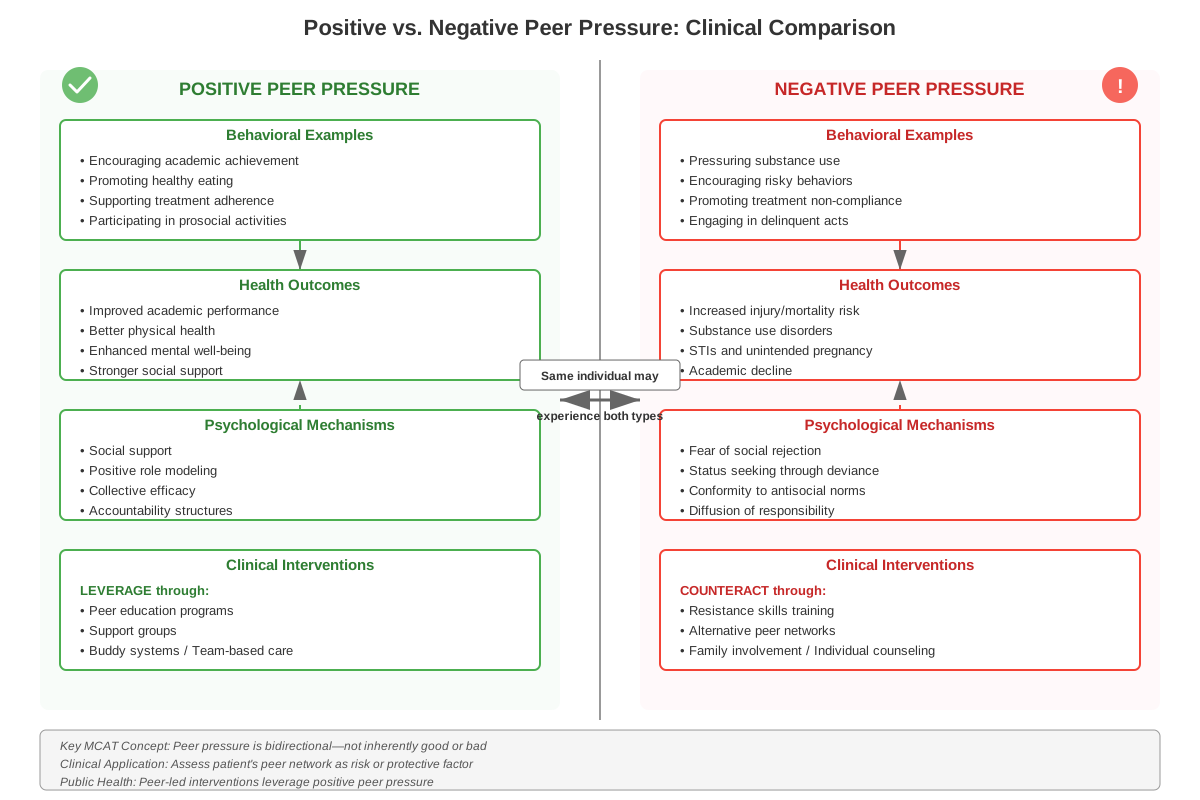
- Directionality: Can be positive (encouraging prosocial behaviors like academic achievement) or negative (promoting risk behaviors like substance use)
- Explicitness: Ranges from overt verbal requests to subtle nonverbal cues and implicit expectations
- Intensity: Varies from mild suggestions to intense coercion with threatened social consequences
- Source: May originate from the entire group, specific influential members, or perceived group norms
Mechanisms of Peer Pressure
Peer pressure operates through multiple psychological and social mechanisms that make it particularly powerful:
Normative social influence drives individuals to conform to gain social acceptance and avoid rejection. This mechanism is especially potent when group membership is valued and the threat of social exclusion is salient. Individuals may publicly comply with peer expectations even when privately disagreeing, demonstrating the power of social approval as a motivator.
Informational social influence occurs when individuals look to peers for guidance about appropriate behavior, especially in ambiguous situations. Peers serve as a reference group—a social group used as a standard for self-evaluation and behavior. When uncertain about correct actions, individuals assume peer behavior reflects accurate information about social reality.
Social comparison processes motivate individuals to evaluate themselves relative to peers, creating pressure to align with group standards. Upward social comparison (comparing to superior peers) may motivate improvement, while downward social comparison (comparing to inferior peers) may justify risky behaviors as "not as bad" as others.
Identity formation needs make adolescents and young adults particularly susceptible to peer pressure. During developmental periods when identity is fluid and self-concept is being constructed, peer group membership provides crucial identity markers. Conforming to peer expectations becomes a strategy for establishing and maintaining a coherent sense of self.
Types and Forms of Peer Pressure
| Type | Characteristics | Examples | MCAT Relevance |
|---|---|---|---|
| Direct/Explicit | Verbal requests, commands, or challenges | "Come on, everyone's doing it" | Easy to identify in passages |
| Indirect/Implicit | Subtle cues, modeling, perceived expectations | Observing peer behavior without commentary | Requires deeper analysis |
| Positive | Encourages prosocial, healthy behaviors | Study groups, athletic training partners | Often overlooked; important for interventions |
| Negative | Promotes risky, antisocial behaviors | Substance use, dangerous activities | Most commonly tested |
| Individual | Pressure from specific peer(s) | Close friend's influence | Involves relationship dynamics |
| Group | Pressure from collective | Entire peer group's norms | Involves group dynamics concepts |
Developmental Considerations
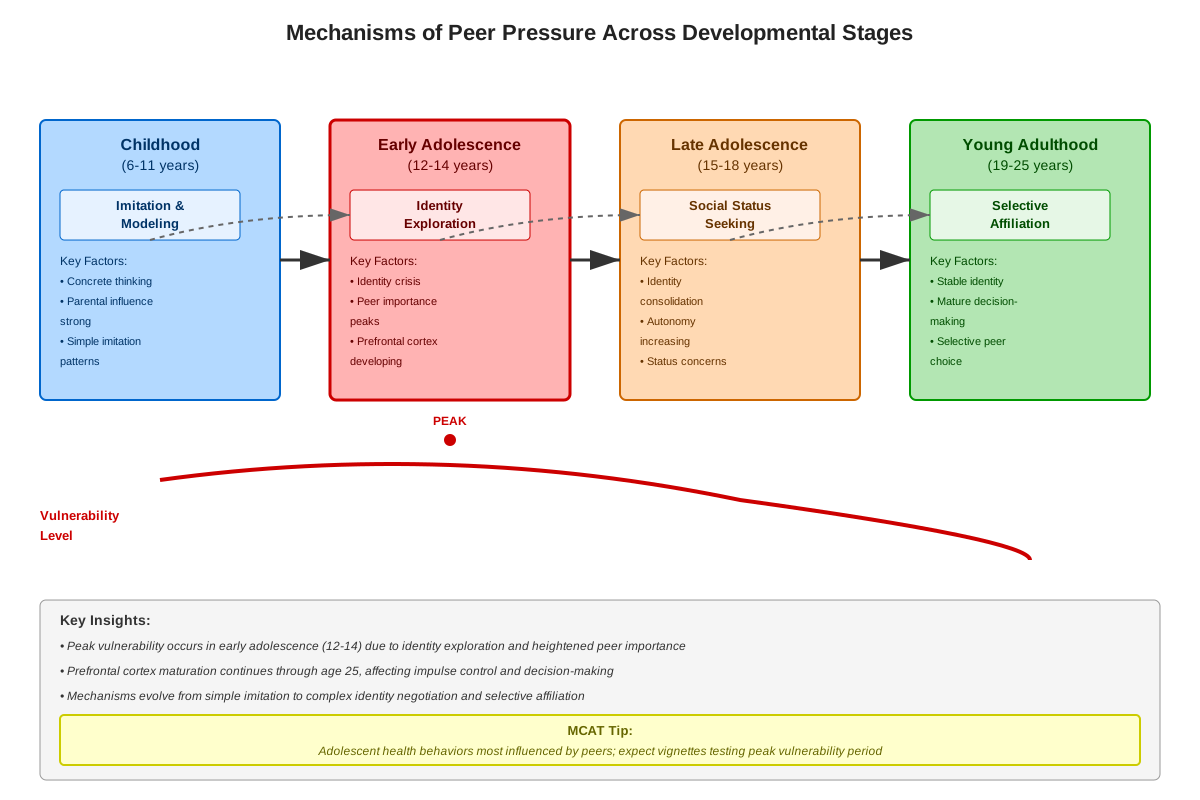
Peer pressure sensitivity follows a developmental trajectory with critical implications for understanding behavior across the lifespan:
Childhood (ages 6-12): Peer influence begins emerging but remains secondary to parental influence. Children start forming peer groups based on shared activities and interests. Peer pressure primarily affects superficial choices (clothing, toys, games) rather than core values.
Adolescence (ages 13-18): Peak vulnerability to peer pressure occurs during this period due to multiple converging factors:
- Identity exploration and formation intensify
- Autonomy from parents increases while adult identity remains undeveloped
- Peer group membership becomes central to self-concept
- Brain development (particularly prefrontal cortex immaturity) affects risk assessment and impulse control
- Social acceptance becomes paramount psychological need
Young adulthood (ages 19-25): Peer influence remains significant but becomes more selective. Individuals develop stronger personal identities and values, making them more resistant to pressure that conflicts with core beliefs. However, peer influence on health behaviors (alcohol use, sexual behavior, lifestyle choices) remains substantial, particularly in college environments.
Adulthood (ages 26+): Peer pressure decreases as identity solidifies and individuals prioritize different relationships (romantic partners, family). However, peer influence never disappears entirely; adults experience pressure within professional networks, social circles, and community groups.
Individual Difference Factors
Susceptibility to peer pressure varies significantly based on individual characteristics:
Self-esteem: Lower self-esteem correlates with greater susceptibility to peer pressure. Individuals with poor self-concept seek external validation through peer acceptance, making them more likely to conform to group expectations even when conflicting with personal values.
Locus of control: Internal locus of control (belief that one controls outcomes) predicts resistance to peer pressure, while external locus of control (belief that external forces control outcomes) predicts greater susceptibility.
Personality traits: Certain traits modify peer pressure vulnerability:
- High agreeableness increases conformity tendencies
- High conscientiousness may resist pressure conflicting with personal standards
- High extraversion increases peer orientation but may also provide social confidence to resist
- Low neuroticism (emotional stability) enables clearer decision-making under social pressure
Identity status: According to Marcia's identity status theory, individuals in identity diffusion (no exploration or commitment) or foreclosure (commitment without exploration) show greater peer pressure susceptibility than those in moratorium (active exploration) or identity achievement (exploration followed by commitment).
Resistance to Peer Pressure
Understanding resistance mechanisms is crucial for both exam questions and clinical applications:
Assertiveness skills enable individuals to decline peer pressure while maintaining relationships. Effective resistance strategies include:
- Direct refusal with explanation
- Suggesting alternatives
- Using humor to deflect
- Leaving the situation
- Invoking external constraints ("My parents would kill me")
Strong personal identity and clear values provide internal standards that compete with peer influence. When personal convictions are strong and well-articulated, individuals can withstand social pressure more effectively.
Alternative peer groups offering acceptance without negative pressure reduce vulnerability. Having multiple peer groups diversifies social support and reduces dependence on any single group.
Parental and adult support buffers against negative peer pressure. Strong parent-child relationships, open communication, and parental monitoring protect adolescents while allowing appropriate autonomy.
Concept Relationships
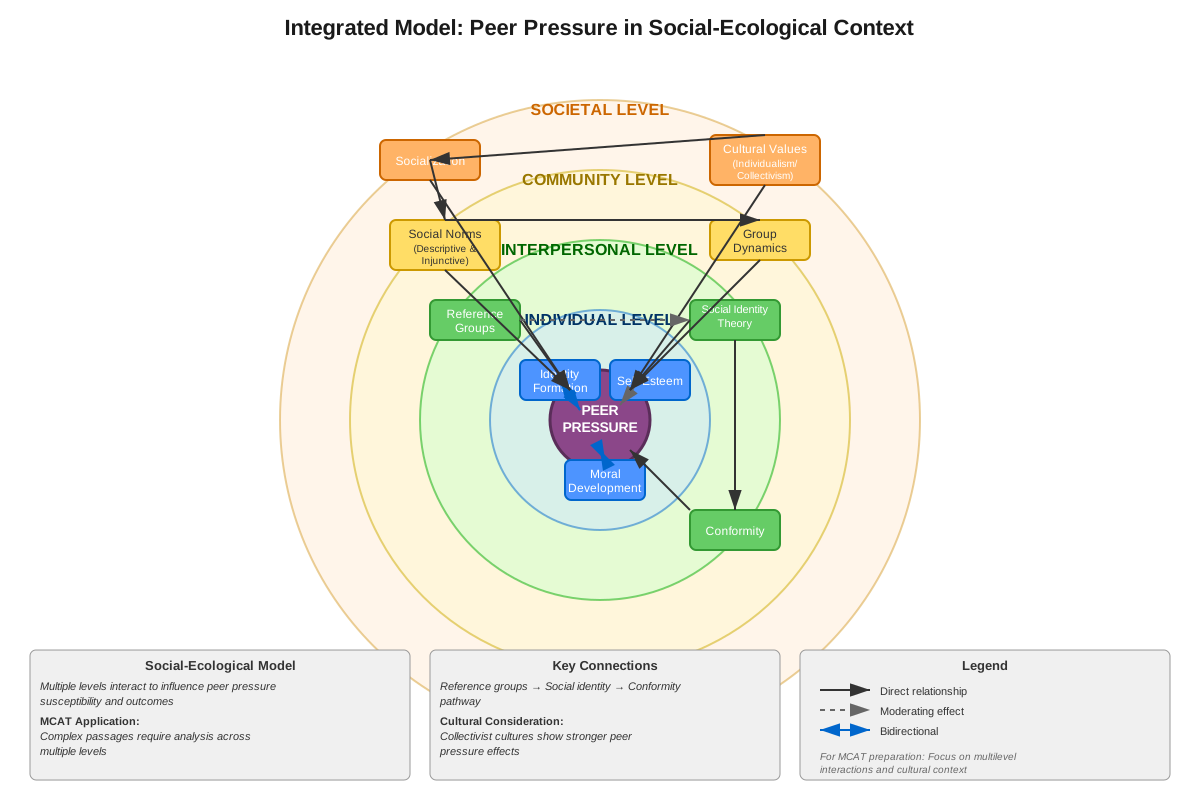
Peer pressure operates within a complex network of interconnected sociological and psychological concepts. Understanding these relationships enhances both conceptual mastery and exam performance.
Peer pressure → Conformity: Peer pressure represents a specific mechanism producing conformity. While conformity describes the behavioral outcome (matching group standards), peer pressure describes the social force producing that outcome. All peer pressure aims to produce conformity, but not all conformity results from peer pressure (some results from internalized norms or authority influence).
Socialization → Peer pressure → Identity formation: This developmental sequence shows how peer pressure fits into broader social development. Socialization processes teach individuals that social acceptance depends on meeting group expectations, making peer pressure effective. Responding to peer pressure (whether through conformity or resistance) shapes identity development as individuals define themselves through social interactions.
Reference groups → Peer pressure → Social comparison: Peer groups serve as reference groups—standards for self-evaluation. Peer pressure leverages this reference function by making group standards salient. Social comparison processes then motivate conformity as individuals evaluate themselves against peer standards and adjust behavior to reduce discrepancies.
Group dynamics ↔ Peer pressure: Bidirectional relationship exists between group characteristics and peer pressure intensity. Cohesive groups with strong identities exert stronger peer pressure. Simultaneously, successful peer pressure (producing conformity) increases group cohesion by reducing internal variation.
Self-esteem ↔ Peer pressure: Complex reciprocal relationship exists. Low self-esteem increases peer pressure susceptibility, but repeatedly yielding to peer pressure may further erode self-esteem by undermining autonomy and self-efficacy. Conversely, successfully resisting inappropriate peer pressure can enhance self-esteem.
Deviance ← Peer pressure: Peer pressure can produce deviance when peer group norms conflict with broader societal norms. Understanding this relationship is crucial for analyzing subcultures, countercultures, and why individuals engage in socially disapproved behaviors despite knowing societal standards.
Quick check — test yourself on Peer pressure so far.
Try Flashcards →High-Yield Facts
⭐ Peer pressure peaks during adolescence (ages 13-18) due to identity formation needs, increased autonomy from parents, and brain development patterns affecting risk assessment and impulse control.
⭐ Peer pressure operates through two primary mechanisms: normative social influence (desire for acceptance) and informational social influence (using peers as information sources about appropriate behavior).
⭐ Positive peer pressure exists and can promote prosocial behaviors like academic achievement, healthy lifestyle choices, and community involvement—important for intervention design questions.
⭐ Susceptibility to peer pressure correlates inversely with self-esteem and internal locus of control—individuals with strong self-concept and belief in personal control resist peer pressure more effectively.
⭐ Peer pressure differs from other social influence forms by operating laterally among social equals rather than hierarchically from authority figures, making it distinct from obedience or compliance with authority.
- Implicit/indirect peer pressure (modeling, perceived norms) often exerts stronger influence than explicit pressure because it operates below conscious awareness and triggers automatic social comparison processes.
- Strong parent-child relationships buffer against negative peer pressure while allowing appropriate peer influence, demonstrating that peer and parental influence are not zero-sum.
- Identity achievement status (having explored and committed to values) predicts greater resistance to peer pressure than identity diffusion or foreclosure statuses.
- Peer pressure can produce both public compliance (behavioral conformity) and private acceptance (internalized attitude change), with different mechanisms and stability over time.
- Cultural factors moderate peer pressure effects—collectivist cultures may show different patterns of peer influence compared to individualist cultures, relevant for cross-cultural passages.
- Peer pressure effectiveness depends on group characteristics including cohesion, size, unanimity, and status—factors frequently manipulated in research studies presented in MCAT passages.
Common Misconceptions
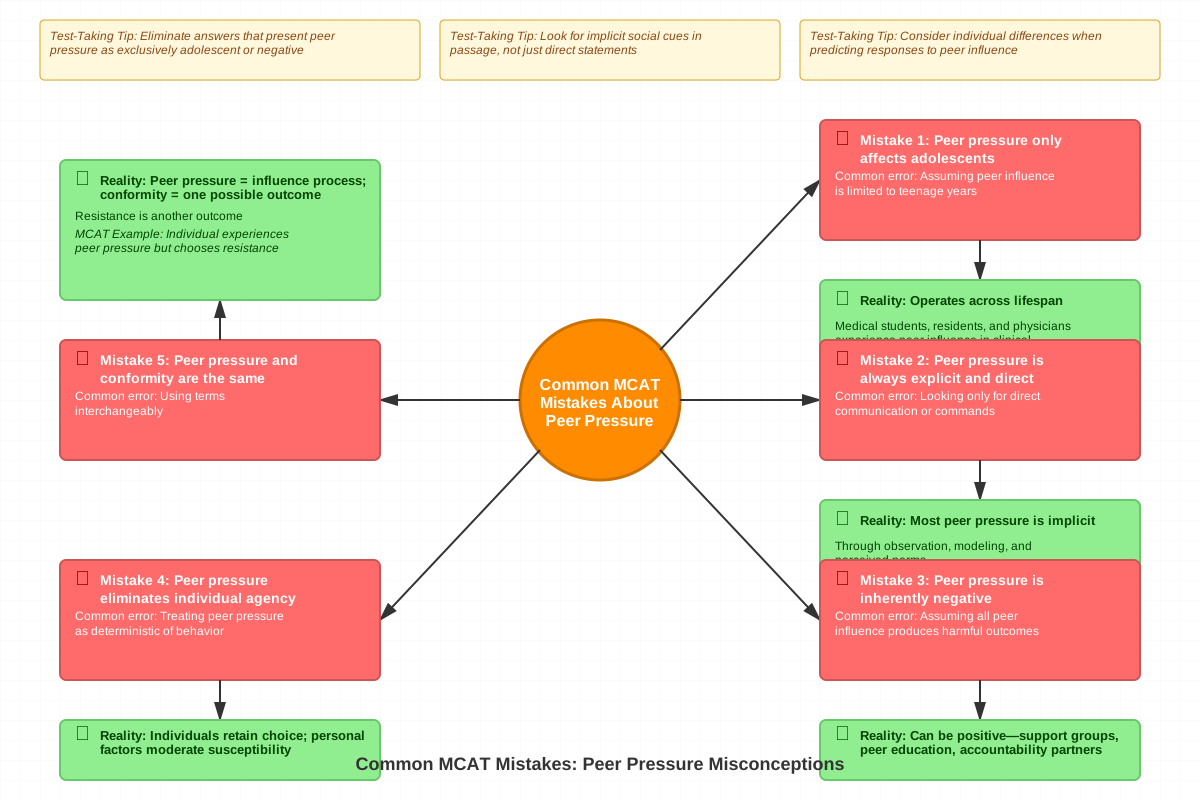
Misconception: Peer pressure only affects adolescents and disappears in adulthood.
Correction: While peer pressure peaks during adolescence, it continues throughout the lifespan in modified forms. Adults experience peer influence in professional settings, social networks, and community groups. The MCAT may present passages involving adult peer pressure in contexts like medical decision-making or health behavior change.
Misconception: Peer pressure is always negative and promotes risky behaviors.
Correction: Peer pressure can be positive, encouraging prosocial behaviors like academic achievement, healthy lifestyle choices, volunteering, and personal growth. Recognizing positive peer pressure is crucial for designing effective interventions and answering questions about leveraging social influence for health promotion.
Misconception: Peer pressure requires explicit verbal communication or direct requests.
Correction: Much peer pressure operates implicitly through observation, modeling, and perceived group norms without any direct communication. Individuals often conform to what they believe peers expect without anyone explicitly stating those expectations. This implicit form may be more powerful because it operates automatically.
Misconception: Strong-willed individuals are immune to peer pressure.
Correction: Everyone experiences peer pressure to some degree; the question is how individuals respond. Even individuals with strong personalities, high self-esteem, and clear values feel social pressure—they simply may resist it more effectively. Recognizing universal susceptibility helps explain why peer pressure affects diverse populations.
Misconception: Peer pressure and conformity are identical concepts.
Correction: Peer pressure is a mechanism or process (social influence from peers), while conformity is an outcome (matching group standards). Conformity can result from peer pressure but also from internalized norms, authority influence, or rational decision-making. This distinction matters for analyzing research studies and clinical scenarios.
Misconception: Resisting peer pressure always requires direct confrontation or leaving the peer group.
Correction: Multiple resistance strategies exist beyond confrontation, including suggesting alternatives, using humor, invoking external constraints, or selective conformity (conforming on minor issues while resisting on major ones). Effective resistance often maintains relationships while protecting personal values.
Misconception: Peer pressure only affects behavior, not attitudes or values.
Correction: Peer pressure can produce both behavioral compliance and genuine attitude change through processes like cognitive dissonance reduction and internalization. Individuals may initially conform behaviorally but subsequently adjust attitudes to align with behavior, resulting in lasting change.
Worked Examples
Example 1: Adolescent Risk Behavior Passage
Vignette: Researchers studied alcohol use among high school students by surveying 500 students about their drinking behavior and perceptions of peer drinking. Results showed that students consistently overestimated how much their peers drank. Students who believed most peers drank regularly were three times more likely to drink themselves, even when controlling for actual peer drinking rates. Students with higher self-esteem showed weaker correlations between perceived peer norms and personal drinking behavior.
Question: Which concept best explains why perceived peer norms predicted drinking behavior more strongly than actual peer behavior?
A) Normative social influence
B) Informational social influence
C) Social facilitation
D) Deindividuation
Worked Solution:
Step 1: Identify the key finding—perceived norms matter more than actual norms. This suggests students are responding to what they believe peers do rather than objective reality.
Step 2: Analyze each option:
- Normative social influence involves conforming to gain acceptance. While relevant, it doesn't specifically explain why perceptions matter more than reality.
- Informational social influence occurs when individuals use others' behavior as information about correct action. Students are using perceived peer behavior as a guide for their own behavior, treating peer norms as information about appropriate drinking levels.
- Social facilitation refers to performance changes in the presence of others—not relevant here.
- Deindividuation involves loss of self-awareness in groups—not the mechanism described.
Step 3: The finding that perceptions drive behavior more than reality indicates students are using peer behavior as an information source about social norms. They're not just conforming for acceptance (normative influence) but genuinely believing peer behavior indicates appropriate action.
Step 4: The self-esteem finding supports this interpretation—students with higher self-esteem (who need less external validation) still show the effect, suggesting they're using peers as information sources rather than just seeking acceptance.
Answer: B - Informational social influence best explains why perceived peer norms predict behavior more strongly than actual norms, as students use peer behavior as information about appropriate drinking levels.
Example 2: Intervention Design Application
Vignette: A medical school designs a program to reduce burnout among first-year students. Program planners consider several approaches: (1) individual counseling sessions, (2) peer support groups where students share experiences and coping strategies, (3) mandatory stress management workshops led by faculty, or (4) online self-paced modules about wellness.
Question: Based on peer pressure principles, which approach would most effectively leverage positive peer influence to change student behavior?
Worked Solution:
Step 1: Identify the goal—leverage positive peer influence. This requires peer interaction, modeling, and norm establishment.
Step 2: Analyze each option through peer pressure mechanisms:
Option 1 (Individual counseling): No peer interaction, so no peer pressure mechanism. May be effective but doesn't leverage peer influence.
Option 2 (Peer support groups): Direct peer interaction where students share experiences and strategies. This creates opportunities for:
- Modeling healthy coping behaviors
- Establishing group norms around wellness
- Normative influence (students want acceptance from peers)
- Informational influence (students learn strategies from peers)
- Social comparison (students see peers successfully managing stress)
Option 3 (Faculty workshops): Authority-based influence, not peer influence. May trigger resistance due to power differential.
Option 4 (Online modules): No social interaction, so no peer influence mechanism.
Step 3: Consider developmental factors—medical students are young adults who still value peer relationships and use peers as reference groups for professional identity formation.
Step 4: Evaluate mechanism strength—peer support groups create multiple pathways for positive peer pressure: explicit sharing of strategies (direct influence), observing peer coping (modeling), and establishing group norms that wellness is valued (implicit influence).
Answer: Option 2 (peer support groups) most effectively leverages positive peer influence by creating opportunities for modeling, norm establishment, and both normative and informational social influence, all operating through valued peer relationships.
Learning objective connection: This example demonstrates applying peer pressure concepts to design interventions, distinguishing peer influence from other influence types, and recognizing positive peer pressure applications—all critical MCAT skills.
Exam Strategy
Question Recognition
MCAT questions testing peer pressure often include trigger phrases:
- "Influence of friends/peers"
- "Conforming to group expectations"
- "Social pressure from age-mates"
- "Peer group norms"
- "Fitting in with peers"
- "What peers think/do"
Watch for scenarios involving:
- Adolescent or young adult populations
- Group decision-making
- Behavior change in social contexts
- Discrepancies between private beliefs and public behavior
- Health risk behaviors clustering in social networks
Approach Strategy
- Identify the peer group: Determine who constitutes the relevant peer group (age-mates, classmates, teammates, colleagues). Peer pressure requires lateral influence among social equals.
- Determine the mechanism: Distinguish between normative influence (seeking acceptance) and informational influence (using peers as information sources). Look for clues about motivation—fear of rejection suggests normative, uncertainty about appropriate behavior suggests informational.
- Assess directionality: Determine whether the pressure promotes positive (prosocial) or negative (risky) behaviors. Don't assume all peer pressure is negative.
- Consider developmental stage: Age matters significantly. Adolescent scenarios involve peak peer pressure sensitivity; adult scenarios involve more selective peer influence.
- Evaluate individual factors: Look for information about self-esteem, identity status, locus of control, or personality that might modify susceptibility.
Process of Elimination Tips
Eliminate options that:
- Confuse peer pressure with authority influence (obedience, compliance with power figures)
- Ignore the social/group component (purely individual decision-making)
- Assume all peer pressure is negative when the scenario describes positive influence
- Confuse peer pressure (the process) with conformity (the outcome)
- Overlook implicit/indirect peer pressure mechanisms
Favor options that:
- Recognize both normative and informational mechanisms
- Account for developmental factors when age is specified
- Distinguish between public compliance and private acceptance
- Consider individual difference factors when provided
- Acknowledge positive peer pressure possibilities
Time Allocation
For discrete questions on peer pressure: 60-75 seconds
- 15-20 seconds: Read and identify peer pressure as the tested concept
- 30-40 seconds: Analyze the scenario and apply concepts
- 15-20 seconds: Eliminate wrong answers and confirm correct answer
For passage-based questions: 90-120 seconds per question
- Leverage passage information about study design, population, and findings
- Connect passage details to peer pressure mechanisms
- Consider how passage findings support or challenge peer pressure theories
Exam Tip: When passages present research on social influence, carefully distinguish peer pressure from other influence types (authority, persuasion, social facilitation). The MCAT frequently tests this distinction.
Memory Techniques
Mnemonic for Peer Pressure Mechanisms
"NICE" captures the four key mechanisms:
- Normative influence (seeking acceptance)
- Informational influence (using peers as information)
- Comparison processes (evaluating self against peers)
- Expectations (perceived group norms)
Visualization for Developmental Trajectory
Picture a mountain representing peer pressure susceptibility:
- Base (childhood): Low elevation—parental influence dominates
- Peak (adolescence): Highest point—maximum peer pressure sensitivity
- Descending slope (young adulthood): Decreasing but still elevated
- Foothills (adulthood): Lower but never zero—peer influence continues
Acronym for Individual Difference Factors
"SELF" captures factors affecting susceptibility:
- Self-esteem (lower = more susceptible)
- External locus of control (external = more susceptible)
- Lack of identity achievement (diffusion/foreclosure = more susceptible)
- Fear of rejection (higher = more susceptible)
Memory Palace for Types of Peer Pressure
Imagine walking through a school:
- Hallway (direct/explicit): Students openly challenging each other
- Classroom (indirect/implicit): Students silently observing and copying peer behavior
- Library (positive): Study groups encouraging academic achievement
- Behind school (negative): Students engaging in risky behaviors
- Cafeteria (individual): One-on-one friend influence
- Auditorium (group): Entire peer group establishing norms
Summary
Peer pressure represents a fundamental mechanism of social influence whereby members of a peer group encourage conformity to group norms, attitudes, and behaviors through both explicit and implicit means. Operating through normative social influence (desire for acceptance) and informational social influence (using peers as information sources), peer pressure reaches peak intensity during adolescence when identity formation needs, increased autonomy, and brain development patterns create maximum susceptibility. However, peer influence continues throughout the lifespan in modified forms. Individual factors including self-esteem, locus of control, personality traits, and identity status significantly moderate susceptibility. Critically, peer pressure can be positive (promoting prosocial behaviors) or negative (encouraging risk behaviors), and can operate through direct verbal communication or subtle implicit cues. Understanding peer pressure requires recognizing its distinction from other influence forms (authority, persuasion), its developmental trajectory, its mechanisms, and its applications to health behavior and intervention design. For MCAT success, students must apply peer pressure concepts to analyze research studies, predict behavioral outcomes, design interventions, and distinguish peer pressure from related sociological concepts within complex clinical and social scenarios.
Key Takeaways
- Peer pressure is lateral social influence among equals that operates through normative influence (seeking acceptance) and informational influence (using peers as information sources), distinguishing it from hierarchical authority influence
- Susceptibility to peer pressure peaks during adolescence (ages 13-18) due to identity formation needs, but continues throughout the lifespan in modified forms relevant to clinical practice
- Both positive and negative peer pressure exist—recognizing positive peer pressure is crucial for designing effective health interventions that leverage social influence
- Individual factors including self-esteem, locus of control, identity status, and personality traits significantly modify peer pressure susceptibility and must be considered in clinical applications
- Peer pressure can produce public compliance without private acceptance or genuine attitude change through internalization—understanding this distinction helps predict behavior stability
- Implicit peer pressure through modeling and perceived norms often exerts stronger influence than explicit verbal pressure because it operates automatically below conscious awareness
- Effective resistance strategies include assertiveness skills, strong personal identity, alternative peer groups, and parental support—all relevant for counseling patients about peer influence
Related Topics
Conformity and Obedience: Deeper exploration of conformity research (Asch, Sherif, Milgram) provides experimental foundations for understanding peer pressure mechanisms and distinguishing peer influence from authority influence.
Social Identity Theory: Understanding how group membership shapes self-concept explains why peer group acceptance becomes so psychologically important and why peer pressure is effective.
Reference Groups: Examining how individuals use social groups as standards for self-evaluation and behavior clarifies the cognitive processes underlying peer pressure susceptibility.
Adolescent Development: Comprehensive study of physical, cognitive, and social changes during adolescence explains peak peer pressure vulnerability and informs clinical approaches to adolescent patients.
Health Behavior Change: Applying peer pressure concepts to behavior change theories (Social Cognitive Theory, Theory of Planned Behavior) enables design of effective interventions leveraging social influence.
Group Dynamics: Advanced study of group processes including cohesion, groupthink, and social facilitation builds on peer pressure foundations to understand complex group behavior.
Mastering peer pressure creates a foundation for understanding these related topics and enables sophisticated analysis of social influence across diverse contexts tested on the MCAT.
Practice CTA
Now that you've mastered the core concepts of peer pressure, it's time to solidify your understanding through active practice. Complete the associated practice questions to test your ability to apply these concepts to MCAT-style scenarios, and use the flashcards to reinforce high-yield facts and definitions. Remember, understanding peer pressure isn't just about memorizing definitions—it's about recognizing how social influence operates in complex clinical and research scenarios. Each practice question you complete strengthens your ability to quickly identify peer pressure mechanisms, distinguish them from related concepts, and apply sociological frameworks under timed conditions. Your investment in deliberate practice now will pay dividends on test day when you encounter peer pressure concepts embedded in challenging passages. You've got this!
Sign up free to keep reading
Create a free AnvayaPrep account to finish this MCAT guide on Peer pressure — plus flashcards and practice questions.